Science/Tech

You are currently browsing the archive for the Science/Tech category.

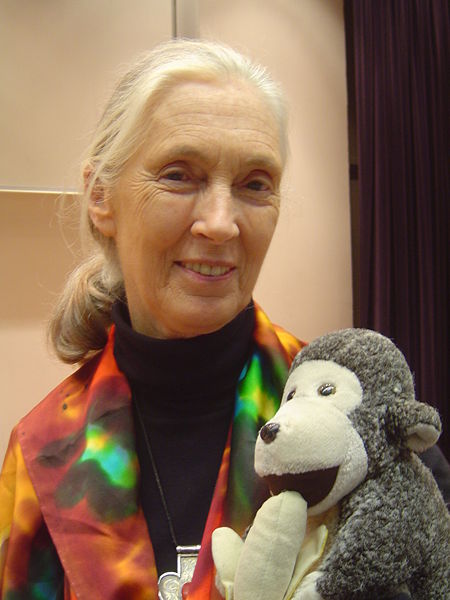
If Jane Goodall gets one more stuffed monkey as a gift, she will punch you right in the nose. She's nice, but stop.

Any list of the most significant people alive today would be incomplete without Jane Goodall’s name. Trained as a secretary in a time when women weren’t exactly encouraged to study science, she became one of the most significant anthropologists of her time. National Geographic has a celebration of Goodall’s five decades of work studying the Kasakela chimpanzee community in Gombe Stream National Park, Tanzania, putting its entire photographic collection of the scientist and her work online. (Thanks to boing boing for pointing me to the piece.) An excerpt from David Quammen’s excellent accompanying article:

A carving of David Greybeard, the first chimpanzee to befriend Jane Goodall.

Science history, with the charm of a fairy-tale legend, records some of the high points and iconic details of that saga. Young Miss Goodall had no scientific credentials when she began, not even an undergraduate degree. She was a bright, motivated secretarial school graduate from England who had always loved animals and dreamed of studying them in Africa. She came from a family of strong women, little money, and absent men. During the early weeks at Gombe she struggled, groping for a methodology, losing time to a fever that was probably malaria, hiking many miles in the forested mountains, and glimpsing few chimpanzees, until an elderly male with grizzled chin whiskers extended to her a tentative, startling gesture of trust. She named the old chimp David Greybeard. Thanks partly to him, she made three observations that rattled the comfortable wisdoms of physical anthropology: meat eating by chimps (who had been presumed vegetarian), tool use by chimps (in the form of plant stems probed into termite mounds), and toolmaking (stripping leaves from stems), supposedly a unique trait of human premeditation. Each of those discoveries further narrowed the perceived gap of intelligence and culture between Homo sapiens and Pan troglodytes.

The toolmaking observation was the most epochal of the three, causing a furor within anthropological circles because “man the toolmaker” held sway as an almost canonical definition of our species. Louis Leakey, thrilled by Jane’s news, wrote to her: “Now we must redefine ‘tool,’ redefine ‘man,’ or accept chimpanzees as humans.” It was a memorable line, marking a very important new stage in thinking about human essence. Another interesting point to remember is that, paradigm shifting or not, all three of those most celebrated discoveries were made by Jane (everyone calls her Jane; there is no sensible way not to call her Jane) within her first four months in the field. She got off to a fast start. But the real measure of her work at Gombe can’t be taken with such a short ruler.”

Tags: , , ,

Let's play Turnip Strength Tester! (Image by A Dangerous Business.)

When I was a child, I once got to go to a basement-level arcade game parlor at the McGraw-Hill Building (though I always wrongly remember it at the General Motors Plaza). There was a cute long-running slide-show called The New York Experience playing upstairs and an essentially deserted arcade downstairs. It was full of insane ganes from days gone by (many of them made of wood) that I have never seen again. I have no idea what happened to it.

The folks at A Dangerous Business blog went much further afield to have a similar experience when they headed to a small technical university outside of Moscow to visit the fun and dingy Museum of Soviet Arcade Games. Games that have “turnip” in their name just aren’t as popular since the Soviet Empire’s demise. (Thanks to boing boing for pointing me toward the post.) The following is an excerpt from the piece about the trip:

Alexander Stakhanov, the guy who met us at the door and one of the four people that started this museum, gave us a quick rundown about which machines work and which don’t, how to put coins in (some are finnicky) and the general lay of the land. We actually understood most of it, though he was speaking rapidly and entirely in Russian. It wasn’t until after he was done and I said to Anjel ‘maybe we can leave our coats here’ that he realized that we were American.

He apologized for being able to speak so little English and we apologized for not being able to speak any Russian. He ran through a few of the key points again, handed us each a small plastic cup of 15-Kopek coins and excused himself to duck into the other room. At this point it was just a little after 7:30 and we were the only ones there. I took as many photos as I could before I just had to put down the camera and start playing.

This was one of the first games we tried. It’s called ‘Репка Силомер’ (Repka Silomer) or ‘Turnip Strength Tester.’ Later that night, we showed the photos to our homestay host, hoping for some sort of explanation. She had never played the game but told us that the concept was based on an old Russian children’s story.”

Tags:

Eastman Kodak tested Kodachrome in 1922, thirteen years before the company began to manufacture and sell the color reversal film. So we have the anachronistic, hypnotic sight of bright film footage of flappers and other Jazz Age Americans, who are usually known to us in an assortment of grays. Thanks to kottke.org for pointing out this amazing video.

More Featured Videos:

The advertisement is on sale on eBay, but the actual radio is not listed there.

This 1960 Motorola Transistor Radio was intended for people who wanted to stash some sounds in their shirt pockets. The radio, which predated the landmark Sony Walkman by nearly 20 years, was a tiny four-and-a-half inches high, weighed eight ounces (with battery) and cost $24.95. If Motorola had figured out how to produce headphones to go with it, the personal music revolution would have begun in earnest two decades earlier. An excerpt from the ad copy:

“A new Motorola radio miniaturized to fit a shirt pocket(or purse)–yet with the power and sound you’d expect from a larger set. Powerful 6-transistor chassis pinpoints stations–holds them strong and steady. Motorola-designed 2 1/2″ Golden Voice speaker with new cone delivers rich, clear lows–crisp highs. Battery life up to 100 hours at normal volume level–2 1/2 times longer than in previous models this size. Give a look and listen at your Motorola Dealer. It’s worth the trip.”

More Old Print Ads:


Taking a break from e-mailing. (Image by Arcimboldo.)

The Japanese sport of sumo wrestling has always been a dicey business. The industry has been linked to yakuza, match fixing and illicit gambling. A recent betting scandal has convinced officials at the JSA (Japan Sumo Association) that they need to improve communication between themselves and the organization’s wrestlers. The problem? The rotund athletes’ fingers are so large that they aren’t able to execute keyboard strikes and remain in email contact with the supervisors. The solution? The JSA has purchased iPads for their beefy, large-fingered competitors, to make emailing easier for them. Thanks to Marginal Revolution for pointing me in the direction of this BBC article on the topic. An excerpt:

“The sport’s authorities were criticised for their clumsy efforts to investigate the scandals, in part due poor communication between sumo leaders. The iPads are intended to speed up communication between JSA officials, wrestlers and coaches, who have until now relied on telephone or fax.

‘We will hand out the newest iPads to all the sumo stables to swiftly communicate what we need to,’ JSA vice chairman Hiroyoshi Murayama said.

Many Japanese newspapers also reported that the iPad had been chosen because of its large touch-screen keys that can be easily prodded by the giant wrestlers. ‘When they try to send e-mail on mobile phones or PCs they often end up pressing two or three keys at once,’ said the daily Nikkan Sports.

Tags:

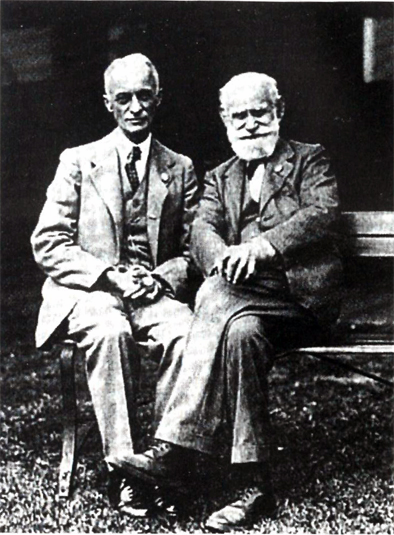
Dr. Cushing, left, with Ivan Pavlov, soon before the beaviorist was mauled and devoured by a dog he teased.

Pioneering Ohio-born neurosurgeon Dr. Harvey Cushing did many great things for mankind, including introducing blood-pressure measurement to America. He did one final great thing for science in 1939, when he bequeathed a large collection of cancerous brains he’d amassed to his alma mater Yale University. Yale did a pretty brainless thing when it allowed the collection and the meticulous notes that accompanied it to fall into disrepair. Thankfully, the invaluable medical remnants are once again in respectable shape after a $1.4 million renovation project. Dr. Randi Hutter Epstein has a good article about the project in the New York Times. The piece also makes it clear that despite Cushing’s talent and preparation, brain surgery during his career was still very much a work in progress. An excerpt:

Cushing became the first surgeon in history who could open what he referred to as ‘the closed box’ of the skull of living patients with a reasonable certainty that his operations would do more good than harm.

Sometimes doctors went into the brain and could not find the tumor. Sometimes they talked to patients during surgery. Dr. Cushing, for one, often used only the local anesthetic Novocain. (The brain itself does not have pain receptors, but having one’s skull cut open must have been agonizing.) Mr. Bliss writes that in 1910, midway through a 10-hour operation on the renowned physician and Army Gen. Leonard Wood, Cushing wanted to stop operating and continue another day, but General Wood–fully alert–begged him to continue.”

Click on photo to read memorial inscription.

Tags: , ,

Someday you could be just like him. (Shudder.) (Image by Tyler Curtis.)

The so-called Blog Tyrant is an enterprising 25-year-old Australian guy who creates blogs and sells them for around $20,000, often after they’ve been in existence for just eight months or so. He offers common-sense tips for success on, of course, his blog. On a personal note, I want to confirm that it’s true that I nearly sold Afflictor last week for an ant farm (ants not included), but I decided not to part with it when the guy with the empty ant farm said “no.” Thanks to Newmark’s Door for pointing me toward the site. A few of the  Blog Tyrant’s pointers are listed below.

•••••

Write a blog you believe in, or pay the price.

One of the things all the pros tell you is that you need to do something you love. I know how tacky it sounds. Every time I read it I die a little bit inside. But, to be honest, it is actually a really important thing to think about both from a self fulfillment point of view and a profit point of view. Here’s why.

Firstly, if you spend eight months working on something you don’t believe in or something that disagrees with your personal morals then you are going to end up hating yourself for wasting that precious time. Unless you really believe in the project then don’t even bother doing it because you will end up with lots of regrets later on. I, for example, would never do anything in the adult industry because I don’t believe it has a good impact on society.

Secondly, if you don’t enjoy working, writing and building the blog you will lose interest after about a month. Glen from Viper Chill talks about this a lot. The initial excitement of making a bucket load of cash wears out really fast, especially if it doesn’t go as fast as you anticipated. If you don’t enjoy writing those posts you will pay the price from a profit point of view.

•••••

Don’t worry about dominating the niche.

When I first started trying to make money from blogs I wanted to have the biggest and the best blog on that particular topic. I was frustrated if I was ranking number four or five on Google instead of number one. But after time I realized something. You don’t need to dominate the niche entirely to make money. Sure, being number one is amazing but it isn’t a requirement. The Internet is big enough for you to still be successful without being the dominating website in your niche. Remember that.

•••••

Choose a good domain name and brand the blog well.

In this post on choosing a domain name I talked a bit about how to choose the right domain name for your branding. This is SUPER important when trying to sell a blog as people are essentially going to be buying your brand equity – your reputation. The blogs that do really well are the ones that get a lot of traffic, make money but also the one’s that people know about. Make sure you differentiate yourself from the competition in both your look, feel but also the content your produce. It is something you cannot ignore.

Tags:

Pac-Man cookies. (Image by Betsy Weber.)

Instapaper posted a link to an excellent story by Jamey Pittman about the creation of Pac-Man, which is, of course, one of the great successes in gaming and business history. It has all the info about how Namco game designer Toru Iwatani made “Puck-Man” (as it was originally called in Japan) a global sensation, even though it was no overnight one. The article’s opening paragraphs:

It was 1977 when a self-taught, capable young man named Toru Iwatani came to work for Namco Limited, a Tokyo-based amusement manufacturer whose main product lines at the time were projection-based amusement rides and light gun shooting galleries. He was just 22 years old with no formal training in computers, visual arts, or graphic design, but his creativity and aptitude for game design were obvious to the Namco executives that met with Iwatani. They offered to hire him—with assurances they would find a place for him in the company—and he accepted.

Iwatani eventually found his place designing titles for Namco’s new video games division. His limited computer skills necessitated his being paired with a programmer who would write the actual code while Iwatani took on the role of game designer for the project. This was a new job for the game industry in 1977 when most games were designed by the programmers who coded them. In addition to a programmer, Iwatani’s team would usually include a hardware engineer to develop the various devices and components, a graphic artist to realize his visual ideas, and a music composer for any music and sound effects needed in the game.

Iwatani had initially wanted to work on pinball machines, but Namco had no interest in the pinball business. Perhaps as a concession, his first game design, called Gee Bee, was a paddle game similar to Atari’s Breakout but with a decidedly pinball-inspired slant to the gameplay. Released in 1978, it was Namco’s first original video game—they had only ported existing Atari games to the Japanese market up to this point—and it enjoyed moderate success in the arcades.”

Tags: ,

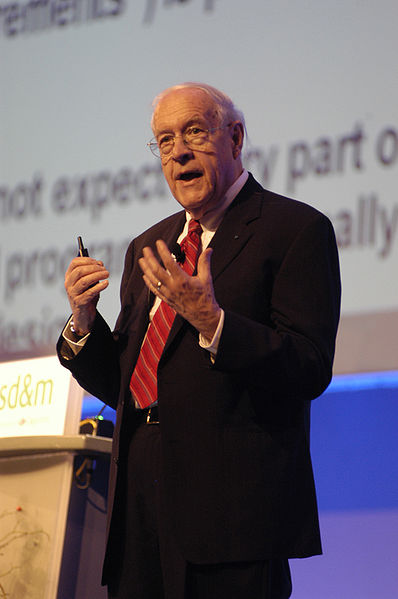
"Steve Jobs starts with a vision rather than a list of features." (Image by Carola Lauber of SD&M.)

Pioneering computer scientist Fred Brooks is the subject of an interesting Wired Q&A conducted by Kevin Kelly. Brooks became famous in the computer world–and beyond–for his book, The Mythical Man-Month, which gave lie to the idea that increased manpower translated into faster progress. The theory became known as Brooks’ Law.

Brooks has written a new book called The Design of Design: Essays From a Computer Scientist, which occasioned the interview. A few excerpts below:

•••••

Wired: How does a guy who grew up in the 1940s among North Carolina tobacco farmers get into computers?

Fred Brooks: I collected maps as a kid. I had tried all kinds of ways to index my map collection, which got me interested in the notion of automatic data retrieval. In 1944, when I was 13, I read about the Harvard Mark 1 computer in a magazine, and I knew then that computers was what I wanted to do.

•••••

Wired: You’re a Mac user. What have you learned from the design of Apple products?

Fred Brooks: Edwin Land, inventor of the Polaroid camera, once said that his method of design was to start with a vision of what you want and then, one by one, remove the technical obstacles until you have it. I think that’s what Steve Jobs does. He starts with a vision rather than a list of features.

•••••

Wired: You say that the Job Control Language you developed for the IBM 360 OS was “the worst computer programming language ever devised by anybody, anywhere.” Have you always been so frank with yourself?

Fred Brooks: You can learn more from failure than success. In failure you’re forced to find out what part did not work. But in success you can believe everything you did was great, when in fact some parts may not have worked at all. Failure forces you to face reality.

Tags: ,

Bunny rabbit: Do not fear me. I am cuddly!

I found this unusual article on the Spiegel website. It concerns a German high-school teacher who has an extreme fear of bunny rabbits–just the word “rabbit” sends her into hysterics and you should see what actual pictures of the animals do to her. The teacher, called Marion V. in the piece, sued a student for spreading rumors about her fear of the long-eared mammals. She says it isn’t true, but the courts ruled that it was in fact a real phobia.

The interesting thing about phobias is that they really can take absolutely any form and it’s difficult to impossible to figure out their sources. An excerpt from the article:

“A teacher in the northern German town of Vechta lost her case Tuesday that would have put to bed the rumor that she’s afraid of rabbits. Marion V., 60, a German and geography teacher, made headlines earlier this year by accusing a 16-year-old schoolgirl of defamation, alleging that the student maliciously gossiped that V. suffers from rabbit phobia.

The defendant, named as Kim P., caused the stir by drawing a rabbit on the blackboard of V.’s classroom. Upon entering the room and seeing the drawing, V. reportedly fled from her classroom in tears.

The court dismissed V.’s claims, saying through a court spokesperson that V.’s fear of rabbits is a fact, which the defendant proved in court. If Kim P. was found guilty, she would have faced a €5,000 fine for any further incidents of rabbit drawing in front of V.”

Tags: ,

Thanks to the fabulous science geeks at Boing Boing for pointing me in the direction of this entertaining video made by the clever engineers at Dyson. They made a helium ballon neutrally buoyant and allowed it travel on its own through a complex maze of the company’s very cool bladeless fans. Fun.

More Featured Videos:

Almost all picky eaters love french fries. No one knows why. (Image by Treimann.)

I’ve been a picky eater since birth. It must have been very tough on my parents, because I was always really skinny as a child no matter how hard they tried to get me to expand my menu. The idea of eating a messy bowl of spaghetti with sauce sickens me. And you will not get me near a cup of soup. I gravitate toward neater foods that have consistent textures and a distinct geometrical shapes, like sandwiches (squares), hamburgers (circles) and pizza slices (triangles). Luckily, I love almost all fruits and vegetables, so the pickiness with other foods doesn’t affect my health.

I’m pretty sure it’s some type of OCD kind of thing, and some scientists agree. The Wall Street Journal has a really interesting article by Shirley S. Wang on the topic called “No Age Limit on Picky Eating.” (Thanks to the great Marginal Revolution for pointing me toward the article.) An excerpt:

“Picky eaters tend to gravitate to certain foods, including blander products that are often white or pale colored, like plain pasta or cheese pizza. For reasons that aren’t clear, almost all adult picky eaters like French fries and often chicken fingers, health experts say.

Amber Scott, of Enon, Ohio, has eaten only about 10 different foods since she was 3 years old. She describes foods that don’t appeal to her as if they are inedible objects. ‘You wouldn’t put a handful of grass in your mouth and chew it up,’ says the 29-year-old. ‘I feel the same way about spaghetti.’ It isn’t as much the flavor as it is the texture and the way her body reacts to a new food, she says. When she tried eating an apricot last fall, her stomach churned. ‘I really wanted to like it, but my body wouldn’t let me,’ she says.

Ms. Scott, a writer, is planning to move to Los Angeles and is ‘terrified’ of having to sit through networking dinners. Like many picky eaters, she says most of her friends don’t know about her tendencies because she tries to avoid social situations that involve eating. She has looked for help in the past but says she couldn’t find a therapist who appeared to understand her condition, and has stopped searching.”

Tags: ,

Esther Williams: "I reached up with my boy's large, clumsy hand to touch my right breast and felt my penis stirring."

As universities begin studying the effects and uses of LSD again, Vanity Fair takes a look back at the drug’s origins and its popularity as part of psychotherapy in Hollywood in the late 50s, before Timothy Leary had taken even a single trip. “Cary in the Sky with Diamonds” is an article by Cari Beauchamp and Judy Balaban. The latter is the daughter of Paramount Pictures president Barney Balaban; she not only experimented with the drug herself but has first-hand knowledge of all of the principals involved.

In one passage, swimming great and movie star Esther Williams, who experimented with LSD when she was in her late thirties, recalls the profound and strange effect the drug had on her. Williams believes the experience helped her confront the deep pain and unhappiness she carried with her since her beloved older brother died when she was eight years old. An excerpt:

Under LSD, Esther saw ‘my father’s face as a ceramic plate. Almost instantly, it splintered into a million tiny pieces, like a windshield when a rock goes through it.’ Then she saw her mother’s face on that terrible day, and ‘all the emotion had drained out of her, and her soft, kindly features had hardened.’

During the session Esther realized—’observing it from a distance as if I were acting in or watching a movie’—that ever since the day her brother had died her life had been consumed by the necessity to replace him in every sense of the word, and “suddenly this little girl was in a race against time to be an adult.”

Does Esther Williams think she has a penis or am I just really high? (Image by Philip H. Bailey.)

Exhausted but calm, Esther left the doctor’s office and returned to her Mandeville Canyon home, where her parents, still emotionally broken by Stanton’s death, were waiting to have dinner with her. She “understood them that night in a profound way, and while I sympathized, I was also sickened by their weakness and their resignation. I saw that they both simply had given up, which, no matter what life had in store for me, was something I could never and would never do.”

But the evening wasn’t over for Esther. After she had said good night to her parents, she went to her bedroom, undressed, and washed. When she looked in the mirror, ‘I was startled by a split image: One half of my face, the right half, was me; the other half was the face of a sixteen-year-old boy. The left side of my upper body was flat and muscular.… I reached up with my boy’s large, clumsy hand to touch my right breast and felt my penis stirring. It was a hermaphroditic phantasm.’ Esther has no recollection of how long she stood there, but there was no question that now ‘I understood perfectly: when Stanton had died, I had taken him into my life so completely that he became a part of me.’”

Tags: , , , ,

A company called SPFX Masks makes realistic imitation faces that are creepy and have been used by criminals to commit robberies (though the company undoubtedly does not endorse this behavior). Your definition of “handsome” may vary–wildly!–but it is impressive-looking work in its own bizarre way. (Thanks to Boing Boing for pointing me toward this video.)

More Featured Videos:

Eat me.

Dang, That Billboard Sure Smells Good!” is the title of an AP article that tells the odd story of a grocery chain that has gone the extra mile to advertise a new line of beef. The company has put up a billboard in Mooresville, North Carolina, that uses fragrance oil and fans to spread the smell of beef to passing cars. Vegans will be pleased. An excerpt:

“It’s not just the picture of beef on a new billboard in North Carolina that tries to catch drivers’ attention, it’s the aroma coming from the sign.

The billboard on N.C. 150 in central North Carolina emits the smell of black pepper and charcoal to promote a new line of beef available at the Bloom grocery chain. Bloom is part of the Salisbury, N.C.-based Food Lion chain.”

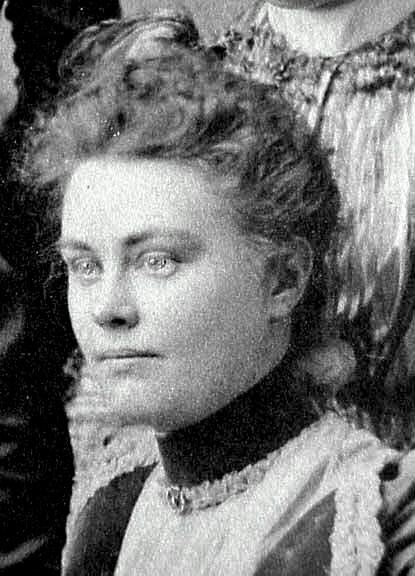
"Cousin Lizzie" was acquitted of murdering her parents in 1893.

What if you’re a neuroscientist who’s been studying the brains of violent psychopaths for 20 years and then you find out your brain and genetics are just like theirs? That’s the situation UC Irvine professor Jim Fallon found himself in after an offhand remark made by a great-grandmother led him to look into his own family’s historical predisposition for violence. Even spookier than finding out that he is a relative of Lizzie Borden, Fallon discovered that his brain activity and genes are identical to that of vicious criminals. Only a happy, loving childhood may have saved him from his natural tendencies.

Fallon’s story is told by Barbara Bradley Hagerty in “A Neuroscientist Uncovers a Dark Secret,” part of an NPR series about brain science and criminology. (Thanks to A&L Daily for pointing me in the direction of this piece.) An excerpt:

“Jim Fallon says he had a terrific childhood; he was doted on by his parents and had loving relationships with his brothers and sisters and entire extended family. Significantly, he says this journey through his brain has changed the way he thinks about nature and nurture. He once believed that genes and brain function could determine everything about us. But now he thinks his childhood may have made all the difference.

‘We’ll never know, but the way these patterns are looking in general population, had I been abused, we might not be sitting here today,’ he says.”

Tags: ,

"The news of the egg boiling spread quickly."

In the same year that the first New York resident died by electric chair, a much more sanguine use of voltage was displayed: A Manhattan electric supply company boiled an egg with electricity for (perhaps) the first time in NYC history. Wow! A story about this amazing march of scientific progress ran in the July 13, 1890 edition of the Brooklyn Daily Eagle. An excerpt:

“The novel experiment of boiling eggs by electricity was tried recently in the office of the electric supply company, Cincinnati, in the masonic temple, on Third street. Of course they were boiled in water, but electricity was the heating agent. Luke Lilley, the city’s assistant electrician, was chief cook. Charley Marshall, the underwriter’s agent, ate the first egg boiled by the agency of the subtle current. It required six amperes (quantity of electricity) and ninety-six volts (pressure or force) to accomplish the operation with about two quarts of water in a huge tin cup, the electric current being connected through the handle of the cup. The news of the egg boiling spread quickly, and as it was about lunch time, brokers, bulls and bears, bankers, insurance men and lawyers crowded the office. About thirteen dozen eggs were consumed, the only disappointment being that a drink did not go with each egg.”

More Old Print Articles:

Tags: ,

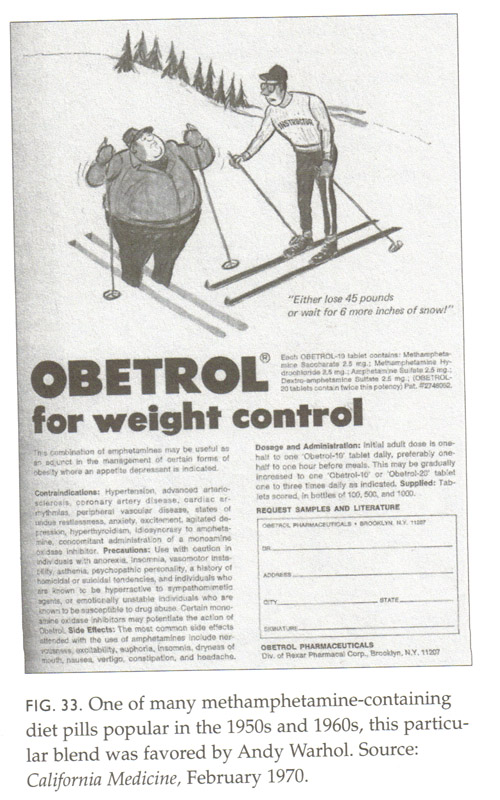
Obetrol: "Use with caution in individuals with anorexia."

According to Nicholas Rasmussen’s book, On Speed: The Many Lives of Amphetamine, the meth-laced diet pills Obetrol were Andy Warhol’s weight-loss tablet of choice. The medication was produced by a Brooklyn drug manufacturer, but meth’s usage as a diet aid waned during the 1980s. This 1970 ad features an illustration in which a ski instructor mocks a student whose obesity is causing him to sink. The instructor barks: “Either lose 45 pounds or wait for six more inches of snow!” The ad contains the following precautions:

“Use with caution in individuals with anorexia, insomnia, asthma, psychopathic personality, a history of homicidal or suicidal tendencies, or emotionally unstable individuals who are known to be susceptible to drug abuse.”

More Old Print Ads:

Tags: ,

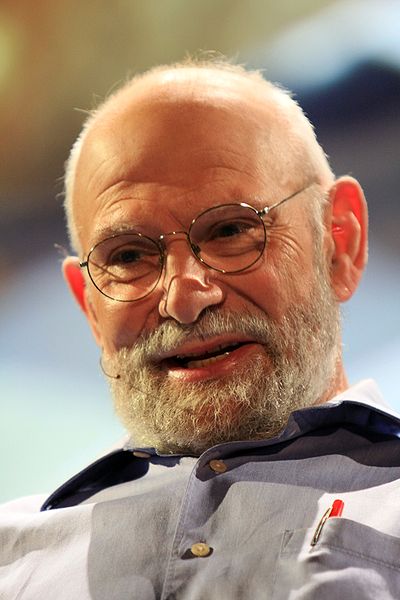
This may be Oliver Sacks' face. I'm not sure. Neither is he. (Image by Erik Charlton.)

I was born with an odd neurological glitch called Face Blindness. It makes it difficult for me to recognize faces, even of people I know well. I don’t have it 100%, so I’m very good at recognizing people in context, but if I’m not expecting to see someone, it’s 50-50 that I can recognize them before I hear their voice. I can see their faces just fine; but the recognition mechanism malfunctions. People who wear hats and sunglasses pose additional problems. And for me, blond people are tougher to recognize than dark-haired people, perhaps because most of the people who I grew up around were ethnic and I have more practice with them. I don’t know.

I’ve had otherwise intelligent people acknowledge to me that they carried on feuds with me (that I knew nothing about) because I had “snubbed them.” When I’ve told others of this condition, they tend to brush it away because people often have rather large and fragile egos and expect you to acknowledge them no matter what. I can only imagine what it’s like for those who have Face Blindness completely–they can’t even recognize themselves in a mirror!

Two people who also have Face Blindness are neuroscientist Oliver Sacks and artist Chuck Close. A big thanks to Marginal Revolution for pointing me in the direction of this NPR show in which the two men discuss coping with Face Blindness. Listen to it here.

Tags: ,

Old Timey Elixirs.

Based on the Brooklyn Daily Eagle.

  • Lung Invigorators…$6
  • Body Belts…$5
  • Leg Belts…$4
  • Head Caps…$4
  • Humphrey’s Specific Homeopathic Pills for Women…$4
  • Knee Caps…$3
  • Owens’ Anti Intoxication…$2
  • Madame Yale’s Skin Food…$1.50
  • Madame Yale’s Constipation Fertilizer…$1.50
  • Throat Protectors…$1
  • Madame Yale’s “La Freckla” Freckle Cure…$1
  • Vail’s Restorer Disease Exterminator…$1
  • Warner’s Kidney Cure…80¢
  • Owens’ Dyspepsia Cure…50¢
  • Owens’ Diarrhea Syrup…25¢
  • Owens’ Worm Syrup…25¢
  • Owens’ Magic Cure for Chilblains…25¢
  • Owens’ Toothache Drops…15¢

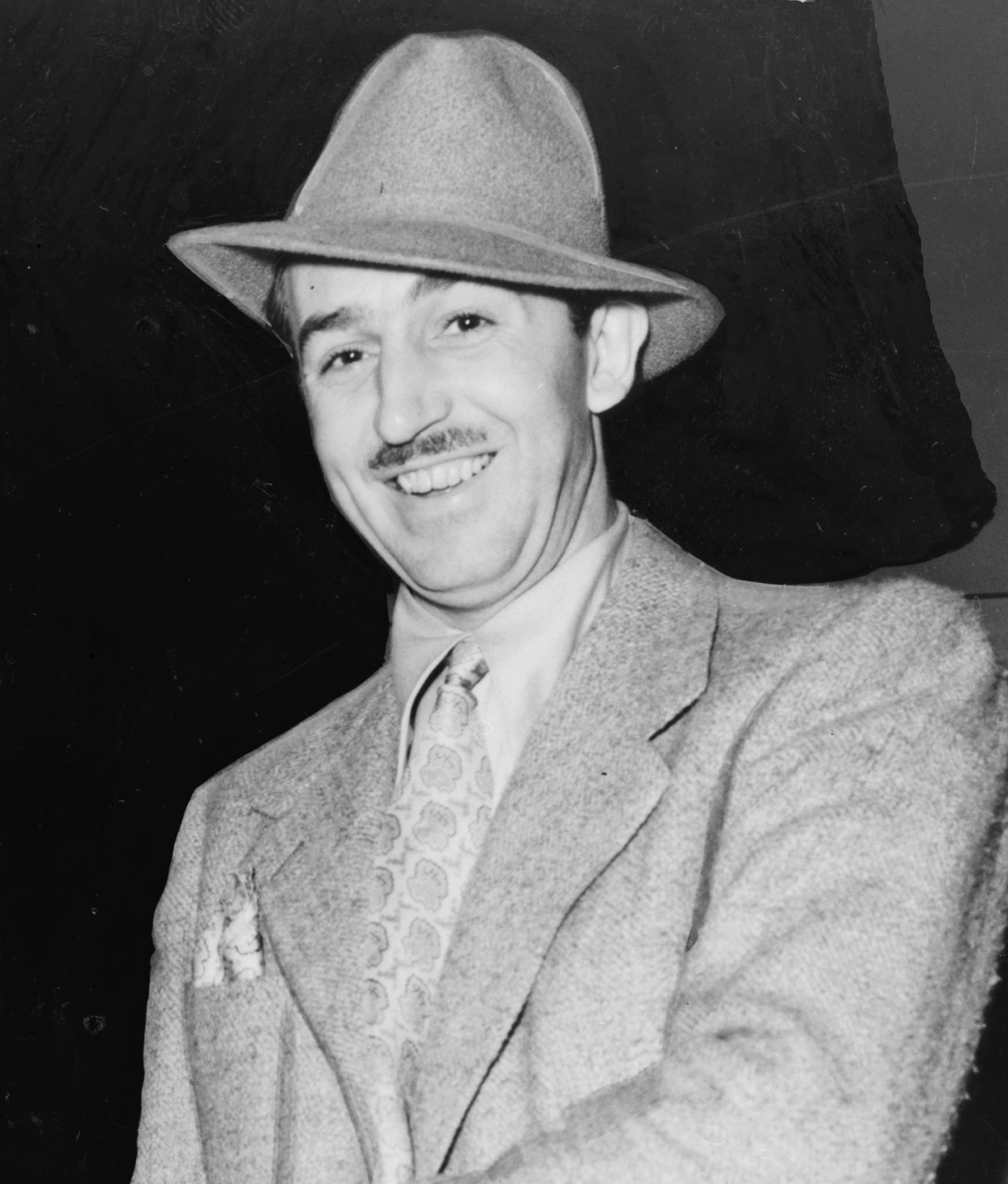
Walt Disney: Mickey Mouse sure is fucking wasted today. (Photo by Alan Fisher.)

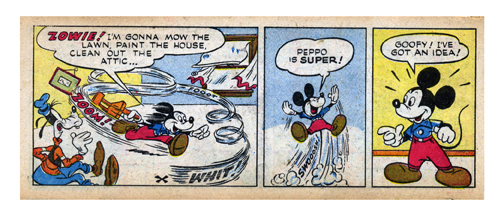
Back in the day, athletes took amphetamines which were quaintly called pep pills. But even children’s favorites Mickey Mouse and Goofy were on the stuff, according to an old 1951 comic book called Mickey Mouse and the Medicine Man, which has been placed online by erowid.org. Not only do Mickey and Goofy get speeded up, but Mickey wants to push the stuff himself. The drug-positive comic was a collaboration between Disney and General Mills. (Thanks to the great Boing Boing for pointing me in the direction of the comic.)

Peppo is super!

Tags: , ,

Internet cafes will not make you dumber. (Image by Phallus Nocturne.)

When I was growing up in my working-class neighborhood in Queens, there wasn’t a single bookstore in the community during my entire childhood. Not one. There were candy stores where you could get a paper or a magazine and a couple of small, semi-stocked libraries, but it was difficult for a kid with a curious mind to grow up in that environment. You had to take a train to Manhattan just to get a hold of something with hard covers to read. I always felt like there was information somewhere, but I didn’t know where it was.

You know what would have leveled the playing field? The Internet. It didn’t exist then, but it does now, and it has the potential to connect any reader in the world to any book they want. You can find out about any university, look up any word and read an incredible array of great writing wherever there’s a wi-fi connection. That doesn’t mean everyone will use the medium to improve themselves, but it’s pretty hard to avoid doing so. The Internet is democratizing and despite what the hand-wringers say, it’s made our knowledge deeper and stronger.

That’s why I bristle when I hear how the Internet is destroying the literary mind and damaging our memories. If it seems like our memories are failing more often than they used to, that’s because we have so much more information at our fingertips. Ultimately, that’s a good thing.

One person who agrees with me is Steven Pinker. Pinker is a psychology professor at Harvard who’s best known for his book, The Stuff of Thought. In an article on Edge, he addresses concerns about what the Internet is doing to our brains. An excerpt:

New forms of media have always caused moral panics: the printing press, newspapers, paperbacks and television were all once denounced as threats to their consumers’ brainpower and moral fiber.

So too with electronic technologies. PowerPoint, we’re told, is reducing discourse to bullet points. Search engines lower our intelligence, encouraging us to skim on the surface of knowledge rather than dive to its depths. Twitter is shrinking our attention spans.

But such panics often fail basic reality checks. When comic books were accused of turning juveniles into delinquents in the 1950s, crime was falling to record lows, just as the denunciations of video games in the 1990s coincided with the great American crime decline. The decades of television, transistor radios and rock videos were also decades in which I.Q. scores rose continuously.

For a reality check today, take the state of science, which demands high levels of brainwork and is measured by clear benchmarks of discovery. These days scientists are never far from their e-mail, rarely touch paper and cannot lecture without PowerPoint. If electronic media were hazardous to intelligence, the quality of science would be plummeting. Yet discoveries are multiplying like fruit flies, and progress is dizzying.”

Tags:

Inventor Lee de Forest: I was a tremendous prick, but terribly important.

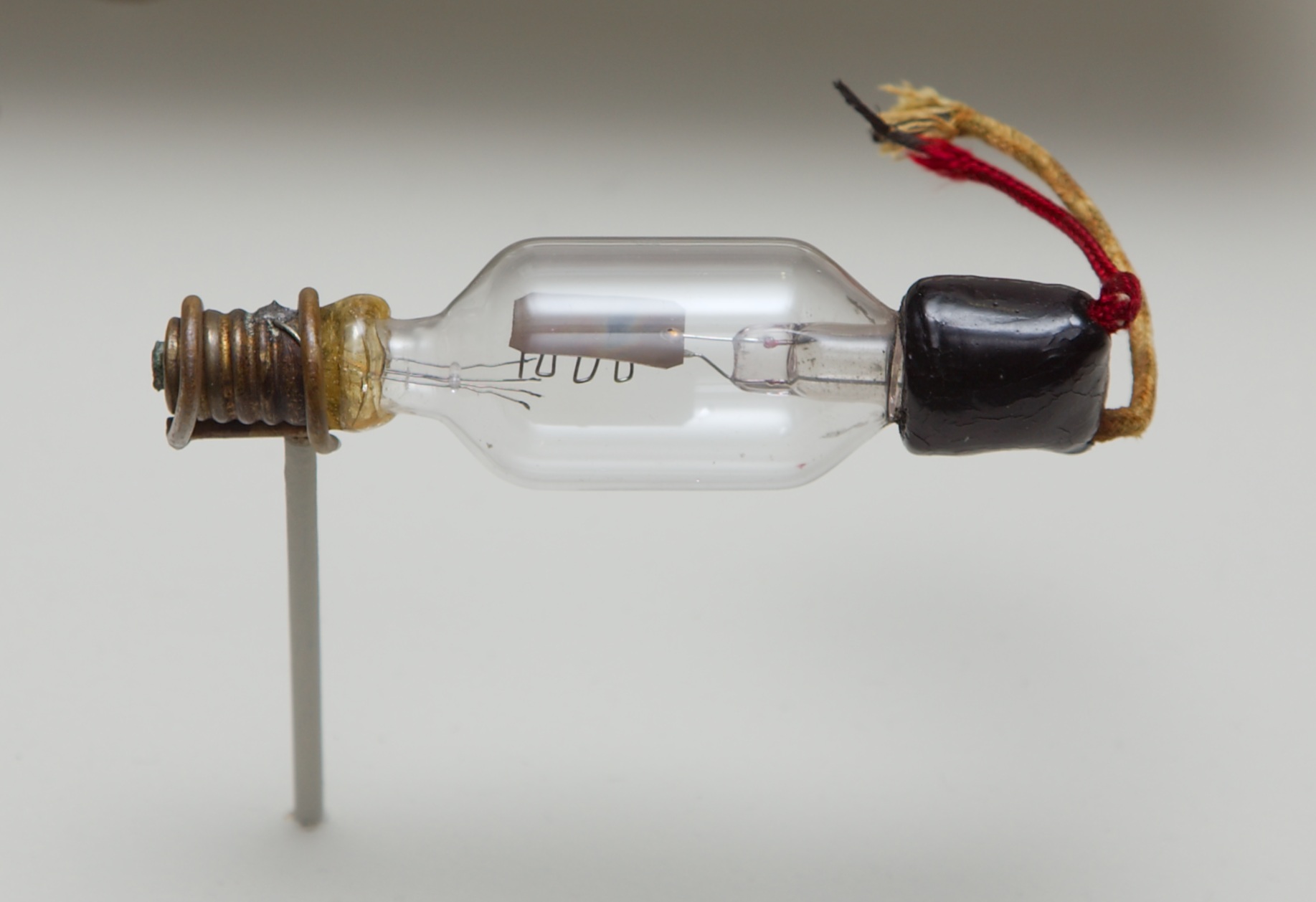
Lee de Forest was one of the most important inventors in modern times, but don’t feel bad if you haven’t heard of him. The man is as forgotten as his invention, the Audion, is ubiquitous. The vexing inventor’s 1906 discovery made audio amplification possible, giving new life to the flagging radio industry and making possible any number of media. Gizmodo has posted an excerpt from Nicholas Carr’s new book, The Shallows, which provides insight into de Forest.  An excerpt:

“Even when judged by the high standards set by America’s mad-genius inventors, de Forest was an oddball. Nasty, ill-favored, and generally despised–in high school he was voted ‘homeliest boy’ in his class–he was propelled by an enormous ego and an equally outsized inferiority complex. When he wasn’t marrying or divorcing a wife, alienating a colleague, or leading a business to ruin, he was usually in court defending himself against charges of fraud or patent infringement–or pressing his own suit against one of his many enemies.

De Forest grew up in Alabama, the son of a schoolmaster. After earning a doctorate in engineering from Yale in 1896, he spent a decade fiddling with the latest radio and telegraph technology, desperately seeking the breakthrough that would make his name and fortune. In 1906, his moment arrived. Without quite knowing what he was doing, he took a standard two-pole vacuum tube, which sent an electric current from one wire (the filament) to a second (the plate), and he added a third wire to it, turning the diode into a triode. He found that when he sent a small electric charge into the third wire–the grid–it boosted the strength of the current running between the filament and the plate. The device, he explained in a patent application, could be adapted ‘for amplifying feeble electric currents.’

De Forest’s seemingly modest invention turned out to be a world changer. Because it could be used to amplify an electrical signal, it could also be used to amplify audio transmissions sent and received as radio waves. Up to then, radios had been of limited use because their signals faded so quickly. With the Audion to boost the signals, long-distance wireless transmissions became possible, setting the stage for radio broadcasting. The Audion became, as well, a critical component of the new telephone system, enabling people on opposite sides of the country, or the world, to hear each other talk.

De Forest couldn’t have known it at the time, but he had inaugurated the age of electronics.”

Tags: ,

“You think the Kardashians lack genius?” (Image by Martin Schneider.)

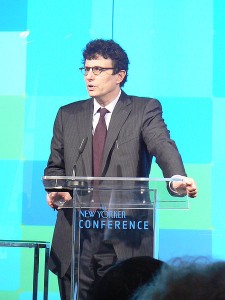
Robert Birnbaum of the Morning News has a fun, freewheeling interview with New Yorker editor David Remnick. The Q&A is pegged to Remnick’s new book about Obama, but the two cover a number of topics, both serious and silly, in an off-the-cuff manner. A few excerpts follow.

___________________

Robert Birnbaum:

What is going to happen with newspapers and such?

David Remnick:

I’m not a fortune teller. I know it would be interesting if I sat here and told you without a trace of uncertainty that in 10 years all magazines are going to be projected on screens on the side of the Empire State Building and the Prudential Building. Or alternately, they would be projected on the inside of your sunglasses in the summertime. I don’t know. Here’s what my job is, and I share that with other editors, too: We are in this moment of technological uncertainty and transition. The goal for me is to make sure we find a way, willy-nilly, to be healthy so that we can do the thing itself. The thing itself is what I care about most. Given a choice between the survival of the long-form narrative journalism, criticism, cartooning—all the things that we do—and print itself, there is no contest. No contest. I, at the age of 51, may still think, for me, the best technology for reading the New Yorker at this moment is the print version. But that’s just me. If your son, decides otherwise, that he wants to read it on an iPad, kenahorah [so be it].

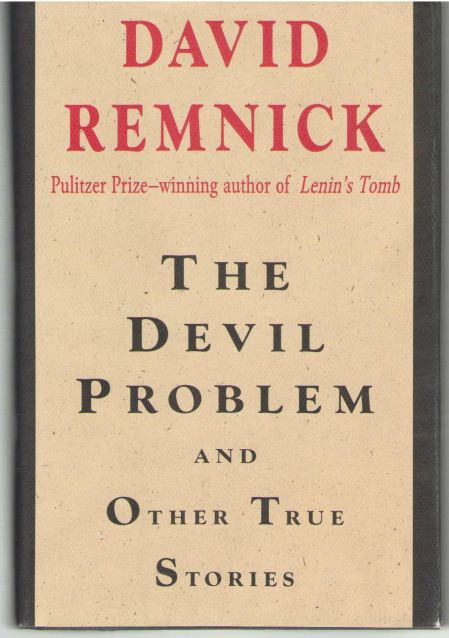
Remnick’s “The Devil Problem and Other True Stories” is one of my favorite non-fiction collections.

Robert Birnbaum:

I have to say I am befuddled by what flits across my TV screen—who are these Kondrashian [sic] people?

David Remnick

You think they lack genius?

Robert Birnbaum

Uh.

David Remnick

(laughs)

Robert Birnbaum

Someone must have genius associated with them.

David Remnick

Something I have never found interesting at all—two unbelievably popular things on television. One is reality television—it never interested me at all. And the other is this neo-talent-show stuff, like American Idol. The reason I don’t like American Idol is that a lot of the talent seems to be a replication of the singing style of Mariah Carey and Whitney Huston. I don’t need it.

___________________

David Remnick

David Owen is a fantastic golf writer.

Robert Birnbaum

I find golf to be the least interesting of pastimes.

David Remnick

To me it looks like a nervous breakdown with a stick.

Tags: ,

Ronald Wayne: Not even a free iPod. (Image by Wayne Kottke.)

It’s tough to say how Apple Computers co-founder Ronald Wayne would have spent $22 billion dollars, and we’ll never know for sure. Wayne was the minority partner to Steve Jobs and Steve Wozniak at the formation of Apple in 1976, and his ten-percent stake would be worth an insane fortune if he had held on to it. But Wayne, who had previously suffered through painful business failures, had misgivings about the wildly talented Jobs and Woz, so he sold his stake back to them after just 12 days.

Bruce Newman of the San Jose Mercury News caught up with Wayne in Pahrump, Nevada, recently to write the piece “Apple’s Lost Founder: Jobs, Woz and Wayne,” and asked him about what might have been. All these years later, he seems more baffled than bitter regarding his fate. An excerpt:

“It’s usually past midnight when Ron Wayne, co-founder of Apple–colossus of the tech world, and Silicon Valley’s most adored franchise–leaves his home here and heads into town. Averting his eyes from a boneyard of abandoned mobile homes, he drives past Terrible’s Lakeside Casino & RV Park, then makes a left at the massage parlor built in the shape of a castle.

When he arrives at that night’s casino of choice, Wayne makes a beeline for the penny slot machines. If it’s the middle of the month and he has just cashed his Social Security check, he will keep battling the one-armed bandits until 2 a.m. Wayne is waiting to hit the jackpot, and he is long overdue.

If Ron Wayne, now 76, weren’t one of the most luckless men in the history of Silicon Valley, it wouldn’t have turned out like this.

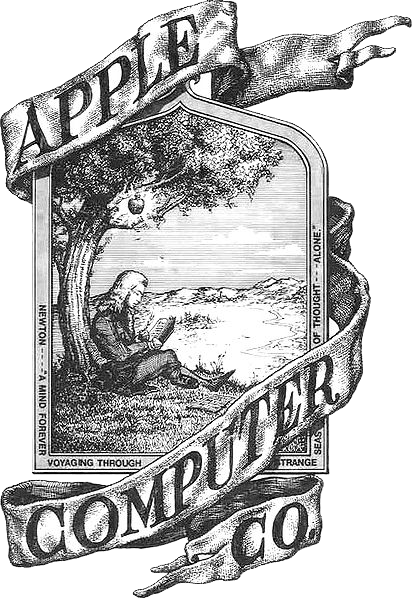
He was present at the birth of cool on April Fool’s Day, 1976: Co-founder—along with Steve Jobs and Steve Wozniak—of the Apple Computer Inc., Wayne designed the company’s original logo, wrote the manual for the Apple I computer, and drafted the fledgling company’s partnership agreement.

That agreement gave him a 10 percent ownership stake in Apple, a position that would be worth about $22 billion today if Wayne had held onto it.

But he didn’t.”

Tags: , ,

« Older entries § Newer entries »