
Science/Tech

You are currently browsing the archive for the Science/Tech category.

Everyone rushing to see the new Ashton Kutcher-Katherine Heigl movie. (Image by David Shankbone.)

There’s a really interesting article in Wired about Charles Komanoff, a New York resident who’s obsessively mapping every aspect of Manhattan traffic in online spreadsheets. The piece by Felix Salmon, “The Man Who Could Unsnarl Manhattan Traffic,” examines how the 62-year-old Tribeca activist and numbers cruncher is trying to make sense of Manhattan gridlock (environmental impact, safety concerns, reducing delays) with the aid of his Balanced Transportation Analyzer. Komanoff’s work has impressed experts on the subject not just in NYC but in Europe and Asia as well. An excerpt:

“Komanoff’s life has been driven by two passions: cycling and data. Naturally, he has combined them in another spreadsheet, one that logs every mile he has biked since January 1, 2001. The very act of entering the data, Komanoff says, keeps him motivated to ride everywhere, even in the rain and snow. ‘I want to be able to enter the miles,’ he says. He ends up inputting about 3,000 of them every year.

A bearded former antiwar activist, Komanoff grew up in a liberal enclave of Long Island and studied mathematics and economics at Harvard. In 1973, he analyzed a proposed hydroelectric facility in upstate New York whose business model relied on the existence of extensive nuclear power in the Northeast. He wrote a report showing that the kilowatt price of nuclear power was rising fast and that the economics of the scheme simply didn’t work. It was his professional breakthrough, and in 1981 he published a massive book on the subject, Power Plant Cost Escalation: Nuclear and Coal Capital Costs, Regulation and Economics. ‘I thought I’d never do anything that ambitious again,’ he says.

Over the next 30 years, Komanoff built a career at this intersection of algorithms and advocacy, especially around what he calls ‘the two leading sources of environmental and social harm in industrial societies: electricity generation and motor vehicles.’”
Tags:

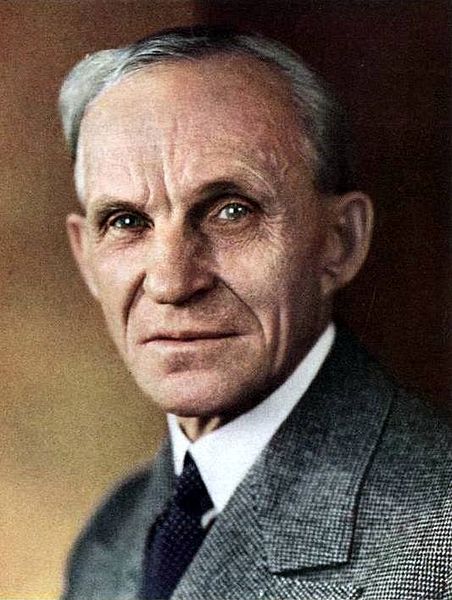
Henry Ford: This movie is an utter blowjob to my legacy, but it contains some fantastic footage of America from 1915-1930.

It was probably because he was close friends with Thomas Edison that Henry Ford became so interested in film. In his lifetime, the automotive magnate collected miles and miles of film footage that captured America in the early 20th century. The Ford Historical Film Collection (now housed at the National Archives) were used to create “Henry Ford’s Mirror of America,” an unobjective 35-minute piece of embarrassing pro-Ford propaganda that also happens to contain some amazing footage of the U.S. during the birth of the Industrial Revolution. Some highlights: a reunion of Civil War veterans (Blue and Gray) in Vicksburg in 1917, an Atlantic City hotel shaped like an elephant, the naturalist John Burroughs meeting his adoring public, Buffalo Bill Cody and his circus in action in 1916, women riveting in factories during WWI and the burial of the Unknown Soldier. Enjoy Part 1 and Part 2.

Tags: , ,

Adolf Lorenz was famous for his hip surgeries, but he also came up with a treatment for club feet.

Viennese orthopedic surgeon Adolf Lorenz was a trailblazer when medical procedures in America were still often performed in the home of the patient. He sojourned to the U.S. in December of 1902 and traveled cross country to share his medical knowledge and perform a series of innovative hip surgeries on crippled children.

In its December 14 issue, the Brooklyn Daily Eagle recorded Lorenz’s arrival in New York. (They spelled his first name “Adolph” instead of the proper “Adolf.”) The piece is subtitled: “Hundred of Local Physicians and Surgeons Seeking Opportunity to Study His Practice and Methods.” An excerpt:

“Professor Adolph Lorenz,the celebrated Austrian surgeon, arrived yesterday afternoon in New York to begin his operations for congenital dislocations of the hip. He will operate free of charge on a number of young children that have been selected by local physicians as proper subjects for his charity and his treatment.

Prof. Lorenz came in from Philadelphia at 7 o’clock. He was met in Jersey City by a large number of local surgeons, among them being Dr. Virgil P. Gibney, consulting surgeon for the New York Hospital for the Crippled and Ruptured. Dr. Gibney will have charge of the details of arrangements for Prof. Lorenz’s operations here.

The famous surgeon went directly to the Holland House, where rooms had been engaged for him. He was seen there by newspaper men, but would not say anything further than that he would be busy until Monday getting ready for his operations. He went out with Dr. Gibney and others before 8 o’clock. Professor Lorenz will spend to-day making preparations for his work here. He will consult with other surgeons, and may examine the children who are to be operated on.”

In “Lorenz Applauded By Noted Surgeons,” the Times followed up with an account of his first surgeries. It was quite a scene. An excerpt from that piece:

“The little room in which was the operating table was wholly occupied by spectators. Applause followed applause as Dr. Lorenz demonstrated his method. The expressions on the faces of the watching surgeons showed that they were intensely interested, and they were the chief applause givers.

It being Dr. Lorenz’s debut in New York, celebrated surgeons and physicians early gathered about the clinic of the hospital on Lexington Avenue. They were prominent, and were admitted to the operating room whether they had invitations or not. It was regarded as the most notable gathering of New York medical men, but they fought for admittance of the small amphitheatre like schoolboys would get into the circus.”

More Old Print Articles:

Tags:

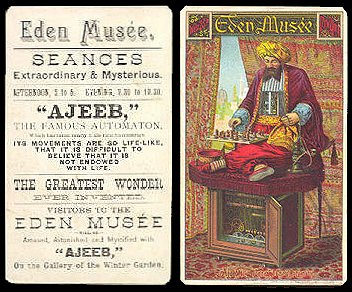
Ajeeb says, "Checkmate, bitch!"

As hoaxes go, Ajeeb, an “automaton” expert at checkers and chess, was a ridiculously simple scam. Ajeeb was one of several alleged machines–the Turk and Mephisto were a couple of others–during the late 1800s and early 1900s that were supposedly capable of defeating humans at board games.

Ajeeb, created in 1868 by cabinetmaker Charles Hooper, was not actually a machine at all. The elaborate-looking 10-foot-tall contraption attired in Turkish clothes hid inside of it a rotating collection of some of the best chess players in the world. Thousands came to see Ajeeb match moves with disbelieving opponents (including Houdini, Teddy Roosevelt and Sarah Berhnardt) on both sides of the Atlantic.

There is intrigue surrounding Ajeeb that supposedly involved theft and murder and more. Eventually technology caught up to imagination and today computers need no help to defeat us.

Tags: , , ,

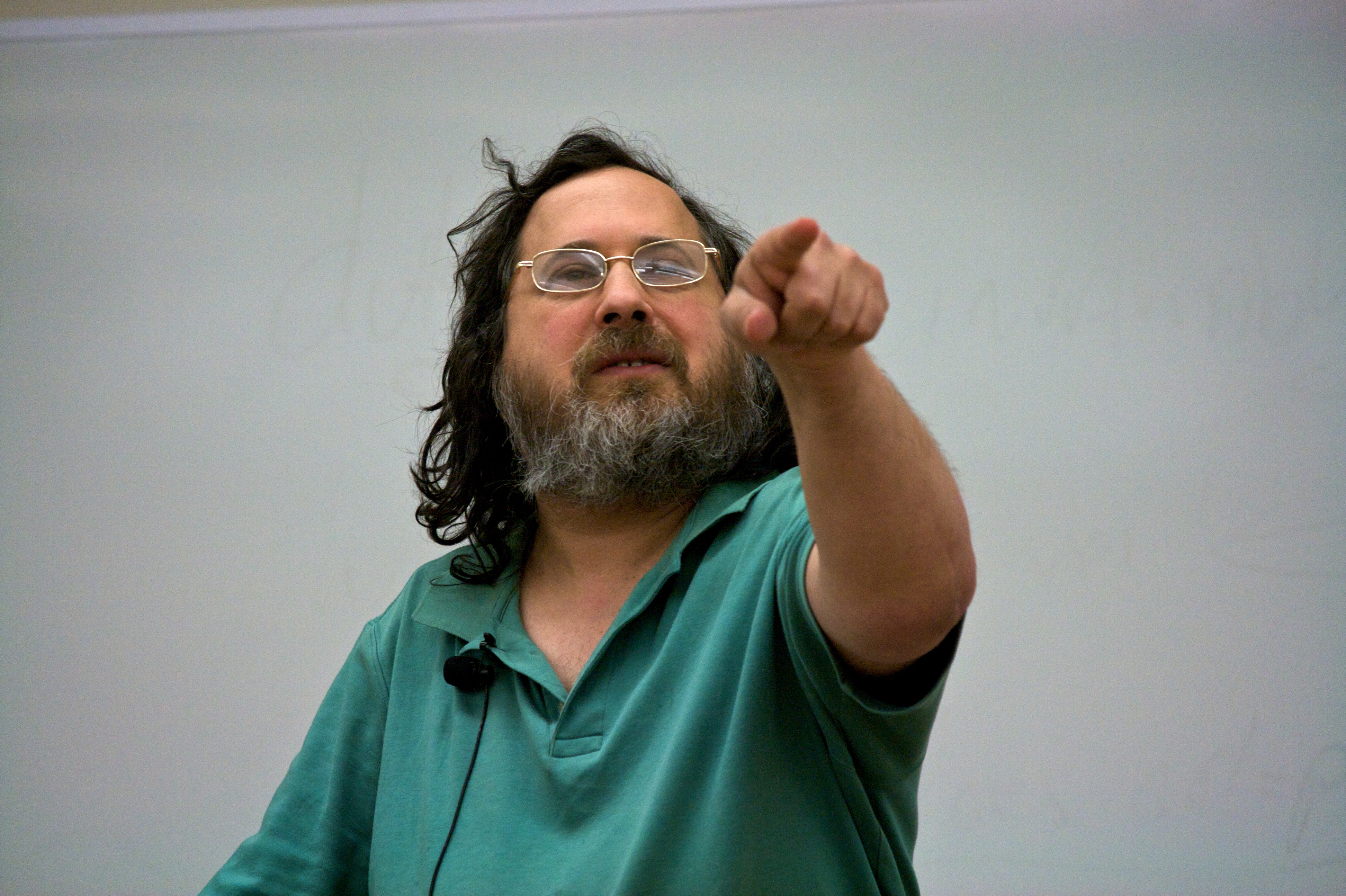
Richard Stallman, pioneer hacker, at the University of Calgary in 2009. (Image by D'Arcy Norman.)

Wired has a great piece online in which journalist Steven Levy looks back on the flowering o the Information Age 25 years after the publication of his landmark book, Hackers: Heroes of the Computer Revolution.

Back in the good old days hackers weren’t criminals stealing and spying; they were the nerdy genius programmers who remade the way we think, live and communicate. Levy looks back at the monsters of the industry who became household names–Gates, Wozniak, etc.–but also revisits some of those who never spent time hanging with Bono or dancing with the stars.

One passage that’s particularly interesting focuses on legendary hacker Richard Stallman, a brilliant and belligerent soul who despises the commercialization of what the geeks brought to life. An excerpt about him from Levy’s Wired article:

“I first met Richard Stallman, a denizen of MIT’s AI Lab, in 1983. Even then he was bemoaning the sad decline of hacker culture and felt that the commercialization of software was a crime. When I spoke to him that year, as the computer industry was soaring, he looked me in the eye and said, ‘I don’t believe that software can be owned.’ I called him ‘the last of the true hackers’ and assumed the world would soon squash him.

Was I ever wrong. Stallman’s crusade for free software has continued to inform the ongoing struggles over intellectual property and won him a MacArthur Foundation ‘genius grant.’ He founded the Free Software Foundation and wrote the GNU operating system, which garnered widespread adoption after Linus Torvalds wrote Linux to run with it; the combination is used in millions of devices. More important, perhaps, is that Stallman provided the intellectual framework that led to the open source movement, a critical element of modern software and the Internet itself. If the software world had saints, Stallman would have been beatified long ago.

Yet he is almost as famous for his unyielding personality. In 2002, Creative Commons evangelist Lawrence Lessig wrote, ‘I don’t know Stallman well. I know him well enough to know he is a hard man to like.’ (And that was in the preface to Stallman’s own book.) Time has not softened him. In our original interview, Stallman said, ‘I’m the last survivor of a dead culture. And I don’t really belong in the world anymore. And in some ways I feel I ought to be dead.’ Now, meeting over Chinese food, he reaffirms this. ‘I have certainly wished I had killed myself when I was born,’ he says. ‘In terms of effect on the world, it’s very good that I’ve lived. And so I guess, if I could go back in time and prevent my birth, I wouldn’t do it. But I sure wish I hadn’t had so much pain.'”

Tags: ,

The Dallas Cowboys played this past NFL season in a fancy-shmancy new billion-dollar home, so in April it was time for old Texas Stadium to bite the dust. Planned implosions of old decommissioned buildings are always oddly thrilling to watch, but Immersion Media has given the viewing experience a brilliant now twist. The video above has a tool embedded that allows you to watch Texas Stadium implode from the inside from any angle you like and change angles as the implosion unfolds. It’s glorious wreckage in panoramic form. Thank you to the legendary boing boing for pointing me in the video’s direction.

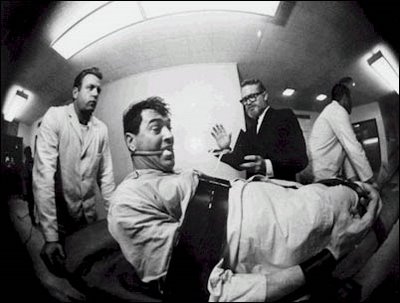
Rock Hudson's vacant handsomeness was seldom used better.

Rock Hudson’s vacant handsomeness was seldom used better.

Despite bombing during its initial 1966 release, John Frankenheimer’s sci-fi psychodrama Seconds is something of a minor classic, telling the story of a suburbanite undergoing a curious cure for the mid-life crisis.

John Randolph plays Arthur Hamilton, a respectable banker who lives a life of quiet desperation with his passionless marriage and humdrum job. His youth gone and his existential angst ever-present, Hamilton is driven to an extreme solution–pay a clandestine corporation big bucks to fake his death and reinvent him (via plastic surgery and any other means necessary) as a handsome bohemian artist (now played by Rock Hudson). But what if the artsy life and casual sex he wanted isn’t what he really needed?

As Seconds careers toward its genre-appropriate chilling conclusion, the film’s underlying question is more chilling still: What if it isn’t poor life choices but a poverty deep within ourselves preventing us from attaining happiness?•

Tags: , ,

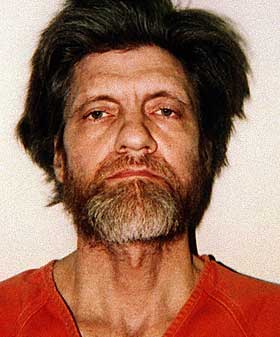
Kaczynski lived in a remote Montana cabin while carrying out his mail-bomb terrorism.

Chillingly telling or heavy-handed and selective fearmongering? You’ll have to decide for yourself over at Nick Carr’s always provocative Rough Type site.

Carr has posted three cautionary quotes that have a lot in common; the difference is two of them are from respected AI thinkers and one was written by the Unabomber, Theodore Kaczynski. Check out Kaczynski’s quote below and click through to Carr’s post to see how others have echoed him (unintentionally) in years since.

1995: “[As] machines become more and more intelligent, people will let machines make more of their decisions for them, simply because machine-made decisions will bring better results than man-made ones. Eventually a stage may be reached at which the decisions necessary to keep the system running will be so complex that human beings will be incapable of making them intelligently. At that stage the machines will be in effective control. People won’t be able to just turn the machines off, because they will be so dependent on them that turning them off would amount to suicide.”–Theodore Kaczynski

Tags: ,

Chinese transportation techies have developed a train that picks up and drops off passengers without ever stopping, by having travelers enter and exit a connector car that attaches and detaches from the train’s roof. It’s really ingenious and not so scary once you view the video demonstration. Because the train doesn’t ever stop, it saves time and fuel. The only thing I don’t get is how passengers can choose what stop they’d like if they’re in a car that automatically detaches. I’ll do some more research.

Star-crossed computer pioneer Gary Kildall spent years trying to dissuade people from feeling sorry for him, but he eventually came to see their point. The Seattle native was a genius who was toting around a portable PC of his own creation as far back as the early 1970s. He understood the power of the microprocessor before pretty much anyone else and created CP/M, the first modern operating system, also in the ’70s.

But even though Kildall’s company DRI (Digital Research, Inc.) made him a good deal of money, he would be elbowed aside in 1980 by Bill Gates’ knockoff version of CP/M called MS-DOS. And Kildall’s time at the center of the computer business was over just like that, though he tried to take it in stride.

The computer scientist was eventually worn down by years of being compared unfavorably to Gates and wrote his memoirs to try to correct his footnote status in an industry that owed him much better. Kildall’s life went from tortured to tragic in 1994, when he died at 52 from a blood clot in his brain after being the victim of some sort of shadowy violence in a biker bar in Monterrey.

••••••••••

From 1995:

Tags: ,

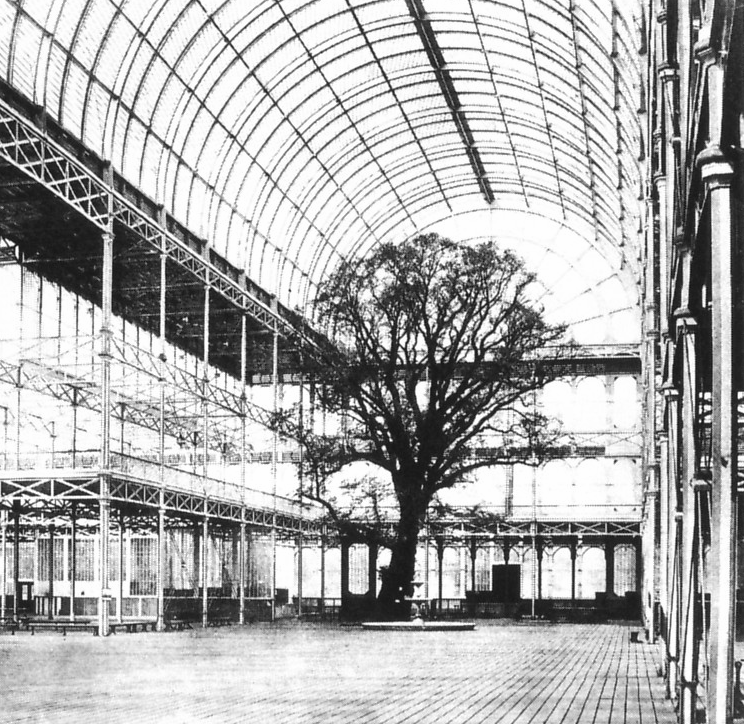
The Crystal Palace was built in under six months.

Engineer Henry Petroski, always a provocative thinker and writer, did some of his best work in the 1985 collection known as To Engineer Is Human: The Role of Failure in Successful Design. Petroski examined a wide array of design disasters and explained how engineering is more of an educated guess than an exact science. And to add context, he singled out some daring engineering feats that succeeded despite their high degree of difficulty.

One such example is the 750,000-square-foot cast iron, wood and glass Crystal Palace in Hyde Park that Joseph Paxton built quickly in the mid-nineteenth century. The edifice was used to house the Great Exhibition, the first World’s Fair. Paxton was a gardener who used innovations in the Crystal Palace that had worked in his greenhouse designs. There were plenty of naysayers who didn’t think it would work, but the building outlived them all. An excerpt:

“One of the most ambitious and innovative structures of the Victorian era was not a bridge or a tower but the vast building constructed to house the Great Exhibition of London in 1851. The story of the Crystal Palace is a fascinating one that bears repeating, for it shows that no matter how innovative an engineering structure might be and no matter how many opponents it may have, the proof is in the putting up and in the testing of it….

Although the true skyscraper did not come into its own until the twentieth century, the Crystal Palace prefigured it in many important ways. The way the light, modular construction ingeniously stiffened against the wind is the essence of modern tall buildings. And the innovative means by which the walls of the Crystal Palace hung like curtains from discrete fastenings, rather than functioning as integral load-bearing parts of the structure, is the principle behind the so-called curtain wall of many modern facades.”

Tags: ,

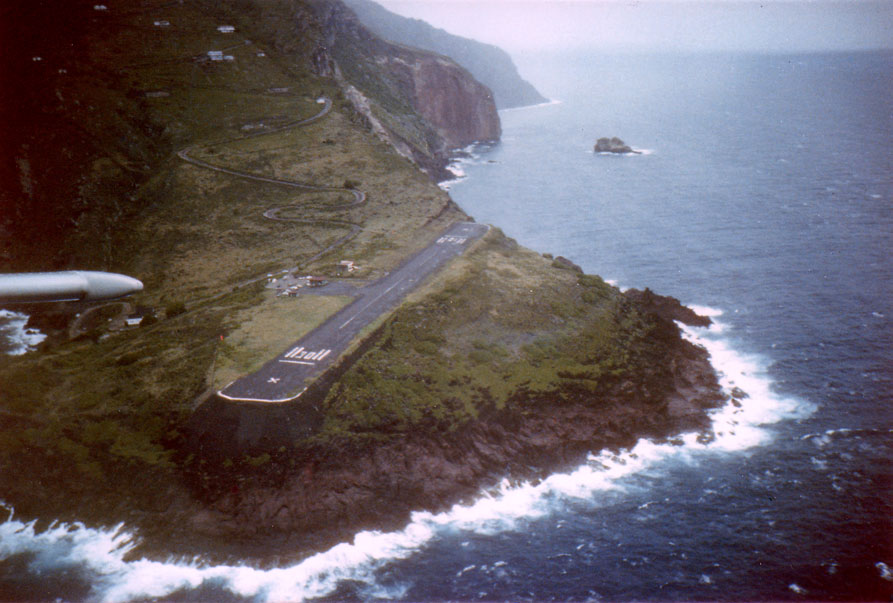
The runway at the Saba, Netherlands Antilles' Juancho E. Yrausquin Airport is just 1,300 feet long, surrounded by lots of water.

Why did the people of Thailand build an 18-hole golf course in between the two runways at the Don Mueang International Airport? Why do a thousand flights a year use a beach on the Scottish isle of Barra as an airport when the tide recedes? Why is the Qamdo Banga Airport in Tibet built 14,000 feet above sea level and have an airstrip the length of 61 football fields? In its photo-friendly feature, “The World’s 18 Strangest Airports,” the propeller-heads at Popular Mechanics answer these and other questions. An excerpt from the passage about the teeny Juancho E. Yrausquin Airport in Saba, Netherlands Antilles:

Background:
Getting to this paradise-like island can be a bit distressing thanks to a 1300-foot-long runway, slightly longer than most aircraft carrier runways.

Why It’s Unique:
Large planes aren’t landing here, but the small runway is difficult even for Cessnas and similar aircraft. ‘The little X means don’t land there,’ says Wayne Schreckengast, a former Navy pilot who is no stranger to landing on less than lengthy runways. ‘It’s challenging, but if you don’t have something like that, the people here don’t get things they routinely need, like mail.’ Given the limited amount of land and rolling topography of the island, not many other options exist.”

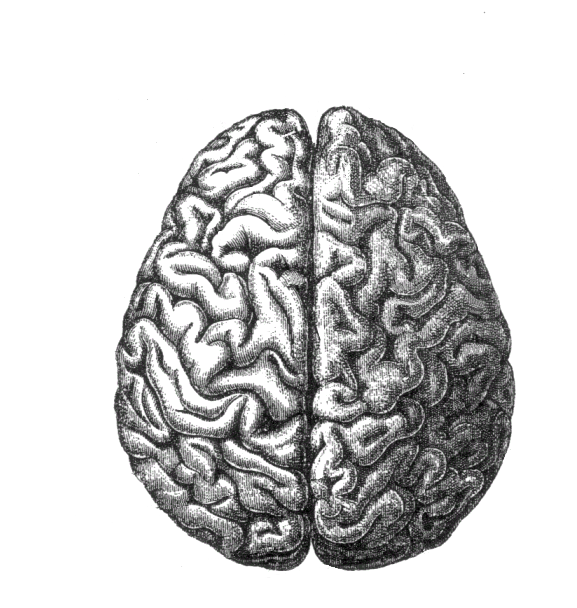
If you had half a brain you’d be dangerous.

The prevailing theory among professional worriers in the tech field is that we’re leaning too much on artificial intelligence to provide us with basic facts and figures as our memories collapse under a surfeit of information. It seems to make sense that such a shift would occur. Then again, my memory has always sucked.

German newspaper publisher Frank Shirrmacher addresses the issue in “The Age of the Informavore” on Edge. His meditation on the subject attempts to answer George Dyson‘s question, “What if the price of machines that think is people who don’t?” An excerpt from the piece:

“We are apparently now in a situation where modern technology is changing the way people behave, people talk, people react, people think, and people remember. And you encounter this not only in a theoretical way, but when you meet people, when suddenly people start forgetting things, when suddenly people depend on their gadgets, and other stuff, to remember certain things. This is the beginning, its just an experience. But if you think about it and you think about your own behavior, you suddenly realize that something fundamental is going on. There is one comment on Edge which I love, which is in Daniel Dennett‘s response to the 2007 annual question, in which he said that we have a population explosion of ideas, but not enough brains to cover them.”

Tags:

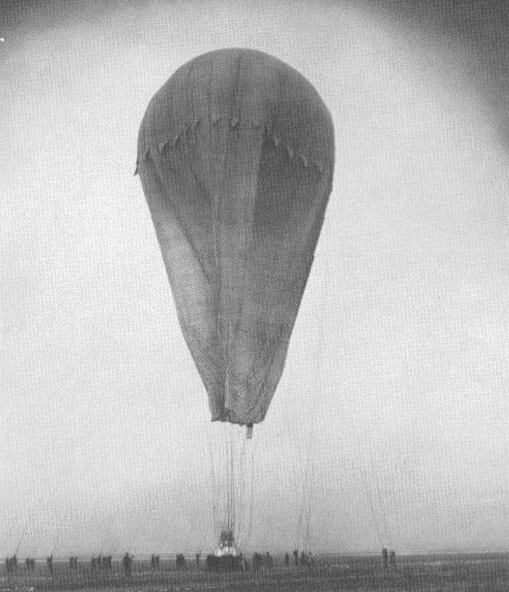
Although the pictured balloon looks dubious, this image is from Settle's successful follow-up voyage in November.

It was in 1933 at the “Century of Progress International Exposition” in Chicago that Naval Commander and aviation expert Thomas T. W. “Tex” Settle (briefly) met one of his great waterloos. It was that summer on August 5 in Soldier Field when the Stratosphere Ascension balloon, flown solo by Settle, was to be one of the highest-altitude balloon flights ever.

Anticipation of the launch was international news. The solo flight was greeted by a cheering throng of 40,000. One of the Swiss designers who worked on the balloon, Jean Piccard, gave autographs to worshipful fans. The pre-flight ceremonies were reported to have lasted more than seven hours. And because of an open gas valve, the balloon stopped its ascent and began to plummet a mere ten minutes into the flight. It crashed in a nearby railroad yards. Luckily, only Tex’s pride was injured.

He successfully completed the flight (with the aid of an additional crewman) in November of that year in Akron, Ohio; there was only a small fraction of the original audience to see the balloon off, but the flight did garner some national attention.

Watch the one-minute-and-forty-second raw film footage of his less-successful flight.

Other recent videos:

  • The hippie craft of “marbling.” (1970s)
  • Fifteen-year-old guru tries to levitate the Astrodome. (1974)
  • Edward Kienholz’s controversial L.A. art show. (1969)
  • Timothy Leary interviewed at Folsom Prison. (1970s)

Tags:

Conjunction of Earth's moon, Venus and Jupiter.

Sure, the Earth’s moon is great and all, but what are the most whacked out moons in our solar system? New Scientist has the answer in “The Solar System’s 10 Strangest Moons,” an article that examines some of “the most frigid, violent and strange” ones. A couple of examples.

*****

lo

Pockmarked with sulphurous pits, bathed in intense radiation and shaken by constant volcanic eruptions, Io is the fiery hell of the solar system.

Despite being cold enough to be covered in layers of sulphur dioxide frost, this large inner moon of Jupiter is the most volcanic world known, spitting out 100 times as much lava as all Earth’s volcanoes can muster, from a surface area just 1/12th the size. Io’s surface is dotted with bubbling lakes of molten rock, the largest of which, Loki Patera, is more than 200 kilometres across.

*****

Pan and Atlas

Most moons are either round and smooth, or lumpy pieces of space rock. Saturn’s Pan and Atlas, on the other hand, come straight from the set of a 1950s B-movie. With a central bulge set inside a disc-like ridge, they bear an uncanny resemblance to your stereotypical flying saucers. Atlas, the flatter of the two, has a diameter of only 18 kilometres from pole to pole, but is almost 40 kilometres across its waist.

Their strange shape is something of a mystery. While the moons’ rapid rotation would be enough to squash them into a smooth oval it can’t explain the rim around the centre of the saucer shape.

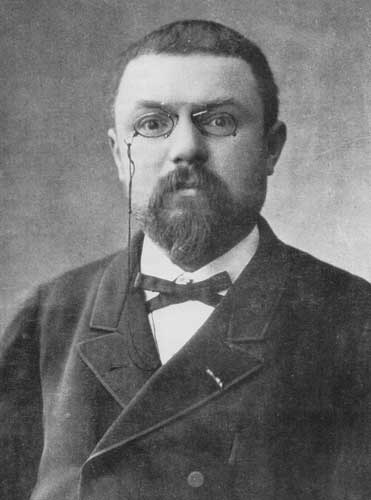
Henri Poincaré: Collect the million dollars, dummy.

A brief New Scientist article details how reclusive Russian math genius Grigori Perelman, who solved Poincaré’s conjecture, may turn down the million dollar prize attached to that feat. The conjecture, posed by French mathematician Henri Poincaré in 1904, is way over the layman’s head, but it involves the properties of spheres in three dimensions. The skittish Perelman may not accept the Millennium Prize from the Clay Mathematics Institute. An excerpt:

“Perelman published a proof in 2002, but since became disillusioned with mathematics and withdrew from the mathematical community. In 2006 he refused to accept a Fields medal for his work, an award often described as the Nobel prize of mathematics.

The president of CMI, James Carlson, is waiting to see if Perelman will do the same for the Millennium prize. ‘It may be a while before he makes his decision,’ he says. The Poincaré conjecture is the only one of the seven Millennium problems that has been solved to date, and the fate of the prize money is uncertain if Perelman rejects.”

Tags: ,

We're all connected. (Image by Blake Burris.)

I don’t know yet how much of David Gelernter‘s essay on Edge, Time to Start Taking the Internet Seriously, I agree with, but it’s a must-read for anyone who wants to debate the present and future of our lives in the Internet Age. An excerpt:

“The Internet will never create a new economy based on voluntary instead of paid work–but it can help create the best economy in history, where new markets (a free market in education, for example) change the world. Good news!–the Net will destroy the university as we know it (except for a few unusually prestigious or beautiful campuses). The net will never become a mind, but can help us change our ways of thinking and change, for the better, the spirit of the age.

This moment is also dangerous: virtual universities are good but virtual nations, for example, are not. Virtual nations–whose members can live anywhere, united by the Internet–threaten to shatter mankind like glass into razor-sharp fragments that draw blood. We know what virtual nations can be like: Al Qaeda is one of the first.”

Tags:

The space suit photo was taken by Fritz Goro, who invented "macrophotography," which made it possible for cameras to capture microscopic images.

Weird Science in Action” is am essay of 19 cool photos of odd science experiments culled from the amazing Life magazine archives. My favorite one is probably number 14, “Prototype Space Suit, Mojave Desert, California, Early 1960s,” although “Play Ball,” in which a chicken plays a baseball board game (number 15), is also very great.

Number 19 shows a high-voltage demonstration by Jim Vaus, an erstwhile illegal wiretapper and electronics expert who converted to Christianity after hearing a speech by Reverend Billy Graham. Vaus’ story of quitting a crime syndicate and his subsequent religious conversion was the subject of an autobiography and the 1955 film Wiretapper.

See other Great Photography.

Tags: ,

I'm really filthy. Wanna watch? (Image by KVDP.)

England is a little wacky with the “Oceania” surveillance methods, but the country has outdone itself with its latest Big Brother act. An Associated Press article on Google details how the government secretly installed 2.6 million microchips in trash bins to monitor how much garbage residents are disposing of. The chips haven’t been yet used to tax citizens who are creating what’s deemed excessive waste, but that’s the eventual plan.

I’m all in favor of conservation, reusing and recycling, but this is just creepy and invasive. It’s also seems like the future. An excerpt:

“The trash microchips are now part of the British information grid, which already includes a heavy reliance on closed-circuit television surveillance and cameras to monitor the population, particularly on the crowded public transportation system.

‘This is yet another piece of surveillance that the councils are taking on in our daily life,’ said [Big Brother Watch campaign director Dylan Sharpe. ‘With this information they can tell if we are home or not, and the information is stored on their database, which is not that secure.’

He said the ‘pay as you throw’ policy councils are planning to implement would discriminate against large families that generate more waste and might encourage people to burn their refuse–or dump it illegally–rather than pay extra.”

Tags:

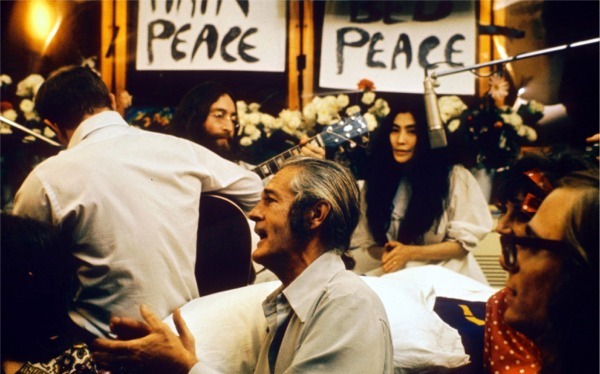
During his 1970 gubernatorial race against Ronald Reagan in California, the philosopher, LSD guru and countercultural icon, Dr. Timothy Leary, was railroaded into a 20-year prison sentence for the dubious charge of possession of two joints. Leary escaped from the penitentiary, spent time in Algeria with Black Panther Eldridge Cleaver before the two had a falling out, and was finally recaptured at an airport in Afghanistan. He was returned to the states to continue his sentence at Folsom Prison.

During his stint there, Leary was able to film a 27-minute interview that his wife Joanna could use to stump for his release. Despite being made by Leary and his spouse and not an objective third party, it’s an interesting encounter.

California Governor Jerry Brown released Leary in 1976 and the controversial figure ended up focusing the last two decades of his life encouraging the construction of space colonies and being an early Internet enthusiast. Despite being right on many issues, Leary always seemed to me like a slickster with the gigantic ego of a small child. But you can decide for yourself while watching the video.

Structural damage in Fallujah may be the least of that city's problems.

The BBC has a very scary story about a reportedly high number of birth defects showing up in newborns in Fallujah. The Iraqi city was the site of some of the most intense fighting at the height of the ongoing American war there.

Some Iraqi medical researchers think that chemicals from sophisticated weapons are the cause, though the U.S, is saying it has yet to see any conclusive data proving a spike in birth defects in Fallujah. An excerpt:

“British-based Iraqi researcher Malik Hamdan told the BBC’s World Today program that doctors in Fallujah were witnessing a ‘massive unprecedented number’ of heart defects, and an increase in the number of nervous system defects.

She said that one doctor in the city had compared data about birth defects from before 2003–when she saw about one case every two months–with the situation now, when, she saw cases every day.

‘I’ve seen footage of babies born with an eye in the middle of the forehead, the nose on the forehead,’ she added.”

Tags:

The Dharavi Slum in Mumbai bustles with life despite the poverty. Some slums in India are home to one million people per square mile. (Image by Kounosu.)

For most of the past decade, New Urbanists have been touting the slum or squatter city (especially the massive ones in India) as the key to understanding the future of urban dwelling. Whole Earth Catalogue founder Stewart Brand makes a cogent argument for this type of thinking in “How Slums Can Save the Planet,” a new article in Prospect. It’s well worth reading, especially since Brand has been spookily prescient in the past.

A billion people currently reside in squatter cities and by all estimates, that number is likely to grow at a rapid pace in the coming decades. And that’s good news for the planet, since cities are far more green than rural areas, thanks to their population density. While there is danger in well-fed Westerners being too sanguine about the lives of slum denizens–the poverty there still is crushing despite the ingenuity of the people–there’s much for all urbanites to learn from these bustling quarters. An excerpt:

“One idea that could be transferred from squatter cities is urban farming. An article by Gretchen Vogel in Science in 2008 enthused: ‘In a high-tech answer to the ‘local food’ movement, some experts want to transport the whole farm shoots, roots, and all to the city. They predict that future cities could grow most of their food inside city limits, in ultraefficient greenhousess. A farm on one city block could feed 50,000 people with vegetables, fruit, eggs, and meat. Upper floors would grow hydroponic crops; lower floors would house chickens and fish that consume plant waste.’”

Tags: ,

I thought we were gonna rule the planet. Was Charlton Heston just fucking with me? (Photo by Kabir Bakie.)

The New Scientist has an interesting post about the superlative Australian author and explorer Paul Rafaele. The site reviews his new book, Among the Great Apes: On the Trail of Our Closest Relatives, which predicts the disappearance of the magnificent creatures in the next few decades, due to the compromised nature of their habitats. They also interview the globe-trotting writer about his new work. An excerpt from the Q&A:

New Scientist: Some of the places you travelled to are notorious trouble spots, yet you still went. Why?

Paul Rafaele: Looking at captive apes doesn’t tell you much about them. In the wild, each subspecies of ape has its own culture and behaviour. It’s the great apes’ bad luck that their habitats are in some of the most violent, corrupt places on earth. But if you are going to report a war you have to go and see for yourself, and if you are going to report on great apes you have to do the same.

New Scientist: Can the great apes be saved?

Paul Rafaele: The only way to guarantee there will be some left in the wild in 50 years is to have pockets of heavily defended habitat with anti-poaching patrols at least as well armed as the poachers. The impetus and the funding must come from western governments and they must ensure that it goes where it is needed.”

Tags:

Do not lick this icon. It is the symbol for arsenic. It will kill you.

I came across a review on the Guardian of James C. Whorton’s new book, The Arsenic Century: How Victorian Britain Was Poisoned at Home, Work, and Play. The book details how the vast majority of deaths in Victorian England from arsenic weren’t perpetrated by sinister poisoners but resulted from incidental contact with a substance that permeated nearly every aspect of British life at the time.

In Kathryn Hughes’ review, she details how an interior decorating trend proved lethal because of arsenic’s use in the creation of green dye. An excerpt:

“Even more fateful was the craze for deep green wallpaper, which led to thousands of families meeting their deaths as a result of their taste in home furnishings. Not that they actually licked their walls: the dye was very unstable, so the slightest breeze could dislodge a puff of toxic dust. Queen Victoria herself was so appalled by the homicidal tendencies of green wallpaper that she ordered every room in Buckingham Palace to be stripped of the stuff.”

Tags: , ,

When Peter Lorre is born, I'm going to look like him.

The first person to ever use the term “magazine” for a periodical was Londoner Edward Cave, who used the word in 1731 for The Gentleman’s Magazine. A wide-ranging periodical that focused some of its space on reports from the American colonies, it was also the first place of employment for Samuel Johnson. Cave edited under the name Sylvanus Urban and put together a journal that had reprinted articles from other publications and original pieces. He died in 1754, but the magazine continued publishing until 1907.

I’m sure Cave was happy in that great beyond when an 1825 issue, ran an inscrutable piece entitled “Gigantic Organic Remains.” An excerpt:

“We lately mentioned that the bones of a nondescript animal, of an immense size, and larger than any bones that have hitherto been noticed by any naturalists, had been discovered about twenty miles from New Orleans, in the alluvial ground formed by the Mississippi River and the lakes, and but a short distance from the sea. It now appears that these giant remains had been disinterred by Mr. W. Schofield, of New Orleans, who spent about a year in this arduous undertaking. A fragment of a cranium is said to measure twenty-two feet in length; in its broadest part four feet high, and perhaps nine inches thick, and it is said to weigh 1,200lbs. The largest extremity of this bone is said to answer to the human scapula; it tapers off to a point and retains a flatness to the termination. From these facts, it is conferred that the bone constituted a fin or a fender. One of its edges, from alternate exposures to the tide and atmosphere has become spongy or porous, but, generally, it is in a perfect state of ossification.”

Tags: , ,

« Older entries § Newer entries »