
Science/Tech

You are currently browsing the archive for the Science/Tech category.

Archaeologists believe these Turkish ruins are a temple built at the end of the Ice Age.

Archaeologists rarely make bigger discoveries than the one that appears to have been recently made in Turkey. If educated assumptions prove correct, Klaus Schmidt and his crew may have discovered the very dawn of civilization in rock formations that were built more than 11,000 years ago. An excerpt from a Newsweek article entitled “History in the Remaking“:

“Standing on the hill at dawn, overseeing a team of 40 Kurdish diggers, the German-born archeologist [Klaus Schmidt] waves a hand over his discovery here, a revolution in the story of human origins. Schmidt has uncovered a vast and beautiful temple complex, a structure so ancient that it may be the very first thing human beings ever built.

The site isn’t just old, it redefines old: the temple was built 11,500 years ago—a staggering 7,000 years before the Great Pyramid, and more than 6,000 years before Stonehenge first took shape. The ruins are so early that they predate villages, pottery, domesticated animals, and even agriculture—the first embers of civilization.

In fact, Schmidt thinks the temple itself, built after the end of the last Ice Age by hunter-gatherers, became that ember—the spark that launched mankind toward farming, urban life, and all that followed.”
Tags:

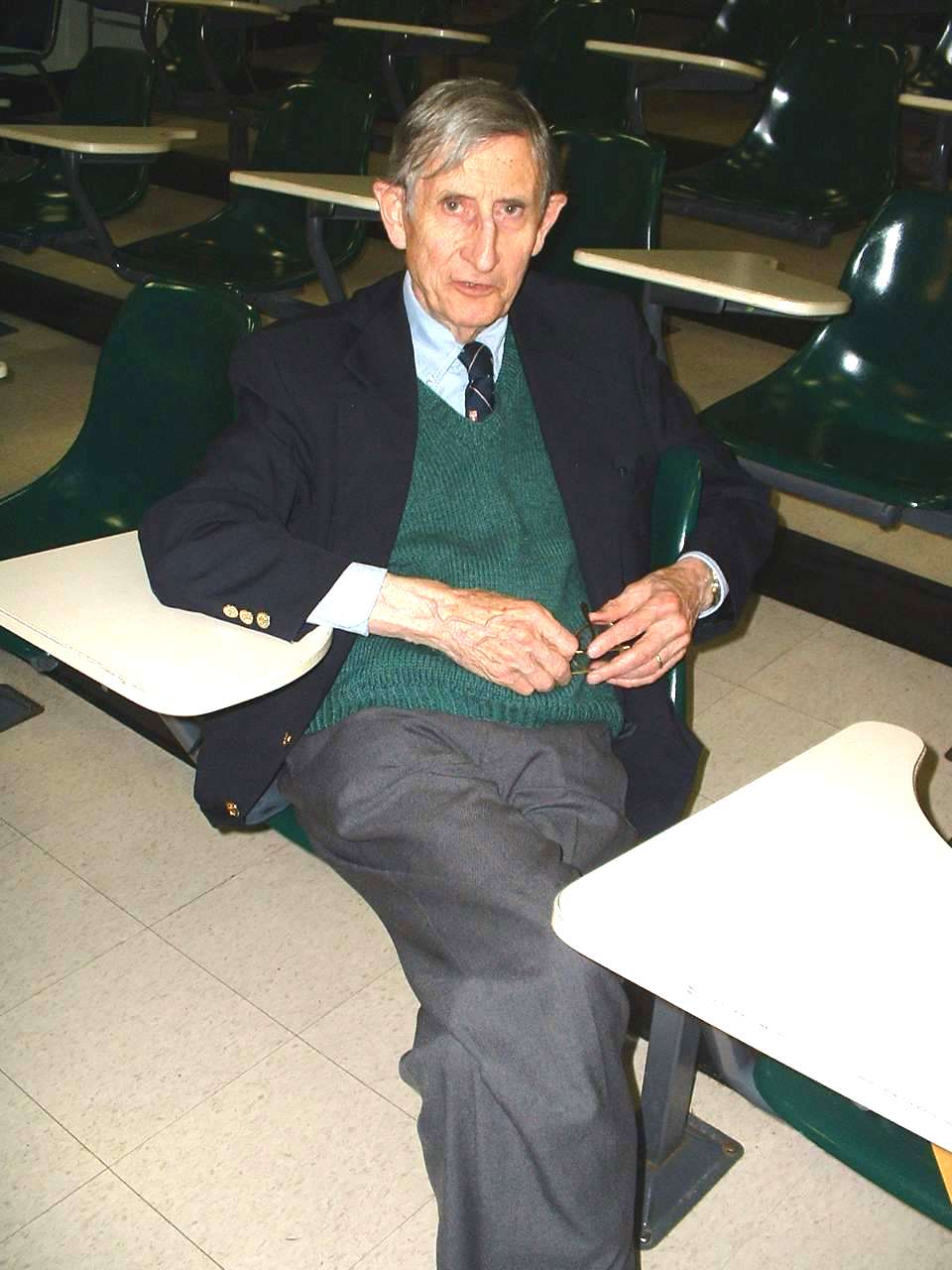
Freeman Dyson, seen here at Harvard, has never won the Nobel Prize. Running afoul of climate-change activists won't likely help on that front. (Image courtesy of Lumidek.)

The always-provocative smarties over at Edge held an event in Long Beach recently to herald “A New Age of Wonder,” as outlined by Freeman Dyson in his speeches and in an article in the New York Review of Books last August. The piece, “When Science and Poetry Were Friends,” is ostensibly a book review of Richard Holmes excellent science tome, The Age of Wonder: How the Romantic Generation Discovered the Beauty and Terror of Science.

But the 86-year-old Dyson also used the assignment to ponder whether we are at the advent of a new Romantic Age, one as reliant on biology and computers as the first was on chemistry and poetry. An excerpt from Dyson’s article:

“Richard Holmes’s history of the Age of Wonder raises an intriguing question about the present age. Is it possible that we are now entering a new Romantic Age, extending over the first half of the twenty-first century, with the technological billionaires of today playing roles similar to the enlightened aristocrats of the eighteenth century? It is too soon now to answer this question, but it is not too soon to begin examining the evidence. The evidence for a new Age of Wonder would be a shift backward in the culture of science, from organizations to individuals, from professionals to amateurs, from programs of research to works of art.

If the new Romantic Age is real, it will be centered on biology and computers, as the old one was centered on chemistry and poetry…If the dominant science in the new Age of Wonder is biology, then the dominant art form should be the design of genomes to create new varieties of animals and plants. This art form, using the new biotechnology creatively to enhance the ancient skills of plant and animal breeders, is still struggling to be born. It must struggle against cultural barriers as well as technical difficulties, against the myth of Frankenstein as well as the reality of genetic defects and deformities.

If this dream comes true, and the new art form emerges triumphant, then a new generation of artists, writing genomes as fluently as Blake and Byron wrote verses, might create an abundance of new flowers and fruit and trees and birds to enrich the ecology of our planet.”

Tags: ,

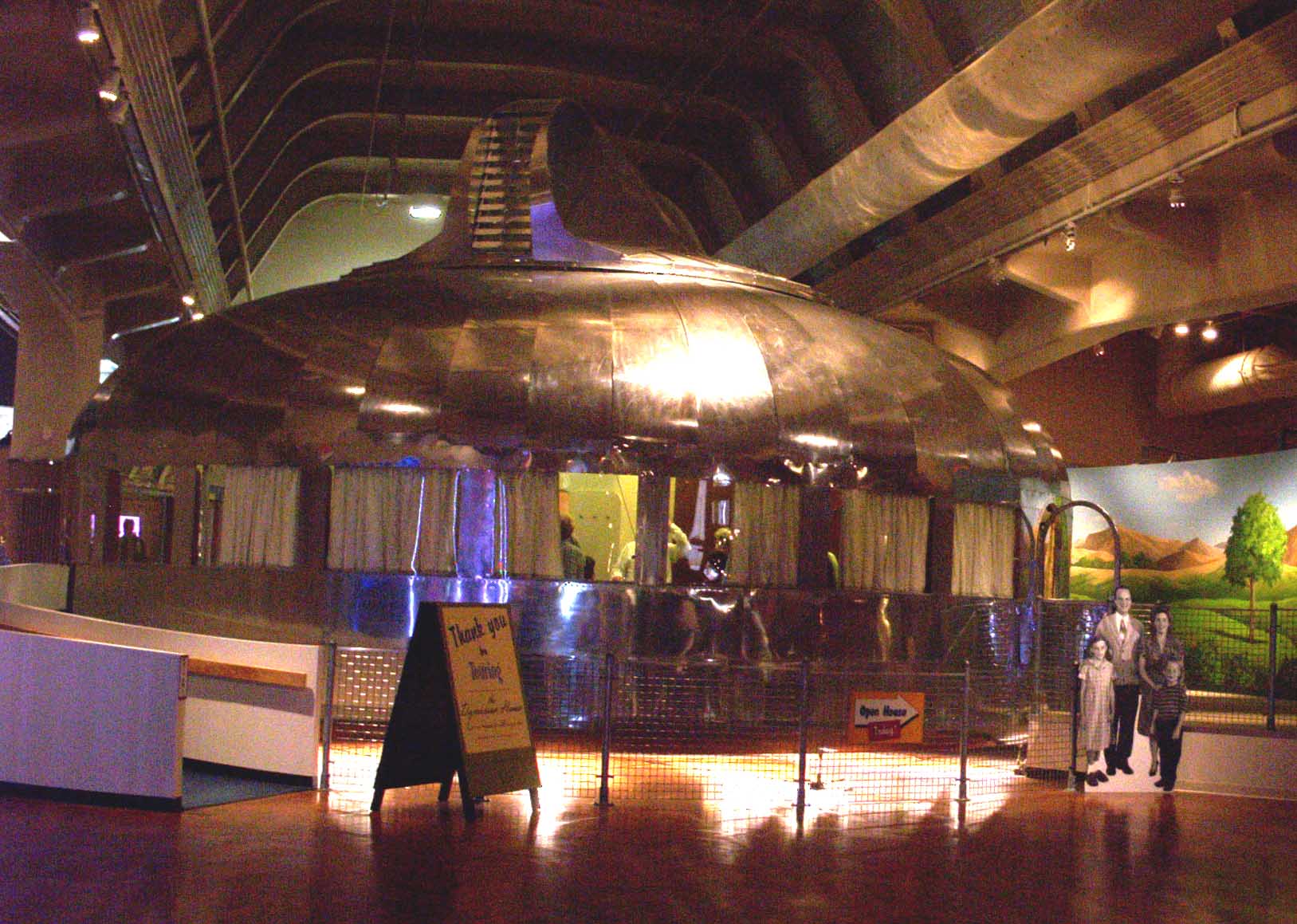
A Dymaxion House on display at the Henry Ford Museum in Michigan. (Image courtesy of rmhermen.)

Even though architect Buckminster Fuller has long been revered as a visionary theorist, not many of his designs, including several iterations of his pre-fab, space-age autonomous building, the Dymaxion House, ever caught on. In fact, no Dymaxion was ever built according to Fuller’s specifications and inhabited, even though it was energy efficient, had a waterless bathroom and was designed to withstand any climate.

But his futuristic house designs were taken seriously in a 1946 Life articleFuller House,” which was subtitled “Newest answer to housing shortage is round, shiny, hangs on a mast and is made in an airplane factory.” An excerpt from the article:

“Unveiled last week was the most startling solution yet offered for the U.S. housing shortage. It was a round aluminum structure, 36 feet in diameter. At its center was a mast, anchored in the ground. From it radiated cables on which walls and floors were hung. Around the outside ran a plastic window. On the roof ran a streamlined, revolving ventilator. The inside had four wedge-shaped rooms, two baths, range, dishwasher, refrigerator, garbage-disposal unit, three revolving closets and three electric bureaus.

Some called it a house, others a machine. Designed by Buckminster Fuller, it was made by Beech Aircraft Corporation, Wichita, Kansas, which expects to be producing it in volume by next January. The house is a descendant of Fuller’s 1927 Dymaxion House, but, unlike its ancestor, is eminently practical. Included in the hoped for selling price of $6500 are all appliances plus shipping and erection charges anywhere in the U.S.”

Tags:

Only one out of 500,00 people in America live to age 100. Our bodies are programmed to make it to 90, but the average life expectancy in the U.S. is 78. Why is that? National Geographic writer Dan Buettner studied communities all over the world that have the highest density of centenarians to try to answer that question. In this 20-minute TED Talk, he discusses the habits and diets of golden oldies in, among other places, Sardinia, Okinawa and Loma Linda, California. You may never become a 97-year-old surgeon who performs 20 open-heart operations a month like one of the elders Buettner profiles, but it’s still a worthwhile video to watch.

Tags:

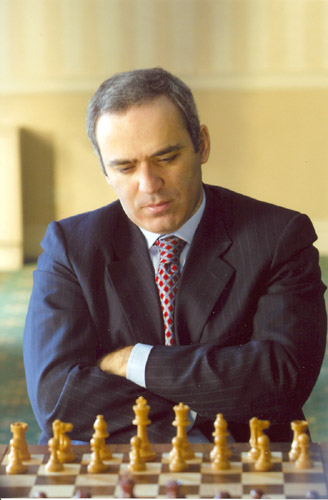
In 1997, Garry Kasparov didn't believe Deep Blue had defeated him fairly. See the documentary "Game Over" to learn more.

I can’t claim to be the world’s biggest chess fan, but I’m fascinated by Garry Kasparov’s article “The Chess Master and His Computer” in the New York Review of Books. The legendary champion, who famously lost a match to IBM’s Deep Blue in 1997, looks at the intersection of chess and AI from just about every angle possible–and does so brilliantly. An excerpt about the ramifications of the availability of top-flight chess software:

“There have been many unintended consequences, both positive and negative, of the rapid proliferation of powerful chess software. Kids love computers and take to them naturally, so it’s no surprise that the same is true of the combination of chess and computers. With the introduction of super-powerful software it became possible for a youngster to have a top-level opponent at home instead of need ing a professional trainer from an early age. Countries with little by way of chess tradition and few available coaches can now produce prodigies. I am in fact coaching one of them this year, nineteen-year-old Magnus Carlsen, from Norway, where relatively little chess is played.

The heavy use of computer analysis has pushed the game itself in new directions. The machine doesn’t care about style or patterns or hundreds of years of established theory. It counts up the values of the chess pieces, analyzes a few billion moves, and counts them up again. (A computer translates each piece and each positional factor into a value in order to reduce the game to numbers it can crunch.) It is entirely free of prejudice and doctrine and this has contributed to the development of players who are almost as free of dogma as the machines with which they train. Increasingly, a move isn’t good or bad because it looks that way or because it hasn’t been done that way before. It’s simply good if it works and bad if it doesn’t. Although we still require a strong measure of intuition and logic to play well, humans today are starting to play more like computers.”

Tags: , ,

We'll apply a mustard sheet and he'll be up and around in no time.

I brought you archaic medical terms for diseases recently, and now I bring you the names of some antiquated medical cures. Click on the links to learn more about each bygone treatment. I compiled the list with the aid of Rudy’s List of Archaic Medical Terms and the memories of my elder relatives. But don’t get too arrogant about how much smarter we are about medicine now. Some of these methods are still used and some people out there are treating their migraines with HeadOn.

Read other lists.

I probably shouldn't have given this guy a placebo.

With the help of Rudy’s List of Archaic Medical Terms and several textbooks I have lying around for god knows what reason, I compiled this collection of the best antiquated names for maladies. Click on the links to read the modern names of the ailments.

An oil platform in Baku pumps out the black gold.

The excellent Marginal Revolution pointed me to a Forbes story that lists the 25 dirtiest cities in the world. Never swear by a science-related article in Forbes or any other consumer magazine, but it wouldn’t be completely stunning if Baku, the capital of Azerbaijan, is truly the dirtiest city in the world. (Actually, poor Port-au-Prince, which ranked fourth dirtiest, would likely easily top the list if it had been compiled post-earthquake.)

Baku is awarded a total of 27.6 on the Health and Sanitation Index, which is slightly worse than the 131.7 scored by Calgary, which the magazine identifies as the cleanest urban area. What makes Baku so dirty is, unsurprisingly, its heavy reliance on a booming oil industry, particularly over the last two decades.

As Forbes explains, the city “suffers from life-threatening levels of air pollution emitted from oil drilling and shipping.” I guess it’s not bumming out the locals too much. Last year Lonely Planet voted Baku as one of the world’s top ten party cities. “The cash injection from energy projects, enhanced by the presence of thousands of international oil workers and wealthy consultants, has turned Baku into an oasis of excess,” boasts the travel guide. Party till you drop, indeed.

Tags: ,

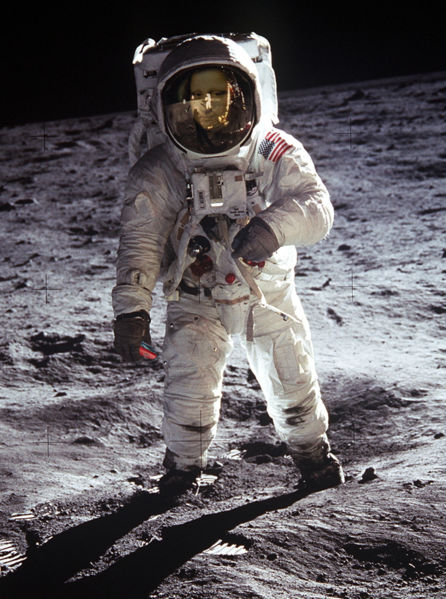
Cherish my space pee, California!

An interesting article by Jesse McKinley in the New York Times examines the fate of several tons of garbage left behind by the Apollo 11 mission. Seven states, including California, seek to stake a claim to this trash and protect it from potential moon landings by other countries and the development of a space tourist industry. An excerpt from the article:

“In one small step for preservation and one giant leap of logic, the official historical commission of California voted Friday to protect two small urine collection devices, four space-sickness bags and dozens of other pieces of detritus, all currently residing nearly a quarter of a million miles from the state…

Milford Wayne Donaldson, the state historic preservation officer, said the reasoning behind the first-of-its-kind designation was simple: Scores of California companies worked on the Apollo mission, and much of their handiwork remains of major historical value to the state, regardless of where it is now or what it was for used for then.

‘It has a significance that goes way further than whether it came from a quarter million miles away or not,’ Mr. Donaldson said. ‘They are all parts of the event.’”

Tags: ,

Okay, some information wants to be free.

Over at the Rough Type blog, the always probing and questioning Nick Carr has a brief and bitter retort to those who say that in the Internet Age, information wants to be free. In his post titled “Information wants to be free my ass,” he points out that we’re paying plenty of money for delivery systems, so why quibble over tossing in a few pennies for content. An excerpt:

“Never before in history have people paid as much for information as they do today.

Do the math. Sit down right now, and add up what you pay every month for: Internet service, Cable TV service, Cellular telephone service (voice, data, messaging), Landline telephone service, Satellite radio, Netflix, Wi-Fi hotspots, TiVO and other information services

So what’s the total? $100? $200? $300? $400? Gizmodo reports that monthly information subscriptions and fees can easily run to $500 or more nowadays. A lot of people today probably spend more on information than they spend on food.”

There’s a lot of truth to what Carr is saying, but he loses me somewhat with his follow-up argument:

“It’s a strange world we live in. We begrudge the folks who actually create the stuff we enjoy reading, listening to, and watching a few pennies for their labor, and yet at the very same time we casually throw hundreds of hard-earned bucks at the saps who run the stupid networks through which the stuff is delivered. We screw the struggling artist, and pay the suit.”

No one is paying for cable TV for the wires but for the programs. We don’t begrudge the makers of the programs–their work is the attraction. And they receive part of the proceeds from the cable bill. If Carr is saying that the systems are getting too big a slice of the pie, that’s another argument. But content is what we love. Making that content available and navigable are also positives, but they are secondary ones to almost all of us. Perhaps cable TV is a bad point of debate for either Carr or I since its structure was in place before the Internet became the dominant medium, but Carr’s bone of contention may have more to do with self-appointed gurus pushing books than the rest of us. As the paradigm shift sorts itself out, we’ll pay for the content we want and need.

Tags:

I predict Afflictor.com will continue using crappy public domain art.

The Brooklyn Daily Eagle was hit or miss in its predictions about the 20th century, but Forbes blogger Rich Karlgaard tries a more reasonable length of time with his own 20 predictions for the next decade. (A thanks to the great site Newmark’s Door for pointing me to the post.) Here are just a few of his prognostications:

Almost All Cancer Becomes Manageable
The good news about health in the 2010s is that almost all cancers will become manageable events, assuming reasonably early detection.

Dow Hits 36,000
Finally.

One Cloud Company (Or Another) Becomes the Most Valuable Company on Earth
Moore’s Law continues at the pace of 2x every two years. Bandwidth improves 3x every two years. These trends predict ubiquitous cloud cover for planet earth. Who will own the giant fog machine? Google? Cisco? Microsoft? Amazon? Huawei?

Tags: ,

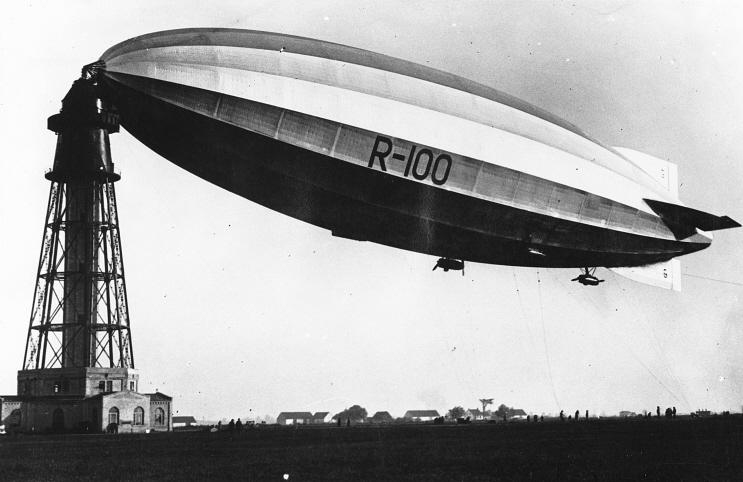
The British airship R-100 docked in Quebec, Canada, in 1930.

Nine  years prior to the 1937 Hindenburg disaster, Popular Science ran a breathless article about the advent of commercial dirigibles, as England and Germany raced to be the first to launch a successful transatlantic flight with passengers. In 1928, the balloons were planned to hold roughly 100 ticket buyers and the price from New York to London was going to be $400. That transatlantic trip was scheduled to take 38 hours to complete. Pictured is the English airship R-100, which the article thought was the favorite in the transatlantic race. It had beds, baths with showers, saloons, an area on deck for dancing and refreshment tables. The only note of caution about this potentially dangerous new mode of transportation–quickly dismissed–comes late in the article. An excerpt:

“To be sure, this history must consider the disaster of the American-built and operated Navy dirigible Shenandoah, broken in two by a storm over Ohio in 1925 and destroyed with the loss of fourteen men. And the fate before that of the German-built, French-operated military dirigible Diamude, lost in the storm over the Mediterranean. And that of the Italian-built, American-operated Roma, military dirigible, which, forced down by rudder trouble, struck a high tension cord and burned when the hydrogen in its gas bags exploded. There have been costly errors in construction and operation of the first great ships. But the builders have profited by all these mistakes. Each disaster has taught a new lesson.”

The German airship, the L7-127, which is given less attention in this piece, won the race with its first commercial passenger transatlantic flight on October 11, 1928. In November 1931, after the disaster of fellow British airship R-101, the R-100 was discontinued. It was flattened and sold for scrap.

Tags:

I question the wisdom of this new contraption called the "forward pass."

The Wonderlic Personnel Test is a 12-minute, 50-question exam that is supposed to measure a person’s ability to learn and solve problems. It has become most well known for its association with the NFL, as college football players looking to enter the league are administered the test. It’s not exactly a perfect determinant of a player’s ability, as Dan Marino famously scored very poorly and became one of the greatest QBs in NFL history. (It should be noted that the average score of an offensive tackle is equal to that of a journalist.)

This seems like a new-fangled type of athletic measurement that would never have flown during the sport’s earlier days, but that’s not true. I came across a 1931 Popular Science article that examines how the University of Illinois used a battery of physical and psychological tests to try to find a quarterback who would be as great as the legendary Red Grange. An excerpt from the beginning of “Illinois Seeks New Red Grange by Electric Tests”:

“At the University of Illinois, experts in a pioneer psychological laboratory are seeking a new ‘Red’ Grange by means of flashing colored lights, whirling electronically connected disks, and reels of super-speed films.

The successor to the ‘Galloping Ghost’ of Illinois football teams of a few seasons ago will be picked from gridiron candidates who run the gauntlet of strange electrical testing machines that rate their muscular coordination, nerve control and mental alertness. Even before the athletes don their cleated shoes and leather helmets for the first scrimmage, the coaches thus know the rating of each in the qualities that make for stellar performance in the heat of pigskin battles.

Electrified gameboards, covered with rows of tiny lights like those on Christmas trees, duplicate in running flashes various football players. The candidate records what he would do at each crisis in the play while judges note the time he takes to decide and the correctness of his decision.”

Tags:

Bumped head while jumping turnstile. (Image courtesy of David Shankbone.)

Arts & Letters Daily pointed me in the direction of this excellent Financial Times article by Susanne Sternthal about the 35,000 stray dogs that live in Moscow, several hundred of which reside in the subway. Metro dogs are such a common occurrence that there is a website dedicated to cellphone photographs of such canines. What’s more fascinating is that some of these dogs have learned how to use the subway to get from point A to point B the way human riders do. An excerpt from the article:

“‘The metro dog appeared for the simple reason that it was permitted to enter,’ says Andrei Neuronov, an author and specialist in animal behaviour and psychology. ‘This began in the late 1980s during perestroika,’ he says. ‘When more food appeared, people began to live better and feed strays.’ The dogs started by riding on overground trams and buses, where supervisors were becoming increasingly thin on the ground.

Neuronov says there are some 500 strays that live in the metro stations, especially during the colder months, but only about 20 have learned how to ride the trains. This happened gradually, first as a way to broaden their territory. Later, it became a way of life. ‘Why should they go by foot if they can move around by public transport?’ he asks.

‘They orient themselves in a number of ways,’ Neuronov adds. ‘They figure out where they are by smell, by recognizing the name of the station from the recorded announcer’s voice and by time intervals. If, for example, you come every Monday and feed a dog, that dog will know when it’s Monday and the hour to expect you, based on their sense of time intervals from their biological clocks.’”

Tags: , ,

Federica is stunned to learn that there is another cat goddess.

Archaeologists believe that they have unearthed a 2,200-year-old Egyptian temple dedicated to the cat goddess, Bastet. Mohammed Abdel-Maqsood, the Egyptian archaeologist who led the exploration team, hopes the discovery of the Ptolemaic-era building may mean that other royal ruins will be found in the area. Scientists assume the excavated building is a kitty cathedral because of the large number of statues depicting Bastet found in the ruins. Bastet is the goddess of fire, of the home and of pregnant women.

Tags: , ,

August Deter, 51, was the first patient diagnosed with the disease by Alois Alzheimer, in 1901.

It may soon be possible for middle-aged people who have a simple eye scan when they visit the optician to learn if they will develop Alzheimer’s disease 20 years down the road. British scientists believe they’re about three years from perfecting the inexpensive test. Knowledge wouldn’t just allow patients to plan their lives differently but would make it possible for them to begin taking medications as early as possible and delay the onset of the disease by years. From an article in the Mail Online:

“The eye test would provide a quick, easy, cheap and highly-accurate diagnosis.

It exploits the fact that the light-sensitive cells in the retina at the back of the eye are a direct extension of the brain.

Using eye drops which highlight diseased cells, the UCL researchers showed for the first time in a living eye that the amount of damage to cells in the retina directly corresponds with brain cell death.

They have also pinpointed the pattern of retinal cell death characteristic of Alzheimer’s. So far their diagnosis has been right every time.”

Tags: ,

Sellers, with wife Britt Ekland, in 1964, the year of the article.

It might seem odd to find the late, great protean actor Peter Sellers in the pages of a science journal, but he was a perfect subject for the Popular Science piece, Wiring People for Life,” in 1964 because of his heart problems. The actor, known to have serious drug issues, had a series of heart attacks the previous year at age 38. The Popular Science article focused on Sellers being treated with a then-experimental external pacemaker for his severe coronary problems. The piece is subtitled: “Today, miracle electronic devices keep thousands of damaged bodies going. Tomorrow, they may help the paralyzed to walk.”

Pacemakers have never allowed the paralyzed to walk, but technology advanced and Sellers eventually received an internal pacemaker that allowed him two more decades of life. An excerpt:

“Last April film funnyman Peter Sellers lay critically ill in Los Angeles’ Cedar of Lebanon Hospital, his heart weakened and wobbly after a crushing coronary attack. Doctors held no hope for his recovery, but they began hooking up a new medical machine–an external heart ‘pacemaker.’

Fastening two leads on Sellers’ chest with small suction cups, a cardiologist started electrical impulses flowing to the star’s fluttery chest. These helped guide and steady its beat–but the 38-year-old British actor’s condition worsened. Still, the doctors continued to use the pacemaker. Then, slowly, Sellers began to recover.

His heart became steadier and stronger…the pacemaker was used less often…finally not at all. But the leads never left Sellers’ chest for three more days. Then he was taken off the critical list and the machine was disconnected. The pacemaker had once more worked a near-miracle.”

Tags: ,

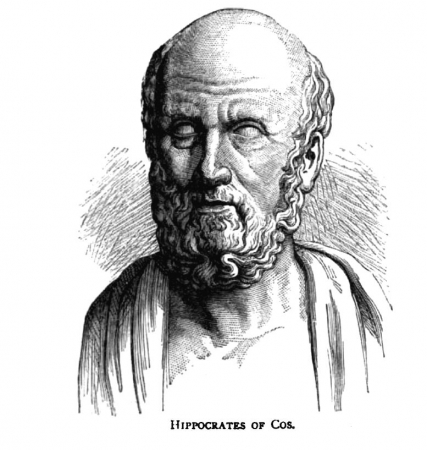
I'm Hippocrates. You've probably heard of my oath, ladies. It's quite popular.

Over on the Boston Globe site, there’s an interesting article by Jonah Lehrer about the value of daydreaming. Lehrer and a good number of doctors believe that daydreaming is the default state of humans not busy with tasks. It’s during this “down time” when they think we do a lot of our most important thinking. It seems that a lot of inspiration comes when we’re actively working on things, but the ability to “float” toward answers seems equally valuable.

Dr. Marcus Raichle, a neurologist and radiologist at Washington University, who was one of the first scientists to locate the default network in the brain, tells Lehrer that “when your brain is supposedly doing nothing and daydreaming, it’s really doing a tremendous amount.”

Lehrer posits that “the ability to think abstractly that flourishes during daydreams also has important social benefits. Mostly, what we daydream about is each other, as the mind retrieves memories, contemplates ‘what if” scenarios, and thinks about how it should behave in the future. In this sense, the content of daydreams often resembles a soap opera, with people reflecting on social interactions both real and make-believe. We can leave behind the world as it is and start imagining the world as it might be, if only we hadn’t lost our temper, or had superpowers, or were sipping a daiquiri on a Caribbean beach. It is this ability to tune out the present moment and contemplate the make-believe that separates the human mind from every other.”

Tags: ,

I wouldn't say "no" to a cotton swab.

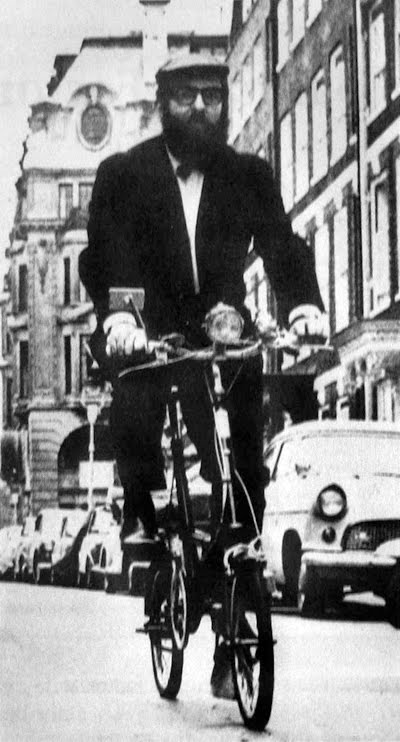
There’s no one among my friends or relatives who is blind, so I was completely unfamiliar with “echolocation’ until happening onto an article on the topic in New Scientist. Written by a blind psychologist named Daniel Kish, the article details how the author clicks his tongue and listens to the reverberations made as the sound bounces off buildings, trees, people, etc. These echos enable him to “see” his surroundings and walk, run and bicycle on his own. Kish teaches echolocation to others, enabling them to live the full existence he enjoys. An excerpt from the article:

“At the time I went to school, blind kids either waited for people to take us around, or we taught ourselves to strike out on our own. My way was by clicking my tongue and listening for the patterns of reflections from objects around me. By doing this, I could get 3D images of my surroundings. I can’t remember when or how I first started using sonar, because it was when I was very young. I have a memory of climbing over the fence into the neighbour’s yard and clicking to find out what was around me, when I was just 2½ years old.

As a child, while I was pleased to have a guide when someone was willing, I could do a lot by myself. I could ride a bicycle through my neighbourhood in the Los Angeles area, play tag with my friends, find trees to climb, and walk just about anywhere on my own.”

There is also video of Kish’s echolocation education program.

Tags:

Reyner Banham was an interesting figure in urban studies in the ’60s, ’70s and ’80s. Born in England, he fell in love with Los Angeles as a child, while devouring Hollywood-set silent movies. As an adult, he became a foremost architecture critic in an age when that profession barely existed, focusing a great deal of his writing on L.A. He died in 1988, just as he was about to move to New York to teach at NYU. At the time of his death, architect Philip Johnson asserted that Banham was “really one of the founders of architecture criticism, which has now become a worldwide profession.”

In 1972, the down-to-earth academic was the subject of a fun 51-minute BBC documentary, Reyner Banham Loves Los Angeles, that had him act as tour guide through the city he loved best. Watch for the amusing scene that has his friend, the artist Ed Ruscha, explain to Banham why the architecture of L.A. gas stations is so great.

Tags: , ,

My landlord can be aggressive at times.

Jurassic Park is fiction but a growing group of paleontologists have their sights set on reanimating dinosaurs. Jack Horner and James Gorman’s book, How to Build a Dinosaur was featured on 60 Minutes recently. The authors believe that DNA material from prehistoric creatures found on paleontological expeditions can be used to create real dinosaurs. (Unsurprisngly, Horner was the inspiration for the lead paleontologist character in Jurassic Park and served as a technical advisor on the film.)

At the same time, McGill University scientist Hans Larsson, inspired by Horner’s work, is attempting to manipulate chicken embryos to reanimate dinosaur traits that disappeared millions of years ago. Every bird on Earth is a descendant of dinosaurs, so it seems like it may be possible. An excerpt from a recent Telegraph article:

“Larsson believes by flipping certain genetic levers during a chicken embryo’s development, he can reproduce the dinosaur anatomy. Though still in its infancy, the research could eventually lead to hatching live prehistoric animals, but Larsson said there are no plans for that now, for ethical and practical reasons — a dinosaur hatchery is ‘too large an enterprise.'”

Read the full article.

Tags: , , ,

Keep your parasites to yourself, kitty.

On Edge, Stanford neuroscientist Robert Sapolsky has a fascinating examination of how parasites can affect the behavior of their hosts, even mammalian hosts like your or I. In particular, he discusses the effects of Toxoplasma or Toxo. This parasite, which grows in the stomachs of cats, can play havoc with the thought process of rats that come into contact with cat feces, but it also seems to be linked to schizophrenia and reckless behavior in humans. Doctors have often reported high levels of Toxo in the organs of people who’ve driven recklessly and gotten into motorcycle and automobile accidents. Sapolsky worries that Toxo’s knack for obliterating rational decision making could be used for nefarious means through bioengineering. An excerpt:

“You want to know something utterly terrifying? Here’s something terrifying and not surprising. Folks who know about Toxo and its affect on behavior are in the U.S. military. They’re interested in Toxo. They’re officially intrigued. And I would think they would be intrigued, studying a parasite that makes mammals perhaps do things that everything in their fiber normally tells them not to because it’s dangerous and ridiculous and stupid and don’t do it. But suddenly with this parasite on board, the mammal is a little bit more likely to go and do it. Who knows? But they are aware of Toxo.”

Read the full article.

Tags: , ,

We’ve all heard the urban legend about the guy who goes out to buy a pack of cigarettes and is never seen again. While it may have largely been a myth, it was possible before the information age to willfully vanish without a trace. But is it still an option in our digital world? In the November Wired cover story, “Vanish: Finding Evan Ratliff,” the magazine attempted to answer the question by offering a $5000 bounty to anyone who could locate their writer, who tried to go underground while staying on the grid. From the article:

If you are looking to launch a disappearance, I cannot recommend any location more highly than a big-city Greyhound bus station. A mode of transportation Americans have seemingly left to the poor and desperate, it reeks of neglect and disdain. But for anonymity in the post-9/11 world — when the words “I’ll just need to see a photo ID” are as common as a handshake — bus travel remains a sanctuary untouched by security. At the station in Las Vegas, I paid cash for a ticket under the name James Gatz, no ID required. Six cramped hours later I was in Los Angeles.” Read the rest of this entry »

Tags: ,

If you ever wonder where comedians get their material from, an easy answer might be the frontal lobe. At least that seems to be the case with improvisational comics. An interesting article called “Tall Stories” in Prospect examines the plight of patients who have incurred severe brain damage and become incredibly adept at making up fictions that they briefly believe to be 100 percent true. The condition is called “confabulation.” A passage from the article:

“If asked where she has just been, a patient might say that she was in the laundry room (when she wasn’t) or that she’s been visiting Scotland with her sister (who’s been dead for 20 years), or even that she isn’t in the room where you’re talking to her, but in one exactly like it, further down the corridor. And could you fetch her hand cream please? These stories aren’t maintained for long periods, but are sincerely believed.” Read the rest of this entry »

Tags:

Listeria2

The American Dental Association recommends that you read Afflictor.

These are my personal favorites in the popular Science/Tech category:

  • Is Google Making Us Stupid? (Nick Carr, The Atlantic)
  • The World Without Us (Alan Weisman)
  • Proust Was a Neuroscientist (Jonah Lehrer)
  • The Turing Cathedral (George Dyson, Edge)
  • The Age of Wonder: How the Romantic Generation Discovered the Beauty and Terror of Science (Richard Holmes)
  • Tags: , , , ,

    « Older entries § Newer entries »