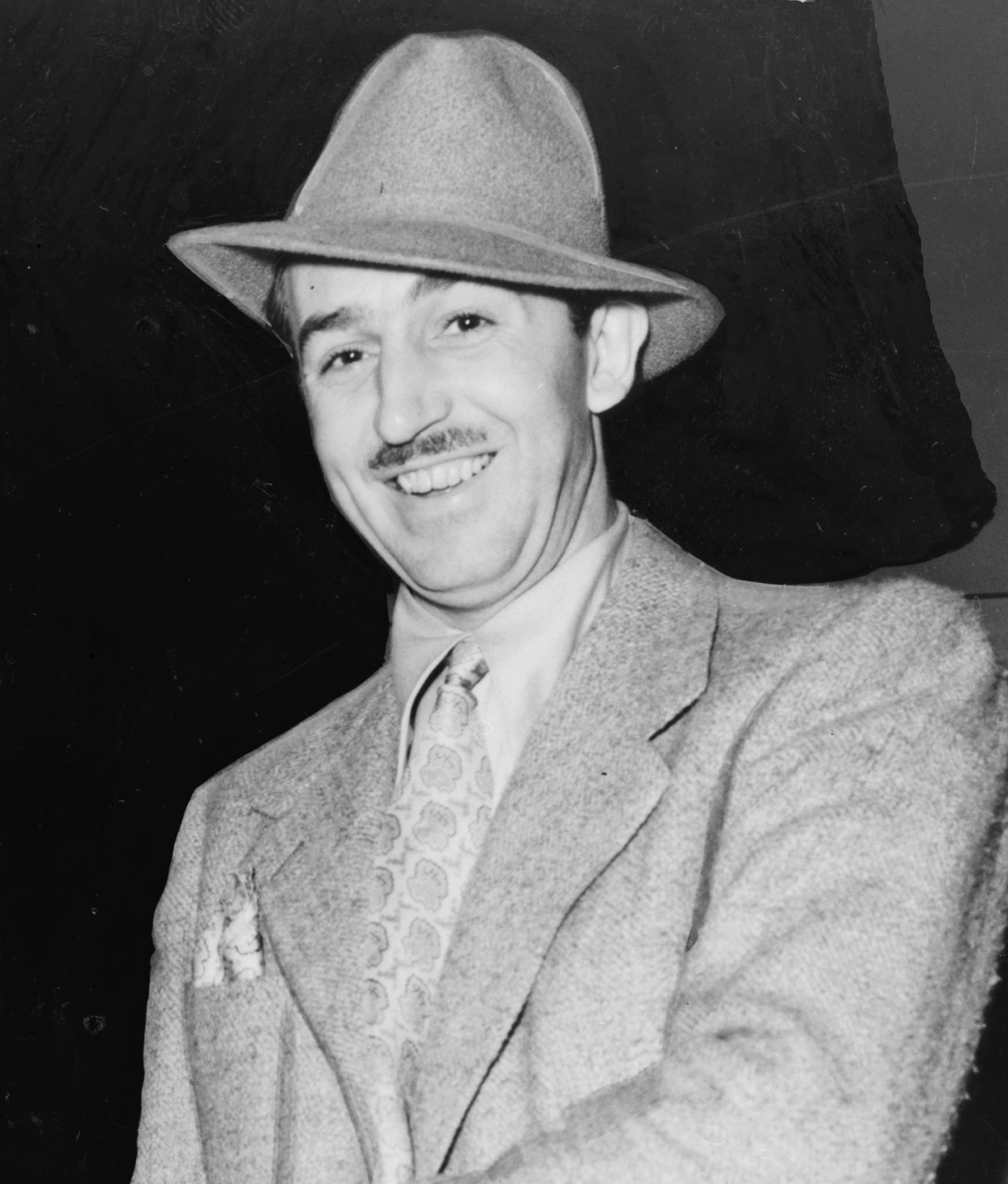
Walt Disney: Mickey Mouse sure is fucking wasted today. (Photo by Alan Fisher.)

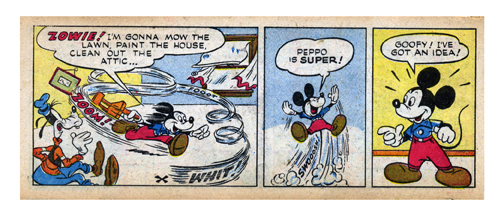
Back in the day, athletes took amphetamines which were quaintly called pep pills. But even children’s favorites Mickey Mouse and Goofy were on the stuff, according to an old 1951 comic book called Mickey Mouse and the Medicine Man, which has been placed online by erowid.org. Not only do Mickey and Goofy get speeded up, but Mickey wants to push the stuff himself. The drug-positive comic was a collaboration between Disney and General Mills. (Thanks to the great Boing Boing for pointing me in the direction of the comic.)

Peppo is super!

Tags: , ,

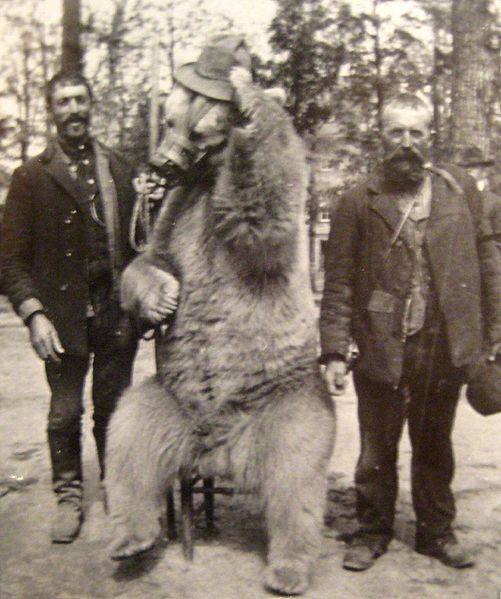
"These bears and Italians walked down Clinton avenue."

Whenever I hear negative stereotypes about new immigrants (Mexicans are taking the brunt of the abuse right now), I know it’s just history repeating itself. Old newspaper articles are littered with insulting stereotypes of every ethnic group. Take my people, the Italians, for instance. Even the bizarre stories that involved Italian immigrants used crude language and depictions. Case in point: an article from the August 9, 1895 issue of the Brooklyn Daily Eagle, which had to do with the Long Island town being invaded by bears and Italians. And which was more horrifying?!? An excerpt:

“Yesterday two large bears and three Italians appeared in town. Bears are especially forbidden to roam the streets of Bay Shore. These bears and Italians walked down Clinton avenue, at the extreme western end of the village, which is a street of the fine houses of the city residents, and the bears performed their tricks for the amusement of the New Yorkers. Constable George W. Jeffrey soon located them and had considerable difficulty in getting the Italians into the lockup, and had to use his club freely. Finally they were all shut up, bears and Italians together. Last night their trial came off and each of the men was fined $5. They refused to pay and so Constable Jeffrey took them all to Riverhead jail this morning, where they will stay until the fines are paid.”

••••••••••

Trick bears, 1899:

Tags:

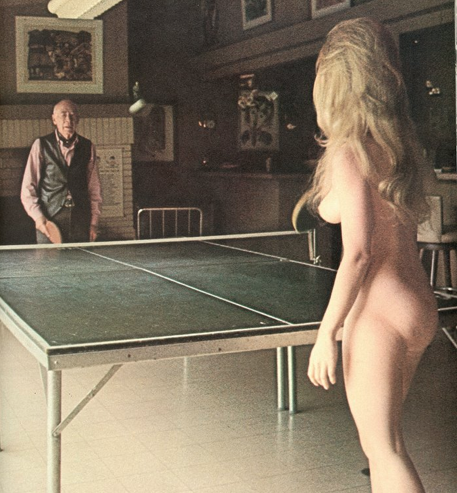
Henry Miller, who looked pretty shitty himself, dissing NYC.

Tags:

Not Rosie O'Donnell: Hire me to play softball for you or to be your drinking buddy.

Brendini Does It……..ALL (Nassau County, NY)

Ever see that “Family Guy” episode where the Moose is holding a sign that says “Will do Moose Stuff for money”?

Well that’s what we do! ANYTHING…

If you haven’t seen the episode, we are the first (as far as we know) for service business that will consider doing WHATEVER you want. You think of it and we’ll name you a price and if you think it’s fair we’re game.

Here’s a few things people have hired us for:

1. Wingman/Drinking Buddy
2. Landscaping
3. Media Services
4. Band Bookings
5. Computer Services
6. Housework/House cleaning
7. Minor repairs of various electrical devices
8. Surround Sound Hook-up
9. Sound Engineering
10. Softball Player Fill in

This is just a FEW of the things we have done. References furnished upon request. And remember: ANYTHING you can think of….BRENDINI DOES IT.”

More Craigslist ads:

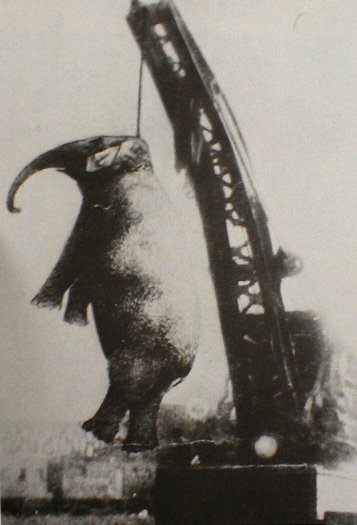
More than 5,000 spectators watched Big Mary’s execution in 1916.

I’m familiar, of course, with the electrocution of Topsy the Elephant at Luna Park in Coney Island in 1903. (It was a stunt perpetrated by Thomas Edison to discredit Nikola Tesla’s Alternating Current, which was the chief competitor to his Direct Current.) But I had never heard of the hanging of Big Mary the Elephant in Erwin, Tennessee, in 1916, even though it’s apparently been written about quite a bit.

Big Mary was the chief attraction of the small, second-rate Southern circus owned by Charlie Sparks. The great Long Form pointed me in the direction of a 2009 article about Mary’s demise in Blue Ridge Country magazine. It seems the pachyderm didn’t take kindly to a new attendant and killed him. After guns and electricity failed to put Mary down, she was hanged with the aid of a crane in a railroad yard. Sad and bizarre. An excerpt:

“Mary was billed as ‘the largest living land animal on earth’; her owner claimed she was three inches bigger than Jumbo, P.T. Barnum’s famous pachyderm. At 30 years old, Mary was five tons of pure talent: she could ‘play 25 tunes on the musical horns without missing a note’; the pitcher on the circus baseball-game routine, her .400 batting average ‘astonished millions in New York.’

Rumor and exaggeration swarmed about Mary like flies. She was worth a small fortune: $20,000, Charlie Sparks claimed. She was dangerous, having killed two men, or was it eight, or 18?

She was Charlie Sparks’ favorite, his cash cow, his claim to circus fame. She was the leader of his small band of elephants, an exotic crowd-pleaser, an unpredictable giant.

On Monday, September 11, 1916, Sparks World Famous Shows played St. Paul, Va., a tiny mining town in the Clinch River Valley.

Which is where drifter Red Eldridge made a fatal decision. Slight and flame-haired, Red had nothing to lose by signing up with Sparks World Famous Shows: he’d dropped into St. Paul from a Norfolk and Western boxcar and decided to stay for a while. Taking a job as janitor at the Riverside Hotel, Eldridge found himself pushing a broom and, then, dreaming of moving on.

Eldridge was hired as an elephant handler and marched in the circus parade that afternoon. It’s easy to imagine that what he lacked in skill and knowledge, he made up for with go-for-broke bravado. A small man carrying a big stick can be a dangerous thing.”

Tags: , , , , , ,

Afflictor: Making wild monkeys yawn since 2009. (Image by Steve Evans.)

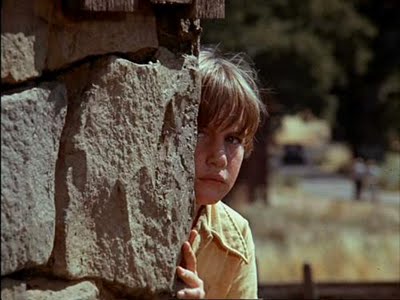
Director Robert Mulligan’s 1972 psychological thriller, The Other, may have been set in 1935, but the film had special resonance for American adults who had just spent the last decade with mouths agape while witnessing the Summer of Love and far more shocking things when the season changed for the worse. All-American boys and girls paraded across TV screens as Manson minions and radical bombers and fear of the young and what they were capable of was in the air. Mulligan and writer Thomas Tryon, who adapted the screenplay from his best-selling novel, pressed those buttons with both bloody hands.

Tow-headed nine-year-old twins Nils and Holland (Chris and Martin Udvarkony) pass their days on an idyllic farm in New England, where they live with their extended family. But all is not as well as it initially seems. Dad is nowhere to be found, mom is seemingly a shut-in and Holland keeps pressing Nils to take their mischief into dangerous territory. Watching over them is grandmother Ada (Uta Hagen), a Russian immigrant who encourages Nils to use his imagination and indulges his fantasies. But these flights of fancy are no mere child’s play for the oddly intense Nils, as a growing body count on the farm proves.

In one scene, Nils attends a carnival and figures out how an illusionist does a trick. “Damned phony,” he says to himself in quiet fury, realizing that adults are capable of lies and artifice, a lesson similarly learned repeatedly by longhairs during the Vietnam Era. The movie assures you that such knowledge can be a dangerous thing in a young mind.•

Tags: , , , ,

But he and Lou Kahn of Bakertowne Collectables need to work on their corporate handshake. This video was made in 2007.

More Featured Videos:

Tags: ,

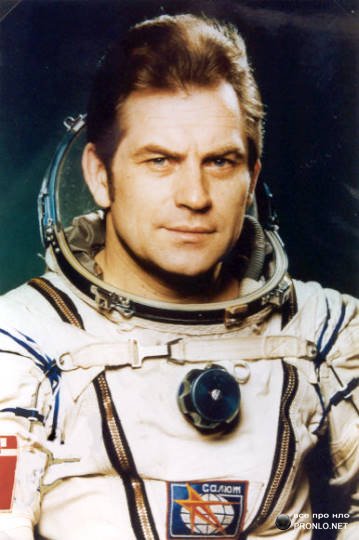
Vladimir Vasilevich Kovalenok became a cosmonaut just so he could leave Belarus.

The excitement was palpable in the Brooklyn offices of Afflictor.com when we checked the traffic stats and realized that Wednesday was the magical day that we had our first visitor from the flat, landlocked nation of Belarus. The culture-free neighbor of Latvia, Belarus decided to become a sovereign nation in 1999, and no one cared enough to stop it. The country has long been governed by a burly man with a mustache named Alexander Lukashenko. It’s not that he’s so great; it’s just that no one else wants the job. Land of pork stew and wheat vodka, Belarus’ major export is heavy machinery. So thanks for all the tractors, Belarus, and welcome to Afflictor Nation!

Tags:

Tony Hayward: Colin Firth always wanted to play an evil corporate prick.

Tony Hayward: To be sure, neither I nor the company is perfect.

Decoder: BP is responsible for more than 97% of all flagrant violations committed in the refining industry during the past three years. That adds up to 760 serious violations.

Tony Hayward: The Gulf of Mexico is a very big ocean. The amount of volume of oil and dispersant we are putting into it is tiny in relation to the total water volume.

Decoder: As of this moment, there is still more water than oil in the Gulf of Mexico. Please hold your applause.

Tony Hayward: I think the environmental impact of this disaster is likely to be very, very modest.

Decoder: But don’t let your children eat seafood or they may turn green. I’m serious. Not even an anchovy.

Tony Hayward: Of course I can [sleep at night].

Decoder: I’m also really good at sleeping on the job.

Tony Hayward: We are unwavering in our commitment to fulfill all our responsibilities.

Decoder: Unless that commitment is going to cost more than we want it to. If that happens, we will be even more lawyered up than usual.

That tuna sandwich tasted sort of funny, Mom.

Tony Hayward: This was a complex accident, caused by an unprecedented combination of failures.

Decoder: I make several million dollars a year for being totally incompetent.

Tony Hayward: I’d like my life back.

Decoder: I am completely oblivious to anything beyond my own selfish existence the same way that I am oblivious that BP getting hundreds of serious violations during my tenure means that I suck at my job.

Tony Hayward: I’m so far unscathed.

Decoder: The last thing anyone cares about is my psyche. They care about the water and the marine life and the people who’ve lost their livelihoods. But I’m such a self-important dickwad that I think that my personal drama somehow ranks as important.

Tony Hayward: No one has actually physically harmed me. They’ve thrown some words at me. But I’m a Brit, so sticks and stones can hurt your bones but words never break them, or whatever the expression is.

Decoder: The expression is: My name is Tony and I’ve just murdered an ocean.

More Decoders:

Tags:

The Paris Review site has a new interview with legendary artist R. Crumb in its summer issue. During the Q&A, Crumb talks about the role psychedelic drugs and Popeye played in his development. An excerpt:

Paris Review

So how did you finally find publication?

R. Crumb

Well, the hippie revolution happened. In 1964 I first got laid, I met my first wife, Dana, and all these protohippies in Cleveland. A lot of them were Jews from Cleveland Heights, Shaker Heights. They started taking LSD and urged me to try it, so Dana got some LSD from a psychiatrist, it was still legal in ’65. We took it and that was totally a road-to-Damascus experience. It knocked you off your horse, taking LSD. I remember going to work that Monday, after taking LSD on Saturday, and it just seemed like a cardboard reality. It didn’t seem real to me anymore. Seemed completely fake, only a paper-moon kind of world. My coworkers, they were like, Crumb, what’s the matter with you, what happened to you? Because I was just staring at everything like I had never seen it before. And then it changed the whole direction of my artwork. Other people who had taken LSD understood right away what was going on, but the people who hadn’t, my coworkers, they didn’t get it.

Paris Review

How did it change your artwork?

R. Crumb

I had been working along in this modern adult cartoon trend, very influenced by the modern, expressionistic, arty quality of work by Jules Feiffer, Ronald Searle, Ralph Steadman. Then, on LSD, I got flung back into this cruder forties style, that suddenly became very powerful to me. It was a kind of grotesque interpretation of this forties thing, Popeye kind of stuff. I started drawing like that again. It was bizarre to people who had known my work before. Even Kurtzman said, What the hell are you doing? You’re regressing!”

Tags:

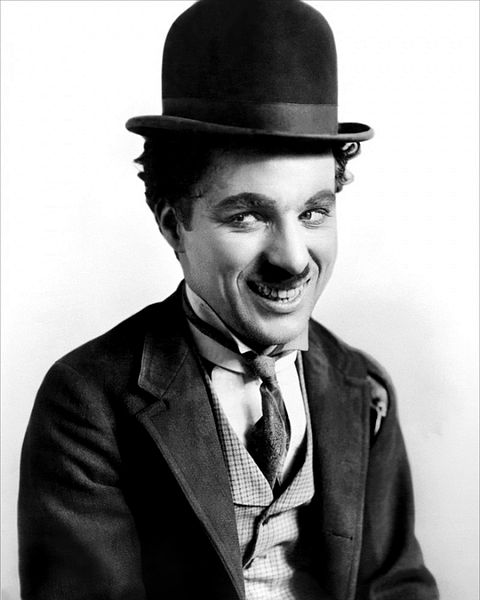
Little Tramp: I stabbed a train porter in the abdomen to acquire this necktie.

Well-dressed hobos were apparently a very serious problem in the New York region in the late nineteenth century. At least that’s the story that was being pushed in an article entitled, “Our Dude Tramps,” in the August 21, 1895 issue of the Brooklyn Daily Eagle. These ruffians, who previously were content to cover themselves in cast-off rags, had suddenly become narcissistic and were mugging decent folk for their cuff links and cummerbunds. Somebody needed to billy club these tramps into submission before they started to look too handsome. An excerpt:

“These tramps are getting too particular in the matter of their clothes. Formerly they used to go around sort of careless like, with their toes getting the benefit of the sunshine and their hats ventilated with accordion tops and flags of truce flying from the usual place, to signify that they were peaceable. But now, affected with the prevailing rage for living above their station, they insist on being clothed like dudes.

One of them terrified a farmer’s wife into convulsions by wearing a monocle when he went to the door to ask for pie and a bottle of claret. And twice within the week they have held up citizens of New Jersey and compelled them to undress, right down to the buff, in order that they may wear their clothing. The last sufferer was waylaid on the marshes near Newark, and was stripped to his undershirt, a pistol placed over his eye overcoming his natural modesty as to disrobing in this public manner, and he was left a prey to the mosquitoes which in that region surpass turkeys for size and hyenas for voracity.

Then in Bloomfield a tramp stole a swimmer’s clothes and caused him to be chased as a wild man. If the tramps keep on doing that sort of thing much longer they may get themselves disliked.”

100% Italian ice. (Image by Kim Scarborough.)

Looking 4 dentist

I m 100% italian i will exchange your work osmetic/ dentistry with italian lessons. Have your italian vacation this summer and actually understand what they are saying!

More Craigslist ads:

Duane awaits his next customer.

It was more than a decade ago that I saw the 11-minute b&w documentary, “The Last Guy to Let You Down,” at Sundance, and it still stands out as an impressively idiosyncratic and unique NYC portrait. Made by British-born photographer and filmmaker Rolf Gibbs, the movie is a melancholy and irreverent profile of a depressed East Village funeral director who’s had more luck dealing with the dead than loving the living. To watch the movie, visit Gibbs’ site and click on “Films” and the title.

More Featured Videos:

Tags:

Where do we keep the tiny lawn mower, Dad?

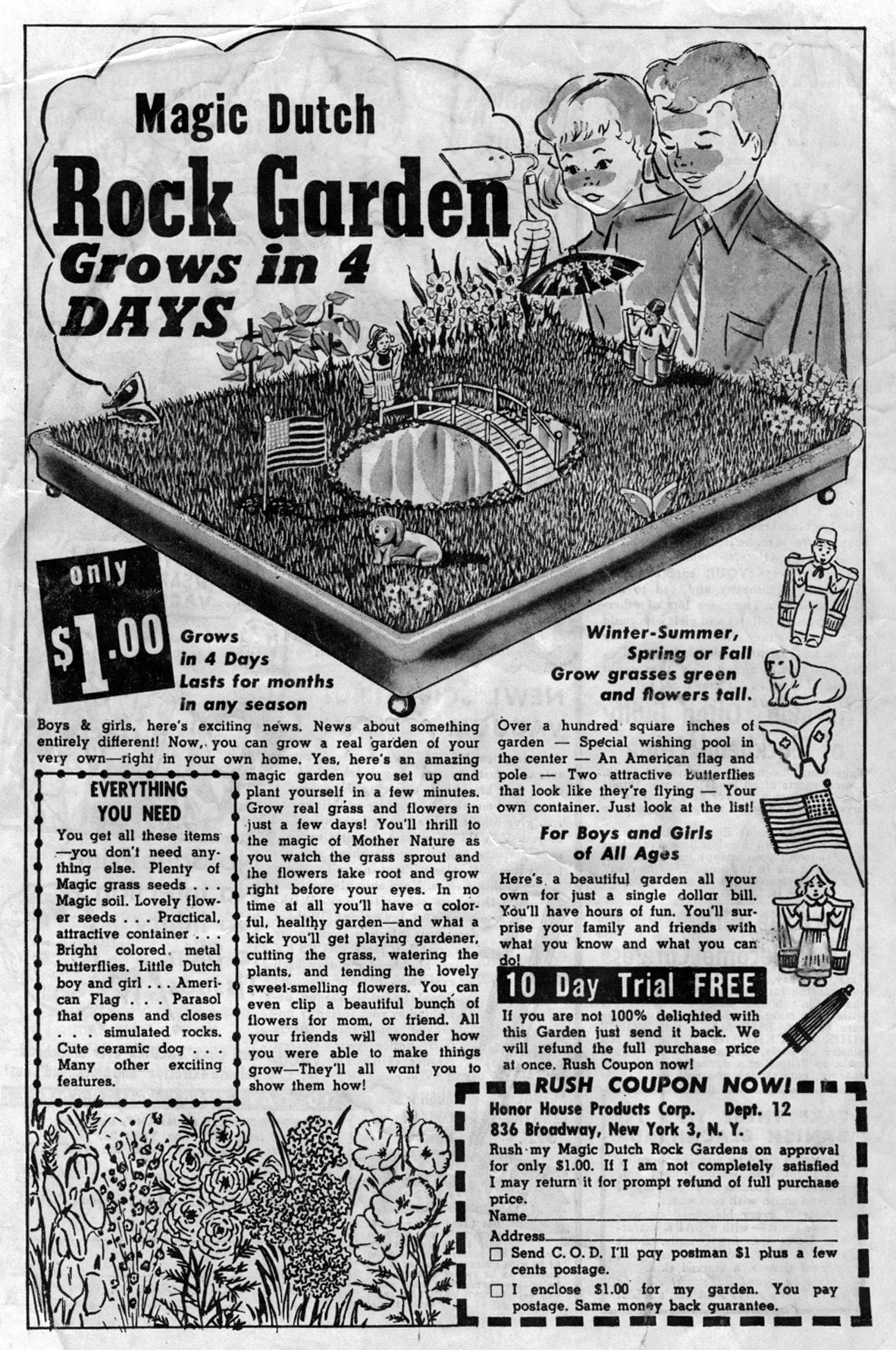
If your parents gave you a dollar in 1952 to buy this incredibly crappy toy garden, they were really sick of you and tried just about anything to keep you out of their hair for a few minutes. Even more boring than an ant farm, this faux topiary was supposed to sprout real grass and flowers in “over 100 square inches of garden.” It promised that the garden would grow is just four short days and last for months. It sounds like some sort of forerunner to the grandeur of the Chia Pet.

The garden came with Dutch boy and girl figurines, “simulated” rocks, a ceramic dog and an American flag, so that you could embarrass the whole country. (“I Wasted $1” tee shirt sold separately.) An excerpt from the copy:

“Boys & girls, here’s exciting news. News about something entirely different! Now, you can grow a real garden of your very own–right in your own home. Yes, here’s an amazing magic garden you set up and plant yourself in a few minutes. Grow real grass and flowers in a few days! You’ll thrill to the magic of Mother Nature as you watch the grass sprout and the flowers take root and grow right before your eyes. In no time at all you’ll have a colorful, healthy garden–and what a kick you’ll get playing gardener, cutting the grass, watering the plants, and tending the lovely sweet-smelling flowers. You can even clip a beautiful bunch of flowers for mom, or friend. All your friends will wonder how you were able to make things grow. They’ll all want you to show them how!”

More Old Print Ads:

Michele Bachmann: Won 46% of the vote in a congressional district in Minnesota in 2008.

Michele Bachmann: People can’t wait until November. They’re practically lining up for polls now. They can’t wait to go out and vote. The only thing is people wish Barack Obama was up for re-election right now, because they’d honestly love to have a chance to throw him out of office.  Everywhere I go, people ask me, “Michele, can we impeach the President?” They want a referendum on him.  I also had someone today say, “There’s no way he’ll run for a second term.  No way.  No one would vote for him.”  I don’t know if the White House understands how the floor has dropped out under support for this President.

Decoder: Obama’s approval ratings have been equal to or slightly better than Ronald Reagan’s at the same point in his first term.

Michele Bachmann: It’s Barack Obama’s agenda that lit the match on voter discontent today. People have never seen the government take over over 50% of the private economy.  But that’s what’s actually happened over the last 18 months either through direct ownership of private industry or though control of private industry.

Decoder: People aren’t content because there aren’t enough jobs. This line about the government taking over the private economy is never going to be a winner.

Michele Bachmann: The [American people] are really voting for the original foundation block of our Constitution that brought us prosperity.

Decoder: The original foundation of the Constitution allowed for slavery and didn’t permit women to vote. No one with half a brain would want to return to that.

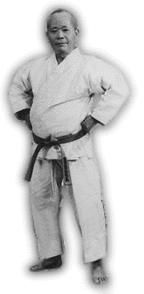
Master says ancient art of karate not to be wasted on angry lady from Minnesota PTA.

Michele Bachmann: I took karate when I was 17 years old. I am dangerous.

Decoder: I am dangerous for many reasons, but none of them have to do with karate.

Michele Bachmann: It’s an infantile response for the President to point blame at BP when the President has given over full authority to BP to deal with and manage the cleanup. If the President wanted to, he could intervene and he clearly hasn’t.

Decoder: I probably should mention that it was infantile for Sarah Palin and the entire Republican National Convention to chant “Drill, Baby, Drill,” but I won’t. I also should note that it wasn’t befitting of adults to deregulate the oil industry the way the GOP has, but I won’t. You know why I won’t mention these things? Because I’m a petty, hypocritical sack of shit.

Michele Bachmann: That’s the elixir of the Tea Party movement. People are telling the truth.

Decoder: Like when we say that Obama wasn’t born in the United States or is a Muslim.

Michele Bachmann: So far, you’d have to say [Obama] is the worst President in United States history.

Decoder: I know nothing about United States history or Presidential history or history in general. I just throw a lot of shit against the wall and hope something sticks.

More Decoders:

Tags:

Internet cafes will not make you dumber. (Image by Phallus Nocturne.)

When I was growing up in my working-class neighborhood in Queens, there wasn’t a single bookstore in the community during my entire childhood. Not one. There were candy stores where you could get a paper or a magazine and a couple of small, semi-stocked libraries, but it was difficult for a kid with a curious mind to grow up in that environment. You had to take a train to Manhattan just to get a hold of something with hard covers to read. I always felt like there was information somewhere, but I didn’t know where it was.

You know what would have leveled the playing field? The Internet. It didn’t exist then, but it does now, and it has the potential to connect any reader in the world to any book they want. You can find out about any university, look up any word and read an incredible array of great writing wherever there’s a wi-fi connection. That doesn’t mean everyone will use the medium to improve themselves, but it’s pretty hard to avoid doing so. The Internet is democratizing and despite what the hand-wringers say, it’s made our knowledge deeper and stronger.

That’s why I bristle when I hear how the Internet is destroying the literary mind and damaging our memories. If it seems like our memories are failing more often than they used to, that’s because we have so much more information at our fingertips. Ultimately, that’s a good thing.

One person who agrees with me is Steven Pinker. Pinker is a psychology professor at Harvard who’s best known for his book, The Stuff of Thought. In an article on Edge, he addresses concerns about what the Internet is doing to our brains. An excerpt:

New forms of media have always caused moral panics: the printing press, newspapers, paperbacks and television were all once denounced as threats to their consumers’ brainpower and moral fiber.

So too with electronic technologies. PowerPoint, we’re told, is reducing discourse to bullet points. Search engines lower our intelligence, encouraging us to skim on the surface of knowledge rather than dive to its depths. Twitter is shrinking our attention spans.

But such panics often fail basic reality checks. When comic books were accused of turning juveniles into delinquents in the 1950s, crime was falling to record lows, just as the denunciations of video games in the 1990s coincided with the great American crime decline. The decades of television, transistor radios and rock videos were also decades in which I.Q. scores rose continuously.

For a reality check today, take the state of science, which demands high levels of brainwork and is measured by clear benchmarks of discovery. These days scientists are never far from their e-mail, rarely touch paper and cannot lecture without PowerPoint. If electronic media were hazardous to intelligence, the quality of science would be plummeting. Yet discoveries are multiplying like fruit flies, and progress is dizzying.”

Tags:

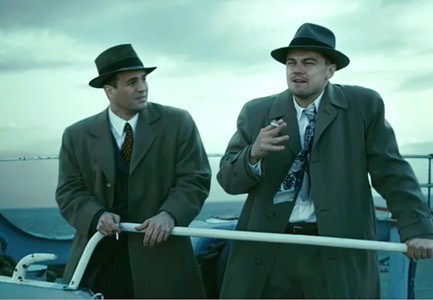
DiCaprio and Ruffalo ferry into a nightmare.

Marrying big-budget cinematography to a B-movie aesthetic, Martin Scorsese’s Shutter Island spectacularly captures the lush surface of a great psychological thriller, but sadly little of the essence. While the gorgeous compositions make for an impressive Hitchcock homage, the drama’s ultimately just a welter of not-so-interesting red herrings from a director who isn’t sure what he wants to accomplish and has saddled himself with a miscast lead actor in Leonardo DiCaprio.

The action revolves around DiCaprio’s U.S. Marshal Teddy Daniels, who travels in 1954 to a psychiatric hospital on the remote titular isle to investigate the disappearance of a patient. Before long, Daniels believes that the hospital’s omnipotent Dr. Cawley (Ben Kingsley) is trying to hide something–namely horrific medical experimentation on humans that may be inspired by Nazi procedures or connected to the House Un-American Activities Committee. But Daniels has long been under immense stress, as flashbacks to his wartime experiences and his murdered wife attest, and he’s not really sure which end is up. Is he really on to something sinister or is he imagining it all or is it something else?

Scorsese doesn’t seem to care if you figure out the answers halfway through the film; he’s too busy working with the immensely talented cinematographer Robert Richardson on fog and rain machines to fret much about the plotting, which is alternately intentionally and unintentionally confused.

Shhh! Don't tell people that Leonardo DiCaprio lacks gravitas.

DiCaprio, who is better at conveying temper (as in The Departed) than torment, simply lacks the haunted quality to pull off a part of this depth. He’s able to furrow his brow at will, but he has little to call on beneath his skin. This paucity is called into sharp relief during a scene in which he encounters a spectral imprisoned patient, played by Jackie Earle Haley, who may be incarcerated because he knows too much about Dr. Cawley’s unethical work. In a few minutes of screen time, Haley pours out a torrent of pain and persecution that neither Scorsese nor DiCaprio bring to the proceedings. They’re just approximating what they think things should look like, while Haley’s soul is on fire.

Because of his star’s name, Scorsese was able to get the money to make Shutter Island into a lavish work that ranks with Raging Bull, Goodfellas and Kundun in terms of visuals, but a small-budget movie with Haley in the lead would probably have been a far greater thing.

More Film posts:

Tags: , , ,

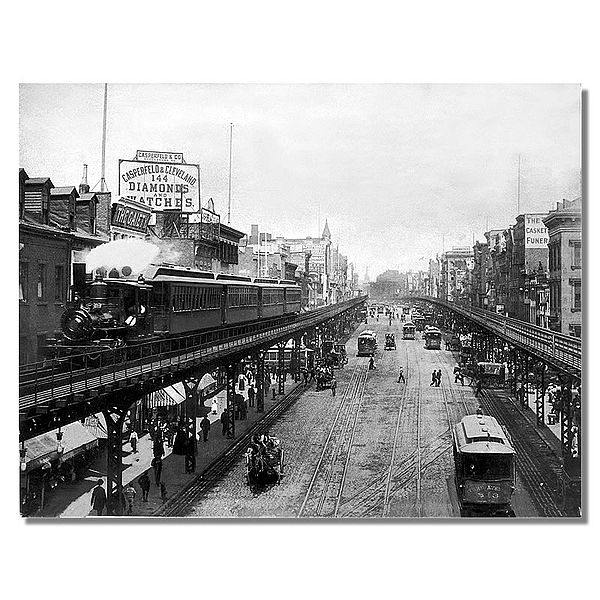
What the Bowery looked like in the late 1890s.


According to the Brooklyn Daily Eagle.

DRINK

  • Milk punch…5 ¢
  • Sherry and egg…5¢
  • Mint julep…5¢
  • Large glass of lager…3¢
  • Pint of whiskey…10¢
  • Cocktails…6¢
  • Glass of porter…3¢
  • Glass of whiskey…3¢
  • Big cup of coffee…5¢

FOOD

  • Prime roast beef…5¢
  • Corn beef and cabbage…5¢
  • Mutton chops…5¢
  • Three boiled eggs…5¢
  • Country sausages…5¢
  • Gilt edge kidney stew…5¢
  • Green turtle soup…5¢
  • Beef steak…5¢
  • Pork and beans….5¢

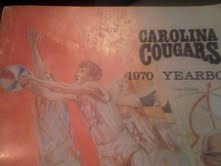
Yearbook cost a buck back in 1970.

I got my bent, bony fingers on a copy of the 1970 yearbook of the Carolina Cougars of the long-defunct American Basketball Association. Since no city in North Carolina had a large enough population to support a sports franchise, some local businesspeople decided to purchase the struggling Houston Mavericks in 1969 and turn it into a regional franchise that would alternate home games in four NC cities: Charlotte, Greensboro, Raleigh and Winston-Salem. The team had some success on the court and attracted national attention for the novelty of its regional operation, but it only survived from 1969-1974, before moving to St. Louis.

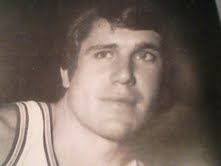
What’s most interesting about the yearbook is the description of player Larry Miller, who later set the single-game record for ABA scoring in 1972, pouring in 67 against the Memphis Pros. The copy about Miller, however, focused more on his off-the-court scoring. An excerpt:

“Here he is girls: Instant Party. The ABA’s most eligible bachelor. The Lochinvar in low cuts. Larry came to the Cougars from the Los Angeles Stars where he was one of the league’s All Rookie team members in his first season last year. Larry aspires to play guard and feels that he can do the job. Both Los Angeles and the Cougars have used him primarily as a forward but Larry has shown some proficiency with the three point goal.

Larry Miller: "Instant Party."

Off the court Larry is the blithe spirit of pro basketball. His wardrobe of mod attire rivals that of Joe Namath, but there are no mink coats in Larry’s closets. His off season activities include an acting career in Hollywood and a boys’ basketball camp in Charlotte. These keep him hopping between the east and west coasts.

His Carolina abode is an evergreen surrounded country home located on a private lake. Larry shared the posh bachelors’ pad with teammate Rich Niemann, the Cougars’ 7-foot-1 center. Niemann’s upcoming marriage to a pretty young lady from Kansas City will leave Larry alone with Timmy, the German Shephard who was a pup when Larry was at UNC and has traveled back and forth across the country with him.

But of course his loneliness in the posh pad will be dissipated with several thousand dollars worth of hi-fi equipment complete with special psychedelic lights and a collection of date books that is already approaching several volumes. How much suffering can a man take?”

More Miscellaneous Media:

  • The Washington Senators Official MLB Yearbook. (1968)
  • Ugandan currency with Idi Amin’s picture. (1973)
  • Tom Van Arsdale basketball card. (1970)
  • Okie from Muskogee sheet music. (1969)
  • California Golden Seals hockey magazine. (1972)
  • Beatles Film Festival Magazine (1978)
  • ABA Pictorial (1968-69)
  • Tom Seaver’s Baseball Is My Life. (1973)
  • Hockey Digest (1973)
  • World’s Fair Guide (1964)
  • World’s Fair Guide (1939)
  • Buffalo Braves Yearbook (1972-73)
  • New York Nets Yearbook (1976-77)
  • “Tom Dooley” sheet music.
  • I don’t know when or where this occurred. But mostly, I don’t know why.

      Tags:

      “The stranger picked up a razor and invited her to have a shave.”

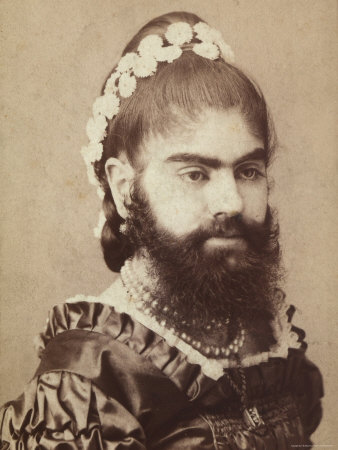
      If I’ve learned one thing from reading Old Timey newspapers, it’s that nothing good ever happened in a New York barbershop during the 1880s. No one ever went in, got a shave, and emerged the better. These shops were full of nonstop drunkenness, insults and bloody fisticuffs. You would have been safer at a cock fight in an opium den.

      In a story I came across  recently in the February 12, 1887 issue of the Brooklyn Daily Eagle, a young woman being teased about her alleged hirsuteness led to a wild melee. The story:

      “Julia McEvoy, a rather good looking young woman, who says she is 23 years old, was arrested yesterday afternoon by Officer Stevens, of the Sixth Sub Precinct, on a charge of malicious mischief preferred against her by Michael Bria, an Italian barber, whose store is at 455 Graham avenue. Miss McEvoy was very indignant over her arrest and stoutly proclaimed her innocence. When questioned she said she had been the barber’s housekeeper.

      She was in the store yesterday afternoon when a friend of her employer’s entered. He seemed to be in a jocular mood and amused himself by poking fun at Miss McEvoy. The latter did not mind this until the stranger picked up a razor and invited her to have a shave. The young woman considered that this involved an unpleasant implication and became indignant at the proposition. She informed the stranger that he was carrying this fun too far, and requested him to desist. He thought, however, that the fun was very mild, and had no intention of relinquishing it. Indeed, Miss McEvoy’s fiery eyes only served to give it keener relish.

      Then, according to the young woman’s story, he chased her about the store. It was a very lively chase. They jumped over and around chairs and tables, most of which were soon upset. Though Miss McEvoy is a nimble young woman, she was not agile enough for her tormentor, her skirts seriously impeding her movements. The stranger finally caught her and renewed his proposition to shave her. Miss McEvoy, by that time was really angry, and after she expressed her opinion of him in a manner more vigorous than the man thought the occasion demanded. He also grew angry and a war of words ensued between the two.

      The hot Southern blood of the stranger, who was an Italian, was soon aroused, and when Miss McEvoy expressed her opinion of him in a more unendurable form than she had yet used he seized her and pitched her through a large window pane of glass. She escaped without injury, and was about to re-enter the store when the officer appeared. Mr. Bria, who had been absent a part of the time, returned at this moment, and seeing the damage done to this property made the charge against her on which she was arrested.

      Miss McEvoy, when taken to the station house. expressed the belief that it was rather cruel to have her arrested after being used as an irresponsible missile instead of being an actual misdemeanant. When Mr. Bria was seen this morning he seemed to have some doubts as to who the actual culprit was. He insinuated that Miss McEvoy had been drinking a little beer. She was not really his housekeeper, but was only employed by him from day to day. The stranger’s name could not be learned. When the case was called in Justice Naecher’s Court this morning Bria did not appear, and Miss McEvoy was discharged.”
      Tags: , ,

      Maybe the couch belongs to that whiny guy with all the hair from the Counting Crows. (Image by Snowdog.)

      CELEBRITY COUCH – OWNED BY SINGER! – $1000 (Midtown West)

      A famous singer owned this freaking couch. It costs $900 brand new at IKEA. It was given to me as a gift.

      Now i am moving out of my apartment and i need to sell it. The thing is super comfortable AND friends can sleep on this thing… if you take the back pillows off and put them on the ground, you can fit probably 5 people as guests sleeping over….

      *2 guests (a couple) laying together on one leg of the “L” couch (with the back pillows on the ground, creating more room on the L leg”

      *1 guest (an individual) laying other leg of the “L” couch (*Note: you’d probably want to be foot-to-foot, not head-to-head meeting at the middle of the L, because otherwise it could be awkward)

      *with the back pillows on the floor, you can create a mattress by putting them side-by-side, putting room for 2 more.

      So actually you could fit 6 people if you put two couples on the couch… niia hahaha!!!

      the bottom line is this… the couch below is the couch we got! BUT… it is the property of a singer!!! the singer is an awesome artist that you will know. You can probably charge guests $20.00 each to sit on the couch. possibly providing a sustainable revenue stream.

      The couch is about a year old, and has a small wine stain on it. Nothing a small patch can’t fix.

      More Craigslist ads:

      Afflictor: Helping giant street penguins in Tokyo fall asleep against buildings since 2009. (Image by Toshihiro Oimatsu.)

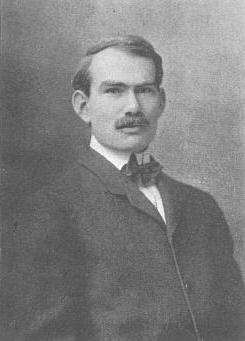
      Inventor Lee de Forest: I was a tremendous prick, but terribly important.

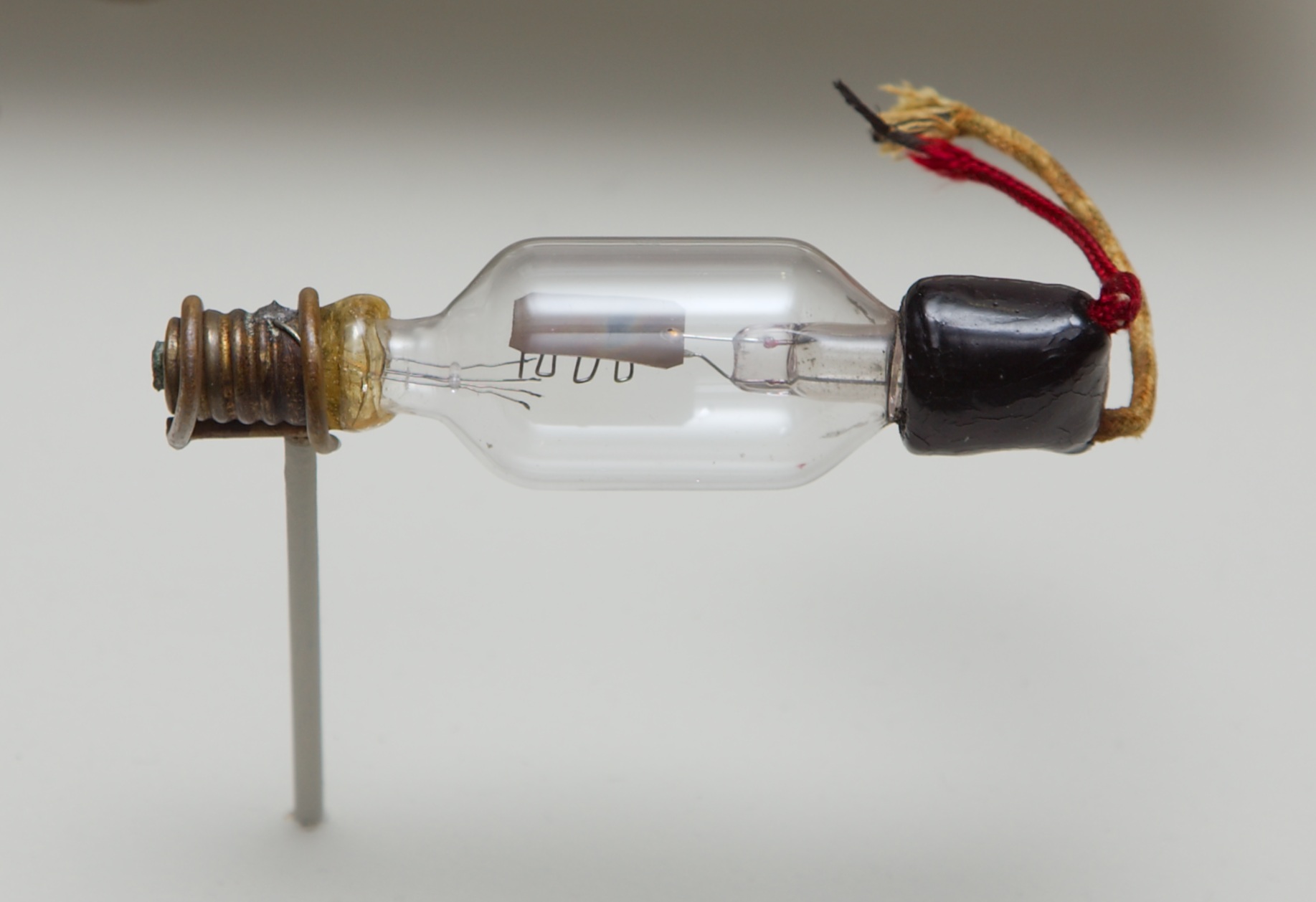
      Lee de Forest was one of the most important inventors in modern times, but don’t feel bad if you haven’t heard of him. The man is as forgotten as his invention, the Audion, is ubiquitous. The vexing inventor’s 1906 discovery made audio amplification possible, giving new life to the flagging radio industry and making possible any number of media. Gizmodo has posted an excerpt from Nicholas Carr’s new book, The Shallows, which provides insight into de Forest.  An excerpt:

      “Even when judged by the high standards set by America’s mad-genius inventors, de Forest was an oddball. Nasty, ill-favored, and generally despised–in high school he was voted ‘homeliest boy’ in his class–he was propelled by an enormous ego and an equally outsized inferiority complex. When he wasn’t marrying or divorcing a wife, alienating a colleague, or leading a business to ruin, he was usually in court defending himself against charges of fraud or patent infringement–or pressing his own suit against one of his many enemies.

      De Forest grew up in Alabama, the son of a schoolmaster. After earning a doctorate in engineering from Yale in 1896, he spent a decade fiddling with the latest radio and telegraph technology, desperately seeking the breakthrough that would make his name and fortune. In 1906, his moment arrived. Without quite knowing what he was doing, he took a standard two-pole vacuum tube, which sent an electric current from one wire (the filament) to a second (the plate), and he added a third wire to it, turning the diode into a triode. He found that when he sent a small electric charge into the third wire–the grid–it boosted the strength of the current running between the filament and the plate. The device, he explained in a patent application, could be adapted ‘for amplifying feeble electric currents.’

      De Forest’s seemingly modest invention turned out to be a world changer. Because it could be used to amplify an electrical signal, it could also be used to amplify audio transmissions sent and received as radio waves. Up to then, radios had been of limited use because their signals faded so quickly. With the Audion to boost the signals, long-distance wireless transmissions became possible, setting the stage for radio broadcasting. The Audion became, as well, a critical component of the new telephone system, enabling people on opposite sides of the country, or the world, to hear each other talk.

      De Forest couldn’t have known it at the time, but he had inaugurated the age of electronics.”

      Tags: ,

      « Older entries § Newer entries »