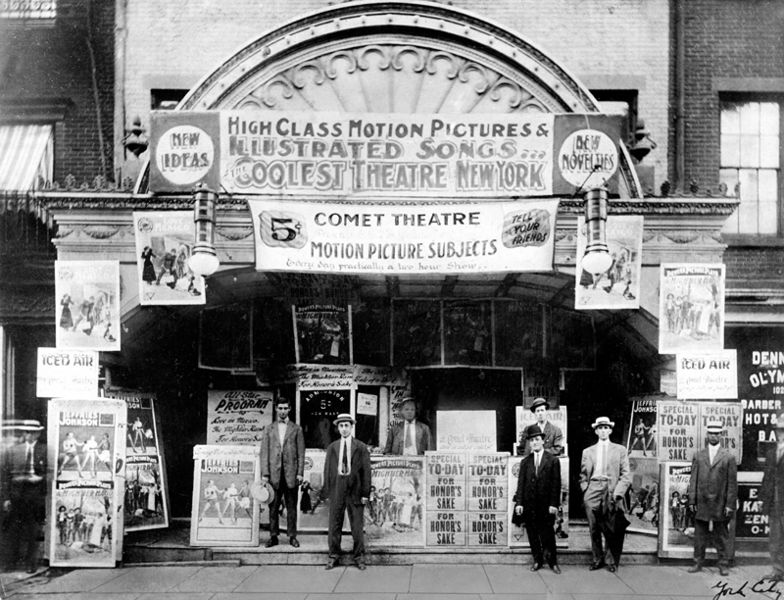
I’m not quite sure which Comet Theatre location in New York City is pictured above. Because of the sensation that Hailey’s Comet caused in 1910 when it was visible from Earth, many businesses used the “Comet” name in the subsequent decade, theaters especially. The featured movie playing on this particular day was a 10-minute short called “For Honor’s Sake.” There was also a film of the racially charged 1910 boxing match between Jack Johnson and Jim Jeffries, which was known as “The Fight of the Century.” (Jeffries received a vicious ass-whooping.) If you look closely at the signage, the Comet promised to provide “Iced Air,” which, in the pre-air-conditioning age, meant blocks of ice sitting in front of a fan.
You are currently browsing the archive for the Urban Studies category.
Tags: Jack Johnson, Jim Jeffries

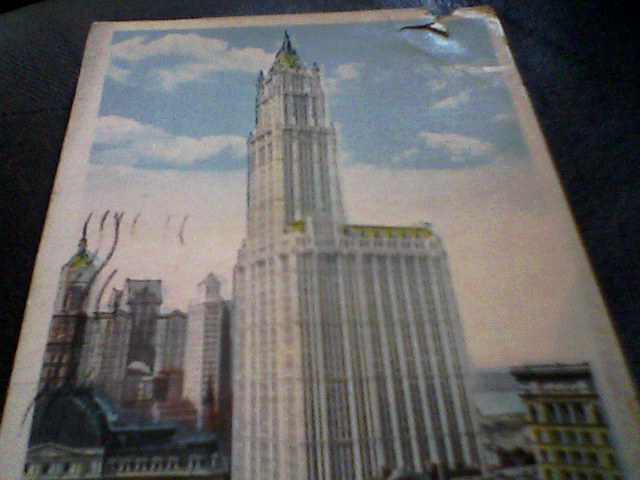
Image of the "U.S.S. Salt Lake City." Card is from Donald E. Nafis at the U.S. Naval Training Center, Great Lakes, Illinois.
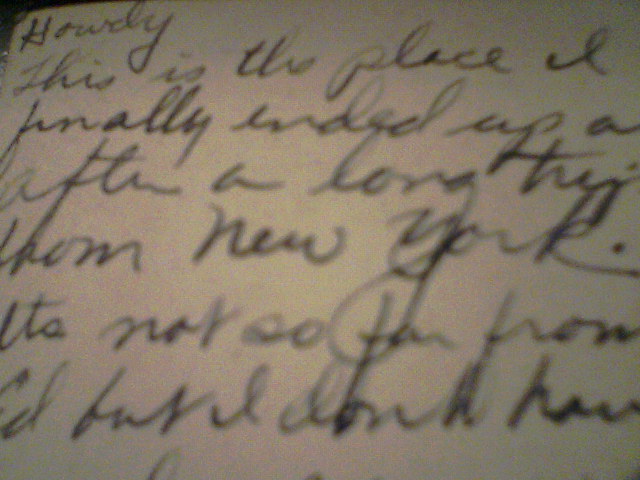
Howdy,
This is the place I finally ended up at after a long trip from New York. It’s not so far from Ed but I don’t have any leave as yet and I’m not allowed visitors during my training period.
Best regards,
Don
Research at MoMA’s Counter Space blog has uncovered the 19th-century inventors who created various aspects of the brown paper bag, which we take for granted when we’re at the supermarket. If you think about it, the design, elegant and sturdy, is just about perfect. (Thanks Kottke.) An excerpt from the blog post:
“Francis Wolle, active in the early 1850s, is considered the first inventor of the modern paper bag. Based in Pennsylvania, he cofounded the Union Paper Bag Machine Company in 1869, as well as becoming ordained as a deacon and following passions in entomology and botany. Union was supported financially by wealthy manufacturers, who thereby secured rights to patents secured by the company and divvied up the country into market segments to avoid direct competition. One of these characters was industrialist George West of Saratoga County, New York, also known as the ‘Paper Bag King.’ Originally from England, he established himself in Ballston Spa, owned ten paper mills, and became a member of the New York State Assembly and the House of Representatives.
It was slightly later that a woman named Margaret Knight, working for another company, the Columbia Paper Bag Company of Springfield, MA, designed a machine that could produce flat/square-bottomed paper bags, a great improvement on the earlier, structurally weaker envelope-style bag design. As a result, it is Knight who is more widely recognized as the inventor of the paper bag in the general form of the one shown in Counter Space. She’s also believed to be the first woman to achieve a U.S. patent.
However, our paper bag also reflects the design developments of the following years (starting around 1883) made by Charles Stilwell of Massachusetts/Pennsylvania (originally Fremont, Ohio), who improved on Knight’s machine to produce flat-bottomed paper bags—now with pleated sides for easier folding and stacking (satchel-style)—more quickly and cost-effectively. This type was given the nickname ‘S.O.S.’ (self-opening-sack), and really provided the model for the mass-produced paper bags we know today.”
Tags: Charles Stilwell, Francis Wolle, George West
Artist Needed for Reproduction Paintings (Chelsea)
I collect and sell rare and strange reproduction oil paintings. I am starting a website where I am going to be selling these paintings and need a few painters for hire. You must submit work you have done and be able to paint people and objects NOT JUST LAND SCAPES. Allot of my clients like ancient UFO art like the piece by Aert De Gelder entitled “The baptism of Jesus.” It depicts a classic, hovering, silvery, saucer shaped UFO shining beams of light down on John the Baptist and Jesus and was painted in the 1700’s. It hangs in the Fitzwilliam Museum, Cambridge, England. Another popular selling item is Nazi art like the picture of Hitler I put below dressed up as a knight. So don’t bitch about paintings Nazi’s. We also paint things like the lockness monster and bigfoot. Right now I am willing to pay $80.00 a painting until I get my site going then I will pay $120.00 a painting ,and if things take off I will pay more especially if you are good ! I am not greedy.
Tags: Arent De Gelder
If cuteness makes you vomit, don’t watch this video or you will barf your guts.
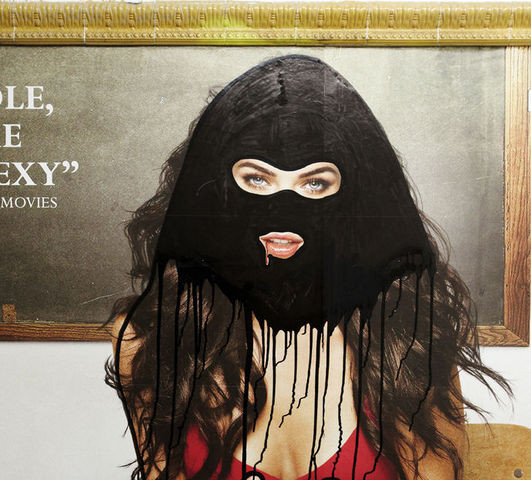
Princess Hijab is the mysterious Paris graffiti artist who defaces pictures of scantily clad models in street advertisements, covering their faces with veils and headscarves. The artist calls the process “hijabizing.” In a country that has banned traditional Muslim face coverings, the work has gotten plenty of attention, and people have wondered about the true nature of the protest. Angelique Chrisafis of the Guardian recently met with the artist, who apparently is not female, and tried to get to the bottom of it all. An excerpt from the article:
“Princess Hijab is deliberately cool and detached, but the one issue that really shakes her – and perhaps reveals a little of her true identity – is the place of minorities in France. Beyond the arguments about whether Muslim women should cover their heads, Sarkozy’s new ministry of ‘immigration and national identity’ and his national debate on what it means to be French has stigmatised the already discriminated and ghettoised young people of third- and fourth-generation immigrant descent. France has the largest Muslim population in Europe, but the prevailing anti-immigrant discourse, and what many view as a pointless burqa ban, has increased the feelings of marginalisation felt by young Muslims and minorities.
Princess Hijab sees herself as part of a new ‘graffiti of minorities’ reclaiming the streets. ‘If it was only about the burqa ban, my work wouldn’t have a resonance for very long. But I think the burqa ban has given a global visibility to the issue of integration in France,’ she says. ‘We definitely can’t keep closing off and putting groups in boxes, always reducing them to the same old questions about religion or urban violence. Education levels are better and we can’t have the old Manichean discourse any more.'”
Boing Boing has published a great collection of old print ads for Pong (and its many knockoffs), the game that kicked off the digital quarter-sucking arcade craze. The site also provides historical context. An excerpt:
“In September 1972, Atari’s Nolan Bushnell and Allan Alcorn installed the prototype Pong machine at Andy Capp’s Tavern in Sunnyvale, California. The idea was to make a computer game that was ‘so simple that any drunk in any bar could play.’ And boy, did they ever.
Now, was Pong a hit because America loved Ping Pong so much that they wanted to play it on TV too? Or as media theorist Douglas Rushkoff has said, was it empowering because finally anyone could control what was on the TV? Either or neither way, people lined up for their chance to ‘Avoid missing ball for high score,’ as per the machine’s only instructions. Within just a few months, the Pong clone wars had begun.
Atari didn’t have the patent on the technology and very quickly the vast majority in the machines eating quarters around the country were knock-offs. Of course, Pong itself was ‘inspired’ by an electronic ping pong game that was in the Magnavox Odyssey home system. To keep up, Bushnell continued to innovate, as did everyone else. Call it a volley between King Pong and his brethren, while an invasion from space was on its way.”
Tags: Allan Alcorn, Nolan Bushnell
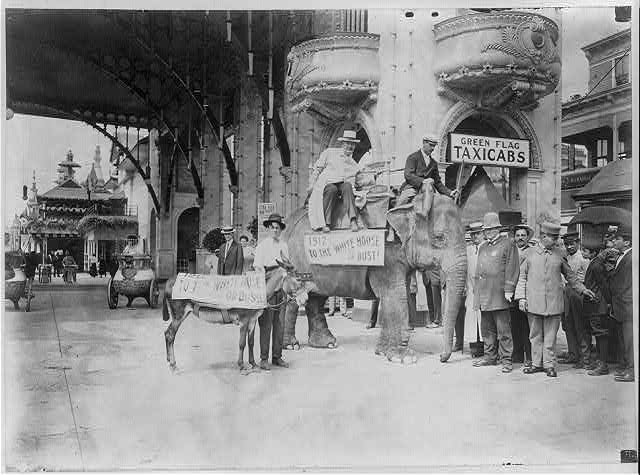
In July 1911, Luna Park in Coney Island, Brooklyn, was the starting line of a race between an elephant and a donkey, which was to conclude in Washington D.C. The stunt was supposed to be a predictor of the following year’s Presidential election. Luna Park owner Frederic Thompson backed the Dems’ beast of burden, while “Uncle” Joe Cannon, the Republican stalwart and former Speaker of the House, seconded the GOP pachyderm. The two men wagered a cigar on the outcome, and the race received national attention.
The contest was threatened when Jennie the Donkey died from heatstroke on the eve of the battle and had to be replaced by Jennie II. Judy the Elephant showed up ready and willing as expected. The animals strode over the Manhattan Bridge, down Broadway and rode aboard the Staten Island Ferry. Jennie II took an early lead, but the rivals were soon even once more. Frustratingly, both archived articles on the New York Times site (here and here) focus only on the early part of the race, and don’t provide the result.
If the subsequent election was any indication, Jennie II won easily: Democrat Woodrow Wilson trounced Republican William Taft and Theodore Roosevelt.
Tags: "Uncle" Joe Cannon, Frederic Thompson, Jennie, Jennie II, Judy
While the Soviet Union was collapsing, stuff like this was happening. Just brilliant. I don’t know Russian so I can’t translate the title, but I will refer to this work from here on in as Bloody Bloody Boris Yeltsin. (Thanks Reddit.)
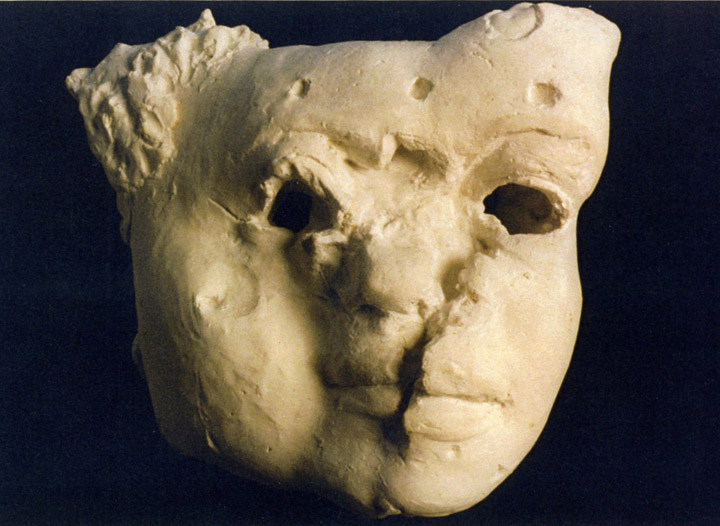
Longform pointed me to a fascinating 2008 Telegraph article about the Vidocq Society, a Philadelphia-based organization, made up of volunteer law-enforcement professionals, many of them retired, who meet for lunch once a month and solve cold cases that have baffled local police across the country.
A founding member of the Vidocq Society who’s not a detective is the artist Frank Bender, who discovered an unlikely gift for crimefighting many years ago while studying anatomy at a morgue. An excerpt:
“Bender, 67, is a small, animated man with a snow-white beard and a constant twinkle in his eye. He now works as a sculptor and watercolorist, but at one time or another has been an advertising photographer and a commercial diver inspecting the hulls of tugboats in Philadelphia harbour. He fell into catching criminals by accident: In 1975 he was taking evening courses in painting at the Academy of Fine Arts in Philadelphia. To help him see ‘in the round’ he started attending sculpture classes, but there were no anatomy lessons available to evening students, so a friend in the medical examiner’s office offered to let him sit in on some autopsies to learn about the human form. ‘I go to the morgue. He shows me around. Bodies had been cut up, burnt. They had this one woman,’ Bender says, ‘her whole body was decomposed, they didn’t know what she had looked like or who she was.’
The woman had been shot in the head, the bullet smashing her skull open, but Bender told his friend, ‘just out of conversation’, that he could show him what the woman had looked like, and recreate the features of her face in a sculpture.
‘I just knew what people looked like,’ Bender tells me when we meet at his studio. Five months later the woman was identified from Bender’s bust as Anna Duval, an Arizona woman who had come to Philadelphia to collect money on a property deal that had gone sour. She had been executed by a Mafia contract killer who would not be convicted of the murder for another 20 years.
Bender had discovered an apparently intuitive gift for facial reconstruction and, as word spread of his success, was called first to work on more ‘skull-to-face’ cases; later, he began creating aged renderings for the FBI and Federal Marshals Service to help them find fugitive criminals.”
Tags: Frank Bender
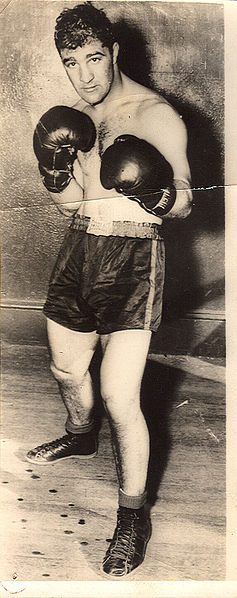
Boxing Lessons for new bathroom. (Queens)
Looking to fix up a small bathroom in my basement. Shower sink and Toilet. Very small bathroom nothing fancy. I am a boxing trainer and will trade your skills for mines.
More Craigslist ads:
- Free couch very stained with dog’s menstrual blood.
- Expired beer for barter.
- Gypsy pastor is robbing you blind.
- Ugly-ass piece of useless furniture.
- Free hay.
- Saddam Hussein memorabilia.
- I need a pregnant chick’s urine.
- Need a slightly larger sukkah, selling current sukkah.
- Corn skewers keep buttery filth off your hands.
- Bed of nails coffee table
- I buy creepy military items.
- Kidney for sale.
- Amateur taxidermist looking for fresh roadkill.
- Talking Snooki bobble-head doll.
- We pay $100 for your old diaries.
- Selling or trading iced-out 15-karat Jesus piece.
- I bought a bloody, urine-soaked couch.
- Old guy selling toenail collection.
- Looking for adults to beat the shit out of each other.
- Pay us $25,000 to put you in an action movie.
- Heal my bedbug bites, I will cook for you.
- Man selling turtle tank will make your life miserable.
- Angry dad selling kid’s Xbox.
- Marky Ramone autographed Pokémon card.
- Guy with tooth decay needs dentist who isn’t a dick.
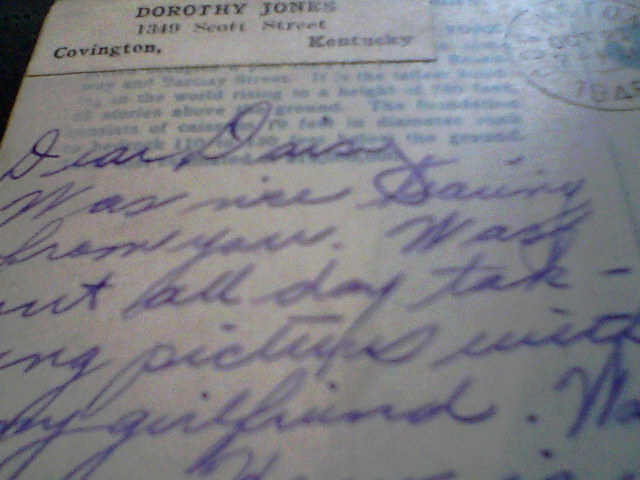
Dear Daisy,
Was nice hearing from you. Was out all day taking pictures with my girlfriend. Was fun.
How is your finger? Hope it is all right now.
Gina Dot Jones
More Miscellaneous Media:
Tags: Dorothy Jones, Gina Dot Jones
“Why trust your family’s appearance to a cheap gadget?” asks this 1974 commercial which then asks you to trust your family’s appearance to a cheap gadget. For $2.98, you could own a Hair Wiz and turn each of your blood relatives into a poorly shorn freak. The product was available at Peoples Drug Stores, a chain of Eastern U.S. pharmacies that was founded in 1904 by Malcolm Gibbs. Peoples was eventually purchased by CVS.
Tags: Malcolm Gibbs

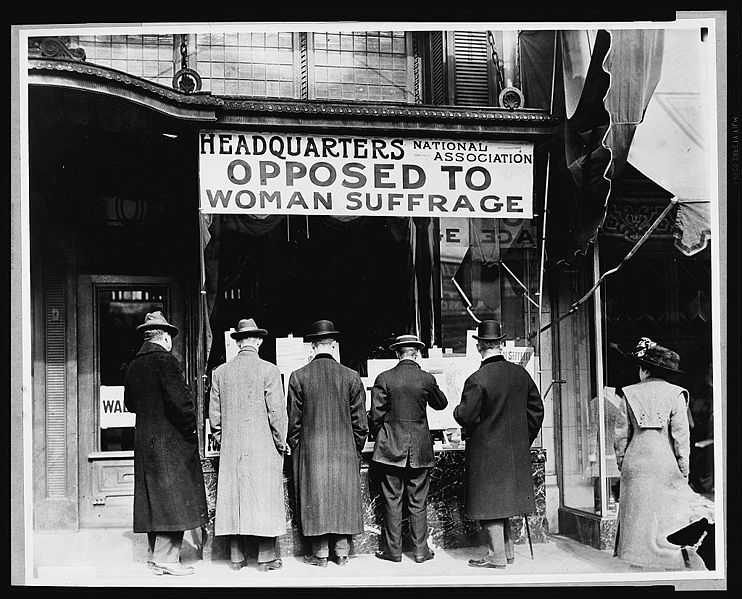
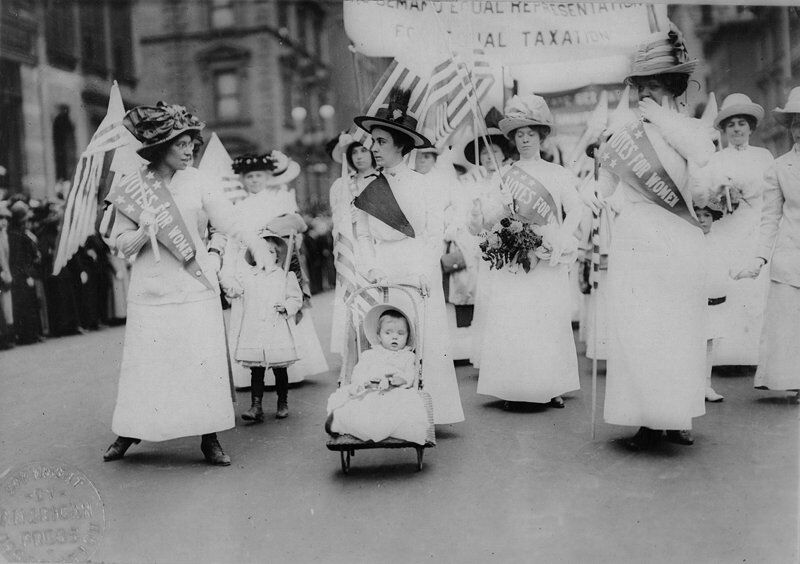
The National Association Opposed to Woman Suffrage, first located in New York and then D.C., was founded by Josephine Dodge. It disbanded in 1920 after the Nineteenth Amendment was passed.
According to a 1902 article in the New York Times, Josephine Dodge (Daskam Bacon) didn’t exactly make a positive impression at a meeting of the Pilgrim Mothers’ Society. Elizabeth Cady Stanton, who had died just before this meeting took place, founded the Pilgrims, which was decidedly pro-Suffrage. But when Dodge spoke to the group, she really pissed in the punch bowl.
Dodge didn’t seem a likely opponent to the cause. She wrote books with female protagonists and was vital in the development of the Girl Scouts. But she believed that women voting would somehow distract them from doing work in their communities.
Nine years after this speech, Dodge formed the National Association Opposed to Woman Suffrage, which was aimed at keeping the ballot out of women’s hands. Thankfully, she lost that battle when the Nineteenth Amendment was ratified in 1920. An excerpt from the Times article:
“Miss Josephine Dodge Daskam, the author, rather astonished the members of the Pilgrim Mothers’ Society yesterday afternoon when she expressed her views on ‘The Girls of the Future.’ The women who hold membership in the society, after a dinner in the Astor Gallery of the Waldorf-Astoria, had been listening to responses to toasts on women in business, in law, in medicine, and at the ballot box when Miss Daskam spoke.
‘The young girl of the future,’ she said, ‘I hope may find no greater responsibilities, no wider paths, no greater difficulties than the girl of the present has. Many women who are most valiantly anxious to gain their rights have always forgotten one thing–that the party of the first part, our brothers, are to-day where they were in the beginning; they have always the same advantages, the same responsibilities, the same difficulties, and, fortunately, they have the training to meet them. The girl has all of these things–and 753 extra tasks. And her back is no stronger and her shoulders are just as small as they ever were. I don not think there is much difference between the girl of to-day and Eve.
‘The girl of the future will be definitely obliged to choose between her ever-present privileges and her rights. And, if anybody were to ask me, I would advise her to hang on to her privileges and let her rights go.’
The silence that followed that remark was relieved by the laughter caused by Miss Daskam’s next remark that ‘if you can’t get your vote, you can always get your voter, and you can influence him in his vote.’
Miss Daskam then proposed what she called a ‘little scheme.’ ‘Let him,’ she said, ‘live and perish in the conviction that he knows and can do many things that you cannot, and always pretend that you never know.’ She said that men wanted to do for women things which they believed women could not do, and were angered when they learned that they could do those things. She said that the man ought to be permitted to keep the bank book, and to decipher for his wife the railroad time table, a thing which, of course, no woman is capable of doing.”
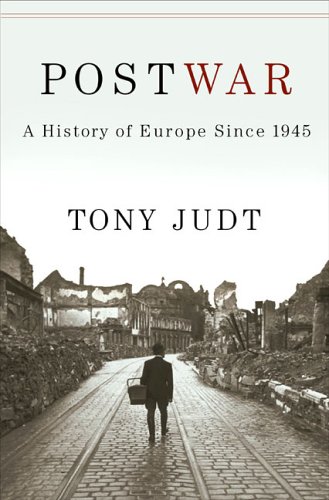
The great British-born historian Tony Judt, who passed away in August, had an excellent posthumous think-piece about New York’s current status as a global city in Sunday’s Times. An excerpt:
“I arrived in New York just in time to experience the bittersweet taste of loss. In the arts the city led the world from 1945 through the 1970s. If you wanted to experience modern painting, music or dance, you came to the New York of Clement Greenberg, Leonard Bernstein and George Balanchine. Culture was more than an object of consumption: people thronged to New York to produce it too. Manhattan in those decades was the crossroads where original minds lingered — drawing others in their wake. Nothing else came close.
Jewish New York too is past its peak. Who now cares what Dissent or Commentary says to the world or each other? In 1977, Woody Allen could count on a wide audience for a joke about the two magazines merging and forming Dissentary (see Annie Hall). Today? A disproportionate amount of the energy invested in these and certain other small journals goes to the Israel question: perhaps the closest that Americans get to nombrilisme.
The intellectual gangs of New York have folded their knives and gone home to the suburbs — or else they fight it out in academic departments to the utter indifference of the rest of humanity. The same, of course, is true of the self-referential squabbles of the cultural elites of Russia or Argentina. But that is one reason neither Moscow nor Buenos Aires matters on the world stage. New York intellectuals once did, but most of them have gone the way of Viennese cafe society: they have become a parody of themselves, their institutions and controversies of predominantly local concern.
And yet, New York remains a world city.”
Tags: Clement Greenberg, George Balanchine, Leonard Bernstein, Tony Judt
In addition to looking incredibly stupid, the Spinner Topp also promised to “keep your brain warm”–the very brain that the other kids would pummel after seeing you wearing a Spinner Topp. The item was manufactured by the Arlington Hat Company of Long Island City, New York, which still operates.

Navajo reservations are one of the areas hard hit by unchecked infectious disease. (Image by jclarson.)
Miller-McCune has an incredibly distressing report about diseases, usually associated with third-world nations, that are flourishing in the poverty-stricken areas of the United States. They keep poor people within a cycle of poverty, and worse yet, epidemiologists at the Center for Disease Control haven’t been tracking the illnesses. (Thanks Instapaper.) An excerpt:
“Millions of poor Americans living in distressed regions of the country are chronically sick, afflicted by a host of hidden diseases that are not being monitored, diagnosed or treated, researchers say.
From Appalachia to the Mississippi Delta to the segregated inner cities of the Great Lakes and Northeast, they say, and from Navajo reservations to Latino communities along the U.S.-Mexico border, more than 20 chronic diseases are promoting the cycle of poverty in conditions of inadequate sanitation, unsafe water supplies and rundown housing.
‘These are forgotten diseases among forgotten people,’ said Peter Hotez, a microbiologist at George Washington University, president of the Washington, D.C.-based Sabin Vaccine Institute and co-founder of the institute’s Global Network for Neglected Tropical Disease Control. ‘If these were diseases among middle-class whites in the suburbs, we would not tolerate them. They are among America’s greatest health disparities, and they are largely unknown to the U.S. medical and health communities.’”
Tags: Peter Hotez
Billed by the Wall Street Journal as “the most interesting man in the NFL,” Romanian immigrant Zoltan Mesko was a standout punter at Michigan before being drafted by the New England Patriots. He has one of the more unusual backgrounds among NFLers. An excerpt from John U. Bacon’s WSJ piece:
“Of the dozens of rookies signed by NFL teams this summer, perhaps the most unlikely one is a 24-year-old punter from Romania who stands 6-foot-4 and sports what he calls ‘a buzz cut and a big, goofy smile.’
The wonderfully named Zoltan Mesko speaks five languages and grew up dreaming of being an aerospace engineer before graduating from Michigan with a business degree and a master’s in sports management. He got lured into football only after he smashed a ceiling light with a kick ball in his Twinsburg, Ohio, junior-high-school gym.
‘When I was 10 years old, I barely knew American football existed,’ he adds. ‘If you would’ve told me I’d get two degrees and a pro contract for kicking a ball in the air, I probably would have said, ‘Oh yeah? Are you going to disappear into thin air for your next act?'”
Tags: John U. Bacon, Zoltan Mesko
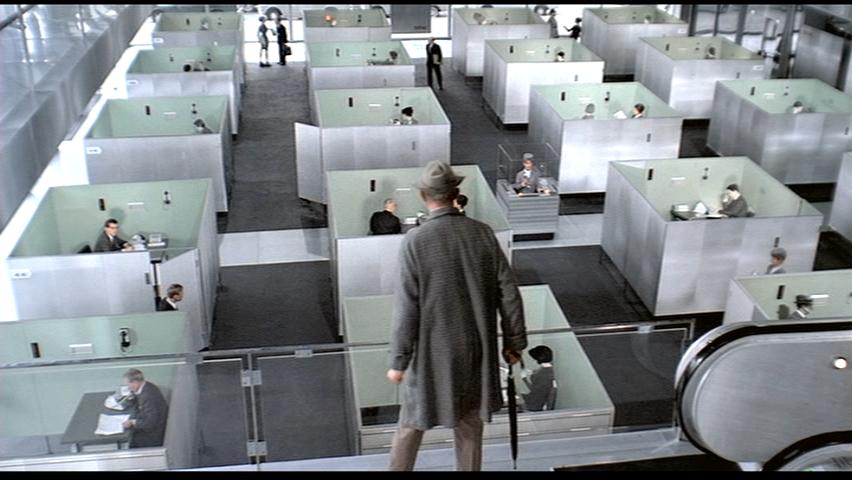
A film of protest but also one of reconciliation, Playtime is not only Jacques Tati’s masterpiece but also one of the biggest-hearted comedies ever made. Tati’s bumbling alter ego, Monsieur Hulot, is a man out of time, having grown at odds with Paris in the 1960s, with the arrival of modernity and technology. He staggers through a maze of confounding architecture, design and attitudes in a city he can no longer call his own.
Hulot attempts to visit a government official but grows discombobulated by the building’s odd furniture and space-age gadgets and winds up in a series of misadventures. He careers from an exposition of whirring products to a soulless, luxe apartment building to an excursion with a tourist group from America. Each sequence is beautifully calibrated so that Hulot is at the mercy of modern technology, as if he were Chaplin stuck in the gears of really well-designed machinery.
But all is not lost. One American tourist who hopes to experience the “real Paris” sees in Hulot a throwback to a grander time, and he begins to view the city with her enthusiasm. Together they find some magic in the margins, and Hulot learns how someone can more than make do even when it seems like he might be done.•
Tags: Jacques Tati
Toothpick artist and Marin County native Scott Weaver used his art–and 3,000 free hours– to recreate the gorgeous city of San Francisco. The excerpt below about him and his work is taken from Weaver’s website:
“My family lived in San Francisco for 3 generations. My great-grandfather had a winery in the 1880’s at Montgomery and Jackson St, about a block from where the Transamerica pyramid is located. My grandparents had a house at 518 12th Ave, between Anza and Balboa. My mom and dad had a house on Quintera, then moved to Marin, where I was born. I started building toothpick sculptures in 1968, when I was 8 years old. My early structures were abstract and about 2 – 4 feet tall. I built one sculpture that had a ping-pong ball roll through it. In 1974 I started a new sculpture and added the Golden Gate Bridge and Lombard Street, that also had a ping-pong ball roll through it. This is what started what is now “Rolling Through the Bay.” Over the years I have worked on “Rolling Through the Bay,” on-and-off, sometimes not working on it for years at-a-time, to do other projects and get married to my beautiful wife, Rochelle, and have a wonderful son, Tyler. I love working with toothpicks and hope to do so for years to come.”
Tags: Scott Weaver
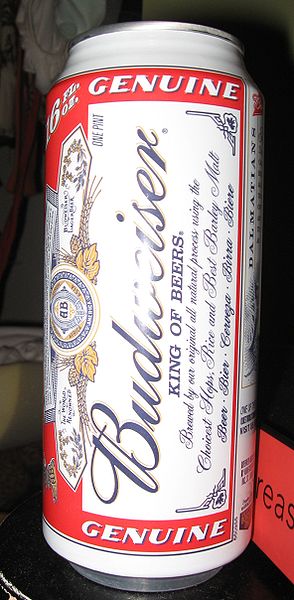
One case of expired beer 18pk assorted budweiser and bud light 12oz
Ranges from may 2008 to Jan 2009 18pk of 12oz cans assorted budweiser and bud light willing to barter or trade for anything of equal value. Located in the bronx willing to meet anywhere in the bx and manhattan. Thank you.
More Craigslist ads:
- Gypsy pastor is robbing you blind.
- Ugly-ass piece of useless furniture.
- Free hay.
- Saddam Hussein memorabilia.
- I need a pregnant chick’s urine.
- Need a slightly larger sukkah, selling current sukkah.
- Corn skewers keep buttery filth off your hands.
- Bed of nails coffee table
- I buy creepy military items.
- Kidney for sale.
- Amateur taxidermist looking for fresh roadkill.
- Talking Snooki bobble-head doll.
- We pay $100 for your old diaries.
- Selling or trading iced-out 15-karat Jesus piece.
- I bought a bloody, urine-soaked couch.
- Old guy selling toenail collection.
- Looking for adults to beat the shit out of each other.
- Pay us $25,000 to put you in an action movie.
- Heal my bedbug bites, I will cook for you.
- Man selling turtle tank will make your life miserable.
- Angry dad selling kid’s Xbox.
- Marky Ramone autographed Pokémon card.
- Guy with tooth decay needs dentist who isn’t a dick.
This article from the January 28, 1892 edition of the Brooklyn Daily Eagle has everything: an older woman, a younger man, a jilted husband, bigamy, fistfights, murder threats and the invention of a brand new piano varnish. An excerpt:
“Astoria gossips are very busy at present. A thrifty matron there has two husbands. The younger and the latest acquisition, whom she prefers, has sworn out a warrant for her arrest for bigamy. The older one, to whom she was wedded nearly thirty years ago, loves her still and is persistent in efforts to have her return to him and threatens to shoot the favored husband if he does not remain away from the woman.
Mrs. Charles Gardner, the thrifty matron, is about 45 years of age. She was once a gay soubrette. She played with a stock company in Philadelphia over thirty years ago and possesses still the charms, though now decidedly matured, that won applause and bouquets from from the Johnnies of that strictly proper city then. She was known to fame as Amy Lloyd. Charles Gardner, a comedian who at another theater was making Quaker citizens smile, met, wooed and won her. Her father in law being of an inventive turn of mind invented a piano varnish at about this time. Mr. Gardner, who was in ill health and tired of the stage, became interested in the invention and purchased some stock in a company formed to exploit it. It was arranged that the father in law should manufacture the varnish and Gardner, who is a fluent talker, should travel and sell it. The ex-comedian did very well. Several years ago he and Mrs. Gardner came to Astoria to live. As Gardner was on the road nearly all of the time his wife superintended the building of a pretty cottage on some property they purchased there.
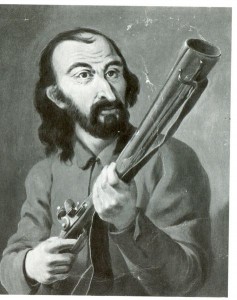
Three years ago in this month of roses the Gardner cottage was sufficiently near completion for the decorators to begin work. Among the workmen who came to do the decorating was Eugene D’Antreville. He was a sturdy, handsome fellow of 23, of the same age as the Gardners’ youngest son. Mrs. Gardner met him frequently. Their acquaintance ripened into love and it is said that, although it was not a leap year, Mrs. Gardner proposed marriage to him. He referred to Mr. Gardner, her drummer husband, as an impediment to their becoming one. She then declared that she had never been married to Gardner and went into hysterics as she had often seen the leading lady in her old stock company do. When she revived, she threatened suicide unless D’Antreville would become her husband. He then consented, and on Sunday, January 13, 1880, they were married, the Rev. Mr. Sheppard of the Reformed church in Newtown performing the ceremony.
The honeymoon was spent in the Gardner’s cottage, now completed, and nothing marred their domestic felicity until May, when Gardner came home from a long Western trip. When Gardner had put away his sample cases and looked over the new house he was informed that Mr. D’Antreville was lord and master there. It is needless to state that unpleasantness followed. No one who witnessed the trouble would ever have thought that the Gardners played in light comedy. After some furniture had been broken and the husband and wife were more or less battered and bruised a policeman arrived and quelled the disturbance and Mr. D’Antreville was forced leave.

To obviate further trouble, Gardner removed with his wife to New York City. A few days later Gardner returned home and found D’Antreville there. A free fight followed, but no one was seriously injured. The Gardners then returned to their Astoria cottage. Gardner, on returning from a trip on the road several weeks thereafter, found D’Antreville again ensconced in the new cottage. D’Antreville stoutly maintained that he was the women’s rightful husband, and there was another fight. Both husbands threatened murder, and Mrs. Gardner fled to a neighbor’s home for protection. D’Antreville exhibited his marriage license to prove his claims and challenged Gardner to produce one. Gardner subsequently obtained a duplicate of the record in Philadelphia, showing that he had been legally married to Mrs. Gardner, and argued that he was her only legal husband. He threatened to shoot D’Antreville if he finds him in the company of Mrs. Gardner again. Gardner alleges that the woman is insane, but this is not believed. Mrs. Gardner follows D’Antreville about and frequently goes to his place of business. She was driven from the building the other day by D’Antreville’s younger brother, who placed a tar barrel by her chair, and literally smoked her out by dropping red hot chains into it.”
Tags: Amy Lloyd, Eugene D'Antreville, Mr. Charles Gardner, Mrs. Charles Gardner, Rev. Mr. Sheppard
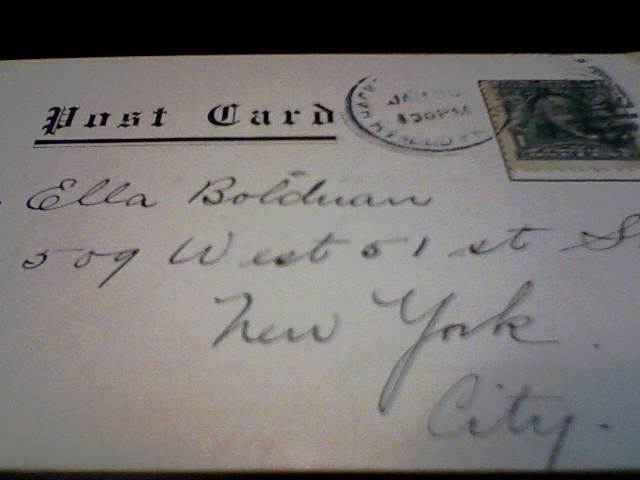
Dear Ella,
I received your postal this morning and thought it was very pretty. We had no company on Sunday. There is an awful lot of snow here yet. George’s chickens were eaten on Thanksgiving. Tonight will be lovelier than last night because we have a full moon.
Helen
More Miscellaneous Media:
Tags: Ella Boldman