Urban Studies

You are currently browsing the archive for the Urban Studies category.

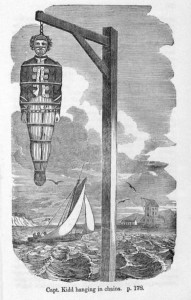
"The hanging of Jackson and Jarvis at Jamaica, yesterday, was made the occasion of a general holiday in the County of Queens."

The 1875 hanging of two convicts turned into a vulgar dog-and-pony show for the amusement of the locals in Jamaica, Queens. The January 16th Brooklyn Daily Eagle took everyone involved to task for the horrific spectacle. An excerpt:

“We believe murderers ought to be hanged, but we are opposed to having executions turned into raree shows or neck stretching festivals. The hanging of Jackson and Jarvis at Jamaica, yesterday, was made the occasion of a general holiday in the County of Queens, and a spectacular horror within the confines of the county jail. For this, the Sheriff, the hangman and a vulgar public sentiment are responsible. The accounts given of the proceedings recall some of the Tyburn scenes in the Seventeenth Century.

The victim driven through the streets for the amusement of a vulgar mob, the looming, ghastly form of the gallows, the ugly figures of the hangman, the loathsome rumbling of the cart over the stony street, and the hideous apparel of death of Dick Turpin‘s day were, in several respects exactly paralleled, and others vividly suggested yesterday.
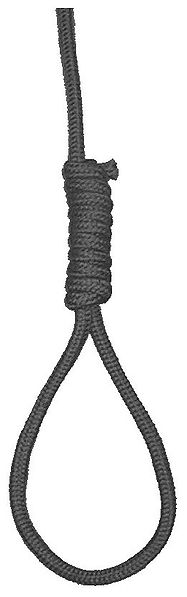
With much mock solemnity, the poor devils were interrogated as to their feelings, badgered to confess their guilt, dressed in black, acquainted with the pressure of the noose, and pinioned for the satisfaction of the vulgar before they were taken out for destruction, while far beyond the jail walls rose the jeers and shouts of the less favored mob who had been excluded from actual contemplation of the spectacle. There is only one term by which such arrangements can be characterized. They are barbarous. It is disgraceful to our civilization that such things are tolerated. There is no good reason why, if a man is to be hanged, the hanging should not, in the presence of official witnesses, without unnecessary torture, be dispatched. It is a question whether exhibitions such as that of yesterday have not a more demoralizing effect upon the public mind than the crimes they are designed to suppress. They, in a coarse way, make heroes of the condemned, they awaken sympathy for them in many minds, they familiarize the mind with horror which is the next thing to making one delight in the infliction of torment, and they serve to awaken an antagonism to the rigid enforcement of the law.

No one who looked yesterday upon the body of Jarvis dangling in the air after having been drawn up and dropped twice from a rotten rope could have felt otherwise than that of the Sheriff and his executive assistant ought to have been strung up, for their bungling, on adjoining trees.”
Tags: ,

"Metaphysical garbage collectors at your service."

Give us your personal journals (Brooklyn)

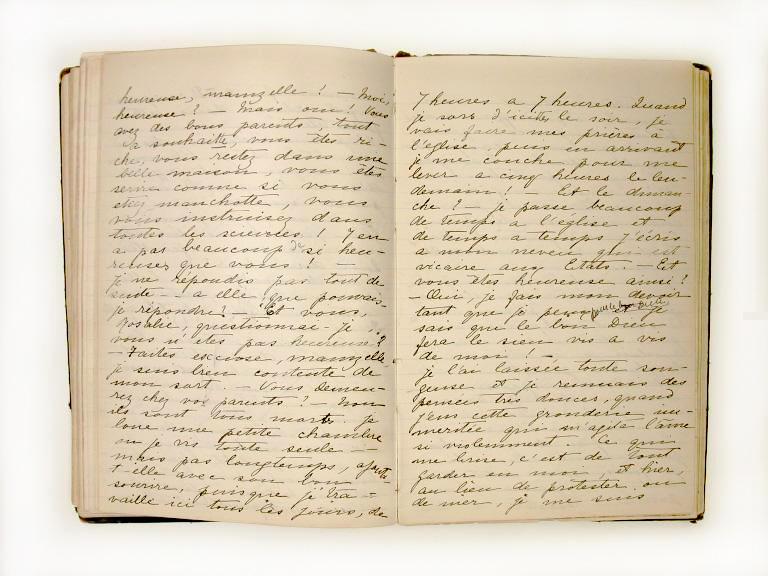
Don’t throw your journals out! Give them to us. Your life experiences mean a lot to us.

Who is us? We are artists, performers and sustainable living enthusiasts who are seeking to recycle your memories, random thought fragments, your best, worst and mediocre moments. Et cetera.

When you throw stuff away, where is “away”? We are away! Metaphysical garbage collectors at your service.

In other words, we want your journals. Give us your journals.

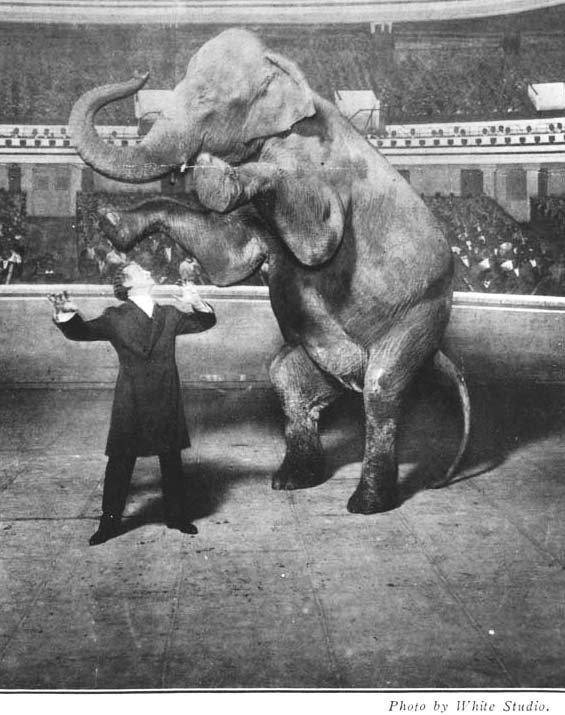
Houdini fired a pistol in the air and--poof!--Jennie was gone.

The Hippodrome was a large-scale Manhattan entertainment venue that struggled mightily to make money in its later life, finally closing in 1939. But it had some great moments during its glory years. One such sensation was the time in 1918 when Harry Houdini made Jennie, a several-ton elephant, vanish into thin air in front of a 5,000 awed patrons. How did he do it? Mirrors. A 2007 Daily Mail article recalls the spectacular moment and its backstory. An excerpt:

“‘Ladies and gentlemen,’ Houdini cried as, to the audience’s alarm, a full-grown Asian elephant, 8ft tall and weighing over 6,000lb, came running pacily into view. ‘Allow me to introduce Jennie, the world’s only vanishing elephant.’

Jennie the elephant proudly raised her trunk in greeting to the wide-eyed masses, before being led into a huge, brightly coloured box on wheels. The doors were closed behind her, there was a dramatic drum roll and the stage hands flung open the doors at both ends of the box to reveal that it was now – completely empty.

Houdini announced to rapturous applause: ‘You can plainly see, the animal is completely gone.’

The Vanishing Elephant became one of Houdini’s most famous tricks and he performed it in front of over a million people. For more than 90 years, long after his death, the tradecraft by which he made this huge beast disappear remained a secret even other magicians failed to solve.”

Tags:

Sadly, the title gives it away.

Tags:

"Know when and not to fool around."

16-year old in need of a part-time job (queens)

Hello craigslist im looking for a part-time job i would like to find something i can do after school and wont be home late i have no job experience but i am a hard worker and know when and not to fool around.

"Circulating ice water in each room."

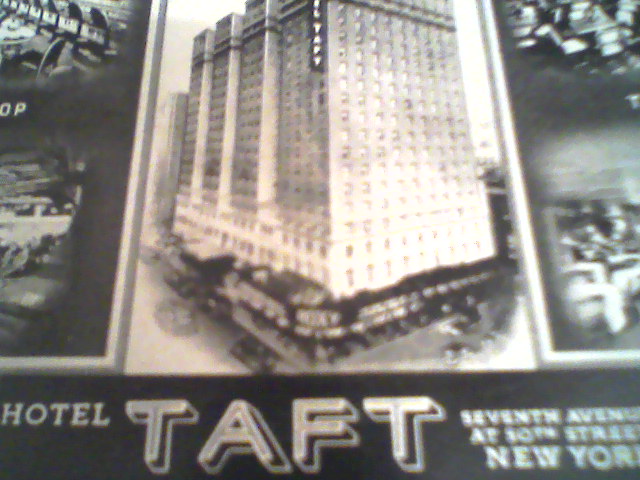
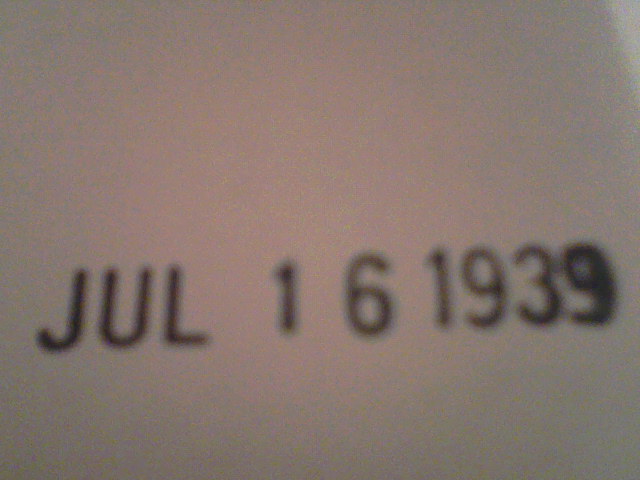
This postcard of the legendary Hotel Taft of Times Square has no writing on the back, but it’s stamped with “July 16, 1939.” The business began its run in 1926 as the Manger Hotel (which cost more than $10 million to build) but was renamed in 1931 for President Taft. At the time this postcard was printed, the hotel offered 2,000 rooms, some for just $2.50 per night. The Grill was popular and served as the site for Vincent Lopez’s long-running radio program, Shake the Maracas.” The Hotel Taft and its surrounding area declined and the business was shuttered in the early 1980s. It was eventually revived as a mixed-use development, which includes the Hotel Michelangelo. Text about the Taft’s 1939 prices and amenities from the reverse of the postcard:

“HOTEL  TAFT
Times Square’s Largest Hotel. 2,000 rooms with bath  from $2.50. New “Direct Reception” radio, servidor, circulating ice water, in each room.

ADJACENT TO
Radio City, 100 theatres, retail and wholesale districts.
Grand Central and Pennsylvania R.R. stations 5 minutes by taxi.
B & O Motor Coach connection at door. I.R.T., B.M.T. and 8th Ave Subway stations, Capitol Bus Terminal, just around the corner
.”

William H. Taft, who died in 1930, is the only person to be both U.S. President and Chief Justice.

Tags: ,

"He declared that unmistakable traces of poison had been found in the stomach and other organs."

In 1892, a Chicago woman died after a period of illness and was buried. But something didn’t sit right with her brother, who had the body exhumed and examined. His instincts proved correct, as it seems foul play was involved. Her son-in-law, a physician and onetime Brooklyn resident named Dr. Henry Martyn Scudder, who had learned a good deal about poisons in India, was thought to be the culprit. As was usually the case with the Brooklyn Daily Eagle of that era, the possible culprit was eagerly tried in the press. (Three months after the publication of this article, Dr. Scudder committed suicide with a large dose of morphine in his jail cell while awaiting trial for homicide.) An excerpt:

(Chicago, Ill., March 12.) Important developments have occurred in the Scudder case within the last twenty-four hours which will throw a flood of light upon the mystery of the murder of the doctor’s mother in law.

Frank Parker, the brother of the murdered woman, had just returned from Jamesville, Wis., where Mrs. Dunton was buried, as before stated in these dispatches. Mrs. Dunton’s body was exhumed and a careful examination of the skull was made. This was shown to have been fractured in three or four places and injuries were discovered which would easily have caused her death. But there were other matters to be explained. For some time prior to the murder Mrs. Dunton had been in a strange decline, which even the fact of her having an encysted tumor could not account for. This fact was remembered at the autopsy, and Mr. Parker determined that the investigation should be a thorough one. Accordingly the stomach and intestines were examined by the Janesville physicians and chemists. It was a startling discovery that they made.

"Dr. Palmer made a thorough examination of the wounds on Mrs. Dunton’s head, and he thinks they were made with a piece of gas pipe." (Image by Bernard bill5.)

When seen by an Eagle correspondent on his return from Janesville, Mr. Parker was too much agitated to tell fully the result of the analysis, but to a friend he declared that unmistakable traces of poison had been found in the stomach and other organs. There can be no doubt of this and the fact is going to play an important part when Dr. Scudder is placed on trial.

Although not willing to tell all that he has discovered to the newspapers. Mr. Parker did say this much to a reporter who called on him: “I was in Janesville Monday and Tuesday with Drs. Palmer and Chittenden to assist me. I had the body of my sister exhumed. Dr. Palmer has gathered evidence which is incontrovertible that Mrs. Dunton was murdered.”

The excitement in Janesville is intense and if Dr. Scudder had been in that town this week there would be no need of a trial. Dr. Palmer made an examination of the intestines and found evidence there of a startling nature. I cannot tell about these things in detail, because the lawyers in the case have told me to keep still. I can say that the intestines will be brought here Monday by Dr. Palmer and used as evidence in court. The membranes of the neck where the injection was administered will also show disclosures of a startling nature. Dr. Palmer made a thorough examination of the wounds on Mrs. Dunton’s head, and he thinks they were made with a piece of gas pipe. Those wounds alone were sufficient to cause death. The lawyers say that Dr. Palmer’s evidence is sufficient to convict Dr. Scudder.

Dr. Scudder was for many years a resident of India and he has always prided himself on his knowledge of the mysterious drugs.”

In view of these facts, it is now said that the prosecution will show that a deliberate attempt was made to poison Mrs. Dunton. That while she was greatly affected by the drugs, distinct traces of which were found in the internal organs, her decline was not so rapid as was evidently expected, and that thereupon her death was brought about in a violent manner.

Dr. Scudder was for many years a resident of India and he has always prided himself on his knowledge of the mysterious drugs used by the Orientals. The name of the poison found by the Jamesville chemists is to be kept secret until the doctor is put on trial. This afternoon an important investigation into the doctor’s sanity is in progress before Judge Scales of the county court.”

Tags: , , , ,

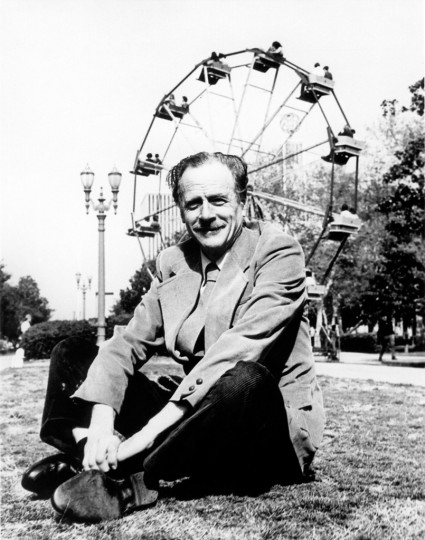
Marshall McLuhan was usually a genuinely incisive thinker and not the mountebank that some make him out to be. His writings still have a lot to teach us about the great paradigm shift we’re currently experiencing. But he was prone to sometimes wildly misread the future like anyone who constantly traffics in tea leaves. One glaring example was his prediction at the end of the 1960s that there might soon be genocide in America. In a 1969 Playboy interview, he opined that the shift from mechanical to technological culture might cause just that to occur. An excerpt:

Playboy:

What, specifically, do you think will happen to [the black man]?

Marshall McLuhan:

At best, he will have to make a painful adjustment to two conflicting cultures and technologies, the visual-mechanical and the electric world; at worst, he will be exterminated.


Playboy:

Exterminated?

Marshall McLuhan:

I seriously fear the possibility, though God knows I hope I’m proved wrong. As I’ve tried to point out, the one inexorable consequence of any identity quest generated by environmental upheaval is tremendous violence. This violence has traditionally been directed at the tribal man who challenged visual-mechanical culture, as with the genocide against the Indian and the institutionalized dehumanization of the Negro. Today, the process is reversed and the violence is being meted out, during this transitional period, to those who are nonassimilable into the new tribe. Not because of his skin color but because he is in a limbo between mechanical and electric cultures, the Negro is a threat, a rival tribe that cannot be digested by the new order. The fate of such tribes is often extermination.•

Tags:

"My wishes for you are not printable." (Image by Agpvtr.)

Muttontown/tag and garage sale (Muttontown)

Re the sale held on Saturday October 9th, we wish to thank all the genuine and pleasant people who turned out. However for some dealers and resellers who barged into places not open for view, my wishes for you are not printable. To the person or persons who barged in my closed office and stole my small fish Herend statuette right off a cluttered desk as well as a pair of expensive gold jewel pair of earrings, well you know what.

It is always the scum that keeps surfacing in their need for easy pickings and unearned wealth. You know who you are, if it were possible to seriously place a curse on you, consider yourselves cursed.

There was also never a need for anyone to open and glean through closets, cabinets, drawers without specific okay and direction. What were you looking for, jewels to steal?

Amazing footage of Coney Island during the early stages of the Great Depression. Subways cost a nickel and rides were a dime. If you successfully threw a baseball into a circular opening, it would cause actual squealing pigs to shoot down a sliding pond. Educated horses did tricks with monkeys on their backs. Clowns bottle-fed small animals. Everyone went home happy.

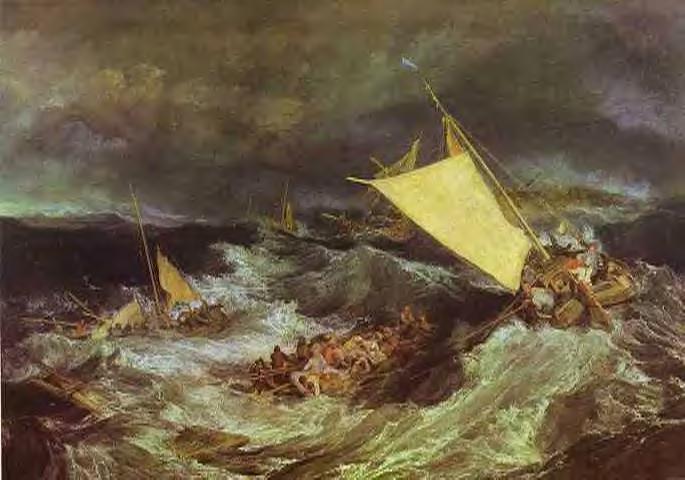
"Shipwreck of the Minotaur," by J.M.W. Turner.

Three articles in the Brooklyn Daily Eagle with a Huntington, Long Island, dateline succinctly tell the story of Elvin Darling, a ship captain whose wife liked sailing with him, their tragic 1899 accident and the grim voyage’s aftermath.

___________________________________

January 31, 1898: “Mrs. Darling a Sailor.”

Captain and Mrs. Elvin Darling left here to-day for New York, where his schooner, the James E. Baylis, is making ready to go to Norfolk, Va. There he takes a cargo of coal for Vera Cruz, Mexico. For return freight he goes up the Mexican coast some miles above Vera Cruz, where he loads with mahogany. Mrs. Darling seemed as much pleased at getting aboard ship again as her husband.

February 20, 1899: “Wreck of the Baylis–News Reaches Huntington of the Loss of Captain Darling’s Schooner–Fate of the Crew in Doubt.”

A telegram received in this village this morning tells of the wreck of the schooner James E. Baylis of Port Jefferson, of whcih Captain Elvin Darling of this place was master, and Frank Conklin, second mate. Captain Darling’s wife was also on board. The telegram says that the schooner was sighted off Cape Charles, Va., Saturday, by the steamer Foyle, bound from Brazil to New York. The Baylis was bound from Tuxpan, Mexico, to New York, loaded with mahogany and cedar. When sighted her masts were gone and her decks were awash and the cargo was floating about the seas. No signs of life were visible on the craft. Relatives of the men here hope that the crew were saved by a passing vessel. The Baylis was owned by the captain and by New York and Port Jefferson parties. She was built at Port Jefferson in 1874 and registered 360 tons. Captain Darling, who is known as an able captain, has been in a number of shipwrecks, but always escaped without the loss of any of his crew.

February 24, 1900: “Captain Darling Getting Married.”

Captain Elvin H. Darling was in town this week, accompanied by Mrs. Darling. Captain Darling, it will be remembered by Eagle readers, was master of the ill fated schooner James E. Baylis of Port Jefferson, which was wrecked off the Virginia capes a little over a year ago, and whose crew suffered so intensely from exposure. The captain’s wife died from exposure on the wreck before they were rescued. The present Mrs. Darling was a Philadelphia woman and they were married in that city last Saturday.

Tags: , , ,

A how-to video in which Grandpa, who is creepy as all fuck and has smoked four million cigarettes, teaches his grandson how to shoot his first gun. Either this kid turns out to be heterosexual or he is going to be deeply closeted.

Some great graffiti artists emerged in the '80s (Keith Haring and Jean-Michel Basquiat most famously), but a lot of the taggers in the '70s were more concerned with quantity than quality. (Image by Erik Calonius.)

Thanks to bungling by elected officials, New York City started to fall apart financially in the 1960s and it all came crashing down in the ’70s. Vandalism, crime and litter were only the most obvious signs of a city in decline, one that could no longer pay for its most basic services. Two years after this photo was taken, Gerald Ford told New York to “Drop Dead” (though he never really put it quite so harshly; the Daily News did), and we were left to fix our own problems. Ed Koch was far from perfect, but he was the first Mayor to begin cleaning up the mess, instituting bold quality-of-life measures. New subway cars were made with the type of surface that allowed city workers to quickly clean off graffiti paint, “litterpigs” were threatened with fines, pooper-scooper laws were passed and the renewal of Times Square took its first baby steps.

Tags: ,

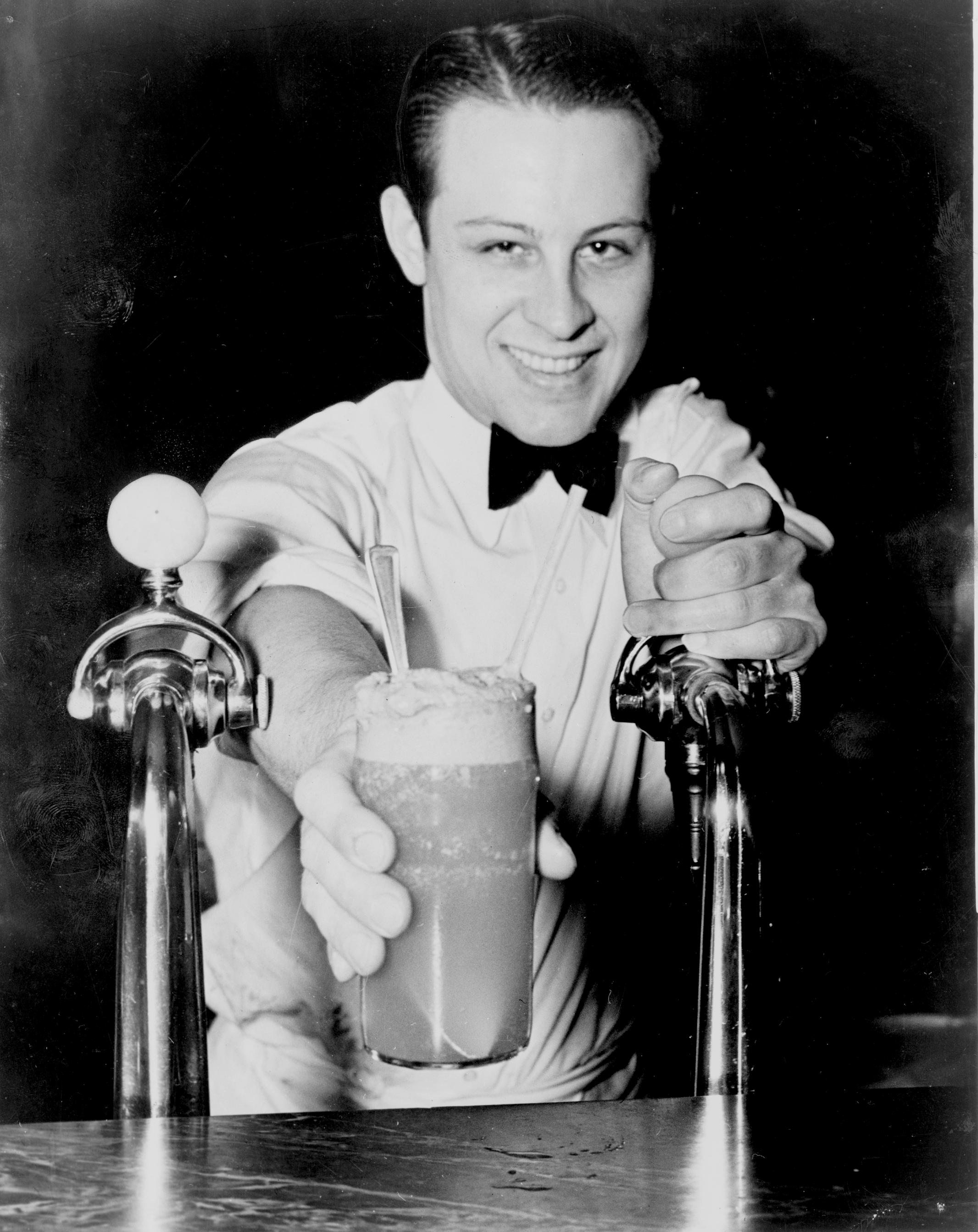
Soda jerk. (Image by Alan Fisher, "World Telegram.")

Rare soda bottle from mid 19th century (Upstate NY)

Rare George Eagle soda bottle, circa 1850s. Bluish-green, blob top, diagonal swirls,”GEo EAGLE” diagonal embossing, pontil scar and residue, clear slopover around mouth; excellent condition. This is one rare bottle and it’s in superb condition. Google “New York City Bottle Legacies” for article with info. Business started in 1845 on Fulton Street in old New York, near where The World Trade Center once stood. Others have fetched handsome sums at auction. Email with serious offers only, please. Thank you.

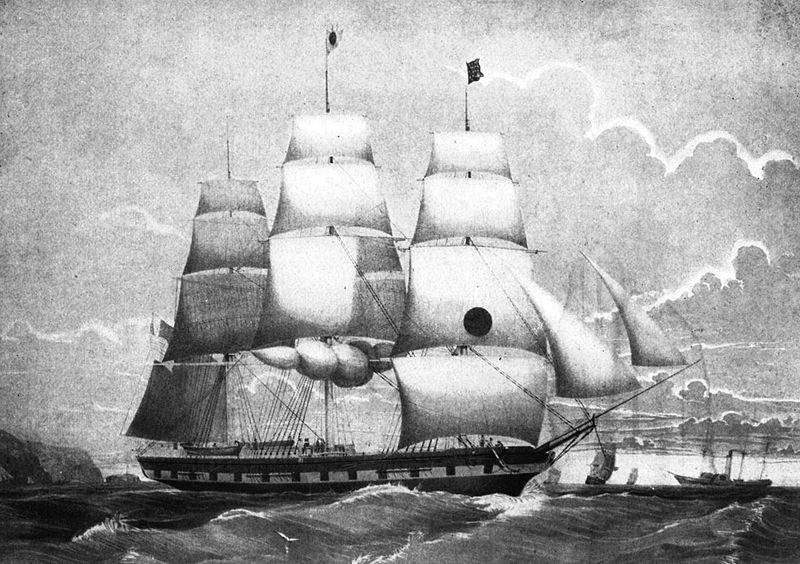
The "Montezuma," an example of a packet ship.

I found an interesting factoid in Edward L. Glaeser’s City Journal article about the role of entrepreneurship in New York City’s past, present and future. It seems that in the 19th-century, cargo ships didn’t set sail on any particular day but only when they had a full hull. That meant cargo could sit in a port for weeks, as the ship waited for more customers. Then someone had the idea that vessels should depart at scheduled times. Seems obvious, but it wasn’t. The person behind this innovation was Jeremiah Thompson, a Quaker businessman and a member of the free-slave group, the New York Manumission Society. An excerpt:

“Entrepreneurs have played a key role in every stage of New York’s development. During the early nineteenth century, when waterways were the lifelines of commerce, New York owed its expanding sea trade partly to natural advantages: a safe, centrally located harbor and a deep river that cut far into the American hinterland. But those advantages became important because of the vision and energy of entrepreneurs like Jeremiah Thompson, the gambling Quaker. Thompson immigrated to New York at 17 to work in the American branch of his family’s wool business. By the 1820s, he had established himself as America’s largest importer of English clothing, its largest exporter of raw cotton, and its third-largest issuer of bills of exchange.

As a global trader, Thompson was acutely aware of the shortcomings of the transatlantic ships of the time, which would stay in port until their hulls were filled with goods. (Imagine showing up at LaGuardia and having to sit around until the airline sold enough tickets to fill the entire flight to Frankfurt.) Thompson saw an opening and created the Black Ball packet line, whose ships set sail on a scheduled day every month, no matter how light their cargoes were. His innovation was a gamble, since sometimes his ships sailed with relatively empty hulls, which meant less income from the merchants who bought the space. But a virtuous circle developed: fixed schedules attracted more cargo, and more cargo made ships sailing on fixed schedules more profitable. Once Thompson was turning a profit, other packet lines, like the Yellow Ball and Swallowtail lines, entered the market. An 1827 letter to the New England Palladium described the significance of Thompson’s invention: ‘I consider Commerce by lines of ships, on fixed days, an invention of the age nearly as important as Steam Navigation and in its results as beneficial to New York, which has chiefly adopted it, as the Grand [Erie] Canal.'”

Tags: ,

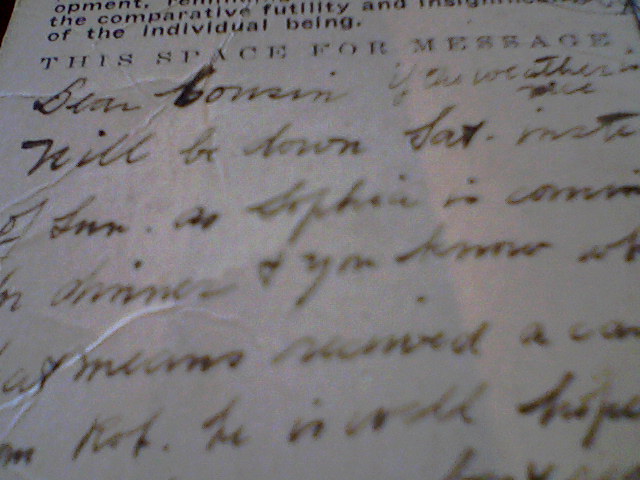
Front of card: Image of Trinity Church taken from a Moses King travel guide. On reverse: "Trinity Church and skyscrapers at night is a picture which speaks for itself and makes a singular appeal to the human mind."

Dear Cousin,

If the weather is nice will be down Sat. instead of Sun. as Sophie is coming for dinner & you know what that means. Received a card from Bob. He is with hopes all are the same as do we all.

Your cousin

Above the writing: "This Space For Message."

Tags:

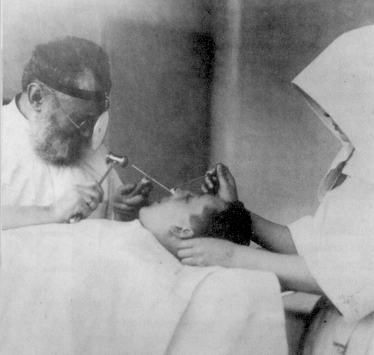
Rhinoplasty performed in Essex, Germany, in 1895. (Image by Klaus D.Peter.)

The still-novel idea of modern cosmetic surgery is enthusiastically broached in this September 24, 1896 article from the Brooklyn Daily Eagle, which was a reprinted piece from the London Mail. It’s subtitled, “Wonderful Possibilities Are Now Open to Modern Surgery.” An excerpt:

“The latest developments of modern surgical science are making it evident that good looks are no longer to be confined to those with a heritage to them, but may be purchased on the open market. It will, no doubt, be good news to the unhappy possessor of an uncompromising snub nose to be made acquainted with the fact that, for a fairly respectable sum of money, his nasal appendage can be converted into a thorough going aristocratic Wellington, with no nonsense about it, and the spinster lady, whose proboscis is of the parrot type, and whose matrimonial chances have constantly suffered, will hail with a good deal of satisfaction and possibly renewed hope the statement that a generous fee to the facial surgeon will transform the offending organ into the dearest of little Grecians in the world, while an extra payment will secure for her two or three coquettish dimples on the cheeks and chin.

The science of facial surgery is, of course, not exactly a new one. Experiments without number have been made in the London and continental hospitals for many years past. It is not very long ago that the operation of making a very decently formed nose for a young woman whose face had been mutilated in an accident was successfully performed at the Royal Free Hospital. The breastbone of a blackbird was cleverly inserted into the cartilage of the nose and the skin deftly drawn over it and sewn with such neatness that in a short time the seams made by the surgical needle completely healed.

(Image by André Koehne.)

As might be expected, facial surgery came to us from America. There it is practiced in every large town, while a college for its special study exists near Philadelphia, granting diplomas and degrees for proficiency–genuine ones, too, it should be added.

That the science will make its way in England there is not much room for doubt. Already a private doctor living not a hundred miles from Bond street is making quite a reputation in the direction of facial surgery, and his handsome consulting rooms are thronged each day with crowds of wealthy patients, who are anxious to personally test his powers, and who go away eminently satisfied with themselves and convinced that if ‘beauty is but skin deep,’ it is a possession worth having, and, worth paying for.

So far, only those with the most unlimited purses are able to avail themselves of the doctor’s ability, the operations are of such a delicate nature, and require so much technical knowledge, mechanical skill, self-possession and nerve on the part of the operator, that no patient can grudge a generous fee.

The sensitive man, with a wart on the end of his nose, for instance, goes through life full of trembling self-consciousness. He feels that every glance is directed toward the terrible disfigurement, and he becomes nervously apologetic in his general bearing. Imagine what a heavenly vista of happiness and security must unfold itself to such a man, when under the magical knife, that accursed wart disappears forever, and how his gratitude can but be adequately rendered by a substantial expression of it.

Electricity is a useful help to the facial surgeon, and by its aid all kinds of minor blemishes are removed, and tell-tale red noses completely cured.

The only drawback to obtaining a really complete transformation is the possibility of the question of identification arising. One can imagine the unenviable position of the man who, in the absence of his wife and family at the seaside, takes the opportunity of considerably improving his appearance by exchanging a somewhat bulbous nose of a deep shade for one of clear-cut and classical proportions, being confronted with the unfeigned astonishment of the partner of his bosom, and, perhaps. repudiated as ‘not being the man who led her to the altar!’ Such a situation would not be an easy one to solve. The advantages of the science, however, undoubtedly greatly outweigh its disadvantages.”


"One of the more awesome souvenirs of eight years of hell." (Image by Rama.)

Canon Powershot G9 – buy my camera – Fund my divorce – – $275 (Bronx)

12.1 mp with amazing zoom. Uses SD cards. Included is the battery and charger and a case I’ve been using, but you’ll likely want a bigger one. Takes amazing photo’s, you can zoom in and an ordinary digital camera would take a horrid grainy mess… this one makes it look like a magnifying glass. While it is one of the more awesome souvenirs of eight years of hell… I need to be able to make the bills until I can get situated and regain my footing in life. As I am listing things he keeps coming into my room and harassing me, accusing me of selling that which is not up for sale. Three weeks and he moves into his own apartment… three weeks and I am on my own and am absolutely unprepared… but those three weeks will still be far too long because I already can’t stand to be around him for more than a few minutes… seriously… I am listing a lot of cool and useful things… I’m not rich, by far, nor am I hiring a lawyer to clean him out… I’m doing it myself… and beyond court fees I am hoping to accumulate enough to make the bills for a month or two. Long enough to figure out what comes next.

While I would love to keep this camera, it is one of three and I’ve elected to keep the one I am not listing… another canon, but a dslr rebel… but I’d prefer freedom to a glittering cage… the glitter is a mirage… sand in the desert… I just want to build a well and fetch my own damn water again… without anyone to deliberately sabotage my efforts. Craigslist can help me take out the trash that has been lingering… let the spoils of my hell warm you this winter as the relinquishing of such possessions enables me to exterminate the cause of my bitterness.

"Don't follow leaders/Watch your parkin' meters." (Image by Quadell.)

In an article on Slate about the obsolescence of traditional parking meters, Tom Vanderbilt, author of Traffic, reveals where, when and why the device originated. An excerpt:

“Seventy-five years ago, the world’s first parking meter cast its thin, ominous shadow on the streets of Oklahoma City. The meter was the brainchild of Carlton C. Magee, a local publisher and Chamber of Commerce Traffic Committee chief, and he hoped it would solve the city’s chronic parking problems. In the pre-meter days, police would drive around with stopwatches and chalk, enforcing the city’s parking time limits by marking the tires of cars seen squatting for too long, but the system was ill-equipped to handle the ‘endemic overparking’ problem. Even worse, a survey found that at any given time, 80 percent of the city’s spots were occupied by employees of downtown businesses—the very same businesses complaining that lack of parking was driving away shoppers. Calling for an ‘efficient, impartial, and thoroughly practical aid to parking regulation,’ Magee held a student-design contest and launched his instrument.”

Tags: ,

Mr. Rogers up in that piece, being all ghetto and shit. (Thanks Reddit.)

Tags:

I dreamt that I was riding a very, very pretty pony. (Image by Steve Jurvetson.)

Politico transcribed some tidbits from Ryan Secrest’s interview with President Obama. It was like Frost-Nixon if Frost was a complete douchebag, which he sort of was. Obama revealed his morning wake-up routine. An excerpt:

“[President Obama] confessed he hasn’t been getting much sleep lately and added that he doesn’t have an alarm clock — a White House operator calls to wake him up, ‘and if I don’t wake up the first time, they just keep on calling.'”

Tags: , ,

"Trooper is the kind of dog who didn't have other dogs to relate to. He lived with adult human beings."

Errol Morris’ first great character study was his very first feature, the seriously peculiar and penetrating 1978 documentary, Gates of Heaven. The movie examines a California pet cemetery with 450 deceased residents and the many off-center human characters who have buried their beloved there.

Floyd McClure is the proprietor of the Foothill Memorial Gardens pet cemetery in San Francisco. He loved his late collie and hated the local rendering plant, so he followed his heart and built a final reward for dogs, cats, horses, hamsters, frogs, etc. While McClure has a great affection for animals, he hasn’t a great mind for numbers and is forced to sell his business to the Lamberts family, who transfer the deceased to a property in Napa. The movie is at its best once the Lamberts take over, as the father and two sons aren’t driven by love but by ambition, lessons learned from motivational speakers and familial rivalry. Interestingly, they do just as good a job for their clients as McClure did.

Against the backdrop of this transition, Morris interviews the eccentrics who have buried their loved ones with the honor that most people reserve for parents, siblings and spouses. At first these folks may seem nutty, but you gradually come to realize the important role the pets played for them, how they often filled a void that human love failed to occupy. The whole enterprise could have been a set-up to gawk and laugh at crazies and there are funny moments, but Morris ultimately has as much respect for his two-legged subjects as they have for their late, four-legged friends. (Currently on sale for $3.98 on Amazon and available for rent at Netflix and other outlets.)

More Film Posts:

Tags: , ,

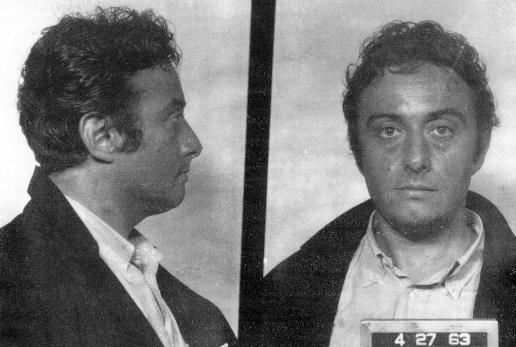
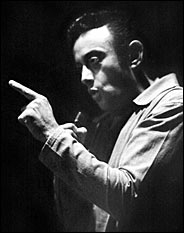
Booked in San Francisco for obscenity. Lenny Bruce was born Leonard Schneider in 1925 on Long Island.

I watched the first episode of Hugh Hefner’s swinging variety show Playboy After Dark from 1959 not too long ago, and it featured a great appearance by Lenny Bruce. Most of the scant film footage of the disgracefully honest comedian doesn’t do him justice, showing him when he was a shell of himself, as heroin and legal troubles took their toll. It’s amazing how much other comics took from Bruce: everything from George Carlin’s obsession with the hypocrisy of words to Richard Lewis’s finger snapping as he delivers his punchlines. At one point, Bruce tells Hefner that “tragedy plus time equals comedy,” a line that is often attributed to either Woody Allen or Carol Burnett. My guess is it’s not Bruce’s line, either, but I bet he’s the one who introduced it to other comedians.

A few years back, I gleaned a copy of The Essential Lenny Bruce, a 1987 paperback compilation of his greatest bits and other fun stuff for Bruceophiles. Some of the material is very dated, but a lot of it reminds why a nightclub comedian was able to scare the hell out of authority figures in the ’50s and ’60s. One brief chapter, entitled “Chronicle,” provides an outline of the final seven turbulent years of Lenny’s life. An excerpt:

May, 1959, The New York Times:

“The newest and in some ways the most scarifyingly funny proponent of significance…to be found in a nightclub these days is Lenny Bruce, a sort of abstract-expressionist stand-up comedian paid $1750 a week to vent his outrage on the clientele.”

June 1960, The Reporter:

“The question is how far Bruce will go in further exposing his most enthusiastic audiences…to themselves. He has only begun to operate.”

September 29, 1961:

Busted for possession of narcotics, Philadelphia.

October 4, 1961:

Busted for obscenity, Jazz Workshop, San Francisco.

September, 1962:

Banned in Australia.

October 6, 1962:

Busted for possession of narcotics, Los Angeles.

October 24, 1962:

Busted for obscenity, Troubadour Theatre, Hollywood.

December, 1962:

Busted for obscenity, Gate of Horn, Chicago.

January, 1963:

Busted for possession of narcotics, Los Angeles.

April, 1963:

Barred from entering London, England.

March, 1964, The New York Post:

“Bruce stands up against all limitations of the flesh and spirit, and someday they are going to crush him for it.”

April, 1964:

Busted for obscenity, Cafe Au Go-Go, New York City.

October, 1965:

Declared a legally bankrupt pauper, San Francisco.

November 1965, Esquire:

“I saw his act…in Chicago…He looked nervous and shaky…wretched and broken…You thought of Dorothy Parker, who, when she saw Scott Fitzgerald’s sudden and too-youthful corpse, murmured, ‘The poor son of a bitch.'”

August 3, 1966:

Dead, Los Angeles.

Tags: , , , , , ,

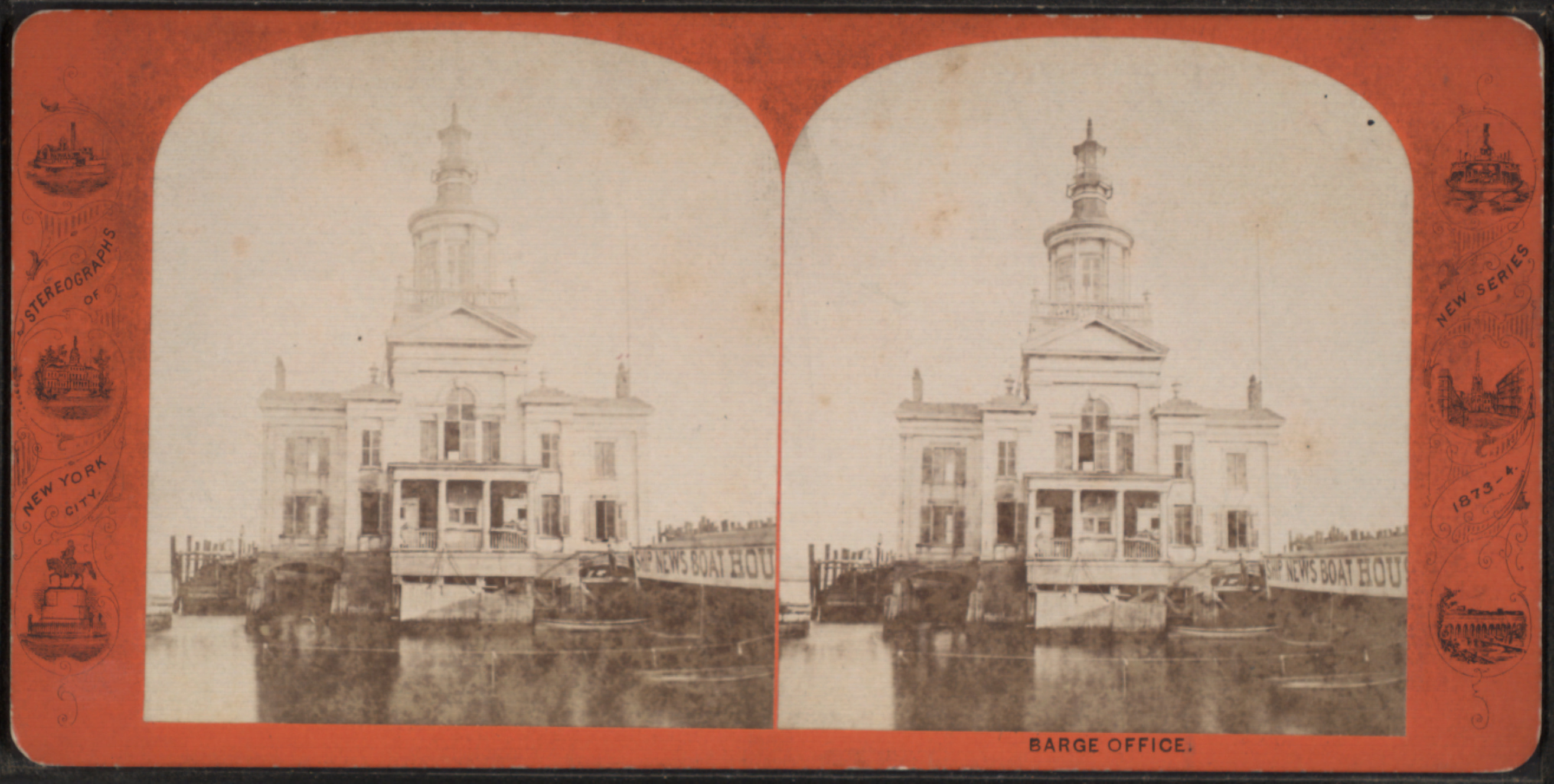
New York City Barge Office, where Sanna Impola was taken.

In the October 15, 1900 edition of the Brooklyn Daily Eagle, a homeless U.S. military veteran, down on his luck thanks to a mugging on the Bowery, meets a lost Russian maidservant in Harlem in the dead of the night and tries to help her. How their stories ended is not known. An excerpt:

“Charles Le Grand, who was recently discharged from the United States artillery service in San Francisco and was relieved of all his belongings, including his clothing, on the Bowery, Manhattan, some time ago, this morning found Sanna Impola, a Russian girl, who recently came to this country, wandering around the streets of Harlem. The girl made Le Grand understand she was lost and he led her to the Barge Office, where she was turned over to the authorities,

The girl came to this country three months ago and through friends secured a position as servant with a Harlem family. Yesterday she went to visit a countrywoman named Ida Halkela, living at Third avenue and Thirty-fifth street, Manhattan. She left there about 10 o’clock last night to go home and becoming confused lost her bearing and became lost. All night she wandered about and at about 3 o’clock was found near Third avenue and One Hundred and Twenty-seventh street by Le Grand, who was also spending the night walking the streets, because he had no money to pay for a bed. He took her to the Barge Office. An effort will be made by the authorities there to find her employers, and failing in this and the non-appearance of her friends she will be sent back to Russia.

Le Grand, who says he served in Battery G of the Second Artillery, and shows papers of honorable discharge, appeared at the Barge Office wearing the hat of a United States marine, the coat of an artilleryman and the trousers of a cavalryman. He said he came to New York recently and was robbed on the Bowery of $139 in cash, his watch and a ring. Even his clothing was stolen, he declares, and says that the combination suit he wore to-day was given him by different soldier friends he had met on the Bowery and who had taken pity on his plight.”

Tags: , ,

  • Round One: Spaghetti and meatballs
  • Round Two: Roast beef
  • Round Three: Carrots
  • Round Four: Sour Patch Kids
  • Round Five: Wet dog food

(Thanks Reddit.)

« Older entries § Newer entries »