Politics

You are currently browsing the archive for the Politics category.

The opening of Robert Reich’s recent blog post about the last time American wealth was largely concentrated in the hands of the few, the Gilded Age of the 1880s and 1890s:

“Exactly a century ago, on February 3, 1913, the 16th Amendment to the Constitution was ratified, authorizing a federal income tax. Congress turned it into a graduated tax, based on ‘capacity to pay.’

It was among the signal victories of the progressive movement — the first constitutional amendment in 40 years (the first 10 had been included in the Bill of Rights, the 11th and 12th in 1789 and 1804, and three others in consequence of the Civil War), reflecting a great political transformation in America. 

The 1880s and 1890s had been the Gilded Age, the time of robber barons, when a small number controlled almost all the nation’s wealth as well as our democracy, when poverty had risen to record levels, and when it looked as though the country was destined to become a moneyed aristocracy.

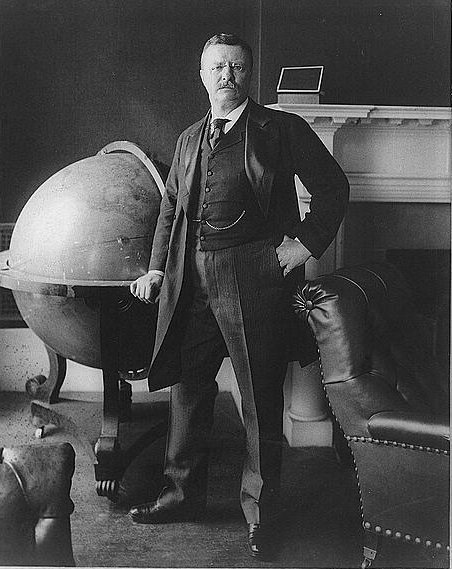
But almost without warning, progressives reversed the tide. Teddy Roosevelt became president in 1901, pledging to break up the giant trusts and end the reign of the ‘malefactors of great wealth.’ Laws were enacted protecting the public from impure foods and drugs, and from corrupt legislators. 

By 1909 Democrats and progressive Republicans had swept many state elections, subsequently establishing the 40-hour work week and other reforms that would later be the foundation stones for the New Deal.”

Tags:

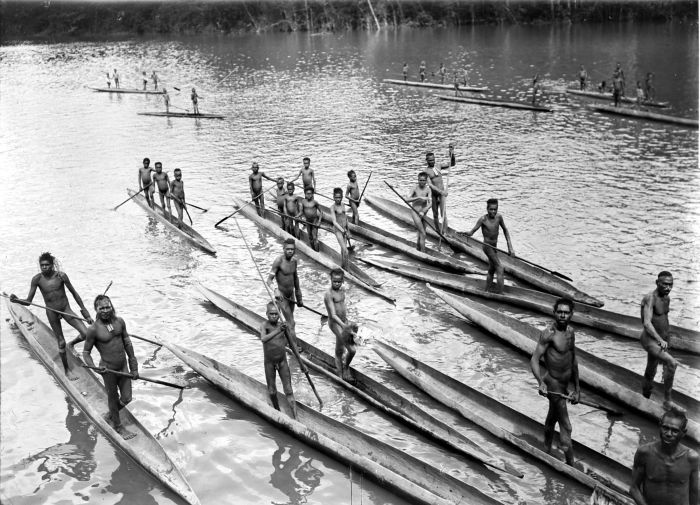
I missed Jared Diamond’s essay “Tales From the World Before Yesterday” when it was published at Edge on the last day of 2012. A passage about what he learned from his travels to New Guinea, where he encountered humanity as it was until very recently:

“I first went to New Guinea 41 years ago to study birds and to have adventures. I knew intellectually that New Guineans constituted most of the world’s last remaining ‘primitive peoples,’ who until a few decades ago still used stone tools, little clothing, and no writing. That was what the whole world used to be like until 7,000 years ago, a mere blink of an eye in the history of the human species. Only in a couple of other parts of the world besides New Guinea did our original long-prevailing ‘primitive’ ways survive into the 20th century.

Stone tools, little clothing, and no writing proved to be only the least of the differences between our past and our present. There were other differences that I noticed within my first year in New Guinea: murderous hostility towards any stranger, marriageable young people having no role in choosing their spouse, lack of awareness of the existence of an outside world, and routine multi-lingualism from childhood.

But there were also more profound features, which took me a long time even to notice, because they are so at odds with modem experience that neither New Guineans nor I could even articulate them. Each of us took some aspects of our lifestyle for granted and couldn’t conceive of an alternative. Those other New Guinea features included the non-existence of ‘friendship’ (associating with someone just because you like them), a much greater awareness of rare hazards, war as an omnipresent reality, morality in a world without judicial recourse, and a vital role of very old people.”

Tags:

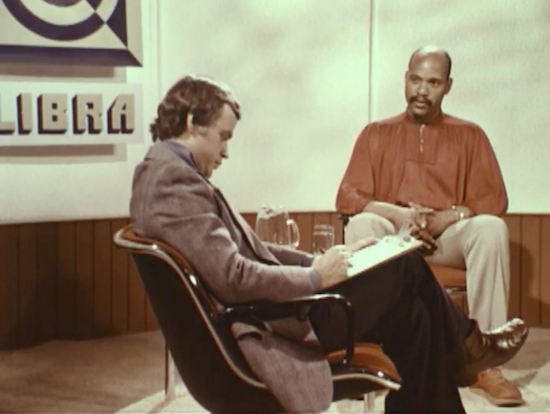
A clip from the 1978 short, “Libra,” which imagined a 21st-century Libertarian space utopia, population 10,000, including its market-loving African-American leader. Just amazing.

See also:

If you read this blog regularly, you know I’m pretty obsessed with utopias, those elusive things, perhaps because they’re beautiful and doomed. It takes so much energy, so much hubris, to act on those visions, yet people throughout history have and continue to. Maybe a place can be perfect, but people, alas, don’t have that option. The centre cannot hold.

The opening of “The Man Who Tried to Change the Soul of Paris,” Jacqueline Feldman’s Atlantic piece about French architect Michel Holley, who began attempting decades ago to impose his will onto Paris, his dreams ultimately realized and yet not realized at all:

‘At my age, unfortunately, one has no more dreams,’ says Michel Holley, the 87-year-old architect who once built Paris toward the sky. ‘One has turned toward the past.’

Forty years ago, Holley’s residential towers called Olympiades were the pièce de resistance of the city’s biggest renovation in over a century. Holley drew inspiration from Le Corbusier, who famously envisioned Paris as gridded, severe high-rises. Today, the towers sway between vitality and decay. Holley, who also worked on Montparnasse Tower and the Front de Seine, led controversial, sweeping projects to accommodate immigrants, baby boomers, and cars in 1960s Paris. ‘I dreamed a lot, in those days,’ he says. ‘Because these were inventions and creations in advance of their time, and I dreamed a lot, and I realized my dreams, realized my utopias.’

But Holley’s dream has faced criticism since construction. The ‘vertical zoning’ means parts of Olympiades are deserted at certain times. The mall closes at 9 p.m., and as restaurateurs lower metal over their storefronts, men gather in corners, emitting catcalls. Outside, wind whips between the towers. Evenings, the slab empties except for some men and dogs lingering at its edge, near the overgrown planters and vents that billow the smell of Chinese food.

‘I’m sure that there is a set of quite good restaurants on the slab, but you need to be quite courageous to get there after 8,’ says Didier Bernateau, director of development at SCET, the urban engineering firm that leads the network of public and private companies that develop land in France. ‘There’s a feeling of unsafeness, and the stairs, and the coolness of the wind.’

‘It is the worst failure in the history of Paris’ urban projects,’ says Ahmad Kaddour, an artist who teaches silk-screening classes at an Olympiades workshop. ‘Olympiades is the death of God.’

‘Today it exists, so we must make do,’ says Jérôme Coumet, mayor of the 13th.”

_____________________

More posts about utopias:

Tags: ,

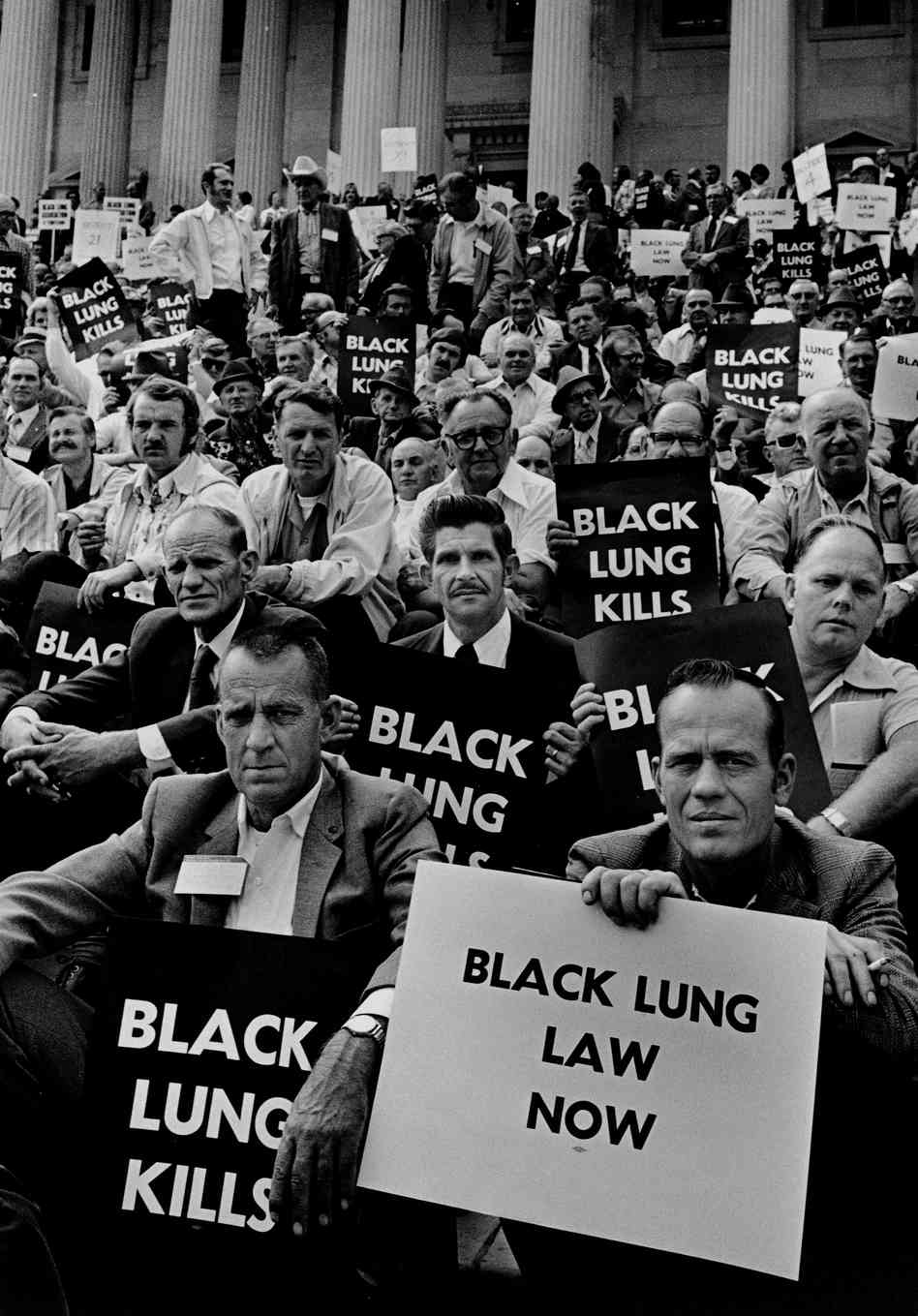
Malcolm Gladwell lecturing at the University of Pennsylvania about how much proof we need before we decide something is dangerous. He draws analogies between the historical incidence of black-lung disease and contemporary threats.

Tags:

Because of immigration, that great and currently misunderstood thing, America should never become a graying population like homogeneous countries (e.g., Japan) nor a society dominated by religious conservatives who reproduce the most. So, I suppose I’m not too worried about a Newsweek report by Joel Kotkin and Harry Siegel whick looks at life in the U.S. in the first era when childlessness is not a stigma. An excerpt:

“The global causes of postfamilialism are diverse, and many, on their own, are socially favorable or at least benign. The rush of people worldwide into cities, for example, has ushered in prosperity for hundreds of millions, allowing families to be both smaller and more prosperous. Improvements in contraception and increased access to it have given women far greater control of their reproductive options, which has coincided with a decline in religion in most advanced countries. With women’s rights largely secured in the First World and their seats in the classroom, the statehouse, and the boardroom no longer tokens or novelties, children have ceased being an economic or cultural necessity for many or an eventual outcome of sex.

But those changes happened quickly enough—within a lifetime—that they’ve created rapidly graying national populations in developed, and even some developing, countries worldwide, as boomers hold on to life and on to the pension and health benefits promised by the state while relatively few new children arrive to balance their numbers and to pay for those promises.

Until recently that decrepitude has seemed oceans away, as America’s open spaces, sprawling suburbs, openness to immigrants, and relatively religious culture helped keep our population young and growing. But attitudes are changing here as well. A plurality of Americans—46 percent—told Pew in 2009 that the rising number of women without children “makes no difference one way or the other” for our society.

Tags: ,

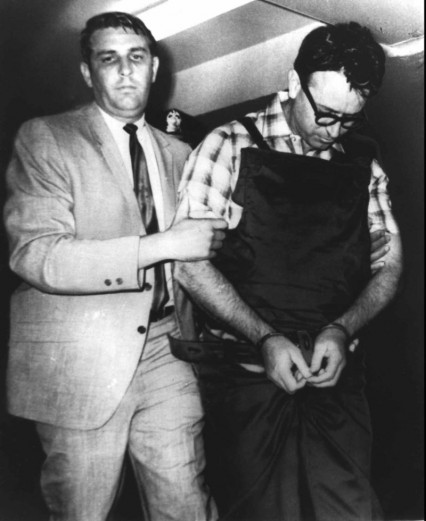
I’m not much of a conspiracy theorist. For the most part, a lone gunman is just that. But that doesn’t stop the fabulists. In the below video, James Earl Ray tells his story to Bill Boggs.

Tags: ,

I think I reviewed the original Freakonomics and enjoyed it a whole lot. Breaking down myths is something we need to be actively doing. I wonder though if Steven Levitt and Stephen Dubner haven’t provided alternative answers to life’s questions that are likewise too tidy–that are also a bit of a narrative. Levitt just did an Ask Me Anything on Reddit. A few exchanges follow which reveal the economist’s feelings on gun control and other issues.

__________________________

Question:

My statistics class just recently finished reading your book, so thanks for doing an AMA! One of the things we were discussing about was if government’s current view on guns is a misconception on their part. Do you think the promotion of gun safety awareness or removing guns from stores will cause a drop in gun violence in the near future?

Answer:

My view, which basically has to be true, is that NOTHING that the government does to the flow of new guns can possibly affect gun violence much. There are already 300 million guns out there! They will be around for the next 50 years. The cat is out of the bag.

Question:

Success in Australia in the 90’s when they banned assault weapons depended upon the buy-back of the newly banned guns. It was vital.

Answer:

There is no sillier public policy than gun buybacks. You hardly get any guns, and the ones you get are not the ones that would be used in a crime.

Question:

After listening to your show on gun control. I was wondering if you guys are gun owners?

Answer:

Neither of us own guns.

I like guns. I would have one, probably, if my wife would let me. But she won’t.

__________________________

Question:

If you were King of the United States for a day, what changes would you put into place? What laws/policy changes are incredibly obvious to economists but contrary to public/political popular opinion?

Answer:

1) People have to pay a big chunk of their own health care.

2) We should have a flat tax or something like it.

3) We should allow/encourage talented immigrants to come to the US.

I think every economist believes in those three things.

__________________________

Question:

Who’d win in a fist fight, you, or Malcom Gladwell?

Answer:

That is a great question. I think I could actually take him.

I think Dubner and I together, would massacre him.

No mercy.

Tags:

From John Horgan’s Scientific American blog post “Why Drones Should Make You Afraid. Very Afraid.“:

“According to a report in today’s New York Times, the Department of Homeland Security has also offered grants to help police departments purchase drones, which are ‘becoming a darling of law-enforcement authorities across the country.’

  • The Defense Advanced Research Projects Agency is funding research on ‘micro-drones’ that resemble moths, hummingbirds and other small flying creatures and hence can ‘hide in plain sight,’ as one Air Force researcher told me. The Air Force is now testing micro-drones at facilities such as the ‘micro-aviary’ at Wright-Patterson Air Force Base in Dayton, Ohio.
  • These micro-drones could be armed. The Air Force has produced an extraordinarily creepy animated video extolling possible applications of ‘Micro Air Vehicles,’ which a narrator extols as ‘unobtrusive, pervasive, lethal.’  The video shows winged drones swarming out of the belly of a plane and descending on a city, where the drones stalk and kill a suspect.

Tags:

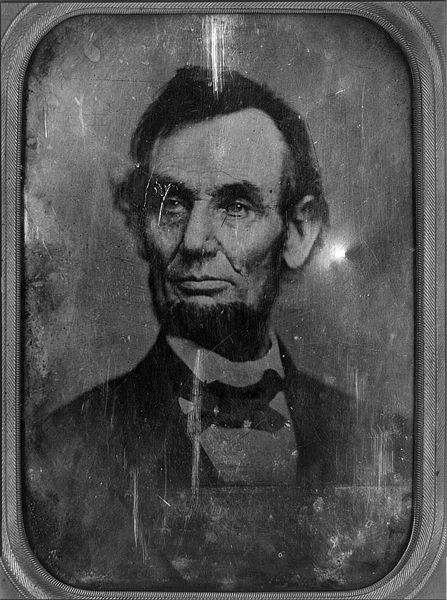
In honor of Presidents’ Day, a Lincoln-centric Ad Council PSA that frightened children into staying in school back when education meant one thing in America. It’s hard to say what being educated means now, even more difficult to know what it will mean in the future.

Tags:

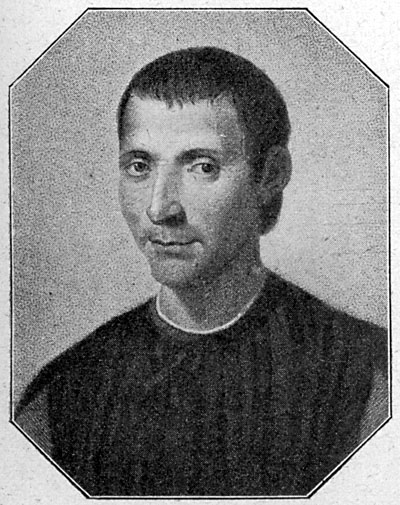
Renaissance thinker Niccolò Machiavelli brought political theory into the modern age, for better or worse. In a 1971 New York Review of Books essay, Isaiah Berlin measured his impact on Western thought. An excerpt:

“If what Machiavelli believed is true, this undermines one major assumption of Western thought: namely, that somewhere in the past or the future, in this world or the next, in the church or the laboratory, in the speculations of the metaphysician or the findings of the social scientist or in the uncorrupted heart of the simple good man, there is to be found the final solution of the question of how men should live. If this is false (and if more than one equally valid answer to the question can be returned, then it is false) the idea of the sole true, objective, universal human ideal crumbles. The very search for it becomes not merely utopian in practice, but conceptually incoherent….

After Machiavelli, doubt is liable to infect all monistic constructions. The sense of certainty that there is somewhere a hidden treasure—the final solution to our ills—and that some path must lead to it (for, in principle, it must be discoverable); or else, to alter the image, the conviction that the fragments constituted by our beliefs and habits are all pieces of a jigsaw puzzle, which (since there is an a priori guarantee for this) can, in principle, be solved; so that it is only because of lack of skill or stupidity or bad fortune that we have not so far succeeded in discovering the solution whereby all interests will be brought into harmony—this fundamental belief of Western political thought has been severely shaken.” (Thanks Browser.)

Tags: ,

Third-party candidates have largely been a non-issue in American Presidential politics, but what happens if Republicans make good on their threat of budget sequestration and cost the country a million jobs just as our economic woes are easing? Is that the waterloo President Clinton has been warning that the GOP needs in order to crash and regroup? Or is it a party without a floor, destined to sunder into a protest Tea Party flank with no chance to govern and an establishment one concerned only with the interests of the wealthy? Are we headed for the end of our two-party system? And are the Democrats, presently the more united party, immune? From Ron Fournier at the National Journal:

“Between bites of an $18.95 SteakBurger at the Palm, one of Washington’s premier expense-account restaurants, Republican consultant Scott Reed summed up the state of politics and his beloved GOP. ‘The party,’ he told me, ‘is irrelevant.’

He cited the familiar litany of problems: demographic change, poor candidates, ideological rigidity, deplorable approval ratings, and a rift between social and economic conservatives.

‘It’s leading to some type of crash and reassessment and change,’ said Reed, who ran Bob Dole’s 1996 presidential campaign and remains an influential lobbyist and operative. ‘It can’t continue on this path.’

Reed sketched a hypothetical scenario under which [Rand] Paul runs for the Republican nomination in 2016, loses after solid showings in Iowa and other states run by supporters of his father (former GOP presidential candidate Ron Paul), bolts the GOP, and mounts a third-party bid that undercuts the Republican nominee.

Paul, a tea-party favorite who was elected to the Senate in 2010, told USA Today on Wednesday that he was interested in running for the Republican presidential nomination in 2016. ‘I do want to be part of the national debate,’ he said.

What are the odds of Paul or another GOP defector splitting the party? Reed asked me to repeat the question—and then grimaced. ‘There’s a real chance,’ he replied.”

Tags: ,

Matt Novak’s brilliant Paleofuture blog, now housed at the Smithsonian site, is one of the very best uses of the Internet. Looking back at old predictions of the future, it unearths so much hubris and prejudice of the past and, yes, the present. In his latest post, Novak recalls a 1950 Redbook cover story which looked at the physical, mental and moral future of Americans, featuring insights from the rather dangerous anthropologist and eugenicist Earnest A. Hooton. An excerpt:

There can be little doubt of the increase during the past fifty years of mental defectives, psychopaths, criminals, economic incompetents and the chronically diseased. We owe this to the intervention of charity, “welfare” and medical science, and to the reckless breeding of the unfit.

In 2000, apart from the horde of proliferating morons, the commonest type of normal male will be taller and more gangling than ever, with big feet, horse-faces and deformed dental arches. The typical women will be similar—probably less busty and buttocky than those of our generation. These spindly giants will be intelligent, not combative, full of humanitarianism, allergies and inhibitions—stewing in their own introspections. Probably they will be long-lived; the elongated shrivel and buckle, but hang on.•

Tags: ,

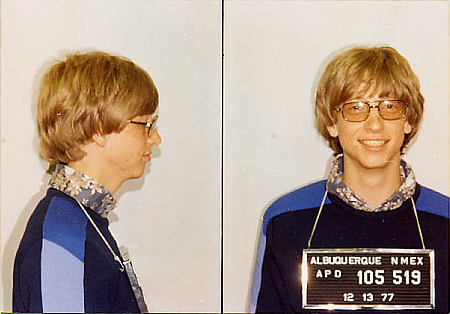
A few exchanges follow from the new Bill Gates Ask Me Anything on Reddit.

_______________________

Question:

What’s your worst fear for the future of the world? 

Bill Gates:

Hopefully we won’t have terrorists using nuclear weapons or biological weapons. We should make sure that stays hard.

I am disappointed more isn’t being done to reduce carbon emissions. Governments need to spend more on basic energy R&D to make sure we get cheap non-CO2 emitting sources as soon as possible.

Overall I am pretty optimistic. Things are a lot better than they were 200 years ago.

_______________________

Question:

What emerging technology today do you think will cause another big stir for the average consumer in the same way that the home computer did years ago?

Bill Gates:

Robots, pervasive screens, speech interaction will all change the way we look at “computers.” Once seeing, hearing, and reading (including handwriting) work very well you will interact in new ways.

_______________________

Question:

If Microsoft didn’t take off, what would you have done and be doing instead?

Bill Gates:

If the microprocessor had NOT come along I am not sure what I would have done. Maybe medicine or theoretical math but it is hard to say.

_______________________

Question:

Oh! What’s your favorite book? 

Bill Gates:

My favorite of the last decade in Pinker’s Better Angels of our Nature. It is long but profound look at the reduction in violence and discrimination over time.

Tags: ,

Sometimes, for medical reasons, I need to make my brain bleed, so I read something Peggy Noonan has written. Her blend of insipidness and dishonesty always does the trick. Nonnan is one of those Republicans who clings to false narratives, of an America that never quite existed. She does so in the face of overwhelming facts, despite her party losing almost every battleground state in the last Presidential election. 

Noonan contnues to traffic in the usual bullshit ofnot accepting that her extremist, racist party wants nothing to do with the leadership of an African-American Democratic President, that the modern GOP is about disqualifying anyone who isn’t one of them. 

She writes in her most recent grab bag of bullshit:

“We are living in the age of emergency—the economy, the Mideast, North Korea, Iran. The president has an utter and historic inability to forge a relationship with Congress.”

Why have you repeatedly turned down the friendly overtures of Mitch McConell, Mr. President? He wants to be close. And when they scream at you during the State of the Union Address, it’s dinner invitations they’re offering. The problem is the Republican-controlled Congress is the result of extreme gerrymandering. They’re not just out of step with the President, they’re out of step with the country. Hence, they’re incredibly low approval ratings. Those numbers are truly historic.

_____________________

But far more troubling in the same column is Noonan’s embrace of Dodge’s “So God Made a Farmer” ad which ran during the Super Bowl. It’s an impressive spot, until you stop to think about it–if you stop to think about it. It’s largely a paean to the work ethic of white people that conveniently forgets that farms and plantations in this country had much of their toil done by non-white slaves and non-white migrant workers. (Was there a Mexican face in that commercial?) What’s even more appalling is that Noonan wrote speeches for Ronald Reagan, whose policies were devastating to small farmers. Wreck them and then use them as a metaphor. That’s been the GOP playbook for more than three decades and cling they still do even though the decentralization of communications and shifting demographics have put their ridiculous narratives to bed.

Peggy explains why she loves the ad so much:

“• Because it spoke un-self-consciously in praise of certain virtues—commitment, compassion, hard work, a sense of local responsibility. The most moving reference, to me, was when Harvey has the farmer get up before dawn, work all day, and ‘then go to town and stay past midnight at a meeting of the school board.’ Notice the old word ‘town,’ not ‘community’—that blight of a word that is used more and more as it means less and less.

• Because it explicitly put God as maker of life and governor of reality, again un-self-consciously, and with a tone that anticipated no pushback. God, you could say anything in Paul Harvey’s day.

• Because it was Paul Harvey, a great broadcaster and a clear, clean writer for the ear, who knew exactly what he was saying and why, and who was confident of the values he asserted. He wasn’t a hidden person, he wasn’t smuggling an agenda, he was conservative and Christian and made these things clear through the virtues and values he praised and the things he criticized.

•You could like him or not, but you understood that by his lights he was giving it to you straight as he could.”

As straight as he could wasn’t very straight at all. It was a false myth, one that was exclusionary and meant to flatter a certain segment of the population that wanted to cling to power. Peggy Noonan is one of those people.•
Tags:

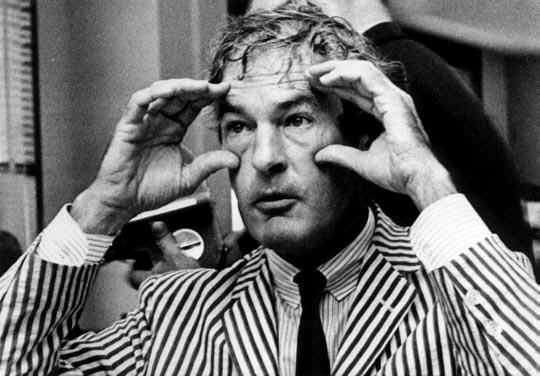
William F. Buckley interrogates Dr. Timothy Leary about, of course, LSD.

Tags: ,

I recall Russell Baker, who can craft a sentence as well as anyone, once saying that the old, rigid copy-editing policies at the New York Times in his day used to make him drink and cry. Something like that. In his New York Review of Books piece on Jim Sterba’s Nature Wars, Baker writes about how technology and policy have led to a remarkable resurgence in forests and wildlife in America, one which may have gone too far. An excerpt: 

“During America’s first 250 years, early settlers cleared away some 250 million acres of forest. Yet the forest comes back fast. By the 1950s, one half to two thirds of the landscape was reforested. Most of us now ‘live in the woods,’ Sterba writes. ‘We are essentially forest dwellers.’ The new forests ‘grew back right under the noses of several generations of Americans. The regrowth began in such fits and starts that most people didn’t see it happening.’

Why did it happen? For one thing, because oil, gas, and coal replaced wood as the major fuel for heating and cooking. Because new building techniques and materials reduced wood’s importance to the construction trades. And because the family farm began to vanish, leaving the abandoned acreage to follow earth’s natural impulse, which is to produce wild grasses, weeds, bushes, shrubs, and small trees that turn into big trees.

Then, of course, even the bleakest urban areas may yield to a civic impulse to primp a bit with touches of greenery, as in New York where 24 percent of the city’s area is now covered by a canopy of 5.2 million trees. Nationally, Sterba reports, tree canopy covers about 27 percent of the urban landscape.”

Tags: ,

I love doing the semiannual “Great Nonfiction Pieces Online For Free” lists (here’s the one from the end of 2012), but it has one obvious drawback: The amazing stuff that’s gated doesn’t get any love from this blog. So a quick note that if you are behind on your New Yorker reading so far this year and have yet to look at Jon Lee Anderson’s piece about Venezuela (“Letter from Caracas: Slumlord”), you need to catch up on it. Yes, it’s subscription-only, but completely worth the investment.

Oh, an equally amazing piece from the same publication, Patrick Radden Keefe’s new article about the Amy Bishop murder case (“A Loaded Gun“) is completely free and ungated. It’s likewise a must-read.

Tags: , , ,

An 18-year-old in Arizona was arrested for a DUI and wound up in Joe Arpaio’s Tent City jail compound, the Sheriff’s  self-described “concentration camp” for those awaiting trial, many of of whom are made to wear pink underwear and all of whom sweat it out in desert heat. The teen just did an Ask Me Anything on Reddit. A few exchanges follow.

_____________________________

Question:

Tent City, what’s that?

Answer:

It’s jail, but you’re outside in these big military style tents with bunk beds. In Phoenix, and I was there in the summer; So needless to say it gets pretty toasty. They pay more for their dog food than they do for their inmate food apparently.

_____________________________

Question:

You said it was easy to get drugs. How did they get in? How much did they cost?

Answer:

Not too sure on prices since I didn’t do any of them, but I know they were seriously close to street prices if not a small premium. Got offered to smoke spice (which they called “chicken.” funny story on how I figured that one out.) for free.

I witnessed some guy next to my bunk get hooked on pills, “lose” his wallet and was just a whole mess and came out with an addiction he didn’t come in with.

On the way in they said cigarettes are against the rules but the guard said “if you pay more than $2 each though, you’re getting ripped off” which I laughed at.) Anyway, this guy got caught smoking and if you get caught they make you clean up trash or something like that for an hour or two.

He was walking by asking us if we had some trash, and word for word this is what he said “Got any trash?…[looks around a tiny bit]. Want some morphine?” Someone next to me sounded interested (i just said, Nah man, no thanks) and asked what it was like and he related it to heroin. He’s like “you want some man–I got it on me right now”.

There was more drugs in that small yard than there probably were in the 10 mile radius of the jail…seriously.

_____________________________

Question:

Did you wear the pink underwear?


Answer:

Nope!

There’s two totally separate areas. The “N-yard” which is for the inmates who committed more serious crimes and were there for longer. They had the striped jumpsuit and pink underwear, etc. They had to change in front of everyone on the processing in as well (get naked in front of like 20 dudes).

Luckily, being my first offense and I “had a job” (work for myself, Judge was pretty lenient since it was a first offense..ever.. for me), I got what’s called Work Release.

Work Release means on the weekdays, I got to leave at 7am and had to be be back by 7pm to spend the night there. You had to spend the whole weekends there as well (60 hours total). But you also got to wear your civilian clothes, and that alone was quite awesome. Thank god.

_____________________________

Question:

What was the weirdest thing you learned? 

Answer:

Um, the weirdest thing I learned from the whole experience was that you could cook a burrito in the lint catcher of a dryer. 

Tags:

The problem I have with otherwise thoughtful people (like David Brooks, for instance) who seem to think that wealth inequality in America is fueled by sheer meritocracy is that Carly Fiorina and Donald Trump and Paul Ryan are not our best and brightest. While America strives for a level playing field in many ways, financial rewards often go to the worst among us or the plain lucky. And this issue of inequality has always existed and likely always will, so it needs to be addressed with policy. From “Return of the Oppressed,” Peter Turchin’s new Aeon essay:

“What, then, explains the rapid growth of top fortunes in the US over the past 30 years? Why did the wages of unskilled workers stagnate or decline? What accounts for the bitterness of election rhetoric in the US, the growing legislative gridlock, the rampant political polarisation? My answer is that all of these trends are part of a complex and interlocking system. I don’t just mean that everything affects everything else; that would be vacuous. Rather, that cliodynamic theory can tell us specifically how demographic, economic and cultural variables relate to one another, and how their interactions generate social change. Cliodynamics also explains why historical reversals in such diverse areas as economics and culture happen at roughly similar times. The theory of secular cycles was developed using data from historical societies, but it looks like it can provide answers to questions about our own society.

Our society, like all previous complex societies, is on a rollercoaster. Impersonal social forces bring us to the top; then comes the inevitable plunge. But the descent is not inevitable. Ours is the first society that can perceive how those forces operate, even if dimly. This means that we can avoid the worst — perhaps by switching to a less harrowing track, perhaps by redesigning the rollercoaster altogether.

Three years ago I published a short article in the science journal Nature. I pointed out that several leading indicators of political instability look set to peak around 2020. In other words, we are rapidly approaching a historical cusp, at which the US will be particularly vulnerable to violent upheaval. This prediction is not a ‘prophecy’. I don’t believe that disaster is pre-ordained, no matter what we do. On the contrary, if we understand the causes, we have a chance to prevent it from happening. But the first thing we will have to do is reverse the trend of ever-growing inequality.”

Tags: ,

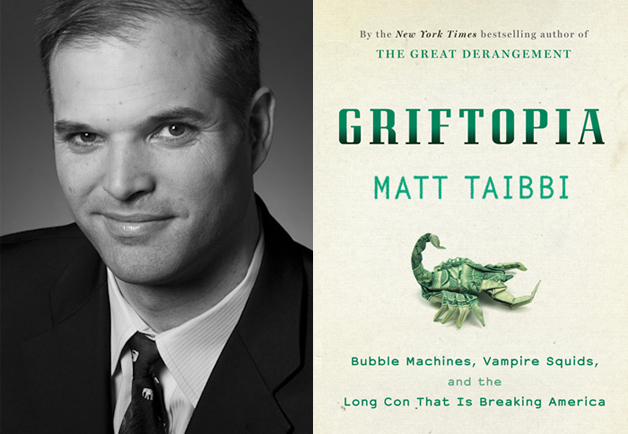
Matt Taibbi is a great talent and his targets in the financial and political sectors are righteous ones, but I still have misgivings about him. I don’t think he exactly rushes to correct himself when he proves to be wrong, and he’s working at a furious pace where he’s had to cut corners that should not be cut. But he’s a fascinating reporter, especially since his sensibilities belong to an earlier, prose-driven, pre-Internet age. He just did an Ask Me Anything on Reddit. A few exchanges follow.

_________________

Question:

Matt, a line of yours is lodged in my head: “Organized greed always defeats disorganized democracy.” Unfortunately, while the animosity of Occupy Wall Street is still strong in early 2013, the disorganization of the movement might be even stronger.

So, if you were in charge of Occupy Wall Street, what single achievable goal would you (re)organize the movement around?

Answer:

Again, to repeat, breaking up the banks is the big thing. That should be the Holy Grail of activist goals. Everything flows from the Too Big To Fail problem. If that can be accomplished, we’re off and running. And it’s not far-fetched. There are a lot of people even in DC coming around to the idea.

____________________________

Question:

Matt, you lived in Russia for a while and wrote about and did a lot of interesting and intense things, like messing with the mob, checking out Siberian prisons, and partying pretty hard. Russia is a place where they kill journalists for merely existing, so my question is: how did you not die?

Answer:

Purely by accident. Honestly, there were some close calls. A lot of bad decisions while I was there, many of them under the influence. One very funny story I’ve never told: I once worked with a Russian paper called “Stringer” to wiretap Alexander Voloshin, Putin’s chief of staff. We published a week of his phone calls. I was so afraid of the consequences, I stayed out of the country when we published. Upon my return I was detained at the airport for 10 hours. I thought I was going to jail for life. In fact, the Russians were simply concerned that the lamination on my passport was coming up in one corner. They thought my passport was fake. Once they reached the embassy, they let me go. But that was one scary 10 hours.

____________________________

Question:

Did you ever meet Hunter S. Thompson?

Answer: 

Years ago, when I was in my twenties, I was asked by a book publishing company to edit an anthology of “Gonzo Journalism.” Not long into the project I realized there was no such thing as “Gonzo Journalism” as a genre per se, it just meant “written by Hunter Thompson.” But I was broke and needed the job. So I called Hunter to ask him what he thought. He said, “That’s a shitty assignment.” I told him I probably agreed. He said, “How badly do you need the money?” I said, “Badly.” He said, “Well, good luck, but I’m not going to help you with it. No offense.” I said none taken and that was it. That was the only time I ever talked to Hunter. It was a funny call, though. 

____________________________

Question:

Did you really throw your coffee at Vanity Fair’s James Verini when he said he didn’t like your book? 

Answer: 

I absolutely did throw coffee at James Verini, and it had nothing to do with him not liking my book. Let’s leave it at that for now. I’ll tell the full story someday.

Tags: , ,

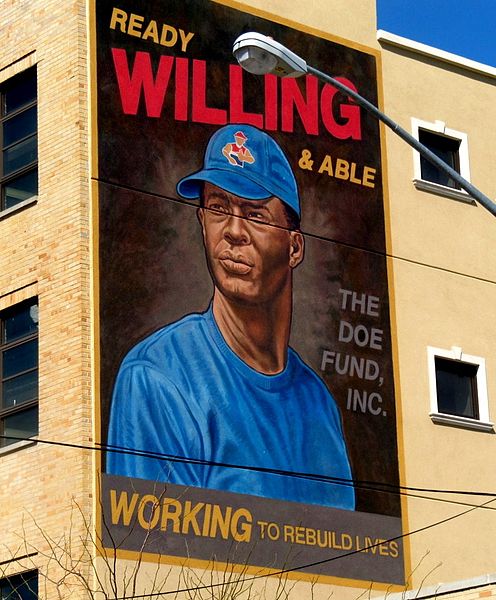
Two of the heroes in New York City’s ongoing struggle against poverty are Geoffrey Canada of the Harlem’s Children Zone and George McDonald of the Doe Fund. The opening of Hamilton Nolan’s excellent Gawker post about the latter organization, a homelessness-ending program started by McDonald, who is running a quixotic candidacy to be New York’s next mayor:

“The next mayor of New York City will not be George McDonald, though George McDonald is running for mayor. That’s OK. George McDonald is already better than any mayor has ever been at addressing the most obstinate social problems in this city’s modern history.

Homelessness. Poverty. Unemployment. These problems are usually seen as intractable, overwhelming, and hopelessly complex. They certainly can be, for those suffering their effects. But solving these problems is not a mystery at all. There is a nonprofit group in New York City called The Doe Fund that has developed perhaps the single most effective formula in existence for moving people from the streets to productive society.

Here is what they do: They take in homeless people, referred to them by places like Bellevue Hospital. Many of these people are fresh out of prison, with little safety net. They house them. They ensure they’re sober and make them abide by a schedule. They give them a job for starters—cleaning up trash around the city, for a month. The men in all-blue jumpsuits you see pushing brooms and emptying trash cans throughout New York are Doe Funders.

After that, the fund gives them classes in life skills and specific job training (they can choose between pest control, catering, building maintenance, and other specialties) for the next six months or so. There are mock job interviews, to get the pitch right. Then they send each one out to pound the pavement and find a job. When they find a job, they find them a place to live. By the time a year is up, the Doe Fund has transformed a homeless person into an employed person with a place to live.”

Tags: ,

From “Red Obsessions,” a feature article by Lars Olav-Beier in Spiegel about Asia trying to supplant Hollywood as the global Dream Factory:

“Not just China, but also South Korea and Russia have become more important in the film business in recent years. The Russian market grew by almost 20 percent in 2012, with a film like Ice Age 4 earning $50 million there, or more than half of its budget.

‘We can no longer risk making an expensive film with a star who isn’t popular in Asia,’ says Hollywood producer Jerry Bruckheimer (Pirates of the Caribbean). While American films earned up to two-thirds of their revenues in North America in the 1980s, today it averages only about one third.

Hollywood has been beset by fears of a sellout, ever since Indian investment firm Reliance acquired the majority of the DreamWorks film studio and a Chinese company bought the second-largest movie theater chain in the United States. Finally, in mid-January the Chinese electronics company TLC bought the naming rights to Grauman’s Chinese Theater in the heart of Hollywood, one of the most famous movie theaters in the United States. It seems only a matter of time before the Chinese buy their first Hollywood studio.

It’s happened once before, now more than 20 years ago, that Asians, specifically Japanese companies like Sony, acquired a number of studios. ‘China wants something different from Hollywood than what Japan wanted at the time,’ says American industry expert Thomas Plate. ‘It isn’t as much about money as it is about know-how.’

Of course, money isn’t the only issue for Hollywood, either. America sees cinema as its very own art form, tailor-made for telling the world American stories and celebrating American values. ‘We’ll still be making movies about American football in the future,’ says Bruckheimer, ‘but with much smaller budgets. That’s because it’s almost exclusively American viewers who are interested in football.’ Bruckheimer exhorts his screenwriters to think internationally and write roles for Asian stars into films.”

Tags: , ,

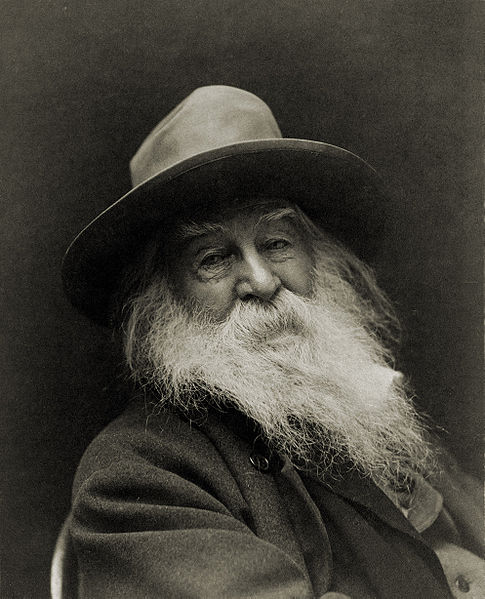
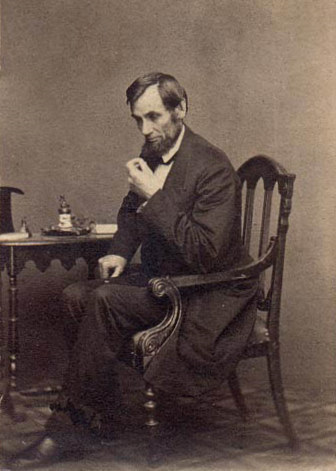
Abraham Lincoln and Walt Whitman, two great figures of their age, never shook hands or spoke despite their often close proximity, which was made all the closer as a result of the poet volunteering as a nurse during the Civil War. From Jamie Stiehm at the New York Times’ Disunion blog, a passage about their “relationship”:

“Above all, Whitman studied the stars and waves of Lincoln’s mercurial character the way a great sculptor might gaze at his craggy countenance or larger-than-life hands. The poet came to know the routes of the president’s carriage. When he saw it passing by, he stood with hat in hand. He kept a lookout in the summer months, when Lincoln rode daily along Seventh Street out to a peaceful family retreat at the Soldiers Home, three miles away from crush of his callers. Whitman was once inside the executive mansion to see John Hay, the president’s secretary. He was standing close to Lincoln, who was animatedly engaged in another conversation, but went on his way, loath to interrupt him.

As Whitman later recounted, he exchanged nods, bows and waves with Lincoln several times over a few years and saw the president shake hundreds, if not thousands, of hands at a party. But not Whitman’s. In one of American history’s closest calls, the two never spoke a word to each other. (Though it is believed that Lincoln, 10 years older, read some of the poet’s work aloud back in Springfield, Ill.)

Whitman nevertheless felt he got a good fix on Lincoln. ‘I love the president personally,’ he declared. Well he might, because years earlier he had imagined a bearded president from the prairie, the West who was ‘heroic, shrewd, fully informed.’ Lincoln was nothing if not a shrewd, strong outsider, which helped make him the one man alive capable of settling the old sectional divide sundering the nation.”

Tags: , ,

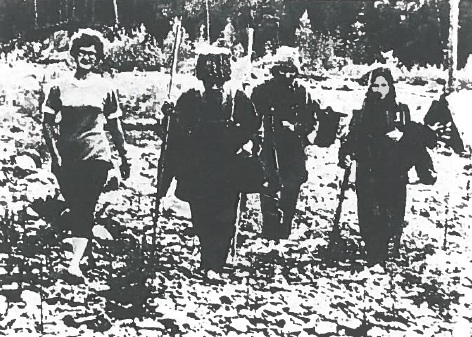
In 1978, Soviet geologists were stunned while exploring the remote Siberian taiga when they happened across a deeply religious family that had retreated 40 years earlier from their country’s attempts at modernization, as well as all outside human contact and communication. They were so isolated that they were blissfully unaware of that horror known as World War II. From Mike Dash at the Smithsonian site:

“Slowly, over several visits, the full story of the family emerged. The old man’s name was Karp Lykov, and he was an Old Believer—a member of a fundamentalist Russian Orthodox sect, worshiping in a style unchanged since the 17th century. Old Believers had been persecuted since the days of Peter the Great, and Lykov talked about it as though it had happened only yesterday; for him, Peter was a personal enemy and ‘the anti-Christ in human form’—a point he insisted had been amply proved by Tsar’s campaign to modernize Russia by forcibly ‘chopping off the beards of Christians.’ But these centuries-old hatreds were conflated with more recent grievances; Karp was prone to complain in the same breath about a merchant who had refused to make a gift of 26 poods [940 pounds] of potatoes to the Old Believers sometime around 1900.

Things had only got worse for the Lykov family when the atheist Bolsheviks took power. Under the Soviets, isolated Old Believer communities that had fled to Siberia to escape persecution began to retreat ever further from civilization. During the purges of the 1930s, with Christianity itself under assault, a Communist patrol had shot Lykov’s brother on the outskirts of their village while Lykov knelt working beside him. He had responded by scooping up his family and bolting into forest.

Peter the Great’s attempts to modernize the Russia of the early 18th century found a focal point in a campaign to end the wearing of beards. Facial hair was taxed and non-payers were compulsorily shaved—anathema to Karp Lykov and the Old Believers.

That was in 1936, and there were only four Lykovs then—Karp; his wife, Akulina; a son named Savin, 9 years old, and Natalia, a daughter who was only 2. Taking their possessions and some seeds, they had retreated ever deeper into the taiga, building themselves a succession of crude dwelling places, until at last they had fetched up in this desolate spot. Two more children had been born in the wild—Dmitry in 1940 and Agafia in 1943—and neither of the youngest Lykov children had ever seen a human being who was not a member of their family. All that Agafia and Dmitry knew of the outside world they learned entirely from their parents’ stories. The family’s principal entertainment, the Russian journalist Vasily Peskov noted, ‘was for everyone to recount their dreams.'”

Tags: ,

« Older entries § Newer entries »