Politics

You are currently browsing the archive for the Politics category.

122dg

At the Los Angeles Review of Books, Shaun Randol interviews Paul Barrett, author of Glock: The Rise of America’s Gun, who agrees with David Mamet that we should have armed security in schools. An excerpt:

“Shaun Randol: 

You mention how we’re not going to have policing in public spaces anytime soon —

Paul Barrett: 

I said a ‘police state.’ We, of course, have plenty of policing of public spaces. We have public spaces that are basically locked down. You can’t get into a federal courthouse without getting thoroughly searched. It would be very, very difficult to get in there with a firearm. You can’t get past security in an American airport without being pretty thoroughly searched. We have lots of security in lots of situations.

I think that security does deter crime in general and mass killings in particular. With this debate about what we do about schools, the proposal [by NRA Executive Vice President Wayne LaPierre] that has been lampooned by a lot of people, I personally think is a very reasonable proposal.

Shaun Randol: 

Please elaborate.

Paul Barrett: 

I’ve written about this for Businessweek. We have grown accustomed, in this country, to having a fair amount of security in many kinds of public and private venues where a lot of people gather. There is security in the building that you and I are sitting in right now. Not just anyone can walk in.

When you go to Yankee Stadium to see a baseball game, you can’t just walk into Yankee Stadium. They channel you through certain entranceways and, if you’re carrying a bag, they’re going to search your bag. The guys who take your tickets are there to also look you over, and there’s both uniformed and plainclothes security throughout the stadium.

I think all of those steps are rational steps. I don’t think they’re perfect, but I do think they do deter crime and they would deter a mass suicide-killing episode in those venues. Therefore, if you are truly anxious about securing schools, I can’t see the serious argument against having armed security at schools. It doesn’t seem to me to be a distraction. It doesn’t seem to me to be a panacea, either. It’s not perfect, but few social policies are perfect.”

Tags: ,

sto

Drones are scary as hell, but they do keep boots off the ground, which is what leads to quagmires and tens of thousands of deaths. Still, it’s a scary precedent we’re setting.

In a wide-ranging Geuernica interview, Martin Amis offers his take on drones as well as health care and the history of American slavery. An excerpt:

Guernica:

In May 2009, in an interview with Prospect magazine, you discussed your enthusiasm for the possibilities of the Obama presidency. What are your thoughts on his first term and on what might come in the next four years?

Martin Amis:

It’s often said of American politics that it’s a huge juggernaut and the president can change the direction by two or three degrees in either direction, but not much more. In fact, I think the president’s power is limited, much more than the prime minister in England. So, I’m not too disappointed, although I didn’t like his deportations, and I’m not sure about the drones. It’s very aggressive. I’m not sure that if Bush Jr. were doing it I would say the same. It’s better than having troops on the ground, and it’s horrifying for the terrorists. I mean they’re all sitting there waiting.

I haven’t liked him during the campaign. He hasn’t been above the fray. I guess you can’t afford to do it. If you are going to get reelected you have to make some of the usual noises: You don’t talk about global warming, and you don’t talk about gun control. He hasn’t been the great exception.

I also think there’s been another resurgence of racism. All that rejection from Republicans has a bit of a racist element. It was very necessary to have a black president, and it’s been a great thing. It will help, in the end, to ease the trauma of slavery and civil war. The war against slavery cost almost 800,000 American lives—that’s how strongly they felt about it. And it’s not going to go away in a century.

Obama will have a bit of capital for a year or two. Even his imperfect health reform was a tremendous step in the right direction—the direction of sanity and equity. Just to give up this enterprise health system and adopt government health care like in Canada is cheaper and fairer. But the key part about that is that no American will accept that some of his tax money is going to pay for people who smoke. It’s horrible for them: ‘Some low-life bum taking advantage of the state.’ They just have to get over it.”

Tags: ,

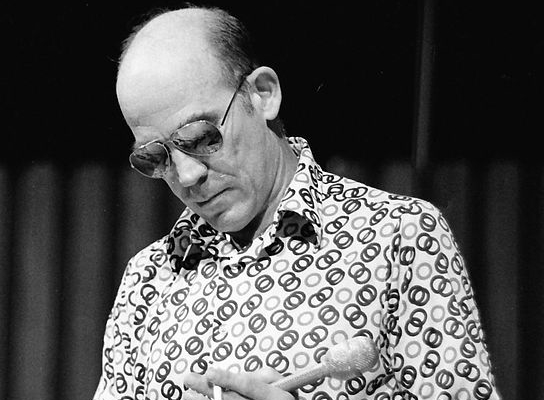
Hunter S. Thompson brought a rifle with him on a commercial flight to New York when visiting David Letterman in 1988. Such an innocent time.

Tags: ,

Drones will be used in the U.S. to deliver goods and aid police, but someday soon we might not be worried about a plane flying into a tower but instead a bird–wait, that is a bird, right? From a really good Time article by Lev Grossman about drones proliferating in the private sector:

“Drones are learning to think for themselves. Those University of Pennsylvania drones are already semiautonomous: you can toss a hoop in the air and they’ll plot a trajectory and fly right through it. (Whether or not you count Google’s self-driving cars as people-carrying, highway-borne drones seems like a question of semantics.) They’re also gaining endurance. In June, Boeing tested a liquid-hydrogen-powered drone called the Phantom Eye that’s designed to cruise at 65,000 ft. for four days at a time. Boeing’s Solar Eagle, which has a 400-ft. wingspan, is scheduled for testing in 2014. Its flights will last for five years.

This technology will inevitably flow from the military sphere into the civilian, and it’s very hard to say what the consequences will be, except that they’ll be unexpected. Drones will carry pizzas across towns and drugs across borders. They’ll spot criminals on the run and naked celebrities in their homes. They’ll get cheaper to buy and easier to use. What will the country look like when anybody with $50 and an iPhone can run a surveillance drone? Last fall the law schools at Stanford and NYU issued a report, ‘Life Under Drones,’ which was based on 130 interviews with Pakistanis. It makes for unsettling reading. ‘Drones are always on my mind,’ said a man from Islamabad. ‘It makes it difficult to sleep. They are like a mosquito. Even when you don’t see them, you can hear them. You know they are there.’

Right now the U.S. is the only nation that operates drones on a large scale, but that will change: flying drones is hard, but it’s not that hard. Singer estimates that there are 76 other countries either developing drones or shopping for them; both Hizballah and Hamas have flown drones already. In November, a Massachusetts man was sentenced to 17 years for plotting to attack the Pentagon and the Capitol with remote-controlled planes. (The drone equivalent of the Newtown, Conn., atrocity is simply beyond contemplation.) The moral ambiguity of covert drone strikes will clarify itself very quickly if another country claims the right under international law to strike its enemies in the U.S. There may come a day when the U.S. bitterly regrets the precedents it has set.”

Tags:

Technological innovation leads to great wealth for a few but the struggle with creative disruption can last for most people for decades–until, at long last, hopefully, prosperity arrives. But until then–wow–painful! From a new Business Insider interview with Paul Krugman about the rise of the machines:  

“Whereas from about 1980 to 2000, the discussion about inequality was mostly seen as labor vs. labor (high-paid, high-skilled workers vs low-paid, low-skilled workers) the new story is about labor vs. capital a topic that is more taboo.

[Krugman] notes that there have been periods before where workers went several decades without reaping the benefits of capital-favoring technologies (the industrial revolution), and it’s possible that we’re in a period like that now, which unfortunately means that easy answers like ‘skills training’ won’t necessarily help much.’

As for the specific technologies that he’s intrigued by right now, he mentioned driverless cars and speech recognition, both of which use ‘big data’ to accomplish something that we previously thought required human intelligence.”

Tags:

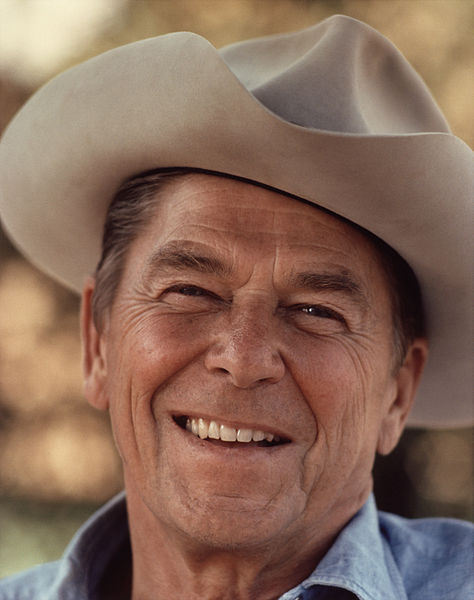
From Oliver Sacks’ new article in the New York Review of Books about memory distortion, a passage about Ronald Reagan “misremembering”:

“Daniel Schacter has written extensively on distortions of memory and the ‘source confusions’ that go with them, and in his book Searching for Memory recounts a well-known story about Ronald Reagan:

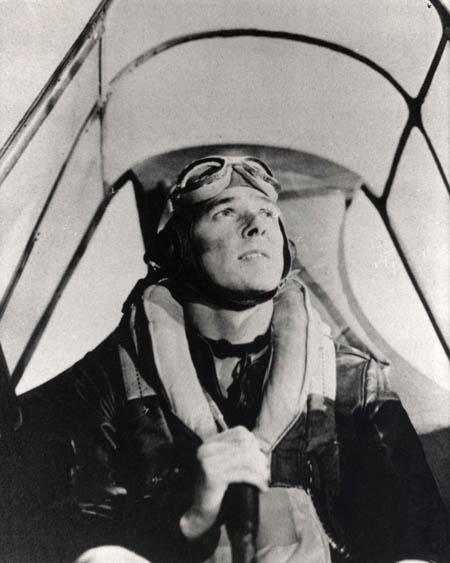
In the 1980 presidential campaign, Ronald Reagan repeatedly told a heartbreaking story of a World War II bomber pilot who ordered his crew to bail out after his plane had been seriously damaged by an enemy hit. His young belly gunner was wounded so seriously that he was unable to evacuate the bomber. Reagan could barely hold back his tears as he uttered the pilot’s heroic response: ‘Never mind. We’ll ride it down together.’ The press soon realized that this story was an almost exact duplicate of a scene in the 1944 film A Wing and a Prayer. Reagan had apparently retained the facts but forgotten their source.

215Reagan was a vigorous sixty-nine-year-old at the time, was to be president for eight years, and only developed unmistakable dementia in the 1990s. But he had been given to acting and make-believe throughout his life, and he had displayed a vein of romantic fantasy and histrionism since he was young. Reagan was not simulating emotion when he recounted this story—his story, his reality, as he believed it to be—and had he taken a lie detector test (functional brain imaging had not yet been invented at the time), there would have been none of the telltale reactions that go with conscious falsehood.

It is startling to realize that some of our most cherished memories may never have happened—or may have happened to someone else. I suspect that many of my enthusiasms and impulses, which seem entirely my own, have arisen from others’ suggestions, which have powerfully influenced me, consciously or unconsciously, and then been forgotten.”

Tags: ,

From an interesting post at the Chapati Mystery blog which speculates on how to create a city with architecture that makes it impervious to drone strikes:

“The drone may conceive of itself – if it was armed with the ordinance of self-awareness – as a tool beyond architecture.In the end of the 1990’s society was able to get used to CCTV on street corners in stores and on the street. We were even able to accept the use of Tomahawk missiles, at least in Tom Clancy books. The strangeness of the United States treating its enemies this way, as though they were the New England colonies in a strange reuse of King Philip’s lexicography, was brushed off in the excitement over new uses of adaptable technology. However, security cameras and fly-by-wire missiles still were part of a world that defined itself with concrete walls, cliffs-as-barriers,and other principles of formal architecture. Drones scoff at such conventionalities.

Drones’ ability to move through extraordinarily varied environments for extraordinarily long periods of time is of course unparalleled. They can scoff at conventional architecture by waiting out the inhabitants (if the goal is to eliminate a single person or a small group) or to poke and prod at the space from infinite angles using any number of conventional or digital imaging systems. Or,alternatively, the drone operator has the opportunity to decide to simply blow the whole place up. Much of the publicized fear over the expansion of drone warfare and reconnaissance is not distress at the collateral damage in Pakistan, Yemen, Somalia, and elsewhere but rather the very real fear that we in the United States and United States-like environs have no native way to defend ourselves from them or their operators.

However, as those who depended on castle walls discovered against Ottoman artillery and as the finest horsemen discovered during trench warfare, no invincible force of arms stays that way for long. Architecture against drones is not just a science-fiction scenario but a contemporary imperative. Such creations are not needed for the John Connors but for the Abdurahman al-Awlakis. The successful check against the machines is not a daydream but an inevitability, and the quicker more creative solutions are proposed, the more likely such answers can be disseminated widely and kept from the patent-wielding hands of some offshore-utopian type. (Thanks Browser.)

David Mamet has taken his right-wing apostasy to the hilt, arguing at the Daily Beast that we really, really need armed security guards in schools. The problem is, having spoken to many security guards over the years, I know lots of them would be violating parole if they carried firearms. This assertion seems particularly untrue: “The individual is not only best qualified to provide his own personal defense, he is the only one qualified to do so.” No, not really. Oh, and fuck Mitch and Murray! From “Gun Laws and the Fools of Chelm“:

“What possible purpose in declaring schools ‘gun-free zones’? Who bringing a gun, with evil intent, into a school would be deterred by the sign?

Ah, but perhaps one, legally carrying a gun, might bring it into the school.

Good.

We need more armed citizens in the schools.

Walk down Madison Avenue in New York. Many posh stores have, on view, or behind a two-way mirror, an armed guard. Walk into most any pawnshop, jewelry story, currency exchange, gold store in the country, and there will be an armed guard nearby. Why? As currency, jewelry, gold are precious. Who complains about the presence of these armed guards? And is this wealth more precious than our children?

Apparently it is: for the Left adduces arguments against armed presence in the school but not in the wristwatch stores.

Q. How many accidental shootings occurred last year in jewelry stores, or on any premises with armed security guards?

Why not then, for the love of God, have an armed presence in the schools? It could be done at the cost of a pistol (several hundred dollars), and a few hours of training (that’s all the security guards get). Why not offer teachers, administrators, custodians, a small extra stipend for completing a firearms-safety course and carrying a concealed weapon to school? The arguments to the contrary escape me.”

Tags:

shp

Will Americans give up their steering wheels any more readily than they’ll surrender their guns? It’s tough to say since both are about power, control and ego. From Chunka Mui’s new six-part series at Forbes’s hideously designed website about autonomous automobiles, a passage that offers three possible reasons why such driverless vehicles may reach critical mass sooner than later:

“I can think of three plausible scenarios that, based on the compelling societal benefits and business opportunities, might jumpstart adoption. 

1. Google Fiber Redux. Google is the most likely player to put hundreds or thousands of driverless cars on the road to prove their effectiveness and clear away short-term hurdles. Google has a tradition of having its employees use its prototype technologies, a practice known as ‘eating your own dog food.’ Given recently passed legislation in California legalizing driverless cars (with backup drivers), Google might deploy hundreds of Google cars to chauffeur Googlers around the state. Google could quickly log millions of miles and accumulate mountains of evidence on the safety and benefits of the car. (According to various news reports, the Google car has thus far been hit twice by other drivers and once caused a minor accident—while under the control of a human driver.) Google could then move to pilot the technology at a larger scale, perhaps in Las Vegas, because Nevada has also approved the car. Google could use its deep pockets to invest in the necessary infrastructure, take the liabilities issues off the table (by essentially self-insuring) and make the cars available in Nevada at competitive prices. Such an effort would mirror theGoogle Fiber strategy in Kansas City to demonstrate the viability of high-speed fiber networks to the home.

2. The China Card. Although there are too many imponderables and cross-industry conflicts to imagine that the U.S. federal government would get involved any time soon, one can imagine scenarios where more interventionist governments, like China’s, might intervene. China has greater incentives to adopt driverless cars because its rates of accidents and fatalities per 100,000 vehicles is more than twice that of the U.S., and its vehicle counts and total fatalities are growing rapidly. In addition, the Chinese government could be motivated to accelerate the adoption of driverless cars because of the trillions of dollars that it would save by building fewer and narrower roads, by eliminating traffic lights and street lights and by reducing fuel consumption. And then there is the competitive dimension. A driverless car initiative would fit into several of the seven strategic industries that the government is supporting. Chinese researchers have already made significant progress in the arena. And, of course, if China perfects a driverless-car system, it could export that system to the rest of the world.

3. The Big Venture Play. In this scenario, a startup steps into the market to launch a large-scale, shared, driverless transportation system. While this might appear to be the most outlandish of the three scenarios, the outline of the a profitable business case has already been developed. The business plan was designed by an impressive team led by Lawrence Burns, the director of the Program on Sustainability at Columbia University’s Earth Institute and former head of R&D at General Motors. The plan is based on expert technical and financial analysis and offers three sustainable market-entry strategies. For example, the team did a detailed analysis of Ann Arbor, MI, and concluded that a shared-driverless system could be fielded that offered customers about 90% savings compared with the cost of personal car ownership—while delivering better user experiences. Analysis of suburban areas and high-density urban centers, with Manhattan as the case study, also yielded significant savings potential and better service. Such dramatic results promise tremendous business opportunities for a ‘NewCo’:

This is an extraordinary opportunity to realize superior margins, especially for first movers. In cities like Ann Arbor, for example, NewCo could price its personal mobility service at $7 per day (providing customers with a service comparable to car ownership with better utilization of their time) and still earn $5 per day off each subscriber. In Ann Arbor alone, 100,000 residents (1/3 of Ann Arbor’s population) using the service could result in a profit of $500,000 a day. Today, 240 million Americans own a car as a means of realizing personal mobility benefits. If NewCo realizes just a 1 percent market share (2.4 million customers) in the United States alone, its annual profit could be on the order of $4 billion. NewCo’s Business Plan explains how this idea can be realized quickly, efficiently and with effective risk management.

There are of course many assumptions built into such plans, but my review leads me to believe that it is a robust platform for serious exploration of the Big Venture Play.”

Tags:

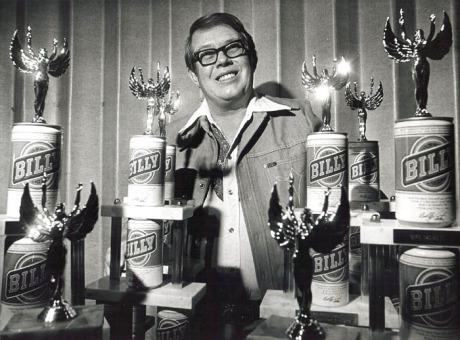
Billy Carter, the only First Brother to have a beer named after him, became a huge celebrity during his sibling’s four years in the White House–as well as an easy punchline. Here he chats with Bill Boggs.

Tags: ,

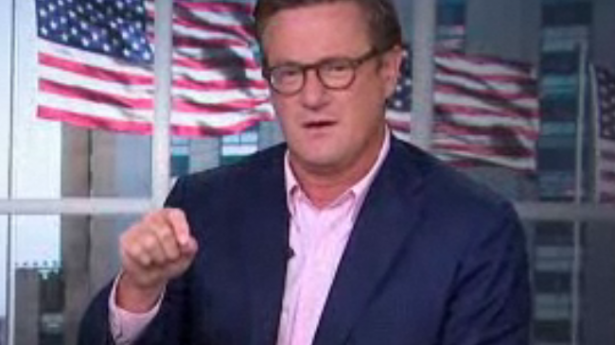
The last time professional chucklehead Joe Scarborough used his flat-earth theory–if many people believe the round earth is flat, then the person who believes that the round Earth is round is a fool–he ended up being embarrassed by his scurrilous criticism of pollster Nate Silver. But some people never learn. He’s now lambasting New York Times economist Paul Krugman about deficit spending not because the MSNBC pundit has some sort knowledge or proof, but because, in Scarborough’s mind, Krugman’s reasoning “runs counter to conventional wisdom across the Western world.” Sooner or later, the “other people disagree with this guy” theory will work the way some shit eventually sticks to a wall. The opening of Scarborough’s new Politico column “Paul Krugman vs. the World“:

“Nobel Prize-winning economist Paul Krugman came on Morning Joe Monday to discuss his latest book and the state of affairs in Washington. Mr. Krugman’s view is that Americans would be better off if its government ran deeper deficits and ignored its longterm debt. That, of course, runs counter to conventional wisdom across the Western world, which is exactly why the New York Times columnist believes Spain and Great Britain are suffering through endless recessions.

His argument also runs counter to what I have been saying in Congress and in the media since 1994. So it would be no surprise that the guy who wrote this, and this, and this and this over the past week would take exception to Mr. Krugman’s words. But most of our viewers did not tune in to hear me talk over the Nobel Prize winner. They tuned in to hear Paul Krugman. So I did my best to give him space.”

Tags: ,

It’s rightly understood that Jewish émigrés fleeing Nazism during WWII greatly enriched America’s arts and sciences, from Hollywood to higher education. It’s less acknowledged that at the end of the war, we also embraced Nazis and whitewashed their pasts to boost defense, space and technology programs. The chief example is NASA kingpin Wernher von Braun (see here and here), but there were a great many others. The opening of Richard Rashke’s new Daily Beast articleAmerica’s Shameful Nazi Past“:

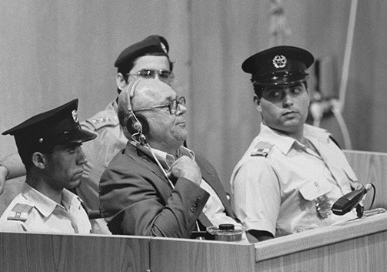
“The Nazi-hunting era that began with the thunder of a kettle drum at the Nuremberg trials in 1945 ended with a whimper in 2011.  After a much interrupted two-year trial, a federal court in Munich convicted John Demjanjuk, a retired Cleveland auto worker, of assisting in the deaths of 29,060 mostly Dutch Jews at Sobibor, a Nazi death camp in eastern Poland. The court sentenced him to five years in prison. Because he posed no flight risk, it allowed him to live in a nursing home while his appeal wound its way through German courts.

Demjanjuk died before his appeal process was completed. Therefore, under German law, he is considered not guilty of a war crime and his criminal record in Germany has been expunged. After being hounded through courts in the United States, Israel, and Germany for more than 30 years, Demjanjuk stands guilty of only one crime—lying under oath on his 1951 visa application about his birth country and what he did during World War II.

In the two visa fraud cases the U.S. Department of Justice eventually brought against Demjanjuk, a federal court ruled that he had been trained as an SS guard at Trawniki, a Nazi camp not far from Sobibor, and that he had served as a Nazi death camp guard. But no U.S. criminal court actually tried Demjanjuk for any war crimes because it did not have jurisdiction to do so.

The Demjanjuk case illustrates America’s historical and schizophrenic treatment of Nazi war criminals and their collaborators. On the one hand, the United States aggressively tried some of them at Nuremberg, and deported others like Demjanjuk, who had acquired U.S. visas by fraud, granting extradition rights to those countries who wanted to try them. On the other hand, the United States hired, used, and protected several thousand Nazi war criminals and collaborators for scientific and espionage purposes.  The use and shielding of these criminals for more than 50 years was and is a massive obstruction of Holocaust justice.”

Tags: ,

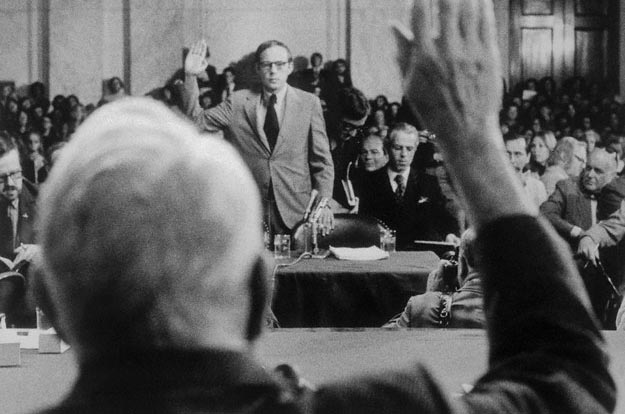
Watergate felon John Dean queried by Bill Boggs about the personal ramifications of his wrongdoing.

Tags:

It just occurred to me that children can’t get into comedy clubs but they can shoot firearms. You know, because bullets can only hurt you but words can kill. I’m all in favor of consenting adults having maximum liberty, but for me that doesn’t extend to minors. From Mike McIntire’s New York Times article about the gun industry’s attempts to woo youngsters with schemes that would not be permitted by companies pushing tobacco or alcohol or things that kill you slowly:

“The industry’s youth-marketing effort is backed by extensive social research and is carried out by an array of nonprofit groups financed by the gun industry, an examination by The New York Times found. The campaign picked up steam about five years ago with the completion of a major study that urged a stronger emphasis on the ‘recruitment and retention’ of new hunters and target shooters.

The overall objective was summed up in another study, commissioned last year by the shooting sports industry, that suggested encouraging children experienced in firearms to recruit other young people. The report, which focused on children ages 8 to 17, said these ‘peer ambassadors’ should help introduce wary youngsters to guns slowly, perhaps through paintball, archery or some other less intimidating activity.

‘The point should be to get newcomers started shooting something, with the natural next step being a move toward actual firearms,’ said the report, which was prepared for the National Shooting Sports Foundation and the Hunting Heritage Trust.”

Tags:

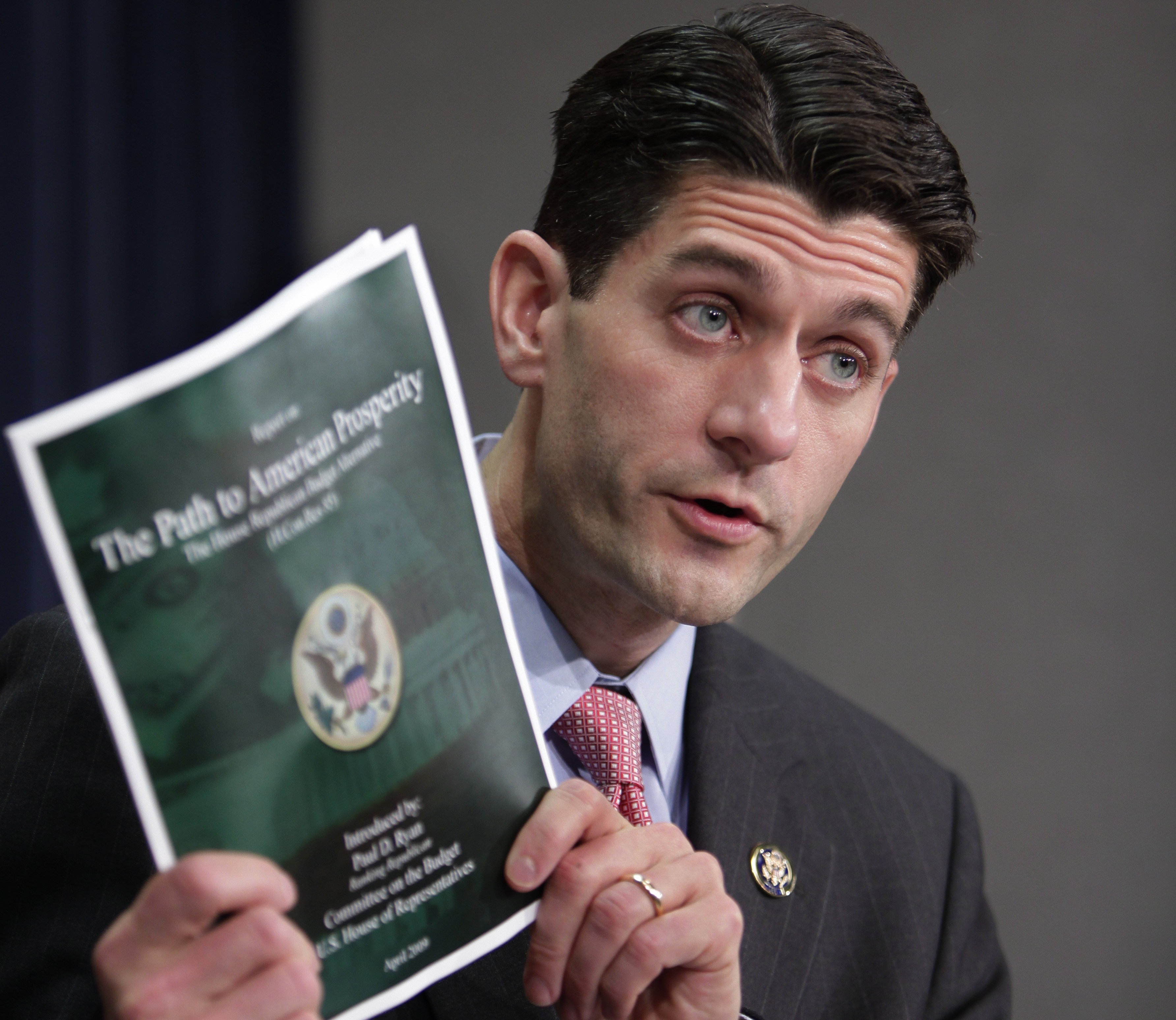
Paul Ryan: Creepy little poltergeist.

I haven’t counted all the newsprint (real and virtual) nor added the TV minutes, but I would be willing to bet that the amount of time news organizations spent on the Beyoncé lip-sync “controversy” far exceeds the attention given to Paul Ryan and other members of Congress who voted against the initial $9 billion relief package for victims of Hurricane Sandy. Having just spent time visiting a relative in a hospital in an area that was heavily impacted by the natural disaster, I can tell you that the ER is overrun. I assumed it was due to the flu outbreak, but one hospital personnel member after another told me the heavier-than-usual demand for beds was due to an assortment of health issues. In the wake of the storm, it’s harder for people, especially children and seniors, to remain healthy. And the mold that has been growing inside abandoned houses can’t be good for anyone. People can die. They do die.

These communities needed help immediately. But the faux athlete, faux economist, faux policy wonk Ryan felt, as usual, that his half-witted ideology needed to come before those who were suffering. And don’t get me started on that owl-headed freak Rand Paul. More than anything, both of these little boys–and they don’t qualify as adults to me–need to live on the streets for awhile and see what life is really like.

Beyonce: Sounded good to me.

Tags: , ,

I think when history is written, it will be considered that Barack Obama came of age as President during the payroll-tax extension struggle of 2011, when the Republican-controlled House was backed into a corner and had to return, crawling, to the center. Among the far-right pundits who’ve driven the GOP almost off the map–the electoral map, at least–Charles Krauthammer at least seems to have a unique understanding that a more-seasoned Obama is likely to manhandle his political opponents during his second term if they don’t put strategy before severity. From the right-wing writer’s recent column:

“The Gingrich Revolution ran aground when it tried to govern from Congress, losing badly to President Clinton over government shutdowns. Nor did the modern insurgents do any better in the 2011 debt-ceiling and 2012 fiscal-cliff showdowns with Obama.

Obama’s postelection arrogance and intransigence can put you in a fighting mood. I sympathize. But I’m tending toward the realist view: Don’t force the issue when you don’t have the power.

The debt-ceiling deadline is coming up. You can demand commensurate spending cuts, the usual, reasonable Republican offer. But you won’t get them. Obama will hold out. And, at the eleventh hour, you will have to give in as you get universally blamed for market gyrations and threatened credit downgrades.”

Tags: ,

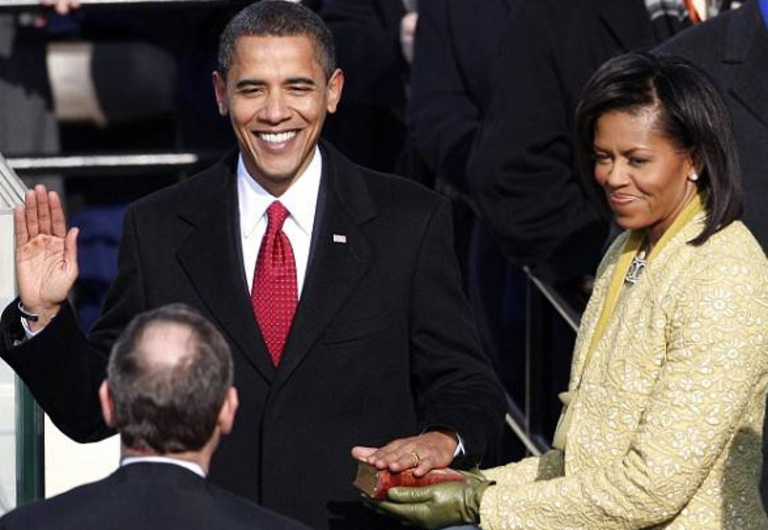
“Vice President Biden, Mr. Chief Justice, Members of the United States Congress, distinguished guests, and fellow citizens:

Each time we gather to inaugurate a president, we bear witness to the enduring strength of our Constitution. We affirm the promise of our democracy. We recall that what binds this nation together is not the colors of our skin or the tenets of our faith or the origins of our names. What makes us exceptional – what makes us American – is our allegiance to an idea, articulated in a declaration made more than two centuries ago:

‘We hold these truths to be self-evident, that all men are created equal, that they are endowed by their Creator with certain unalienable rights, that among these are Life, Liberty, and the pursuit of Happiness.’

Today we continue a never-ending journey, to bridge the meaning of those words with the realities of our time. For history tells us that while these truths may be self-evident, they have never been self-executing; that while freedom is a gift from God, it must be secured by His people here on Earth. The patriots of 1776 did not fight to replace the tyranny of a king with the privileges of a few or the rule of a mob. They gave to us a Republic, a government of, and by, and for the people, entrusting each generation to keep safe our founding creed.

For more than two hundred years, we have.

Through blood drawn by lash and blood drawn by sword, we learned that no union founded on the principles of liberty and equality could survive half-slave and half-free. We made ourselves anew, and vowed to move forward together.

Together, we determined that a modern economy requires railroads and highways to speed travel and commerce; schools and colleges to train our workers.

Together, we discovered that a free market only thrives when there are rules to ensure competition and fair play.

Together, we resolved that a great nation must care for the vulnerable, and protect its people from life’s worst hazards and misfortune.

Through it all, we have never relinquished our skepticism of central authority, nor have we succumbed to the fiction that all society’s ills can be cured through government alone. Our celebration of initiative and enterprise; our insistence on hard work and personal responsibility, are constants in our character.

But we have always understood that when times change, so must we; that fidelity to our founding principles requires new responses to new challenges; that preserving our individual freedoms ultimately requires collective action. For the American people can no more meet the demands of today’s world by acting alone than American soldiers could have met the forces of fascism or communism with muskets and militias. No single person can train all the math and science teachers we’ll need to equip our children for the future, or build the roads and networks and research labs that will bring new jobs and businesses to our shores. Now, more than ever, we must do these things together, as one nation, and one people.

This generation of Americans has been tested by crises that steeled our resolve and proved our resilience. A decade of war is now ending. An economic recovery has begun. America’s possibilities are limitless, for we possess all the qualities that this world without boundaries demands: youth and drive; diversity and openness; an endless capacity for risk and a gift for reinvention. My fellow Americans, we are made for this moment, and we will seize it – so long as we seize it together.

For we, the people, understand that our country cannot succeed when a shrinking few do very well and a growing many barely make it. We believe that America’s prosperity must rest upon the broad shoulders of a rising middle class. We know that America thrives when every person can find independence and pride in their work; when the wages of honest labor liberate families from the brink of hardship. We are true to our creed when a little girl born into the bleakest poverty knows that she has the same chance to succeed as anybody else, because she is an American, she is free, and she is equal, not just in the eyes of God but also in our own.

We understand that outworn programs are inadequate to the needs of our time. We must harness new ideas and technology to remake our government, revamp our tax code, reform our schools, and empower our citizens with the skills they need to work harder, learn more, and reach higher. But while the means will change, our purpose endures: a nation that rewards the effort and determination of every single American. That is what this moment requires. That is what will give real meaning to our creed.

We, the people, still believe that every citizen deserves a basic measure of security and dignity. We must make the hard choices to reduce the cost of health care and the size of our deficit. But we reject the belief that America must choose between caring for the generation that built this country and investing in the generation that will build its future. For we remember the lessons of our past, when twilight years were spent in poverty, and parents of a child with a disability had nowhere to turn. We do not believe that in this country, freedom is reserved for the lucky, or happiness for the few. We recognize that no matter how responsibly we live our lives, any one of us, at any time, may face a job loss, or a sudden illness, or a home swept away in a terrible storm. The commitments we make to each other – through Medicare, and Medicaid, and Social Security – these things do not sap our initiative; they strengthen us. They do not make us a nation of takers; they free us to take the risks that make this country great.

We, the people, still believe that our obligations as Americans are not just to ourselves, but to all posterity. We will respond to the threat of climate change, knowing that the failure to do so would betray our children and future generations. Some may still deny the overwhelming judgment of science, but none can avoid the devastating impact of raging fires, and crippling drought, and more powerful storms. The path towards sustainable energy sources will be long and sometimes difficult. But America cannot resist this transition; we must lead it. We cannot cede to other nations the technology that will power new jobs and new industries – we must claim its promise. That is how we will maintain our economic vitality and our national treasure – our forests and waterways; our croplands and snowcapped peaks. That is how we will preserve our planet, commanded to our care by God. That’s what will lend meaning to the creed our fathers once declared.

We, the people, still believe that enduring security and lasting peace do not require perpetual war. Our brave men and women in uniform, tempered by the flames of battle, are unmatched in skill and courage. Our citizens, seared by the memory of those we have lost, know too well the price that is paid for liberty. The knowledge of their sacrifice will keep us forever vigilant against those who would do us harm. But we are also heirs to those who won the peace and not just the war, who turned sworn enemies into the surest of friends, and we must carry those lessons into this time as well.

We will defend our people and uphold our values through strength of arms and rule of law. We will show the courage to try and resolve our differences with other nations peacefully – not because we are naïve about the dangers we face, but because engagement can more durably lift suspicion and fear. America will remain the anchor of strong alliances in every corner of the globe; and we will renew those institutions that extend our capacity to manage crisis abroad, for no one has a greater stake in a peaceful world than its most powerful nation. We will support democracy from Asia to Africa; from the Americas to the Middle East, because our interests and our conscience compel us to act on behalf of those who long for freedom. And we must be a source of hope to the poor, the sick, the marginalized, the victims of prejudice – not out of mere charity, but because peace in our time requires the constant advance of those principles that our common creed describes: tolerance and opportunity; human dignity and justice.

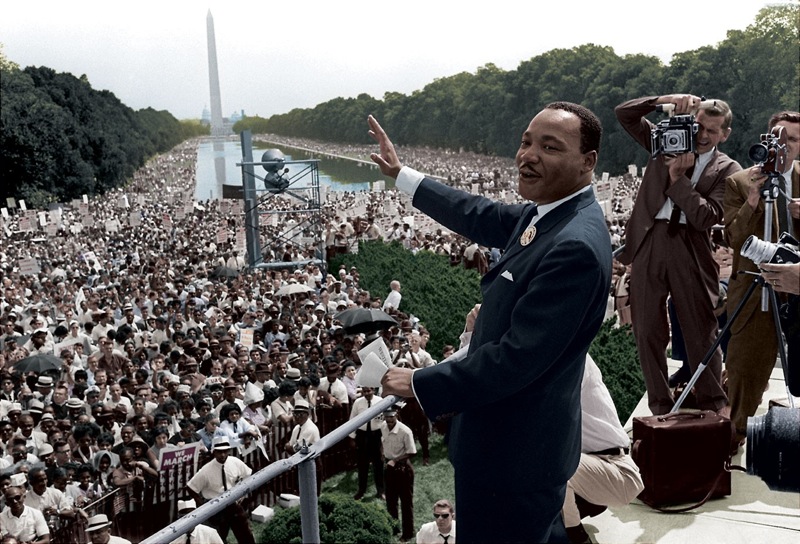
We, the people, declare today that the most evident of truths – that all of us are created equal – is the star that guides us still; just as it guided our forebears through Seneca Falls, and Selma, and Stonewall; just as it guided all those men and women, sung and unsung, who left footprints along this great Mall, to hear a preacher say that we cannot walk alone; to hear a King proclaim that our individual freedom is inextricably bound to the freedom of every soul on Earth.

It is now our generation’s task to carry on what those pioneers began. For our journey is not complete until our wives, our mothers, and daughters can earn a living equal to their efforts. Our journey is not complete until our gay brothers and sisters are treated like anyone else under the law – for if we are truly created equal, then surely the love we commit to one another must be equal as well. Our journey is not complete until no citizen is forced to wait for hours to exercise the right to vote. Our journey is not complete until we find a better way to welcome the striving, hopeful immigrants who still see America as a land of opportunity; until bright young students and engineers are enlisted in our workforce rather than expelled from our country. Our journey is not complete until all our children, from the streets of Detroit to the hills of Appalachia to the quiet lanes of Newtown, know that they are cared for, and cherished, and always safe from harm.

That is our generation’s task – to make these words, these rights, these values – of Life, and Liberty, and the Pursuit of Happiness – real for every American. Being true to our founding documents does not require us to agree on every contour of life; it does not mean we will all define liberty in exactly the same way, or follow the same precise path to happiness. Progress does not compel us to settle centuries-long debates about the role of government for all time – but it does require us to act in our time.

For now decisions are upon us, and we cannot afford delay. We cannot mistake absolutism for principle, or substitute spectacle for politics, or treat name-calling as reasoned debate. We must act, knowing that our work will be imperfect. We must act, knowing that today’s victories will be only partial, and that it will be up to those who stand here in four years, and forty years, and four hundred years hence to advance the timeless spirit once conferred to us in a spare Philadelphia hall.

My fellow Americans, the oath I have sworn before you today, like the one recited by others who serve in this Capitol, was an oath to God and country, not party or faction – and we must faithfully execute that pledge during the duration of our service. But the words I spoke today are not so different from the oath that is taken each time a soldier signs up for duty, or an immigrant realizes her dream. My oath is not so different from the pledge we all make to the flag that waves above and that fills our hearts with pride.

They are the words of citizens, and they represent our greatest hope.

You and I, as citizens, have the power to set this country’s course.

You and I, as citizens, have the obligation to shape the debates of our time – not only with the votes we cast, but with the voices we lift in defense of our most ancient values and enduring ideals.

Let each of us now embrace, with solemn duty and awesome joy, what is our lasting birthright. With common effort and common purpose, with passion and dedication, let us answer the call of history, and carry into an uncertain future that precious light of freedom.

Thank you, God Bless you, and may He forever bless these United States of America.”
Tags:

From Martin Luther King, Jr.’s 1965 Playboy interview:

PLAYBOY: You categorically reject violence as a tactical technique for social change. Can it not be argued, however, that violence, historically, has effected massive and sometimes constructive social change in some countries?

MARTIN LUTHER KING: I’d be the first to say that some historical victories have been won by violence; the U.S. Revolution is certainly one of the foremost. But the Negro revolution is seeking integration, not independence. Those fighting for independence have the purpose to drive out the oppressors. But here in America, we’ve got to live together. We’ve got to find a way to reconcile ourselves to living in community, one group with the other. The struggle of the Negro in America, to be successful, must be waged with resolute efforts, but efforts that are kept strictly within the framework of our democratic society. This means reaching, educating and moving large enough groups of people of both races to stir the conscience of the nation.”

Tags:

The opening of Jonathan Margolis’ new Finanical Times profile of nonagenarian Sidney Rittenberg, who has done a whole lot more during his insane career than just carrying pictures of Chairman Mao:

“There is a not inconsiderable history among the children of successful, prominent Jewish families of getting involved in leftwing politics. From the Marxes to the Milibands, it’s a well-trodden path. Few have taken this tradition quite as far, however, as Sidney Rittenberg, scion of a prominent Jewish family in Charleston, South Carolina.

It was in the 1930s that Rittenberg rejected a career as a lawyer and became a trade union and civil rights activist. He then went a little further. He became a communist, learnt Chinese, went to China, joined Mao Zedong’s guerrillas fighting Chiang Kai-shek’s nationalists, emerged after the communist victory as a senior party member close to Mao, ran Radio Peking, translated Mao’s thoughts into English, became a leading rabble rouser in the Cultural Revolution – and, by the by, was imprisoned for 16 years in solitary confinement, accused of being a US spy. Then he came back to the US and made a fortune advising American companies on how to get into China.

I first heard of this historical revolutionary figure in China, where he is known as Li Dunbai (it sounds a little like Rittenberg to Chinese ears). To this day, he is taught about in schools as a righteous American who helped build Chinese communism.

Now 91, Rittenberg is not only alive, but living in Arizona – quite unusual for one honoured by Mao as an international communist fighter – and still running his company and teaching at a university. He is also on Facebook. The answer to an interview request came in five minutes. From his iPad. “You’re welcome,” he said.


Tags: ,

Gawker writer Hamilton Nolan thinks that everything is terrible and everybody is horrible. He’s probably right. In his post “Do the ‘Good Rich’ Exist?” Nolan references a great 2006 essay by philosopher Peter Singer and a new book by historian Robert F. Dalzell to consider if the super-rich who give away great wealth while still in possession of even greater wealth are actually deserving of our praise. An excerpt:

“The purpose of this discussion is not to impugn the character of billionaires. It is to ask: What is the cost to society of the perception that we should be grateful to these wealthy men for their generosity? The assumptions implicit in that view are A) that the wealthy are fully entitled to their money because they earned it on the basis of their own talents, and B) that the need for society and its laws to protect the entitlement of the rich to their own wealth outweighs the aggregate societal needs that could be cured or ameliorated by that wealth (poverty, disease, etc.). Gratitude towards the great philanthropists is based on the assumption that they are not and should not be expected to give their wealth back to the world; it is based on the assumption that the normal, default, acceptable behavior for the very wealthy is to hoard most of their wealth and put it solely to their own use. It is a view in which society grovels at the feet of great men who have succeeded where the rest of us have failed.

Warren Buffett himself has attributed most of his success to the society he lives in—its governmental protections, its rule of law, its fair and transparent markets, its educational system, and so on. The wise rich (and anyone realistic about the role of chance in the outcomes of all of our lives) recognize that personal talent is but one minor ingredient of vast success. If society is responsible for the vast majority of the success of the rich, then returning the vast majority of that wealth back to society is the least that the rich can do. (Really, it’s the least, considering the fact that they would still be left incredibly wealthy.) This level of giving back to the society that spawned them should be expected of the rich. Yes, society owes them its gratitude—the same gratitude that it owes you for paying your taxes, and volunteering, and making your annual donation to UNICEF. The same gratitude, regardless of the number of zeroes on the check. The gratitude that comes when someone does a good thing that they are expected to do. The gratitude you get for fulfilling your role as a responsible member of society.

To the extent that we should be grateful to the great philanthropists, we should be grateful to them for fulfilling a duty. And to the extent that that duty is to be truly generous, it is a duty that none of them have fulfilled.”

Tags: , ,

Peggy Noonan, an astrologer of politics, is always reading the tea leaves or some such bullshit. Luckily for her, she’s employed in an industry that doesn’t penalize for a lack of accuracy or modest writing talents.

You see, Noonan, that armchair generalizer, thinks that President Obama is divisive. It’s not that the recent vintage of her party disqualifies as all-but-traitorous anyone who deigns to lead the opposition party (Bill Clinton, John Kerry, etc.) or that a large wing of the GOP is extremist and/or racist. The Republicans are desperate to be led by our first African-American President, to come up with sensible bargains and compromises. The current Congress is made up of just such moderates. But that bad Obama guy refuses their largesse and chooses instead to outwit them and create drama.

From a recent Wall Street Journal column in which Noonan interrupts her love of pronouns for, oh fuck, some fantasy-land conjecture:

“After the past week it seems clear Mr. Obama doesn’t really want to work well with the other side. He doesn’t want big bipartisan victories that let everyone crow a little and move forward and make progress. He wants his opponents in disarray, fighting without and within. He wants them incapable. He wants them confused.

I worried the other day that amid all the rancor the president would poison his future relations with Congress, which in turn would poison the chances of progress in, say, immigration reform. But I doubt now he has any intention of working with them on big reforms, of battling out a compromise at a conference table, of having long walks and long talks and making offers that are serious, that won’t be changed overnight to something else. The president intends to consistently beat his opponents and leave them looking bad, or, failing that, to lose to them sometimes and then make them look bad. That’s how he does politics.

Why? Here’s my conjecture: In part it’s because he seems to like the tension. He likes cliffs, which is why it’s always a cliff with him and never a deal. He likes the high-stakes, tottering air of crisis. Maybe it makes him feel his mastery and reminds him how cool he is, unrattled while he rattles others. He can take it. Can they?

He is a uniquely polarizing figure. A moderate U.S. senator said the other day: ‘One thing not said enough is he is the most divisive president in modern history. He doesn’t just divide the Congress, he divides the country.'”

Tags:

Michael Kranish of the Boston Globe exhaustively analyzes why President Obama beat Mitt Romney, giving credit, yes, to a more information-rich campaign, but also stressing the importance of marrying big data to retail politics. An excerpt:

“Tagg Romney could not figure it out. Why had Obama spent so heavily during the primaries when he had no primary opponent? Only later did Tagg realize this was a key to Obama’s victory.

‘We were looking at all the money they were spending in the primary and we were thinking ‘what are they spending all their money on? They’re wasting a lot of money.’ They weren’t. They were paying staffers in Florida’ and elsewhere.

If Romney’s Manhattan Project had been debate preparation, then Obama’s was the ground game.

Building on its 2008 field organ­ization, Obama’s campaign had far more people on the ground, for longer periods, and backed by better data. In Florida, for example, the ­Romney campaign said it had fewer than 200 staff members on the ground, a huge commitment of its total of 500 nationwide. But the Obama campaign had 770 staff in Florida out of 3,000 or so nationwide.

‘They had more staff in Florida than we had in the country, and for longer,’ said Romney adviser Ron Kaufman.

Indeed, in swing state after swing state, the Obama field team was much bigger than the Romney troops. Obama had 123 offices in Ohio, compared with Romney’s 40. Obama had 59 offices in Colorado, compared with Romney’s 15, accord­ing to statistics compiled by the Obama campaign.

Stevens said he expressed alarm about the Democrat’s early advantage in money and staff. He said Obama’s decision to reject public financing for the fall campaign (a move Romney followed) worked to Obama’s advantage ­because Obama used primary funds to prepare for the general election, and it meant there was no ceiling on how much could be spent.

‘It is like sitting in the ­Alamo,’ Stevens said in the postelection interview, comparing the siege by Mexican troops in 1836 to competing against the superior forces of the Obama campaign. ‘Yes, it is alarming. There are a lot of Santa Anna’s soldiers out there.'” (Thanks Browser.)

Tags: , ,

From Andrew Hacker’s New York Review of Books critique of a trio of new volumes about predictive powers, including The Signal and the Noise, written by political polling wunderkind Nate Silver:

The Signal and the Noise is in large part a homage to Thomas Bayes (1701–1761), a long-neglected statistical scholar, especially by the university departments concerned with statistical methods. The Bayesian approach to probability is essentially simple: start by approximating the odds of something happening, then alter that figure as more findings come in. So it’s wholly empirical, rather than building edifices of equations. Silver has a diverting example on whether your spouse may be cheating. You might start with an out-of-the-air 4 percent likelihood. But a strange undergarment could raise it to 50 percent, after which the game’s afoot. This has importance, Silver suggests, because officials charged with anticipating terrorist acts had not conjured a Bayesian ‘prior’ about the possible use of airplanes.

Silver is prepared to say, ‘We had some reason to think that an attack on the scale of September 11 was possible.’ His Bayseian ‘prior’ is that airplanes were targeted in the cases of an Air India flight in 1985 and Pan Am’s over Lockerbie three years later, albeit using secreted bombs, plus in later attempts that didn’t succeed. At the least, a chart with, say, a 4 percent likelihood of an attack should have been on someone’s wall. Granted, what comes in as intelligence is largely ‘noise.’ (Most intercepted conversations are about plans for dinner.) Still, in the summer of 2001, staff members at a Minnesota flight school told FBI agents of a Moroccan-born student who wanted to learn to pilot a Boeing 747 in midair, skipping lessons on taking off and landing. Some FBI agents took the threat of Zacarias Moussaoui seriously, but several requests for search and wiretap warrants were denied. In fact, an instructor added that a fuel-laden plane could make a horrific weapon. At the least, these ‘signals’ should have raised the probability of an attack using an airplane, say, to 15 percent, prompting visits to other flight schools.”

Tags: , ,

More about the harsh realities of gun control in the nascent days of 3D printers, this time from Devin Coldewey at Techcrunch:

“If you were to attempt to write a law governing media copyright in 1998, would you attempt to do so without acknowledging the existence of the Internet and compression methods like MPEG-1? Any law crafted under such restrictions would be laughably incomplete.

Likewise, if you were to discuss a law that allows or restricts the creation and distribution of firearms, would you attempt to do so without acknowledging the existence of 3D-printed weapons and the ability to transfer blueprints for them online?

Here’s the problem, though. Like the digitization of music, the digitization of objects, guns or otherwise, is a one-way street. Every step forward is ineffaceable. Once you can make an MP3 and share it online, that’s it, there’s no going back — the industry is changed, just like that. Why should it be different when you reduce a spoon, a replacement part, a patented tool, or a gun to a compact file that can be reproduced using widely-available hardware? There’s no going back. So what is ‘control’ now?

Will ISPs use deep packet inspection to watch for gun files being traded? Will torrent sites hosting firearm files be taken down, their server rooms raided? Will all the ineffectual tactics of digital suppression be tried again, and fail again?

Will 3D printers refuse to print parts, the way 2D ones are supposed to refuse to print bills? Will printers have to register their devices, even when those devices can print themselves? How is it proposed that control is to be established over something that can be transferred in an instant to another country, and made with devices that will soon be as common as microwaves?

Part of the discussion has to be that, government or otherwise, there can be no more control over printed guns than there can be over printed spoons. Regulation or banning of firearms, whether you think the idea is good or bad, will soon be impossible.” (Thanks Browser.)

Tags:

In an Op-Ed in USA Today, New York’s Mayor Bloomberg has some common-sense proposals for tightening gun laws in a way that doesn’t encroach upon the rights of law-abiding gun owners. Of course, it doesn’t address the huge amount of assault weapons already in circulation in the U.S., and there really isn’t an answer for that. Anyhow, I wasn’t aware that the ATF hasn’t had a director since the Bush Administration. An excerpt:

“The president should make a recess appointment to fill the vacancy at the top of the Bureau of Alcohol, Tobacco, Firearms, and Explosives (ATF), which has been without a director for six years. The country would be outraged if the Department of Homeland Security went six years without a confirmed director. Leaving the ATF without a director is also a public safety threat.”

Tags:

« Older entries § Newer entries »