Politics

You are currently browsing the archive for the Politics category.

I’d like to credit the author of this sobering Economist essay about guns in America, but the geniuses at that publication don’t believe writers deserve bylines. Anyhow, an excerpt:

“The American gun debate takes place in America, not Britain or Japan. And banning all guns is not about to happen (and good luck collecting all 300m guns currently in circulation, should such a law be passed). It would also not be democratic. I personally dislike guns. I think the private ownership of guns is a tragic mistake. But a majority of Americans disagree with me, some of them very strongly. And at a certain point, when very large majorities disagree with you, a bit of deference is in order.

So in short I am not sure that tinkering with gun control will stop horrible massacres like today’s. And I am pretty sure that the sort of gun control that would work—banning all guns—is not going to happen.” (Thanks Browser.)

It’s amazing that Pearl S. Buck won a Nobel Prize for Literature and Tolstoy didn’t. But this 1966 appearance on Merv Griffin’s talk show by the writer is still a rare treat. She mostly discusses her work helping Korean children born to American fathers during the war and her feelings about the folly of Communism.

Tags: ,

I’m stating the obvious when I say it was just horrible this weekend, like everything was frozen in time–in the worst time possible. Anyone being killed is awful, but having so many of the victims be children just makes it hurt that much more. You want to wake up from the nightmare and see those classrooms full of excited faces with their whole lives ahead of them. You want to ask them questions that are a little beyond their reach just so they can confidently give you answers that are ridiculous and far better than the truth.

As I suggested in the wake of the Colorado shootings, assault weapons should be banned (even if it’s impossible to get rid of many of them). There have always been damaged people among us who want to wreak havoc, but they never really had access to an arsenal that’s been available since President Bush allowed the assault weapons ban to expire. In the decade since, a demand for extreme weapons has gone viral in America, a militia mentality has set in. And all of the media outlets and demagogues who’ve stoked anti-government conspiracies have had a hand in the stockpiling.

As I wrote recently, I don’t think a ban on handguns will be any more effective than our war on drugs. (And with 3-D printers in the offing, such basic weapons will be pretty much available on demand.) But the very disturbed among us seem drawn to mass violence, to the shocking crime, so perhaps a diminishing of assault weapons will have some effect.

This is an issue that President Obama wanted to avoid. His priorities were elsewhere. But he’ll certainly support a bill limiting assault weapons now. And one is definitely coming, whether it will get past Congress or not.•

Why, exactly, do we need heroes? I don’t mean children, but adult Americans who should know better. Sure, others can inspire us, but can that inspiration come only if we’ve whitewashed their negatives, if we’ve turned them into pretty lies? Do we scrub their sins to remove our own? Why not just admit that we’re all pretty flawed? Ronald Reagan wasn’t really a cowboy and neither are you or I. Tear down the statues, all of them.

From Frank Rich’s New York magazine excoriation of Petraeus, Broadwell and our deep need to manufacture heroes from substandard materials:

None of Petraeus’s recent history would matter were it not completely at odds with everything we knew about him prior to Election Day. As you go back through the many profiles that proliferated once he was center stage in Iraq, you hear mainly of his exacting scholarliness, his push-up contests and five-mile runs with his bros in the press corps, and his straight-arrow personal style. Some of the praise heaped on Petraeus was written by the same journalists and pundits who promoted the Iraq misadventure in the first place and saw in the cool intellectual general and his surge a tool for rehabilitating both their own tarnished reputations and the disastrous, gratuitous war that had recklessly diverted American resources from the actual post-9/11 threat in Afghanistan. In truth, Petraeus didn’t redeem the Iraq fiasco. What the surge did accomplish, as a trustworthy soldier-scholar, Andrew Bacevich of Boston University, recently noted, was to allow the United States to ‘extricate itself from Iraq without having to acknowledge abject failure.’ Petraeus’s subsequent tour of duty in Afghanistan, a sudden assignment after the resignation of Stanley McChrystal, and his fourteen-month tenure as CIA director accomplished far less. Finally, we are starting to learn why.

The general’s distracting adventures among the Real Housewives of Tampa on the home front were in the public domain, reported in the local press for anyone who wanted to look. No one in the national media bothered until sex and a catfight between Broadwell and Kelley entered the story. Also hiding in plain sight, and also ignored, was Broadwell’s own curious rise in the same media-think-tank Establishment that was glorifying Petraeus. All In was not actually written by Broadwell but by a Washington Post editor. A faux author, Broadwell was also a faux counterinsurgency expert: Though an Army officer, she had never been posted in a combat zone, and though she had enrolled in a doctoral program at Harvard’s Kennedy School (where she first networked with Petraeus), she had been asked to leave because of substandard course work.

Her book, reworked from her lapsed dissertation, is so saccharine and idolatrous that it can only be tolerated with an insulin injection. Nonetheless, All In attracted a roster of ecstatic blurbs, still visible on the book’s Amazon page, from two Pulitzer Prize winners and boldfaced names at NBC News, CNN, the Brookings Institution, and Foreign Affairs. (The prize entry is from Tom Brokaw, describing Petraeus as ‘one of the most important Americans of our time, in or out of uniform.’) Sure enough, this degree of celebrity networking helped propel Broadwell into a career as a television talking head and public speaker. She paraded her dubious expertise before such august organizations as the Aspen Institute, the Concordia Summit, and the United States Chamber of Commerce—sometimes sharing the program with Bill Clinton, John McCain, and Obama Cabinet members. Like Petraeus’s other efforts to court and stroke the press, his targeted deployment of Broadwell, his most determined and devoted personal publicist, to nearly every corridor of media power helps explain how the myth of his public persona was scrupulously enforced even after his days living large in Tampa. Broadwell was so effective at insinuating herself and her message into rarefied echelons of the military-media-political complex that we should be grateful that her only causes were herself and Petraeus. She would have been a killer foreign mole.”
Tags: , ,

Merv Griffin in 1965 interviewing Capt. Mitsuo Fuchida, the architect of the furious attack on Pearl Harbor 24 years earlier. Fuchida converted to Christianity at the end of WWII–which, when you think about it, was pretty good timing–and lived and worked as an evangelist in the United States.

Tags: ,

Mary Todd Lincoln suffered many losses in her life, and one of the bitterest was the 1871 death of her youngest child, Thomas,  nicknamed “Tad,” when he was just 18. The cause of death was reported to be “dropsy of the heart,” but it could have been TB or some other cardiac illness. To put it mildly, Tad was a free spirit, and he is responsible for the origin of a White House tradition. Long before President Obama was pardoning turkeys at Thanksgiving, the Lincoln child saved a similar bird. From Gilbert King at the Smithsonian history blog:

“However, the earliest known sparing of a holiday bird can be traced to 1863, when Abraham Lincoln was presented with a Christmas turkey destined for the dinner table and his young, precocious son Tad intervened.

Thomas ‘Tad’ Lincoln was just 8 years old when he arrived in Washington, D.C., to live at the White House after his father was sworn into office in March 1861. The youngest of four sons born to Abraham and Mary Todd Lincoln, Tad was born after Edward ‘Eddie’ Lincoln died in the winter of 1850 at the age of 11, most likely of tuberculosis. Both Tad and his brother William ‘Willie’ Lincoln were believed to have contracted typhoid fever in Washington, and while Tad recovered, Willie succumbed in February of 1862. He was 11.

With the eldest Lincoln son, Robert, away at Harvard College, young Tad became the only child living at in the White House, and by all accounts, the boy was indomitable—charismatic and full of life at a time when his family, and the nation, were experiencing tremendous grief. Born with a cleft palate that gave him a lisp and dental impairments that made it almost impossible for him to eat solid food, Tad was easily distracted, full of energy, highly emotional and, unlike his father and brother, none too focused on academics.

‘He had a very bad opinion of books and no opinion of discipline,’ wrote John Hay, Lincoln’s secretary. Both Lincoln parents, Hay observed, seemed to be content to let Tad ‘have a good time.’ Devastated by the loss of Willie, and both proud and relieved by Robert’s fastidious efforts at Harvard, the first couple gave their rambunctious young son free rein at the executive mansion. The boy was known to have sprayed dignitaries with fire hoses, burst into cabinet meetings, tried to sell some of the first couple’s clothing at a ‘yard sale’ on the White House lawn, and marched White House servants around the grounds like infantry.”

Tags: , , ,

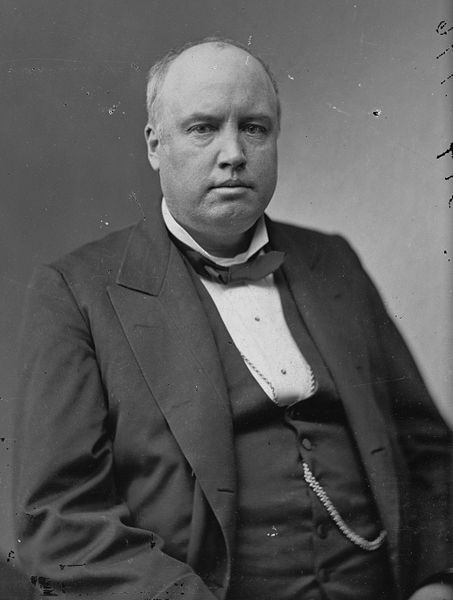
From Susan Jacoby’s beautifully written American Scholar essay about Bob Ingersoll, the “Great Agnostic” of the 19th century, who is largely forgotten today:

Known as Robert Injuresoul to his clerical enemies, he raised the issue of what role religion ought to play in the public life of the American nation for the first time since the writing of the Constitution, when the Founders deliberately left out any acknowledgment of a deity as the source of governmental power. In one of his most popular lectures, titled ‘Individuality,’ Ingersoll said of Paine, Thomas Jefferson, and Benjamin Franklin:

They knew that to put God in the Constitution was to put man out. They knew that the recognition of a Deity would be seized upon by fanatics and zealots as a pretext for destroying the liberty of thought. They knew the terrible history of the church too well to place in her keeping, or in the keeping of her God, the sacred rights of man. They intended that all should have the right to worship, or not to worship; that our laws should make no distinction on account of creed. They intended to found and frame a government for man, and for man alone. They wished to preserve the individuality and liberty of all; to prevent the few from governing the many, and the many from persecuting and destroying the few.

To the question that retains its politically divisive power to this day—whether the United States was founded as a Christian nation—Ingersoll answered an emphatic no. The marvel of the Framers, he argued in an oration delivered on July 4, 1876, in his hometown of Peoria, Illinois, was that they established ‘the first secular government that was ever founded in this world’ at a time when every government in Europe was still based on union between church and state. “Recollect that,” Ingersoll admonished his audience. “The first secular government; the first government that said every church has exactly the same rights and no more; every religion has the same rights, and no more. In other words, our fathers were the first men who had the sense, had the genius, to know that no church should be allowed to have a sword.” A government that had “retired the gods from politics,” Ingersoll declared with decidedly premature optimism on America’s 100th birthday, was a necessary condition of progress.

To 19th-century freethinkers, as to their 18th-century predecessors, intellectual and material progress went hand in hand with abandonment of superstition, and strong ties between government and religion amounted to state-endorsed superstition. Born decades before cities were illuminated by electricity, before the role of bacteria in the transmission of disease was understood, before Darwin’s revolutionary insight that humans were descended from lower animals was fully accepted even within the scientific community, Ingersoll was the most outspoken and influential voice in a movement that was to forge a secular intellectual bridge into the 20th century for many of his countrymen.•

Tags: , ,

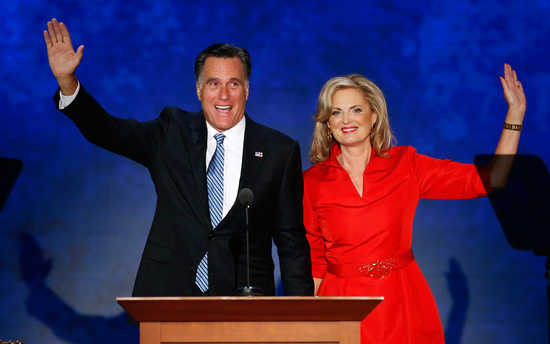
You can file Ann Romney being too distraught to ride her horses after her husband’s election loss  as the type of problem that well-fed, privileged people have, and you’d be right. But there’s something more at play neurologically, something that pertains to us all. We sometimes convince ourselves that life is going to be a certain way. It becomes our reality, even if it isn’t a reality yet. Perhaps it’s the repetition of chemical reactions, but we manage to hardwire our brain in a certain direction. Sometimes trauma can knock us out of this mindset in an instant. But usually it’s a slow mourning, a deliberate process.

From a really good Washington Post piece by Philip Rucker about the new normal facing the Romneys post-campaign:

The defeated Republican nominee has practically disappeared from public view since his loss, exhibiting the same detachment that made it so difficult for him to connect with the body politic through six years of running for president. He has made no public comments since his concession speech in the early hours of Nov. 7 and avoided the press last week during a private lunch with President Obama at the White House. Through an aide, Romney declined an interview request for this story.

After Romney told his wealthy donors that he blamed his loss on ‘gifts’ Obama gave to minority groups, his functionaries were unrepentant and Republican luminaries effectively cast him out. Few of the policy ideas he promoted are even being discussed in Washington.

‘Nothing so unbecame his campaign as his manner of leaving it,’ said Robert Shrum, a senior strategist on Democratic presidential campaigns. ‘I don’t think he’ll ever be a significant figure in public life again.’

Yet friends insist Romney is not bitter. Bitterness, said one member of the family, ‘is not in the Romney genetic code.’

One longtime counselor contrasted Romney with former vice president Al Gore, whose weight gain and beard became a symbol of grievance over his 2000 loss. ‘You won’t see heavyset, haggard Mitt,’ he said. Friends say a snapshot-gone-viral showing a disheveled Romney pumping gas is just how he looks without a suit on his frame or gel in his hair.

‘He’s not a poor loser,’ said John Miller, a meatpacking magnate who co-chaired Romney’s finance committee and owns the beach house next door. ‘He’s not crying on anybody’s shoulders. He’s not blaming anybody. . . . He’s doing a lot of personal introspection about the whole process — and I’m not even sure that’s healthy. There’s nothing you can do about it now.’

By all accounts, the past month has been most difficult on Romney’s wife, Ann, who friends said believed up until the end that ascending to the White House was their destiny. They said she has been crying in private and trying to get back to riding her horses.”

Tags: , ,

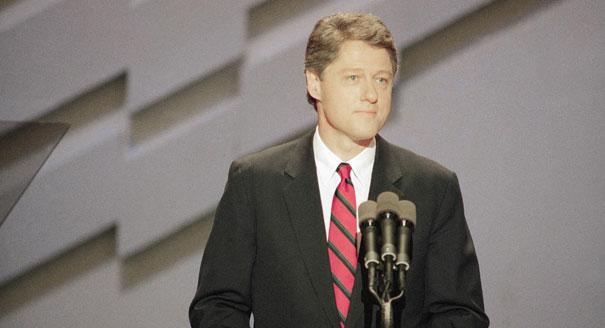
Bill Clinton’s masterful speech this year at the DNC was hailed by friends and foes alike as cinching the deal for President Obama, though 44 was also a superior candidate with a superior tech team. But Clinton wasn’t always such a great communicator. The 1988 introduction of then-Governor Clinton on a national stage was a fiasco as he droned on and on while nominating Michael Dukakis at the DNC. He did damage control with a full-on charm offensive during a subsequent chat with Johnny Carson.

Tags: ,

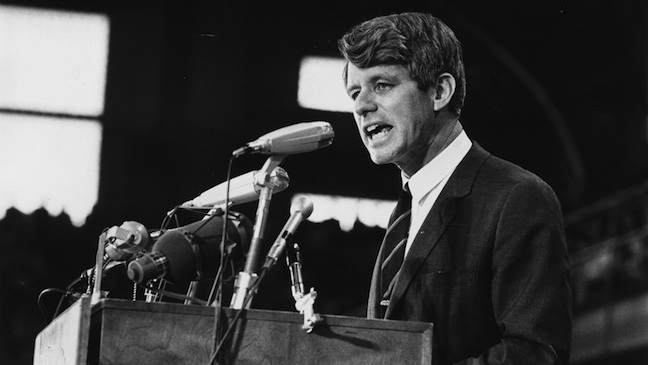
If you’ve read this blog for awhile, you’ve probably gotten the hint that I’m one of those rare progressives who doesn’t care much for the Kennedys. I know you’re not supposed to judge the art by the behavior of the artist, but I just can’t separate the political and the personal to the extent the Kennedys require. Still, this heartfelt 1969 clip of Merv Griffin interviewing family matriarch Rose the year after Robert’s assassination is certainly worth watching.

Tags: , ,

I always remember, especially on seemingly difficult days, that some people in the world starve to death. They don’t have enough food and they suffer from malnutrition before their organs shut down and they die. It’s horrible. You and I on either side of this blog post are very fortunate. That isn’t our condition.

But realizing we’re lucky to have what we have doesn’t mean we shouldn’t point out the things that don’t work well in society, even if they’re not life-and-death things. When I sit with my laptop in a café in 2012 in Manhattan, thought of as the key real estate in America, I’m struck by how incredibly slow my Internet connection is. It’s as bad or worse than the dial-up connections I used during the ’90s. How is that possible?

The short answer is that there are way more wired gadgets than there were then. Not only have laptops exploded in popularity, but now we have millions of tablets and smartphones. The stress on the infrastructure is incredible. But it’s hard to believe this is the best we can do, that the system’s failings aren’t our failings as well.

I’m happy President Obama invested stimulus money in desperately needed alternative energies–and that the investments have thus far turned out so well–but we need some sort of large-scale federal planning to correct our faulty Information Superhighway as well as our physical highways. Not only does business depend on it, but so does the exchange of information. The free market just isn’t handling these issues.•

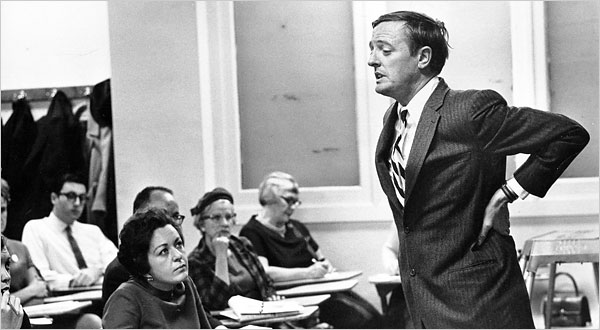
Before Mailer and Breslin tried to relocate to New York City’s Gracie Mansion, William F. Buckley made his own quixotic run for the mayor’s office for the Conservative Party. In these 1965 clips on NBC’s Meet the Press, Buckley discusses his candidacy.

Tags:

In my early Catholic grade-school years, I had to write a one-page book report, and I chose to do it on Dick Gregory’s autobiography, which had this title. That might not be seen as odd today–or perhaps it still is—but a tiny child in all-white school choosing that book was, shall we say, unusual. It was in no way a political statement on my behalf nor was I mischievously trying to use a bad word; I just thought it was an interesting book. (It was co-written by the excellent Robert Lipsyte, by the way.) My teacher, who didn’t need this shit, was uncomfortable. On the positive side: The priests never touched me. 

In this 1965 clip, Merv Griffin interviews the civil rights activist / stand-up comedian in the aftermath of the Watts riots.

Tags: , ,

Donald Trump: The shrimp scampi is divine.

Do you know who is better looking than Donald Trump? All the women whose looks the bovine builder mocks. Women like Katy Perry and Arianna Huffington and Kristen Stewart and Sarah Jessica Parker. The latter was recently ridiculed as “unsexy” by Trump because she thought little of the stupid and racist stunt whereby he offered $5 million if the President would release his brith certificate and college grades.

_____________________________

Donald J. Trump@realDonaldTrump

Sarah Jessica Parker voted “unsexiest woman alive” – I agree. She said “it’s beneath me to comment on the potential Obama charitable gift.” What’s really beneath her?

_____________________________

Of course, Parker is a very attractive person, unlike the hideous hotelier. But deeply ugly rich men, if they’re also very sexist, think their money gives them the right to insult the appearance of women even though they themselves are unsightly. What’s ugliest about Donald Trump, of course, is his abject bigotry and racism. And no amount of orange tanning cream can cover up that kind of mess.

But do you know what else was recently very ugly? The kitchen at DJT, Donald Trump’s Las Vegas steakhouse. It was closed for awhile this week because of a reported 51 health-code violations, which according to Forbes included the following:

  • no measures utilized to destroy parasites in undercooked halibut
  • the presence of expired yogurt
  • month-old caviar
  • duck dating back to June 
  • two-week-old tomato sauce
  • expired peanut dressing
  • an improperly functioning freezer

So, what exactly was on the menu at Donnie’s Vegas steakhouse this week?

The pasta primavera sure was tempting.

That green salad looked mighty good.

And let’s not forget the sirloin.

My compliments to the chef.

Tags: ,

One of the most colossally dumb things coming out of another tense week in the Middle East, regardless of how you feel about the politics involved, was the following statement from Israel Interior Minister Eli Yishai:

“The goal of the operation is to send Gaza back to the Middle Ages. Only then will Israel be calm for forty years.”

Yishai is obviously unconcerned about the humanitarian crisis such a scenario would create, but why, even for selfish reasons, would you  want your neighbor to be living in Medieval times? Who would choose to live next door to such conditions? You know, communities destabilized, backwards, weak and with little to lose. How will this lead to Israelis feeling secure for decades? 

I suppose his contention is that Palestinians without rockets will mean Israel can’t be targeted from the air, but do you know what people in the Middle Ages were really, really good at? Killing. A Gaza Strip that is modern, developed and upwardly mobile would probably be a safer alternative for all involved. I know comfortable, tech-friendly nations can devastate militarily and not always for warranted reasons–I live in one of them–but there should be as much to lose as possible on all sides. That would be safer for everyone.•

Tags:

Alexis Madrigal has an interesting article in the Atlantic about the data stream vs. anecdotal evidence divide of the recent Presidential election. An excerpt about Obama’s tech team:

“To really understand what happened behind the scenes at the Obama campaign, you need to know a little bit about its organizational structure. Tech was Harper Reed’s domain. ‘Digital’ was Joe Rospars’ kingdom; his team was composed of the people who sent you all those emails, designed some of the consumer-facing pieces of BarackObama.com, and ran the campaigns’ most-excellent accounts on Facebook, Twitter, Tumblr, video, and the like. Analytics was run by Dan Wagner, and those guys were responsible for coming up with ways of finding and targeting voters they could persuade or turn out. Jeremy Bird ran Field, the on-the-ground operations of organizing voters at the community level that many consider Obama’s secret sauce . The tech for the campaign was supposed to help the Field, Analytics, and Digital teams do their jobs better. Tech, in a campaign or at least this campaign or perhaps any successful campaign, has to play a supporting role. The goal was not to build a product. The goal was to reelect the President. As Reed put it, if the campaign were Moneyball, he wouldn’t be Billy Beane, he’d be ‘Google Boy.’

There’s one other interesting component to the campaign’s structure. And that’s the presence of two big tech vendors interfacing with the various teams — Blue State Digital and NGP Van. The most obvious is the firm that Rospars, Jascha Franklin-Hodge, and Clay Johnson co-founded, Blue State Digital. They’re the preeminent progressive digital agency, and a decent chunk — maybe 30 percent — of their business comes from providing technology to campaigns. Of course, BSD’s biggest client was the Obama campaign and has been for some time. BSD and Obama for America were and are so deeply enmeshed, it would be difficult to say where one ended and the other began. After all, both Goff and Rospars, the company’s principals, were paid staffers of the Obama campaign. And yet between 2008 and 2012, BSD was purchased by WPP, one of the largest ad agencies in the world. What had been an obviously progressive organization was now owned by a huge conglomerate and had clients that weren’t other Democratic politicians. 

One other thing to know about Rospars, specifically: ‘He’s the Karl Rove of the Internet,’ someone who knows him very well told me. What Rove was to direct mail — the undisputed king of the medium — Rospars is to email. He and Goff are the brains behind Obama’s unprecedented online fundraising efforts. They know what they were doing and had proven that time and again.”

Tags: , , , , ,

From financier Jeremy Grantham’s impassioned, new Nature article about the scary potential of climate change, which is rushing at us like Yeats’ sun, blank and pitiless:

“Then there is the impending shortage of two fertilizers: phosphorus (phosphate) and potassium (potash). These two elements cannot be made, cannot be substituted, are necessary to grow all life forms, and are mined and depleted. It’s a scary set of statements. Former Soviet states and Canada have more than 70% of the potash. Morocco has 85% of all high-grade phosphates. It is the most important quasi-monopoly in economic history.

What happens when these fertilizers run out is a question I can’t get satisfactorily answered and, believe me, I have tried. There seems to be only one conclusion: their use must be drastically reduced in the next 20–40 years or we will begin to starve.

The world’s blind spot when it comes to the fertilizer problem is seen also in the shocking lack of awareness on the part of governments and the public of the increasing damage to agriculture by climate change; for example, runs of extreme weather that have slashed grain harvests in the past few years. Recognition of the facts is delayed by the frankly brilliant propaganda and obfuscation delivered by energy interests that virtually own the US Congress. (It is not unlike the part played by the financial industry when investment bubbles start to form … but that, at least, is only money.) We need oil producers to leave 80% of proven reserves untapped to achieve a stable climate. As a former oil analyst, I can easily calculate oil companies’ enthusiasm to leave 80% of their value in the ground — absolutely nil.

The damaging effects of climate change are accelerating.” (Thanks Browser.)

Tags:

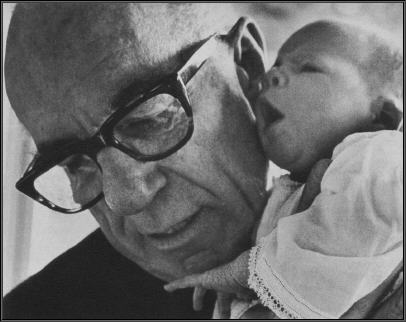
Dr. Benjamin Spock, the pediatrician who encouraged parents to be more affectionate to their children and protested the Vietnam War, is interviewed by Merv Griffin in 1966.

Tags: ,

Nate Silver, the erstwhile baseball numbers cruncher, who, from what I hear, now does political predictions, just completed a chat with readers at Deadspin. The opening follows.

______________________________________

Question: 

Will you be forecasting the 2014, and 2016 election?

Nate Silver:

As tempting as it might be to pull a Jim Brown/Sandy Koufax and just mic-drop/retire from elections forecasting, I expect that we’ll be making forecasts in 2014 and 2016. Midterm elections can be dreadfully boring, unfortunately. But the 2016 G.O.P. primary seems almost certain to be epic.

Question: 

Hypothetically, if the GOP presidential nom starts getting up big in the polls in 2016, do you fear a backlash from your most ardent supporters/fanbase?

Nate Silver:

We got a modest amount of this in 2010, where I’d get Tweets saying things like “When did Nate become a Republican?”

But I don’t want to make it sound as though the two sides are equal. It seems as though a higher percentage of conservatives are more inclined to question empirical methods, to put it diplomatically. 

Question:

Nate – Who gave the most ridiculous refutations of your work? Old school baseball guys, or GOP media a couple weeks ago? 

Nate Silver:

It’s MUCH worse in politics, I think:

1) People in sports will make lots of silly refutations of your arguments. But they do tend to deal with your arguments, rather than attack your character or your integrity.

2) A lot of people in politics operate in a “post-truth” worldview, whether they realize it or not. Less of that in sports.

3) In sports, scouts actually contribute a lot of value, even though statistics are highly useful as well. In politics, the pundits are completely useless at best, and probably harm democracy in their own small way.

Tags:

Donald Trump: The best argument yet for steep inheritance taxes.

In addition to being an unsightly, orange-headed goof who ridicules the looks of attractive women, Donald Trump is unintelligent, bigoted and delusional. A couple of examples. 

Cher recently poked fun at the racist, sexist buffoon, so he tweeted about her.

_______________________

Donald J. Trump ‏@realDonalTrump

.@cher should spend more time focusing on her family and dying career!

Donald J. Trump ‏@realDonaldTrump

.@cher–I don’t wear a “rug”—it’s mine. And I promise not to talk about your massive plastic surgeries that didn’t work.

_______________________

Hmm, what could “focusing on her family” mean? It would seem to be a potshot at Chaz Bono who was born female and had sexual-reassignment surgery. As if Chaz is transgender because of some failing of Cher as a mother. As if anyone who doesn’t fit into the so-called mainstream is somehow less of a person, an occasion to point fingers at a “culprit.” My assumption is that Chaz is more of a man that Donald Trump will ever be. And Donald Trump shouldn’t make make fun of anyone’s cosmetic surgeries. I’m pretty sure he’s the only one in his family with large, natural tits.

But Donald Trump isn’t only delusional about celebrity Twitter feuds. He also thinks he’s bright enough to fool someone about his campaign of bigotry against our first African-American President.

_______________________

Donald J. Trump ‏@realDonaldTrump

Why do so many people say I hate President Obama—I don’t hate the President at all. I just disagree with his policies!

_______________________

But, of course, no one is buying this bullshit. Demanding that the President provide his birth certificate (after he already had) is the Birther’s racist way of disqualifying Obama, saying that he is “other” and not “one of us.” It had nothing to do with policy. Repeatedly ordering Obama to release his school transcripts has nothing to do with policy. It’s a means to suggest that the President got where he is not by effort, talent and intelligence but because of Affirmative Action. It’s meant to demean him and diminish anyone African-American who achieves. (Donald Trump, who inherited money, land and connections from his father, is actually the one who received a head start in life that he didn’t deserve.) And saying that the President is “not smart” has nothing to do with policy.

Donald Trump pretending his hateful attacks on the President are about “policy” is just him trying to backtrack from his disgraceful behavior not because of remorse but because of expediency. He should not be allowed to do so.

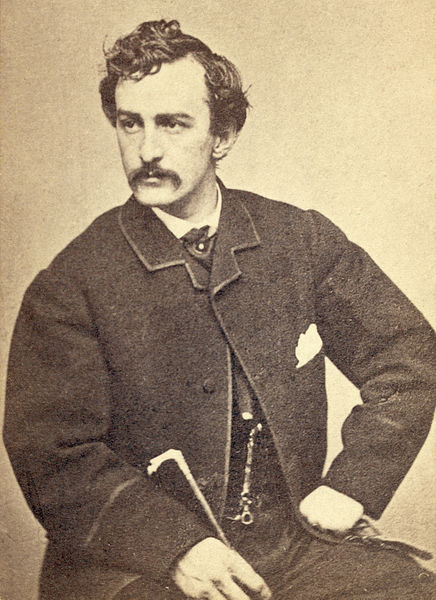
John Wilkes Booth: Why, I didn’t hate President Lincoln at all. We just debated in a theater balcony once.

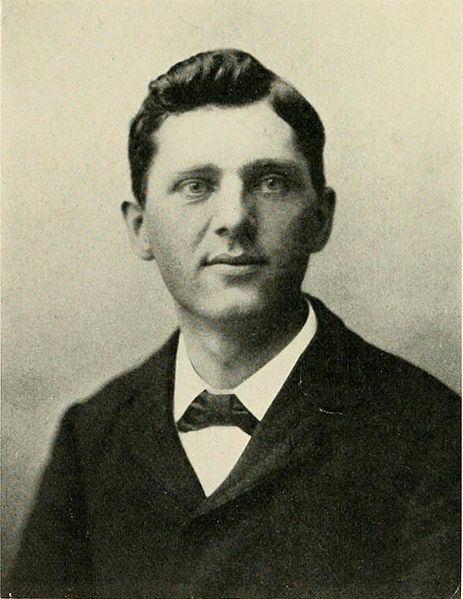
Leon Czolgosz: There was no dispute with President McKinley. I merely playfully rubbed his belly with my gun.

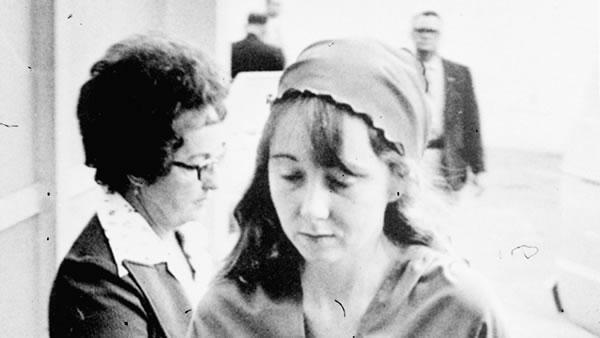
Squeaky: President Ford and I were tight. We were just horsing around.

Tags: ,

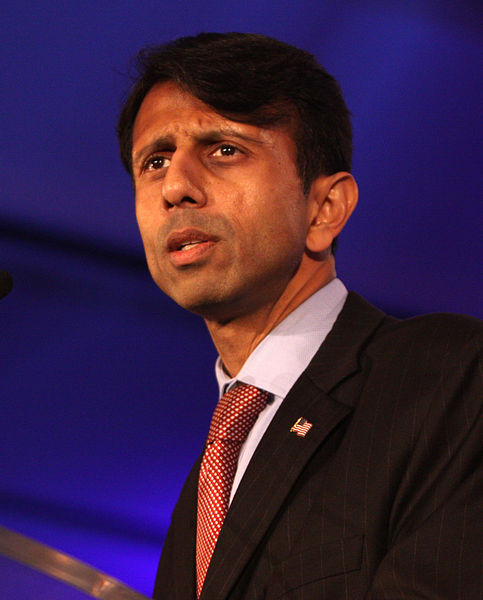
Bobby Jindal: Dumber than a box of hammers. (Image by Gage Skidmore.)

Watching the GOP sift through the wreckage of election night is a case study in selective amnesia. Karl Rove, whose party aggressively tried to suppress minority votes, accuses President Obama of voter suppression for running successful political ads. Joe Scarborough, a member of the delusional conservative media, is angry at the delusional conservative media. Stunningly, Newt Gingrich is one of the very few to show utter humility. Amazements never cease.

Louisiana Governor Bobby Jindal has gotten into the act, encouraging the Republican Party to stop being “stupid.” But this posture doesn’t cohere with some of his own positions as a creationist and supporter of intelligent design. Three excerpts follow.

From Politico: “‘It is no secret we had a number of Republicans damage our brand this year with offensive, bizarre comments — enough of that,’ Jindal said. ‘It’s not going to be the last time anyone says something stupid within our party, but it can’t be tolerated within our party. We’ve also had enough of this dumbed-down conservatism. We need to stop being simplistic, we need to trust the intelligence of the American people and we need to stop insulting the intelligence of the voters.'”

From Slate, 2012: “Jindal has an elite résumé. He was a biology major at my school, Brown University, and a Rhodes scholar. He knows the science, or at least he ought to. But in his rise to prominence in Louisiana, he made a bargain with the religious right and compromised science and science education for the children of his state. In fact, Jindal’s actions at one point persuaded leading scientific organizations, including the Society for Integrative and Comparative Biology, to cross New Orleans off their list of future meeting sites.”

From the New Orleans Times-Picayune, 2012: “Vouchers are supposed to rescue students from underperforming public schools and give them access to superior instruction. That will not always happen, it being the height of naivete to assume that private schools are necessarily better. But, thanks to Zack Kopplin, we know for certain that at least 19 of the schools receiving a public subsidy will deliver precisely the opposite of the advertised effect. Their graduates will be treated by employers and college administrators as pariahs.

That vouchers have led to this is hardly surprising. They are Gov. Bobby Jindal’s educational panacea, and he has always supported creationism.”

JC: Don’t take everything so literally, people.

Tags:

“Obama invoked average Americans living out this ethos of mutual responsibility.” (Image by David Shankbone.)

Where are the “job creators” right now? Probably eating freedom fries. As the language of manipulation has been drowned out by machines crunching raw data, it’s good to remember that some people in addition to Nate Silver were calling bullshit on the GOP narratives leading up to Election Day. One was New York magazine’s Jonathan Chait, who called out the wishful thinking being sold in earnest daily by Joe Scarborough and others. (It’s very amusing that Scarborough is now angrily calling out the lies of the conservative media, considering he was a big part of the problem.) Chait’s well-tuned ears also caught the gist of Obama’s victory speech which  might have been lost in the wee hours of the morning. From his new article, “We Just Had a Class War: And One Side Won“:

“Obama then proceeded to define the American idea in a way that excludes the makers-versus-takers conception of individual responsibility propounded by Paul Ryan and the tea party. Since Obama took office, angry men in Colonial garb or on Fox News have harped on ‘American exceptionalism,’ which boils our national virtue down to the freedom from having to subsidize some other sap’s health insurance. Obama turned this on its head. ‘What makes America exceptional,’ he announced, ‘are the bonds that hold together the most diverse nation on Earth. The belief that our destiny is shared; that this country only works when we accept certain obligations to one another and to future generations.’ Obama invoked average Americans living out this ethos of mutual responsibility (such as a ‘family business whose owners would rather cut their own pay than lay off their neighbors,’ the example of which stands at odds with the corporate ethos of a certain ­Boston-based private-equity executive). And even the line about red states and blue states began with the following statement: ‘We are greater than the sum of our individual ambitions.’

Presumably more was at work here than mere uplift. The president was establishing the meaning of his victory.”

Tags: , ,

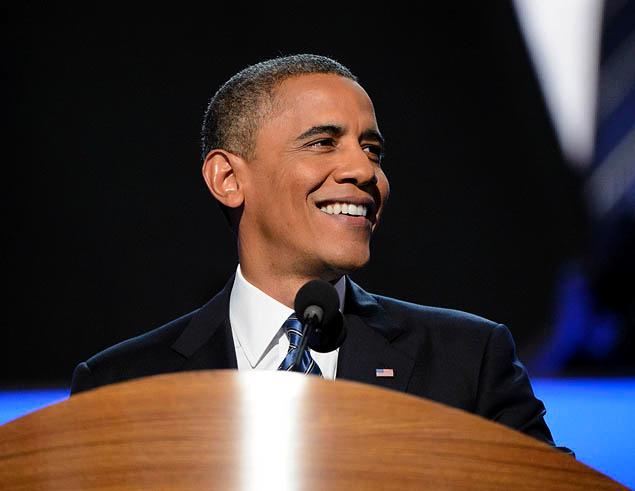
President Obama: Math is helpful.

  • If you are a Presidential candidate who does not have a TON of small donors, you are in trouble. Super PACS can provide a lot of organizational money, but citizens who give even $5 to a candidate are emotionally invested in the campaign and likely to turn out on Election Day. A top-heavy campaign is unlikely to succeed.
  • During the latter days of the election, even respected and sane pundits like Chuck Todd were sure that there was a huge enthusiasm gap that favored the GOP, that Romney’s supporters were much more likely to show up at the voting booth on November 6. I don’t have access to all the numbers Todd and others do, but I don’t doubt that they were reading the information correctly. Why, then, was the outcome contrary to this info? I think that no matter what people tell you during a phone survey, those excited about their own candidate are much more likely to turn out than those who don’t like the other party’s choice. Most times, we are voting for, not against.
  • No one again is getting elected to the Oval Office (in part) because Peggy Noonan wrote just the right nursery rhyme or Newt or Karl came up with the perfect bullshit phrase, not in this post-verbal, data-rich society. But no one should think that data mining is just another way to manipulate the citizenry. Data can’t control anything, not when every voter is potentially a fact-checker, when the media has become so diffuse. It can only let you know where your strengths are, what the best paths to take are. Data is vital, but it can only maximize your candidate, not make him or her.•

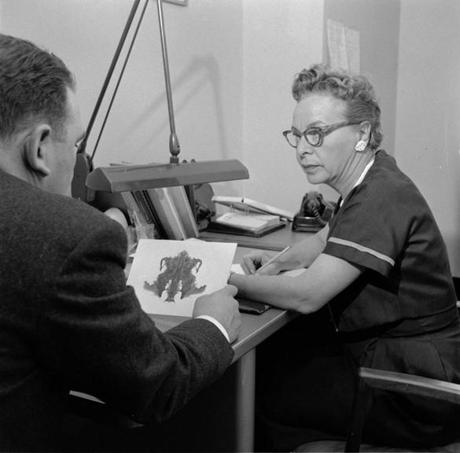
The opening of Kwame Anthony Appiah’s New York Review of Books piece about Rorschach readings of politics in the age of Obama:

“You know the joke. A psychiatrist shows a patient a series of inkblots. Each time, the patient sees an erotic episode. ‘You seem to be preoccupied with sex,’ the psychiatrist concludes. The patient protests: ‘You’re the one with all those dirty pictures.’ Ask people to read the inkblots of American political life and that result, too, is likely to tell you more about them than it does about what is really going on.

Jamie Barden, a psychologist at Howard University, ran an experiment that demonstrated this very nicely. Take a bunch of students, Republicans and Democrats, and tell them a story like this: a political fund-raiser named Mike has a serious car accident after a drunken fund-raising event. A month later he makes an impassioned appeal against drunk driving on the radio. Now ask them this question: Hypocrite or changed man?

It turned out that people (Democrats and Republicans both) were two and a half times as likely to think Mike was a hypocrite if they were told he belonged to the other party. This experiment only confirms a wide body of work in social psychology demonstrating that we’re biased against people we take to be members of a group that isn’t our own, more biased if we think of them as the opposition. That’s not something most of us needed a psychologist to tell us, of course. The news is not that we are biased, it’s how deeply biased we are.”

Tags:

Our society has gone from one that is verbally driven to one that is defined by algorithms, and politics is no exception. There was a time when Newt Gingrich and his ilk felt they could control the power if they could control the language. But it doesn’t work anymore. Data is king now. The opening of “Inside the Secret World Of the Data Crunchers Who Helped Obama Win,” by Michael Scherer at Time:

“In late spring, the backroom number crunchers who powered Barack Obama’s campaign to victory noticed that George Clooney had an almost gravitational tug on West Coast females ages 40 to 49. The women were far and away the single demographic group most likely to hand over cash, for a chance to dine in Hollywood with Clooney — and Obama.

So as they did with all the other data collected, stored and analyzed in the two-year drive for re-election, Obama’s top campaign aides decided to put this insight to use. They sought out an East Coast celebrity who had similar appeal among the same demographic, aiming to replicate the millions of dollars produced by the Clooney contest. ‘We were blessed with an overflowing menu of options, but we chose Sarah Jessica Parker,’ explains a senior campaign adviser. And so the next Dinner with Barack contest was born: a chance to eat at Parker’s West Village brownstone.

For the general public, there was no way to know that the idea for the Parker contest had come from a data-mining discovery about some supporters: affection for contests, small dinners and celebrity. But from the beginning, campaign manager Jim Messina had promised a totally different, metric-driven kind of campaign in which politics was the goal but political instincts might not be the means. ‘We are going to measure every single thing in this campaign,’ he said after taking the job. He hired an analytics department five times as large as that of the 2008 operation, with an official ‘chief scientist’ for the Chicago headquarters named Rayid Ghani, who in a previous life crunched huge data sets to, among other things, maximize the efficiency of supermarket sales promotions.

Exactly what that team of dozens of data crunchers was doing, however, was a closely held secret. ‘They are our nuclear codes,’ campaign spokesman Ben LaBolt would say when asked about the efforts. Around the office, data-mining experiments were given mysterious code names such as Narwhal and Dreamcatcher. The team even worked at a remove from the rest of the campaign staff, setting up shop in a windowless room at the north end of the vast headquarters office. The ‘scientists’ created regular briefings on their work for the President and top aides in the White House’s Roosevelt Room, but public details were in short supply as the campaign guarded what it believed to be its biggest institutional advantage over Mitt Romney’s campaign: its data.”

Tags: , , , ,

« Older entries § Newer entries »