
Before awakening from its dream of endless futurism and joining the reality of present-day global economic malaise, Abu Dhabi planned to outfit Masdar City with a fleet of driverless, electric pod cars to replace gas-guzzling taxis.
Ideas and technology and politics and journalism and history and humor and some other stuff.
You are currently browsing the archive for the Politics category.
Before awakening from its dream of endless futurism and joining the reality of present-day global economic malaise, Abu Dhabi planned to outfit Masdar City with a fleet of driverless, electric pod cars to replace gas-guzzling taxis.
I don’t agree with all of President Obama’s policies–I’m not happy about Gitmo still being open and a lack (thus far) of meaningful Wall Street reform–but I think in the big picture he’s done an excellent job, reversing the disastrous course the nation was on, and setting us up in many ways in the future to be healthier, fairer, more environmentally friendly, more scientifically savvy and more welcoming to minorities of all kinds. It’s even more impressive when you consider that he’s done so while dragging along the corpse of this dying iteration of the GOP.
And when I hear the remarks the President made at the White House on Friday in regard to the George Zimmerman trial, I tend to wonder whether there’s another person in the country quite like him, who has that ability to articulate such complex thoughts in such a measured and nuanced way. I’m sure they’re out there somewhere, but they don’t make it to the Oval Office very often. In moments like those on Friday, I’m pretty much awed.
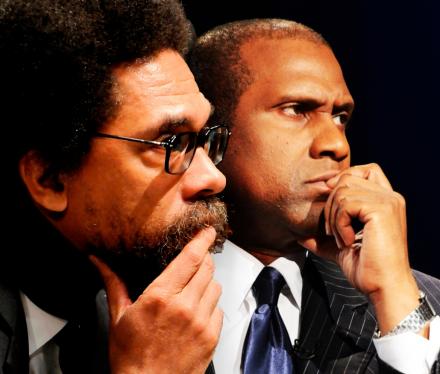
Of course, not everyone agrees. In addition to right-wingers accusing him of trying to start a race war, two people who’ve long dogged the President with criticism on almost every front (including this one) are the clownish tandem of Tavis Smiley and Cornel West. This pair has been on a for-profit, anti-Obama tour for years, and I don’t believe for a moment it has anything to do with policy. I think it’s all about ego and jealousy.
Smiley is self-styled champion of the worker and the impoverished whose well-appointed lifestyle is funded in part by generous support from Walmart, a corporation not exactly know for its worker-friendly ways. He responded to the President’s Trayvon Martin comments on Twitter and on Meet the Press.
________________________

Took POTUS almost a week to show up and express mild outrage. And still, it was as weak as pre-sweetened Kool-Aid.
________________________
Smiley may think President Obama’s words on the topic were “mild” or “weak,” but his own words about Walmart’s worker abuses are nonexistent. Unlike President Obama fighting for health-care reform while dealing with the political realities trying to stop that from happening, Smiley is impeded only by his own ambition and wants. No one who is poor will ever get health insurance because of Smiley. No one poor will ever have anything because of him. He is all talk and no action. He is a hypocrite.
West, that educated fool, who is in business (and cahoots) with Smiley, went even further. He continually grows his desperately needy and delusional cult of personality because he’s a narcissistic poseur who regards himself as the martyr of a cause–which turns out to be Cornel West’s outsized sense of himself. He and his pal want attention–and lots of it–or else.
From “I Want to Be Like Jesus,” Lisa Miller’s sharp 2012 New York magazine profile of West:
“Barack Obama and Cornel West first crossed paths in 2004, after Obama, then a senator from Illinois, spoke at the Democratic National Convention. In that speech, Obama called the United States of America ‘a magical place, a beacon of freedom and opportunity,’ and West went on television to debate the point. Americans have fought hard to earn and protect their freedoms, he said; magic has nothing to do with it. The senator phoned West, and the two men talked for four hours, especially about their mutual commitment to the dreams of Dr. King—’It was a wonderful conversation,’ West says. During the 2008 primaries, West stumped for Obama, making 65 appearances in half a dozen states, and he was in the room as Obama prepped to debate his Democratic rivals at Howard University. West had the candidate’s personal cell-phone number, and he left messages on it frequently. ‘I was calling him, not every day, but I did call him often, just prayed for him, prayed for his safety and that he’d do well in the debates and so on.’
But after Election Day, the man whose character and judgment West had so enthusiastically lauded at the Apollo never called to express his gratitude, and West found himself unable to procure tickets to the inauguration—something he desperately wanted to do for his mother. West was infuriated. Even now, when he talks about the break in their relations, West uses the language of a jilted lover. ‘One of the reasons I was personally upset is that I did not get a phone call, ever, after 65 events. It just struck me that it was not decent,’ West says to me. ‘I don’t roll like that. People would say, ‘Oh, West, you’ve got the biggest ego in the world. He ain’t got time to say nothing to you.’ I say, ‘Weeell, I’m not like that. I’m not like that. If somebody does something for you, you take time to say thank you.’’
West speculates that something scared the president-elect off. Perhaps, he says, it was his long friendship with the Reverend Jeremiah Wright, Obama’s problematical former pastor. “Jeremiah Wright is my brother,” says West, who was in the audience at the National Press Club, when Wright combusted in May 2008, refusing to repudiate the sermon in which he said “God damn America.” Or it might have been that Obama needed to distance himself from the “socialist” label that was dogging him. West himself suspects he was “too leftist.” He believes someone in Obama’s circle said, “We don’t want to get too close to this brother.’ (A senior official from the 2008 campaign insists that no one had any intention of shutting West out of the proceedings. ‘If something dropped there, that’s unfortunate. But whatever happened, that isn’t President Obama’s fault.’)
Despite his lack of access, West arrived in Washington with his mother and brother on Inauguration Day, wanting to participate in the historic event. As they were checking into their hotel, the Wests were astonished to find that their bellhop was luckier than they. “We drive into the hotel, and the guy who picks up my bags from the hotel has a ticket to the inauguration,” he told Truthdig. “We had to watch the thing in the hotel.” Later that day, West’s ruffled feathers were smoothed when he ran into Arianna Huffington and she invited the West brothers to join her at the Huffington Post party. Of all the celebrations that night, “that turned out to be the best one,” says West. Arianna let him pick a few people from the rope line, he says: friend of Obama’s John Rogers, and Michelle Obama’s brother Craig Robinson. Inside, West ran into his nemesis, Larry Summers. “I shook his hand. He looked like a skeleton. I said, ‘Congratulations, my brother.’ ”
West continues to insist that it’s the president’s policies, and not what he perceives as ingratitude, that motivates his critique. “
Tags: Barack Obama, Cornel West, Lisa Miller, Tavis Smiley


Many middle-aged white women in America have become increasingly addicted to OxyContin and other pain medications in the last decade. It hasn’t only spiked the number of overdoses in white women of a certain age, but it could possibly lead them to being accident-prone drivers or perhaps stealing to support their habit. And if they have trouble doctor-shopping, maybe they are buying street drugs which leads to a black market and violence.
Washington Post columnist Kathleen Parker is a white woman in that age group. She should be profiled not only by police who hope to reduce illicit drug purchases but also by armed civilians in cars who pursue her while she’s on foot. She is naturally a suspect because of how she looks. Perhaps those are just Skittles in her bag, but who knows? Maybe she’s wandering around your neighborhood looking for her dealer. According to Kathleen Parker’s reasoning, it’s just common sense that she be stopped and frisked, that other citizens must stand their ground.
From her latest column:
“The point is that this is one of those rare instances in which everyone is right within his or her own experience. African Americans are right to perceive that Martin was followed because he was black, but it is wrong to presume that recognizing a racial characteristic is necessarily racist. It has been established that several burglaries in Zimmerman’s neighborhood primarily involved young black males.
Picture Zimmerman’s neighbor Olivia Bertalan, a defense witness, hiding in her locked bedroom with her infant and a pair of rusty scissors while two young males, later identified as African American, burglarized her home. They ran when police arrived.
This is not to justify what subsequently transpired between Zimmerman and Martin but to cast a dispassionate eye on reality. And no, just because a few black youths caused trouble doesn’t mean all black youths should be viewed suspiciously. This is so obvious a truth that it shouldn’t need saying and yet, if we are honest, we know that human nature includes the accumulation of evolved biases based on experience and survival. In the courtroom, it’s called profiling. In the real world, it’s called common sense.”
Tags: Kathleen Parker
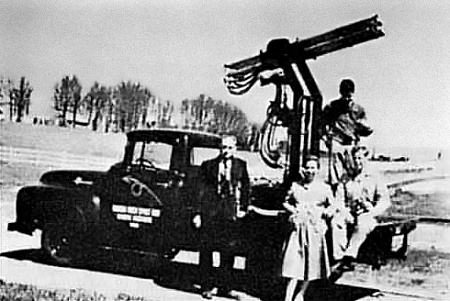
Wilhelm Reich, part-time cloudbuster and the likely inspiration for Woody Allen’s Orgasmatron, is the rich subject of a historical piece at Vice by Jason Louv. The opening:
“It was the greatest incidence of scientific persecution in American history.
In July of 1947, Dr. Wilhelm Reich—a brilliant but controversial psychoanalyst who had once been Freud’s most promising student, who had enraged the Nazis and the Stalinists as well as the psychoanalytic, medical, and scientific communities, who had survived two World Wars and fled to New York—was dying in a prison cell in Lewisberg, Pennsylvania, accused by the government of being a medical fraud engaged in a ‘sex racket.’
That ‘racket’ would one day be called the ‘sexual revolution.’ But it was still 1947 in America—an America not even ready for psychoanalysis, still a nascent science that Harper’s and the New Republic had categorized, right alongside Reich’s theories, as being no better than astrology. (Reich, Harper’s had decided, was the leader of a ‘new cult of sex and anarchy.’)
If the American public wasn’t ready for Dr. Freud, then how much less prepared would they be for Dr. Reich—a man who, at his Orgonon institute near Rangely, Maine, was researching the energetic force of the orgasm itself?
Reich had taken Freud’s theories far. Too far, according to the FDA. Starting with Freud’s connection of sexual repression to neurosis, Reich had theorized that it was the physical inability to surrender to orgasm that underlay neurosis, and eventually turned people to fascism and authoritarianism. Reich migrated from Freud’s simple talking cure to what he called character analysis, a therapy designed to help his patients overcome the physical and respiratory blocks that prevented them from experiencing pleasure. Finally—and most dangerously—he claimed that the orgasm was an expression of orgone, the joy-filled force of life itself. With phone-booth-size devices called ‘orgone accumulators’ he could harness this force to cure neurosis, disease, and even affect the weather and help crops grow.”
Tags: Jason Louv, Wilhelm Reich
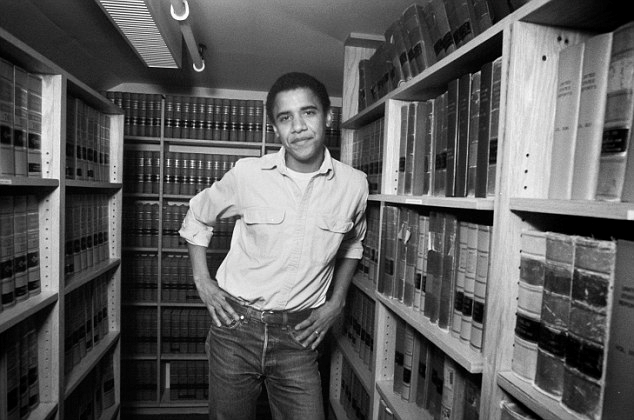
The opening of the first New York Times article about Barack Obama, in 1990, when he became the initial African-American president of the Harvard Law Review:
“The Harvard Law Review, generally considered the most prestigious in the country, elected the first black president in its 104-year history today. The job is considered the highest student position at Harvard Law School.
The new president of the Review is Barack Obama, a 28-year-old graduate of Columbia University who spent four years heading a community development program for poor blacks on Chicago’s South Side before enrolling in law school. His late father, Barack Obama, was a finance minister in Kenya and his mother, Ann Dunham, is an American anthropologist now doing fieldwork in Indonesia. Mr. Obama was born in Hawaii.
‘The fact that I’ve been elected shows a lot of progress,’ Mr. Obama said today in an interview. ‘It’s encouraging.
‘But it’s important that stories like mine aren’t used to say that everything is O.K. for blacks. You have to remember that for every one of me, there are hundreds or thousands of black students with at least equal talent who don’t get a chance,’ he said, alluding to poverty or growing up in a drug environment.”

In the aftermath of George Zimmerman being found not guilty for the murder of Trayvon Martin, you hear well-meaning people say that we shouldn’t let the court decision tear America apart along racial lines. But we’re already apart. Justice is segregated in America, with two very different systems. Whether it’s Stand Your Ground or Stop and Frisk, African-Americans, especially ones who are young and male, are suspects because of who they are. They’re often treated as perpertrators in search of a crime. You can’t legislate racism away, but racism should not be a part of the legislative process, a part of the judicial system. It may be worse in some places than others, but it’s not great anywhere. If you have a child with dark skin, you live in fear. And we’re all guilty of making that a reality, North and South, East and West, Jeb Bush and Michael Bloomberg, you and I.•
Tags: George Zimmerman, Trayvon Martin
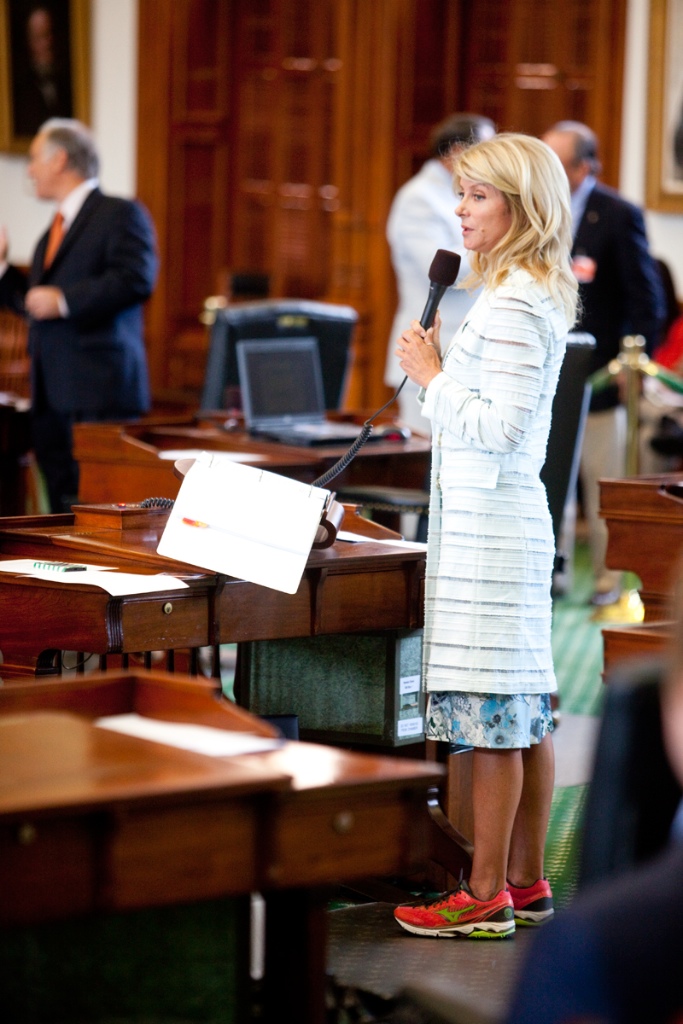
“There’s a mighty judgement coming, though I could be wrong,” sang the poet. The stars are aligning for just such a reckoning for the GOP over the next three years.
Back before the 2012 election, there were people who believed the Republican Congress would be more conciliatory toward President Obama if he won reelection, especially if he swept most of the swing states. Obama himself used that reasoning during the campaign, though I don’t know if he truly believed it. But things have only gotten worse. From immigration to voting rights to women’s rights, the GOP has been emboldened somehow to double down on antagonizing as many people as possible outside of their white, male base. They’ve learned nothing.
The party’s hold on Congress has largely been enabled by gerrymandering and not the will of the people. But it’s really only delayed the waterloo. If Hilary Clinton runs for President the next time around and wins the Democratic nomination, the demographics favor her so powerfully that it could be a devastating defeat for the Republicans. The way many female voters have been angered and the number of young Latinos who are aging into voting eligibility spells a doomsday scenario.
If you lose the large majority of the female, African-American, Latino, Asian American, Jewish, youth and LGBT votes, and you win a smaller portion of the white vote, that spells a rout that could sweep the GOP completely out of power. Of course, I could be wrong. A lot can change between now and then, but the Republicans have so far shown no ability or even desire to change,•
Tags: Barack Obama, Hillary Clinton
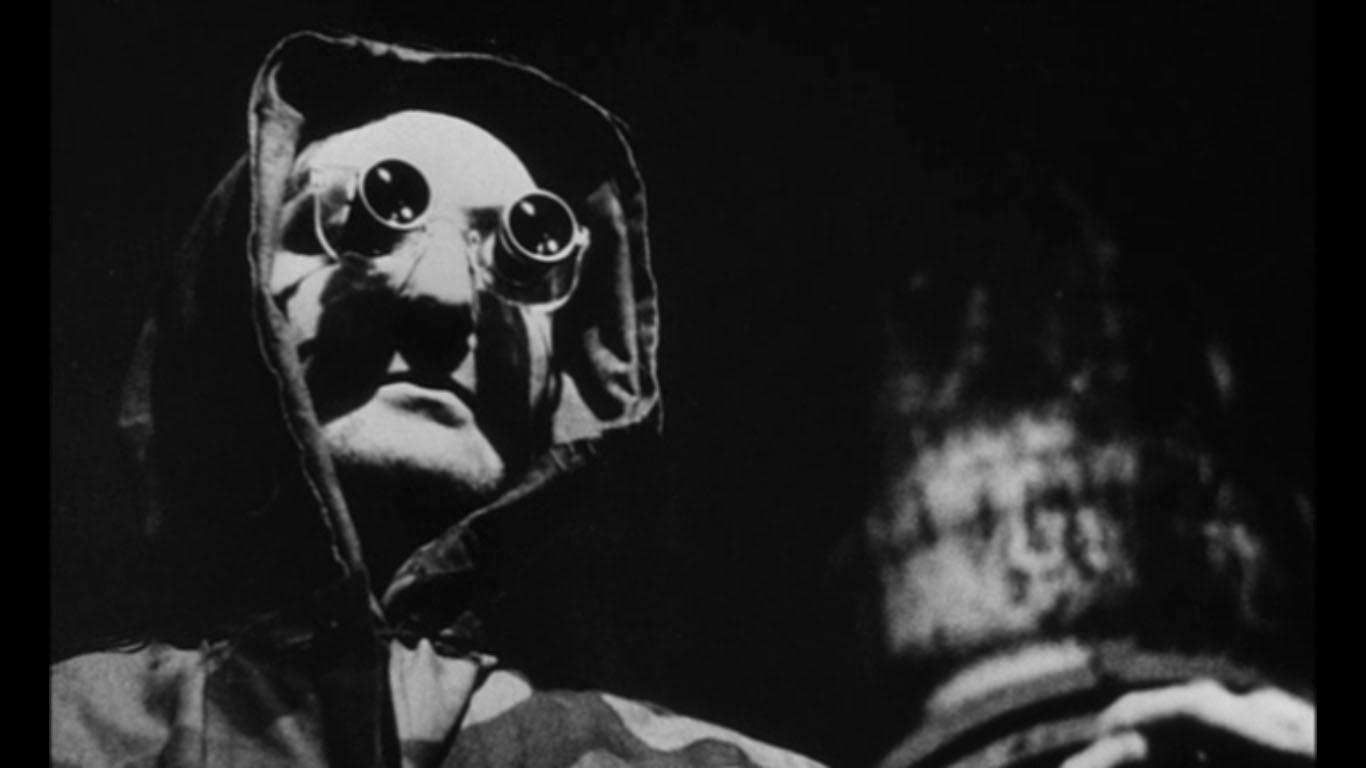
From an NPR report on David Brin, who predicted something like Google Glass long before there was a Google:
“‘What’s going to happen in the next 10 years is disruptions and disappointments that will cause people to be tempted to legislate against these things,’ Brin says. ‘The first impulse has to do with privacy.’ But, he says, regulation will never keep up with the speed of technological innovation, so by the time Google Glass gets regulated, Glass-type technology will be built into contact lenses, or into even more conspicuous devices.
So Brin says if wearable technology will allow for some segment of society, say, government, to ‘spy,’ then all of us should want and have the same technology available. Society, he says, should refrain from bans on Glass and similar technology so that everyone has a way to peer at everyone else, making the background knowledge we have of one another the normal rules of human engagement.
Brin wrote in 1988, ‘The world had a choice. Let governments control surveillance tech … and therefore give a snooping monopoly to the rich and powerful … or let everybody have it. Let everyone snoop on everyone else, including snooping the government!'”
Tags: David Brin

The opening of “The American Cloud,” Venkatesh Rao’s broad yet provocative Aeon essay which traces what he feels is the artifice of modern U.S. life–with costs cleverly hidden–not only to A&P founder George Gilman but all the way back to Alexander Hamilton:
“Every time you set foot in a Whole Foods store, you are stepping into one of the most carefully designed consumer experiences on the planet. Produce is stacked into black bins in order to accentuate its colour and freshness. Sale items peek out from custom-made crates, distressed to look as though they’ve just fallen off a farmer’s truck. Every detail in the store, from the font on a sign to a countertop’s wood finish, is designed to make you feel like you’re in a country market. Most of us take these faux-bucolic flourishes for granted, but shopping wasn’t always this way.
George Gilman’s early A&P stores are the spiritual ancestors of the Whole Foods experience. If you were a native of small-town America in the 1860s, walking into one of Gilman’s A&P stores was a serious culture shock. You would have stared agog at gaslit signage, advertising, tea in branded packages, and a cashier’s station shaped like a Chinese pagoda. You would have been forced to wrap your head around the idea of mail-order purchases.
Before Gilman, pre-industrial consumption was largely the unscripted consequence of localised, small-scale patterns of production. With the advent of A&P stores, consumerism began its 150-year journey from real farmers’ markets in small towns to fake farmers’ markets inside metropolitan grocery stores. Through the course of that journey, retailing would discover its natural psychological purpose: transforming the output of industrial-scale production into the human-scale experience we call shopping.
Gilman anticipated, by some 30 years, the fundamental contours of industrial-age selling. Both the high-end faux-naturalism of Whole Foods and the budget industrial starkness of Costco have their origins in the original A&P retail experience. The modern system of retail pioneered by Gilman — distant large-scale production facilities coupled with local human-scale consumption environments — was the first piece of what I’ve come to think of as the ‘American cloud’: the vast industrial back end of our lives that we access via a theatre of manufactured experiences. If distant tea and coffee plantations were the first modern clouds, A&P stores and mail-order catalogues were the first browsers and apps.”
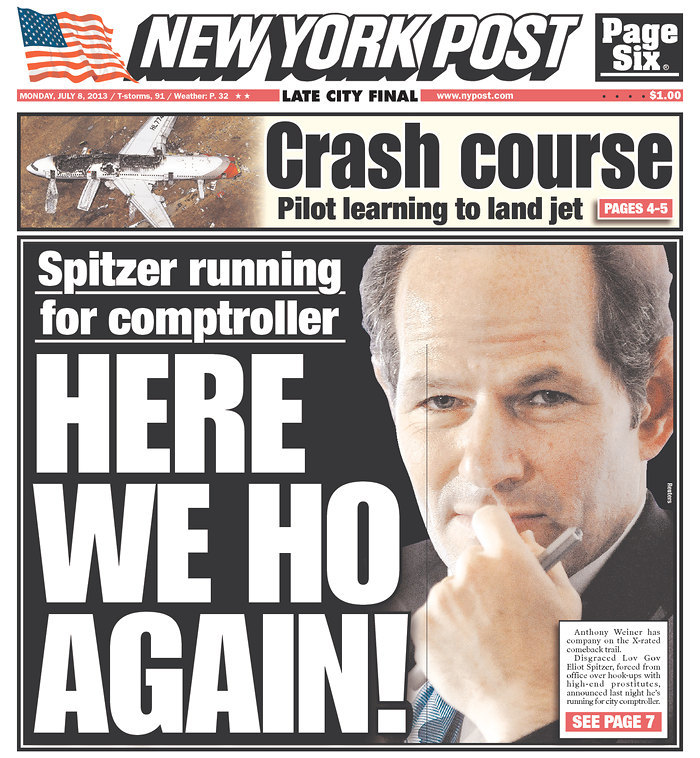
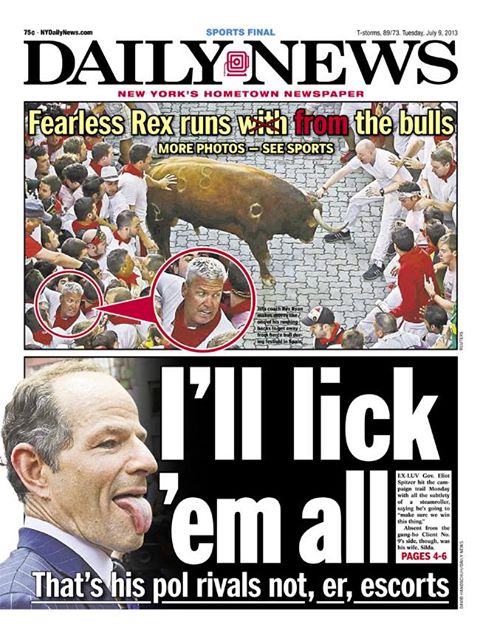
The futility of old media in our decentralized age can’t be better demonstrated than when New York City tabloids decide to attack a politician they don’t like and define an election–and no one cares. That’s been the case with Eliot Spitzer, who’s been excoriated by the New York Daily News and New York Post in the days since reentering politics, yet has been received fairly well by the electorate. He’s been torn down much more viciously than Anthony Weiner since the latter jumped into the Mayoral race, probably because Spitzer actually had sex during his sex scandal. From the Wall Street Journal:
“Former New York Gov. Eliot Spitzer leads Manhattan Borough President Scott Stringer by nine percentage points in the race for New York City comptroller, according to a Wall Street Journal-NBC 4 New York-Marist poll.
Michael Howard Saul reports on former New York governor Eliot Spitzer’s rise in the polls in the race for New York City Comptroller before Spitzer is even officially on the ballot.
Among registered Democrats, including those who are undecided but leaning toward a candidate, Mr. Spitzer outpaces Mr. Stringer 42% to 33% in the Democratic primary, the poll showed. Nearly a quarter of voters were undecided, but two-thirds of Democrats, or 67%, said they believe Mr. Spitzer, who resigned as governor five years ago after he was caught patronizing prostitutes, should be given a second chance.”
Tags: Eliot Spitzer
It’s understandable when people fret about jobs disappearing permanently into the steady hum of automation, but no one should ever think that the robotization of our culture can be halted. We shouldn’t look at it as a simple matter of choice any more that we could have chosen to stick with the horse and carriage rather than opting for the internal combustion engine. Choosing the better technology is human nature even when it hurts humans. (Or perhaps just hurts us in the short term.) From “The Wastefulness of Automation,” an interesting article by Frances Coppola at Pieria which worries about the future:
“What if capitalists DON’T want a large labour supply? What if automation means that what capitalists really want is a very small, highly skilled workforce to control the robots that do all the work? What if paying people enough to live on simply is not cost-effective compared to the running costs of robots? In short, what if the costs of automated production fall to virtually zero?
I don’t think I am dreaming this. I’ve noted previously that forcing down labour costs is one of the ways in which firms avoid the up-front costs of automation. But as automation becomes cheaper, and the efficiency gains from automation become larger, we may reach a situation where employing the majority of people at wages on which they can afford to live simply is not worthwhile. Robots can produce far more for far less.
This creates an interesting problem. The efficiency gains from automating production tend to create an abundance of products, which forces down prices. This sounds like a good thing: if goods and services are cheap and abundant, people can have whatever they want, can’t they? Well, not if they are unemployed and have no unearned income. It is all too easy to foresee a nightmare future in which people who have been supplanted by robots scratch out a living from subsistence farming on motorway verges (all other land being farmed by robots), while lorries carrying products they cannot afford to buy flash past on the way to the stores that only those lucky enough to have jobs frequent.
But it wouldn’t actually be like that.” (Thanks Browser.)
Tags: Frances Coppola
Our new technologies have enabled a neverending news cycle–more like a terminal sprint than a cycle, actually–that demands immediate response, that makes caution and patience seem like cowardice or obfuscation. The recent brouhaha about the IRS targeting Tea Party political groups was a scandal right before it was a non-story. That’s because no one waited for the facts. And conservative outlets and talking heads weren’t the only culprits–everyone caught the virus. The opening of Alex Seitz-Wald’s Salon piece on the topic:
“The first few days of the IRS scandal that would consume Washington for weeks went like this: Conservatives were indignant, the media was outraged, the president had to respond, his allies turned on him … and only then, the Treasury Department’s inspector general released the actual report that had sparked the whole controversy — in that order. It’s a fitting microcosm of the entire saga, which has gone from legacy-tarnishing catastrophe to historical footnote in the intervening six weeks, and a textbook example of how the scandal narrative can dominate Washington and cable news even when there is no actual scandal.
While the initial reports about the IRS targeting looked pretty bad, suggesting that agents singled out tax-exempt applications for Tea Party and conservative groups for extra scrutiny, the media badly bungled the controversy when supposedly sober journalists like Bob Woodward and Chuck Todd jumped to conclusions and assumed the worst from day one. Instead of doing more reporting to discover the true nature and context of the IRS targeting, or at least waiting for their colleagues to do some, the supposedly liberal mainstream press let their eagerness to show they could be just as tough on a Democratic White House as a Republican one get ahead of the facts. We expect politicians to stretch reality to fit a narrative, but the press should be better.
And they would have gotten away with it, too, had their narrative had the benefit of being true. But now, almost two months later, we know that in fact the IRS targeted lots of different kinds of groups, not just conservative ones; that the only organizations whose tax-exempt statuses were actually denied were progressive ones; that many of the targeted conservative groups legitimately crossed the line; that the IG’s report was limited to only Tea Party groups at congressional Republicans’request; and that the White House was in no way involved in the targeting and didn’t even know about it until shortly before the public did.”
Tags: Alex Seitz-Wald, Bob Woodward, Chuck Todd
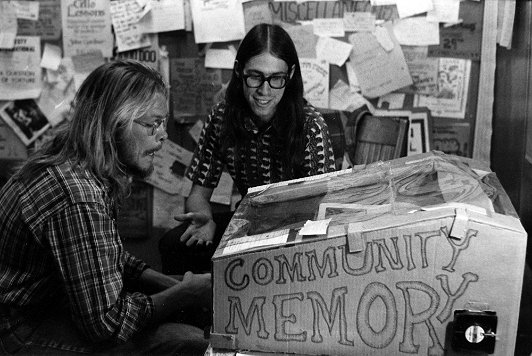
The above quote comes from an excellent WTF podcast interview that Marc Maron conducted with writer and theorist Douglas Rushkoff. I don’t agree with everything that Rushkoff has to say about technology, social media and economics, much of which comes from his new book, Present Shock, but all of it made me think. In addition to his remark about the offline migration of the very counterculture that was the early adapter of the Internet, the other point he made that interested me is that a society heavily dependent on robotics may not be compatible with traditional capitalism.
Tags: Douglas Rushkoff, Marc Maron

David Brancaccio, public radio and TV fixture and director of Fixing the Future, answered that nagging question about technology and jobs during an Ask Me Anything at Reddit. The exchange:
Tags: David Brancaccio
At least I never texted pictures of my cock.
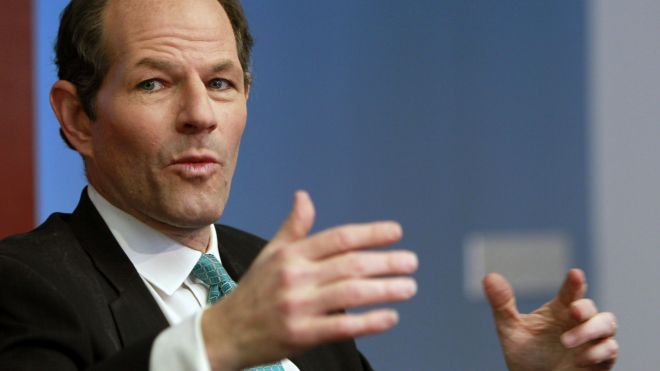
Remember when I suggested it would be interesting if Eliot Spitzer entered New York City’s lacklustre Mayoral race? Well, mothers lock up your daughters, because Spitzer is getting back into politics! Granted, he’s running for Comptroller, not Mayor, but it’s a start.
No, seriously, you really need to get your daughters out of harm’s way. This guy likes to choke hookers.
From the New York Times: “Eliot Spitzer, who resigned as governor of New York five years ago amid a prostitution scandal, is re-entering political life, with a run for the citywide office of comptroller and a wager that voters are ready to look past his previous misconduct.
Former Gov. Eliot Spitzer, hoping that voters have forgiven him his previous misconduct, will run for the citywide office of comptroller.
In a telephone interview on Sunday night, Mr. Spitzer, 54, sounding restless after an unwelcome hiatus from government, said he had re-envisioned the often-overlooked office and yearned to resurrect the kind of aggressive role he played as New York State’s attorney general. He said that after consulting with his family and taking the temperature of the city’s electorate, he believed New Yorkers would be open to his candidacy. ‘I’m hopeful there will be forgiveness, I am asking for it,’ he said.”
No, that was me.
Tags: Eliot Spitzer
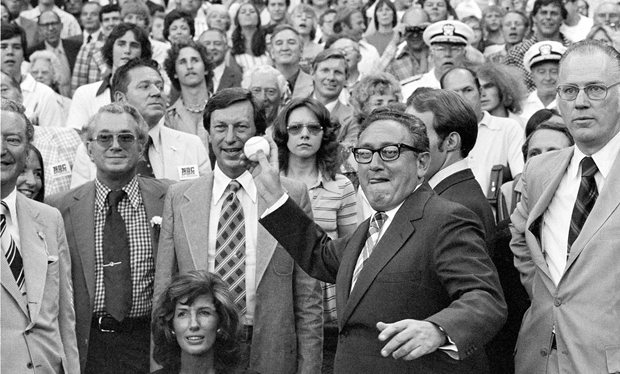
Like the first President he served, former Secretary of State Henry Kissinger became quite a baseball junkie, especially in his post-Washington career. At the 15:40 mark of this episode of The Baseball of World of Joe Garagiola, we see Kissinger, who could only seem competent when standing alongside that block of wood Bowie Kuhn, being honored at Fenway Park before the second game of the sensational 1975 World Series. During the raucous run by the raffish New York Mets in the second half of 1980s, both Nixon and Kissinger became mainstays at Shea Stadium. Nixon was known to send congratulatory personal notes to the players, including Darryl Strawberry. It was criminals rooting for criminals.
Tags: Darryl Strawberry, Henry Kissinger, Joe Garagiola, Richard M. Nixon, Tony Kubek

From Sam Lipsyte’s Financial Times piece about our almost reflexive complicity with those entities that would spy on us–that are spying on us:
“A newspaper story on June 24 reported that Edward Snowden’s decision to flee Hong Kong, made over a dinner of pizza, fried chicken and Pepsi (how can you doubt his patriotism?), came after learning that, whatever the final outcome of his predicament, he might be spending a lot of time in a jail cell without a computer. This, apparently, was the deal-breaker. He could take life in a box but couldn’t imagine his life not plugged into one.
We can all probably relate, though I’ve been corresponding with a prisoner in America who has no access to computers but receives journals and magazines and books through the mail. He is doing a long stretch and is a voracious reader of contemporary fiction. I guess he’s got the time, but his handwritten letters are full of subtle insights about recent novels and short stories. It’s quite refreshing.
People on the outside involved with literary publishing talk mostly about advances, or the dearth of decent ones, or what qualities to look for in an agent. This guy wants to discuss a George Saunders short story. I certainly would not wish his situation on anyone, or, at least, not on most people. But it’s important to remember there are other technologies (such as Gutenberg’s) that can pull you through in a pinch.
Decades ago there was a clever Saturday Night Live short film called ‘Prose and Cons’ – ‘directed by Norman Mailer,’ the credits read – about a prison where every convict typed away at a novel as the warden boasted of the ‘sterling literary tradition’ of his institution. The film also featured an early appearance by Eddie Murphy’s street poet Tyrone Green (‘C-I-L-L my landlord’).
Somebody asked me recently if I ever fantasised about being in prison so I could be left alone to write. My one experience behind bars lasted only three days, and maybe it’s different in long-term facilities, but I can assure you the Manhattan Detention Centre, also known as The Tombs, is no writing colony. The noise alone would drive you crazy.”
*****
Tyrone Green + Terry “Big Sky” McDonell + Irving “Swifty” Lazar:
Tags: Sam Lipsyte, Swifty Lazar, Terry McDonell
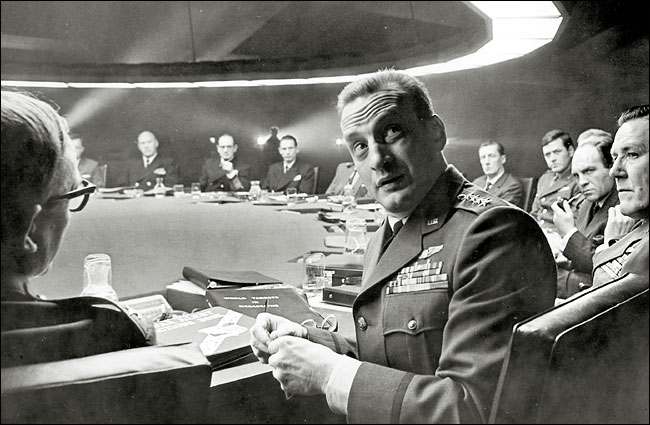
The Great Comedian once said this: “Gentleman, you can’t fight in here…this is the War Room,” the absurdity crystallizing everything within shouting distance. The modern equivalent might be this: “We know that you’re spying on us, because our spies told us.”
In the wake of the NSA leaks by Edward Snowden, a man so outraged by surveillance that he relocated to Russia, few people in this country or any country have dealt with our new reality very honestly. Everyone is spying on everyone, from individuals to corporations to governments. It’s only going to grow more prevalent. And if everybody is guilty, nobody is guilty.
Within a week of French President François Hollande deriding the U.S. for spying, Le Monde printed an expose implicating France for similar behavior. From Steve Erlanger in the New York Times:
“PARIS — Days after President François Hollande sternly told the United States to stop spying on its allies, the newspaper Le Monde disclosed on Thursday that France has its own large program of data collection, which sweeps up nearly all the data transmissions, including telephone calls, e-mails and social media activity, that come in and out of France.
Le Monde reported that the General Directorate for External Security does the same kind of data collection as the American National Security Agency and the British GCHQ, but does so without clear legal authority.
The system is run with ‘complete discretion, at the margins of legality and outside all serious control,’ the newspaper said, describing it as ‘a-legal.’
Nonetheless, the French data is available to the various police and security agencies of France, the newspaper reported, and the data is stored for an indeterminate period. The main interest of the agency, the paper said, is to trace who is talking to whom, when and from where and for how long, rather than in listening in to random conversations. But the French also record data from large American networks like Google and Facebook, the newspaper said.”

In a new London Review of Books essay, Slavoj Žižek, that holy fool, counters the idea that recent global unrest and mass protests are isolated incidents, though his definitions of the Occupy movement and capitalism may vary from yours. An excerpt:
“In 2011, when protests were erupting across Europe and the Middle East, many insisted that they shouldn’t be treated as instances of a single global movement. Instead, they argued, each was a response to a specific situation. In Egypt, the protesters wanted what in other countries the Occupy movement was protesting against: ‘freedom’ and ‘democracy’. Even among Muslim countries, there were crucial differences: the Arab Spring in Egypt was a protest against a corrupt authoritarian pro-Western regime; the Green Revolution in Iran that began in 2009 was against authoritarian Islamism. It is easy to see how such a particularisation of protest appeals to defenders of the status quo: there is no threat against the global order as such, just a series of separate local problems.
Global capitalism is a complex process which affects different countries in different ways. What unites the protests, for all their multifariousness, is that they are all reactions against different facets of capitalist globalisation. The general tendency of today’s global capitalism is towards further expansion of the market, creeping enclosure of public space, reduction of public services (healthcare, education, culture), and increasingly authoritarian political power. It is in this context that Greeks are protesting against the rule of international financial capital and their own c.orrupt and inefficient state, which is less and less able to provide basic social services. It is in this context too that Turks are protesting against the commercialisation of public space and against religious authoritarianism; that Egyptians are protesting against a regime supported by the Western powers; that Iranians are protesting against corruption and religious fundamentalism, and so on. None of these protests can be reduced to a single issue. They all deal with a specific combination of at least two issues, one economic (from corruption to inefficiency to capitalism itself), the other politico-ideological (from the demand for democracy to the demand that conventional multi-party democracy be overthrown). The same holds for the Occupy movement. Beneath the profusion of (often confused) statements, the movement had two basic features: first, discontent with capitalism as a system, not just with its particular local corruptions; second, an awareness that the institutionalised form of representative multi-party democracy is not equipped to fight capitalist excess, i.e. democracy has to be reinvented.
Just because the underlying cause of the protests is global capitalism, that doesn’t mean the only solution is directly to overthrow it. Nor is it viable to pursue the pragmatic alternative, which is to deal with individual problems and wait for a radical transformation. That ignores the fact that global capitalism is necessarily inconsistent: market freedom goes hand in hand with US support for its own farmers; preaching democracy goes hand in hand with supporting Saudi Arabia. This inconsistency opens up a space for political intervention: wherever the global capitalist system is forced to violate its own rules, there is an opportunity to insist that it follow those rules. To demand consistency at strategically selected points where the system cannot afford to be consistent is to put pressure on the entire system. The art of politics lies in making particular demands which, while thoroughly realistic, strike at the core of hegemonic ideology and imply much more radical change. Such demands, while feasible and legitimate, are de facto impossible. Obama’s proposal for universal healthcare was such a case, which is why reactions to it were so violent.”
Tags: Slavoj Žižek
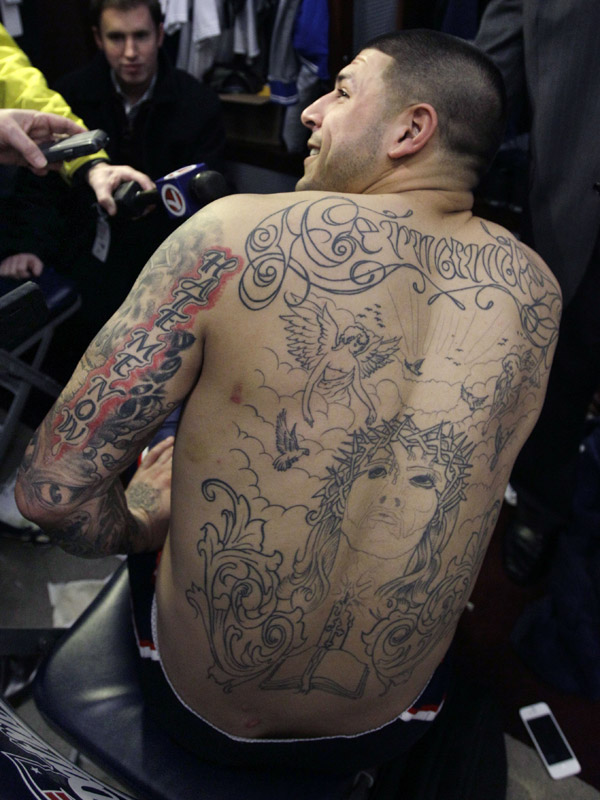
Is there a bigger hack in American journalism than Jason Whitlock? A well-compensated Foxsports.com columnist, Whitlock is an awful thinker and writer, given to jaw-dropping generalizations and lazy connections which don’t cohere. In his latest piece, about the Aaron Hernandez murder case, he throws a grab bag of societal ills at the NFL star’s behavior, hoping some of the shit will stick. He blames Hernandez’s criminality on the American penal society, the war on drugs, gangster rap, and, um, reality TV and the Sopranos. It’s not that I favor widespread incarceration or the prohibition of drugs, and you couldn’t pay me to watch any so-called real housewives, but this article is an example of a dull hammer treating every last thing in its reach like a nail. It’s stupid beyond belief.
Oh, and since the beginning of all this pop culture he derides, the U.S. crime rate has actually seen a marked decrease. But facts don’t get in the way of a Whitlock narrative–nothing of intelligence does. An excerpt from his brain droppings:
“This is what a 40-year drug war, mass incarceration, a steady stream of Mafia movies, three decades of gangster rap and two decades of reality TV have wrought: athletes who covet the rebellious and marketable gangster persona.
Hernandez is the most extreme example. He apparently moonlighted as a professional football player while perfecting his role as Christopher Moltisanti, Tony Soprano’s boneheaded nephew.
But we should not be shocked that a professional athlete possibly crossed the line into sociopathic killer. The unhealthy side effects of drug prohibition and popular culture have made murderous drug dealers respected members of American society. Random, murderous violence and the people who commit those crimes have been normalized in America, thanks in large part to popular culture.
We all loved and respected Tony Soprano. This is why James Gandolfini’s death was such a big story. We did not know Gandolfini. We knew Tony. To some degree, we all wanted to be Big T.
I am not surprised to learn that a 23-year-old professional athlete covered in tattoos is linked to several violent acts, including ‘accidently’ shooting a man in the face. Modern athletes carry guns. They do drugs. They mimic rappers and gangster pop-culture icons.
Athletes want street cred, and they costume themselves in whatever is necessary to get it. Nike, Reebok, Adidas, etc., were the first to recognize the importance of authentic street cred when it came selling product to American youth.
There was a financial incentive for Allen Iverson not to evolve beyond his Tupac Shakur imitation.
It was only a matter of time before some athlete was accused of imitating Tony Soprano. The gangster influence in our society is that strong.”
Tags: Aaron Hernandez, Jason Whitlock
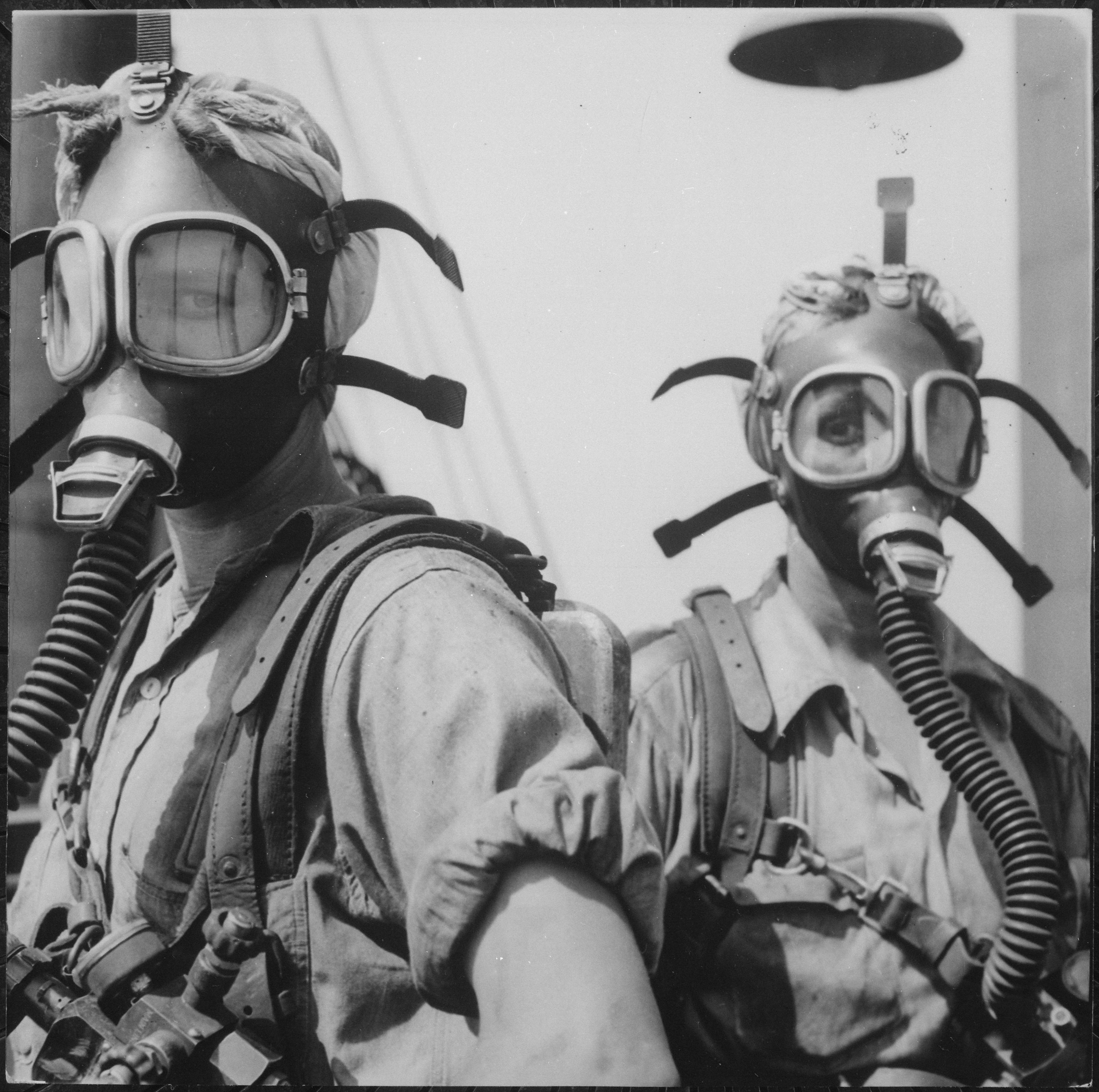
I couldn’t disagree more with Robert J. Samuelson’s opinion piece in the Washington Post which states that the Internet isn’t worth the downside it brought, that its benefits have been meager, but he is right to be concerned about the potential of cyber warfare. So much depended on the red wheelbarrow, and now so much depends on the Internet. An excerpt from his WaPo piece:
“By cyberwarfare, I mean the capacity of groups — whether nations or not — to attack, disrupt and possibly destroy the institutions and networks that underpin everyday life. These would be power grids, pipelines, communication and financial systems, business record-keeping and supply-chain operations, railroads and airlines, databases of all types (from hospitals to government agencies). The list runs on. So much depends on the Internet that its vulnerability to sabotage invites doomsday visions of the breakdown of order and trust.
In a report, the Defense Science Board, an advisory group to the Pentagon, acknowledged ‘staggering losses’ of information involving weapons design and combat methods to hackers (not identified, but probably Chinese). In the future, hackers might disarm military units. ‘U.S. guns, missiles and bombs may not fire, or may be directed against our own troops,’ the report said. It also painted a specter of social chaos from a full-scale cyberassault. There would be ‘no electricity, money, communications, TV, radio or fuel (electrically pumped). In a short time, food and medicine distribution systems would be ineffective.’
I don’t know the odds of this technological Armageddon. I doubt anyone does.”
Tags: Robert J. Samuelson
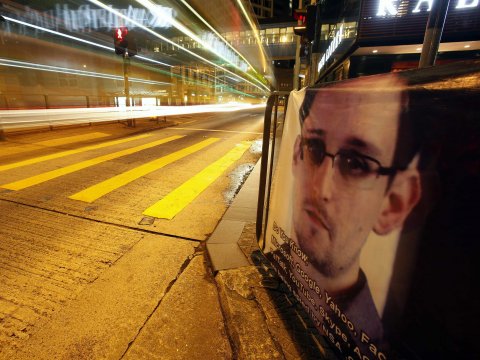
Emily Bazelon, who writes about judicial issues at Slate, just did an Ask Me Anything at Reddit. Some exchanges below about the NSA scandal, the Voting Right Act rewrite and journalism.
_________________________
Question:
Given the limitations on what can be revealed about the usefulness of information obtained by the the NSA, do you think we’ll ever really know if Snowden did the right thing?
I’m torn between respecting that he believes he was revealing something we all needed to know and thinking he revealed nothing we didn’t already know and, as a result, violated his obligations for nothing.
Emily Bazelon:
I think Snowden did the right thing bec I think we’re better off knowing what he has revealed. I know the govt says he has seriously damaged nat’l security, but the revelations are broad enough that it’s hard for me to credit that claim. I guess I just wonder how many serious terrorists were using these major social media and web sites. That said, I agree that it will take years to know how to think of Snowden as a historical figure. Will he be remembered as an irresponsible maverick, or as someone w Daniel Ellsberg’s stature? In his own moment, Ellsberg was villified and faced serious charges. Those were thrown out bec the Nixon administration overreached. I wonder if we’d think of Ellsberg with respect now if he’d become a convicted criminal. I don’t think the US has much of a tradition of respecting people who go to prison.
_________________________
Question:
Concerning the mining of people’s personal information, isn’t the NSA openly doing what a ton of other corporations and other Governments are already doing? Further, when individuals have willingly given out their personal information, is it an outside entity’s fault for obtaining information that individuals so willingly give?
Emily Bazelon:
The NSA yes is mining data that corporations mine, ie the tech cos. But the tech cos can’t charge us with crimes, right? So for the govt to do it is different. The potential for abuse is higher. I think there’s a distinction here about types of info and what ppl put out publicly v. what they have a reasonable expectation of privacy for. It’s one thing to assume that anything you post on twitter or FB is public. I think that’s the wise approach to take. But your email inbox? I think most of us assume that what we are writing on gmail, etc, is not available for public consumption.
_________________________
Question:
Unlike “literacy tests,” voter-ID laws appear to be applied uniformly across the population in states where they are used. Does this make them okay, or just incrementally less bad than the bad old days?
Emily Bazelon:
Not OK, because they have a disproportionate effect on depressing turnout and registration among young voters, and the elderly, and poor ppl, which means also a disproportionate effect on minorities. And they’re purpose seems suspect to me, since the voter fraud they are supposed to stop so very rarely happens.
I just don’t believe in making it harder for ppl to vote. We don’t have high rates of voting as it is in the US! We should make the polls as accessible as possible without opening ourself to a lot of fraud. And if you think about it, in-person fraud is an incredibly inefficient way to influence an election. Person by person? that’s why no one does it.
_________________________
Question:
It seems everyday there are announcements of layoffs in big journalistic outlets, and the ones that are succeeding (The Atlantic, HuffPo) basically do so off free content. Will journalism still be a profession in 5 years? What will it look like?
Emily Bazelon:
It will be more of what it is now–a tiered system in which there are stars who get paid a lot, and SOME working journalists in the middle, and then more and more unpaid or low-paid jobs, as you say. It’s a paradox: lots of ppl willing to write for free, esp opinion, and fewer places willing to pay for the reporting that’s the backbone of it all.
Tags: Emily Bazelon
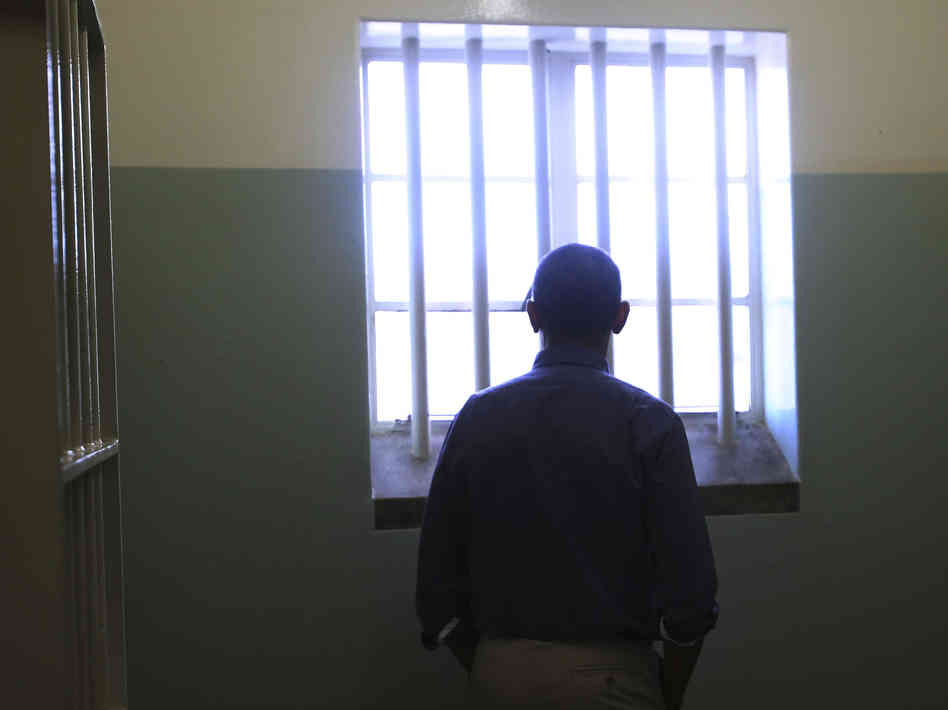
The opening of Edward Luce’s Financial Times critique of what he believes is President Obama’s non-engagement with the African continent and its growing economies:
“History does not repeat itself but it sometimes rhymes. The fact that Barack Obama’s first real presidential trip to Africa coincides with the could never have been scripted. It is an eerily moving moment. America’s first black president enters the stage just as South Africa’s first black president is taking a bow. No one should doubt Mr Obama when he describes the great freedom fighter as his ‘personal hero.’
And yet Africans could be forgiven for wondering how long Mr Obama’s renewed interest in Africa will last. Having spent a total of 20 hours on the continent in his first term – on a 2009 stopover in Ghana – Mr Obama’s six-day tour is meant to underline a new phase in US-Africa relations. The age of foreign aid is passing, say US officials. Seven out of 10 of the world’s fastest growing economies are in Africa. Yet it is China – and increasingly Turkey, India and Brazil – that is reaping the new investment opportunities. Now is Mr Obama’s chance to put that to rights.
Mr Obama’s style of doing business, and particularly his diplomacy, does not lend much confidence that his interest will be sustained. With the exception of China, where his engagement has been intensive, Mr Obama’s standard approach is to touch down, give a great speech, proclaim lofty goals, then move on.“
Tags: Barack Obama, Edward Luce
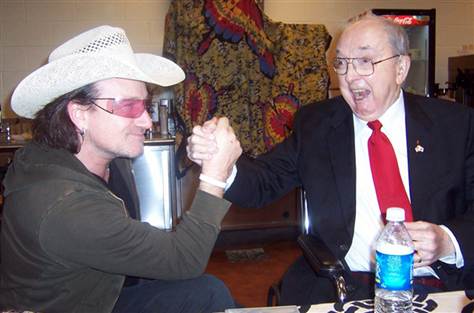
You have to rationalize a lot if you’re going to be Bono. You have to make allowances. You can’t nitpick. You need to embrace scoundrels as well as the sainted. You actually have to convince yourself that the scoundrels have a saint within them. You must believe in large corporations–even own a stake in some–that don’t treat the downtrodden particularly well, the very downtrodden you say you stand with. It’s a tangled web you weave. You look at it as playing the inside game to try to improve the world, making small sacrifices to benefit the big picture.
But Harry Browne, in The Frontman, his excoriation of U2’s lead singer, looks at it differently. From Terry Eagleton in the Guardian:
“One result of his campaigning has been a kind of starvation chic. In this impressively well-researched polemic, Browne recounts how Ali Hewson, Bono’s wife, praised the work of her company’s Paris-based clothes designer for being influenced by dusty African landscapes. She admired ‘the way some of the clothes look like they’ve been worn before and sort of restitched … to incorporate the continent, in a sense.’ Hewson’s Messianic husband, or ‘the little twat with the big heart.’ as Viz magazine once dubbed him, has been trying to incorporate Africa into his image for a good few decades now. Like Geldof, he inherited the social conscience of the 1960s without its political radicalism, which is why he has proved so convenient a front man for the neo-liberals.
In fact, as Browne points out, he has cosied up to racists such as Jesse Helms, whitewashed architects of the Iraqi adventure such as Tony Blair and Paul Wolfowitz, and discovered a soulmate in the shock-doctrine economist Jeffrey Sachs. He has also brownnosed the Queen, sucked up to the Israelis, grovelled at the feet of corporate bullies and allied himself with rightwing anti-condom US evangelicals in Africa. The man who seems to flash a peace sign every four seconds apparently has no problem with the sponsorship of the arms corporation BAE. His consistent mistake has been to regard these powers as essentially benign, and to see no fundamental conflict of interests between their own priorities and the needs of the poor. They just need to be sweet-talked by a charmingly bestubbled Celt. Though he has undoubtedly done some good in the world, as this book readily acknowledges, a fair bit of it has been as much pro-Bono as pro bono republico.
If Bono really knew the history of his own people, he would be aware that the Great Irish Famine of the 1840s was not the result of a food shortage. Famines rarely are. There were plenty of crops in the country, but they had to be exported to pay the landlords’ rents. There was also enough food in Britain at the time to feed Ireland several times over. What turned a crisis into a catastrophe was the free market doctrine for which the U2 front man is so ardent an apologist. Widespread hunger is the result of predatory social systems, a fact that Bono’s depoliticising language of humanitarianism serves to conceal.
Browne’s case is simple but devastating.” (Thanks Browser.)
Tags: Bono, Harry Browne, Paul Hewson, Terry Eagleton
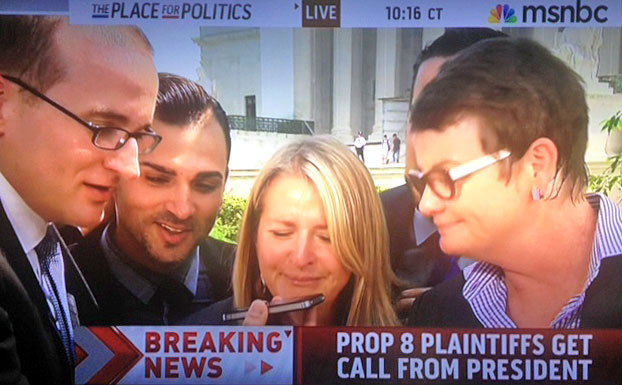
The Defense of Marriage Act was thankfully struck down.
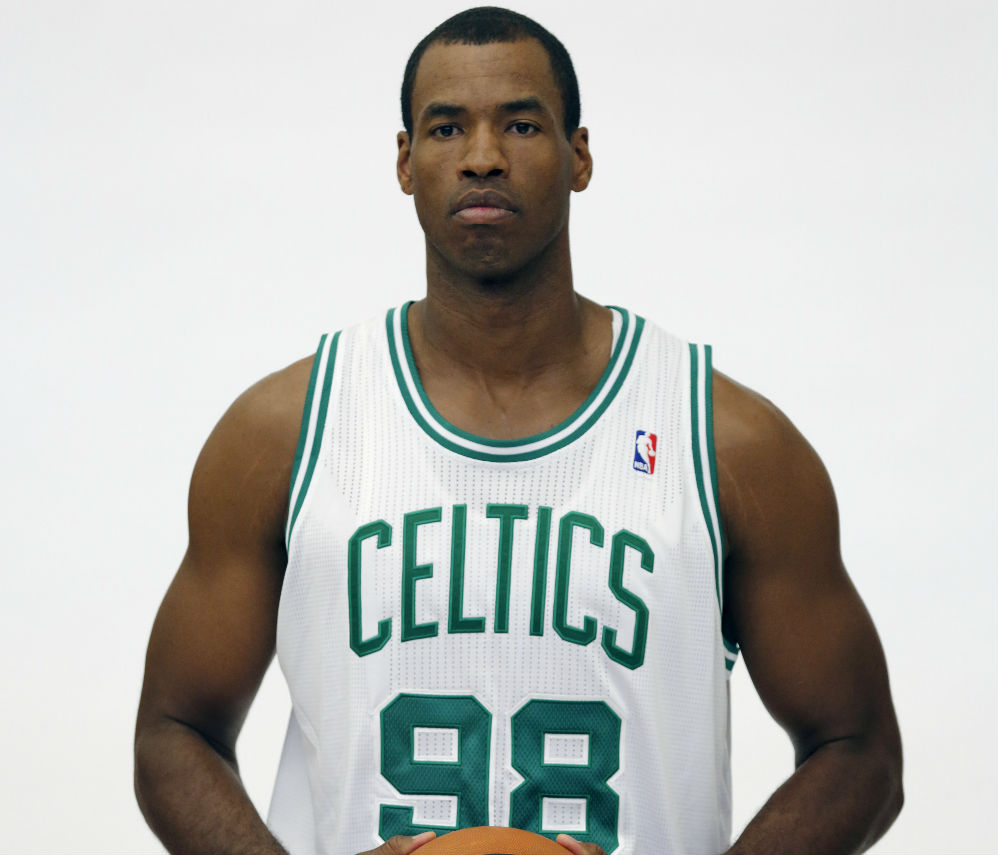
An NBA player bravely came out.
And Queer Cinema has never been more popular.
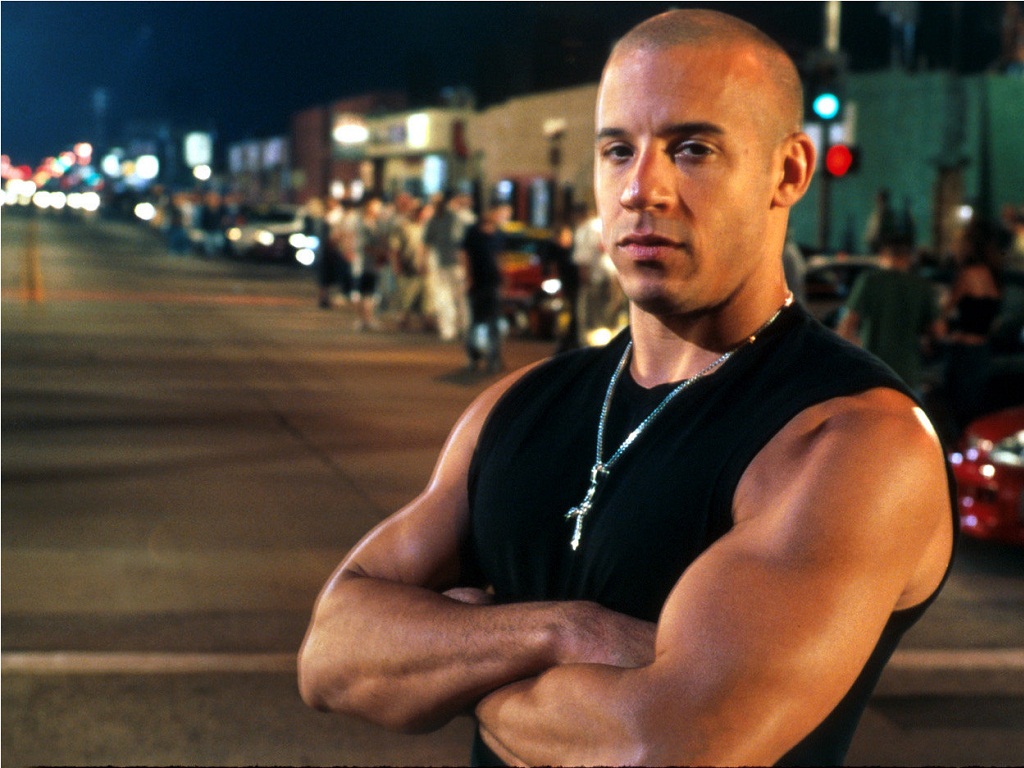
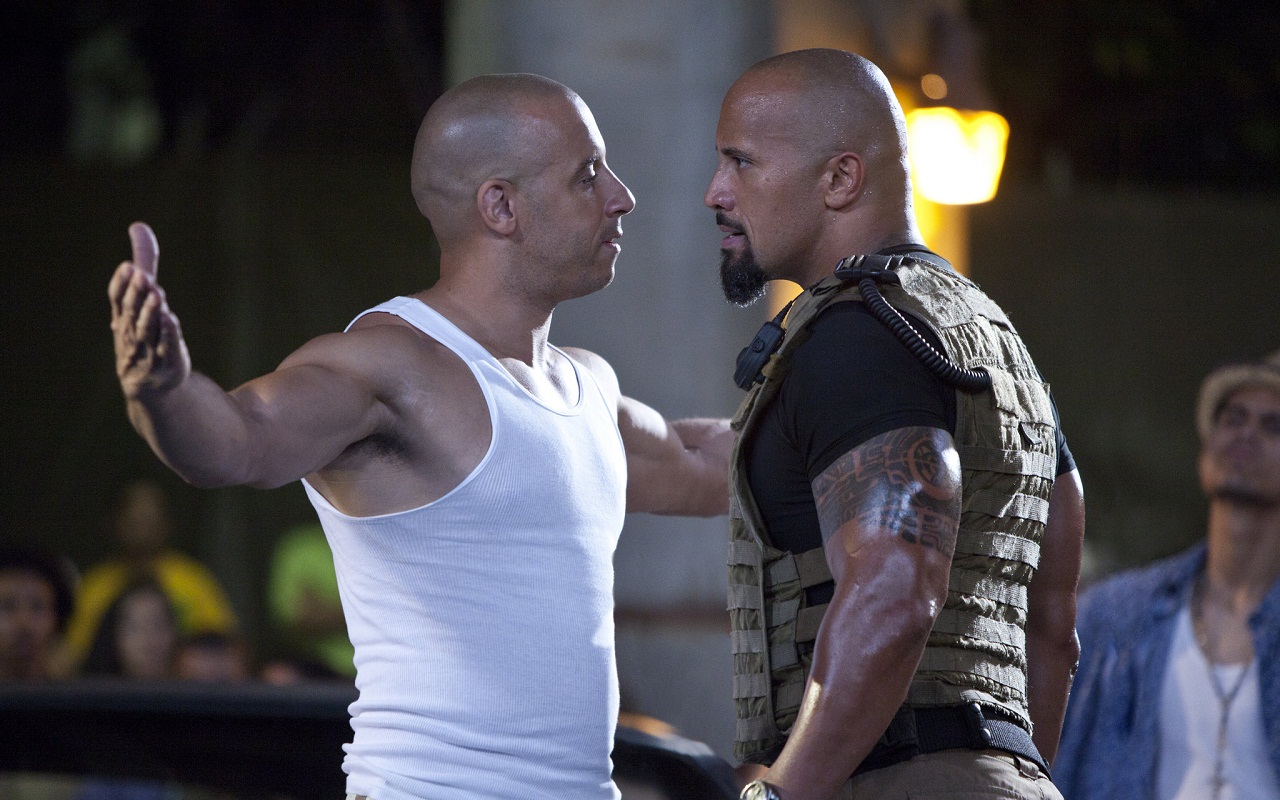
The Fast and the Furious movies aren’t that obvious, are they?

They make Behind the Candelabra look like American Pie.
I mentioned that I like pussy, right?