Politics

You are currently browsing the archive for the Politics category.

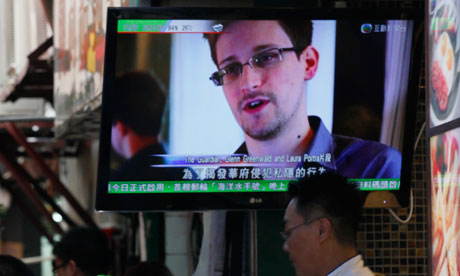
As I pointed out on Sunday, Edward Snowden placed himself in a whole different category when he accepted refuge in Russia. If you hate spying and surveillance, you just don’t do it. Beyond the principal of the thing, there are practical matters. From spy novelist Alex Berenson in the New York Times:

“Faced with the prospect of decades in prison, Mr. Snowden panicked. Instead of waiting for the territory or its masters in Beijing to decide his fate, he packed his laptops and headed for Moscow. Now he gets to see a soft dictatorship (such a lovely phrase) up close. On Sunday, the willful naïfs from WikiLeaks who are ‘helping’ Mr. Snowden said that Sheremetyevo airport would simply be a stopover. But why would the Russian government let him go before it has squeezed him dry? In interviews, Mr. Snowden has said he has plenty of secrets left on his hard drives, and there’s no reason to doubt him. He has already disclosed details of American and British spying on a conference in 2009 in London.

Mr. Snowden has put himself in a terrible spot. Moscow will surely protect him for as long as it feels like irritating Washington. But by the time the Russians are finished sifting through his laptops, he’ll be their spy, whether or not he meant to be. Beijing may have already pulled the same trick; some intelligence officers believe that Chinese spy agencies copied Mr. Snowden’s hard drives during his Hong Kong stay.”

Tags: ,

Harvard Law professor and Bloomberg columnist Noah Feldman just did an Ask Me Anything on Reddit to help untangle the meaning of this week’s landmark Supreme Court decisions on the Voting Rights Act and DOMA. A few exchanges follow.

____________________________

Question:

In your opinion what will congress do in regard to the voting rights act & make it whole again or will we continue to see red states suppress the vote. 

Noah Feldman:

Hard to imagine the politics that would allow for a new VRA coverage definition.

____________________________

Question: 

Justice Antonin Scalia, reading from his dissent, said, “The error in both springs from the same diseased root: an exalted notion of the role of this Court in American democratic society.” 

He also said, “In my view a perfectly valid justification for this statute is contained in its title: the Defense of Marriage Act.” 

This second quote makes it plain that Scalia’s understanding of marriage adopts the Biblical premise that it should be between one man and one women. It seems conservative thought in general on this issue shares the same diseased root: that somehow the language of the constitution should be interpreted from a Christian perspective.

What happened to separation of church and state? How can a supreme court justice in 2013 get away with making so many outrageous and purposefully inflammatory statements?

Noah Feldman:

Well, strictly speaking the Bible contemplates marriage between one man and several women, but we will pass over that. Short answer is that the justices can say whatever they like! The Ct once said we are a Christian nation.

____________________________

Question:

Will gay couples be included in the immigration reform bill after the rulings today? 

Noah Feldman:

Yes if their marriage is legally recognized in a state that recognizes same-sex marriage.

____________________________

Question:

Will the court ever decide to legalize gay marriage or will it always be a state choice?

Noah Feldman: 

I would guess they will eventually have to — perhaps 3 to 5 years depending on the progress of the litigation and of course the composition of the Court.•

Tags: ,

Big Data as applied to terrorism (and more banal matters) is useful because it provides predictive behavior patterns without spending time and resources on locating the cause of the behavior. But should we abandon cause and just be concerned with potential effect? From Evgeny Morozov at Slate:

The end of theory, which Chris Anderson predicted in Wired a few years ago, has reached the intelligence community: Just like Google doesn’t need to know why some sites get more links from other sites—securing a better place on its search results as a result—the spies do not need to know why some people behave like terrorists. Acting like a terrorist is good enough.

As the media academic Mark Andrejevic points out in Infoglut, his new book on the political implications of information overload, there is an immense—but mostly invisible—cost to the embrace of Big Data by the intelligence community (and by just about everyone else in both the public and private sectors). That cost is the devaluation of individual and institutional comprehension, epitomized by our reluctance to investigate the causes of actions and jump straight to dealing with their consequences. But, argues Andrejevic, while Google can afford to be ignorant, public institutions cannot. 

‘If the imperative of data mining is to continue to gather more data about everything,’ he writes, ‘its promise is to put this data to work, not necessarily to make sense of it. Indeed, the goal of both data mining and predictive analytics is to generate useful patterns that are far beyond the ability of the human mind to detect or even explain.’ In other words, we don’t need to inquire why things are the way they are as long as we can affect them to be the way we want them to be. This is rather unfortunate. The abandonment of comprehension as a useful public policy goal would make serious political reforms impossible.

Forget terrorism for a moment. Take more mundane crime. Why does crime happen? Well, you might say that it’s because youths don’t have jobs. Or you might say that’s because the doors of our buildings are not fortified enough. Given some limited funds to spend, you can either create yet another national employment program or you can equip houses with even better cameras, sensors, and locks. What should you do?

If you’re a technocratic manager, the answer is easy: Embrace the cheapest option.”

Tags:

I haven’t really looked at Edward Snowden as hero or villain from the beginning of the NSA leak controversy. Just a cog in a new machine that American media and citizenry can’t seem to fully comprehend–the machine we’re all living in now. Privacy as we knew it–for individuals, corporations and government–has been permanently left in the past. Everybody’s watching everybody, and it will only get easier to spy. And to use one of President Obama’s favorite phrases, this would be a really good time for a teachable moment, for a frank discussion about the way our society is now, how some things have disappeared into the cloud.

But when you take temporary refuge in Russia, as Snowden has, with that country’s brutal and murderous recent history of oppression of journalists and surveillance of its own citizens, you’ve pretty much permanently ceded the moral high ground.•

Tags:

A lot of Americans seemed to not be aware until the Snowden leak case that the government is spying on us–and that we’re spying on the government. The realization caused the Amazon sales rank of George Orwell’s 1984 to surge. Of course, Amazon was collecting information about you with each order and if you purchased the Kindle version of the book about spying overlords, you were potentially setting up a trail of info that could incriminate you. The opening of Nick Harkaway’s article on the topic at Future Book:

I’m quoted in the Guardian’s piece on Joyland and filesharing today, and on the basis that if you’re here at all it’s because you’re prepared to let me flesh out some ideas, that’s what I’m going to do. In the words of George Cyril Wellbeloved: ‘I expect you’re wondering what I think about all this.’

‘All this,’ incidentally, is a new system which apparently alters the text of ebooks in order to trace whose copy has been copied without consent.

In the first place, I think the notion of a book which is reconfigured to provide a chain of evidence in a civil proceeding against the reader is repellant. I think that is in the most perfectly Teutonic sense an un-book. Books should not spy on you. I’m fascinated by Kobo’s remarkable ability to track readers’ progress through an ebook, and the commercial side of me really wants that information. But the civil liberties thinker in me hates that the facility exists and loathes the fact that people aren’t entirely clear on how much they’re telling the system about themselves. It really unsettles me. This is far worse: the deliberate creation of an engine of observation inside the text of the book. It stinks

Tags: ,

From a fascinating, brief portrait by Andrew E. Kramer of the New York Times of a space-age city in decline, a remnant of the collapsed Soviet Union that maintains vital importance as one of two active space-launch sites in the world:

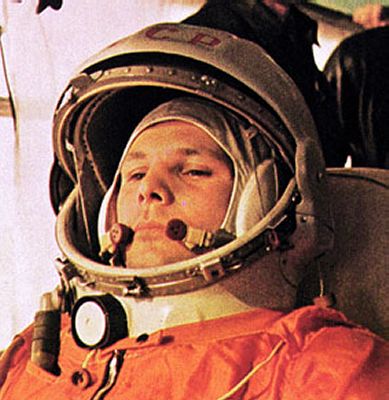
“Baikonur, in remote western Kazakhstan, was once the pride of the Soviet Union, the home of the Baikonur Cosmodrome, the launching site of Sputnik, the dog Laika and the first man in space, Yuri Gagarin. But today, nomadic herders from the nearby steppe are moving into abandoned buildings.

That is just one of the signs of the city’s long fade into the sunset of post-Soviet social and economic problems, which are all the more remarkable given that much of the world, including the United States, still relies on Baikonur for manned space launchings. The only other site for such liftoffs is in Jiuquan, in the Gobi Desert in China.

‘It’s painful for me to think of my town,’ Anna Khodakovskaya, the editor of the local newspaper, said of its glum state. The first cellphones appeared here in 2004; the first M.R.I. machine in 2011. ‘We are not ahead of the planet in anything but space,’ she said.”

•••••

A video about Laika, the first animal to orbit Earth. She did not have a happy return like Ham the AstroChimp.

Tags: ,

Two Q&As about our leaker culture, in this time when no one–and no entity–is truly private: Edward Snowden taking questions from Guardian readers, and Russell Brand explaining at Gawker why he’s been speaking in support of Bradley Manning.

__________________________

From Snowden’s Guardian interview, moderated by Glenn Greenwald:

Question:

US officials say terrorists already altering TTPs because of your leaks, & calling you traitor. Respond?

Edward Snowden:

US officials say this every time there’s a public discussion that could limit their authority. US officials also provide misleading or directly false assertions about the value of these programs, as they did just recently with the Zazi case, which court documents clearly show was not unveiled by PRISM.

Journalists should ask a specific question: since these programs began operation shortly after September 11th, how many terrorist attacks were prevented SOLELY by information derived from this suspicion-less surveillance that could not be gained via any other source? Then ask how many individual communications were ingested to achieve that, and ask yourself if it was worth it. Bathtub falls and police officers kill more Americans than terrorism, yet we’ve been asked to sacrifice our most sacred rights for fear of falling victim to it.

Further, it’s important to bear in mind I’m being called a traitor by men like former Vice President Dick Cheney. This is a man who gave us the warrantless wiretapping scheme as a kind of atrocity warm-up on the way to deceitfully engineering a conflict that has killed over 4,400 and maimed nearly 32,000 Americans, as well as leaving over 100,000 Iraqis dead. Being called a traitor by Dick Cheney is the highest honor you can give an American, and the more panicked talk we hear from people like him, Feinstein, and King, the better off we all are. If they had taught a class on how to be the kind of citizen Dick Cheney worries about, I would have finished high school.

__________________________

From Gawker‘s Brand interview, conducted by Camille Dodero:

Gawker:

Why are you talking about Bradley Manning on your birthday?

Russell Brand:

I don’t know a great deal about international espionage, but sometimes one senses that an issue is drifting in a certain direction, and just by speaking out in a small way, you can make a subtle difference on that perception. Some people have made their mind up no matter what: “Bradley Manning is a traitor because of revealing classified information.” It’s very difficult to impact those people. W.B. Yeats said, The best lack all conviction, while the worst/Are full of passionate intensity. But it might be nice, if I, from my gentle position—bouncing around on the Left elegantly and Englishly—suggest that it doesn’t seem like this person is acting particularly out of self-interest, but rather [Manning] was motivated out of a different kind of patriotism: a genuine love of the people of this country and concern for the people.

Gawker:

So what’s your realistic expectation when you lend your name to a campaign like this?

Russell Brand:

That you’ll get a a degree of abuse from people who are intrinsically opposed. The best you can do is draw the attention of people who are otherwise unsure or curious.

The culture has been expertly constructed so that what’s now regarded as esoteric information is everything except for stuff that directly concerns Kim Kardashian. So everything other than that, you might as well be speaking Aristotle in Greek. For me, I live, to a degree, in popular culture. So if I say, “Oh, that Bradley Manning seems that he was really trying his best to expose information he thought was important to American people regarding what was being done in their name,” all I’m hoping is that people who would otherwise entirely ignore it may have a flickering awareness, and some who would have had a flickering awareness would investigate further.•


Tags: , , , ,

Politics is often about massaging your message to make it seem palatable to whatever group you happen to be speaking to at that moment. Sen Rand Paul of Kentucky, a severe ideologue, is certainly not the only one to practice this artifice. But his recent comment about his distrust of democracy at Howard University is one of the more egregious, perplexing examples of the pivot I have ever heard. Here’s what he said:

“I’m not a firm believer in democracy. It gave us Jim Crow.”

So, he wants an African-American audience to believe that his disgust of institutionalized segregation is the reason why popular opinion shouldn’t always prevail. 

Let’s leave alone the fact that the South at the time wasn’t exactly known for its democracy, with its poll taxes and intimidation at voting booths. Let’s just present an equally true statement based on Paul’s avowed beliefs about the Civil Rights Act:

“I’m not a firm believer in democracy. It forced the South to abandon Jim Crow.”

He’ll probably find an audience for that line as well.•


Tags:

Jennifer Valentino-DeVries, who co-authored the “What They Know” series about surveillance for the Wall Street Journal, just did an Ask Me Anything at Reddit. A few exchanges follow.

___________________________

Question:

I’m as frustrated as anybody with what the government is doing. But i also know we need to be vigilant in trying to track and find out what real terrorists are doing. How can we strike the right balance between privacy and fighting against terrorism?

Jennifer Valentino-DeVries:

I might end up giving this answer a lot. But I think transparency is the key first step.

We can’t, as a society, decide if we agree with something if we don’t even know what that “something” is.

A couple senators on the Intelligence committee have been saying for some time, rather loudly, that there is a “secret interpretation of the law” that should worry us all. Turns out that secret legal interpretation is what allows this massive gathering of phone record information and so forth.

Those senators had been asking to have the legal reasoning be declassified, but they weren’t able to effect that change.

To me, if you can’t even declassify the way our own laws are being interpreted, that’s a huge question for our system. That’s not about protecting troop movements or activities. It’s about whether we as citizens get to know what the law says.

___________________________

Question:

Who else is watching me, besides the NSA? What are they doing with my information?

Jennifer Valentino-DeVries:

It depends on who you are and what you mean by “watching.”But I’ll just tackle this broadly.Your data can be gathered with incredible ease. For the most part, the folks doing this are the companies who are providing you the services. Google, for example, sifts through Gmail to show you ads. As you know, the phone companies can get a lot of information about the “metadata” from your calls.Depending on the type of data and who is gathering it, some of it gets sent to companies called data brokers. These guys (Acxiom, for example, or Lexis Nexis) store a lot of data about you from private sources as well as public databases, like court and real estate records.

Right now, in terms of corporate tracking, this is done mostly to show advertising. But it’s also done to identify good customers and tell marketers about who desirable customers are.

I myself like getting targeted ads. The concern comes if companies are doing this to alter prices, especially for sensitive categories such as insurance. My fellow reporters and I had a story about this type of thing in December.

As for government tracking, law enforcement has the ability to track people pursuant to several authorities.

To get content (what you’re actually saying), they get a Title III wiretap warrant, which requires probable cause as well as minimization of extraneous content and other things.

Law enforcement also can get things like email metadata pursuant to a lesser court order, which requires going before a judge and showing “specific and articulable facts.”

The lowest type of court order, called a “pen register trap and trace” order, provides things like phone metadata. For that, investigators just have to show that it’s relevant to an ongoing investigation. They aren’t supposed to use that authority to track you.

___________________________

Question:

How concerned are the conservative and Tea Party groups about and the widespread phone and internet searches and the loss of privacy?When there was the gun control debate after Sandy Hook, these organizations were enraged about the encroachment on the 2nd Amendment, do they care that the 4th Amendment is now under attack?

Jennifer Valentino-DeVries:

The only thing I know about the Tea Party is from my family back in Texas, and they seem concerned. Sample size of two, though!However, I’ve also heard conservative commentators come out in favor of this surveillance.One of the things I think is so interesting about this issue of surveillance is that it doesn’t always break neatly on party lines. It has now been promoted by two administrations that are different politically. And it has now been assailed by people on both sides of the spectrum as well.•

Tags:

Did it amuse any of you (if bitterly) that Mahmoud Ahmadinejad respected term limits in Iran over the weekend, but Mayor Bloomberg didn’t do the same in New York four years ago? Bloomberg has done his share of good things for the city–and some really dumb, tone-deaf ones–but circumventing the free vote of the people will always stain him. As his third term draws to a close, a passage from “The Untouchable,” Ben McGrath’s pitch-perfect 2009 New Yorker profile about Bloomberg at the very moment his arrogance was in the process of transforming him from able technocrat into something far less flattering:

“To people who aspire to become mayor of New York City in the traditional way, by suffering countless fund-raisers in apartments far larger than their own and attending interminable Democratic club meetings with the same cast of hangers-on, year after year, Bloomberg presents a conundrum. Many in the city’s political class believe that he’s been a good, if overrated, executive, and acknowledge that his ability to forgo the shaming hat-in-hand routine has proved far more valuable in warding off corruption than they would have liked to admit. When dealing individually with the more promising among these wannabes, Bloomberg is affable and plainspoken, in the way that a self-made man can be. He dispenses advice, tinged with just enough humor so that the condescension is not immediately apparent. (‘You know what you should do is, go out and make a billion dollars first, and then run for office.’) Or he chides, gently, ‘Why are you wasting your time doing this? You could be doing something really meaningful.’ They are flattered—who wouldn’t be?—by the attention. Only in retrospect does it begin to rankle. It’s not as though they haven’t privately nursed fantasies of ditching the numbing routines and indignities associated with a legislative life and exploiting their connections in the service of making millions (though maybe not billions) of dollars. They are not fools. They understand that the political game is rigged in favor of hackery. They know it because the hack businessmen come calling every day on the steps of City Hall.

But the political class always viewed Bloomberg’s mayoralty as an anomaly rather than as a paradigm shift, and looked forward to 2009 and, thanks to term limits, the end of his reign. For much of the second term, they endured the chatter, from the kinds of people whom they sometimes grudgingly court as their donors, about who could possibly succeed Mayor Mike, now that the bar had been raised: Dick Parsons, the Time Warner C.E.O. (since installed at Citigroup)? Jonathan Tisch, the Loews chairman? Joel Klein, the schools chancellor? One well-regarded politician recalled a breakfast last year at the Regency Hotel at which Tisch and Parsons joked about splitting the job in a tandem arrangement: alternating days, with both off on Sunday. Perhaps it was just a good-natured attempt at deflecting all the wishful speculation, but to the politician, after six-plus years of Mike Bloomberg’s booming New York, it sounded like self-satisfied dilettantism. It drove him mad. More insulting still was the proto-candidacy of John Catsimatidis, whose résumé seemed a too literal re-creation of the Mayor’s—billionaire entrepreneur, amateur pilot, and lifelong Democrat who had recently discovered the conveniences of Republicanism—but who seemed to lack any of Bloomberg’s obvious gifts. Catsimatidis owns Gristedes, a second-rate grocery-store chain, not a revered technology company that revolutionized global finance. But at least he was beatable. Then Bloomberg decided that he didn’t want to surrender his seat.”

Tags: ,

Ralph Graves, the final editor of the weekly Life magazine which ceased publishing in 1972, just passed away. If he only had a several-year run at the top, Graves picked the right time, a raucous era for jaw-dropping news. He presided over everything from the highs of Norman Mailer’s mammoth multi-part moon landing article to the lows of nearly publishing excerpts from Clifford Irving’s Howard Hughes hoax book. From his New York Times obituary:

But by the late 1960s general-interest magazines, squeezed by television on the one hand and specialty publications on the other, were an endangered species. Life’s circulation was 8.5 million when Mr. Graves took over; a year and a half later it was 5.5 million, despite a strong run of journalism.

Within weeks of becoming managing editor, Mr. Graves supervised a controversial issue whose cover article, under the headline ‘The Faces of the American Dead in Vietnam: One Week’s Toll,’ showed photographs of more than 200 American soldiers killed in the Vietnam War from May 28 through June 3.

The article was especially startling appearing in Life, which had a history of supporting the war, and it drew a passionate reaction, both from those who found that it exploited the country’s grief and from those who found it courageous and moving. As a journalistic device, it has since been used by many publications, including the New York Times.

That same year, 1969, Life covered Woodstock, the moon landing (with a more than 20,000-word article by Norman Mailer) and the unlikely success of the Mets. The next year, Life published unauthorized reminiscences by the former Soviet premier Nikita S. Khrushchev that the Soviet government newspaper said were fraudulent. Experts on Khrushchev consulted by the magazine declared the manuscript legitimate.

In 1971, Mr. Graves and Life were victims of a genuine fraud after Clifford Irving, a relatively unknown writer, with the aid of a researcher, created a phony memoir of the reclusive industrialist Howard Hughes and sold it to McGraw-Hill. Life bought serial rights and was set to publish three 10,000-word installments when the hoax came to light. In 1972, Life published an account by Mr. Graves of the whole embarrassing affair.

‘I was an active participant in everything that happened,’ he wrote in a 2010 memoir, The LIFE I Led. ‘I spent substantial time with Clifford Irving himself, some of it at crucial moments.'”

Tags:

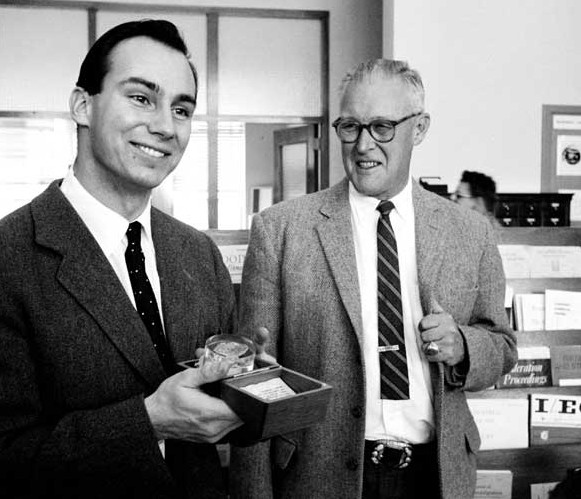
Aga Khan visiting Los Alamos in 1959.

Aga Khan IV, spiritual leader and one of the world’s richest royals, cut quite a cosmopolitan, dashing figure in his younger days, marrying models, skiing competitively, racing horses and posing for photo ops. Here’s a hypnotic documentary about him from 1964.

Tags:

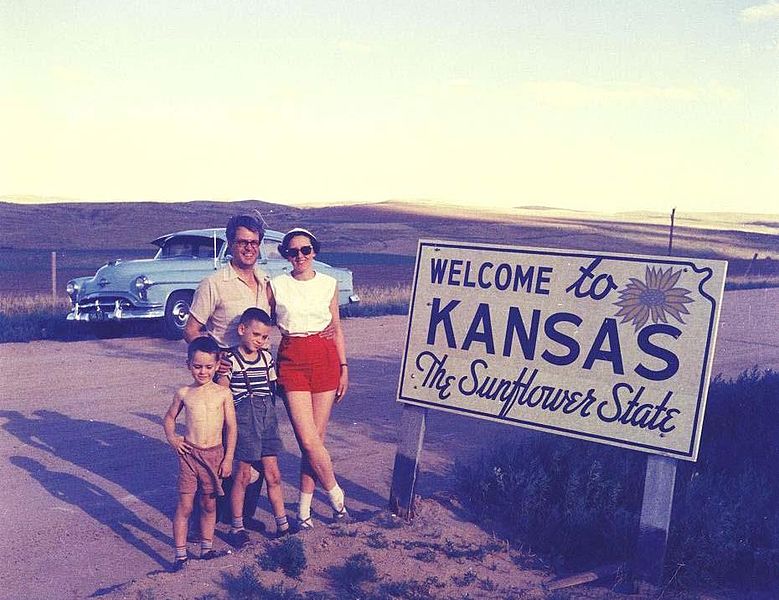
In What’s the Matter with Kansas?, his popular 2005 book about the fall of the Democrats, Thomas Frank explained (bitterly) how his party lost his home state. The subtext was that the Dems needed to win back Kansans–the so-called “heart of America”–if they were to recover on the national stage. What’s happened is more surprising: The Democrats and Kansas have moved further apart than Frank could have foreseen, yet the party roared back anyway. From “Rogue State,” by Mark Binelli in Rolling Stone:

“Once in office, Brownback surprised critics and supporters alike with the fervor of his pursuit of power, pushing what reporter John Gramlich of Stateline described as perhaps ‘the boldest agenda of any governor in the nation: gutting spending on social services and education, privatizing the state’s Medicaid system, undermining the teacher’s union, becoming the only state to entirely abolish funding for the arts, boasting that he would sign any anti-abortion bill that crossed his desk, and – most significantly – pushing through the largest package of tax cuts in Kansas history. His avowed goal is to eliminate the state income tax altogether, a move that many predict will torpedo the budget and engender even more draconian cuts in spending. ‘Other Republican-led states have experimented with many of the same changes,’ Gramlich pointed out – the difference in Kansas being that Brownback ‘wants to make all of those changes simultaneously.’

Since Mitt Romney’s resounding defeat last November, much has been made of the supposed battle for the soul of the Republican party taking place at the national level, where pragmatic establishment types are attempting to win over minorities, women and young people by tamping down the most extreme elements of the Tea Party fringe and moderating stances on issues like gay marriage and immigration. The problem is, in places like Kansas (and Louisiana, and South Carolina, and North Dakota), that fringe has become the political mainstream. In fact, while strategists like Karl Rove urge moderation for the GOP, in Kansas, they’ve been taking the opposite tack. Last fall, Brownback and his allies – including the Koch brothers, the right-wing libertarian billionaires whose company Koch Industries is based in Wichita – staged a primary putsch, lavishing funds on hard-right candidates and effectively purging the state Senate of all but a handful of its remaining moderate Republicans. ‘The Senate was really the bulwark of moderation last term,’ says Tom Holland, a Senate Democrat (there are only eight of them left) who ran against Brownback for governor. ‘With the moderate Republican leadership gone, that just got blown away.’

It’s been nearly 10 years since Thomas Frank wrote about the conservative takeover of his home state in What’s the Matter With Kansas? Back then, Kansas still had a Democratic governor in Kathleen Sebelius. But after last fall’s civil war, Kansas has emerged a more intense shade of red than even Frank imagined. The state legislature is the most conservative in the United States, and now there is absolutely nothing stopping the Brownback revolution – one which happens to be entirely at odds with any notion of the GOP adapting to the broader social and demographic changes in the country. If anything, these purists argue, Republicans lost in 2012 because the party wasn’t conservative enough.

No one can say that about Sam Brownback, who is rumored to be mulling his own presidential run in 2016 – and using Kansas as a sort of laboratory, in which ideas cooked up by Koch-funded libertarian think tanks can be released like viruses on live subjects.”

Tags: , ,

One thing lost in the NSA scandal is that while government spying on U.S. citizens may be a permanent part of life, the opposite is equally true: our government can never be sure anymore that it’s operating in secrecy. To some extent, we live in public now. Whether it’s Edward Snowden telling us what’s already obvious, or disclosures that mean something, life is more complicated and transparent because of the tech tools we’ve created, because so much information is out there. A tiny part of it may be dangerous–even treasonbut the great majority–like Snowden’s, will not. But it will occur, it is a part of the foundation now. You can prosecute this person or make a law to limit that entity, but that’s not going to change anyone’s behavior. The tools are there and so is the will to utilize them, whether we’re talking about government agencies or the average person.

But the ceding of privacy by the average American is about something else–a lack of proportion, the fear of the terrible death by terrorism as opposed to a relatively mundane one. It’s about not wanting to experience a loss of control. An analogy: People in the U.S. fear traveling by airplanes far more than by auto, yet there hasn’t been an air fatality from a major airline in the country in more than four years. Check our highway death statistics during the same time frame. From Conor Friedersdorf in the Atlantic:

“Measured in lives lost, during an interval that includes the biggest terrorist attack in American history, guns posed a threat to American lives that was more than 100 times greater than the threat of terrorism. Over the same interval, drunk driving threatened our safety 50 times more than terrorism

Those aren’t the only threats many times more deadly than terrorism, either.

The CDC estimates that food poisoning kills roughly 3,000 Americans every year. Every year, food-borne illness takes as many lives in the U.S. as were lost during the high outlier of terrorism deaths. It’s a killer more deadly than terrorism. Should we cede a significant amount of liberty to fight it?

Government officials, much of the media, and most American citizens talk about terrorism as if they’re totally oblivious to this context — as if it is different than all other threats we face, in both kind and degree. Since The Guardian and other news outlets started revealing the scope of the surveillance state last week, numerous commentators and government officials, including President Obama himself, have talked about the need to properly ‘balance’ liberty and security. 

The U.S. should certainly try to prevent terrorist attacks, and there is a lot that government can and has done since 9/11 to improve security in ways that are totally unobjectionable. But it is not rational to give up massive amounts of privacy and liberty to stay marginally safer from a threat that, however scary, endangers the average American far less than his or her daily commute.”

Tags: ,

I don’t think former NSA employee Edward Snowden did anything particularly heroic in leaking documents that told every American what we should already know: We gave our government the power to spy on us, and it’s exercising that authority. Surprisingly enough, polls show most Americans actually approve of such governmental snooping.

But as Amy Davidson pointed out yesterday at the New Yorker blog, David Brooks’ take on Snowden’s actions in his New York Times column is shockingly tone-deaf. The piece’s soft-headed sociology and demeaning character study are perplexing enough, but what’s really outrageous is the idea that Snowden should have felt too indebted to his employers who improved his life materially to speak out about what he felt was wrongdoing.

This part: “He betrayed his employers. Booz Allen and the C.I.A. took a high-school dropout and offered him positions with lavish salaries. He is violating the honor codes of all those who enabled him to rise.”

Yeah, community college slob, know your place. Be grateful to your betters in the U.S. hierarchy. And, yes, you could just as easily apply Brooks’ logic to Gitmo whistleblowers.

Although this paragraph may be worse: “He betrayed the Constitution. The founders did not create the United States so that some solitary 29-year-old could make unilateral decisions about what should be exposed.” 

Does Brooks feel the same way about the rights of solitary gun owners? Free speech is messy and inconvenient, but it’s of paramount importance, regardless if we agree with what’s being said or if personally approve of the education and financial standing of the speaker. Disagree vociferously, sure, but don’t preempt disagreement.•

Tags: , ,

In his essay for the Atlantic about Silicon Valley politics and tax policy, Kentaro Toyama questions the very limits of meritocracy:

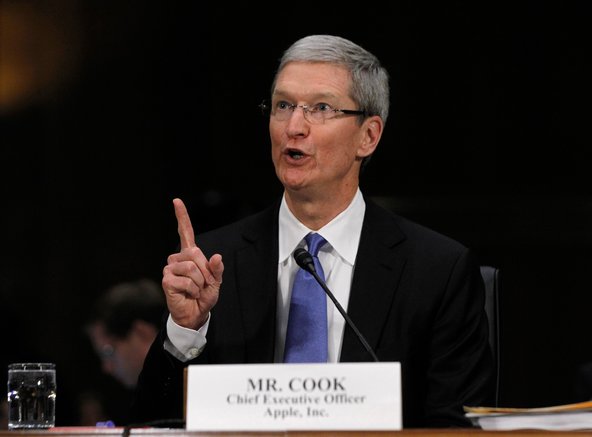
“What’s wrong with a world in which greater intellects hold more power and win greater rewards? At least two things: First, intelligence and productivity are important, but they’re secondary virtues, compared with goodness and sincerity. The road to hell may be paved with good intentions marred by stupidity, but bad intentions backed by brains are hypersonic jet transport to fire and brimstone. The difference was on full display when Cook testified. The Apple CEO is undoubtedly very smart, and on the Senate panel, he revealed a razor sharp social intelligence to boot. Yet, the words that came out of his mouth must rank with ‘we didn’t know tobacco was bad for you’ in their insincerity: ‘We not only comply with the laws, but we comply with the spirit of the laws. We don’t depend on tax gimmicks.’ Really?

The second is that a meritocracy can be just as bad as any other ‘-ocracy’ in reinforcing inequalities unless each generation ensures a fair distribution of merit. Unfortunately, American institutions for nurturing merit — such as its system of formal education — are only becoming less and less egalitarian. Public school funding remains linked to local property taxes, causing cumulative disadvantage; private schooling is becoming the default for rich, ‘meritocratic’ parents, who then care less about what happens in the public system; college is increasingly unaffordable for even the firmly middle class.”

Tags:

“In the sun, I feel as one…married…buried,” sang the doomed poet, and we’re not feeling so well ourselves. In the wake of Hurricane Sandy, what isn’t possible? From Dana Rubinstein at Capital, a report about the awful potential of climate change in NYC:

By the 2050s, the the number of 90-plus degree days could triple, and that could pose risks not only to New Yorkers’ lives, but also to the infrastructure that supports them.

‘Due to the urban heat-island effect, the temperature could be as much as seven degrees higher than it is in areas just around the city,’ said Cas Holloway, Bloomberg’s deputy mayor for operations, who based his remarks on a panel of climate change academics convened by the city.

Images of hazy skies and a straphanger mopping his brow appeared on a screen to his left.

‘It becomes basically like being in an oven beneath the street, and it makes our infrastructure extremely vulnerable.'”

Tags: ,

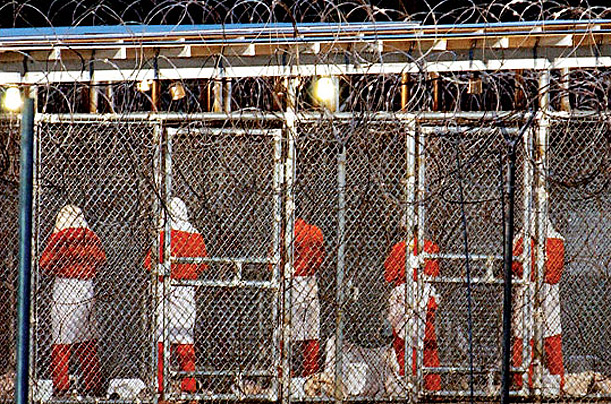
Former U.S. Military Police Officer Brandon Neely, once a guard at Guantanamo, just did an Ask Me Anything at Reddit about the detention camp. An excerpt follows.

______________________

Question:

Did you ever refuse any orders? Please, if you can, elaborate.

Brandon Neely:

No, I never refused any orders. I should have, but I never did.

Question:

What was the worst thing you saw while working at Guantanamo?

Brandon Neely:

I took part in and saw a lot of horrible incidents at Guantanamo, but one incident in particular has always stuck with me.

One day, while on duty at Camp X-Ray, I was assigned to escorting duties. I was at the very back of the camp. There was like a big shed there. This was also where the IRF team was stationed at until called upon. On this day the call came for the IRF team to come to Bravo Block. They made their way to the block and, at the time, I was not doing anything, so I made my way down to the block to watch from the outside of the block. The situation on the block was that a detainee had called a female MP ‘bitch’ a couple times. For punishment, the IRF team was called upon to enter the cage and hog-tie the detainee. The female MP was very upset, yelling ‘Whip his ass!’

The IRF team, along with the camp OIC, approached the detainee’s cage and told him to stop yelling and lay down so he could be restrained. The detainee just stood there, staring at them. The IRF team lined up in position to enter the cage. The OIC unlocked the lock on the cage door and, when this was done, the detainee turned around, went to his knees and placed his hands on the top of his head. The lock was taken off and the cage door was opened. The Number One Man on the IRF team tossed his shield to the side and, with a quick run towards the detainee, hopped in the air and came down on the back of the detainee with his knee (the Number One guy on the IRF team was no small guy). This caused the detainee to fall to the cement floor of the cage with the Number One Man on top of him. Then the whole IRF team was on top of him hitting, punching, and kicking him. It seemed like a long time, but in reality it lasted 15-20 seconds.

While the IRF team was still on top of the detainee someone yelled for the female MP that was called a bitch. She entered the cage and she punched the detainee a couple times in the head and then left the cage. Everyone in the cage stood up and the detainee laid there cuffed-up but motionless and unresponsive. Next thing I saw were medics coming from the medical house with a stretcher. They left the block with the detainee on the stretcher; they took him to a waiting military ambulance and was transported to the main hospital. The IRF team would ride along with the detainee. I went back to work not fully knowing what was wrong or what happened to the detainee.

Later that night, after we had been off for a while, the IRF team came back from the hospital. They would go on and talk about how they hit and punched the detainee and how they held him down so the female MP could hit him a couple times. They went on to talk about the ambulance ride saying no one spoke and it was a very silent ride. One of them even stated the detainee went into cardiac arrest in the ambulance. I do not know if this statement is true or not. I know the camp OIC of this incident would joke many times about how he never heard his name and ‘war crimes’ in the same sentence so many times in his life.

Eventually the detainee would return back to the camp from the hospital. About a week or so later I was assigned to work Bravo Block, and the block NCOIC happened to be a member of the IRF team. He was the Number One Man of the day of this incident. When the NCOIC walked onto the block a detainee named Feroz Abbasi yelled “Sergeant, have you come back to finish him off?”•

Tags:

To follow up on what I posted earlier about the age of surveillance:

Let’s say it becomes obvious that quite a few major-league baseball players are using performance-enhancing drugs. Fans are outraged. They’re cheating, threatening the integrity of the game. But what if safe performance-enhancing drugs gradually become available to the general public. The average person can become stronger and healthier by taking such supplements. The fans themselves are “juiced,” so to speak, sitting in the stands. Would we be able to hold athletes to a standard that the rest of society isn’t held to?

Now consider this scenario: One part of our nation is conducting deep surveillance of citizens. People are outraged. They’re intruding, threatening our liberties. But what if such surveillance gradually became widespread in every other part of society? What if corporations, government, hackers and the average citizen were all doing it? What if new tools made it common? Would we be able to hold any single aspect of society (government, say) to a standard that the rest of society isn’t held to?

Whether we like it or not, once a thing become pervasive, it is tacitly accepted. Fighting it becomes as ridiculous as any other prohibition that runs counter to mass activity. We realize that the thing we supposedly fear is now the new normal.•

From Jeffrey Toobin’s post at the New Yorker blog about rogue NSA employee Edward Snowden, which counters the leaker-as-hero chorus:

“Edward Snowden, a twenty-nine-year-old former C.I.A. employee and current government contractor, has leaked news of National Security Agency programs that collect vast amounts of information about the telephone calls made by millions of Americans, as well as e-mails and other files of foreign targets and their American connections. For this, some, including my colleague John Cassidy, are hailing him as a hero and a whistle-blower. He is neither. He is, rather, a grandiose narcissist who deserves to be in prison.

Snowden provided information to the Washington Post and the Guardian, which also posted a video interview with him. In it, he describes himself as appalled by the government he served:

The N.S.A. has built an infrastructure that allows it to intercept almost everything. With this capability, the vast majority of human communications are automatically ingested without targeting. If I wanted to see your e-mails or your wife’s phone, all I have to do is use intercepts. I can get your e-mails, passwords, phone records, credit cards.

I don’t want to live in a society that does these sort of things… I do not want to live in a world where everything I do and say is recorded. That is not something I am willing to support or live under.

What, one wonders, did Snowden think the N.S.A. did? Any marginally attentive citizen, much less N.S.A. employee or contractor, knows that the entire mission of the agency is to intercept electronic communications. Perhaps he thought that the N.S.A. operated only outside the United States; in that case, he hadn’t been paying very close attention. In any event, Snowden decided that he does not ‘want to live in a society’ that intercepts private communications. His latter-day conversion is dubious.”

Tags: ,

Two of the more perplexing entities in existence, Vice magazine and Sen. Rand Paul, met for a brief interview. The reporter, Grace Wyler, did a good job. An excerpt:

Vice:

What do you think about the Obama administration’s decision to support the FBI’s push to make it easier to spy on the Internet?

Sen. Rand Paul:

My reaction is mostly disappointment. The one area where I liked President Obama was that I thought he would defend civil liberties. It turns out that he might care less for civil liberties than George Bush, and I think that’s disappointing.

It must be truly disappointing for those who truly are progressive on the left who believe in civil liberties, and it’s disappointing to those of us on the right who didn’t support him but thought, ‘Gosh, well, at least maybe he’ll support civil liberties.’

Vice:

It all seems kind of dystopian. Speaking of which, I hear you want to teach a class on the dystopian novel?

Sen. Rand Paul:

I’ve talked about it, but unfortunately I keep developing other projects that get in the way. I would like to do it someday. I think dystopian novels are a discussion of politics, and sort of what happens if you let a government accumulate too much power.

As I said in my filibuster, this presidential, or king, complex that both Republicans and Democrats get where they think, ‘Well, the power is not so bad, because I’m a good person and I won’t abuse that power.’ President Obama has said that with indefinite detention, he’s said ‘Oh, well I don’t intend to use that power.’ That’s not good enough, it’s like when Madison said: ‘If government were comprised of angels, we wouldn’t have to worry about how much power to give the government.’

The government is not comprised of angels. No one can be trusted. I think it was either Madison or Jefferson who said to always worry about any power you give to your government, because there should always be a certain level of distrust for anyone who seeks power. “

Tags: ,

I’m not a defeatist about all the problems of our world. I think, for instance, income inequality can be remedied, and we can achieve social progress in a number of areas. The demographics are on our side. But I’m not an optimist when it comes to controlling guns or ensuring privacy, areas where technology makes limitation almost impossible.

I’ve talked about guns before, so I’ll discuss privacy today.

Gawker‘s Hamilton Nolan always makes lots of good points in his posts. His latest, a piece about the surveillance state we find ourselves in, is no exception. We’re now a place where government, media and the odd hacker can watch us, can learn what we’re thinking. Nolan’s contention is that we can stop these intrusions. I don’t think that’s true.

9/11 and the Patriot Act hastened this world, made for an excellent excuse for its installation, but it was going to happen anyway. There are two reasons for that.

First of all, no one ever builds tools to not use them, and they only get cheaper and easier to use. Drones were the size of planes and then birds and soon fleas. Cameras are in our pockets–in our glasses–let alone attached to our streetlamps. We drop data everywhere we go–even when we’re sitting still. And a decentralized media is in everyone’s hands, which means many great things can happen but also that a virtual anarchy rules. And this new normal is already such a bedrock of our society that I don’t think it would be possible to turn back even if we wanted to. 

And I don’t think we really want to.

That brings me to the second reason: People really, really want attention at any cost. It makes them feel appreciated and safe. I’ve been constantly surprised by the extent of this. Social networks and other information-extracting services are a reflection of our desire to be connected, to feel important. We’ve traded so much for it already, namely our privacy, because, we want to be noticed, we want to be watched over. It’s a scary world and everyone wants a brother, even if it’s Big Brother.

Perhaps that will change when a government overreach causes a scandal that has a very human face. But I doubt it. The widespread News Corp wrongdoing, with the face of a murdered child attached to it, hasn’t changed much. I think privacy as we knew it, from governmental or other intrusion, is over, like it or not.

The opening of Nolan’s post:

“Ever since 9/11, the American government has been busily constructing the most comprehensive surveillance state in this country’s history. This vast and invasive bureaucracy is too big to hide, but the public has done its part by politely ignoring it. No longer. Now is when we, the people, choose whether or not we will accept the end of privacy as we know it. If history is any indication, we will.

In the immediate aftermath of 9/11, the public’s consent was explicit: Do Whatever It Takes. As passions faded and the ‘War on Terror’ morphed into a quasi-permanent state of being, our consent became implicit. The public never asked for the surveillance state to stop. Over the past decade, journalists have periodically revealed details of the breadth of our government’s spying mechanism: the Washington Post the breathtaking size of the secret intelligence-industrial complex; Jane Mayer NSA whistleblowers who said that the agency was vacuuming up email and phone records from all Americans. These stories, meticulous though they were, made only a temporary splash. This week’s stories are different.

Over the past two days, two incredibly important stories about the U.S. government’s spying capabilities broke one after another. First, the story that the NSA is collecting the phone records of all Verizon Business Services customers—which may well include all Verizon users—on a daily, ongoing basis; and then, yesterday, the existence of the PRISM program, in which the NSA and the FBI tap directly into the data streams of the world’s biggest internet companies, allowing it to pull out virtually any and all communications data, allowing them to ‘watch your ideas form as you type.’   (The vague denials of the various internet companies likely hinge on the technical mechanisms of their cooperation, rather than on the existence of their cooperation itself.)

The great omniscient government spy looking over your shoulder is real. This is the type of spying program that makes conspiracy theorists sound mild in comparison. Even in the context of the wholesale erosion of the very concept of ‘civil liberties’ since 9/11, this is sobering stuff. We have consented, without our knowledge, to giving faceless, unaccountable government representatives access to everything we say and do.”
 

Tags:

From Jon Evans at Techcrunch, some thoughts about our new normal, a post-scarcity world without enough jobs nor a stated policy to deal with such a landscape:

I want to stress again that this is only the beginning — that as software eats the world, as Marc Andreessen put it, this two-track economy will grow ever more divergent around the planet. The relatively few people fortunate enough to work in technology (or have the capital to invest in it) will grow steadily wealthier, even as more and more jobs around the world are replaced by software and drones and robots.

At least I hope so.

Not because I want a tiny fraction of the world to become rich beyond Croesus while everyone else is desperately broke. On the contrary: because in the long run, this is good for everyone. People who think everyone should have a job aren’t thinking big enough.

As Gregory Ferenstein points out, technology may be destroying jobs, but it’s also creating wealth; and as I’ve argued before, the endgame of all this wealth creation, some generations hence, isn’t a world of full employment. Instead it’s a post-scarcity world of no employment, as we understand the word. Fewer and fewer jobs coexisting with more and more wealth is exactly what you would expect on the road to that outcome.

Trouble is, our societies and economies are built around the assumption of mass employment, and we’ll need some pretty wrenching adjustments to that paradigm to deal with the changes to come. Some are already stealthily underway. As NPR reported earlier this year:

In the past three decades, the number of Americans who are on disability has skyrocketed. The rise has come even as medical advances have allowed many more people to remain on the job, and new laws have banned workplace discrimination against the disabled. Every month, 14 million people now get a disability check from the government … The vast majority of people on federal disability do not work. Yet because they are not technically part of the labor force, they are not counted among the unemployed.

In other words, the US government is already quietly paying a significant fraction of the American population not to work. If jobs keep disappearing, while the overall wealth of America and the world keeps increasing, then we can expect initiatives like that to keep expanding. George Monbiot is the latest to propose a basic income, which ‘gives everyone, rich and poor, without means-testing or conditions, a guaranteed sum every week.’

It’s been suggested that, along with ‘peak jobs,’ America has also hit ‘peak capitalism.'”

Tags:

We worried for a long time about someone pushing the button, dropping the big one, ending the whole thing. But what if the buttons are pushing themselves? What if there are no buttons? From Anders Sandberg at Practical Ethics:

Can we run warfare without anybody being responsible? I do not claim to understand just war theory or the other doctrines of ethics of war. But as a computer scientist I do understand the risks of relying on systems that (1) nobody is truly responsible for, (2) cannot be properly investigated and corrected. Since presumably the internal software will be secret (since much of the military utility of autonomous systems will likely be due to their “smarts”) outside access or testing will be limited. The behavior of complex autonomous systems in contact with the real world can also be fundamentally unpredictable, which means that even perfectly self-documenting machines may not give us useful information to prevent future mis-behaviors.

Getting redress against a ‘mistake’ appears far harder in the case of a drone killing a group of civilians than by a gunship crew; if the mistake was due to an autonomous system it is likely that the threshold will be even higher. Even from a pragmatic perspective of creating disincentives for sloppy warfare the remote and diffused responsibility insulates the prosecuting state. In fact, we are perhaps obsessing too much about the robot part and too little about the extrajudicial part of heavily automated modern warfare.”

Tags:

Some ideas about the zombies stumbling through our connected-yet-distant world, from David Varela at the Literary Platform:

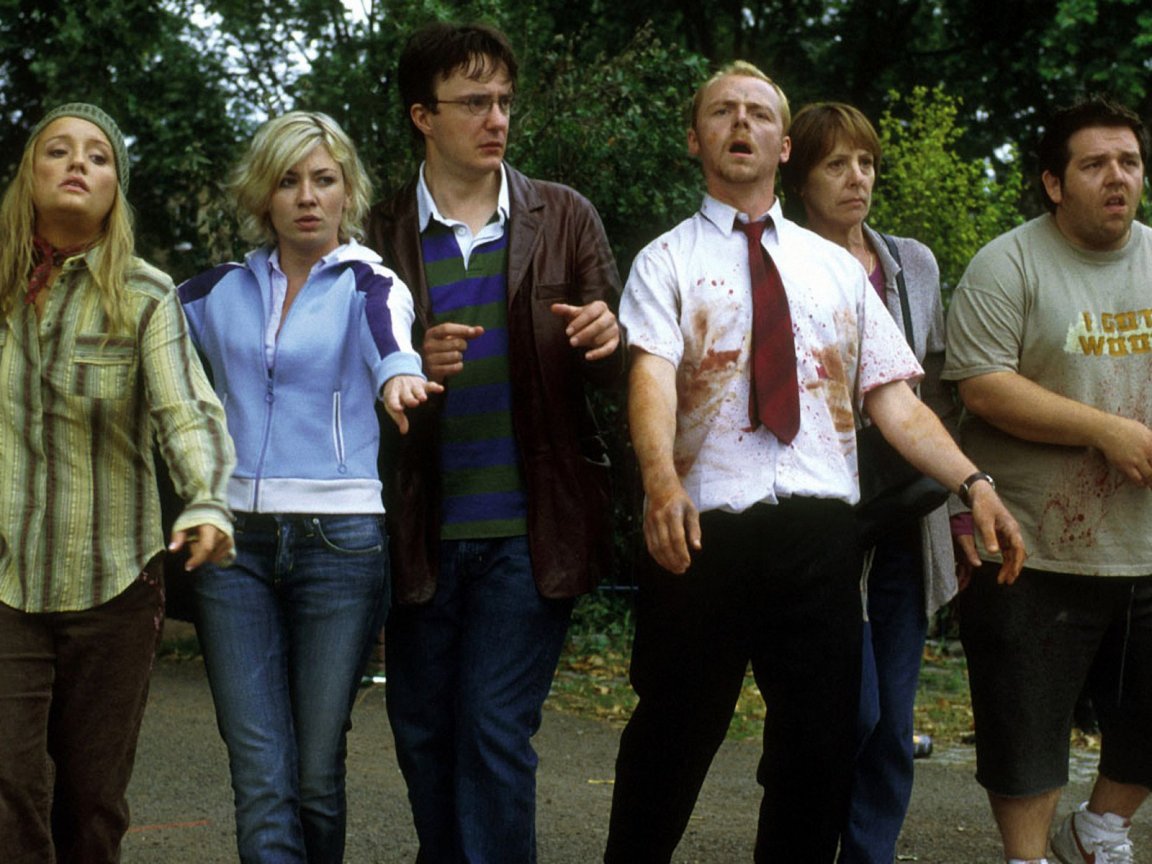
“By the time Shaun of the Dead comes round in 2004, the satirical target has changed but the zombie still proves a potent metaphor. Here, the topic isn’t political homogeny or mindless consumerism – it’s social apathy. Shaun has been in a dead-end job for years, he still lives with his best mate from school, and he’s too emotionally stunted to maintain a decent relationship. His life is moribund.

When the zombie apocalypse comes, it creeps up on him because it looks so like his everyday life. Commuters drop to the ground and nobody goes to help. Neighbours grunt rather than hold conversations. There’s another global crisis on the news – change the channel. Shaun, like so many modern Londoners, is self-concerned to the point of paralysis, and it’s only when the threat literally reaches his own backyard that he decides to take action.

But Shaun isn’t like Duane Jones or the lone hero of I Am Legend. Shaun’s act of resistance is not to stubbornly protect his insular lifestyle but instead to stop being a loner. He actively reaches out to his ex-girlfriend, his mother and his despised stepfather, dragging them all to safety in that ailing stronghold of social life, the pub.

In the twenty-first century, the ultimate act of revolution is to talk to your neighbours. Today’s zombie horde is a multitude of individuals disengaged from society, never speaking to or caring for each other, too concerned about checking their Klout score to look up from their mobiles, take off their headphones and really connect with people.

So this is the apocalypse. All this time, we’ve been guarding against a sudden violent outbreak, but the real zombie threat to civilisation is much more insidious. We’re all in danger of turning, not because of a virus but through complacency, through prejudice, and through a lack of empathy for our fellow human beings.

Our only defence against this evil? Our brains.”

Tags:

« Older entries § Newer entries »