Politics

You are currently browsing the archive for the Politics category.

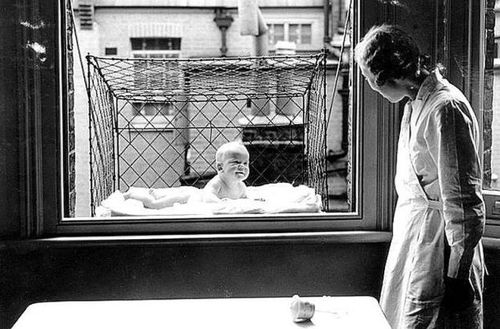
Many of the Americans who are most staunchly anti-abortion seem to lose focus on infants once the cord is cut. Gov. Rick Perry of Texas, Dubya without the likability, is currently waging war on the Affordable Health Care Act, legislation that could help a state that’s abysmal in providing medical insurance for children. He’s not alone, of course, which helps explain why such a wealthy nation has such an agonizingly high infant mortality rate. Finland, which has one of the lowest death rates for newborns, has a simple measure to keep hope alive: a box of baby supplies the state gives each expectant mother. The opening of “Why Finnish Babies Sleep in Cardboard Boxes,” by Helena Lee at BBC News:

“It’s a tradition that dates back to the 1930s and it’s designed to give all children in Finland, no matter what background they’re from, an equal start in life.

The maternity package – a gift from the government – is available to all expectant mothers.

It contains bodysuits, a sleeping bag, outdoor gear, bathing products for the baby, as well as nappies, bedding and a small mattress.

With the mattress in the bottom, the box becomes a baby’s first bed. Many children, from all social backgrounds, have their first naps within the safety of the box’s four cardboard walls.

Mothers have a choice between taking the box, or a cash grant, currently set at 140 euros, but 95% opt for the box as it’s worth much more.

The tradition dates back to 1938.” (Thanks Browser.)

Tags: ,

In “Change the World,” George Packer’s excellent New Yorker article about the intermingling of Silicon Valley and the Washington Beltway, one insider neatly summed up why technologists might be a positive force for political change: “Our voice carries a lot of weight because we are broadly popular with Americans.” That was certainly true until recently, with the nerds having had their revenge, the clever children bringing the future to us now, the turtlenecked gurus encouraged to treat their marked-up gadgets as holy grails. But do you get the sense that those good feelings are beginning to change, that, perhaps the Digital Revolution, like most revolutions do, has gotten messy, and that those who stormed the gates now seem a little barbaric?

From the excellent Matt Novak at Paleofuture, a document that recalls how one 1960s Internet visionary predicted superwealth for a breed of people who were then high school freshmen and younger:

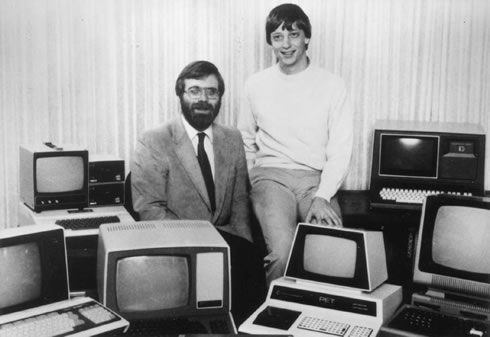
In 1969, internet pioneer Paul Baran predicted that by the year 2000, computer programmers may very well be the richest people in the world. Remember, this is when Bill Gates was just a 14-year-old nerd in Seattle.

The ARPANET had not yet drawn its first breath when Baran wrote his 1969 paper, ‘On The Impact of the New Communications Media Upon Social Values.’ But his vision for what new communications technology would enable (and sometimes harm) in the last three decades of the 20th century, was disturbingly prescient.

His prediction about the computer programmer of the year 2000 makes one wonder if Baran was a time traveler perhaps warning us about the dot-com bubble:

As communication development evolves, more decision functions will be placed upon computers tied together as a common communications network. Financial success may in the future come to depend more upon the brilliance and imagination of the human who programs the computer than upon any other single factor. The key man in the new power elite will be the one who can best program a computer, that is, the person who makes the best use of the available information and the computer’s skills in formulating a problem.”

Tags: , ,

Julian Assange makes a raft of good points in his New York Times Op-Ed piece about the globalizing effect of the Googleplex and its arrogant brand of technocracy. But because he’s the kind of exasperating person who sees the world only in extremes, Assange goes too far in painting the company as unmitigated autocratic evil. If you think we’re going to become the United States of Google, let’s recall that Microsoft was not too long similarly feared, and even without government intervention, it would have collapsed beneath its own weight because that’s usually what corporate behemoths do. And Google is nowhere near the tool of American governmental policy that Bell Labs was. You remember Bell Labs, right? It used to be a thing. An excerpt from Assange’s article, which is inspired by the book, The New Digital Age:

“The writing is on the wall, but the authors cannot see it. They borrow from William Dobson the idea that the media, in an autocracy, ‘allows for an opposition press as long as regime opponents understand where the unspoken limits are.’ But these trends are beginning to emerge in the United States. No one doubts the chilling effects of the investigations into The Associated Press and Fox’s James Rosen. But there has been little analysis of Google’s role in complying with the Rosen subpoena. I have personal experience of these trends.

The Department of Justice admitted in March that it was in its third year of a continuing criminal investigation of WikiLeaks. Court testimony states that its targets include ‘the founders, owners, or managers of WikiLeaks.’ One alleged source, Bradley Manning, faces a 12-week trial beginning tomorrow, with 24 prosecution witnesses expected to testify in secret.

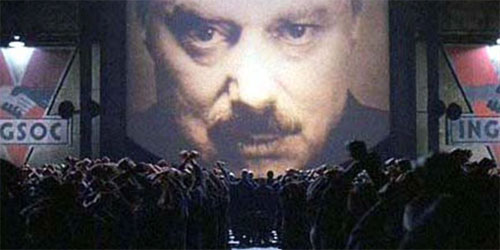
This book is a balefully seminal work in which neither author has the language to see, much less to express, the titanic centralizing evil they are constructing. ‘What Lockheed Martin was to the 20th century,’ they tell us, ‘technology and cybersecurity companies will be to the 21st.’ Without even understanding how, they have updated and seamlessly implemented George Orwell’s prophecy. If you want a vision of the future, imagine Washington-backed Google Glasses strapped onto vacant human faces — forever. Zealots of the cult of consumer technology will find little to inspire them here, not that they ever seem to need it. But this is essential reading for anyone caught up in the struggle for the future, in view of one simple imperative: Know your enemy.

Tags:

Remember at last year’s Republican Convention when Texas Congressman Ted Cruz was all but christened as a future President by lazy pundits simply because he was in the GOP and had an Hispanic name? None of these well-paid shoutbots actually stopped to notice that Cruz was a paranoid wackjob un-electable in a national contest even in the sovereign country of Upper Nixonia. 

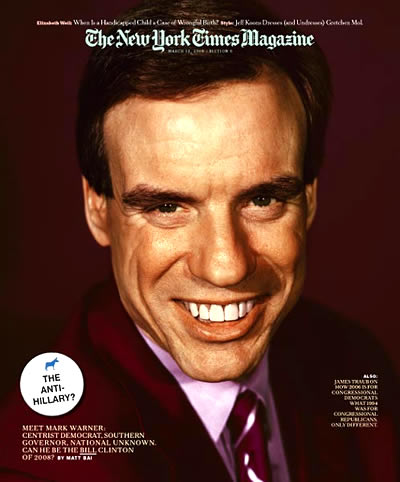
Mark Warner, former Virginia Governor, was once that guy for the other party. A Southern liberal technocrat made left-leaning politicos salivate before they became aware that shifting demographics were jumbling the electoral map. In 2006, the very talented political reporter Matt Bai wrote a cover story for the New York Times Magazine about Warner as the apparent anti-Hillary. You heard rumors by 2008 about why Warner ultimately passed on a campaign, but who knows why he didn’t run? We should all pause the next time someone is “nominated” because they fit into certain categories. Barack Obama, who most certainly did not fit into any of them, is mentioned almost as an afterthought in Bai’s piece. The opening of the article, which is now largely remembered for the altered colors of the eccentric cover art:

“If you harbor serious thoughts of running for the presidency, the first thing you do — long before you commission any polls or make any ads, years before you charter planes to take you back and forth between Iowa and New Hampshire — is to sit down with guys like Chris Korge. A real-estate developer in Coral Gables, outside Miami, Korge is one of the Democratic Party’s most proficient “bundlers.” That is, in the last two presidential elections, he bundled together more than $7 million in campaign checks for Al Gore and John Kerry from his friends and contacts.

For Korge, the 2008 presidential campaign began a few days after Kerry lost, when, he says, one prospective candidate — he won’t say who — called to enlist his help. Having raised money for both of Bill Clinton’s presidential campaigns, which earned him an overnight stay in the Lincoln Bedroom, Korge already knew he would support Hillary Clinton if she ran; he considers her the most impressive politician he has ever met, including her husband. But that didn’t stop her potential rivals — John EdwardsJoe Biden, Evan Bayh, Wesley Clark — from dropping by, nor did it stop Korge, a guy who rightly prides himself on knowing just about everybody in Democratic politics, from taking the meetings. ‘In the last six months, I’ve pretty much seen or talked with all of them, or they’ve tried to meet with me,’ Korge told me during a conversation in late January.

A few weeks before we spoke, Korge had lunch at the Capital Grille in Miami with Mark Warner, who was then in his final weeks as Virginia’s governor. Though little known nationally, Warner has emerged in recent months as the bright new star in the constellation of would-be candidates, a source of curiosity among Democrats searching for a charismatic outsider to lead the party. Pundits credit Warner’s popularity in Republican-dominated Virginia — his 80 percent approval rating when he left office made him one of the most adored governors in the state’s history — with enabling his Democratic lieutenant governor, Tim Kaine, to win the election to succeed him last November. Suddenly, Warner is being mentioned near the top of every list of candidates vying for the nomination in 2008.”

Tags: , ,

China is speeding into the future–or at least catching up to the present–by using methods of industrialization which created great wealth in the West but have compromised our ecology. Evan Osnos of the New Yorker has an excellent interview on the topic with Craig Simons, a journalist who spent most of the aughts reporting from China on that nation’s unbridled growth. An excerpt:

Evan Osnos: 

The Times reported this month that Chinese protesters succeeded in delaying the I.P.O. of a company that specializes in extracting bile from captive bears for the production of folk remedies. What kinds of campaigns have impact, and what kinds don’t?

Craig Simons: 

N.G.O.s have had a limited ability to influence the decisions of average Chinese consumers. A group of advertisements by WildAid (including one where Yao Ming swears off shark-fin soup) have been successful and are important. But their benefits are offset by millions of Chinese just now becoming rich enough to buy exotic ingredients and medicines. The campaigns may ultimately prove more important by putting pressure on Beijing. The international community, for example, has successfully lobbied against Beijing legalizing the sale of bones from farmed tigers, a move many scientists argue would doom the world’s remaining wild tigers. In short, a government ban is more efficient than trying to get 1.3 billion people to change deep-rooted beliefs and traditions, but both are key in the long term.

Evan Osnos: 

You went to the four corners of the world for this. What was the moment that lingers most?

Craig Simons:

Strangely enough, the most vivid moment came when I was researching in Washington, D.C. I came across a request by environmental groups that Arkansas ban the collection of wild turtles, many of which were being shipped to China, as food. Their driving argument was that if officials didn’t stop the hunt, several species would be wiped out. The petition contained a few surprising figures: licensed collectors removed more than half a million turtles from Arkansas between 2004 and 2006; more than two hundred and fifty thousand ‘wild caught adult turtles’ were exported to Asia from a single airport over a span of four years. But it was the proximity that struck me. I’d expected to link Chinese demand to tiger poaching in India, logging in Papua New Guinea, and (renewed) mining in Colorado. But I’d never thought that decisions by Chinese diners could threaten Arkansas’s terrapins.”

Tags: ,

Fox News vigorously supported the Patriot Act, which allowed the U.S. government unprecedented ability to spy on its citizens.

My Fox News vigorously supported the Patriot Act, which allowed the U.S. government unprecedented ability to spy on its citizens.

At News Corp., we hacked the phones of private citizens, even children who had been murdered, spying on them to benefit financially.

The government spying on a Fox report is a chilling invasion of privacy.

I’m outraged that the U.S. government spied on a Fox News reporter. It’s a chilling invasion of privacy.

The defense of Big Tech’s dubious tax dodge over the past week by Apple CEO Tim Cook and Google’s Eric Schmidt has been a maddening exercise in intellectual dishonesty. The premise of these two (and much of the tech world) is this: If you want us to pay our fair share than change your system so that we can’t exploit the loopholes. You know, don’t blame us for pursuing our self-interests; make it impossible for us to do so. Of course, what’s left unsaid is that Apple and Google and other behemoths have endless boatloads of cash to hire lobbyists who’ll make sure that any attempt at leveling the tax plane is as difficult as can be. That’s how the loopholes initially came into being.

The opening of “Future Shlock,” Evgeny Morozov’s powerful big-tech takedown in the New Republic, which draws parallels between the 19th-century advent of the sewing machine and today’s so-called world-flattening gadgets:

“The sewing machine was the smartphone of the nineteenth century. Just skim through the promotional materials of the leading sewing-machine manufacturers of that distant era and you will notice the many similarities with our own lofty, dizzy discourse. The catalog from Willcox & Gibbs, the Apple of its day, in 1864, includes glowing testimonials from a number of reverends thrilled by the civilizing powers of the new machine. One calls it a ‘Christian institution’; another celebrates its usefulness in his missionary efforts in Syria; a third, after praising it as an ‘honest machine,’ expresses his hope that ;every man and woman who owns one will take pattern from it, in principle and duty.’ The brochure from Singer in 1880—modestly titled ‘Genius Rewarded: or, the Story of the Sewing Machine’—takes such rhetoric even further, presenting the sewing machine as the ultimate platform for spreading American culture. The machine’s appeal is universal and its impact is revolutionary. Even its marketing is pure poetry:

On every sea are floating the Singer Machines; along every road pressed by the foot of civilized man this tireless ally of the world’s great sisterhood is going upon its errand of helpfulness. Its cheering tune is understood no less by the sturdy German matron than by the slender Japanese maiden; it sings as intelligibly to the flaxen-haired Russian peasant girl as to the dark-eyed Mexican Señorita. It needs no interpreter, whether it sings amidst the snows of Canada or upon the pampas of Paraguay; the Hindoo mother and the Chicago maiden are to-night making the self-same stitch; the untiring feet of Ireland’s fair-skinned Nora are driving the same treadle with the tiny understandings of China’s tawny daughter; and thus American machines, American brains, and American money are bringing the women of the whole world into one universal kinship and sisterhood.

‘American Machines, American Brains, and American Money’ would make a fine subtitle for The New Digital Age, the breathless new book by Eric Schmidt, Google’s executive chairman, and Jared Cohen, the director of Google Ideas, an institutional oddity known as a think/do-tank. Schmidt and Cohen are full of the same aspirations—globalism, humanitarianism, cosmopolitanism—that informed the Singer brochure. Alas, they are not as keen on poetry. The book’s language is a weird mixture of the deadpan optimism of Soviet propaganda (‘More Innovation, More Opportunity’ is the subtitle of a typical sub-chapter) and the faux cosmopolitanism of The Economist (are you familiar with shanzhaisakoku, or gacaca?).

There is a thesis of sorts in Schmidt and Cohen’s book. It is that, while the ‘end of history’ is still imminent, we need first to get fully interconnected, preferably with smartphones. ‘The best thing anyone can do to improve the quality of life around the world is to drive connectivity and technological opportunity.’ Digitization is like a nicer, friendlier version of privatization: as the authors remind us, ‘when given the access, the people will do the rest.’ ‘The rest,’ presumably, means becoming secular, Westernized, and democratically minded. And, of course, more entrepreneurial: learning how to disrupt, to innovate, to strategize. (If you ever wondered what the gospel of modernization theory sounds like translated into Siliconese, this book is for you.) Connectivity, it seems, can cure all of modernity’s problems. Fearing neither globalization nor digitization, Schmidt and Cohen enthuse over the coming days when you ‘might retain a lawyer from one continent and use a Realtor from another.’ Those worried about lost jobs and lower wages are simply in denial about ‘true’ progress and innovation. ‘Globalization’s critics will decry this erosion of local monopolies,’ they write, ‘but it should be embraced, because this is how our societies will move forward and continue to innovate.’ Free trade has finally found two eloquent defenders.

___________________________

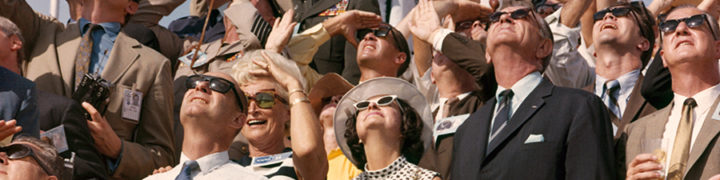
“What is the opposite of a Genius Bar?”:
 

Tags: , ,

Fears can divide and threats can hold people in place. But what if those boogeymen are cast aside even for a little while? What if the curtain is drawn back and the worst fears are never realized?

The biggest worry that his enemies have had about President Obama from the very beginning isn’t that he would fail but that he would succeed, that he could present a plausible alternative to the harmful reality most Americans have been facing since the start of the Reagan revolution. And we’ve stayed there thanks to the use of wedge issues and demonizing. But the President wanted to transform that. Time, technology and demography are on his side.

What if health-care reform makes our lives better while costing us less money? What if gay marriage isn’t harmful to the moral fabric of society but actually improves it? What if women having control over their lives makes for a healthier, more secure country? What if all the things that we’ve been told are un-American actually make for a stronger America? Once we know the truth, how will lies ever work again?

A brief explanation from Paul Krugman, if you missed it on this Memorial Day holiday, of the potential of Obamacare in action:

“Still, here’s what it seems is about to happen: millions of Americans will suddenly gain health coverage, and millions more will feel much more secure knowing that such coverage is available if they lose their jobs or suffer other misfortunes. Only a relative handful of people will be hurt at all. And as contrasts emerge between the experience of states like California that are making the most of the new policy and that of states like Texas whose politicians are doing their best to undermine it, the sheer meanspiritedness of the Obamacare opponents will become ever more obvious.

So yes, it does look as if there’s an Obamacare shock coming: the shock of learning that a public program designed to help a lot of people can, strange to say, end up helping a lot of people — especially when government officials actually try to make it work.”

Tags: ,

From a perspective in the Economist on far-flung copyright laws, in the wake of astronaut Chris Hadfield’s Bowie cover in space:

“In this particular case the matter is straightforward because Commander Hadfield had obtained permission to record and distribute the song, and production and distribution was entirely terrestrial. Commander Hadfield and his son Evan spent several months hammering out details with Mr Bowie’s representatives, and with NASA, Russia’s space agency ROSCOSMOS and the CSA. The copyright issue may seem trivial, but the emergence of privately funded rocket launches, space tourism and space exploration hold the potential for more substantive disputes. If an astronaut were to travel to the Moon, an asteroid or Mars on a privately funded spacecraft, the situation would become knottier still, because the United Nations Outer Space Treaty of 1967 applies to countries, not companies or private individuals. J.A.L. Sterling, a London-based expert on international copyright law, anticipated all this in a 2008 paper, ‘Space Copyright Law: the new dimension.‘ in which he lists dozens more potentially problematic scenarios that could arise, some seemingly risible at first. He asks what would have happened if, on a moon landing broadcast live by NASA across the world, two astronauts were overcome by emotion and burst into song—one covered by copyright. NASA might still be engaged in litigation 40 years later. More prosaically and immediately plausibly, Sterling considers space travellers who put copyrighted material from Earth on a server reachable from space, or engage in rights-violating ‘public performances’ for crewmates. If the first person to walk on Mars decides to launch into ‘A Whole New World.‘ the rights will need to have been cleared with Disney first.”

I dreamt once of an Earth grown too hot, but is it just a dream? If the climate changes, then so does everything. From Thomas Jones in the London Review of Books:

“The facts, rehearsed so often, for so long and to so little effect, nonetheless bear repeating. The greenhouse effect was first hypothesised in 1824 by Joseph Fourier – though his analogy was the bell jar rather than the greenhouse – and proved experimentally by John Tyndall in 1859. In the 19th century it could be seen as unambiguously a good thing: if carbon dioxide and other trace gases didn’t trap heat in the atmosphere, the earth wouldn’t be warm enough to support life as we know it. But there is now far more carbon dioxide in the atmosphere than there has been at any point in the last 800,000 years (we know this because researchers have analysed air bubbles trapped in the ice in Greenland and Antarctica: the deeper you go, the older the bubbles). The concentration has increased from nearly 320 parts per million (high, but not unprecedented) in 1960 to more than 390 ppm today, 30 per cent higher than any previous peak, largely as a result of human activity. Not even the most fervent climate change denier can argue with the fact that burning carbon produces carbon dioxide: before the Industrial Revolution, atmospheric carbon dioxide levels were 280 ppm. Since 1850, more than 360 billion tonnes of fossil fuels have gone up in smoke. Average global temperatures have risen accordingly, for the last quarter century pretty much in line with the predictions made by the Intergovernmental Panel on Climate Change in its first assessment report (1990). Almost every year since 1988, when the IPCC was established, has been the hottest ever recorded. The most optimistic projection, which governments are nominally committed to (that’s to say, the signatories of the Copenhagen Accord in 2009 agreed it would be nice), is that the average global temperature will rise no more than 2ºC by the end of the century. Sea level has risen 6 cm since 1990. The IPCC’s fourth assessment report (2007) projected that it would rise between 18 and 59 cm by 2100. According to a more recent study, it could be anything from 33 to 132 cm.

The question of how to prevent climate change – we’re way past that point now – has morphed into the question of how to slow it down. There’s no shortage of theoretical answers about the best way to pump fewer greenhouse gases into the atmosphere, or suck more of them out, or lower the temperature by other means. (Another week, another book about climate change: the mood optative, the structure evangelical; threats of doom followed by promises of salvation, punctuated by warnings against false prophets.) And yet carbon emissions, temperatures, sea level and the frequency of extreme weather events just keep on going up. Which leads to another, perhaps even more urgent question: if climate change is not only inevitable but already underway, how are we to live with it?”

Tags:

Fantasies tell us a lot about a person or a people, but there’s danger in taking them too literally. They’re fantasies not just because we can’t or aren’t allowed to live them, but often because we don’t actually want them realized. They do bear watching, however, since when the bad ones are put into action, horrors can occur.

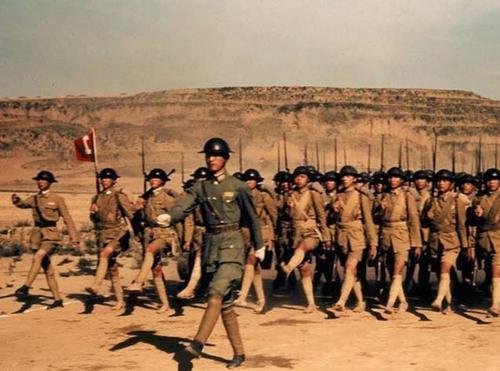
The opening of a Foreign Policy article about a new wave of scary Chinese military fantasy novels:

“It is the year 2049. China’s economic development has so disturbed the world’s other major powers that the United States, Japan, and Russia form an alliance and invade China. Fierce battles break out on the plains of northeast China, where Japanese troops and U.S. fighter jets besiege Chinese infantry. Caught by surprise, China’s army nonetheless stages a glorious counterattack by deploying levitating tanks, and employing a strategy based on lessons learned from the Anti-Japanese War and the Resist America War (better known in the West as WWII and the Korean War, respectively). 

Such is the plot of The Last Counterattack, a serial novel published on Blood and Iron Reading, a Chinese military literature website. In one of the latest installments, published on May 2, U.S. government-sponsored hackers have infiltrated the Chinese military’s network and accidently launched a Chinese nuclear missile directed at the United States. The anonymous author’s online profile says he is a former colonel in the People’s Liberation Army and currently a staff officer in charge of operations and reconnaissance in the 12th Armored Division at China’s 21st Army Group. Going by the online pseudonym ‘the Old Staff Officer,’ he told FP in an interview conducted over the Chinese messaging service QQ that he ‘enjoys the feeling of letting [his] imagination fly.’ But Li, as I’ll call him, believes that what he’s writing may actually come to pass. In an April blog post, he explained his thinking for the book: [The world besieges China and attacks it from all sides. Is this possible? Yes!’

There are thousands of Chinese war fantasy novels on the Internet — too sensitive to be published in book form, they circulate on blogs, and websites like Blood and Iron Reading. Most languish, but the more popular ones get read millions of times. As a rising China struggles to define its military aspirations, and as the country’s vast propaganda apparatus encourages citizens to define their version of President Xi Jinping’s vague slogan ‘Chinese Dream,’ these military fantasy novels provide insight into what Chinese people’s war dreams look like.”

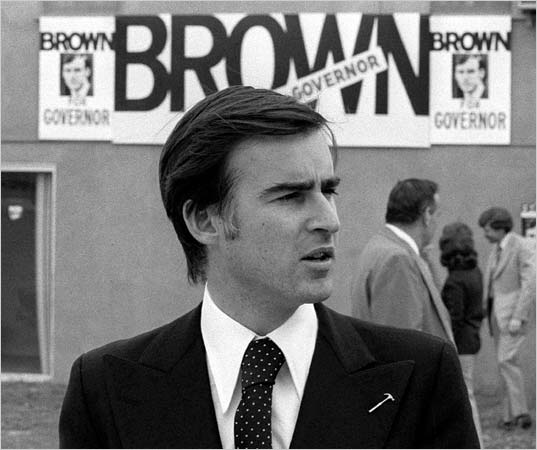
From James Fallows’ new Atlantic article about Gov. Jerry Brown 2.0, a passage about how California is America writ large, better and worse than ever:

As for the problems Brown and his state are wrestling with, they are America’s problems—but worse. Here we leave the governor for a moment to consider the environment he is working in, which is both emblematic of and surprisingly different from America as a whole.

You can go too far with the idea that California shows how all of America will look a few years from now. The state’s population is already more heavily Hispanic than the U.S. population might ever be: Hispanics, at nearly 40 percent, are about to overtake California’s ‘non-Hispanic white’ percentage to become the largest ethnic group in the state. (Nationwide, Hispanics are about 17 percent of the population.) Relative to the country as a whole, Asians also make up a larger share of California’s population—­roughly 15 percent of the state, versus about 8 percent of the country—while blacks and whites represent smaller shares. (California is about 40 percent white and 6 percent black, versus 63 percent and 12 percent, respectively, for the United States.) Largely because of these demographic shifts, the Republican Party, which a generation ago relied on California as the largest element of its Sunbelt base, now barely bothers to mount statewide races except those self-financed by political-novice millionaires like Meg Whitman, who lost badly to Brown in 2010, and Carly Fiorina, who lost badly to Barbara Boxer for the U.S. Senate that same year. In 2012, Barack Obama beat Mitt Romney by 3 million votes in California—and by only 2 million more in the other 49 states combined. In both houses of the state legislature the Democrats have, for now, a two-thirds ‘supermajority’ that allows them to prevail even against California’s version of the filibuster. ‘The Republicans appear to have no power,’ Jerry Brown told me. ‘Some of them are nice people, but they aren’t needed for any votes [in the legislature], and they don’t participate.’

In other ways tangible and subjective, California is an outlier. Its median income is much higher than America’s—but so is its unemployment rate. Its prison system is large and fantastically expensive. Two of its sizable cities (Stockton and San Bernardino) have filed for bankruptcy. And it has myriad other problems. Still, California is usefully representative of the country in one very important way. What is good, and bad, about America is better, and worse, in its most populous state.”

Tags: ,

In the future, the expensive cars being abandoned will likely be driverless. Privacy concerns won’t slow down the software, because trying to control your information in this era is as futile as trying to control what comes out of a 3D printer. From Timothy B. Lee at the Washington Post:

“Self-driving cars will make it easier for the authorities to track you everywhere you go. But the benefits of self-driving cars are likely to be so enormous that American consumers will sign up in droves, regardless of the privacy implications.

We know this because American consumers have already enthusiastically adopted a technology that allows the government to track their every movement: the cellphone. To complete incoming calls, your cellphone company needs to know where you are at all times. A few brave souls have rejected the technology on privacy grounds, but most have signed up without giving it a second thought.

The story will be much the same for self-driving cars.”

Tags:

From a post and podcast about human enhancement at Practical Ethics, a comment by Australian bioethicist Chris Gyngell about the world to come:

“In the near future parents may be able to directly alter the genetic make-up of their children using genetic engineering technologies (GETs). A popular model that has been proposed for regulating access to GETs is the ‘genetic supermarket.’ In the genetic supermarket parents are free to make decisions about which genes to select for their children with little state interference. One possible consequence of the genetic supermarket is that ‘collective action problems’ will arise. The combined result of individuals using the market to pursue self-interested gains may have a negative effect on society as a whole, and on future generations. n this paper Gyngell asks whether GETs targeting height, innate immunity, and certain cognitive traits would lead to collective action problems if available in the genetic supermarket. he argues that that the widespread availability of GETs targeting height are unlikely to lead to genuine collective action problems, but that those targeting innate immunity and aspects of our cognition, could.”

I’ve probably mentioned before that I love Steven Johnson’s book about Victorian Era epidemiology The Ghost Map. At Medium, the author pushes back against some points George Packer makes in his just-published New Yorker article (gated here) about Silicon Valley’s reach into politics. An excerpt:

“The first assumption, cited half a dozen times in the piece, is that the default political framework of the Valley is libertarian. When I was writing Future Perfectwhich makes a cameo in Packer’s piece—I spent quite a few pages clarifying that while the new ‘peer progressive‘ worldview shared some superficial characteristics with Randian libertarianism, it was in actuality fundamentally different. Yes, people who work in the tech sector today (particularly around the web and social media) believe in the power of decentralized systems and less hierarchical forms of organization. But that does not mean they are greed-is-good market fundamentalists. For starters, almost all of them recognize that their industry itself arose out of government funding (see ARPANET), and some of the most celebrated achievements of the digital culture (open source software, Wikipedia) involve commons-based collaboration with no conventional definition of private property whatsoever. It’s precisely because we lack a new vocabulary to describe this worldview that we end up lumping the tech sector together in the libertarian camp.

You can see this confusion most clearly in a series of datapoints that go amazingly unmentioned in Packer’s piece: namely, the election returns from last fall’s presidential race. As Nate Silver observed in a detailed postmortem on Northern California votes, Obama won Santa Clara county by 42% — more than ten times his margin nationally, and more than twice his margin in the rest of liberal California. (While San Francisco and Oakland have long been hotbeds of progressivism, Reagan won Santa Clara by double digits in both of his successful campaigns.) You would think such a dramatic swing to the left would at least warrant a mention in Packer’s piece, but from reading it, an outsider might reasonably assume that the Valley was a Republican stronghold—a vast army of Koch brothers with hoodies.

The numbers are even more stark when you look at campaign finance. According to Silver’s analysis, Google employees gave more than 97% of their political donations to Obama, with comparable percentages at Apple and eBay as well. If libertarianism is so rampant in Silicon Valley, why are they voting for higher taxes and funding a big government liberal by such overwhelming numbers?” (Thanks Browser.)

Tags: ,

Richard Linklater made Slacker, one of my favorite films, and spoke highly of George W. Bush, one of my least-favorite politicians. And until this very moment I forgot that I interviewed him years ago and he was a really forthright and honest subject. Linklater just did an Ask Me Anything on Reddit. A few exchanges follow.

________________________

Question:

In Slacker, it seems that you highlighted the “recent” rise of American Libertarianism and juxtaposed it with true anarchism (the Ron Paul ad and the old man being robbed). What side to you fall on, or were you trying to highlight the pros and cons of each philosophy?

Richard Linklater:

Glad you picked up on the nod to Ron Paul in Slacker. I’m with the Libertarian ideology on the freedom front… but I’m kind of a safety net guy, too — don’t like ideologies when they result in cruelty. There is a way in our world, given all of our resources, to have both.

________________________

 Question:

What do you think about the “childization” of movies these days? It seems that Hollywood marketing has successfully turned us all into children. Do you think we are as dumb as the movies we watch, or are we playing dumb in order to enjoy what is commercially available to us?

Richard Linklater:

A good question. A real chicken or egg situation. But as long as people keep going, the films you seem to be alluding to will certainly keep coming. At any moment there are a lot of options available for those who want to look a little deeper into the cinematic landscape.

________________________

Question:

Many of your films focus on time. Each film in the Before Trilogy takes place in the year you filmed it. Tape is all in real time. You have been filming Boyhood for over 10 years to properly age the main actors. What films influenced your unique cinematic perception of time?

Richard Linklater:

Hard to say what films. The ability to manipulate time is such a unique property to cinema. I spend more time thinking about how it affects narrative.

________________________

Question:

What does Keanu Reeves smell like?

Richard Linklater:

I’m pretty sure he smells like Keanu Reeves, if you’re lucky enough to get that close!

________________________

Question:

Have you ever had a lucid dream? Can you share the details?

Richard Linklater:

Yes. I’ve just realized I’m in one right now.•

________________________

Tags:

Politicians and organizations that tried to suppress the African-American vote during the 2012 election are angered that some of the targets of the IRS looking for tax-exempt infractions were Tea Party groups. Those who usually support racial profiling are angry that they, in a sense, were stopped and frisked. I’m against all of these investigations based on generalizations but also appalled by the hypocrisy. The opening of “Profiling Is Great…Except When You Do It to Me,” by Farhad Manjoo as Slate:

“Pretend you work at the Internal Revenue Service. Actually, let’s make this exercise even more terrible. Pretend you’re an underpaid, low-level clerk working in the understaffed IRS backwater of Cincinnati. Every day, a big stack of files lands on your desk. Every day, the stack gets a little bigger than the last. Each file represents a new application for a certain tax status—501(c)(4), a tax-exempt designation meant for ‘social welfare’ organizations. Nonprofits with this status aren’t required to disclose the identity of their donors and they’re allowed to lobby legislative officials. The catch is that they must limit their political campaign activity. According to IRS rules, 501(c)(4) groups can participate in elections, but electioneering must not be their ‘primary’ mission.

Got all that? Good—now let’s get to work. It’s your job to decide which 501(c)(4) applications represent legitimate social-welfare organizations, and which ones are from groups trying to hide their campaign activities. What’s more, you’ve got to sort the good from the bad very quickly, as you’re being inundated with applications. In 2010, your office received 1,735 applications for 501(c)(4) status. In 2011, the number jumped 30 percent, to 2,265, and in 2012 there was another 50 percent spike, this time to 3,357 applications.

So what do you do? You look for a shortcut. Someone at your office notices that a lot of the applications for 501(c)(4) status are from groups that claim to be part of the burgeoning Tea Party movement. Aha! When you’re looking for signs of political activity, wouldn’t it make sense to search for criteria related to the largest new political movement of our times? So that’s what you do: Without consulting senior managers, you and your colleagues set up a spreadsheet called ‘Be on the Lookout,’ or BOLO, which spells out specific criteria for flagging potentially politically active groups. The spreadsheet lists keywords like ‘Tea Party,’ ‘Patriots,’ and ‘9/12 Project.’ It also flags groups whose primary concerns are government spending, debt, and taxes, that criticize how the country is being run, or that advocate policies that seek to ‘make America a better place to live.'”

An excerpt from a blog post at the New Yorker in which George Packer, who just published The Unwinding: An Inner History of the New America, writes of some of the things he likes about our contemporary nation:

“Recent additions to American life that I would fight to hang onto: marriage equality, Lipitor, a black President, Google searches, airbags, novelistic TV shows, the opportunity for women to be as singlemindedly driven as their male colleagues, good coffee, safer cities, cleaner air, photographs of the kids on my phone, anti-bullying, Daniel Day Lewis, cheap communications, smoke-free airplanes, wheelchair parking, and I could go on.

In general, the things in my list fall into two categories: technological advances that make life easier, tastier, more entertaining, healthier, longer; and socio-political changes that have made the country a more tolerant, inclusive place. Over the past generation, America has opened previously inaccessible avenues to previously excluded groups, although in some cases the obstacles remain formidable, and in others (immigrant farm laborers, for example) there has hardly been any change at all. More Americans than ever before are free to win elective office or gain admission to a good college or be hired by a good company or simply be themselves in public. And they have more freedom to choose among telephones, TV shows, toothpastes, reading matter, news outlets, and nearly every other consumer item you can think of.

The bottom line in all these improvements is freedom. In America, that’s half the game.

The other half is equality.”

Tags:

From “After Catastrophe,” a Scott Carlson article in the Chronicle of Higher Education about the field of Resiliency, which holds that we shouldn’t try to eliminate risk at all costs but instead use resources to manage it better:

“Consider what has hit us hardest in recent years, how some of these disruptions came from or led to other woes: September 11, 2001; the 2003 Northeast blackout; the oil shock of 2008; the mortgage crisis and the Great Recession; Deepwater Horizon; the intense droughts; Hurricanes Katrina, Irene, and Sandy.

There are surely more disruptions to come. Stephen E. Flynn, a security expert and former military officer who is co-director of the George J. Kostas Research Institute for Homeland Security at Northeastern University, ticks off the most likely threats: a breakdown in the power grid; interruption of global supply chains, including those that provide our food; an accident at one of the many chemical factories in urban areas; or damage to the dams, locks, and waterways that shuttle agricultural products and other goods out to sea. The No. 1 threat, he says, is a terrorist attack that prompts lawmakers and a frightened public to shred the Bill of Rights or overreact in another way.

The tendency in government has been to focus intensely on these threats—or other problems, considering the wars on cancer, poverty, drugs, crime, and so on—and to try to eliminate them.

‘If you look at the post-World War II area,’ Flynn says, ‘there is almost an overarching focus on reducing risk and bringing risk down to zero,’ the idea that this could be done ‘if you brought enough science and enough resources and you applied enough muscle.’ Since 9/11, that policy has meant spending vast sums to go after terrorists out there, but perhaps we aren’t safer.

‘Why do we have all this money to go after man-made terrorist attacks, and then we let our bridges fall down?’ Flynn wonders.

He advocates a different approach. We should make American society more robust so that it can absorb shocks and carry on.”

Tags: ,

Mason Peck, Chief Technologist at NASA, just did an Ask Me Anything at Reddit. A few exchanges follow.

____________________________

Question:

Do you agree with Stephen Hawking when he said this: 

“It will be difficult enough to avoid disaster in the next hundred years, let alone the next thousand or million,””Our only chance of long-term survival is not to remain inward-looking on planet Earth, but to spread out into space.”

Do you think we are doing enough to secure our place in the universe?
Are we failing?

Mason Peck:

I make it a practice to never disagree with Stephen Hawking. I think our destiny lies among the planets of our solar system. It’ll take a combination of NASA, other governments of the world, and the participation of all of you to make this happen.

____________________________

Question:

In your opinion, what aspect of our current space technology (besides funding) is truly keeping us back from a trip to Mars? 

Mason Peck:

It comes down to survival of the crew. We need to create ways to help astronauts survive exposure to galactic cosmic rays and other hazards on the trip there and back. Getting there quicker would help. So that inspires the creation of advanced propulsion capabilities, but right now there’s nothing on the horizon to shorten the trip time enough so that we don’t have to worry about radiation.

____________________________

Question:

  1. What do you think is going to be the next “big thing” in space technology?
  2. Is there any technology currently being developed by NASA or any partners that you are excited about?

Mason Peck:

  1. I’m very excited by the prospect of citizen space, that is, individuals building their own space technology and launching it. Some incredible innovations come from the do-it-yourself or maker community, and I expect the renaissance in technology that makers represent will have a big impact on NASA’s future.
  2. NASA has many compelling technology projects underway. One of the more promising is inflatable aerodynamic decelerators, which will slow down spacecraft entering Mars atmosphere and will allow us to land twice as much mass as we are currently able.

____________________________

Question:

The trickle down of technology from NASA to the real world is well established. In your opinion what is the next big thing to coming down the line that will benefit society?

 Mason Peck:

It may be that someday we will explore the solar system and even settle it using hardware and supplies that we create from resources we gather from other planets. Advanced manufacturing technologies such as 3D printing may be the way that we will build all that hardware in space. What we learn from meeting that kind of challenge will have a big impact on manufacturing here on Earth.

____________________________

Question:

With companies like SpaceX wanting to put man on Mars in the foreseeable future, is there any competition at all between NASA and other space frontier companies to reach certain goals?

Mason Peck:

NASA is working with a number of commercial companies, including SpaceX, to bring about a future in which American industry will provide access to space for the sake of science or human exploration. In the past, NASA has entered into agreements known as data buys, where NASA agrees to procure the results of investigations – science data – instead of prescribing every step along the way. I believe this model can be very successful, and I hope we see more of it.

Tags:

Centralized mass media, controlled by few hands, had its sense of order usurped by the anarchy and interaction of the Internet, and now that demon energy, with all its good and bad, is nearly ready to be brought to the literal world from the virtual one–a rough beast slouching towards Bethlehem to be born. Will what is acceptable on a flat screen be so in 3D? Will all the many great things be undone by a few terrible ones? What is our direction and can we direct it?

A little bit about the idealistic and naive origins of the movement from Theodore Roszak’s 1985 essay, “From Satori to Silicon Valley“:

“Throughout the later seventies, many of the inventors and entrepreneurs-to-be of the rising personal computer industry were meeting along the San Francisco peninsula in funky town meetings where high-level technical problems and solutions could be swapped like backwoods lore over the cracker barrel of the general store. They adopted friendly, folksy names for their early efforts like the Itty Bitty Machine Company (an alternative IBM), or Kentucky Fried Computers, or the Homebrew Computer Club. Stephen Wozniak was one of the regulars at Homebrew, and when he looked around for a name to give his brainchild, he came up with a quaintly soft, organic identity that significantly changed the hard-edged image of high tech: the Apple. One story has it that the name was chosen by Steven Jobs in honor of the fruitarian diet he had brought back from his journey to the mystic East. The name also carried with it an echo of the Beatles spirit. And, in an effort to keep that spirit alive, Apple made the last heroic attempt to stage a big, outdoor rock gathering: the US Festivals of 1982 and 1983, on which Wozniak spent $20 million of his own money.

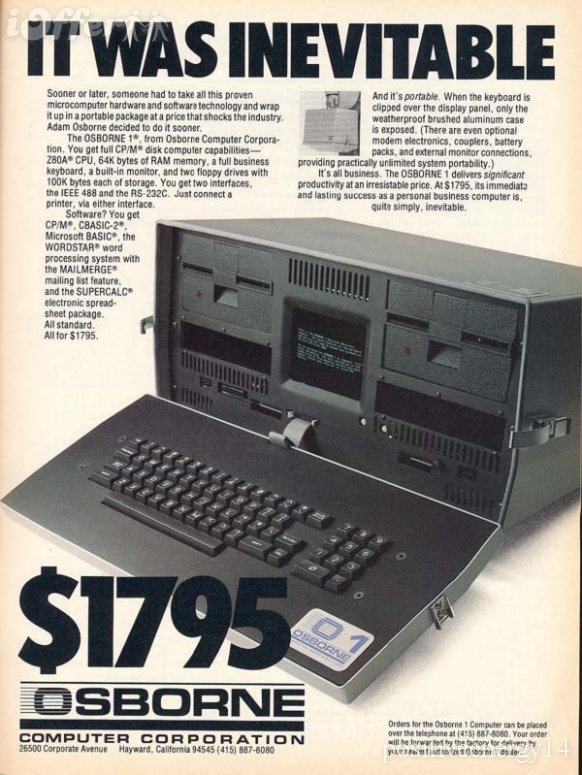
For the surviving remnants of the counter culture in the late seventies, it was digital data, rather than domes, arcologies, or space colonies, that would bring us to the postindustrial promised land. The personal computer would give the millions access to the databases of the world, which — so the argument went — was what they needed in order to become a self-reliant citizenry. The home computer terminal became the centerpiece of a sort of electronic populism. Computerized networks and bulletin boards would keep the tribes in touch, exchanging the vital data that the power elite was denying them. Clever hackers would penetrate the classified databanks that guarded corporate secrets and the mysteries of state. Who would have predicted it? By way of IBM’s video terminals, AT&T’s phone lines, Pentagon space shots, and Westinghouse communications satellites, a worldwide, underground community of computer-literate rebels would arise, armed with information and ready to overthrow the technocratic centers of authority. They might even outlast the total collapse of the high industrial system that had invented their technology. Surely one of the zaniest expressions of the guerrilla hacker worldview was that of Lee Felsenstein, a founder of the Homebrew Computer Club and of Community Memory, later the designer of the Osborne portable computer. Felsenstein’s technological style — emphasizing simplicity and resourceful recycling — arose from an apocalyptic vision of the industrial future that might have come straight out of A Canticle for Liebowitz. He worked from the view ‘that the industrial infrastructure might be snatched away at any time, and the people should be able to scrounge parts to keep their machines going in the rubble of the devastated society; ideally, the machine’s design would be clear enough to allow users to figure out where to put those parts.’ As Felsenstein once put it, ‘I’ve got to design so you can put it together out of garbage cans.’

It is important to appreciate the political idealism that underlay the home computer in its early days, and to recognize its link with tendencies that were part of the counter culture from the beginning. It is quite as important to recognize that the reversionary-technophiliac synthesis it symbolizes is as naive as it is idealistic. So much so that one feels the need of probing deeper to discover the secret of its strange cogency. For how could anyone believe something so unlikely?”

Tags:

Bill Gates has, unsurprisingly, taken a data-driven approach to disease eradication during his second and staggering act as a philanthropist of the highest rank. Aiming to eliminate polio in the near term from the entire world as it has been in India, he told Ezra Klein of the Washington Post how the intransigence of illness is often not virus nor bacteria but misinformation:

Ezra Klein:

So what did we learn that made eradication possible in India?

Bill Gates:

The two things that were done super well were social mobilization and mapping where the houses were. When somebody would refuse to take the vaccine, they would mark it down and they would have either a political leader or religious leader come in and convince them. Dealing with refusals is a huge part of this. If your team goes in, maybe they don’t speak the dialect, they’re not the same caste, the family has heard a rumor that the vaccine is bad, there’s many reasons you get refusals, and so you need follow-up for refusals. Usually you’ll get 10 to 20 percent refusals. But if there’s been a rumor, you get much higher refusals.

Ezra Klein:

A rumor that, say, the vaccine is bad, or it makes you sick?

Bill Gates:

Yeah or that the U.S. government uses vaccination campaigns to sterilize Muslim women. Vaccination always has problems with rumors. The U.S. doesn’t achieve nearly as high a vaccination rate as many countries. Vietnam is 99 percent vaccination, the U.S. is about 95 percent. Because people just hear ‘Oh, what about autism or something.’ But it’s particularly bad in poor countries.” (Thanks Browser.)

Tags: ,

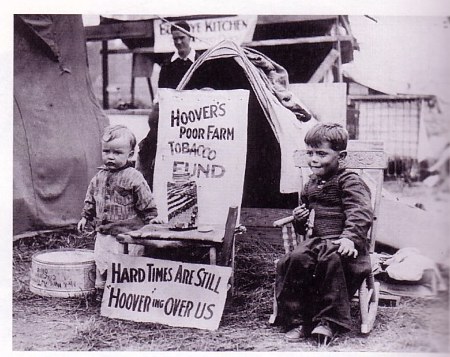
Maybe it’s the fairy tales we’re read as children or the guilt sometimes used to shape us into adults, but our economic policy in the aftermath of collapse is often guided by a false sense of morality. It’s dangerous and can make a bad situation worse, can land us in Hoovervilles. From Paul Krugman’s New York Review of Books piece about a slate of just-published volumes about financial austerity, a passage about the psychology that makes us feel good but is bad for us:

“Everyone loves a morality play. ‘For the wages of sin is death’ is a much more satisfying message than ‘Shit happens.’ We all want events to have meaning.

When applied to macroeconomics, this urge to find moral meaning creates in all of us a predisposition toward believing stories that attribute the pain of a slump to the excesses of the boom that precedes it—and, perhaps, also makes it natural to see the pain as necessary, part of an inevitable cleansing process. When Andrew Mellon told Herbert Hoover to let the Depression run its course, so as to ‘purge the rottenness’ from the system, he was offering advice that, however bad it was as economics, resonated psychologically with many people (and still does).

By contrast, Keynesian economics rests fundamentally on the proposition that macroeconomics isn’t a morality play—that depressions are essentially a technical malfunction. As the Great Depression deepened, Keynes famously declared that ‘we have magneto trouble’—i.e., the economy’s troubles were like those of a car with a small but critical problem in its electrical system, and the job of the economist is to figure out how to repair that technical problem. Keynes’s masterwork, The General Theory of Employment, Interest and Money, is noteworthy—and revolutionary—for saying almost nothing about what happens in economic booms. Pre-Keynesian business cycle theorists loved to dwell on the lurid excesses that take place in good times, while having relatively little to say about exactly why these give rise to bad times or what you should do when they do. Keynes reversed this priority; almost all his focus was on how economies stay depressed, and what can be done to make them less depressed.

I’d argue that Keynes was overwhelmingly right in his approach, but there’s no question that it’s an approach many people find deeply unsatisfying as an emotional matter. And so we shouldn’t find it surprising that many popular interpretations of our current troubles return, whether the authors know it or not, to the instinctive, pre-Keynesian style of dwelling on the excesses of the boom rather than on the failures of the slump.”

Tags:

Why didn’t Microsoft, the most powerful technology company in the world in 1995, own the Internet? Why was Barnes & Noble toppled by Amazon when B&N initially had so many more advantages? Because power and advantages and size are also barriers to adaptation. The dinosaur is large but unwieldy. There is a natural inclination to protect what has succeeded in the past even if it dooms the future. But these are mere corporations and it matters only to stockholders which one wins. But what about more important losses? Have we failed to counteract climate change for so long for these same reasons? Are we now the dinosaurs? From Martin Wolf at the Financial Times:

In brief, humanity is conducting a huge, uncontrolled and almost certainly irreversible climate experiment with the only home it is likely to have. Moreover, if one judges by the basic science and the opinions of the vast majority of qualified scientists, risk of calamitous change is large.

What makes the inaction more remarkable is that we have been hearing so much hysteria about the dire consequences of piling up a big burden of public debt on our children and grandchildren. But all that is being bequeathed is financial claims of some people on other people. If the worst comes to the worst, a default will occur. Some people will be unhappy. But life will go on. Bequeathing a planet in climatic chaos is a rather bigger concern. There is nowhere else for people to go and no way to reset the planet’s climate system. If we are to take a prudential view of public finances, we should surely take a prudential view of something irreversible and much costlier.

So why are we behaving like this?

The first and deepest reason is that, as the civilization of ancient Rome was built on slaves, ours is built on fossil fuels. What happened in the beginning of the 19th century was not an ‘industrial revolution’ but an ‘energy revolution.’ Putting carbon into the atmosphere is what we do.” (Thanks Browser.)

Tags:

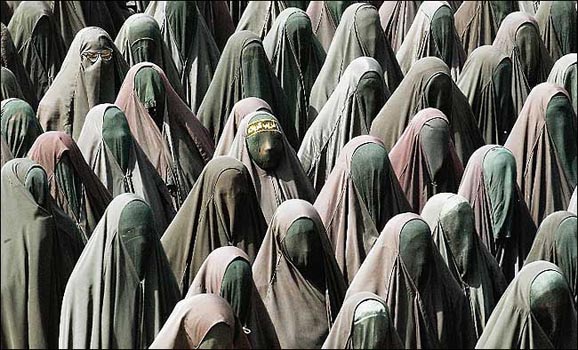
From The Philosopher’s Beard, the opening of a post that offers non-bigoted justifications for a ban on burqas in open societies, though I don’t think the arguments would be deemed acceptable if applied to other orthodox belief systems:

“Bans on wearing the burqa and other face-covering religious garb (such as are under consideration or recently passed in several European countries) fall under a class of restrictions by government on the free choice of individuals over private matters. They thus have the appearance of being illiberal, of disrespecting people’s natural rights to manage their own affairs in general, and to follow their own plan of life in particular. In fact, it is possible to justify such a ban in liberal terms. But not just any kind of ban will do.

Political debate about the burqa in the west is dominated by an unfortunate bigotry, a species of moral foolishness antithetical to liberalism. I have heard and read serious arguments for banning the burqa because it causes vitamin D deficiency (lack of sunshine), because people will try to rob banks dressed in burqas, because this is alien to our face-to-face culture, and so on. Such arguments are, respectively, trivial, stupid, and xenophobic (if not racist).

Yet it seems to me that there are in fact plausible liberal arguments for banning the burqa (and various other things, such as addictive drugs), which focus on the harms that the burqa may do to the personal autonomy of particularly vulnerable women and girls.”

« Older entries § Newer entries »