Politics

You are currently browsing the archive for the Politics category.

Those drones we send out to “cleanly” do our dirty work will no doubt eventually become tools of terror. Eric Schmidt tells the Guardian that we should ban privately owned drones, but it would seem to be impossible in our maker culture to put that cat back in the basket. An excerpt from the article:

“The use of cheap, miniature ‘everyman’ drones needs to be banned by international treaties before such devices fall into the hands of private users including terrorists, the head of Google has said.

In an extended interview with the Guardian, Eric Schmidt, executive chairman of Google and an adviser to Barack Obama’s Presidential campaign, warned of the potential of new technology to ‘democratize the ability to fight war,’ and said drones could soon be used to harass and spy on neighbors.

‘You’re having a dispute with your neighbor,’ he hypothesized. ‘How would you feel if your neighbor went over and bought a commercial observation drone that they can launch from their back yard. It just flies over your house all day. How would you feel about it?’

Schmidt set out the trajectory of robotic warfare and considered whether it would be confined solely to national governments. ‘It’s probable that robotics becomes a significant component of nation state warfare,’ he said.

‘I’m not going to pass judgment on whether armies should exist, but I would prefer to not spread and democratize the ability to fight war to every single human being.'”

Tags:

From “China: Year Zero,” Christian Caryl’s Foreign Policy piece about the modest beginnings of an economic miracle, an excerpt about Americans attending 1979’s curious Canton Trade Fair:

On the appointed day, they set off from Guangzhou in a van that jolted down hideous dirt roads for hours. At one point it broke down, and everyone had to get out and walk to a spot where the Chinese hosts were able to arrange for another ride. The walk was not a total loss; the little group passed by a rural private market where local farmers were hawking all manner of produce, a vignette none of the Americans in the group could ever remember having seen before.

Finally, after a full day’s journey in the intense heat, they arrived at their destination. It turned out to be just across the border from Hong Kong — not far from the Lo Wu crossing where all foreigners made their entry into mainland China. (In these days you couldn’t fly directly to Beijing from the outside world.) The bewildered Americans followed their hosts to the top of a dike, where the Chinese guides gestured at the vista spread before them. It was not clear what they were meant to look at. All that the Americans could see was the usual South China landscape: There were rice paddies, worked by peasants and their water buffalos in the time-honored manner, and duck ponds. There were a few trees, and here and there a modest peasant dwelling. What the Chinese were describing seemed to bear no relationship to the observable reality. This, they told the Americans, was the location of something called the Baoan Foreign Trade Base. The party had designated it as a special location for foreign investment. According to the plans under consideration, it would soon be the site of chemical factories and textile mills and manufacturing plants. And, oh yes, there would also be plenty of hotels for the foreign businessmen. It was going to be a wonderful chance to make money.

The Americans thought the Chinese were crazy. ‘It stretched everybody’s imagination,’ [Tom] Gorman said. ‘I don’t think there was one of us who listened to the briefing and thought, ‘Yeah, that sounds feasible.’ It was, emphatically, ‘Come on, what are you smoking?’

The next day, after an uncomfortable night spent in the only existing local hotel (which had no electricity or running water), the Americans attended a briefing where the Chinese unrolled blueprints that depicted acres of factories, warehouses, and other facilities. The plans betrayed a startling ambition. ‘It was really hard to believe,’ Gorman recalled. ‘Nothing in China at that point happened quickly — except politics. Business and construction didn’t happen on those kinds of timelines.'”

Tags: ,

A very smart piece from W. Kamau Bell, who’s uncommonly good at seeing the silliness of the things that separate us and the serious consequences such a divide can have.

Tags:

Hooshang Amirahmadi, a Rutgers Public Policy professor of Iranian birth, is running an unlikely campaign to become the next President of that country and supplant the wackjob Mahmoud Ahmadinejad. A return engagement for the Shah may seem more likely, as Amirahmadi’s attempt is largely being powered by social media, including Facebook and Reddit, which have greater prominence outside of Iran than within it. He just did an Ask Me Anything at the latter site. A few excerpts follow.

__________________________

Question:

Do you believe that Iran can give up its nuclear program and rest assured that the United States will not meddle in Iran’s internal affairs well into the future?

Hooshang Amirahmadi:

The problem between the US and Iran did not start with the nuclear issue, rather with the Islamic Revolution or even the 1953 coup. I don’t believe a nuclear Iran can be immune from US intervention nor can a non nuclear Iran necessarily face US intervention. There are many countries with nuclear power that face American intervention (Pakistan) and other nations without nuclear power that do not face intervention (Turkey). Therefore, the nuclear technology is irrelevant to the way american foreign policy operates. What matters is the strategic relationship between the US and the particular country.

__________________________

Question:

I was just wondering what are your views on women’s rights and how they should dress?

Hooshang Amirahmadi:

There should be no difference between men and women. All laws for men should be the same for women, including the dress code. We support a free society for all and elimination of all kinds of discrimination against women and other disadvantaged groups. Of course while women should be able to choose their lifestyle privately, they must be held accountable for their choices in the public arena as well, just like men have to.

__________________________

Question:

How do you feel about Israel?

Hooshang Amirahmadi:

The animosity between Iran and Israel is unfortunate but entirely reconcilable. The fact of the matter is that the two countries have no territorial, religious, historical, nor ideological dispute. During much of Iran’s history, good relations were in place with Israel. The only thing that stands in the way is this: the Islamic Revolution. In 1979, Iran had a revolution that enshrined in its constitution the mandate to stand up for oppressed peoples around the world. It identified the Palestinians as one of those people and has taken a rejectionist stance toward Israel as a result. Therefore, the root of this problem lies in solving the Israeli-Palestinian problem. This has been a conflict since at least 1948, thirty years before the Islamic Revolution. I believe that the only lasting, peaceful solution is a two state solution with a viable, independent Palestinian state and a safe Israel with secure borders. Once that Israeli-Palestinian problem is solved, I believe the Iranian-Israeli conflict will go away much quicker than many imagine.

__________________________

Question:

If your two-state solution doesn’t work, what will happen with Israeli-Iranian relations? Will you remain neutral?

Hooshang Amirahmadi:

The two state solution is a realistic approach and is reachable as there is no other alternative. Unfortunately, because of certain tensions in the region and Israel’s nervousness about its security, the two state solution is being postponed. A change of administration in Iran and a few other regional countries will certainly help bring Israelis in line w a two state solution. This will happen and it is a matter of time. Again, it will happen only if the animosity toward Israel in the region is reduced making Israel more certain of its security in the future.

__________________________

Question:

Do you worry about being killed? Have there been threats or attempts on your life? And how do you avoid this?

Hooshang Amirahmadi:

I do not worry about this, and there have not been threats on my life. I don’t believe there is any reason for such a thing to take place because everything I promote is pro-peace and within the framework of the Islamic Constitution. I am not promoting war, sanctions, nor regime change. I am simply trying to offer positive solutions to the issues that matter to Iranians, as well as the international community, the most. From the inflation and unemployment, to US-Iran relations and foreign policy, I have never said anything that is out of the bounds of the country’s constitution.

I have always said that I have zero interest in being a martyr!

___________________________

Question:

Where do you envision Iran being in ten years?

Hooshang Amirahmadi:

In ten years, I envision Iran as an economically and politically stable country that is at peace with the US and all of its neighbors. I remain an eternal optimist and will do everything I can to be a part of this developmental process. Iran’s current economic situation is unfortunate, since Iran is actually a very wealthy country with rich energy and natural resources, a highly-educated workforce, varying climates, access to strategic waterways, and many other positive attributes. The reasons holding back Iran’s economic development are primarily mismanagement and sanctions. As someone who has been a peacemaker in US-Iran relations for thirty years, I would be best positioned to help realize that peace. In addition, economic development is my academic and professional background. I have taught international development and public policy as a tenured professor at Rutgers and have worked for many governments and international organizations on development. I wish to offer my background and expertise to help develop Iran economically as well. A lot can be achieved in ten years!

____________________

Iran just 34 years ago:

Tags: ,

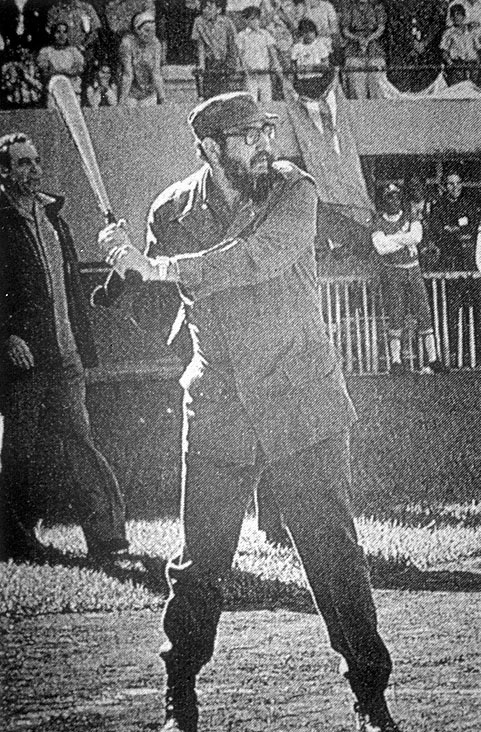
Fidel Castro visited by Ed Sullivan in 1959 after the triumphant revolution, promising a democratic Cuba that never materialized.

Tags: ,

I don’t think it’s a proverb, but it should be: Happy are the ones who have stupid enemies. The GOP which has gone increasingly apeshit over the past few decades has now reached the point of certifiable. But the lords of the party aren’t just wrong-minded about their politics but their strategies as well. Those they demonize have nothing to worry about. Two examples:

1) Smirking crapbag Dick Cheney, whose sheer incompetence and dishonesty in regards to Iraq got nearly 5,000 of our soldiers killed and likely more than 100,000 innocent Iraqis, has stated that Hilary Clinton should be subpoenaed in regards to Benghazi. And it’s completely fine to fully investigate that horror and its aftermath, but for someone who fucked over the entire world to be treating Clinton like a war criminal because several people were tragically killed in the madness of the modern-day Middle East shows just how much of his own poison Cheney has gulped. The lack of accountability and proportion is stunning.

2) The Koch brothers want to buy lots of newspapers and use them as propaganda for their right-wing madness, and while that would suck for the fine journalists who work at various papers, it shows how out of touch these dunderheads are. Instead of using their money in effective ways, they are going to buy media in its twilight and appeal to a dying demographic. From Hamilton Nolan at GawkerEvil corporatist archconservative billionaires the Koch brothers are considering making a bid to buy several big newspapers from the Tribune Co., including the LA Times and the Chicago Tribune. Unions and liberal politicians are justifiably alarmed by this prospect. They’re trying to pressure the shareholders not to sell to the Kochs. Here’s another, perhaps more productive idea: let the Kochs buy that crap.

The Koch brothers, much like fellow archconservative billionaire Rupert Murdoch, are old. Old, and rich, and conservative. This means a few things:

1. They feel (wrongly, not that it matters) that the media has an incorrigible liberal bias against their interests.

2. They have enough money to buy media outlets.

3. They don’t understand new media.

Therefore, rich old conservatives, like Rupert Murdoch or Philip Anschultz or the Koch brothers love the idea of buying newspapers. They don’t care that the era of newspaper dominance of the media is now permanently over.”

Tags: , , , ,

Whenever President Obama endures a setback or is stymied by the GOP-controlled Congress, he’s all but pronounced as finished by some members of the media, and that will only increase as we progress in his second term, the lame-duck one. But when Obama holds a press conference to decry the defeat of gun background checks, he isn’t just arguing that issue. That’s just the battle, and he wants to win the war. Every time the President appeals to the common sense and decency of the American people, every time he speaks to the future and progress, he’s putting the country on a path that resembles his vision. The President is playing the long game.

The bigger picture is that the Republicans will likely maintain its Congressional majority in the midterm elections in 2014 because of gerrymandering, but what if Hillary Clinton runs in 2016 and the more moderate Republicans all take a pass? That could be a landslide that completes Obama’s goal, that gives his party the wherewithal to drive the nation’s politics for decades. That’s the long game, that’s his far-reaching hope. 

Whenever you consider Obama’s presidency, sure, think of universal health care, energy independence and the drawing down of two wars. But also recall the thesis sentence from his candidacy in 2008, which he articulated to the Reno Gazette-Journal, a remark that ruffled stalwarts of both parties at the time: 

“Ronald Reagan changed the trajectory of America in a way that, you know, Richard Nixon did not, and in a way that Bill Clinton did not,” Mr. Obama told the newspaper. “He put us on a fundamentally different path because the country was ready for it. He tapped into what people were already feeling, which is, we want clarity, we want optimism, we want, you know, a return to that sense of dynamism and, you know, entrepreneurship that had been missing.”

Tags:

Marshall McLuhan thought traditional education was dead as soon as the Industrial Age began changing into a Digital one, thanks to TV’s potential to bring answers more directly to students of all ages. While his contemporary Ivan Illich thought we should shutter the schools, McLuhan favored a modernized Socratic method rather than repetition and memorization. Television turned out to be largely a false god, but the Internet is the real deal, both holy and unholy–abundant and interactive and interconnected and always quietly taking as much as it gives. What will become of the classrooms?

Tags: ,

Alec Ash of the Los Angeles Review of Books has an interview with science-fiction author Fei Dao of China, arguably the most sci-fi place on Earth right now, a nation careering wildly into its future, though oddly mostly utilizing pieces of the Western industrial past to get there. So far, at least. An excerpt:

Question: 

What is unique or particular about Chinese science fiction?

Fei Dao:

Chinese sci fi has about a hundred years of history. When it started, in the late Qing dynasty around 1902, it was chiefly concerned with the problem of bringing ancient China into modernity. At that time, Liang Qichao [translated sci fi] because he thought it would be beneficial for China’s future … as something that could popularize scientific knowledge. And Lu Xun thought that if you gave ordinary people scientific literature to read, they would fall asleep. But if you blended scientific knowledge into stories with a plot, it would be more interesting. [He thought that] in this way, the people could become more modern.

So at that time science fiction was a very serious thing to do in China that could allow ordinary people to get closer to modern scientific knowledge, and serve as a tool for transforming traditional culture into modern culture. It played a very important role, and had a serious mission to accomplish.

Today, there is a commercial publishing market for sci fi, and people don’t have such weighty expectations of literature, yet authors are still discussing serious topics. Three Body by Liu Cixin or Subway (地铁) by Han Song both have many reflections about the direction of this country and of humanity. So this kind of writing can convey concerns about the future, or discuss the current situation in China.

For example, Han Song’s Subway is about a subway station. In China, subway systems are an emblem of modernization. Many cities in China are building huge subway systems, because to have one or not is the standard of a city’s modernity and development. So in discussing this symbol, Han Song seized on a sensitive point. After publishing Subway, he wrote another book called Highspeed Rail (高铁), another emblem of technological innovation. So Han Song is consistently concerned with the potential catastrophes of the process of modernization.

Liu Cixin, on the other hand, is expressing a more grand feeling of the universe in the tradition of Western sci fi. In doing so, he wants Chinese people to look up at the sky, and not just be concerned with earthly matters. The mainstream of Chinese literature is about real-world subject matter, such as the countryside or urban life. Very few people are concerned with the fate of humankind, the future of the universe, or even aliens. These things are themselves alien to Chinese readers, but can be introduced through this kind of writing.

I think that the key theme of Chinese science fiction, no matter how it develops, is how this ancient country and its people are moving in the direction of the future.”

Gerrymandering has allowed an out-of-favor political party to control Congress, to stem the flow of economic revival for all but a few in an extremely top-heavy American economic recovery. From Gillian Tett is the Financial Times:

“A few weeks ago, when I was chatting with the head of one of America’s largest food and drink companies, he made a revealing comment about data flows. Like most consumer groups, this particular company is currently spending a lot of money to monitor its customers with big data.

But it is not simply watching what they do or do not buy. These days it is increasingly scrutinizing the micro-level details of pay and benefit cycles in every district in America. The reason? Before 2007, this executive said, consumer spending on food and drink was fairly stable during the month in most US cities. But since 2007, spending patterns have become extremely volatile. More and more consumers appear to be living hand-to-mouth, buying goods only when their pay checks, food stamps or benefit money arrive. And this change has not simply occurred in the poorest areas: even middle-class districts are prone to these swings. Hence the need to study local pay and benefit cycles.

‘We see a pronounced difference between how people are shopping today and before the recession,’ the executive explained. ‘Consumers are living pay check by pay check, and they tend to spend accordingly. Then you have 50 million people on food stamps and that has cycles too. So for our business it has become critical to understand the cycle – when pay [and benefit] checks are arriving.'”

Tags:

Fitting dementia patients with a GPS so that they can be monitored and recovered doesn’t seem like such a bad idea to me, but Sussex police have gotten a strong reaction to such a scheme. From the Guardian:

“Police have defended a ‘barbaric’ decision to buy GPS locating devices to trace people with dementia who disappear.

Sussex police have bought six battery-powered locators as part of a attempt to save money and time spent on searching for dementia patients.

The National Pensioners Convention described the introduction of the devices as ‘barbaric’ and suggested people could be stigmatized and made to feel like criminals.

But Sergeant Suzie Mitchell said: ‘The scheme is only costing Sussex police a few hundred pounds but, comparing this to police time, resources, potential risk to the missing person, let alone the anxiety and worry for their family, it is, in my opinion, a few hundred pounds well spent.'”

Tags:

This epoch in America will likely be remembered for our great divide–economically, scientifically, culturally and educationally. These aren’t the worst of times, but they are the best of times for fewer and fewer. From Jordan Weissmann at the Atlantic, a passage about the top-heavy success of our educational system:

“When you look at the average performance of American students on international test scores, our kids come off as a pretty middling bunch. If you rank countries based on their very fine differences, we come in 14th in reading, 23rd in science, and 25th in math. Those finishes led Secretary of Education Arne Duncan to flatly declare that ‘we’re being out-educated.’

And on average, maybe we are. But averages also sometimes obscure more than they reveal. My colleague Derek Thompson has written before about how, once you compare students from similar income and class backgrounds, our relative performance improves dramatically, suggesting that our educational problems may be as much about our sheer number of poor families as our supposedly poor schools. This week, I stumbled on another data point that belies the stereotype of dimwitted American teens. 

When it comes to raw numbers, it turns out we generally have far more top performers than any other developed nation.”

Tags:

David Scott Milton, a writer who taught composition to inmates at maximum-security prisons for more than a dozen years, just did an Ask Me Anything on Reddit. A few exchanges follow.

____________________________

Question:

So are all people redeemable, or are there truly some that have no conscience, and no empathy? 

Answer: 

One of the astonishing things that I discovered in working in the prison- I had no idea of this from the outside- on the maximum yard, 5 to 10% of the inmates are unredeemable. They should probably be locked away and never thought of again. 5 to 10% (in my opinion) are likely innocent and wholly redeemable. The other 80% run the gamut from mostly redeemable to barely redeemable.

The tragedy is that they’re all lumped together.

____________________________

Question:

What is it you think separates the irredeemable 10% from the rest? 

Answer: 

I think the irredeemable 10% were just broken beyond repair. Either they were born sociopaths or life ground them down so hard and so fast that there wasn’t enough human emotion remaining to work with. Though I’d say legitimate, diagnosable sociopaths were rare, there was definitely that 5 to 10% that was so without empathy that they might as well have been.

Most of the prisoners I met who were like that had had unspeakable things happen to them in childhood, so in a sense they were victims, but I couldn’t pity them. I should add that not many of these ended up in my class. Once they were in prison many of them either became very apathetic or focused more on manipulating the hierarchy inside the prison for their own ends, and I wasn’t useful in either case.

____________________________

Question:

What is your craziest/wildest experience teaching at the prison?

Answer:

There were half a dozen times over 13 years where I thought I was in serious danger. These were one-on-one confrontations where, if the prisoner had felt like killing me, I’d have been dead… And I thought he might feel like killing me.

The craziest was when a female guard was walked off the yard after she was caught en flagrante delicto with an inmate. They escorted her off the yard, and it turned out her husband worked there too. He was a tower guard with a loudspeaker, and he was screaming insults at her as they walked her off. Also, as a tower guard, he had a gun, but luckily he never fired at her. All the inmates were forced to lie flat on the ground, but they found the whole thing very entertaining, hooting and hollering. It was a madhouse.

Question:

I can’t believe she would be so stupid while her husband was working there!

Answer:

Especially considering he was armed!

____________________________

Question:

How has working in the prison affected you? Both you personally and your views on prisoners/prisons.

Answer:

When I first started, I was very interested in my students and their stories, interested in the whole world they inhabited. But as time went on it really wore on me, reading about their murders, hearing about their abuse (many of them had been abused horribly as children by monsters before becoming monsters themselves)… It’s a coldness that seeps into your soul, and eventually it becomes almost too much to handle. I think it’s similar (though not nearly as intense) as what social workers experience, just being exposed to the full spectrum of human cruelty.

As far as my views on prisoners and prisons, the main thing that was affected was my judgmental nature. Before I went in, I saw crime as black and white. I was a proponent of the death penalty. And I believed there was something fundamentally different between me and someone who could commit murder. Teaching in the prisons taught me that there is very little separating any of us from a criminal. I had very few students who I believe were sociopaths, completely irredeemable. Most of the students I worked with were just kids who never had a chance and grew up to be something horrible. And many of the students I worked with were normal people who made one horrible mistake while high, or in a fit of rage or jealousy.

I also no longer believe in the death penalty, because there were a few students I had who I genuinely believe were innocent.

Tags:

This might not matter to any readers outside of NYC, but our current mayoral race features the usual cast of characters, party-machine hacks and some outsider eccentrics, and none are very inspiring. It’s so bad that some have suggested that the disgraced former congressman Anthony Weiner get into the race. I don’t understand that one. Even before his fall from grace, I never quite knew what Weiner was supposed to be good at, apart from being young and ambitious. But what if Eliot Spitzer decided to run for mayor?

We know Spitzer is a weirdo creep, and his management skills as the Governor of New York State were lacking. But he’s a very bright and talented person who was on to all the Wall Street shenanigans long before they laid our economy low. 

Here are two things he would have to convince voters of before they could consider supporting him: Has he given up mistreating women? Has he learned from his stint in the governor’s mansion that consensus-building is important, that enemies should be treated as enemies, but potential allies shouldn’t be?

New Yorkers aren’t so rigidly moralistic that they would turn down the best option politically even if that person is damaged goods. Likely though, the Spitzer question is one we’ll never have answered.•

Tags:

At the White House Correspondents’ Dinner, President Obama’s best joke was this one: “I know Republicans are still sorting out what happened in 2012, but one thing they all agree on is they need to do a better job reaching out to minorities. And look, call me self-centered, but I can think of one minority they could start with. (Laughter.) Hello? Think of me as a trial run, you know?”

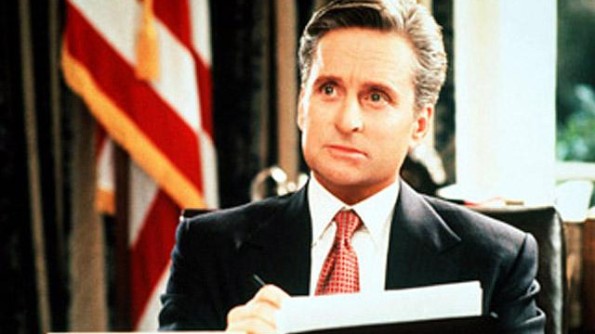
But a close second was this: “Of course, everybody has got plenty of advice. Maureen Dowd said I could solve all my problems if I were just more like Michael Douglas in The American President. (Laughter.) And I know Michael is here tonight. Michael, what’s your secret, man? (Laughter.) Could it be that you were an actor in an Aaron Sorkin liberal fantasy? (Laughter.) Might that have something to do with it?”

I know that well-to-do op-ed writers, tossing their precious bon mots, are generally as divorced from the reality of how most Americans live as Washington politicians are, but it amazes me how people who are Beltway insiders can think of politics as a fantasy world. FromObama and the Myth of Arm Twisting,” a New York Review of Books piece by Elizabeth Drew:

“The nonsense about what it takes for a president to win a victory in Congress has reached ridiculous dimensions. The fact that Barack Obama failed to win legislation to place further curbs on the purchase of guns—even after the horror of Newtown, Connecticut—has made people who ought to know better decide that he’s not an “arm-twister.” Ever since Obama took office, others have been certain about how he should handle the job and that he wasn’t doing it right.

Yet if the health care law is allowed to work, despite continuing Republican efforts to try to make sure that it doesn’t, and if we take into account some other victories—the Lilly Ledbetter Act, the stimulus that was as large as the political market would bear, the Dodd-Frank financial regulation bill, the largest since the New Deal if Congress will let it be implemented—his presidency could go down as a time of historic achievement.

Nevertheless, when an insufficient number of senators was available to kill a hypothetical filibuster of the gun bill—a watered-down measure to expand background checks for gun sales (while opening gaping loopholes)—suddenly the word went out that the president is hopeless as an arm-twister; the assumption of course was that being a good arm-twister was critical for a successful presidency.

Wait a minute.

Arm-twisting is a narrowly defined and seldom successful maneuver by which a president can supposedly work his will with the legislature. It assumes that an elected official will cry “uncle” and change his or her mind upon being visited with presidential blandishments and threats: If you vote this way I will see to it that you get that dam. Or the other way around. Or: If you don’t vote for me on this I will make your life miserable for however long you are in office. That’s the popular image.

The problem is that such threats are rarely successful and a president would be most unwise to try to adopt them as a method of governing.”

Tags: , ,

FromRemote Control,” Steve Coll’s provocative New Yorker book-review piece about warfare that seems less awful, that resembles a video game, that still kills:

“During the nineteen-seventies, it seemed as though this era of covert action were coming to an end. After a congressional investigation exposed the extent of C.I.A. plots, President Gerald Ford issued an executive order banning political assassinations. Successive Presidents strengthened the ban with executive orders of their own, codifying a growing bipartisan consensus that assassinations undercut America’s avowed commitment to democracy, human rights, and the rule of law.

But after September 11, 2001, as lower Manhattan and the Pentagon smoldered, C.I.A. leaders advocated for the right to kill members of Al Qaeda anywhere in the world. George W. Bush eagerly assented. On September 17th, the President signed a still classified directive delegating lethal authority to the agency. ‘The gloves come off,’ J. Cofer Black, the director of the agency’s Counterterrorist Center, told Congress early in 2002.

Since then, America’s targeted-killing program has grown into a campaign without borders, in which the White House, the C.I.A., and the Pentagon all play a part. The role of armed drones in this war is well known, but for years neither President Obama nor his advisers officially acknowledged their existence. Some three thousand people, including an unknown number of civilians, are believed to have died in targeted strikes since 2001. If the death tolls from strikes in Iraq and Afghanistan were included, the figure would be much higher.

An assassination campaign against suspected terrorists is not the same as one that occasionally rubs out unfriendly political leaders of nation-states, but it raises similar questions. Is a program of targeted killing, conducted without judicial oversight or public scrutiny, consistent with American interests and values?”

Tags:

The idea that energy independence would allow America to shelter itself from entanglements abroad never seemed like more than an election-year promise when gas prices had spiked. It was more a thing about pride than practicality. In the future, perhaps it won’t be who controls the oil but maybe who has the water or the grain or the technology or whatever. And even if we have everything we need on the domestic front, we still won’t be isolationists. From Benjamin Alter and Edward Fishman in the New York Times:

“JUST as the world was writing off America as a declining power, the country now finds itself on the cusp of realizing one of its longstanding goals: energy independence.

A wave of new technologies has made it possible to extract oil and gas from shale rock formations, and the results have been astonishing. By some estimates, the United States is on track to overtake Saudi Arabia as the world’s largest oil producer as early as 2017, start exporting more oil and gas than it imports by 2025, and achieve full energy self-sufficiency by 2030.

American politicians in both parties have long dreamed of energy independence — not only for its potential economic benefits, but also because it could free the United States from the vicissitudes of the outside world.

Last March, President Obama said that new energy sources and technologies would make America ‘less dependent on what’s going on in the Middle East.’ The Romney campaign, meanwhile, argued that energy independence would mean that ‘the nation’s security is no longer beholden to unstable but oil-rich regions halfway around the world.’

But that is a fantasy. While the latest energy revolution will be a boon to America’s economy, it will in no way allow the United States to turn its back on the rest of the world.

That’s because America’s oil and gas bonanza will drive down global energy prices, undercutting the foundations of petrostates everywhere.”

Tags: ,

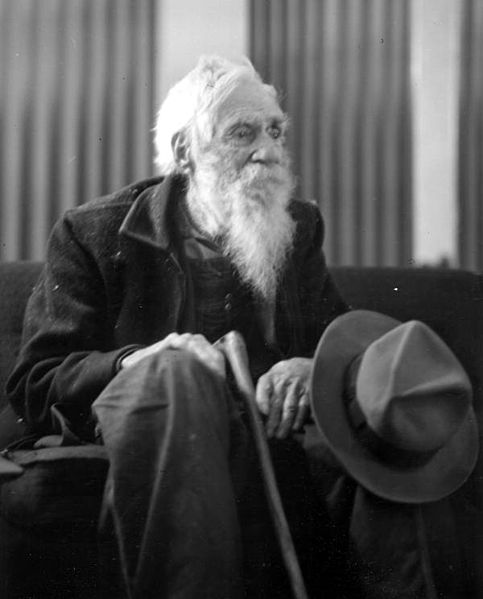
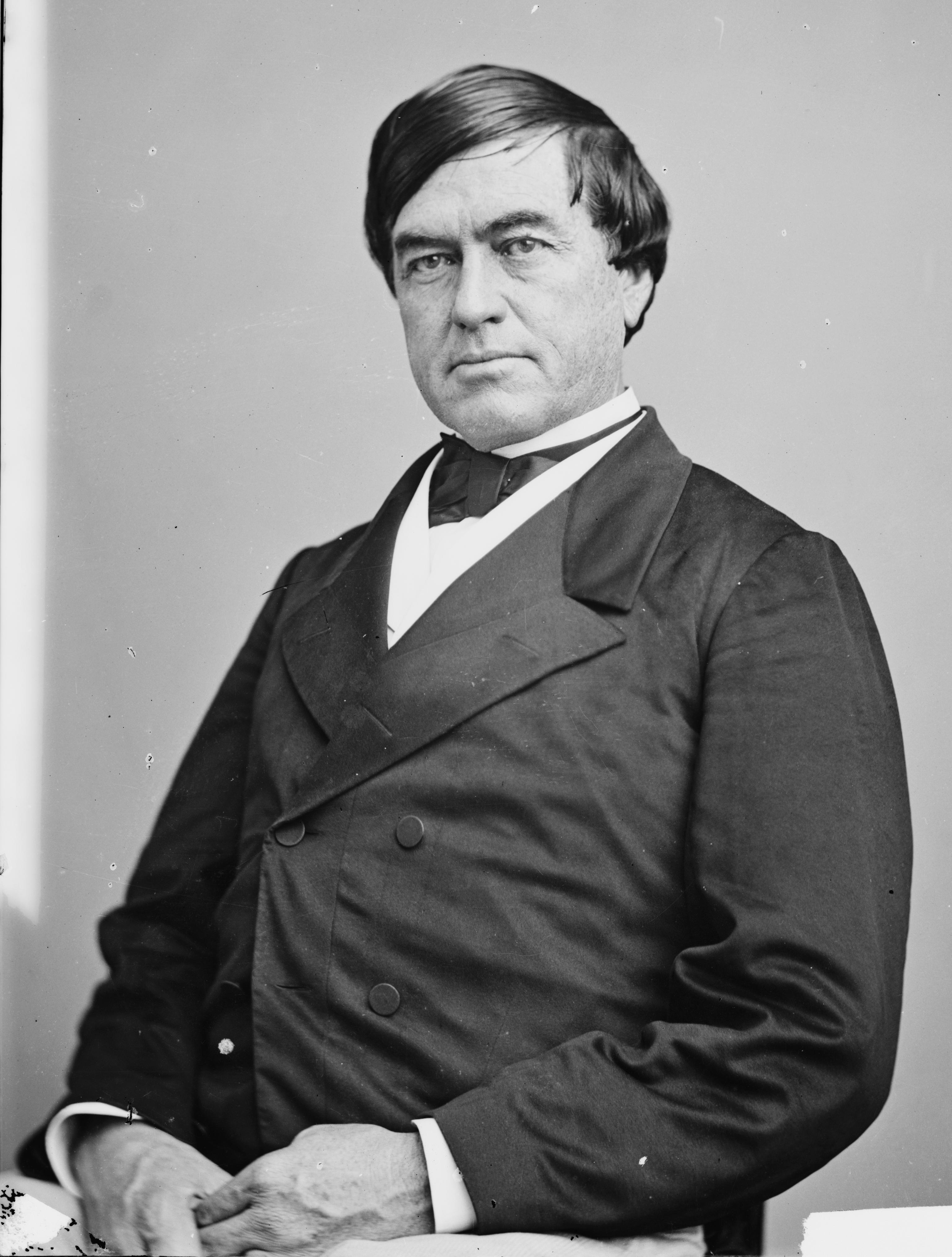
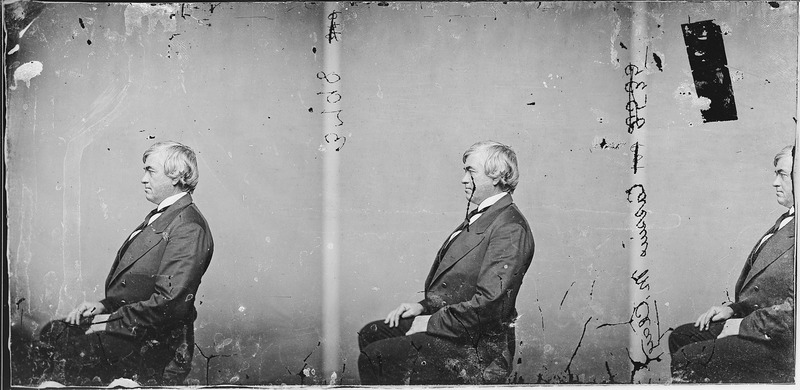
General Cassius Marcellus Clay of Kentucky, profiled in these classic photographs, was a wonderful and terrible man, an abolitionist from a family of slave owners who went mental in his dotage, essentially imprisoning a very reluctant 15-year-old wife when he was in his eighties. He was also a politician, an expert duelist, a Yale graduate and so much more. From a report of the death of the nonagenarian in the July 23, 1903 New York Times:

“Gen. Cassius Marcellus was famous for such a multitude of daring deeds, political feats, and personal eccentricities that it is hard to choose any one act or characteristic more distinguished than the rest. As a duelist, always victorious, he was said to have been implicated in more encounters and to have killed more men than any fighter living. As a politician he was especially famous for his anti-slavery crusades in Kentucky, having become imbued with abolition principles while he was a student at Yale, despite the fact that his father was a wealthy slave owner. As a diplomat while Minister to Russia during and after the civil war, he took a prominent part in the negotiations that resulted in the annexation of Alaska.

The act of Gen. Clay’s life that has commanded most attention in recent years was his marriage to a fifteen-year-old peasant girl after he had reached his eighty-fourth birthday. In 1887, he had married his first wife, Miss Warfield, a member of an aristocratic family of slave holders, and years afterward when he had become an ardent disciple of Tolstoi, he came to the conclusion that he ought to wed a ‘daughter of the people.’ In November, 1894, he chose Dora Richardson, the daughter of a woman who had been a domestic for some time in his mansion at White Hall, near Lexington.

When the little girl became his wife, the General proceeded to employ a governess for her. She rebelled. Then he sent her to the same district school she had attended previously. The fact that he supplied her with the most beautiful French gowns and lavished money upon her, she did not consider compensations for the teasing she got at the hands of her fellow-pupils. In two months he had to take her back home, still uneducated. 

The old warrior’s eccentricities increased during his declining years, and after his latest marriage he thought little of anything except his dream that some ancient enemy was trying to murder him and his ‘peasant wife,’ as he called her. She, in spite of his kindnesses, kept running away from White Hall, and finally he decided he must get a divorce. This he did, charging her with abandonment. She soon married a worthless young mountaineer named Brock, who was once arrested for counterfeiting. Then the General began to plot to get her back, having already given a farm and house to her and her new husband, only to hear that Brock sold the property. At last Brock died, and a few months ago dispatches from Kentucky stated that the General was trying in vain to prevail upon his ‘child wife’ to return to him. She refused persistently, never having outgrown the dislike for the luxurious life with which he surrounded her and still preferring the simple country existence to which she was born.”

Tags: ,

The opening of “Motor City Breakdown,” Jerry Herron’s new Design Observer essay about the fall of Detroit and what it means for the rest of America:

“Why can’t we just get over Detroit — by common agreement, the most bankrupt, abandoned, misbegotten enterprise ever designed by Americans, at least so far as cities go — ‘the country’s most startling example of modern urban collapse,’ as the New York Times put it? Maybe it’s the sheer scale of the catastrophe being perpetrated here. The Times was reporting on the latest census of 700,000 souls, down from 1 million a decade ago and 1.8 million in 1950. Hardly a week goes by without national headlines about the murder rate or economic meltdown or impending civic bankruptcy (the biggest in U.S. history), or the Big Three automaker bailout, the corruption of public officials, the dumbfounding ineptitude of the electorate. Then there are the ruins that cast Detroit as a post-industrial Acropolis or Pompeii (except our ruins are larger), and the caravans of filmmakers and journalists and gawkers who want to get one last look, say one last word before the whole thing finally collapses. With all those end-of-everything narratives, you’d think by now we would have really reached the end — of conceivable stories, or patience — the end of Detroit as the ‘set for some movie about the last hours of the Planet Earth.’ That crack, by James Howard Kunstler, came 20 years ago, yet the end-of-time tourists keep returning to the set, locals too, which leads to my question: Why can’t we just let go? 

Our preoccupation with Detroit is no accident. Americans are a designer people, a society of immigrants whose only common experience on this continent is the experience of coming from someplace else, willingly or otherwise. We have no shared origin, whether natives or newcomers. Instead we were born of ideas memorialized in the Declaration and Constitution. So we come naturally by our obsession with design, Detroit being probably the most important design project ever undertaken by Americans (after the Founding itself) — “the Silicon Valley of the Jazz Age,’ as Mark Binelli so aptly describes it, ‘a capitalist dream town of unrivaled innovation and bountiful reward.’ But here’s the tricky part. Is the spectacular — and spectacularly represented — failure of Detroit indicative of some larger design fault inherent in the very nature of American ideas, or is it simply a local one-off, an exception without deeper meaning?”

Tags:

From Liz Gannes’ All Things D article about Eric Schmidt and Jared Cohen’s new book about our technological future:

“Written with Google Ideas director Jared Cohen, The New Digital Age was released today. It’s dense, though readable, and floats between visions of a hologram-and-robot-enhanced future for the developed world, and scarily specific predictions of how dictators will get hold of technology and use it for evil.

‘The Internet is the largest experiment involving anarchy in history,’ Schmidt and Cohen write, as they forecast all sorts of ‘painful liminal periods’ while things like privacy, citizenship and reporting get figured out as the next five billion people come online, joining the two billion that already are.

Schmidt and Cohen are not going to spark a social movement or even an op-ed war, a la that other recent tech exec book, Sheryl Sandberg’s Lean In. But they did manage to write a surprisingly non-corporate book that talks about Twitter at least 10 times as much as it does about Google’s driverless cars.”

Tags: , ,

William F. Buckley and Tip O’Neill reach across the aisle in 1988 to promote the U.S. Space Foundation. American space exploration lost course after the early 1970s, and it seems to only now be regaining momentum, thanks to a combination of public and private enterprises.

Tags: ,

From Robert Kuttner’s New York Review of Books piece about David Graeber’s Debt: The First 5,000 Years, a passage about the inequality of debt relief:

“The double standard in debt relief that favored large merchants, present at the creation of bankruptcy law in 1706, persists today in many different forms. It gets surprisingly little attention in the debt debates. Despite the tacit assumption that ‘surely one has to pay one’s debts,’ the evasion of repayment is both widespread and selective. Corporate executives routinely walk away from their debts via Chapter 11 of the national bankruptcy law when that seems expedient. Morality scarcely enters the conversation—this is strictly business.

Even more galling is the fact that the executives who drove the company into the ground often keep control by means of a doctrine known as debtor-in- possession. A judge simply permits the company to write off old debts, while creditors collect so many cents on the dollar out of available assets. Every major airline has now been through bankruptcy, and US Airways has gone in and out of Chapter 11 twice. In this process, all creditors are not created equal. Since banks typically have liens on the aircraft, bankers get paid ahead of others. Major losers are employees and retirees, since Chapter 11 allows a corporation to break a labor contact or reduce pension debts. Shareholders also lose, but by the time bankruptcy is declared, the company’s share value has usually dwindled to almost nothing. Much of the private equity industry uses the strategy of acquiring a company, taking it into bankruptcy, thus shedding its debts, and then cashing in on its subsequent profitability. Despite the misleading term private ‘equity,’ tax-deductible private debt is the essence of this industry, which relies heavily on borrowed money to finance its takeovers.

Homeowners, however, are explicitly prohibited from using the bankruptcy code to reduce their outstanding mortgage debt. White House legislation proposed in 2009 would have allowed a judge to reduce the principal on a home mortgage, as part of the effort to contain the economic crisis. Congress rejected the measure after extensive lobbying by the financial industry. Consumers may use bankruptcy to shed other debts, but a revision of the law signed by President Bush in 2005 subjects most bankrupt consumers to partial repayment requirements, while bankrupt corporations get a general discharge from their debts. Thanks to the influence of the same financial lobby, the rules of student debt provide that the obligations of a college loan follow a borrower to the grave.”

Tags: ,

ESPN’s Colin Cowherd is a hideous man, full of bluster, arrogance and wrongheadedness–and it’s obvious that he’s a sign of the times in American broadcasting. He creates elaborate, asinine theories and stuffs them full of “facts” that are usually not true. His predictions are almost always wrong. If Cowherd tells you to bet the rent money on something, you best sock it under a mattress. But being wrong and obnoxious has yet to cost him because like most pundits, he’s not in the business of being right. He’s in the business of being loud and of being a brand.

Just one small example: Before the 2012 baseball season, the Texas Rangers let pitcher C.J. Wilson become a free agent, instead opting to invest money in Japanese pitcher Yu Darvish, whom the organization had scouted heavily. Cowherd went on the radio with one of his typical idiotic rants, stating authoritatively that this was an example of how people are attracted to the unknown instead of appreciating what has worked for them, that the team had fallen in love with an ideal instead of understanding what they already had was better, that Wilson would prove to be the superior pitcher. Mark my words, Cowherd said.

He didn’t take into account that Darvish was a young pitcher about to age into his prime and Wilson was older and exiting his. He didn’t pay attention to Darvish having a deeper arsenal of pitches. He didn’t pay attention to reality at all. The Rangers hadn’t fallen in love with an ideal; it was Cowherd who had fallen in love with his moronic theory. I guess I don’t have to add that in the 14 months since Texas made its decision–one based on scouting, data and analysis–Darvish has proven to be one of the best pitchers in MLB while Wilson has faltered badly for his new team. And this isn’t just the exception with Cowherd–it’s the rule.

Cowherd doesn’t limit his foolishness to sports–he also makes gross and insulting generalizations about women and anyone he feels isn’t as successful as he is, though your definition of “successful” may differ. The suits at the sports network are obviously bright enough to realize what a huge douche they have working for them. But they only care about one thing: Can we turn him into a star and make money from his noise?

Of course, this is just a sports guy and sports aren’t important. But the same holds true for media across all areas in this country, especially in our age of dwindling financial returns for traditional platforms. When Jeff Zucker became the new head of CNN, he promised that he would “broaden the definition of what news is.” That remark won him applause from Rupert Murdoch, who has been poisoning the air with non-news and dubious research methods for decades. Murdoch has always believed that news is just another form of entertainment. Perhaps its just a coincidence that CNN and News Corp. properties were fast and first and embarrassingly wrong in the aftermath of the horrendous Boston Marathon carnage.

Proud jughead Joe Scarborough was able to cherry-pick polls that helped him sell dishonest stories in the run-up to the Presidential election, while questioning the integrity of pollster Nate Silver, who stuck to the numbers. The facts didn’t matter.

These aren’t crazy conspiracy theorists like Alex Jones–the single biggest sack of shit in American media–but in some ways their dishonesty is more dangerous. It isn’t cloaked in extremism but in respectability. And there’s nothing respectable about it.

The opening of Colin McGowan’s new article about the cartoonish Cowherd at the Classical:

“This past Friday, Colin Cowherd sat down with Bill Simmons to talk mostly about Colin Cowherd. They also kicked around a few theories about the mutation of LeBron’s competitiveness gene and the link between fascism and food. In tone, the podcast is more or less what one would expect: two hip-shooters a-hip-shootin’, and some excessive mutual admiration—Cowherd talks about Simmons’s perspective and craft as if Simmonsian should join Kafkaesque as an OED-approved literary adjective; Simmons gushes over Cowherd’s ability to… talk to himself for nine minutes at a time. For my part, I cleaned my apartment and occasionally yelled ‘wrong!’ from across the room.

I listened to the interview because I’m not looking to set my brain on fire with intellectual stimulation while drinking gin and scrubbing cat piss out of my bathroom floor on a Friday evening, but also because I wanted to listen to two powerful media figures I dislike talk shop. I think both Cowherd and Simmons, in their own ways, are what’s wrong with sports media, which in turn makes for an increasingly facile and (in Cowherd’s case) needlessly hostile mainstream sports discourse. I’ve called Simmons ‘either a hack or a complete asshole,’ and Cowherd, along with his louder, more malignant cousin Skip Bayless, isn’t in the sports business so much as he’s in the infuriation business. He peddles haughty reductiveness and calls it honesty, then bats around an overmatched simpleton from Steak’s Landing, Wisconsin for a few minutes before returning to his now-basically-show-long rant about Carmelo Anthony’s facial expressions and how, he doesn’t care what you think, he’s gonna go on pronouncing it ‘jih-roh.’

The podcast isn’t uninteresting, which Cowherd might claim is the entire battle. He exclaims at one point ‘What’s wrong with being interesting?’ which is exactly the sort of unassailable bully logic he employs on his radio show. Of course there is obviously nothing wrong with being interesting—what with it being definitionally positive—but here, Cowherd isn’t talking about the Lakers’ playoff chances for the third time in four days or staging overrated/underrated debates about literally anything. He’s talking about himself, and why he is the way he is, what he believes in. This is engaging enough: Colin Cowherd the human being is unlike anyone I’ve ever met. If he wants to talk about what makes him strange, I’ll listen.

What makes him strange—wrong, but also strange—is that he sees a direct correlation between popularity and, if not quite quality, some inherent goodness.”

Tags: ,

The opening of Peter Lewis’ barnesandnoble.com review of Joel F. Harrington’s The Faithful Executioner, a new volume about the 16th-century man who did “god’s work” in the gallows:

“Frantz Schmidt was a master executioner. He had a notarized certificate to prove it. He apprenticed under a master; he paid his journeyman’s dues. He mostly worked in the imperial city of Nuremberg during his forty-five years of service, 1573-1618. He executed 394 people: men, women, and some boys and girls. Schmidt, always poised, delivered a good death, whether he beat you to kingdom come with a wagon wheel or applied the pitch and touched the flame, slipped the noose or cut off your head.

A ‘good death’ was meant to shock and awe the locals, to keep them ruly in the absence of any effective central authority during some seriously unruly times. Executions were carefully orchestrated, ritualized brutality that sated the drive for retribution, with clear rules and conduct. The fathers of Nuremberg, a city then at the zenith of its power and wealth, hired Frantz Schmidt: reliable, honest, pious, reflective, loyal, sober Frantz, a rare bird in the world of executioners.”

Tags: , ,

Mark Jacobson has crafted a plan that contends that New York State can fulfill all its energy needs by 2030 sans fossil fuels or carbon emissions, simply using WWS (Wind, Water, Sun). He discusses the major obstacles and criticisms of the plan in a Scientific American interview conducted by Mark Fischetti. An excerpt:

Question:

What are the main obstacles to such a sweeping overhaul at a state or national level?

Mark Jacobson:

The main obstacles are political and social—getting politicians onboard. There are always local zoning issues. I’m sure there will be a big push by the gas lobby and the oil lobby against this.

Question:

So then how do you sell the plan?

Mark Jacobson:

There is a huge savings in lives. The New York plan would prevent 4,000 mortalities a year in the state due to less air pollution, and a related savings of $33 billion—about 3 percent of the GDP of the state. That resonates more with people than climate change issues. We also looked at job creation; more jobs would be created than lost.

Question:

The main criticism about heavy reliance on wind and solar power is that the sources are intermittent: the wind doesn’t always blow, the sun doesn’t shine at night. Do your plans rely a lot on energy storage, which remains a tough challenge?

Mark Jacobson:

If you get the [power] transmission grid right you don’t need a whole lot of storage. By combining wind and solar and geothermal and hydroelectric, you can match the power demand. And if you oversize the grid, when you’re producing extra electricity you use it to produce hydrogen [for fuel-cell vehicles and ships as well as some district heating and industrial processes]. You can also spread the peak demand by giving financial incentives [for consumers to use power at off-peak times]. Some storage certainly would help; we have storage in the form of hydrogen and in concentrated solar power plants. There are many ways to tackle the intermittency issues.

Question:

The other concern that is usually raised about renewable energy is that it is more expensive than fossil fuels. What would electricity prices be like in New York?

Mark Jacobson:

The residential electricity cost in the U.S. on average is 13.1 cents per kilowatt-hour. In New York it’s 18.1 cents. If you look at the states that have the highest percentage of electricity generation from wind, the average electricity price increase from 2003 to 2011 was 2 cents a kilowatt-hour, whereas all the other states averaged 3.6 cents. So prices in the states that didn’t put in a lot of wind went up more.”

Tags: ,

« Older entries § Newer entries »