Politics

You are currently browsing the archive for the Politics category.

From Joseph Stiglitz, on tax day, in the New York Times:

Leona Helmsley, the hotel chain executive who was convicted of federal tax evasion in 1989, was notorious for, among other things, reportedly having said that ‘only the little people pay taxes.’

As a statement of principle, the quotation may well have earned Mrs. Helmsley, who died in 2007, the title Queen of Mean. But as a prediction about the fairness of American tax policy, Mrs. Helmsley’s remark might actually have been prescient.

Today, the deadline for filing individual income-tax returns, is a day when Americans would do well to pause and reflect on our tax system and the society it creates. No one enjoys paying taxes, and yet all but the extreme libertarians agree, as Oliver Wendell Holmes said, that taxes are the price we pay for civilized society. But in recent decades, the burden for paying that price has been distributed in increasingly unfair ways.

About 6 in 10 of us believe that the tax system is unfair — and they’re right: put simply, the very rich don’t pay their fair share.”

Tags: ,

From a post at the great Paleofuture blog which recalls a 1969 prediction about the polarizing potential of narrowcasting, a term that had yet to be coined:

Imagine a world where the only media you consume serves to reinforce your particular set of steadfast political beliefs. Sounds like a pretty far-out dystopia, right? Well, in 1969, Internet pioneer Paul Baran predicted just that.

In a paper titled “On the Impact of the New Communications Media Upon Social Values,” Baran (who passed away in 2011) looked at how Americans might be affected by the media landscape of tomorrow. The paper examined everything from the role of media technology in the classroom to the social effects of the portable telephone — a device not yet in existence that he predicted as having the potential to disrupt our lives immensely with unwanted calls at inopportune times.

Perhaps most interestingly, Baran also anticipated the political polarization of American media; the kind of polarization that media scholars here in the 21st century are desperately trying to better understand.

Baran understood that with an increasing number of channels on which to deliver information, there would be more and more preaching to the choir, as it were. Which is to say, that when people of the future find a newspaper or TV network or blog (which obviously wasn’t a thing yet) that perfectly fits their ideology and continuously tells them that their beliefs are correct, Americans will see little reason to communicate meaningfully with others who don’t share those beliefs.”

Tags:

You have to have a lot of faith in humanity to be an anarchist. Have you met people? They’re awful.

The collapse of Wall Street, the sway of corporations that see us as consumers rather than citizens, grave concerns about our environment and the decentralization of communication have opened a door for anarchic movements in the form of Occupy Wall Street and beyond. If only I had more faith in people, the awful, awful people.

An excerpt from an excellent interview that Gawker’s Adrian Chen conducted with anarchist, author and scholar David Graeber:

Question:

One of the major themes of your book is that the current political structure is not at all democratic. I think among the people who would read your book, that’s kind of a given. But you go further in pointing out the anti-democratic nature of the Founding Fathers.

David Graeber:

Most people think these guys had something to do with democracy, but nobody ever reads what they actually said. What they said is very explicit: They would say things like ‘We need to do something about all this democracy.’

Question:

So as an alternative, you promote the model of consensus that Occupy used to organize, through its General Assembly.

David Graeber:

Yeah. What we wanted to do was A) change the discourse and then B) create a culture of democracy in America, which really hasn’t had one. I mean direct democracy, hands on, let’s figure out how you make this system together. It’s ironic because if you go to someplace like Madagascar, everybody knows how to do that. They sit in a circle and they do a consensus process. There is a way that you can do these things, that millions and millions of people over human history have developed and it comes out pretty much the same wherever they are because there are certain logical constraints and people being what they are.

Consensus isn’t just about agreement. It’s about changing things around: You get a proposal, you work something out, people foresee problems, you do creative synthesis. At the end of it you come up with with something that everyone thinks is okay. Most people like it, and nobody hates it.

Question:

This is pretty much the opposite of what goes on in mainstream politics.

David Graeber:

Yeah, exactly. It’s like, ‘People can be reasonable, I didn’t think it was possible!’ And that’s something I’ve noticed, that authoritarian regimes, what they do is that they always come up with some way to teach people about political decision making that says people aren’t basically reasonable, so don’t try this at home. I always point out the difference between the Athenian Agora and the Roman Circus. When most Athenians gathered together in a big mass it was to do direct democracy. But here’s Rome, this authoritarian regime. When did most Romans get together in the same place? If they’re voting on anything it’s like thumbs-up or thumbs-down to kill some gladiator. And these things are all organized by the elite, right? So all the people who are really running things throw these games where they basically organize people into a giant lynch mobs. And then they say, ‘Look, see how people behave! You don’t want to have Democracy!'”

Tags: ,

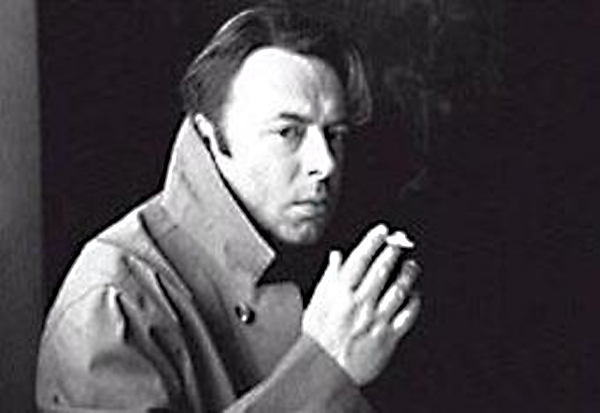
The problem with pundits is that it almost doesn’t matter if they are right or wrong, provided that they have a forceful personality and can put on a show. The news keeps cycling, its white noise drowning the wrong-headed shouts that should have been embarrassing, that should have carried consequences. In a new GQ postmortem, Michael Wolff points out that despite popular opinion, Christopher Hitchens was just as much of a toolbox as he is. An excerpt:

“This transformation from political irregular and zealous polemicist to towering moral figure was curious, if not amazing, to many people (perhaps all of us) whose careers had intersected with his. How did the character actor become a leading man? How did the fool become a sage? And what about the bad stuff? Not just his full-throttled embrace of the Bush war but, before that, his casual and convenient betrayal of his friend, Hillary Clinton aide Sidney Blumenthal, back in the Monica Lewinsky days. Or his take on Bill Clinton, as virulent as that of the most kooky right-wingers. Or his weirdly tolerant relationship with some of the era’s most infamous Holocaust deniers. These are the kind of epochal contretemps that, in the chattering class, usually make for deep enmity rather than enduring love.

Then, too, this sui generis British figure, full of British class issues, British political hair-splitting, British literary conceits, and plummy accent to boot, became, in his transmutation, a super-American – a gunslinger journalist.

What was the nature of Hitchens’ alchemy?

He was, self-styled, a writer engaged with his time, a bookish man called to join the day’s great and bloody battles of conscience. But really his issues were largely of another era: internecine squabbles on the left; a Cold War attention to the world’s geo-sectarian divisions; God’s existence… or not. He never much grappled with technology, or money, or media, or the developing world’s rising middle class – influences that, surely, were remaking the world a lot faster and a lot more profoundly than his long- time preoccupations.

He saw himself as a Sixties guy, even making the case that he was a significant figure in the tumultuous period from 1966 to 1968: ‘I did my stuff in helping my American comrades discredit first President Johnson and then President Nixon.’ Although, in fact, he was still a teenager in 1968. (‘If you remember the Sixties,’ in Robin Williams’ famous formulation, ‘you weren’t there.’) His was a nostalgic show.”

Tags: ,

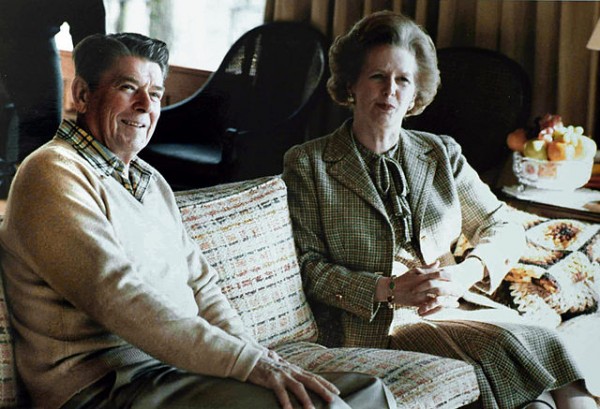
Margaret Thatcher, the former British Prime Minister, who just passed away, in a brief on-air spat with David Front in 1985 during the Falklands War. Thatcher, an iron-fisted conservative and the European parallel to Ronald Reagan, was often derided for being cruel to have-nots. She is not warmly remembered in her country while Reagan largely is in his. What does that say? Anything?

Tags: , ,

From Edward Luce’s new Financial Times profile of Harvard philosopher Michael Sandel, a passage about the marketization of morality:

I ask him about his latest book, What Money Can’t Buy: The Moral Limits of Markets, in which he argues that the US and other countries are turning from market economies into market societies, as Lionel Jospin, the former French prime minister, once put it. Sandel argues that we live in a time of deepening ‘market faith’ in which fewer and fewer exceptions are permitted to the prevailing culture of transaction. The book has infuriated some economists, whom he sees as practitioners of a ‘spurious science.’

He has been at loggerheads with the profession for many years. In 1997, he enraged economists when he attacked the Kyoto protocol on global warming as having removed ‘moral stigma’ from bad activity by turning the right to pollute into a tradeable permit. Economists said he misunderstood why markets work. Sandel retorts that they know the price of everything and the value of nothing. To judge by his sellout lecture tours, he has clearly tapped into a larger disquiet about the commodification of life.

Which countries are the least receptive to his concerns about market fundamentalism? ‘China and the US – no question,’ he replies instantly. ‘In other parts of east Asia, in Europe and in the UK and in India and Brazil, it goes without arguing that there are moral limits to markets and the question is where to locate them. In the US and China, there are strong voices who will challenge the whole idea of there being any limits.’”

 _________________________

“What’s you answer, smartypants?” asks TV’s best talk-show host.

Tags: , ,

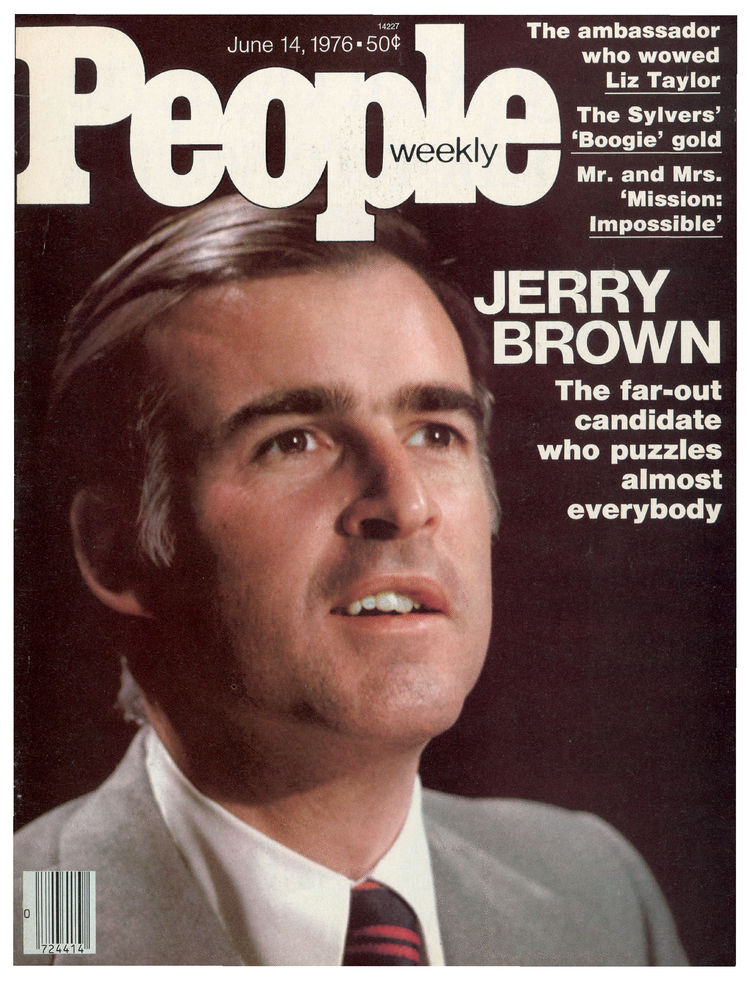
We’re better and worse than ever in America. We’re haves, but we’re have-nots. Technology has gleefully led to a decentralization of media power, and science is accomplishing what was once sci-fi. Hollywood can barely keep up with the world, let alone predict it, as the Dream Factory has been outpaced by reality, However, we’re also deeply narcissistic, most often using our amazing technology merely like mirrors, distracted by our distorted sense of self, so much so that we seem unable to address a political and economic system that has run aground. And the mainstream culture is irredeemably stupid, all “housewives” and halfwits. If you want to see how much we’ve slipped in that regard, just have a look at an issue of People magazine from the 1970s, when pop singers and public intellectuals shared the pages. You can’t blame the People people for a culture that has become saturated with stupidity. They’re just taking the pulse.

But could a revolution of some sort wipe all the inequity away? I doubt it, because we love being entertained by clever toys and reflecting pools. Of course, if personal power and narrowcasting become political and writ large, that could change. Occupy Wall Street, despite being derided as a short-lived, fashionable failure, actually framed a Presidential election. But can such a movement do more than frame? Can it break the glass?

From “A Practical Utopian’s Guide to the Coming Collapse,” David Graeber’s new Baffler article:

Normally, when you challenge the conventional wisdom—that the current economic and political system is the only possible one—the first reaction you are likely to get is a demand for a detailed architectural blueprint of how an alternative system would work, down to the nature of its financial instruments, energy supplies, and policies of sewer maintenance. Next, you are likely to be asked for a detailed program of how this system will be brought into existence. Historically, this is ridiculous. When has social change ever happened according to someone’s blueprint? It’s not as if a small circle of visionaries in Renaissance Florence conceived of something they called “capitalism,” figured out the details of how the stock exchange and factories would someday work, and then put in place a program to bring their visions into reality. In fact, the idea is so absurd we might well ask ourselves how it ever occurred to us to imagine this is how change happens to begin.

This is not to say there’s anything wrong with utopian visions. Or even blueprints. They just need to be kept in their place. The theorist Michael Albert has worked out a detailed plan for how a modern economy could run without money on a democratic, participatory basis. I think this is an important achievement—not because I think that exact model could ever be instituted, in exactly the form in which he describes it, but because it makes it impossible to say that such a thing is inconceivable. Still, such models can be only thought experiments. We cannot really conceive of the problems that will arise when we start trying to build a free society. What now seem likely to be the thorniest problems might not be problems at all; others that never even occurred to us might prove devilishly difficult. There are innumerable X-factors.

The most obvious is technology. This is the reason it’s so absurd to imagine activists in Renaissance Italy coming up with a model for a stock exchange and factories—what happened was based on all sorts of technologies that they couldn’t have anticipated, but which in part only emerged because society began to move in the direction that it did. This might explain, for instance, why so many of the more compelling visions of an anarchist society have been produced by science fiction writers (Ursula K. Le Guin, Starhawk, Kim Stanley Robinson). In fiction, you are at least admitting the technological aspect is guesswork.”

Tags:

From the thoughtful people at Boston Dynamics, a new, camouflaged and more lifelike version of Petman. From the company’s copy: “PETMAN has sensors embedded in its skin that detect any chemicals leaking through the suit. The skin also maintains a micro-climate inside the clothing by sweating and regulating temperature.”

You can feel deep sympathy for the parents, wife and children of the late Atlantic journalist Michael Kelly, who was the first member of the press to be killed covering the Iraq war, and still be critical of the wrongheadedness he displayed which led not only to his demise but also contributed to the death of tens of thousands of other human beings. Like many pundits and politicians, Kelly, in the wake of 9/11, developed a blind spot–a lethal one. Unless we figure out why that happened, why so many otherwise smart people became dumb at a really bad moment, it will happen again.

In a provocative Gawker post, “A Stupid Death in a Stupid War,” Tom Scocca examines Kelly’s thought process in the run-up to the invasion, ten years after his death as an embed. An excerpt:

“People who supported the invasion of Iraq and now regret the results tend to say that it was a good idea that was badly planned or poorly managed. Yet there was no idea but the planning and management of it. The decision to invade was not a change of principles, a repudiation of mushy-headed pacifism and appeasement; it was a change of strategy.

Even that gives it too much credit. It was half a change of strategy, really: regime change with nothing to change it to; an invasionary force without a plan for occupation; an open-ended commitment of military personnel by a nation too politically cowardly to draft enough bodies to do the job. Thousands of reservists and National Guard troops found themselves serving multiple tours abroad, trapped in what Kelly had envisioned as ‘total limited war…brutally effective in its killing power while being miserly of American life and property.’

‘You go to war with the army you have, not the army you might want or wish to have at a later time,’ Donald Rumsfeld said, thereby sparing Kelly and Andrew Sullivan and everyone else in the press from the shame of having said the single most fatuous and destructive thing about the invasion of Iraq. It is hard to find a shorter, clearer description of how wars are not won. The United States did not attack Berlin or Tokyo with the army it had in December of 1941. The U.S. Navy did not sail up the Thames in 1812. You fight the battles you can win with the army you have.

That Kelly was brave in going to cover the combat does not change the fact that he chose to be bold with other people’s lives. It was time to do something about Iraq—’to turn, as swimmers into cleanness leaping,’ as Rupert Brooke wrote in 1914, in a sonnet celebrating the chance to go fight the Great War. A year later, Brooke died of an infected mosquito bite on a troop ship, taking his place among the 16 million corpses.

The premise of Kelly’s argument for invasion was that escalating the war, carrying it to Baghdad on the ground, would settle the problems ‘easily and quickly.’ Like his fellow poets, Sullivan and Christopher Hitchens, he presented his romantic vision as clear-eyed advice. Evil must be opposed. Good would triumph. Anyone who disagreed was benighted, mistaken, immoral.”

Tags: ,

Gerrymandering has begotten obstructionism, as the GOP, despite being really out of step with the American mainstream, has maintained a grip on Congress and slowed governance to a crawl for several years. But a Republican Party that wrests control through process rather than popularity may be further imperiling itself since it can’t be chastened and reborn. From “House of Pain,” Noam Scheiber’s insightful New Republic article:

Suffice it to say, gay marriage is hardly the only issue on which House Republicans have managed to position themselves on the dicey side of public opinion. Their insistence on letting the government default on its debt unless the president accepted trillions in Medicare and Medicaid cuts drove their approval ratings to subterranean depths in the summer of 2011. Their refusal to deliver on $60 billion in aid for Hurricane Sandy victims earlier this year drew a rebuke from Chris Christie, one of the GOP’s biggest celebrities. Recently, as immigration reform has moved to the center of the Washington conversation, they’ve demonstrated their sympathy for the little guy by employing such terms of endearment as “wetbacks” while alternately describing immigrants as dogs, livestock, and terrorists. (Okay, those last three all came from Iowa Republican Steve King. Still…)

What explains the PR pileup that GOP elders can’t seem to clear to the side of the road? Partly it’s the structural forces at work in American politics, which have reorganized the two parties along ideological lines at the same time the GOP has become much more conservative. But the more direct and mundane explanation is gerrymandering. Thanks to the way Republican legislatures drew congressional districts in 2000, the median House district leaned Republican by two points over the next decade—a big edge given the tiny margins that frequently decide competitive races. Since 2010, the built-in advantage has grown to three points. The result of all this gerrymandering is to give the Republicans a death grip on the House. In 2012, they won 1.4 million fewer votes than Democrats in all the House districts combined, but still managed a 33-seat majority.

There’s no question this hold on the House is a huge short-term advantage for the GOP, giving it the power to thwart a Democratic president even when his agenda has widespread support. (Look no further than the ongoing budget negotiations, in which the president’s preference for trimming the deficit through spending cuts and tax increases far outpolls the GOP’s cuts-only approach.) But the flip side of being so insulated from public opinion is, well, being so insulated from public opinion. Thanks to the relative safety of their seats, most Republican House members feel no particular need to adjust to the political trends that have enormous consequences for anyone who isn’t running in a gerrymandered district—like, say, the party’s presidential nominee. It’s killing the GOP nationally.”

Tags:

Speaking of future matters, Robin Hanson at Overcoming Bias examines a survey that tried to gauge what aspects of tomorrow people of today care about. An excerpt:

“In fact, most people can hardly be bothered to care about the distant future world as a whole, and to the extent they do care, a recent study suggests that the main thing they care about from the above list is how warm and moral future folks will be. That is, people hardly care at all about future poverty, freedom, suicide, terrorism, crime, poverty, homelessness, disease, skills, laziness, or sci/tech progress. They care a bit more about self-enhancement (e.g., success, pleasure, wealth). But mostly they care about benevolence (warmth & morality, e.g., honesty, sincerity, caring, and friendliness).”

Tags:

From a Rodney Brooks essay in the Futurist about the next wave of manufacturing by robotics, which will bring both good and bad things to the world:

The first industrial robot developed in the United States went to work in 1961 in a Ewing, New Jersey, GM factory. Called the Unimate, it operated with a die-casting mold placing hot, forged car parts into a liquid bath to cool them. At the time, you couldn’t have a computer on an industrial robot. Computers cost millions of dollars and filled a room. Sensors were also extremely expensive. Robots were effectively blind, very dumb, and did repeated actions following a trajectory.

If you’ve watched the evolution of industrial robots over the last 50 years, you haven’t actually seen much innovation since the Unimate. These machines perform well on very narrowly defined, repeatable tasks. But they aren’t adaptable, flexible, or easy to use. Nor are most of these machines safe for people to be around.

Today, 70% of the industrial robots in existence are in automobile factories. They’re either in the paint shop or the body shop. Go to a car factory in Japan or Detroit, you’ll see a body shop full of robots, but with no people. Go to final assembly and you’ll find all people, no robots. Industrial robots and people don’t mix.

These machines are often heralded as money savers for factory owners and operators. But the cost to integrate one of today’s industrial robots into a factory operation is often three or five times the cost of the robot itself. It’s a job that demands programmers, specialists, all sorts of people. And they have to put safety cages around the robots so that the robots don’t strike people while operating.

Unlike human workers, who can detect when they’re about to hit something with their eyes, ears, or skin, most of these machines have no sensors or means to detect what is happening in their environment. They’re not aware. All of this speaks to a larger and fundamental flaw with the way factory bots are built today.

In an increasingly interconnected world, industrial robots have not followed the information technology revolution. In our march to the future, we somehow left robots behind. Some colleagues and I decided to change that.”

Tags:

Paul Krugman is looking at California as a microcosm for America–as it often is–wondering whether moderate liberal rule with the freedom to make decisions will be a federal-level bellwether. Though it’s unlikely President Obama will ever know governance without obstruction. An excerpt:

“California isn’t a state in which liberals have run wild; it’s a state where a liberal majority has been effectively hamstrung by a fanatical conservative minority that, thanks to supermajority rules, has been able to block effective policy-making.

And that’s where things get really interesting — because the era of hamstrung government seems to be coming to an end. Over the years, California’s Republicans moved right as the state moved left, yet retained political relevance thanks to their blocking power. But at this point the state’s G.O.P. has fallen below critical mass, losing even its power to obstruct — and this has left Mr. Brown free to push an agenda of tax hikes and infrastructure spending that sounds remarkably like the kind of thing California used to do before the rise of the radical right.

And if this agenda is successful, it will have national implications. After all, California’s political story — in which a radicalized G.O.P. fell increasingly out of touch with an increasingly diverse and socially liberal electorate, and eventually found itself marginalized — is arguably playing out with a lag on the national scene too.

So is California still the place where the future happens first? Stay tuned.”

Tags: ,

Two seemingly unrelated things about contemporary American life that are related: 1) We’ve outsourced slavery–or some form of it. People in factories toil in ungodly conditions around the clock to make our cheap tech products. Undocumented workers are allowed to do our least appealing jobs–the things we “outsource” domestically–and are forgotten, except when they’re used as political pawns, made to seem like they’re “stealing” from us. 2) Digital sound has reduced us, demeaned our culture. We remove the rattle and hum to try to get closer to meaning, but much of the meaning was in the discord. The connection: The friction is missing, the dissonance buried. We forget the discomfort and that means the discomfort of others increases.

From Evgeny Morozov’s New York Times piece about life in a time when lo-fi has been tuned out:

“‘Civilization,’ wrote the philosopher and mathematician Alfred North Whitehead in 1911, ‘advances by extending the number of important operations which we can perform without thinking about them.’ Whitehead was writing about mathematics, but technology, with its reliance on formula and algorithms, easily fits his dictum as well.

On this account, technology can save us a lot of cognitive effort, for ‘thinking’ needs to happen only once, at the design stage. We’ll surround ourselves with gadgets and artifacts that will do exactly what they are meant to do — and they’ll do it in a frictionless, invisible way. ‘The ideal system so buries the technology that the user is not even aware of its presence,’ announced the design guru Donald Norman in his landmark 1998 book, The Invisible Computer. But is that what we really want?

The hidden truth about many attempts to ‘bury’ technology is that they embody an amoral and unsustainable vision. Pick any electrical appliance in your kitchen. The odds are that you have no idea how much electricity it consumes, let alone how it compares to other appliances and households. This ignorance is neither natural nor inevitable; it stems from a conscious decision by the designer of that kitchen appliance to free up your ‘cognitive resources’ so that you can unleash your inner Oscar Wilde on ‘contemplating’ other things. Multiply such ignorance by a few billion, and global warming no longer looks like a mystery.”

Tags:

In his frothing and scattershot New York Times op-ed piece, onetime Reagan budget director David Stockman isn’t wrong about everything. That’s because when you essentially say that everything is horrible, you’re bound to be right some of the time. It’s one of the loonier things to appear in the Times in recent memory, ignorant of history–as if the U.S. economic system was just a little “bumpy” before Roosevelt’s New Deal ruined it all–and dishonest about government investment (the Internet, which was shepherded by the public sector, seems to have grown sort of popular). An excerpt:

“So the Main Street economy is failing while Washington is piling a soaring debt burden on our descendants, unable to rein in either the warfare state or the welfare state or raise the taxes needed to pay the nation’s bills. By default, the Fed has resorted to a radical, uncharted spree of money printing. But the flood of liquidity, instead of spurring banks to lend and corporations to spend, has stayed trapped in the canyons of Wall Street, where it is inflating yet another unsustainable bubble.

When it bursts, there will be no new round of bailouts like the ones the banks got in 2008. Instead, America will descend into an era of zero-sum austerity and virulent political conflict, extinguishing even today’s feeble remnants of economic growth.

THIS dyspeptic prospect results from the fact that we are now state-wrecked. With only brief interruptions, we’ve had eight decades of increasingly frenetic fiscal and monetary policy activism intended to counter the cyclical bumps and grinds of the free market and its purported tendency to underproduce jobs and economic output. The toll has been heavy.

As the federal government and its central-bank sidekick, the Fed, have groped for one goal after another — smoothing out the business cycle, minimizing inflation and unemployment at the same time, rolling out a giant social insurance blanket, promoting homeownership, subsidizing medical care, propping up old industries (agriculture, automobiles) and fostering new ones (‘clean’ energy, biotechnology) and, above all, bailing out Wall Street — they have now succumbed to overload, overreach and outside capture by powerful interests. The modern Keynesian state is broke, paralyzed and mired in empty ritual incantations about stimulating ‘demand,’ even as it fosters a mutant crony capitalism that periodically lavishes the top 1 percent with speculative windfalls.

The culprits are bipartisan, though you’d never guess that from the blather that passes for political discourse these days.”

Tags:

Liz Cheney, that miserable dipshit and daughter of a waterboarder, has outdone herself with one of the more overheated and ludicrous op-ed pieces of the year, with her insane new crap in the Wall Street Journal. Before I present a passage, I will say this: The constant state of crisis in Washington is caused by Cheney’s extremist party, President Obama has spent at a more conservative rate of anyone in the White House since Eisenhower, the debt grew because Cheney’s cracked party destroyed the economy, and the Affordable Health Care Act will create new jobs. 

As I’ve said before, this version of the GOP is in a death spiral, unwilling and unable to reform. An excerpt from Cheney’s drivel:

“These days Washington careens from crisis to crisis, most of them manufactured. The Obama White House and its allies are engaged in the kind of sky-is-falling melodrama normally reserved for the lives of teenage girls. (As the mother of teenage girls, I speak with authority on this, though the comparison does a disservice to teenagers.) With our attention diverted by each fiscal cliff or sequestration drama, we are at risk of missing the real threats to the republic.

President Obama is the most radical man ever to occupy the Oval Office. The national debt, which he is intent on increasing, has passed $16 trillion. He believes that more government borrowing and spending are the solution to every problem. He seems unaware that the free-enterprise system has lifted more people out of poverty than any other economic system devised by man.

Perhaps his ignorance of that fact explains his hostility toward the private sector. In one of his autobiographies, the president writes that he felt ‘like a spy behind enemy lines’ during his brief stint working for private industry.

The president has launched a war on Americans’ Second Amendment rights. He has launched a war on religious freedom. He has launched a war on fossil fuels. He is working to nationalize one-sixth of the economy with job-killing ObamaCare.”

Tags: ,

If I had to say one thing about the time we’re living in, I would say this: Jesus H. Christ, our phones are great! Our phones are better than ever! I’m not sure if we’ve improved otherwise, but, wow, we’ve such progress in the area of phones! 

Seriously, we seem to be making progress in a variety of ways (see the current reversal in the attitude toward gay marriage in America), but there’s still a lot of suffering and unfairness in the world. Are we moving forward or laterally–or even backwards? 

John Gray, political philosopher and author of The Silence of Animals: On Progress and Other Modern Myths, believes our contention that we are moving human rights forward is self-satisfied bullshit. From an interview Gray did with Johannes Niederhauser at Vice:

“Question:

Isn’t the belief that everything will get better and that the world is now moving toward a blessed end state kind of schizophrenic, in the sense that we’ve actually been living in a deep crisis since the 1970s?

John Gray:

The rapid movement in technological advancements creates a phantom of progress. Phones are getting better, smaller, and cheaper all the time. In terms of technology, there’s a continuous transformation of our actual everyday life. That gives people the sense that there is change in civilization. But, in many ways, things are getting worse. In the UK, incomes have fallen and living standards are getting worse.

Question:

And advances in technology don’t mean that things are necessarily getting better in the grand scheme of things.

John Gray:

Oh, absolutely. Technological progress is double-edged. The internet, for example, has more or less destroyed privacy. Anything you do leaves an electronic trace.

Question:

Some people even want their mind to be transferred into the Internet to be digitally immortal.

John Gray:

That’s kind of moving in a way, but also utterly absurd. Even if it were possible to upload your whole mind on to a computer, it wouldn’t be you.

Question:

There seems to be a wide misunderstanding of what it means to be yourself.

John Gray:

Yes. You haven’t chosen to be the self that you are. You’re irreplaceable. You’re a singularity. We are who we are because of the lives that we have. And that involves having a body, being born, and dying.

Question:

Especially dying.

John Gray:

Yes, especially. A lot of contemporary phenomena, like faith in progress, is really an attempt to evade the reality of death. In actuality, each of our lives is singular and final; there is no second chance. This is not a rehearsal. It’s the real thing.”
Tags: ,

Via a Choire Sicha post at the excellent Awl blog, I just learned of Brendan Koerner’s The Skies Belong To Us, an exploration of the “golden age” of plane hijackings in the late ’60s / early ’70s. The forthcoming book looks at a turbulent time in America, when you could fly a 747 through the credibility gap. Into this void of political and moral authority arrived one skyjacking after another, pretty much on a weekly basis. Koerner focuses on the case of Roger Holder and Cathy Kerkow, a Vietnam vet and a party girl, who wrested control of a Western Airlines flight as part of an inchoate political protest, beginning the first leg of their insane journey.

The trailer for the book from the official website.

Tags: , , ,

The first step to reducing our reliance on carbon-choking fossil fuels is realizing that we’re not reliant on them. In case you missed Elisbaeth Rosenthal’s “Life After Oil and GasSunday Review piece in the New York Times, an excerpt:

“A National Research Council report released last week concluded that the United States could halve by 2030 the oil used in cars and trucks compared with 2005 levels by improving the efficiency of gasoline-powered vehicles and by relying more on cars that use alternative power sources, like electric batteries and biofuels.

Just days earlier a team of Stanford engineers published a proposal showing how New York State — not windy like the Great Plains, nor sunny like Arizona — could easily produce the power it needs from wind, solar and water power by 2030. In fact there was so much potential power, the researchers found, that renewable power could also fuel our cars.

‘It’s absolutely not true that we need natural gas, coal or oil — we think it’s a myth,’ said Mark Z. Jacobson, a professor of civil and environmental engineering and the main author of the study, published in the journal Energy Policy. ‘You could power America with renewables from a technical and economic standpoint. The biggest obstacles are social and political — what you need is the will to do it.'”

Tags: ,

From a debate called “Making Better Babies,” a passage in which Oxford ethicist Julian Savulescu argues that is not just an option but an obligation that we genetically modify our descendants:

“So if we accept that we should treat diseases and use genetics to prevent disease in our offspring, my argument is that we should also value those traits and the genetic contributions to those traits which affect how well our lives and our children’s lives will go.

Now I have in the past controversially argued that we have a moral obligation to do this. Currently it’s legally impermissible to select these sorts of traits in Australia, and I think this is profoundly wrong. However, more strongly not only do I think that people should be able to do it, they should do it.

Why do I say that? Well, if I said to you, people should protect their children from disease, it’s uncontroversial. But if disease is only important because it makes our children’s lives worse, so too parents should choose those genes or choose those states which will promote a better life for the child. 

We have many obligations. We have an obligation to provide good diet and education to our children, to stop climate change, to alleviate global poverty. We have obligations to ourselves and our families. We have many competing obligations. One of those obligations is to try to ensure that our children have the best lives possible and the best advantage when they start life.” (Thanks Practical Ethics.)


Tags:

I often wonder this: What better prepares us for life, a loving and encouraging childhood or one that is more challenging? Do an inordinate number of slings and arrows in youth give us survival strategies we would otherwise lack? Does a warm and protective childhood shield us permanently no matter what we face later in life? It varies, I’m sure.

Joan Baez grew up in a Quaker family with a physicist father, being introduced to college campuses and interesting cities all around the world, being nurtured and developed. But did that prepare her for the Bob Dylans of the world, who lacked her kindness? Did that make her feel like she could put the world on her shoulders, a weight that no one can bear?

In this 1979 video, she discusses human rights in Vietnam with William F. Buckley.

Tags: ,

In a customarily cogent and paranoid post, the BBC’s Adam Curtis blogs about what he calls the “fake objectivity” that obscures where the real power in society rests. An excerpt about H.L. Hunt, a wing-nut Texas oilman whose view of journalism presaged Fox News by many decades:

“The first is an odd story – with a very strange character at its heart. It is about how in the 1950s the richest man in the world, an oil billionaire in Texas, invented a new form of television journalism. It pretended to be objective and balanced but in fact it was hard core right-wing propaganda. It was way ahead of its time because, in its fake neutrality, it prefigured the rise of the ultraconservative right-wing media of the 1990s – like Fox News, with its copyrighted slogan, ‘Fair and Balanced.’

The billionaire was called H. L. Hunt – Haroldson Lafayette Hunt. He made his fortune in the early 1930s by getting hold of one of the biggest oil fields in America – in the pine forests of East Texas. He was a ruthless, driven man and from early on he became absolutely convinced that he had superhuman qualities that made him different from other humans.

From the 1920s onwards Hunt was a bigamist. He married two women and raised two families that were oblivious of each other. He told his second wife, Frania, that he was called Major Franklyn Hunt. There was a rocky moment when his picture was on the front page of all the Texas papers because of his spectacular oil deal. Frania asked Hunt if that was him – he told her no, that it was his uncle who had been so clever.

Hunt was part of a group of extreme right-wing oil men in Texas who had enormous influence because of their wealth. There is a brilliant book written about this group – The Big Rich by Bryan Burrough. Burrough describes how they had first risen up in the 1930s because they loathed President Roosevelt – ‘a nigger-loving communist,’ as one oil man called him. They were convinced that Roosevelt’s New Deal was really run by Jews and communists – or ‘social vermin’ as they politely put it.

A Texas congressman called Sam Rayburn summed up this group of right-wing oil men. ‘All they do is hate’ – he said.

After the Second World War H L Hunt did two things. He added another, third, family to his bigamist’s collection. And he also turned to the new medium of television to promote his ultraconservative views.”

Tags: ,

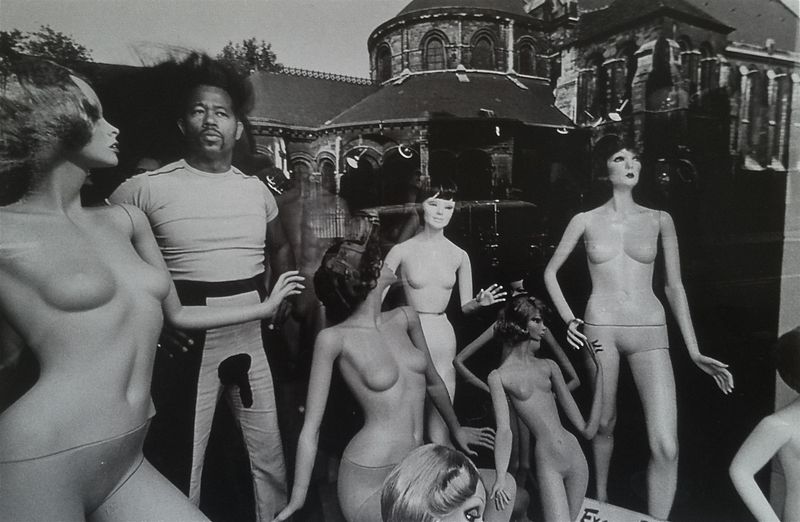
Black Panther Eldridge Cleaver was sadly not wearing his Penis Pants when he sat down in 1969 with William F. Buckley to discuss the Man and the Pigs and other handy generalizations. At the 3:28 mark.

Tags: ,

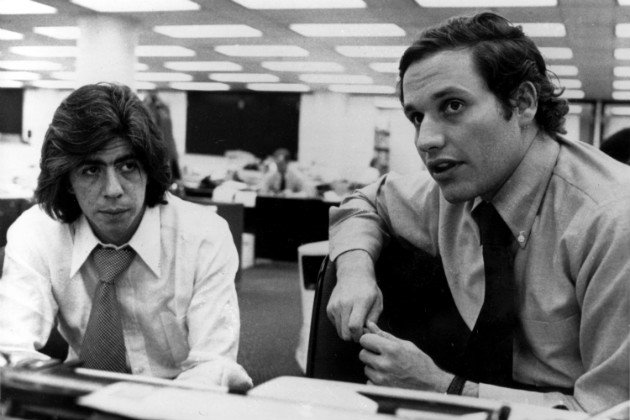
In a rare moment when he wasn’t watching porno, William F. Buckley spoke with Watergate heroes Bob Woodward (a so-so writer with his own credibility gap) and Carl Bernstein (a brilliant reporter and suspect human being). From 1974.

Tags: , ,

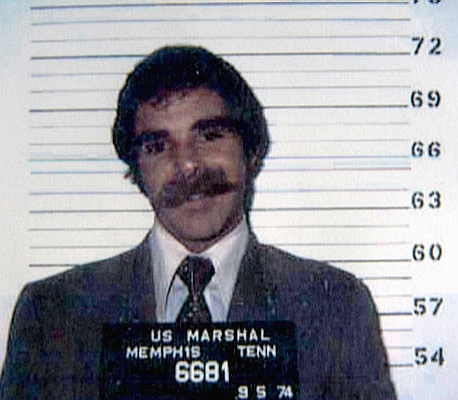
The Olivier of oral and progenitor of the pornstache, Harry Reems, the adult actor born Herbert Streicher to two very proud and well-hung parents, just passed away. In all seriousness, his work on the landmark 1972 skin-flick Deep Throat led to years of prosecution on obscenity charges. Reems ultimately was victorious, and converted to Christianity in later life. Margalit Fox, who writes lively copy about dead people, penned his obituary in the New York Times. An excerpt:

Mr. Reems, who began his career in the 1960s as a struggling stage actor, had already made dozens of pornographic films when he starred opposite Ms. Lovelace in Deep Throat.

But where his previous movies were mostly the obscure, short, grainy, plotless stag films known as loops, Deep Throat, which had set design, occasional costumes, dialogue punctuated by borscht-belt humor and an actual plot of sorts, was Cinema.

Mr. Reems played Dr. Young, a physician whose diagnostic brilliance — he locates the rare anatomical quirk that makes Ms. Lovelace’s character vastly prefer oral sex to intercourse — is matched by his capacity for tireless ministration.

“I was always the doctor,” he told New York magazine in 2005, “because I was the one that had an acting background. I would say: ‘You’re having trouble with oral sex? Well, here’s how to do it.’ Cut to a 20-minute oral-sex scene.'”•


William F. Buckley “welcomes” Reems and a wild-haired, pre-Epstein Alan Dershowitz:

Tags: , , ,

« Older entries § Newer entries »