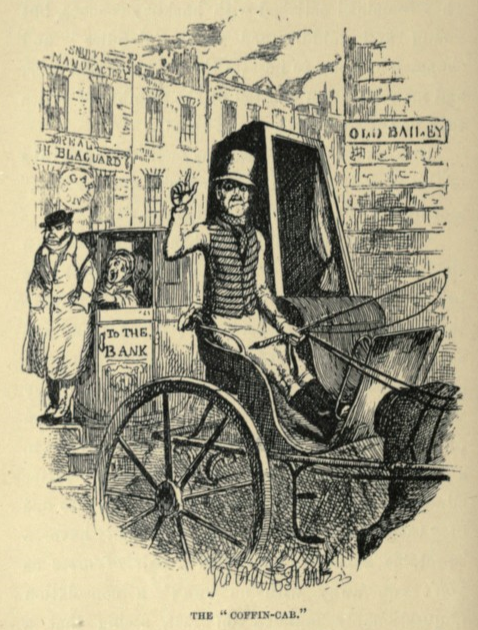
"Coffin Cab" is a 1902 illustration by Henry Charles Moore.

“Big Joe” Grimes was the “World’s Largest Man” at P.T. Barnum’s circus at the beginning of last century, when all you needed to be a star was enormous size. (As opposed to current times, when all you need to be a star is enormous emotional baggage.) In a 1902 Ringling tour, he shared performance space with Francisco Lentini, the Three-Legged Boy, and Enoch the Man Fish, among others. But what gave Grimes relative fame and fortune also claimed him–though not in the expected way. It wasn’t a heart attack or stroke or diabetes that ended the sideshow attraction’s life, but rather his huge body straining a cab to the breaking point and beyond.

I came across “World’s Largest Man Dead,” a very brief notice in the September 5, 1903 issue of the New York Times, which details his death but didn’t mention his show biz career, as it were. The piece is subtitled: “‘Big Joe’ Grimes of Cincinnati Breaks Through Cab and Fatally Wounds Himself.” An excerpt:

“‘Big Joe’ Grimes, said to have been the largest man in the world, is dead at the home of his parents in the city, as the result of a peculiar accident. While riding in a cab, his great weight broke through the bottom, one of his legs was gashed, the wound refusing to heal.

Grimes weighed 754 pounds, and was thirty-four years of age. He was 6 feet 4 inches in height, and his body and limbs were of ponderous dimensions.”

Tags: , , ,

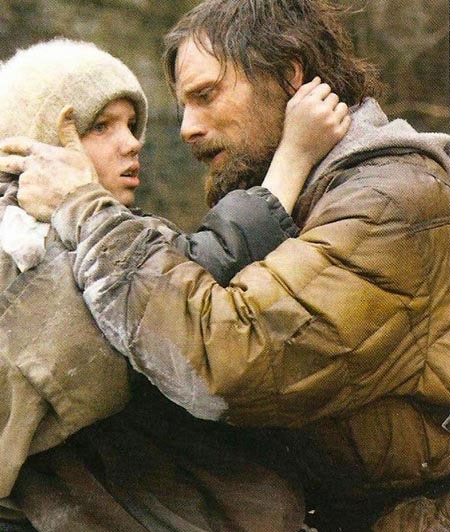
Mortensen and McPhee look to one another for strength.

The monsters in our heads are often worse than the ones in our eyes, and the novelist enjoys that advantage over the filmmaker. Cormac McCarthy’s novel, The Road, imagines a post-apocalyptic nightmare world in which an ailing father and his young son desperately trod dangerous miles over destroyed earth in the hope of finding some humanity–and of staying one step ahead of thieves, murderers and cannibals. And the reader’s imagination is just as paramount as the author’s. Although McCarthy provides descriptions in his mythopoetic prose, every sentence is aimed at awakening the darkest corners of the imagination, corridors several shades blacker than bleak. And without fleshed-out visuals to anchor us to one uniform vision, the story can keep us in thrall not only because of our universal fears but also because of personal ones.

The adaptation of The Road by director John Hillcoat and screenwriter Joe Penhall, while very loyal and sometimes moving, can’t match the deep chill of its source material. As in the book, dust covers the ruined earth and dirt covers the father and son as they seek some unknown refuge in a strange land they used to call their own. The casting is superb: Viggo Mortensen, as the determined, dying father whose sole mission is to prepare his child for life without him; Kodi Smit-McPhee as the frightened boy burdened by “carrying the fire” of humanity; Robert Duvall as the ancient wanderer almost magically clinging to life; and Guy Pearce as a scary stranger, who may provide a safe haven or may not. But unlike with the novel, the movie never makes you forget that you are watching their world from a safe distance.

What both book and film do very well is play upon the very real anxieties of parents for their children in our relatively saner, pre-apocalyptic world: that they not be harmed, that they know the difference between good and bad and that they carry within them “the fire,” an inextinguishable light, that we all need to sustain us across the many roads of life. (Available as a rental via Netflix and other outlets.)

More Film posts:

Tags: , , , , , ,

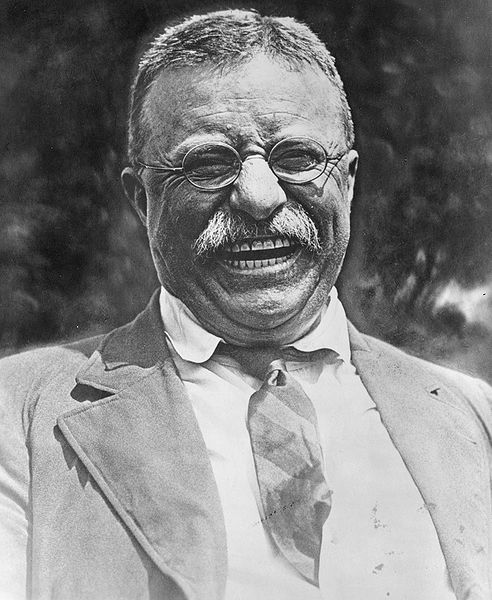
President Roosevelt: Laughing at funny jokes is bully.

John  Dos Passos’ writing is so brisk it’s sometimes hard to catch up to it. A while back, I offered up his biographical sketch about Isadora Duncan. Now I present some of the author’s writing about President Theodore Roosevelt, one of the more interesting characters in American history. The passage comes from 1919, the second volume of the U.S.A. Trilogy. In under one page, Dos Passos describes Roosevelt’s entire Presidency. An excerpt:

     “T.R. drove like a fiend in a buckboard over the muddy roads through the driving rain from Mt. Mercy in the Adirondacks to catch the train to Buffalo where McKinley was dying,
     As President
     he moved Sagamore Hill, the healthy, happy normal American home, to the White House, took foreign diplomats and fat armyofficers out walking in Rock Creek Park where he led them a terrible dance through brambles, hopping across the creek on cobblestones, wading the fords, scrambling up the shady banks.,
     and shook the Big Stick at malefactors of great wealth.
     Things were bully.
     He engineered the Panama revolution under the shadow of which took place the famous hocuspocus of juggling the old and new canal companies by which forty million dollars vanished into the pockets of the international bankers,
     but Old Glory floated over the Canal Zone.
     and the canal was cut through.
     He busted a few trusts,
     had Booker Washington to lunch at the White House,
     and urged the conservation of wild life.
     He got the Nobel Peace Prize for patching up the Peace of Portsmouth that ended the Russo-Japanese War,
     and sent the Atlantic Fleet around the world for everybody to see that
America was a firstclass power. He left the presidency to Taft after his second term leaving to that elephantine lawyer the congenial task of pouring judicial oil on the hurt feeling of the moneymasters.
     and went to Africa to hunt big game.
     Big game hunting was bully.”

Tags: ,

Here’s another attention-grabbing TV spot from the North Carolina-based comedy duo Rhett & Link and the fine folks at I Love Local Commercials. This odd ad touts the car-selling skills of Cuban immigrant Rudy Fuentes, who was a gynecologist in his homeland. Enjoy.

Tags:

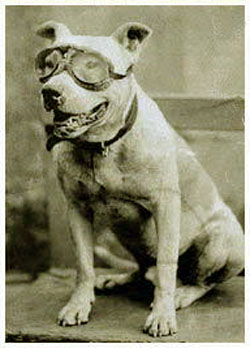
Run like the wind, Mr. Butterscotch! Your cute goggles will not save you.

Brooklyn was completely insane in 1896, what with old guys going dog-hunting with double-barrel shotguns in the middle of the night. That was the scenario laid out in the June 26, 1896 issue of the Brooklyn Daily Eagle. Stray dogs disturbed the peace and a geezer picked up his weapon. You know the article was from long ago because it refers to Flatbush as “the suburbs.” The piece in full:

“Residents of the southeastern section of Flatbush are up in arms against a pack of hungry, homeless dogs, which nightly turn that peaceful neighborhood into bedlam. These starving brutes invade private lawns, prowl around chicken houses, chase cats, fight with each other over a stray bone and howl at the moon until their hair raising concert awakes the soundest sleeper.

With that patience which is characteristic of the Flatbush resident, the unwilling auditors of these serenades for a whole week put cotton in their ears and walked the floor with the babies before they decided to stand on their rights as citizens and taxpayers.

The initiative was taken by John J. Snyder, who is about 70 years old and lives in a handsome house on East Twenty-first street, near Avenue C. Though he is a hale and hearty man for his age, he is unable to do without sleep. In the dead of the night he was forced to rise from his bed and throw things through the window. Mr. Snyder owns an excellent shotgun and in the wee, small hours of yesterday morning, when the savage concert was at its height, he decided to use it.

Your demise shall be my greatest triumph, Butterscotch.

Unfortunately all his shells were loaded with fine shot, so there was small hope of doing fatal work. Armed with his trusty weapon Mr Snyder descended to the porch. The pack was in the rear of the house in full cry. Mr. Snyder stole around his house with a step as light as that of an Indian. Suddenly two shots rang out in the night. For a moment all was still and then the dogs set up a howl that made cold shivers run down the backs of Mr. Snyder’s neighbors. When morning came the yard was empty of the living and the dead.

Among those who have suffered from the riotous dog concerts are ex-City Auditor Anton Weber, ex-County Clerk William J. Kaiser, William H. Dreyer, John Dreyer and Mr. Van Kuren. All have now laid in a stock of ammunition and when the dogs appear again there will be deadly battle.”

    Boring Afflictor: Helping Singapore trishaw drivers sleep peacefully since 2009. (Image by Stephen Michael Barnett.)

    "Looks like there are a lot of tickets to be had." (Image by Rosana Prada.)

    2 Tickets to a show I could care less about – Bon Jovi – $99 (Middle 225 B)

    I bought these as an Xmas gift for my fiance. I remembered she said she loved Bon Jovi. Of course I wasn’t paying attention when she said…”in high school.” Looks like there are a lot of tickets to be had. These are below cost to me (way below because, like a jackass, I bought them on Stub Hub). 

    More Craigslist ads:

    Tags:

    Let's play quickly--the sun is melting the ice.

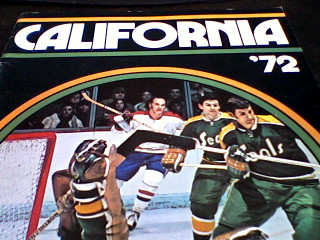
    I don’t really care for hockey, but I’ll always have a look when I come across some publication from 40 years ago for a sports franchise that no longer exists. Leagues were a lot less organized in those days and TV money hadn’t become the raison d’être. You never know what interesting factoids you might find. So I recently took advantage of an opportunity to gaze upon California ’72, a periodical that was published by Maple Leaf Gardens Sports magazines.  

    The Managing Editor, Ross Brewitt, wrote a bunch of hockey books, including one about Eddie Shack, a journeyman player who battled illiteracy. There are advertisements for Belvedere cigarettes, Corby Gin and Grissol Breads. And there’s lots of great color and b&w images of the Seals in action. 

    The California Golden Seals were an embattled NHL franchise in the Bay area from 1967-1976, part of the first wave of the league trying to spread its market beyond cold-weather environs in Canada and the Northeast and Midwest of the America. The NHL also wanted to head off progress by a competeing outfit called the Western Hockey League.  

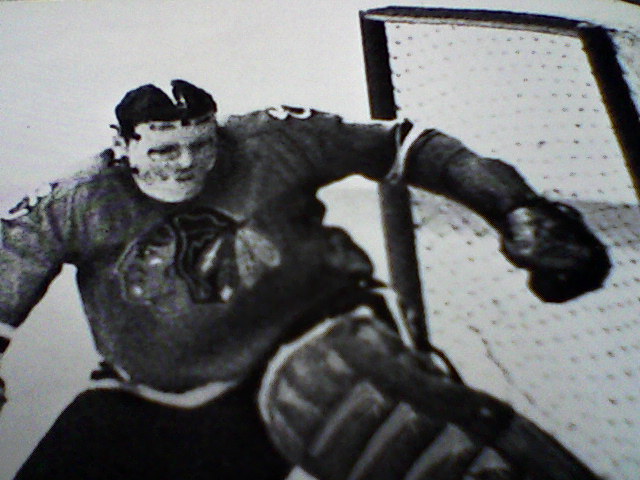
    A demonstration of superior netminding skills.

    The Seals never drew and went though a succession of owners, including Charlie Finley, who changed team colors to match those of his baseball franchise, the Oakland A’s. The Seals eventually moved to Cleveland and then merged with another franchise. An excerpt about the beleaguered franchise from the magazine:

    “From the start of expanision, unrest has been the word most commonly associated with the California Golden Seals, a team which has been afflicted with trouble in the front office for four turbulent years. General managers have been changed. Coaches have been changed. There have been changes in ownership, and the results of these changes have been completely predictable. The Seals have finished out of the playoffs for two of the four years they have been in operation and when all-time standings of the National Hockey League are considered, the Seals stand alone at the bottom of the heap.”

    More Miscellaneous Media: 

  • Ugandan currency with Idi Amin’s picture. (1973)
  • Tom Van Arsdale basketball card. (1970)
  • Okie from Muskogee” Sheet Music. (1969)
  • Beatles Film Festival Magazine (1978)
  • ABA Pictorial (1968-69)
  • Tom Seaver’s Baseball Is My Life. (1973)
  • Hockey Digest (1973)
  • World’s Fair Guide (1964)
  • World’s Fair Guide (1939)
  • Buffalo Braves Yearbook (1972-73)
  • New York Nets Yearbook (1976-77)
  • “Tom Dooley” sheet music.
  • Everyone rushing to see the new Ashton Kutcher-Katherine Heigl movie. (Image by David Shankbone.)

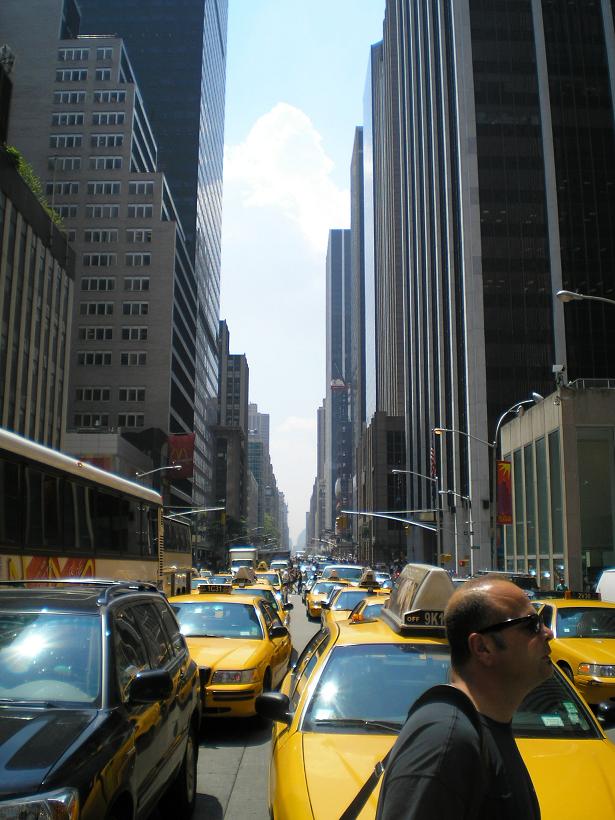
    There’s a really interesting article in Wired about Charles Komanoff, a New York resident who’s obsessively mapping every aspect of Manhattan traffic in online spreadsheets. The piece by Felix Salmon, “The Man Who Could Unsnarl Manhattan Traffic,” examines how the 62-year-old Tribeca activist and numbers cruncher is trying to make sense of Manhattan gridlock (environmental impact, safety concerns, reducing delays) with the aid of his Balanced Transportation Analyzer. Komanoff’s work has impressed experts on the subject not just in NYC but in Europe and Asia as well. An excerpt:

    “Komanoff’s life has been driven by two passions: cycling and data. Naturally, he has combined them in another spreadsheet, one that logs every mile he has biked since January 1, 2001. The very act of entering the data, Komanoff says, keeps him motivated to ride everywhere, even in the rain and snow. ‘I want to be able to enter the miles,’ he says. He ends up inputting about 3,000 of them every year.

    A bearded former antiwar activist, Komanoff grew up in a liberal enclave of Long Island and studied mathematics and economics at Harvard. In 1973, he analyzed a proposed hydroelectric facility in upstate New York whose business model relied on the existence of extensive nuclear power in the Northeast. He wrote a report showing that the kilowatt price of nuclear power was rising fast and that the economics of the scheme simply didn’t work. It was his professional breakthrough, and in 1981 he published a massive book on the subject, Power Plant Cost Escalation: Nuclear and Coal Capital Costs, Regulation and Economics. ‘I thought I’d never do anything that ambitious again,’ he says.

    Over the next 30 years, Komanoff built a career at this intersection of algorithms and advocacy, especially around what he calls ‘the two leading sources of environmental and social harm in industrial societies: electricity generation and motor vehicles.’”

    Tags:

    Sharron Angle: "I am the Tea Party." (Image by Achim Raschka.)

    Sharron Angle: A tsunami of conservatism is coming in waves across the country.

    Decoder: Tsunamis are really destructive and kill people and destroy property. Why would anybody vote for conservatives if it would cause them to be dashed against rocks and have their garages knocked down? Next time I will compare conservatism to something pleasant, like Labradoodles or cupcakes.

    Sharron Angle: The problems we’re seeing with our children and these shooting incidents–such as at Columbine–psychotropic drugs are linked to them.

    Decoder: You know what else is linked to school shootings? Guns. But I can’t be honest about that fact since I’m in the Tea Party. Remember: Psychotropic drugs don’t kill people, people on psychotropic drugs with guns kill people.

    Sharron Angle: [My father’s] small business was a motel. And so we did those things as a kid growing up that Americans don’t do. We cleaned bathrooms and made beds and swept floors, did laundry, those kinds of things.

    Decoder: Americans are disgusting filthbags with dirty toilets. Hand them a mop and some Top Job.

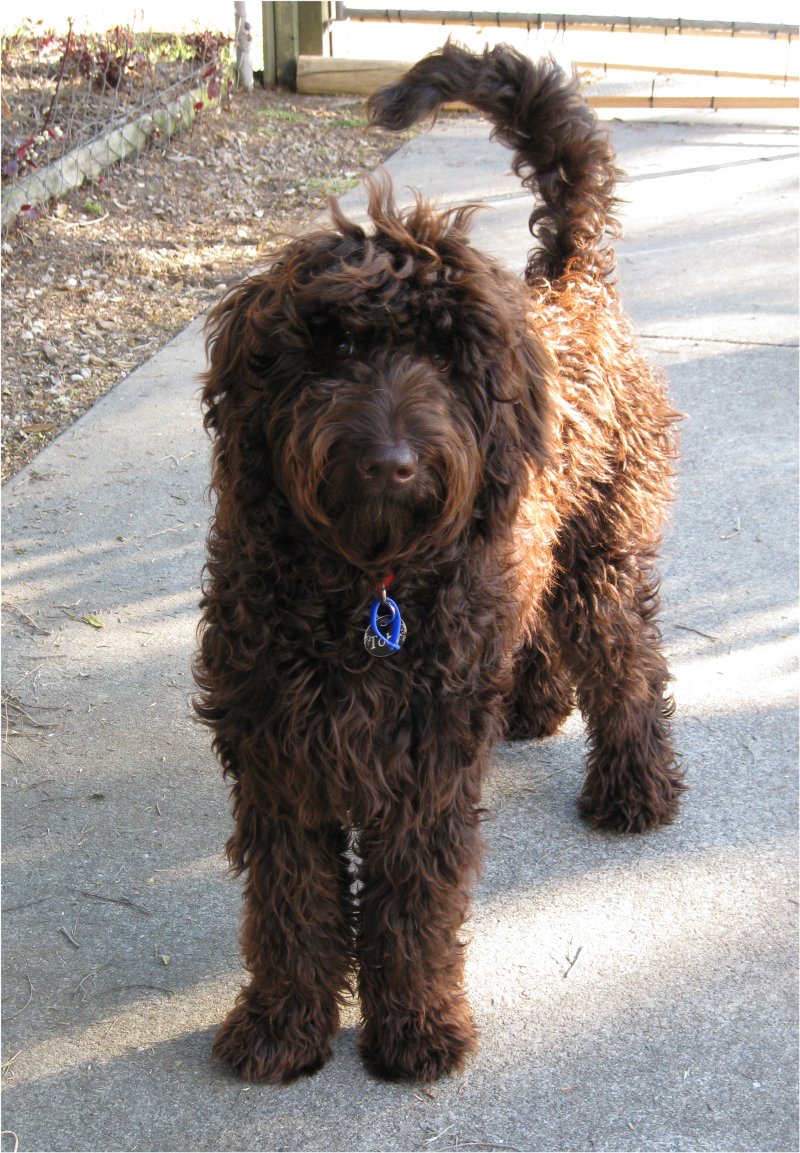
    A Labradoodle of conservatism is coming in waves across the country.

    Sharron Angle: I am the Tea Party.

    Decoder: Incoherent, judgemental, hypocritical, whiny and lacking in basic history and self-awareness.

    Sharron Angle: My message is what the people want.

    Decoder: Except maybe, for example, the part about abolishing Social Security. That might not be so popular with the people, especially in a state like Nevada with such a high percentage of senior citizens. And if any of these seniors have filthy toilets, I may have doubly offended them.

    Sharron Angle: I really don’t trust big government. When big government gets in control, we know those great ideas turn out to be something that hits us right in the pocketbook.

    Decoder: Like the lower taxes that working-class people have paid under President Obama.

    Sharron Angle: These people in the government, at the United States level…should be the least powerful in the nation rather than the most powerful because of the way our founders set up our government.

    Decoder: People have much more power with regard to voting rights and representation right now than they did at our nation’s birth. And what the fuck did I mean by “at the United States level” anyhow? Did somebody think I was discussing Iceland?

    Sharron Angle: I have a very well-developed sense of right and wrong. I don’t think you can get away from that: People make value judgments.

    Decoder: Which is unfortunate because the people voting in Nevada might make a value judgement about me, and my values are complete bullshit.

    Tags:

    Now Junior can look like a complete freak--and think of the savings!

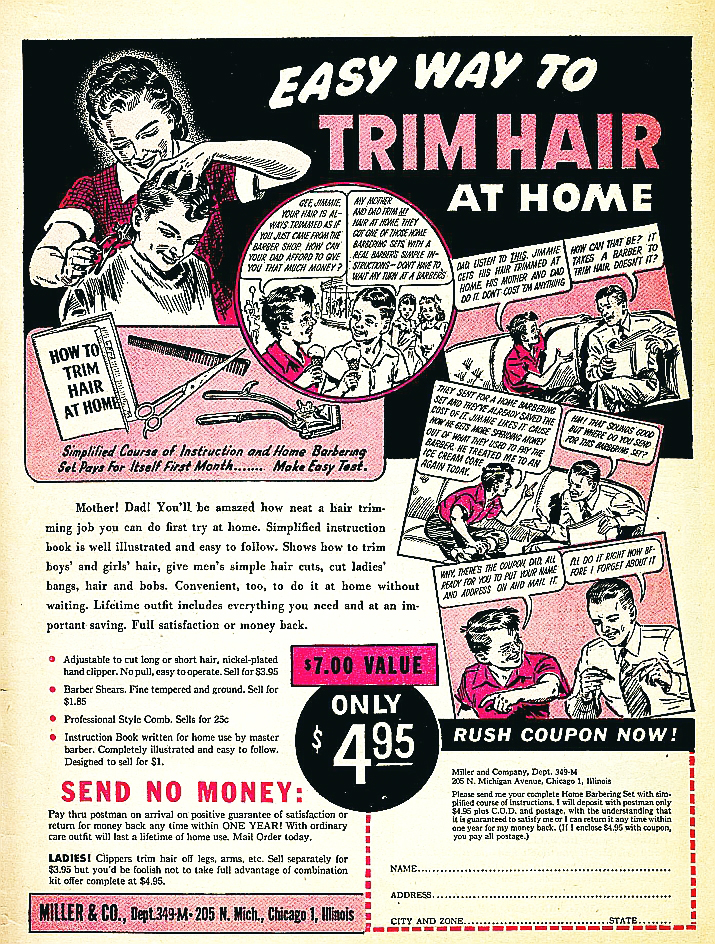
    The DIY hair-trimming kit featured in this 1947 ad was no doubt responsible for a lot of kids getting  their hairstyles butchered by mom and dad. The item, manufactured by Miller and Co. in Chicago, came with an illustrated instruction booklet and a variety of shears and combs. The ad promised that the kit would pay for itself within a month. The whole thing cost $4.95. The big sell comes in a comic-strip conversation between father and son. They both seem to be very excitable on the subject of haircuts. Well, everyone was very giddy because we’d just defeated the Nazis. An excerpt:

    Son: Dad listen to THIS. Jimmie gets his hair trimmed at home. His Mother and Dad do it. Don’t cost ’em nothing.

    Dad: How can that be? It takes a barber to trim hair, doesn’t it?

    Son: They sent for a home barbering set and they already saved the cost of it. Jimmie likes it because now he gets more spending money out of what they used to pay the barber. He treated me to an ice cream cone again today.

    Dad: Ha! That sounds good but where do you send for this barbering set?

    Son: Why there’s a coupon, Dad. All ready for you to put your name and address on and mail it.

    Judge Judy: Presided over the landmark case of the missing donut. (Image by Susan Roberts.)

    Jury duty service is over, so Afflictor.com no longer has any reason to suck. Don’t get me wrong: It will still suck. There’s just no excuse for it anymore.

    New things at jury duty in Brooklyn: Lounge has free wi-fi, about a dozen public computers with Internet access, a half-dozen large-screen TVs tuned to MSNBC. There’s no more sitting around for nine days if you haven’t been assigned to a trial; most people are dismissed after one day of service. Once you complete your service, you will not be called again for jury duty for eight years. The whole thing is managed very well; no more bureaucratic nightmare.

    Old things at jury duty in Brooklyn: I saw a judge wandering around the halls who must have been 200 years old. I assume he has emeritus status and was there for minor proceedings. He might have been on loan from a judge museum. When he spoke, sawdust come out of his mouth.

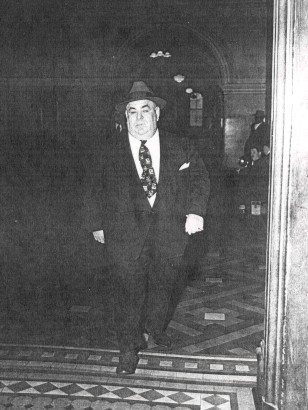
    Gambling kingpin William George Lias, aka "Butt Boy" and "Humpty Dumpty." (Image courtesy of the Wheeling Area Genealogical Society.)

    Even if he hadn’t been so overweight, West Virgina gambling kingpin William George Lias would have been a larger-than-life character. According to the Wheeling Area Genealogical Society, the man who would someday tip the scales at close to 400 pounds quit school after sixth grade to become a bootlegger. It was the start of a brilliant career in underworld booze and gambling, work that was in large part responsible for giving Wheeling its freewheeling reputation.

    In the early 1950s, the Feds thought they found a loophole that could rid them of Lias’ shady business deals: They claimed he was a foreign citizen who was brought into the country illegally by his family when he was a child. It appears the government’s case was baseless as Lias beat the rap and lived on as an American-born citizen until his death in 1970.

    During this federal effort to deport Lias, Life ran the article, “He Wants To Stay Put: The Biggest Gambler in Wheeling Fights a U.S. Try to Deport Him.” An excerpt:

    “In a federal court in West Virginia last week the government tried to put the squeeze on all 368 pounds of William George (‘I ain’t been no angel’) Lias, a big wheel in Wheeling. Starting with a bread wagon and working up through restaurants, speakeasies, gambling rooms and the numbers racket to control of Wheeling Downs, a pretty half-mile track on an Ohio River island, Lias has prospered despite a few sorrows: a couple of brief Prohibition jail sentences; the sudden death of his first wife, shot down in self-defense by the pistol-packing wife of a pal of his; titanic legal struggles over $2.8 million in unpaid taxes.

    Through it all Lias stood up for his rights. He could say that he was, after all, an American. Now the government says that he is not American. It is trying to send him back to Greece where it claims documents prove he was born. Lias, supported by witnesses who remember him as the chubbiest dumpling ever to sag the springs in a baby carriage, argues desperately that the government’s case is a mistake, that he was born and brought up in Wheeling.”

    Tags:


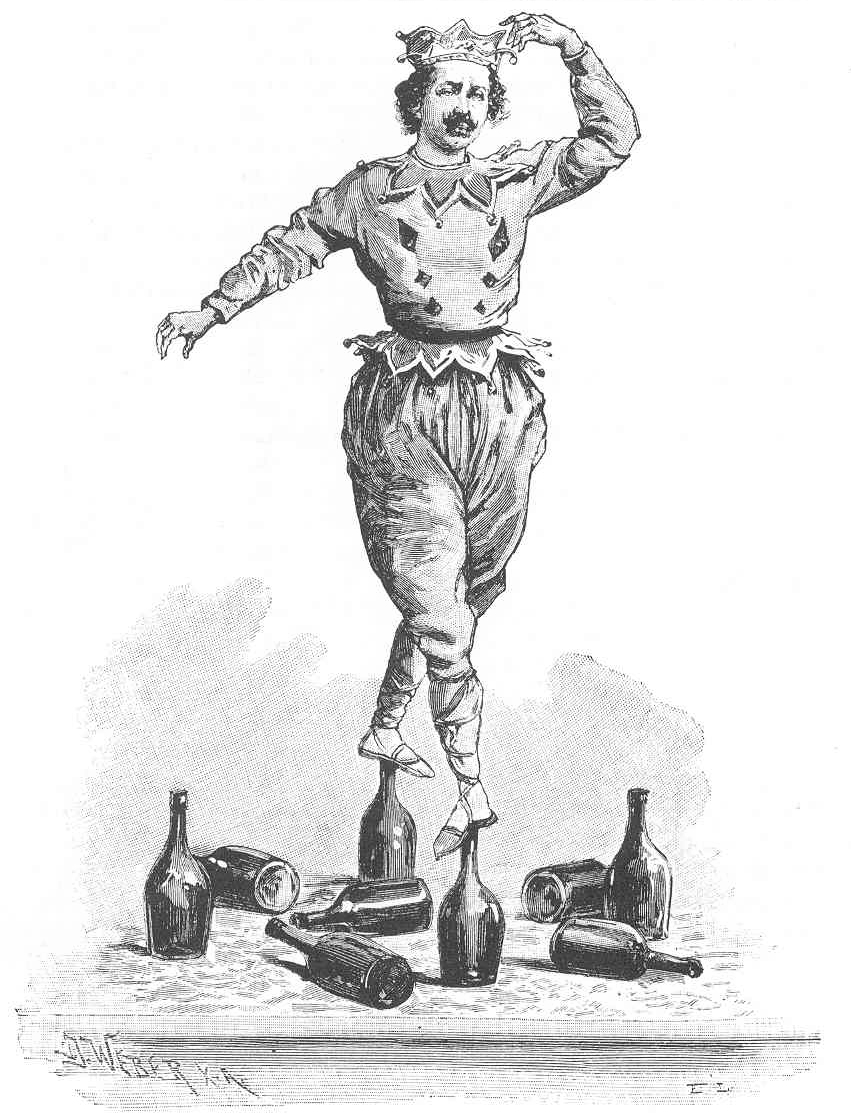
    Dancing clown: Own me and 143 of my friends for just $6.

    According to an ad in the March 6, 1948 issue of Billboard magazine, the following are the prices for items that were sold by the Harris Novelty Company of Philadelphia. The advertsiement was included in the section known as “Pipes for Pitchmen,” which focused on the loose collection of itinerant street peddlers who traveled around the country looking for good places to sell.   

    • Monkeys with sticks…$21 per gross
    • Dancing clowns…$6 per gross
    • Robin Hood hats with feather…$7 per gross
    • Long lash whips…$11 per gross
    • Baby shoes with roller skates…$2 per dozen
    • Inflatable rubber squeaky crying dolls…$2.75 dozen
    • Chinese snakes…$8 per gross
    • Water squirt rings…$21 per gross
    • Metal running mice…$12 per gross
    • Medium cat balloons…$4 per gross
    • Cop callers for autos…$2 per dozen
    • Rabbit feet with keychain…$4 per hundred
    • Electric bow ties, with batteries…$7.50 per dozen

    The bill's designer wisely made Amin appear slimmer than he really was.

    I got my hands on a Ugandan ten-shilling note that bears a portrait of Idi Amin. There’s no date marking, but I think it’s from 1973. That was two years after the erstwhile boxer and soldier had seized power of the country while President Obote was abroad. Soon, Amin had declared himself ruler for life.

    For a long time, the world either didn’t know or didn’t care to know of the atrocities that Amin was committing inside the African nation. He was considered a clown, a buffoon, but manageable. But before his reign of terror ended, as many as 500,000 Ugandans had been brutally and senselessly murdered for imagined slights.  

    Beneath his remarkable hubris and deep-seated paranoia, Amin was also an undiluted sociopath. He reputedly cannibalized his enemies and shared their flesh with crocodiles. Who knows if that’s true, but the body count was very real. There are quite a number of books and films about the dictator who died in 2003 while in exile in Saudi Arabia, but this brief series of clips of Amin bragging, grinning, laughing and lecturing is chilling enough. 


    More Miscellaneous Media: 

    Tags:

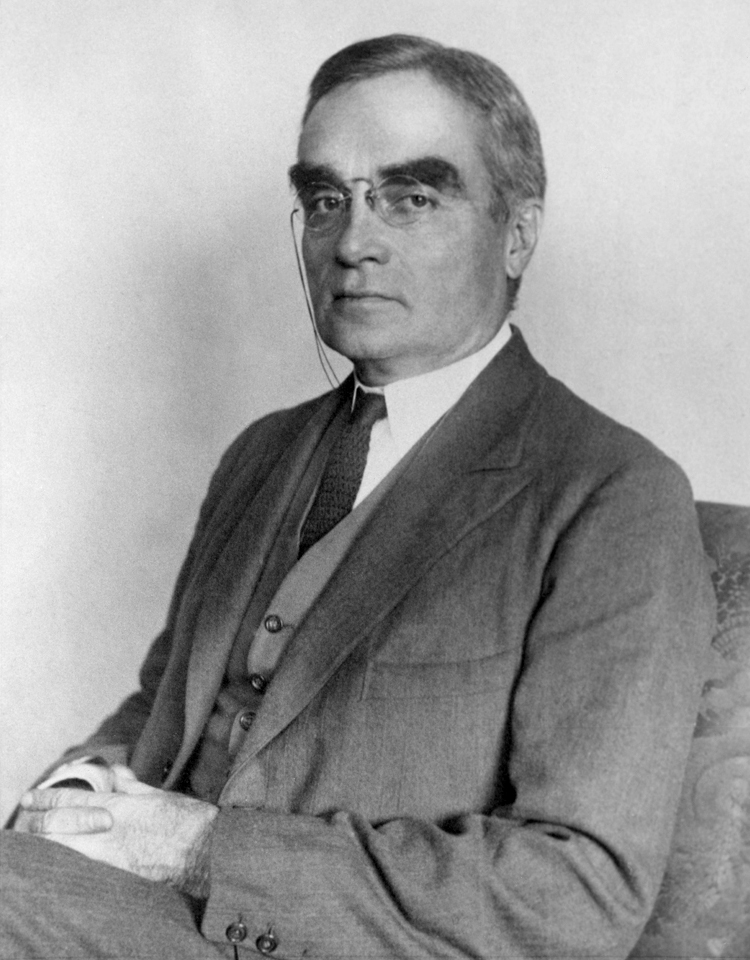
    Judge Learned Hand: I served on the United State Court of Appeals for the Second Circuit, and I also had the coolest fucking name ever.

    I begin jury duty on Tuesday morning, so there won’t be any posts till later in the afternoon. Since most Afflictor readers are known criminals, perhaps I will see some of you at the Brooklyn Supreme Court building. I’ll be happy to shake hands with all of you who aren’t cuffed.

    Tags:

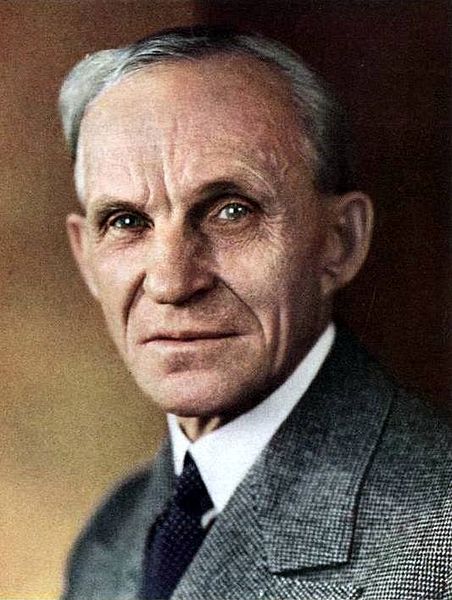
    Henry Ford: This movie is an utter blowjob to my legacy, but it contains some fantastic footage of America from 1915-1930.

    It was probably because he was close friends with Thomas Edison that Henry Ford became so interested in film. In his lifetime, the automotive magnate collected miles and miles of film footage that captured America in the early 20th century. The Ford Historical Film Collection (now housed at the National Archives) were used to create “Henry Ford’s Mirror of America,” an unobjective 35-minute piece of embarrassing pro-Ford propaganda that also happens to contain some amazing footage of the U.S. during the birth of the Industrial Revolution. Some highlights: a reunion of Civil War veterans (Blue and Gray) in Vicksburg in 1917, an Atlantic City hotel shaped like an elephant, the naturalist John Burroughs meeting his adoring public, Buffalo Bill Cody and his circus in action in 1916, women riveting in factories during WWI and the burial of the Unknown Soldier. Enjoy Part 1 and Part 2.

    Tags: , ,

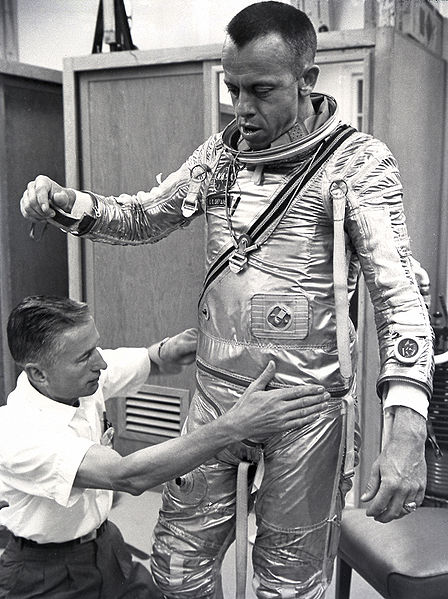
    Alan Shepard: I'm not a gorilla, and please stop trying to squeeze my hands.

    GORILLA IN SPACESUIT–SQUEEZE HIS HANDS & HE TALKS – $10 (BAYSIDE, QUEENS)

    Adorable. Wears silver spacesuit and helmet. When you squeeze his hands, he will talk. Excellent condition.


    More Craigslist ads:

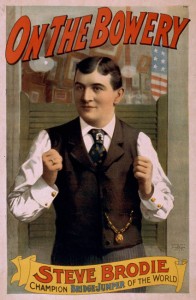
    "Steve Brodie: Champion Bridge Jumper Of The World."

    Steve Brodie was a New York bookie who gambled on the public’s need for heroes. Brodie grew famous in the late 19th century for an array of daring deeds, but he really only had one mighty talent: hoopla.

    The popular Bowery character became a national celebrity in 1886 when he supposedly survived a leap from the recently opened Brooklyn Bridge–or so he claimed. Brodie likely had a dummy thrown off the span while he stayed out of harm’s way under a pier, but the press and public swallowed the story whole. Soon, the phrase “pulling a Brodie” was used whenever anyone performed a large, flamboyant gesture. He was the Houdini of hooey and the “daredevil” rode the publicity to success as a Manhattan saloon owner.

    Once he tasted fame, Brodie wasn’t going away without a fight. The barkeep subsequently claimed a laundry list of other bridge dives and awesone feats that were likely equally bogus. But even if his boasts were illegitimate, Brodie’s notoriety landed him roles in legitimate theater, including 1894’s On the Bowery. The problem was, his whole life was a stage act and you never knew what was real and what was fake. As a result, Brodie’s obituary was written prematurely many times over the years.

    The real one ran in The New York Times on February 1, 1901, under the title “Steve Brodie Dead; Picturesque Career of Famous Bowery Character Ends at San Antonio, Texas.” (The Times had previously pronounced him dead three years earlier.)

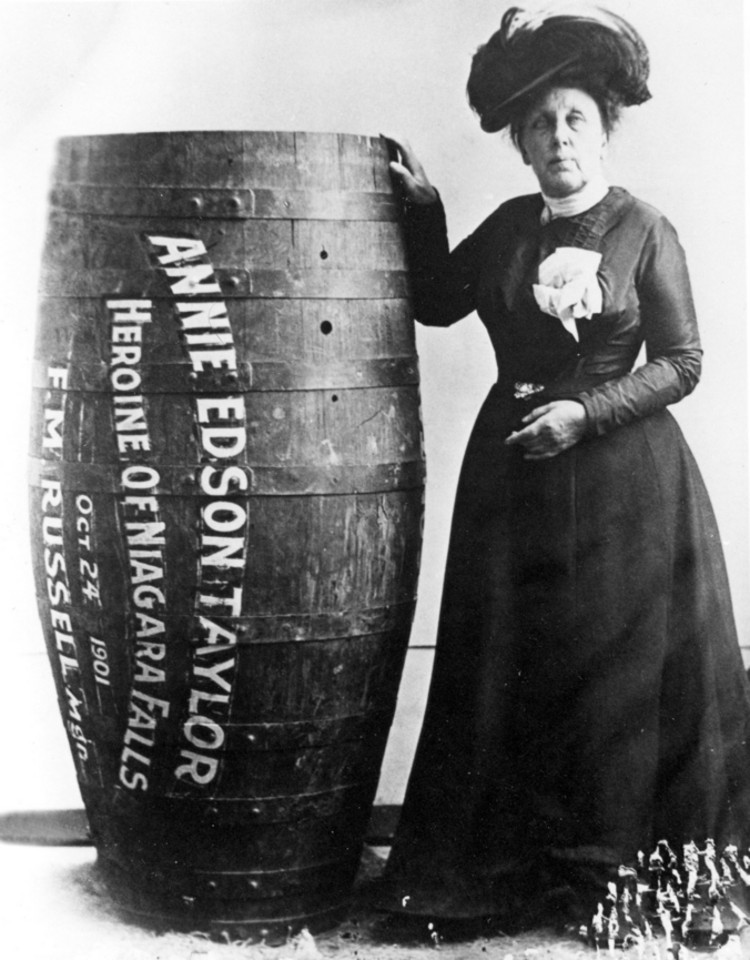
    Another time Brodie was hastily drowned in a pool of ink was in a September 7, 1889 article in the Brooklyn Daily Eagle, which reported that Brodie had been seriously, perhaps fatally, wounded (false) after becoming the second man to go over Niagara Falls in a barrel (false), just days after a barrel maker named Carlisle D. Graham had become the first to accomplish the feat (also false). An excerpt:

    “The peculiar form of insanity which Steve Brodie has shown has comprised an ambition on his part to outdo anyone else in jumping from great heights, or in the undertaking of great risks. He has jumped from the Brooklyn Bridge, the Harlem High Bridge, the Cincinnati Suspension Bridge, over the Falls of the Genesee and from other great heights.
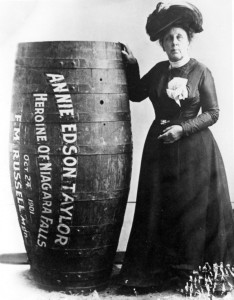
    Annie Taylor, the first person to genuinely go over Niagara Falls in a barrel and survive. She performed the feat in 1901.

    To-day it was reported he went over the Horseshoe Falls at Niagara, in a barrel, and that he has been taken up severely, and it is believed fatally, hurt. This last effort was doubtless made in emulation of the report that the idiot cooper named Graham went over the Falls in a barrel the other day. It is reputably declared that Graham did nothing of the kind, and that the report was a fraud to enable him to exhibit himself at paying rates in cheap museums.

    There seems to be no doubt, however, that Brodie believed the Graham story and resolved to equal or exceed the attempt. If his temerity costs him his life, he will only have himself to blame. There will, however, be some sympathy with him because he was local to these communities and because he had undoubted pluck or recklessness. Should he emerge a cripple for life or should he finally recover, ground for his apprehension as a lunatic would be supplied by his last effort. It is a fact, however, that those who surround him are interested in urging him on to risk after risk, and that they make capital out of his peculiar form of audacious insanity. It will be remembered that Brodie’s most successful rival, Donelly, we think his name was, lately lost his life bridge jumping in England.

    Legislation is required to deal with cranks of this kind. The community would not be critical of the character of such legislation, if only it was effective. Peremptorily to rate the cranks as insane, to shave their heads and to lock them up to be looked at by the public would stop their business.”
    Tags: , ,

    Rand Paul: Keeps a ham radio in the basement. (Image by Gage Skidmore.)

    Rand Paul: I don’t want to live in a nanny state where people are telling me where I can go. 

    Decoder: Especially that British lady on the GPS thing. She pisses me off.

    Rand Paul: I don’t like the idea of telling private business owners–I abhor racism, I think it’s a bad business decision to ever exclude anyone from your establishment–but I do believe in private ownership.

    Decoder: Seriously, only the douchebag son of Ron Paul, who may be a poltergeist, could revive a 45-year-old debate about racial discrimination at lunch counters. That issue was sort of already decided, and it made the country stronger in every way.

    Rand Paul: Even though I was a year old at the time, I like to believe I would have marched with Martin Luther King. 

    Decoder: That would have been the slowest fucking march ever. Fucking baby steps all over Selma. 

    Rand Paul: These attacks prove one thing for certain: The liberal establishment is desperate to keep leaders like me out of office, and we are sure to hear more wild, dishonest smears during this campaign. 

    Decoder: Although everything they’re saying about me is accurate, taken directly from quotes I made about the Civil Rights Act. 

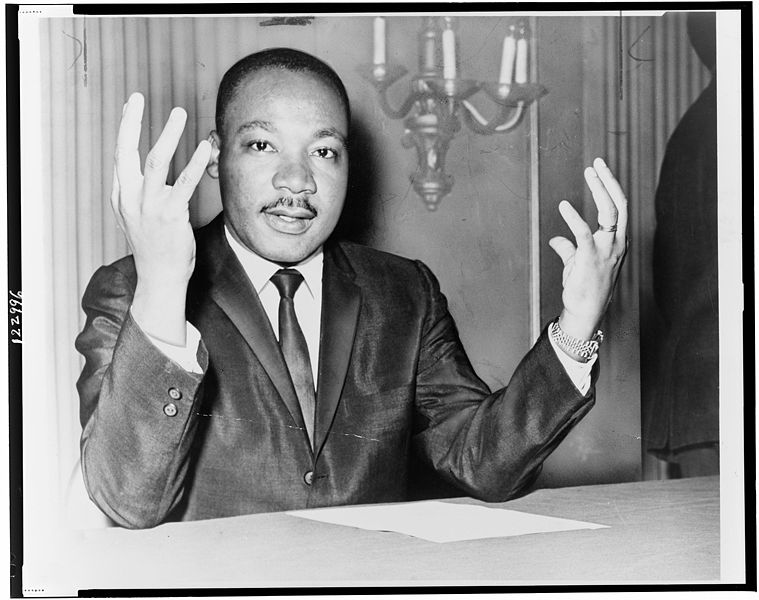
    Martin Luther King Jr: Who was that crazy-looking white baby marching with us? (Image by Dick DeMarsico.)

    Rand Paul: I think that we should try to do everything we can to allow for people with disabilities and handicaps. And I think when you get to solutions like that, the more local the better, and the more common sense the decisions are, rather than having a federal government make those decisions.

    Decoder: The federal government had to make those decisions since local decision makers were often guided by prejudice instead of common sense. 

    Rand Paul: What I don’t like from the President’s administration is this sort of, I’ll put my boot heel on the throat of British Petroleum. I think that sounds really un-American in his criticism of business. 

    Decoder: Nothing could be more American than a President standing up to the abuse of people and resources by big business. Just ask Teddy Roosevelt and Dwight Eisenhower. And why exactly am I more worried about BP’s hurt feelings than the disgraceful pollution of the ocean? We can live without an irresponsible oil company, but we can’t live without the ocean.

    Rand Paul: It’s difficult to have an intellectual debate in a political sense because what happens is it gets dumbed down to three words.
     
    Decoder: The three words: Tea Party jackass.
     
    More Decoders:
     

    Tags: ,

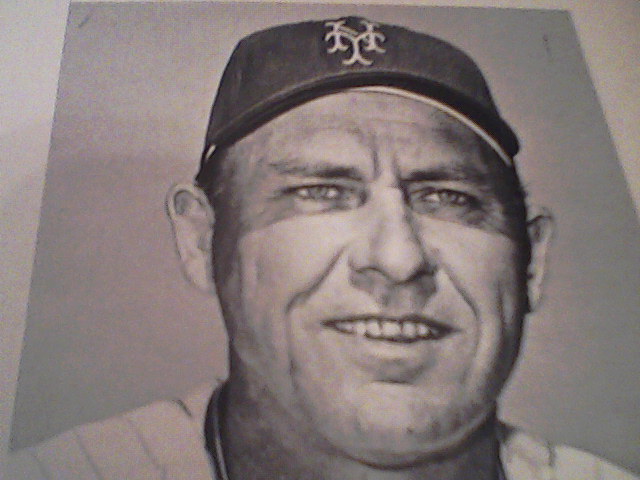
    Manager Gil Hodges: Those 15¢ cigars helped us upset the heavily favored Baltimore Orioles in the World Series.

    According to a 1969 New York Mets scorecard, here are the prices for items on sale that season at Shea Stadium concession stands. For the love of god, remember to floss!

    • Frankfurter…40¢
    • Hamburger…55¢
    • Knishes…35¢
    • Pizza…35¢
    • Ham sandwich…55¢
    • Cheese sandwich…50¢
    • Corned Beef sandwich…60¢
    • Egg Salad sandwich…50¢
    • Meat Ball Hero…85¢
    • Hard Roll Hero…85¢
    • Shrimp Basket…95¢
    • Chicken Basket…95¢
    • French Fries…30¢
    • Milk Shake…35¢
    • Ice Cream…25¢
    • Cake…25¢
    • Pie…25¢
    • Floss…25¢
    • Peanuts…25¢
    • Popcorn…25¢
    • Potato Chips…25¢
    • Candy…15¢
    • Gum…10¢
    • Crackerjacks…25¢
    • Cigarettes…55¢
    • Cigars…15¢
    • Soup…20¢
    • Milk…25¢
    • Ice Tea…25¢
    • Soft Drinks…15¢ (small), 25¢ (large)
    • Beer…55¢
    • Ale & Premium Beer…60¢
    • Coffee…20¢ (small), 25¢ (large)
    • Hot Chocolate…20¢ (small), 25¢ (large)
    • Scorecard…25¢
    • Pencil…10¢

    Tags:

    Afflictor: Helping Tokyo salarymen sleep soundly since December 2009. (Image by M. from Somerville.)

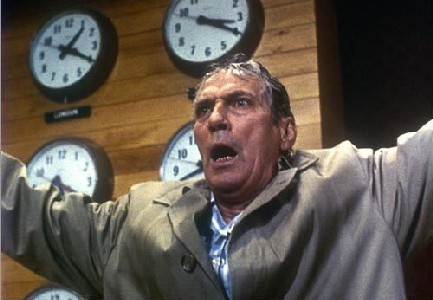
    Give Peter Finch a blackboard and he could have his own Fox News show.

    It’s puzzling that the 1976 Sidney Lumet-Paddy Chayefsky media satire, Network, isn’t revived and revisited more often since it’s among the most prophetic films ever made. Movies, even futuristic ones, aren’t usually much more than a reflection of their times, but Network saw the future–and it was a reality show starring you and me.

    Aging network news anchor Howard Beale (Peter Finch) is being forced out of his job, but he causes a stir when he uses one of his final telecasts to announce that he’s going to blow his brains out. The shocking pronouncement gets huge attention and pretty soon Beale is a maniac of the people, urging his viewers to get mad as hell and not take it anymore. While the news vets are outraged, enterprising young exec Diana Christensen (Faye Dunaway) is only too happy to blend entertainment and journalism, filling the airwaves with terrorists, reality shows and telepsychics. As ethics decline, ratings rise.

    Satires can either exaggerate or diminish their targets and Network decided to go large, imagining a media landscape littered with agressive theatrics and brazen manipulation. The sad truth is that the film may be revered merely as a museum piece because in the most essential ways the world it satirized went larger still.•

    Tags: , , ,

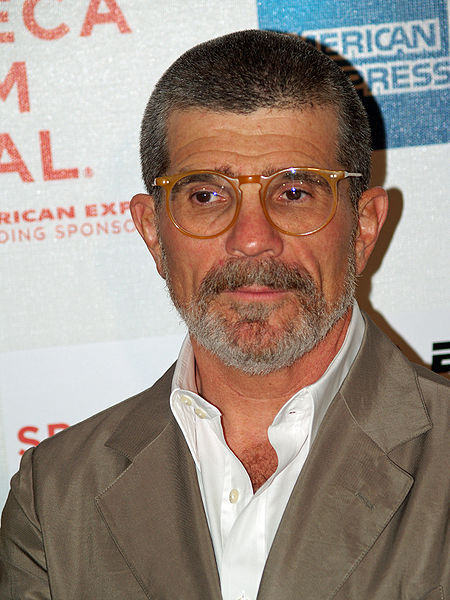
    David Mamet: Put me up on the Cadillac board! (Image by David Shankbone.)

    In 2009, Will Hubbard and Alex Carnevale of This Recording compiled a list called “The 100 Greatest Writers of All Time.” I’m not saying I agree with everything one-hundred percent, but it’s probably the best literary list I’ve ever come across. From number one hundred to the top spot, the duo rank the best writers in the history of the world, including poets, playwrights, essayists, short story writers and novelists. There are, of course, the household names (Congratulations, William Shakespeare!), but there are a lot of provocative inclusions as well. You owe it to yourself to read the whole thing, but here are a few examples of the entries:

    88. David Mamet
    The quintessentially Jewish-American dramatist, his conquests of poetry and fiction were minor. But he exploded the idea of the American play, creating an exciting new vernacular that brought crowds, excitement and controversy to the stage. Famous for shutting down an all-female production of his masterpiece Glengarry Glen Ross, Mamet is an able theoretician, and maybe the most important Chicago Jew of all time. Recommended reading: American Buffalo, The Duck Variations, Boston Marriage.

    49. Charles Olson
    America’s Bard, the voice of New England. Incredibly tall, incredibly wacked. He is the father of much of the American verse that directly followed, but he would never know just how lasting his work would be. He is our poet of the future, a deep thinker who lacked empathy for everyone but himself. Self-involvement can became a kind of genius at this depth, or so we hope. Recommended reading: “The Post Office”, The Maximus Poems, “The K”.

    20. Laurence Sterne
    The finest experimentalist ever. Smash novels, insights of incomparable erudition, hilarious, so ahead of their time that they seem more modern than most things published today. Tristram Shandy has lasted longer than its detractors. Many of its jokes have still yet to be parsed from a text thick with meaning, with comedy and profound statements of humanity in a time where it was not so easy to recognize what exactly that meant. Recommended reading: A Sentimental Journey, Tristram Shandy.

    Tags: , ,

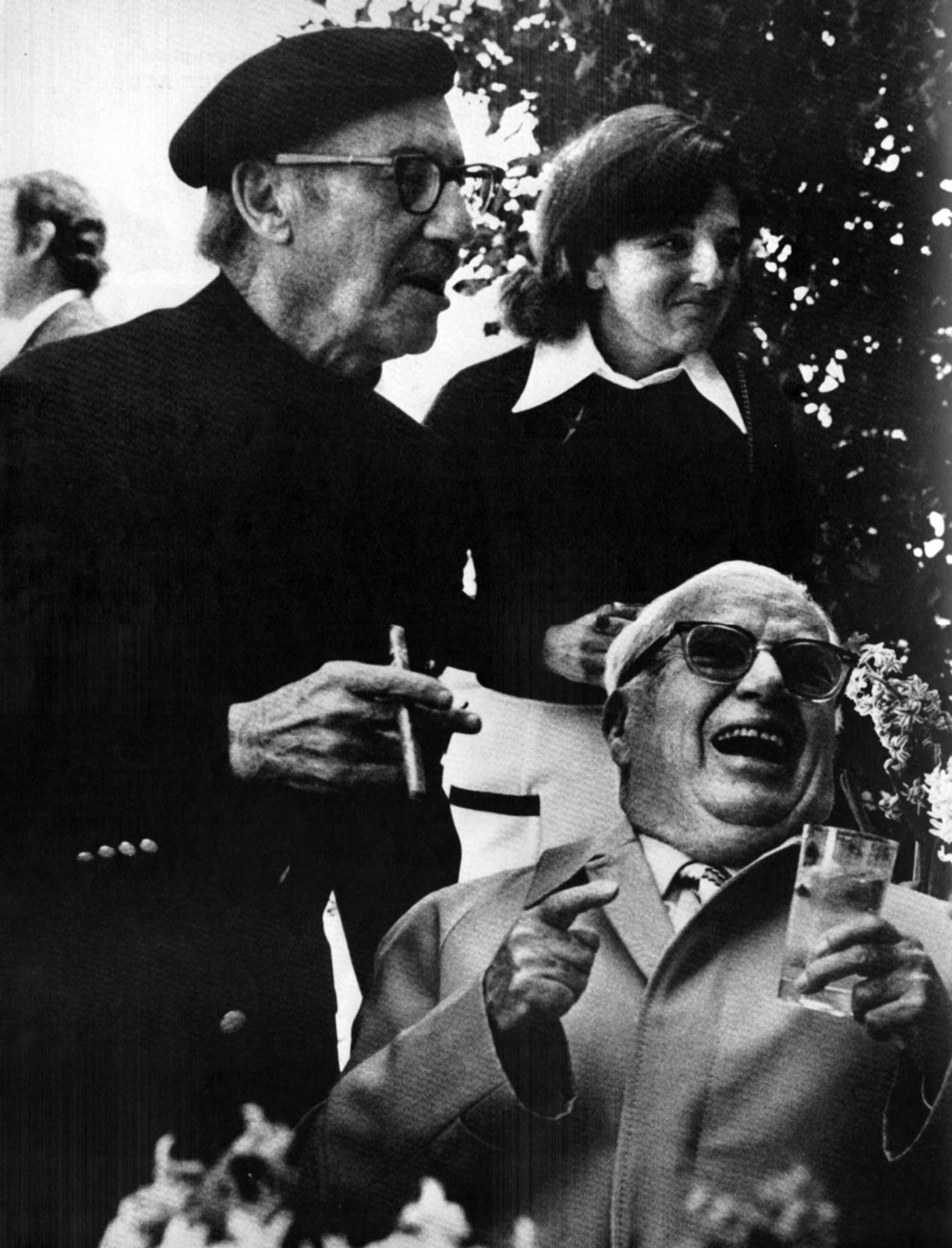
    Groucho Marx, perhaps the greatest comedian of them all, sat down with Playboy in March 1974 for a wide-ranging Q&A. Groucho, who was 83 at the time, recalled everything from going to brothels with a young Charlie Chaplin to encountering anti-Semitism at country clubs. The following are a few excerpts.

    _________________________

    Playboy:

    There’s a rumor that you and Harpo once went to a party naked.

    Groucho Marx:

    It was when we were playing in I’ll Say She Is and we were invited to a bachelor party for a friend of ours who was getting married. So Harpo and I got into the elevator and took off all our clothes and put them in suitcases. We were stark-naked. But we got off at the wrong floor, where the bride was having a party for her friends. So we ran around naked until a waiter finally came with a couple of dish towels—or, in my case, a bath towel.

    _________________________


    Playboy:

    Have you ever been a victim of anti-Semitism?

    Groucho Marx:

    Oh, sure. Years ago, I decided to join a beach club on Long Island and we drove out to a place called the Sands Point Bath and Sun Club. I filled out the application and the head cheese of the place came over and told me we couldn’t join because I was Jewish. So I said, “My son’s only half Jewish. Would it be all right if he went in the water up to his knees?”
    _________________________

    Playboy:

    The Marx Brothers have also had a number of literary friends. Didn’t you correspond with T. S. Eliot?

    Groucho Marx:

    He wrote to me first. He said he was an admirer of mine and he would like a picture of me. So I sent him a picture. And he sent it back. He said, “I want a picture of you smoking a cigar.” So I sent him one. Later he told me there were only three people he cared about: William Butler Yeats, Paul Valéry and Groucho Marx. He had those three pictures in his private office. When I went to visit him. I thought he wanted to talk about all those fancy books he had written, like Murder in the Cathedral. But he wanted to talk about the Marx Brothers. So naturally we became close friends and had a lot of correspondence. I spoke at his funeral.

    _________________________

    Playboy:

    How did you and Chaplin first meet?

    Groucho Marx:

    I took a walk and I passed this dump theater, the Sullivan-Considine. I heard the most tremendous roar of laughter, and I paid my ten cents and went in and there was a little guy on the stage, and he was walking around kinda funny. It was Chaplin. It was the greatest act I’d ever seen. All pantomime.

    Then the following week, I went backstage to visit him and tell him how wonderful he was, and that’s how we got acquainted. Each week we would be in the same towns in Canada; I can’t remember all the towns; this was a hell of a long time ago. We used to go to the whorehouses together, because there was no place for an actor to go in those towns, except if you were lucky, maybe you’d pick up a girl, but as a rule, you’d have to go to a hook shop. And then Chaplin and I got very well acquainted. Not together! I mean, I wasn’t with him! I was with him, but not with a girl, I mean….•

    Tags: , , , ,

    « Older entries § Newer entries »