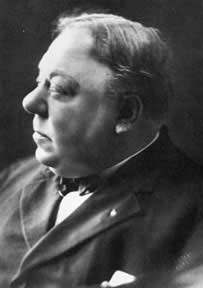
John Bunny: "Round and puffy, with little gimlet-hole eyes."

Before Chaplin, Keaton, Lloyd and the rest, New York City native John Bunny was the first international film comedian. But Bunny, a stage actor who made a very successful transition to the big screen, died in Brooklyn in 1915 during the still-nascent film era, and he isn’t remembered as well as the other silent greats. I came across his obituary in the New York Times. An excerpt form the article subtitled, “Fat, Big, Round-Faced Actor Who Made Millions Laugh Succumbs at 52”:

“John Bunny, the moving picture actor whose big round face and fat form were familiar to millions of patrons of the movie theaters, died yesterday at his residence, 1.416 Glenwood Road, Brooklyn, from Bright’s Disease. Mr. Bunny was stricken with illness about three weeks ago while on a tour with his production, “John Bunny in Funnyland.”

The name of John Bunny will always he linked with the movies. For while he was identified with this branch of the amusement world during only a comparatively small part of his career as an actor, it was the motion picture that first brought him fame and fortune.

Mr. Bunny had been a comedian for a quarter of a century before he went into moving pictures. He was the ninth John Bunny of a line of English sea captains, and the first of the line not to follow the sea. He was born in this city fifty-two years ago. As a young man he made up his mind to be an actor and he began as a member of a small touring minstrel show. Moderate success was the reward of his efforts and eventually he gained that goal of all American actors–a place in Broadway’s incandescent sun. He was blessed with a strong comedy sense, to which endowment nature had added a comic aspect that proved especially valuable for his later work. He was seen frequently in musical comedies, with Hattie Williams in one of her successes, and with Lew Fields in “Old Dutch,” among others.

But it was with the coming of the movies that Mr. Bunny’s fame became universal, till at the time of his death his face was one of the best known in the world. The comedian foresaw the importance of cinema was to play in amusing the multitude, and at the same time he appreciated his abundant qualifications as a comedian of the screen. He had grown exceedingly heavy–he weighed 260 pounds–and as he was beneath the average height his figure immediately suggested the comic. His face, in keeping with his pudgy body, was round and puffy, with little gimlet-hole eyes that peered out from their depths in a kindly, humorous way. It was a mobile face that broke into ripples when Mr. Bunny laughed.”

Below: “Troublesome Secretaries” (1911).


More Old Print Articles:

Tags:

Campaign slogan: Wanna fuck? (Image by Amy Nicole Waltney.)

Because every antisocial, opportunistic cretin contributing nothing to society feels compelled to run for Mayor of Wasilla, Snooki has just announced she’s throwing her snatch into the ring.

Snooki has an unusual platform that has nothing to do with improving Wasilla’s primary school education or eldercare services. She plans to woo voters by giving a blowjob in public to a giraffe shipped in from the Alaska Zoo. It might sound strange, but there’s a method to her madness. Wasilla is a hardscrabble town that could use a great mayor to help it cope with the many social problems it’s facing, but short of that the locals need someone to make them feel better about themselves. Snooki blowing a giraffe will achieve that latter goal because it will enable the citizens of Wasilla to feel superior, since they won’t be the ones who’ll have giraffe semen in their mouths. Even though no one asked her to, Snooki has even volunteered to swallow the quadruped ejaculate. People are willing to give her handkerchiefs to spit into, but she won’t hear of it.

For his part, Levi isn’t giving up without a battle. He’s agreed to finger the house pets (dogs, cats, ferrets, etc.) of any MILF who is willing to throw her vote his way. He has, however, asserted that he will not use his tongue on them. That could hurt him with swing voters, but no one will know for sure until Election Day. The one thing we do know for certain is the people who are considering creating a reality show that has Levi running a sham campaign for mayor of Wasilla are college graduates who should definitely know better. But they care nothing for the welfare of the people in the small Alaskan town.

There'll also be assplay. (Image by Hans Hillewaert.)

MTV and its parent company Viacom are being very supportive of Snooki’s mayoral aspirations, because they’re not multi-billion dollar corporations just using the Jersey Shore cast members to make large sums of money before discarding them like trash. People might think that’s what’s happening, but it’s totally not. For instance, if one of the Jersey Shore kids should contract HIV from one of the drunken hook-ups that MTV and its parent company Viacom enables and encourages, the network will no doubt be there for them.

And MTV and and its parent company Viacom have a sense of responsibility that goes far beyond just the cast, extending to the millions of young viewers who may emulate the disgusting behavior displayed on the show. The program is popular with a very young demographic, and let’s face it, not all of those tweens and young teens who watch have great parental guidance. Should the show inspire some of them to behave promiscuously and get an STD, maybe even AIDS, the corporations will definitely intercede and help them emotionally and financially, especially if they need expensive hospice care. Anything less would be incredibly negligent.

It’s not easy for executives at MTV and Viacom these days because they all keep having the same recurring nightmare. It goes something like this: After cashing their paychecks for Season 3, the Jersey Shore cast members realize they’re going to be replaced by cheaper dummies the following year anyhow, so they decide to not put their health at risk for what is actually a small amount of money. They all conspire to give up drinking and behaving like pigs and instead go to libraries and do charity work for people in need. MTV and Viacom execs all wake up in a panic just as the kids become good citizens.

More Entertainment and Sports News:

Tags: ,

"The best quality at the lowest possible price." (Image by Alfred Wagg Pictures.)

The Albrecht family has been involved in the grocery business in Germany for almost a century, but it was in the late 1940s that brothers Theo and Karl stumbled onto a business principle that revolutionized their growing company and all consumer businesses: discount shopping. They took a no-frills approach, selling staple items at low prices at small stores and eschewing costly advertising. Products that didn’t sell well were quickly removed from the shelves.

Theo Albrecht, who later started the American chain Trader Joe’s, passed away recently and Spiegel has an article about him, the family legacy and why the brothers were incredibly publicity shy. An excerpt:

“Theo and his brother Karl, who is two years older, laid the cornerstone for what became their discount empire in 1948 when they took over their mother’s small grocery store. In 1961, they changed the name to Albrecht’s Discount–or “Aldi” for short. Within decades, the store became a discount chain worth billions, one which permanently changed the way food retailing was done in both Germany and across the globe.

Aldi’s meteoric rise can be traced directly back to the brothers’ business creed: “The best quality at the lowest possible price.” The two Albrecht brothers are considered the founders of the discount strategy, and even today Aldi stores have little in the way of frills and stay away from expensive marketing strategies.

It is a business model that turned the Albrecht brothers into two of the richest people in Germany, with Theo’s net worth said to have been $16.7 billion (€12.8 billion)…Theo and Karl were in close agreement on other issues as well–particularly when it came to keeping far away from the public eye. Extremely little is known about them. Their last public comments come from 1953 and 1971; the last known photos of the two were shot against their will in the 1980s.

One reason for their silence is the 1971 kidnapping of Theo Albrecht, who was abducted and held for 17 days. He was only set free following the payment of a 7 million deutschmark ransom. At the time it was the highest ransom ever to have been paid in Germany. Half of the money, handed over by then-Bishop of Essen Franz Hengsbach, is still missing today.”

Tags: ,

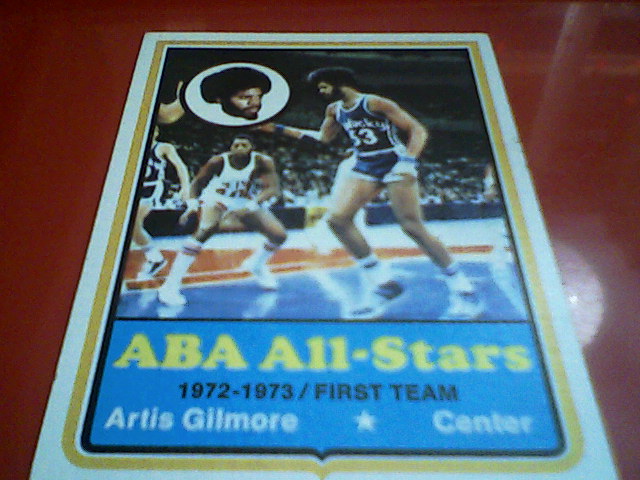
Card insert shows off Gilmore's amazing Afro.

I recently got my long, elegant fingers on an Artis Gilmore basketball card from 1973-74, when the 7′ 2″ center was entering his third season with the Kentucky Colonels of the American Basketball Association. Gilmore played 17 seasons in the ABA and NBA and was one of the greatest big men of all time, making the All-Star team 11 times. He played one additional season in Italy. It’s a perplexing oversight that the Gilmore has never even been close to being voted into the Basketball Hall of Fame. Perhaps his strong game has been overshadowed by his even stronger Afro.

In 2007, Gilmore joined the staff of his alma mater, Jackonsville University. That’s the last reference to him I can find. The following is the text on the reverse side of his card:

“The top vote-getter in balloting for the 1972-73 ABA All-Star Team, Artis was the only repeater from the 1971-72 First Team. A dominating man in the middle on defense and off the boards, he led the league in Rebounding, 2-Point Field Goal Shooting and Blocked Shots for the second consecutive season. Artis also was 10th in Scoring with 20.8 Average. Artis and his wife became parents for the 1st time 1-26-73.”

More Miscellaneous Media:

  • San Francisco cable car ticket stub. (1990s)
  • Bronx high school newspaper. (1947)
  • Mad magazine. (1966)
  • Vancouver Blazers hockey guide. (1974-75)
  • John Hummer NBA card. (1973)
  • Carolina Cougars ABA Yearbook. (1970)
  • The Washington Senators MLB Yearbook. (1968)
  • Ugandan currency with Idi Amin’s picture. (1973)
  • Tom Van Arsdale basketball card. (1970)
  • Okie from Muskogee” sheet music. (1969)
  • California Golden Seals hockey magazine. (1972)
  • Beatles Film Festival Magazine (1978)
  • ABA Pictorial (1968-69)
  • Tom Seaver’s Baseball Is My Life. (1973)
  • Hockey Digest (1973)
  • World’s Fair Guide (1964)
  • World’s Fair Guide (1939)
  • Buffalo Braves Yearbook (1972-73)
  • New York Nets Yearbook (1976-77)
  • “Tom Dooley” sheet music.
  • Tags:

    President Hu Jintao: Started life as a panda. (Image by U. Dettmar/ABr.)

    In its short existence, Afflictor has built a strong following in many nations around the globe, but we hadn’t been able to break through the great wall of China’s censorship–until now that is! This week, for some reason, we’ve had quite a bit of traffic from the world’s most populous country. Despite government fear that media freedom will topple its one-party Communist system, China was unable to prevent some of its people from visiting the profane, idiotic website known as Afflictor.

    A controlling state that aims to use military force and censorship to keep its citizens like children, China is known for buying American debt, building garish architecture, forcing its people to move willy-nilly wherever it wants them to and battling that other evil empire, Google. There are reportedly 20 different areas of censorship in China, and we’re pretty sure Afflictor violates all of them. So good for you, people of China, for saying “no” to ludicrous restrictions on your freedoms. And welcome to Afflictor Nation!

    Tags:

    Afflictor: Helping bank security guards stay alert since 2009. (Image by Brad & Sabrina.)

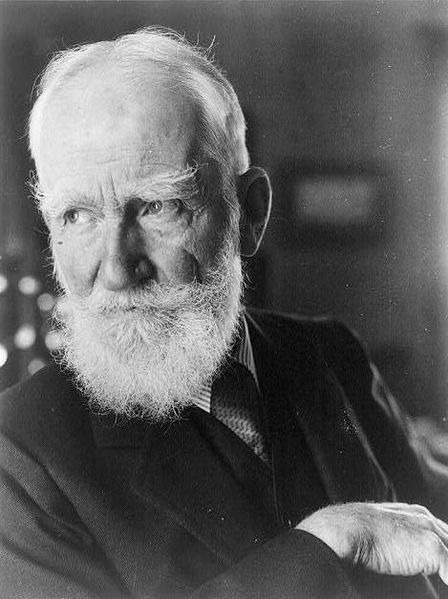
    Shaw photographed in 1934, two years before his voyage to Miami.

    Playwright George Bernard Shaw visited Miami in 1936 and sat for an interview with the press on the deck of a cruise ship before setting foot on land. He was in a joking, happy mood, and mostly kidded the press about their idiotic questions. But he did talk (seemingly) seriously about his objections to America’s Constitution. One thing I didn’t realize about Shaw: He walked like a huge dingus. He’s partially kidding, but partially dingus. Watch the video.

    More Featured Videos:

    Tags:

    Pac-Man cookies. (Image by Betsy Weber.)

    Instapaper posted a link to an excellent story by Jamey Pittman about the creation of Pac-Man, which is, of course, one of the great successes in gaming and business history. It has all the info about how Namco game designer Toru Iwatani made “Puck-Man” (as it was originally called in Japan) a global sensation, even though it was no overnight one. The article’s opening paragraphs:

    It was 1977 when a self-taught, capable young man named Toru Iwatani came to work for Namco Limited, a Tokyo-based amusement manufacturer whose main product lines at the time were projection-based amusement rides and light gun shooting galleries. He was just 22 years old with no formal training in computers, visual arts, or graphic design, but his creativity and aptitude for game design were obvious to the Namco executives that met with Iwatani. They offered to hire him—with assurances they would find a place for him in the company—and he accepted.

    Iwatani eventually found his place designing titles for Namco’s new video games division. His limited computer skills necessitated his being paired with a programmer who would write the actual code while Iwatani took on the role of game designer for the project. This was a new job for the game industry in 1977 when most games were designed by the programmers who coded them. In addition to a programmer, Iwatani’s team would usually include a hardware engineer to develop the various devices and components, a graphic artist to realize his visual ideas, and a music composer for any music and sound effects needed in the game.

    Iwatani had initially wanted to work on pinball machines, but Namco had no interest in the pinball business. Perhaps as a concession, his first game design, called Gee Bee, was a paddle game similar to Atari’s Breakout but with a decidedly pinball-inspired slant to the gameplay. Released in 1978, it was Namco’s first original video game—they had only ported existing Atari games to the Japanese market up to this point—and it enjoyed moderate success in the arcades.”

    Tags: ,

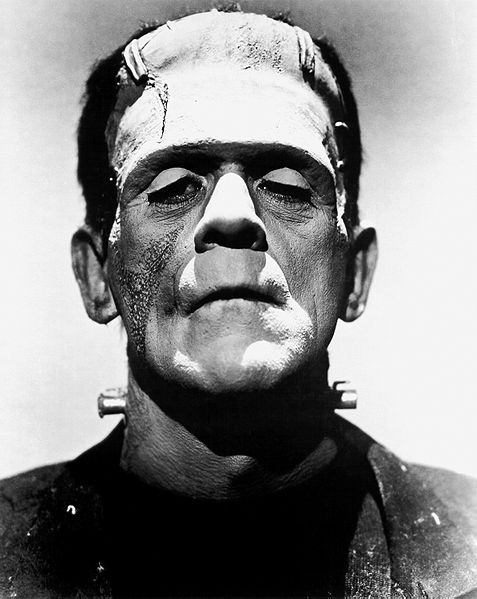
    No, not that Frankenstein, you silly.

    I found this odd postmortem about a deceased artist named John Frankenstein in the April 17, 1881 edition of the Brooklyn Daily Eagle. He apparently came from a bohemian family of German immigrant painters and sculptors and had many siblings. (Although the article only mentions a trio of brothers, he also had two sisters.) I can only find a little information online about the Frankenstein artistic dynasty of the nineteenth century, so if anyone out there is an art historian with more knowledge on the topic, please drop me a line.

    Although the piece doesn’t say it explicitly, Frankenstein, a recluse with money problems, may have committed suicide. An excerpt from the article, which is subtitled, “What Followed the Completion of Somebody’s Bust”:

    “John Frankenstein, the painter, sculptor and poet, who, as briefly related in the Eagle of yesterday, was found dead in the midst of the most squalid surroundings, in a lonely dwelling, located on the extreme southern end of the village of East New York, is, as was discovered after a lengthy search, by a reporter, one of the four brothers of marked ability, well known in different portions of the United States. All of them were painters, who ranked high, but they were all eccentric and possessed of too much theory to enable them to accumulate wealth in this (to a marked extent) practical country. Counselor Sackett of this city, who was well acquainted with them, says they lived in an age which had not progressed sufficiently to appreciate them. They were entirely engrossed in art, as an element that tended to elevate mankind and it was repugnant to their natures to regard it as merely a method of obtaining bread and butter. He has known them to suffer the necessities of life, when by disposing of their work for a fair sum of money they would have been enabled to live comfortably. They were very kind hearted and had they been wealthy, would have been philanthropists. They seemed to think that rich men should endow them, so that they could pursue art without a thought of daily necessities.

    A bust, but not by Frankenstein. (Image by Oleg Alexandrov.)

    They were deep thinkers, and on any subject that was broached, they could converse with more than average ability. One of the brothers is dead. He, as an artist and poet, was far superior to any of the others. Another is a learned mathematician. He holds the position of professor of mathematics in a college in Chicago. Several years ago he created quite a sensation in the scientific world by announcing he had discovered a method whereby the intersection of colored lines at certain angles could produce light. He called this discovery Magic Reciprocals. It was a wonderful discovery, it is said. As yet, no practical use has been made of it.

    George Frankenstein, the third brother, is an artist, and has a studio on Broadway in New York City. His paintings are said to be very beautiful and valuable. At one time the deceased was with this brother, but at length he tired of the world, and sought the hermit like retirement which he found in East New York.

    His life had been a very sad one, and no one who reads it as depicted in his satire entitled American Art, can fail to be impressed with a feeling of deep sympathy for him. The physician, Dr. F. H. Miller, who saw him several days before his death, is inclined to believe he died of a broken heart. He had been engaged for some time on a bust of great value, and had just completed it, when accidentally he knocked it from the stand upon which he kept it. Falling to the floor, it was irretrievably injured. It seemed to completely crush him, and although he was beginning the work again, he pined away, until he died. His body is at the morgue. It will be claimed by his brother, who will have it interred in Evergreens Cemetery. Among his numerous effects which will be taken charge of by the public administrator, together with the money in the neighborhood of $200, found in his pockets, was a beautiful original poem, entitled “The Falling of Snow,” the first line of which was:

    ‘I sat at the window and watched the snow fall/
    Its mantle of purity thrown over all.'”

    More Old Print Articles:

    Tags: , , ,

    Sarah Palin: Recently outwitted by a salmon. (Image byTherealbs2002.)

    Sarah Palin: You don’t take money from the private sector and grow government with it and that’s exactly what Obama has in mind with this expiration of Bush tax cuts proposal of his. His commitment to let previous tax cuts expire will lead to even fewer job opportunities for Americans.

    Decoder: If these tax cuts for the wealthy, which have been around for nearly ten years, are so good at creating jobs, why has job creation declined during that time? Before they existed, during the Clinton years, job creation was much better.

    Sarah Palin: [Letting the Bush tax cuts expire] is going to result in the largest tax increase in U.S. history and again it’s idiotic and my palm isn’t large enough to write all my notes down on what this tax increase will result in. [I’ve written on my hand that it will raise taxes] 3.8 trillion over the next ten years so I didn’t say 3.7 trillion and get dinged by the liberals saying I didn’t know what I was talking about.

    Decoder: Of course, the liberals could say that I’m a lying, resentment-filled jackass who has a cheat sheet written on her hand like a small child.

    Sarah Palin: [The more] job creators are taxed, the fewer dollars they have to reinvest in their own businesses and hire more people the worse it is for more Americans.

    Decoder: Most of the people who will lose these tax cuts for the wealthy aren’t job creators, they’re bankers and brokers. If you give bankers and brokers extra spending money, most of the jobs they will create are in the cocaine and prostitution sectors.

    Bush tax cuts: Creating jobs. (Image by Tomas Castelazo.)

    John McCain: I think the worst thing we can do to the American people during these tough economic times is raise taxes which is what the effect of the expiration of the Bush tax cuts would be.

    Decoder: But this is what I said about these same Bush tax cuts in 2001: “I cannot in good conscience support a tax cut in which so many of the benefits go to the most fortunate among us at the expense of middle-class Americans who need tax relief.”

    Senator Mitch MocConnell: The only way you narrow the deficit is to get the private sector moving again.

    Decoder: Or you could let the Bush tax cuts for the wealthy expire. That would reduce the deficit by roughly 30%. That would work, too.

    Rep. John Boehner: The only way we’re going to get our economy going again and solve our budget problems is to get the economy moving.

    Decoder: I was supposed to say the same thing as Mitch McConnell, but I’m such a moron I can’t even deliver rehearsed lines.

    Rep. John Boehner: What we have to do is we have to get our arms around the spending spree that’s going on in Washington, D.C.

    Decoder: Like, for instance, tax cuts for wealthy people.

    More Decoders:

    Tags: , , ,

    "Controlled sparring." (Image by Rls.)

    sparring club opening (medford)

    Im looking for fighters who want to train and beat the shit out of each other…period. controlled sparring. must be atleast 18.

    Thanks to Dangerous Minds for posting this trailer for a Hulk film made in Bangladesh. It’s inspiring. I want to drop everything now and make movies.

    More Featured Videos:

    "Steve Jobs starts with a vision rather than a list of features." (Image by Carola Lauber of SD&M.)

    Pioneering computer scientist Fred Brooks is the subject of an interesting Wired Q&A conducted by Kevin Kelly. Brooks became famous in the computer world–and beyond–for his book, The Mythical Man-Month, which gave lie to the idea that increased manpower translated into faster progress. The theory became known as Brooks’ Law.

    Brooks has written a new book called The Design of Design: Essays From a Computer Scientist, which occasioned the interview. A few excerpts below:

    •••••

    Wired: How does a guy who grew up in the 1940s among North Carolina tobacco farmers get into computers?

    Fred Brooks: I collected maps as a kid. I had tried all kinds of ways to index my map collection, which got me interested in the notion of automatic data retrieval. In 1944, when I was 13, I read about the Harvard Mark 1 computer in a magazine, and I knew then that computers was what I wanted to do.

    •••••

    Wired: You’re a Mac user. What have you learned from the design of Apple products?

    Fred Brooks: Edwin Land, inventor of the Polaroid camera, once said that his method of design was to start with a vision of what you want and then, one by one, remove the technical obstacles until you have it. I think that’s what Steve Jobs does. He starts with a vision rather than a list of features.

    •••••

    Wired: You say that the Job Control Language you developed for the IBM 360 OS was “the worst computer programming language ever devised by anybody, anywhere.” Have you always been so frank with yourself?

    Fred Brooks: You can learn more from failure than success. In failure you’re forced to find out what part did not work. But in success you can believe everything you did was great, when in fact some parts may not have worked at all. Failure forces you to face reality.

    Tags: ,

    New DVD: Greenberg

    Roger Greenberg is probably the least likable character that Ben Stiller has played since 1998's "Your Friends & Neighbors."

    Mumblecore for the middle-aged set, Noah Baumbach’s conversation-driven, relentlessly unsentimental romantic drama, Greenberg, completes a trilogy of films by the director (along with The Squid and the Whale and Margot at the Wedding) that is fueled by mid-life disaffection. The earlier movies feature bitterly disappointed adults flailing every which way, but none of them possess the anomie displayed by the character of 40-year-old New York carpenter Roger Greenberg.

    Greenberg (Ben Stiller) exits a mental hospital in which he was recovering from a nervous breakdown and enters his brother’s home in Southern California, where he is to do house-sitting duty for his well-to-do, vacationing sibling. He may be in sunny Los Angeles, but Greenberg’s off the grid emotionally. And returning to the site of his youth, where he damaged numerous relationships and ruined his rock band’s one chance for success fifteen years earlier, seems to bring out the worst in him. And his almost constant drinking doesn’t help.

    Despite Greenberg’s misery, he begins a fumbling relationship with his brother’s young assistant Florence (Greta Gerwig), a rudderless, compliant woman who talks about her moonlight singing gigs in hushed tones. She sees possibilities in Greenberg, but he isn’t the kind of stray who wants to be rescued, and he answers her kindness with cruelty.

    It’s difficult to fathom at first why Florence puts up with this treatment, but as the accusations and denials between the couple escalate, you realize that she’s just as wounded as he is, even if her hurt is self-directed. Ultimately, they and all their friends have reasons, if not answers, for their questionable behavior. (Available from Netflix and other outlets.)

    More Film posts:

    Tags: , , ,

    Cable Cars: Faster than traveling by burro.

    I found this old cable car ticket stub that I still had from a trip to San Francisco in the late ’90s. I used it as bookmark for a while, and it’s been sitting in a desk drawer ever since. I don’t remember what a fare cost in those days and there’s no price listed on the stub. On the ticket’s reverse side, there’s some text entitled “Cable Car Facts.” An excerpt:

    “Invented in San Francisco, the cable cars have been operating here since Andrew Hallidie first ran his creation down the Clay Street Hill in 1873.

    Once a form of transportation used in cities around the world, the San Francisco cable cars are the last in daily revenue service. They were made a National Historic Landmark in 1964.

    The cable cars travel a sturdy 9 1/2 miles per hour when they grip the steel cable that runs beneath the street.

    Double ended cable cars run only on California Street and the smaller single-ended cars run on the Powell-Mason and Powell-Hyde lines.

    The cable car barn at Washington and Mason houses the cable car museum and the machinery that moves the cable.”

    More Miscellaneous Media:

  • Bronx high school newspaper. (1947)
  • Mad magazine. (1966)
  • Vancouver Blazers hockey guide. (1974-75)
  • John Hummer NBA card. (1973)
  • Carolina Cougars ABA Yearbook. (1970)
  • The Washington Senators MLB Yearbook. (1968)
  • Ugandan currency with Idi Amin’s picture. (1973)
  • Tom Van Arsdale basketball card. (1970)
  • Okie from Muskogee” sheet music. (1969)
  • California Golden Seals hockey magazine. (1972)
  • Beatles Film Festival Magazine (1978)
  • ABA Pictorial (1968-69)
  • Tom Seaver’s Baseball Is My Life. (1973)
  • Hockey Digest (1973)
  • World’s Fair Guide (1964)
  • World’s Fair Guide (1939)
  • Buffalo Braves Yearbook (1972-73)
  • New York Nets Yearbook (1976-77)
  • “Tom Dooley” sheet music.
  • Tags:

    I don't display "flashes of ego," you Afflictor jackass.

    Many years ago there was a toothy peanut man from Georgia named Jimmy Carter who became President of the United States. I’m not old enough to analyze the Carter Presidency from memory, but I’ve always believed him to be an honest if feckless leader who was plagued by the Iranian hostage crisis and gas shortages. He’s done wonderful charitable work since leaving office, though he occasionally displays flashes of ego. Overall: a decent man who wasn’t a very distinguished POTUS.

    The quasi-Libertarian economist and gourmand Tyler Cowen has a different take on Carter’s legacy on his wonderful site, Marginal Revolution. See Cowen’s whole post. (The reader comments below the post are also worth reading.) Here’s an excerpt:

    “At the time I thought Carter was a reasonably good President and it was far from obvious to me that the election of Reagan would in net terms boost liberty or prosperity.

    I do understand that he was a public relations disaster and he shouldn’t have fired his entire Cabinet and that he botched the Iran invasion.

    Still, I think of Carter as a President with some major pluses and overall I view his term as a step in the right direction.  He also seems to have been non-corrupt — important so soon after Watergate — and since leaving office he has behaved honorably and intelligently, for the most part.”

    Tags: ,

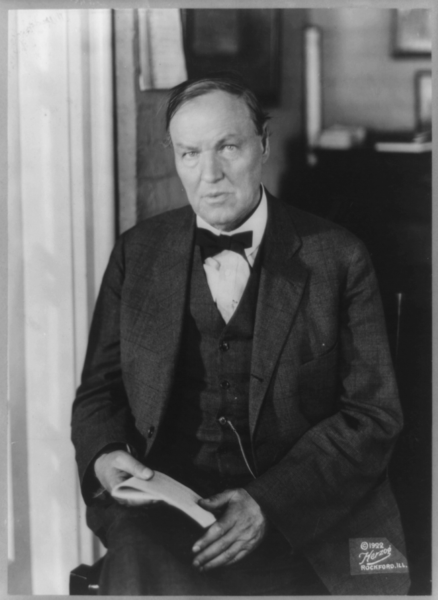
    Clarence Darrow represented the defense in the Scopes-Monkey Trial in exchange for a pedicure.

    Attorney/Lawyer for Barter – $1 (Upper East Side)

    Bartering attorney services from full service firm which includes ivy league educated lawyers for equal trade. Let us know what you have to offer. This is not a free. We offer top notch legal representation however we are willing to accept goods or services if you make the right offer.

    Some wanted items:

    1. Spanish lessons
    2. Spa gift certificates
    3. Restaurant Meals
    4. Dentist
    5. Bloomingdale gift certificates
    6. Yoga works gift certificate/ private yoga instruction
    7. Make me an offer….

    More Craigslist ads:

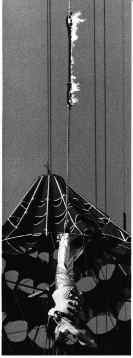
    A photo of the burning-rope trick, though I don't believe it's Alan Alan himself. (Image by Magicusb.)

    Alan Alan (born Alan Rabinowitz) is a retired British magician and escapologist who gained fame in the 1950s for stunts in which he had to escape being buried alive and being suspended and shackled from a burning rope far above the ground. (The latter trick is one he is credited with creating.) I don’t really like such things because they can always go wrong and life seems dangerous enough already. But Alan Alan carved a nice life for himself with such suspenseful acts. In 2006, he was honored by the Magic Circle. Go here to see him performing the burning rope trick in 1959.

    More Featured Videos:

    Tags:

    NFL Commissioner Roger Goodell: I was just really tired of suspending everyone. (Image by Bradley Lail.)

    The NFL Rules Committee recently met and have made some changes to modernize America’s favorite sport and make it even more reprehensible. Commissioner Roger Goodell was tired of reprimanding everyone in football anyhow, so he decided to say fuck the rules to reduce the number of player suspensions and fan arrests. Dogfighting, gun and drug possession, beating up strippers, ticket holders behaving like boxcar hobos and players experiencing brain damage is just the beginning. Shit’s gonna get effed up, people!

    For one thing, kidnapping is now legal. If the other team has a player who’s really making it difficult for your team to win the game, your guys can get some guns and rope and kidnap that player from the opposing sidelines. Then they can have that player beg for mercy before the cameras to psyche out the other team. Fans will not only be able to bet money they don’t have on game outcomes but also on which players will emerge from their kidnappings alive.

    Players will no longer wear helmets. They’re getting brain damaged already anyhow, but it’s happening in a way that’s subtle, gradual and not entertaining. Now they’ll be a chance to literally see some of the damaged brains, should they ooze from a player’s gashed, bloody head. CT scans of the injured skulls will be taken as soon as players are carted off the field, and the head X-rays will be displayed on the scoreboard along with other stats.

    Who wants to pistol-whip the free safety? (Image by Belinda Hankins Miller.)

    Officials will be required to carry firearms, though they will only be able to use them to murder players at non-skill positions. If an official accidentally kills a quarterback or running back, he in turn will also be murdered. These executions will occur at mid-field via lethal injection, which will be administered by the referee the condemned official was least friendly with. Announcers will be encouraged to use profanities and talk trash about former announcers who have recently passed away. Those losers were weak and cowardly and their grieving families should know.

    Only fans have been able to get disgustingly drunk during games in the past, but players will now be permitted to drink booze and smoke weed on the sidelines. The liquor they drink will, however, have to be made by an NFL sponsor. It’s a great way to raise revenue through product placement. Cheerleaders are being replaced by prostitutes, who will provide players and coaches with blowjobs and quickies at halftime. Fans will likewise be permitted to have sex in the stands between halves, but they will have to bring their own prostitutes or purchase prostitutes from the concession stand. Fans who have grown too obese to perform sexually will be able to watch a porno on the Jumbotron so that they can remember what arousal felt like.

    The NFL will be much more interactive since fans will help determine when games are over. The 60-minute playing time will no longer be observed. Games will continue until 100 players and/or spectators have died from cardiac arrest or alcohol poisoning. The team with the most points at that juncture will win, and the deceased will be buried in a mass grave beneath the 30-yard line before carrion can have at them.

    Are you ready for some football?

    More Entertainment and Sports News:

    Tags:

    Oil on canvas, Winter Landscape, by Emile Jean Crapuchettes.

    Emile Jean Crapuchettes, he of the unfortunate surname and the precocious artistic talent, was born in 1889 and lived and created his whole life in Northern California, until his death in 1972. He’s not particularly well-known today, but seems to have been renowned in his time. Emile, the son of working-class parents, was a child prodigy who drew amazing chalk illustrations on the sidewalk outside of his family’s Bay Area laundromat. The San Francisco Call reported on the boy’s great talent when he was just four (and misspelled his last name, leaving off the “s”). The Brooklyn Daily Eagle subsequently reprinted the story on June 26, 1896, with the subtitle, “A Young San Francisco Boy Who Makes Remarkable Pictures.” An excerpt:

    “The very latest California discovery in the way of infant prodigies is that of a 4 year old artist, who bids fair some day to rival the Gibsons, the Abbeys, the Vierges in the field of illustration. The work of the child wonder is the subject of no end of comment in the vicinity of his home, and the predictions as to his future are as numerous as the host of enthusiastic observers of his efforts, while the fame that is foreseen by all these ready made critics is of a variety as bright as the coals that keep the flatirons hot and as glowing as the polished shirt fronts to which the mother of the astonishing youngster has imparted the finishing touches in her little French laundry on Folsom street.


    Steam engine in 1893, much like the one young Crapuchettes sketched. (Image by A.P. Yates.)

    Mme. Crapuchette regards her little son Emile as a valuable assistant in affairs of her household; for, as young as he is, he is already quite competent to peel the potatoes, scrape the carrots, shell the peas and run errands in the neighborhood; but Mme. Crapuchette places no especial value on the artistic genius displayed by her precocious heir. In fact, Emile has often given offense by indulging his habit of scratching odd caricatures on the whitewashed walls, and ruining with his black pencil marks much good white paper which might otherwise be put to use in sending notices to forgetful patrons to the effect that there has been no recent diminution in the amount of their indebtedness. And then again, Emile covers the sidewalks with chalk figures that sweeping does not easily remove and that cause crowds to stop in front of the laundry door to talk foolishly about Emile being a ‘natural born artist.’

    It has been remarked by the proprietress of the laundry that those people who halt and talk so much about the genius of the young Crapuchette never bring much work to the establishment, and, therefore, the madam would be quite as well pleased if they would go along about their business. The truth is that Emile’s parents do not take much stock in what strangers with busy tongues call ‘Emile’s gifts.’ Monsieur Crapuchette, it is very likely is looking forward to the day when his son Emile will be able to do much more than clean vegetables and run short errands–when that boy shall take his place on the delivery cart and exercise his wits in drumming up customers for the laundry. What a disappointment there will be when Emile, having grown old enough to drive the cart and solicit patronage, straightway washes his hands of the occupation by which his parents gained a livelihood. And then, how he will surprise those parents when he is earning handfuls of gold money for making pictures for the newspapers and the magazines.

    Emile may be seen upon almost any sunny afternoon playing about the door of the laundry at 1,007 Folsom street. He goes bareheaded always, and is usually dressed in check apron and brown overalls. He isn’t beautiful, but is wonderfully bright. His brilliant brown eyes show keen intelligence. His complexion is light, and a rather flat nose mars the regularity of his features. When a Call man found him yesterday he was sketching a steam engine on the sidewalk, and near him was a box of colored crayons, with which some kindly interested and generous person had supplied him.

    ‘My boy, who showed you how to make the pictures of a steam engine?’ asked the newsgatherer.

    ‘No one showed me,’ answered the child, with a decidedly French accent. ‘I see it all the time go by.'”

    Tags:

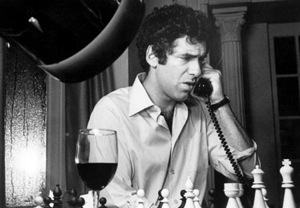
    This role was Elliott Gould's final hurrah in the '70s.

    In a decade that seemed to have an endless supply of great thrillers, Daryl Duke’s excellent 1978 tale of brutal gamesmanship, The Silent Partner, is one of the era’s most unfairly forgotten genre pictures. Duke is probably best known for directing the soapy Thorn Birds TV miniseries, but he turned out a pair of first-rate pictures during the ’70s: Payday, his drama about a dissolute country singer, and this tense thriller, which is blessed with a taut screenplay by a young Curtis Hanson, who would, of course, go on to co-write and direct L.A. Confidential.

    Meek Toronto bank teller Miles Cullen (Elliott Gould) loves tropical fish and chess, but the world doesn’t love (or respect) him. The co-worker he adores (Susannah York) thinks he’s a wet rag and is sleeping with their married boss. But the mild-mannered teller has an epiphany when he accidentally discovers that a mall Santa Claus (Christopher Plummer) is going to rob his branch. Knowing what’s heading his way, Cullen hatches a plan to divert most of the funds to his waiting briefcase, hand over a small sum to the robber and use the loot to start his life all over again somewhere else. The scheme goes off without a hitch, save one–the thief is a sadistic maniac who figures out what’s happened and will stop at nothing to get the money back from the mousey banker. But Cullen is the mouse that roared, and he engages in a high-stakes game of wits with his murderous rival.

    This movie is bursting with talent, featuring everything from Gould in the sweet spot of his career to a small supporting turn from John Candy to a score composed by jazz great Oscar Peterson. But perhaps most memorable of all is Plummer. Incredibly wicked and wearing heavy eye make-up, he looks like a mannequin come to life with homicidal rage. Even the tropical fish should be very afraid.

      Tags: , , , ,

      Bettie B. will earn about $1,600 in her first year as a telephone operator. Perhaps now she can afford to have that hideous neck scar removed.

      I briefly got my greasy, grimy hands on a yellowed October 10, 1947 copy of The Admiral, a daily newspaper of amazingly high quality that was published by the students and teachers at Christopher Columbus High School in the Bronx. Columbus was at the time (still is?) a school that excelled in writing, oration and theater, turning out Anne Bancroft and Sal Mineo, among many other Broadway and film actors who never got quite as famous. (It should also be noted that David “Son of Sam” Berkowitz attended Columbus, though he was definitely not representative of the student body.)

      The articles focus on school happenings and civic matters occurring beyond academic walls. And because not everyone could be Anne Bancroft, there were ads on the back page for jobs that might interest graduating seniors. An excerpt from an advertisement seeking telephone operators:

      “Bettie B. will be happy in an essential job that’s ‘right’ for her. Naturally, girls who have been in the thick of things in high school affairs want a good ‘first job’. They want to go where their work is necessary and appreciated, where they will have every chance to use their ingenuity and intelligence. Telephone operators earn the full salary of $32 for a five-day week during training, $35 in eighteen months with further increases thereafter. There are many other jobs open, too. These jobs, as well as operating jobs, all have frequent pay increases and paid vacations. Work with friendly people, Ask your guidance counselor about us. Then make it a date. Ask your local operator for Enterprise 10,000–a free call!”

      More Miscellaneous Media:

    • Mad magazine. (1966)
    • Vancouver Blazers hockey guide. (1974-75)
    • John Hummer NBA card. (1973)
    • Carolina Cougars ABA Yearbook. (1970)
    • The Washington Senators MLB Yearbook. (1968)
    • Ugandan currency with Idi Amin’s picture. (1973)
    • Tom Van Arsdale basketball card. (1970)
    • Okie from Muskogee” sheet music. (1969)
    • California Golden Seals hockey magazine. (1972)
    • Beatles Film Festival Magazine (1978)
    • ABA Pictorial (1968-69)
    • Tom Seaver’s Baseball Is My Life. (1973)
    • Hockey Digest (1973)
    • World’s Fair Guide (1964)
    • World’s Fair Guide (1939)
    • Buffalo Braves Yearbook (1972-73)
    • New York Nets Yearbook (1976-77)
    • “Tom Dooley” sheet music.
    • Tags: , ,

      Afflictor: Making wizened women in chadors appear disconsolate since 2009. (Image by Hamed Saber.)

      Mmm mmm good.

      William P. MacFarland was a product marketing manager at the Campbell Soup Company during the 1960s, when Andy Warhol’s silkscreened portraits of the iconic soup cans caused a sensation throughout the art world and entered into the popular consciousness. You might almost expect a big corporation to be tone deaf about the situation and get lawyered up. But instead MacFarland sent Warhol an admiring letter and some free cases of tomato soup. Below is the transcript of the correspondence, but you can see the actual missive at Letters of Note. (Thanks to boing boing for pointing me toward this post.)

      •••••

      Campbell SOUP Company

      CAMDEN 1, NEW JERSEY

      May 19, 1964

      Mr. A. Warhol
      1342 Lexington Avenue
      New York, New York

      Dear Mr. Warhol:

      I have followed your career for some time. Your work has evoked a great deal of interest here at Campbell Soup Company for obvious reasons.

      At one time I had hoped to be able to acquire one of your Campbell Soup label paintings – but I’m afraid you have gotten much too expensive for me.

      I did want to tell you, however, that we admired your work and I have since learned that you like Tomato Soup. I am taking the liberty of having a couple of cases of our Tomato Soup delivered to you at this address.

      We wish you continued success and good fortune.

      Cordially,

      (Signed, ‘William P. MacFarland’)

      William P. MacFarland
      Product Marketing Manager

      Tags: , ,

      Jean Claude Van Damme: But I don't have $25,000. (Image by Georges Biard.)

      Role in an action film…… – $25000 (Washington, DC)

      We are currently looking for final funds for a high quality/low budget action film. Check our website to see the quality of our work. We have worked with numerous Emmy winners on projects that have received distribition/pick-up.

      We are looking for the final $25k for an action film. It includes houses blowing up, a car chase through Georgetown into Virginia and back into DC that is spectacular, tons of gunshots, intrigue, and excitement all with a DC backdrop. Email me to see examples. Seriously, it will have as much action as many high budget action films. Can’t tell you how (proprietary info), but I can show you if you are serious about funding.

      If you are only looking for a role and don’t have the cash, we are always looking for interesting locations/skill sets. If you have access to a mansion or deserted warehouse or science lab or house that is still suffering from fire damage, or anything you think might make an interesting filming location, offer it up. Oops, forgot to mention we are shooting in Washington, DC. Guess that is important to mention, huh.

      In addition to a return on your monies, we offer the following:

      • Depending on how much you barter, we will provide a role for you or a friend, relative, girlfriend or boyfriend, animal, mistress, etc. It may be a speaking role and will be contractually guaranteed to make the final cut.
      • VIP status at DC premiere. Advertise your business on the red carpet backdrop. Hobnob with DC celebs and athletes.
      • Behind the scenes access – come to the castings, rehearsals, shooting, post party, etc. and hang out with the cast and crew
      • Executive Producer credit
      • A director’s chair with your name on it.

      Come on. The economy sucks. If you were to put it in the market, you’d lose it anyways. With this, you have a great chance to make money and you will definitely have fun.

      More Craigslist ads:

      Tags:

      « Older entries § Newer entries »