
The Objectivist novelist Ayn Rand sat down for an interview with Playboy in 1964, back when that magazine routinely did Q&As with incredible subjects. She gave opinions on everything from politics to philosophy to religion to literature. An excerpt from the interview, conducted by Alvin Toffler, in which she shares her ardently contrarian views of novelists of that era:

Playboy: Are there any novelists whom you admire?

Ayn Rand: Yes. Victor Hugo.

Playboy: What about modern novelists?

Ayn Rand: No, there is no one that I could say I admire among the so-called serious writers. I prefer the popular literature of today, which is today’s remnant of Romanticism. My favorite is Mickey Spillane.

Playboy: Why do you like him?

Ayn Rand: Because he is primarily a moralist. In a primitive form, the form of a detective novel, he presents the conflict of good and evil, in terms of black and white. He does not present a nasty gray mixture of indistinguishable scoundrels on both sides. He presents an uncompromising conflict. As a writer, he is brilliantly expert at the aspect of literature which I consider most important: plot structure.

Playboy: What do you think of Faulkner?

Ayn Rand: Not very much. He is a good stylist, but practically unreadable in content–so I’ve read very little of him.

Playboy: What about Nabokov?

Ayn Rand: I have read only one book of his and a half–the half was Lolita, which I couldn’t finish. He is a brilliant stylist, he writes beautifully, but his subjects, his sense of life, his view of man, are so evil that no amount of artistic skill can justify them.”
Tags: , , , , ,

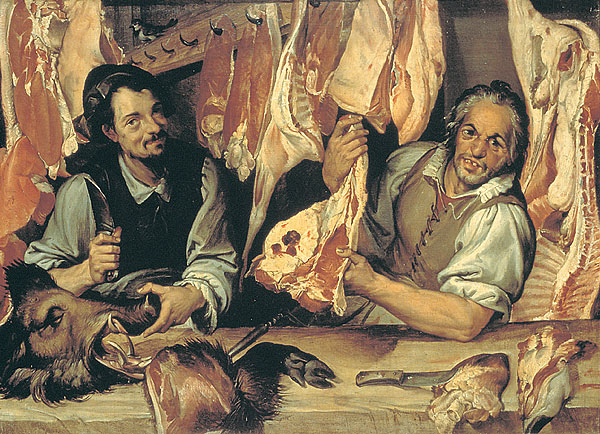
"Kahn says he used the means beneath the dignity of a butcher to get these customers." (Image by Bartolomeo Passarotti.)

Two butchers in the Greenpoint neighborhood of Brooklyn had a feud in the late nineteenth century which began to boil over. How would they settle the dispute? According to an article in the November 10, 1891 Brooklyn Daily Eagle, the rivalry might end in a duel fought with butcher knives. An excerpt:

“Rivalry in the butcher business in Greenpoint has become so desperate that a duel is proposed. Harry Grimes is a butcher employed at 553 Manhattan avenue. Nearly opposite is the butcher shop of Felix Kahn, at 580 Manhattan avenue. Kahn is a Frenchman who has a high temper. Grimes got some of Kahn’s customers recently and Kahn says he used means beneath the dignity of a butcher to get these customers.

Kahn’s assistant and young Grimes would frequently race for the house of a customer and would bang their butcher carts together in the race. Kahn finally boxed Grimes’ ears, and the latter said he could finish Kahn in two rounds, but that he would not stoop to anything so low as a street fight. The entire neighborhood became interested in the war of the rivals and they recently learned that Grimes had challenged Kahn to fight a duel with butcher knives, and that the challenge had been accepted. Neither of the principals would talk of the expected duel, and people were expecting that one or both of the butchers would be carved up.

"There is only one thing left for me, and that is to brand you as a coward and a poltroon." (Image by Annibale Carracci.)

Kahn showed his hand yesterday. He does not want blood. He wants protection, and his French blood having cooled off, he wishes to satisfy his honor in the courts of justice. He appeared before Justice Goetting in his Lee avenue police court to-day, and asked that the strong arm of the law be placed between him and the keen edge of Grimes’ knife. He gave the court the following challenge which he had received:

‘Mr. Kahn:

DEAR SIR–Some time since I indicted a letter to you, but you have not had the manliness or even the politeness enough to respond. What am I to understand by this, to say the least, ungentlemanly conduct. There is only one thing left for me, and that is to brand you as a coward and a poltroon, unworthy to be called a man. But what can be expected from Poland or Baxter street. For fear the letter I sent you miscarried. I will again give you an opportunity to respond, therefore I challenge you to fight me any time within the next week. The sooner the better. The insult and indignity cannot be wiped out too soon and nothing but blood will satisfy me. The failure on your part to answer this, my second communication, will stamp you as a sneak and a coward.

Yours respectfully,

The Butcher Boy Whom You So Cowardly Assaulted’

Kahn told the court that he had no desire to spill the blood of Grimes and that he was so fond of his own blood that he had no desire to lose any of it. Justice Goetting consented to act as his second and directed Clerk Schiepphaus to correspond with the blood thirsty butcher and request him to come to court to arrange for a compromise, which will not include blood letting.”

Tags: , , ,

With a helpful rotary dial.

"Iverson had hit rock bottom. At 34—having nearly exhausted his athletic gifts — he’d washed out of the NBA." (Image by Keith Allison.)

Beset by personal problems and in possession of seriously diminished skills, former NBA great Allen Iverson finds himself playing minor-league basketball in Turkey. Philadelphia magazine writer Robert Huber visited Istanbul to file a report about the troubled, faded star as he attempts to revive his life in an unlikely locale. (Thanks Longform.) An excerpt:

“IVERSON IS AT A CROSSROADS IN HIS LIFE. There is no going off into the sunset for him, no taking his vast millions and his fame and finishing off the job of raising his five kids in splendor and ease. Nothing works that way for him.

In fact, last spring — just after Iverson abandoned the Sixers following a short second stint with the team — Gary Moore said publicly that things were very bad for Iverson. His young daughter Messiah was quite sick with an undisclosed illness. His wife had filed for divorce. There were stories that he was gambling and drinking himself into oblivion. At one point, Moore beseeched a reporter with a chilling request:

‘Please pray for us. We need all the prayers we can get.’

(Image by reeb0k2008.)

Iverson had hit rock bottom. At 34—having nearly exhausted his athletic gifts — he’d washed out of the NBA, largely seen as too troubled and demanding to finish his career with some team needing to get a few more fannies in the seats. That failed last year in Philly, after Iverson had already been pushed out of Detroit and bolted from Memphis. His career seemed done, and maybe he was, too.

So he has come to Turkey to resurrect not only his basketball career, but his life. In … Istanbul? How is he going to survive camped out in a Friday’s in Istanbul?

As one NBA official put it, the guy spent the past five years pretty much living in either bars or casinos. But word has it that his family is coming, that he and Tawanna have reconciled and she’s about to arrive with all five kids, ranging in age from two to 16. The team has checked out schools and is finding the family a villa to live in. It’s a new beginning.”

Tags: , ,

"In 1919, the first practice baby, named Dicky Domecon for 'domestic economy,' came to Cornell." (Image by Paul Goyette.)

Interesting post on the Cornell University website about “Practice Apartments,” which were college-sponsored living quarters in the early 1900s that a group female students shared with a baby that was “loaned out” by a local orphanage. The antiquated program’s aim was to give young women practical experience in “mothercrafting.” Loaner babies that went through the one-year experience were considered more desirable by prospective parents. (Thanks to Reddit and PlosBlogs.) An excerpt:

“Beginning in the early 1900s, collegiate home economics programs across the nation included ‘practice house’ programs designed to help female students learn ‘mothercraft,’ the scientific art of childrearing. At Cornell each semester, eight women students lived with a resident advisor in the ‘practice apartment,’ where they took turns performing a full range of homemaking activities in a scientific and cost-efficient manner.

In 1919, the first practice baby, named Dicky Domecon for ‘domestic economy,’ came to Cornell. Cornell secured infants through area orphanages and child welfare associations. Babies were nurtured by the students according to strict schedules and guidelines, and after a year, they were available for adoption. Prospective adoptive parents in this era desired Domecon babies because they had been raised according to the most up-to-date scientific principles.

Flora Rose, an early proponent of the program, believed that babies were essential to replicate the full domestic experience. Albert Mann, Dean of the College of Agriculture, called the apartments ‘essential laboratory practice for women students.’ As time passed, however, new research in child development pointed to the need for a primary bond with a single caregiver, and social changes in the lives of women made the practice house focus on domesticity seem old-fashioned. In addition, by the late 1960s, the ideology most prominent in the college favored hard science over practical applications. By 1969, the year the college changed its name, practice apartments were dropped from the Cornell curriculum.”

Tags: ,

"I am terrified of giraffes, so I cannot keep it." (Image by Hans Hillewaert.)

Wooden Giraffe statue (Hastings)

Are you boring? Do you want to be interesting? Then you should take this giraffe. It is an African-looking statue, carved out of wood. However, I am terrified of giraffes, so I cannot keep it.

You could use it as a paperweight, or as a wooden giraffe. It is also possibly cursed; it just has that look to it.

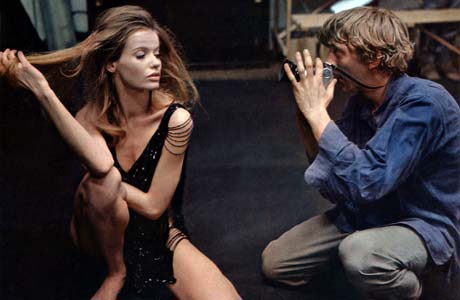
David Hemmings photographs Veruschka, who is now 71 and still models occasionally.

Michelangelo Antonioni’s drama about a fashion photographer who may or may not have accidentally recorded a murder being committed uses the alluring backdrop of Swinging ’60s London to meditate on the frustrating elusiveness of truth. Blow-Up became an art-house smash in the U.S. in 1966, which shouldn’t have been a surprise, perfectly attuned as it was to the Kennedy assassination paranoia that the Warren Commission was never able to quell.

David Hemmings plays an obnoxious, nameless photographer, who berates his female models and fancies himself something of an unappreciated artist. While in the park one day, he stealthily snaps a man and woman in the distance, but she eventually spies him and pursues him vigorously. The woman (Vanessa Redgrave) desperately wants him to turn over the film.

The photographer realizes why she’s so panicked when he later blows up the image and notices what might be a man in a bush pointing a pistol. Did the gunman commit a murder after the photo was taken? Or is he seeing something in the photo that isn’t really there? A friend peers at the enlarged picture and remarks to the photographer that it looks like one of “those paintings,” meaning an Op Art piece, whose meaning shifts depending on the perspective from which it’s viewed.

Early in the film, another of the photographer’s friends, an artist, opines about his Abstract paintings: “They don’t do anything at first…just a mess…afterwards I find something to hang onto…it adds up.” But what if life, more fleeting than art and too restless to truly study, does not? (Available from Netflix and other outlets.)

More Film Posts:

Tags: , ,

“There are bullets all over the side of this building.”

Before he became famous worldwide for the Roots phenomenon, Alex Haley was a journalist known for some of Playboy magazine’s finest interviews. Haley, who had conducted Q&As with Malcolm X, Martin Luther King, Miles Davis and numerous other larger-than-life characters, really outdid himself with his 1966 session with American Nazi Party founder George Lincoln Rockwell. Since Rockwell was unaware that Haley was African-American when he agreed to the interview, he decided to keep a firearm at the ready during the talk, just in case the journalist decided to assassinate him.

Rockwell’s parents were vaudeville comedians who knew Groucho Marx, and the reviled bigot was considered a class clown when he first entered Brown in 1938. But it was during those college years that he began to speak out against racial equality, a path that would lead him to being a full-blown hatemonger. Rockwell’s fears of being killed were realized the year after Haley’s piece ran, when his calls for racial violence were silenced by bullets. An excerpt from the interview’s blood-chilling opening:

Playboy: Before we begin, Commander, I wonder if you’d mind telling me why you’re keeping that pistol there at your elbow, and this armed bodyguard between us.

Rockwell: Just a precaution. You may not be aware of the fact that I have received literally thousands of threats against my life. Most of them are from cranks, but some of them haven’t been; there are bullet holes all over the out side of this building. Just last week, two gallon jugs of flaming gasoline were flung against the house right under my window. I keep this gun within reach and a guard beside me during interviews because I’ve been attacked too many times to take any chances. I haven’t yet been jumped by an impostor, but it wasn’t long ago that 17 guys claiming to be from a university came here to ‘interview’ me; nothing untoward happened, but we later found out they were armed and planned to tear down the flag, burn the joint and beat me up. Only the fact that we were ready for that kind of rough stuff kept it from happening.

We’ve never yet had to hurt anybody, but only because I think they all know we’re ready to fight anytime. If you’re who you claim to be, you have nothing to fear.”

Tags: , ,

The Scott Paper Co. created a $1 paper dress in 1966 as a promotional gag, but the disposable outfit became a fashion trend for a while during the 1960s. A simple mini-skirt was just a few bucks, but a paper bridal gown could run about $15. Some background from a 1967 Time magazine piece:

NEED MERCHANDISE DESPERATELY read the urgent telegram. The West Coast’s Joseph Magnin Co. was about to open ‘News Stand’ boutiques carrying paper dresses in its 28 stores; informal sales had proved so successful that the chain was nervously awaiting an onslaught of customers. The same happy nervousness is now sweeping other stores across the nation. Paper clothing, apparently, is here to stay.

It was only one year ago that Scott Paper Co. introduced disposable duds as a promotion gimmick with a sleeveless shift selling for $1. It was so shapeless that it recalled a paper bag; scoffers put it down as just a paper gag. But for a country already accustomed to throw-away cups, plates, napkins and diapers, paper clothing seemed only a logical next step. Scott sold 500,000 dresses in eight months, and the strong response had other manufacturers and designers joining the paper chase.”

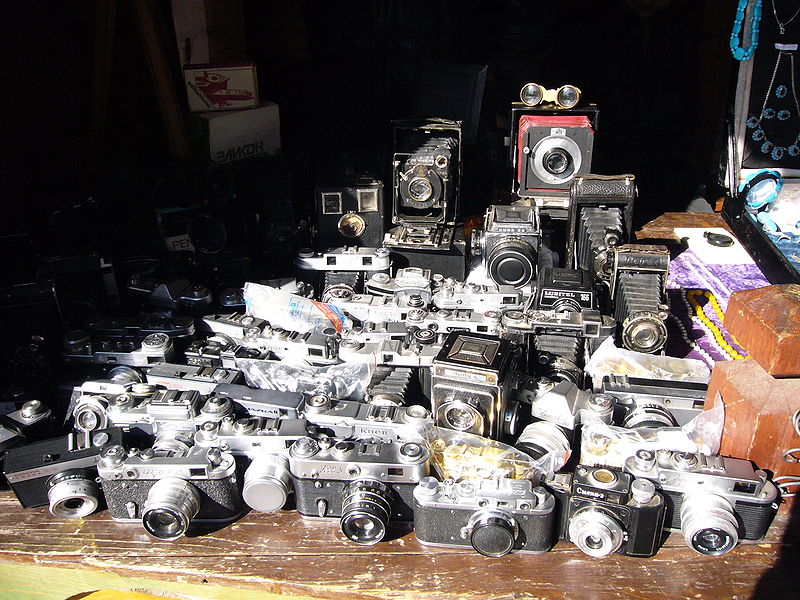
"High-resolution, low-cost cameras are proliferating." (Image by Leonid Dzhepko.)

An article by Steve Lohr in the New York Times looks at the positives and negatives involved in the coming proliferation of cameras that can recognize objects, gestures, situations and even faces. An excerpt:

“High-resolution, low-cost cameras are proliferating, found in products like smartphones and laptop computers. The cost of storing images is dropping, and new software algorithms for mining, matching and scrutinizing the flood of visual data are progressing swiftly.

A computer-vision system can watch a hospital room and remind doctors and nurses to wash their hands, or warn of restless patients who are in danger of falling out of bed. It can, through a computer-equipped mirror, read a man’s face to detect his heart rate and other vital signs. It can analyze a woman’s expressions as she watches a movie trailer or shops online, and help marketers tailor their offerings accordingly. Computer vision can also be used at shopping malls, schoolyards, subway platforms, office complexes and stadiums.

All of which could be helpful — or alarming.

‘Machines will definitely be able to observe us and understand us better,’ said Hartmut Neven, a computer scientist and vision expert at Google. ‘Where that leads is uncertain.’”

Tags: ,

"We'll be able to plug informations streams directly into the cortex."

The Guardian had a fun feature in its Sunday January 2 edition, which it entitled “25 Predictions for the Next 20 Years.” Their tea-leaf reading seems a little aggressive, but the challenge of prognosticating is to force yourself to not play it safe. Some of the predictions have intriguing headings like “Russia will become a global food superpower” and “Technology creates smarter clothes.” An excerpt from the entry called “We’ll be able to plug information streams directly into the cortex”:

“By 2030, we are likely to have developed no-frills brain-machine interfaces, allowing the paralysed to dance in their thought-controlled exoskeleton suits. I sincerely hope we will not still be interfacing with computers via keyboards, one forlorn letter at a time.

I’d like to imagine we’ll have robots to do our bidding. But I predicted that 20 years ago, when I was a sanguine boy leaving Star Wars, and the smartest robot we have now is the Roomba vacuum cleaner. So I won’t be surprised if I’m wrong in another 25 years. Artificial intelligence has proved itself an unexpectedly difficult problem.

Maybe we will understand what’s happening when we immerse our heads into the colourful night blender of dreams. We will have cracked the secret of human memory by realising that it was never about storing things, but about the relationships between things. Will we have reached the singularity – the point at which computers surpass human intelligence and perhaps give us our comeuppance? We’ll probably be able to plug information streams directly into the cortex for those who want it badly enough to risk the surgery. There will be smart drugs to enhance learning and memory and a flourishing black market among ambitious students to obtain them.”

Technology creates smarter clothes’

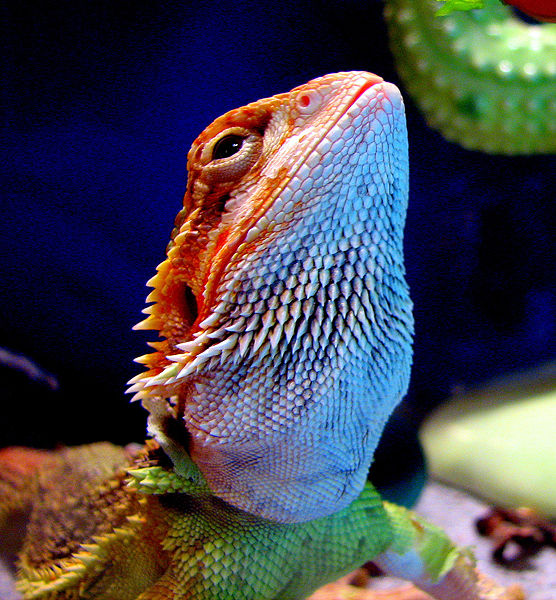
"They are great feeders for Reptiles such as Adult Bearded Dragons." (Image by Jan Tik.)

DUBIA ROACHES – $1 (ELMHURST)

Be adviced that Nymphs have not molted to ADULTS YET. Selling Female and male nymphs Only

I am selling over MALE Dubia nymphs roaches ranging from Medium to Large. They are great feeders for Reptiles such as Adult Bearded Dragons, Large Geckos, Invertebrates and many others.

They have a higher meat to shell ratio compared to crickets. They do not bite, make noise, and do not stink as much as crickets.

The Male dubias are $0.25 cents each.

For every order of 50 male nymphs receive 1 free female nymph.

selling FEMALE nymphs in size 3/4″ – 1″. These havent molted yet to females. So you will NOT receive old females that eventually is at the end of their cycle. You can breed your own.

Female Nymphs:

1-10 $2.50/E

11-20 $2.25/E

21-40 $2.00/E

41++ $1.75/E

Also selling Water crystal/gel which provide great source of water to your feeders. They are safe for all feeder insects. These do not have calcium.!

Why pay $5 in pet-store for a 16oz jar of water crystal when you can get much more for even less?

1 dry oz water crystal makes 1 gallon of water crystals. That’s 8 jars of 16oz.

I’m selling 1 dry oz water crystal for $3 each. That’s uber cheap.

If you buy 3 dry oz you get one (1) dry oz FREE.

All you have to do is have a jar fulled with water (prefer distill) and add water crystal in. 1 teaspoon makes 16 oz water crystal. You are getting Approximately 8 teaspoons.

If the water crystal is to watery just add more water crystal or drain it out. If too little water add more water. Its that simple. Takes approximately 2 hrs minimum to expand.

Please be advised not to dispose water crystal down the drain. It will clog.

Jar NOT INCLUDED

LOCAL PICK-UP ONLY!!!

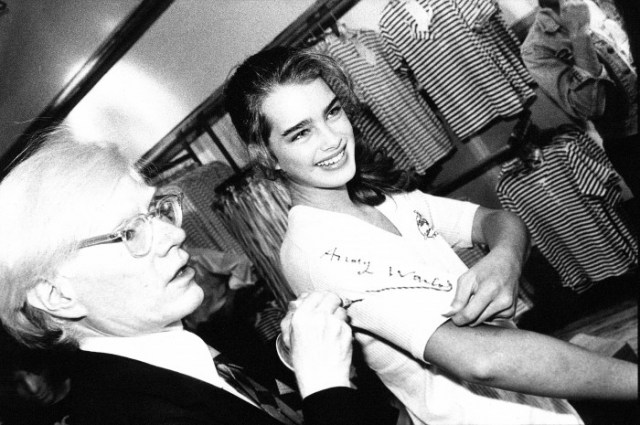
Andy Warhol autographs Brooke Shields' tee at Fiorucci's NYC store. (Image by Franco Marabelli.)

When skinny jeans were still known as skin-tight, the New York disco scene of the ’70s had a favorite store, and it was Fiorucci’s on East 59th Street. A place to see and be seen, it was full of celebrities of all types, trying to acquire a pair of gold cowboy boots or some green combat clothes. Its creator, Elio Fiorucci, took a different path than most retailers of the era to arrive at his Studio 54–ready ensembles. An excerpt from an article by Priscilla Tucker about Fiorucci’s in the March 28, 1977 New York magazine:

“The secret of his success, says Fiorucci, is ‘to be able to listen to what the public has to say. I am a chronicler, like a journalist. I am a coordinator of situations.’

Toward this end he employs young people–‘They are my antennae’–and sends them all over the world, wherever they want to go, looking at the products of village life in Indonesia, shopping the outdoor markets of Colombia, bringing things back to be reproduced or modified in Fiorucci factories. Anything–clothes, tinware, soap, bicycles, pottery–that attracts his stylists turns up in the stores. Employees are free to innovate, hiring now a girl who makes flowers on the spot, now a couple with fabrics and a sewing machine, to whip up before your eyes made-to-order skirts for less than those on Fiorucci’s racks.

Fiorucci himself often hires on the spur of the moment just because he likes the way someone puts himself or herself together. He found Mariagrazia, who now manages both his Milan stores and his New York store, while she was working at Gucci. ‘The atmosphere at Gucci was not real,’ says Mariagrazia, who finds reality in dressing à la Fiorucci, in army pants with strands of flowers hanging down her T-shirt, her fuzzy hair bobbing as she directs the moving of the pastel jeans to the back of the store, the rosebud challis dresses downstairs, the sexy posters over by the free-espresso bar.”

Tags: , ,

"He frequently talks of pistols, killing people, putting them under ground and other deeds of violence." (Image by Guillaume Duchenne.)

George Alger was an elderly Brooklyn landowner in the 1890s who was apparently a danger to himself and others. His household help was also quite unusual. The Brooklyn Daily Eagle painted a picture of the odd arrangement in the September 14, 1897 issue. An excerpt:

“With only a little girl 6 or 7 years of age and a one armed boy to look after him, George Alger, an old man and the owner of several pieces of real estate in Brooklyn and elsewhere. is living to-day at 184 Seventeenth street, despite the fact that there is a committee of his person who is supposed to look after him and see that he is properly cared for. Alger is an incompetent person, subject at times to fits of violence, and in the opinion of a referee who has recommended the sale of a portion of his property, should be confined in an institution.

Judge Hurd of the County Court handed down a decision to-day in which he severely condemns the manner in which Alger is allowed to live and points out the duties which ought to have been performed by the committee of his person.

Alger is a widower, his wife having died last April. The only relative he has is a sister, Mrs. Calista C. Gilbert, who resides in New Haven, Conn. Shortly after the death of Mrs. Alger, John Muir of 318 Twelfth street, was appointed a committee of the person and estate of the old man and since that time has administered his affairs.

Referee Elder in his report, recommended the sale for not less than $3,000 of a certain piece of property on Twelfth street, and the confinement of Alger in an institution, saying:

‘Mr. Muir’s committeeship, while careful, is necessarily one of almost an exclusive financial character. I learn that Mr. Alger at certain seasons of the year is a violent man and during all seasons of the year he frequently talks of pistols, killing people, putting them under ground and other deeds of violence. I do not think an insane man who indulges in such notions is safe at large. In passing upon the report of the referee, Justice Hurd said to-day:

‘There is sufficient shown to warrant the sale of the incompetent’s real estate. The committee is the committee of the person and estate; he is as much bound to provide suitable and proper support for the incompetent as he is to preserve his estate. He is bound to restrain Mr. Alger, if he is dangerous, as the referee reports, without the instruction of the court. The way in which the incompetent man is living–his meals cooked by a girl between 6 and 7 years of age, with a one-armed boy as attendant and messenger–is manifestly improper. The committee should correct it and see to it that a proper style of living is afforded. However disagreeable the committee may find his duties, he must nevertheless perform them for the best interest of his ward.'”

Tags: , , , ,

This hippiesplotation documentary (alternative title: Something’s Happening) focuses on Hashberry and the Sunset Strip and features interviews with Muhammad Ali, General Hershey Bar and assorted “weirdies, beardies and whatsies.” Let us never discuss the past again.

Tags: ,

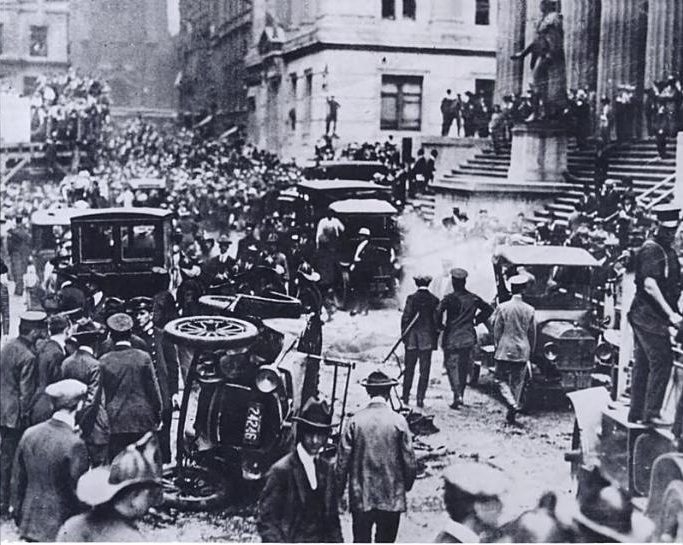
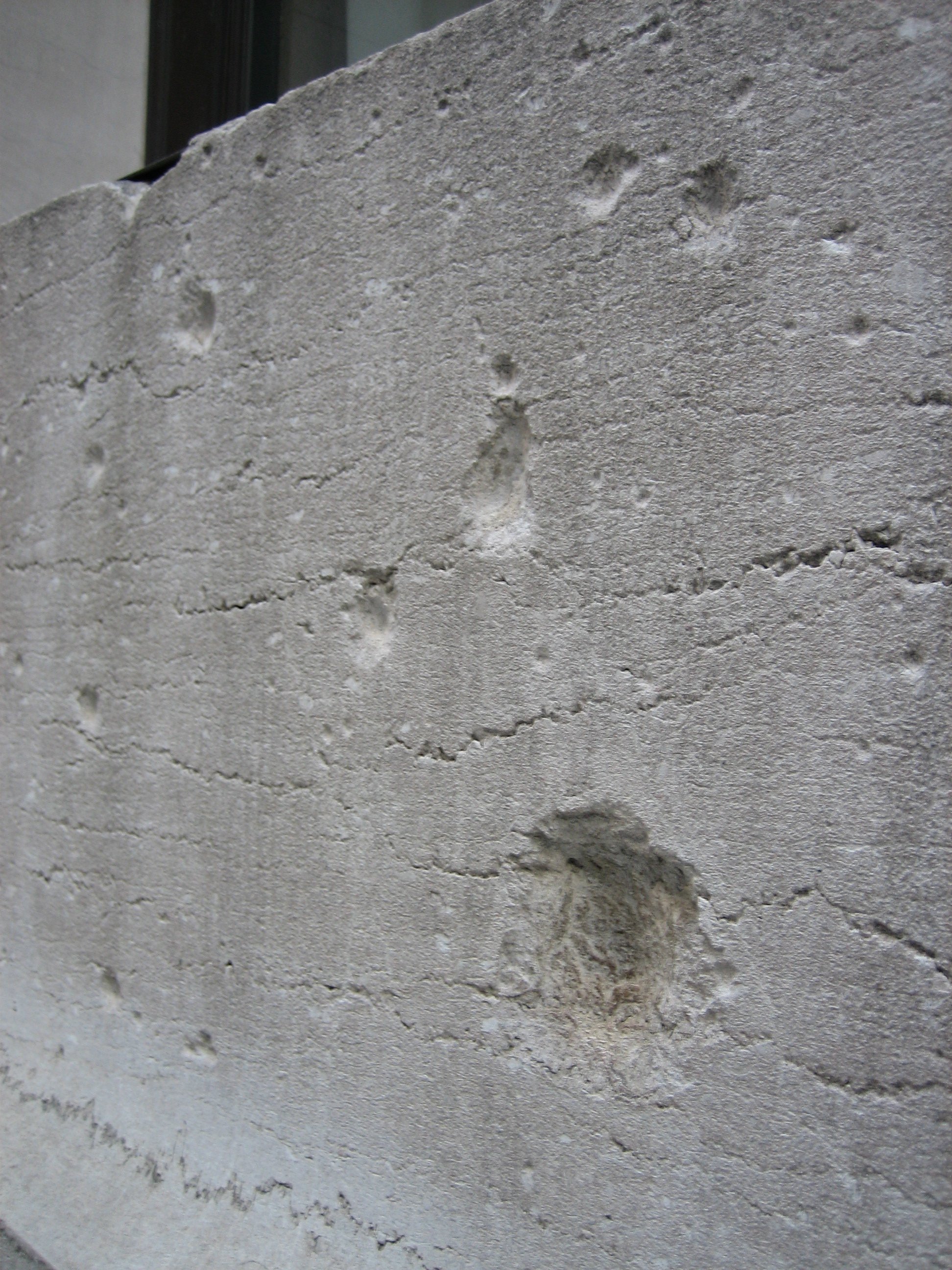
The anarchist bombs that rocked 23 Wall Street were contained in a horse-drawn cart.

Long before the terrorist bombing of the World Trade Center in 1993 or the horrors of 9/11, Wall Street was devastated by anarchist bombs. In 1920, the home of JP Morgan & Co., at 23 Wall Street, was the site of an explosion that left dozens dead and hundreds injured. No assailant was ever captured. An excerpt from a 2003 article by James Barron in the New York Times about the largely forgotten tragedy:

The fortresslike facade of the Morgan building was pocked with craters that remain deep enough to sink a palm into. The columns of what is now Federal Hall, across the street, were blackened. More than 30 people were killed and several hundred wounded, and the damage exceeded $2 million — more than $18.4 million in 2003 dollars.

‘The number of victims, large though it was, cannot convey the extent of the inferno produced by the explosion, the worst of its kind in American history,’ Paul Avrich, a professor of history at Queens College, wrote in reviewing the case more than a decade ago.

The investigators sniffing for clues long ago went from being detectives to historians. The police never charged anyone in the bombing, and it is a mostly forgotten moment in New York City history.

‘Nobody remembers,’ said Beverly Gage, whose book The Wall Street Explosion: Capitalism, Terrorism and the 1920 Bombing of New York, is to be published next year by Oxford University Press.”

Tags: , ,

"One of my mentors told me that my real mistake was trying to replicate my work. He told me doing that was just setting myself up for disappointment."

I fell behind in my New Yorker reading in December, so I just got to this intriguing Jonah Lehrer article about a puzzling problem for scientific researchers: the inability to replicate their landmark findings in subsequent studies. It seems that researchers regularly avoid rechecking their results because they know future tests may call their findings into question. Does that mean that their original studies were unintentionally biased, subjective in some way that they don’t understand? The troubling occurrence is called the “decline effect.” One of the subjects Lehrer discusses the situation with is Jonathan Schooler, a highly self-aware psychology professor at the University of Santa Barbara. An excerpt:

“Jonathan Schooler was a young graduate student at the University of Washington in the nineteen-eighties when he discovered a surprising new fact about language and memory. At the time, it was widely believed that the act of describing our memories improved them. But, in a series of clever experiments, Schooler demonstrated that subjects shown a face and asked to describe it were much less likely to recognize the face when shown it later than those who had simply looked at it. Schooler called the phenomenon ‘verbal overshadowing.’

The study turned him into an academic star. Since its initial publication, in 1990, it has been cited more than four hundred times. Before long, Schooler had extended the model to a variety of other tasks, such as remembering the taste of a wine, identifying the best strawberry jam, and solving difficult creative puzzles. In each instance, asking people to put their perceptions into words led to dramatic decreases in performance.

But while Schooler was publishing these results in highly reputable journals, a secret worry gnawed at him: it was proving difficult to replicate his earlier findings. ‘I’d often still see an effect, but the effect just wouldn’t be as strong,’ he told me. ‘It was as if verbal overshadowing, my big new idea, was getting weaker.’ At first, he assumed that he’d made an error in experimental design or a statistical miscalculation. But he couldn’t find anything wrong with his research. He then concluded that his initial batch of research subjects must have been unusually susceptible to verbal overshadowing. (John Davis, similarly, has speculated that part of the drop-off in the effectiveness of antipsychotics can be attributed to using subjects who suffer from milder forms of psychosis which are less likely to show dramatic improvement.) ‘It wasn’t a very satisfying explanation,’ Schooler says. ‘One of my mentors told me that my real mistake was trying to replicate my work. He told me doing that was just setting myself up for disappointment.’”

Tags: ,

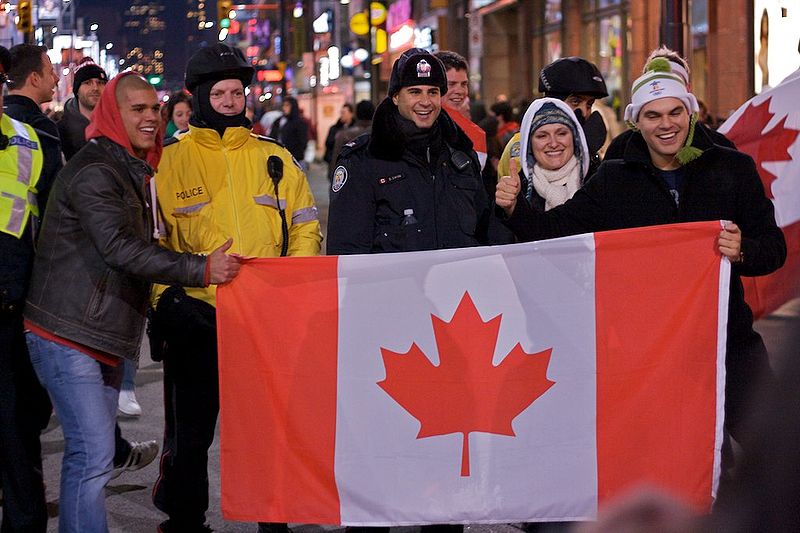
Canada: Good at ice hockey and Afflictor.

Canada retained its Afflictor Nation championship in December, sending more unique visitors to this idiotic site than any other foreign country.

The Top 5 “Winners”:

  1. Canada
  2. Great Britain
  3. Brazil
  4. Germany
  5. Netherlands

REBORN DOLL BABY – $299 (kearny)

LITTLE DREAMS NURSERY Introduces to you

EMILY

Created by Reborn Artist Ingrid Bellardi

For those of you who are new to the wonderful world of reborning, I have been creating little Dreams Nursery for 4 1/2 years now. My babies have been adopted by delighted Moms from all around the world. I am constantly striving to improve and grow at the artform of reborning that I love and am passsionately dedicated to.

~Reborn –november 20 th 2010-

~Length – 17 Inches~

~Weight – 3lb 3oz~

~Eyebrows – light brown

~hair – hoothing light brown

~Limbs – Full Length Arms and Legs~

~Cloth Body – Doe Suede – Flesh Colour~

The beginning

I was just so exited to reborn this beautiful sculpt. I trust to you viewing this baby, my true passion and exitement will shine through in this little girl. She is the sculpt called ”Emily” by the world reknowned and very talented artist, Marita Winters

She is now my darling little angel, Emily

beautiful ”real life” complexion was achieved through the use of Genesis heat-set paints. Her colors will never fade. I mix my own colours anew each time I start painting my angels.

The lifelike mottled effect of her skin was achieved through multiple layers of subtle shading over a period of time.Emily shading has been done a bit softer, with delicate light overtones to give her the colouring of an older baby.

It is my own technique that is constantly evolving as I strive to create the most lifelike babies possible.

Every little crease and fold of Emily head and limbs have been detailed, blushed and shaded to achieve realism.

Emily has got soft veins painted on her little face and limbs. Never too bold as to overshadow her amazing ”real life” complexion.

Body

Emily has been given a brand new cloth body, custom designed, and is in perfect proportion to her head and limbs. Her limbs are very easy to pose into a multitude of positions.

Her body has been filled with soft fiberfill that will never clott and glass pellets Emily body is soft and cuddly and has been realistically weighted. Once you pick her up, you just can’t put her down. Although she is a little heavier, she can be carried very comfortably on your hip as a toddler would.

Emily limbs have been filled with glass granules and have also been weighted to perfection.

Her head has been weighted with slightly larger glass pellets and needs a little support when she is picked up, just like a real baby.

Mouth & Eyes

Her lips have a lovely soft realistic color and matches her complexion perfectly.

Emily has a magnetic pacifier/dummy to sooth her when she gets lonely.

As with all babies, Emily has got tiny red and blue veins on her skin, with blue skintone showing through in all the right places.

Nails

Emily petit little nails were given a baby manicure and pedicure.

First I applied a matte sealer as a base and the tips were painted white.

Another 2 coats of matte sealer was then applied for durability.

Her nails now have a tender fresh clipped look.

What Emily will be taking home with her

all clothes in photos

~Magnetic dummy/pacifier~

~Fleecy Baby Blanket~

~Disposable Nappy~

Please note that Emily is not a toy but a Collectors Item.

Filed under “Really Bad Ideas” is this 1950s commercial in which a face cleanser proves its mettle by removing radioactive dirt from a model’s cheeks.

Fact: 53% of Afflictor readers are cats. The balance is made up by monkeys. (Image by Kormoran.)

Some search engine keyphrases bringing traffic to Afflictor this week:

Afflictor: Wishing everyone a Happy New Year since 2009.

  • Jean Genet had a feeling of fellowship for Lee Harvey Oswald in 1964.

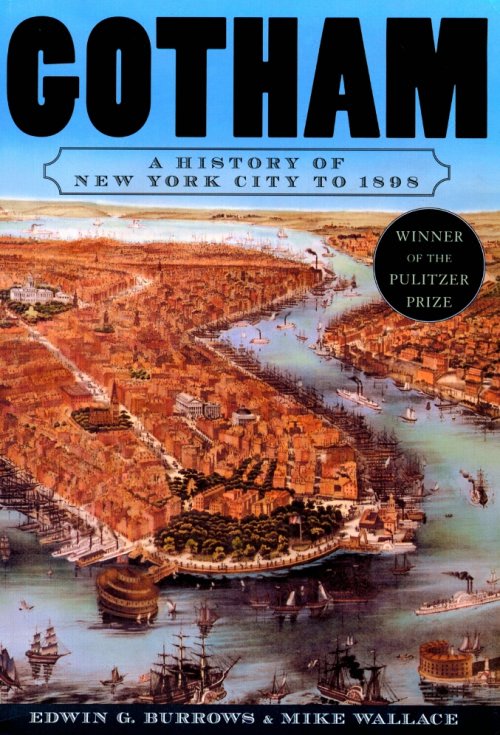
An out-of-control New Year’s Eve celebration in New York in 1827, as described in Gotham, by Edwin G. Burrows and Mike Wallace:

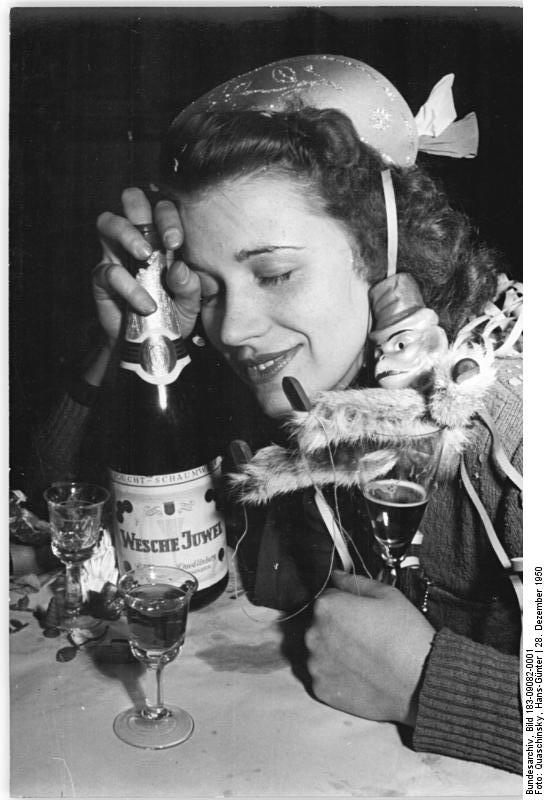
“On New Year’s Eve, as the city bade farewell to 1827, several thousand workingmen–laborers, apprentices, butcher boys, chimney sweeps–set out from the Bowery on a raucous march through the darkened downtown streets, drinking, beating drums and tin kettles, shaking rattles, blowing horns. The crowd headed down Pearl Street through the heart of the city’s commercial district, smashing crates and barrels and making what one account described as ‘the most hideous noises.’ From there the marchers wheeled across town to the Battery, where they knocked out the windows of genteel residences and attempted to tear down the iron railing around the park. At two in the morning they tromped up Broadway, just in time to harass revelers leaving a fancy dress-ball at the City Hotel. A contingent of watchmen appeared but, after a tense confrontation, gave way, and ‘the multitude passed noisily and triumphantly up Broadway.'”

Tags: ,

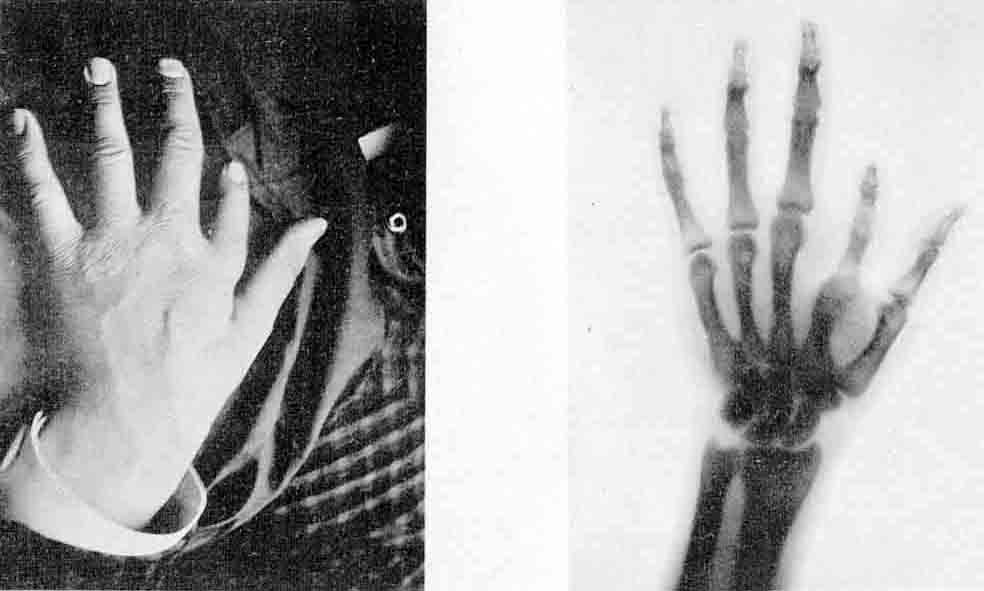
"Skeletons are shown within the flesh." (Image by Albert Londe.)

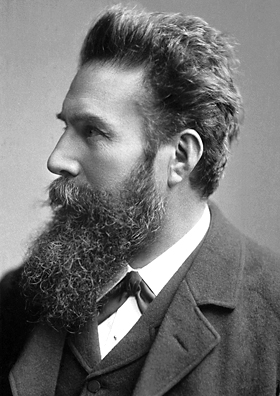
It was early in 1896 that X-rays became an important part of medical procedures, though researchers began working on its development as far back as 1875. German physics professor Wilhelm Röentgen ultimately got the credit for perfecting the process. In the February 10, 1896 Brooklyn Daily Eagle, the new invention is heralded for the major advancement it was. An excerpt:

“Until some man invents a camera that will take a picture around a corner the new utilization of the Cathode or Roentgen rays will suffice for wonder. In this process, as everyone knows by this time, objects that we have supposed to be opaque have been pierced by light so that objects within them have shown in shadowy mass on the photographic plate. A razor had been photographed inside of its case, skeletons are shown within the flesh and things have been revealed that were covered with black paper, wood, horn, rubber and thin plates of metal. Indeed, we begin to inquire if there is such a thing as opacity, now. All this is unexpected and curious, but to men most important for one thing: It opens the human body to examination. If something is wrong inside of one it may not be necessary to cut him open to find what. If the something is known it will save unnecessary cutting.

Wilhelm Röentgen, father of the X-ray. (Image by the Nobel foundation.)

To one who has never seen an operation by surgery, or has given small attention to such matters, it may seem as if it were easy to find the lodging place of a bullet or broken knife point in the flesh, but often the finding of a needle in a bundle of hay is an easy task compared with it. The hay, at all events, contains no nerves, no quivering muscles, no tough cartilage and tendon, no resisting bones: one does not have to be careful how he explores this way and that lest he cut an important nerve or sever an artery or tap a vein, And sometimes, after probing and reaching and cutting for half an hour the work is found to be too difficult and dangerous to continue; then the patient is made as easy as circumstances allow and told to resign himself to wearing the bullet or the knife point for the rest of his days.

By use of the X rays the bullet can be made to declare itself to the sight and the surgeon can go straight to it with his scalpel, and if the ball is found to lie in too close contact to an artery it can be left to encyst. In case of a compound fracture pieces of bone that may be driven into adjacent muscle may be promptly located and removed or replaced. Perhaps a higher sensitization can be obtained so that relatively opaque tumors, cancers, fungoid growths, ossifications or chalk deposits may be indicated in the picture and the surgeon will then be guided as to the mode of procedure. Appendicitis may be resolved into a case for surgical or for medical treatment according to what it shows of the degree of induration or suppuration or the presence of foreign and irritating bodies. Of all the recent advancement in surgery this of the employment of the cathode ray promises the most benefit.”

Tags:

"Look" Magazine: Jackie's Fabulous Greek. (Image by Konstantinos Stampoulis.)

Old Newspapers – 1789, 1797, 1799, 1849, 1900’s listed ** MUST SELL** – $250 (E Northport)

DATE • PERIODICAL • COMMENTS

  • 10/6/1789: The Daily Advertiser
  • 10/2/1797: Commercial Advertiser
  • 3/9/1799: Columbian Centinel Signature of “B. Bedwell”
  • 11/30/1849: Evening Post For The Country Signature of “F. Skillman”
  • 2/23/1905: Gems Of Poetry Different Dates Bound Together
  • 3/15/1905: Puck Vol. XLIX, No. 1264– Magazine Format
  • 4/10/1933: Philadelphia Record Warner Club special Extra
  • 9/1/1934 Field And Stream Vol. XXXIX, No. 5 – Front Cover Torn – Bad condition
  • 9/30/1934: New York American “Drink More Milk” Advertising Supplement
  • 9/30/1934: The New York American Section “L” – Various Stories
  • 10/3/1934: Daily News Partial Pages – Advertising, Stories – Bad condition
  • 10/11/1934: Daily News Bruno Hauptmann –  Bad condition
  • 10/14/1934: The New York American Sports Section – Bad condition
  • 10/14/1934: The New York American Classified Want Ads – Bad condition
  • 10/14/1934: The New York American Society, Stage, And Screen Section – Bad condition
  • 10/21/1934: The New York American Sports Section – Bad condition
  • 10/28/1934: The New York American Brooklyn Section – Bad condition
  • 10/28/1934: The New York American Events, Resorts and Travel Section – Bad condition
  • 12/1/1934: Pontiac Chieftain Advertising Supplement – Bad condition
  • 12/23/1934: The New York American Society, Stage, And Screen Section – Bad condition
  • 12/30/1934: Sunday Mirror Comic Section – Bad condition
  • 1/6/1935: New York American Hauptmann Case – Bad condition
  • 1/6/1935 The American Weekly Supplement-“How The Earth Looks From Other Worlds”
  • 11/5/1952: Daily Mirror “Ike Wins”
  • 11/5/1952: Daily News “Ike Wins”
  • 4/2/1954: Daily Mirror “The Hell Bomb” – First H-Bomb
  • 11/7/1956: Daily Mirror Ike In Sweep
  • 11/7/1956: Daily News It’s Ike and Javits
  • 11/23/1963: Daily News President Is Slain – Kennedy Assassination
  • 11/23/1963: NY Times Kennedy Is Killed By Sniper…
  • 11/25/1963: Daily News The Fatal Shot – Oswald Shot
  • 11/29/1963: Life JFK Memorial Edition
  • 12/13/1963: Life LBJ
  • 10/2/1964: Life The Warren Report
  • 12/25/1964: Life The Bible
  • 7/16/1965: Life A Thousand Days – Close Portrait Of JFK
  • 7/21/1969: NY Times Men Walk On the Moon – Complete
  • 7/21/1969: Daily News Men Walk On The Moon
  • 7/21/1969: Newsday Men Walk On the Moon
  • 6/30/1970: Look Magazine Jackie’s Fabulous Greek
  • 5/26/1973: Life Special Report Israel 25th Anniversary
  • 8/9/1974: NY Times Nixon Resigns
  • 8/10/1974: NY Times Ford Sworn In As President
  • 8/12/1974: NY Post Ford On Inflation: ‘Public Enemy No. 1’
  • 8/26/1974: NY Times – pp.11-18 Nixon final impeachment report
  • 9/2/1975: NY Times – All Israel and Egypt pact on Sinai
  • 7/5/1976: Newsday – All America at 200 (Bicentennial)
  • 1/21/1977: Newsday (Special Supplement) Inauguration of Jimmy Carter
  • 11/20/1977: Daily News – All Shalom (In Hebrew) – Begin and Sadat
  • 1/31/1978: The Egyptian Gazette (4 pages) Various Stories
  • 2/14/1978 The Egyptian Gazette (4 pages) Sadat – 8 Nation Tour
  • 8/1/1978: The Star Elvis Memorial
  • 3/27/1979: Newsday – Special Supplement Israeli/Egyptian Peace
  • 12/10/1980: NY Times – pp.B7 & B8 John Lennon Shot
  • 12/10/1980: Daily News – (Special Supplement) John Lennon – His Life And Times
  • 12/14/1980: Newsday – (Special Supplement) John Lennon Remembered
  • 2/4/1981: NY Times – A9 to A16 The Hostages Story
  • 3/31/1981: Newsday – All Reagan is Shot
  • 2/12/1983: TV Guide So Long M.A.S.H
  • 1/29/1986: Newsday – All Shuttle Disaster
  • 1/17/1991: Newsday – All “War” Taking back of Kuwait
  • 9/9/1998: Newsday “62”-Mark Mcgwire Record Breaking HR – Supplement
  • 12/20/1998: Newsday Clinton Impeached
  • 1/21/2001: Newsday Bush Inaugural
  • 9/12/2001: Newsday 9/11 Disaster
  • 3/12/2002: Newsday Half-Year Anniversary of 9/11
  • 2/2/2003: Newsday Space Shuttle Disaster – Special Supplement

« Older entries § Newer entries »