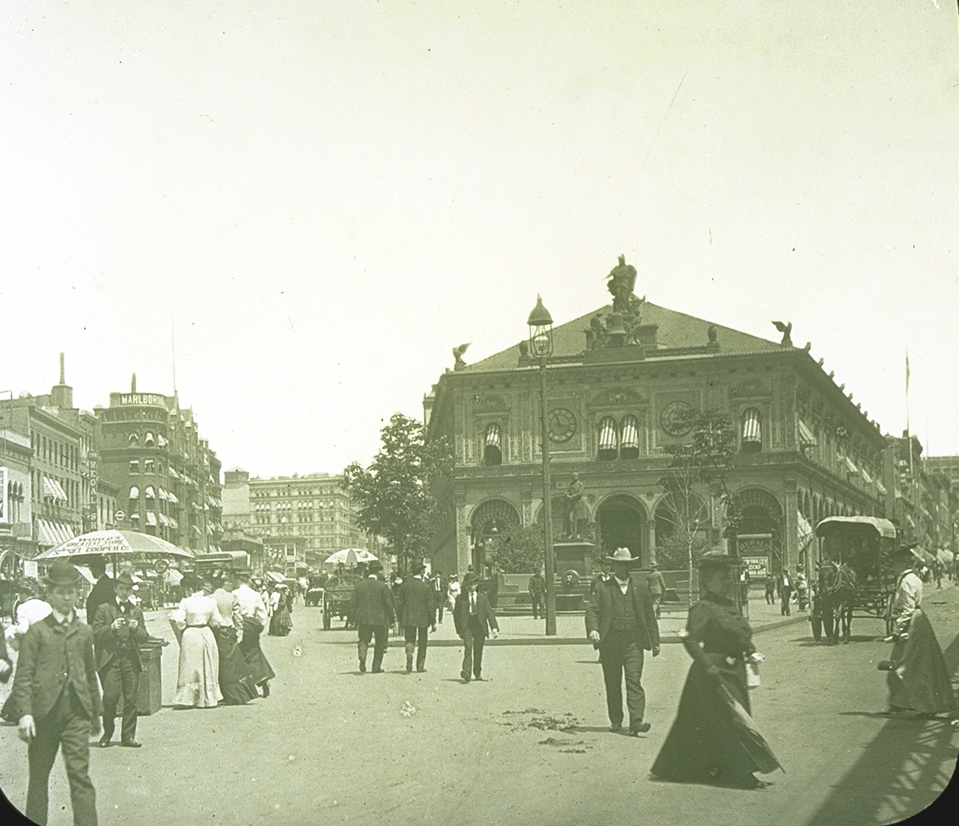
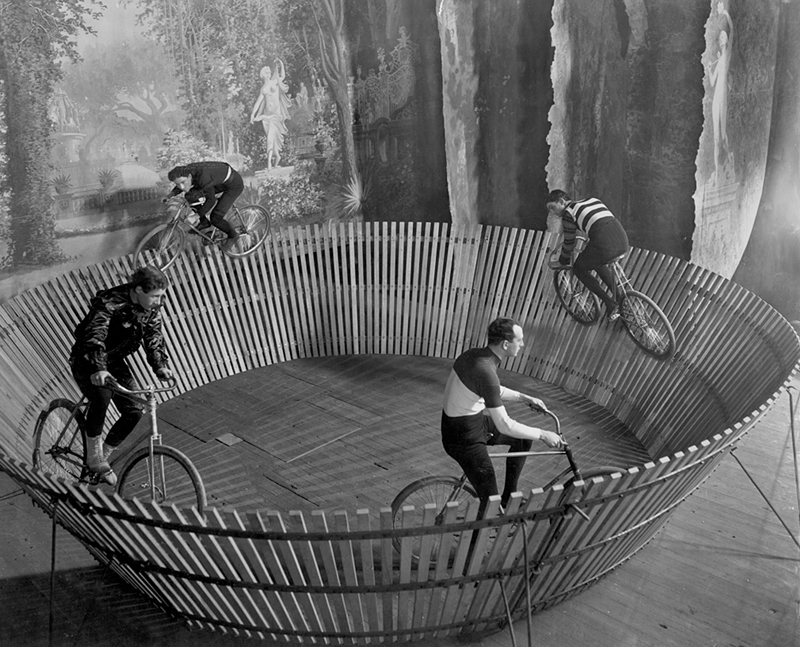
In addition to presenting great bike stunts, Keith's Union Square Theatre was home to the first American exhibition of moving pictures, on June 29, 1896.

In this classic photograph, a quartet of stunt cyclists performs tricks inside a wooden bowl on stage at Keith’s Union Square Theatre in 1902. The entertainment center, originally established in 1870, was purchased, rebuilt and renovated by Boston-based impresario Benjamin Franklin (B. F.) Keith in 1893. An excerpt from a September 18, 1893 New York Times article about what patrons experienced at the vaudeville establishment when it reopened:

“The Union Square Theatre, rebuilt and renovated, decorated with stained glass, ivory-white paint, and resplendent gilding, furnished anew with parlors and retiring rooms, hung with new curtains with silk and plush, was opened yesterday by B. F. Keith of Boston, who has come to New-York to give a fair trial to his Boston plan of ‘continuous performances,’ from noon till 10 o’clock at night, of operetta and variety.

The prices range from 50 cents downward. For the highest price one may secure a seat in the orchestra and retain it ten hours, but no ‘return checks’ are given at the door. Every facility is provided in the house for the comfort of the visitors; families may take luncheons with them if they care to, and eat them in the waiting rooms. But there is nothing to drink in the house except icewater, and there will be no ‘going out for a drink’ between acts. That is the Boston idea.”

Tags:

Lon Safko is a social media expert today, but he’s also the innovator behind the first voice-activated computer, the SoftVoice Computer System. This 1986 news report documents his achievement and explains how a common injury inspired the creation, which now has a permanent home in the Smithsonian.

Tags:

"Human manure shops showed up at markets."

The human spirit always pushes back against totalitarian lockdown with interesting black markets. According to a report in news.com.au (a site I’m admittedly not very familiar with), the modern-day hellhole that is North Korea is unsurprisingly a hotbed for a wide assortment of items being sold without government approval. (Thanks Reddit.) An excerpt:

“Skinny jeans, adult films and human excrement are among some of the most wanted items for consumers in North Korea.

Kim Young-soo, a professor at Seoul’s Sogang University who has interviewed several recent defectors from the Communist country, said that the items were selling ‘like hot cakes.’

Other popular items sold in North Korea included TV dramas and instant noodles, he said.

Yonhap news agency reported that shops began selling human excrement to deal with acute shortages of fertiliser in North Korea.

‘Each household used to use human excrement as fertilizer, but because it’s hard to keep up with the amount, human manure shops showed up at markets,’ Professor Kim said.”

Tags:

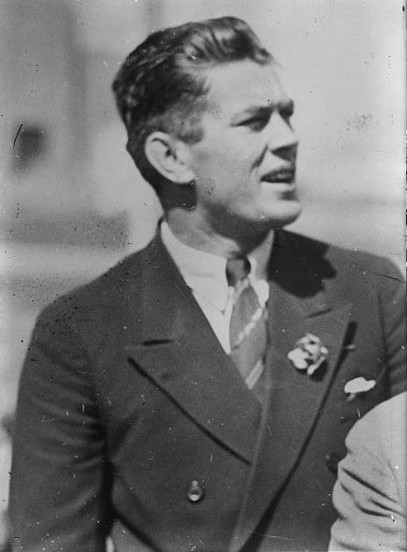
I own several different paperback editions of Janet Flanner’s Paris Was Yesterday: 1925-1939, some purchased, some gleaned. Flanner, the correspondent who wrote for the New Yorker under the pen name Genêt, chronicled European politics and culture from her vantage point in the City of Lights. In one diary-style entry, she records the night in 1928 when heavyweight boxing champ Gene Tunney drank beer with playwright Thornton Wilder. An excerpt:

Gene Tunney broke up the shop at Lipp’s when he recently entered there one night with Mr. Thornton Wilder. The heavyweight champion ordered and obtained a schooner of light beer; Mr. Wilder, because he was with Mr. Tunney, also received something to drink, doubtless not what he ordered, for service was paralyzed. The cashier, ordinarily a creature of discretion, ceased making her change; the waiters rallied round Tunney’s table shamelessly. All the French women stared, whispering, ‘Comme il est beau!’ ‘Quel homme magnifique!’ their escorts murmured without jealousy. It was a triumph which the champion accepted without too much grace. Nervously doffing and donning his hat as if the bay leaves irked him, he talked loudly, intelligently, for a half hour, and left.”

Tags: , ,

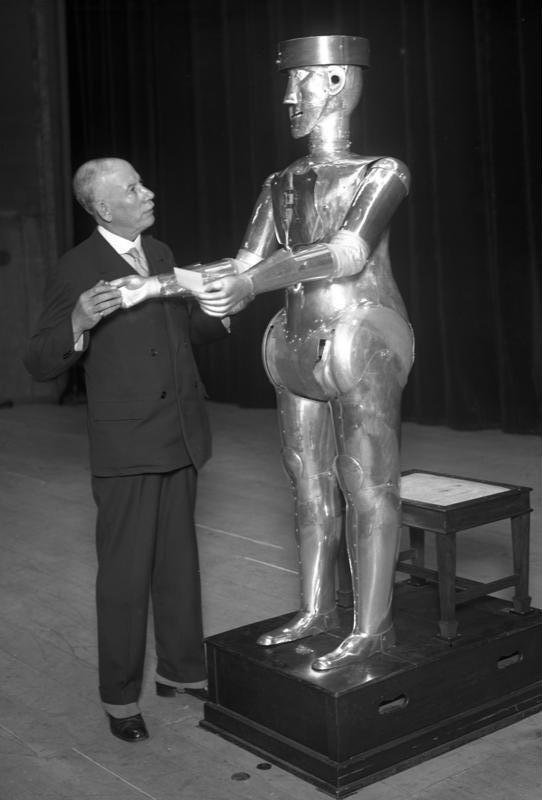
An old-school robot in 1932. Engkey is much more modern.

Yahoo! News has a report by Jung Ha-Won about English being taught to South Korean grade-school students by robots who are controlled remotely from the Philippines. It’s not being done so much out of necessity, but to jump start the South Korean robotics sector. (Thanks Marginal Revolution.) An excerpt:

“Almost 30 robots have started teaching English to youngsters in a South Korean city, education officials said Tuesday, in a pilot project designed to nurture the nascent robot industry.

Engkey, a white, egg-shaped robot developed by the Korea Institute of Science of Technology (KIST), began taking classes Monday at 21 elementary schools in the southeastern city of Daegu.

The 29 robots, about one metre (3.3 feet) high with a TV display panel for a face, wheeled around the classroom while speaking to the students, reading books to them and dancing to music by moving their head and arms.

The robots, which display an avatar face of a Caucasian woman, are controlled remotely by teachers of English in the Philippines — who can see and hear the children via a remote control system.

Cameras detect the Filipino teachers’ facial expressions and instantly reflect them on the avatar’s face, said Sagong Seong-Dae, a senior scientist at KIST.”

Tags: ,

"As much stench as possible."

Wanted – used sports equipment – $50 (Upper West Side)

I’m testing out a new gear cleaning product and I’m trying to get my hands on well used sports equipment with as much stench as possible – the worse the better. Particulary interested in hockey gear, lacrosse and football pads, cleats, underarmour, used running shoes. If you have any other equipment that you want to get rid of thats in really bad condition smell-wise, just drop me a line. I can use paypal or pay cash.

New York Herald Building, 1895.

  • Estimated Population…1,125,000
  • Deaths from all causes…42,761
  • Deaths under 1 year of age…10,799
  • Deaths under 5 years of age…17,360
  • Deaths 5 to 65 years of age…20,887
  • Deaths 65 years and over…4,514
  • Deaths from Measles…814
  • Deaths from Scarlatina…384
  • Deaths from Diphtheria…1,580
  • Deaths from Croup…244
  • Deaths from Typhoid Fever…309
  • Deaths from Bronchitis…1,474
  • Deaths from Pneumonia…5.763
  • Deaths from Phthisis…5,170
  • Deaths from Diarrheal Diseases, all ages…2,910
  • Deaths from Diarrheal Diseases, under 5 years…2,557
  • Deaths from Small Pox…3
  • Still births…3,429
  • Coroners’ Inquisitions…5,381
  • Deaths in Inquisitions…10,886
  • Marriages…20,677
  • Births…55,057

Statistics for the period October 1, 1895 to September 30, 1896, taken from the 1897 Brooklyn Daily Eagle Almanac.

“You will sit there and suffer through the tortures of the damned,” this trailer’s announcer says with far too much confidence. I would have just gotten up and walked out of I Drink Your Blood. Plotwise, this piece of cinema would appear to pivot on the misdeeds of a young brat, who uses a dog with rabies, a syringe and trays of pastries to turn townsfolk into a mass of rabid murderers. Fakest blood, guts and mouth foam ever.

This 2 terrabyte hard-disk drive would have been worth $2 trillion in the 1950s. It costs about $100 on Amazon.

Moore’s Law (or something) must be working overtime because the price of a computer hard drive is ridiculously puny compared to what it was decades ago. The reduction is even more staggering than what you might think. An article by Lucas Mearian in Computerworld makes this point abundantly clear. An excerpt:

In the 1950s, storage hardware was measured in feet — and in tons. Back then, the era’s state-of-the-art computer drive was found in IBM’s RAMAC 305; it consisted of two refrigerator-size boxes that weighed about a ton each. One box held 40 24-inch dual-sided magnetic disk platters; a carriage with two recording heads suspended by compressed air moved up and down the stack to access the disks. The other cabinet contained the data processing unit, the magnetic process drum, magnetic core register and electronic logical and arithmetic circuits.

Today, we have flash drives, microdrives, and onboard solid-state drives that weigh almost nothing, hold gigabytes of data and cost — compared to the 1950s — very little. How cheap is storage now? A 1TB hard drive that sells for as little as $60 today would have been worth $1 trillion in the 1950s, when computer storage cost $1 per byte, according to Dag Spicer, senior curator of the Computer History Museum in Mountain View, Calif.”

Tags: ,

"The inmates will be provided with single rooms."

If they were “respectable,” geezers had it made in Brooklyn in the 1880s. Small institutions began to sprout up for men of a certain age who were unable to provide for themselves. In the story below, from the May 21, 1886 Brooklyn Daily Eagle, one such charity home in Brooklyn was building bigger digs to accommodate more old-timers. According to an almanac I found, the new Classon avenue location mentioned in the piece was indeed eventually built as promised. An excerpt from the article:

“The Brooklyn Home for Aged Men, at 64 State street, was built for a private house and was donated for the purpose of a home by Mr. Frederick Marquand. It is supported by voluntary contributions of money, food and clothing–not by a fund–and has beds for nineteen inmates, who must be over 70 years of age and must have been residents of Kings County for five years before admission. No tramps or dubious characters are admitted, as it is desired that the home should be for the benefit of men who have seen better days and who live lives in conformity with Christian precept. The home was started in a little old house on Grand avenue, in 1877, with seven inmates, and was transferred to the building now occupied in 1879. A number of ladies connected with local charities became interested in it, and not only secured the admission of homeless but educated gentlemen, but also contributed funds for their support. The concern is private and unsectarian. It is not a hospital but, as its name implies, a home.

"No tramps or dubious characters are admitted."

The undesirable location and the growing number of requests for admission recently induced the Board of Managers to raise a building fund and purchase a plot of land 100×100 feet on the east side of Classon avenue, between Park and Prospect places, in close proximity to the Faith Home. The ground is high and the situation salubrious. The plans contemplate the erection of a three story and attic building that will occupy the center of the lot and will accommodate 50 inmates. It is to be a solid looking structure of brick and brown stone, and Mr. Daus, the architect, says he has striven to give it the appearance of a charitable institution and not of a large private house. The middle of the western front is recessed, but the line of the wings is carried across this recess by a colonnade and noble entrance. This entrance is a massive arch of brown stone, with the name of the institution carved above it, and it gives on a piazza behind the colonnade, where the inmates may take the air.

The inmates will be provided with single rooms, each of which is supplied with heating and ventilating apparatus and a closet. Large hallways, heated and ventilated likewise, traverse the building, and special efforts have been made to reduce the danger of fire or panic to a minimum by providing ample stairways and doors that will shut off each wing from contiguous portions of the house. The sanitary arrangements will be of the most approved description, and an infirmary on the upper floor, receiving a south light, will have beds for six patients. The dining room and sitting room will be large and airy. Ground for the new building will be broken within a month and the structure will be at least a year in the process of construction.”

Tags: ,

"Pack a fattie and whip it at Bloomberg's face." (Image by Emmanuel Boutet.)

Snow (Cortelyou road)

hi, I am giving away free snow for the first person to get here. Clean and Dirty snow, excellent for snowmen, skiing, and good for packing snow balls for ammo for snow ball fights or to throw at traffic cops, or you can pack a fattie and whip it at Bloomberg’s face if u see him *_*

Anyways, I will leave it outside so just come get it–on the corner of Cortelyou rd. and Argyle.

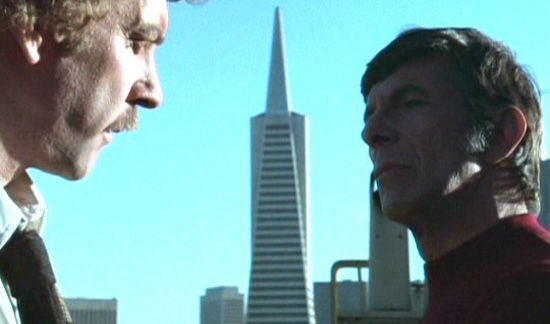
Of the three versions of Invasion of the Bodysnatchers, a story about enemies secretly living among us, Philip Kaufman’s 1978 version was the one that had the weakest sociological context to play off of. The 1956 original was made in the age when McCarthy and HUAC were conducting a witch hunt for alleged communists in our midst. The 2007 version was filmed in a time when terrorist sleeper cells were a reality. So why is Kaufman’s version, which largely is a satire about the rather mundane evil of the self-help industry, so much more effective than the others? Sometimes talent trumps context.

The Kaufman version stars Donald Sutherland as Matthew Bennell, a San Francisco Health Department inspector who spends his days making surprise visits to restaurants, trying to differentiate between capers and rat turds. His staid life in interrupted when his secret office crush, Elizabeth Driscoll (Brooke Adams), begins having problems with her boyfriend. The thing is, Elizabeth doesn’t only feel that her beau has changed suddenly and drastically, but that people all over San Francisco are becoming emotionless and creepy overnight. Matthew doesn’t agree initially but is forced to see her point after a number of shocking occurrences. Meanwhile, a personal-growth guru (Leonard Nimoy) uses feel-good palaver to try to calm every one down as the city falls into chaos. “You will be born again into an untroubled world,” Matthew is ominously told at one point, and he and Elizabeth and their friends realize they have to run for their lives before they too are transformed into drones.

Kaufman and cinematographer Michael Chapman, who would soon work his magic on Raging Bull, use San Fran’s quirky beauty to amazing advantage: every sloping sidewalk seems sinister, steam in an old dry cleaner becomes a fog of suspicion, each exotic flower doubles as a weapon. What results is one of the best genre pictures ever made, and one that wisely knows that paranoia knows no particular season and the fear that things aren’t what they appear to be never goes out of style.•

Tags: , , , , ,

As this PSA reminds, it was very recently that people were permitted to smoke in offices, on airplanes, and wherever else they wanted to. Added bonus: Judd Hirsch in a gas mask.

Tags:

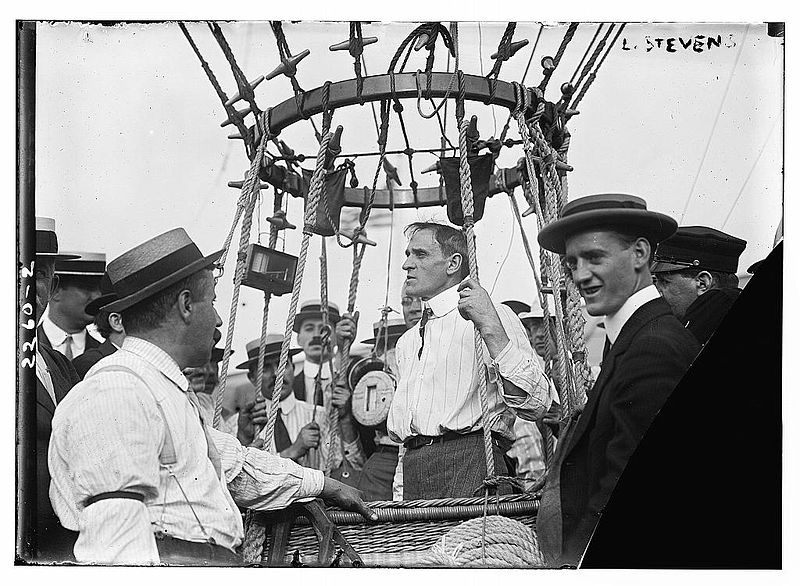
Albert Leo Stevens opened the first private airfield in the nation in 1909.


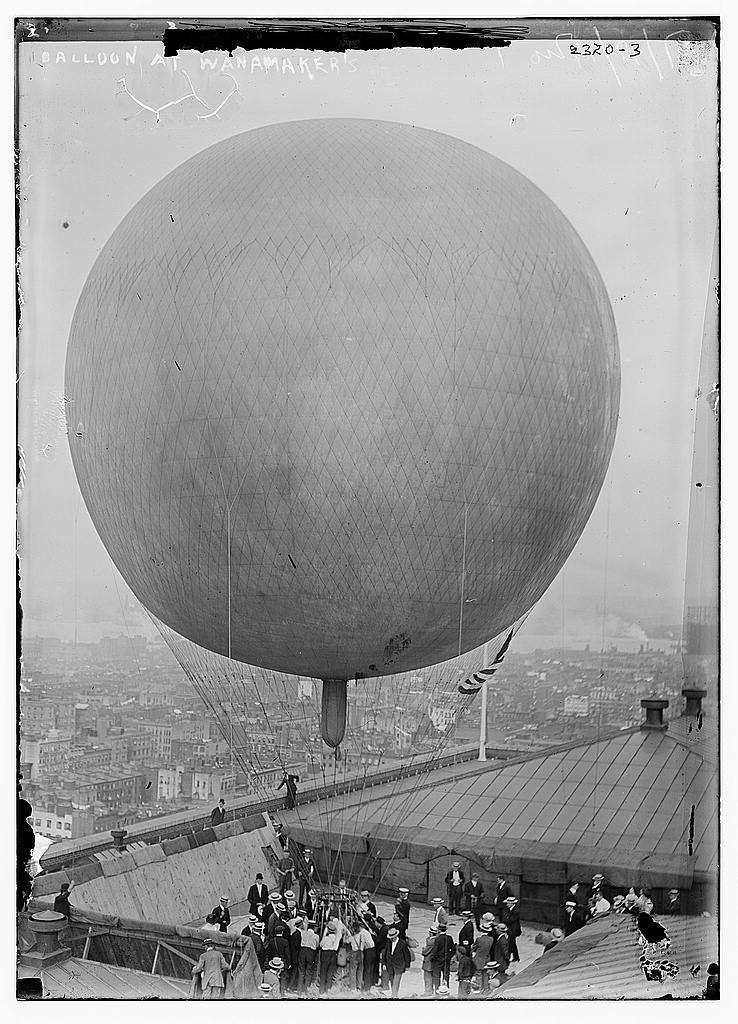
On July 8, 1911, aviation pioneer Albert Leo Stevens climbed into a balloon atop the roof of Manhattan’s Wanamaker’s store and attempted a passage to Philadelphia. Things didn’t go so well, and the voyage had to be aborted in West Nyack, New York. It’s a shame, because it was an ideal stunt for Wanamaker’s, a legendary retailer that then had two humongous locations, one in Philadelphia and one in Manhattan.

In 1876, John Wanamaker opened his namesake store in Philadelphia’s decommissioned Pennsylvania Railroad station. It may or may not have been the first real department store in the country, but Wanamaker’s was the grandest of them all. He opened a second mega-outlet in New York in 1896.

In addition to having an astounding number of items for sale, Wanamaker’s was a revolutionary retailer for the way it conducted business, allowing money-back guarantees and inventing the price tag. And the stores were always on the technological cutting edge, being the first shop to have a telephone (in 1879) and having its own wireless radio station.

John Wanamaker died in 1922, and by the middle of century the stores had lost their luster and were bought and sold several times. The location of the original Wanamaker’s was designated a National Historic Landmark in 1978.

Tags: ,

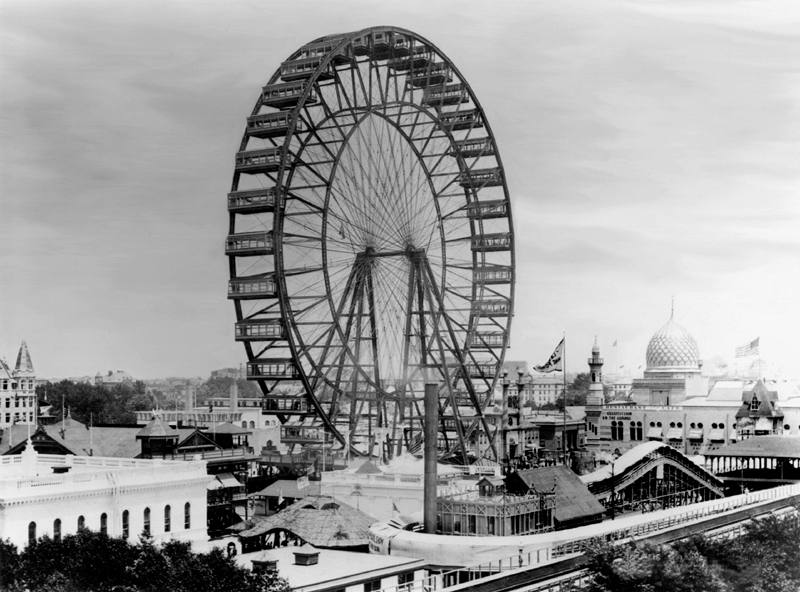
The first Ferris Wheel, at the Columbian Exposition in Chicago in 1893. It was 264 ft. high.

Guy de Maupassant is said to have lunched at the Eiffel Tower every day so that he could avoid looking at the edifice he so despised, and he wasn’t the only Parisian intellectual to hate on Gustave Eiffel’s “bridge to the sky.” French artists and thinkers railed against the tower even as it was in its planning stages as part of the Universal Exposition of 1889, claiming that it was a blight on the city.

But the Eiffel Tower was a huge hit during the fair, so much so that the planners of the 1893 World’s Columbian Exposition in Chicago felt that they needed to do something dramatic to compete with it. Daniel H. Burnham, Chief of Construction for the Columbian, searched futilely for an answer for a long time before George Ferris supplied him with one. An excerpt from Henry Petroski’s Remaking the World:

Burnham found himself at a banquet addressing architects and engineers, he praised the former but excoriated the latter for not having met the expectations of the people. Nothing had been proposed that displayed the originality or novelty to rival the Eiffel Tower. He wanted something new in engineering science, but felt the engineers were giving him only towers.

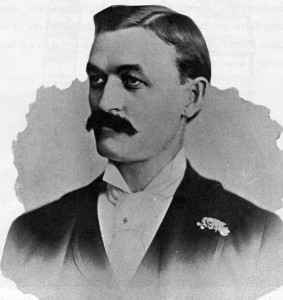
George Washington Gale Ferris, Jr.

Among the engineers at the banquet was the youngish George Washington Gale Ferris, Jr. He was born in Galesburg, Illinois, in 1859, and at the age of five moved with his family to western Nevada. There, while living on a ranch, he became fascinated with a large undershot water wheel, which raised buckets out of the Carson River to supply a trough for the horses. Ferris would later recall his fascination with the wheel’s action, but, according to some accounts, as a youngster he was not equally fascinated with formal education. … When Ferris would later be asked where the idea for his great wheel came from, he recalled that, a while after hearing Burnham’s challenge, he found himself at a Saturday afternoon dinner club made up mainly of world’s fair engineers.

According to Ferris, “I had been turning over every proposition I could think of. On four or five of these I had spent considerable time. What were they? Well, perhaps I’d better not say. Any way none of them were very satisfactory… It was at one of these dinners, down at a Chicago chop house, that I hit on the idea. I remember remarking that I would build a wheel, a monster. I got some paper and began sketching it out. I fixed the size, determined the construction, the number of cars we would run, the number of people it would hold, what we would charge, the plan of stopping six times in its first revolution and loading, and then making a complete turn–in short, before the dinner was over I had sketched out almost the entire detail, and my plan has never varied an item from that day. The wheel stands at the Plaissance at this moment as it stood before me then.”•

Tags: , , ,

"Disney has spent the last year outfitting an underground, nerve center to address that most low-tech of problems, the wait." (Image by Jrobertiko.)

As speedier technology makes certain aspects of life almost instantaneous. others that require patience (e.g., long lines at amusement parks) become more annoying. In order to deal with their customers not wanting to wait around, Walt Disney World in Orlando has constructed a high-tech bunker in order to preempt any inconvenience for its visitors–and also to subtly and creepily control their actions. Brooks Barnes has an interesting article on the topic in the Business section of the New York Times. An excerpt:

“To handle over 30 million annual visitors — many of them during this busiest time of year for the megaresort — Disney World long ago turned the art of crowd control into a science. But the putative Happiest Place on Earth has decided it must figure out how to quicken the pace even more. A cultural shift toward impatience — fed by video games and smartphones — is demanding it, park managers say. To stay relevant to the entertain-me-right-this-second generation, Disney must evolve.

Walt Disney: Sadly, his head wasn't actually cryogenically frozen. Just a myth. (Image by NASA.)

And so it has spent the last year outfitting an underground, nerve center to address that most low-tech of problems, the wait. Located under Cinderella Castle, the new center uses video cameras, computer programs, digital park maps and other whiz-bang tools to spot gridlock before it forms and deploy countermeasures in real time.

In one corner, employees watch flat-screen televisions that depict various attractions in green, yellow and red outlines, with the colors representing wait-time gradations.

If Pirates of the Caribbean, the ride that sends people on a spirited voyage through the Spanish Main, suddenly blinks from green to yellow, the center might respond by alerting managers to launch more boats.”

Tags:

Author Gary Shteyngart can't shut up to save his life! Just try to make him. (Image by Mark Coggins.)

Sarah Spitz from KCRW sends me info each week about the new author interviews that Michael Silverblatt does for his Bookworm program. If you’re unfamiliar with the show, all of the previous editions, which you can listen to completely free, are archived here. Recent ones include Stephen Sondheim, Mona Simpson, Nicole Krauss, Gary Shteyngart, Susan Straight, etc.

Tags: , , , , , ,

"Tanks a buncha!"

free old disgusting bicycle only 1 gear? weird (east ny brooklyn)

well i just moved into this place actually on the 1st i wil be in and i already have the keys and it is full of junk like this old one gear bike with no brakes on it !!!!!!!!!!!! i think if no one takes it on cl i will just put a sign on it and hope some one in the neighbor hood can use it as scrap metal must be worth something i think the frame is aluminum or if you want to put brakes on it you can have it will fit some one medium heighted

I will probably getso many emails and so many weirdos who will boss me around and ask me to ship it to them or ride it over top them in the weather yes? that not gonna happen you come her to pick it up please tanks a buncha!

“Every home will have a computer plugged into a central brain,” the narrator predicts, very accurately, in this 1967 BBC clip. Thankfully, they don’t still sound like locomotives.

The Queens-born paleontologist, who died in 2002, lived in Soho for many years. (Image by Kathy Chapman)

The American Scientist list of  “100 or so Books that shaped a Century of Science” includes the following 20th-century volumes about evolutionary science:

Tags: , , , , , ,

"It was only when she espoused the abolition cause that she lost the social position that she made for herself."

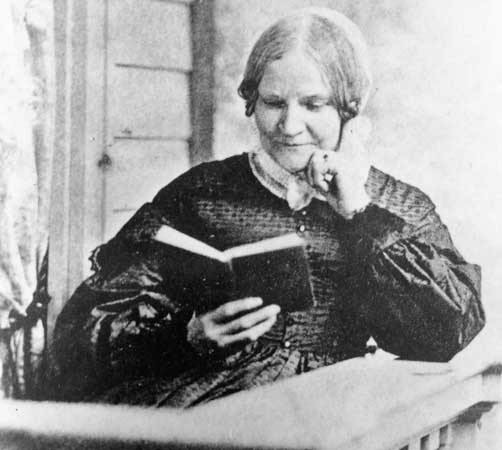
Over the River and through the Woods” is a comforting song of home and family, but its author, Lydia Maria Child (1802-1880), had a way of making people uncomfortable. A popular writer who surrendered her career to agitate for the abolitionist cause, Child was on the right side of history even if it cost her part of her career.

An article in the October 21, 1880 edition of the Brooklyn Daily Eagle memorialized the author, if sometimes in a backhanded way. It’s a pretty good bet that the Eagle in that year didn’t have a single female journalist or editor, so this remembrance has a fair amount of praise but is still marked by a condescending attitude toward Child and all women. An excerpt:

“Lydia Maria Child, who died yesterday at her home on Wayland, Mass., was in many respects one of the most noted of her sex in this country. Her literary career covered a period of more than half a century, and her record was a consistent, persistent and for the most part a popular one. So long as she confined herself to writing she was eminently popular, and it was only when she espoused the abolition cause that she lost the social position that she made for herself.

She was preeminently an American product. The daughter of a humble baker, she became the most widely known of American female writers, with one exception–Mrs. Stowe–and like that writer, she owed her great celebrity to her espousal of the anti slavery cause. English people, who had little respect for American culture, gladly recognized the advocates of that cause in this country, and augmented the fame of all such. It was a time in the history of the country when few women were before the public, and none in this country had become famous outside of letters.
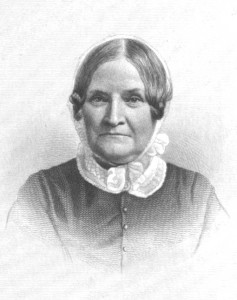
"As a woman, she possessed, in a marked degree, qualities not generally common to her sex."

Mrs. Child endeared herself to women by some of the earliest pen work she did, which was on household topics and home education, and the later work she did for her sex made her name an honored one. She was distinctively a woman writer, finding her subjects in the domestic world and doing her best work for the elevation of her sex in social and educational directions. As she grew in years she developed larger humanitarian views, and like Lucretia Mott, she gave her time and talents to a cause which brought her no fame as a writer, though it placed her in the front ranks of the agitators and deprived her of all the social distinction that had followed in the wake of her literary success. With Harriet Martineau, Fredrika Bremer and other English women who visited the United States about the time that the agitation was at its height, she waged a pamphlet war and gave up more lucrative employment for the sake of the cause of anti-slavery. We of to-day know Mrs. Child only as a writer, many years having elapsed since she retired from the world to live in retirement, surrounded by her family. Her last public work in the anti-slavery cause was a controversy she had with Governor Wise, of Virginia. in reference to a letter she had written to John Brown, offering to go and nurse him in prison.

As a woman, she possessed, in a marked degree, qualities not generally common to her sex. She was fearless and honorable in all her dealings, and wrought out her task independently and with consistency. Self education she urged as the essential precursor of all other tasks, and she worked to teach women to be broad and wisely liberal, to be united in all their public undertakings and to so serve their own higher needs that the succeeding generation might give enduring evidence of the capabilities and culture of American women. In her career of fifty years she exemplified the principles she advocated, and in her death the public has lost a wise teacher, and a brave and true representative of literature and philanthropy.”
Tags: , , ,

The thinkers at IBM tend to be optimistic when conjuring the near future. In 2006, the company released a set of prognostications for 2010 that saw widespread real-time speech translation and the use of sensors to allow for the remote monitoring of patients’ health care. Not quite yet, huh?

Now the company has released five predictions for 2015 that seem just as ambitious. My favorite one is the idea that heat from data centers can be recycled and repurposed to provide heat and air conditioning for cities, conserving energy and lowering power costs. But those holographic cell phones also seem pretty great. The following video from IBM Labs shares the quintet of innovations that may be on our doorstep.


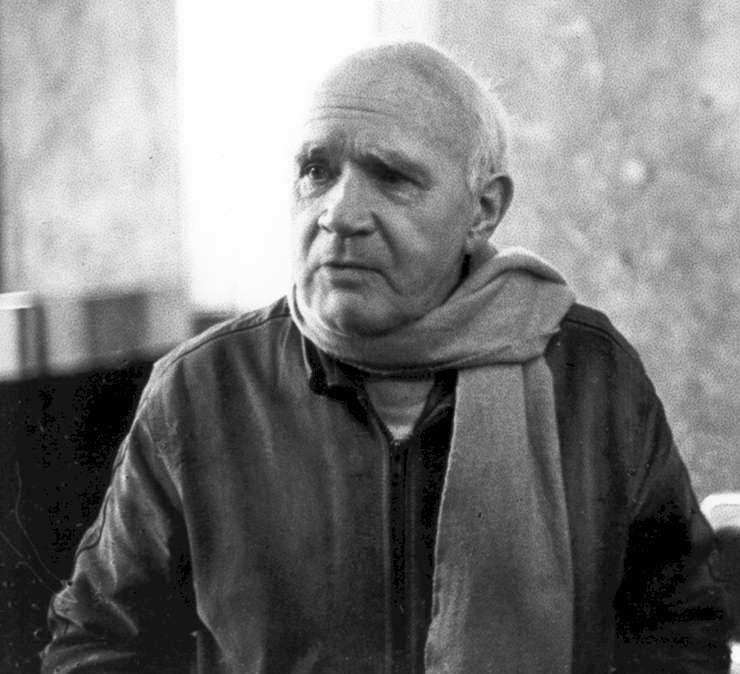
Jean Genet: Great writer, complete a-hole.

It’s not to say that the playwright and novelist Jean Genet was an utter poseur when it came to being an outlaw, but it’s difficult to untangle what of his biography was real and what was his own creation. Genet identified himself as an orphan, a child neglected by foster parents, a homeless thief, a hustler and a jailbird–but it seems like a fair amount of the “facts” were fiction.

Regardless, the 53-year-old writer was an international sensation for his novel, The Thief’s Journal, and for his plays, including The Balcony and The Blacks, by the time he sat down for an interview with Playboy in April 1964. Genet discussed his life and antisocial attitude. And he was asked a bizarre line of questioning about the assassination of President John F. Kennedy, which had occurred the previous November. He unsurprisingly provided an equally bizarre answer. An excerpt:

Playboy: How do you feel about crimes such as that of which Lee Harvey Oswald has been accused? Did you find him boring–or subtle and sensitive?

Jean Genet: I have a feeling of fellowship with Oswald. Not that I was hostile to President Kennedy. I simply wasn’t interested in him. But I feel that I’m with the lone individual who opposes such a highly organized society as American society or Western society or any society in the world that damns evil. I sympathize with him–just as I do with a great artist who takes a stand against a whole society: neither more nor less. I’m with any lone man. But even though I’m—how shall I put it?—morally with a man who is alone, men who are alone remain alone. Even though I may be with Oswald when he commits his crime—if he did commit it—he was alone. Even though I’m with Rembrandt when he paints his pictures, he, too, is alone.”

Tags:

Lorene Yarnell was living in Norway with her fourth husband when she died.

Michael Jackson evolved many moves he borrowed from James Brown, but as unlikely as it seems, he may have cribbed just as many Off the Wall and Thriller gyrations from mime duo Robert Shields and Lorene Yarnell. For a brief, shining moment in the late ’70s (while Jackson was in his formative years), the mime couple, billed as Shields and Yarnell, became a television staple, dazzling audiences with a skill that is usually more of a punchline than a showstopper. Their body control was stunning, and it’s not surprising that Shields had studied with Marcel Marceau and Yarnell was a trained dancer.

Shields and Yarnell were married and then they weren’t, but they remained wedded professionally until Yarnell passed away this year at 66 from a cerebral aneurysm. The Times Magazine has a really well-written remembrance of her (and the Shields and Yarnell tandem) by Elizabeth McCracken in its annual “The Lives They Lived” issue. An excerpt:

Shields and Yarnell practiced hours of nostril and eyebrow exercises in order to be believably mechanical. As the Clinkers, they are virtuosic and upsetting, human beings who can pass as robots, playing robots who wish to pass as human. It’s a parody marriage. The Clinkers know they’re supposed to embrace, but they can’t figure out how; they just carom off each other.

The robots, being robots, endure. Michael Jackson was a fan; he apparently modeled not only dance moves but also some of his many-buttoned military costumes on Robert Shields. Hip-hop dancers studied the Clinkers’ automatonics, setting them to music, and the Robot became one of the most lasting of all break-dancing moves. On city corners across the world, you can see street performers, spray-painted white and silver and brass, who for a quarter will ’bot for you, each a monument to Shields and Yarnell.”

Below is a clip, replete with a horrifyingly inauthentic laugh track, of Shields and Yarnell as the Clinkers.

Tags: , , , ,

Let’s murder nature and replace it with plastic crap.

« Older entries § Newer entries »