The only real problem with rapper M.I.A. flashing the middle finger during the Halftime Show at the Super Bowl is that profane gestures minus some social context, some political statement, are just juvenile and nacissistic, a person showing off when they’ve got nothing to show. An empty gesture is worse than none at all.

A meaningful gesture–the raised fist–at the 1968 Olympics: You didn’t welcome home Jesse Owens as a hero. We came back from WWII to sit on the back of the bus. We can’t fully embrace our country until it fully embraces us.

Tags: , ,

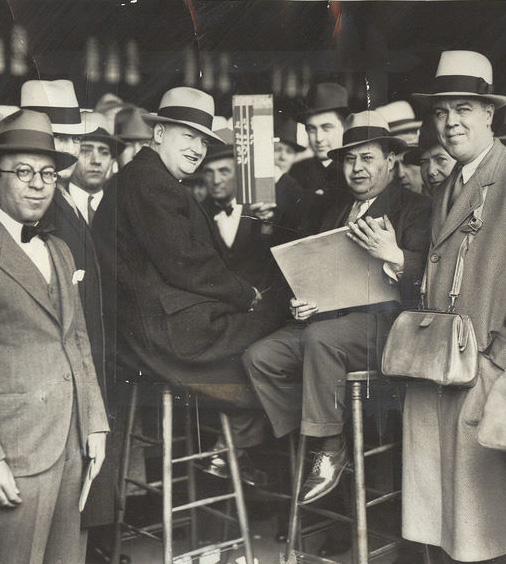
Tim Mara, front left.

As the 2012 Super Bowl champion New York Giants enjoy a ticker-tape parade in Lower Manhattan, here’s a classic 1934 photograph of Tim Mara, a grade-school dropout and bookie who purchased the rights to the franchise for $500 in 1925. In this picture, Mara (1887-1859) is at a familiar haunt, the Jamaica Race Track in Queens, conducting some business. A passage about the team patriarch from Barry Gotteher’s The Giants Of New York The History Of Professional Football’s Most Fabulous Dynasty:

“As a youngster on New York City’s Lower West Side in the early years of this century, blond, pink-cheeked Timothy James Mara had no time for games. To help support his widowed mother and himself, he rushed from his morning classes at P. S. 14 to his afternoon newspaper route along Broadway. After a hurried dinner, he was at the Third Avenue Theatre every evening working as an usher. ‘It just got to be too much for a thirteen-year-old,’ he later recalled, ‘so I quit school.’

Timmy Mara was ambitious. Delivering his newspapers to the St. Denis and Union Square hotels, he was fascinated by the color and confidence of the well-heeled bookmakers who flourished le’gally in those days of plenty. At fourteen, Timmy started working as a runner collecting small tips if the bettor won or 5 percent commissions if he lost and by the time he was eighteen he was taking book himself. He opened a bindery for legal manuscripts on Nassau Street, but, within a few months, he was doing more bookmaking than bookbinding. Affable, gregarious, and honest, he made friends and customers easily; so easily that in 1921 he decided to close his successful downtown office and open a betting enclosure in the most exclusive section at Belmont Race Track. It was a bold and risky venture, but despite some early losses including $60,000 on a fillie named Sally’s Alley in 1922 Mara survived to build one of the best businesses and reputations in New York. Win or lose, Tim Mara was always good for a smile and a joke. ‘Where did you get that one from?’ he’d bellow to a prospective bettor. ‘If that animal wins, I’ll give you my watch.'”

Tags: ,

Amazon is opening a boutique retail store in Seattle, à la the Apple Stores, to sell the Kindle line. If it proves profitable, Jeff Bezos might open a chain of shops around the country, maybe internationally. In addition to selling their e-reader, Amazon will likely sell the physical books that they have begun publishing. It would be great if they also offered a carefully curated selection of books outside of their own imprint, perhaps some seminal tech books. Either way, it may likely be the final chain of stores selling physical books that will ever open in America. An excerpt from a Goodreader.com post on the topic by Michael Kozlowski:

Amazon sources close to the situation have told us that the company is planning on rolling out a retail store in Seattle within the next few months. This project is a test to gauge the market and see if a chain of stores would be profitable. They intend on going with the small boutique route with the main emphasis on books from their growing line of Amazon Exclusives and selling their e-readers and tablets.

Seattle is where Amazon’s main headquarters is based and is known as a fairly tech savvy market. It is a perfect launch location to get some hands on experience in the retail sphere. A source has told us that they are not looking to launch a huge store with thousands of square feet. Instead they are going the boutique route and stocking the shelves with only high margin and high-end items. Their intention is to mainly hustle their entire line of Kindle e-Readers and the Kindle Fire. They also will be stocking a ton of accessories such as cases, screen protectors, and USB adapters.

The company has already contracted the design layout of the retail location through a shell company, which is not unusual for Amazon. When Amazon releases new products to the FCC it is always done through anonymous proxy companies to avoid disclosure to their competition on what they are working on. While we don’t know the actual name of the firm they are working with we have heard rumors that they are based in Germany.

The store itself is not just selling tangible items like e-readers and tablets, but also their books. Amazon recently started their own publishing division and has locked up many indie and prominent figures to write exclusively for the company. This has prompted their rivals such as Barnes and Noble, Indigo and Books-A-Million to publicly proclaim they won’t touch Amazon’s physical books with a ten-foot pole. Amazon launching their own store will give customers a way to physically buy books and also sample ebooks via WIFI when they are in a physical location.”

Tags: ,

"Quite the accomplishment."

Polyamory, the *new* way to love. . . (brooklyn)

There are countless amounts of successful couples that have been in polyamorous relationships. They tend to have very different ideas about sex, love and how they even view themselves as a whole. They can openly confess their love for multiple partners while still maintaining a loving, secure relationship with their key companion. This in itself is quite the accomplishment.

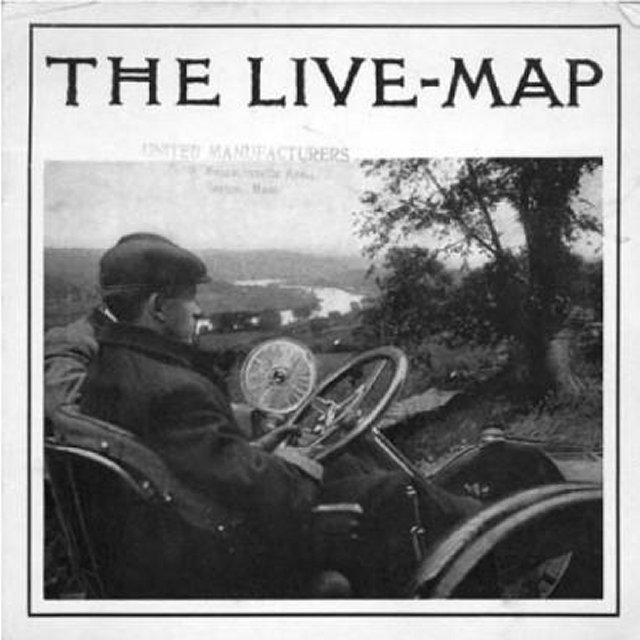
As recalled in a new Saturday Evening Post article by Jeff Nilsson, the first GPS for automobiles was commercially available in 1909, the year after the initial iteration of Henry Ford’s Model T. (Nick Paumgarten covered similar terrain in 2006 in the New Yorker.) An excerpt:

As if this wasn’t enough discouragement, there was the challenge of navigating. Road signs were rare and often incorrect. Travelers were frequently reduced to driving from one roadside stranger to the next, gathering a few miles of directions at a time. The earliest road maps by Rand McNally were printed only after 1904.

Yet a high-tech alternative appeared in 1909: a real-time, on-board directional guide called the Jones Live Map. It was invented by J. W. Jones, who had also introduced the Jones Speedometer, the Jones Disc Phonograph Record, and the Jones Yobel —’the gentlemen’s automobile horn.

The idea was revolutionary. The Live Map was a small turntable device with a cable that attached to an automobile’s odometer. Before making their journeys, drivers would purchase paper discs with the route to their destination prescribed by The Touring Club of America.

At the beginning of the journey, the driver would place his journey’s disc to the Live Map’s turntable so that the journey’s starting point lined up with an arrow indicator on the glass cover. As the car began rolling, the turning odometer cable caused the map to rotate. The arrow would point to the driver’s changing position in the journey.

Each disc had up to 100 miles of travel details around its perimeter. If the journey was longer than 100 miles, the driver would replace the first disc with a second, or third part.”

Tags: , ,

Amazing footage from 1976 of a Mike Douglas talk show episode dedicated to That’s Entertainment, Part II. The host is joined by Fred Astaire, Gene Kelly and seemingly every living legend of MGM fame.

Tags: , ,

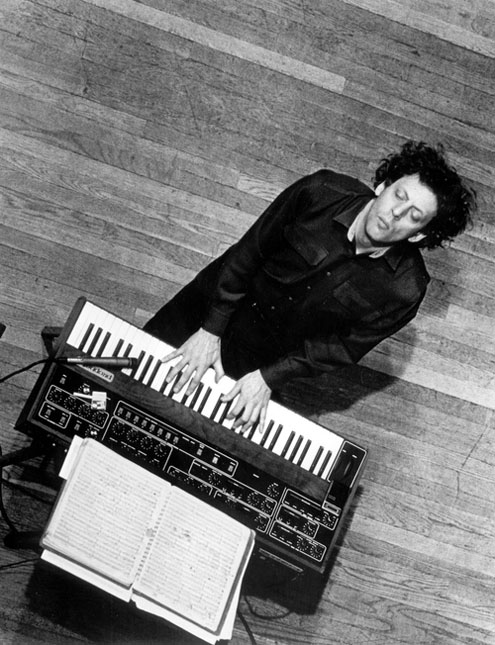
From Steven Trasher’s new Village Voice profile of composer Philip Glass, whose music is great and repetetive and great and repetitive and great:

Yet despite his extensive uptown showcasing lately (his opera Satyagraha was at the Met and a live concert of his Koyaanisqatsi score was at Carnegie Hall within a week of each other last fall), Glass still has deep roots in the East Village. He has lived quite near the Voiceoffices for the past four decades. Many weekdays find him walking around the neighborhood and cutting a stoic, solitary profile; the prolific composer seems oblivious to furtive glances from nerdy fans as he dreams his mathematical scores.

Regardless of success, neither Glass’s life nor his music have ever abandoned their East Village sensibilities. He worked as a cab driver and furniture mover until he was in his early forties, and his identification (politically and artistically) has never left theidea of downtown (even though most of the struggling artists, drug addicts, and alcoholics who inhabited it when he arrived in the late ’60s largely have).

And when Occupy Wall Street confronted Satyagraha at Lincoln Center last December, he was happy to come out and give the General Assembly a ‘mic check.'”

••••••••••

A bit of Glass from Koyaanisqatsi:

Tags: ,

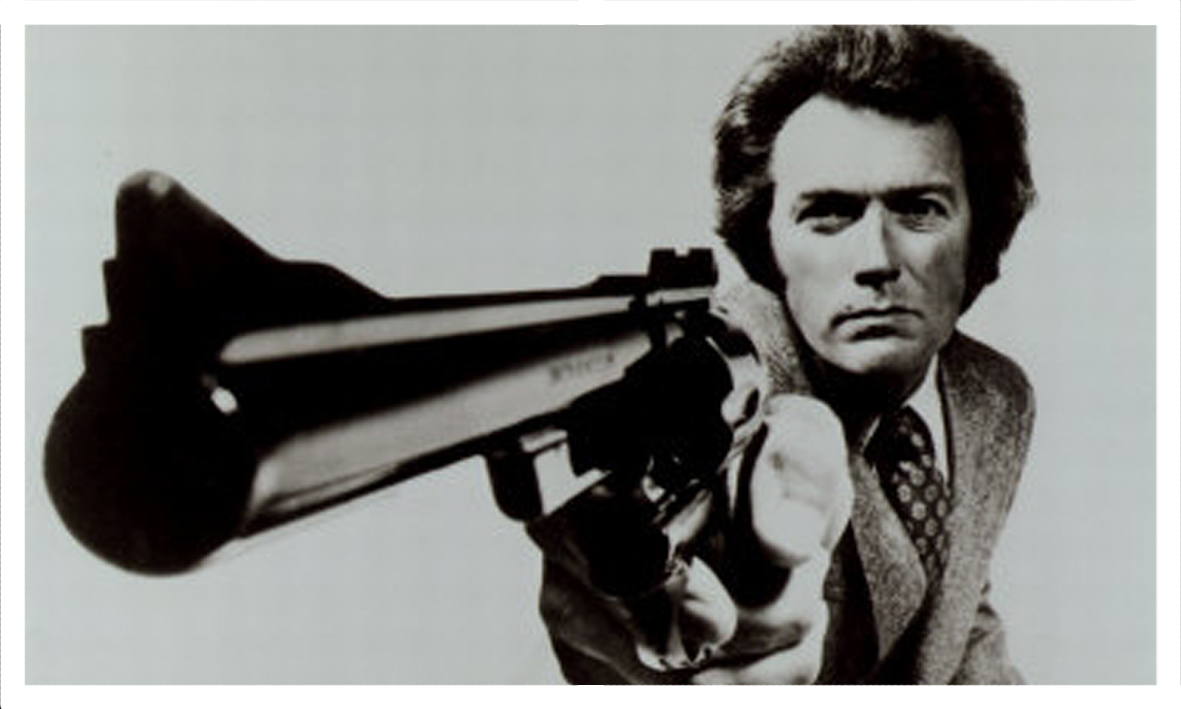
It’s funny that some conservatives are upset about Chrysler’s “Halftime in America” Super Bowl ad, the best commercial of the night. Clint Eastwood, a Herman Cain-loving conservative himself, ambles around all Dirty Harry-ish in the spot, extolling the reversal of fortune that the U.S. auto industry has enjoyed, promising that America is headed back to greatness, and seemingly threatening to murder other countries with his bare hands. I suppose some right-wingers see it as tacit support of Obama.

But it is completely tacit. The commercial conveniently doesn’t mention that without the intervention of the government, the Detroit recovery would likely have never occurred. Those jobs probably would have been gone for good if people like the politicans Clint supports had gotten their way. Sometimes big government is good and sometimes it is not, and anyone who doesn’t realize that we need to figure out these things on a case-by-case basis is too ideological for their own good–and America’s.

Tags:

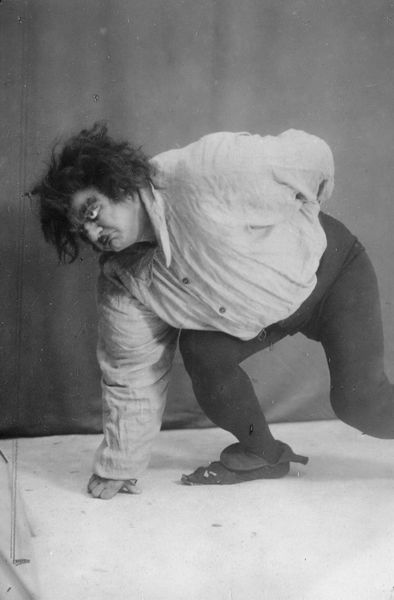
"The crazy tramp gave his name as Billie Patterson, a circus roustabout, but refused to assign any reason for his murderous assault on the passengers of the car."

The shared good of public transportation reduces costs and pollution and allows for social exchanges among a variety of people, but it also increases certain risks. What if a crazed roustabout with a butcher’s knife is your traveling companion? A report about just such a crazy street car trip from the April 17, 1890 Brooklyn Daily Eagle:

“Chicago–A maniac made a desperate assault with a butcher’s knife on the passengers of a State Street car, near Sixteenth Street, about 1 o’clock this morning. Four men were badly cut, but no one was fatally wounded. The injured are Archie Patno, a saloon keeper, who received a cut six inches long extending from beneath his right ear around under his chin, and an ugly stab in the arm; Henry Patno, whose cheek was laid open to the bone and his upper lip cut off; Thomas Brennan, who was cut across the top of the head, and Ben Sweeney, who received a slight cut on the left forearm.

After a desperate struggle the madman was captured and the knife taken from him. At the station the crazy tramp gave his name as Billie Patterson, a circus roustabout, but refused to assign any reason for his murderous assault on the passengers of the car.

The street car had just crossed Sixteenth Street going north when Patterson jumped on the rear platform. With a howl like a Zulu warrior he drew a large butcher knife and made a lunge at the conductor, who saved himself by jumping from the car. Then the madman dashed into the car, in which were seated fifteen or twenty passengers. With one sweep he laid bare the cheek of Mr. Patno. In an instant every man was on his feet and there was a wild rush for the front door. In their haste to get the door open it was sprung and would only open about a foot. Through this narrow aperture three or four escaped. Meanwhile the maniac was wielding the knife with terrible effect. At length the conductor got his carhook and with a heavy blow on the fellow’s arm sent the knife spinning through a window. Patterson was then seized and the patrol wagon was called. Patterson looked as though he had been on a protracted spree, and it is believed he was suffering from delerium tremens at the time. When locked up at the station house he tore about and howled like a wild beast.”

Tags: , , , ,

Skipper has lupus just like Flannery O’Connor. She’ll likely die because Dr. Barbie and Dr. Ken are too busy with their courtship. They’re beautiful and irresponsible, with a dubious commitment to medicine. Enjoy your cocktails, assholes. Rest in peace, Skipper.

Tags: , ,

Hell is other people, wrote Jean-Paul Sartre, and have you seen us in the morning? Eew! The opening ofOne’s a Crowd,” Eric Kleinberg’s New York Times Opinion piece about the ever-rising number of earthlings choosing to live alone:

“More people live alone than at any other time in history. In prosperous American cities — Atlanta, Denver, Seattle, San Francisco and Minneapolis — 40 percent or more of all households contain a single occupant. In Manhattan and in Washington, nearly one in two households are occupied by a single person.

By international standards, these numbers are surprising — surprisingly low. In Paris, the city of lovers, more than half of all households contain single people, and in socialist Stockholm, the rate tops 60 percent.

The decision to live alone is common in diverse cultures whenever it is economically feasible. Although Americans pride themselves on their self-reliance and culture of individualism, Germany, France and Britain have a greater proportion of one-person households than the United States, as does Japan. Three of the nations with the fastest-growing populations of single people — China, India and Brazil — are also among those with the fastest growing economies.

The mere thought of living alone once sparked anxiety, dread and visions of loneliness. But those images are dated. Now the most privileged people on earth use their resources to separate from one another, to buy privacy and personal space.

Living alone comports with modern values. It promotes freedom, personal control and self-realization — all prized aspects of contemporary life.

It is less feared, too, for the crucial reason that living alone no longer suggests an isolated or less-social life. After interviewing more than 300 singletons (my term for people who live alone) during nearly a decade of research, I’ve concluded that living alone seems to encourage more, not less, social interaction.”
Tags:

Louis CK, with his wonderful, wonderful mind, hating on Twitter.

Tags:

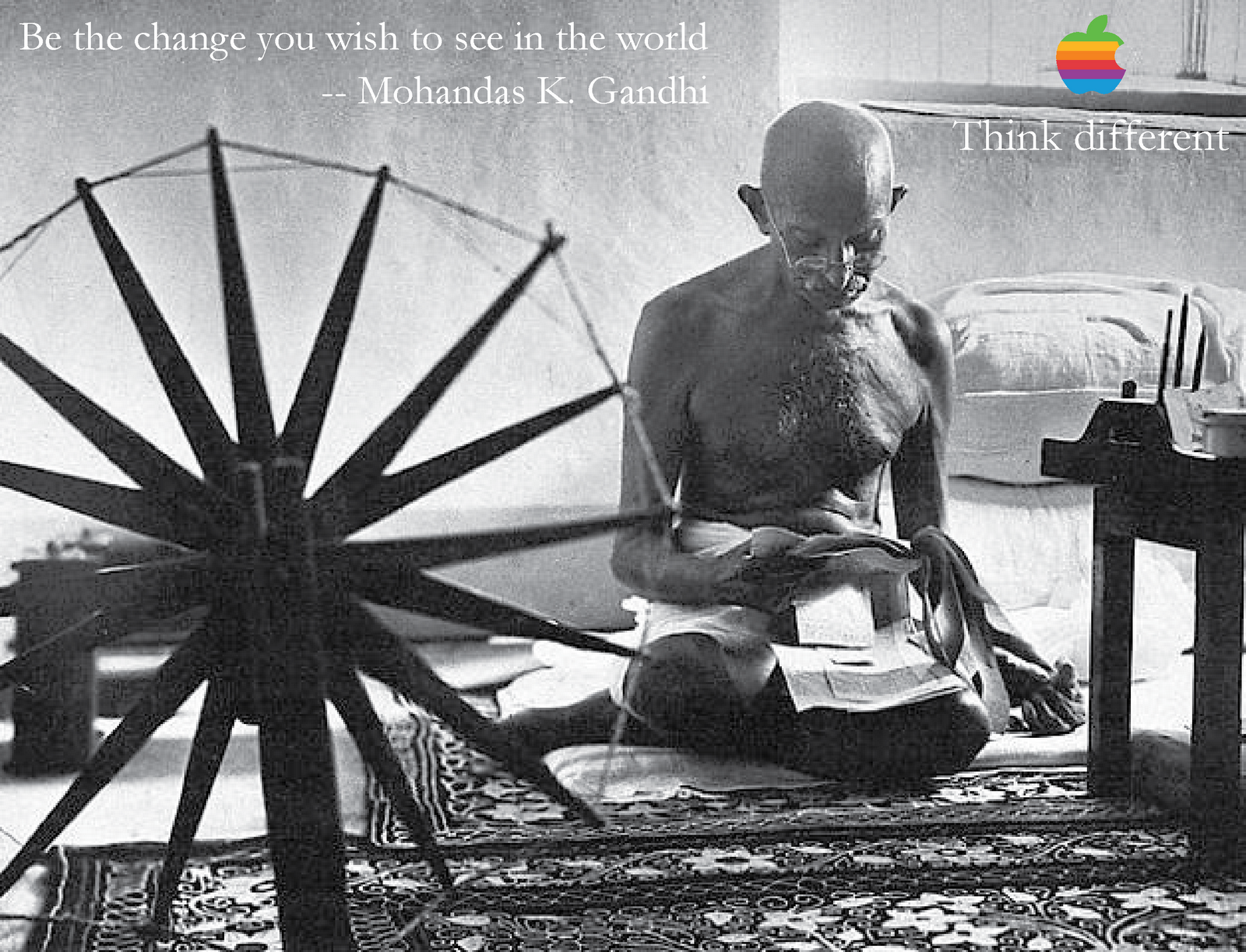
"Be the change you wish to see in the world."--Mohandas Gandhi. Think Different.

Sometimes I think about this: Some people have so little food that they starve to death. I don’t mean that metaphorically. They literally lack enough food to keep their organs functioning properly. They develop distended bellies and are no more able to smile than a skeleton. Then they die. Other people have so much food that they read magazines about food. Food is readily available and they have to stop eating at some point, so they fetishize food so that they can keep “eating” even when they’re not. This might sound simplistic and sophomoric and maybe it is, but here’s the thing: Those people really are dying, painfully.

Mike Daisey has applied this thinking to consumer electronics. Some people are so poor that they literally die working in brutal conditions on assembly lines. Most don’t die, but you wouldn’t want their lives in a million years. Things are so bad that the Foxconn factory complex in China has had to place suicide nets outside its windows. Other people have so much accessibility to cheap electronics that the read magazines about consumer electronics on their consumer electronics. They have so much “food” that they fetishize it. And since we tend to calculate purchase price in dollars rather than human cost, no one puts a face on the misery. That’s the crux of Daisey’s monologue, The Agony and Ecstasy of Steve Jobs.

I’ve already put up a couple of posts about Mike Daisey’s one-man show (here and here), but a follow-up feels necessary. The last post included a good bit from his work which was broadcast on This American Life. The radio show provided a post-performance rebuttal of sorts, which had very humane and progressive thinkers like Paul Krugman and Nick Kristof arguing that the horrid conditions of China’s Foxconn factory were better for the people there than no sweatshops at all. And they’re right: Always choose bad over worse.

But what if that isn’t the only choice? Foxconn has reached such a critical mass of production that Apple (and every other tech company) won’t move production elsewhere if a fairer treatment of workers resulted in slightly higher costs. Payroll is such a small piece of the final price of electronics anyhow. Almost all of it comes from R&D and profit taking.

Daisey isn’t going to back off, nor should we. If we absolutely demand that the workers at Foxconn are treated better, if we use our purchasing power to ensure this, it will happen. Maybe the products will be slightly more expensive and we’ll only have enough money to enjoy them and not enough to fetishize them, but isn’t that enough?

Isn’t that a more meaningful use of the “Think Different” phrase? Isn’t that a more righteous use of Gandhi’s image than some commercial selling cheap computers at a high human cost?

Tags: , ,

"No jokes."

i have a very weird unusual desperate ?

where can i sell my soul to the devil?? or where can i meet a demon?? plz help want something from satan no jokes.. 

From Richard Feynman’s landmark 1960 lecture on nanotechnology, “There’s Plenty of Room at the Bottom“:

Miniaturizing the computer

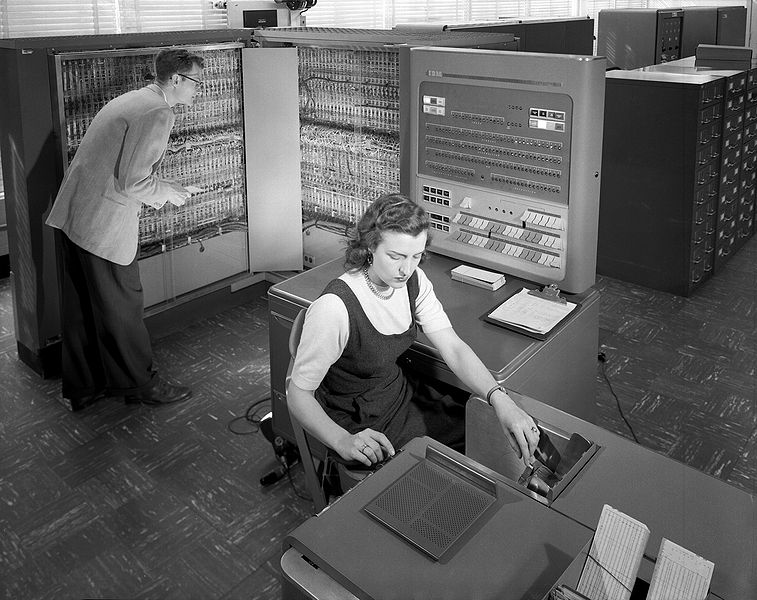
I don’t know how to do this on a small scale in a practical way, but I do know that computing machines are very large; they fill rooms. Why can’t we make them very small, make them of little wires, little elements—and by little, I mean little. For instance, the wires should be 10 or 100 atoms in diameter, and the circuits should be a few thousand angstroms across. Everybody who has analyzed the logical theory of computers has come to the conclusion that the possibilities of computers are very interesting—if they could be made to be more complicated by several orders of magnitude. If they had millions of times as many elements, they could make judgments. They would have time to calculate what is the best way to make the calculation that they are about to make. They could select the method of analysis which, from their experience, is better than the one that we would give to them. And in many other ways, they would have new qualitative features.

If I look at your face I immediately recognize that I have seen it before. (Actually, my friends will say I have chosen an unfortunate example here for the subject of this illustration. At least I recognize that it is a man and not an apple.) Yet there is no machine which, with that speed, can take a picture of a face and say even that it is a man; and much less that it is the same man that you showed it before—unless it is exactly the same picture. If the face is changed; if I am closer to the face; if I am further from the face; if the light changes—I recognize it anyway. Now, this little computer I carry in my head is easily able to do that. The computers that we build are not able to do that. The number of elements in this bone box of mine are enormously greater than the number of elements in our “wonderful” computers. But our mechanical computers are too big; the elements in this box are microscopic. I want to make some that are submicroscopic. If we wanted to make a computer that had all these marvelous extra qualitative abilities, we would have to make it, perhaps, the size of the Pentagon. This has several disadvantages. First, it requires too much material; there may not be enough germanium in the world for all the transistors which would have to be put into this enormous thing. There is also the problem of heat generation and power consumption; TVA would be needed to run the computer. But an even more practical difficulty is that the computer would be limited to a certain speed. Because of its large size, there is finite time required to get the information from one place to another. The information cannot go any faster than the speed of light—so, ultimately, when our computers get faster and faster and more and more elaborate, we will have to make them smaller and smaller. 

But there is plenty of room to make them smaller. There is nothing that I can see in the physical laws that says the computer elements cannot be made enormously smaller than they are now. In fact, there may be certain advantages.”

Tags:

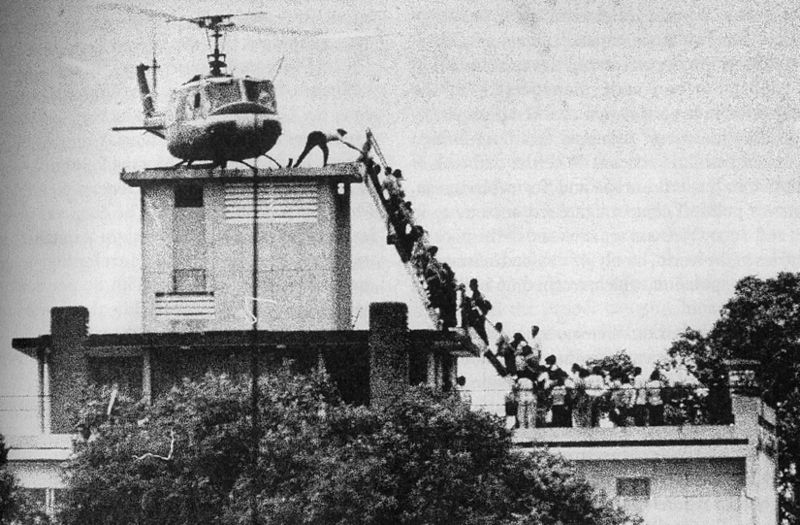
Legendary Vietnam War reporter George Esper just passed away at 79. He famously refused to be called back to the U.S. by the Associated Press so that he could stay and witness the Fall of Saigon. There’s sadly little of his work online. From the Washington Post:

While he considered his coverage of the dramatic end of the 15-year Indochina conflict the high point in a 42-year career of deadline reporting, it was far from the only one. Esper was legendary for his dogged persistence in covering news in war and in peace.

‘You don’t want to be obnoxious and you don’t want to stalk people, but I think persistence pays off,’ Esper said in an interview in 2000.

So when he was assigned to write a story for the 20th anniversary of the 1970 shootings of four students by National Guardsmen at Kent State University and could find no phone number for the mother of one of the victims, Esper drove an hour through a snowstorm to knock on her door.

‘She just kind of waved me off, and she said, ‘We’re not giving any interviews.’ Just like that,’ Esper recalled. ‘I didn’t really push her. On the other hand, I didn’t turn around and leave. I just kind of stood there, wet with snow, dripping wet and cold, and I think she kind of took pity on me.’

Like so many others over the years, she opened up to Esper.”

••••••••••

Fall of Saigon, 1975:

Tags:


Some search-engine keyphrases bringing traffic to Afflictor this week:

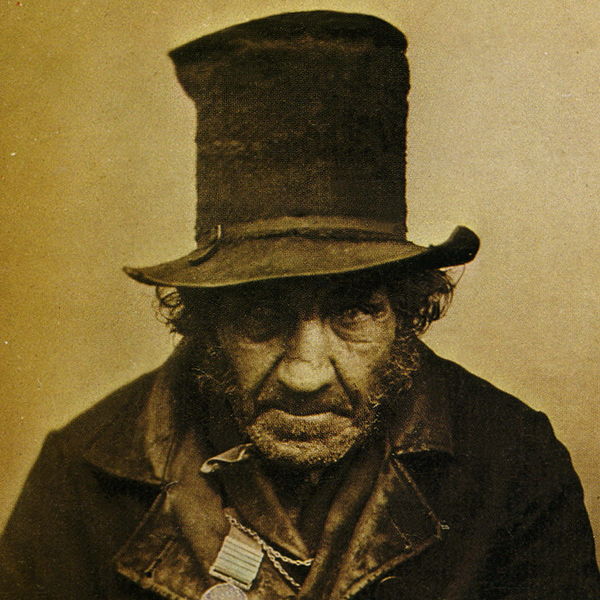
Afflictor: Imagining what the 99% must look like to Mitt Romney.

  • Nick Carr makes interesting points about social networking.
  • Mass hysteria is likely behind a mystery illness in Upstate New York.
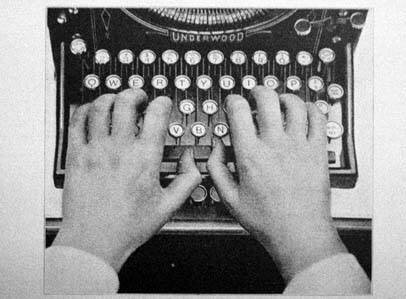
  • Typewriters, like all tools and technology, refuse to totally die out.

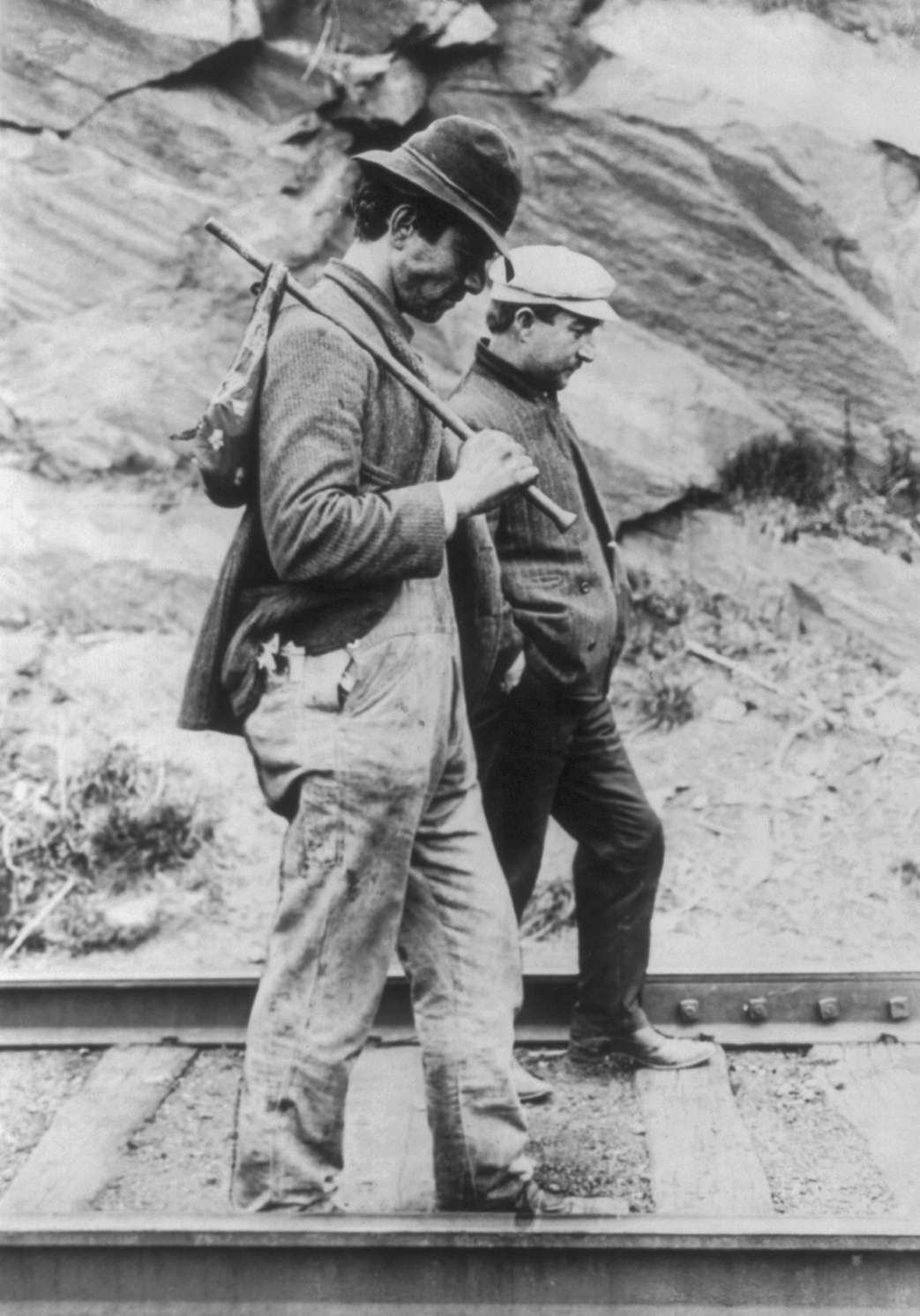
Mitt is sending Pinkertons to murder these hoboes.

FromRaise the Crime Rate,” Christopher Glazek’s sharp and scathing n+1 think piece about America’s sprawling Prison Industrial Complex:

“Crime has not fallen in the United States—it’s been shifted. Just as Wall Street connived with regulators to transfer financial risk from spendthrift banks to careless home buyers, so have federal, state, and local legislatures succeeded in rerouting criminal risk away from urban centers and concentrating it in a proliferating web of hyperhells. The statistics touting the country’s crime-reduction miracle, when juxtaposed with those documenting the quantity of rape and assault that takes place each year within the correctional system, are exposed as not merely a lie, or even a damn lie—but as the single most shameful lie in American life.

From 1980 to 2007, the number of prisoners held in the United States quadrupled to 2.3 million, with an additional 5 million on probation or parole. What Ayn Rand once called the ‘freest, noblest country in the history of the world’ is now the most incarcerated, and the second-most incarcerated country in history, just barely edged out by Stalin’s Soviet Union. We’re used to hearing about the widening chasm between the haves and have-nots; we’re less accustomed to contemplating a more fundamental gap: the abyss that separates the fortunate majority, who control their own bodies, from the luckless minority, whose bodies are controlled, and defiled, by the state.” (Thanks Browser.)

Tags:

The music wanted to be portable, 1967.

"The chicken is now doing well."

Some good news for a change, courtesy of “Living Without a Head,” a brief piece from the January 11, 1885 Brooklyn Daily Eagle, which originally appeared in the Wilson Echo of Kansas:

“A Barton County man has a living chicken without a head. Attempting to cut off a chicken’s head, the axe passed through the head of the chicken immediately in front of the ears, thus leaving a small portion of the brain attached to the neck. The chicken did not take this as an execution of his death warrant and got up and stood on his feet, to the astonishment of this would be executioner, who then contrived a plan to feed him by dropping food and drink into the thorax, which has so far proved a success. The chicken is now doing well.”

I’ve mentioned this before, but I don’t think anything in America should be prohibited if it’s only going to create a widespread black market among consenting adults. Regulated intelligently, sure, but not prohibited. That includes: drugs, guns, abortion, gambling and prostitution. (I limit this rule to America because a place like Japan seems to be fine with a lack of guns among its populace, so respect must be paid to cultural differences.)

The people of Pahrump, Nevada, go a step further, however. In this tiny unincorporated slice of Ron Paul country, the gun-loving locals are paranoid about police states and carry firearms everywhere, including government buildings. (Since the name of town is so odd, I challenge the locals to up the ante and rechristen it “Rifle Butt, Nevada.” That would do quite nicely.) Richard A. Oppel Jr. has a really good piece about Pahrump in the New York Times. An excerpt:

This is the heart of Ron Paul country, the one county in Nevada that the 76-year-old congressman from Texas carried in the 2008 Republican caucuses, and a place that wears its libertarianism proudly.

It is also a place where many people come to be left alone. ‘There are a lot of people who hide in Pahrump,’ said Carl England Jr., who, as pastor of a Baptist church here and also proprietor of a local septic business, knows a lot about his neighbors.

Many people here have owned guns — even some, like Jerry Neese, who are scared of them — not necessarily for concerns about safety but to make a statement about living in a free country. ‘People believe in the rights they have, and want to show they believe in them,’ said Bonnie White, who owns Emmalee’s Guns and Emporium (named for her granddaughter) and sells 500 guns a year. ‘People will fight for their rights here.'”

Tags: , , ,

Frank Lloyd Wright, on Omnibus, being spectacularly wrong on three topics: skyscrapers in cities, population concentration and New York City’s future.

Wright as a metaphor for Simon and Garfunkel’s split, 1970:

Tags: , ,

Pity me (Fairfield)

While you pity me I will be browsing through my extensive wine cellar, looking for the right wine for my wife and our girlfriend to enjoy while we get freaky later on. The only decision I have to make today is which bedroom (there are six) we will use tonight. Poor me, what a pity!!!

Fairfield really is one hell of a town.

1% with 9″

It makes sense that we use our brains to lay tracks in front of us as we encounter the unknown, a sort of superhighway of our own making, and one that we can call upon again and again in life. But what if such construction isn’t required of us? The opening of Julia Frankenstein’s New York Times Opinion piece,Is GPS All in Our Head?“:

“It’s a question that probably every driver with a Garmin navigation device on her dashboard has asked herself at least once: What did we ever do before GPS? How did people find their way around, especially in places they’d never been before?

Like most questions asked in our tech-dependent era, these underestimate the power of the human mind. It is surprisingly good at developing ‘mental maps’ of an area, a skill new research shows can grow stronger with use. The question is, with disuse — say, by relying on a GPS device — can we lose the skill too?

The notion of a mental map isn’t new. In the 1940s, the psychologist Edward C. Tolman used rats in mazes to demonstrate that ‘learning consists not in stimulus-response connections but in the building up in the nervous system of sets which function like cognitive maps.’

This concept is widely accepted today. When exploring a new territory, we perceive landmarks along a route. By remembering their position and the spatial relations between the streets, locations and landmarks we pass, we are able to develop survey knowledge (stored in the mind like a mental map), which enables us to indicate directions, find shortcuts or detours — in short, to react and navigate comfortably.”

•••••••••

Mousebot navigates maze:

Tags: ,

« Older entries § Newer entries »