J.G. Ballard looking darkly (of course) at technology.
Tags: J.G. Ballard

Sometimes you see someone like Jon Voight, a Birther who vilifies President Obama–not just criticizes him or vehemently disagrees with his politics–but labels him as Other and Evil. When you listen to Voight, you might imagine that there’s a degree of racism at play, and maybe the actor himself doesn’t realize it. Maybe he’s the kind of person who’s troubled by a person of color who is highly educated and successful. Perhaps he’s able to rationalize it by being friendly with minorities he believes to be on a lower social plane than he is, whom he sees as no threat to his ego. Perhaps he likes to imagine himself a protector of such people. Maybe in return he can assign “Magic Negro” qualities to them. Maybe when he hears a black voice in his head, it’s an uneducated, stereotypical one that takes him back to an earlier age in which he was more comfortable. Something tells me this recent anecdote he told CNN puddinghead Piers Morgan is more a world view than an isolated incident. Oh, and Morgan doesn’t really understand what the word “brilliant” means, does he?
_______________________
“Piers Morgan:
Midnight Cowboy was the movie that exploded you onto the scene, one of my favorite all-time movies. There’s a brilliant story about how you got this. Just tell me quickly.
Jon Voight:
Well, it’s not a quick story.
Piers Morgan:
It is going to have to be. Otherwise, we might get cut off again.
Jon Voight:
Well, listen, I was told — I did a screen test and I was — with three other fellows, great actors. I was told it came down to another fellow and myself. And it was finally given to the other fellow.
They finally came back around to me for some reason because they had a difficulty making this thing work. I get a call. They said, Jon, it’s come back to you. Be at your phone at 10:00 tomorrow morning. This is a Saturday morning. John Schlesinger will call you, invite you over to his place just to take a look at you, because it’s been a couple weeks since he’s seen you. And who knows. Good luck.
So, of course, I couldn’t sleep that night. It rained that night. The wind was blowing against — blowing the rain against my apartment building. I got up early. I didn’t know what to do with myself. I didn’t — I was nervous.
So I said, well, I’m going to go out and do some grocery shopping. I went out into this rain with my umbrella and I got some groceries. And coming back, I saw in the middle of the street this fellow who I had known who was a homeless man, black fellow, who said he was a boxer and he had kind of puffy eyes and stuff like that.
I thought, yes, he’s a boxer all right. He was in the middle of the street. It was in the middle of the street, just lost. And the rain was coming down. I ran up to him and I said, George, George, you’ve got to get out of this rain. You’re going to get pneumonia.
He was like that. I said, George, listen, I’m going to take you up to my apartment and I will give you a sandwich or something. I said, George, listen, you se that liquor store across the street? I’ll go get a bottle of scotch, a little bottle of scotch, and you can come up to my place and get out of the rain. He went, oh, OK. So I got the bottle of scotch, went up to my place. And George sat down. I made him a sandwich, tuna fish sandwich. I can still see this sad looking tuna fish sandwich. I said, George, you know, I’m waiting for a call that’s going to come at any time, and it could change my life because it’s a big movie. I’m a movie actor. I might get this part.
He said, [stereotypical voice] oh, I hope you get it. I pray you get it. With that, the phone rings. I said, come on, George. Let’s go over and see if this is the fellow. So I had a hall wall phone. I get on. I said hello.
And I hear the voice says, hello, Jon, John Schlesinger here. Jon, you know, we’re looking at your screen test and we may come your way. But I would like to see you just for a few minutes. Do you think you could come over to my place and just have a little chat?
I said, that’s fine, John. It’s raining. I’ll get a cab. He gives me the address. I hang up the phone. I said, George, it looks good. I’m going to go over and see him. I’m so glad, he says. I said, now you sit here. Don’t go outside. If you go outside, here’s a coat. I had an extra coat. I said — and just, you know, you can stay here. If I’m a couple of hours, you can stay here. But if you go, take the coat.
So I leave George. I go over and see John Shlessinger. And John and I — John was as good as his word. He just wanted to say hello, just see how we were doing. We had a little laugh. We did get along.
He said, Jon, I’ll call you within the hour. We’ll let you know the decision. I said, that’s just fine, John. So I went back. Got a cab both ways. Last money I had to get the cab, see.
Get back to the place and George is sitting in the same place. I saw a couple bites out of the sandwich, nothing much out of the liquor. I put a glass out for him. I told him — I said, it looks good. We’re going to get a call in a second. He was excited.
The phone rings. I go to the phone, saying, George, come on. So George is right there in front of me. I take the phone. I am looking right at George like I’m looking at you. I said hello. He said, hello, Jon, John Shlessinger here. It looks like we’re going to go with you.
I said that’s wonderful, John. He said, yes. We’re going to have costumes on Monday and I’ll have somebody call you. Congratulations. I said thank you so much. He says, is there anything that you’re concerned about? Is there anything you’re concerned about?
No, John, I said. John, I think you’ve done the right thing. I’ll be terrific in this part. I can’t wait to se you on Monday. Thank you so much. He said, well, very, very good, Jon. I’ll see you then. Hang up the phone.
I said, George, I got the part. He said, [sterotypical voice] I prayed for it. I so glad. I prayed for you. I prayed for you. I knew you would get it. Then I said — for some reason I said, George, what’s the first thing I should do? George says call your mother. She would be so glad.
I called my mother. I said, Hi, mom. I just got a great part. It’s going to change my life. Wonderful, Jon. Have you called your brothers? I said, no, but I will.
And I think to this day, I said this fellow was like an angel. If he hadn’t been in my life — I was more concerned about his well- being, I wouldn’t have been relaxed and I would never have said what I said, which is I’m going to be terrific in this part. You made the right decision.”
Tags: Barack Obama, Jon Voight, Piers Morgan
Some search-engine keyphrases bringing traffic to Afflictor this week:

Afflictor: Thinking women may be forced to have a few extra children during a Santorum Administration.
- 3 Recent Films I Liked Now on Home Video: Bellflower, Contagion, Tuesday, After Christmas.
- A better use for Gandhi’s likeness than selling cheap computers at a high human cost.
- A brief note about the furious reaction to the Clint Eastwood Super Bowl commercial.
- A brief note about M.I.A.’s profane gesture at the Super Bowl.
- Old Print Articles: Maniac wreaks havoc on a street car (1890) + Treatment of mentally ill people in history (1893).
- Classic Photographs: Tim Mara, New York Giants Founder, Watching the Ponies (1934) + Elsa Schiaparelli, With Mannequin, Wearing Shoe Hat (1937).
- Featured Videos: The madness of Fischer-Spassky (1972) + Barbie is a terrible doctor and a terrible astronaut + Louis CK hating on Twitter + Mike Douglas with Fred Astaire and Gene Kelly (1976) + Chuck Yeager on What’s My Line? (1964) + Clement Greenberg not getting Pop Art + BMW spot by Die Antwoord cinematographer Rob Malpage + Walter Cronkite questions Carl Sagan about UFOs (1966) + Jesse Owens back in America after quashing Hitler (1936) + Intellivoice spoke to you but could not answer you (1982).
- Recently Posted on NYC’s Craigslist: I have too much disposable income + This probably won’t end well + How to be accomplished in America + Even though you only want the $100, I am going to explain the full situation.
- The first GPS for automobiles was commercially available in 1909.
- Eric Kleinberg looks at the ever-increasing number of people living alone.
- A brief David Remnick anecdote about President Obama.
- Sally Adee of New Scientist experiences brain enhancement.
- NASA Biocapsules provide automatic diagnosis and time-release medicine.
- Fracture Putty can heal bones within days.
- Richard Feynman saw the miniaturization of computers in 1960.
- Austrian software designer Harald Haas streams data with light bulbs.
- Amazon is launching a brick-and-mortar retail store in Seattle.
- Composer Philip Glass gets a new profile in the Village Voice.
- The education gap between haves and have-nots is growing in America.
- George Esper, legendary Vietnam War reporter, passes away.
- Fortune profiles the little-known mogul behind 5-Hour Energy.
- A brief note from 1856 about a Native-American chief with two mouths.
- This week’s Afflictor keyphrase searches.
Walter Cronkite’s 1966 interview with Carl Sagan about UFOs, which have never, ever visited Earth.
Tags: Carl Sagan, Walter Cronkite
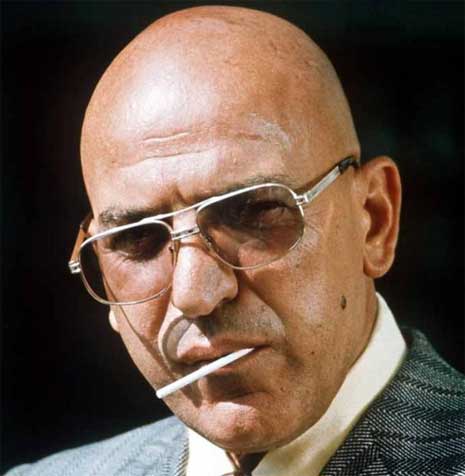
"I am handsome in a Telly Savalas way."
My Swing Doesn’t Suck (Men’s Grill Front Street)
I love golf. To describe me as a golf fanatic would not be a push. I am handsome in a Telly Savalas way, an excellent dresser and love the nightlife that Front Street has to offer. I am very much like Joe Namath. I went to college in Houston , am a successful financial consultant, married and I have a beautiful newborn child. I made the decision to accompany a sandbagging scumbag/hack contractor for a swing analysis. While there, I got my own swing reviewed. I tend to be a long hitter and it only goes south after several Johnny Blacks or Arnold Palmers in styrafoam cups. The instructor in question reviewed my swing and told me to take a break from the game as Peyton Manning is doing and return in 5 years and start all over. I am devastated. I am fresh back from Naples, Florida coming off the Lynchie Tour only to hear that I suck!! I feel like Don Cornelius just before he pulled the trigger on his Saturday Night Special. Why am I taking this so personally?
•••••••••

Over the last three decades, America has become a country where the non-wealthy flatline and the rich grow richer. And that’s not just limited to money. As an article by Sabrina Tavernise in the New York Times points out, while the education gap between white blacks and whites has shrunk, the chasm between well-to-do and poor children has widened exponentially. Programs like the Harlem Children’s Zone are green shoots, but that type of intelligent investment in education is clearly the exception. Sadly, that gives sophists like Charles Murray (who’s quoted in the piece) more opportunity for their ugly politics.
It reminds that having access to endless information doesn’t mean we’re using that opportunity correctly. What should be a great equalizer–cheap technology connecting us to each other and everything we would ever need to know–creates only a wider gap if only the few are being nurtured to use these tools in an empowering way. From the Times article:
“Now, in analyses of long-term data published in recent months, researchers are finding that while the achievement gap between white and black students has narrowed significantly over the past few decades, the gap between rich and poor students has grown substantially during the same period.
‘We have moved from a society in the 1950s and 1960s, in which race was more consequential than family income, to one today in which family income appears more determinative of educational success than race,’ said Sean F. Reardon, a Stanford University sociologist. Professor Reardon is the author of a study that found that the gap in standardized test scores between affluent and low-income students had grown by about 40 percent since the 1960s, and is now double the testing gap between blacks and whites.
In another study, by researchers from the University of Michigan, the imbalance between rich and poor children in college completion — the single most important predictor of success in the work force — has grown by about 50 percent since the late 1980s.
The changes are tectonic, a result of social and economic processes unfolding over many decades. The data from most of these studies end in 2007 and 2008, before the recession’s full impact was felt. Researchers said that based on experiences during past recessions, the recent downturn was likely to have aggravated the trend.
‘With income declines more severe in the lower brackets, there’s a good chance the recession may have widened the gap,’ Professor Reardon said.”
Tags: Sabrina Tavernise
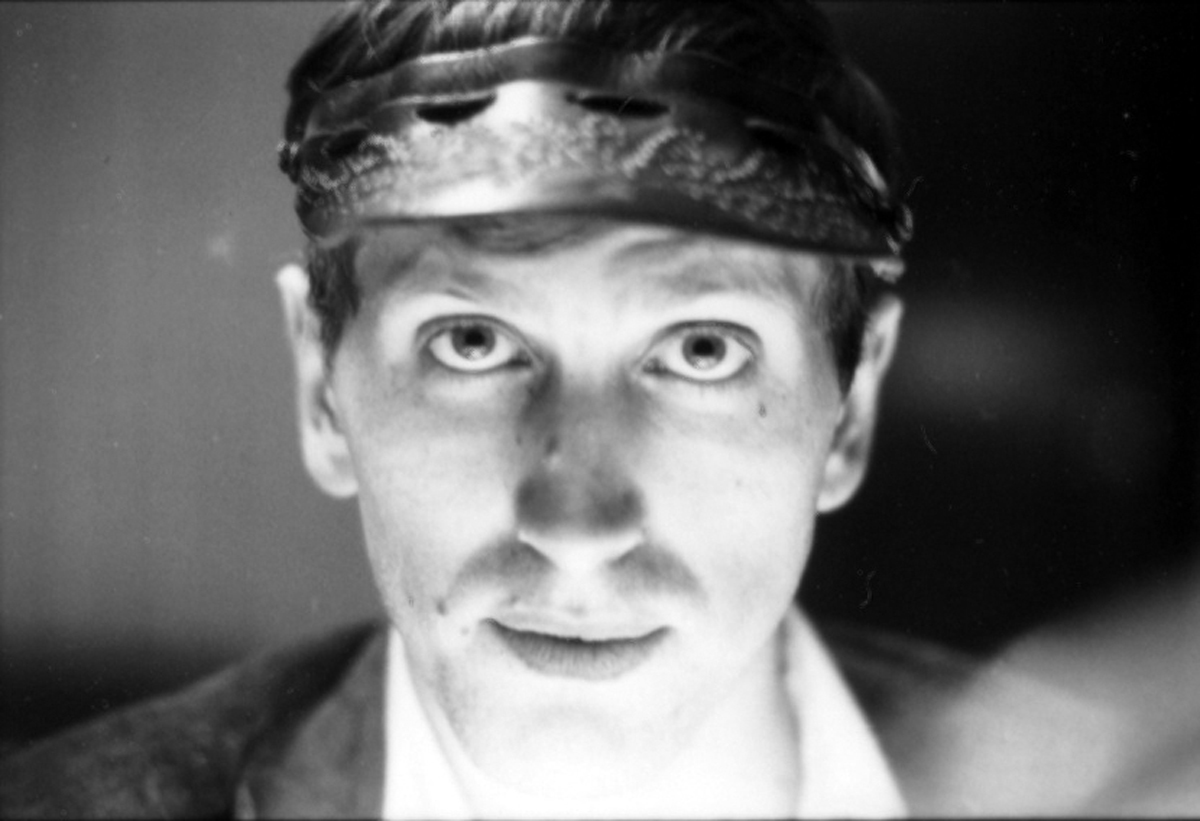
The Cold War gave genuine reason to be paranoid, though Bobby Fischer didn’t need any help. During his world-stopping chess series with champion Boris Spassky in 1972, the challenger showed up late, protested camera positions, etc. And his mental problems only increased with age. It’s a shame that two of the great American heroes of the 20th century–Fischer and Charles Lindbergh–ended up so damaged, so disgraced. They each had the world and let it spin from their grasp.
From coverage of the torturous, tremendous event in the July 24, 1972 Sports Illustrated: “Once after a visit to Caracas, Bobby Fischer remarked on how the dictator of Venezuela had chickened out. ‘He won’t go any place unless he has about six cars in front of him and six cars behind,” said the chess star, ‘because he’s afraid of being assassinated.’
‘Well, he nearly was,’ a companion explained. ‘His car was blown up and some people were killed.’
‘Yeah,’ said Fischer, ‘but he wasn’t in it. And ever since he’s been chicken. What kind of dictator is that?’
A similar question piqued watchers of Fischer himself last week—including the champion, Boris Spassky, who must have felt as though, like Alice, he had fallen down a rabbit’s hole. The American challenger for the world chess title had as usual been throwing his weight around dictatorially in Reykjavik, Iceland, site of his match with Spassky. But Fischer had also lost two straight games—the first one by an utterly out-of-character blunder and the second one by forfeit when he refused to leave his hotel room. What kind of chess genius was that?
A doomed one, suggested Icelandic Grandmaster Fridrik Olafsson right after Thursday’s forfeit. Fischer’s whole life is based on the assumption that he is the most compelling figure in chess. He had confidently predicted that this match would make his preeminence official. But his resistance to the playing conditions—he had demanded the removal of all movie cameras covering the match, saying they disturbed him even if he could not see or hear them—might well have cost him any chance at the title. If his intransigence should scuttle this $300,000 showdown, predicted Olafsson, “it would not be forgotten for a long time. And by then I’m afraid Bobby will be destroyed.” It conjured up thoughts of Paul Morphy, the 19th century American chess genius, who quit playing seriously at age 22 on obscure grounds of injured pride.
The comparison with Morphy underestimates Fischer’s redoubtable conception of himself. But hardly anyone in Iceland, the U.S. or the rest of the world seemed to care much if Fischer came to such an end last week. The press and public opinion, which had previously celebrated his eccentricities, were fed up.
The week before, Fischer had arrived in Iceland at the eleventh hour, his holdout of that moment having ended when an English millionaire sweetened the pot by $125,000, but now he seemed lost once more. John Lennon and Yoko Ono had recently sent him a chess set with white-on-white squares, all white pieces and this inscription: ‘For playing as long as you can remember where all your pieces are.’ But Fischer seemed to see nothing but black pieces. He feuded with his aides. He had committed the dictator’s cardinal sin—loss of control.
By Sunday Fischer had tickets on an afternoon plane to New York and the championships seemed doomed, but at the last moment a new accommodation brought him to, the chessboard once again.”
Tags: Bobby Fischer, Boris Spassky

From Clare O’Connor’s new Fortune profile of Manoj Bhargava, the inscrutable force behind the 5 Hour Energy empire:
“Bhargava says he spent his 20s traveling between monasteries owned and tended by an ashram called Hanslok. He and his fellow disciples weren’t monks, exactly. ‘It’s the closest Western word,’ he says. ‘We didn’t have bowler haircuts or robes or bells.’ It was more like a commune, he says, but without the drugs. He did his share of chores, helped run a printing press and worked construction for the ashram. Bhargava claims he spent those 12 years trying to master one technique: the stilling of the mind, often through meditation. He still considers himself a member of the Hanslok order and spends an hour a day in his Farmington Hills basement in contemplative silence.
Bhargava would return to the U.S. periodically during his ashram years, working odd jobs before returning to India. For a few months he drove a yellow cab in New York. When he moved back from India for good, it was to help with the family plastics business at his parents’ urging. He spent the next decade dabbling in RV armrests and beachchair parts. He had no interest in plastics whatsoever but devoted himself to buying small, struggling regional outfits and turning them around. By 2001 Bhargava had expanded his Indiana PVC manufacturer from zero sales to $25 million (he eventually sold it to a private equity firm for $20 million in 2006). He decided to retire and moved to Michigan to be near his wife’s family. ‘Nobody moves on purpose to Detroit,’ he says. His retirement lasted two months. He knew from his plastics success that the chemicals industry was ripe for exploiting. ‘Chemicals are really simple,’ he says. ‘You mix a couple things together and sell it for more than the materials cost.’
Bhargava takes a shot of his creation every morning and another before his thrice-weekly tennis game. He shakes his head at the suggestion that taking shots infused with caffeine is at odds with his quest for inner stillness. ‘5-Hour Energy is not an energy drink, it’s a focus drink,’ he says, turning one of the pomegranate-flavor bottles around in his hands. ‘But we can’t say that. The FDA doesn’t like the word ‘focus.’ I have no idea why.'”
••••••••••
“Sleepy? Groggy? Dying for a nap?”
Tags: Clare O'Connor, Manoj Bhargava
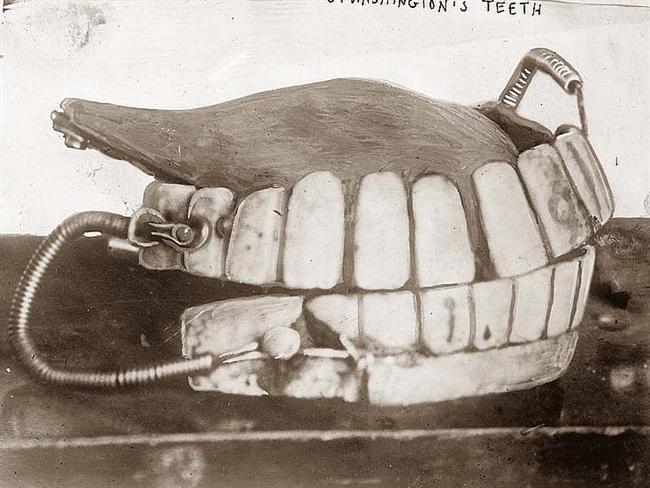
From a ridiculous story that never, ever happened, which actually ran in the March 24, 1856 Sentinel of Napoleon, Arkansas:
“We were shown by Dr. Legrader, a few days since, a most singular and remarkable head–that of Fouchee, a celebrated chief of the Creeks. The singularity of the head consists in two perfect mouths–a front and rear mouth, with a double set of masticators to each. It is a remarkable fact that it made no difference in his eating or feeding operations which mouth he used, as either answered the same purpose, but whenever he imbibed from the rear mouth, drunkenness ensued much sooner than if he had taken it by the front. Such a head is worthy of the study of anatomy of the medical faculty.”
Tags: Dr. Legrader, Fouchee

Fo shizzle.
Courtesy of Joe Pompeo in Capital New York:
“‘This detail is funny and irrelevant so I’ll retail it,’ he said. ‘I was in a meeting with President Obama not long ago, on foreign policy, that was off the record. One of the people was kind of hectoring about the fact of how much money we give to Egypt, to which the president replied, ‘True dat.”
The crowd erupted.
‘I thought, I will bet this is the first time that this has happened in any kind of briefing ever in the White House,’ said Remnick.”
Tags: Barack Obama, David Remnick, Joe Pompeo

This classic photo of daring Italian designer Elsa Schiaparelli modeling her Shoe Hat reveals a fashionista who was equally surrealist artist. From a May 17, 1937 Life magazine article about the designer outfitting the wife of former royalty:
“The sheer weight of pomp and ceremony has focused world interest on London where a shy Englishman and his proper English wife have been crowned rulers of the world’s greatest empire. But genuine human interest turned rather to Tours across the channel where a more romantic drama was enacted. Certainly the women of the world were little absorbed in the conventional satin gowns of England’s new queen. What Mrs. Wallis Warfield Simpson would wear, however, aroused their avid curiosity. Mrs. Simpson did not disappoint them. She ordered her gowns from Elsa Schiaparelli, maddest and most original of Paris couturières. With typical boldness, ‘Skap’ fashioned for the bride of the year a white dance frock with a daringly tight bodice and a bright red lobster stretched the length of the flaring skirt. On other dresses were button shaped like fish, chessmen, butterflies. The complete wardrobe of 17 ensembles cost Wallis Simpson an estimated $5,000.”
Tags: Elsa Schiaparelli
Three decades before Siri was able to respond to verbal cues and answer complex questions, just hearing a computer voice seemed impressive. George Plimpton for Intellivoice, 1982.
Tags: George Plimpton
Jesse Owens, great athlete and person, being interviewed in the U.S. directly after running all over Hitler’s sick politics in the 1936 Olympics in Berlin.
Tags: Jesse Owens
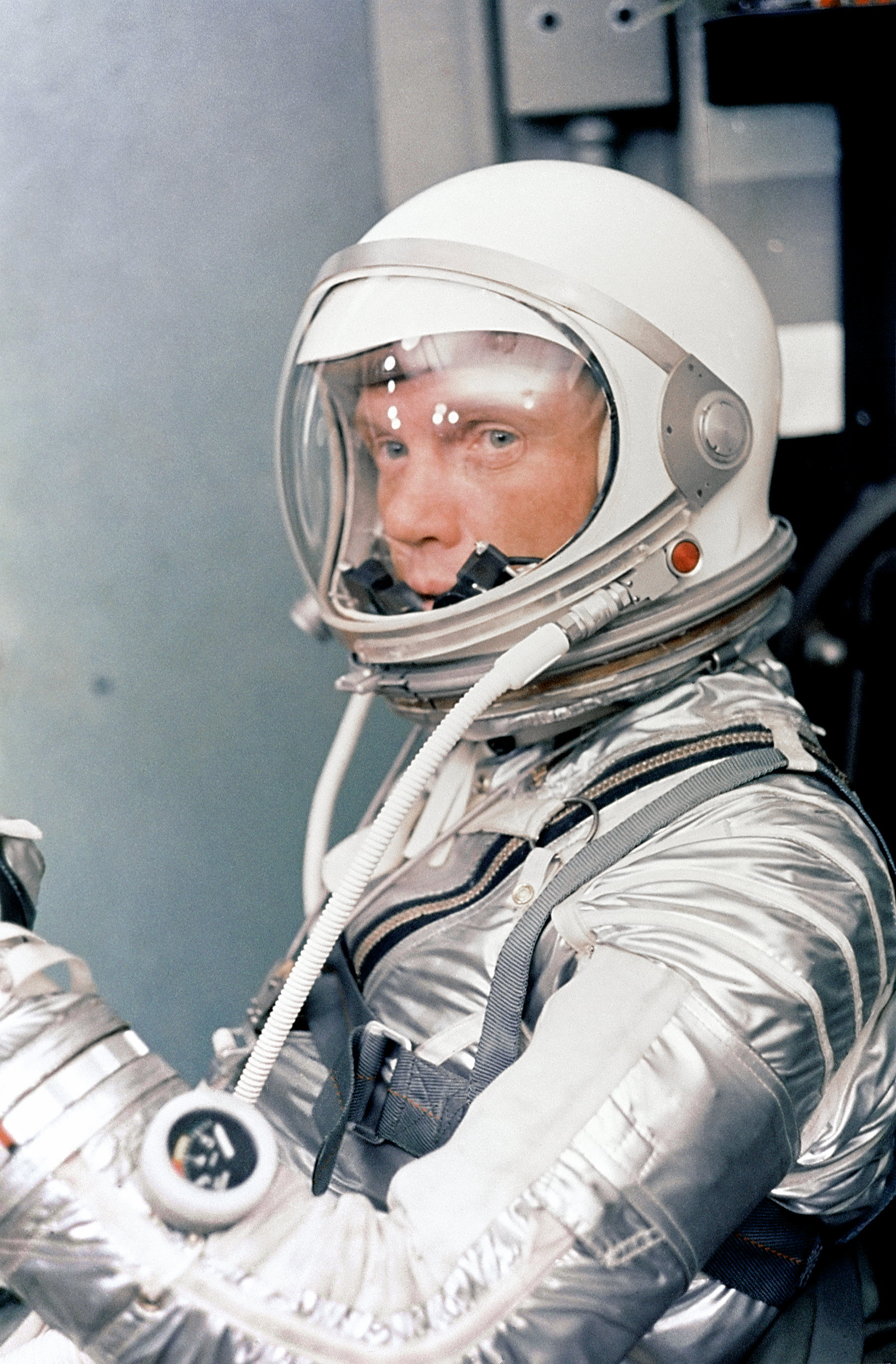
From a Gizmodo report about the NASA Biocapsule, a breakthrough that will allow for automatic diagnosis and time-release treatment of astronauts in space and, eventually, people on Earth:
“Picture this: An astronaut is going to Mars. The round-trip journey will take between two and three years. During that time, the astronaut will not have access to a doctor, and there’s a lot that can go wrong with the human body in space. So, prior to launch, the astronaut is implanted with a number of NASA Biocapsules. A very small incision is made in the astronaut’s skin for each Biocapsule (probably in the thigh), which is implanted subcutaneously. It’s outpatient surgery that requires only local anesthetic and a stitch or two to close the wound. But after it’s complete, the astronaut’s body is equipped to deal with a whole host of problems on its own.
One of the primary threats in space is exposure to high levels of radiation. When astronauts travel beyond Low Earth Orbit (i.e., to the Moon or Mars), they are at risk of acute radiation exposure from ‘solar particle events,’ sudden releases of intense radiation from the sun, which can damage bone marrow and wipe out someone’s immune system. That’s where the NASA Biocapsule kicks in: It could be filled with cells that sense the increased levels of radiation and automatically disperse medicine to help the body compensate.
This isn’t science fiction.”
••••••••••
 Bellflower
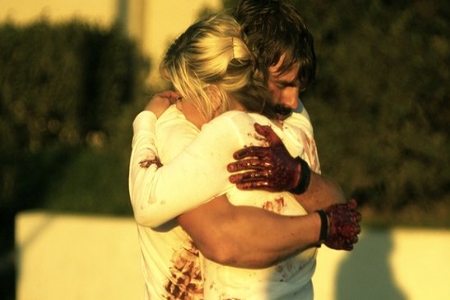
Woodrow and Milly most definitely do not meet cute. They come together as participants in a $50 bar bet to see who can devour the most live crickets at a beer-soaked Los Angeles dive. The couple then embarks on an impromptu road trip to Texas, where they egg each other on to do increasingly dangerous and disgusting things, getting off on a mutual adrenaline rush. Milly seems too aggressive for her new beau, but perhaps soft-spoken Woodrow is the one to watch. He and his slacker pal Aiden, both obsessed with Mad Max films, spend their days building weapons of mass destruction–flamethrowers and indestructible cars–just in case the apocalypse arrives. But when Woodrow and Milly have a bad breakup, the gamesmanship really begins between the two and the WMDs ensure that broken hearts will be joined by broken bones. At first blush debuting writer-director Evan Glodell might seem like Cronenberg divorced from social commentary, smashing together human flesh and metal machines merely for sensationalism. But there’s more here. Glodell may not be concerned with a sick society, but he’s very attuned to heartsickness and its combustible nature. Watch trailer.
••••••••••
Contagion
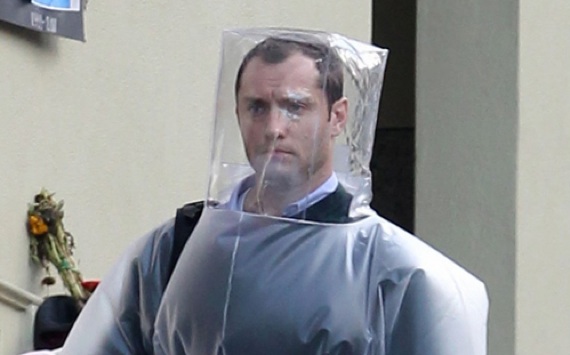
In our viral, interconnected age, when we fear the rapid spread of computer worms, toxic financial derivatives and lab-built bio-nightmares, Steven Soderbergh offers a timely blockbuster about a killer flu that is a shockingly straightforward medical procedural, one which makes only scant concessions to the usual standards of character-driven megaplex movies. The film follows a deadly bug that begins in Hong Kong and rapidly winds around the world after finding its patient zero: a traveling American businessperson (Gwyneth Paltrow). As the body count grows, we watch epidemiologists at the World Health Organization do their work, tracking the illness. Interesting that the main villain is a blogger (Jude Law) who is willing to spread disinformation for a profit. While it’s possible for hysteria to drive poor information online (see: immunizations, autism), the world of new media is mostly our ally. Think of the glacial initial response to AIDS, which was caused not only by politics but also by a lack of shared info, computer infrastructure and advanced statistical analysis. The tools Law’s character uses, which can rapidly disseminate information, are more likely to prevent an epidemic than abet one. Not everything that goes viral harms us. Watch trailer.
••••••••••
 Tuesday, After Christmas
Radu Muntean’s romantic drama about the dissolution of a marriage during a family’s seemingly happy holiday season is another example from the recent Romanian wave of stark, convincing dramas. Middle-aged banker Cristi (Dragos Bucur) is having an affair with a younger woman (Maria Popistasu), and we only learn subsequently that his mistress is also his daughter’s dentist. His lies mount, but Cristi still believes the duplicity is manageable. Right before Christmas, he suddenly realizes the situation is, in fact, untenable, and sheepishly tells his wife (Mirela Oprisor) that their marriage is over. It’s a shattering and impassioned climax, but the small, mundane moments before and after the fissure are just as impressive. As Muntean follows his principals through their workaday existences–running errands, eating meals–it becomes apparent that life is largely a number of seemingly unimportant details that collect and form and present us with a truth that we only, at most, suspected. Watch trailer.
Rob Malpage, the South African cinematographer who’s helped give Die Antwoord its spectacularly outré look, also directed this striking BMW spot.
Tags: Die Antwood, Rob Malpage

"I know I know." (Image by T bone.)
HELP student needs clean urine! will $$$$$$pay! – $100 (Chelsea)
i know i know……this is ridiculous….. but please hit me up if you can help
if morally unacceptable i understand…..however…..otherwise i could REALLY use you’re help
and I’ll be MORE than willing to return the favor $$$
(and explain the full situation)

I’ve posted before about Harald Haas, the Austrian software designer who is able to stream data using simple household light bulbs and lamps. More about Haas and his Li-Fi from Michael Watts in Wired UK:
“Using off-the-shelf electronics, he can stream videos using an ordinary light bulb fitted with signal-processing technology of his own design. The lamp shines directly on to a hole cut into the oblong box on which it sits. Inside this box is a receiver that converts the light signal into a high-speed data stream, and a transmitter that projects the data on to a screen as a short video. If Haas puts his hand in front of the lamp, excluding the light, the video stops.
Haas, 43, holds the chair of mobile communications at Edinburgh University’s Institute for Digital Communications. His demo is scientifically groundbreaking: it proves that large amounts of data, in multiple parallel streams, can be transferred using various forms of light (infrared, ultraviolet and visible). The technology, he says, has huge commercial potential. His device can be used with regular lighting and electronics — albeit reconfigured — and could transform the way we access everything from video to games, accelerating the speed of internet access by many hundreds of megabits. It could let us download movies from the lamps in our homes, read maps from streetlights and listen to music from illuminated billboards in the street.”
••••••••••
“We have 14 billion of these lightbulbs”:
Tags: Harald Haas, Michael Watts
Clement Greenberg not really getting Pop Art.
Tags: Clement Greenberg
The ability to repair a broken human bone within days is moving closer to reality, thanks to Fracture Putty. From Geek.com:
“Speeding up the time it takes to heal a broken bone is highly desirable, and a solution may be on the horizon. Research being carried out at the University of Georgia Regenerative Bioscience Center has helped create a new gel being referred to as Fracture Putty. It’s major benefit to those suffering broken bones is its ability to heal them in just a few days, or in the case of severe breaks, cut the healing time to weeks instead of months.
Fracture Putty has yet to be tested on humans, but it has already been proven to work in animals. The putty takes the form of a gel that gets injected into the broken bones. It then goes to work rapidly generating bone much faster than a body can achieve on its own.
The key to Fracture Putty is the use of mesenchymal stem cells that produce a protein key to bone generation. The cells survive long enough after injection into the patient to cause a rapid generation of new bone, thus healing it very quickly.
The time it takes to heal depends on the severity of the fracture, but in all cases it should speed up the process. In cases where complex or multiple bone fractures have a occurred, Fracture Putty could mean the difference between losing a limb and making a full recovery.”

"The poor wretches in the cells were chained by the neck to the bars of the grated windows."
A lot of people in the world are still treated horribly, but it was even worse in the past. An excerpt from a report about progress from the February 5, 1893 edition of the Brooklyn Daily Eagle:
“Men who have the honor and pleasure of attending a dancing party at the Flatbush lunatic asylum, where the agreeable company assembles for music, singing, dancing and social converse, can hardly conceive of the lunatic asylum of one hundred years ago. Bad as was the prison, the asylum was far worse. It was more hopeless, as the inmates were more helpless. In the middle ages the lunatics were supposed to be possessed of devils and all sorts of tortures were applied to them to oust the fiendish tenants of their bodies. As this belief in the supernatural cause of insanity gave way the maniac came to be regarded in the light of a savage wild beast. Before the establishment of asylums the insane were kept in cages in the market town. Their delusions were the subject of much amusement to the market folks and all kinds of plans were tried to cure them. One physician of Elizabeth’s day gravely recommended rotating cages, like those in which squirrels are confined, the idea being to shake the lunatic up so thoroughly as to stir his brains up, just as a clock is sometimes shaken to set it going.
When asylums were established at first they were merely huge cages, where those who were looked upon as human wild beasts were confined. Society’s idea then was confinement, just that and nothing more. The consequence was brutality and degradation so appalling that when the result of the parliamentary investigation was known in England in 1815 people deemed it hardly credible.

"I never saw nature subdued to such lowliness."
In Dr. Madden’s ‘Travels in Europe,’ is the following upon the subjects of asylums in Cairo, Egypt, as it was in 1840: ‘I was led from one passage to another, door after door was unbarred, the keeper armed himself with a kourbash, a whip with a thong of hippopotamus hide, and we at length got into the open court, round which the dungeons of the lunatics were situated. Some who were not violent were walking unfettered, but the poor wretches in the cells were chained by the neck to the bars of the grated windows. The keeper went round as he would in a menagerie of wild beasts, rattling the chain at the window to rouse the inmates and dragging them by it when they were tardy in approaching. One madman, who spat at me as I passed his cell, I saw the keeper pull by his chain and knock his head against the bars till blood issued from his nose. I forced him to desist. Each of them, as we passed, called out for food. I inquired about their allowance and to my horror I heard that there was none except what charitable people were pleased to afford them from day to day. It was now noon and they had no food from the preceding morning.
‘Two well dressed Turkish women brought in, while I was there, a large water melon and two cakes of bread. This was broken into pieces and thrown to the famished creatures. I never saw nature subdued to such lowliness. They devoured what they got like hungry tigers, some of them thrusting their tongues through the bars, others screaming for more bread. I sent for a few piastres’ worth of bread, dates and some milk. Its arrival was hailed with a yell of ecstasy that pierced the very soul. I thought they would have torn down the iron bars to get at the provisions, and in spite of the kourbash, their eagerness to get their portions rendered it a difficult matter to get our hands out of their clutches. It was humiliation to humanity to see these poor wretches tearing their food with their filthy fingers. Some of their nails were so long as to resemble the talons of a hawk.'”
Tags: Richard Robert Madden
Chuck Yeager never went to the moon, but he was pretty much father to all the astronauts. Perhaps the greatest pilot ever, the first one to ever break the sound barrier, the Colonel guested on What’s My Line? in 1964.
From a 1983 People account of Yeager’s greatest feat: “October 14, 1947. He is strapped inside an orange, needle-nosed firecracker with stubby, razor-thin wings, dangling nearly five miles above the rattlesnake ridges and skeletal Joshua trees of the California high desert. Around him gurgles an incipient hellfire of alcohol and liquid oxygen, just waiting to erupt. His right side hurts like a sumbitch: Two days ago, on a wild midnight horseback ride, he’d been thrown and sprung two ribs—all part of what author Tom Wolfe in his 1979 panegyric to the aces of aerospace, The Right Stuff, calls ‘the military tradition of Flying & Drinking and Drinking & Driving.’ No drinking today, but right quick now he’d be driving…
Straight toward the Barrier.
It hangs out there somewhere ahead: invisible, murderous—a zone of wild turbulence that can flip even the best-prepared aircraft into a wing-shredding spin. Already the Barrier has claimed the life of a top test pilot, Britain’s Geoffrey de Havilland, son of the famed aircraft designer. De Havilland’s DH-108 was hammered to bits, like a macerated moth, as it neared the Barrier.
Now it is Yeager’s turn to try. At 26,000 feet the B-29 mother ship goes into a shallow dive and unloads its ordnance. The firecracker with the man in its belly—known as the Bell X-1 but christened ‘Glamorous Glennis’ by its pilot—drops like a bomb. As Yeager lights off the four rocket chambers, fire leaps from the orange tail pipe, and the plane surges skyward into the sun.”
Tags: Chuck Yeager
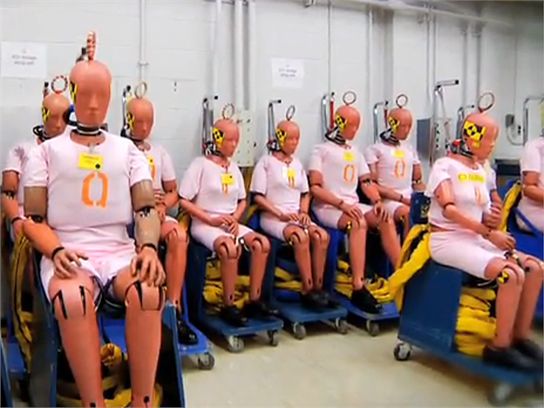
Shortcuts help but can they also hurt? Do we miss something fundamental by taking an abbreviated route, or does arriving at our destination sooner allow us to use the time more profitably? Here’s the thing: We’re going to find out the answer. Electrodes will be attached to our brains, pills will become available, genes will be modified. It’s closer than you might think. Are you prepared? The opening of “Zap Your Brain Into the Zone,” Sally Adee’s New Scientist account of her experimentation with brain enhancement:
“I’m close to tears behind my thin cover of sandbags as 20 screaming, masked men run towards me at full speed, strapped into suicide bomb vests and clutching rifles. For every one I manage to shoot dead, three new assailants pop up from nowhere. I’m clearly not shooting fast enough, and panic and incompetence are making me continually jam my rifle.
My salvation lies in the fact that my attackers are only a video, projected on screens to the front and sides. It’s the very simulation that trains US troops to take their first steps with a rifle, and everything about it has been engineered to feel like an overpowering assault. But I am failing miserably. In fact, I’m so demoralised that I’m tempted to put down the rifle and leave.
Then they put the electrodes on me.
I am in a lab in Carlsbad, California, in pursuit of an elusive mental state known as ‘flow’– that feeling of effortless concentration that characterises outstanding performance in all kinds of skills.
Flow has been maddeningly difficult to pin down, let alone harness, but a wealth of new technologies could soon allow us all to conjure up this state. The plan is to provide a short cut to virtuosity, slashing the amount of time it takes to master a new skill – be it tennis, playing the piano or marksmanship.” (Thanks Browser.)
Tags: Sally Adee