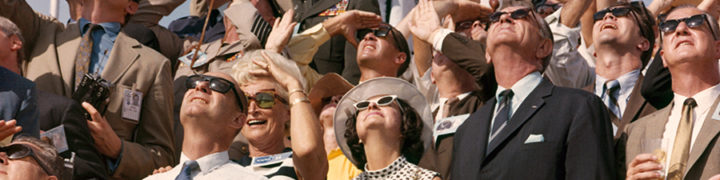
Filed under “Inexplicable”: The Pink Floyd performing the trippy “Apples and Oranges” for Dick Clark and the kids on American Bandstand in 1967. The host then engages Syd Barrett and the fellows in inane chatter as if they were Herman’s Hermits.

"Hunted and fished and raced cars and went to naked bars." (Image by Efloch.)
a mans fairy tale
Once upon a time, a Prince asked a beautiful Princess, “Will you marry me?” The Princess said, “No!!!” And the Prince lived happily ever after and rode motorcycles and banged skinny long-legged big-titted broads and hunted and fished and raced cars and went to naked bars and dated women half his age and drank whiskey, beer and Captain Morgan and never heard bitching and never paid child support or alimony and banged cheerleaders and kept his house and guns and ate spam and potato chips and beans and blew enormous farts and never got cheated on while he was at work and all his friends and family thought he was frikin cool as hell and he had tons of money in the bank and left the toilet seat up.
The end.

If I was asked to name a single recent book that best crystallizes the media-drenched world we live in today, the clever things we’ve done to ourselves and each other, the way the sun never sets nor rises anymore in our endless stream of flickering images, the way we’re smarter and dumber, closer together and further apart, I would choose Douglas Coupland’s Marshall McLuhan: You Know Nothing of My Work! That may seem like an odd thing to say about a book written about someone who died in 1980, but Coupland’s brilliant first chapter analyzes the contemporary media landscape with rare insight and then proceeds to march forward from McLuhan’s birth as the philosopher grows to understand the signs and symbols and links of a brave new world that was in its infancy (and still is). Coupland is mostly known for his fiction, and that’s a proper match for McLuhan, whose ideas were fantastic–they couldn’t be true, yet, more often then not, they were.
The 1962 McLuhan quote that Coupland uses at the book’s outset:
“The next medium, whatever it is–it may be the extension of consciousness–will include television as its content, not as its environment, and will transform television into an art form. A computer as a research and communication instrument could enhance retrieval, obsolesce mass library organization, retrieve the individual’s encyclopedic function and flip it into a private line to speedily tailored data of a saleable kind.”
••••••••••
“You know nothing of my work”:
Tags: Douglas Coupland, Marshall McLuhan

"She was touched by evil and no doubt knew it." (Image by Cmacauley.)
This classic photograph profiles arguably the greatest American short-story writer, Flannery O’Connor, in a happy moment with friends Robie Macauley and Arthur Koestler. O’Connor, who suffered from lupus, managed in her brief life to find all of the darkness of humanity in narrow strips of the South. How could someone whose illness made it necessary to live a sheltered life have such a deep understanding of terror? Did she herself possess the capacity for great evil, which remained dormant for reasons we can’t quite understand? From “Touched by Evil,” Joseph O’Neill’s excellent 2009 Atlantic consideration of O’Connor and her work:
“One problem with O’Connor the exegesist is that she narrows the scope of her work, even for Catholic readers. To decode her fiction for its doctrinal or supernatural content is to render it dreary, even false, because whatever her private purposes, O’Connor was above all faithful to a baleful comic vision derived, surely, from an ancient, artistically wholesome tradition of misanthropy. Nonetheless, a spiritual drama is playing out. Only it is not the one put forward by the self-explaining author, in which she figures as an onlooker occupying the high ground of piety. On the contrary, Flannery O’Connor’s criticism reveals her as scarily belonging to the low world she evokes. She was touched by evil and no doubt knew it. That is what makes her so wickedly good.”
Tags: Flannery O'Connor, Joseph O'Neill

More than anything else, George Butler and Charles Gaines’ 1977 pseudo-documentary, Pumping Iron, brought the appeal of muscle mass to America. A loose look inside the world of competitive bodybuilding starring a charismatic if Machiavellian Arnold Schwarzenegger, the film focused on Gold’s Gym in Venice Beach, which was ground zero for bicep building and steroid taking in the U.S. The original Gold’s is the focus of Paul Solotaroff’s new Men’s Journal article, “Muscle Beach and the Dawn of Huge.” The opening:
“Robby Robinson, a wedge of black marble, arrived in Venice Beach in 1975 with one oversize suitcase and seven dollars. That was every dime he had after quitting his job and selling everything of value but the trophies he’d won at bodybuilding shows in the Jim Crow South. He’d left behind a wife, three small children, and a certain localized fame as the best-ever body in the state of Florida, fronting 20-inch biceps, a 28-inch waist, and 205 pounds of peaked, freak muscle on his hourglass, 5-foot-8 frame. But if your dream back then was to make the cover of Muscle Builder and storm the palace of giants in your sport, there was one thing to do and one place to do it: Join Gold’s Gym in Venice Beach. With the ocean at its back, the sun through its skylights, and the biggest men on Earth trooping in by the dozen to bench 450 before breakfast, Gold’s was Camelot-by-the-shore. You felt its pull in your hypertrophied heart, deep in the belly of that reckless muscle.
Robinson, born and raised in the swamps of Tallahassee by an illiterate mother and a bootlegging father who later abandoned his 14 children, had a deep and perfectly rational terror of whites. Driving to shows in Mississippi and Georgia, he had seen the signs posted on rural light poles: niggers, don’t get caught here come sundown. But it was a letter from a white man that had brought him to Venice: a written invitation from no less than Joe Weider, the publisher of Muscle Builder, to come out and join his stable of champion bodies living and training large in Los Angeles. Robinson got off the plane expecting to be met by Weider, or if not by him then by Arnold Schwarzenegger, Weider’s Austrian prince, who’d won the title of Mr. Olympia five times running. Neither showed up, though, and after standing around for hours, Robinson tossed the suitcase over his shoulder and walked nine miles to Venice in platform heels.
He found a place to crash at a fellow bodybuilder’s and showed up at Gold’s one morning that spring, gawking through the window, dumbstruck. ‘I couldn’t bring myself to train. I was so in awe. All my idols in one room! Arnold and Denny Gable, Bob Birdsong and Franco Columbu; these beasts working out with no shirts or shoes and a crowd of people watching from the street.’ The gym manager, Ken Waller (a Mr. America and Mr. Universe), saw Robinson hulking by the door. ‘You,’ he growled. ‘You wanna train here? Fine: Come lift what we lift.’ He pointed to a pair of humongous dumbbells, 150-pounders with tapered grips. ‘Get down on that bench and give me 10,’ he said. ‘Otherwise, get the fuck out and stay out.’ Robinson, who’d built himself in backwoods gyms, had never seen dumbbells half so big. Somehow he got them onto his thighs, then, trembling, winched his back down on the bench. Each rep was a carnival of toil and pain, the weights teetering as they went up and ticked back down, the fibers of his mid-pecs shrieking. ‘I’ve no idea how I did that set,’ says Robinson, now 65 and still wondrously carved, his traps and triceps bulking through a linen shirt, his waistline waspish as ever. ‘But the adrenaline going through me then, that drive to be one of them — it was like a double shot of steroids and B-12.’ He fought the 10th rep up, screaming and twisting, then dropped the weights on the concrete floor. ‘You’re in,’ grunted Waller. ‘You’re one of us. Now go and give me a dead lift of 700.'”
••••••••••
“Can you believe how much I am in heaven?”
Tags: Arnold Schwarzenegger, Charles Gaines, George Butler, Paul Solotaroff, Robby Robinson
A prosthetic arm made of Legos.

From an NPR report by Howard Berkes about the recently deceased aerospace engineer Roger Boisjoly, who fought like mad but futilely to stop the launch of the doomed 1986 Challenger space shuttle:
‘The explosion of Challenger and the deaths of its crew, including Teacher-in Space Christa McAuliffe, traumatized the nation and left Boisjoly disabled by severe headaches, steeped in depression and unable to sleep. When I visited him at his Utah home in April of 1987, he was thin, tearful and tense. He huddled in the corner of a couch, his arms tightly folded on his chest. But he was ready to speak publicly.
‘I’m very angry that nobody listened,’ Boisjoly told me. And he asked himself, he said, if he could have done anything different. But then a flash of certainty returned.
‘We were talking to the right people,’ he said. ‘We were talking to the people who had the power to stop that launch.'”
••••••••••
“Obviously a major malfunction”:

The Catholic Church is run by old white men who lead materially comfortable existences, and the television industry is only slightly better. Maybe that’s why the TV analysis of the birth control brouhaha–even in many liberal outlets–has been so skewed in favor of the Catholic Church. I continually hear how President Obama is going to pay a price for the conflict, and I just don’t see it. Poll results from the New York Times:
“On contraceptive coverage, 65 percent of voters in the poll said they supported the Obama administration’s requirement that health insurance plans cover the cost of birth control, and nearly as many, 59 percent, said the health insurance plans of religiously affiliated employers should cover the cost of birth control.
In a compromise last week, President Obama said insurance companies could shoulder the costs required under the new federal health care law, but the Conference of Catholic Bishops and other religious leaders continue to oppose the rule.
A majority of Catholic voters in the poll were at odds with the church’s official stance, agreeing with most other voters that religiously affiliated employers should offer health insurance that provides contraception. Jennifer Davison, 38, a Catholic from Lomita, Calif., agrees with the federal requirement. ‘My opinion is that it is a personal issue rather than a religious issue,’ she said in a follow-up interview.”
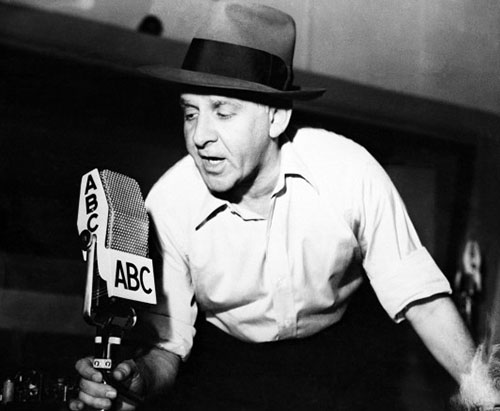
Walter Winchell wielded a fearsome power from the 1930s through the 1950s, via his newspaper gossip column and radio show, and often used his influence poorly and viciously. He was immensely famous during his prime and nearly completely forgotten by his death in 1972. Winchell appeared on What’s My Line? in 1952. At the 18-minute mark.
Dick Cavett recalled spending an evening with the late-life Winchell, in the New York Times: “Winchell had fear-induced influence most everywhere, and in his heyday had acquired from his cop friends the sort of official police car radio forbidden to ordinary citizens, allowing him to habitually cruise the night and, upon hearing of a crime in progress, speed there for a column item.
‘They never give me a ticket for speeding,’ he boasted to me. A moment too soon. Minutes later, we got one. Somewhere on lower Park Avenue, while responding to a police call.
To his chagrin, my companion of the night’s name and visage cut no ice with the young rookie.
Despite the lives he purportedly ruined when at his peak — careers made and destroyed with a few words in his column or on the air — it was still sad to see the old lion now toothless. At one precinct we’d visited earlier, where in better times a chorus of, ‘Hey, Walter!’ would have gone up, only an ancient sergeant knew who he was. Walter devoured the scrap.
To the young cops, he was a cipher. My knowledge of his past victims — said, even, to include a few suicides — at that moment didn’t matter. That evening, as I accompanied him on his nightly prowl, I felt like quietly paying someone to say, ‘Hey, ain’t you Walter Winchell?’
And then it happened. At one precinct, a young gendarme with a good ear suddenly said, ‘Hey, Pop. Say something else! Talk again.’ He did.
‘Oh, my God! I know who you are!’
W.W. beamed.
‘You’re the announcer on The Untouchables!
Someone had been smart enough to cast the uniquely voiced Winchell — an excellent actor with, once, the most instantly identified voice in America — to narrate The Untouchables, the then popular T.V. crime series about the tough cop Eliot Ness in Prohibition Chicago. Winchell’s staccato delivery was perfect for the intermittent narration bits.
At the moment of recognition, Winchell grinned and seemed to visibly drop 20 years. To almost anyone not a victim of his past predations, it would be hard not to be moved by that moment, seeing the effect on the old fellow. Fame — though vastly reduced to a voice-over — had administered a craved injection.
Delighted, the former giant grabbed a pen and, eagerly and gratefully — although it had not been sought — signed an autograph.”
Tags: Dick Cavett, Walter Winchell
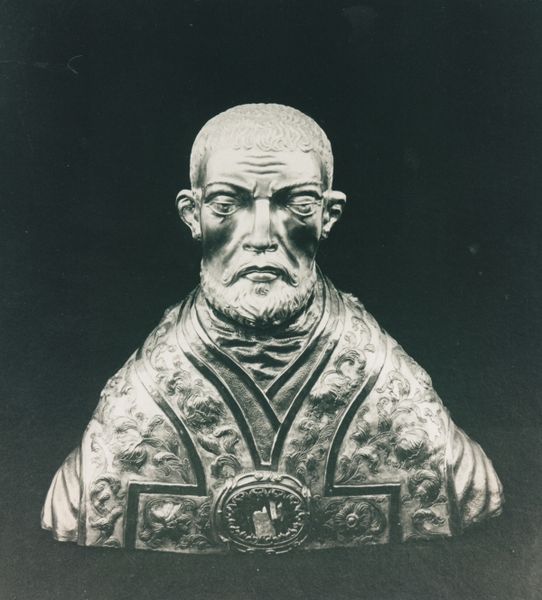
"That respectable old bachelor bishop was beaten with clubs and beheaded in the third century."
An excerpt from a February 14, 1884 Brooklyn Daily Eagle article which explains how the sweet but heathen holiday of Valentine’s Day became associated with a Christian saint, and recalls the (thankfully) lost art of the insulting “comic valentine”:
“Like many other Ecclesiastical festivals which have assumed strange social transformations, St. Valentine’s Day is chiefly remarkable for having no personal connection with St. Valentine. That respectable old bachelor bishop was beaten with clubs and beheaded in the third century, and if he is conscious of his subsequent fame he must enjoy the reflection that no author as well as no saint ever achieved such a posthumous reputation for what he had nothing to do with. The feasts of Pan and Juno, held in February, upon which among other hilarious ceremonies the names of pretty Roman girls of the period were put in a box, and the Roman dudes and greenhorns and old bachelors drew them out, suggested to the ever appropriate instincts of the Christian clergy the holding of them on a saint’s day. Poor old Bishop Valentine was in partibus at the time and had been canonized as well as clubbed and decapitated also at the middle of February, and his commemoration would do very well for the heathen pastime, which would thus acquire a Christian aroma. That is the process by which, in modern times, he has become the patron saint of postmen.
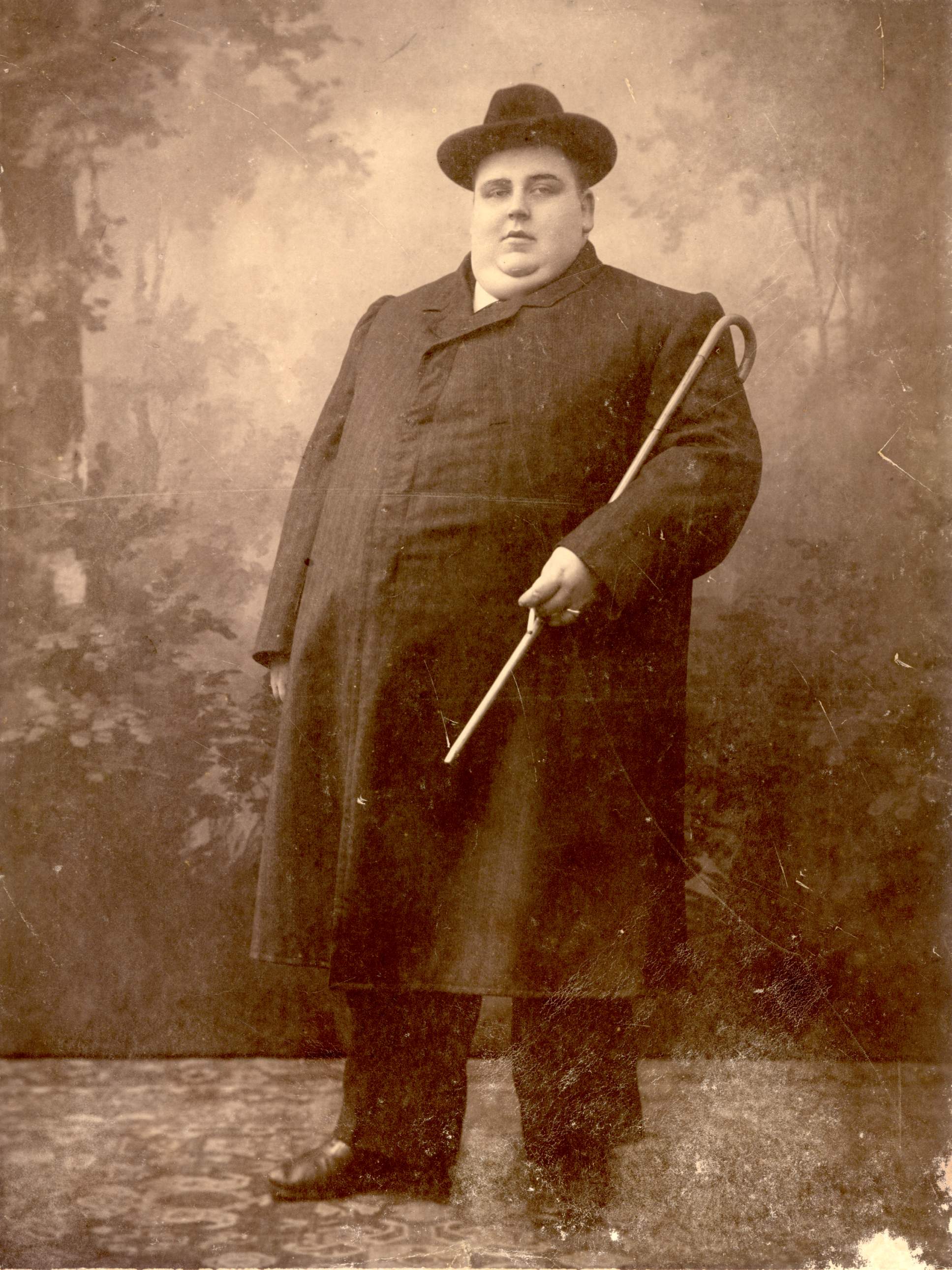
"For the antiquated maid or corpulent bachelor, the valentine is scarcely a thing of beauty or joy."
St. Valentine’s Day has become chiefly a joy to children, who await eagerly the postman’s coming with the welcome letters which are pictures as well. For the antiquated maid or corpulent bachelor, the valentine is scarcely a thing of beauty or joy. The meanness that would gratify its petty spite by anonymous insults through the mail on this literary deluge day would not deserve mention if this morning’s newspapers had not contained a curious and perhaps fatal caution against indulging one’s venom through the valentine. Two women in Philadelphia, who were next door neighbors, mutually accused each other of sending an insulting valentine. Each denied the charge, but neither accepted the denial. They fell upon each other tooth and nail, and, not content with bites and scratches, while one ran for a hatchet the other shot her with a pistol.”
Tags: St. Valentine
Supercomputer created at Nagasaki University with basic parts for $420,000, as opposed to the usual billion-dollar price tag.
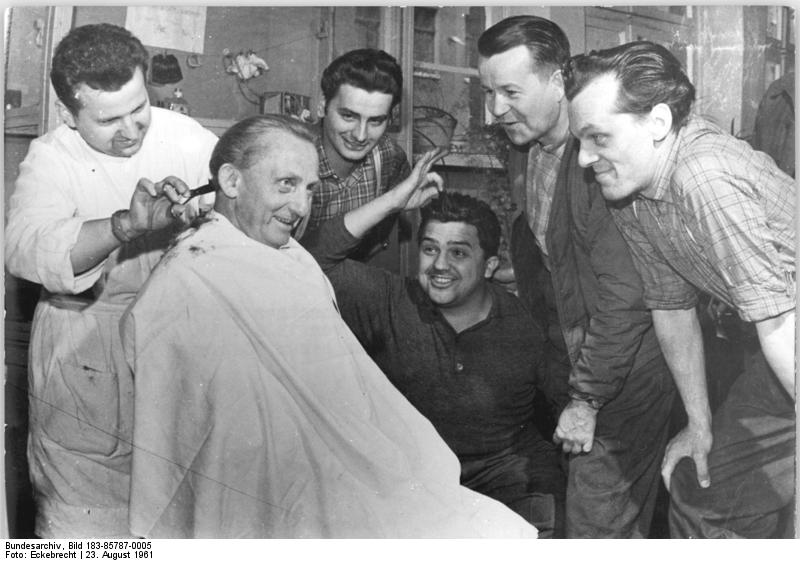
haircut
Looking for a haircut by a professional nude hairdresser. Pls provide picture and your rate. Your location. Thanks.

From an American Interest interview with Libertarian thinker Peter Thiel (who was also profiled by George Packer in the New Yorker last year):
“Francis Fukuyama: I’d like to begin by asking you about a point you made about there being certain liberal and conservative blind spots about America. What did you mean by that?
Peter Thiel: On the surface, one of the debates we have is that people on the Left, especially the Occupy Wall Street movement, focus on income and wealth inequality issues—the 99 percent versus the 1 percent. It’s evident that both forms of inequality have escalated at a very high rate. Probably from 1973 to today, they have gone up faster than they did in the 19th century. The rapid rise in inequality has been an issue that the Right has not been willing to engage. It tends either to say it’s not true or that it doesn’t matter. That’s a very strange blind spot. Obviously if you extrapolate an exponential function it can go a lot further. We’re now at an extreme comparable to 1913 or 1928; on a worldwide basis we’ve probably surpassed the 1913 highs and are closer to 1789 levels.
In the history of the modern world, inequality has only been ended through communist revolution, war or deflationary economic collapse. It’s a disturbing question which of these three is going to happen today, or if there’s a fourth way out. On the Right, the Tea Party argument has been about government corruption—not ethical violations necessarily, but inefficiency, that government can’t do anything right and wastes money. I believe that is true, and that this problem has gotten dramatically worse. There are ways that the government is working far less well than it used to. Just outside my office is the Golden Gate Bridge. It was built under FDR’s Administration in the 1930s in about three and a half years. They’re currently building an access highway on one of the tunnels that feeds into the bridge, and it will take at least six years to complete.” (Thanks Browser.)
Tags: Francis Fukuyama, Peter Thiel
Two videos of Ronald Reagan, who twisted and gyrated plenty while in Hollywood, asserting his right-wing philosophy during the 1960s.
Reagan denounces hippies at UC Berkeley, 1966:
Reagan and RFK play defense over Vietnam, 1967:
Tags: Ronald Reagan

Slate has republished “The Mystery of the Millionaire Metaphysician,” a 2001 Lingua Franca article by James Ryerson about his detective work into a shadowy, deep-pocketed benefactor of traditional metaphysics. The opening:
“In June 2000, the philosopher Dean Zimmerman moved from the University of Notre Dame to Syracuse University with his wife and three kids, only to see their new house catch fire the day they moved in. Much of what they owned was destroyed. ‘We were out of the house for six months,’ he recalls. ‘It was a miserable experience.’
The week after the fire, Zimmerman got a fortune cookie at a Chinese restaurant that brought encouraging news: ‘You will move to a wonderful new home within the year,’ it read. Zimmerman, a metaphysician with side interests in resurrection and divine eternity, was heartened by the prophecy. And when he returned to the restaurant three months later, his second fortune was equally promising: ‘A way out of a financial mess is discovered as if by magic!’
The next day Zimmerman received a letter from the A.M. Monius Institute. Printed on official-looking stationery and signed by the institute’s director, Netzin Steklis, the letter offered Zimmerman a ‘generous’ sum of money to review a sixty-page work of metaphysics titled ‘Coming to Understanding.’ As the letter explained, the institute “exists for the primary purpose of disseminating the work ‘Coming to Understanding’ and encouraging its critical review and improvement.’ For Zimmerman’s philosophical services, the institute was prepared to pay him the astronomical fee of twelve thousand U.S. dollars.” (Thanks Longform.)
Tags: Dean Zimmerman, James Ryerson
DARPA’s LS3 (Legged Squat Support System) bot can carry 100 pounds of equipment. Burros are screwed.
From DARPA: “Today’s dismounted warfighter can be saddled with more than 100 pounds of gear, resulting in physical strain, fatigue, and degraded performance. To help alleviate the impact of excess weight on troops, DARPA is developing a highly mobile, semi-autonomous four-legged robot, the Legged Squad Support System (LS3). LS3 includes onboard sensors to perceive obstacles in its environment and path-planning capabilities to avoid them. The LS3 platform is designed with the squad in mind and is therefore significantly quieter, faster and has a much higher carrying capacity for longer mission durations than DARPA’s earlier mobility technology demonstrator BigDog. The LS3 prototype recently completed its first outdoor assessment, demonstrating mobility by climbing and descending a hill and exercising its perception and autonomous follow-the-leader capabilities.”

While Newt Gingrich and others seem determined to turn the moon into a strip mall, a lunar Levittown of sorts may be feasible soon thanks to a quartet of USC professors and their plan for “contour construction.” From Tim Maly at Fast Company:
“First, you solve the material transport problem by making the moon base out of the moon itself. Second, you mitigate the ‘humans are expensive’ problem by keeping them on the ground until the last minute–you use robots to build the base. Recently, USC Professors Behrokh Khoshnevis (Engineering), Anders Carlson (Architecture), Neil Leach (Architecture), and Madhu Thangavelu (Astronautics) completed their first research visualization for a system to do exactly that.
Using a technique called contour crafting, they propose sending robots to seed the surface of the moon with the basic infrastructure for a moon base (landing pads, roads, hangars, etc.). Once the construction is completed, human crew could lift off and move into their new home.”
••••••••••
A house printed in a day:
Tags: Anders Carlson, Behrokh Khoshnevis, Madhu Thangavelu, Neil Leach, Tim Maly

This classic photograph, taken by Michael A. Wesner, is the best visual record extant of Siamese twins Millie and Christine McCoy, who were best know during their era as the sideshow act, “The Two-Headed Nightingale.” The daughters of slaves who were sold to and kidnapped by a series of carny men, they were popular stage attractions until their deaths in 1912. From “A Double Headed Woman” an 1881 article about the clever women in the Brooklyn Daily Eagle:
“They call her the ‘two-headed woman.’ She is at Bunell’s new museum. There are two heads, two necks, and two shoulders, and two sets of upper and lower limbs, but just below the shoulders the two bodies are joined. Mentally, two; physically, one. She can’t see herself–that is, they can’t see each other–because the backs of their heads almost touch. They sing and dance well. She was talking to herself–that is, the two mouths were engaged in speaking–behind the scenes, when the Eagle reporter entered yesterday, and one of her was gently tapping her foot on the floor.
‘How do you do?’
‘I am well,’ said one head.
‘First rate,’ said the other.
‘And what is your name?’
‘I’m Millie,’ muttered one.
‘And I’m Christine,’ murmured the other.
‘Could Millie feel well and Christine the opposite?’
‘Bet your–‘
‘Millie!’
‘You see,’ said Millie, as she gracefully plied her fan, ‘we generally feel the same.’
Indeed!
‘Touch me on the foot a certain number of times,’ said Millie, ‘and then Christine will tell you how often you did it.’
The reporter touched the foot four times and then Millie, with a ripple of laughter asked:
‘How often, Christine?’
‘Four times, Millie dear,’ was the reply.
‘Below the point where the juncture occurs,’ said Christine, ‘we both feel alike. But you could touch me on the cheek a certain number of times and Millie would know nothing about it.’
‘Do your thoughts run in the same direction?’
‘Not always,’ said Millie, ‘Now I might think a man was perfectly horrid, and Christine might think he was simply charming. ‘
‘And yet,’ jocosely remarked the reporter, ‘you couldn’t settle the question by a little run-in, as it were?
‘For a very good reason,’ said Millie. ‘Because if Christine is hurt below the point where we are united, I am hurt also.’
‘Does Millie do the eating for both?’
‘Not at all. We generally eat at the same time.”
‘And while Millie might relish a beef steak for supper, Christine might fancy a reed bird or a prairie chicken?”
‘That might be the case, although, as a rule, we both eat the same things.
‘But you order supper for two?’
‘Yes,’
‘And one person eats it?’
‘Cert.’
‘How old are you?’
‘We are 30, and we were born in Virginia.’
‘Since then, I presume, you have traveled around the world?’
‘Pretty nearly,’ was the reply from both, and then she arose from her seat and walked to the stage, where she sang a duet.”

Gary Cooper on What’s My Line?, in 1959, seven years after perhaps his greatest career highlight, High Noon. The ending of that film, with Marshal Will Kane discarding and stomping on his badge, angered John Wayne terribly. Wayne, like a lot of conservative reactionaries and law-and-order stalwarts, didn’t lead quite the simple, pure life he liked to pretend he did. A great star, but complex.
Tags: Gary Cooper
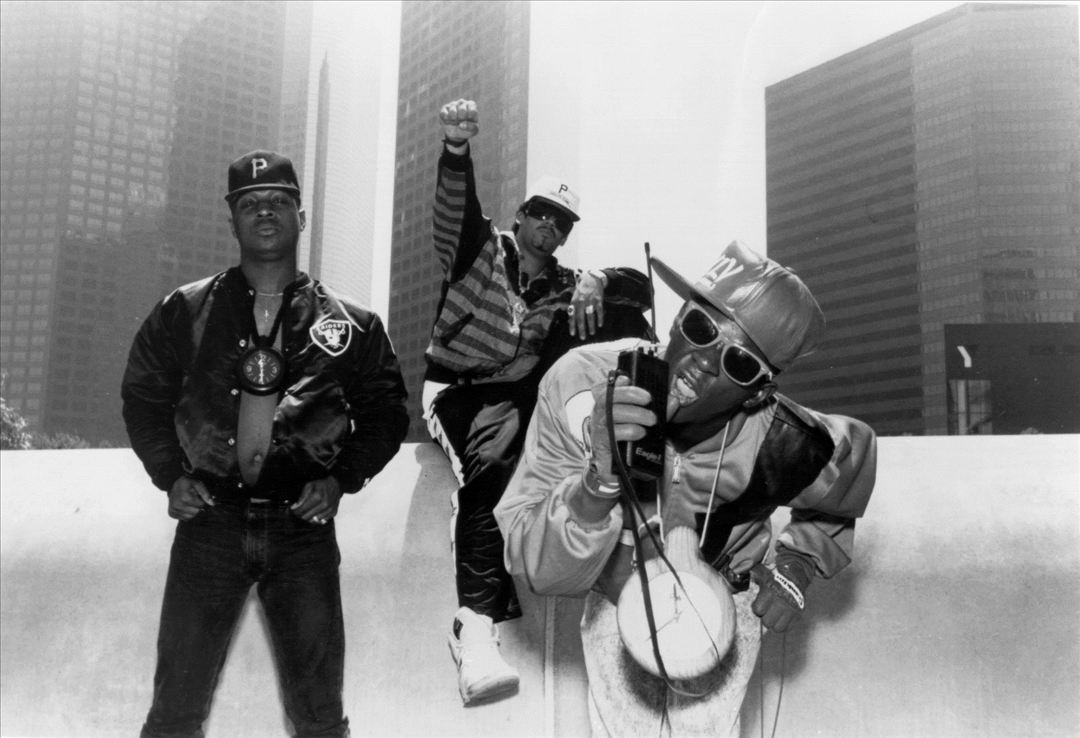
I still think the high point of rap occurred in 1988, with Public Enemy’s “Don’t Believe the Hype.” Like a boombox full of Malcolm X exploding in your ear.
Tags: Public Enemy
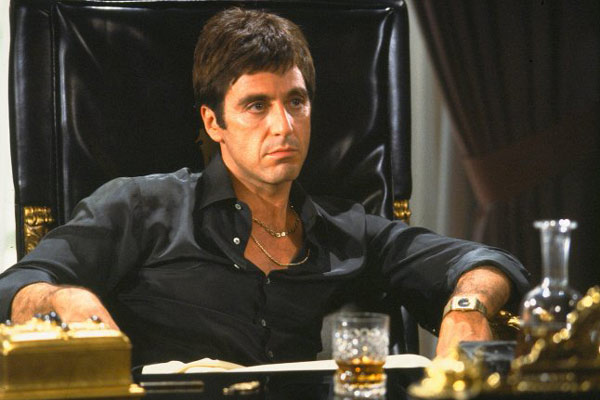
"Where are you getting this shit?"
I hate my drug dealer (Brooklyn)
I wish I never fucking met you. When I went to buy from you the first time, I couldn’t believe how cheap your prices were and how you were willing to meet anywhere, anytime. This is surely a bust, I thought. At least another rip-off maybe. But, no. You’re always up, willing to meet and in supply with low prices. Where are you getting this shit? Don’t you have a life? You’re ruining mine.

I don’t think corporations have necessarily entered into a certain and permanent decline as information technology expert Venkat Rao does in “A Brief History of the Corporation: 1600 to 2100,” but I really enjoyed his essay. I always like thinking about things building up or falling apart–stasis isn’t that interesting. The opening of Rao’s work:
“On 8 June, a Scottish banker named Alexander Fordyce shorted the collapsing Company’s shares in the London markets. But a momentary bounce-back in the stock ruined his plans, and he skipped town leaving £550,000 in debt. Much of this was owed to the Ayr Bank, which imploded. In less than three weeks, another 30 banks collapsed across Europe, bringing trade to a standstill. On July 15, the directors of the Company applied to the Bank of England for a £400,000 loan. Two weeks later, they wanted another £300,000. By August, the directors wanted a £1 million bailout. The news began leaking out and seemingly contrite executives, running from angry shareholders, faced furious Parliament members. By January, the terms of a comprehensive bailout were worked out, and the British government inserted its czars into the Company’s management to ensure compliance with its terms.
If this sounds eerily familiar, it shouldn’t. The year was 1772, exactly 239 years ago today, the apogee of power for the corporation as a business construct. The company was the British East India company (EIC). The bubble that burst was the East India Bubble. Between the founding of the EIC in 1600 and the post-subprime world of 2011, the idea of the corporation was born, matured, over-extended, reined-in, refined, patched, updated, over-extended again, propped-up and finally widely declared to be obsolete. Between 2011 and 2100, it will decline — hopefully gracefully — into a well-behaved retiree on the economic scene.
In its 400+ year history, the corporation has achieved extraordinary things, cutting around-the-world travel time from years to less than a day, putting a computer on every desk, a toilet in every home (nearly) and a cellphone within reach of every human. It even put a man on the Moon and kinda-sorta cured AIDS.
So it is a sort of grim privilege for the generations living today to watch the slow demise of such a spectacularly effective intellectual construct. The Age of Corporations is coming to an end. The traditional corporation won’t vanish, but it will cease to be the center of gravity of economic life in another generation or two. They will live on as religious institutions do today, as weakened ghosts of more vital institutions from centuries ago.
It is not yet time for the obituary (and that time may never come), but the sun is certainly setting on the Golden Age of corporations. It is time to review the memoirs of the corporation as an idea, and contemplate a post-corporate future framed by its gradual withdrawal from the center stage of the world’s economic affairs.” (Thanks TETW.)
Tags: Venkat Rao
Ultra-realistic skin that may be making its way into films and video games, created by computer-graphics researcher Jorge Jimenez. (Thanks Gizmag.)
Tags: Jorge Jimenez

Bee Tracker is not a career path I was aware of until reading an article in the September 15, 1900 Brooklyn Daily Eagle, which was originally published in the New Orleans Times-Democrat. An excerpt:
“‘Talk about your queer trades,’ said a man from Texas, ‘what do you think of bee tracking as a means of making a living? I know several professional bee trackers who have never done anything else in their lives, and their skill is something almost incredible. What is the work like, do you ask? Well, I’ll explain. Down in Bee County, in my state, where some of the greatest apiaries in the world are located, all honey is graded and marked according to the bloom from which it was obtained. For example, you may have your choice of cotton blossoms, wild clover, horse mint and several other brands, each distinct in flavor. This seems mysterious to a stranger, because the bees range wild over miles of countryside; but it was discovered long ago that the colony from each hive or cluster of hives always draws its sweets from some one particular flower and religiously shuns the others. At the beginning of the honey making season the proprietor of a bee farm wants to know, of course, how much of each flavor he is going to have, as a basis for calculations; so he sets a tracker to work. The tracker, who is always a native Mexican, mounts his tough little bronco, rides over to a row of hives, waits until a big, healthy looking bee emerges, and, when it flies away on its daily quest, he gallops along in its wake. Often the feeding ground is miles distant, and the bee takes anything but a bee line. On the contrary, it makes long detours, frisks and frolics through gardens, loafs in shady groves and has a good time generally; but it is the rarest thing in the world for it to shake off its ‘shadow.’ How the Mexican manages to keep it in sight and distinguish it from other bees it meets en route I have never been able to understand. The business seems actually to develop a special faculty. When the bee finally reaches its destination the tracker makes a mental note of the variety of flower and then returns home. Next day he verifies his observations by following another honey gatherer, and then labels the hive and proceeds to the next one. When his task is done the apiary man knows exactly what he can depend on in the several flavors. The trackers are well paid–enough to let them loaf between seasons.”

Social theorist Charles Murray has repugnant politics, but the very progressive Nick Kristoff is able to find common ground with him on an aspect of poverty. That’s why I like Kristoff so much: He doesn’t care about sides, only solutions. The opening of “The White Underclass” in the New York Times:
“Persistent poverty is America’s great moral challenge, but it’s far more than that.
As a practical matter, we can’t solve educational problems, health care costs, government spending or economic competitiveness so long as a chunk of our population is locked in an underclass. Historically, ‘underclass’ has often been considered to be a euphemism for race, but increasingly it includes elements of the white working class as well.
That’s the backdrop for the uproar over Charles Murray’s latest book, Coming Apart. Murray critically examines family breakdown among working-class whites and the decline in what he sees as traditional values of diligence.
Liberals have mostly denounced the book, and I, too, disagree with important parts of it. But he’s right to highlight social dimensions of the crisis among low-skilled white workers.
My touchstone is my beloved hometown of Yamhill, Ore., population about 925 on a good day. We Americans think of our rural American heartland as a lovely pastoral backdrop, but these days some marginally employed white families in places like Yamhill seem to be replicating the pathologies that have devastated many African-American families over the last generation or two.”
Tags: Charles Murray, Nick Kristoff