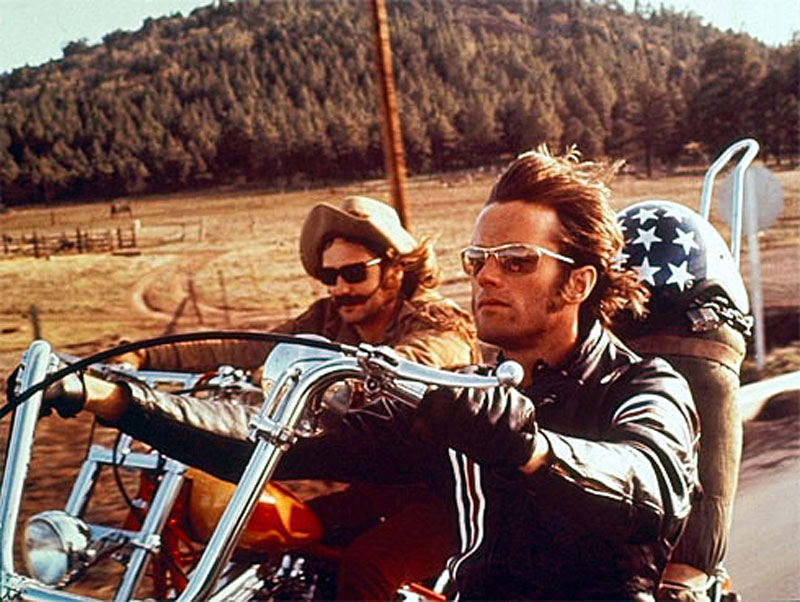
My favorite era of film runs from Easy Rider to The Man Who Fell To Earth, nearly a decade when auteurs were preeminent in Hollywood. So, my least favorite movies (though I recognize they aren’t bad movies) are Jaws and Star Wars, the blockbusters that marginalized personal films, that made the auteur the exception as opposed to the rule, that led to the dumbing down of not only mass movies but B films as well. For every Tarantino or Coen brother now, there are many Michael Bays. Not that Bay isn’t an auteur in his own way, but his vision is global and post-literate, democratic, yes, but only insofar as he seeks to titillate large audiences long enough to pick their pockets. His crass vision is particular to him not because of some great talent but because he’s the one who currently has control over the special-effects crews. It’s spectacle without a soul.

At Grantland, Andy Greenwald makes a compelling case that TV, which exploited the yawning opening in the auteur market, giving us brilliant, visionary shows like The Sopranos, The Wire, Mad Men, Breaking Bad, Curb Your Enthusiasm and Louie, among others, during a relatively short span, has likewise made a fatal shift toward the blockbuster. An excerpt:

“In a conversation last summer, Shawn Ryan, himself the creator of one of the Golden Age’s finer scriptures, The Shield, pegged the end of the era to the fall 2010 premiere of The Walking Dead. Not as any referendum on the zombie show’s quality but more of what it signified: by tripling the potential audience for a cable show and by doing so with genre spectacle, The Walking Dead was television’s Jaws moment. Like the flowering of American film in the ’70s, TV’s Golden Age was the product of new companies (or, in this case, channels) empowering creators because they didn’t know what else to do. The blockbuster success of The Walking Dead — along with Game of Thrones and True Blood — provided a way out, or at least around, the complicated power dynamic of the omnipotent showrunner. Vampires and dragons are, after all, far more dependable draws than David Simon’s cantankerous take on the social safety net. (To my mind, the Golden Age was also sunk by the rise of prestige simulacra, hollow shows like The Killing and Hell on Wheels that ganked the ponderous pacing and adult themes of contemporary critical darlings without any of the singular wit or perspective.)”

Tags:

I’m always stunned that water technology hasn’t grown more sophisticated, that we haven’t figured out a better way–or several. What economics are working against securing our most necessary solution? The opening of Karen DeYoung’s recent Washington Post report about the fears U.S. Intelligence experts have about water access being used as a weapon:

“Fresh-water shortages and more droughts and floods will increase the likelihood that water will be used as a weapon between states or to further terrorist aims in key strategic areas, including the Middle East, South Asia and North Africa, a U.S. intelligence assessment released Thursday said.

Although ‘water-related state conflict’ is unlikely in the next 10 years, the assessment said, continued shortages after that might begin to affect U.S. national security interests.

The assessment is drawn from a classified National Intelligence Estimate distributed to policymakers in October. Although the unclassified version does not mention problems in specific countries, it describes “strategically important water basins” tied to rivers in several regions. These include the Nile, which runs through 10 countries in central and northeastern Africa before traveling through Egypt into the Mediterranean Sea; the Tigris-Euphrates in Turkey, Syria and Iraq; the Jordan, long the subject of dispute among Israel, Jordan and the Palestinians; and the Indus, whose catchment area includes Afghanistan, Pakistan, India and Tibet.

‘As water problems become more acute, the likelihood . . . is that states will use them as leverage,’ said a senior U.S. intelligence official who briefed reporters on the condition of anonymity. As the midpoint of the century nears, he said, there is an increasing likelihood that water will be ‘potentially used as a weapon, where one state denies access to another.'”

••••••••••

“Either you bring the water to L.A., or you bring L.A. to the water”:

Read also:

Tags:

Some search-engine keyphrases bringing traffic to Afflictor this week:

Afflictor: Believing that Playboy spreads will change if the GOP comes to power. (Image by Heather Katsoulis.)

  • Dick Teresi doesn’t think it’s easy to tell when someone is dead.
  • Ezra Klein suggests that American Presidents can’t really sell a message.

Tattoo my face on your back – $100

This is a very odd posting, but one of my life goals is to have my face tattooed on someone’s back. I will pay for the tattoo as well as $100 to anyone who will do this. Happy to send over a pic – hit me up.

No one fully knows how our technological revolution will change the landscape of higher education, but it’s clear that things will be different in the coming decades. Perhaps markedly different. Sebastian Thrun departed from a tenured position at Stanford to become a Google fellow and to begin the online university Udacity. If all attempts to alter higher learning are this intelligent and enlightened, we will be very blessed. The opening of Steven Leckert’s new Wired article about the technologist’s experiment, in which the author enrolls in a Thrun class:

Stanford doesn’t want me. I can say that because it’s a documented fact: I was once denied admission in writing. I took my last math class back in high school. Which probably explains why this quiz on how to get a computer to calculate an ideal itinerary is making my brain hurt. I’m staring at a crude map of Romania on my MacBook. Twenty cities are connected in a network of straight black lines. My goal is to determine the best route from Arad to Bucharest. A handful of search algorithms with names like breadth-first, depth-first, uniform-cost, and A* can be used. Each employs a different strategy for scanning the map and considering various paths. I’ve never heard of these algorithms or considered how a computer determines a route. But I’ll learn, because despite the utter lack of qualifications I just mentioned, I’m enrolled in CS221: Introduction to Artificial Intelligence, a graduate- level course taught by Stanford professors Sebastian Thrun and Peter Norvig.

Last fall, the university in the heart of Silicon Valley did something it had never done before: It opened up three classes, including CS221, to anyone with a web connection. Lectures and assignments—the same ones administered in the regular on-campus class—would be posted and auto-graded online each week. Midterms and finals would have strict deadlines. Stanford wouldn’t issue course credit to the non-matriculated students. But at the end of the term, students who completed a course would be awarded an official Statement of Accomplishment.

People around the world have gone crazy for this opportunity. Fully two-thirds of my 160,000 classmates live outside the US. There are students in 190 countries—from India and South Korea to New Zealand and the Republic of Azerbaijan. More than 100 volunteers have signed up to translate the lectures into 44 languages, including Bengali. In Iran, where YouTube is blocked, one student cloned the CS221 class website and—with the professors’ permission—began reposting the video files for 1,000 students.”

••••••••••

 Thrun talking self-driving cars:

Tags: ,

From the January 8, 1897 edition of the Brooklyn Daily Eagle:

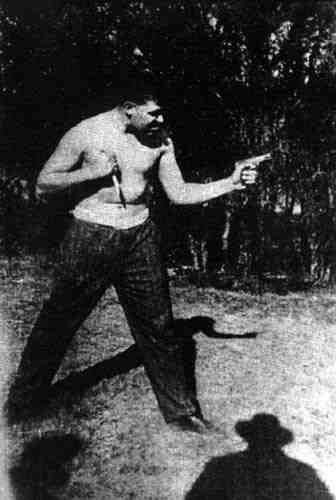
“Mrs. Kate Brennan of 416 East Sixteenth Street, New York, last night narrowly escaped having her throat cut with a huge carving knife by her son, Matthew, a hunchback. The latter demanded money for liquor and when his request was refused he attacked his mother. The opportune arrival of another son saved Mrs. Brennan from being killed. The hunchback had to be bound to a bed. He cut his brother severely before the knife could be taken away from him. He was sent to the workhouse for six months this morning.”

Tags: ,

Rare Buckminster Fuller interview from some sort of 1980s parapsychology talk show. Odd.

Tags: , ,

It’s tough to imagine consumer electronics that grew faster than the Walkman or iPod or iPhone, but according to one study none of them can compare to the much-derided boom box, which saturated American culture at a blinding rate. From Alexis Madrigal in the Atlantic:

“When we think about the great consumer electronics technologies of our time, the cellular phone probably springs to mind. If we go farther back, perhaps we’d pick the color television or the digital camera. But none of those products were adopted as fast by the American people as the boom box.

That factoid is a sidenote in a 2011 paper that I stumbled on from the Journal of Management and Marketing Research. Author Tarique Hossain included data from the Consumer Electronics Manufacturing Association on the ‘observed penetration rate at the end of the 7th year’ for all the technologies listed above. Hossain’s data didn’t include the starting years for these seven-year periods, but I’m assuming they mark the introduction of the boom box in the mid-1970s. That would mean that by the early 1980s, more than 60 percent of American households owned some kind of portable cassette player with speakers attached to it. “

Tags: ,

Martha Marcy May Marlene
In the early scenes of Sean Durkin’s excellent character study, troubled Martha (Elizabeth Olsen) flees the acreage of an upstate New York polyamory cult with a Manson-ish penchant for home invasion. She makes a halting, reluctant call to her estranged sister and soon she’s ensconced in a secure, well-appointed Connecticut home. But there is no safety for Martha now. What she’s running from is no scarier than what she’s internalized, as the past and present bleed together in her mind, constantly battling for dominion over her.

Cult leader Patrick (John Hawkes) gives his acolytes a new name (or two or three) that’s similar to their old one, initially distancing them ever so slightly from their identities. It’s just the beginning of the process. In due time, Martha, now Marcy May, is drugged, sexually assaulted, trained to act deferential to men and made to participate in burglaries and the initiation of other new women. Her ego is broken down over the course of her neverending indoctrination and then rebuilt according to the needs of the cult.

What the cult often needs in addition to obedience is cash, hence the endless string of home break-ins. One such robbery goes awry and results in a brutal murder, an act which leads to Martha ultimately absconding from the commune, carrying with her all the shattered pieces of herself. But there’s little her sister or brother-in-law can do since she speaks of the cult to no one, isn’t even present enough to know that she needs to be deprogrammed.

After the murder that stunned Martha, she speaks of her battered conscience to another woman in the cult. Her fellow member, still a true believer, rationalizes what’s occurred, insisting that the murder of an innocent man wasn’t so heinous. “We’re never really dead or alive,” the woman says, “He’s still existing…it’s just in a parallel time.” The idea that chronology is fallacy is nonsense when applied this way, but it can be true of psychology.• Watch trailer.

••••••••••

Recent films I liked now on home video:

Tags: , ,

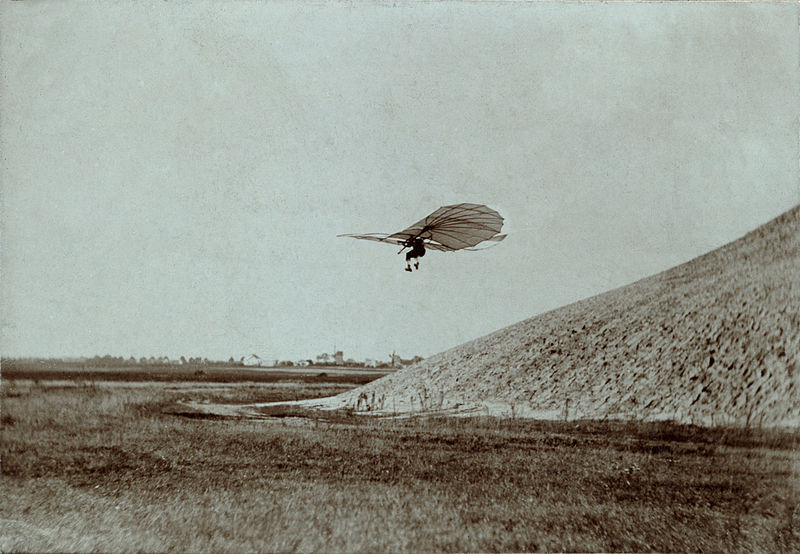
Otto Lilienthal meets with success, 1895.

When your last words are “sacrifices must be made,” you probably led an adventuresome and abbreviated life. Such was the case of German aviation pioneer Otto Lilienthal, who is captured in mid-flight in the above 1895 classic photograph. Lilienthal, known as the “Glider King,” lived his life in the service of popularizing humans conquering the sky, successfully demonstrating heavier-than-air flight by leaping from crafts of his own creation from an artificial mountain he built in Berlin. Lilienthal delivered his notable final words in 1896, after he crashed to the ground when his apparatus stalled. The aviator had somehow escaped serious danger prior to this fateful flight. A note about him from the July 26, 1894 Brooklyn Daily Eagle:

“THE FLYING MAN IS NOT HURT–Berlin–There is not truth to the story that a serious accident has occurred to Otto Lilienthal, the famous flying man, whose development of flying machines, with birds as his models, has been watched with interest the world over. Lilienthal was experimenting with one of his machines. He sustained a slight fall, but was entirely uninjured and the machine was only slightly damaged.”

The aftermath of Lilienthal’s fatal final crash, 1896.

Tags:

The opening of “Operation Midnight Climax,” Troy Hooper’s San Francisco Weekly story about CIA experiments with LSD in the 1950s-60s, in which Americans in the Bay Area and New York were unwittingly dosed with the hallucinogenic:

It’s been over 50 years, but Wayne Ritchie says he can still remember how it felt to be dosed with acid.

He was drinking bourbon and soda with other federal officers at a holiday party in 1957 at the U.S. Post Office Building on Seventh and Mission streets. They were cracking jokes and swapping stories when, suddenly, the room began to spin. The red and green lights on the Christmas tree in the corner spiraled wildly. Ritchie’s body temperature rose. His gaze fixed on the dizzying colors around him.

The deputy U.S. marshal excused himself and went upstairs to his office, where he sat down and drank a glass of water. He needed to compose himself. But instead he came unglued. Ritchie feared the other marshals didn’t want him around anymore. Then he obsessed about the probation officers across the hall and how they didn’t like him, either.Everyone was out to get him. Ritchie felt he had to escape.

He fled to his apartment and sought comfort from his live-in girlfriend. It didn’t go as planned. His girlfriend was there, but an argument erupted. She told him she was growing tired of San Francisco and wanted to return to New York City. Ritchie couldn’t handle the situation. Frantic, he ran away again, this time to the Vagabond Bar where he threw back more bourbon and sodas. From there, he hit a few more bars, further cranking up his buzz. As he drank his way back to Seventh and Mission, Ritchie concocted a plan that would change his life.” (Thanks Browser.)

Tags: ,

James Day talking to sci-fi legend Ray Bradbury in Los Angeles, 1974.

Tags: ,

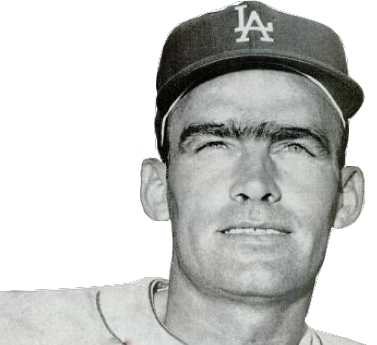
There are few things that make less sense to me than Forbes’ valuations of company worth. Case in point: the Los Angeles Dodgers. In 2011, Forbes values the legendary baseball club, which had awful ownership, at $800 million. Just a year later, it’s clear the team will be sold for somewhere between $1.2 and $1.5 billion, which obviously is a whole different plane. Forbes can’t argue that buyers are bidding with their hearts rather than their heads, that the sale price and the value aren’t close, since Forbes values the Dodgers in 2012 at $1.4 billion. I know good ownership means a great deal, but those numbers don’t compute. Yes, the Angels new TV deal portends well for their L.A. counterparts, but shouldn’t Forbes be able to predict that market?

Right now, the New York Mets, another mismanaged team whose owners could be forced to sell, is valued by Forbes at $719 million. Does anyone really believe the franchise would be sold for less than twice that amount? It seems like the Forbes numbers exist in a vacuum, with little to do with reality.•

"LOL."

IT happened again (Pelham)

Another ex is getting married, thats the third one this year. I guess after me they just happy to have someone. If you are a chick and you want to get maried we should date. My rates are reasonable. LOL.

AT&T Labs has developed a new smart steering wheel, an intermediary step on the way to driverless cars. From Technology Review:

“Distracted driving kills an estimated 3,000 people yearly in the United States, triggering calls for bans on one of the causes, mobile phone use in vehicles. In response, the wireless industry is ramping up its anti-distraction efforts. Now, AT&T Labs is contributing with a vibrating steering wheel that promises to deliver navigation information to drivers more safely than on-screen instructions or turn-by-turn GPS commands.

In the prototype, a clockwise pattern of vibrations on the steering wheel means ‘turn right’; counterclockwise means ‘turn left.’ The wheel’s 20 actuators can fire off in any pattern. And while the initial focus has been on improving delivery of GPS navigation instructions, other applications are under development, such as notifying drivers if cars are in their blind spots. The technology underlying these tactile cues is known as haptics.

A study of the gadget in driving simulators, by AT&T Labs researchers and collaborators at Carnegie Mellon University, found that it provided clear benefits: participants’ eyes stayed on the road longer.”

A 1967 urban planning propaganda film touting I.M. Pei’s top-down vision for Oklahoma City’s downtown. Never fully realized, the project was something of a fiasco which resulted in the demolition of some really cool historic buildings. Even though contemporary China does it at will, imposing order from on high onto cities doesn’t really work in America. Sometimes viral is mistaken for toxic.

Tags:

In “Prisoner’s Dilemma,” a discursive, funny and sort of nutty Grantland article, stats guru Bill James explains why crowd decorum at baseball games has improved while inmate behavior in penitentiaries has deteriorated. An excerpt:

“In his 1929 book 20,000 Years in Sing Sing, Warden Lewis E. Lawes says that his young daughter, who was born inside the prison, knew all of the prisoners and was allowed to wander freely around the prison, with a few obvious out-of-bounds penalties. Think about what a different world that is from a modern prison. If I could divert your attention for just a second with a serious question: How did we slip backward like that? How did prisons become these violent hellholes that they now are, so that it is unimaginable to have an 8-year-old girl wandering the hallways of a maximum-security lockup?”

Read also:

Tags: ,

Robotic jellyfish, powered by hydrogen, can be used for underwater search and rescue. From the BBC: “The robot is powered by heat-producing chemical reactions between the oxygen and hydrogen in water and the platinum on its surface. The heat from the reactions is transferred to the artificial muscles of the robot, and reshapes them. This means Robojelly can regenerate fuel from its surroundings rather than running off an external power source or batteries.”

During the Great Recession, it’s become common knowledge that a leaner operation with fewer employees is more profitable. But what if that isn’t true, especially for large retailers? From Surowiecki:

“The big challenge for any retailer is to make sure that the people coming into the store actually buy stuff, and research suggests that not scrimping on payroll is crucial. In a study published at the Wharton School, Marshall Fisher, Jayanth Krishnan, and Serguei Netessine looked at detailed sales data from a retailer with more than five hundred stores, and found that every dollar in additional payroll led to somewhere between four and twenty-eight dollars in new sales. Stores that were understaffed to begin with benefitted more, stores that were close to fully staffed benefitted less, but, in all cases, spending more on workers led to higher sales. A study last year of a big apparel chain found that increasing the number of people working in stores led to a significant increase in sales at those stores.

The reasons for this aren’t hard to divine. As Fisher, Krishnan, and Netessine show, customers’ needs are pretty simple: they want to be able to find products, and helpful salespeople, easily; and they want to avoid long checkout lines. For a well-staffed store, that’s no problem, but if you don’t have enough people on the floor, or if they aren’t well trained, customers can easily lose patience. One of the biggest problems retailers have is what is called a ‘phantom stock-out.’ That’s when a product is in the store but can’t be found. Worker-friendly retailers with more employees have fewer phantom stock-outs, which leads to more sales. And happy workers tend to stick around, which saves the costs associated with employee turnover, like hiring and training.”

Tags: , , ,

Nuclear physicist Edward Teller was best known as the father of the hydrogen bomb and claimed to have no regrets about it. James Day interviewed the controversial scientist, 1974.

From Teller’s 2003 obit in the Stanford Report: “The model for the title character of Stanley Kubrick’s satirical film Dr. Strangelove, Teller became in the last half of his life the leading proponent of major weapons systems, the guiding inspiration for the Strategic Defense Initiative (‘Star Wars’) and an enthusiastic supporter of nuclear energy. He became arguably the most influential scientist of the Reagan Administration.”

Tags: ,

"These cranks pound and slap and otherwise punish their members."

Buried deep in the annals of theological history in the ass-stomping branch of Christianity described in the following article from the January 12, 1893 edition of the Brooklyn Daily Eagle:

“Kalamazoo, Mich.–The noisy Carterites still continue their disturbance at Coloma, and the forbearance of the community has been sadly taxed. Recently Carter promulgated an order from on high to the effect that a tenth of all the property of the members must be paid into his hands for the Lord. It is also said that Carter threatened to kill his wife if she did not obey him. One of the members is reported to have willed his property to Carter in trust for the Lord. He is an old man, and was knocked down and dragged around in order to see whether he could stand the Holy Grace test. These cranks pound and slap and otherwise punish their members, while making the nights and Sundays hideous with their yells and howls for mercy. The thumpings they give each other are for the purpose knocking out the devils, they claim. Not long ago one of the members died, it is said, from the effects of the pounding he received when he joined the Chosen Seven. Carter was given a coat of tar and feathers some weeks since and the citizens threatened not only to repeat the dose but to run his followers out of town.”

Tags:

Evgeny Morozov opines at Slate on computer-driven automatic journalism. An excerpt:

“Narrative Science is one of several companies developing automated journalism software. These startups work primarily in niche fields—sports, finance, real estate—in which news stories tend to follow the same pattern and revolve around statistics. Now they are entering the political reporting arena, too. A new service from Narrative Service generates articles about how the U.S. electoral race is reflected in social media, what issues and candidates are most and least discussed in a particular state or region, and similar topics. It can even incorporate quotes from the most popular and interesting tweets into the final article. Nothing covers Twitter better than the robots.

It’s easy to see why Narrative Science’s clients—the company says it has 30—find it useful. First of all, it’s much cheaper than paying full-time journalists who tend to get sick and demand respect. As reported in the New York Times last September, one of Narrative Science’s clients in the construction industry pays less than $10 per 500-word article—and there is no one to fret about the terrible working conditions. And that article takes only a second to compose. Not even Christopher Hitchens could beat that deadline. Second, Narrative Science promises to be more comprehensive—and objective—than any human reporter. Few journalists have the time to find, process, and analyze millions of tweets, but Narrative Science can do so easily and, more importantly, instantaneously. It doesn’t just aim to report fancy statistics—it attempts to understand what those numbers mean and communicate this significance to the reader. Would Narrative Science have unmasked the Watergate? Probably not. But then most news stories are easier to report and decipher.

Narrative Science’s founders claim that they simply want to help—not exterminate!—journalism, and they may very well be sincere. Reporters are likely to hate their guts, but some publishers, ever concerned with paying the bills, would surely embrace them with open arms. In the long run, however, the civic impact of such technologies—which are only in their infancy today—may be more problematic.” (Thanks Browser.)

••••••••••

Read more Evgeny Morozov posts:

Tags:

Jaguar likes to compliment well-heeled consumers, telling them that no machine could ever be a match for such special human specimens, that the Singularity will never arrive for those of a certain status. How irreplaceable you are. Actually the automaker thinks one machine is as superior as a human with a lot of money–the Jaguar. Campaign by Spark44.

"No experience neccessary." (Image by Angela George.)

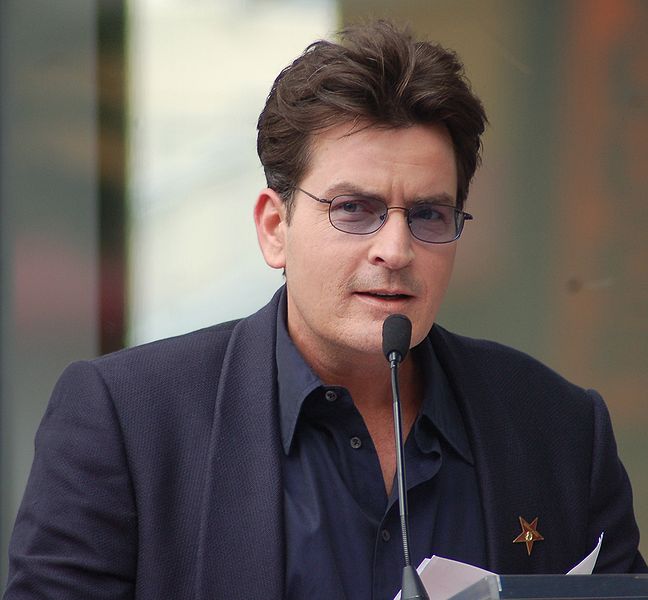
Partner Wanted For Celebrity Drug Rehab Center in Puerto Vallarta….. – $99999 (Partner Wanted For Celebrity Drug Rehab )

  • We operate a successful Drug Rehabilitation Center in Puerto Vallarta Mexico,
  • We want to expand the Business and are looking for a working partner.
  • We would like to find someone who will be involved in the day to day operations of the Rehab Center.
  • We can provide all the training you need so there is really no experience neccessary.
  • We would train you to be a Drug Rehabilitation Counsellor.


  • You must have a true desire to help other people, This is our principal requirement.
  • Your salary will be $8,000. per month ($80,000 per year).
  • We are only open ten months each year with two months vacation.
  • It’s a pretty good job and the benefits are that we spend most of our time in Paradise.
  • Your investment would be $100,000. which is for expansion and should be repaid within the first year.
  • You would also receive shares in the company and 20% of the profits.
  • This is a fairly low risk investment which should give you financial security and the peace of mind that you get from helping people become free of their addictions.

Our potential client market is always expanding as drugs continue to become more of a problem in society.

If you are interested please email me with your contact information and I will contact you with more details.

« Older entries § Newer entries »