The participant tries to usurp the routine and turn the workaday world into upsetting, absurd art. No discrete stage required, none wanted.
Ideas and technology and politics and journalism and history and humor and some other stuff.
The participant tries to usurp the routine and turn the workaday world into upsetting, absurd art. No discrete stage required, none wanted.
Amazon just acquired Kiva Systems robotics for $775 million to automate its warehouses. From IEEE Spectrum: “What does Kiva do that got Amazon so interested? Basically, Kiva has reinvented the centuries-old warehouse business, transforming distribution centers — which previously relied on slow-moving humans to walk around picking and packing goods — into a buzzing hive of superefficient, tireless robotic workers.”
Salon has a provocative excerpt from Dick Teresi’s new book, The Undead, which examines the difficulty of establishing when life has truly ceased, an issue that will only become infinitely thornier in the coming decades. The opening of “The Evolution of Death“:
“Michael DeVita of the University of Pittsburgh recalls making the rounds at a student teaching hospital with his interns in tow when he remembered that he had a patient upstairs who was near death. He sent a few of the young doctors ‘to check on Mr. Smith’ in Room 301 and to report back on whether he was dead yet. DeVita continued rounds with the remainder of the interns, but after some time had passed he wondered what happened to his emissaries of death. Trotting up to Mr. Smith’s room, he found them all paging through ‘The Washington Manual,’ the traditional handbook given to interns. But there is nothing in the manual that tells new doctors how to determine which patients are alive and which are dead.
Most of us would agree that King Tut and the other mummified ancient Egyptians are dead, and that you and I are alive. Somewhere in between these two states lies the moment of death. But where is that? The old standby — and not such a bad standard — is the stopping of the heart. But the stopping of a heart is anything but irreversible. We’ve seen hearts start up again on their own inside the body, outside the body, even in someone else’s body. Christian Barnard was the first to show us that a heart could stop in one body and be fired up in another. Due to the mountain of evidence to the contrary, it is comical to consider that “brain death” marks the moment of legal death in all fifty states.
The search for the moment of death continues, though hampered by the considerable legal apparatus that insists that it has already been found.”
••••••••••
Bernie, reborn, doing conga:
Read also:
Tags: Dick Teresi, Michael DeVita
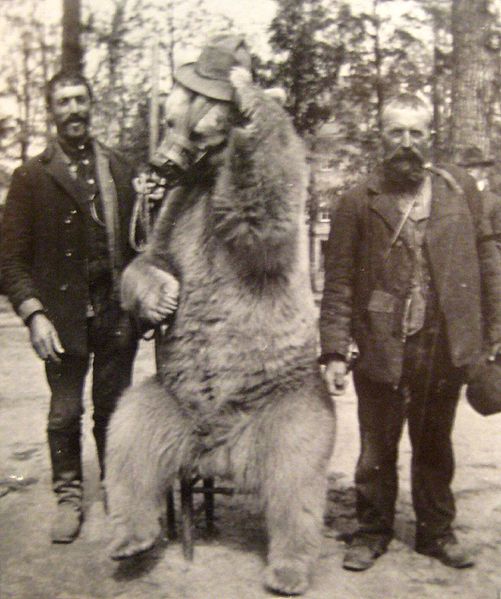
From a 1901 edition of the Philadelphia Press:
“Whiskers have been tabooed at the Zoo and a crusade against them will shortly be started. Within a few days the keepers will trim the bears’ mustaches, which have grown very long and annoy the beasts. The trimming of the bears’ whiskers will require several days, and is a dangerous operation. Each bear has to be cornered and placed in a cage so small that it is unable to move. The objectionable whiskers are then trimmed with long shears. The position of Zoo barber is not much sought after.”

The opening of “Versailles, the Would-Be Biggest House in America,” Susan Berfield’s stomach-turning yet amusing Businessweek account of David and Jackie Siegel’s attempt to realize their most ostentatious fantasies, to build a fun-house mirror version of the American Dream:
“‘Our house is like a convention center compared to the other houses here,’ says David Siegel as he drives through The Reserve at Lake Butler Sound, a gated community in Orlando. The other houses here are not small: They average 10,000 square feet. But his home will be nine times as large. Siegel stops at the end of Kirkstone Lane, pulls into his driveway, and looks around. ‘Next door is a 12,000-square-foot house. That could be my maid’s quarters one day,’ he says lightly. Then he catches himself and adds, ‘No, I shouldn’t say that, it sounds like an insult.’
David and Jackie Siegel’s dream house sits on 10 acres of lakefront property. Built on a custom-made hill, it occupies one full acre and, when finished, will be the largest home in the country. David, the founder and chief executive officer of the biggest private time-share company in the world, Westgate Resorts, designed it. He and Jackie named it Versailles.”
••••••••••
Lauren Greenfield’s documentary about the building of Versailles:
Tags: David Siegel, Jackie Siegel, Lauren Greenfield, Susan Berfield
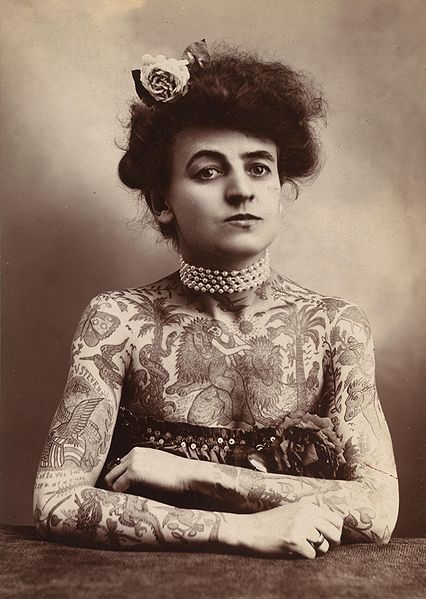
You pre-ordered the New iPad, you huge douche, but you do not yet have this: a body tattoo that vibrates when your phone receives a call or text. Nokia has patented just such an invention and hopes to market it in temporary and permanent options. From the BBC:
“Vibrating magnetic tattoos may one day be used to alert mobile phone users to phone calls and text messages if Nokia follows up a patent application.
The Finnish company has described the idea in a filing to the US Patent and Trademark Office.
It describes tattooing, stamping or spraying ‘ferromagnetic’ material onto a user’s skin and then pairing it with a mobile device.
It suggests different vibrations could be used to create a range of alerts.
The application lists Cambridge-based Zoran Radivojevic as the innovation’s lead inventor. It was filed last week and was brought to light by the Unwired View news site.
It suggests a magnetic marking could be attached to either a user’s arm, abdominal area, finger or fingernail.”
Tags: Zoran Radivojevic
Pretty rare Christopher Isherwood interview from 1974, with the writer in Los Angeles talking about the film version of Cabaret. James Day interviews.
Tags: Christopher Isherwood, James Day

"Violent images are used to illustrate commonplace events." (Image by Weegee.)
Even in the 1930s, Nathanael West could see that media was becoming mass, that the Horatio Alger myth, a cruel hoax that pretended the exception was the rule, would soon be oppressively disseminated to all of America–to all of the world. From “He Foresaw History,” David Ulin’s 1997 Los Angeles Times article about West’s prescient prose:
“For West, the very substance of modern life exists in the place where the medium and the audience connect. His aesthetic was firmly rooted in the idea of mass communication, which by the 1930s, he recognized, had begun to change American culture in unpredictable ways. It’s one of the things that sets him apart from his contemporaries, and, as such, may have contributed to his marginal status.
‘In the 1930s,’ Veitch suggests, ‘American literature was dominated by icons of the left, like Ma Joad, but West wrote against that; he was a writer on the left who didn’t write about leftist themes. Instead, he wrote about consumerism. He wrote about the America that was emerging, the America of mass culture. At a time when the left had disdain for that, West homed in on it, using cliches, cartoons, comics, Tin Pan Alley songs. Miss Lonelyhearts is a slap in the face to the left’s fascination with folk culture, as is The Day of the Locust.”
His take on popular culture emerges not just in the substance of his writing, but in its style. Miss Lonelyhearts, for instance, was conceived as a ‘novel in the form of a comic strip’; ‘I abandoned this idea,’ West wrote in 1933, ‘but retained some of the comic strip technique: Each chapter, instead of going forward in time, also goes backward, forward, up and down in space like a picture. Violent images are used to illustrate commonplace events.’
Writing in a voice that is deliberately flat, West portrays a newspaper advice columnist, caught between the cynicism of his editor, Shrike, and the despair of his readers, who, in a society where God has been replaced by the manufactured images of mass imagination, have nowhere else to turn for meaning. As Shrike declares, ‘The Miss Lonelyhearts are the priests of 20th century America.’ Miss Lonelyhearts becomes a counterpart for Christ, and his column a modern source of communion.
The Day of the Locust focuses the same perspective on the desperate dreams of Hollywood. And A Cool Million--a broad farce that, in tracing the disasters that befall a young man named Lemuel Pitkin when he sets out to seek his fortune, turns the Horatio Alger formula on its ear–touches on this issue. What these books have in common is a sense of mass illusion, of image somehow substituted for reality until there is little difference between the two.
‘West’s subject,’ says Library of America Publisher Max Rudin, ‘is the selling of mass fantasy, the American business of dreams.’
Elaborates Bercovitch: “There’s a sense in West of public life having a stage set quality, of the marketplace as a giant betrayal not just of America but of all human dreams. Yet while he understands this, he remains susceptible to the pathos of human need.'”
••••••••••
“Isn’t it romantic?”:
Tags: David L. Ulin, Nathanael West

"The keg of beer fell on his head and killed him instantly."
Alcohol can kill, as is evidenced by the following article in the June 7, 1895 edition of the Brooklyn Daily Eagle:
“Charles Breslin, 33 years old, of 663 Graham Avenue, while holding a keg of beer above his head as he was about to put it in an ice box at Henry Hinckelbock’s saloon, 160 Union Avenue, at 8 o’clock this morning, slipped and fell backward. The keg of beer fell on his head and killed him instantly.
Breslin was a driver for a brewing company. When he called at Hincklebock’s saloon this morning he drank several glasses of beer with the proprietor before unloading his wagon. The floor in front of the ice box was wet and slippery. The first keg that Breslin brought in on his shoulder he raised as he approached the ice box. He stepped heavily on the damp floor. His feet slipped forward from under him. He made an effort to throw the keg from him, but it was useless. He lost his hold on the keg and it struck him heavily on the side of his head.
Hinckelbock was present at the time of the accident. He hastened to Breslin’s assistance. He rolled the keg away and after failing to revive Breslin called an ambulance from St. Catharine’s hospital. When the ambulance arrived the surgeon said the man was killed instantly by the blow. He had sustained a compound fracture of the skull. Coroner Creamer was notified.”

"My place." (Image by Allan Warren.)
Am 5’11, 180lbs. Fit former high school wrestling team member.
Looking for someone close in weight to duel it out with me today, tomorrow. Be real. Knock out or tap out wins. No homo.
Grab a few brews afterwards.
No homo.
Thanks.

Quaint and terrifying math about American Internet usage from The Next Web:
“According to a study (PDF) from the Department of Commerce’s National Telecommunications and Information Administration (NTIA), around 30 percent of US citizens do not use the internet for anything, whether they’re at work or at home. Given that there are 304 million people in the United States, that’s about 91.2 million people who still don’t even use email.
The scariest thing about this report is that in this group of around 91 million people, 37.8% say they just don’t need broadband internet connections. As Ars Technica points out, the United States almost requires a decent internet connection for someone to do well; the vast majority of applying to get a job or to get into college is done online.”
Science has proven that reading novels, unsurprisingly, makes us more empathetic people, but it’s a little startling that the brain apparently makes no distinction between actual experience and the experiences we read about in a novel. From Annie Murphy Paul in the NYT:
“The brain, it seems, does not make much of a distinction between reading about an experience and encountering it in real life; in each case, the same neurological regions are stimulated. Keith Oatley, an emeritus professor of cognitive psychology at the University of Toronto (and a published novelist), has proposed that reading produces a vivid simulation of reality, one that ‘runs on minds of readers just as computer simulations run on computers.’ Fiction — with its redolent details, imaginative metaphors and attentive descriptions of people and their actions — offers an especially rich replica. Indeed, in one respect novels go beyond simulating reality to give readers an experience unavailable off the page: the opportunity to enter fully into other people’s thoughts and feelings.”
••••••••
Novelist Henry Miller takes a swim:
Tags: Annie Murphy Paul, Keith Oatley
Something I think about a lot, not only in the aftermath of the shocking murders by a U.S. soldier in Afghanistan, is the hidden cost of not having a military draft in America. I know most economists will tell you that our current system is more efficient, that it makes more sense militarily. But perhaps there is not only human value but financial value in not allowing most of the burdens of war to be absorbed by a warrior class with the rest outsourced to corporate security firms. The draft was used initially merely to call young men to war, but it eventually was becoming something of a threshold that might have kept politicians from going to needless wars because the fallout and resistance would be too great. I know, I know: That’s no way to run a war, and maybe that’s the point.
I would think that advances in robotics and drones and such will greatly reduce our need for ground troops, and that’s a good thing. But, of course, that technology will result in other costs of war being even further hidden.
Not so long ago, both sides of the aisle agreed that America was going to grow ill and poor if we didn’t have comprehensive health-care reform. Now because of politics, lobbyists and ignorance, the Affordable Care Act, a reasonable first step in reform, is under constant attack. From Krugman:
“For now, however, most of the disinformation involves claims about costs. Each new report from the Congressional Budget Office is touted as proof that the true cost of Obamacare is exploding, even when — as was the case with the latest report — the document says on its very first page that projected costs have actually fallen slightly. Nor are we talking about random pundits making these false claims. We are, instead, talking about people like the chairman of the House Republican Policy Committee, who issued a completely fraudulent press release after the latest budget office report.
Because the truth does not, sad to say, always prevail, there is a real chance that these lies will succeed in killing health reform before it really gets started. And that would be an immense tragedy for America, because this health reform is coming just in time.
As I said, the reform is mainly aimed at Americans who fall through the cracks in our current system — an important goal in its own right. But what makes reform truly urgent is the fact that the cracks are rapidly getting wider, because fewer and fewer jobs come with health benefits; employment-based coverage actually declined even during the ‘Bush boom’ of 2003 to 2007, and has plunged since.
What this means is that the Affordable Care Act is the only thing protecting us from an imminent surge in the number of Americans who can’t afford essential care. So this reform had better survive — because if it doesn’t, many Americans who need health care won’t.”
Tags: Paul Krugman
Public TV pioneer James Day interviews legendary New Yorker humorist S.J. Perelman in 1974. The two decried that young comedy writers had shifted from working in print to TV. But within three years both SNL and SCTV debuted.
Tags: James Day, S.J. Perelman

From “Why Countries Go Bust,” Adam Davidson’s New York Times Magazine piece about the poverty-reduction theories of superstar economist Daron Acemoglu, an explanation of how we managed to screw up even the post-Hussein Internet access market in Baghdad:
“On April 9, 2003, the day the city was captured, one of the world’s most tightly controlled economies suddenly became a free-for-all. Amid the chaos, many former state functionaries turned into entrepreneurs. Nearly every engineer from the ministry of housing, it seemed, had opened his own construction company. Satellite TVs, once illegal to all but a very small elite, were sold on every major street. Under Hussein, only one company (widely rumored to be monitored by the intelligence service) offered Internet access, and it was incredibly bad and expensive. After it was gone, there were so many new Internet companies that I had far more access options then than I do today in Brooklyn.
Yet the American authorities, who had not planned for this budding free market, all but destroyed it when they gave the bulk of new contracts to large companies outside the country. Often, these outsiders subcontracted to Iraqi firms with close ties to the state’s new political establishment. By the anniversary of the United States invasion, it was clear that economic success would again come from connections and corruption rather than talent and hard work. Today, Transparency International ranks Iraq as one of the most corrupt nations on earth. An Iraqi friend once told me that he had hoped we would teach the Iraqis how to be Americans. Instead, the Americans learned how to be Iraqi.”
Tags: Adam Davidson, Daron Acemoglu

Pro hockey players are using computers to try to train their brains to better focus and concentrate. From Tal Pinchevsky at NHL.com:
“Muscles can be toned, endurance can be refined, leadership qualities can be taught. But how do you train a hockey player’s brain? Can a coach work the areas of a player’s brain responsible for awareness and intuition?
The Israeli Air Force, of all people, has the answer.
More specifically, the answer comes from Applied Cognitive Engineering, or ACE, an Israeli technology company that has worked with the Israelis and the U.S. Air Force, as well as NASA and the American military’s Defense Advanced Research Projects Agency. Originally used to train fighter pilots, ACE’s IntelliGym is now being adopted by more and more hockey coaches.
The cognitive training system develops players’ awareness and ability to make fast-paced decisions and has already made its mark on the hockey world in just three years.
‘We had no idea what to expect. It kind of looked like a video game. Sure enough, you could see how it related to hockey and increased your awareness and knowledge,’ said Michael Cornell, a junior defenseman and alternate captain at the University of Maine, whose team used the IntelliGym last season. ‘I think it was one of those things where it became almost second nature. I read this play differently because of the tools I’ve been using. It helped develop a high level of awareness for me.'”
Tags: Tal Pinchevsky

"In a society where everything is for sale, life is harder for those of modest means." (Image by flyingpurplemonkeys.)
In a highly connected world full of extreme economies, desire and desperation ensure that everything can be bought or sold somewhere in the global village. From “What Isn’t For Sale?” Michael J. Sandel’s new Atlantic article:
“Why worry that we are moving toward a society in which everything is up for sale?
For two reasons. One is about inequality, the other about corruption. First, consider inequality. In a society where everything is for sale, life is harder for those of modest means. The more money can buy, the more affluence—or the lack of it—matters. If the only advantage of affluence were the ability to afford yachts, sports cars, and fancy vacations, inequalities of income and wealth would matter less than they do today. But as money comes to buy more and more, the distribution of income and wealth looms larger.
The second reason we should hesitate to put everything up for sale is more difficult to describe. It is not about inequality and fairness but about the corrosive tendency of markets. Putting a price on the good things in life can corrupt them. That’s because markets don’t only allocate goods; they express and promote certain attitudes toward the goods being exchanged. Paying kids to read books might get them to read more, but might also teach them to regard reading as a chore rather than a source of intrinsic satisfaction. Hiring foreign mercenaries to fight our wars might spare the lives of our citizens, but might also corrupt the meaning of citizenship.
Economists often assume that markets are inert, that they do not affect the goods being exchanged. But this is untrue. Markets leave their mark. Sometimes, market values crowd out nonmarket values worth caring about.”
Tags: Michael J. Sandel

From the December 20, 1886 Brooklyn Daily Eagle:
“THOUGHT HE WAS A BIRD–Edward Dowling, aged 45, of 151 Imlay Street, got drunk last evening and thought he could fly. For his first attempt he selected a flight of stairs. After half an hour’s work by Ambulance Surgeon Conklin, Dowling was pronounced out of danger. He will be out in a week.”
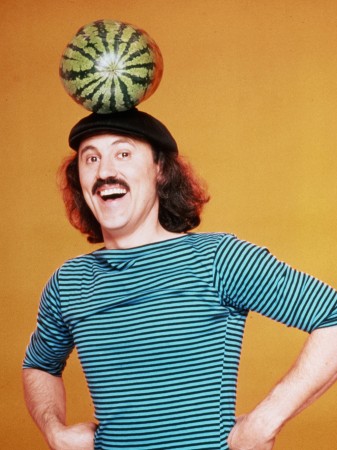
Thank you, President Obama.
Tags: Gallagher
Ray and Charles Eames, that wonderful huband-and-wife design team, who were ahead of their time in understanding that industrial materials could be beautiful, also knew a thing or two about communications. Their 1953 short, “A Communications Primer.”
Tags: Charles Eames, Ray Eames

President Obama has been criticized for not communicating his message well enough to the American people during his first term, but perhaps that effort would have been time wasted. There are probably moments when an American President can define the narrative, but usually they’re just being led by it, at best framing it. You’ve probably already read “The Unpersuaded,” Ezra Klein’s smart New Yorker piece on the topic, but here’s an excerpt:
“No President worked harder to persuade the public, Edwards says, than Bill Clinton. Between his first inauguration, in January, 1993, and his first midterm election, in November, 1994, he travelled to nearly two hundred cities and towns, and made more than two hundred appearances, to sell his Presidency, his legislative initiatives (notably his health-care bill), and his party. But his poll numbers fell, the health-care bill failed, and, in the next election, the Republicans took control of the House of Representatives for the first time in more than forty years. Yet Clinton never gave up on the idea that all he needed was a few more speeches, or a slightly better message. ‘I’ve got to . . . spend more time communicating with the American people,’ the President said in a 1994 interview. Edwards notes, ‘It seems never to have occurred to him or his staff that his basic strategy may have been inherently flawed.'”
Tags: Barack Obama, Bill Clinton, Ezra Klein
Tobii EyeAsteroids 3D allows you to blast space junk sans fingers.
Some search-engine keyphrases bringing traffic to the site this week:
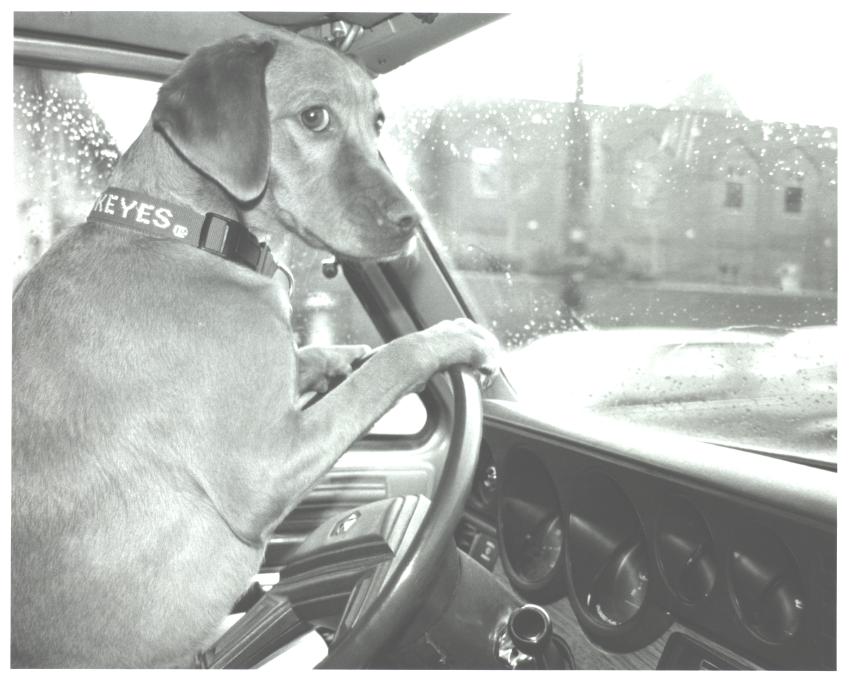
Afflictor: Believing Mitt Romney's dog won't just wait around for the next family vacation.