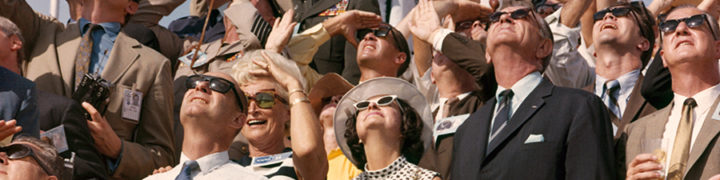
Norman Mailer decrying the preponderance of plastic, not mainly from an environmental perspective but from aesthetic and sensory points of view. Certainly the environmental threat is concerning, but, wow, there’ve been a lot of beautiful things made of plastic.
Tags: Norman Mailer
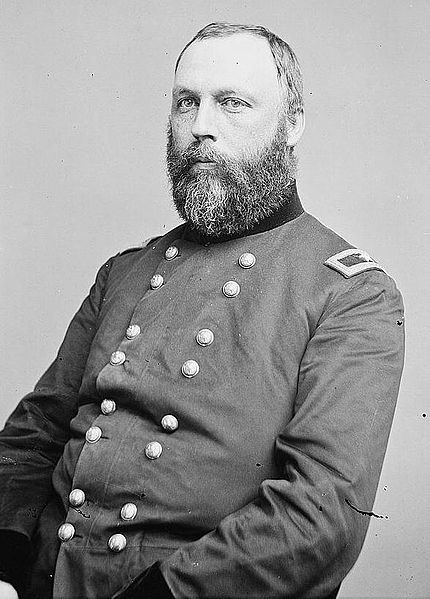
The Civil War didn’t claim so many lives merely because of the brutality of the battles but also because it was fought just before the dawn of modern medicine. One man, William Hammond, by all accounts a miserable prick to work with, saved countless thousands with his bold vision after President Lincoln appointed him Surgeon General of the Army in 1862. But there was only so much he could do. From Pat Leonard in the New York Times:
“Yet even with his state-of-the-art initiatives to improve sanitation and save lives, Hammond was fighting an uphill battle. The American Civil War was fought during what he would later describe as ‘the end of the medical Middle Ages.’ An understanding of germ theory was still a decade away, and thousands died not from their wounds but from infections or gangrene that developed later. During and following a major battle, doctors performed amputations by the hundreds, sawing off mangled limbs as quickly as men could be lifted onto makeshift operating tables, without so much as wiping their blades between procedures. The death rate following amputations ranged as high as 50 percent, especially when major limbs were involved or when soldiers had to wait more than a few hours to be treated.
And that wasn’t the worst of it. The greatest menace to Civil War soldiers was not enemy fire, nor even the infections that almost always inflamed their wounds and/or stumps. The majority of field fatalities – an estimated three out of five among Union dead, and two out of three among Confederates – were caused by preventable diseases that swept through camps and hospitals, including dysentery, typhoid fever, pneumonia, tuberculosis and even ‘childhood’ ailments like measles, chickenpox and whooping cough.
Writing home, soldiers often remarked that they didn’t fear the big battles as much as being taken to a hospital, where they would be exposed to killers they couldn’t see and didn’t understand.”
Tags: Pat Leonard, William Hammond
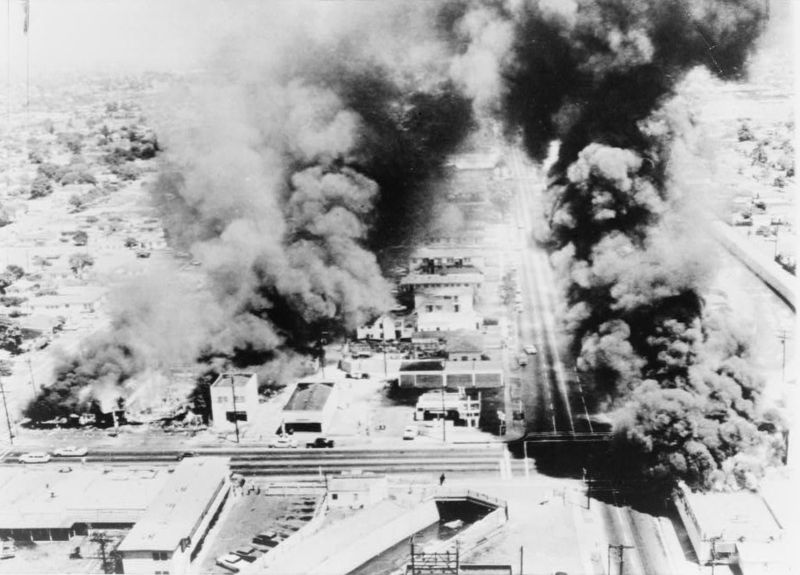
Watts, 1965.
Some of the best writing and thinking in the country right now is being done at the L.A. Review of Books. From an LARB article about lessons gone unlearned in Los Angeles, written by that prophet of doom Mike Davis:
“Indeed, L.A. labor, instead of leading the march toward prison reform and the ending of the war on drugs, now lifts its glass along with the rest to celebrate the legacy of Chief Bratton and the current liberal love affair with the LAPD. At the same time, a new East Side civic elite (with much political but little economic power) sups from the silver chalices of the latest cohort of super-rich mega-looters (Ed Roski, Ric Caruso, Allen Casden, the Anshutz Entertainment Group, and so on). That bankruptcy asset known as the Los Angeles Times continues its long tradition of bravely exposing graft on a miniature scale (the City of Bell scandal, for example) while giving a pass to the felonies of billionaires (almost everything having to do with downtown real estate or rail transportation).
I betray my age by noting that the current culture of comfortable corruption and jaded accommodation in City Hall — theoretical liberals doing the heavy lifting for wealthy Republicans — is smugly reminiscent of Tom Bradley’s last term. If the analogy holds, then a skybox in the new Los Angeles Stadium will afford a wonderful view of the city burning for a third time.”
Tags: Mike Davis
A 15-year-old kid is exposed to the mistreatment of a robot as part of an ethical experiment. The robot will be fine. The child will never trust anyone again. Maybe that’s for the best. (Thanks IEEE Spectrum.)

With so much of life shifted online, it’s natural that elements of warfare will follow. From Michael Gallagher at the BBC:
“‘Sophisticated cyber attackers could do things like derail trains across the country,’ says Richard A Clarke, an adviser on counter-terrorism and cyber-security to presidents Clinton and Bush.
‘They could cause power blackouts – not just by shutting off the power but by permanently damaging generators that would take months to replace. They could do things like cause [oil or gas] pipelines to explode. They could ground aircraft.’
Clarke’s worries are fuelled by the current tendency to put more of our lives online, and indeed, they appear to be borne out by experiments carried out in the United States.”
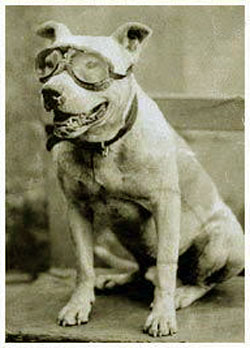
From the November 6, 1898 Brooklyn Daily Eagle:
“Tattooed dogs are now the fashion in London. A coat of arms or a monogram is marked on the throat or breast of the animal. The process is made almost painless by the use of cocaine.”
"I don't want to throw these out, but I'm not drinking this crap either."
Free Tropicana ‘light’ juice (Harlem / Morningside)
There was a sale. Tropicana Fruit Punch juice, 2 for $3.
But there was a catch, it said ‘light’ on the carton.
I thought it was odd, but I didn’t care, I was getting a deal.
I brought it home. I opened it. I tasted it.
It. Is. Disgusting.
It’s gross. It has a nasty after taste. I guess ‘light’ means light on deliciousness, because I can’t stomach this crap.
My little daughter can’t either. She spit it out. My husband gagged.
I bought 6 of these. And I can’t find the receipt.
I don’t want to throw these out, but I’m not drinking this crap either. So it’s yours. Five half gallon cartons of Tropicana ‘light’ Fruit Punch.
I live near 150th and riverside. Come and get it and it’s yours. I’m sorry if my ad isn’t very appealing, but i couldn’t lie to you.
Who knows, maybe you might like it!
First come, first serve.

“We’re drifting toward becoming a plutocracy.” (Image by Richard Whitney.)
A sequence from former Labor Secretary Robert Reich’s excellent Ask Me Anything on Reddit:
“Question (seeker135):
In your opinion, are we in the Endgame of the Republic?
Answer (robertbreich):
No.
Question (hierocles):
In the sense that the United States political system will no longer look like it used to, yes. Obviously the country is not going to fall into anarchy. But without institutional changes, all branches of government will have to be controlled by the same party if they’re going to be at all effective. We will have to enter into a pseudo one-party state.
Answer (robertbreich):
I’m not quite as pessimistic, but I do think there have to be major institutional changes. The most important, in my view, is limiting campaign contributions. That will be hard to do in the wake of the Supreme Court’s grotesque ‘Citizen’s United’ decision, but I still think public financing of general elections can work, if the extent of the potential financing is raised. Remember, both presidential candidates used public financing in 1976, and didn’t rely on any outside financing. Seems hard to believe from where we are now.
Question (kblz):
Mr. Reich, is the United States is a functioning republic? also – what would you do, now, if you were secretary of labor? would you encourage and protect small businesses? what about healthcare?
Answer (robertbreich):
We’re drifting toward becoming a plutocracy, run by a relatively small number of extremely wealthy individuals, CEOs, and Wall Street moguls. That’s why we need to get serious about campaign finance reform, why tax reform is vital, and why the entire economy needs to be reorganized to widen the circle of prosperity — so that far more of us benefit from the gains of productivity growth. If I were back in the administration, I’d strengthen labor unions, try to create a single-payer system for healthcare, use antitrust laws to break up big concentrations of power (such as the biggest banks on Wall Street), resurrect the Glass-Steagall Act (that used to separate investment from commercial banking), and enlarge the Earned Income Tax Credit (a wage subsidy for lower-income workers).”
• • • • • • • • • •
Oh my god, look at these two tiny communists go! They are so adorable.
Tags: Robert Reich
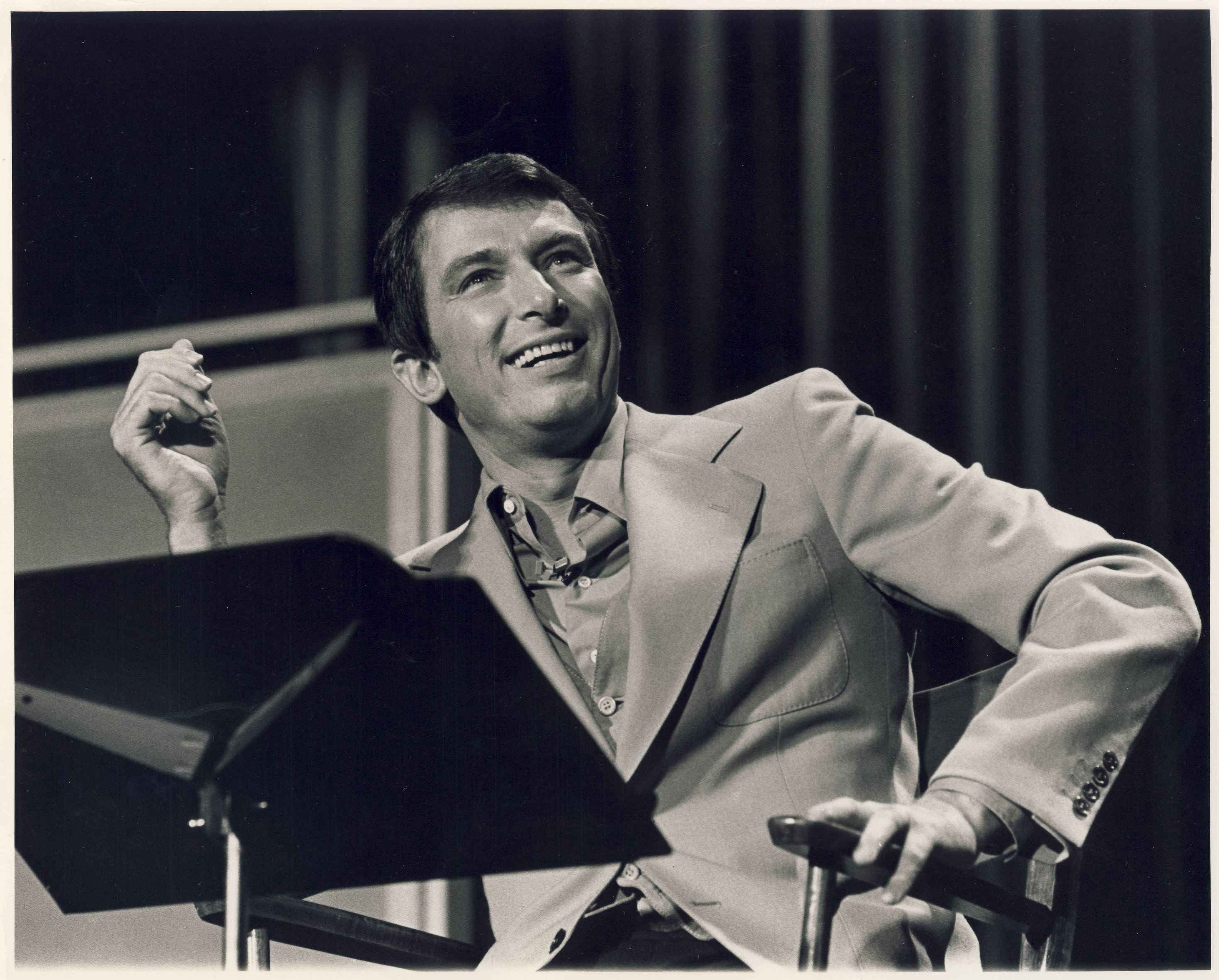
EST salesman Werner Erhard, who converted loads of people in the ’70s and ’80s to a higher level of self-awareness–or some shit–by gathering them in hotel ballrooms and hectoring them, just gave his first interview in a couple of decades. He is still a piece of work. From Lucy Kellaway’s Financial Times article:
“It turns out Werner Erhard sees himself as something far greater than nice. He solemnly tells me that he is, without question, a hero.
‘Here’s my definition of a hero. A hero is an ordinary person given being and action by something bigger than themselves. One thing I’m sure about is I’m real ordinary. Yet I’ve had the chance to touch the lives of a lotta people.’
It is true that Erhard has touched many lives – I’ve come across plenty of his converts – but I’ve never really grasped what it was that they learnt in those long days in hotel ballrooms.
‘People understood that nothing is significant. Life is empty and meaningless, and it’s empty and meaningless, that it’s empty and meaningless.’
I nod, a little confused.
‘Until what is significant is created by you, you aren’t living your life, you are living some inherited life.'” (Thanks Browser.)
••••••••••
John Denver interviews Erhard on the Tonight Show, 1973:
Bucky Fuller + Erhard:
Tags: Lucy Kellaway, Werner Erhard
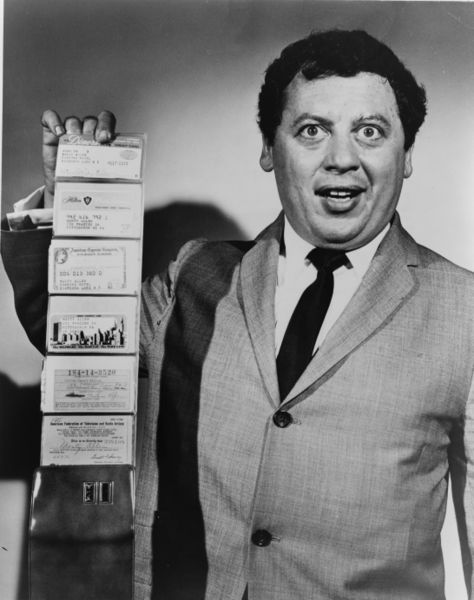
Malls are dead, and money and credit cards aren’t feeling so well, either. From Somini Sengupta in the New York Times:
“‘The physical wallet, which had no innovation in the last 50 years, will become an artifact,’ John J. Donahoe, the chief executive of eBay, told me recently. The wallet would move into the cloud, and ideally, from his perspective, into PayPal. No more would the consumer worry about losing a wallet, nor about organizing coupons and loyalty cards. Everything, he declared, would be contained within PayPal. It would also enable the company to collect vast amounts of data about customer habits, purchases and budgets.
PayPal recently rolled out a payment system at 2,000 Home Depot stores nationwide, allowing customers to pay simply by typing in their cellphone numbers, along with a PIN. It plans to install similar kiosks later this year at other chains, including a fast food establishment.
Mr. Donahoe said he wanted his company to become ‘a mall in your pocket.'”
Tags: John J. Donahoe, Somini Sengupta
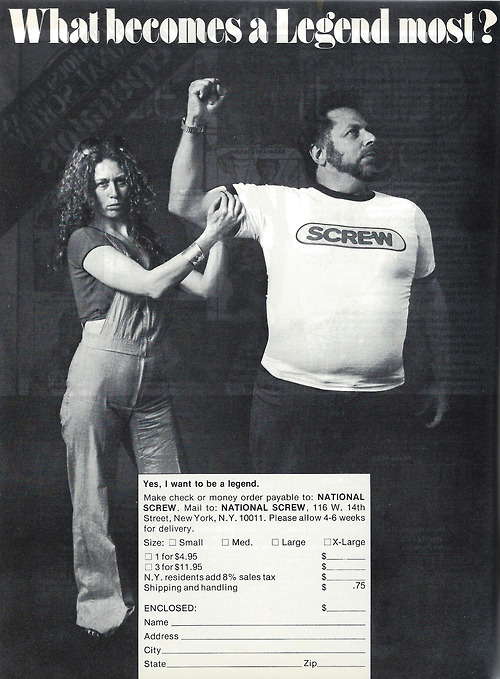
Smartmouth Stanley Siegel interviews pornographer Al Goldstein and comedian Jerry Lewis in 1976. When not busy composing the world’s finest beaver shots, Goldstein apparently had a newsletter about tech tools. He shows off a $3900 calculator watch and a $2200 portable phone. Lewis, easily the biggest tool on the stage, flaunts his wealth the way only a truly insecure man can.
Tags: Al Goldstein, Jerry Lewis, Stanley Siegel
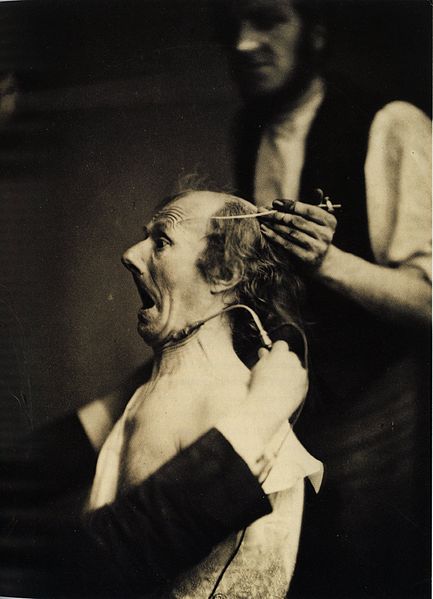
"A search was made, but the neck could not be found." (Image by Thomas Eakins.)
Nineteenth-century autopsies were far from perfect, as evidenced by an article in the December 24, 1899 edition of the Brooklyn Daily Eagle. An excerpt:
“It was discovered at the Manhattan Morgue yesterday that the neck of the headless man, found at the foot of Rutgers Street Tuesday last, is missing. It had been cut off Thursday when Dr. Philip O’Hanlon of the Coroner’s office performed an autopsy on the body. At that time Dr. Ferguson, the eminent pathologist was present, as was Dr. Schultz, former Coroner, and a number of medical students. Dr. O’Hanlon made a careful examination of the neck and, he said, found indentations on the cervical vertebra which were undoubtedly made by a knife. There were two or three on each side and, he said, he thought they had been made by a man who knew how to handle a surgeon’s knife.
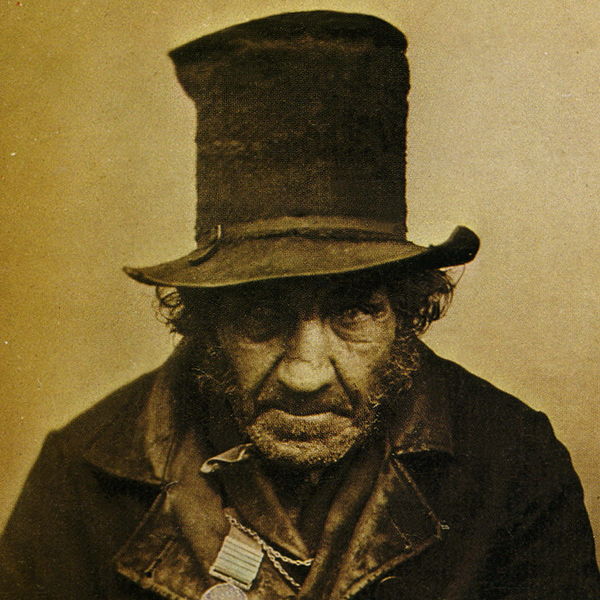
"Dr. O'Hanlon then accused Embalmer Arthur Rooney of 336 East Twenty-fifth Street, who was standing by, of having taken the neck."
Dr. O’Hanlon called at the Morgue yesterday afternoon and asked to be shown the neck which had been removed from the body. A man went into the autopsy room, where the headless body and neck had been left, but he could not find it. A search was made, but the neck could not be found. Policeman Morell, who is in charge of the Morgue, said that Dr. O’Hanlon was the last in the room. Dr. O’Hanlon then accused Embalmer Arthur Rooney of 336 East Twenty-fifth Street, who was standing by, of having taken the neck. Rooney indignantly denied that he had done so and and he accused Dr. O’Hanlon of being the last in the room when the autopsy was made. It was thought that it had got mixed with some refuse and been thrown out. There was no suspicion at any time that the man had been murdered, but the loss of the portion is considered curious.”
Tags: Dr. Ferguson, Dr. Philip O'Hanlon, Dr. Schultz, Embalmer Arthur Rooney, Policeman Morell

Karlheinz Stockhausen,a great composer and a gigantic bag of shit, discussing human evolution in 1972.
Some search-engine keyphrases bringing traffic to Afflictor this week:
Afflictor: Wondering why so many Secret Service agents have been volunteering to guard the antiquities room.
- Old Print Articles: Albany residents drink fresh animal blood (1881) + Early electrolysis used by hirsute women (1885).
- Featured Videos: Marshall McLuhan knew that the world was becoming virtual and remote (1965) + George Carlin was skeptical about Earth Day + Atlantic City’s future as a casino town (1977) + Two short films by Charles and Ray Eames (1964/69) + Sun Ra takes his place in space (1974) + Lawns will be plastic in the future (1968) + Laurie Anderson discusses technology (1986) + K-Tel let you pretend you were an American idol (1973) + Two brief Brian Eno videos + Mike Wallace interviewing Thurgood Marshall + David Cronenberg cast a porn star in Rabid (1979) + Research on bionic eyes in Australia + Greyhounds in exoskeleton suits race in front of drunken douchebags.
- Recently Posted on NYC’s Craigslist: It is horrible that it will begin, but even worse that it will never, ever end + Jimmy Fallon is angling for another free haircut + It might rain in New York on Saturday + Another book Nic Cage will never read + I don’t have a lot to barter.
- A note about the current Supreme Court.
- Douglas Coupland just took his first trip to Dubai.
- Italian designer Bruno Munari predicted the house of the future in 1966.
- Sherry Turkle is concerned that technology is making us “alone together.”
- Richard A. Friedman wonders about pharmacology and the U.S. military.
- A succinct explanation of the thought experiment, the Trolley Problem.
- Microsoft Principal Researcher Bill Buxton talks Natural User Interfaces.
- Alan Feuer investigates the secret past of his doppelganger Alan Z. Feuer.
- We are so narcissistic we want to shop where other shoppers look like us.
- A classic Ron Rosenbaum article about lurid violence on Long Island.
- A gaggle of rich techies are attempting to mine minerals from asteroids.
- Ken Aueletta questions Stanford University’s Silicon Valley ties.
- Edward Tenner tries to explain why machines are beautiful to look at.
- Does the demise of DVDs mean the demise of Netflix?
- Apple is building its own private Cupertino restaurant.
- Chris Anderson interviews computing legend Marc Andreessen.
- David Grann’s brilliant article about a serial impostor is online for free.
- Jimmy Wales thinks Wiki-like collaboration will doom Hollywood.
- The tools that we create end up creating us.
- The early education of roboticist Rodney Brooks.
- Japan is trying to overcome its graying, thinning population.
- Vint Cerf shepherded the Internet from proprietary to public.
- A 19th-century illustration of wealthy men at a race-baiting contest.
- A note from 1902 about a monkey dinner guest.
- A note from 1896 about an obstinate dancing bear.
- This week’s Afflictor keyphrase searches.

In another sign that we’re horribly narcissistic pack animals, this passage from a Physorg post about Clay Voorhees’ study on brand loyalty:
“Customer loyalty increased when the participants viewed other customers as similar to themselves. The general physical appearance and behavior of the other customers also played a role.
‘Basically, do I feel like they’re the same type of person as me?’ said Voorhees. ‘Do they look good? Do they behave? These factors increase the likelihood of people returning to the store.’
Companies that incorporate these factors into their marketing efforts could increase loyalty by 30 percent – nearly doubling the ability to predict customer loyalty compared to traditional survey approaches that narrowly focus on the quality of service provided by the employees.
Voorhees said most companies today have become good at customer service and managing their employees.
‘So the next frontier is how to better manage their portfolio of customers,’ he said. “
Tags: Clay Voorhees

warning (new york city)
something is wrong , many people can feel it! get out of new york city while you can. what ever it is it’s coming soon, you don’t have much time left save your family,get out now!!!

I just realized that “The Chameleon,” David Grann’s brilliant 2008 New Yorker article is online for free. It’s a long profile of Frédéric Bourdin, a Frenchman who would serially pose as teenagers. He took the modern obsession with reinvention through “reality” TV and social media to an extreme. The perfect opening:
“On May 3, 2005, in France, a man called an emergency hot line for missing and exploited children. He frantically explained that he was a tourist passing through Orthez, near the western Pyrenees, and that at the train station he had encountered a fifteen-year-old boy who was alone, and terrified. Another hot line received a similar call, and the boy eventually arrived, by himself, at a local government child-welfare office. Slender and short, with pale skin and trembling hands, he wore a muffler around much of his face and had a baseball cap pulled over his eyes. He had no money and carried little more than a cell phone and an I.D., which said that his name was Francisco Hernandez Fernandez and that he was born on December 13, 1989, in Cáceres, Spain. Initially, he barely spoke, but after some prodding he revealed that his parents and younger brother had been killed in a car accident. The crash left him in a coma for several weeks and, upon recovering, he was sent to live with an uncle, who abused him. Finally, he fled to France, where his mother had grown up.
French authorities placed Francisco at the St. Vincent de Paul shelter in the nearby city of Pau. A state-run institution that housed about thirty-five boys and girls, most of whom had been either removed from dysfunctional families or abandoned, the shelter was in an old stone building with peeling white wooden shutters; on the roof was a statue of St. Vincent protecting a child in the folds of his gown. Francisco was given a single room, and he seemed relieved to be able to wash and change in private: his head and body, he explained, were covered in burns and scars from the car accident. He was enrolled at the Collège Jean Monnet, a local secondary school that had four hundred or so students, mostly from tough neighborhoods, and that had a reputation for violence. Although students were forbidden to wear hats, the principal at the time, Claire Chadourne, made an exception for Francisco, who said that he feared being teased about his scars. Like many of the social workers and teachers who dealt with Francisco, Chadourne, who had been an educator for more than thirty years, felt protective toward him. With his baggy pants and his cell phone dangling from a cord around his neck, he looked like a typical teen-ager, but he seemed deeply traumatized. He never changed his clothes in front of the other students in gym class, and resisted being subjected to a medical exam. He spoke softly, with his head bowed, and recoiled if anyone tried to touch him.
Gradually, Francisco began hanging out with other kids at recess and participating in class. Since he had enrolled so late in the school year, his literature teacher asked another student, Rafael Pessoa De Almeida, to help him with his coursework. Before long, Francisco was helping Rafael. ‘This guy can learn like lightning,’ Rafael recalls thinking.
One day after school, Rafael asked Francisco if he wanted to go ice-skating, and the two became friends, playing video games and sharing school gossip. Rafael sometimes picked on his younger brother, and Francisco, recalling that he used to mistreat his own sibling, advised, ‘Make sure you love your brother and stay close.’
At one point, Rafael borrowed Francisco’s cell phone; to his surprise, its address book and call log were protected by security codes. When Rafael returned the phone, Francisco displayed a photograph on its screen of a young boy who looked just like Francisco. ‘That’s my brother,’ he said.
Francisco was soon one of the most popular kids in school, dazzling classmates with his knowledge of music and arcane slang—he even knew American idioms—and moving effortlessly between rival cliques. ‘The students loved him,’ a teacher recalls. ‘He had this aura about him, this charisma.’
During tryouts for a talent show, the music teacher asked Francisco if he was interested in performing. He handed her a CD to play, then walked to the end of the room and tilted his hat flamboyantly, waiting for the music to start. As Michael Jackson’s song ‘Unbreakable’ filled the room, Francisco started to dance like the pop star, twisting his limbs and lip-synching the words “You can’t believe it, you can’t conceive it / And you can’t touch me, ’cause I’m untouchable.’ Everyone in the room watched in awe. ‘He didn’t just look like Michael Jackson,’ the music teacher subsequently recalled. ‘He was Michael Jackson.’
Later, in computer class, Francisco showed Rafael an Internet image of a small reptile with a slithery tongue.
‘What is it?’ Rafael asked.
‘A chameleon,’ Francisco replied.”•
Read also:
- An excerpt from Ian Parker’s Granta profile of impostor Brian MacKinnon.
Tags: David Grann, Frédéric Bourdin
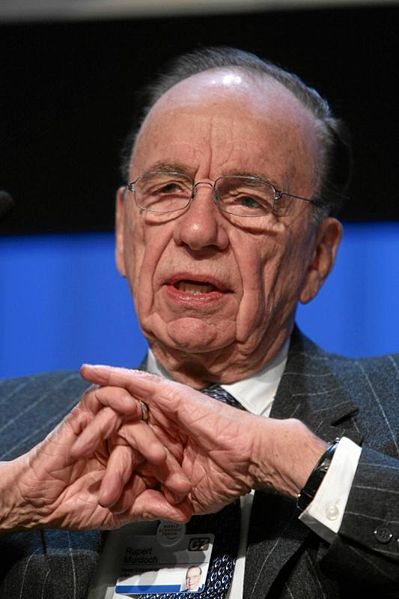
Adam Curtis has just republished a post on his BBC blog about that class act Rupert Murdoch. One segment concerns the late talk show host Russell Harty, who played a sort of jackass interviewer on TV, but certainly did not deserve to be hounded by Murdoch reporters as he lay dying in a hospital bed from an AIDS-related illness. An excerpt:
“In 1989 – on the 20th anniversary of buying the Sun – Murdoch helped write an editorial that trumpeted his vision of himself as a revolutionary:
‘The Establishment does not like the Sun. Never has
There is a growing band of people in positions of influence and privilege who want OUR newspaper to suit THEIR private convenience. They wish to conceal from readers’ eyes anything that they find annoying or embarrassing.
LIVING LIES AND HYPOCRISY ON HIGH CAN HAVE NO PLACE IN OUR SOCIETY
IT IS THE STRUGGLE OF ALL THOSE CONCERNED FOR FREEDOM IN BRITAIN.’
But the liberal elite were already fighting a counterattack. It had begun with the chat-show host Russell Harty the year before as he lay dying in a hospital bed from hepatitis.
Harty was a homosexual who had been hounded by the News of the World. With his illness this had turned into a media frenzy – with reporters from all the tabloids pursuing him in a hospital, posing as junior doctors demanding to see Harty’s medical notes, and photographers renting a flat opposite his hotel room.
At Harty’s funeral in 1988 the playwright Alan Bennett publicly accused the tabloid press of accelerating his friend’s death. ‘The gutter press finished him.’
The Sun chose to reply:
‘Stress did not kill Russell Harty. The truth is that he died from a sexually transmitted disease.
The press didn’t give it to him. He caught it from his own choice. And by paying young rent boys he broke the law.
Some – like ageing bachelor Mr Bennett – can see no harm in that. He has no family.
But what if it had been YOUR son Harty had bedded?'”
Tags: Adam Curtis, Rupert Murdoch
Did Sun Ra really film this in 1974? Maybe it was all a dream.
Tags: Sun Ra
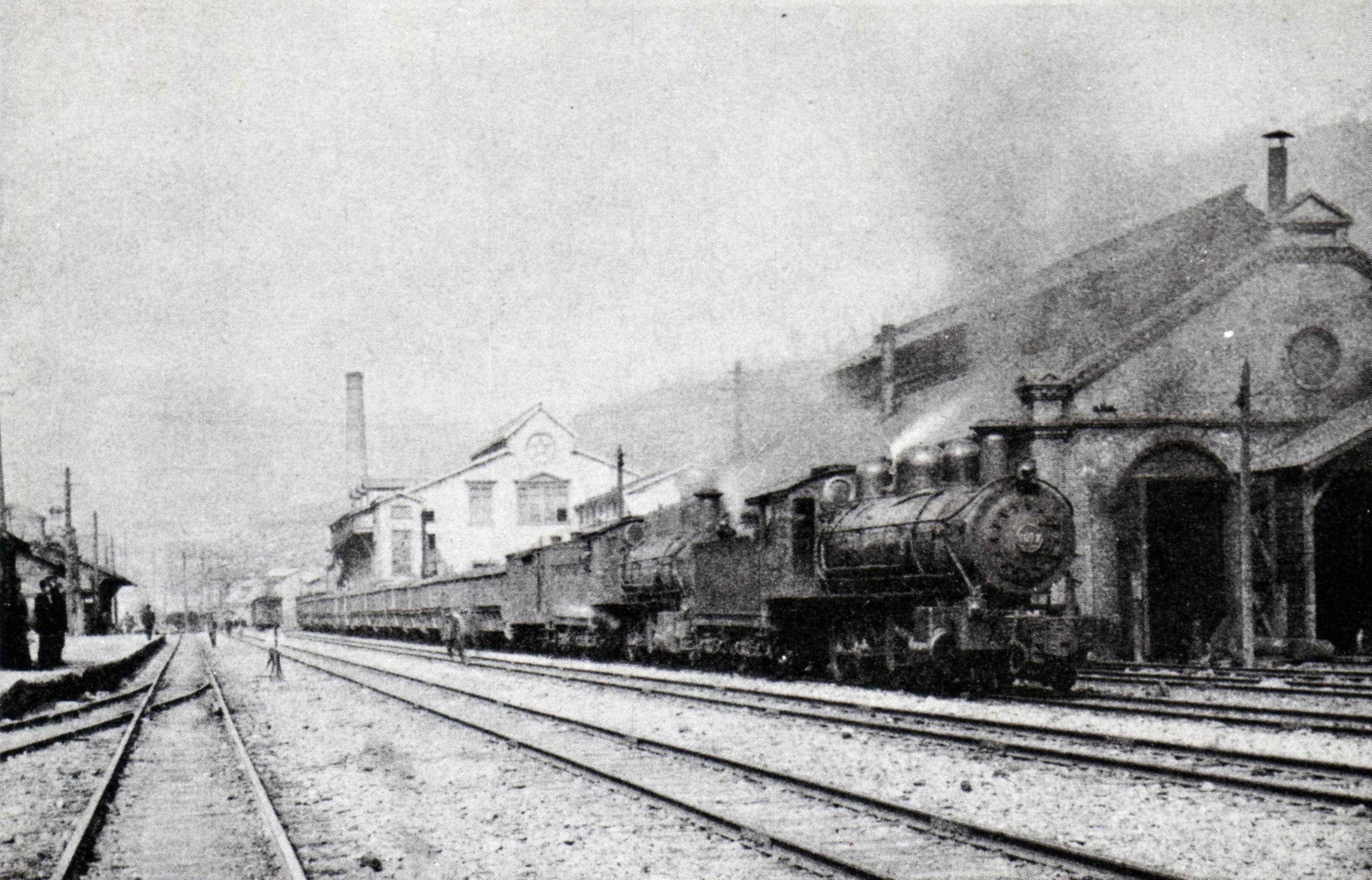
Yubari, 1918.
Japan’s population is aging and thinning, with so many younger natives moving abroad. That leaves the country in a precarious position for the future, though long-term prognostications of doom like predictions of sustained glory are often wrong. At any rate, the opening of Hiroki Tabuchi’s New York Times article on a dying town that may be a microcosm of sorts for the nation:
“YUBARI, Japan — Most young people have already fled this city of empty streets and shuttered schools, whose bankrupt local government collapsed under the twin burdens of debt and demographics that are slowly afflicting the rest of Japan.
Now, Yubari, a former coal-mining town on Japan’s northernmost main island, Hokkaido, is hoping an unlikely savior can reverse its long decline: a 31-year-old rookie mayor who has come to symbolize the struggle confronting young Japanese in the world’s most graying and indebted nation.
‘Japan will tread the same path someday,’ said Naomichi Suzuki, who a year ago this month became the youngest mayor of the country’s most rapidly aging city. ‘If we can’t save Yubari, what will it mean for the rest of Japan?’
Indeed, the city’s plight and attempt to fight back — which has become a story line in the national media — could offer a glimpse of Japan’s future.”
Tags: Hiroki Tabuchi, Naomichi Suzuki
Casinos bring people but not prosperity. I like them because I enjoy bustle, but no city should be banking its future on them or offering huge tax breaks to ensure their construction. (The same goes for sports stadiums.) A 1977 AT&T film about Atlantic City’s future as that town was about to roll the dice.

Justice Roberts: Like Judy Sheindlin without the charm.
There’s been no time in my life when the country has had a Supreme Court of such rancor, such arrogance and such nastiness as the Roberts Court. I’m not talking about Justice Alito showing disdain for President Obama during the State of the Union, though that is symptomatic of the problem. I’m referring more to the mocking, sarcastic, obnoxious, impatient tone of the Justices as they question American citizens who come before them. It’s not just behavior unbecoming of the highest court of the land but decorum that wouldn’t be tolerated in a playground.
It’s always been a lie that the Constitution is this document that can interpreted with purity, that politics and personal prejudices don’t enter the picture. But the immaturity of numerous members of the current Court makes it dubious that they have the wisdom to sort as best they can through the objective and the subjective. Or that they even have that process as their goal. It may be that the Roberts Court ultimately has the distinction of being the one that makes Americans seriously question the wisdom of lifetime appointments for Justices.•

Judge Judy: I presided over the landmark case of the missing fish stick.
Tags: John Roberts, Samuel Alito

Apple is building its own private restaurant in Cupertino to better ensure that its employees won’t be overheard when discussing company business. From The Next Web:
“Apple has had a planning request approved for a new off-campus restaurant by the Cupertino Planning Commission, providing employees with a place to eat and discuss company plans and product development without fear of Apple’s competitors overhearing conversations.
The new 21,468-square-foot cafeteria, which was approved at a meeting on Tuesday, is located a short walk from Apple’s Infinite Loop headquarters and will provide cafe, meeting room, lounge areas and courtyard facilities, as well as a dedicated second floor for restaurant staff.
At the meeting Dan Whisenhunt, Apple’s director of real estate facilities, spelled out why the new building would be beneficial for the company:
‘We like to provide a level of security so that people and employees can feel comfortable talking about their business, their research and whatever project they’re engineering without fear of competition sort of overhearing their conversations.'”