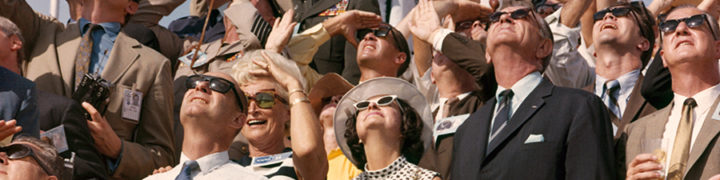
Ford, which gave America the perfected assembly line, now has robots playing a crucial role in the building and inspection of its vehicles. If you look closely, you can see people in the background. It’s so quiet. (Thanks Singularity Hub.)

How does Dubai not have an underwater hotel–or twelve–already? Deep Ocean Technology is planning to remedy this oversight with the Water Discus Underwater Hotel, which will have accommodations both above and below sea level. Whether the hotel materializes or not, no one will be surprised. From Simeon Kerr of the Financial Times:
“Before the financial crisis that hit Dubai in 2009, there were plans to build an underwater hotel, known as Hydropolis, but the project has not materialised.
‘This is certainly not the first time that a technological salesman has come to Dubai and, if this project fades away, it wouldn’t be the first time either,’ said Todd Reisz, editor at Al Manakh, a project researching urban development in Gulf cities.
The announcement has revived memories of the seemingly crazy schemes dreamt up during the city’s property bubble that ended with a bust that pushed the emirate to the brink of default in 2009.”

Read also:
Tags: Simeon Kerr, Todd Reisz
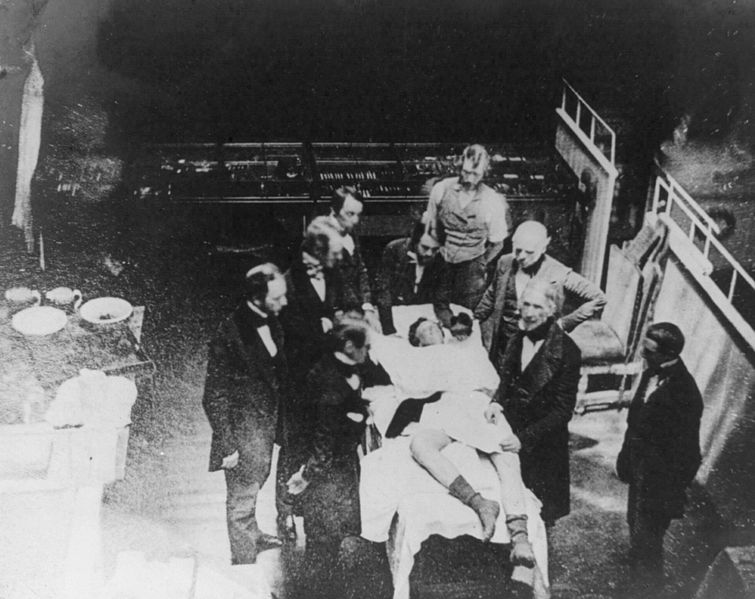
From Atul Gawande’s New England Journal of Medicine piece, “Two Hundred Years of Surgery,” the moment in the Western world when medical procedures began to migrate from the external to the internal:
“The crucial spark of transformation — the moment that changed not just the future of surgery but of medicine as a whole — was the publication on November 18, 1846, of Henry Jacob Bigelow’s groundbreaking report, ‘Insensibility during Surgical Operations Produced by Inhalation‘ The opening sentences crisply summarized the achievement: ‘It has long been an important problem in medical science to devise some method of mitigating the pain of surgical operations. An efficient agent for this purpose has at length been discovered.’ Bigelow described how William Morton, a Boston dentist, had administered to his own patients, and then to several more who had undergone surgery at the Massachusetts General Hospital, a gas he called ‘Letheon,’ which successfully rendered them insensible to pain. Morton had patented the composition of the gas and kept it a secret even from the surgeons. Bigelow revealed, however, that he could smell ether in it. The news burst across the world. The Letters to the Editor pages were occupied for months with charges and countercharges over Bigelow’s defense of Morton’s secrecy and credit for the discovery. Meanwhile, ether anesthesia rapidly revolutionized surgery — how it was practiced, what could be attempted with its use, and even what it sounded like.” (Thanks Browser.)

Environment influences mindset, no doubt, and someone’s perception of the world may vary depending of where they live or grew up. But the idea that cities make people more unfeeling, that the crowd relieves us of our capacity for goodness, seems a popular but unwarranted stereotype. But that’s the premise of “City and the Self,” by Stanley Milgram and Harry From, 1972.
Tags: Harry From, Stanley Milgram
Glenn Gould on giving up live performances, 1969.
Tags: Glenn Gould

From Matthew Lasar’s new ArsTechnica piece about the great solar storm of 1859, when the Earth became scarily brilliant:
“In New York City, San Francisco, Boston, and Chicago, thousands of sky gazers wandered about the midnight streets, astounded at what they could see. ‘Crowds of people gathered at the street corners, admiring and commenting upon the singular spectacle,’ observed the New Orleans Daily Picayune. When the September 1 aurora ‘was at its greatest brilliancy, the northern heavens were perfectly illuminated,’ wrote a reporter for The New York Times. He continued:
At that time almost the whole southern heavens were in a livid red flame, brightest still in the southeast and southwest. Streamers of yellow and orange shot up and met and crossed each other, like the bayonets upon a stack of guns, in the open space between the constellations Aries, Taurus and the Head of Medusa—about 15 degrees south of the zenith. In this manner—alternating great pillars, rolling cumuli shooting streamers, curdled and wisped and fleecy waves—rapidly changing its hue from red to orange, orange to yellow, and yellow to white, and back in the same order to brilliant red, the magnificent auroral glory continued its grand and inexplicable movements until the light of morning overpowered to radiance and it was lost in the beams of the rising sun.
Popular descriptions of the spectacle appeared everywhere. In 2006, a team of space scientists assembled a collection of eyewitness newspaper accounts of the storm. What stands out in these reports is the astonishment, awe, and even pleasure that the world experienced for a week—followed by a sobering realization of how close our planet is to its indispensable star.”
Tags: Matthew Lasar
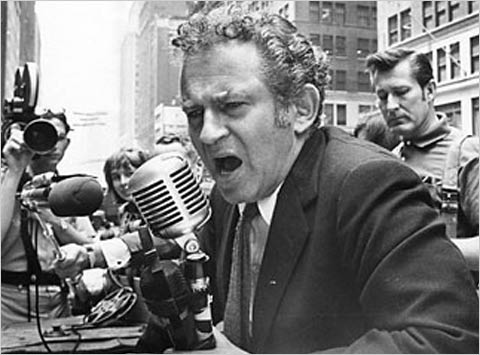
At the BBC, Adam Curtis has posted “White Negro for Mayor,” which examines the subtext of Norman Mailer’s failed 1969 mayoral campaign in New York. Included in Curtis’ post is a really good documentary about Mailer as politician. An excerpt:
“But Mailer was a complicated man – and as well as embodying many of the hipster values he was also a perceptive and vocal critic of the new sensibility. Back in 1957 he had written an essay for Dissent magazine called ‘The White Negro.’ In it he had described how fears of nuclear annihilation had begun to produce a new kind of young alienated being in America. These hyper-individualists trusted only their own feelings and desires and refused to be part of any group or organisation. And in black culture, Mailer said, they found their identity – the culture of the dangerous outsider.
This outsider culture had originally been created, Mailer wrote, by blacks in response to racial oppression and violence. But for the ‘white negroes’ that culture was then co-opted in order to give a meaning and grandeur to their psychopathic narcissism.“
Tags: Adam Curtis, Norman Mailer
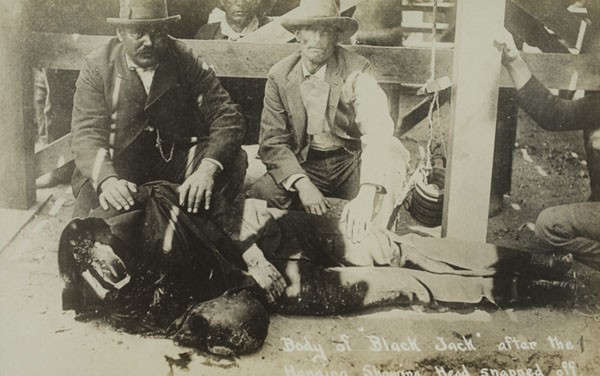
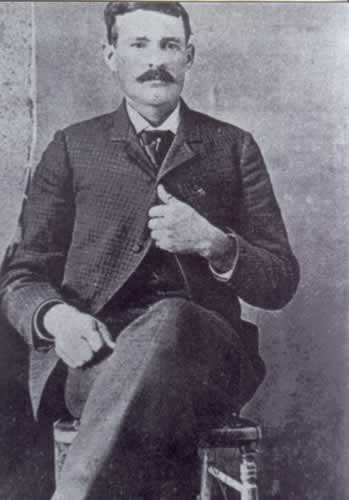
This grisly classic photograph shows the aftermath of the hanging of murderer and train robber Thomas “Black Jack” Ketchum, a botched operation that left him headless and spectators stained with blood. According to the Brooklyn Daily Eagle, Ketchum had, in 1899, single-handedly robbed a train of the Colorado and Southern Railway in Folsom, New Mexico. During the holdup he was wounded by a bullet fired by a crew member and had to have his right arm amputated as a result. He was subsequently captured and marched, shackled, to the gallows. A report in the April 27, 1901 San Francisco Chronicle in the wake of the execution in Clayton, New Mexico:
“Thomas E. Ketchum, alias ‘Black Jack,’ the notorious outlaw, who terrorized the people of the Southwest for the past fifteen years, was hanged here this afternoon for the last of his many crimes. His head was severed from the body by the rope as if by a guillotine. The headless trunk pitched forward toward the spectators and blood spurted upon those nearest the scaffold. The execution took place inside a stockade built for the occasion. The inclosure was crowded, 150 spectators having been admitted.
When Ketchum mounted the platform at 1:17 o’clock his face was very pale, but his eyes swept over the crowd coldly and boldly. A priest stood at his side as the rope was put around his neck. The condemned man had consented to this at the last moment. Ketchum declined to make a speech before the noose was put around his neck. He merely muttered ‘Good-by,’ then said ‘Please dig my grave very deep,’ and finally ‘All right; hurry up.’ His legs trembled, but he kept his nerve.
When the body dropped through the trap the half-inch rope severed the head as cleanly as if a knife had cut it. The body pitched forward, with blood spurting from the headless trunk. The head remained in the black sack and flew down into the pit. Some men groaned and others turned away, unable to endure the sight. For a few seconds the body was allowed to lie there, half doubled up on its right side, with the blood issuing in an intermittent stream from the severed neck as the heart kept on with its mechanical beating. Then, with cries of consternation, the officers rushed down from the scaffold and lifted the body from the ground.”
A couple of minutes from “First There Was,” by the great Johnny Dowd.
Tags: Johnny Dowd

"I figured you were all assholes."
dear dead baby birds: sorry (cos cob)
i know that you probably wont read this because you are dead and most likely wouldn’t understand english.
but I am sorry. Sorry i let you build a nest under my air conditioner. sorry i yelled and beat the air conditioner. you were probably just tweeping at all hours because you were hungry.
i figured you were all assholes, but by the time i plugged up the sides of the air conditioner to keep you away, i realized that i sealed you in.
this resulted in much more verbal abuse (sorry), as i thought you sneaked through somehow. nope. my fault.
also, sorry i then shoveled your nest into a shoe box using a spatula (since thrown away). you probably thought I was your mother and it was fresh worm time.
finally, I am sorry for leaving you in the shoe box outside. actually i dont know if you are even dead. someone took the shoebox before i could check it in the morning. maybe it was your avian folks. to be fair it was probably my landlord.
anyway, hope this note finds you well and that you arent mad and considering any ghost tweeping.

Life speeds in one direction, and how can anything ever be different? Then events occur. Similar traumas in the past haven’t caused a break, but this one takes hold. The brain rewires itself. All is different now. You can never return.
British racer Stirling Moss in the crash that retired him, 1962.
Tags: Stirling Moss

Adam Davidson of the New York Times Magazine sat down with former Bain Capital managing director and Romney supporter Edward Conard for an open discussion about how the latter believes the 1% getting richer is better for all Americans. Conard seems to be living in a delusional bubble, but it’s a fascinating article. An excerpt:
“Nearly every economist I spoke with said that Conard has too much faith in the market’s ability to reward only those who create real value. Conard, for instance, insists that even the dodgiest financial products must have been beneficial or else nobody would have bought them in the first place. If a Wall Street trader or a corporate chief executive is filthy rich, Conard says that the merciless process of economic selection has assured that they have somehow benefited society. Even pro-market Romney supporters take issue with this. ‘Ed ought to be more concerned about crony capitalism,’ Hubbard told me.
Unintended Consequences ignores some of the most important economic work of the past few decades, about how power and politics influence economic growth. In technical language, this field is the study of ‘rent seeking,’ in which people or companies get rich because of their power, not because of their ideas. This is one of the few fields in economics in which left and right share many influences and ideas — namely that wealthy individuals and corporations are able to influence politicians and regulators to make seemingly insignificant changes to regulations that benefit themselves. In other words, to rig the game. One classic example is banking. Banks have enormous resources to constantly put explicit or subtle pressure on lawmakers and regulators so that regulation can eventually serve their interests.
Conard’s version of the financial crisis ignores much reporting and analysis — including work I’ve done with NPR’s Planet Money team — that shows that some of the nation’s largest banks actively manipulated customers and regulators and, sometimes, their own stockholders to profit from dangerous risk. And for many economists, rising inequality can create exactly the wrong outcomes for society over all. Rather than simply serving as an invitation for everybody to engage in potentially beneficial risk-taking, inequality can allow those with wealth to crush new ideas.”
Tags: Adam Davidson, Edward Conard
Digital information cannot be scratched or damaged, but it has a “shelf-life” all the same. And as new formats push out the old, what traces will remain? The Record-Vacuum, 1979:
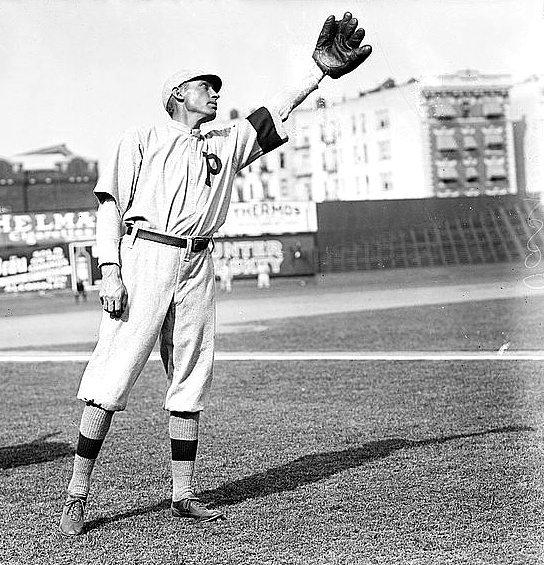
From a 1902 edition of the Honolulu Commercial Advertiser:
“The base ball fever has struck the leper settlement and on the last visit the superintendent organized two teams and partially equipped them. The settlement ‘league’ has been formed and the two teams will swat the sphere during seven games, which have been proposed, and the winning team will capture the prize of $20, which is already subscribed.”
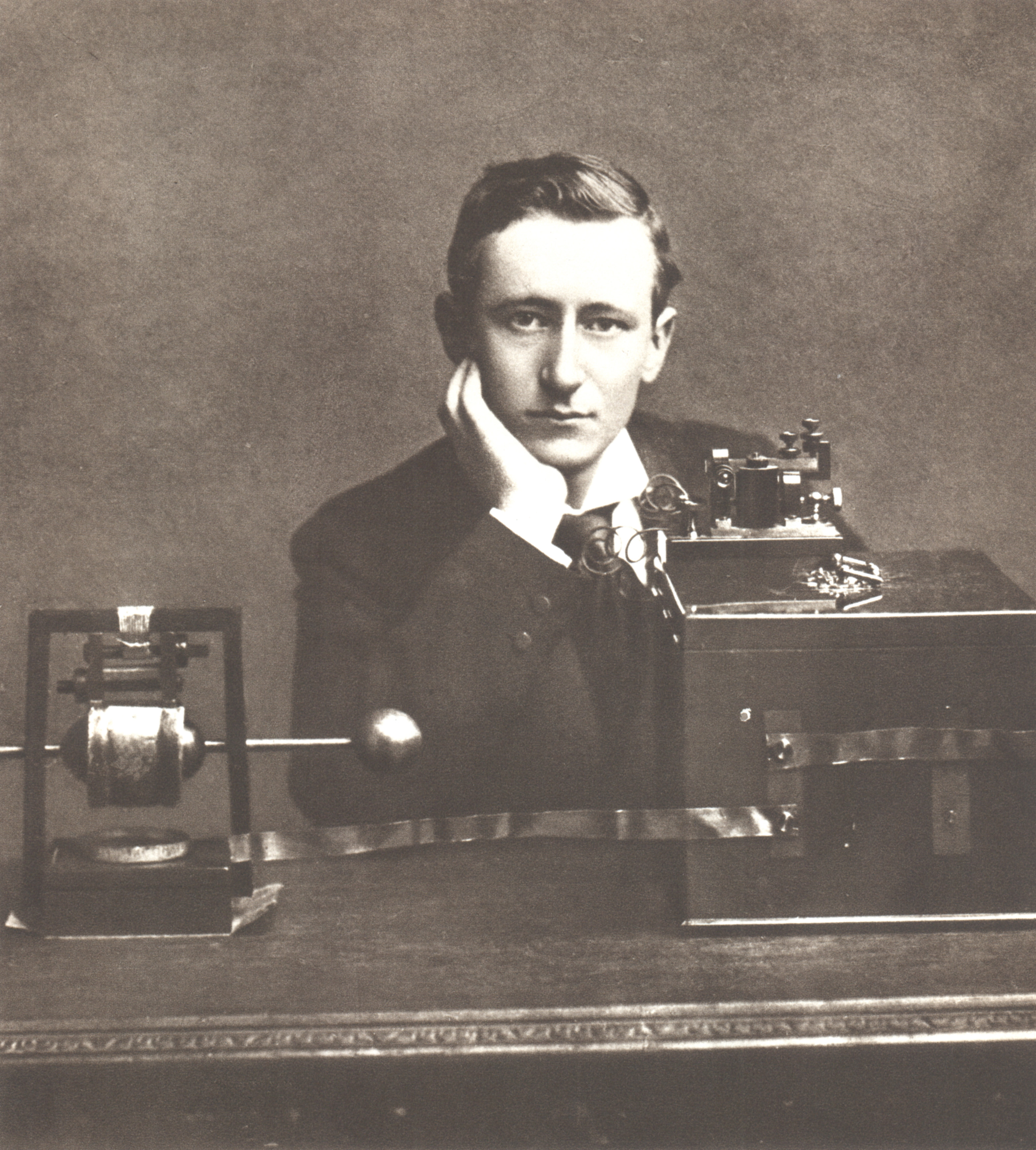
From “The Call of the Future,” Tom Vanderbilt’s Wilson Quarterly piece about the potential and pitfalls of the Internet as a tool:
“As we start to understand how people actually use the Internet, the cyberutopian hopes of a borderless, postnational planet can look as naive as most past predictions that new technologies would transform societies. In 1912, radio pioneer Guglielmo Marconi declared, ‘The coming of the wireless era will make war impossible, because it will make war ridiculous.’ Two years later a ridiculous war began, ultimately killing nine million Europeans.
While it’s easy to be dismissive of today’s Marconis—the pundits, experts, and enthusiasts who saw a rise in Internet connection leading to a rise in international understanding—that’s too simple and too cynical a response. Increased digital connection does not automatically lead to increased understanding. At the same time, there’s never been a tool as powerful as the Internet for building new ties (and maintaining existing ones) across distant borders.
The challenge for anyone who wants to decipher the mysteries of a connected age is to understand how the Internet does, and does not, connect us. Only then can we find ways to make online connection more common and more powerful.”
••••••••••
Marconi demonstrates the wireless telegraph:
Tags: Guglielmo Marconi, Tom Vanderbilt
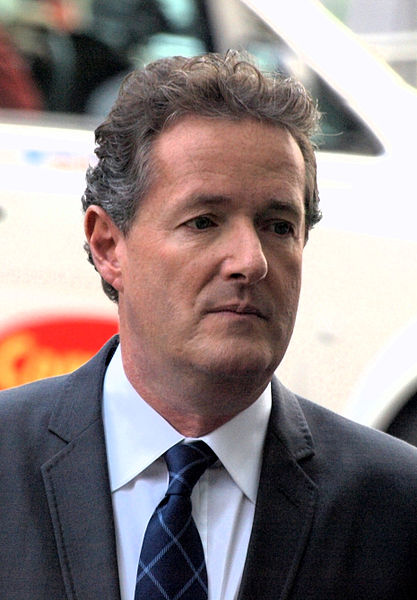
Piers Morgan: Heaven knows he tries. (Image by Pete Riches.)
The foreign countries sending the most unique visitors to Afflictor during April:
- Great Britain
- Canada
- Germany
- Netherlands
- Sweden

"The Huffington Post": A few good journalists, many posts about tits. (Image by David Shankbone.)
In regards to my post yesterday that criticized Arianna Huffington calling President Obama’s campaign ad about the killing of bin Laden “despicable”: You can always tell when someone has a weak argument when they create a straw man to defeat. From Huffington:
“There are many legitimate and important policy differences between Governor Romney and President Obama — but the depth of Mitt Romney’s patriotism is not one of them.”
What nonsense. The ad in no way questions Mitt Romney’s patriotism, just his judgement. And that question is valid considering the Governor’s 2007 comments on the matter. If you can’t defeat the truth, stack the deck and defeat a fiction.
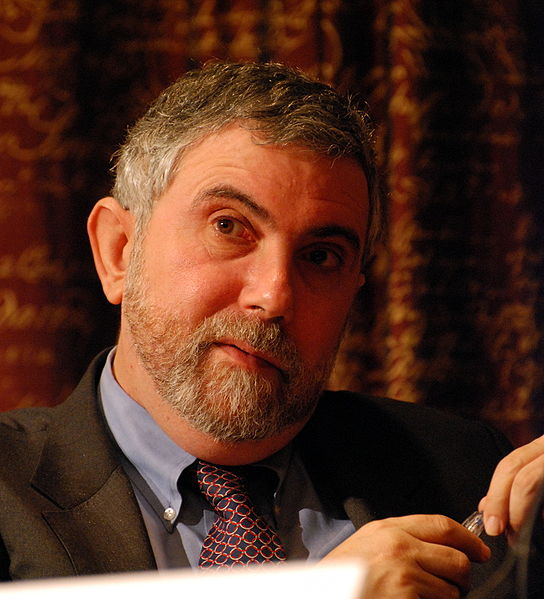
Full, but not unruly. (Image by Prolineserver.)
Two questions from the excellent Ask Me Anything that Paul Krugman just did on Reddit, one about the cause of American income disparity and one about his fabulous beard:
“[–]Ashoat 382 points ago
[–]nytimeskrugman[S] 573 points ago
Tags: Paul Krugman
From Katie Drummond at Wired: “According to Dmitry Itskov, a 31-year-old Russian media mogul, the U.S. military’s Avatar initiative doesn’t go nearly far enough. He’s got a massive, sci-fi-esque venture of his own that he hopes will put the Pentagon’s project to shame. Itskov’s plan: Construct robots that’ll (within 10 years, he hopes) actually store a human’s mind and keep that consciousness working. Forever.
‘This project is leading down the road to immortality,’ Itskov, who founded New Media Stars, a Russian company that runs several online news outlets, tells Danger Room. ‘A person with a perfect Avatar will be able to remain part of society. People don’t want to die.'”
Tags: Dmitry Itskov, Katie Drummond

"Ed Powell and Jim Leper were hung in the jail yard yesterday afternoon." (Image by Robert Runyon.)
Scenes from a double execution in Texas from the September 30, 1891 Brooklyn Daily Eagle:
“Gatesville, Tex.–Ed Powell and Jim Leper were hung in the jail yard yesterday afternoon at 2 o’clock. When the sheriff read the governor’s message to let the law take its course, Powell was silent, but Leper said, ‘Let her go.’
Mrs. Powell, young Powell’s mother, who left no stone unturned to secure a change in the sentence, hearing of the message became enraged and told the boys to die like men and pay no attention to religion; if there was a God, he was unjust.
Leper never lost his disposition to joke. He broke into a laugh when taking his seat on the platform. Both men spoke, protesting their innocence, saying they were not afraid to die, stopping at intervals to smoke.
Rev. John Bateman, a minister of Waco, said: ‘Let us pray,’ and the sheriff, prisoners and all on the plaform knelt in prayer. On rising to their feet, Powell said: ‘One thing I forgot. I feel my sins are forgiven, and I will go to heaven. I wish all of you wealth, health and prosperity, and after death may you go to heaven.’
Both men died with scarcely a struggle. Powell and Leper were hanged for the murder of John T. Mathiason, December, 1880, for the purpose of robbery. Powell’s mother is wealthy.”
Tags: Ed Powell, Jim Leper, John T. Mathiason, Mrs. Powell, Rev. John Bateman

NO NEWS!
Anyone else notice the lack of news? There is no news for the average man on the street.

The opening of “Science Fiction No More,” Will Doig’s fascinating new Salon article about pop-up, sentient cities, which use sensors to collect a non-stop stream of data:
“Formula One car racing is the most viewed sport in the world. On any given race day, half a billion people — one-fourteenth of the globe — are watching it on TV. But it’s what they’re not seeing that wins races today: More than 300 sensors are implanted throughout each vehicle to monitor everything from air displacement to tire temperature to the driver’s heart rate. These data are continuously transmitted back to a control room, where engineers run millions of calculations in real time and tweak their driver’s strategy accordingly.
Through this process, every last ounce of efficiency and performance is wrung out of each car. And so it will be with cities like PlanIT Valley, currently being built from scratch in northern Portugal. Slated for completion in 2015, PlanIT Valley won’t be a mere ‘smart city’ — it will be a sentient city, with 100 million sensors embedded throughout, running on the same technology that’s in the Formula One cars, each sensor sending a stream of data through the city’s trademarked Urban Operating System (UOS), which will run the city with minimal human intervention.
‘We saw an opportunity … to go create something that was starting with a blank sheet,’ said PlanIT Valley creator Steve Lewis, ‘thinking from a systems-wide process in the same way we would think about computing technologies.'” (Thanks Browser.)
Tags: Steve Lewis, Will Doig
Given enough time–and it doesn’t take long–the desert always wins. From The Passenger, 1975.
Tags: Jack Nicholson
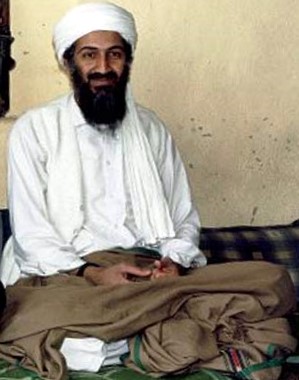
Swims with the fishes.
•In regards Obama questioning whether Mitt Romney would have made the call to enter Pakistan and kill Osama bin Laden, it’s based on factual statements that Romney made which were not taken out of context.
•We need to stop acting like the murder of bin Laden was a sacred event. It was a political and military decision to eliminate a mass murderer. Save the sacred feelings for the victims of 9/11.
•If the decision had gone badly, it would have been politicized to the hilt by the GOP, including Romney. The Democrats would have been branded weak on defense as they have been for more than 40 years.
•It’s not like the GOP didn’t do its own–and very undeserved–victory lap over bin Laden’s killing. Members of the Bush Administration (Cheney, Rumsfeld, Rice) came out of the woodwork to try to claim credit.
•You could argue that Obama is hanging his “Mission Accomplished” banner with the ad, except that the mission actually was accomplished. Maybe it seems boastful, but it is accurate.
•It’s hilarious that draft-dodging members of a party that Swiftboated an Army veteran like John Kerry are now crying foul over being called out on being less forceful on military matters.
•If Arianna Huffington wants to better understand the definition of “despicable,” she should recall how she allowed Jenny McCarthy to use the Huffington Post as a platform to repeatedly frighten parents about immunizing their children. And even after it was proven that those charges were linked to junk science, there was still no retraction or apology. Now that’s despicable.•
Tags: Arianna Huffington, Barack Obama, Condoleezza Rice, Dick Cheney, Donald Rumsfeld, John Kerry, Mitt Romney, Osama bin Laden

Roger Ebert has amended his list from 2002 of the best films ever. From his new choices, only Space Odyssey and Citizen Kane would definitely be on my list. I like 8½ better than La Dolce Vita and prefer Goodfellas to Raging Bull.
2002
Aguirre, Wrath of God (Herzog)
Apocalypse Now (Coppola)
Citizen Kane (Welles)
Dekalog (Kieslowski)
La Dolce Vita (Fellini)
The General (Keaton)
Raging Bull (Scorsese)
2001: A Space Odyssey (Kubrick)
Tokyo Story (Ozu)
Vertigo (Hitchcock)
2012
Aguirre, Wrath of God (Herzog)
Apocalypse Now (Coppola)
Citizen Kane (Welles)
La Dolce Vita (Fellini)
The General (Keaton)
Raging Bull (Scorsese)
2001: A Space Odyssey (Kubrick)
Tokyo Story (Ozu)
The Tree of Life (Malick)
Vertigo (Hitchcock)
Tags: Roger Ebert