Urban Studies

You are currently browsing the archive for the Urban Studies category.

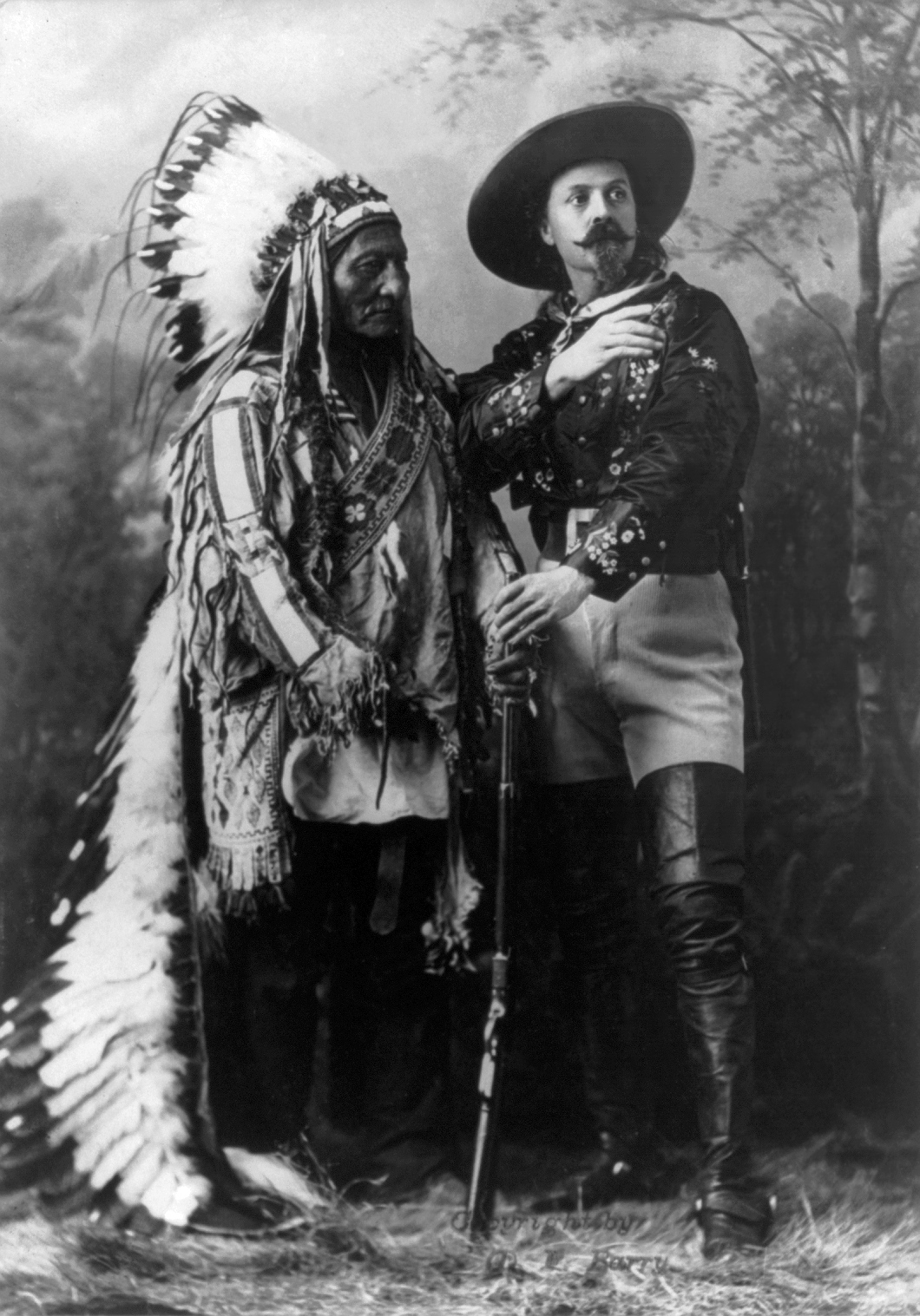
Sitting Bull and Buffalo Bill sell the drama in 1895.

The aura of the American West was created and commodified long before there was a Hollywood, as traveling stage shows brought an appealing version of gunslinging to the masses. From Rob Walker’s 2007 Sunday Times Magazine article about how Buffalo Bill Cody packaged himself for the millions:

“While still a scout for the United States Army, Cody managed to hire himself out as a sort of celebrity hunting guide for well-to-do visitors to the American West. In 1869, when he was about 25, he impressed a writer calling himself Ned Buntline, who began a series of dime novels starring Buffalo Bill. These inspired a play, with Cody himself in the lead role. For the next several years, Cody switched off between actual scouting work in campaigns against Plains Indians — and appearing in plays with names like Scouts of the Plains.

But the great branding event of his career came in 1876, in the wake of George Custer’s disastrous defeat by Sioux Indians at Little Big Horn. Weeks later, Cody’s regiment engaged in a battle against a group of Cheyenne Indians, and Cody — there’s some disagreement on this — apparently killed one, obtaining what he pronounced ‘the first scalp for Custer.’ That fall, Cody starred in the play based on the incident. And by 1883, he and a couple of key collaborators — notably Nate Salsbury, a manager with wonderful showbiz instincts — had invented a show that ‘provided the template . . . for the early film western,’ Joy S. Kasson argues in her 2000 book Buffalo Bill’s Wild West: Celebrity, Memory and Popular History. In the process, she writes, his Wild West ‘became America’s Wild West.’ Indeed, thanks to Salsbury, they actually copyrighted the phrase ‘Wild West’ (after a lengthy legal battle with rivals).

Live animals and blazing guns made the show more of a spectacle than a mere stage play. But a loose narrative and the vaguely educational content made it more respectable than a circus or a medicine show, and Salsbury kept gambling and drinking off the premises to attract the family demographic. At its height, the show included the sharpshooting of Annie Oakley, dramatic re-enactments of an Indian attack on the Deadwood stagecoach and a version of Little Big Horn. The organizers managed to include many actual Native Americans in the cast, including the Sioux chief Sitting Bull himself for part of its 1885 season.

Still, the authenticity was always balanced against affirmation: Cody’s arrival on the scene in the immediate aftermath of the re-enacted version of Little Big Horn converted a debacle into what felt like a victory. ‘It’s not really wild — that’s why it can be entertaining,’ Kasson, a professor of American studies at the University of North Carolina, Chapel Hill, told me. ‘That’s where it leads to Hollywood: the idea that you can give people the feeling of danger, but it’s got to be basically tame.’ In several tours of Europe, the general theme of civilization triumphing over savagery went over well. (Indeed, Kasson cites the historian Richard White’s point that the Wild West shows essentially recast encroaching settlers as victims.) By the time Frederick Jackson Turner momentously declared that ‘the frontier has gone’ at the Columbian Exposition in 1893, Buffalo Bill’s Wild West was in the midst of a monthslong stint right across the street; it was seen by an estimated six million people.”

••••••••••

Edison captured the pageantry of the Buffalo Bill’s Wild West Show parade:

Another Buffalo Bill Cody post:
Tags: ,

"??"

Studs in neck (Graham Ave.)

Has anyone else seen the young French brunette who walks around Graham Ave. with the studs in the back of her neck??

Sea-Monkeys don’t actually play volleyball, not even a little, but Evan Hughes of the Awl has an excellent post about the Insta-Pet’s late creator Harold von Braunhut, a Jewish man who had surprising ties to Aryan supremacists. An excerpt:

“An Assistant U.S. Attorney, Thomas M. Bauer, told the Washington Post that in a 1985 weapons case against a member of the Ku Klux Klan, Grand Dragon Dale R. Reusch, von Braunhut was prepared to testify that he had lent Reusch about $12,000 so he could buy 83 firearms. Bauer told the reporter that von Braunhut was ‘very pleasant and cooperative’ and ‘brought some of his little toys along,’ including Sea-Monkeys.

The general Aryan Nations view holds that Jewish people are directly descended from the devil. It seems clear that von Braunhut, who owned Nazi memorabilia and once said Hitler ‘just got bad press,’ signed on to these beliefs. But one has to wonder what brought him to the point of nodding along when his friend Butler, for instance, described Jews as ‘the bacillus of the decomposition of our society.’ Aryan Nations members might have been dismayed to hear that von Braunhut engaged a law firm called Friedman and Goodman early in his career. They might also have been puzzled that his name was listed on early patents as Harold N. Braunhut. The middle initial stands for Nathan. Harold von Braunhut was born and raised Jewish.”

•••••••••••

Tags: ,

Sent aloft by a foam printer.

There’s apparently a controversy over whether the sound of money being dispensed at ATM machines–the pleasing noise of bills being distributed rapidly one after another–is merely a sound effect. Brad Tuttle looks at the dispute in a Time post:

“The assumption most people jump to is that the sound is produced by rollers delivering the notes to the collection slot. In fact, the sound is an entirely artificial addition to the process.

The noise is produced by a speaker and purely included in the transaction to reassure you that your money is on its way. Without the added noise, the ATM would be practically silent with its moving parts on the other side of a brick wall.” (Thanks to Marginal Revolution.)

••••••••••

First ATM in America that dispenses gold:

Tags:

He needs one of those drinking straw caps filled with Bud and then he’s set.

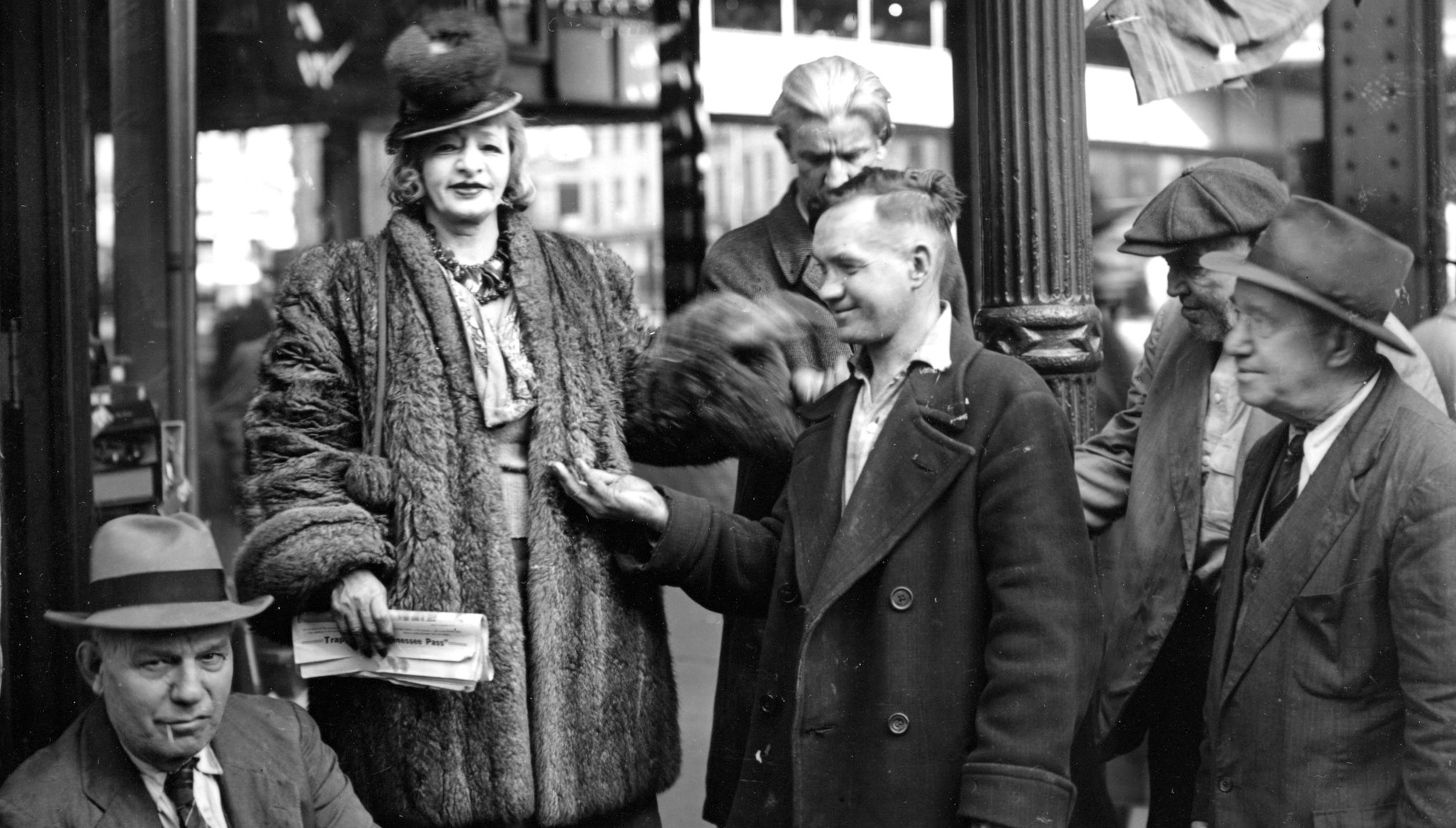
One of my favorite Joseph Mitchell New Yorker pieces is the 1940 article, “Mazie” (subscription required), which profiles a doyenne of the Bowery, a movie-theater ticket seller who treated the riff-raff of the downtrodden strip with a mix of tough love and kid gloves. I recently found her 1961 obituary on the New York Times site. The opening:

Bowery Mourns Mazie Phillips, Faithful Friend of Derelicts–She Was “Over 21”–Mazie Phillips known as the “Queen of the Bowery,” died Monday in Lenox Hill Hospital after a long illness. She lived at 18 Monroe Street on the Lower East Side with her sister, Mrs. Jean Hallen, a widow, and always gave her age as ‘over 21.”

For more than 65 years, Mazie, a platinum blonde with a husky voice, passed out advice (“Go take a bath, you bum”) money (“That’s a real quarter now”) and sympathy (“You got the makins of a great man”) to every Bowery derelict who would pause and listen.

Mazie dispensed the advice, money and cheer day and night on the streets of the Bowery, and most particularly from behind a cashier’s cage at the theater on Park Row.

She was known and liked in the Bowery and yesterday, Harry Baronian of the Bowery News said there were men sitting on doorsteps, ignoring their tattered clothes and other discomforts and lamenting her death. Some drank to her memory, he added, as she had often done for others.

The “Gentlest Heart”

The children of the Bowery will miss her, too, in their own way. They looked for the lollipops she carried in her pockets and she looked for the children, enjoying the jest of first saying she had no more.

But why did she help those in the Bowery? Her sister said yesterday that there was no real reason, “she just had the gentlest, kindest heart of anyone.”

Mazie did not believe, however, that the men of the Bowery could be helped by organized charity.

“I’m not out to knock missions or such,” she once said, “but you aint goin’ to get a bum in a mission if there’s a gutter to sleep in.” But she denied a report that she had once lured some men out of a mission by waving a bottle of whisky outside.

Mazie Was Buying

“All I did,” she remarked, “was to go in the King Kong Saloon and pass out the word that the drinks was on me.”

It is not clear just when Mazie arrived in New York, but it was probably around 1890. She was born in Boston, and her sister recalled that Mazie was a “quiet, very demure little girl” when she left for New York.

Shortly after, she became a familiar, friendly face in the ticket-seller’s cage in front of the old Venice Theater at 207 Park Row, where the Bowery and Chinatown meet.•

Tags: , ,

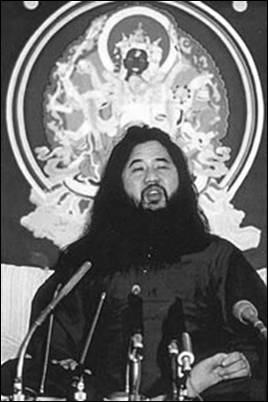
A passage from the April 3, 1995 edition of Time magazine about the scary rise to prominence of Shoko Asahara, the nearly blind cult leader who poisoned Tokyo subways with Sarin gas in 1995 and currently awaits execution:

“By 1984, though, the future ‘savior’ began to find his niche. He set up a yoga school that proved to be quite successful. Even if a former student recalls that in those days ‘we were not followers but members,” the time was ripe for gurus. Japan’s galloping economic miracle in the 1970s and ’80s also spawned a boom in ‘new religions’ offering spiritual refuge to Japanese alienated by materialism. Asahara’s messianic self-image expanded to help fill this void. After a visit to a Himalayan retreat, he boasted of having achieved satori, the Japanese term for nirvana or enlightenment. At this point he also claimed his first success at self-levitation.

Asahara established his Aum Shinrikyo religion in 1987, and the movement even put up a number of candidates in the 1990 Lower House Diet elections; all of them lost. Not much later he began conferring on himself such titles as ‘Today’s Christ’ and ‘the Savior of This Century.’ His community branched out rapidly in Japan. Soon it had established some beachheads overseas–including the U.S. and Germany but notably Russia. Asahara once preached before a crowd of 15,000 in a Moscow sports stadium.

As his fortunes prospered, Asahara seems to have grown more reclusive and obsessed with danger. The religion, nominally Buddhist but really a hodgepodge of ascetic disciplines and New Age occultism, focused on supposed threats from the U.S., which he portrayed as a creature of Freemasons and Jews bent on destroying Japan. The conspiracy’s weapons: sex and junk food. The guru’s sermons predicted the end of the world sometime between 1997 and 2000, and began citing the specific peril of poison-gas attacks.”

••••••••••

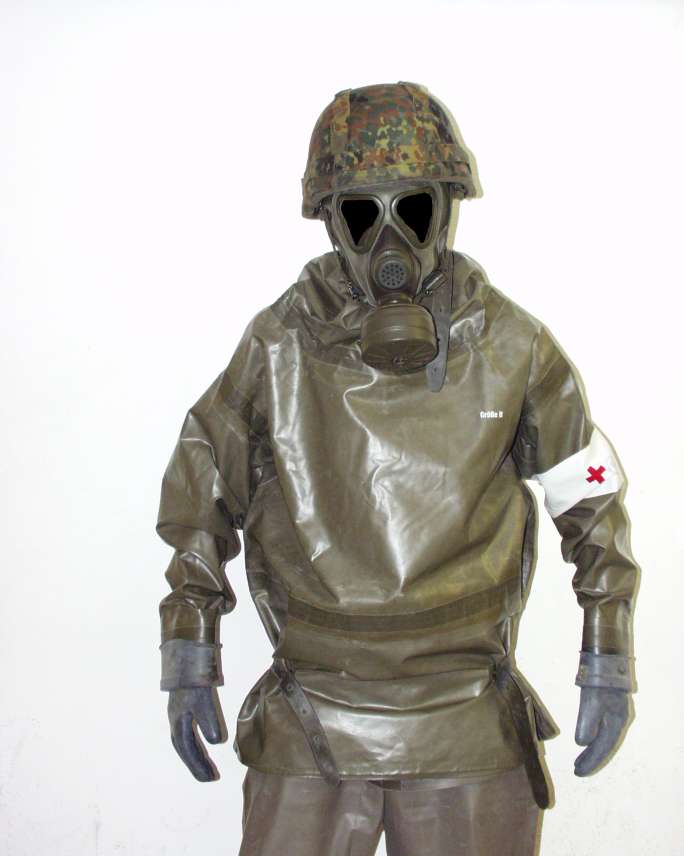
“Someone or some group mounted a devastating posion gas attack this morning”:

Aum Shinrikyo anime:

Tags:

"I can help you." (Image by Flacus.)

the “cleaner” wants your adult magazines

your adult mags,,i.e…porn collections,,
those embarrassing magazines,books,movies
various equipment ect,ect,,,NOTHING is too “risque” for me to
take away..this is a serious add!..i can help you
guy’s or ladies out..if you need it gone contact me

“the cleaner”

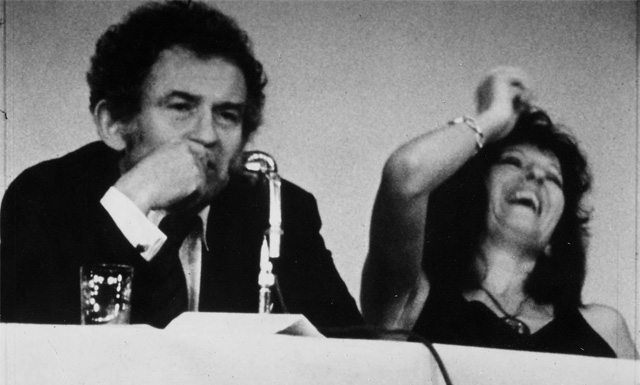
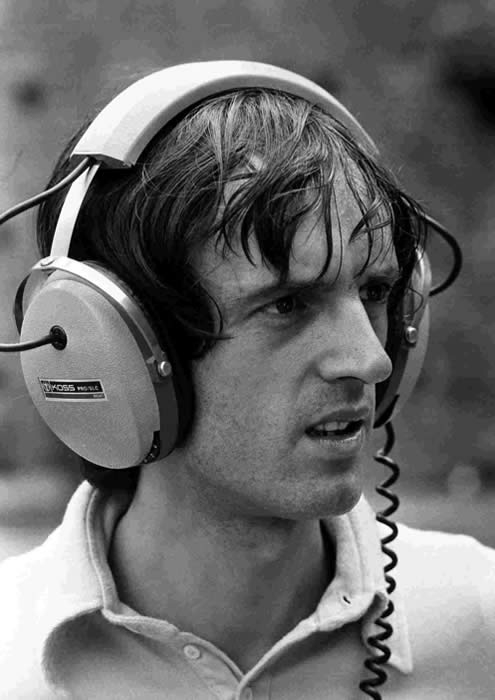
Mailer joined Germaine Greer and other feminist advocates for a raucous panel discussion about women’s liberation at NYC’s Town Hall in 1971. D.A. Pennebaker was on hand to capture all the madness; the footage was edited years later into movie form by his wife, Chris Hegedus.

Tags: , , , , ,

This telling segment July 31, 1971 Huntley-Brinkley Report (which was Chet Huntley’s final broadcast) is a pretty tremendous capsule of ’60s youth culture run aground, as there are accounts of rock festivals cancelled, the Manson Family murder trial in progress and Berkeley police attempting to shutter communes. Young reporter Tom Brokaw handles the Berkeley story.

The opening of the December 19, 1969 Life report about the Manson murders: “Long-haired, bearded little Charlie Manson so disturbed the American millions last week–when he was charged with sending four docile girls and a hairy male acolyte off to slaughter strangers in two Los Angeles houses last August–that the victims of his blithe and gory crimes seemed suddenly to have played only secondary roles in the final brutal moments of their own lives. The Los Angeles killings struck innumerable Americans as an inexplicable controversion of everything they wanted to believe about the society and their children–and made Charlie Manson seem to be the very encapsulation of truth about revolt and violence by the young.”

Tags: , , ,

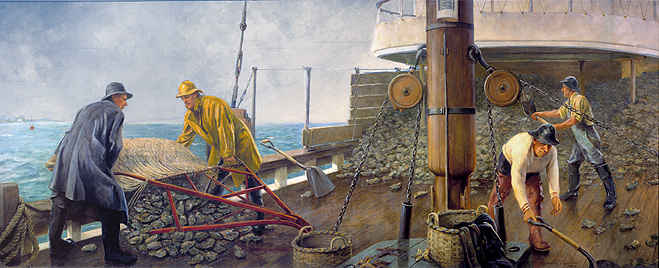
"Jacob Snyder, an oysterman living in Woodhaven, had a bitter experience on Jamaica Bay Thursday night." (Image by Alexander Rummler.)

When they weren’t busy collecting and selling shellfish, 19th-century oystermen were living dramatic lives, as the following trio of Brooklyn Daily Eagle articles demonstrates.

••••••••••

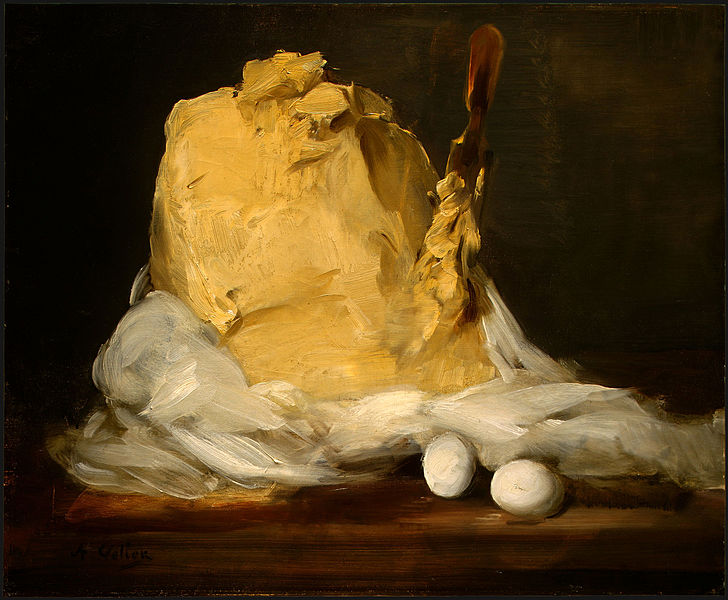
“A Bloody Affray–Murderous Assault of an Oysterman” (September 17, 1887): “At an early hour yesterday morning, John Graham, aged twenty-five years, of No. 53 Harrison Avenue, with two friends, visited the oyster saloon of Adam Christman, No. 416 Broadway, and asked for stews. When they were laid on the table Graham asked fror more butter, which Christman refused to give, much to the annoyance of the former, who threw his oysters into a waste dish, and with his friends got up to leave. Before they had reached the door, Christman, armed with an oyster knife, made a desperate attack on Graham, cutting him severly in the head and face, and inflicting some dangerous wounds. It was with the greatest difficulty that he was disarmed and his victim rescued. Beside the injuries referred to, Graham had his nose almost entirely bitten off during the struggle. Christman, who is thirty years of age, was arrested on a charge of felonious assault by Sergeant Leavey, of the Thirteenth precinct. He was arraigned before Justice Riley to-day, and hold for examination.”

••••••••••

"When they were laid on the table Graham asked fror more butter, which Christman refused to give, much to the annoyance of the former, who threw his oysters into a waste dish." (Image by Antoine Vollon.)

“Old Bob Meets With an Accident” (March 8, 1896): “Henry Young of Flatlands, 93 years of age, known all over the annexed district as Old Bob, met with an accident in Flatlands yesterday afternoon that came within a hair’s breadth of spoiling his prospect of being a centenarian. Old Bob is an oyesterman, and three times a week he may be seen on his yellow wagon, peddling oysters up and down Flatbush Avenue and the side streets. Yesterday afternoon he was just coming to a halt on front of the Ditman residence on Flatbush Avenue, near Avenue C, when a farmer’s wagon, belonging to P.J. Collins of Flatlands, collided with his vehicle. Bob was thrown off his seat with great violence and landed head first in the middle of the car tracks. He was stunned from the shock and unable to rise for several minutes. When he got up he found his wagon a wreck and the farmer’s wagon going up the avenue with the speed of a trolley car. Bob’s horse being a steady animal, stood patiently waiting to see what his master was going to do about it. He left the horse and what was left of the wagon just where they stood and with blood in his white hair, called on Justice Steers to have the driver of the farm wagon arrested.”

••••••••••

“Frozen in His Boat” (January 7, 1893): “Jacob Snyder, an oysterman living in Woodhaven, had a bitter experience on Jamaica Bay Thursday night. His hands, feet and ears were frozen and it is thought amputation of his feet will be necessary. Snyder owns oyster beds at Beach Channel. His grounds have been visited by oyster thieves lately, and on Thursday night the planter, armed with a shot gun, arranged to watch the beds from a rowboat hidden in the thatch, a short distance from the channel. Snyder watched for several hours, taking frequent pulls at a flask of whisky. He fell sleep and did not wake until 3 o’clock, when the storm was at its height. Snyder was benumbed with the cold, but decided to make an attempt to reach the main land. His boat was caught by the wind and blown toward the mouth of the bay. The desperate efforts of the bayman to control the boat were without effect and he became exhausted and lost consciousness. Early yesterday Snyder’s son began a search for his father. The skiff was found on Ruffle Bar. The oysterman lay in the bottom of the boat, still unconscious and nearly frozen to death. A vigorous rubbing partially restored him, but Snyder lost consciousness three times before reaching his home. Physicians were called to attend him and they will make an effort to save his hands.”

From a 1982 Robert Reinhold article in the New York Times, which predicted with stunning accuracy how technology has subsequently transformed our lives, connecting us and allowing for a decentralized flow of information:

“A report commissioned by the National Science Foundation and made public today speculates that by the end of this century electronic information technology will have transformed American home, business, manufacturing, school, family and political life.

The report suggests that one-way and two-way home information systems, called teletext and videotex, will penetrate deeply into daily life, with an effect on society as profound as those of the automobile and commercial television earlier in this century.

It conjured a vision, at once appealing and threatening, of a style of life defined and controlled by videotex terminals throughout the house.” (Thanks Reddit.)

Tags:

A Chuck Close interview from 1978, a decade before a spinal artery collapse left him severely paralyzed but no less brilliant an artist. I went to the press event when he had his major retrospective at MoMA some years back and came away as impressed with him as his work, which is amazing. I believe I referred to his portraiture as “pointillism for the computer age” in a subsequent article, but it’s much more complex than that description.

Chuck Close describing his arrival in NYC in 1967, to New York magazine: “I paid $150 a month for a raw loft on Greene Street, and all my friends who were already living here laughed, thinking it was outrageous to pay that much. The loft had no heat. I painted for an entire year with gloves on and just my trigger finger sticking out to the button on the airbrush. Literally, the coffee would freeze in its mug; the toilet would freeze overnight. We slept under a pile of blankets.

Soho was rats and rags and garbage trucks: There were occasional wars between one Mafia-owned waste-management company and another, during which one would burn the other’s trucks. There might have been twenty artists—or people of any kind—living between Houston and Canal; you could have shot a cannon down Greene Street and never hit anybody. But we all lived within a few blocks of each other: Brice Marden, Richard Serra, Nancy Graves, Phil Glass. We were in someone’s loft every night, either listening to a composer like Steve Reich or watching dancers like Yvonne Rainer and Trisha Brown. A lot of us helped Richard make his lead prop pieces, because he needed muscle and brawn to roll the lead and stack it up. Phil was his only paid assistant, and the rest of us were this interesting group of writers, filmmakers, even Spalding Gray. After work we’d go over to this cafeteria in what is now the Odeon, and we’d sit around and dream up ideas on the back of napkins.”

Tags:

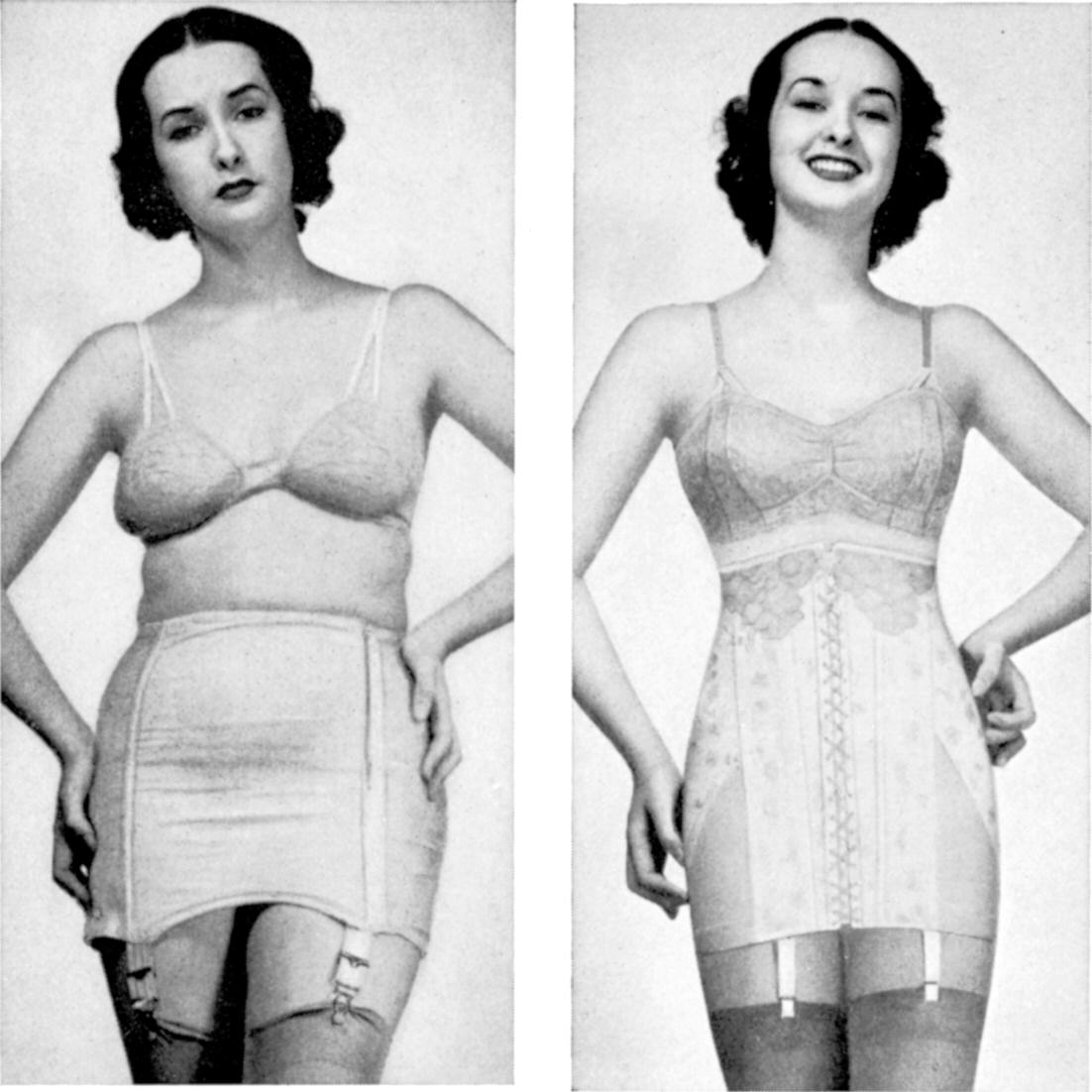
"If you closed your corset/girdle/bra company and have your stock in the garage or storage - contact us please."

“New old stock” underwear (any)

Seeking to buy out “factory finds” or “warehouse finds” from the old NYC corset, foundations, underwear, brassiere, or hosiery companies.

Also seeking to buy the backroom inventory from the really old closed lingerie shops. We are looking for the made-in-USA undergarments from the 70’s and older.

If you closed your corset/girdle/bra company and have your stock in the garage or storage – contact us please.

If you are emptying out an old warehouse and discovered that it’s loaded with old underwear (or stockings, no pantyhose) – contact us please.

A couple years ago we made contact with a person whose garage was loaded with this stuff that we wanted but we lost his contact information. We think the company was Strouse but we’re not sure.

Please help save these cool old clothes from the landfills and get it recycled into the hands of people like our us who appreciate the old products! Let’s make a win/win deal!

Dick Cavett conducted a 1970 interview with a very drunk John Cassavetes, Ben Gazzara and Peter Falk, the latter of whom just passed away. Best known as Colombo, but much more diverse than that, Falk played a special role in the work of Cassavetes and Wim Wenders.

The first graph of Richard Brody’s smart Falk post at the New Yorker blog: “It’s surprising to learn, from reading biographical sketches of Peter Falk on the occasion of his death, at the age of eighty-three, that he got a master’s degree in public administration and was working in Connecticut as an efficiency expert when, in his mid-twenties, he decided to take a chance on an acting career. It’s equally odd to note that he had two Oscar nominations for Best Supporting Actor in consecutive years—1960 and 1961—for his roles in Murder, Inc. and A Pocketful of Miracles. They hardly helped. He was working mainly on television, doing some movies but not getting plum roles, when, in 1967, he met John Cassavetes at a Lakers game and then had lunch with him at the Paramount commissary. As Marshall Fine writes in his biography of Cassavetes, Accidental Genius, ‘Falk had a script by Elaine May, Mikey and Nicky, that he thought Cassavetes would be perfect for.’ At the same time, Cassavetes pitched Husbands to Falk. Each actor thought the other had agreed to the projects, and each had misunderstood.'”

Tags: , , , ,

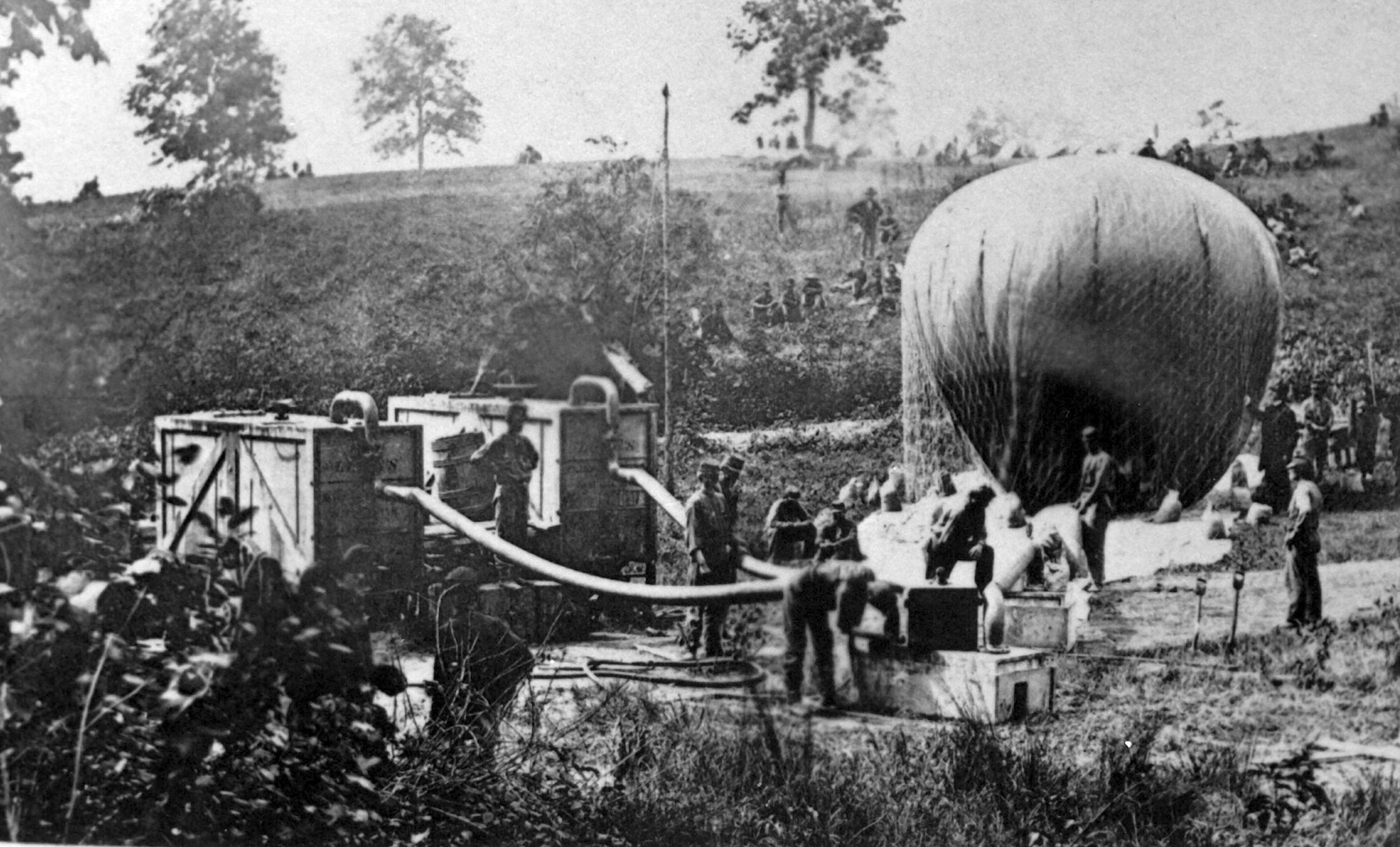
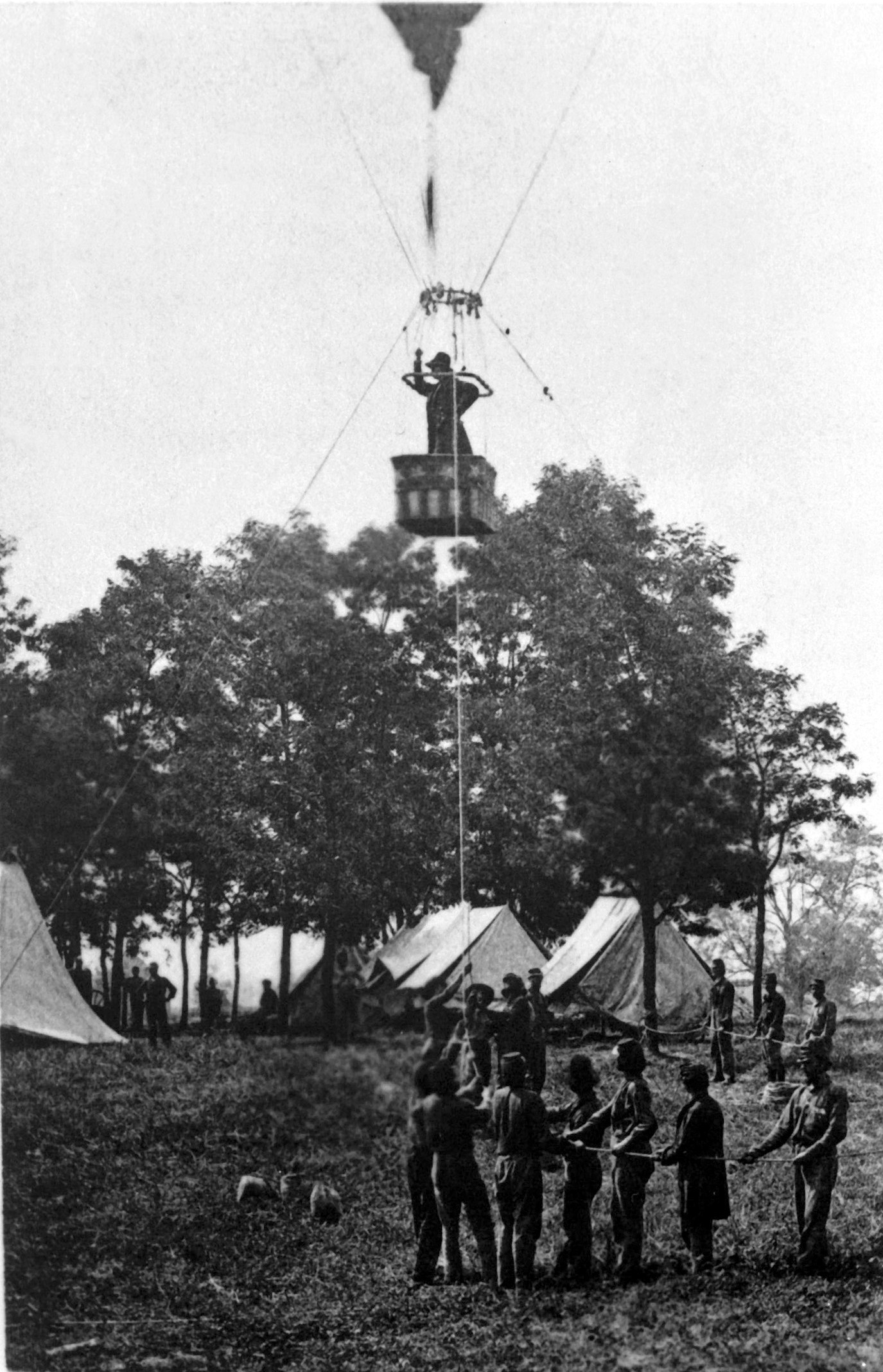
These classic 1862 Civil War photographs of Thaddeus Lowe’s balloons were taken in Virginia by Mathew Brady. Lowe, the father of American military aerial reconnaissance who had been designated Chief Aeronaut of the United States Balloon Corps by President Lincoln, deployed his crafts to gather information about the number and positioning of Confederate troops. Oh, and Lowe was also the first American to figure out how to make artificial ice, which is the odd choice for the lead of his 1913 New York Times obituary:

“Pasadena, Cal., Jan. 16–Dr. Thaddeus S.C. Lowe, scientist and experimenter, who invented an ice compressing machine in 1865, making the first artificial ice in the United States, died to-day at the home of his daughter in this place. Dr. Lowe was born in Jefferson, N. H., in 1832, of Pilgrim ancestry. He was educated in the common schools, and specialized in the study of chemistry. From 1856 to 1859 he was engaged in constructing balloons for the study of atmospheric conditions.

Dr. Lowe built the largest aerostat of his day, and in 1861 made a 900-mile trip in it from Cincinnati to the South Carolina coast in nine hours. Later he entered the Government services as Chief of the Aeronautics Corp, which he organized, rendering valuable service to the Army of the Potomac, from Bull Run to Gettysburg, by observations and timely warnings. Next he invented a system of signaling to field batteries from high altitudes. Other devices invented by him practically revolutionized the gas industry. He built the Mount Lowe Railway, 1891-1904, and established the Lowe Observatory in the Sierra Madre Mountains.

Tags: , ,

Artist-scientist Patrick Tresset purposely programmed his robot Paul to draw imperfectly. (Thanks Fastcodesign.)

Tags: ,

Sure, why not? (Thanks Fast Company.)

"He requested in his suicide note that an autopsy be performed to determine if something had changed in his brain—because he suspected it had."

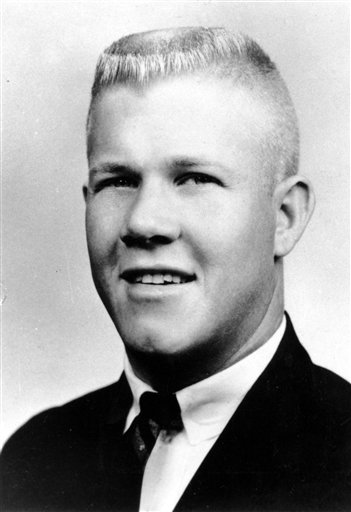
In his provocative new Atlantic article, The Brain on Trial,” David Eagleman investigates whether brain injuries and illnesses are sometimes the driving force behind criminality. In the piece, Eagleman raises the case of Charles Whitman, a heavily armed 25-year-old student who killed 16 people from his vantage point on a University of Texas observation tower on a blistering August day in 1966. Whitman, who kept killing until he himself was killed by police, left a note revealing his suspicions that his brain had somehow changed, causing his violent impulses–and he may have been right. An excerpt:

“Along with the shock of the murders lay another, more hidden, surprise: the juxtaposition of his aberrant actions with his unremarkable personal life. Whitman was an Eagle Scout and a former marine, studied architectural engineering at the University of Texas, and briefly worked as a bank teller and volunteered as a scoutmaster for Austin’s Boy Scout Troop 5. As a child, he’d scored 138 on the Stanford-Binet IQ test, placing in the 99th percentile. So after his shooting spree from the University of Texas Tower, everyone wanted answers.

For that matter, so did Whitman. He requested in his suicide note that an autopsy be performed to determine if something had changed in his brain—because he suspected it had.

I talked with a Doctor once for about two hours and tried to convey to him my fears that I felt [overcome by] overwhelming violent impulses. After one session I never saw the Doctor again, and since then I have been fighting my mental turmoil alone, and seemingly to no avail.

Whitman’s body was taken to the morgue, his skull was put under the bone saw, and the medical examiner lifted the brain from its vault. He discovered that Whitman’s brain harbored a tumor the diameter of a nickel. This tumor, called a glioblastoma, had blossomed from beneath a structure called the thalamus, impinged on the hypothalamus, and compressed a third region called the amygdala. The amygdala is involved in emotional regulation, especially of fear and aggression. By the late 1800s, researchers had discovered that damage to the amygdala caused emotional and social disturbances. In the 1930s, the researchers Heinrich Klüver and Paul Bucy demonstrated that damage to the amygdala in monkeys led to a constellation of symptoms, including lack of fear, blunting of emotion, and overreaction. Female monkeys with amygdala damage often neglected or physically abused their infants. In humans, activity in the amygdala increases when people are shown threatening faces, are put into frightening situations, or experience social phobias. Whitman’s intuition about himself—that something in his brain was changing his behavior—was spot-on.”

••••••••••

“The typed letter related Whitman’s headaches.”

Tags: , ,

Joe Franklin hosted a talk show for 42 years, before he could be apprehended. Here he interviews Dario Argento in 1985 or so about Creepers.

Tags: ,

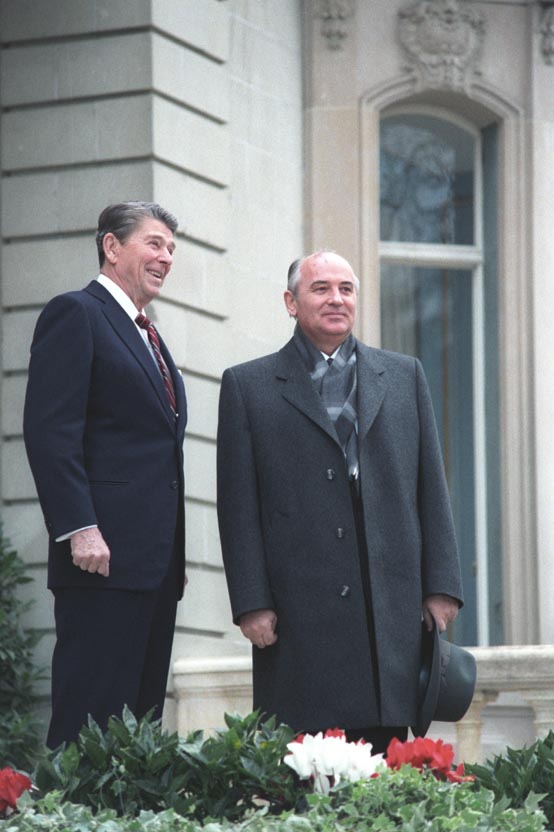
From David Remnick’s excellent 1991 Washington Post coverage of Mikhail Gorbachev’s ignominious ouster from the Kremlin, which occurred after he dismantled the Cold War Soviet machinery, leaving the former superpower less a danger to the rest of the world but seemingly no less a danger to itself:

“Mikhail Sergeyevich Gorbachev, whose battle to reform socialism has ended with the collapse of Leninist ideology and the Soviet Union, left the Kremlin tonight an exhausted and bitter man.

In his final days, Gorbachev told aides that he felt ‘balanced’ and ‘at peace’ with his choices, his place in history. But as he sat in the eerie quiet of his office last weekend receiving visitors and watching news reports on television, he learned that the presidents of the former Soviet republics, who had met to form the new Commonwealth of Independent States, had discussed not only an end to the Soviet Union but, with unconcealed relish, the details of his pension. Down the hall, members of President Boris Yeltsin’s Russian government were already taking measurements and inventory for their imminent move into the Kremlin.

‘For me, they have poisoned the air,’ Gorbachev confided to one reporter. ‘They have humiliated me.’

Gorbachev has tried hard to conceal his emotions, to cover them over with pride and the language of political euphemism. Yet his sense of rejection and betrayal from all sides seems no less profound for him than it was for Soviet leader Nikita Khrushchev, who was ousted in 1964, or for Winston Churchill when he was summarily voted out of 10 Downing St. after leading Britain to victory in World War II. Four months ago, Gorbachev’s closest aides in the Communist Party, the military and the KGB arrested him and made clear an implicit threat of murder. Once back in Moscow, Yeltsin and other republics’ leaders leached him of all authority, making him look hollow and weak.”

••••••••••

In 1996, Gorbachev is interviewed by noted male impersonator, Rosie Charles:

If you’d like, they can stuff the crust with cheese, comrade:

Another David Remnick post:

Tags: , ,

"I have 2 pony tails." (Image by Countercanter.)

HUMAN HAIR FOR SALE – $150 (Upper East Side)

I have 2 pony tails 1 is 13 inches of thick dark brown hair $150 – 200 and the other is about 11 inches of thick dark brown hair $ 100 – 150 i dont want to just throw this perfectly good hair away so contact me if you are intrested greatly appreciate it. please dont email me asking why dont you just donate it because i need the money. so if anyone knows where i can sell my hair ill donate the other pony tail i just really need the money right now thank you .

Getting to work in a bike-friendly nation.

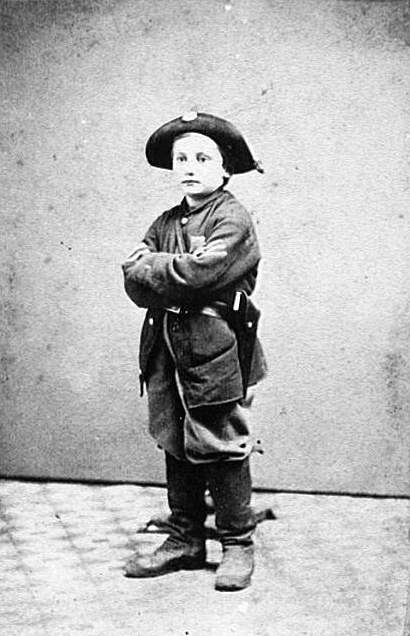
"A few minutes later screams were heard in the orchard."

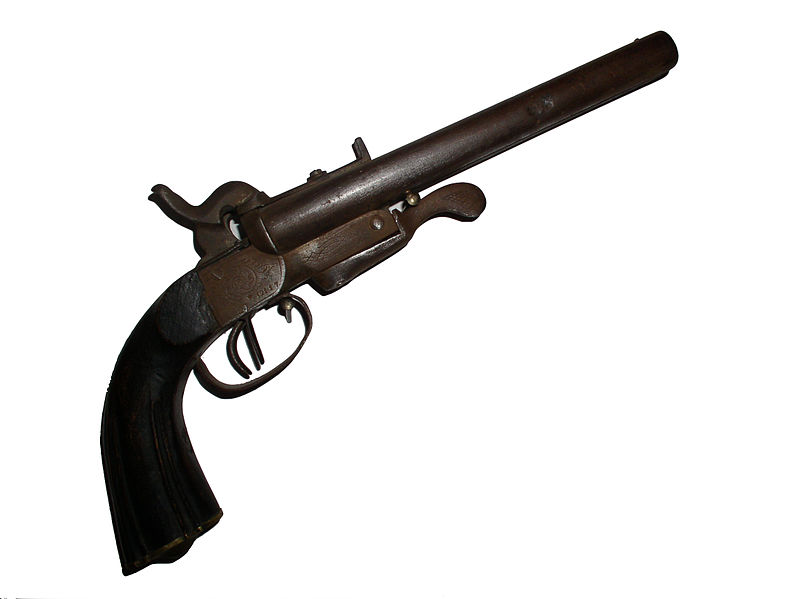
Children playing with firearms, always a recipe for disaster, led to tragedy on Long Island 110 years ago, as this article from the January 2, 1901 issue of the Brooklyn Daily Eagle demonstrates. An excerpt:

“Northport, L.I.–The second accidental shooting within a week at Fort Saratoga occurred about noon yesterday, and though little Carlo Bertelsen, the victim, is yet alive at noon to-day with a .32-caliber bullet in his body, little hope is entertained of his recovery.

Peter Mortensen, the 10-year-old son of Andrew Mortensen, an oysterman, took a .32 caliber pistol belonging to his grandfather from a bureau drawer, and in company with his cousin, Willi Kasso, and his playmate, Carlo, the son of a farmer, 8 years of age, he went into an orchard near their home to practice shooting at a mark.

A few minutes later screams were heard in the orchard, and Bertelsen’s parents found their child lying upon the ground with a bullet wound in his stomach. The Mortensen child in the excitement had dropped the pistol and ran away.

Dr. George H. Donahue at Northport was called and he found that the bullet had entered the child’s body just below the lung, but he was unable to locate it.

Young Mortensen, who held the pistol, had a part of one finger taken off by the same bullet that wounded his playmate.

Coroner H.H. Davidson, last night took the ante-mortem statement of the injured child, who said they had already shot the pistol off once at a mark, and were getting ready to shoot the second time when Peter Mortensen could not move the trigger, so they all took a hand in trying and the pistol suddenly went off.

Dr. Walter Lindsay, who was called in consultation last night, does not think the boy can live. This accident occurred within one half mile of where Henry Webber was accidentally shot by his brother on Friday last and which resulted in his death.”


« Older entries § Newer entries »