Urban Studies

You are currently browsing the archive for the Urban Studies category.

From Hunter S, Thompson’s essay, “The Hippies,” which was originally published in the Collier’s Encyclopedia 1968 Yearbook:

Everyone seems to agree that hippies have some kind of widespread appeal, but nobody can say exactly what they stand for. Not even the hippies seem to know, although some can be very articulate when it comes to details.

“I love the whole world,” said a 23-year-old girl in San Francisco’s Haight-Ashbury district, the hippies’ world capital. “I am the divine mother, part of Buddha, part of God, part of everything.

“I live from meal to meal. I have no money, no possessions. Money is beautiful only when it’s flowing; when it piles up, it’s a hang-up. We take care of each other. There’s always something to buy beans and rice for the group, and someone always sees that I get “grass” [marijuana] or “acid” [LSD]. I was in a mental hospital once because I tried to conform and play the game. But now I’m free and happy.”

She was then asked whether she used drugs often.

“Fairly,” she replied. “When I find myself becoming confused I drop out and take a dose of acid. It’s a short cut to reality; it throws you right into it. Everyone should take it, even children. Why shouldn’t they be enlightened early, instead of waiting till they’re old? Human beings need total freedom.

“That’s where God is at. We need to shed hypocrisy, dishonesty, and phoniness and go back to the purity of our childhood values.”

The next question was “Do you ever pray?”

“Oh yes,” she said. “I pray in the morning sun. It nourishes me with its energy so I can spread my love and beauty and nourish others.”•

Tags:

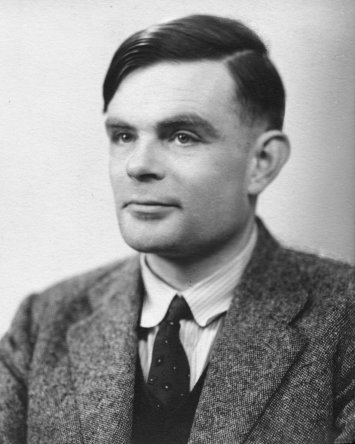
This month marks the 99th birthday of British mathematician Alan Turing, the father of computing. The opening of Jim Holt’s 2006 New Yorker review of David Leavitt’s book about Turing:

“On June 8, 1954, Alan Turing, a forty-one-year-old research scientist at Manchester University, was found dead by his housekeeper. Before getting into bed the night before, he had taken a few bites out of an apple that was, apparently, laced with cyanide. At an inquest, a few days later, his death was ruled a suicide. Turing was, by necessity rather than by inclination, a man of secrets. One of his secrets had been exposed two years before his death, when he was convicted of “gross indecency” for having a homosexual affair. Another, however, had not yet come to light. It was Turing who was chiefly responsible for breaking the German Enigma code during the Second World War, an achievement that helped save Britain from defeat in the dark days of 1941. Had this been publicly known, he would have been acclaimed a national hero. But the existence of the British code-breaking effort remained closely guarded even after the end of the war; the relevant documents weren’t declassified until the nineteen-seventies. And it wasn’t until the eighties that Turing got the credit he deserved for a second, and equally formidable, achievement: creating the blueprint for the modern computer.”

••••••••••

Alan Turing the Cat who, by the way, pretty much sucks at math:

Tags: , ,

A debate held at Cambridge University.

Tags: ,

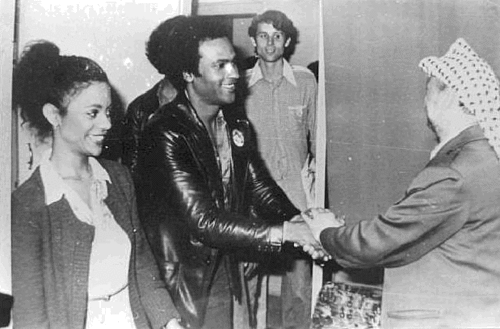
Deeply gifted and deeply troubled Black Panther Huey P. Newton meets that bad muthafucka William F. Buckley in 1973.

Tags: ,

Time magazine heralded the advent of the Digital Age in its March 1, 1995 issue, which included an essay by Stewart Brand called We Owe It All to the Hippies.” The piece argued, quite rightly, that the impetus for our booming tech sector came from the counterculture, courtesy of dropouts, phreaks, and hackers. An excerpt:

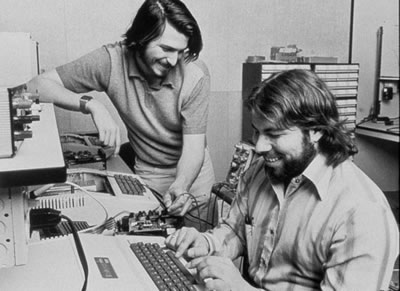
“In the 1960s and early ’70s, the first generation of hackers emerged in university computer-science departments. They transformed mainframes into virtual personal computers, using a technique called time sharing that provided widespread access to computers. Then in the late ’70s, the second generation invented and manufactured the personal computer. These nonacademic hackers were hard-core counterculture types — like Steve Jobs, a Beatle- haired hippie who had dropped out of Reed College, and Steve Wozniak, a Hewlett-Packard engineer. Before their success with Apple, both Steves developed and sold ‘blue boxes,’ outlaw devices for making free telephone calls. Their contemporary and early collaborator, Lee Felsenstein, who designed the first portable computer, known as the Osborne 1, was a New Left radical who wrote for the renowned underground paper the Berkeley Barb.

As they followed the mantra ‘Turn on, tune in and drop out,’ college students of the ’60s also dropped academia’s traditional disdain for business. ‘Do your own thing’ easily translated into ‘Start your own business.’ Reviled by the broader social establishment, hippies found ready acceptance in the world of small business. They brought an honesty and a dedication to service that was attractive to vendors and customers alike. Success in business made them disinclined to ‘grow out of’ their countercultural values, and it made a number of them wealthy and powerful at a young age.

The third generation of revolutionaries, the software hackers of the early ’80s, created the application, education and entertainment programs for personal computers. Typical was Mitch Kapor, a former transcendental-meditation teacher, who gave us the spreadsheet program Lotus 1-2-3, which ensured the success of IBM’s Apple-imitating PC. Like most computer pioneers, Kapor is still active. His Electronic Frontier Foundation, which he co- founded with a lyricist for the Grateful Dead, lobbies successfully in Washington for civil rights in cyberspace. In the years since Levy’s book, a fourth generation of revolutionaries has come to power. Still abiding by the Hacker Ethic, these tens of thousands of netheads have created myriad computer bulletin boards and a nonhierarchical linking system called Usenet. At the same time, they have transformed the Defense Department-sponsored ARPAnet into what has become the global digital epidemic known as the Internet. The average age of today’s Internet users, who number in the tens of millions, is about 30 years. Just as personal computers transformed the ’80s, this latest generation knows that the Net is going to transform the ’90s. With the same ethic that has guided previous generations, today’s users are leading the way with tools created initially as ‘freeware’ or ‘shareware,’ available to anyone who wants them. Of course, not everyone on the electronic frontier identifies with the countercultural roots of the ’60s. One would hardly call Nicholas Negroponte, the patrician head of M.I.T.’s Media Lab, or Microsoft magnate Bill Gates ‘hippies.’ Yet creative forces continue to emanate from that period. Virtual reality — computerized sensory immersion — was named, largely inspired and partly equipped by Jaron Lanier, who grew up under a geodesic dome in New Mexico, once played clarinet in the New York City subway and still sports dreadlocks halfway down his back. The latest generation of supercomputers, utilizing massive parallel processing, was invented, developed and manufactured by Danny Hillis, a genial longhair who set out to build ‘a machine that could be proud of us.’ Public-key encryption, which can ensure unbreakable privacy for anyone, is the brainchild of Whitfield Diffie, a lifelong peacenik and privacy advocate who declared in a recent interview, ‘I have always believed the thesis that one’s politics and the character of one’s intellectual work are inseparable.’ Our generation proved in cyberspace that where self-reliance leads, resilience follows, and where generosity leads, prosperity follows. If that dynamic continues, and everything so far suggests that it will, then the information age will bear the distinctive mark of the countercultural ’60s well into the new millennium.”

••••••••••

As mentioned in the article, the Osborne I, the first portable computer:

More Stewart Brand Posts:


Tags:

Walter Cronkite getting a huger boner over the potential of lasers in 1968.

Tags:

"She kicked ass."

Rave! (My Life)

My life is on an upswing. Saw Sade last night! ( she kicked ass ) Business is picking up. I’ve got a fantastic independant Woman who likes what we have. What’s left of the family is doing great. Divorced in less than 8 weeks, keeping the house/w custody of the children ( and I don’t want a damn dime from her )

It’s going to be a great Summer.


Tags:

Nothing counterintuitive about this Wired post by Brandon Keim about research that suggests that city dwellers are more stressed out than rural counterparts and more prone to mental illness. Our ability to handle social stress and stimuli isn’t very elastic, which is bad news since social stress and stimuli aren’t decreasing anytime soon, not with those wired gadgets tucked neatly in our pockets adding to the urban ills of noise, traffic and crowds. Still, I’d rather live in a city. An excerpt:

“Compared to their rural counterparts, city dwellers have higher levels of anxiety and mood disorders. The schizophrenia risk of people raised in cities is almost double. Literature on the effect is so thorough that researchers say it’s not just correlation, as might be expected if anxious people preferred to live in cities. Neither is it a result of heredity. It’s a cause-and-effect relationship between environment and mind.

What those causes are is unknown, but many researchers have speculated that urban social environments are partly responsible. After all, cities are hyper-social places, in which residents must be constantly on guard, and have mathematically more opportunity to experience stressful interaction. Too much stress may ultimately alter the brain, leaving it ill-equipped to handle further stress and prone to mental illness.

‘Most people speculated that it had something to do with social environments, but there was never any direct data,’ said Meyer-Lindenberg. ‘We provide the first mechanism that links cities to mental illness via social stress.'”

••••••••••

He’s walkin’ there:

Tags:

Subcultures, the place where people turn normal interests into obsessions, often unhealthy ones, are always interesting. (Thanks Documentarian.)

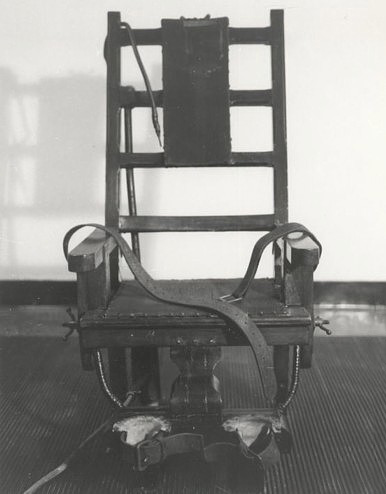
"It required two shocks to kill him. The first applied at 6:04 A.M. and the second about three minutes later."

At one point, death by electric chair was considered a progressive and humane treatment of the condemned. In the late 1880s, New York City formed a commission to devise a less cruel means of execution than hanging. They settled on electrocution and because one of the members of the commission, Alfred P. Southwick, was a dentist by trade, a dentist-office type of chair was decided upon. By 1890, New York was frying instead of hanging those convicted of the worst crimes. One such unfortunate was Lorenzo Priori, whose execution was covered with verve in the February 6, 1901 edition of the Brooklyn Daily Eagle. An excerpt:

“Sing Sing, N.Y.–Lorenzo Priori, who murdered Vincenzo Garaguzo in New York City December 11, 1898, was put to death in the electric chair in the state prison to-day. It required two shocks to kill him. The first applied at 6:04 A.M. and the second about three minutes later. He left with the priests who attended him a statement declaring his innocence.

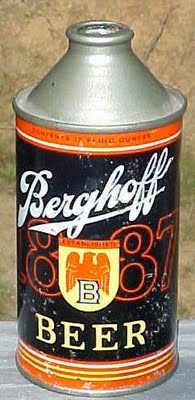
"He and five other Italians, among whom was Vincenzo Garaguzo, were playing cards in the rear of the drug store for a can of beer."

Priori was employed as a clerk in Dr. Pasquale Gilliberti’s drug store, at 530 1/2 Broome Street, Manhattan. On the day of the murder, he and five other Italians, among whom was Vincenzo Garaguzo, were playing cards in the rear of the drug store for a can of beer. Priori lost the game and bought the beer. Then, returning, he waited upon a customer. Afterward he accused the other men of drinking some of the beer. A quarrel ensued and Priori left. When Garaguzo came out of the drug store, Priori, armed with a pistol, followed him to his home, where he shot and killed him.

After conviction of murder in the first degree, Priori obtained a reprieve on the ground of new evidence, showing that James Saccardo, his brother-in-law, fired the fatal shot. Priori said that his brother-in-law was a member of the Mafia and that it was fear of the vengeance of that society that prevented his denouncing Saccardo before. On January 21 Governor Odell notified Priori’s counsel that he could interfere no further in the carrying out of the sentence of death.

In the statement left by the prisoner he reiterated his innocence and declared the crime was committed by Giacomo Saccardo, as he did during his trial. In conclusion, he wrote:

“Goodbye all. I am going to heaven in the arms of Jesus Christ; going where all the innocents will go, sooner or later. I am an innocent orphan.’

The body was claimed by friends of the dead man.”


Tags: , , , , , ,

Robert Rauschenberg and dealer Leo Castelli appear on a local, low-budget NYC TV show in 1977.

Tags: ,

"I don't want to throw these out, but I'm not drinking this crap either."

Free Tropicana ‘light’ juice (Harlem / Morningside)

There was a sale. Tropicana Fruit Punch juice, 2 for $3.
But there was a catch, it said ‘light’ on the carton.
I thought it was odd, but I didn’t care, I was getting a deal.
I brought it home. I opened it. I tasted it.

It. Is. Disgusting.

It’s gross. It has a nasty after taste. I guess ‘light’ means light on deliciousness, because I can’t stomach this crap.
My little daughter can’t either. She spit it out. My husband gagged.
I bought 6 of these. And I can’t find the receipt.

I don’t want to throw these out, but I’m not drinking this crap either. So it’s yours. Five half gallon cartons of Tropicana ‘light’ Fruit Punch.

I live near 150th and riverside. Come and get it and it’s yours. I’m sorry if my ad isn’t very appealing, but i couldn’t lie to you.
Who knows, maybe you might like it!
First come, first serve.

The great Berenice Abbott is responsible for this classic 1935 photograph of a mini-Hooverville that rose on Houston and Mercer Streets in Manhattan. The Great Depression hit hard and people were really hurting. (Notice the baby carriage outside one of the shanties, and the framed pictures hanging, an attempt at some semblance of normalcy.) Abbott had returned to New York City in 1929 after years in Paris and was stunned by how the building boom and the economic collapse had changed the city. She spent the next decade cataloging the transformation. An excerpt from Abbott’s 1991 obituary in the New York Times:

“Perhaps her most famous picture, a view of New York at night taken from the top of the Empire State Building, presents the city as a glittering tapestry of light, with massive buildings thrusting up from the criss-crossed streets. In her New York photographs, many of which were collected in the book Changing New York (1939), Miss Abbott also provided an invaluable historical record of the physical appearance of the city at a time when it was undergoing rapid transformation.

Miss Abbott first achieved fame as a photographer in Paris in the 1920’s with her penetrating portraits of such artists and writers as James Joyce, Janet Flanner and Jean Cocteau. She is also known for a series of photographs illustrating laws and processes of physics.

As a participant in the photographic controversies of her day, Miss Abbott was an eloquent and contentious advocate of the documentary approach. In books and articles she argued that photography was uniquely a descriptive medium, and should not be used to simulate effects that could better be achieved in other arts. ‘Photography can never grow up if it imitates some other medium,’ she wrote in 1951. ‘It has to walk alone; it has to be itself.'”

Tags:

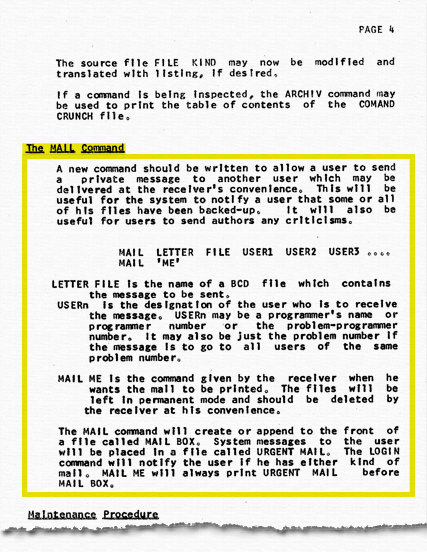
Errol Morris, the Tolstoy of bloggers, uses his New York Times Opinionator space to tell the story of investigating whether his late brother, Noel, had a role in the creation of email alongside MIT programmer Tom Van Vleck. It’s a two-part marathon (here and here) and quite fascinating. It all apparently started with a simple 1965  memo. An excerpt:

TOM VAN VLECK: In 1965, at the beginning of the year, there was a bunch of stuff going on with the time-sharing system that Noel and I were users of. We were working for the political science department. And the system programmers wrote a programming staff note memo that proposed the creation of a mail command. But people proposed things in programming staff notes that never got implemented. And well, we thought the idea of electronic mail was a great idea. We said, “Where’s electronic mail? That would be so cool.” And they said, “Oh, there’s no time to write that. It’s not important.” And we said, “Well, can we write it?” And we did. And then it became part of the system.

••••••••••

Completely unrelated: Errol Morris reveals his five favorite films.

More Errol Morris posts:

Tags: , ,

From 1953.

Tags:

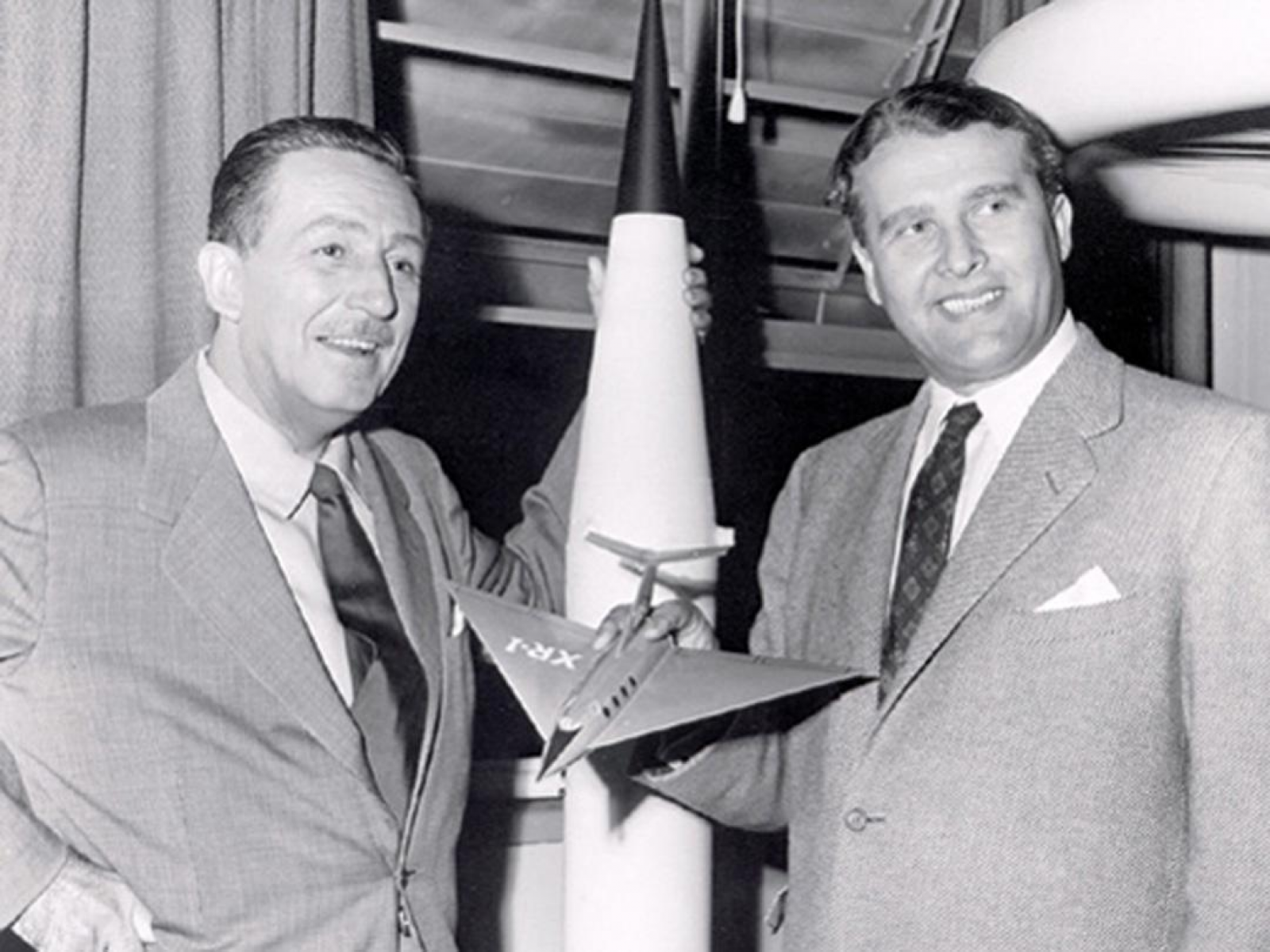
Norman Mailer’s book Of a Fire on the Moon, about American space exploration during the 1960s, was originally published as three long and personal articles for Life magazine in 1969: “A Fire on the Moon,” “The Psychology of Astronauts,” and A Dream of the Future’s Face.” Mailer used space travel to examine America’s conflicted and tattered existence–and his own as well. In one segment, he reports on a banquet in which Wernher von Braun, the former Nazi rocket engineer who became a guiding light at NASA, meets with American businessmen on the eve of the Apollo 11 launch. An excerpt:

Therefore, the audience was not to be at ease during his introduction, for the new speaker, who described himself as a “backup publisher,” went into a little too much historical detail. “During the Thirties he was employed by the Ordinance Department of the German government developing liquid fuel rockets. During World War II he made very significant developments in rocketry for his government.”

A tension spread in this audience of corporation presidents and high executives, of astronauts, a few at any rate, and their families. There was an uneasy silence, an embarrassed pall at the unmentioned word of Nazi–it was the shoe which did not drop to the floor. So no more than a pitter-patter of clapping was aroused when the speaker went quickly on to say: “In 1955 he became an American citizen himself.” It was only when Von Braun stood up at the end that the mood felt secure enough to shift. A particularly hearty and enthusiastic hand of applause swelled into a standing ovation. Nearly everybody stood up. Aquarius, who finally cast his vote by remaining seated, felt pressure not unrelated to refusing to stand up for The Star-Spangled Banner. It was as if the crowd with true American enthusiasm had finally declared, “Ah don’ care if he is some kind of ex-Nazi, he’s a good loyal patriotic American.”

Von Braun was. If patriotism is the ability to improve a nation’s morale, then Von Braun was a patriot. It was plain that some of these corporate executives loved him. In fact, they revered him. He was the high priest of their precise art–manufacture. If many too many an American product was accelerating into shoddy these years since the war, if planned obsolescence had all too often become a euphemism for sloppy workmanship, cynical cost-cutting, swollen advertising budgets, inefficiency and general indifference, then in one place at least, and for certain, America could be proud of a product. It was high as a castle and tooled more finely than the most exquisite watch.

Now the real and true tasty beef of capitalism got up to speak, the grease and guts of it, the veritable brawn, and spoke with fulsome language in his small and well-considered voice. He was with friends on this occasion, and so a savory and gravy of redolence came into his tone, his voice was not unmusical, it had overtones which hinted of angelic super-possibilities one could not otherwise lay on the line. He was when all was said like the head waiter of the largest hofbrau in heaven. “Honored guests, ladies and gentlemen,” Von Braun began, “it is with a great deal of respect tonight that I meet you, the leaders, and the captains in the mainstream of American industry and life. Without your success in building and maintaining the economic foundations of this nation, the resources for mounting tomorrow’s expedition to the moon would never have been committed…. Tomorrow’s historic launch belongs to you and to the men and women who sit behind the desks and administer your companies’ activities, to the men who sweep the floor in your office buildings and to every American who walks the street of this productive land. It is an American triumph. Many times I have thanked God for allowing me to be a part of the history that will be made here today and tomorrow and in the next few days. Tonight I want to offer my gratitude to you and all Americans who have created the most fantastically progressive nation yet conceived and developed,” He went on to talk of space as “the key to our future on earth,” and echoes of his vision drifted through the stale tropical air of a banquet room after coffee–perhaps he was hinting at the discords and nihilism traveling in bands and brigands across the earth. “The key to our future on earth. I think we should see clearly from this statement that the Apollo 11 moon trip even from its inception was not intended as a one-time trip that would rest alone on the merits of a single journey. If our intention had been merely to bring back a handful of soil and rocks from the lunar gravel pit and then forget the whole thing”–he spoke almost with contempt of the meager resources of the moon–“we would certainly be history’s biggest fools. But that is not our intention now–it never will be. What we are seeking in tomorrow’s trip is indeed that key to our future on earth. We are expanding the mind of man. We are extending this God-given brain and these God-given hands to their outermost limits and in so doing all mankind will benefit. All mankind will reap the harvest…. What we will have attained when Neil Armstrong steps down upon the moon is a completely new step in the evolution of man.”•

Tags: , , ,

"I am looking for break up emails." (Image by Matthew Bowden.)

Emails wanted (Upper West Side)

I am currently working on a project regarding technology and society. I am looking for break up emails. Sent or received. If you have one you are willing to send to help me with this project it would be greatly appreciated!!

Thanks so much!!!!!

From Endgadget: “The material that makes the magic happen is made of flat fibers that bring 35 percent more surface area in contact with your skin than traditional round yarns — and the more cloth touching your dermis, the better it can absorb and dissipate body heat. These flat fibers are bonded with a special compound that activates when wet (by water or sweat) and lowers the temperature of both the garment and the person wearing it.”

Writing about The Truman Show reminded me of Rob Walker’s brilliant, frightening 2004 article, The Hidden (in Plant Sight) Persuaders,” in the New York Times Magazine. Penned before social media really took off, the article examines how BzzAgent, a Boston-based marketing firm contracts citizens to engage in surreptitious whisper campaigns to promote products. That person in the mall conspicuously reading a just-published book or loudly mentioning a great new band–they may be BzzAgents. Most amazingly, apart from earning a few small rewards which they often don’t bother to collect, these people are unpaid volunteers just wanting to be a part of a stealth machinery, like airport cultists merely trying to plant the idea in your head that flowers are nice to buy. The article’s opening:

“Over the July 4 weekend last summer, at cookouts up and down the East Coast and into the Midwest, guests arrived with packages of Al Fresco chicken sausage for their hosts to throw on the grill. At a family gathering in Kingsley, Mich. At a small barbecue in Sag Harbor, N.Y. At a 60-guest picnic in Philadelphia.

We know that this happened, and we even know how various party guests reacted to their first exposure to Al Fresco, because the Great Sausage Fanout of 2004 did not happen by chance. The sausage-bearers were not official representatives of Al Fresco, showing up in uniforms to hand out samples. They were invited guests, friends or relatives of whoever organized the get-togethers, but they were also — unknown to most all the other attendees — ‘agents,’ and they filed reports. ‘People could not believe they weren’t pork!’ one agent related. ‘I told everyone that they were low in fat and so much better than pork sausages.’ Another wrote, ‘I handed out discount coupons to several people and made sure they knew which grocery stores carried them.” Another noted that ‘my dad will most likely buy the garlic” flavor, before closing, ‘I’ll keep you posted.’

These reports went back to the company that Al Fresco’s owner, Kayem Foods, had hired to execute a ‘word of mouth’ marketing campaign. And while the Fourth of July weekend was busy, it was only a couple of days in an effort that went on for three months and involved not just a handful of agents but 2,000 of them. The agents were sent coupons for free sausage and a set of instructions for the best ways to talk the stuff up, but they did not confine themselves to those ideas, or to obvious events like barbecues. Consider a few scenes from the life of just one agent, named Gabriella.

At one grocery store, Gabriella asked a manager why there was no Al Fresco sausage available. At a second store, she dropped a card touting the product into the suggestion box. At a third, she talked a stranger into buying a package. She suggested that the organizers of a neighborhood picnic serve Al Fresco. She took some to a friend’s house for dinner and (she reported back) ‘explained to her how the sausage comes in six delicious flavors.’ Talking to another friend whom she had already converted into an Al Fresco customer, she noted that the product is ”not just for barbecues” and would be good at breakfast too. She even wrote to a local priest known for his interest in Italian food, suggesting a recipe for Tuscan white-bean soup that included Al Fresco sausage. The priest wrote back to say he’d give it a try. Gabriella asked me not to use her last name. The Al Fresco campaign is over — having notably boosted sales, by 100 percent in some stores — but she is still spreading word of mouth about a variety of other products, and revealing her identity, she said, would undermine her effectiveness as an agent.

The sausage campaign was organized by a small, three-year-old company in Boston called BzzAgent, but that firm is hardly the only entity to have concluded that the most powerful forum for consumer seduction is not TV ads or billboards but rather the conversations we have in our everyday lives. The thinking is that in a media universe that keeps fracturing into ever-finer segments, consumers are harder and harder to reach; some can use TiVo to block out ads or the TV’s remote control to click away from them, and the rest are simply too saturated with brand messages to absorb another pitch. So corporations frustrated at the apparent limits of ‘traditional’ marketing are increasingly open to word-of-mouth marketing. One result is a growing number of marketers organizing veritable armies of hired ‘trendsetters’ or ‘influencers’ or ‘street teams’ to execute ‘seeding programs,’ ‘viral marketing,’ ‘guerrilla marketing.’ What were once fringe tactics are now increasingly mainstream; there is even a Word of Mouth Marketing Association.”

••••••••••

BzzAgent, the social media machine:

Another Rob Walker post:

Tags:

I posted something before about Freeman Dyson’s involvement with Project Orion, a 1950s effort by a group of scientists to use A-bomb explosions to propel ships into outer space. The plan was successful though international treaties preempted its use. Here’s rare footage of what it looked like.

Tags:

Much to his chagrin, Gay Talese was the subject of a 1973 New York profile by Aaron Latham, who followed the famed New Journalist as he did first-hand research on the sexual revolution, dropping trou and taking notes at massage parlors and the sex club Plato’s Retreat, for a book that would ultimately be titled Thy Neighbor’s Wife. Many years after the infamous article, Talese told the Paris Review that the New York piece had “tainted me, trivialized me…I’m pictured in a massage parlor on West Fifty-seventh Street, frolicking around in the nude. I didn’t have that much dignity after that was published.” An excerpt from the infamous article:

“To research his book on America’s sex change, Gay went to work managing not one but two massage parlors. He served as the day manager at one and as the night manager at the other. Gay defends massage parlors by saying, ‘It is obviously better to be masturbated by massage girls than to masturbate yourself.’

His day would start about noon, when he would walk over to The Middle Earth, at 51st Street and Third Avenue, and open up. The Middle Earth stands around the corner from the Random House building where Nan Talese works as an editor. While Nan sat her desk on the eleventh floor of a glass-and-steel skyscraper, Gay would sit at this desk on the second floor of a brownstone. While up above Nan flipped through the pages of manuscripts, down below Gay would flip through the pages of a photograph album displaying pictures of the girls he had available. When the customer selected a photo he liked, Gay would call the girl’s name and then ask for $18. The girl chosen would appear and lead the customer into a massage room. Half an hour later, she would say goodbye to the customer, stuff the sheet in a garbage can that served a laundry hamper, and go to the bathroom to wash her hands.

At 7 p.m., Gay would leave The Middle Earth and proceed to his second job at The Secret Life, at 26th Street and Lexington Avenue, where he not only took the customers’ money ($15), but frisked them before he let them have a girl. He twice removed guns from men who had come for massages (one was a policeman). Gay held the guns at the desk until the men were finished with the girls. He did not want his book to turn into an In Cold Blood.”

____________________________

“At Plato’s Retreat, you can make your dreams come true”:

Tags: ,

Reporter looking to speak with someone who has sent nude photos online (Downtown)

I’m a reporter for a New York newspaper working on a story about adults who have emailed, tweeted or texted nude photos of themselves to a partner. If you fit this description, I would love to speak with you. I, of course, would not have to print your name in the newspaper.

If you are willing, please send along a telephone number to the address above. Thanks very much.

Susan Sontag and Agnès Varda at the Seventh New York Film Festival in 1969. Jack Kroll of Newsweek does the honors. Watch the full 28-minute version here.

Tags: , ,

"Charles Emerson, a milk peddler of this city, was shot and killed yesterday afternoon."

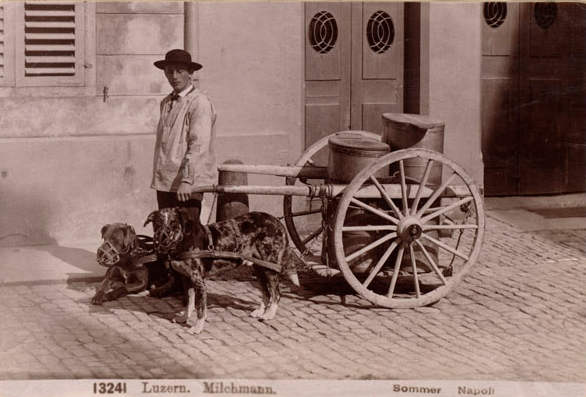
Perhaps no figure in nineteenth-century New York was quite so feared as the milkman, an agent of death and destruction who delivered calamity along with his white gold, as the following articles from the Brooklyn Daily Eagle demonstrate.

••••••••••

“A Milkman Shot By a Farmer” (September 29, 1893): “Buffalo, New York–Charles Emerson, a milk peddler of this city, was shot and killed yesterday afternoon midway between here and Tonawanda by William H. Griffith, a farmer. Griffith had sold Emerson some hay and the latter was hauling it away without paying for it as agreed upon. Yesterday while Griffith was absent Emerson attempted to take away another load. Griffith returned before the wagon was loaded and a quarrel ensued during which Griffith got his gun and shot Emerson in the thigh, making an ugly wound from which he had bled to death. Griffith was arrested. He claims that Emerson was advancing on him with a pitchfork when he fired in self defense.”

••••••••••

“Found Dead in His Cell” (September 2, 1896): “Jamaica, Long Island–Patrick Quinn, a milkman of Madison Street, this village, 26 years of age, who was arrested at 6 o’clock last evening and confined in the lock up at the town hall on a charge of breaking in the windows of the house in which he lived, belonging to Annie Olrogge, was found dead in his cell this morning by Keeper Hogan. Coroner S.H. Nutt viewed the remains and will hold an inquest Friday at 7:30 P.M. Quinn had been drinking heavily of late and it is supposed that his death resulted from alcoholism.”

••••••••••

"John Diedesch, a milkman, on Saturday night called upon a customer named Augusta Buckel to collect a bill due for lacteal served during the week."

“A Demonstrative Milkman” (February 25, 1878): “John Diedesch, a milkman, on Saturday night called upon a customer named Augusta Buckel, at her residence, No. 59 Hoyt Street, to collect a bill due for lacteal served during the week. Mrs. Buckel was not prepared to liquidate the account, as her husband had not returned home, nor was Diedesch in a humor to accept any such excuse as that offered. Accordingly he gave the woman to understand that he believed she intended to cheat him, and in return Mrs. Buckel had something to say which did not tickle the milkman’s fancy. The result was that Diedesch became exceedingly angry, and in this mood struck and kicked Mrs. Buckel to that extent that she may suffer permanently from the injuries inflicted.”

••••••••••

“Drunk Carbolic Acid” (April 8, 1895): “Henry A. Nichol, a milkman, who lived at 1,155 Broadway, was found dead yesterday afternoon in a coach in the rear of the livery stable of Walter R. Thomas, at 661 Lexington Avenue, where he stabled his horse and wagon. Two vials half filled with carbolic acid and a small glass which lay beside the dead man indicated that he had committed suicide. Nichols, who was 29 years old and unmarried, had been drinking heavily for three or four weeks past, and because of his dissipated habits had lost much of his trade. His friends say he had threatened to take his life.”

••••••••••

“The Deadly Broken Wire” (December 27, 1891): “Orange, New York–Frank E. Williams, a milkman was killed by an electric shock on High Street at 3:30 o’clock this morning. An old unused wire of the District messenger service broke during the night and fell across the wires of the city lighting system, which carry a current of 2,000 volts. The weather this morning was very foggy. While Williams was delivering milk the horse went ahead, and, coming in contact with the old wire, was knocked down. Williams went to his assistance and was struck in the face by the wire, which he grasped with both hands and held on to. No person witnessed the actual occurrence. Williams was taken to the residence of J.N. Robins and Dr. Bradshaw was called in. He came too late, however, for Williams was beyond human aid. His body was taken to the morgue.

Williams was 27 years of age, and was an estimable man. He was married three months ago to Miss Moger of Roseland, where he lived. When the news of his death was broken to his young wife she was greatly overcome.”
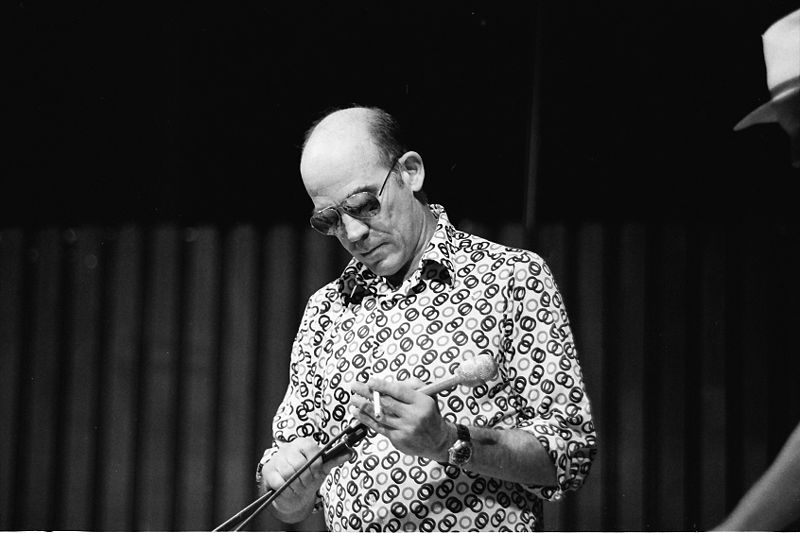
 

Sad news about Clarence Clemons passing away at age 69, one week after suffering a severe stroke. Bruce Springsteen’s E Street myth-building wouldn’t have worked nearly as well without his sideman’s accompaniment on sax, a rueful and romantic spin on King Curtis.

Whenever someone dies, I always prefer to look at film and photos of them that are grainy, dark and damaged. I’m alarmed by the HD, 3-D age we live in, the need to pretend that we’re seeing everything clearer, as if our world, our minds, are objective. It’s all a lie. I think the lo-fi aesthetic is more honest. It has gaps and imperfections and we have to fill them in and correct them, using our memories and dreams. Being handed some sort of phony, flawless truth is meaningless; it’s assimilating inchoate information that makes us human.

•••••••••••

In 1978 in Passaic, Clemons delivers one of the most famous sax solos in rock, two-and-a-half minutes of power, beginning at the four-minute mark:

Tags: , ,

« Older entries § Newer entries »