Science/Tech

You are currently browsing the archive for the Science/Tech category.

Making any economic system work is trouble enough, but creating a socialist collective that produces great wealth is particularly elusive. The Chinese village of Huaxi is an exception, however, with its shared wealth and opulent new skyscrapers. Every villager owns a house worth at least $150,000 and at least one car. An excerpt from Michael Wines’ New York Times piece about a tower soon to open in Huaxi:

“Huaxi’s so-called New Village in the Sky — at 1,076 feet, a bit taller than the Chrysler Building in Manhattan — is getting finishing touches this summer in preparation for an October opening. Among other attractions, it will have a five-star hotel, a gold-leaf-embellished concert hall, an upscale shopping mall and what is billed as Asia’s largest revolving restaurant. Also, it will have five life-size statues of a water buffalo, Huaxi’s symbol, on every 12th floor or so.

That this half-billion-dollar edifice is a good 40-minute drive from a city of any size is part of the plan. For though not many foreigners have heard of Huaxi, Chinese far and wide know it as the socialist collective that works — the village where public ownership of the means of production has not just made everyone equal, but rich, too.

Two million tourists come annually to view the Huaxi marvel, no small number of them officials from other villages who yearn to know how Huaxi did it. The enormous skyscraper, topped with a gigantic gold sphere, will never win architectural awards. But it will add to Huaxi’s allure, the village fathers confidently predict — and soak up tourist money as well.

‘We call it the three-increase building,’ said Wu Renbao, 84, the town’s revered patriarch, meaning that it will increase Huaxi’s acreage (by half), increase its work force (by 3,000) and, hardly least of all, increase its wealth.

If he is right, all 2,000 villagers will get a little richer. They all own a piece of the building — just as they own the town’s steel mill, textile factory, greenhouse complex, ocean shipping company and other ventures. That is Huaxi’s carefully curated narrative: by rigidly adhering to socialism with Chinese characteristics, the citizens of this little village have created an oasis of prosperity and comfort that is the envy of the world.”

••••••••••

China’s richest village:
Tags: ,

From a 1996 Tom Wolfe essay, a pithy explanation about how Freudianism and Marxism cratered and neuroscience became ascendant:

“The demise of Freudianism can be summed up in a single word: lithium. In 1949 an Australian psychiatrist, John Cade, gave five days of lithium therapy—for entirely the wrong reasons—to a fifty–one–year–old mental patient who was so manic–depressive, so hyperactive, unintelligible, and uncontrollable, he had been kept locked up in asylums for twenty years. By the sixth day, thanks to the lithium buildup in his blood, he was a normal human being. Three months later he was released and lived happily ever after in his own home. This was a man who had been locked up and subjected to two decades of Freudian logorrhea to no avail whatsoever. Over the next twenty years antidepressant and tranquilizing drugs completely replaced Freudian talk–talk as treatment for serious mental disturbances. By the mid–1980s, neuroscientists looked upon Freudian psychiatry as a quaint relic based largely upon superstition (such as dream analysis — dream analysis!), like phrenology or mesmerism. In fact, among neuroscientists, phrenology now has a higher reputation than Freudian psychiatry, since phrenology was in a certain crude way a precursor of electroencephalography. Freudian psychiatrists are now regarded as old crocks with sham medical degrees, as ears with wire hairs sprouting out of them that people with more money than sense can hire to talk into.

Marxism was finished off even more suddenly—in a single year, 1973—with the smuggling out of the Soviet Union and the publication in France of the first of the three volumes of Aleksandr Solzhenitsyn’s The Gulag Archipelago. Other writers, notably the British historian Robert Conquest, had already exposed the Soviet Union’s vast network of concentration camps, but their work was based largely on the testimony of refugees, and refugees were routinely discounted as biased and bitter observers. Solzhenitsyn, on the other hand, was a Soviet citizen, still living on Soviet soil, a zek himself for eleven years, zek being Russian slang for concentration camp prisoner. His credibility had been vouched for by none other than Nikita Khrushchev, who in 1962 had permitted the publication of Solzhenitsyn’s novella of the gulag, One Day in the Life of Ivan Denisovich, as a means of cutting down to size the daunting shadow of his predecessor Stalin. “Yes,” Khrushchev had said in effect, “what this man Solzhenitsyn has to say is true. Such were Stalin’s crimes.” Solzhenitsyn’s brief fictional description of the Soviet slave labor system was damaging enough. But The Gulag Archipelago, a two–thousand–page, densely detailed, nonfiction account of the Soviet Communist Party’s systematic extermination of its enemies, real and imagined, of its own countrymen, by the tens of millions through an enormous, methodical, bureaucratically controlled “human sewage disposal system,” as Solzhenitsyn called it— The Gulag Archipelago was devastating. After all, this was a century in which there was no longer any possible ideological detour around the concentration camp. Among European intellectuals, even French intellectuals, Marxism collapsed as a spiritual force immediately. Ironically, it survived longer in the United States before suffering a final, merciful coup de grace on November 9, 1989, with the breaching of the Berlin Wall, which signaled in an unmistakable fashion what a debacle the Soviets’ seventy–two–year field experiment in socialism had been. (Marxism still hangs on, barely, acrobatically, in American universities in a Mannerist form known as Deconstruction, a literary doctrine that depicts language itself as an insidious tool used by The Powers That Be to deceive the proles and peasants.)

Freudianism and Marxism—and with them, the entire belief in social conditioning—were demolished so swiftly, so suddenly, that neuroscience has surged in, as if into an intellectual vacuum. Nor do you have to be a scientist to detect the rush.” (Thanks to The Electric Typewriter.)

More Tom Wolfe posts:

Tags: , ,

Most Americans probably never stop to think of it, but those handsome, chemically enhanced front-yard lawns are a fairly worthless waste of space, a paean to the color green that produces nothing but toil. That space could be an aesthetically pleasing and productive vegetable garden. From Corinne AsturiasSan Francisco Chronicle essay:

“The truth is, we’ve never loved our lawn or the concept of lawns. They permeate the American dream and dominate our midcentury, suburban development in San Jose. Space hogs, water suckers and giant leaf collectors that have to be blown, mown and doused in chemicals with a great ruckus to look good, what is the point of a lawn other than to say: we have land, time and money to waste? When our kids were young the home turf had its benefits: a landing pad for soccer balls and dogs and skateboards, and a display carpet for the annual holiday tree.

But lately, its uselessness had started to gnaw at us. And staring at the newly dead zone out front, I realized that in all the years living in this home, I’d never even thought about what I wanted for the sunny space occupied by my lawn. My imagination started to roam and a rebellious vision took shape: the organic vegetable garden I’d always wanted but couldn’t plant out back because of three dogs, two tortoises and not enough sun.” (Thanks Time.)

Tags:

From Barbara Ehrenreich’s new Guernica piece on whether the human face of warfare has reached a point of obsolescence:

“An alternative approach is to eliminate or drastically reduce the military’s dependence on human beings of any kind. This would have been an almost unthinkable proposition a few decades ago, but technologies employed in Iraq and Afghanistan have steadily stripped away the human role in war. Drones, directed from sites up to 7,500 miles away in the western United States, are replacing manned aircraft.

Video cameras, borne by drones, substitute for human scouts or information gathered by pilots. Robots disarm roadside bombs. When American forces invaded Iraq in 2003, no robots accompanied them; by 2008, there were 12,000 participating in the war. Only a handful of drones were used in the initial invasion; today, the U.S. military has an inventory of more than 7,000, ranging from the familiar Predator to tiny Ravens and Wasps used to transmit video images of events on the ground. Far stranger fighting machines are in the works, like swarms of lethal ‘cyborg insects’ that could potentially replace human infantry.

These developments are by no means limited to the U.S. The global market for military robotics and unmanned military vehicles is growing fast, and includes Israel, a major pioneer in the field, Russia, the United Kingdom, Iran, South Korea, and China. Turkey is reportedly readying a robot force for strikes against Kurdish insurgents; Israel hopes to eventually patrol the Gaza border with ‘see-shoot’ robots that will destroy people perceived as transgressors as soon as they are detected.”

••••••••••

Cyborg insect demonstration:

Tags:

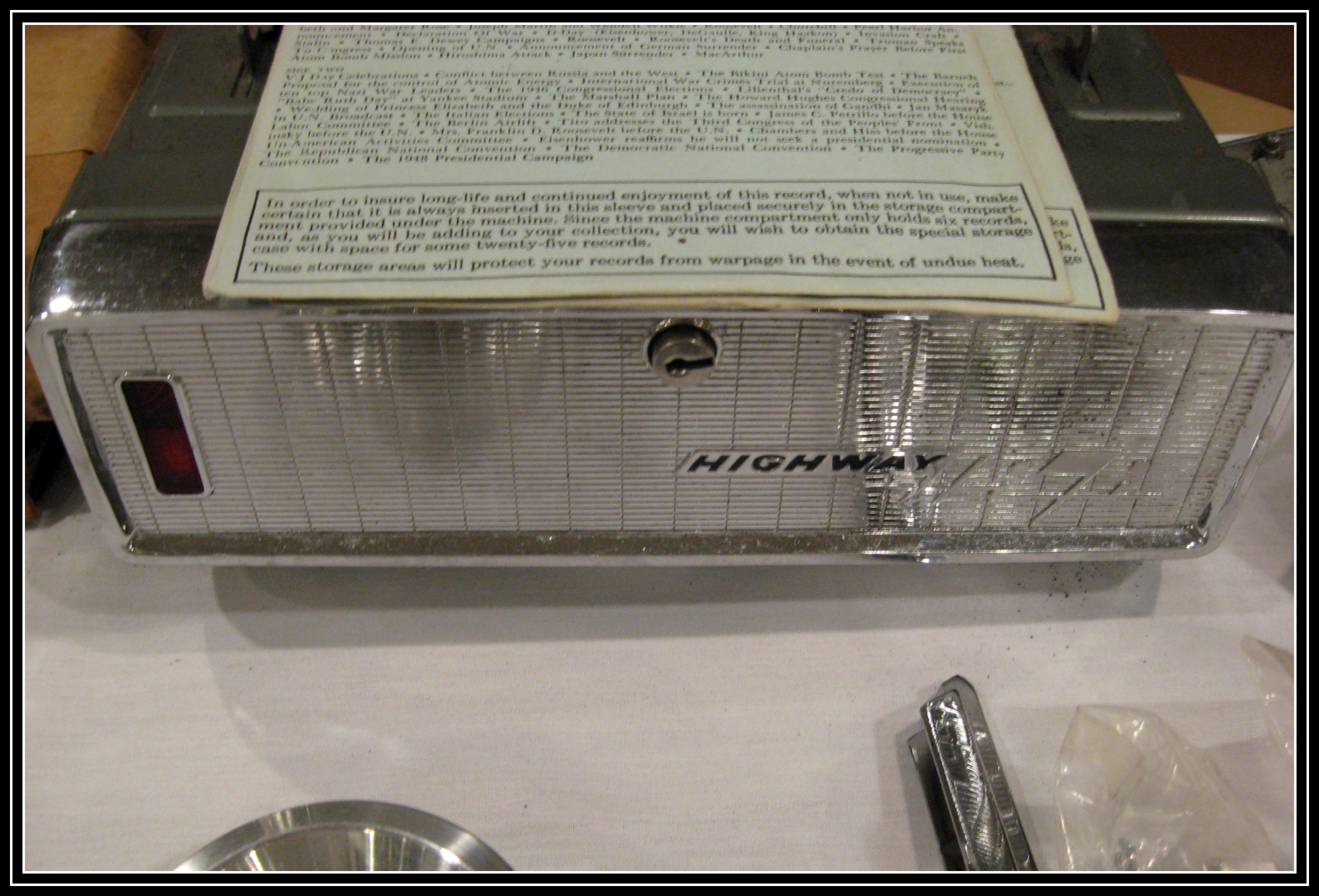
"There is quite possibly only one man left in the world still pressing records for the Highway Hi-Fi." (Image by Bill McChesney.)

Starting in the mid-50s, some Chryslers had record players on the dashboard, called the Highway Hi-Fi, as chronicled in a new piece in the Believer. Of course the discs skipped no matter how good the car’s shock absorbers, and the automaker ceased manufacturing them in the 1960s. But some car collectors have maintained the systems, even though only one person still creates the special records they require. An excerpt:

“In the end, the RCA Victor Auto Victrola had an even shorter run than the Highway Hi-Fi, vanishing by 1961. The following year would bring the next serious attempt at car audio, a precursor to the 8-track deck by inventor Earl Muntz—’Madman’ Muntz, as he was known. But what could ever be half so mad as a dash-mounted turntable?

 There is quite possibly only one man left in the world still pressing records for the Highway Hi-Fi, and he lives in Minneapolis.


‘I first had a guy come to me years ago who had an old Highway Hi-Fi, asking about making a record,’ says Kim Gutzke of Custom Records. Vintage car owners email Gutzke a music file, and he custom presses whatever they want onto a 16 2⁄3 rpm acetate disc. And what they want, he says, is simple: ‘’50s rock and roll. Not the crappy music Hi-Fi put out.'”

••••••••••

1960 Plymouth Fury with a Highway Hi-Fi:

Tags:

David’s appliances function without him. (Thanks Krulwich Wonders.)

Ridiculously, chillingly elaborate.

Vincent Fournier makes amazing space-travel–themed photos.

Tags:

Formerly lame, now amazing. (Thanks Singularity Hub.)

The greatest electrician of them all, who died poor and alone at the New Yorker Hotel in Manhattan in 1943, was born on July 10, 1856.

More Nikola Tesla posts:

Tags:

A discussion about wearable computing from Andrew Goldman’s smart interview with Silicon Valley bigwig Marc Andreessen, in this Sunday’s New York Times Magazine:

People view you as an oracle in the valley. I was hoping you’d blow my mind with something you see in the future. 

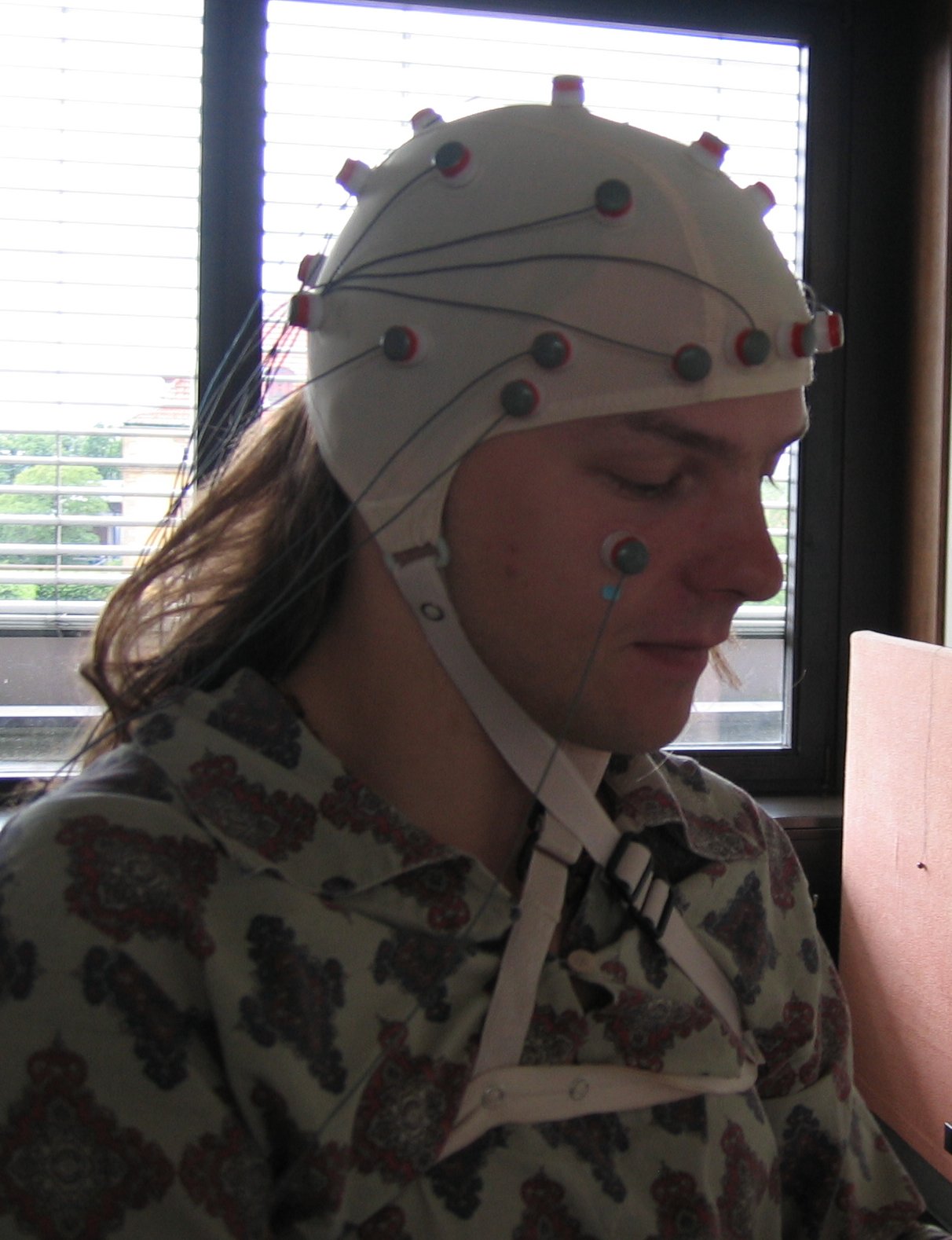
Gordon Bell at Microsoft is working on wearable computing, where it literally records everything around you all the time — video, your conversations. He wants to get to where it’s like a pendant around your neck. We also have a company called Jawbone that makes peripherals for smart phones and tablets. Today, they sell Bluetooth headsets and speakers, but soon they will sell all kinds of wearable computing devices.

Will we soon be dealing with antigaming laws so that drivers can’t play wearable video games while driving down the highway?

That assumes they’re driving. Google is working on self-driving cars, and they seem to work. People are so bad at driving cars that computers don’t have to be that good to be much better. Any time you stand in line at the D.M.V. and look around, you’re like, Oh, my God, I wish all these people were replaced by computer drivers. Ten to 20 years out, driving your car will be viewed as equivalently immoral as smoking cigarettes around other people is today.”

••••••••••

Gordon Bell records his whole life:

Tags: , ,

Sherry Turkle, who is fond of robots, opines on identity in the Internet Age.

Tags:

In his 1998 book, Machine Beauty: Elegance And The Heart Of Technology, David Gelernter implored technologists to study art history and create more pleasing products. It would seem his hopes have been realized, but not because of some academic intervention. It’s simply because of the iPod and subsequent Apple products which offered great external aesthetics and software to match. Competitors were forced to try to keep pace. An excerpt from Gelernter’s book:

“Great technology is beautiful technology. If we care about technology excellence, we are foolish not to train our young scientists and engineers in aesthetics, elegance, and beauty. The idea of such a thing happening is so far-fetched it’s funny — but, yes, good technology is terribly important to our modern economy and living standards and comfort levels, the ‘software crisis’ is real, we do get from our fancy computers a tiny fraction of the value they are capable of delivering…. We ought to start teaching Velázquez, Degas, and Matisse to young technologists right now on an emergency basis. Every technologist ought to study drawing, design, and art history…. Art education is no magic wand. But I can guarantee that such a course of action would make things better: our technology would improve, our technologists would improve, and we would never regret it.”

Tags:

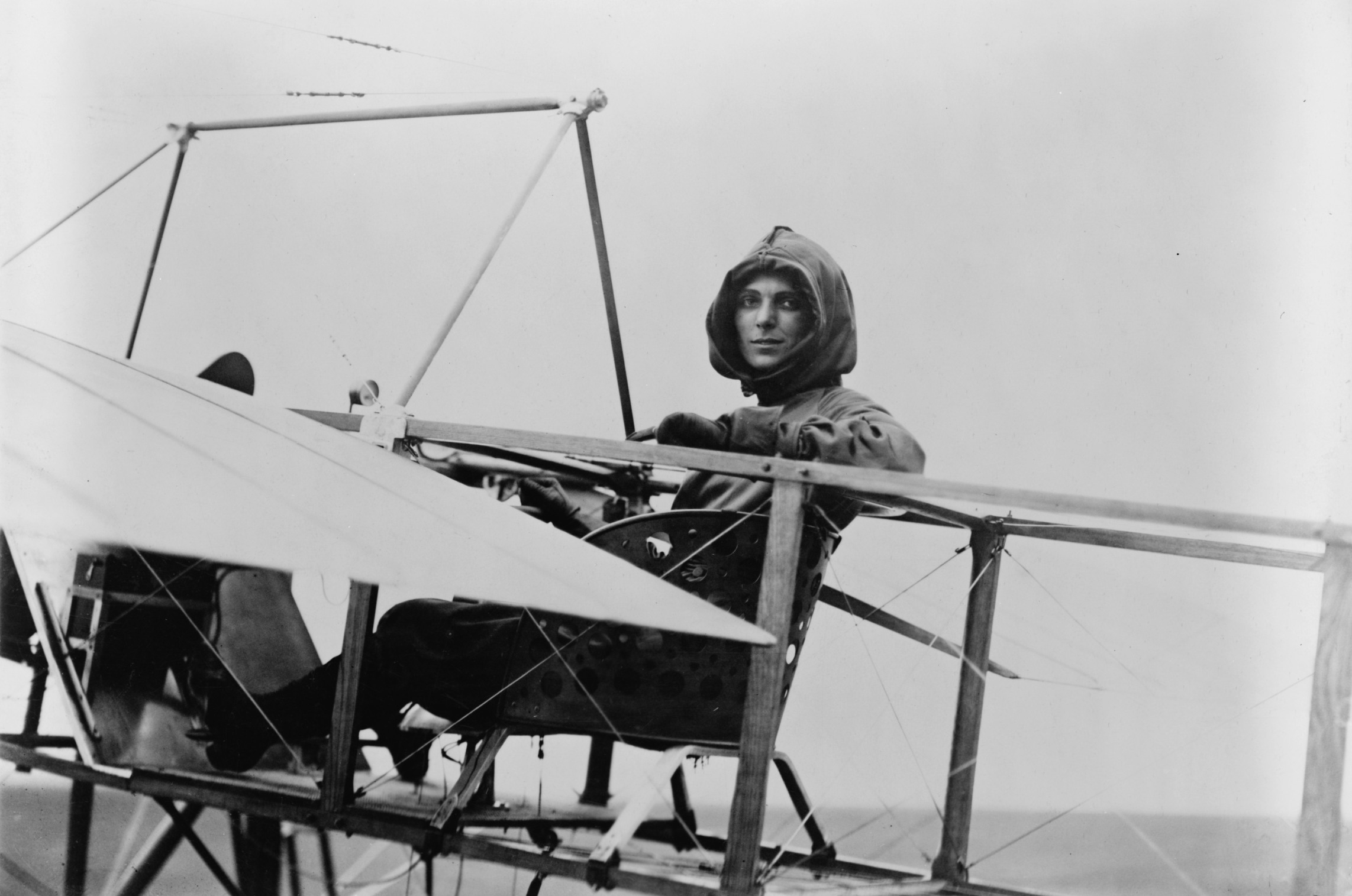
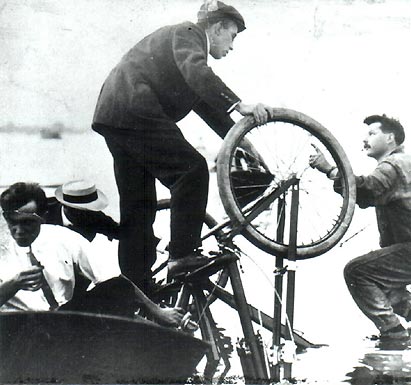
It was on the first day in July 1912 when pioneering aviator Harriet Quimby made her final flight. The first American woman to receive a pilot’s license, Quimby had become famous for also being the first female to fly across the English Channel. But those achievements were no help during her last flight, in which Quimby flew a demonstration over Boston Harbor in her new monoplane. Everything went well until a sudden, unexplained pitch caused her and her passenger, William Willard, to be ejected from the craft and plummet from an altitude of 1,500 feet to their deaths. In the above classic photograph from the Bain Collection, Quimby sits in a monoplane in the year before she was killed. A section from her July 5, 1912 New York Times obituary:

“Dr. Watson, who in speaking of the career of Miss Quimby, took a chapter from Revelation as his text, said, in part:

‘Her name is added to the long list of those who have freely given their lives in order that the world might be larger and better, in order that life might be greater and grander.

‘But in our sorrow to-night there rests still a joyous note of triumph. For we realize that through this death there has come progress and that, therefore, Miss Quimby’s life was a victory over those very elements which at the end brought on her tragic end. For through such as she was to do we reach nearer and nearer to the far-off goal of our hope.”

The aftermath of the Quimby crash.

Tags:

From the BBC in the 1980s.

Tags:

"The presence of such an enclave of graceless pleasures in such an environment is so improbable that only science fiction can manage it." (Image by Matthew Field.)

I was looking at The Browser and came across a book about American deserts by the late architectural critic Reyner Banham, a British expat who adored the buildings of Los Angeles. A quote from this seemingly eccentric book that I’ve yet to get my hands on:

“Las Vegas is a symbol, above all else, of the impermanence of man in the desert, and not least because one is never not aware of the desert’s all pervading presence; wherever man has not built nor paved over, the desert grimly endures – even on some of the pedestrian islands down the center of the Strip! The presence of such an enclave of graceless pleasures in such an environment is so improbable that only science fiction can manage it; the place is like the compound of an alien race, or a human base camp on a hostile planet. To catch this image you need to see Las Vegas from the air by night, or better still, late in the afternoon, as I first saw it, when there is just purple sunset light enough in the bottom of the basin to pick out the crests of the surrounding mountains, but dark enough for every little lamp to register. Then – and only then – the vision is not tawdry, but is of a magic garden of blossoming lights, welling up at its center into fantastic fountains of everchanging color. And you turned to the captain of your spaceship and said, ‘Look Sir, there must be intelligent life down there,’ because it was marvelous beyond words. And doomed – it is already beginning to fade, as energy becomes more expensive and the architecture less inventive. It won’t blow away in the night, but you begin to wish it might, because it will never make noble ruins . . . .”

••••••••••

Previously posted, this playful 1972 BBC doc captured Banham in his favorite element: Los Angeles. There’s a fun passage in which Edward Ruscha opines on L.A. gas stations:

Tags: ,

"Then Picard handed me a pair of special glasses."

New Scientist has a great article by Sally Adee about eyeglasses that help wearers accurately read the emotions of those they are looking at. It could be a boon for people with social development disorders and kind of frightening for all of us, since we have to fake our way through unpleasant situations in life in order to not offend people. What if our true feelings were laid bare at all times? How would that change who we are and how we interact?

Eventually you would think these glasses will be “worn” on the inside, as the progression for medical advancement is often external to internal. When pacemakers were first invented, they were external units that were the size of luxury sedans before becoming internal and tiny. It sounds like chips in our brains to go along with ones in our hearts. The opening of the New Scientist article:

“ROSALIND PICARD’S eyes were wide open. I couldn’t blame her. We were sitting in her office at the Massachusetts Institute of Technology’s Media Lab, and my questions were stunningly incisive. In fact, I began to suspect that I must be one of the savviest journalists she had ever met.

Then Picard handed me a pair of special glasses. The instant I put them on I discovered that I had got it all terribly wrong. That look of admiration, I realised, was actually confusion and disagreement. Worse, she was bored out of her mind. I became privy to this knowledge because a little voice was whispering in my ear through a headphone attached to the glasses. It told me that Picard was ‘confused’ or ‘disagreeing.’ All the while, a red light built into the specs was blinking above my right eye to warn me to stop talking. It was as though I had developed an extra sense.

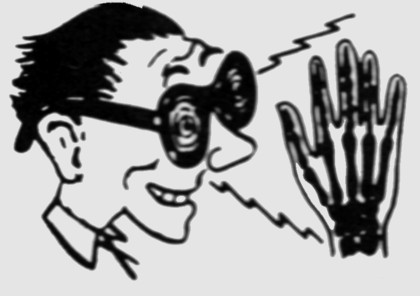
The glasses can send me this information thanks to a built-in camera linked to software that analyses Picard’s facial expressions. They’re just one example of a number of ‘social X-ray specs’ that are set to transform how we interact with each other. By sensing emotions that we would otherwise miss, these technologies can thwart disastrous social gaffes and help us understand each other better. Some companies are already wiring up their employees with the technology, to help them improve how they communicate with customers. Our emotional intelligence is about to be boosted, but are we ready to broadcast feelings we might rather keep private?”


Tags: ,

Walter Cronkite anchors a look at the first Earth Day in 1970, with this segment focusing on New York, Boston, Chicago and Los Angeles. As Cronkite says, cities were thought of at the time as “major population and pollution centers,” when, in fact, populous cities are now known to be very green.

Tags:

c_mundaneum Before the World Wide Web and Wikipedia, there was the Mundaneum, an attempt in the early twentieth-century by two Belgian lawyers and documentalists, Paul Otler and Henri La Fointaine, to collect all the important knowledge of the world in one place and create a sort of international utopia of the mind that was accessible and hyperlinked. Although it was not technologically possible at the time, Otlet ambitiously outlined plans that would allow everyone in the world to see the info through “electronic telescopes,” which would also enable users to send each other messages. The facility to house the information was to be built in Switzerland by Le Corbusier, but it never came to fruition. The collection, though, would up with 12 million documents. It lives on as a museum.

In his 1994 article, “Visions of Xanadu,” W. Boyd Rayward republished a 1914 pamphlet about the fledgling knowledge-sharing organization:

The International Centre organises collections of world-wide importance. These collections are the International Museum, the International Library, the International Bibliographic Catalogue and the Universal Documentary Archives. These collections are conceived as parts of one universal body of documentation, as an encyclopedic survey of human knowledge, as an enormous intellectual warehouse of books, documents, catalogues and scientific objects. Established according to standardized methods, they are formed by assembling cooperative everything that the participating associations may gather or classify. Closely consolidated and coordinated in all of their parts and enriched by duplicates of all private works wherever undertaken, these collections will tend progressively to constitute a permanent and complete representation of the entire world.•

Tags: , , ,

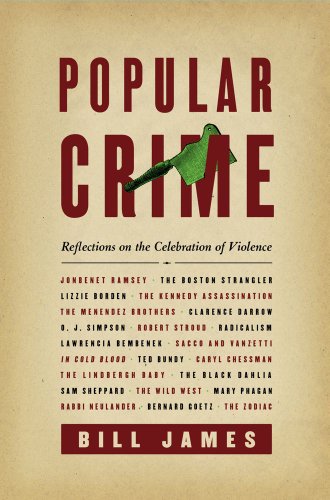
Bill James, the statistics outsider who brought sabermetrics to baseball’s mainstream and helped deliver two world championships to a title-starved Boston Red Sox franchise, has an abiding interest that may be even deeper than the National Pastime: crime–why people commit evil deeds and why we’re obsessed with the topic. Chuck Klosterman of Grantland just interviewed James about his new book on the topic, Popular Crime, and they discussed whether everyone is capable of murder. An excerpt:

OK, so tell me this: In 1984, O.J. Simpson had not (allegedly) killed anyone. But was he already a murderer? Did that capacity to kill already exist within him, a decade before Nicole Brown Simpson was dead?

I think the capacity to commit terrible acts exists in all of us, myself included. I think we could all do things we’d be very ashamed of. I’m sure that capacity was within O.J. in 1984, as it was in myself in 1984.

You’re speaking hypothetically, but I’m curious: What would have to happen in order to make you commit a murder? Can you picture a scenario where you kill someone?

For most of us who are living successful lives, we systematically steer away from those situations. We steer away from those stresses. But, you know … if the kids have to eat and there’s no money in the bank, who knows what you might do? So you try to keep money in the bank. You try to avoid that circumstance. If a woman drives you crazy, you’ll do things that you wouldn’t normally do — so you try to stay away from women who make you crazy. Or drugs: Any one of us can become a drug addict. And once you do, you will kill somebody to get drugs. So maybe that’s the way to think about this: Any real drug addict will kill you in order to get drugs.

Wait — are you suggesting the addiction to cocaine or heroin is greater than whatever internally stops us from committing murder?

Sure. But what I’m really trying to say is that this is probably how we need to think about these types of things: It is not as if we walk through one doorway and decide that murder is acceptable. You have to walk through many doorways. The first doorway leads to a party, where people are doing drugs and having fun. The second doorway leads to more partying. It’s a long, long series of doorways, until you end up in a room where a terrible thing happens. So the question is, ‘How many doorways away are you?’ It’s not a question about a person’s capacity to commit a murder. It’s a question of how many doorways we keep between ourselves and that situation.”

Tags: ,

In 1970, Life magazine published an article about the environmental movement that had shocking predictions that proved wildly inaccurate–at least so far. An excerpt:

“Unless something is done to reverse environmental deterioration, say many experts, horrors lie in wait. Others disagree, but scientists have solid experimental and theoretical evidence to support each of the following predictions–

  • In a decade, urban dwellers will have to wear gas masks to survive air pollution
  • In the early 1980s air pollution combined with a temperature inversion will kill thousands in some U.S. city
  • By 1985 air pollution will have reduced the amount of sunlight reaching earth by one half
  • In the 1980s a major ecological system–soil or water–will break down somewhere in the U.S.
  • New diseases that humans cannot resist will reach plague proportions
  • Increased carbon dioxide in the atmosphere will affect the earth’s temperatures, leading to mass flooding or a new ice age
  • Rising noise levels will cause more heart disease and hearing loss. Sonic booms from SSTs will damage children before birth
  • Residual DDT collecting in the human liver will make use of certain common drugs dangerous and increase liver cancer

There have long been rumors that in 1973 Jackie Gleason accompanied President Richard Nixon to Homestead Airforce Base in Florida and was shown what were supposedly the pickled bodies of extraterrestrials who had reached Earth. Perhaps it was a payoff for Gleason supporting Nixon in 1968.

Tags: ,

FromHow to Stop Worrying and Learn to Love the Internet,” Douglas Adams’ perceptive 1999 piece about Web 1.0 and where it was all headed:

“But the biggest problem is that we are still the first generation of users, and for all that we may have invented the net, we still don’t really get it. In The Language Instinct, Stephen Pinker explains the generational difference between pidgin and creole languages. A pidgin language is what you get when you put together a bunch of people – typically slaves – who have already grown up with their own language but don’t know each others’. They manage to cobble together a rough and ready lingo made up of bits of each. It lets them get on with things, but has almost no grammatical structure at all.

However, the first generation of children born to the community takes these fractured lumps of language and transforms them into something new, with a rich and organic grammar and vocabulary, which is what we call a Creole. Grammar is just a natural function of children’s brains, and they apply it to whatever they find.

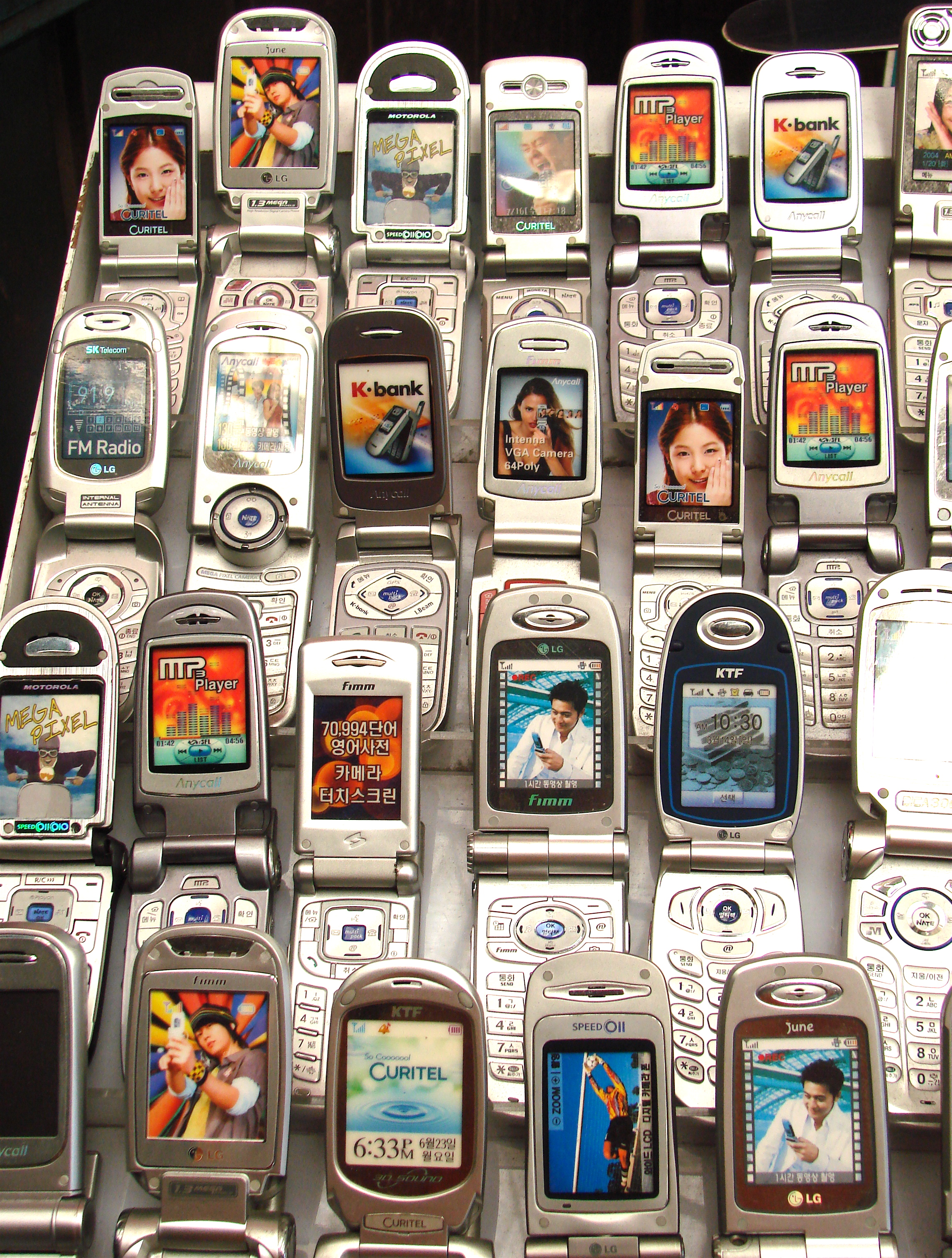
The same thing is happening in communication technology. Most of us are stumbling along in a kind of pidgin version of it, squinting myopically at things the size of fridges on our desks, not quite understanding where email goes, and cursing at the beeps of mobile phones. Our children, however, are doing something completely different. Risto Linturi, research fellow of the Helsinki Telephone Corporation, quoted in Wired magazine, describes the extraordinary behaviour kids in the streets of Helsinki, all carrying cellphones with messaging capabilities. They are not exchanging important business information, they’re just chattering, staying in touch. ‘We are herd animals,’ he says. ‘These kids are connected to their herd – they always know where it’s moving.’ Pervasive wireless communication, he believes will ‘bring us back to behaviour patterns that were natural to us and destroy behaviour patterns that were brought about by the limitations of technology.’

We are natural villagers. For most of mankind’s history we have lived in very small communities in which we knew everybody and everybody knew us. But gradually there grew to be far too many of us, and our communities became too large and disparate for us to be able to feel a part of them, and our technologies were unequal to the task of drawing us together. But that is changing.

Interactivity. Many-to-many communications. Pervasive networking. These are cumbersome new terms for elements in our lives so fundamental that, before we lost them, we didn’t even know to have names for them.”

Tags:

From a post on i09 about pigeons and their fierce, unforgiving memeories for humans who’ve mistreated them:

“It turns out crows aren’t the only birds with fiendishly powerful memories. Pigeons are also capable of spontaneously remembering which humans mistreated them, and even an attempt to disguise the identity of their one-time abuser can’t fool them.

Thankfully, pigeons aren’t as mean about all this as crows, who are known to hold five-year grudges. But once a pigeon recognizes a human as a threat, it appears there’s no way of convincing them otherwise. That’s the takeaway from experiments conducted by researchers at the University of Paris. The team worked not with laboratory-bred captive pigeons, but instead with feral birds who had received no special training or instructions. Despite this, the pigeons displayed an amazing aptitude for recognizing human faces.”

Information is free yet tracked and monetized. (Image by LeaW.)

From a report about augmented reality on The Next Web:

“Another company that is doing pretty groundbreaking stuff in the AR sphere is CrowdOptic, a real-time crowd behavior monitoring tool underpinned by augmented reality technology.

CrowdOptic lets fans at events such as concerts and sporting fixtures point their smartphones at an athlete or performer and view real-time information about the target, such as coaching insights and stats, and also receive exclusive invitations, ticket discounts, marketing promotions and more.

For example, if you’re at a concert or football match you might point your phone’s camera at the action. If a few hundred other spectators do the same thing, using triangulation and GPS data, CrowdOptic detects where the crowd’s attention is at any given moment, relaying the data back to the event’s organizers.

By knowing what is being photographed or videoed, this gives the organizers a mechanism for monetizing these insights in real-time during the live event.”

« Older entries § Newer entries »