Americans have always been paranoid about intruders, believing that there are Russians, Martians and Kenyans among us. Maybe the burden of an immigrant nation is that we’re never completely sure about our neighbors–or maybe it just gives us a handy scapegoat for what ails us internally, as individuals and collectively. Certainly the paranoia has only increased post-9/11, when it became clear that there really were malignant sleeper cells.
On a 1977 episode of In Search Of…, Leonard Nimoy looked at U.S. citizens who believed they’d sighted flying saucers. The host wonders if there really are UFOs. Of course there aren’t, you fucking idiot. Incredibly ridiculous and amusing. And some awesome incidental music.
I’m happy people use cell phones and BlackBerrys non-stop. It distracts them the way shiny necklaces distract monkeys, and they have less time to try to stab me in the head with a box cutter. But Jonathan Franzen isn’t so sanguine about the intrusion of cell phones into public space. From his new essay (free registration required) on the topic in Technology Review:
“The technological development that has done lasting harm of real social significance–the development that, despite the continuing harm it does, you risk ridicule if you publicly complain about today–is the cell phone.
Just 10 years ago, New York City (where I live) still abounded with collectively maintained public spaces in which citizens demonstrated respect for their community by not inflicting their banal bedroom lives on it. The world 10 years ago was not yet fully conquered by yak. It was still possible to see the use of Nokias as an ostentation or an affectation of the affluent. Or, more generously, as an affliction or a disability or a crutch. There was unfolding, after all, in New York in the late 1990s, a seamless citywide transition from nicotine culture to cellular culture. One day the lump in the shirt pocket was Marlboros, the next day it was Motorola. One day the vulnerably unaccompanied pretty girl was occupying her hands and mouth and attention with a cigarette, the next day she was occupying them with a very important conversation with a person who wasn’t you. One day a crowd gathered around the first kid on the playground with a pack of Kools, the next day around the first kid with a color screen. One day travelers were clicking lighters the second they were off an airplane, the next day they were speed-dialing. Pack-a-day habits became hundred-dollar monthly Verizon bills. Smoke pollution became sonic pollution. Although the irritant changed overnight, the suffering of a self-restrained majority at the hands of a compulsive minority, in restaurants and airports and other public spaces, remained eerily constant. Back in 1998, not long after I’d quit cigarettes, I would sit on the subway and watch other riders nervously folding and unfolding phones, or nibbling on the teatlike antennae that all the phones then had, or just quietly clutching their devices like a mother’s hand, and I would feel something close to sorry for them. It still seemed to me an open question how far the trend would go: whether New York truly wanted to become a city of phone addicts sleepwalking down the sidewalks in icky little clouds of private life, or whether the notion of a more restrained public self might somehow prevail.
Needless to say, there wasn’t any contest. The cell phone wasn’t one of those modern developments, like Ritalin or oversized umbrellas, for which significant pockets of civilian resistance hearteningly persist. Its triumph was swift and total. Its abuses were lamented and bitched about in essays and columns and letters to various editors, and then lamented and bitched about more trenchantly when the abuses seemed only to be getting worse, but that was the end of it. The complaints had been registered, some small token adjustments had been made (the ‘quiet car’ on Amtrak trains; discreet little signs poignantly pleading for restraint in restaurants and gyms), and cellular technology was then free to continue doing its damage without fear of further criticism, because further criticism would be unfresh and uncool.”
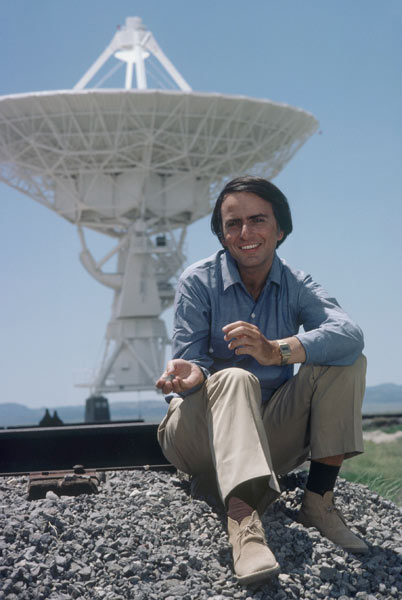
In “Mr. X,” an article written in 1969 and published two years later, Carl Sagan wrote about his use of marijuana, which apparently was a part of his life for more than four decades. The opening:
It all began about ten years ago. I had reached a considerably more relaxed period in my life – a time when I had come to feel that there was more to living than science, a time of awakening of my social consciousness and amiability, a time when I was open to new experiences. I had become friendly with a group of people who occasionally smoked cannabis, irregularly, but with evident pleasure. Initially I was unwilling to partake, but the apparent euphoria that cannabis produced and the fact that there was no physiological addiction to the plant eventually persuaded me to try. My initial experiences were entirely disappointing; there was no effect at all, and I began to entertain a variety of hypotheses about cannabis being a placebo which worked by expectation and hyperventilation rather than by chemistry. After about five or six unsuccessful attempts, however, it happened. I was lying on my back in a friend’s living room idly examining the pattern of shadows on the ceiling cast by a potted plant (not cannabis!). I suddenly realized that I was examining an intricately detailed miniature Volkswagen, distinctly outlined by the shadows. I was very skeptical at this perception, and tried to find inconsistencies between Volkswagens and what I viewed on the ceiling. But it was all there, down to hubcaps, license plate, chrome, and even the small handle used for opening the trunk. When I closed my eyes, I was stunned to find that there was a movie going on the inside of my eyelids. Flash . . . a simple country scene with red farmhouse, a blue sky, white clouds, yellow path meandering over green hills to the horizon. . . Flash . . . same scene, orange house, brown sky, red clouds, yellow path, violet fields . . . Flash . . . Flash . . . Flash. The flashes came about once a heartbeat. Each flash brought the same simple scene into view, but each time with a different set of colors . . . exquisitely deep hues, and astonishingly harmonious in their juxtaposition. Since then I have smoked occasionally and enjoyed it thoroughly. It amplifies torpid sensibilities and produces what to me are even more interesting effects, as I will explain shortly.•
Let’s hope the following statement about TV from the 1993 David Foster Wallace essay, “E UnibusPluram: Television and U.S. Fiction,” isn’t true anymore. Perhaps the marginalization of TV in a multi-platform media world has made programmers more desperate, more willing to give us bread and circuses in a desperate attempt to attract viewers. But what if it still is true? What then?
••••••••••
“If we want to know what American normality is – what Americans want to regard as normal – we can trust television. For television’s whole raison is reflecting what people want to see. It’s a mirror. Not the Stendhalian mirror reflecting the blue sky and mud puddle. More like the overlit bathroom mirror before which the teenager monitors his biceps and determines his better profile. This kind of window on nervous American self-perception is just invaluable, fictionwise. And writers can have faith in television. There is a lot of money at stake, after all; and television retains the best demographers applied social science has to offer, and these researchers can determine precisely what Americans in 1990 are, want, see: what we as Audience want to see ourselves as. Television, from the surface on down, is about desire. Fictionally speaking, desire is the sugar in human food.”
MIT is building mind-control helmets for mice, hoping to eventually have domain over brain functions in humans in order to control disease. An excerpt from a Discover article:
“Christian Wentz from MIT has designed a hat that wouldn’t look out of place at a horse race or a royal wedding. It consists of two circuit boards and an antenna, and it’s being modelled by a mouse. Wentz has wired the hat directly to the mouse’s brain and he can use it to control the animal’s behaviour with flashes of light. And most importantly, he can do it from afar.
The wireless helmet is the latest innovation in the exciting field of optogenetics, where scientists can use light to control the behaviour of both cells and entire animals. The typical set up involves loading cells – usually neurons – with a light-sensitive gatekeeper protein. When the protein sees the light, it opens up and allows ions to enter the neuron, making it fire.
By introducing the proteins into the right spot, scientists can switch on specific parts of the brain, or even individual neurons. They can turn on aggressive or sexual behaviour or make animals walk in circles. The technique promises to revolutionise our understanding of the way the brain works. It could even help to develop treatments for diseases.”
There’s apparently a controversy over whether the sound of money being dispensed at ATM machines–the pleasing noise of bills being distributed rapidly one after another–is merely a sound effect. Brad Tuttle looks at the dispute in aTime post:
“The assumption most people jump to is that the sound is produced by rollers delivering the notes to the collection slot. In fact, the sound is an entirely artificial addition to the process.
The noise is produced by a speaker and purely included in the transaction to reassure you that your money is on its way. Without the added noise, the ATM would be practically silent with its moving parts on the other side of a brick wall.” (Thanks toMarginal Revolution.)
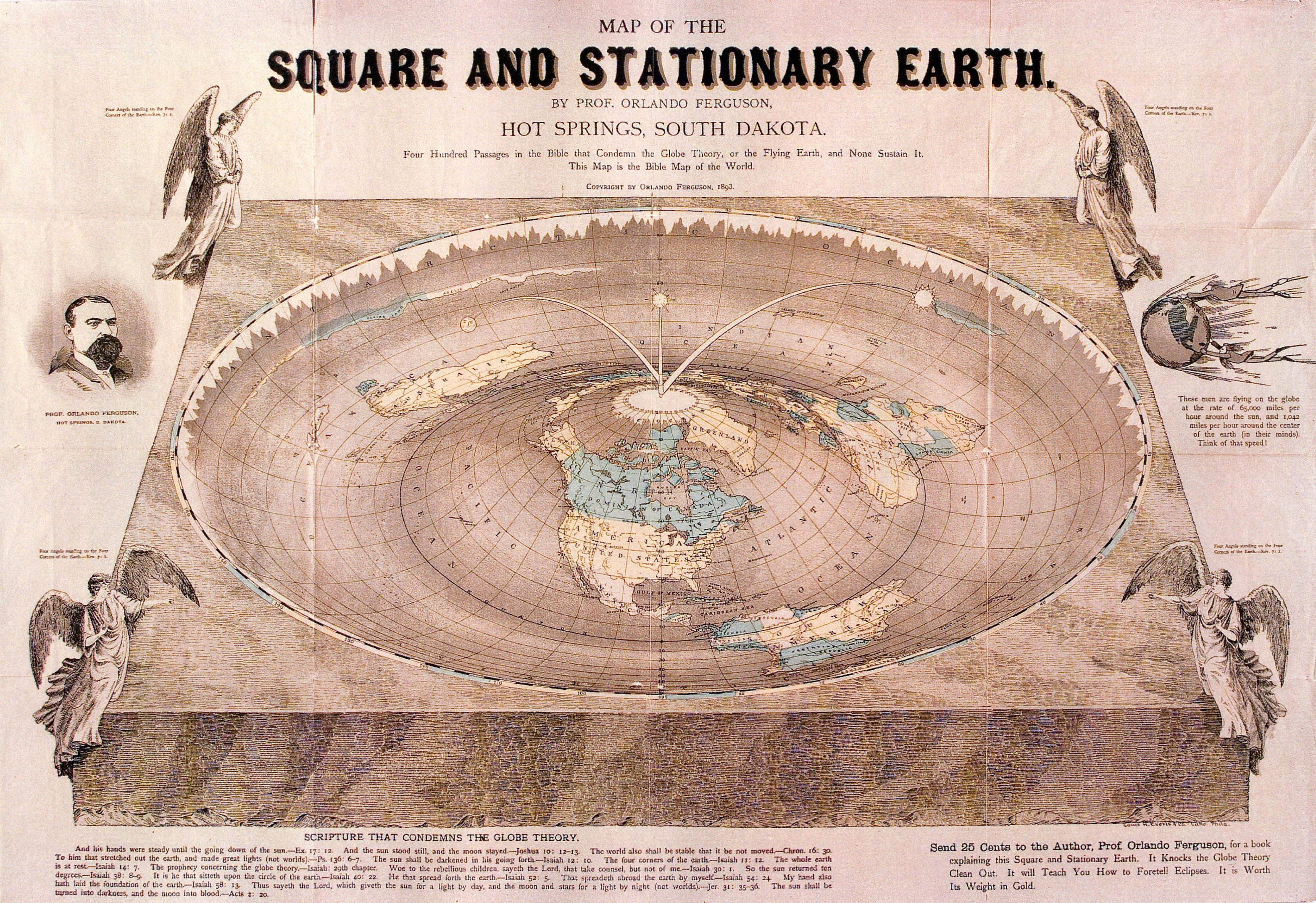
The Library of Congress has received the only copy extant of Orlando Ferguson’s 1893 Map of a Square and Stationary Earth, which was based on the Bible and envisioned our planet as a fixed and flat thing. You know, it attacked the “globe theory.” Click on the map below to see the large-scale-version. From The History Blog: “Don Homuth, a former North Dakota state senator and current resident of Salem, Oregon, will donate the sole complete copy of the Map of a Square and Stationary Earth by Orlando Ferguson to theLibrary of Congress. Homuth was given the map by his eighth-grade English teacher John Hildreth who had received it from his grandfather.”
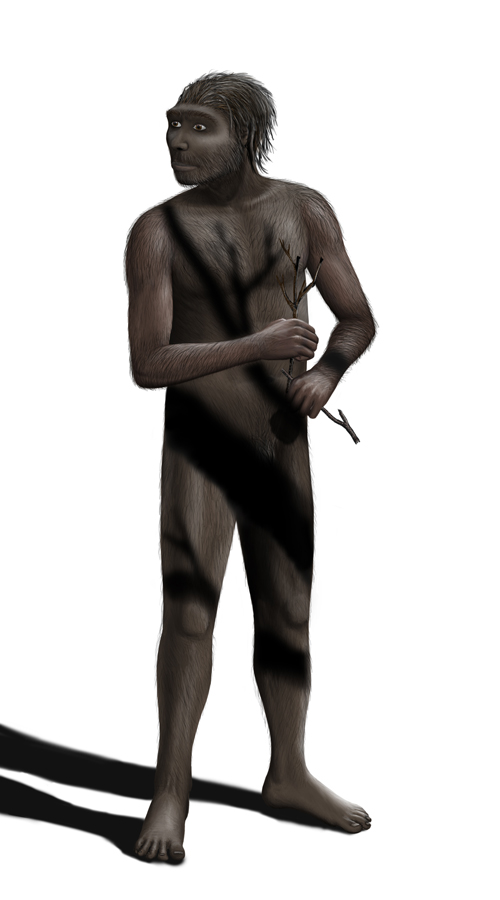
Homo Erectus: Fucking idiots. (Image by Steveoc 86.)
Why is Homo Sapiens the only human species on Earth? Why did other species, Homo Erectus for istance, not make it? The BBC provides some answers:
“Yet Homo erectus was slightly bigger and more powerful than Homo sapiens, so why did we thrive when they did not? The most obvious answer is that we had bigger brains – but it turns out that what matters is not overall brain size but the areas where the brain is larger.
“The Homo erectus brain did not devote a lot of space to the part of the brain that controls language and speech,” said John Shea, professor of palaeoanthropology at Stony Brook University in New York.
‘One of the crucial elements of Homo sapiens’ adaptations is that it combines complex planning, developed in the front of the brain, with language and the ability to spread new ideas from one individual to another.’
Planning, communication and even trade led, among other things, to the development of better tools and weapons which spread rapidly across the population.
The fossil records suggest that H. erectus went on making the same basic hand axe for more than a million years.
Our ancestors, by contrast, created smaller, more sophisticated weapons, like a spear, which can be thrown, with obvious advantages when it comes to hunting and to fighting.”
From a 1982 Robert Reinhold article in the New York Times,which predicted with stunning accuracy how technology has subsequently transformed our lives, connecting us and allowing for a decentralized flow of information:
“A report commissioned by the National Science Foundation and made public today speculates that by the end of this century electronic information technology will have transformed American home, business, manufacturing, school, family and political life.
The report suggests that one-way and two-way home information systems, called teletext and videotex, will penetrate deeply into daily life, with an effect on society as profound as those of the automobile and commercial television earlier in this century.
It conjured a vision, at once appealing and threatening, of a style of life defined and controlled by videotex terminals throughout the house.” (Thanks Reddit.)
"He requested in his suicide note that an autopsy be performed to determine if something had changed in his brain—because he suspected it had."
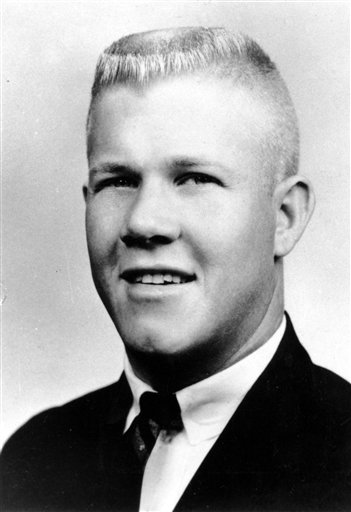
In his provocative new Atlantic article, “The Brain on Trial,” David Eagleman investigates whether brain injuries and illnesses are sometimes the driving force behind criminality. In the piece, Eagleman raises the case of Charles Whitman, a heavily armed 25-year-old student who killed 16 people from his vantage point on a University of Texas observation tower on a blistering August day in 1966. Whitman, who kept killing until he himself was killed by police, left a note revealing his suspicions that his brain had somehow changed, causing his violent impulses–and he may have been right. An excerpt:
“Along with the shock of the murders lay another, more hidden, surprise: the juxtaposition of his aberrant actions with his unremarkable personal life. Whitman was an Eagle Scout and a former marine, studied architectural engineering at the University of Texas, and briefly worked as a bank teller and volunteered as a scoutmaster for Austin’s Boy Scout Troop 5. As a child, he’d scored 138 on the Stanford-Binet IQ test, placing in the 99th percentile. So after his shooting spree from the University of Texas Tower, everyone wanted answers.
For that matter, so did Whitman. He requested in his suicide note that an autopsy be performed to determine if something had changed in his brain—because he suspected it had.
I talked with a Doctor once for about two hours and tried to convey to him my fears that I felt [overcome by] overwhelming violent impulses. After one session I never saw the Doctor again, and since then I have been fighting my mental turmoil alone, and seemingly to no avail.
Whitman’s body was taken to the morgue, his skull was put under the bone saw, and the medical examiner lifted the brain from its vault. He discovered that Whitman’s brain harbored a tumor the diameter of a nickel. This tumor, called a glioblastoma, had blossomed from beneath a structure called the thalamus, impinged on the hypothalamus, and compressed a third region called the amygdala. The amygdala is involved in emotional regulation, especially of fear and aggression. By the late 1800s, researchers had discovered that damage to the amygdala caused emotional and social disturbances. In the 1930s, the researchers Heinrich Klüver and Paul Bucy demonstrated that damage to the amygdala in monkeys led to a constellation of symptoms, including lack of fear, blunting of emotion, and overreaction. Female monkeys with amygdala damage often neglected or physically abused their infants. In humans, activity in the amygdala increases when people are shown threatening faces, are put into frightening situations, or experience social phobias. Whitman’s intuition about himself—that something in his brain was changing his behavior—was spot-on.”
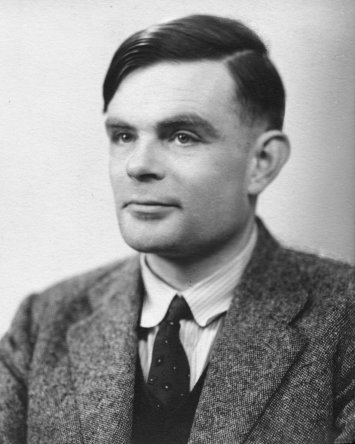
“On June 8, 1954, Alan Turing, a forty-one-year-old research scientist at Manchester University, was found dead by his housekeeper. Before getting into bed the night before, he had taken a few bites out of an apple that was, apparently, laced with cyanide. At an inquest, a few days later, his death was ruled a suicide. Turing was, by necessity rather than by inclination, a man of secrets. One of his secrets had been exposed two years before his death, when he was convicted of “gross indecency” for having a homosexual affair. Another, however, had not yet come to light. It was Turing who was chiefly responsible for breaking the German Enigma code during the Second World War, an achievement that helped save Britain from defeat in the dark days of 1941. Had this been publicly known, he would have been acclaimed a national hero. But the existence of the British code-breaking effort remained closely guarded even after the end of the war; the relevant documents weren’t declassified until the nineteen-seventies. And it wasn’t until the eighties that Turing got the credit he deserved for a second, and equally formidable, achievement: creating the blueprint for the modern computer.”
••••••••••
Alan Turing the Cat who, by the way, pretty much sucks at math:
Time magazine heralded the advent of the Digital Age in its March 1, 1995 issue, which included an essay by Stewart Brand called “We Owe It All to the Hippies.” The piece argued, quite rightly, that the impetus for our booming tech sector came from the counterculture, courtesy of dropouts, phreaks, and hackers. An excerpt:
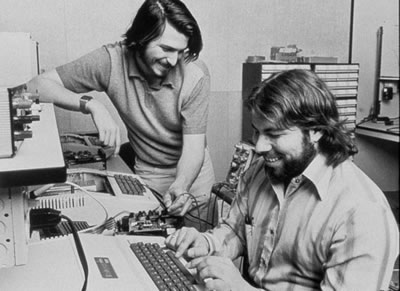
“In the 1960s and early ’70s, the first generation of hackers emerged in university computer-science departments. They transformed mainframes into virtual personal computers, using a technique called time sharing that provided widespread access to computers. Then in the late ’70s, the second generation invented and manufactured the personal computer. These nonacademic hackers were hard-core counterculture types — like Steve Jobs, a Beatle- haired hippie who had dropped out of Reed College, and Steve Wozniak, a Hewlett-Packard engineer. Before their success with Apple, both Steves developed and sold ‘blue boxes,’ outlaw devices for making free telephone calls. Their contemporary and early collaborator, Lee Felsenstein, who designed the first portable computer, known as the Osborne 1, was a New Left radical who wrote for the renowned underground paper the Berkeley Barb.
As they followed the mantra ‘Turn on, tune in and drop out,’ college students of the ’60s also dropped academia’s traditional disdain for business. ‘Do your own thing’ easily translated into ‘Start your own business.’ Reviled by the broader social establishment, hippies found ready acceptance in the world of small business. They brought an honesty and a dedication to service that was attractive to vendors and customers alike. Success in business made them disinclined to ‘grow out of’ their countercultural values, and it made a number of them wealthy and powerful at a young age.
The third generation of revolutionaries, the software hackers of the early ’80s, created the application, education and entertainment programs for personal computers. Typical was Mitch Kapor, a former transcendental-meditation teacher, who gave us the spreadsheet program Lotus 1-2-3, which ensured the success of IBM’s Apple-imitating PC. Like most computer pioneers, Kapor is still active. His Electronic Frontier Foundation, which he co- founded with a lyricist for the Grateful Dead, lobbies successfully in Washington for civil rights in cyberspace. In the years since Levy’s book, a fourth generation of revolutionaries has come to power. Still abiding by the Hacker Ethic, these tens of thousands of netheads have created myriad computer bulletin boards and a nonhierarchical linking system called Usenet. At the same time, they have transformed the Defense Department-sponsored ARPAnet into what has become the global digital epidemic known as the Internet. The average age of today’s Internet users, who number in the tens of millions, is about 30 years. Just as personal computers transformed the ’80s, this latest generation knows that the Net is going to transform the ’90s. With the same ethic that has guided previous generations, today’s users are leading the way with tools created initially as ‘freeware’ or ‘shareware,’ available to anyone who wants them. Of course, not everyone on the electronic frontier identifies with the countercultural roots of the ’60s. One would hardly call Nicholas Negroponte, the patrician head of M.I.T.’s Media Lab, or Microsoft magnate Bill Gates ‘hippies.’ Yet creative forces continue to emanate from that period. Virtual reality — computerized sensory immersion — was named, largely inspired and partly equipped by Jaron Lanier, who grew up under a geodesic dome in New Mexico, once played clarinet in the New York City subway and still sports dreadlocks halfway down his back. The latest generation of supercomputers, utilizing massive parallel processing, was invented, developed and manufactured by Danny Hillis, a genial longhair who set out to build ‘a machine that could be proud of us.’ Public-key encryption, which can ensure unbreakable privacy for anyone, is the brainchild of Whitfield Diffie, a lifelong peacenik and privacy advocate who declared in a recent interview, ‘I have always believed the thesis that one’s politics and the character of one’s intellectual work are inseparable.’ Our generation proved in cyberspace that where self-reliance leads, resilience follows, and where generosity leads, prosperity follows. If that dynamic continues, and everything so far suggests that it will, then the information age will bear the distinctive mark of the countercultural ’60s well into the new millennium.”
••••••••••
As mentioned in the article, the Osborne I, the first portable computer:
Nothing counterintuitive about this Wired post by Brandon Keim about research that suggests that city dwellers are more stressed out than rural counterparts and more prone to mental illness. Our ability to handle social stress and stimuli isn’t very elastic, which is bad news since social stress and stimuli aren’t decreasing anytime soon, not with those wired gadgets tucked neatly in our pockets adding to the urban ills of noise, traffic and crowds. Still, I’d rather live in a city. An excerpt:
“Compared to their rural counterparts, city dwellers have higher levels of anxiety and mood disorders. The schizophrenia risk of people raised in cities is almost double. Literature on the effect is so thorough that researchers say it’s not just correlation, as might be expected if anxious people preferred to live in cities. Neither is it a result of heredity. It’s a cause-and-effect relationship between environment and mind.
What those causes are is unknown, but many researchers have speculated that urban social environments are partly responsible. After all, cities are hyper-social places, in which residents must be constantly on guard, and have mathematically more opportunity to experience stressful interaction. Too much stress may ultimately alter the brain, leaving it ill-equipped to handle further stress and prone to mental illness.
‘Most people speculated that it had something to do with social environments, but there was never any direct data,’ said Meyer-Lindenberg. ‘We provide the first mechanism that links cities to mental illness via social stress.'”
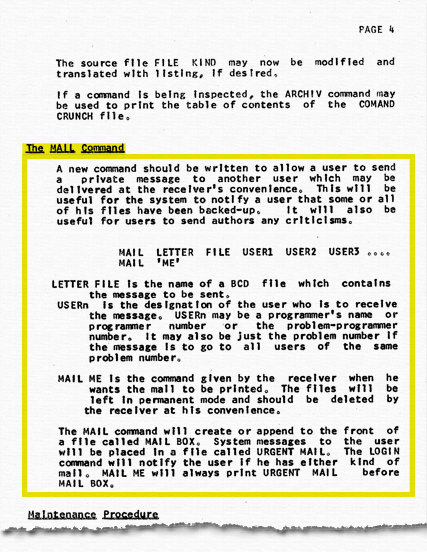
Errol Morris, the Tolstoy of bloggers, uses his New York Times Opinionator space to tell the story of investigating whether his late brother, Noel, had a role in the creation of email alongside MIT programmer Tom Van Vleck. It’s a two-part marathon (here and here) and quite fascinating. It all apparently started with a simple 1965 memo. An excerpt:
“TOM VAN VLECK: In 1965, at the beginning of the year, there was a bunch of stuff going on with the time-sharing system that Noel and I were users of. We were working for the political science department. And the system programmers wrote a programming staff note memo that proposed the creation of a mail command. But people proposed things in programming staff notes that never got implemented. And well, we thought the idea of electronic mail was a great idea. We said, “Where’s electronic mail? That would be so cool.” And they said, “Oh, there’s no time to write that. It’s not important.” And we said, “Well, can we write it?” And we did. And then it became part of the system.
••••••••••
Completely unrelated: Errol Morris reveals his five favorite films.
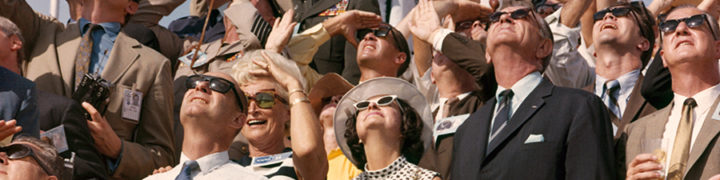
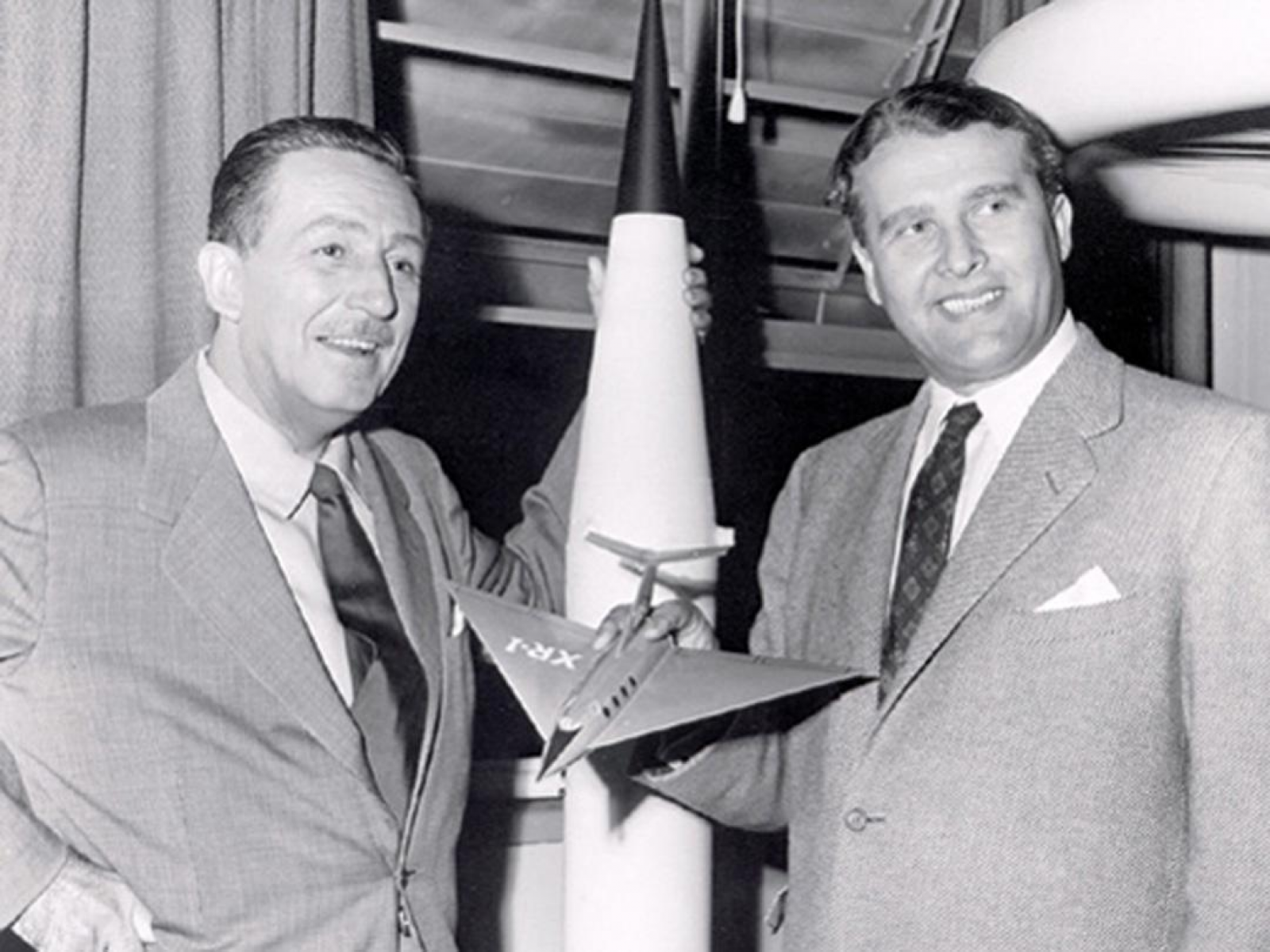
Norman Mailer’s book Of a Fire on the Moon, about American space exploration during the 1960s, was originally published as three long and personal articles for Life magazine in 1969: “A Fire on the Moon,” “The Psychology of Astronauts,” and “A Dream of the Future’s Face.” Mailer used space travel to examine America’s conflicted and tattered existence–and his own as well. In one segment, he reports on a banquet in which Wernher von Braun, the former Nazi rocket engineer who became a guiding light at NASA, meets with American businessmen on the eve of the Apollo 11 launch. An excerpt:
Therefore, the audience was not to be at ease during his introduction, for the new speaker, who described himself as a “backup publisher,” went into a little too much historical detail. “During the Thirties he was employed by the Ordinance Department of the German government developing liquid fuel rockets. During World War II he made very significant developments in rocketry for his government.”
A tension spread in this audience of corporation presidents and high executives, of astronauts, a few at any rate, and their families. There was an uneasy silence, an embarrassed pall at the unmentioned word of Nazi–it was the shoe which did not drop to the floor. So no more than a pitter-patter of clapping was aroused when the speaker went quickly on to say: “In 1955 he became an American citizen himself.” It was only when Von Braun stood up at the end that the mood felt secure enough to shift. A particularly hearty and enthusiastic hand of applause swelled into a standing ovation. Nearly everybody stood up. Aquarius, who finally cast his vote by remaining seated, felt pressure not unrelated to refusing to stand up for The Star-Spangled Banner. It was as if the crowd with true American enthusiasm had finally declared, “Ah don’ care if he is some kind of ex-Nazi, he’s a good loyal patriotic American.”
Von Braun was. If patriotism is the ability to improve a nation’s morale, then Von Braun was a patriot. It was plain that some of these corporate executives loved him. In fact, they revered him. He was the high priest of their precise art–manufacture. If many too many an American product was accelerating into shoddy these years since the war, if planned obsolescence had all too often become a euphemism for sloppy workmanship, cynical cost-cutting, swollen advertising budgets, inefficiency and general indifference, then in one place at least, and for certain, America could be proud of a product. It was high as a castle and tooled more finely than the most exquisite watch.
Now the real and true tasty beef of capitalism got up to speak, the grease and guts of it, the veritable brawn, and spoke with fulsome language in his small and well-considered voice. He was with friends on this occasion, and so a savory and gravy of redolence came into his tone, his voice was not unmusical, it had overtones which hinted of angelic super-possibilities one could not otherwise lay on the line. He was when all was said like the head waiter of the largest hofbrau in heaven. “Honored guests, ladies and gentlemen,” Von Braun began, “it is with a great deal of respect tonight that I meet you, the leaders, and the captains in the mainstream of American industry and life. Without your success in building and maintaining the economic foundations of this nation, the resources for mounting tomorrow’s expedition to the moon would never have been committed…. Tomorrow’s historic launch belongs to you and to the men and women who sit behind the desks and administer your companies’ activities, to the men who sweep the floor in your office buildings and to every American who walks the street of this productive land. It is an American triumph. Many times I have thanked God for allowing me to be a part of the history that will be made here today and tomorrow and in the next few days. Tonight I want to offer my gratitude to you and all Americans who have created the most fantastically progressive nation yet conceived and developed,” He went on to talk of space as “the key to our future on earth,” and echoes of his vision drifted through the stale tropical air of a banquet room after coffee–perhaps he was hinting at the discords and nihilism traveling in bands and brigands across the earth. “The key to our future on earth. I think we should see clearly from this statement that the Apollo 11 moon trip even from its inception was not intended as a one-time trip that would rest alone on the merits of a single journey. If our intention had been merely to bring back a handful of soil and rocks from the lunar gravel pit and then forget the whole thing”–he spoke almost with contempt of the meager resources of the moon–“we would certainly be history’s biggest fools. But that is not our intention now–it never will be. What we are seeking in tomorrow’s trip is indeed that key to our future on earth. We are expanding the mind of man. We are extending this God-given brain and these God-given hands to their outermost limits and in so doing all mankind will benefit. All mankind will reap the harvest…. What we will have attained when Neil Armstrong steps down upon the moon is a completely new step in the evolution of man.”•