Science/Tech

You are currently browsing the archive for the Science/Tech category.

"John Zachary DeLorean certainly doesn't smile much. He can't. Not just yet, anyway."

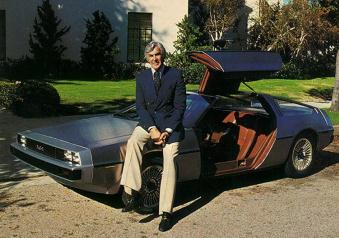
In 1979, John Z. DeLorean was poised for greatness or disaster, having left behind the big automakers to create his own car from scratch, a gigantic gambit that required huge talent and hubris. Esquire writer William Flanagan profiled DeLorean that year, capturing the gambler in mid-deal, still bluffing, soon to be folding. The opening:

“For a man who looks like Tyrone Power, is married to the stunning young model in the Virginia Slims and Clairol ads, and earns six figures a year, John Zachary DeLorean certainly doesn’t smile much. He can’t. Not just yet, anyway. The reason is simple: The most important project in his life has yet to be accomplished. DeLorean wants to make a monkey out of General Motors. He is on the verge of doing it, but he has a way to go.

There will be no rest for DeLorean until he finishes doing what no one else in the history of modern business has dared attempt–to design, build, and sell his very own automobile from scratch, an automobile the world’s largest car company wouldn’t, couldn’t, and probably shouldn’t build.

By mid-1980, either DeLorean will be smiling at last or he’ll be a shattered man. At stake are thousands of jobs for unemployed Catholics in Belfast; the wisdom and reputation of the British government, which, amid howls of protest, has bet about $106 million on the flamboyant engineer; and about another $40 million posted by several hundred U.S. car dealers and other investors, ranging from Merrill Lynch stockbrokers to Johnny Carson.

But most important, John DeLorean’s pride is at stake. If his DMC-12 sports cars roll off the assembly line–and if they sell–he will have been avenged. He will have shown the bastards that they were wrong, goddammit, that General Motors was wrong about him and what you can do with an auto company. He will have shown that you can make a virtually rustproof car with a stainless steel skin and underbody, with air bags, with a reinforced plastic frame–a car that won’t kill you in a sixty-mile-an-hour, head-on crash, a car that can last twenty-five years or more. And he will have shown that you can sell that car, even at about $14,000 a copy. And if the platoons of pinstriped, cordovan-shod executives of GM doubt it, they can go and stick their noses up its tail pipe.”

••••••••••

John DeLorean speaks at the DeLorean Car Show in Cleveland  in 2000:

Another John DeLorean post:

Tags: ,

From Bell Labs.

Professor Leonard Kleinrock, in 1969. (Image by UCLA.)

The first host-to-host message sent over the nascent Internet occurred in 1969 at UCLA, which has belatedly created a shrine to the place where it all started. An excerpt from a story on the topic by Southern California Public Radio:

“In a small computer lab in a forgotten building at UCLA, Professor Leonard Kleinrock and a group of graduate students sent the very first message over what would become the Internet, back in 1969. Since that milestone, the room was in continuous use as a classroom, and its significance to history was all but forgotten. But now the room has been transformed into a re-creation of the ARPA lab, complete with the original equipment from the ’60s and period furnishings to match.

The Interface Message Processor, or IMP as engineers fondly call it, stands in the same spot in 3420 Boelter Hall today as it did in 1969. It functioned much like a modem, sending messages from the host computer, an SDS Sigma 7, through the network to an IMP in a remote location, which relayed it to another host computer.

During the ’60s, UCLA was chosen as the first node of what was known as ARPANET, a precursor to the Internet funded by the Defense Department’s Advanced Research Project Agency (DARPA). UCLA set up the very first network connection between their IMP and the IMP at Stanford Research Institute in northern California.

On October 29, 1969, Kleinrock and his team undertook a simple task to test the network – sending a login request from their host computer to the host computer at SRI.”

••••••••••

Leonard Kleinrock recalls the birth of the Internet:

Tags:

Video short about the Venus Project.

Another Jacque Fresco post:

Tags:

It was on the brink for a long time. (Thanks Dangerous Minds.)

Non-digital, centuries-old Japanese automata as practiced today. (Thanks io9 and Makezine.)

Old-school NASA.

More Space Exploration posts:

In a 1993 Wired interview conducted by Gary Wolf, Steve Jobs, who was then doing his walkabout at NeXT, spoke cautiously about the World Wide Web. He thought it would be great for commerce but maybe not landscape-altering in essential ways. He was right in that all the connectivity and information hasn’t stopped wars or thinned the ranks of ignorant politicians.

One interesting thing that Jobs said was that the Web wouldn’t have the same awesome immediate impact that radio and TV had, that it would creep up on people. I think that’s true. Because the Web is controlled to a good extent by users, its wow factor is revealed incrementally, as people continue to tinker with it and grow it out. Ultimately, it will have much greater consequence for change than earlier technologies that made a bigger initial splash but were hampered by central control. An excerpt from the Q&A:

“What’s the biggest surprise this technology will deliver?

Steve Jobs: The problem is I’m older now, I’m 40 years old, and this stuff doesn’t change the world. It really doesn’t.

That’s going to break people’s hearts.

Steve Jobs: I’m sorry, it’s true. Having children really changes your view on these things. We’re born, we live for a brief instant, and we die. It’s been happening for a long time. Technology is not changing it much – if at all.

These technologies can make life easier, can let us touch people we might not otherwise. You may have a child with a birth defect and be able to get in touch with other parents and support groups, get medical information, the latest experimental drugs. These things can profoundly influence life. I’m not downplaying that. But it’s a disservice to constantly put things in this radical new light – that it’s going to change everything. Things don’t have to change the world to be important.

The Web is going to be very important. Is it going to be a life-changing event for millions of people? No. I mean, maybe. But it’s not an assured Yes at this point. And it’ll probably creep up on people.

It’s certainly not going to be like the first time somebody saw a television. It’s certainly not going to be as profound as when someone in Nebraska first heard a radio broadcast. It’s not going to be that profound.

Then how will the Web impact our society?

Steve Jobs: We live in an information economy, but I don’t believe we live in an information society. People are thinking less than they used to. It’s primarily because of television. People are reading less and they’re certainly thinking less. So, I don’t see most people using the Web to get more information. We’re already in information overload. No matter how much information the Web can dish out, most people get far more information than they can assimilate anyway.”

••••••••••

The William Morris Agency gets NeXT computers in 1990:

From Japan, of course.

Italian novelist Paolo Giordano went to Disneyland all by his lonesome and filed a report for the Wall Street Journal. An excerpt:

“I take no rides in Disneyland, not even one, but I go into the reassuring auditorium where they show the return of ‘Captain EO’ in amazing 3-D and the temperature change is severe. Mothers extract sweaters from their bags, but the children have no intention of wearing them. They are thinking how funny they look with those big 3-D glasses on their faces, even though 3-D is no innovation for them; it’s nothing special, like this place Disneyland is nothing special. It looks a little old and there’s much more future in the Nintendo DSs, iPods, PlayStation Portables they’re carrying in their pockets.

Only small children still marvel—the Asian girl sitting at my left side, for example, she’s terrified by the dark and the wild assault of people trying to get the best seats and by Captain EO himself who—I’m discovering now—is Michael Jackson, close to his original color and surrounded by a group of tiny farting monsters. He has a mission to accomplish that later results in him dancing amid androids and repeating ‘We are here to change the world,’ which more or less is what he’d said throughout his career. When the seats start bouncing to the beat of the bass drum, I think that one of the ways Michael Jackson changed the world was to build a place similar to this one, a colorful trap for children where he decided to live, and the reason why he did it appears to me at once to be clear, tender, dreadful and incomprehensible.”

••••••••••

A little Captain EO:

Other Disney-related posts:

Tags:

I don’t know why, but I would rather read newspapers and magazines online but still prefer to read old-fashioned, non-virtual books. Maybe it has to do with the length of time we spend with an article as opposed to a longer work. I think it’s something I’ll get over soon, though I probably won’t have a choice. But I’m all in favor of digitization of printed materials of value (and even of dubious value) and the democratization of scholarship that it allows. James Gleick speaks to this issue a new Op-Ed piece in the New York Times. An excerpt:

“Where some see enrichment, others see impoverishment. Tristram Hunt, an English historian and member of Parliament, complained in The Observer this month that ‘techno-enthusiasm’ threatens to cheapen scholarship. ‘When everything is downloadable, the mystery of history can be lost,’ he wrote. ‘It is only with MS in hand that the real meaning of the text becomes apparent: its rhythms and cadences, the relationship of image to word, the passion of the argument or cold logic of the case.’

I’m not buying this. I think it’s sentimentalism, and even fetishization. It’s related to the fancy that what one loves about books is the grain of paper and the scent of glue.

Some of the qualms about digital research reflect a feeling that anything obtained too easily loses its value. What we work for, we better appreciate. If an amateur can be beamed to the top of Mount Everest, will the view be as magnificent as for someone who has accomplished the climb? Maybe not, because magnificence is subjective. But it’s the same view.”

Another James Gleick post:


Tags:

In the future, you will be able to live forever. Though videos about immortality will still, apparently, have shitty production values.

Suitcase-sized cell phones.

Debbie Bramwell: Holy fuck. (Image by Lukascb.)

In the future, Bill James’s 2009 statement about performance-enhancing drugs will likely be proven right:

“If we look into the future, then, we can reliably foresee a time in which everybody is going to be using steroids or their pharmaceutical descendants. We will learn to control the health risks of these drugs, or we will develop alternatives to them. Once that happens, people will start living to age 200 or 300 or 1,000, and doctors will begin routinely prescribing drugs to help you live to be 200 or 300 or 1,000. If you look into the future 40 or 50 years, I think it is quite likely that every citizen will routinely take anti-aging pills every day.”

Tags:

In her 2009 New Yorker article about neuroenhancers, Margaret Talbot explains the concept of “mission creep,” whereby a pharmaceutical created for one purpose is pushed into other more suspect treatment areas by drug companies looking to further monetize a product:

“The Lynches said that Provigil was a classic example of a related phenomenon: mission creep. In 1998, Cephalon, the pharmaceutical company that manufactures it, received government approval to market the drug, but only for ‘excessive daytime sleepiness’ due to narcolepsy; by 2004, Cephalon had obtained permission to expand the labelling, so that it included sleep apnea and ‘shift-work sleep disorder.’ Net sales of Provigil climbed from a hundred and ninety-six million dollars in 2002 to nine hundred and eighty-eight million in 2008.

Cephalon executives have repeatedly said that they do not condone off-label use of Provigil, but in 2002 the company was reprimanded by the F.D.A. for distributing marketing materials that presented the drug as a remedy for tiredness, ‘decreased activity,’ and other supposed ailments. And in 2008 Cephalon paid four hundred and twenty-five million dollars and pleaded guilty to a federal criminal charge relating to its promotion of off-label uses for Provigil and two other drugs. Later this year, Cephalon plans to introduce Nuvigil, a longer-lasting variant of Provigil. Candace Steele, a spokesperson, said, ‘We’re exploring its possibilities to treat excessive sleepiness associated with schizophrenia, bipolar depression, traumatic injury, and jet lag.’ Though she emphasized that Cephalon was not developing Nuvigil as a neuroenhancer, she noted, “As part of the preparation for some of these other diseases, we’re looking to see if there’s improvement in cognition.'”

Another post about Nuvigil:

Tags:

If we seem to be forgetting more, it’s only because there’s much more to remember. Unsurprisingly, our brains have begun to use the Internet as our key external memory system, not retaining information that we know we can look up. It’s inevitable since our memories have never been incredibly elastic and more information than ever is available. Memory augmentation of some sort is also probably inevitable. From a New York Times story about memory research:

“The scientists, led by  Betsy Sparrow, an assistant professor of psychology at Columbia, wondered whether  people were more likely to remember information that could be easily retrieved from a computer, just as students are more likely to recall facts they believe will be on a test.

Dr. Sparrow and her collaborators, Daniel M. Wegner of Harvard and Jenny Liu of the University of Wisconsin, Madison, staged four different memory experiments. In one, participants typed 40 bits of trivia — for example, ‘an ostrich’s eye is bigger than its brain’ — into a computer. Half of the subjects believed the information would be saved in the computer; the other half believed the items they typed would be erased.

The subjects were significantly more likely to remember information if they thought they would not be able to find it later. ‘Participants did not make the effort to remember when they thought they could later look up the trivia statement they had read,’ the authors write.”

"They viewed humans as essentially good, influenced by rational deliberation, and tending towards co-operation."

From Evgeny Morozov’s concise history of the Internet at Prospect: 

“But studying the history of the internet is impossible without studying the ideas, biases, and desires of its early cheerleaders, a group distinct from the engineers. This included Stewart Brand, Kevin Kelly, John Perry Barlow, and the crowd that coalesced around Wired magazine after its launch in 1993. They were male, California-based, and had fond memories of the tumultuous hedonism of the 1960s.

These men emphasised the importance of community and shared experiences; they viewed humans as essentially good, influenced by rational deliberation, and tending towards co-operation. Anti-Hobbesian at heart, they viewed the state and its institutions as an obstacle to be overcome—and what better way to transcend them than via cyberspace? Their values had profound effects on the mechanics of the internet, not all of them positive. The proliferation of spam and cybercrime is, in part, the consequence of their failure to predict what might happen as a result of the internet’s open infrastructure. The first spam message dates back to 1978; now, 85 per cent of all email traffic in the world is spam.

Perhaps the cheerleaders’ greatest achievement was in wresting dominance of the internet from the founding engineers, whose mentality was that of the Cold War. These researchers greatly depended on the largesse of the US department of defence and its nervous anticipation of a nuclear exchange with the Soviet Union. The idea of the ‘virtual community’—the antithesis of Cold War paranoia—was popularised by the writer and thinker Howard Rheingold. The term arose from his experiences with Well.com, an early precursor to Facebook.”

•••••••••

Evgeny Morozov argues that the Internet strenghtens dictatorial regimes, in his contrarian TED Talk:

Tags:

Occasional smoker Tom Snyder talks to Durk Pearson and Jerry Pournelle about media changes on the horizon, including the death of newsprint.

Tags: , ,

Ooh, Talkies! My favorite kind of pictures, apart from Weepies.

The soon-to-open Fortune Hotel in Lavasa. (Image by Ankur P.)

In a smart Atlantic article, “India Invents a City,” Jeremy Kahn looks at Lavasa, a planned, high-tech hilltop urban development which may or may not be a model for Indian cities of tomorrow. The opening:

“At first glance, this could be Italy—the promenade, the sidewalk cafés and ice-cream parlors, the streetscape of conjoined little apartment houses in mustard, terra-cotta, ocher, olive, or beige. Even the name of the place, Lavasa, sounds vaguely Italian.

But look again, and this clearly isn’t Italy. It’s too clean, too new. There are too few tourists. There are hardly any people at all, actually. Which only makes it all the more improbable that Lavasa is, in fact, in India—land of auto rickshaws and slum dogs, of sweat and dust and litter. With only a handful of residents, Lavasa is a city-in-waiting. But its corporate backers believe it will soon represent nothing less than a new model of urban development and governance in India—a country where the phrase city planning has long been a contradiction in terms.

Lavasa sits in the Western Ghats, some 130 miles southeast of Mumbai, India’s financial and entertainment capital, and 40 miles west of Pune, a growing hub for software programming and computer animation. If all goes according to its master plan, Lavasa will eventually house more than 300,000 people in five distinct ‘towns.’ It will also have a world-class medical campus, luxury hotels, boarding schools, sports academies, a Nick Faldo–designed golf course, a space camp, and, its developers hope, animation and film studios, software-development companies, biotech labs, and law and architectural firms—in short, all of the knowledge industries at the heart of the ‘new India.’ Those industries have yet to buy in, but residential sales have been brisk: in Dasve, the first of Lavasa’s five towns, scheduled to be completed this year, the houses are almost sold out.”

••••••••••

The good people at the Lavasa Corporation are building you a lovely home:

Tags:

"That photo is then compared with a database of images of people with criminal records." (Image by Matthew Goldthwaite.)

A new iPhone app will allow law-enforcement officers to photograph a person and instantly scan a database of criminals to see if there is a match. It’s inevitable that all of the information we’ve put online will end up in databases that can be monetized or scrutinized. A report from Cnet:

“Some law-enforcement agencies are preparing to deploy a mobile facial-recognition tool, The Wall Street Journal reported today.

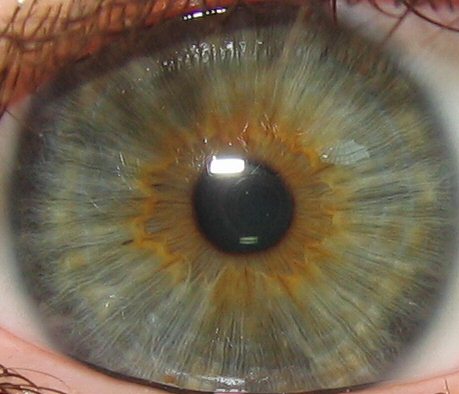
According to the Journal, about 40 law-enforcement agencies across the U.S. will be making the handheld product available to their officers in the field as early as September. The device, which has been developed by Massachusetts-based BI2 Technologies, allows officers to take a photo of a person from a distance of five feet or less. That photo is then compared with a database of images of people with criminal records to see if there is a match. The device is also capable of scanning a person’s iris.”

••••••••••

Iris-recognition scanner:

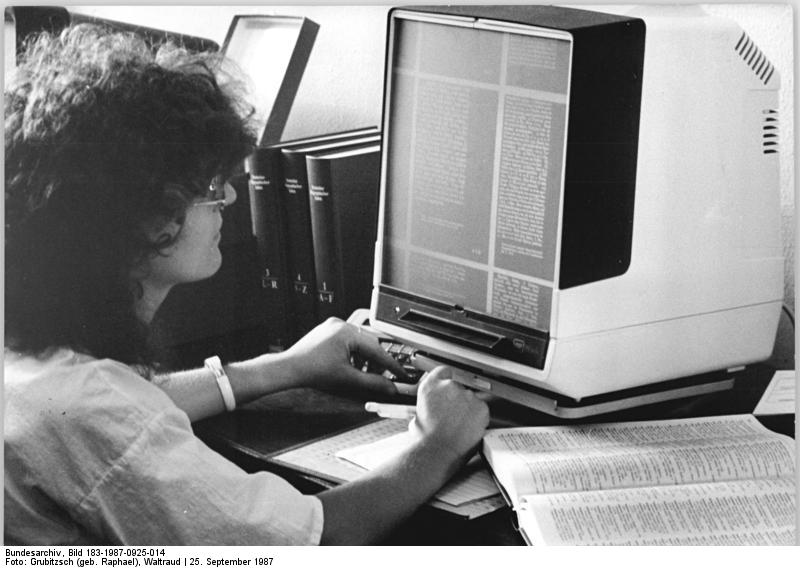
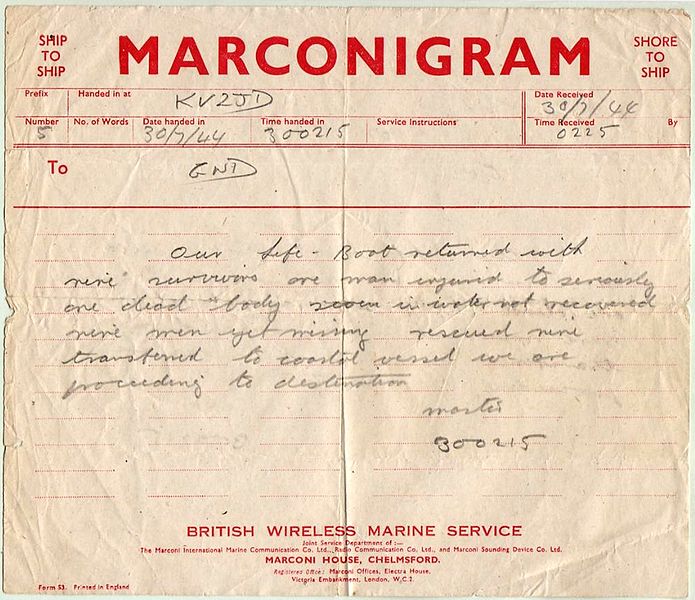
Many types of ghost media (telegrams, telex, etc.) that have been seemingly made obsolete by the advent of broadband still actually soldier on. An excerpt from a piece about so-called dead media at Ars Technica:

“Few people send out messages via Morse code any more. But the basic telegram concept—a missive spoken to an operator, then transmitted across wires or wireless, then hand-delivered to a recipient—is alive and well.

In fact, as in the nineteenth century, Telegrams Canada will write your telegram for you—or at least suggest gram language for appropriate occasions. The ‘Get Well’ suggestions include ‘The office/this place is just not the same without you,’ and ‘Your many friends here are hoping for your quick recovery.’

The service isn’t cheap. A same business day telegram costs CAN$19.95 plus 99¢ per word. ‘Quebec usually next business day,’ the company advises. ‘Rural routes and post office boxes may take longer.'” (Thanks Browser.)

•••••••••••

Balki receives a vital telegram:

Stephen Colbert euolgizes the Western Union telegram:

Tags: ,

In the New York Review of Books, Freeman Dyson, who worked on nuclear-propelled spaceships among other great and scary things, reviews two new books about  Richard Feynman (one, a gekiga). In the piece, he ranks science icons of the last century. The article’s opening:

“In the last hundred years, since radio and television created the modern worldwide mass-market entertainment industry, there have been two scientific superstars, Albert Einstein and Stephen Hawking. Lesser lights such as Carl Sagan and Neil Tyson and Richard Dawkins have a big public following, but they are not in the same class as Einstein and Hawking. Sagan, Tyson, and Dawkins have fans who understand their message and are excited by their science. Einstein and Hawking have fans who understand almost nothing about science and are excited by their personalities.

On the whole, the public shows good taste in its choice of idols. Einstein and Hawking earned their status as superstars, not only by their scientific discoveries but by their outstanding human qualities. Both of them fit easily into the role of icon, responding to public adoration with modesty and good humor and with provocative statements calculated to command attention. Both of them devoted their lives to an uncompromising struggle to penetrate the deepest mysteries of nature, and both still had time left over to care about the practical worries of ordinary people. The public rightly judged them to be genuine heroes, friends of humanity as well as scientific wizards.

Two new books now raise the question of whether Richard Feynman is rising to the status of superstar.”

••••••••••

Dyson talks science at the Big Think:

Tags: ,

A passage about the nature of prisons from Bill James’ new book, Popular Crime, which I previously posted about:

“Build smaller prisons. 

… Large prisons become ‘violentocracies’ — places ruled by violence and by the threat of violence. In a violentocracy, the most violent people rise to the top.  

In any prison of any size, the prisoners are going to be pushed toward the level of the most violent persons in the facility. … In a prison 3,000 people, the entire prison is pushed toward the level of violence created by the five most violent people in the joint. The most violent person finds the second-most violent person and the third-most violent person, and they form an alliance to exploit the weak. Everyone else is compelled to avoid looking weak. … 

Large prisons promote paranoia in the prisoners. You never know who in here is waiting for you with a homemade knife.  

… A prison of 20 people is, by its very nature, extremely different. You know who is in there with you; you know who you have to stay away from. … Plus, if you have many small prisons, you can contain the violent people in a limited number of those prisons, the preventing their violent tendencies from infecting the rest of the prison population.  

… What you would do, with a network of small prisons, would be to place each prisoner in a facility that is appropriate to the threat that he represents. You grade the prisoners on the threat of violence that they represent, one through ten. You put the tens with the tens and the ones with the ones.  

Plus, when you move to a system in which some prisoners have more rights and live in more humane conditions, you create a powerful incentive to get into one of the less restrictive prisons..  

In a large and horrible prison, the new prisoner thinks ‘I’ve got to show everybody here how tough and vicious I really am, so that nobody will mess with me.’ But when you put a new prisoner in a 24-man prison with 23 other tough guys, and he knows that there are other prisons that are not like this, his natural thought is ‘I’ve got to get out of here. I’ve got to show these people that I am not a crazy, vicious sociopath, so they will move me to some other facility that is not populated by crazy, vicious sociopaths.'” (Thanks iSteve and Marginal Revolution.)

Tags:

Alain Resnais’ 1958 Technicolor paean to plastic is a great find by the Documentarian. No English subtitles, but none needed.

Tags:

« Older entries § Newer entries »