“I’ve had to persuade myself to believe in the impossible more often. In the past several decades I’ve encountered a series of ideas that I was conditioned to think were impossibilities, but which turned out to be good practical ideas. For instance, I had my doubts about the online flea market called eBay when it first came out. Pay money to a stranger selling a car you have not seen? Everything I had been taught about human nature suggested this could not work. Yet today, strangers selling automobiles is the major profit center for the very successful eBay corporation.
I thought the idea of an encyclopedia that anyone could change at any time to be a non-starter, a hopeless romantic idea with no chance of working. It seemed to go against my general understanding of human nature and group interaction. I was so wrong. Today I use Wikipedia at least once a day.
Twenty years ago if I had been paid to convince an audience of reasonable, educated people that in 20 years time we’d have street and satellite maps for the entire world on our personal hand held phone devices — for free — and with street views for many cities — I would not be able to do it. I could not have made an economic case for how this could come about “for free.” It was starkly impossible back then.
These supposed impossibilities keep happening with increased frequency.”
••••••••••
Kevin Kelly lectures on the meaning of technology, in Amsterdam in 2009:
I’ve never triedBooktrack, a service that provides a cinematic-ish soundtrack for digital books, but it sounds truly hideous. An excerpt from aBetsy Morais articleat the Atlantic:
“There is a long-held belief about cinema: ‘There never was a silent film.’ From the early days, when moving images fascinated viewers in their mute spectacle, musical accompaniment drowned out the incessant whirring of the projector machine. Sound brought cinema’s haunting figures into being, amplifying their moods and heightening the intensity of the action.
Reading, however, is silent by design. Unless readers add their own accompaniment. On any given public transit commute, one might find an audience of readers trying to do just that, headphones in, books open, providing soundtracks to literature. Mark Cameron noticed this on his daily ferry rides, and as he selected his own music-reading pairings, found himself choosing songs that emotionally corresponded to the words on the page. When he told his brother, the two started cooking up an idea for ‘a more cinematic-type experience’ for reading, says Paul Cameron, who is now the CEO of the company they co-founded, Booktrack.”
The city of Bonn, trying desperately to make up for budget shortfalls, has instituted a tax on prostitution, which is legal in Germany. Since many sex workers are from overseas and don’t understand the language, Bonn officials have come up with a solution in the form of a “sex meter.” FromSpiegel:
“The budget is tight in Bonn. So tight, in fact, that city officials instituted a new ‘sex tax’ for prostitution this year. They hoped to raise up to €200,000 per year in additional revenues.
Yet while it might sound straightforward enough, the sex tax has been difficult to enforce among those prostitutes who do not work in established brothels and sex clubs. Leading the city to come up with plan B: an automated ticket machine in an area frequented by prostitutes and their customers.
Since Monday, freelance sex workers on the city streets have been required to pay €6 per night into the machine, which resembles an automated parking ticket distributor. This machine, however, emits nightly permits to practice prostitution.”
The metaphor is too obvious for someone else not to have also thought of it. There were a rash of news stories a few weeks back about the numerous fake Apple stores popping up in China, and the question is this: Can China, with its present government and business structure, ever turn out a company like Apple? One that’s innovative and leads the market?
It’s obviously a generalization, but China seems more like Microsoft Nation, appropriating ideas and managing them with brutal efficiency. And that can certainly be very successful for a long time, but can that success be sustained without the fuel of original inventions? Perhaps that nation is about to file a huge number of patents, and I just know nothing about it. But for all its many strengths, China doesn’t seemed to be positioned to nurture free-thinking entrepreneurs.•
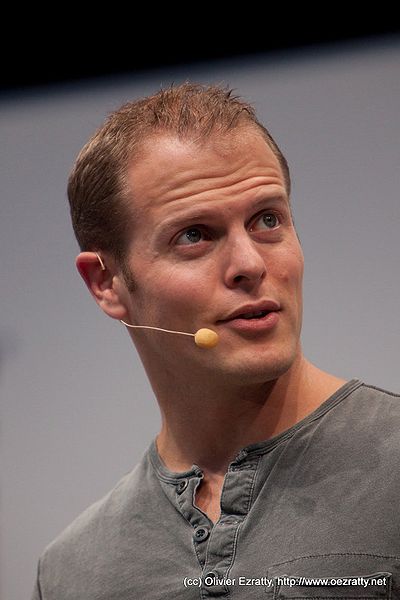
"He preferred to spend his time learning the tango in Buenos Aires or archery in Kyoto." (Image by Olivier Ezratty.)
If you haven’t had a chance yet to read Rebecca Mead’s great New Yorker profile of souped-up self-help guru, Timothy Ferriss, don’t let it slide. Ferriss is the best-selling author behind the 4-Hour Workweek and other similarly alluring titles. The article is hilarious and sums up the age we live in, the desperation people feel to find some way to the other side of this very discomfiting paradigm shift we’re experiencing. An excerpt;
“Ferriss’s first book, The 4-Hour Workweek, was turned down by twenty-six publishers before being accepted by Crown, and he recounts this statistic with pride. But it’s easy to understand the caution of those twenty-six. Ferriss’s aesthetic is a pointed rejection of the culture of constant BlackBerrying, corporate jockeying, and office all-nighters that is celebrated in most business-advice books, and in films such as The Social Network.The 4-Hour Workweek was inspired by a personal epiphany. In 2004, Ferriss, feeling burned out as the C.E.O. of a sports-nutrition company, where he worked twelve-hour days, seven days a week, discovered that he preferred to spend his time learning the tango in Buenos Aires or archery in Kyoto. He also found that, by automating his business operations to the largest extent possible, he was able to pull this off. (To a point, at least. Kane Ng, a Hollywood executive who is Ferriss’s friend, told me, expansively, ‘Tim is a total fraud, you know. ‘Four-hour workweek’? He is constantly busting ass.’ Of course, it was Seneca who said that hyperbole ‘asserts the incredible in order to arrive at the credible.’) Ferriss advises would-be members of the New Rich to check e-mail no more than twice a day, and to set automated responses advising correspondents of the recipient’s unavailability. (Anyone who e-mails Ferriss these days immediately receives in her inbox an automated response, with the cheery sign-off ‘Here’s to life outside of the inbox!’) The book counsels readers to take what Ferriss calls ‘mini-retirements’ now—a month in Costa Rica, three months in Berlin—rather than saving up the prospect of leisure for the final decades of life. And it recommends funding all this by discovering a ‘muse,’ which Ferriss defines, as Seneca did not, as ‘an automated vehicle for generating cash without consuming time.’
Finding one’s muse, like catching one’s rabbit before cooking it, is more easily said than done, but Ferriss’s advocacy of liberation from the workplace has had a wide appeal, especially among younger people to whom the workplace may be unattainable in the first place, given the unemployment rate. Similarly, his latest book, The 4-Hour Body, speaks to the peculiar obsessions and insecurities of the young American male. Ferriss tells readers how they might lose twenty pounds in thirty days without exercise—eggs, spinach, and lentils are crucial—and how to triple their testosterone levels. (Gentlemen, put your iPhone in the pocket of your backpack, not the pocket of your jeans.) The book, which is five hundred and forty-eight pages long, contains a lot of colorfully odd advice—he recommends increasing abdominal definition with an exercise he calls ‘cat vomiting’—but it also reassures readers that they need not go so far as to have Israeli stem-cell factor injected into the cervical spine, as Ferriss did in the name of inquiry. Nor need they necessarily incorporate into their regimen Ferriss’s method for determining the effectiveness of controlled binge eating: weighing his feces to find out exactly what kind of shit he was full of.”
••••••••••
“The four-hour workweek is possible, but you need to completely unplug and reset”:
Alexander Masters has a interesting profile at the Guardian about his downstairs neighbor, math prodigy Simon Phillips Norton, who, yes, is brilliant and very eccentric. An excerpt;
“The Monster is Simon’s special area in mathematics, a field known as Group Theory, or the study of symmetry. In 1980, mathematicians discovered the largest symmetry: the most convoluted symmetrical atom of them all. Because of its size and complexity, the final atom was dubbed ‘The Monster”.’Mathematicians study symmetry using grids of numbers. A sudoku table has nine rows and nine columns of numbers. The Monster has 808017424794512875886459904961710757005754368000000000.
It’s essential to emphasise that in no sense of the term is Simon mad. He’s covered in facial hair and wears rotten shoes and trousers for the opposite reason: too much mental order.
He burps; he thinks you won’t mind knowing about the progress of his digestion; he goes on long, sweaty walks, and doesn’t change his clothes for a week. But what else can he do? Everybody is messy somehow, and there’s no other place for Simon to store his quota. Inside his head there’s no room: all the mess has been swept out. It’s as pristine in there as a surgeon’s operating theatre.
Simon’s mother, now dead, taught him maths, up to quadratic equations. Astounding, for a British housewife in the 1950s – no one in the family can explain it. Simon says he’s a fluke of genetics. Every birth is a gamble by nature, a throwing in the air of infinite possibilities. In Simon’s case, ‘The molecules settled in my favour. Neither of my brothers is particularly intelligent.'” (ThanksLongform.)
From Jon Gertner’s excellent New York Times Magazine article about the burgeoning lithium-battery market and the future of manufacturing in America:
“On both sides of the world, the fundamental appeal of expanding manufacturing is jobs. It is a curiosity of modern life that information companies can create extraordinary social disruptions and vast shareholder wealth but relatively few jobs. Facebook has about 2,000 employees worldwide. Google has about 29,000. Even in its new, slimmed-down state, General Motors, a decidedly less valuable company, has about 200,000 employees. What’s more, that number represents only a fraction of the people behind the production of a G.M. car. ‘When you’re manufacturing anything, even if the work is done by robots and machines, there’s an incredible value chain involved,’ Susan Hockfield, the president of M.I.T., says. ‘Manufacturing is simply this huge engine of job creation.’ For batteries, that value chain would include scientists researching improved materials to companies mining ores for metals; contractors building machines for factory work; and designers, engineers and machine operators doing the actual plant work. By some estimates, manufacturing employs about 65 percent of America’s scientists and engineers.”
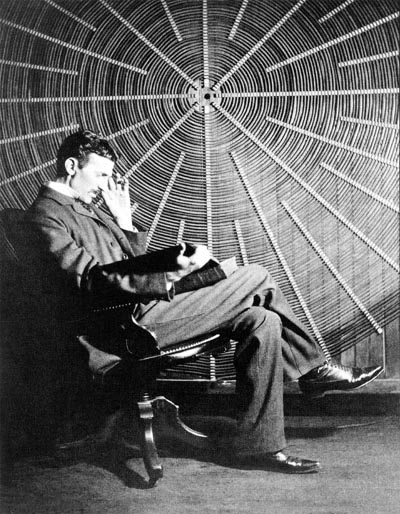
From a page of obituaries about electrical genius Nikola Tesla, who died alone and in modest means in 1943 at the New Yorker Hotel:
“Tesla’s ideas bordered increasingly on what some considered the fantastic as he advanced in years. On his seventy-eighth birthday he announced in an interview that he had invented a ‘death beam’ powerful enough to destroy 10,000 airplanes at a distance of 250 miles and annihilate an army of 1,000,000 soldiers instantaneously.
On his eighty-fourth birthday he declared he stood ready to divulge to the United States Government the secret of the ‘death beam’ that, he said, would build an invisible Chinese Wall of defense around the country against any attempted attack by an enemy air force, no matter how large.”
Google Books putting millions of searchable volumes online has opened possibilities for scholars of all sorts, including psychologists interested in analyzing the predictive nature of language. James Pennebaker, chair of the department of psychology at the University of Texas at Austin, has done such a study resulting in the book, The Secret Life of Pronouns. It’s not the point of Pennebaker’s study, but I’ve often wondered if the type of language we use changes if we are developing a serious illness but not yet aware of it. It’s really easy to read signifiers in retrospect, but perhaps they can be deciphered to predict likelihood of sickness, at least until we have a foolproof biological means of predetermining such things. From a Scientific American interview with Pennebaker conducted by Garreth Cook:
“COOK: How did you become interested in pronouns?
PENNEBAKER: A complete and total accident. Until recently, I never thought about parts of speech. However, about ten years ago I stumbled on some findings that caught my attention. In the 1980s, my students and I discovered that if people were asked to write about emotional upheavals, their physical health improved. Apparently, putting emotional experiences into language changed the ways people thought about their upheavals. In an attempt to better understand the power of writing, we developed a computerized text analysis program to determine how language use might predict later health improvements. In other words, I wanted to find if there was a healthy way to write.
Much to my surprise, I soon discovered that the ways people used pronouns in their essays predicted whose health would improve the most. Specifically, those people who benefited the most from writing changed in their pronoun use from one essay to another. Pronouns were reflecting people’’s abilities to change perspective.
As I pondered these findings, I started looking at how people used pronouns in other texts — blogs, emails, speeches, class writing assignments, and natural conversation. Remarkably, how people used pronouns was correlated with almost everything I studied. For example, use of first-person singular pronouns (I, me, my) was consistently related to gender, age, social class, honesty, status, personality, and much more. Although the findings were often robust, people in daily life were unable to pick them up when reading or listening to others. It was almost as if there was a secret world of pronouns that existed outside our awareness.”
••••••••••
Dr. Pennebaker on the psychological benefits of writing:
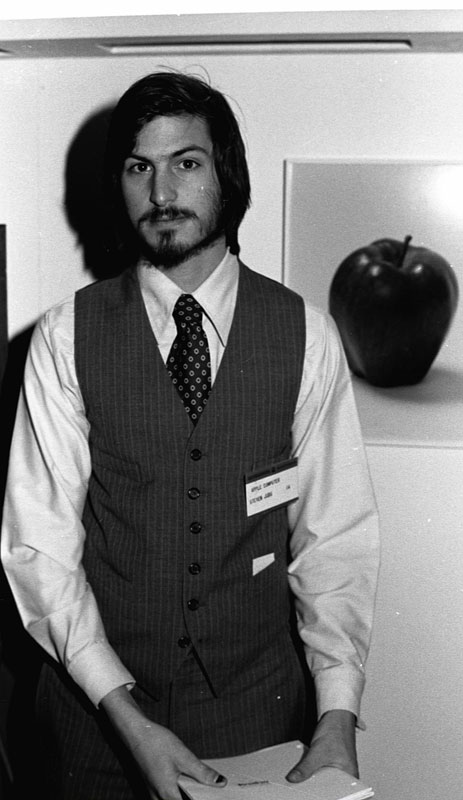
Sad if inevitable news that Steve Jobs is stepping down as CEO of Apple due to health concerns. I have major misgivings about the treatment of workers in Apple’s factories in Asia and the company’s light regard for consumer privacy, but Steve Jobs is one of the most singular Americans of his time. An artist as businessperson, a visionary who not only saw the future of tech but made it, Jobs brought big ideas to the marketplace and delivered on them, more often than not, sensationally. His latter stint at Apple was more spectacular than his first, giving lie to F. Scott Fitgerald’s famous line that there are no second acts in America, which is oft-quoted and has always been untrue. But never more so than in the case of Jobs.
Swedish Prime Minister Tage Erlander, videoconferencing, 1960.
This classic photo shows videoconferening in the days of rotary phones, which was possible in analog form right around the time of TV’s introduction, but it wasn’t available to consumers for several decades and Skype was a mere pipe dream at the time. Copy from a 1969 Bell Systems publication about the introduction of the “Picturephone”:
“THE TELEPHONE brought a new dimension to human communications. Where previously men had been able to send written messages over wires as electrical signals, the telephone made it possible for the human voice to span the miles. Now, almost a hundred years later, the telephone is commonplace and another dimension is being added-that of sight. And just as the telephone has revolutionized human habits of communicating and made a major contribution to the quality of modern life, many of us at Bell Labs believe that PICTUREPHONE® service, the service that lets people see as well as hear each other, offers potential benefits to mankind of the same magnitude. It is a tribute to the flexibility and versatility of the existing telephone network that Picturephone service, now being readied for introduction as a regular Bell System offering, can be added as an integral part of telephone service. What is Picturephone service like? Most important, of course, the user sees the person with whom he is talking. People today are so accustomed to using the telephone and to its usefulness as an instrument of communication, that they sometimes overlook the importance of vision in communication. But think, do you telephone the person in the next office or go to see him? Most people sense a more complete and satisfying exchange when they can both see and talk to each other. Thus, the advantage of more complete communication with Picturephone service is readily apparent.
Picturephone service is useful in other ways too. Graphic material, such as drawings, photographs, and physical objects, can be viewed with the Picturephone set. The equipment can also be used to communicate with a computer. The customer ‘talks’ to the computer via TOUCH-TONE@ dialing buttons, and the computer’s responses are displayed on the picture tube.”
••••••••••
Below is amazing footage of computer pioneer Douglas Carl Engelbert‘s 1968 demo of videoconferecning (and other tech stuff, including the mouse) , which was aimed at the business market: “You as an intellectual worker, supplied with a computer display, backed up with a computer that was alive for you all day, and was instantly responsive to every action you had. How much value could you derive from that?”
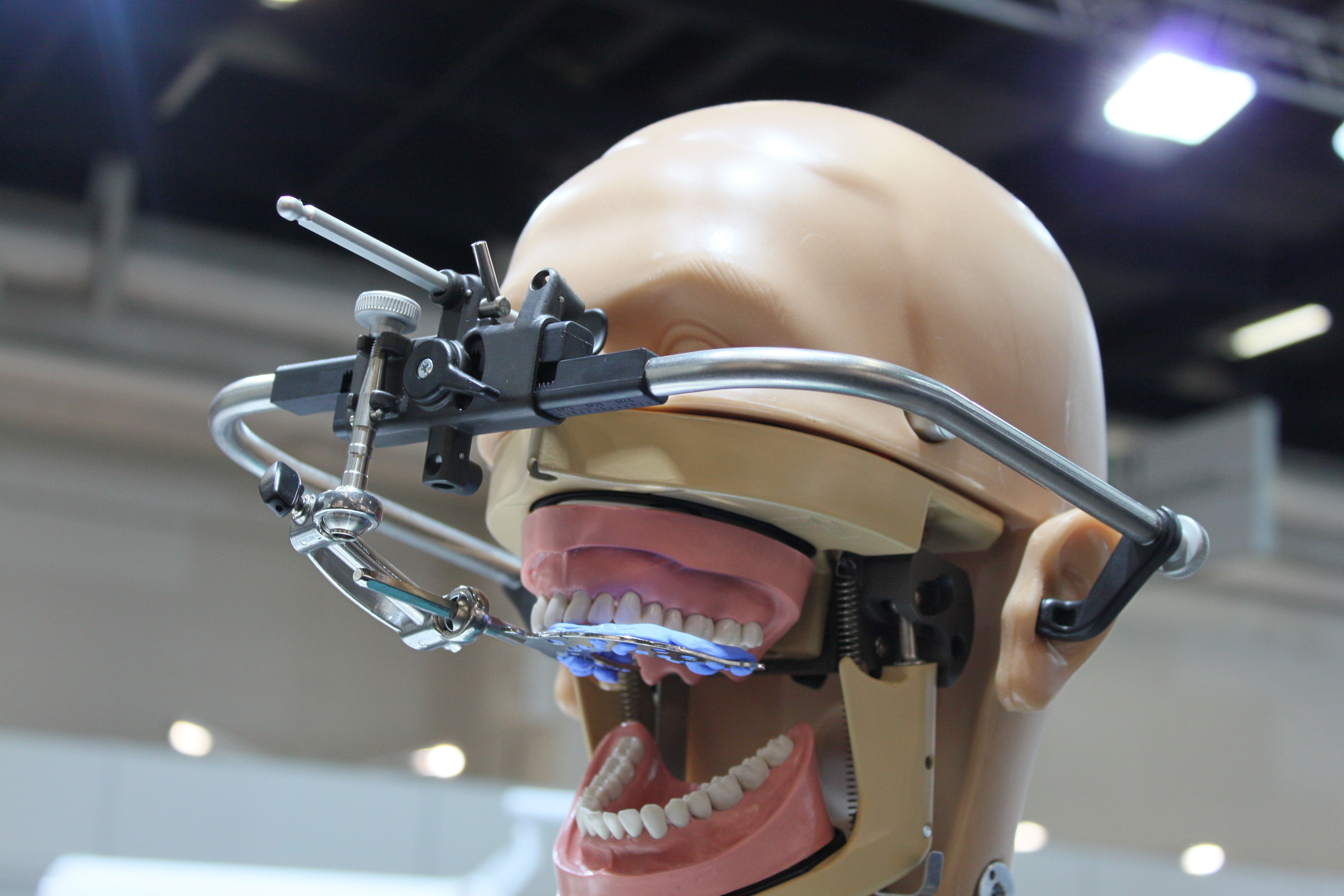
Harvard evolutionary biologist Daniel Lieberman is decribed wryly as a “hoof-and-foot man” because he studies the extreme ends of the human body–head and feet. In a smart interview in the New York Times conducted by Claudia Dreifus, Lieberman discusses how the bodies we’ve inherited are mismatched for the modern world we’ve created:
“For example, impacted wisdom teeth and malocclusions are very recent problems. They arise because we now process our food so much that we chew with little force. These interactions affect how our faces grow, which causes previously unknown dental problems. Hunter-gatherers — who live in ways similar to our ancestors — don’t have impacted wisdom teeth or cavities. There are many other conditions rooted in the mismatch — fallen arches, osteoporosis, cancer, myopia, diabetes and back trouble. So understanding evolutionary biology will definitely help my students when they become orthopedists, orthodontists and craniofacial surgeons.”
"They lack the ability to process all that information in real time and then intelligently act on the results." (Image by Bin im Garten.)
From“Autonomous Robots in the Fog of War,” Lori G. Weiss’ new IEEE Spectrum report about the future of robotic warfare, which may be more in the distance than in the offing:
“So why haven’t we seen a fully autonomous robot that can sense for itself, decide for itself, and seamlessly interact with people and other machines? Unmanned systems still fall short in three key areas: sensing, testing, and interoperability. Although the most advanced robots these days may gather data from an expansive array of cameras, microphones, and other sensors, they lack the ability to process all that information in real time and then intelligently act on the results. Likewise, testing poses a problem, because there is no accepted way to subject an autonomous system to every conceivable situation it might encounter in the real world. And interoperability becomes an issue when robots of different types must interact; even more difficult is getting manned and unmanned systems to interact.
To appreciate the enormous challenge of robotic sensing, consider this factoid, reported last year in The Economist: ‘During 2009, American drone aircraft…sent back 24 years’ worth of video footage. New models…will provide ten times as many data streams…and those in 2011 will produce 30 times as many.’ It’s statistics such as those that once prompted colleagues of mine to print up lanyards that read ‘It’s the Sensor, Stupid.'”
"The algorithms used by Amazon to set and update prices started outbidding each other." (Image by J.J. Harrison.)
Algorithms increasingly run many aspect of our lives, but sometimes this computer-generated math we can barely comprehend runs amok. An excerpt from acautionary tale about algorithms by Jane Wakefield at the BBC:
“At last month’s TEDGlobal conference, algorithm expert Kevin Slavin delivered one of the tech show’s most ‘sit up and take notice’ speeches where he warned that the ‘maths that computers use to decide stuff’ was infiltrating every aspect of our lives.
Among the examples he cited were a robo-cleaner that maps out the best way to do housework, and the online trading algorithms that are increasingly controlling Wall Street.
‘We are writing these things that we can no longer read,’ warned Mr Slavin.
‘We’ve rendered something illegible. And we’ve lost the sense of what’s actually happening in this world we’ve made.’
Algorithms may be cleverer than humans but they don’t necessarily have our sense of perspective – a failing that became evident when Amazon’s price-setting code went to war with itself earlier this year.
The Making of a Fly – a book about the molecular biology of a fly from egg to fully-fledged insect – may have been a riveting read but it almost certainly didn’t deserve a price tag of $23.6m (£14.3m).
It hit that figure briefly on the site after the algorithms used by Amazon to set and update prices started outbidding each other.
It is a small taste of the chaos that can be caused when code gets smart enough to operate without human intervention, thinks Mr Slavin.
‘This is algorithms in conflict without any adult supervision,’ he said.”
••••••••••
Slavin’s TED Talk about algorithms infiltrating our lives:
"Fear of leaving present location and experiencing adverse effects of sudden withdrawal." (Image by Frank C. Müller.)
notes from the pharmageddon (everywhere)
does anyone know of a specific type of blood test that will indicate the presence of pharmaceutical substances? i get the feeling (or rather, possibly side effects) that i’m being slipped a pharma-mickey here and there, probably by some SOMA-ite. Makes brainwashing and coersive-Group-evangelism seem much less difficult, i’m pretty sure. I’m really sorry for the possesors’ (pun intended) over-active third eye, but i’m not trying to chemically alter them because of the way they were made.
Side effects include:
Foggy sensation related to concentration.
Disconcerting boils on the skin.
Paranoia inducing inability to wake up to even a very loud alarm.
Lack of energy and tiredness.
Joint pain and stiffness, especially in fingers.
Impaired motor skill/coordination.
Impaired ability with concentration and memory.
Overall loss in deductive reasoning and judgment.
Increased susceptibility to fraud and coersion.
Fear of leaving present location and experiencing adverse effects of sudden withdrawal.
Thanks for any names of specific tests a person can order via clinic, facility, or doctor.
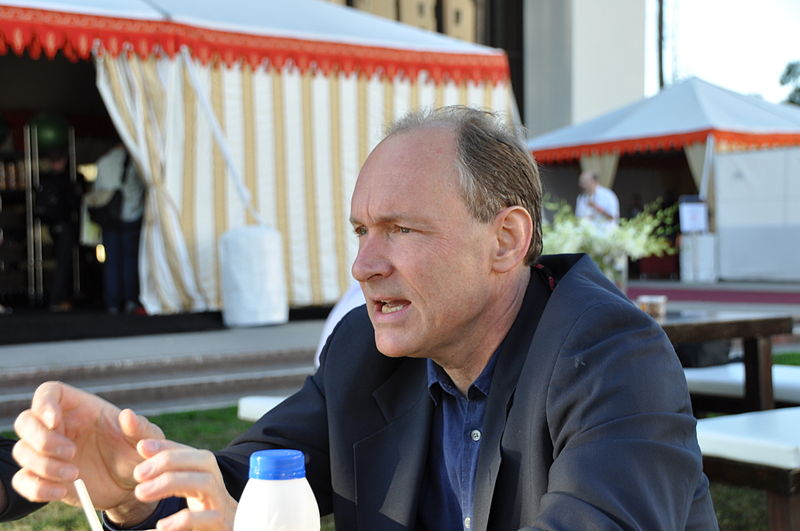
From John Naish’s New Statesman profile of World Wide Web creator, Tim Berners-Lee, who gave away his invaluable creation and wants it to remain open and unfettered:
“Berners-Lee formally introduced his hobby-built system to the world on 6 August 1991 by posting a message on an internet bulletin board for fellow hypertext program developers. That day, he put the world’s first proper website online. It explained what a website was and gave details of how to create one. Neither initiative caused any immediate interest.
It feels odd to picture him struggling to convince people of the web’s potential. ‘It was just a load of hard work,’ he says – ‘getting up in the morning and thinking, ‘What the hell will I do today? Should I ask people at Cern to instal browsers? Should I get more servers running, write more code for browsers, or should I talk at a conference? Or should I do my own website as an example for other people?'” (Thanks Broswer.)