Politics

You are currently browsing the archive for the Politics category.

Speaking of the dangers of income inequality and decentralized power, Morgan Brennan of Forbes looks at billionaire bunkers, the high-tech homes of America’s super-rich who feel the need to amp up security, just in case. The fear, of course, is that your average American won’t be satisfied with bread and Kardashians forever. The opening:

“Al Corbi’s residence in the Hollywood Hills has the requisite white walls covered in artwork and picture windows offering breathtaking views of downtown Los Angeles, but it has more in common with NSA headquarters than with the other contemporary homes on the block. The Corbi family doesn’t need keys (thanks to biometric recognition software), doesn’t fear earthquakes (thanks to steel-reinforced concrete caissons that burrow 30 feet into the private hilltop) and sleeps easily inside a 2,500-square-foot home within a home: a ballistics-proof panic suite that Corbi refers to as a ‘safe core.’

Paranoid? Perhaps. But also increasingly commonplace. Futuristic security technologies–many developed for the military but sounding as though they came straight from James Bond’s Q–have made their way into the home, available to deep-pocketed owners whose peace of mind comes from knowing that their sensors can detect and adjust for, say, a person lurking in the bushes a half-mile away.

 ‘If you saw this stuff in a movie you would think it is all made up,’ says Corbi, whose fortress-like abode doubles as the demonstration house for his firm, Strategically Armored & Fortified Environments (SAFE).”

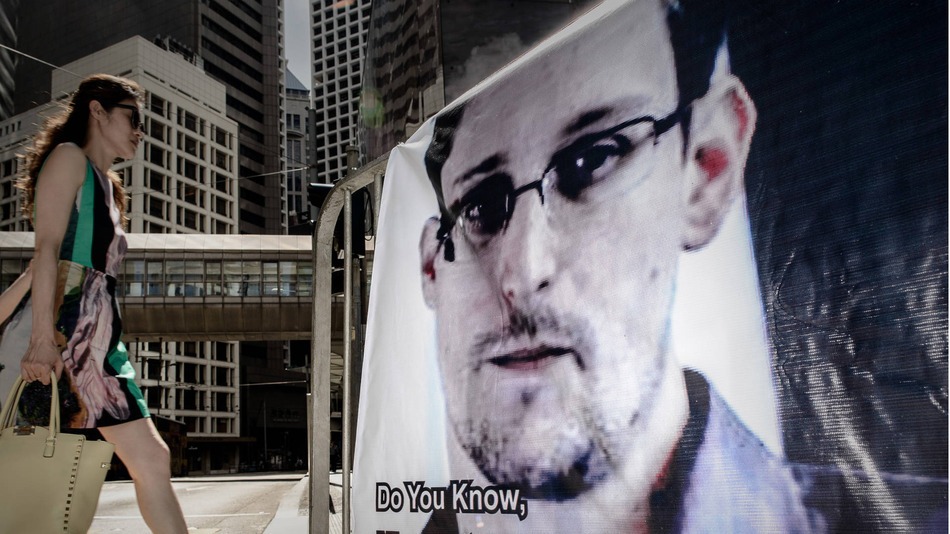
It’s no small irony that the one who most staunchly fought the surveillance state is now the most spied-on, observed person in the world. Edward Snowden is like the rest of us, but writ very, very large. He’s a test case. How does constant observation change us, even if we’re not paying attention to it on the conscious level? From Janet Reitman’s new Rolling Stone article about Snowden and Greenwald:

“[Jesselyn] Radack nevertheless insists that Snowden is not being controlled by the Russian intelligence service, the FSB, nor has he become a Russian spy. “Russia treats its spies much better than leaving them trapped in the Sheremetyevo transit zone for over a month,” Radack recalled Snowden darkly joking to her.

Perhaps though, just because he’s not a spy, says Andrei Soldatov, one of Russia’s leading investigative journalists, doesn’t mean he’s free. ‘It is quite clear that Snowden is being protected by the FSB,’ says Soldatov, co-author of The New Nobility: The Restoration of Russia’s Security State and the Enduring Legacy of the KGB (2010). What this means is that every facet of Snowden’s communications, and his life, is likely being monitored, if invisibly, by the Russian security services. ‘The mansion where he met those whistle-blowers? Rented on behalf of the government. All of the safe houses, apartments and dachas where we’ve traditionally kept defectors are owned by the Russian security services. No one has been able to figure out where he works, if he actually has this job. The FSB would never let him do anything where they couldn’t monitor his communications.’ Even if Snowden were to decide he wanted to go to the U.S. Embassy and turn himself in, ‘it would be difficult for him to find a completely uncontrolled way of communicating with the Americans,’ Soldatov says.

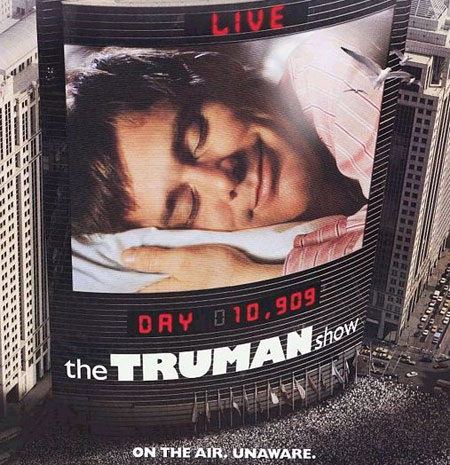
Soldatov believes that Snowden might underestimate how closely he’s being watched, suggesting somewhat of a Truman Show-like existence. ‘To what degree has he been turned into a different person?’ he says. ‘Snowden is not a trained intelligence agent. But those who are can tell you, if you live in a controlled environment, you cease to be truly independent-minded because everyone and everything around you is also controlled. It doesn’t matter if you have your laptop.'”

Tags: , , ,

It obviously takes not only an extraordinary person but also an extraordinary challenge to end up with someone like Nelson Mandela. The question: Now that he’s gone, who among us comes close to measuring up to him or will come close to that standard in the near future? Do we know that person’s name yet?

“Nelson Mandela,” by the Specials.

Tags:

Trying to force all chaos into order through top-down planning and engineering is a mistake, especially when talking about urban renewal or smart cities. From Anthony Townsend in the Economist:

“Rather than design and build a smart city like a mainframe, what if we built it like the web?

More than a century ago, debates over urbanisation during the Industrial Age asked this same question. In contrast to the precise technocratic order of Howard’s Utopia, Patrick Geddes, a Scottish biologist, promoted ‘conservative surgery’ to heal cities. Growth and decay were natural processes—but just as man had tamed the land, the avid gardener believed, we could cultivate the city. Geddes’s bottom-up view of urban revitalisation presaged today’s zeal for crowdsourcing. He didn’t think it would work without the full participation of every citizen.

Geddes’s vision is alive and well in the smart city movement. Yesterday’s grandiose blueprints and their tech-industry contractors are yielding to a bustling planet of 500,000 municipalities, which are home to millions of start-ups, NGOs and civic hackers. In the style of combinatorial innovation that, according to Google’s chief economist, Hal Varian, drives the creation of value on the internet, participants in these civic laboratories are patching together bits of open-source code, government data and consumer hardware to craft bespoke solutions to local problems. Websites like Barcelona-based CityMart, a kind of Amazon for smart-city solutions, show that these efforts are creating software and strategies that can be traded globally.

The case for more participation in building the smart city goes beyond innovation. Bubble-era smart-city launches are over; post-stimulus austerity in cities throughout the world has turned mayors from profligate spenders to penny pinchers. Currently, financing large-scale smart-city efforts with risk-filled, messy public-private partnerships is the only viable strategy. But new schemes for crowdfunding civic improvements will increase citizens’ ability to finance their own designs by passing the hat.”

Tags: ,

I was fairly certain that a second term for President Obama wouldn’t chasten Republicans, wouldn’t make them more amenable to compromise. But I’m still pretty stunned by the intensity of the continued rejection of reason, even if only because it’s such a tactical mistake. And when GOP Chairman Reince Priebus announces a year later that the party is readying attacks on Hillary Clinton based on Benghazi, her healthcare reform attempt in the 1990s and other losing issues, you know the Right is still tone deaf to anything outside the echo chamber. 

The GOP’s major problem is that it’s become a party of antiquated zealots funded by wealthy opportunists. When you walk into a national election knowing that you will lose a large majority of women, Latinos, African-Americans, Independents, gay voters and youth voters, you have very slim margins–you are in trouble. But with money streaming in from above and angry threats being shouted from the ground, the tendency has been to make things not better but worse. You shut down the government, for instance, when the vast majority of Americans, even much of the Republican base, is vehemently opposed to such a gambit.

It’s horrible that several Americans died in the Benghazi attacks, and it’s fine to investigate what occurred to try to ensure it doesn’t happen again. But I think most adults realize that in a region exploding with discontent, instability and civil war, danger abounds. That’s very different than invading the wrong country, getting 5,000 of our soldiers killed, maybe 100,000 Iraqis and spending a trillion dollars, as the GOP did.

I don’t know if Clinton will run for President in 2016 or if she will be the Democratic nominee if she does enter the race, but I know this strategy against her isn’t a winning one, and the Republicans seem unable to divine one in a country of shifting demographics. There is the potential that 2012, when the GOP lost nine out of ten swing states, may seem to them in the near future like the good old days. 

From Talking Points Memo:

“Asked by radio host Hugh Hewitt if the RNC began to look at Clinton as the Democrats’ presumed nominee, Priebus said the RNC’s research shop already turned its attention to the former State Department leader.

‘I think that we have to be very aggressive on what she’s done or hasn’t done,’ the chairman said, according to a transcript of Hewitt’s radio show. ‘And the things that she is famous for, like a botched health care rollout in the 90s, and Benghazi, and the things that she is involved with that are or went obviously pretty badly, we need to focus in on.’

Priebus said that although the RNC was looking toward the 2014 midterms, the committee could still suss out some of the ‘rough stuff’ about Clinton.”

Tags: ,

There are things I dislike (guns and spying among them) that seem fairly impossible to control with the tools we presently have and those we will soon have. It’s almost naive to believe that we can legislate away such things. 

But here’s an idea: What if we’re in the sunset of a powerful centralized government in America? What if the same tools that are making it so easy to snoop are going to make regulation all but impossible? Perhaps the greatest concern in the future won’t be government control but a lack thereof.

An Atlantic piece by Emma Green provides coverage of “Who’s Afraid of Free Speech?” a Google event featuring E.L. Doctorow and David Simon which considered the NSA and the state of privacy. Perhaps the guests’ fears of an Orwellian state are warranted or perhaps they miss the point. Maybe 2084 has a whole different set of challenges in store for us. A passage about the complicity of information companies with a spying government:

Doctorow, a prolific author whose work includes a fictionalized account of the Julius and Ethel Rosenberg trial, agreed: ‘They’re on the same page, as we like to say. The NSA couldn’t work without the agreement or participation of these companies. Their priority is to create wealth for themselves—you’re right to be alarmed.’ 

Google’s [Ross] LaJeunesse jumped in: ‘I really wasn’t going to interrupt the program, because I’m here to listen. But I did want to set the record straight,’ he said.

It is important, when we talk about these issues, to talk with specificity and to speak about facts. It is a real danger to conflate the actions of a government, that are not transparent, with something a company like Google does. We’re completely transparent. We give control to the users—they can use our services without signing in. If you choose to sign in, we give you complete control over that data as well. We even give you a button so that you can delete all that data at once or export it to another service.

Simon, a former Baltimore Sun journalist and the creator of the TV series The Wire, was dubious.

But is it a matter of hunting down these moments where Google … informs you that it is going to use your information in some new and varied way, and you have to negate [that use]?

I had to opt out of a program where stuff I said online could be used in advertising. That’s a rather cynical performance. Shouldn’t I have to opt into it, something that extraordinary?”

Tags: , , ,

We know, of course, that history didn’t start with us, but I think sometimes we forget a little. For all the many wonders of the Internet, it’s probably only increased the cultural amnesia, loading us down with so much information that it can obscure the past even as it makes it easier for us to learn about the past. 

The opening of a (gated) 1975 Garry Willis New York Review of Books piece about a collection on U.S. government spying called The Abuses of the Intelligence Agencies:

“This is a dizzying computation of all the snoopings, publicly known so far, performed by our public servants upon their putative masters. With admirable restraint the report attempts to collect and document every instance of illegal activity undertaken by our various intelligence agencies. It gives the defense offered by the agencies, the authority under which each agency operated, and the statutes apparently infringed. It is a very useful and complete handbook on official crime. We can surmise that the tally is not complete, since it arose from spot investigations, odd suits, and accidental confession. But already the count is almost self-defeating. The hundreds under surveillance, the thousands photographed, the hundreds of thousands filed. The ‘watch lists’ in readiness for emergency detention. The blacks. The kids. Hit lists. Enemies. The ‘enemy within’ is us. The deadpan recital of it all tends to dissolve in the mind. Everett Dirksen claimed, ‘A million here, a million there—in time that adds up to real money.” It doesn’t, of course, That kind of addition turns—magically, at some unthinkable number—into subtraction. We know fairly well what we are getting for $1.98. But not for forty billion. Much the same thing happens by the thousandth wiretapping or break-in recorded here.”

Tags:

If we were laying out a telephone system for America from scratch, we would never choose to put in place what is currently there, with its lines and wires mixing like a barrel of snakes  It’s a mess. But you know what? It works. Complex systems usually grow organically through trial and error, and that’s probably a good thing. It’s often better to add on then raze and rebuild. Neatness conferred upon us by central planning is illusory. Our goal shouldn’t be to enforce order but rather to opt for what works.

From a recent interview with economist John Kay at Five Books:

Question:

You have described economics and business as the last bastions of modernism. What do you mean by that? 

John Kay:

I think they are the last bastions of the idea that you can redesign the world in accordance with a rationally designed blueprint. Modernism in the twentieth century went through areas such as art, architecture and the humanities with the idea that we could rethink everything from the ground up and that we understood enough about the world to do that. I’ve come to believe that we don’t. But people still think they can analyse and structure economies as if they were a mechanical system and that they can do the same in business. So in the same way that Le Corbusier said – wrongly – that a house is a machine for living in, it exemplifies the idea that a business or an economy can be structured from first principles in the same way.

Question:

And ignores the social context within which economies and businesses work.

John Kay:

They are organic entities that evolve over time and operate within a social context. You can’t look at them independently of that.

Question:

Are the economic and financial ructions we’ve been experiencing in recent years due in part to the failure of economists and business leaders to appreciate this?

John Kay:

You can’t understand how the financial crisis came about without understanding the politics of the relationship between the financial sector and government and the anthropology of the cultures of these organisations, or indeed without appreciating the history of bubbles and financial crises.”

Tags:

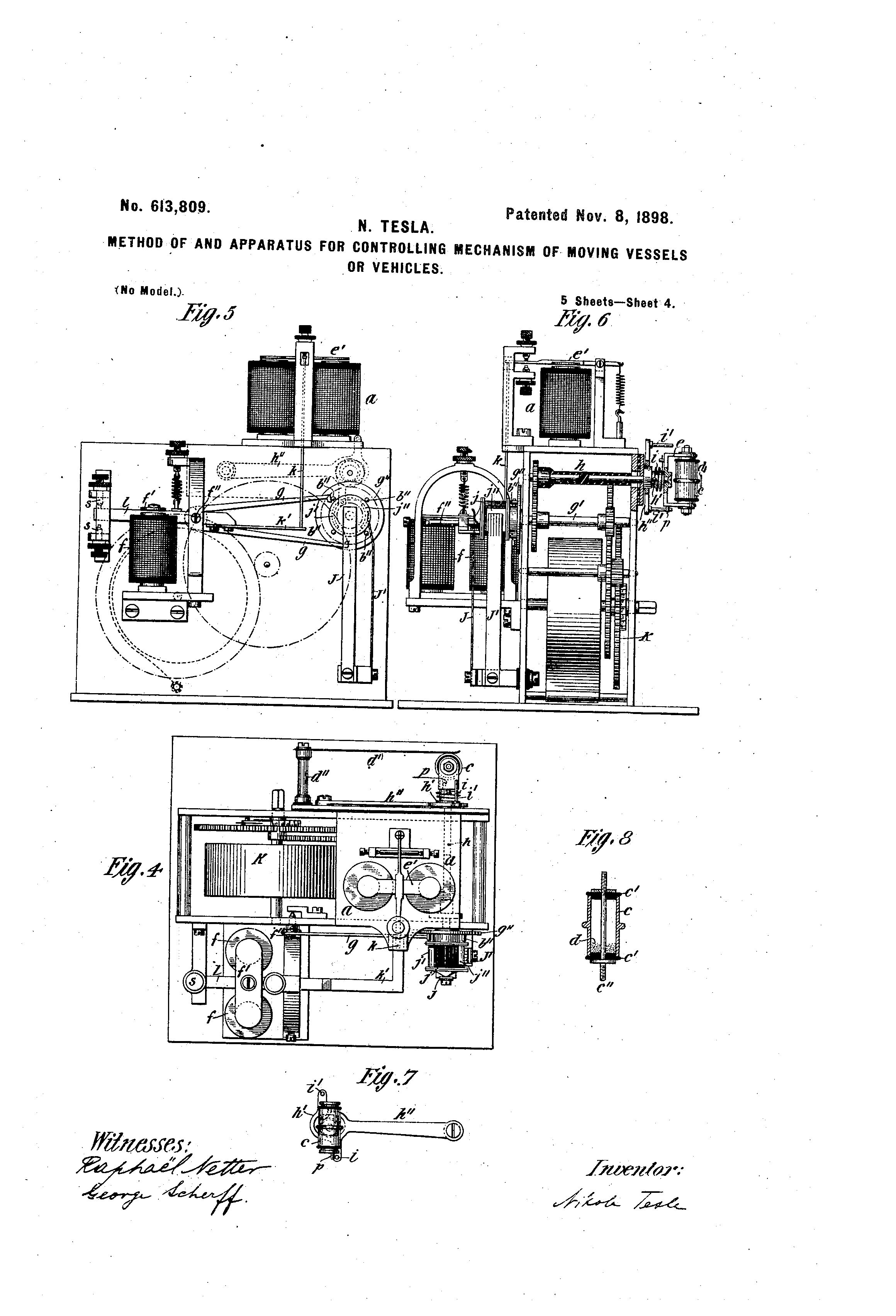
Long before patenting an early drone system in 1915, Nikola Tesla was enabling a method for push-button war, which he envisioned as a way to scare the world into an endless state of ceasefire. Of course, it hasn’t worked out that way. The opening of a post by Steven Beschloss at the New Yorker blog:

“In September, 1898, at Madison Square Garden, Nikola Tesla revealed a new invention: a radio-controlled torpedo boat. It was the first demonstration of wireless remote control in history, and it caused, in Tesla’s words, ‘a sensation such as no other invention of mine has ever produced.’ Some witnesses believed that the Croatian inventor was using mind control.

Detailed in his patent, No. 613,809, a ‘Method of and Apparatus for Controlling Mechanism of Moving Vessels or Vehicles,’ Tesla demonstrated how radio signals can remotely trigger switches and direct a vehicle’s movement without ‘intermediate wires, cables, or other form of electrical or mechanical connection with the object save the natural media in space.’ While Tesla recognized a wide list of applications for his remote-controlled robots, including transporting objects to distant locations and establishing communication with and exploring ‘inaccessible regions,’ he presciently, albeit optimistically, zeroed in on the military potential of his invention. ‘The greatest value,’ he wrote in his patent application, will be its use in armaments and warfare, ‘for by reason of its certain and unlimited destructiveness it will tend to bring about and maintain permanent peace among nations.’

Less than two decades later, during the First World War, the Germans employed a remote-controlled motorboat packed with explosives and attached to an unspooling wire.”

Tags: ,

The opening of a spot-on open letter from Carl Bernstein to Guardian Editor Alan Rusbridger as the latter was preparing to be questioned at parliamentary hearings:

“Dear Alan,

There is plenty of time – and there are abundant venues – to debate relevant questions about Mr Snowden’s historical role, his legal fate, the morality of his actions, and the meaning of the information he has chosen to disclose.

But your appearance before the Commons today strikes me as something quite different in purpose and dangerously pernicious: an attempt by the highest UK authorities to shift the issue from government policies and excessive government secrecy in the United States and Great Britain to the conduct of the press – which has been quite admirable and responsible in the case of the Guardian, particularly, and the way it has handled information initially provided by Mr Snowden.

Indeed, generally speaking, the record of journalists, in Britain and the United States in handling genuine national security information since World War II, without causing harm to our democracies or giving up genuine secrets to real enemies, is far more responsible than the over-classification, disingenuousness, and (sometimes) outright lying by a series of governments, prime ministers and presidents when it comes to information that rightly ought to be known and debated in a free society. Especially in recent years.”•

______________________________

Bernstein + Woodward + Buckley in 1974:

Tags: , , ,

Sometimes what we think is the end of the world is actually just the end of an era. We’re certainly going through a foundational change now as the Computer Age disappears one stalwart after another of the Industrial Age. But the sinking feeling isn’t just about cultural transition. Reports from one NASA scientist after another tells us that something is seriously amiss environmentally.

Todd Gitlin has a TomDispatch piece about the latest plague and one that could “infect” us all simultaneously: climate change, which is slow and insidious, until it is brutal and devastating. The opening:

“Apocalyptic climate change is upon us. For shorthand, let’s call it a slow-motion apocalypse to distinguish it from an intergalactic attack out of the blue or a suddenly surging Genesis-style flood.

Slow-motion, however, is not no-motion. In fits and starts, speeding up and slowing down, turning risks into clumps of extreme fact, one catastrophe after another — even if there can be no 100% certitude about the origin of each one — the planetary future careens toward the unlivable. That future is, it seems, arriving ahead of schedule, though erratically enough that most people — in the lucky, prosperous countries at any rate — can still imagine the planet conducting something close to business as usual.

To those who pay attention, of course, the recent bursts of extreme weather are not ‘remote’ or ‘abstract,’ nor matters to be deferred until later in the century while we worry about more immediate problems. The coming dystopian landscape is all too real and it is already right here for many millions.”

Tags:

Newt Gingrich, a tawdry and horrible man, would turn the moon into a strip mall, into a tourist trap. Some government or corporation could conceivably do just that, as there are few binding rules governing space. This point is particularly tricky right now because as China prepares to land a lunar rover, we’re at the dawn of an age which will see a slew of space projects from both the public and private sectors. Or will they actually be stymied by a lack of regulation? From Derek Mead at Vice:

“In two weeks’ time, we’ll likely cheer the third country to successfully make a soft landing on the Moon. In the next decade or two, we’re likely to welcome a whole lot more, along with the first companies to reach the Moon on their own. While it’s highly doubtful that a country would set out to build a Moon base without first figuring out if it’s legal, it’s a chicken-egg scenario.

The lack of legal clarity could hamper efforts before they solidify enough to bring about a legal review in the first place. Who’s going to fund a Moon hotel if there’s no guarantee a firm could own the property it’s built on? Given the strange history of Moon ownership claims, why would the UN make a sweeping ruling on a nascent plan? One thing is certain: As space becomes more crowded, the question of who can own it is coming ever closer to being forced.”

Tags:

Clive Thompson of Wired is one of those blessed journalists who’s as much of a joy to read for his lucid prose as his good ideas. In a new piece, he interviews multifaceted Canadian academic Vaclav Smil, a prolific author and a favorite of Bill Gates. An excerpt about manufacturing in America, which has been outsourced to a great degree in recent decades and in the next few will be increasingly lost to automation:

Clive Thompson:

Let’s talk about manufacturing. You say a country that stops doing mass manufacturing falls apart. Why?

Vaclav Smil:

In every society, manufacturing builds the lower middle class. If you give up manufacturing, you end up with haves and have-nots and you get social polarization. The whole lower middle class sinks.

 Clive Thompson:

You also say that manufacturing is crucial to innovation.

Vaclav Smil:

Most innovation is not done by research institutes and national laboratories. It comes from manufacturing—from companies that want to extend their product reach, improve their costs, increase their returns. What’s very important is in-house research. Innovation usually arises from somebody taking a product already in production and making it better: better glass, better aluminum, a better chip. Innovation always starts with a product.

Look at LCD screens. Most of the advances are coming from big industrial conglomerates in Korea like Samsung or LG. The only good thing in the US is Gorilla Glass, because it’s Corning, and Corning spends $700 million a year on research.

 Clive Thompson:

American companies do still innovate, though. They just outsource the manufacturing. What’s wrong with that?

 Vaclav Smil:

Look at the crown jewel of Boeing now, the 787 Dreamliner. The plane had so many problems—it was like three years late. And why? Because large parts of it were subcontracted around the world. The 787 is not a plane made in the USA; it’s a plane assembled in the USA. They subcontracted composite materials to Italians and batteries to the Japanese, and the batteries started to burn in-flight. The quality control is not there.”

Tags: ,

Why the Internet Won’t Be Nirvana” is a 1995 Newsweek article which astronomer Clifford Stoll would no doubt like to have back. Check out the last two lines in particular of the excerpt below:

“After two decades online, I’m perplexed. It’s not that I haven’t had a gas of a good time on the Internet. I’ve met great people and even caught a hacker or two. But today, I’m uneasy about this most trendy and oversold community. Visionaries see a future of telecommuting workers, interactive libraries and multimedia classrooms. They speak of electronic town meetings and virtual communities. Commerce and business will shift from offices and malls to networks and modems. And the freedom of digital networks will make government more democratic.

Baloney. Do our computer pundits lack all common sense? The truth in no online database will replace your daily newspaper, no CD-ROM can take the place of a competent teacher and no computer network will change the way government works.

Consider today’s online world. The Usenet, a worldwide bulletin board, allows anyone to post messages across the nation. Your word gets out, leapfrogging editors and publishers. Every voice can be heard cheaply and instantly. The result? Every voice is heard. The cacophony more closely resembles citizens band radio, complete with handles, harassment, and anonymous threats. When most everyone shouts, few listen. How about electronic publishing? Try reading a book on disc. At best, it’s an unpleasant chore: the myopic glow of a clunky computer replaces the friendly pages of a book. And you can’t tote that laptop to the beach. Yet Nicholas Negroponte, director of the MIT Media Lab, predicts that we’ll soon buy books and newspapers straight over the Internet. Uh, sure.”

Tags: ,

Filip Bondy has an article in the New York Daily News calling for NYC to ban boxing. It’s a funny venue for such a fierce op-ed because it would never have been published while that paper’s legendary boxing writer Bill Gallo was alive. For all his good qualities, Gallo was an apologist for boxing while railing angrily against against MMA. seemingly because his career was invested in the former and not the latter. MMA is just as bad as boxing but no worse, really. I think anyone honest would be for allowing both or banning both.

While I don’t personally support either, I’m really not for prohibiting anything consenting adults want to do. But I don’t believe children should be permitted to box, which would obviously further doom a sport in steep decline. From Bondy:

“Boxing has seen its time, and thank goodness that primitive era is done. In a more enlightened age now, we are concerned with concussions and other head injuries in sports. It is therefore absurd to sanction a competition in which the chief aim is to knock the opponent into unconsciousness. Yes, car racing is dangerous, but intent matters. Yes, a few rare fighters make a fortune from boxing, but they pay a huge price. The vast majority of professional boxers are just poor, desperate minorities getting their heads ripped apart internally, synapse by synapse.

It is hypocritical for the state to allow these events to continue while banning MMA, which at least offers the possibility of victory by submission, a more humane finish. Whenever a boxer gives up, like Sonny Liston or Roberto Duran, he is mercilessly mocked for the rest of his career.

I have no doubt that in my grandson’s lifetime, professional boxing will be banished in most parts of America, as it has been, on and off, in several other countries.”

Tags: ,

In a fascinating Science interview, Emily Underwood spoke with DARPA’s Geoffrey Ling about two of the agency’s proposed brain-related projects: 1) Wireless devices that can cure neurological disorders such as PTSD, depression and chronic pain, and 2) A wireless device that repairs brain damage and restores memory loss. One exchange:

Question:

For RAM, why did DARPA choose to focus on memory, and what kinds of memory do you hope to restore?

Geoffrey Ling:

All these [injured] guys and gals want to go back into the service. A lot of them can go back because we’ve got good prosthetic legs, and now we’ve got the prosthetic arm that’s really close to being FDA [Food and Drug Administration] approved. But the thing with brain-injured guys—the thing that really keeps them out—is they can’t remember how to do certain motor tasks like drive a car or operate machinery. Now I don’t know if we are at that point, but if we can fix hearts, and we can fix badly broken bones, why can’t we fix part of the brain? If you had to pick an area of the brain that you can fix, the memory area is the most obvious because motor-task memory is really pretty well-worked out in preclinical models. Declarative memory is very different than associative memory and emotional memory—that stuff, nobody even knows anything about it—but when you look at the work in rodents with memory motor tasks, you say ok, it’s still a big step but it’s rational.”

Tags: ,

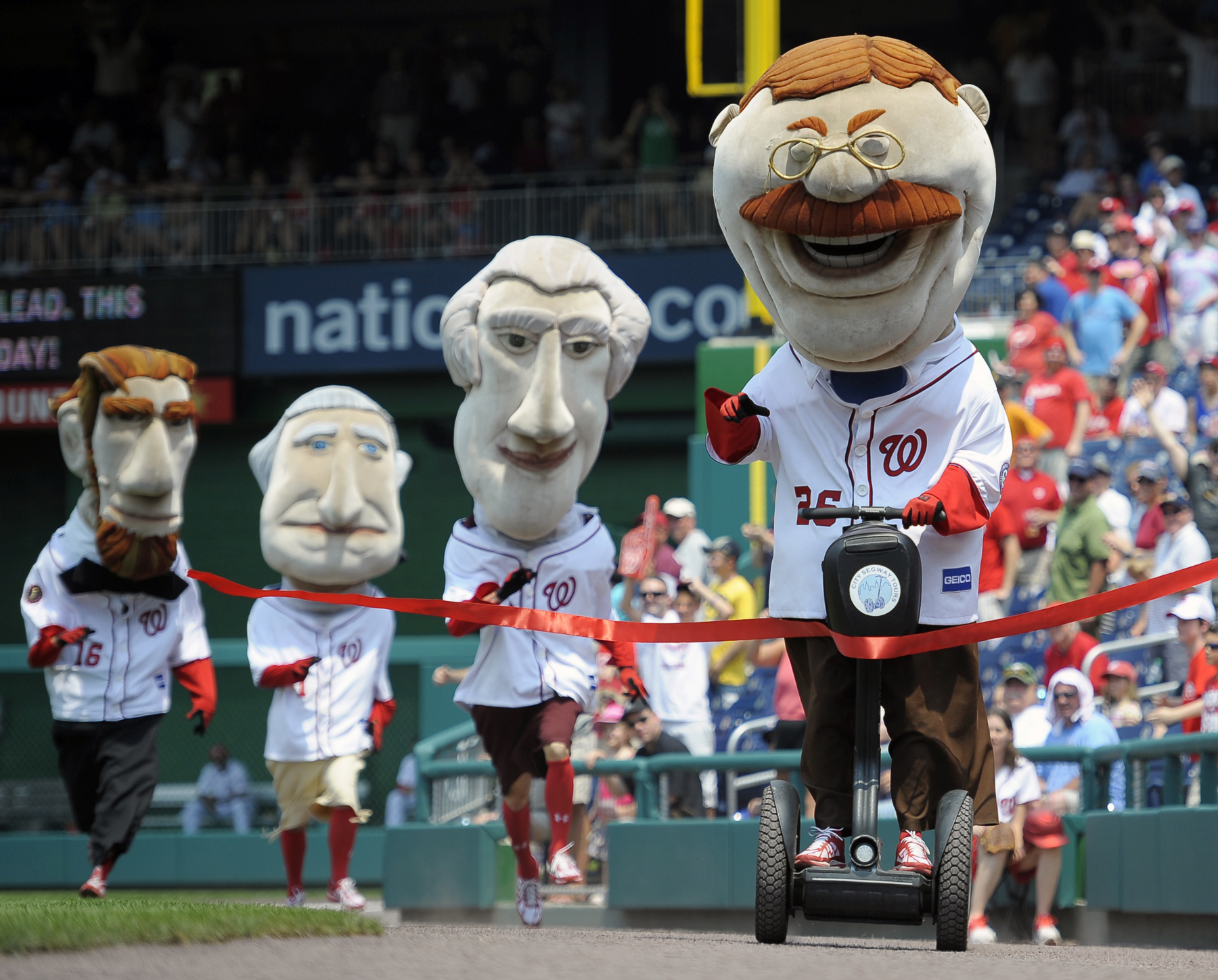
Billionaire Ted Lerner and his family don’t seem like awful people, not the kind of wealthy folks who are lobbying on behalf of politicians who want to punish the poor. But they should stop trying to rip off the taxpayers of Washington D.C. The district already financed a stadium for the Nationals baseball team that the Lerners own, which cost locals close to a billion dollars with interest factored in, and now the patriarch is requesting a retractable roof on the stadium to also be paid for by taxpayers. Building sports stadiums for billionaires to improve the economy is a fool’s errand to begin with, but this roof business is even more egregious. This project will create zero permanent jobs and will enhance no one’s financial standing but the Lerners. It’s corporate welfare at its ugliest. If the Lerners want to enhance the value of their holdings, they should invest in them themselves. Thankfully, Mayor Gray is holding firm against this preposterous request. From the Washington Post:

“Mayor Vincent C. Gray said Tuesday that Washington Nationals owner Theodore N. Lerner pitched him earlier this year on a pricey plan to have the city build a retractable roof over Nationals Park — a proposal, Gray said, that he swiftly but politely rejected.

The private one-on-one meeting took place in the John A. Wilson Building in mid-July and lasted about 15 minutes, Gray said.

What Lerner wanted to talk about was the possibility of a roof on Nationals Park,’ the mayor (D) said. ‘That was it. There was no discussion about how much it was going to cost and no further details. I’ve had no further discussions.’

An administration official familiar with the matter but not authorized to comment publicly on it confirmed that there have been no recent talks about improvements of that scope for Nationals Park, which was built with well more than $600 million in taxpayer financing and opened in 2008.

‘The mayor was polite but unequivocal,’ the official said. ‘We are not going to spend taxpayer money to put a roof on the stadium, regardless of the cost.'”

Tags: , ,

Money can be off-shored and disappeared from the taxman, but how about luxury goods? “Freeports,” as they’re called, allow the super-rich a duty-free loophole for art collections and such. From the Economist:

“PASSENGERS at Findel airport in Luxembourg may have noticed a cluster of cranes a few hundred yards from the runway. The structure being erected looks fairly unremarkable (though it will eventually be topped with striking hexagonal skylights). Along its side is a line of loading bays, suggesting it could be intended as a spillover site for the brimming cargo terminal nearby. This new addition to one of Europe’s busiest air-freight hubs will not hold any old goods, however. It will soon be home to billions of dollars’ worth of fine art and other treasures, much of which will have been whisked straight from collectors’ private jets along a dedicated road linking the runway to the warehouse.

The world’s rich are increasingly investing in expensive stuff, and ‘freeports’ such as Luxembourg’s are becoming their repositories of choice. Their attractions are similar to those offered by offshore financial centres: security and confidentiality, not much scrutiny, the ability for owners to hide behind nominees, and an array of tax advantages. This special treatment is possible because goods in freeports are technically in transit, even if in reality the ports are used more and more as permanent homes for accumulated wealth.”

Excerpts from two solar-centric stories by Todd Woody at Quartz. The first, “Why SolarCity and Tesla Are Going to Replace Your Utility,” looks at how some great inventions beget others. My biggest prediction early on in this blog is that we would see the development of batteries in a way that would change our lives. There have been a lot of naysayers on the topic, but it seems to be coming true in part because of the repurposing of Tesla Motors batteries. The second piece reports that the U.S. has 43 nuclear power plants worth of solar energy in development. That’s not the same thing as a done deal, but it’s impressive.

1.

“Millions of California homeowners and businesses have installed solar panels on their roofs to generate their own electricity. Now a small but growing number of them want to pull the plug on their utilities by storing that energy in batteries and tap that power when the sun isn’t shining. And that has set off a fight over who will ultimately control the state’s power grid—California’s three big monopoly utilities or their customers empowered by companies like SolarCity and Tesla Motors. 

SolarCity, the Silicon Valley solar installer, has quietly begun to offer some homeowners a lithium-ion battery pack made by electric carmaker Tesla to store electricity generated by their rooftop photovoltaic arrays.”

2.

“The boom in solar energy in the US  in recent years? You haven’t seen anything yet. The pipeline of photovoltaic projects has grown 7% over the past 12 months and now stands at 2,400 solar installations that would generate 43,000 megawatts(MW), according to a report released today by market research firm NPD Solarbuzz. If all these projects are built, their peak electricity output would be equivalent to that of 43 big nuclear power plants, and enough to keep the lights on in six million American homes.

Only 8.5% of the pipeline is currently being installed, with most of it still in the planning stages.”

There’s a very good EconTalk episode this week with host Russ Roberts being joined by Northwestern economist Joel Mokyr. The guest is an optimist about the transformative powers of technology, and two areas of the conversation particularly interested me: 1) Economic production and growth may be slowing down by most measures because those measures are inefficient and outdated at gauging the value of recent tech advancements, and 2) We are reaching an epoch in which the “death of distance” is becoming a reality because of connectivity and we may be returning to a pre-Industrial Revolution, home-centered society.

On the first count, Mokyr comments that those who decry that plane travel hasn’t speeded up in decades as a sign that we’ve stagnated technologically are giving short shrift to airline passengers being able to use laptops, tablets, smartphones and wi-fi to do work during their trips.

From a Mokyr essay at PBS.org: “Yet today, once again, we hear concerns that innovation has peaked. Some claim that ‘the low-hanging fruits have all been picked.’ The big inventions that made daily life so much more comfortable — air conditioning, running cold and hot water, antibiotics, ready-made food, the washing machine — have all been made and cannot be matched, so the thinking goes.

Entrepreneur Peter Thiel’s widely quoted line ‘we wanted flying cars, instead we got 140 characters’ reflects a sense of disappointment. Others feel that the regulatory state reflects a change in culture: we are too afraid to take chances; we have become complacent, lazy and conservative.

Still others, on the contrary, want to stop technology from going much further because they worry that it will render people redundant, as more and more work is done by machines that can see, hear, read and (in their own fashion) think. What we gained as consumers, viewers, patients and citizens, they fear, we may be about to lose as workers. Technology, while it may have saved the world in the past century, has done what it was supposed to do. Now we need to focus on other things, they say.

This view is wrong and dangerous. Technology has not finished its work; it has barely started.”

Tags: ,

Two exchanges from an excellent Fortune interview that Andy Serwer conducted with Marc Andreessen.

The first one focuses on something I blogged about recently, which is the possibility of the invention of new jobs and careers that may occur on a large scale in the post-Industrial Age the way it did in the post-Agrarian Age. As Andreessen points out, though, there’s a hard and scary road getting to that point in our increasingly automated society. 

The second is Andreessen’s prediction that cars will become an on-demand, shared good that will destroy the century-old ownership model. I have my doubts about the shared aspect, though I think fleets of driverless cars on demand will become a reality in cities.

_________________________

Andy Serwer:

We all understand that the Internet revolution is inevitable at this point, but it’s also kind of controversial. There are scads of new jobs at Facebook and Twitter and other places, but what about the ones that are destroyed by the inroads of technology into every industry? Are you actually creating more than you’re destroying?

Marc Andreessen:

Jobs are critically important, but looking at economic change through the impact on jobs has always been a difficult way to think about economic progress. Let’s take a historical example. Once upon a time, 100% of the United States effectively was in agriculture, right? Now it’s down to 3%. Productivity in agriculture has exploded. Output has never been higher. The same thing happened in manufacturing 150 years ago or so. It would have been very easy to say, “Stop economic progress because what are all the farmers going to do if they can’t farm?” And of course, we didn’t stop the progress of mechanization and manufacturing, and our answer instead was the creation of new industries.

Andy Serwer:

And the same story will play out with the Internet?

Marc Andreessen:

Right. So the jobs are something that happens in the end. But what happens first are improvements in consumer welfare. This is the part that doesn’t get much attention because jobs going away is a much scarier story. Improvements in consumer welfare are more diffuse, and it’s hard to specifically call them out. But it’s a really big deal. It’s a really big deal for people to have a lot more information. It’s a really big deal for people to be able to communicate and collaborate. One of the things that’s going to be huge in the future is the ability to get educated online. That’s a wave that’s going to hit in a major way in the next 20 years, and will be a huge improvement to consumer welfare all around the world. And so the gains to anybody with a screen and a network connection are absolutely phenomenal. It’s one of those things where everybody’s life keeps getting better. But you don’t get the creation without the destruction. And so there is a lot of turbulence, and will be a lot of turbulence.

_________________________

Andy Serwer:

Speaking of cars, you’ve talked about a shared economy where people will share cars. They won’t own cars. You see a little bit of that today, but is that really the way the world’s going?

Marc Andreessen:

So this is when I get really excited. This is another example of the impact of information transparency on markets. We are 90 years or so into cars. And we drive our cars around. And we own our cars. And then when we’re not in our cars they sit parked. So the average car is utilized maybe two hours out of the day. It sits idle for 90% of the time. The typical occupancy rate in the U.S. is about 1.2 passengers per car ride. And so even when the car is in motion, three-quarters of the seats are unfilled.

And so you start to run this interesting kind of thought experiment, which is what if access to cars was just automatic? What if, whenever you needed a car, there it was? And what if other people who needed that same ride at that same time could just participate in that same ride? What if you could perfectly match supply and demand for transportation?

Taken a step further, what if you could bring delivery into it? Two people were going to drive between towns, and there was also a package that needed to go. Let’s also put that in there so we can fill a seat with a package. Just run the thought experiment and say, “What if we could fully allocate all the cars, and then what if we could have the cars on the road all the time?”

And of course the answer is a whole bunch of things fall out of it. You’d need far fewer cars. The number of cars on the road would plummet by 75% to 90%. You’d instantly solve problems like congestion. You’d instantly solve a huge part of the emissions problem. And you’d cause a huge reduction in the need for gas. And then you’d have this interesting other side effect where you wouldn’t need parking lots, at least not anywhere near the extent that you do now. And so you could turn a lot of parking lots into parks.

Tags: ,

Chris Hadfield, the astronaut whose Bowie cover fell to Earth, has penned an article for Wired about the need to treat Spaceship Earth the same way we treat other spacecrafts–with great care. An excerpt:

“The communities and countries best at using energy to optimize a micro­climate for human life are also the ones whose ­people have the longest average lifespans. Canada, Sweden, and Iceland—places with inhospitable winter weather—are front-­runners in sustaining human health and life. They have no choice but to use what energy they have in the most efficient manner. Like the careful, constant nurturing of mushrooms in a hothouse, the right application of technology and stability can lead to the greatest yield.

Earth has never fed as many ­people as it does today. From orbit, the ­gingham-quilt patterns of farms all across eastern Europe and the massive grain fields of the world’s steppes and prairies are clearly laid out. Vast fields for supply connect to roads and railways for transportation, all leading to dense hubs of consumption in the cities. When the sun is just right, you can even see the wakes of ocean-going ships imperturbably hauling bulk goods between continents.

The space station, high above, is a microcosm—an international collection of people living in a finite area with finite resources, just like the planet below. Power comes from a blend of fossil fuels and renewable energy. Air, food, and water come in limited quantities. Like Earth, the ISS is subject to unpredictable outside forces—solar flares, meteor impacts, technical breakdowns, budget cycles, and international tensions. And in both locations, lives are in the balance. Make a small mistake and people are inconvenienced, capability is lost. Make a big one and ­people die.”

Tags:

Richard Dawkins, evolutionary biologist, atheist-in-chief, coiner of the term “meme,” and maker of perplexing comments about church sex scandals, just did an Ask Me Anything at Reddit. A few exchanges follow.

__________________________

Question:

As an expert on evolution, what do you feel is the strangest creature on Earth, or the one that just doesn’t seem to make sense from an evolutionary standpoint yet continues to survive? (Besides people)

Richard Dawkins:

Nautilus (because of its pinhole camera eye). But that’s just off the top of my head. I’d probably think of a better answer given more time (that is so often true!)

__________________________

Question:

Richard, what would you say to Muslims who point out (correctly) that during Islam’s Golden Age, science and education flourished in the Caliphate as Muslim scientists either started new fields, or built on past work by Greek and Indian scholars.

Richard Dawkins:

Great job in the Middle Ages, guys. What went wrong?

__________________________

Question:

How do you feel about South Park’s depiction of you and their take on the argument?

Richard Dawkins:

Satire is supposed to satirise. Depicting somebody as having a predilection for buggering a bald transvestite is not satire and not witty. The futuristic projection of wars between atheist factions is genuine satire and quite witty. I think it’s important understand the difference. I preferred the experience of going on The Simpsons.

__________________________

Question:

How do you feel now that memes, first discussed in your book The Selfish Gene, have become ubiquitous in internet culture?

Richard Dawkins:

I’m pleased that the concept of meme has become widely understood, but the true meaning is a bit broader than the common understanding. Anything transmitted with high fidelity from brain to brain by imitation is a meme.

__________________________

Question:

Would you like to take a moment to chat about our lord and savior Jesus Christ?

Richard Dawkins:

No thank you.•

Tags:

I don’t think there was a conspiracy to kill President John F. Kennedy, and I can’t take anyone seriously who refers to Oliver Stone’s ridiculous JFK movie to argue the contrary. It’s not that a lot of people didn’t want him dead, but I don’t think Lee Harvey Oswald was the trigger man for any group. Oswald probably acted alone. He almost definitely wasn’t in cahoots with Cuba or Russia or any other foreign power. It’s somewhat possible he may have been acting in concert with American mob figures, but it’s doubtful, and there’s no good proof of any such cabal. Jack Ruby likewise probably acted alone in murdering Oswald, envisioning himself as a national hero for his deed. 

There is one interesting theory that can’t be completely dismissed: Perhaps the final bullet that struck and killed the President was an accidental discharge from a Secret Service agent. This idea has survived for three reasons: 1) The last bullet impacted differently than the first, causing an explosion of flesh 2) Some doubt Oswald’s ability for such pinpoint accuracy at such a distance with such a cheap weapon 3) Quite a few witnesses on the ground reported smelling gunpowder.

I don’t believe this theory, either. Ammo can react differently in different situations and a direct hit to the back from one angle will not necessarily create the same result as one to the head from another. Oswald was a highly trained marksman, and I think it’s very possible he could reach a target in a slow-moving vehicle. Bullets hitting more than one person and causing someone’s brain to explode might cause a smell that’s similar to gunpowder. There were also likely tires straining quickly in every direction which can cause a burning smell. And let’s remember that the witness closest to Oswald in the book depository distinctly heard three registers.

During the first 35 minutes of a recent Grantland podcast, Bill Simmons and Chris Connelly interview Bill James, who subscribes to the Secret Service theory. In addition to being one of baseball’s sabermetrics pioneers, James has written about the assassination in his book on true crime. I was disappointed by James’ stance in the wake of the Penn State pedophilia scandal, but he’s very sober-minded in this discussion. The only comment James makes in the podcast that I take issue with is his assertion that Oswald striking Kennedy more than once in a matter of seconds is tantamount to James himself being able to hit a home run off Roger Clemens. It’s a poor analogy. Oswald had a professional level of marksmanship and James does not have that level of athletic ability, especially in middle age. And James didn’t seem to be employing hyperbole. But it’s an interesting conversation overall.• Listen here.

Tags: , , , , ,

I watch Frontline the way most Americans watch slasher films and zombie TV dramas: to frighten the fuck out of myself. The recent episode, “Hunting the Nightmare Bacteria,” pointed out a yawning hole in the free market: Big Pharma companies have very few antibiotics in R&D because they’re expensive to develop and they’re supposed to be used as little as possible. It’s much more feasible to produce a diabetes or heart drug–something for long-term care. 

Of course, we actually haven’t been careful about restricting antibiotics, overprescribing them to humans in the past and currently practically pouring them into livestock. And the more we use these drugs, the less efficacy they possess. So the ones we have are losing effectiveness, and there are no answers in the pipeline. From Maryn McKenna’s Medium essay, “Imagining the Post-Antibiotics Future“:

“Predictions that we might sacrifice the antibiotic miracle have been around almost as long as the drugs themselves. Penicillin was first discovered in 1928 and battlefield casualties got the first non-experimental doses in 1943, quickly saving soldiers who had been close to death. But just two years later, the drug’s discoverer Sir Alexander Fleming warned that its benefit might not last. Accepting the 1945 Nobel Prize in Medicine, he said:

‘It is not difficult to make microbes resistant to penicillin in the laboratory by exposing them to concentrations not sufficient to kill them… There is the danger that the ignorant man may easily underdose himself and by exposing his microbes to non-lethal quantities of the drug make them resistant.’

As a biologist, Fleming knew that evolution was inevitable: sooner or later, bacteria would develop defenses against the compounds the nascent pharmaceutical industry was aiming at them. But what worried him was the possibility that misuse would speed the process up. Every inappropriate prescription and insufficient dose given in medicine would kill weak bacteria but let the strong survive. (As would the micro-dose ‘growth promoters’ given in agriculture, which were invented a few years after Fleming spoke.) Bacteria can produce another generation in as little as twenty minutes; with tens of thousands of generations a year working out survival strategies, the organisms would soon overwhelm the potent new drugs.”

Tags: ,

« Older entries § Newer entries »