Politics

You are currently browsing the archive for the Politics category.

It’s always been a difficult balance for newspapers–and never more than it is now–to give readers what they want and what they seemingly need. From Eugene L. Meyer’s Bethesda Magazine interview with Katherine Weymouth, the Graham family member who has stayed aboard the Washington Post as publisher at the behest of new owner, Jeff Bezos:

Question:

What can Jeff Bezos do that the Grahams couldn’t?

Katherine Weymouth:

I personally believe there’s no magic bullet. If there were, someone would’ve found it, how to transform for the digital era. But we are in a great position. We have a credible brand, deeply engaged readers, [and we] cover Washington. And now we are owned by someone with deep pockets who cares what we do and is willing to invest for the long term.

Question:

What has changed now that the Post newspaper is owned by Jeff Bezos?

Katherine Weymouth:

People have stopped wearing ties, that’s the biggest change around here. …He hasn’t yet told us what to do, not that he would. He’s buying it for all the right reasons: It’s an important institution. He said, ‘I’m an optimist by nature and, yes, I’m optimistic about the future of the Post. If not, I wouldn’t join you.’ Can he bring something to the table? He clearly does have deep pockets. By itself, that’s not enough. He is obsessively focused on the reader’s experience.

 Question:

Have you and he discussed changes you might make under his ownership that you were unable to or didn’t make before?

Katherine Weymouth:

I do not anticipate any dramatic changes. He has made it clear that he wants to build on what we do best, with a deep focus on serving our readers…[while] experimenting with new ways of presenting our journalism digitally that will create even more compelling experiences for our readers and users.”

Tags: , ,

At Practical Ethics, Joao Fabiano has a smart consideration of some of the perils of neuro-modification of morality, which we will probably delay dealing with for as long as we can. But what if a violent serial criminal could be “adjusted” to no longer behave aberrantly? Sounds great and frightening. The opening:

It is 2025. Society has increasingly realised the importance of breaking evolution’s chains and enhancing the human condition. Large grants are awarded for building sci-fi-like laboratories to search for and create the ultimate moral enhancer. After just a few years, humanity believes it has made one of its most major breakthroughs: a pill which will rid our morality of all its faults. Without any side-effects, it vastly increases our ability to cooperate and to think rationally on moral issues, while also enhancing our empathy and our compassion for the whole of humanity. By shifting individuals’ socio-value orientation towards cooperation, this pill will allow us to build safe, efficient and peaceful societies. It will cast a pro-social paradise on earth, the moral enhancer kingdom come.

I believe we better think twice before endeavouring ourselves into this pro-social paradise on the cheap. Not because we will lose ‘the X factor,’ not because it will violate autonomy, and not because such a drug would cause us to exit our own species. Even if all those objections are refuted, even if the drug has no side-effects, even if each and every human being, by miracle, willingly takes the drug without any coercion whatsoever, even then, I contend we could still have trouble.

Surprisingly, the scenario imagined in the first paragraph is not that far-fetched. The field of cognitive moral neuroscience and the study of moral cognition have been flourishing; we have already found many neurochemical manipulations which seem to alter our social and moral preferences.”

Tags:

A passage from a new Wired interview by Alex Pasternack with security expert Bruce Schneier about safety vulnerabilities, the physical kinds and virtual ones:

Wired:

What about attacks that affect infrastructure? Obviously the past few years have shown that industry, cities, utilities, even vehicles are vulnerable to hacking. Are those serious threats?

 Bruce Schneier:

There are threats to all embedded systems. We’ve seen groups mostly at universities hacking into medical devices, hacking into automobiles, into various security cameras, and demonstrating the vulnerabilities. There’s not a lot of fixing at this time. The industries are still largely ignoring the problem, maybe very much like the computer industry did maybe twenty years ago, when they belittled the problem, pretended it wasn’t there. But we’ll get there.

When I look at the bigger embedded systems, the power grids, various infrastructure systems in cities, there are vulnerabilities. I worry about them a little less because they’re so obscure. But I still think we need to start figuring out how to fix them, because I think there are a lot of hidden vulnerabilities in embedded systems.

 Wired:

Are there particular security concerns right now that you think the public, given its misunderstanding about security, doesn’t appreciate enough?

 Bruce Schneier:

I’m most worried about potential security vulnerabilities in the powerful institutions we’re trusting with our data, with our security. I’m worried about companies like Google and Microsoft and Facebook. I’m worried about governments, the US and other governments. I’m worried about how they are using our data, how they’re storing our data, and what happens to it. I’m less worried about the criminals. I think we’ve kinda got cyber-crime under control, it’s not zero but it never will be. I’m much more worried about the powerful abusing us than the un-powerful abusing us.”

Tags: ,

My one Libertarian streak is that I’ve always believed that consenting adults shouldn’t be limited in what they can do with their time and money and bodies. Children should be protected–I don’t see why grade schoolers are even allowed to play tackle football or eat at fast-food restaurants–but grown-ups are grown-ups and should be treated as such.

But it’s tougher for me to maintain this stance over time, simply because some behaviors have costs (financial and social) that can plague us for generations, whether we’re talking about drugs or gambling or other behaviors. The crack epidemic in NYC led to broken homes that sadly reverberate to this day, damaging children who weren’t even alive during the crisis. Of course, the War on Drugs does little to combat these problems and just creates a black market, so I don’t know if there’s any good answer. But whenever there’s a ballot initiative regarding casinos, which are supposedly going to boost the economy, I know it’s fool’s gold. The attendant problems of such establishments take from the economy at least as much as they give back. From Elisabetta Povoledo in the New York Times:

PAVIA, Italy — Renowned for its universities and a celebrated Renaissance monastery, this Lombardy town about 25 miles south of Milan has in recent years earned another, more dubious, distinction: the gambling capital of Italy.

Slot machines and video lottery terminals, known as V.L.T.s, can be found all over in coffee bars and tobacco shops, gas stations, mom-and-pop shops and shopping malls, not to mention 13 dedicated gambling halls. By some counts, there is one slot machine or V.L.T. for every 104 of the city’s 68,300 residents.

Critics blame the concentration of the machines for an increase in chronic gambling — and debt, bankruptcies, depression, domestic violence and broken homes — recorded by social service workers in Pavia.

But in many ways, Pavia is merely the most extreme example of the spread of gambling throughout Italy since lawmakers significantly relaxed regulation of the gambling industry a decade ago.”

Tags:

I know it’s been bandied about that there’s no low-hanging fruit left for the American economy, but what will the impact be job-wise if we end up having universal health coverage (or near-universal)? Will it create a large amount of employment opportunities and have residual positive effects on the economy? I have to think tens of millions of newly insured people will be a boon not only from a humanistic viewpoint but from a financial one as well. But I’m not an economist, so I can’t answer that. What I can tell you from my own experience of having worked for Internet companies is that it’s ludicrous to think that the rollout was bumpy because it was done by the public sector. The same thing happens regularly in the private sector. There are tons of IT workers in America, and most of them are mediocre at best. At any rate, it seems that many of the bugs in the ACA site have been worked out. From USA Today:

WASHINGTON–The federal health exchange, Healthcare.gov, received 880,000 visitors Dec. 24, the last day people could enroll to receive health coverage on Jan. 1, officials say.

‘We’re going to do everything we can to ensure a smooth transition period for consumers whose coverage begins on January 1,’ Julie Bataille wrote in a blog Friday. Bataille serves as director of the office of communications for the Centers for Medicare and Medicaid Services. ‘And we’re going to continue to work to ensure every American who still wants to enroll in Marketplace coverage by the end of the open enrollment period is able to do so.’

Consumers have until March 31 to enroll on the health insurance exchanges to avoid paying a fine with their 2015 taxes for not having health insurance.

More than a million people visited the site over the weekend, and 600,000 had hit the page by mid-day Monday — the original deadline for Jan. 1 coverage.”

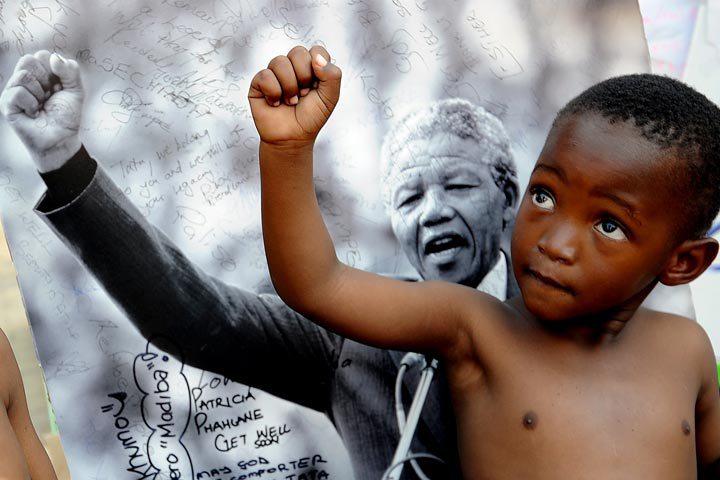
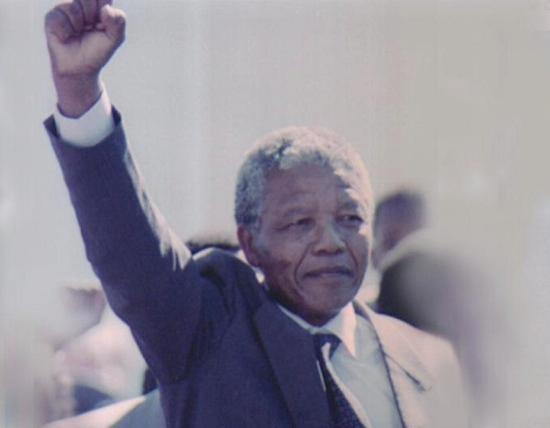
In a post at Practical Ethics, Dominic Wilkinson asks a thorny question that seems like a simple one at first blush: Should some people, who are considered exceptional, receive health care that others don’t? Of course not, we all would say. Human lives are equal in importance, and our loved ones are just as valuable as the most famous or successful among us. But Wilkinson quickly points out that Nelson Mandela, probably the most beloved among us during his life, received expensive and specialized care that would have been denied almost anyone else in South Africa. But how could we deny Mandela anything, after he sacrificed everything and ultimately led a nation 180 degrees from a civil war that could have cost countless lives? You can’t, really, though I would wager that Peter Singer disagrees with me. The opening of Wilkinson’s post:

There are approximately 150,000 human deaths each day around the world. Most of those deaths pass without much notice, yet in the last ten days one death has received enormous, perhaps unprecedented, attention. The death and funeral of Nelson Mandela have been accompanied by countless pages of newsprint and hours of radio and television coverage. Much has been made of what was, by any account, an extraordinary life. There has been less attention, though, on Mandela’s last months and days. One uncomfortable question has not been asked. Was it ethical for this exceptional individual to receive treatment that would be denied to almost everyone else?

At the age of almost 95, and physically frail, Mandela was admitted to a South African hospital intensive care unit with pneumonia. He remained there for three months before being transferred for ongoing intensive care in a converted room in his own home. Although there are limited details available from media coverage it appears that Mandela received in his last six months a very large amount of highly expensive and invasive medical treatment. It was reported that he was receiving ventilation (breathing machine support) and renal dialysis (kidney machine). This level of treatment would be unthinkable for the vast majority of South Africans, and, indeed, the overwhelming majority of the people with similar illnesses even in developed countries. Frail elderly patients with pneumonia are not usually admitted to intensive care units. They do not have the option of prolonged support with breathing machines and dialysis at home.”

Tags: ,

Libertarian billionaire Peter Thiel is an interesting guy, though I don’t agree with most of what he says. I’d love, for instance, to see him apply some of his know-how to coming up with solutions for poverty. Like a lot of people in Silicon Valley, he seems to exist on an island where such messy problems don’t register.

From a new Financial Times profile of Thiel by Richard Waters, in which the subject rails against government regulation, some of which might have come in handy on Wall Street during the aughts:

“He sounds equally uncomfortable discussing himself. The ‘ums’ multiply as he tries to explain why he threw in law and banking and came to Silicon Valley to pursue something far more world-changing. ‘There was this decision to move back to California and try something new and different,’ he says as though it were something that happened to someone else.

He is similarly vague when talking about the origins of his personal philosophy. ‘I’ve always been very interested in ideas and trying to figure things out.’ His undergraduate degree, from Stanford University, was in philosophy but his stance against the dominant political philosophy on many issues seems more visceral than intellectual. ‘I think that one of the most contrarian things one can do in our society is try to think for oneself,’ he says.

He only really regains his stride when talking about how technological ambition has gone from the world, leaving what he calls an ‘age of diminished expectations that has slowly seeped into the culture.’ Predictably, given his libertarian bent, much of this is traced back to regulation.

This is his explanation for why the computer industry (which inhabits ‘the world of bits’) has thrived while so many others (‘the world of atoms’) have not. ‘The world of bits has not been regulated and that’s where we’ve seen a lot of progress in the past 40 years, and the world of atoms has been regulated, and that’s why it’s been hard to get progress in areas like biotechnology and aviation and all sorts of material science areas.'”

Tags: ,

I don’t have to tell you that Sarah Palin is a liar, a hypocrite and a fool, but I will. Her reaction about Martin Bashir being fired by MSNBC for his comments about her followed by her response to Phil Robertson’s suspension by A&E for his comments about gay people.

“It was refreshing to see though, that many in the media did come out and say, ‘Look our standards have got to be higher than this’,” Palin said this morning on Fox News Channel‘s Fox & Friends. “Those with that platform, with a microphone, a camera in their face, they have to have some more responsibility taken.”

“It was refreshing to see though, that many in the media did come out and say, ‘Look our standards have got to be higher than this.’ Those with that platform, with a microphone, a camera in their face, they have to have some more responsibility taken.”

"Free speech is an endangered species. Those 'intolerants' hatin’ and taking on the Duck Dynasty patriarch for voicing his personal opinion are taking on all of us."

“Free speech is an endangered species. Those ‘intolerants’ hatin’ and taking on the Duck Dynasty patriarch for voicing his personal opinion are taking on all of us.”

Tags: , ,

Moral philosopher Peter Singer is a bothersome man, a stickler, a provider of inconvenient truths. He’s the humanist who’s tough to take. But if you were sick or impoverished, you’d want him on your side. 

Two excerpts: The opening of his new Washington Post editorial about the Make-a-Wish Batkid celebration in San Francisco and the beginning of “The Dangerous Philosopher,” Michael Specter’s 1999 New Yorker profile of the ethicist.

From WaPo:

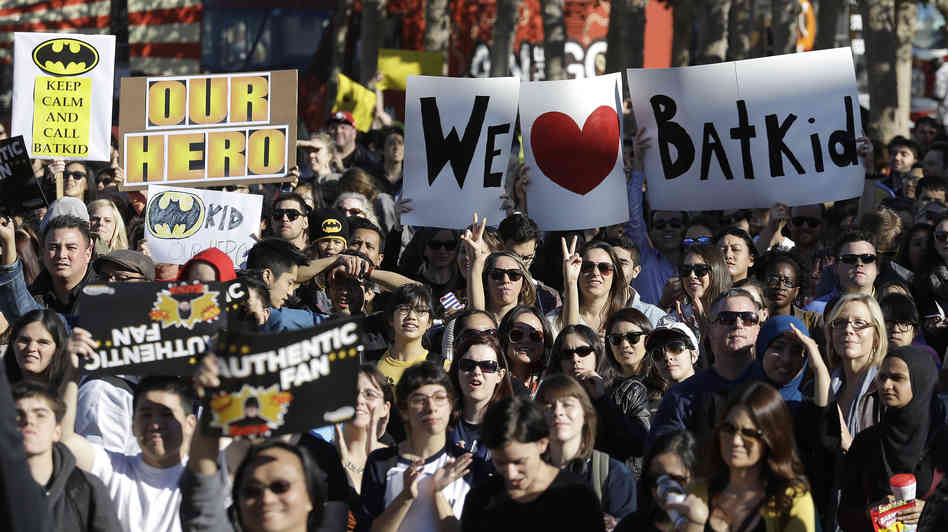
You’d have to be a real spoilsport not to feel good about Batkid. If the sight of 20,000 people joining in last month to help the Make-A-Wish Foundation and the city of San Francisco fulfill the superhero fantasies of a 5-year-old — and not just any 5-year-old, but one who has been battling a life-threatening disease — doesn’t warm your heart, you must be numb to basic human emotions.

Yet we can still ask if these basic emotions are the best guide to what we ought to do. According to Make-A-Wish, the average cost of realizing the wish of a child with a life-threatening illness is $7,500. That sum, if donated to the Against Malaria Foundation and used to provide bed nets to families in malaria-prone regions, could save the lives of at least two or three children (and that’s a conservative estimate). If donated to the Fistula Foundation, it could pay for surgeries for approximately 17 young mothers who, without that assistance, will be unable to prevent their bodily wastes from leaking through their vaginas and hence are likely to be outcasts for the rest of their lives. If donated to the Seva Foundation to treat trachoma and other common causes of blindness in developing countries, it could protect 100 children from losing their sight as they grow older.

It’s obvious, isn’t it, that saving a child’s life is better than fulfilling a child’s wish to be Batkid? If Miles’s parents had been offered that choice — Batkid for a day or a cure for their son’s leukemia — they surely would have chosen the cure.”•

From Specter’s profile:

Peter Singer may be the most controversial philosopher alive; he is certainly among the most influential. And this month, as he begins a new job as Princeton University’s first professor of bioethics, his unorthodox views will be debated in America more passionately than ever before. For nearly thirty years, Singer has written with great severity on subjects ranging from what people should put on their dinner plates each night to how they should spend their money or assess the value of human life. He is always relevant, but what he has to say often seems outrageous: Singer believes, for example, that a human’s life is not necessarily more sacred than a dog’s, and that it might be more compassionate to carry out medical experiments on hopelessly disabled, unconscious orphans than on perfectly healthy rats. Yet his books are far more popular than those of any other modern philosopher. Animal Liberation, which was first published in 1975, has sold half a million copies and is widely regarded as the touchstone of the animal-rights movement. In 1979, he brought out Practical Ethics, which has sold more than a hundred and twenty thousand copies, making it the most successful philosophy text ever published by Cambridge University Press.

Singer laid out his brutally frank approach to ethics in his first major paper, ‘Famine, Affluence, and Morality,’ which has become required reading for thousands of university students. ‘As I write this in November 1971, people are dying in East Bengal from lack of food, shelter, and medical care,” Singer’s essay began. ‘The suffering and death that are occurring there now are not inevitable, not unavoidable.’ The problem, he explained, is a result of the moral blindness of rich human beings who are far too selfish to come to the aid of the poor.

Following in the tradition of the eighteenth-century moral philosopher William Godwin–who asked, famously, ‘What magic is there in the pronoun `my’ to overturn the decisions of everlasting truth?’–Singer argues that proximity means nothing when it comes to moral decisions, and that personal relationships don’t mean much, either. Saving your daughter’s life is a fine thing to do, for example, but it can never measure up to saving the lives of ten strangers. If you were faced with the choice, Singer’s ethics would require you to save the strangers. ‘It makes no moral difference whether the person I can help is a neighbor’s child ten yards from me or a Bengali whose name I shall never know, ten thousand miles away,’ he wrote in his essay. Singer believes we are obliged to give money away until our sacrifice is of ‘comparable moral importance’ to the agony of people starving to death. ‘This would mean, of course,’ he continued, approvingly, ‘that one would reduce oneself to very near the material circumstances of a Bengali refugee.’

Singer’s views on animal rights are even bolder: he calls man’s dominion over other animals a ‘speciesist’ outrage that can properly be compared only to the pain and suffering ‘which resulted from the centuries of tyranny by white humans over black humans.’ For Singer, that ‘tyranny’ is one of the central social issues of our age. Yet what has brought him infamy is his radical position on an even more compelling set of moral questions: how to cope with the borders between birth, life, and death in an era when we are becoming technologically capable of controlling them all.”•
Tags: ,

The fiftieth anniversary of JFK’s assassination brought no closure to the many questions that have festered since that horrible day in Dallas. Here’s two clips of Jim Garrison (with lousy volume, unfortunately), the Orleans Parish District Attorney who was never satisfied with the Warren Report, speaking to Johnny Carson in 1968 about his personal investigation into the murder. Garrison was the anti-Vaughn Meader, shot to prominence in the wake of the shocking death and was ultimately portrayed by Kevin Costner in Oliver Stone’s hogwash. Johnny, however, was clearly disappointed by the conversation. 

Tags: , , ,

The opening of “A Model World,” Jon Turney’s Aeon article about computer models, which he reminds are not all created equal:

“Here’s a simple recipe for doing science. Find a plausible theory for how some bits of the world behave, make predictions, test them experimentally. If the results fit the predictions, then the theory might describe what’s really going on. If not, you need to think again. Scientific work is vastly diverse and full of fascinating complexities. Still, the recipe captures crucial features of how most of it has been done for the past few hundred years.

Now, however, there is a new ingredient. Computer simulation, only a few decades old, is transforming scientific projects as mind-bending as plotting the evolution of the cosmos, and as mundane as predicting traffic snarl-ups. What should we make of this scientific nouvelle cuisine? While it is related to experiment, all the action is in silico — not in the world, or even the lab. It might involve theory, transformed into equations, then computer code. Or it might just incorporate some rough approximations, which are good enough to get by with. Made digestible, the results affect us all.

As computer modelling has become essential to more and more areas of science, it has also become at least a partial guide to headline-grabbing policy issues, from flood control and the conserving of fish stocks, to climate change and — heaven help us — the economy. But do politicians and officials understand the limits of what these models can do? Are they all as good, or as bad, as each other? If not, how can we tell which is which?”

Tags:

From Mark Pack’s well-rounded take on autonomous vehicles, which are being developed at an ever-accelerating pace and must now be a consideration during the planning of all long-range transportation projects:

“Think just how quickly driverless cars have developed in the last five years alone – and then think how long it takes to get planning permission, let alone build or fit out, a big public transport project. Public transport plans now should already be factoring in the high likelihood of a near future in which cars no longer need humans to drive them.

Some of the benefits like to accrue from this are brilliant – but do not require policy changes. A further improvement in road safety is likely for, as we have seen in other areas where automated machinery replaces humans in repetitive tasks, computers are more reliable, less sleepy and never drunk. Brilliant news for humanity (road deaths killed more people than genocides during the twentieth century after all), a useful saving for the NHS but not something which much knock-on policy impacts.

Other changes are likely to be more troubling.”

Tags:

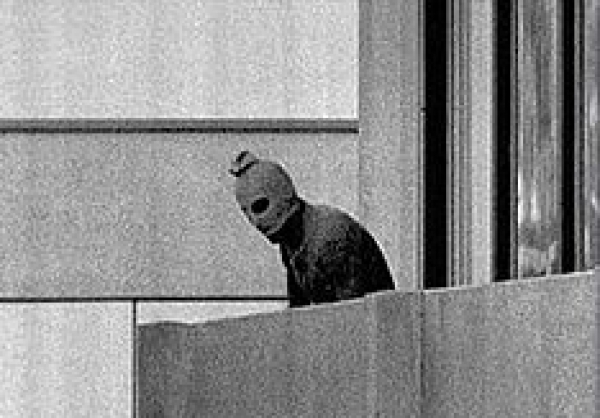
As David Remnick prepares to offer analysis of Russia’s Winter Games, which hopefully will be a safe and joyous event, here’s the opening of E.J. Kahn’s 1972 New Yorker reportage in the direct aftermath of the tragedy in Munich, the so-called “Serene Olympics” which became anything but:

“Into the unreal Olympic world, where inches and ounces and seconds are what traditionally matter most, the real world cruelly intruded at five o’clock three mornings ago. The first inkling most of the four thousand journalists here had of the dreadful events that should have terminated these now cheerless Olympics came just before 9 a.m. on Tuesday, at which hour we had been invited to attend a press conference with the American swimmer Mark Spitz, who, having won an unprecedented seventh gold medal the night before, has been crowned by the German press ‘der König von München.’ Like just about everything else around here, though, his gilt had been tarnished. He had carried a pair of brand-name athletic shoes to the presentation ceremony for the third medal, and had felt constrained—probably under pressure from the United States Olympic Committee and under at least indirect pressure from Avery Brundage, the crusty American octogenarian who is retiring this year after twenty years as president of the International Olympic Committee—to make a public apology to his teammates. On my way to the conference, I glanced at the first editions of the local morning papers. They featured a queen not just of Munich but of all West Germany—the sixteen-year-old high jumper Ulrike Meyfarth, who had never cleared six feet until the previous afternoon, when she went three and a half inches above that and won a hysterically applauded gold medal of her own. Her glory was brief, for we learned during our wait for Spitz to show up that the Olympic Village had been murderously invaded. While we were reeling from that shock, Spitz arrived and gave sober, clipped answers to a few meaningless questions. He remained seated throughout the session, and a factotum explained, ‘Mark Spitz does not want to come to the microphone, because of the Israeli incident.’ (He is Jewish, and nobody knew who, if anyone, might be the next target.) As a result, the swimmer’s responses were all but inaudible to us. It didn’t much matter, because must of the questions, dredged from the near-bottom of the sportswriters’ cliché barrel, were absurd and obviously irrelevant. Indeed, all the things that had been ceased to seem very consequential—even the prodigies of the regal Spitz himself.”•

________________________________________

“Our greatest hopes and worst fears are seldom realized”:

Tags: , ,

If you put your uncle to death as Kim Jong-un just did, you’re going to make your nation seem like the most barbaric on Earth. And North Korea is among the dimmest corners of the planet no matter the criteria we’re using for measurement. But is that country, even with its penchant for murderous purges, the worst wielder of the death penalty? It’s not easy to measure its deployment since some countries don’t officially murder people but still make enemies disappear. Anyhow, here are the Amnesty International numbers via the Guardian of executions performed from 2007-2012 in the nations most given to such practices:

  1. China: Thousands
  2. Iran: 1,663
  3. Saudi Arabia: 423
  4. Iraq: 256
  5. United States: 220
  6. Pakistan: 171
  7. Yemen: 152
  8. Korea (North): 105
  9. Vietnam: 58
  10. Libya 39

Tags:

Paper is too useful to ever completely disappear–and some think the scenario is even more sanguine than that–but could spying concerns mean a comeback for the dead trees? I think not, but not everyone agrees.  From Michael Lewis at the Toronto Star:

“Eugene Kaspersky said governments and corporations had already begun to elevate security concerns but revelations of U.S. spying activity contained in documents leaked over the summer by former National Security Agency contractor Edward Snowden added a new sense of urgency.

‘Big enterprises were even talking about back-to-paper scenarios because of espionage attacks,’ Kaspersky said Wednesday after the company released is 2014 cyber threat forecast.

‘Enterprises, governments — they are really serious about extra levels of security, extra regulation, disconnecting their services from the Internet, maybe even getting some processes back to paper,’ Kaspersky said.

‘It’s a very visible step backward.'”

Tags: ,

I remember when listening to a smart Grantland podcast Bill Simmons did with the excellent documentarian Alex Gibney, that the guest pointed out that even if every racer in the Tour de France was using performance-enhancing drugs, that they would all still be guilty. I’m not sure I agree, at least not always.

People who drank during Prohibition may have been technically guilty of a crime, but it was the law that was in error, and there was no way to imprison everyone who was sneaking a drink. The law was impractical because it was antithetical to human nature. It enforced a norm that wasn’t normal.

I think something like that is also true about the age of surveillance. If everyone is spying–individuals, corporations and governments–it will become difficult to fault anyone. And if millions upon millions of people are caught in behavior that is outside the norm–not anything illegal, just embarrassing–maybe the norms are changed. If everyone is guilty, no one is guilty.

But I think the concern that surveillance is going to make humans automatons won’t bear out. It certainly hasn’t so far.

Glenn Greenwald believes that governments can be transparent while individuals can have privacy. While I wish was that was the case, I seriously doubt that scenario occurs. From Edward Moyer’s Cnet interview with Greenwald:

Question:

Both you and Julian Assange have said it’s crucial for governments to be transparent and for individuals to have privacy. Talk about your views on privacy — how it’s important not just politically but also in terms of creativity and self-exploration.

Glenn Greenwald:

You know, I think it’s interesting because a lot of times people have difficulty understanding why privacy’s important…and so what I try to do is look at human behavior, and what I find, I think, is that the quest for privacy is very pervasive. We do all kinds of things to ensure that we can have a realm in which we can engage in conduct without other people’s judgmental eyes being cast upon us.

And if you look at how tyrannies have used surveillance in the past, they don’t use surveillance in support of their tyranny in the sense that every single person is being watched at all times, because that just logistically hasn’t been able to be done. Even now it can’t be done — I mean, the government can collect everybody’s e-mails and calls, but they don’t have the resources to monitor them all. But what’s important about a surveillance state is that it creates the recognition that your behavior is susceptible to being watched at any time. What that does is radically alter your behavior, because if we can act without other people watching us, we can test all kinds of boundaries, we can explore all kinds of creativity, we can transgress pretty much every limit that we want because nobody’s going to know that we’re doing it. That’s why privacy is so vital to human freedom.

But if we know we’re being watched all the time, then we’re going to engage in behavior that is acceptable to other people, meaning we’re going to conform to orthodoxies and norms. And that’s the real menace of a ubiquitous surveillance state: It breeds conformity; it breeds a kind of obedient citizenry, on both a societal and an individual level. That’s why tyrannies love surveillance, but it’s also why surveillance literally erodes a huge part of what it means to be a free individual.”

Tags: ,

I understand that Jay Leno, the make-believe working-class hero, is just a buffoon with a talk show and that nothing he says to a dwindling late-night television audience really matters. He practices some sort of moral equivalency even when none is deserved because he wants to appeal to the widest viewership possible. He panders. But it is a little infuriating that he continually refers to Obamacare as something that Americans “don’t want.” You know, because the uninsured would rather get sick and die. So much neater that way. Real closure.

There are millions of citizens in this country who want Obamacare. Actually, they desperately need it. Their lives and the lives of their children depend on it.

A deserved shot or even a cheap shot against the President is fair game. But a wealthy person taking a cheap shot against poor, working poor and moderate-income Americans in the service of pandering isn’t.•

Tags: ,

Because of the Costas factor, I tend to mute or just block out a lot of NBC’s Olympics commentary, but hiring David Remnick, longtime Russia expert, for its coverage of the Sochi Games was a smart move by the network. Remnick tells Richard Deitsch, in his steadfastly excellent Sports Illustrated “Media Circus” column, what his role will be. An excerpt:

“[Jim] Bell said Remnick’s role for the opening ceremonies will come during what NBC calls the ‘creative part of the broadcast,’ where the host country usually tells a story about itself. Remnick served as a Moscow bureau chief for The Washington Post and earned a Pulitzer Prize in nonfiction and the George Polk Award for excellence in journalism in 1994 for his book Lenin’s Tomb: The Last Days of the Soviet Empire.

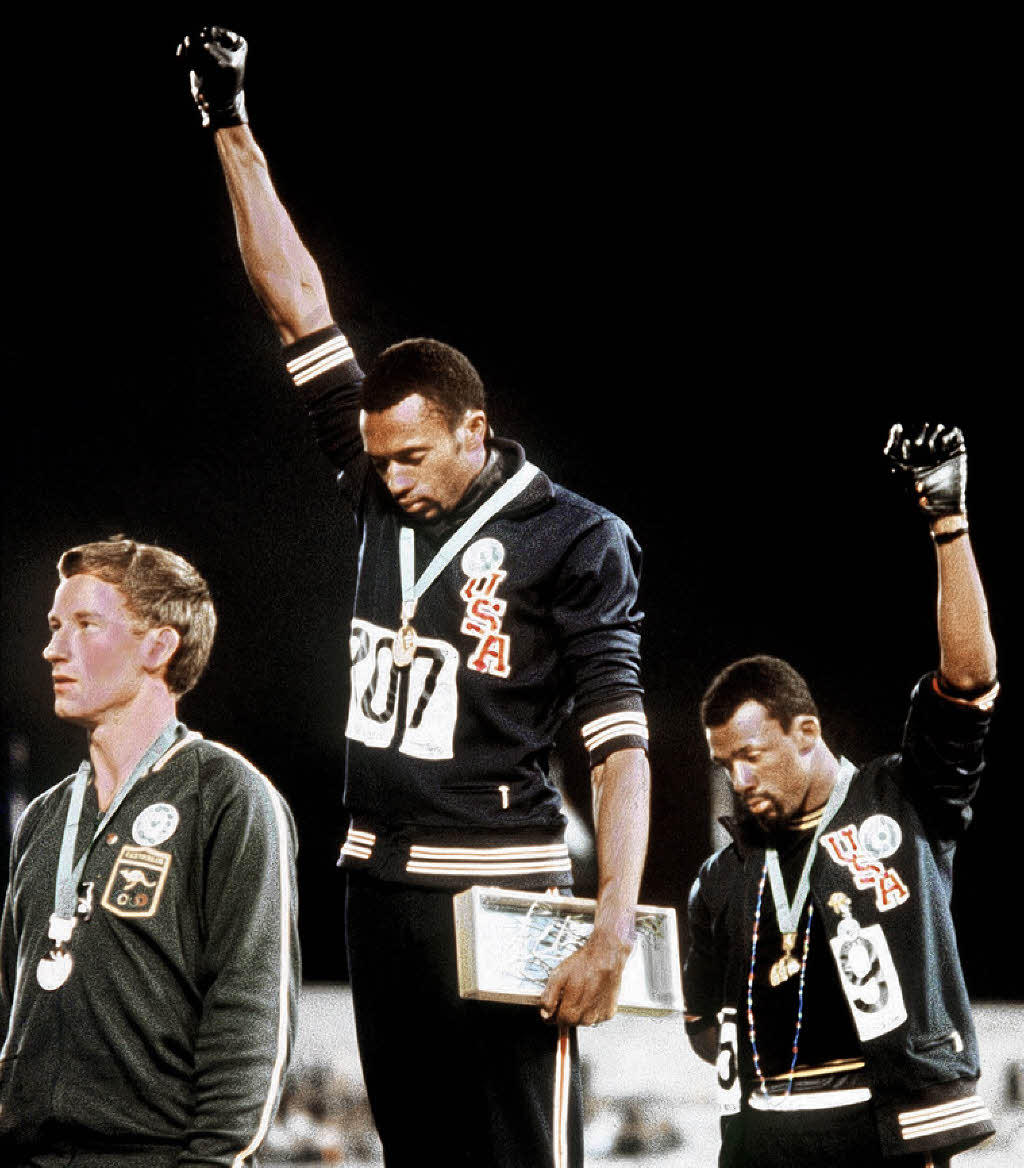
‘I have an interest in sports and I grew up in a time where the Olympics were highly charged events,’ Remnick said. ‘I’m 55 so I have pretty vivid memories of Mexico City. I remember Bob Beamon, as apolitical an act as there could be, and John Carlos and Tommie Smith. I think that everyone would have benefitted in 1968 from understanding what a gesture of black power meant in the context of a sporting event because not everyone was paying attention to the splits between the Black Panthers and Student Nonviolent Coordinating Committee. What happens invariably at every Olympics is there is a kind of non-athletic aspect to it that gives it dimension.’

Remnick said he had been given assurances by NBC Sports that he would have editorial independence with his commentary. Among the topics he will surely address: LGBT issues within Russia, the relationship between Russia and the Ukraine and the nature of post-Soviet Russia.

‘There is nothing in the world — and I know they don’t intend to hinder me in this way — where I would not be honest in my analysis,’ Remnick said.”

Tags: ,

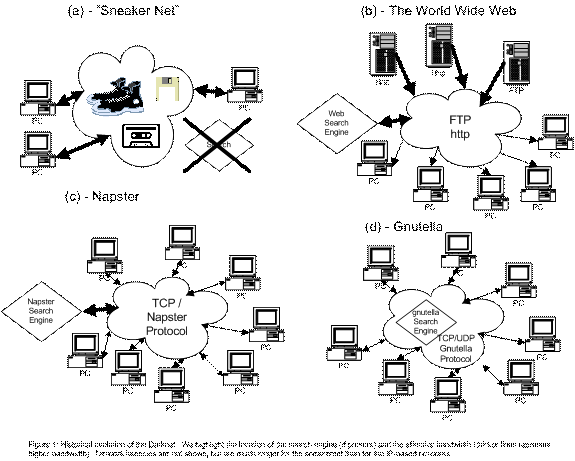
The flip side of the surveillance state is the Darknet–an online space where anything goes–which speaks directly to my contention that greater control and greater anarchy will be increasingly at war in the Digital Age. I wouldn’t even know how to get onto the Darknet if I wanted to and neither would most of you. But a lot of people are there, many innocuously and some to do all manner of harm. The opening paragraph of “Darknet: A Short History,” a Foreign Policy piece by Ty McCormick:

“Beyond the prying eyes of Google and Bing exists a vast cyberfrontier — by some estimates hundreds of times larger than the World Wide Web. This so-called “deepweb” is often more humdrum than sinister, littered with banal data and derelict URLs, but it is also home to an anything-goes commercial underworld, called the ‘darknet,’ that will make your stomach turn. It’s a place where drugs and weapons are openly traded, where terrorists link up, and where assassins bid on contract killings. In recent years, the darknet has found itself in government cross-hairs, with the FBI and National Security Agency (NSA) cracking down on drug merchants and pornographers. Despite a series of high-profile busts, however, this lawless realm continues to hum along, deep beneath the everyday web. “

Tags:

An excellent interview by Richard Hefner with Mike Wallace in 1984, when the journalist was at the height of his powers with 60 Minutes snaring fifty million viewers some weeks. What’s unsaid here is that Wallace was also at a personal low, depressed and contemplating suicide as the Westmoreland trial proceeded. The interview begins with a discussion about a Wallace profile of Oriana Fallaci.

Tags: ,

From “How to End Global Income Inequality,” Charles Kenny’s Businessweek article that tries to figure out how we got this way and how we can get better:

“In order to close the gap between the global rich and poor, policymakers need to understand how the rich got that way in the first place. Over the last 20 years, there isn’t much evidence that the countries home to the top of global income distribution started saving so much more (PDF) or working so much harder. The vast majority of the global rich got their outsized portion of increases in planetary consumption because they started off rich in 1990. Many were helped along the way by reduced tax rates and—thanks to globalization—more opportunities to make money off investments in rapidly growing developing countries. It is great that this investment is occurring—without it the world’s poor would be poorer. But the distribution of benefits from that investment isn’t an act of God. It’s a decision of man— and it can be changed.”

Tags:

Just one more post about delivery drones, and then I promise I’ll stop for awhile. The opening of Alvin Powell’s Harvard Gazette interview with engineering professor Robert Wood, who sees not technical obstacles to such delivery systems but bureaucratic and legal ones:

Harvard Gazette:

Amazon’s Jeff Bezos said he’s serious about using flying robots to deliver packages, saying that the technology is almost there — within four or five years — and that Federal Aviation Administration [FAA] regulations might permit it by 2015. What was your reaction when you heard this?

Robert Wood:

The technology is actually quite close. My first reaction is that the technology is much closer than overcoming the FAA and liability barriers. Of course they will need to refine the vehicle and controller designs to first ensure safety and, second, to verify efficiency and efficacy of this method.

Harvard Gazette:

How realistic is the scenario of using flying robotic drones to deliver packages? I’m sure it seems completely ‘out there’ for most of the public. Is it?

Robert Wood:

I think technically this is quite reasonable. In a laboratory setting, moving an object from one position to another using a flying vehicle is something that has been demonstrated. When you start to move this out of a lab setting, there are tremendous challenges, including weather, turbulence when moving around buildings or objects, dynamic objects in the environment such as people or cars, and imprecise or unreliable sensor information. But the robotics community is working on solutions to all of these topics — [like] the ‘self-driving car’ — so I suspect the answers are not far off.”

Tags: ,

Imagine if the hundreds of millions of dollars in lobbying money and political contributions that have been spent to try to dismantle Obamacare, which, despite initial website problems, has the potential to bring affordable health care to so many Americans in need, was instead spent on homeless children. (There are 22,000 of them in New York City alone.) Just think what a better nation would be. Not just more noble but better even in a practical sense.

From Sharon Machlis’ Computerworld piece about the need for calm in the storm of Healthcare.gov:

“Of course it’s a bit more important for the federal government to offer access to life-saving health insurance than it was for Twitter to offer 100% uptime back in 2008 or Apple to offer a superior map app. And in the case of a website tied to a specific event — say, a candidate’s Election Day campaign site meltdown — getting it right on day one matters.

But if a) you’re willing to forget about the politics and b) you’ve followed Web technology over the years, you know that, somewhat counterintuitively given the speed that the Internet moves, getting it right on day one isn’t always what matters. What’s important is getting things right soon enough.

So, I’m ignoring all the hysteria around healthcare.gov’s botched initial rollout — and if you care about the substance of the issue, not the politics, so should you. Instead, pay attention to whether the problems are fixed in a timely manner. That is what will tell you whether the program has a chance at success.”

Tags:

From Ryan Irwin’s Foreign Affairs appraisal of South Africa after Nelson Mandela, which argues that the late President was ideal for a transitioning nation but that the country needs a different kind of leader for its next phase:

“Turning Mandela’s pluralism into a coherent governing doctrine was difficult. Mandela is remembered today mostly for his symbolic acts, gestures that ‘made South Africans feel good about ourselves,’ in the activist Desmond Tutu’s words, such as embracing the country’s national rugby team, the Springboks, during the 1995 Rugby World Cup. Mandela developed actual government policy slowly as he negotiated his country’s constitution between 1994 and 1997, taking a hard line on multiculturalism while relinquishing his commitment to wealth redistribution. In Mandela’s words, it was at a World Economic Forum in Davos, Switzerland in 1992, when he ‘realized, as never before, that if we wanted investments . . . we had to remove the fear of business.’ Storytelling could only go so far.

South Africa today is a reflection of Mandela’s presidency and the grand strategy that preceded it. By cultivating such a pluralist stance toward anti-apartheid activism, Mandela’s ANC successfully ended the legitimacy of South Africa’s minority white government. These efforts, however, cultivated unusually high expectations among the supporters who embraced the ANC for reasons as diverse as South Africa itself. The resulting dissonance has made South Africa a paradox: imbued with a rich vocabulary of civil, political, economic, social, and human rights, the country remains plagued by pervasive income inequality, structural unemployment, and widespread poverty.

Another Nelson Mandela would not cure South Africa of these ills. To thrive in the twenty-first century, the country needs not hope and activism but technocrats and engineers who can develop workable solutions to the messy realities of urban blight and rural poverty. This perhaps would be Mandela’s message to the generation born after 1990. ‘There are good men and women in all communities,’ he reflected shortly after his retirement in 1999. ‘The duty of the real leader,’ he asserted, is not only to bring these people into the fold but also to ‘give them tasks of serving their community.’ Modern South Africa needs a leader who can do the latter.”

Tags: ,

There are a million reasons why Detroit, that shining star, fell to the ground, but only one person charged with rescuing it–and he’s not an elected official. Bankruptcy lawyer Kevyn D. Orr must put the Motor City on the road to solvency in under a rear, all the while brushing away charges that he’s a puppet, even a traitor to his race. From Monica Davey and Bill Vlasic in the New York Times:

“The assignment is enormous, a peculiar mix of duties, some stated and others not, for a man who by all accounts had been leading a comfortable life as a bankruptcy lawyer. His new job? Urban planner, numbers cruncher, city spokesman, negotiator, politician, good cop, bad cop.

The job could not be more politically fraught. Mr. Orr’s harshest critics call him a ‘dictator’ (his authority trumps that of the city’s elected leaders), an ‘Uncle Tom’ (he is black and was sent to run this mostly black city by a white governor) and a ‘pension killer’ (he has said the city can no longer afford the pensions it promised retirees). But Mr. Orr, who was a partner at the law firm Jones Day until his wife and a mentor helped talk him into taking the Detroit job, seems unfazed by the storm around him. He is full of smiles and quips, coolly pressing on.

‘If we don’t do something to address the unfunded liability that we have, the 700,000 residents — some of them schoolchildren, some of them sort of skinny, dorky kids like I was, who got beaten up every day at the bus stop by the toughs, who have to walk home in the dark — don’t they deserve better services?’ said Mr. Orr, who grew up in Florida and visited Detroit as a youth.”

Tags: , ,

« Older entries § Newer entries »