Politics

You are currently browsing the archive for the Politics category.

In “The Texas Flautist and the Fetus,” a variation on Judith Jarvis Thomson’s “violinist analogy” thought experiment about abortion, Dominic Wilkinson of Practical Ethics points out the unintended moral precedent set by the Texas law which says that pregnant brain-dead woman Marlise Munoz must be kept alive over the objections of her family:

“The Texan law seems to accept that the woman’s interests are reduced by being in a state close to death (or already being dead). It appears to be justified to ignore her previous wishes and to cause distress to her family in order to save the life of another. If this argument is sound, though, it appears to have much wider implications. For though brain death in pregnant women is rare, there are many patients who die in intensive care who could save the lives of others– by donating their organs. Indeed there are more potential lives at stake, since the organs of a patient dying in intensive care may be used to save the life of up to seven other people.

If it is justified to continue life support machines for Marlise Munoz against her and her family’s wishes, it would also appear be justified to remove the organs of dying or brain dead patients in intensive care against their and their family’s wishes. Texas would appear to be committed to organ conscription.”

Tags: ,

Automation and robotics will make us wealthy in the aggregate, but how will most of us share in those riches if employment becomes scarce? In the past, technological innovation has disappeared jobs, but others have come along to replace them, often in fields that didn’t even exist before. But what happens if the second part of the shift never arrives? From “The Onrushing Wave” in the Economist:

For much of the 20th century, those arguing that technology brought ever more jobs and prosperity looked to have the better of the debate. Real incomes in Britain scarcely doubled between the beginning of the common era and 1570. They then tripled from 1570 to 1875. And they more than tripled from 1875 to 1975. Industrialisation did not end up eliminating the need for human workers. On the contrary, it created employment opportunities sufficient to soak up the 20th century’s exploding population. Keynes’s vision of everyone in the 2030s being a lot richer is largely achieved. His belief they would work just 15 hours or so a week has not come to pass.

Yet some now fear that a new era of automation enabled by ever more powerful and capable computers could work out differently. They start from the observation that, across the rich world, all is far from well in the world of work. The essence of what they see as a work crisis is that in rich countries the wages of the typical worker, adjusted for cost of living, are stagnant. In America the real wage has hardly budged over the past four decades. Even in places like Britain and Germany, where employment is touching new highs, wages have been flat for a decade. Recent research suggests that this is because substituting capital for labour through automation is increasingly attractive; as a result owners of capital have captured ever more of the world’s income since the 1980s, while the share going to labour has fallen.

At the same time, even in relatively egalitarian places like Sweden, inequality among the employed has risen sharply, with the share going to the highest earners soaring. For those not in the elite, argues David Graeber, an anthropologist at the London School of Economics, much of modern labour consists of stultifying ‘bullshit jobs’—low- and mid-level screen-sitting that serves simply to occupy workers for whom the economy no longer has much use. Keeping them employed, Mr Graeber argues, is not an economic choice; it is something the ruling class does to keep control over the lives of others.

Be that as it may, drudgery may soon enough give way to frank unemployment.”

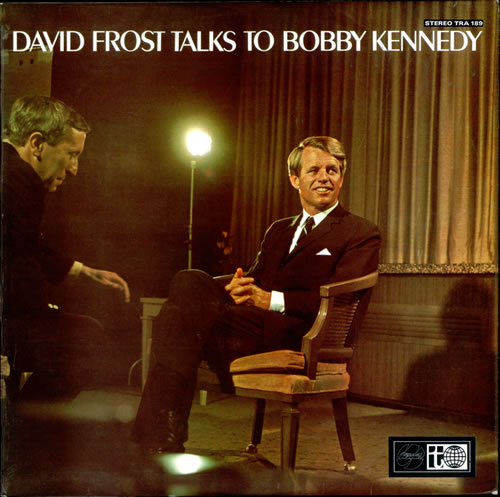
A vinyl rarity to be sure, here’s the audio of David Frost Talks to Bobby Kennedy, an LP recording of the British host interviewing the Presidential hopeful just prior to the latter’s 1968 assassination. It’s difficult to understand in retrospect why Frost was considered so suspect when he was preparing to interview the post-resignation Richard Nixon in 1977; he had always been deeply involved in American politics of the era, even convincing Nixon to insinuate himself into a high-stakes 1972 Cold War chess match.

Amusing to note that even a deeply thoughtful politician like Kennedy fell for the myth that the “real America” is located in less-urban small towns. Rubbish. We’re all America, each of us.

Tags: ,

Cherokee reservation, North Carolina, 1939.

Did you grow up sort of poor? I did. Not on food stamps but close. Not in the projects but a couple of buildings away. It leaves a mark. The general theory of poverty has long been that if a poor person received a windfall of cash, it wouldn’t matter because the poverty resides within them. They would be back to square one and in need in no time. A study by Duke epidemiologist Jane Costello about casino money being dispensed to previously poor Cherokee Indians pushed back at that idea to an extent that surprised even the academic herself. From Moises Velasquez-Manoff’s New York Times op-ed, “What Happen When the Poor Receive a Stipend?“:

“When the casino opened, Professor Costello had already been following 1,420 rural children in the area, a quarter of whom were Cherokee, for four years. That gave her a solid baseline measure. Roughly one-fifth of the rural non-Indians in her study lived in poverty, compared with more than half of the Cherokee. By 2001, when casino profits amounted to $6,000 per person yearly, the number of Cherokee living below the poverty line had declined by half.

The poorest children tended to have the greatest risk of psychiatric disorders, including emotional and behavioral problems. But just four years after the supplements began, Professor Costello observed marked improvements among those who moved out of poverty. The frequency of behavioral problems declined by 40 percent, nearly reaching the risk of children who had never been poor. Already well-off Cherokee children, on the other hand, showed no improvement. The supplements seemed to benefit the poorest children most dramatically.

When Professor Costello published her first study, in 2003, the field of mental health remained on the fence over whether poverty caused psychiatric problems, or psychiatric problems led to poverty. So she was surprised by the results. Even she hadn’t expected the cash to make much difference. ‘The expectation is that social interventions have relatively small effects,’ she told me. ‘This one had quite large effects.’

She and her colleagues kept following the children. Minor crimes committed by Cherokee youth declined. On-time high school graduation rates improved. And by 2006, when the supplements had grown to about $9,000 yearly per member, Professor Costello could make another observation: The earlier the supplements arrived in a child’s life, the better that child’s mental health in early adulthood.”

Tags: ,

I’m there whenever David Remnick focuses on politics or boxing or writers. Other topics also, but those three in particular. The New Yorker EIC touches on that trio of subjects in a piece about President Obama, who is trying to sprint to the finish line rather than run out the clock. Three quick clips from the early stages of the article follow.

____________________

Obama spent his flight time in the private quarters in the nose of the plane, in his office compartment, or in a conference room. At one point on the trip from Andrews Air Force Base to Seattle, I was invited up front for a conversation. Obama was sitting at his desk watching the Miami Dolphins–Carolina Panthers game. Slender as a switch, he wore a white shirt and dark slacks; a flight jacket was slung over his high-backed leather chair. As we talked, mainly about the Middle East, his eyes wandered to the game. Reports of multiple concussions and retired players with early-onset dementia had been in the news all year, and so, before I left, I asked if he didn’t feel at all ambivalent about following the sport. He didn’t.

“I would not let my son play pro football,” he conceded. “But, I mean, you wrote a lot about boxing, right? We’re sort of in the same realm.”

____________________

When Obama leaves the White House, on January 20, 2017, he will write a memoir. “Now, that’s a slam dunk,” the former Obama adviser David Axelrod told me. Andrew Wylie, a leading literary agent, said he thought that publishers would pay between seventeen and twenty million dollars for the book—the most ever for a work of nonfiction—and around twelve million for Michelle Obama’s memoirs. (The First Lady has already started work on hers.) Obama’s best friend, Marty Nesbitt, a Chicago businessman, told me that, important as the memoir might be to Obama’s legacy and to his finances, “I don’t see him locked up in a room writing all the time. His capacity to crank stuff out is amazing. When he was writing his second book, he would say, ‘I’m gonna get up at seven and write this chapter—and at nine we’ll play golf.’ I would think no, it’s going to be a lot later, but he would knock on my door at nine and say, ‘Let’s go.’ ” Nesbitt thinks that Obama will work on issues such as human rights, education, and “health and wellness.” “He was a local community organizer when he was young,” he said. “At the back end of his career, I see him as an international and national community organizer.’

Yet no post-Presidential project—even one as worthy as Ulysses S. Grant’s memoirs or Jimmy Carter’s efforts to eradicate the Guinea worm in Africa—can overshadow what can be accomplished in the White House with the stroke of a pen or a phone call. And, after a miserable year, Obama’s Presidency is on the clock. Hard as it has been to pass legislation since the Republicans took the House, in 2010, the coming year is a marker, the final interval before the fight for succession becomes politically all-consuming.

____________________

Obama’s advisers are convinced that if the Republicans don’t find a way to attract non-white voters, particularly Hispanics and Asians, they may lose the White House for two or three more election cycles. And yet Obama still makes every effort to maintain his careful, balancing tone, as if the unifying moment were still out there somewhere in the middle distance. “There were times in our history where Democrats didn’t seem to be paying enough attention to the concerns of middle-class folks or working-class folks, black or white,” he said. “And this was one of the great gifts of Bill Clinton to the Party—to say, you know what, it’s entirely legitimate for folks to be concerned about getting mugged, and you can’t just talk about police abuse. How about folks not feeling safe outside their homes? It’s all fine and good for you to want to do something about poverty, but if the only mechanism you have is raising taxes on folks who are already feeling strapped, then maybe you need to widen your lens a little bit. And I think that the Democratic Party is better for it. But that was a process. And I am confident that the Republicans will go through that same process.”•


Tags: ,

For the past six years or so, Jeffrey Wright, one of the best actors on the planet, has been trying to extract precious minerals from the earth in Sierra Leone, hoping to aid the impoverished region. It’s an uncommon, perhaps quixotic, quest. It’s real life and it’s a movie. The opening of “Jeffrey Wright’s Gold Mine,” an article in the New York Times Magazine by Daniel Bergner:

‘This is a relationship that could bring us all the things we desire,’ Jeffrey Wright said. He was sitting with Samuel Jibila under an awning rigged from rusty metal sheets in front of Jibila’s decrepit house in Sierra Leone. Jibila is the traditional ruler — the paramount chief — of Penguia, a little domain of jungly hills and dusty villages 250 miles from the capital. Wright is an actor who lives in Brooklyn. He has won a Tony, an Emmy and a Golden Globe and most recently appeared as Beetee in The Hunger Games: Catching Fire. And for the last decade, he has been traveling to this isolated area near the Guinea border to run his small gold-exploration company, Taia Lion Resources. He wanted to maintain Jibila’s faith in his company, in his plans, but Jibila, who was surrounded by lesser chiefs in glossy robes, wasn’t feeling faithful.

Since 2003, Wright has brought in geologists to sample Penguia’s soil and streams. He leases the exploration rights here from the national government. The gold deposits at the site he and Jibila were discussing may be worth billions of dollars. He says that mining will be a boon to everyone; that the operation will put many hundreds of people to work, not counting the small shops and other businesses that will bloom; that company employees will have a real chance to rise; that paved roads will replace cratered tracks. Transformation will come to a territory so undeveloped that when the rare vehicle needs to cross a river not far from Jibila’s home, the driver pulls onto a raft and ferrymen tug the vessel across with a rope.

But despite this vision and these promises, no metamorphosis has come to Penguia.”


Tags: , ,

Jeffrey Sachs is depicted by some as a dependency-creating subsidizer and by others as an extreme free-marketer–neither seems particularly apt. In a Reddit AMA to promote a free online course on sustainable development, the Columbia professor answers some critics (Angus Deaton, Naomi Klein, Dambisa Moyo) and questions about the global war on poverty.

_____________________

Question:

I’m fascinated by the new environmental technologies like billboards pulling drinking water from the air, or Mexico City’s smog eating paint. What technology do you look at as having great potential?

Jeffrey D. Sachs:

Probably the single most important breakthrough in recent years has been the dramatic decline in price of photovoltaics, which have fallen by a factor of 100X since 1977. 1 Watt of PV now costs less than $1 dollar. This will make possible an enormous upscaling of solar power in many parts of the world.

_____________________

Question:

I read The End of Poverty and I have to say, I am a huge fan of that book. I often cite your work to support ideas like that sweat-shops aren’t necessarily the evil they’re portrayed to be. Since the book, how much, in your eyes, has changed in the world? Do you feel like leaders sat up and took notice? 

Jeffrey D. Sachs:

The most important thing that’s happened since 2005 is that the idea of ending extreme poverty has actually begun to take hold. People see the success of China in ending poverty, the start of real poverty reduction in Africa, and the power of the new ICT technologies. Because of this optimism, the World Bank Development Committee voted in April to take on the goal of ending extreme poverty globally by 2030. So the idea is there, step by step.

_____________________

Question:

I’ve always argued that if agricultural subsidies were cut around the world it would be more effective in lifting people from poverty than all aid combined. It seems that lately developing countries have also gotten into the ag subsidy trap. Is it possible we’ve reached a point where reducing global ag subsidies might hurt the poor more than it helps them?

Jeffrey D. Sachs:

Ending AG subsidies, while generally a good idea, won’t solve as much as one might think, because the main beneficiaries will be large food-exporting countries, such as Brazil, not the poorest countries. Still, it’s typically a good thing to do. The subsidies are rarely fair or effective.

_____________________

Question:

When the government or culture in an area does not support elimination of poverty, have you seen other ways to make substantial progress, or is the government/leadership really the key to success or failure?

Jeffrey D. Sachs:

Government is necessary. The tools of policy (taxes, regulation, public subsidies of science, public investment) are indispensable. They are not the only things that matter, but without government, broad-based and sustained development is not really possible. Of course, governments do not need to be perfect. Thank goodness!!!•

Tags:

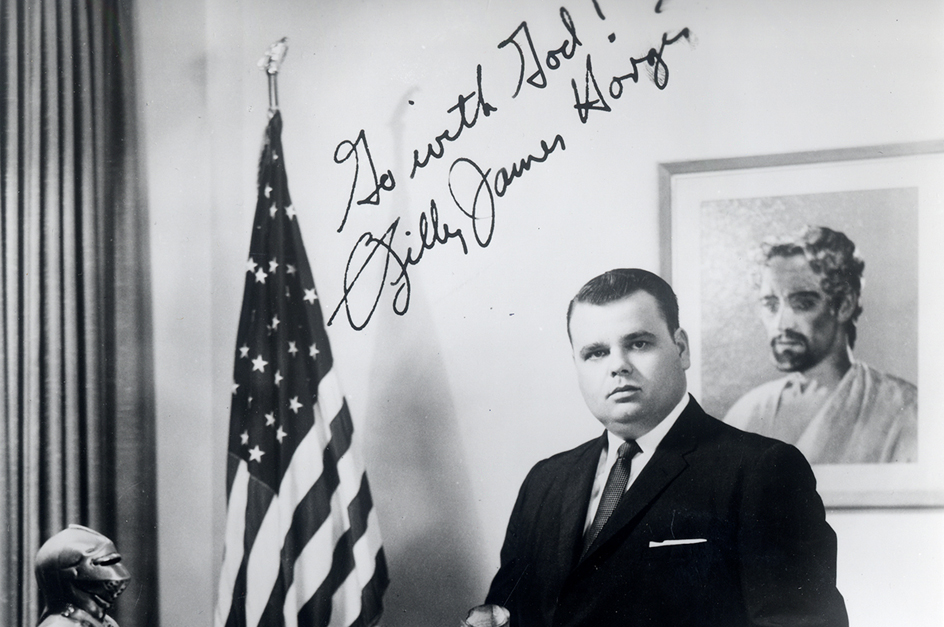
Billy James Hargis was a twentieth-century American evangelical entrepreneur writ large: charismatic, ultra-conservative, segregationist, anti-communist, anti-feminist, anti-gay, McCarthy supporter, charged with abusing tax-exempt status, accused of sexual misconduct by male and female students at the Christian college he founded, etc. He sat for an interview with Tom Snyder in the late 1970s to address a number of topics, including his sex scandal. A polished TV presenter, the “hillbilly preacher” comes across well despite everything. During the conversation, the two refer to Pat Robertson as the “Johnny Carson of Evangelism.”

From Hargis’ 2004 obituary in the Economist:For four years, starting in 1953, he launched a million hydrogen balloons from West Germany towards the east. They contained verses of Scripture, sent ‘to succour the poor starved captives of communism.’ Rather less lightly, he himself hit the pulpit across America and in ‘foreign lands,’ perfecting his own style of shouting, flailing and sweating with an energy alarming in a man of his girth.

As televangelists do, he also set up courses and centres of learning: the National Anti-Communist Leadership School, the Christian Crusade Anti-Communist Youth University and, in Tulsa, the American Christian College. A naive reporter once asked him what was taught there. Why, Mr Hargis answered, ‘anti-communism, anti-socialism, anti-welfare state, anti-Russia, anti-China, a literal interpretation of the Bible and states’ rights.’ As if he had needed to ask.

After a while the authorities, stirred up by the Evil One, got interested in him. The Christian Crusade was a supposedly religious charity with tax-exempt status; yet Mr Hargis’s work seemed mostly political. Its purposes were allegedly altruistic; yet Mr Hargis drew a salary of $25,000 from it, besides his utility bills, his house, his clothes, his colour TV, his travelling expenses and his dry-cleaning bills. In 1964 the tax-exemption was withdrawn by the Internal Revenue Service, and his reputation spoiled.

Seven years later, sex reared its head. For Mr Hargis, adopted and brought up in crushing Christian poverty in Texas, fun had meant daily Bible-readings and, once a week, gospel choir. He gave the impression that nothing had ever changed. The targets of his daily wrath were not only homosexuals and women’s libbers but the blatantly sexual pop-gods of the day: ‘When the Beatles thrust their hips forward while holding their guitars and shout, ‘Oh Yeah!!’ who cannot know what they really mean?’

Yet in 1974 both male and female students at the American Christian College, and three male members of the college choir, the All-American Kids, claimed Mr Hargis had deflowered them.”

Tags: ,

Richard Feynman famously asked the seminal nano question: Why can’t we write the entire 24 volumes of the Encyclopaedia Britannica on the head of a pin? But the past isn’t the only thing that can get small; the same holds true for what’s unfolding this very day, this very instant. And what will become of us when drones are the size of fleas and you can barely see them, can’t see them at all? From Kathryn A. Wolfe at Politico:

“Sen. Dianne Feinstein says she once found a drone peeking into the window of her home — the kind of cautionary tale she wants lawmakers to consider as they look at allowing commercial drone use.

The California Democrat offered few details about the incident when speaking about it Wednesday afternoon, during a Senate Commerce Committee hearing on drone policy at which she appeared as a special witness. But she used the episode to implore lawmakers to ‘proceed with caution.’

Feinstein said she encountered the flying robot while a demonstration was taking place outside her house. She said she went to the window to peek out — and ‘there was a drone right there at the window looking out at me.’

She held her hand inches from her face to indicate how close it was.”

Tags: ,

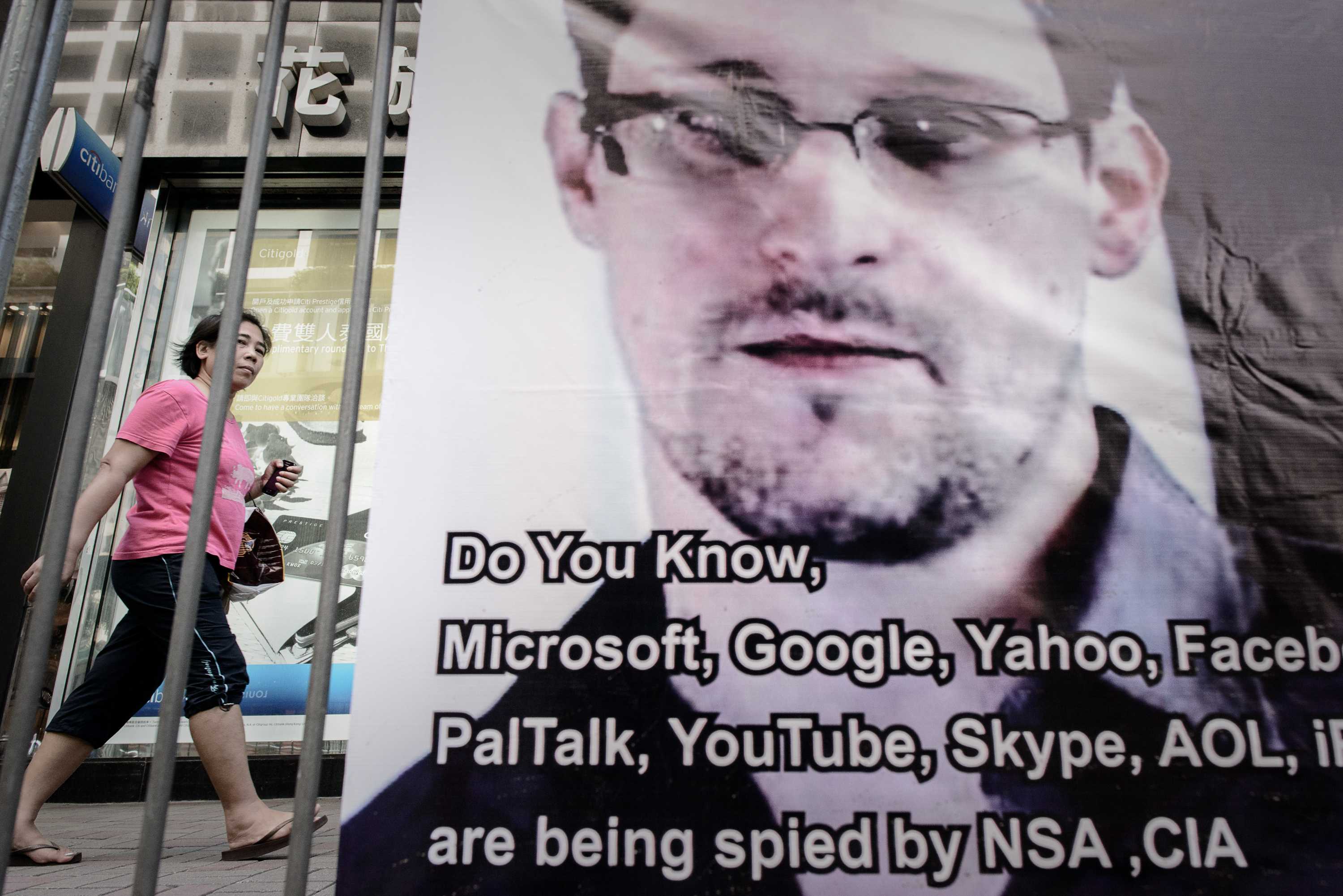
I was neither awed nor upset by Edward Snowden’s NSA leaking for a few reasons: 1) From the moment the Patriot Act passed, we had given our government a “by whatever means necessary” standard, 2) I think most Americans have embraced being watched and feel safer that way (though I don’t), 3) The technological tools of today (and certainly those of tomorrow) cannot be controlled by legislation, 4) Technology is a doubled-edged sword, and the government will be spied on as much as it spies. The power has been disseminated and it will be used, if not always well. To paraphrase Chance Gardner: “We like to watch.”

I have a great fear of imprisoning whistleblowers. We need those who will risk themselves to stop Watergates and Abu Ghraibs. And while Snowden may have stated the obvious and ironically ended up living in Russia, the ultimate surveillance state, he wasn’t wrong.

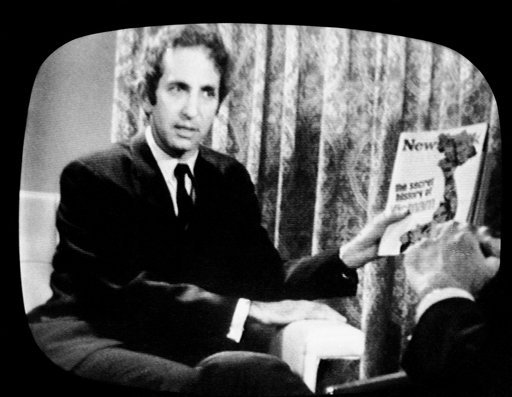
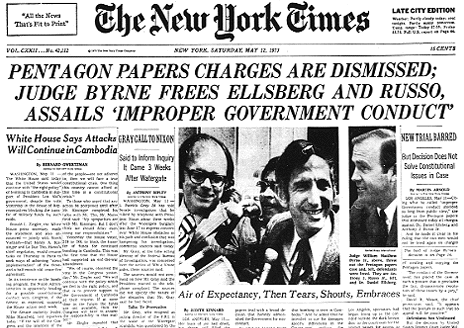
In a new Ask Me Anything at Reddit, Pentagon Papers leaker and staunch Snowden supporter Daniel Ellsberg answers an oft-asked question: Why should those with nothing to hide fear surveillance?

Question:

I’m curious how you respond when people tell you that ‘they have nothing to hide.’ How do you help them see that this isn’t a valid argument for why they shouldn’t be concerned?

Daniel Ellsberg:

Do they want to live in a democracy, with checks and balances, restraints on Executive power? (They may not feel that they care, though I would say they should; but if they do, it’s relevant to the question that follows). Do they really believe that real democracy is viable, when one branch of government, the Executive, knows or can know every detail of every private communication (or credit card transaction, or movement) of: every journalist; every source to every journalist; every member of Congress and their staffs; every judge, at every level up to the Supreme Court? Do they think that every one of these people ‘has nothing to hide,’ nothing that could be used to blackmail them or manipulate them, or neutralize their dissent to Executive policies, or influence voting behavior? Is investigative journalism, or aggressive Congressional investigation of the Executive, or court restraints on Executive practices, really possible with that amount of transparency to the Executive of their private and professional lives and associations? And without any of those checks, the kind of democracy you have is that of the German Democratic Republic in East Germany, with its Stasi (which had a miniscule fraction of the surveillance capability the NSA has now, but enough to turn a fraction of the population of East Germany into secret Stasi informants).

Might these ‘good, honest citizens’ with nothing to hide ever imagine that they might feel a challenge to be a whistleblower, or a source to a journalist or Congressperson, or engage in associations or parties critical of the current administration? As The Burglary recounts, it was enough to write a letter to a newspaper critical of the FBI to get on J. Edgar Hoover’s FBI list for potential detention or more active surveillance. And once on, hard or impossible to get off. (See ‘no fly’ lists today ).”

Tags: ,

In addition to a 1987 edition of Omni featuring Bill Gates and Dr. Timothy Leary opining on the future of technology in America, the publication also invited the economist Robert Heilbroner to speculate on the U.S. economy in 2007. He was spot-on about income inequality, the creative disruption of technology and the threats to American exceptionalism, though he whiffed on Japan’s place in today’s global marketplace. His forecast:

“There is an alarming possibility that our economy is moving in the direction of what some people call a two-tier society — a large population of people with middle-class or higher incomes and values, with a considerable bulge at the top. and a large number of people who have been economically and culturally uncoupled from the main society.

What’s most alarming is that the ladder that has connected the bottom to the top is now missing some important rungs. There were certain industries, like the steel and auto industries, that provided more or less continuous ladders of jobs from the bottom to the top. You could enter as an unskilled person, acquire new skills, and move up the ladder to secure, unionized, better-paying jobs. But now these industries have been seriously imperiled, and their place as employers has been replaced by what I call the McDonald’s employers. More people work for McDonald’s than work for U.S. Steel, but McDonald’s has no ladders. The problem is serious.

A great many economists, myself included, feel uneasy about the fact that 70 percent ol the economy does what is called service work and only 30 percent does what is called goods-related work. New technology keeps entering the economy and disrupting employment. When you look back at how the American economy developed, you see a migration off the farm into the factory and out of the factory into the office. The main push has come from technology. There has been relatively little new machinery to push people out of the office, but that’s changing now. If the computer creates jobs in the office, the service sector will increase and there will be no squeezing of employment. But if technology bumps service people out of work, I don’t know where they are going to go.

Personally. I think American optimism is in for a very severe challenge. We have always considered ourselves virtually to have a right to be number one in the world. But of course we don’t have any such right or assurance. And we have to resign ourselves to the unsettling fact that we are number two, or three, or four in many ways. In terms of health, for instance, we have fallen seriously behind, and that’s a big blow to our self-image.

In the next 20 years the government will have to take active steps in providing work and income tor the bottom one third of the population. The government grudgingly provides some sort of income, but it doesn’t provide work. And work is essential for people’s self-esteem and also for the building of many kinds of infrastructures that are needed in the country.

It is quite possible, it seems to me, that America will emerge from its present, wholly unaccustomed struggle for world position very worse off than it is today; that we will not find the right combination of talents and the right distribution of workforce in various occupations; that we will not develop the right technologies and will end up with a seriously disadvantaged economy. Not so long ago England was still regarded as one of Ihe most remarkable economies in the world, but it is now slightly less productive than Portugal. I think it is quite possible that the day of unquestioned American preeminence may be finished.

We could suddenly find that the way Americans live, their chances for life expectancy, their amenities of life are not as. good as, let’s just say, the Germans’ or the Swedes’. We might fail to produce the necessary output to bring our living standards and quality of life up to an acceptable level.

In the old days we tended to think about political possibilities in terms of left and right. Since Iran we’ve realized there is another dimension ‘up and down.’ There is potential for a great deal of political mischief and sabotage in ‘underdeveloped’ countries, and anyone who tries to think about the future has to consider that. There is going to be lots of trouble.

It is clear which countries are emerging as economic powers. It is entirely possible that Japan is going to be the England of the future — I mean the 1850’s England. Japan may be the organizer for a ‘Pacific Rim’ economy — as England was for Europe a century ago. Japan may combine its leadership and technology with the inexpensive manpower and the intelligence of the Chinese, the Malaysians, the Taiwanese, the Indians, the Koreans. It is quite possible that there will be a new world economic ’empire’ out there, which will severely challenge the formerly undisputed hegemony of the West. Meanwhile, the Soviet Union, as far as I can see, will continue to be very bureaucratic and will be very unlikely to make any economic changes.

Sooner or later this terrific debt problem has to be resolved, and there is only one possible way to resolve it, and that is to ‘forget’ it. The debt is unrepayable, and it is going to be swallowed by a number of people taking their lumps— banks, corporations, and governments. And some of the borrowers will have to swallow bitter pills. The decks have to be cleared. I suspect that under international agreements the old debts are going to be washed away, forgiven, or rephased — such wonderful jargon words!

I think everyone recognizes now that the achievement of a better world is more complicated and difficult than some of us thought 20 years ago.”

Tags:

In an addendum of sorts to his recent Wired article, “How the NSA Almost Killed the Internet,” Steven Levy, who wrote one of my favorite books ever, has published some takeaways from his recent conversations with the embattled government organization. One example about a certain freelancer:

They really hate Snowden. The NSA is clearly, madly, deeply furious at the man whose actions triggered the biggest crisis in its history. Even while contending they welcome the debate that now engages the nation, they say that they hate the way it was triggered. The NSA has an admittedly insular culture — the officials described it as almost like a family. Morale suffers when friends and neighbors think that NSA employees are sitting around reading grandma’s email. Also, the agency believes that the Snowden leaks have seriously hurt national security (though others dispute this). NSA officials are infuriated that all this havoc was caused by some random contractor. They suggest that had Snowden been familiar with the culture and the ethos of the agency, understood the level of training undergone by its employees, seen the level of regulations and oversight, he would have been less likely to abscond with all those documents. (Snowden’s interviews indicate otherwise.) Still, they are stunned that someone ‘inside the fence’ would do what Snowden did. Even if Snowden is eventually pardoned, he’d do well to steer clear of Fort Meade.”

Tags: ,

Tom Easton, American Finance Editor at the Economist, just did an Ask Me Anything at Reddit about what a big honking mess the U.S. is financially. A few exchanges follow.

___________________________

Question:

You’ve commented that the US economy is moving towards the state-run model used in China and you’ve seen the effect of that first hand. There are many people in the US who think that’s not a bad thing. Can you briefly summarize the top 3 benefits and top 3 disadvantages to this model?

Tom Easton:

The Chinese economy functions because of a vibrant semi-legal market built around companies that do not pay taxes or follow national laws. At a certain point of maturity, they come under the system and lose their vitality. This is becoming sort of true in America as well, in as much as even though companies follow laws, the laws themselves are Orwellian – all equal, but more equal for some entities then others. Ones falling into this category include the various branches of private equity companies, master limited partnerships, real estate investment trusts, and business development companies. They largely avoid paying taxes on a corporate level, and are growing components of the American economy. When they get extremely large (and perhaps they are nearing this point), pressure will lead to change (maybe). The good part of this facet of America is that allows economic dynamism. The bad part is that it is extremely unfair. That is just like what occurs in China.

___________________________

Question:

Treasury Secretary Lew–and the current Administration more broadly–recently began to promote the idea that Dodd-Frank and related Basel III capital and liquidity reforms have solved the problem of Too Big to Fail.

What are your thoughts on the metrics economists and analysts use to measure TBTF, specifically the existence of a “subsidy” in the form of cheaper debt financing as a result of implicit government support. Does the subsidy accurately measure TBTF? And if not, how can we know when we have addressed one of the core symptoms of the financial crisis?

And what do you think of the glaring holes in financial regulatory reform that the TBTF debate seems to ignore, i.e., securities financing transactions, money market funds, and other shadow banking entities.

Tom Easton:

I think the notion we have contained too big to fail is ludicrous. In many ways, during the crisis we merely shifted risks from private institutions to the government, and governments can still fail. Student loans, medicaid and social security are all structurally unsound, as are numerous large public pension plans. Nobody understands Dodd Frank, and I say this having read it, heard incoherent blather from its named authors, and spoken to numerous lawyers making a fortune from its nuances. Worse, perhaps the one uncontroversial ingredient of the financial crisis was its tie to improperly backed housing loans, and there is every indication the administration is pushing in this direction once again. Risk can not be eliminated and to suggest otherwise is to deceive. At best, it can be channeled and made more transparent. Consider one key plank of Dodd Frank: the stress test by the Fed. No one really understands what is in the test, and to the extent there is opacity, good credit will be curtailed and credit broadly will be provided by other sorts of entities that aren’t exposed to the same bureaucracy. There are already signs that it will come through companies which themselves are backed by bank, merely making the system more convoluted. The end of this questions suggests the author, bae8, clearly understands the limitations of the rules. We may have gotten the worst of both worlds – a “safety” net full of holes that nonetheless asphyxiates virtuous economic activity.

___________________________

Question:

Do you think there will be any economic repercussions down the road due to the late start young adults are having in terms of jobs, starting careers, settling down etc?

Tom Easton:

At the Economist we have meetings in the editors office. Ideas are debated and often research cited. Sometimes I feel that what I hear is exactly contrary to what I have experienced. This is one of those areas. In a meeting I attended, one of our economic writers cited a piece that said the damage caused by a delayed or adverse start to a career will cause profound long-term damage to a career, and the reverse is true as well – there are golden moments to begin work. I have certainly seem anecdotal evidence of the latter – business school graduates from the late 1940s controlled vast swathes of the American economy. That said, I found that many of the most talented, driven and open people I have encountered were hit hard early on by adverse economic circumstances. When I began my career, the most extraordinary people I encountered had lived through bitter times during the Depression. It is no secret that Apple and Microsoft were founded in the 1970s. I think the key is how miserable the person is about their late start. The more miserable they are, the happier they will be.

___________________________

Question:

What do you think is the biggest danger to the world economy that isn’t talked about in the media or intellectual circles today?

Tom Easton:

The single biggest danger is that there is no consensus, and perhaps no understanding, on underpins a viable economic system. In America, I think we are at a point where there is no agreement – and again maybe no understanding – of what defines the structure of a company, the role of the state, illegal activity, and even ownership. People often refer to the “american system” but whatever this may be is currently in great flux. That is a huge challenge to the rule of law – meaning clear demarcations of what is right and just, and what constitutes appropriate activity. The result is that there a movement toward cronyism – success is tied to who you know and the friends that can be purchased. The good news is that I believe many in America are aware of this, and it is not illegal to discuss it (untrue in much of the world) and consequently, I anticipate the emergence of better ideas and conditions.•

Tags:

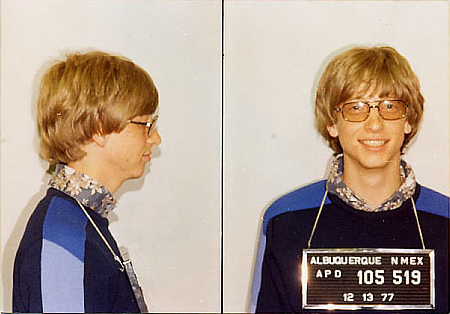
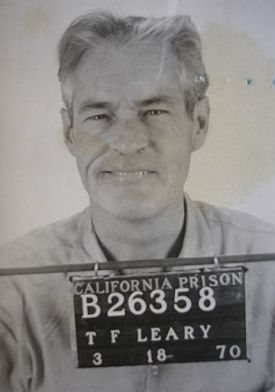
In 1987, two software moguls, Bill Gates and Dr. Timothy Leary, were asked by Omni to make predictions about life 20 years in the future. Gates was more accurate in his prognostications, though Leary provided some gems like this one: “What will you be? A performer. Everyone will be performing.”

________________________

Bill Gates, Chairman of the Board, Microsoft Corporation:

The processing of digital information is improving very quickly. In ten years you’ll have 30 to 40 times as much computational power, and you’ll be able to manipulate the images and sounds that you now receive just passively from TV — you’ll insert yourself into a game or even change the outcome according to your wishes. So in 20 years your ability to get information will be expanded exponentially.

Take one example; You’re sitting at home. You’ll have a variety of image libraries that will contain, say, all the world’s best art. You’ll also have very cheap, flat panel-display devices throughout your house that will provide resolution so good that viewing a projection will be like looking at the original oil. painting. It will be that realistic.

In 20 years the Information Age will be here, absolutely. The dream of having the world database at your fingertips will have become a reality. You’ll even be able to call up a video show and place yourself in it. Today, if you want to create an image on a screen — a beach with the sun and waves— you’ve got to take a picture of it. But in 20 years you’ll literally construct your own images and scenes. You will have stored very high-level representations of what the sun looks like or how the wind blows. If you want a certain movie star to be sitting on a beach, kind of being lazy, believe me, you’ll be able to do that. People are already doing these things.

Also, we will have serious voice recognition. I expect to wake up and say, “Show me some nice Da Vinci stuff,” and my ceiling, a high-resolution display, will show me what I want to see — or call up any sort of music or video. The world will be online, and we’ll be able to simulate just about anything. Let’s say you want to go out to a racetrack. When you wake up you’ll say, “Hey, rent me one of those formula cars in Daytona,” and with some local controls, a little steering wheel you pull out of your drawer, you’ll be able to get the image and feel like you’re driving the car.

There’s a scary question to all this: How necessary will it be to go to real places or do real things? I mean, in 20 years we will synthesize reality. We’ll do it super-realistically and in real time. The machine will check its database and think of some stories you might tell, songs you might sing, jokes you might not have heard before. Today we simply synthesize flight simulation.

A lot of things are going to vanish from our lives. There will be a machine that keys off of physiological traits, whether it’s voiceprint or fingerprint; so in 2007 Mick Jagger will be onstage, and when Mick feels heat, you’ll feel heat. If a spray of water hits Tina on the back, you’ll feel that, too. I hope passive entertainment will disappear. People want to get involved. It will really start to change the quality of entertainment because it will be so individualized. If you like Bill Cosby, then there will be a digital description of Cosby, his mannerisms and appearance, and you will build your own show from that.

People will like the idea that the machine really knows them and that the machine can create experiences formed around the events in their lives to fulfill their particular needs and interests. But there’s a danger, too. It will be easy to feel worthless or overwhelmed by the amount of data. So what we’ll have to do is make sure the machine can tailor the data to the individual.

Probably all this progress will be pretty disruptive stuff. We’ll really find out what the human brain can do, but we’ll have serious problems about the purpose of it all. We’re going to find out how curious we are and how-much stimulation we can take. There have been experiments in which a monkey can choose to ingest cocaine and the monkey keeps on pushing that button until he dies. Well, we are going to create some pretty intense experiences through synthesized video-audio. Do you think you’ll reach a point of satisfaction when you no longer have to try something new or make something better? Life is really going to change; your ability to access satisfying experiences will be so large.

Take the change in movies in the last few years. Just a few years ago you had to find out where the movie was playing, then go to a certain neighborhood and stand in line to see the movie. Now you can go two blocks and find 10,000 titles. You feel inadequate. It’s going to be intimidating.

Twenty years ago I was ten years old. We already had color TV. I didn’t have theories about what the world might be like. But in the next 20 years you won’t be able to extrapolate the rate of progress from any previous pattern or curve because the new chips, these local intelligences that can process information, will cause a warp in what it’s possible to do. The leap will be unique. I can’t think of any equivalent phenomenon in history.•

________________________

Timothy Leary, President, Futique Software Company:

By 2007 the problem of scarcity will be solved. Because most work will be done by robots and computers, you won’t have to work. Material possessions won’t mean as much to us as they do now, If there are nine Porsches in your garage. you’re going to say, “Take them away.” We’ve done that with wheat and grain, and we can do it with other things if we put our minds to it.

The way we define human beings will change. You won’t be a serf, a slave, or a worker. What will you be? A performer. Everyone will be performing. Passive listening, passive observing, passive watching will disappear. Of course, Big Brother, both of the Reagan and Ihe Gorbachev type, want us to be passive. They don’t want us to think for ourselves.

In 2007 you’ll be living in an information society in which information will be what money and machinery were in the Industrial Age. Everyone is going to be a psychologist, computer whiz, philosopher. Mind play, mind performance, psychological skill are going to be the equivalent of land, money, and power in the earlier ages.

Now to the nuts and bolts of this stuff: Every kid will learn how to communicate at a very young age; every kid will have his own computer — like a pair of sneakers, a pair of Nikes. No one will steal a computer, because you’ll throw them away. And everyone will learn how to chart his thoughts and his mental performance — like a baseball player’s stats. Even kids will plot their thoughts like they plot their batting average. The name of our species is Homo sapiens. That means we’re the organism that thinks, and our species finally will be proficient in thinking.

The biggest effect will be on blacks and members of other minority groups in this country. In the Information Age, to keep any poor kid from having a computer would be like keeping him from having food, medicine, shelter, or clothing now.

Within 20 years we’ll have scrapped the current system of partisan politics. Partisan politics belongs back in an age of feudalism, or at most the Industrial Age. It is insane to run a highly complicated, technological, pluralistic society like America when you have in the cabin of the spaceship a Democratic and a Republican candidate kneeing and gouging and beating up each other to see who’s going to be president for four years. In an electronic society an intelligent person would no more send Tip O’Neil to Washington to make his laws than you’d send Tip O’Neill to the wine shop to pick out a good wine for you.

Everyone is going to be responsible for government. It will be done by televoting, perhaps every Sunday between, say, twelve and one. But we’ll be voting on major issues — not parties, people, or a glamorous candidate who will play on our superstitions and emotions. You’ll educate yourself on the issues by using your own thought-processing appliances, the new computers. So you’ll be continually teaching yourself, continuously learning.

Right now there is a great deal of concern about the drug problem. In 20 years there will be hundreds of neurotransmitters that will allow you to boot up and activate your brain and change mental performance. There are going to be what I call brain radios — hearing aids you put in your ear— that will pick up and communicate with the electricity in your brain. You will be able to tune in any brain aspect, like sex, that you want. You will speed up or slow down your thinking. Anything you can do with chemicals you can do with brain waves, and they are so much healthier.

Drugs will be old-fashioned. No one will be addicted because you can just turn on the ultimate orgasm and keep it going for an hour. But how long are you going to do that? You’ll get bored. You’re going to want to turn it down or off. The criminality of drugs is what is causing the so-called drug crisis, but if you legalize a brain radio — and you’re going to have to — everyone will have the ability to dial into any emotional, mental, or sensual experience. We will use these radios to think more clearly and, above all, to communicate more clearly. The key to the twenty-first century will be five words: “think for yourself,” and “question authority.”

People will become more intelligent. I am really bored with the level of intelligence on this planet. There’s no one to talk to, and there is so much superstition. I am just waiting for people to smarten up. In 20 years I’ll have more fun, and I’ll have more people to talk to. People will be teaching me, and life is going to be more exciting. Twenty years ago — 1967 — the summer of love was just beginning, and I was busy performing the rituals that had to be performed then. The computers were IBM business machines that were used to de- personalize and control us. I frankly was too dumb to look ahead.•
Tags: ,

From Hope Landsem’s WSJ review of David Kilcullen’s new book about the future of warfare, a passage about the heat of the battle potentially shifting to areas of population density:

Out of the Mountains: The Coming Age of the Urban Guerrilla is his attempt at a study of future threats. The author says he was alerted by ‘a sense of dissonance about our reliance on ‘pure’ or binary theories that are framed around the nature of a specific threat group.’ Mr. Kilcullen worries that previous counterinsurgency theories, his own included, don’t adequately address current or potential problems, including global trends like population growth, urbanization, and the ready dissemination of military expertise and technology such as cellphones and drones.

These trends, Mr. Kilcullen says, will have a profound effect on the future of warfare. Take Libya, where anti-Gadhafi rebels in 2011 were able to use their technical expertise to modify weapons in factories near Benghazi—despite their lack of prior military experience. In Syria, urban areas became breeding grounds for dissatisfaction following years of diminishing water supplies. Social networks and social media helped fuel Syria’s 2011 uprising, which subsequently devolved into a sectarian civil war centered around cities.

As these examples show, the next global conflicts are more likely to be fought in tightly packed urban areas rather than in mountain environs. Coastal regions present extremely likely future threats, Mr. Kilcullen says—fitting, given that coastal regions contain more than 80% of the world’s cities.”

Tags: ,

From Amy Chozick’s New York Times Magazine interview with Jared Diamond in which the scientist defends his recent book, The World Until Yesterday, from criticism:

NYT:

On the other hand, the book has been criticized for saying traditional societies are very violent.

Jared Diamond:

Some people take a view of traditional society as being peaceful and gentle. But the proportional rate of violent death is much higher in traditional societies than in state-level societies, where governments assert a monopoly on force. During World War II, until Aug. 14, 1945, American soldiers who killed Japanese got medals. On Aug. 16, American soldiers who killed Japanese were guilty of murder. A state can end war, but a traditional society cannot.

NYT:

People have called the book racist, saying it suggests third-world poverty is caused by environmental factors instead of imperialism and conquests.

Jared Diamond:

It’s clearly nonsense. It’s not as if people in certain parts of the world were rich until Europeans came along and they suddenly became poor. Before that, there were big differences in technology, military power and the development of centralized government around the world. That’s a fact.”

Tags: ,

P.W. Singer, author of Wired for War, has a new book about cybersecurity and sat for an interview on the topic with Alyson Sheppard of Popular Mechanics. An excerpt:

Question:

How are countries coming to terms with the ethics of using digital weapons in a military context?

P.W. Singer:

It’s a new realm of international competition and conflict and it’s very much on its way to becoming an arms race. I mean the worst aspect of arms races in the past, where countries spend a lot of money competing with each other but end up all less secure. We explore in the book the role of international negotiations and the potential of new laws and arms control. It’s going to be really difficult, but that doesn’t mean there’s not value in trying.

You also have this issue to be worked out on the national level. You have more than 100 countries building cyber military command equivalents. The civilian side needs to better understand the ramifications. This is most definitely a concern in both the U.S. and China, particularly right now when there’s a buildup of capabilities and military doctrines that are not well understood by the civilian leaders.

It’s not just our role as citizens of these countries and netizens of the Internet itself, but it’s all affecting this online world that we depend on. Cyberwar is not something that will take place in a far-off realm. It’s something that will happen on the Internet that we all use. It’s not just that we might be targeted—it’s that it will go through us.”

Tags: ,

Los Angeles Times foreign correspondent Barbara Demick just did an Ask Me Anything ay Reddit about life inside Dennis Rodman’s go-to spring break retreat, North Korea. A few exchanges follow.

___________________________

Question:

What’s with the sensationalism by the media when reporting on the country?

Barbara Demick:

People are inclined to believe anything about North Korea, the more bizarre the better. Executions using packs of hungry dogs, Christians run over by steamrollers, etc. There was a story going around once that when somebody was caught stealing food, they were burned to death and their family required to light the fire. I told a North Korean that story once, and he laughed- pointing out correctly that firewood was way to scarce to kill anybody that way. Unfortunately, the outlandish stories take away from the real tragedy– which is that millions of North Koreans perish slowly, painfully as a result of chronic malnutrition.

___________________________

Question:

Do you believe the dog story?

Barbara Demick:

That Jang Sung Taek was eaten alive by a pack of hungry dogs? No, I don’t believe the story. But probably many North Koreans will and that will only enhance their fear of the regime. I think the North Korean government sometimes deliberately spreads urban legend to keep people in line.

___________________________

Question:

Do the people of North Korea ever think about revolting, or do they think the country is relatively “normal” compared to the rest of the world.

Barbara Demick:

One of the ways the North Korea regime has kept power is by keeping its people ignorant of the living standards in the outside world. That’s the underlying lie that supports the regime– not that their country is “normal” but that they are better off. The title of my book, Nothing to Envy, is taken from a popular children’s song “We have nothing to envy in the world” about how wonderful life is inside North Korea. Here’s a Youtube link, sorry no English subtitles.

___________________________

Question:

What do you believe are Kim Jong Un’s top three international relations priorities today (overt or covert)?

Barbara Demick:

Kim Jong Un wants North Korea to be accepted as a nuclear power. Like his father, he has no intention of giving up nuclear weapons, which he believes are the only thing that prevent him from being unceremoniously ousted like Saddam Hussein or Gaddafi. I think he also wants foreign investment and the lifting of international sanctions in order to build the economy, but not if it means giving up nuclear weapons. North Korea introduced a new slogan last year called “Byungjin,” meaning simultaneous, the idea being that they develop the economy and the nuclear program at the same time.

___________________________

Question:

Do you think Dennis Rodman’s “basketball diplomacy” will have any significance in US-NK relationship?

Barbara Demick:

I always think it’s good when Americans visit North Korea– the more engagement the better as far as I’m concerned. Rodman should have been more thoughtful about how he behaved and what he said. He squandered a great opportunity. But I hope he goes again and takes his mission more seriously.•

Tags: , , ,

I think you know my feelings about JFK conspiracists, but Mark Lane, author of 1966’s Rush to Judgement, a broadside directed at the Warren Commission, has lived a colorful existence even beyond that explosive chapter in American history. A lawyer for anti-war factions and civil-rights groups in the 1960s, Lane later became a legal representative for Jim Jones and his Jonestown settlement in Guyana, which in 1978 descended into madness and mass death. He was on the scene when the cult members prepared to follow their mad leader’s orders–to drink his Kool-Aid–and survived by escaping and hiding somewhere safer–the jungle.

Here’s Lane, in 1966, discussing the Warren Commission with William F. Buckley.

Tags: , ,

The opening of “The Robots Are Coming,” Gavin Kelly’s smart and sober-minded Guardian piece about the rise of the machines and what that will mean for job markets in automated societies:

“Whether it’s our humdrum reliance on supermarket self-service tills, Siri on our iPhones, the emergence of the drone as a weapon of choice or the impending arrival of the driverless car, intelligent machines are woven into our lives as never before.  

It’s increasingly common, a cliche even, for us to read about the inexorable rise of the robot as the fundamental shift in advanced economies that will transform the nature of work and opportunity within society. The robot is supposedly the spectre threatening the economic security not just of the working poor but also the middle class across mature societies. ‘Be afraid’ is the message: the march of the machine is eating into our jobs, pay rises and children’s prospects. And, according to many experts, we haven’t seen anything yet. 

This is because the power of intelligent machines is growing as their cost collapses. They are doing things reliably now that would have sounded implausible only a few years ago. By the end of the decade, Nissan pledges the driverless car, Amazon promises that electric drones will deliver us packages, Rolls-Royce says that unmanned robo-ships will sail our seas. The expected use of machines for everyday purposes is already giving rise to angst about the nascent problem of ‘robot smog‘ as other people’s machines invade ever more aspects of our personal space.

Tags: , , ,

I recall during the greatest heat of the war in Iraq seeing TV interviews with one parent after another of a dead American soldier, saying that they didn’t want the U.S. to pull out of Iraq because that meant their child would have died for no reason. It would have been a cruel thing to tell them that their loved one was lost for no reason regardless, that a surge wasn’t going to mean anything in Iraq in the long run, that it was just meant to help the White House save face. Perhaps because more weren’t willing to say the truth aloud–or maybe because not too many would listen anyhow–the same thing kept happening to other soldiers and their parents. And, of course, we hardly ever heard from the family of the perhaps 100,000 Iraqi dead. 

From Tell Me Again, Why Did My Friends Die In Iraq?a pained, exasperated Business Insider piece by USMC veteran Paul Szoldra:

“The invasion of Iraq was predicated on the notion of ridding the Hussein regime of ‘weapons of mass destruction’ of course. But in 2004, the game was changed to counterinsurgency — ridding the world of “the terrorists.”

And we sure were successful. Until the U.S. pulled out, American soldiers and Marines certainly killed their fair share of terrorists, insurgents, bad guys, and the like. They in turn, killed plenty of us.

Yet for all the blood spilled — of 4,488 military men and women to be precise — there’s no good reason why.

The proof of how pointless the entire endeavour was — if you even needed more — came Friday morning, with a report from Liz Sly in the Washington Post.

‘At the moment, there is no presence of the Iraqi state in Fallujah,’ a local journalist who asked not to be named because he fears for his safety told Sly. ‘The police and the army have abandoned the city, al-Qaeda has taken down all the Iraqi flags and burned them, and it has raised its own flag on all the buildings.’

Fallujah has fallen, and the same scenario is about to happen in the even-larger city of Ramadi.

It shouldn’t be such a surprise the place my friends fought for is falling back into civil war. I shouldn’t be surprised when the same thing happens in Afghanistan. But it still is, because I don’t want it to happen.”

Tags: , ,

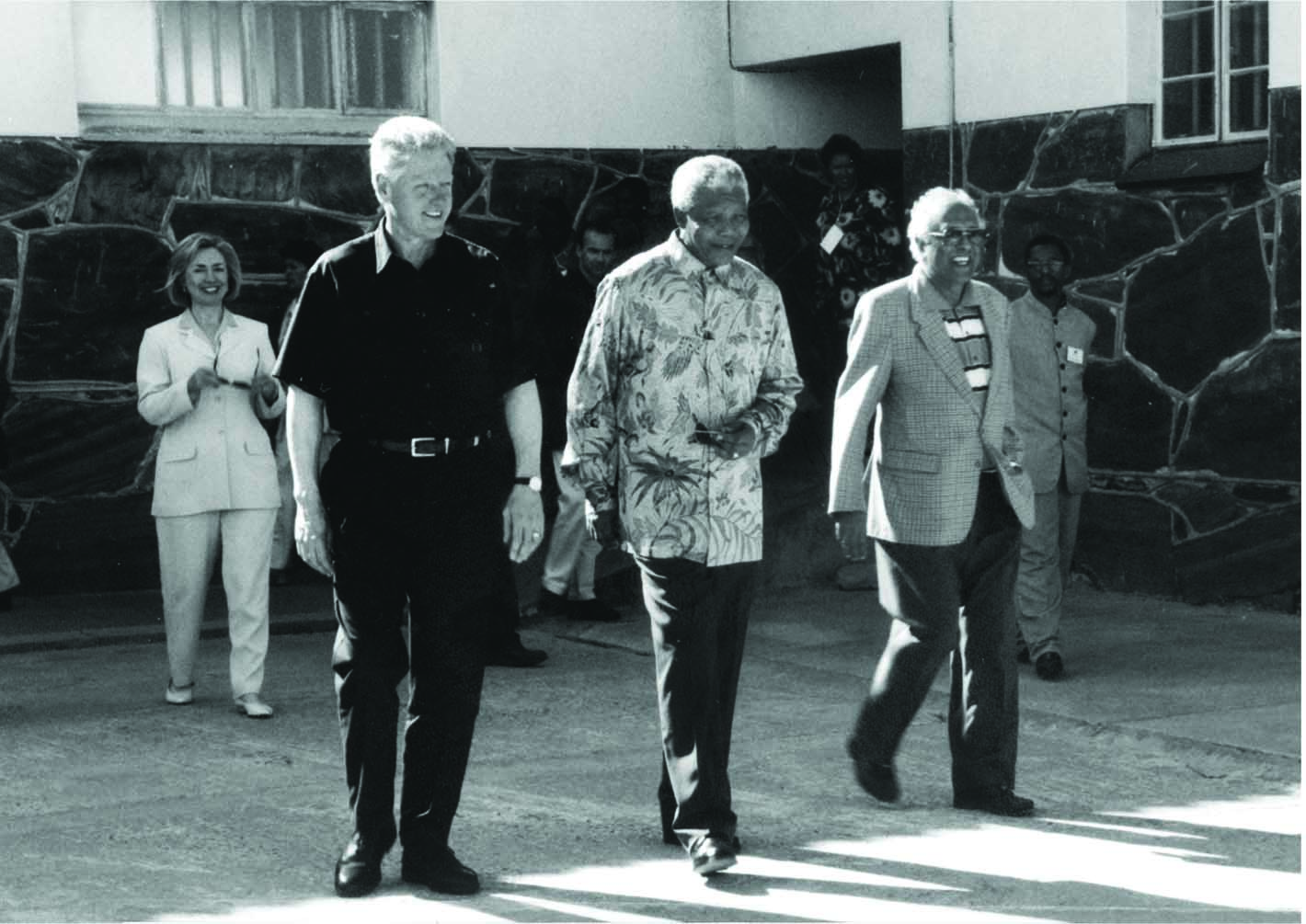
From Scott Feinberg’s Hollywood Reporter Q&A with Ahmed Kathrada, Robben Island prisonmate of Nelson Mandela for 26 years and friend and fellow anti-Apartheid activist for decades longer:

Question:

Wasn’t it when the Indian Congress and the African National Congress first started interacting that you first met Nelson Mandela?

Ahmed Kathrada:

Yes. I was already in the Indian Youth Congress at the time. I met him through his university colleagues, who were Indians whom I knew. He used to frequent their place and that is where I met him in 1946, 68 years ago.

Question:

What were your first impressions of him?

Ahmed Kathrada:

My abiding impression of him, which lasted all my life, was his ability to relate to me as an equal, so much so that the questions he asked me made me feel so comfortable that I could go back to school and boast to my friends that I met a university student who treated me the way he did. That is how I remembered him all my life. He had an ability to treat everybody as equals.

Question:

Is it true, though, that when you two first met, you initially sort of challenged him a little bit? You wanted to debate him, didn’t you?

Ahmed Kathrada:

Yes. That was the one and the only argument we had. I’m 11 years his junior and it was on a question of a strike that was jointly organized by the Indian Congress, the Communist Party and the ANC. He belonged to the ANC Youth League, and the Youth League was not racist but it was against cooperation with the Communist Party or with other liberation organizations. We met on a street and got into an argument where foolishly, at my young age, I challenged him to a debate, and that led to a little argument. But that was all history and we teased each other all the years on Robben Island because the strike which they opposed was successful, but unfortunately eighty people were killed in that strike. And, of course, that led to a closer relationship between Mr. Mandela, the ANC Youth League and the other organizations. That was the genesis, I would say, of the Youth League changing its views from non-cooperation with other organizations to one of cooperation.”

Tags: ,

Colonel (Retired) Peter Mansoor, who served under Colonel David Petraeus during the surge in Iraq and has been an outspoken critic of Donald Rumsfeld, just did an Ask Me Anything at Reddit. Two exchanges below, one about history and one the future.

___________________

Question:

What would you say are the top 3 most important battles in the known history of man?

Colonel Mansoor:

Tough question, since there are at least a dozen that significantly impacted the course of history. But here are three:

  • Salamis (480 BC) – The Athenian navy defeats the Persians at sea, turning back the Persian invasion of Western Europe. What would our world look like today without Greek civilization?
  • Saratoga (1777) – The American victory over the British brought France and Spain into the war against Britain, and globalized what had been a regional conflict. The world today would look a lot different had the British defeated the colonists.
  • Moscow (1941) – The Red Army turns back Hitler’s invasion of the Soviet Union and turns WWII into a two front struggle in Europe that Germany had no hope of winning from that point onward. The world today would be a dark place indeed had the Wehrmacht succeeded in defeating the Soviet Union.

___________________

Question:

What do you think the next big evolution in warfare will be (apart from drones)?

Colonel Mansoor:

Drones are actually part of an ongoing trend that will impact war dramatically in the future – robotics. We will witness that evolution on the ground as well as in the air. If you look at drones, as advanced as they might seem, we are actually at the point where nascent air forces were in 1916 during WWI. Aircraft were first used for reconnaissance, then someone figured out how to drop bombs from them, then fighter aircraft were developed to attain air superiority, then aircraft were used for transport and strategic bombing. The same evolution will occur with drones, and we are at the leading edge of that evolution.

Robotic ground vehicles will also be developed in the future, as well as exo-skeletal suits that will dramatically improve the capabilities of infantrymen. It sounds like sci-fi, but it will happen.•

Tags:

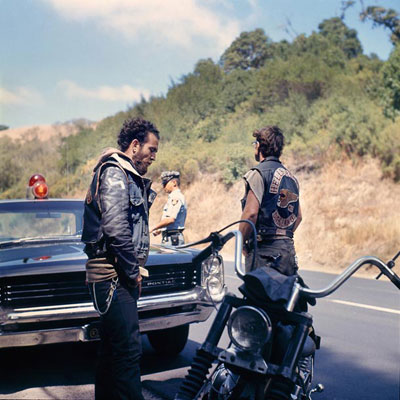
Ambitious or just myopic Attorney Generals or District Attorneys sometimes shine too bright a light on a scary but small faction of criminals, forcing the public attention in the wrong direction. Such was the case in California in 1966 when a shocking report of a crime made the Hell’s Angels public enemy no. 1. Hunter S. Thompson elucidated the disproportionate attention the motorcycle gang was receiving in an article that year in the Nation, before feeding the myth himself with a book about the unholy rollers. An excerpt:

“After two weeks of intensive dealings with the Hell’s Angels phenomenon, both in print and in person, I’m convinced the net result of the general howl and publicity has been to obscure and avoid the real issues by invoking a savage conspiracy of bogeymen and conning the public into thinking all will be ‘business as usual’ once this fearsome snake is scotched, as it surely will be by hard and ready minions of the Establishment.

Meanwhile, according to Attorney General Thomas C. Lynch’s own figures, California’s true crime picture makes the Hell’s Angels look like a gang of petty jack rollers. The police count 463 Hell’s Angels: 205 around L.A. and 233 in the San Francisco-Oakland area. I don’t know about L.A. but the real figures for the Bay Area are thirty or so in Oakland and exactly eleven–with one facing expulsion–in San Francisco. This disparity makes it hard to accept other police statistics. The dubious package also shows convictions on 1,023 misdemeanor counts and 151 felonies–primarily vehicle theft, burglary and assault. This is for all years and all alleged members.

California’s overall figures for 1963 list 1,116 homicides, 12,448 aggravated assaults, 6,257 sex offenses, and 24,532 burglaries. In 1962, the state listed 4,121 traffic deaths, up from 3,839 in 1961. Drug arrest figures for 1964 showed a 101 percent increase in juvenile marijuana arrests over 1963, and a recent back-page story in the San Francisco Examiner said, ‘The venereal disease rate among [the city’s] teen-agers from 15-19 has more than doubled in the past four years.’ Even allowing for the annual population jump, juvenile arrests in all categories are rising by 10 per cent or more each year.

Against this background, would it make any difference to the safety and peace of mind of the average Californian if every motorcycle outlaw in the state (all 901, according to the state) were garroted within twenty-four hours? This is not to say that a group like the Hell’s Angels has no meaning. The generally bizarre flavor of their offenses and their insistence on identifying themselves make good copy, but usually overwhelm–in print, at least–the unnerving truth that they represent, in colorful microcosm, what is quietly and anonymously growing all around us every day of the week.

‘We’re bastards to the world and they’re bastards to us,’ one of the Oakland Angels told a Newsweek reporter. ‘When you walk into a place where people can see you, you want to look as repulsive and repugnant as possible. We are complete social outcasts–outsiders against society.’

A lot of this is a pose, but anyone who believes that’s all it is has been on thin ice since the death of Jay Gatsby. The vast majority of motorcycle outlaws are uneducated, unskilled men between 20 and 30, and most have no credentials except a police record. So at the root of their sad stance is a lot more than a wistful yearning for acceptance in a world they never made; their real motivation is an instinctive certainty as to what the score really is. They are out of the ball game and they know it–and that is their meaning; for unlike most losers in today’s society, the Hell’s Angels not only know but spitefully proclaim exactly where they stand.”

_________________________________

A year later, Sonny Barger terrorizes Thompson:

Tags: ,

Obamacare is far from perfect, but for tens of millions of Americans it’s the difference between life and death. I can’t believe how often that point gets lost in the discussion. As if we aren’t all unique people who mean something special to those close to us. People with health insurance don’t face death panels, but people without it potentially face them every day.

I think there are a few economists who read the blog, and it would be appreciated if you could refer me to any studies of what tens of millions of newly insured people will mean to the economy. I would think it would be a boon, but I’d like to read what non-demagogue professionals have to say.

From a new Michael Moore op-ed in the New York Times that looks at both sides of the Affordable Care Act:

“TODAY marks the beginning of health care coverage under the Affordable Care Act’s new insurance exchanges, for which two million Americans have signed up. Now that the individual mandate is officially here, let me begin with an admission: Obamacare is awful.

That is the dirty little secret many liberals have avoided saying out loud for fear of aiding the president’s enemies, at a time when the ideal of universal health care needed all the support it could get. Unfortunately, this meant that instead of blaming companies like Novartis, which charges leukemia patients $90,000 annually for the drug Gleevec, or health insurance chief executives like Stephen Hemsley of UnitedHealth Group, who made nearly $102 million in 2009, for the sky-high price of American health care, the president’s Democratic supporters bought into the myth that it was all those people going to get free colonoscopies and chemotherapy for the fun of it. …

And yet — I would be remiss if I didn’t say this — Obamacare is a godsend. My friend Donna Smith, who was forced to move into her daughter’s spare room at age 52 because health problems bankrupted her and her husband, Larry, now has cancer again. As she undergoes treatment, at least she won’t be in terror of losing coverage and becoming uninsurable. Under Obamacare, her premium has been cut in half, to $456 per month.

Let’s not take a victory lap yet, but build on what there is to get what we deserve: universal quality health care.”

Tags: ,

« Older entries § Newer entries »