Politics

You are currently browsing the archive for the Politics category.

Here’s an odd pairing: Timothy Leary, famous salesman, just two years before his death, interviewed in 1994 by Greg Kinnear on Later. The LSD guru and software developer discusses once sharing a cell block with Charles Manson, whom he describes as a “right-wing, Bible-spouting militarist.” He also gives partial credit to Marshall McLuhan for the famous phrase: “Tune in, turn on, drop out.” Begins at 11:45.

Tags: , , ,

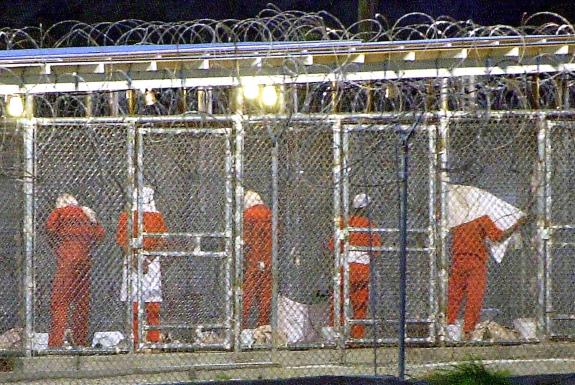
There are few things more un-American than Guantanamo Bay, which isn’t to say that all of the prison’s detainees are innocent victims. But if you have enough evidence to hold them, you have to charge them. Of course, no one wants to be the person to free Gitmo inmates and have one or more of them participate in a terrorist act. That would never be forgotten. But we can’t go on this way. It’s bad all around. 

The opening of an article by Carol Rosenberg in the Miami Herald about the elaborate post-Guantanamo plans drawn up by a quintet of prisoners:

“No, it’s not a kibbutz. But the crude jailhouse plans for a ‘Milk & Honey’ farm business in Yemen are suggestive of one.

Five war-on-terror captives locked up inside Guantánamo prison have designed a self-sufficient agricultural business west of Yemen’s capital, Sana’a. They envision a community of 200 families, 100 farmhouses, 10 cows, 500 chickens, 50 sheep, a honey bee subsidiary and computer system powered by windmills.

The would-be entrepreneurs drew up the 75-page prospectus before the prison hunger strike. But it recently emerged from U.S. military censorship at an opportune time — as the Obama administration searches for ways to safely send some prisoners home to Yemen and close the Pentagon’s costly prison camps in Cuba.

And, while the quirky business model makes no mention of the potent al-Qaida franchise that U.S. officials fear will attract freed Yemeni prisoners, it does illustrate that some of the 155 captives have a vision of life after a dozen years in American detention without charge or trial.”

Tags:

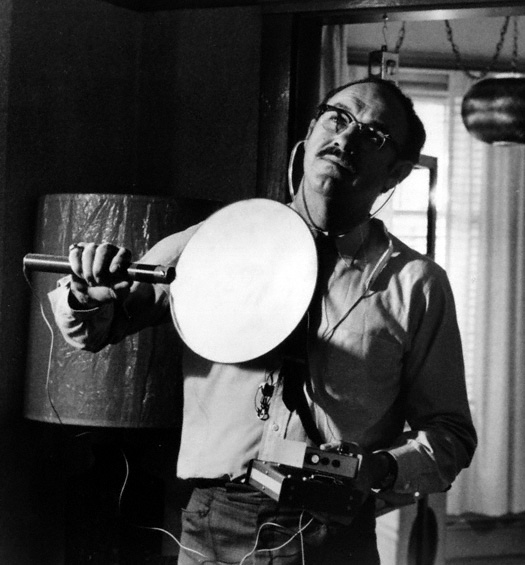
I guess I’m remarkably jaded because from the minute the Patriot Act became law, I assumed there would be large-scale surveillance by our government. What’s more, most Americans probably wanted it and likely still do.

Wikipedia’s Jimmy Wales commenting on NSA surveillance in an interview with Carole Cadwalladr in the Guardian:

Carole Cadwalladr:

You’ve spoken out publicly about the NSA revelations, but how surprised were you when that first headline hit? Or did you suspect something like that was going on?

Jimmy Wales:

I was surprised by the scale, by some of the revelations. I was surprised – as Google was – that they were tapping into lines inside, between the data centres of Google. That’s pretty amazing. And hacking Angela Merkel’s phone – that was a surprise. But I think we haven’t yet had the revelation that will really set people off.

Carole Cadwalladr:

You’ve said that you’re going to start encrypting communications on Wikipedia as a result…

Jimmy Wales:

We have done. It’s not completely finished yet but the only thing that GCHQ, hopefully, can see is that you’re looking at Wikipedia. They can’t see which article you’re reading. It’s not the government’s business to know what everybody is reading.”

Tags: ,

Few things fascinate me as much as the Olympics, for the actual sports, sure, but also for the politics and sociology that permeate the Games, the way countries use the event to attempt to remake themselves, the things that are said through ceremony rather than words. And, of course, of equal interest is what’s communicated despite the best efforts of countries to stifle them (e.g., Jesse Owens leaving Hitler in the dust in 1936).

From “Why Sochi?” Christian Caryl’s New York Review of Books piece, a brief explanation of why oh why such an unlikely locale would play host to the world:

“In all the comment about this month’s Sochi Olympics, there is bewilderment above all about Sochi itself: Why on earth would the Kremlin decide to host the Games in an underdeveloped place where terrorists lurk nearby—a place that a front-page New York Times story this week describes as ‘the edge of a war zone’?

The answer is not as complicated as it may seem. Vladimir Putin comes from St. Petersburg. He rules from Moscow. But it is the North Caucasus that launched him on his path to the summit of Russian power. Anyone who wants to understand the many controversies now roiling around Sochi must start with this fundamental political fact.

Russia launched its Olympic bid in 2006, a moment when Putin was basking in his hard-won status as the leader who had finally vanquished the long-running rebellion in Chechnya. Putin did not choose Sochi by chance. He believed that presiding over an Olympic miracle in the foothills of the Caucasus Mountains, not far from places that had been battlefields a few years before, would cement his triumph over historical enemies.”

_____________________________________________

Japan announces its postwar recovery at the 1964 Games:

Tags:

Because I foolishly continue to live in NYC, I have Seasonal Affective Disorder. I really, really need Spring Training to start. Until then, some Joe Garagiola.

_____________________


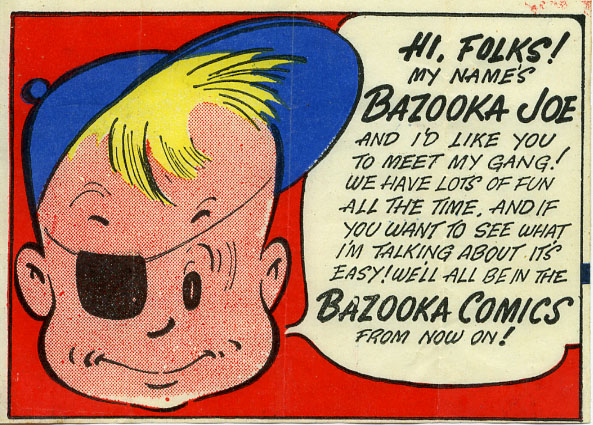
Bazooka Joe: Eye lost to knife fight on pier.

In 1975, Joe Garagiola hosted a remarkably stupid and wonderful bubble-gum blowing competition among baseball players, which was sponsored by Bazooka, a brand of gum favored by hoboes during World War II. One entrant was Philadelphia catcher Tim McCarver, whose head was the size of a medicine ball. The moment the contest ended, the players went in search of the nastiest groupies they could find.

_____________________

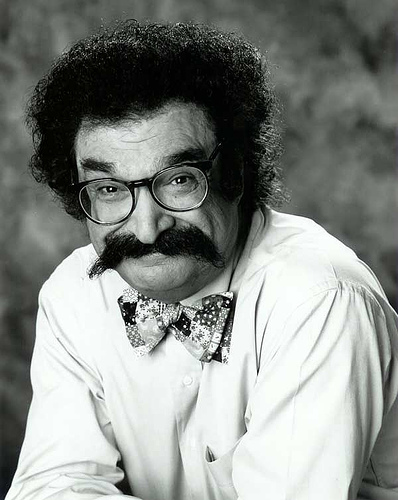
I previously posted a brief documentary about Morganna the Kissing Bandit. Here’s her 1976 appearance on To Tell the Truth. Fittingly, the host was a male sports figure, Joe Garagiola. On the panel was film critic Gene Shalit, who was mediocre but possessed a mustache.

When I used to see Shalit at movie screenings, he would sometimes be listening to a Walkman during the film and talking aloud to himself. One time when I was sitting a row ahead of him, he screamed at me when I got up to leave after the movie was over. “Get out of the way,” he hollered. “I’m trying to watch the credits.” The dipshit was sort of right.

I need to know who catered the film.

I need to know who catered the film.

________________________

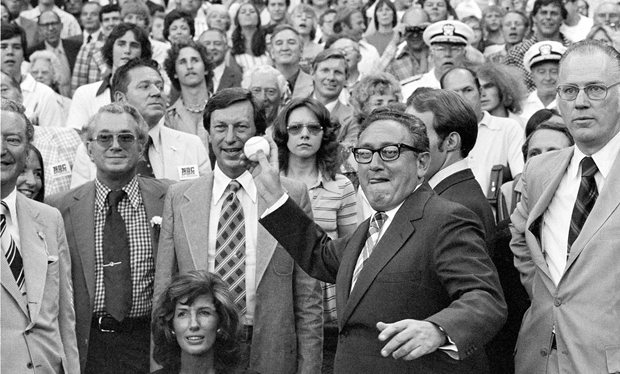
Like the first President he served, former Secretary of State Henry Kissinger became quite a baseball junkie, especially in his post-Washington career. At the 15:40 mark of this episode of The Baseball of World of Joe Garagiola, we see Kissinger, who could only seem competent when standing alongside that block of wood Bowie Kuhn, being honored at Fenway Park before the second game of the sensational 1975 World Series. During the raucous run by the raffish New York Mets in the second half of 1980s, both Nixon and Kissinger became mainstays at Shea Stadium. Nixon was known to send congratulatory personal notes to the players, including Darryl Strawberry. It was criminals rooting for criminals.

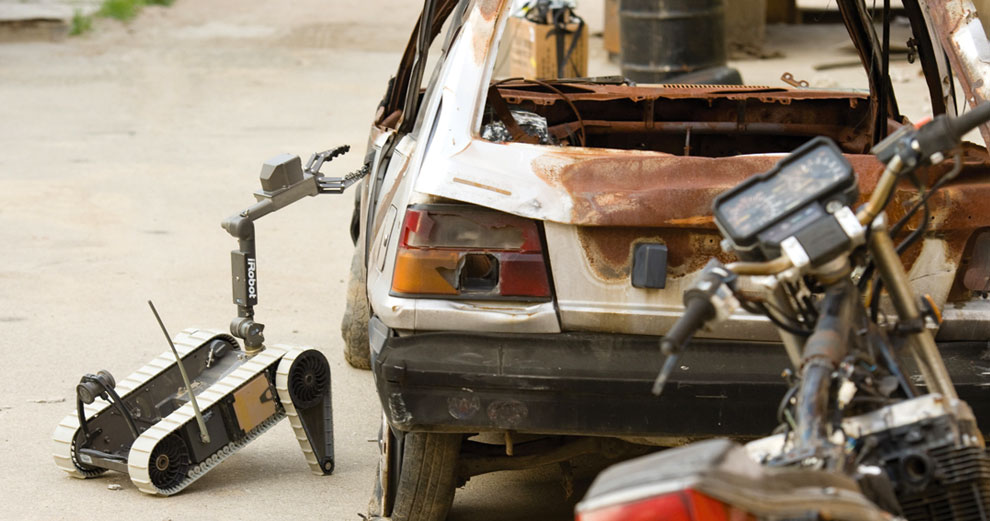
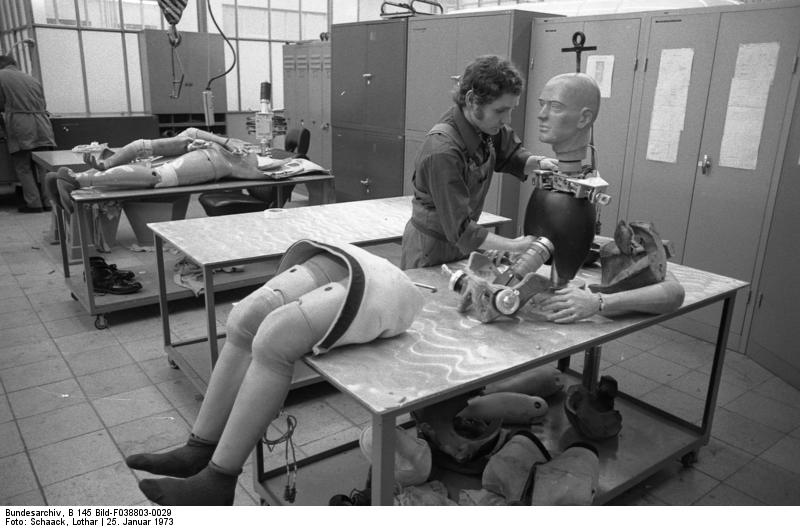
Detroit had RoboCop while Pittsburgh had actual robots. Guess which erstwhile industrial giant remade itself in post-manufacturing America and which one fell into complete disrepair? From “The Robots That Saved Pittsburgh,” by Glenn Thrush at Politico:

“‘Roboburgh,’ the boosterish moniker conferred on the city by the Wall Street Journal in 1999 and cited endlessly in Pittsburgh’s marketing materials ever since, may have been premature back then, but it isn’t now: Pittsburgh, after decades of trying to remake itself, today really does have a new economy, rooted in the city’s rapidly growing robotic, artificial intelligence, health technology, advanced manufacturing and software industries. It’s growing in population for the first time since the 1950s, and now features regularly in lists like ‘the Hottest Cities of the Future’ and ‘Best Cities for Working Mothers.’ ‘The city is sort of in a sweet spot,’ says Sanjiv Singh, a [Red] Whittaker acolyte at Carnegie Mellon who is working on the first-of-its-kind pilotless medical evacuation helicopter for the Marines. ‘It has the critical mass of talent you need, it’s still pretty affordable and it has corporate memory—the people here still remember when the place was an industrial powerhouse.’

Improbably for a blue-collar town that seemed headed for the scrap heap when its steel industry collapsed, Pittsburgh has developed into one of the country’s most vibrant tech centers, a hotbed of innovation that can no longer be ignored by the industry’s titans. Carnegie Mellon is Google’s biggest rival in the race to build a driverless car, partnering with GM to build a robot Cadillac that has been humanlessly tooling around Route 19, just outside city limits. In 2011, Google opened a posh, 40,000-square-foot office in an old Nabisco factory in the city’s East Liberty neighborhood, ramping up last year to 350 people, with more on the way. Bill Gates and other Silicon Valley moguls have invested millions of dollars in Aquion Energy, a start-up spun out of CMU that is developing next-generation batteries and producing them in nearby Westermoreland County, not China. Apple, RAND and Intel also have outposts in town and Disney, which has tapped the university’s computer and robotics talent for years, is partnering with the school to improve cinematic graphics and to develop hominid robots that can gently hand objects to people by predicting the movement around them. All told, Pittsburgh’s tech and education sectors now account for some 80 percent of the high-wage jobs in the city, and robots are just the most visible piece of this miraculous turnaround of a city on the brink.”

Tags: , ,

Kevin Kelly, one of the tech thinkers I admire most, was recently profiled by the New York Times’ wonderfully dyspeptic David Carr, and now he’s participated in an excellent Q&A at John Brockman’s Edge.org. 

I think if you read this blog with any regularity, you know I believe that legislation won’t control or alter surveillance and snooping, won’t stem the flow of information any more than Prohibition stopped the flow of alcohol. Everybody is drinking; everybody’s drunk. That topic is addressed in the first question of the interview:

Edge:

How can we have a world in which we are all watching each other, and everybody feels happy?

Kevin Kelly:

The question that I’m asking myself is, how far will we share, when are we going to stop sharing, and how far are we going to allow ourselves to monitor and surveil each other in kind of a coveillance? I believe that there’s no end to how much we can track each other—how far we’re going to self-track, how much we’re going to allow companies to track us—so I find it really difficult to believe that there’s going to be a limit to this, and to try to imagine this world in which we are being self-tracked and co-tracked and tracked by governments, and yet accepting of that, is really hard to imagine.

How does this work? How can we have a world in which we are all watching each other, and everybody feels happy? I don’t see any counter force to the forces of surveillance and self-tracking, so I’m trying to listen to what the technology wants, and the technology is suggesting that it wants to be watched. What the Internet does is track, just like what the Internet does is to copy, and you can’t stop copying. You have to go with the copies flowing, and I think the same thing about this technology. It’s suggesting that it wants to monitor, it wants to track, and that you really can’t stop the tracking. So maybe what we have to do is work with this tracking—try to bring symmetry or have areas where there’s no tracking in a temporary basis. I don’t know, but this is the question I’m asking myself: how are we going to live in a world of ubiquitous tracking?”•

Tags: , ,

I can’t help but feel that Libertarians have a blind spot for the deep immorality embedded into their philosophy. Yet, it’s not like I disagree with everything Libertarian. For instance: I concur with George Mason economist Bryan Caplan that the U.S. embargo of Cuba has been detrimental to both countries. It should be stopped immediately. A few exchanges from Caplan’s Ask Me Anything at Reddit follow.

________________________

Question:

What would happen if we began trading with Cuba again?

Bryan Caplan:

They’d quickly get a lot richer, and we’d get some very nice vacations. In the longer run, the chance that Communism in Cuba would collapse or collapse into mere rhetoric is high.

________________________

Question:

Do you feel that the rise of China is beneficial to the interests of the United States?

Bryan Caplan:

When countries produce cheap stuff to sell us, it is good for us. And rich countries are very rarely militarily aggressive, at least once they’ve been rich for a full generation.

Question:

Is the U.S. a counterexample?

Bryan Caplan:

Not really. Most dominant powers throughout history have been far more aggressive. The U.S. today is scared to lose a few thousand soldiers. Why? Because rich people value their lives. Thankfully!

________________________

Question:

What books have influenced you and your career?

Bryan Caplan:

Atlas Shrugged, For a New Liberty, Economic Sophisms, The Armchair Economist, The Bell Curve, The Myth of Democratic Failure, The Nurture Assumption, and Modern Times. Mike Huemer’s been a massive influence on me, but mostly his articles, especially “Moral Objectivism.”

________________________

Question:

With the drought in Southern California is it possible the state is overpopulated? Meaning we have to halt immigration into the south west?

Bryan Caplan:

No. Just raise the price of water!•
______________________________

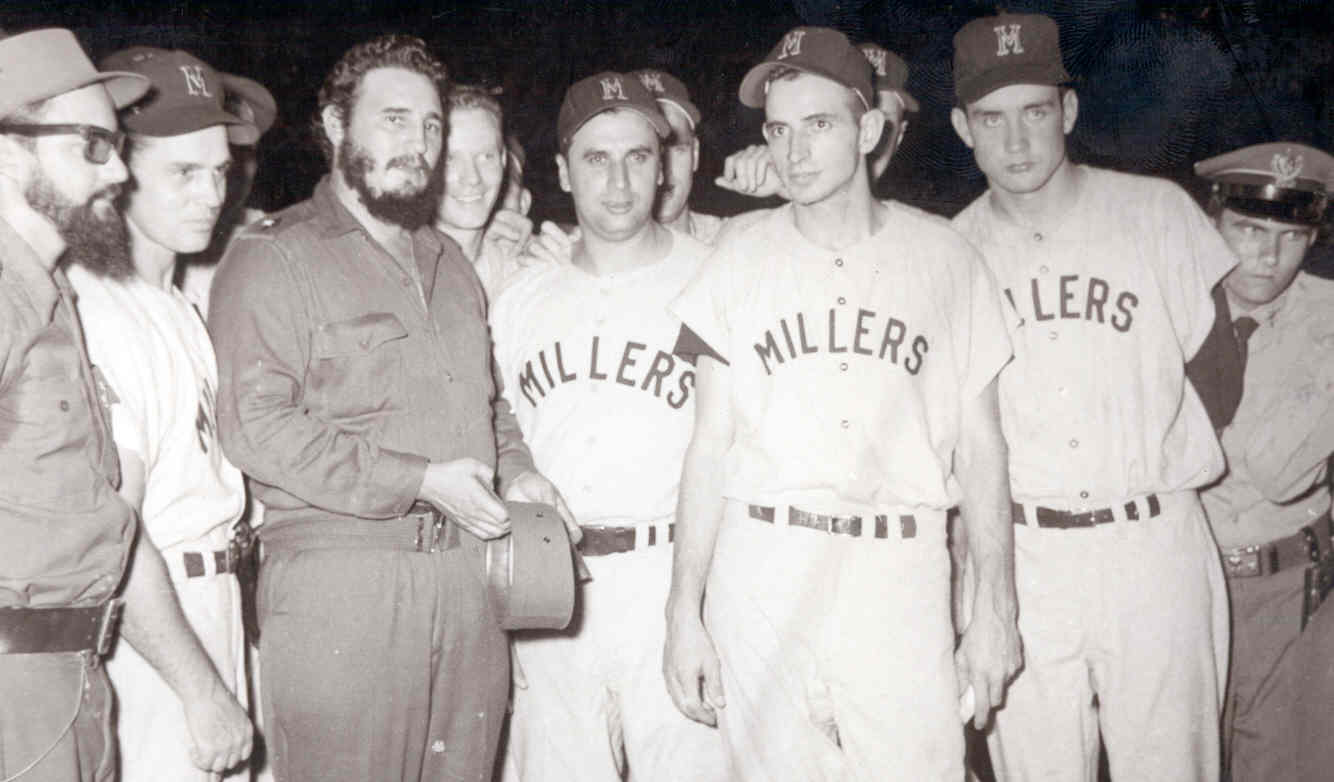
In 1959, Ed Sullivan interviews Fidel Castro:

Tags:

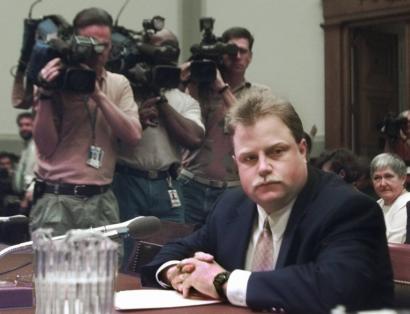
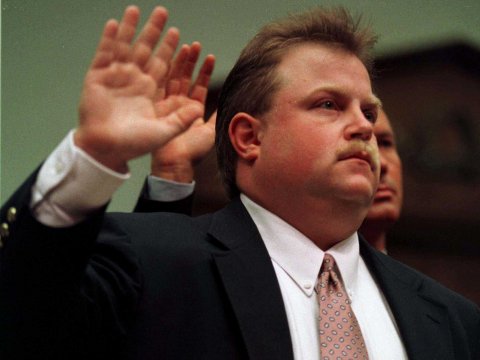
Richard Jewell wasn’t exactly traduced like Joseph K., but who but Kafka could have written of his experience at the 1996 Olympics in Atlanta, where he was knocked sidelong by a rush to judgement? Just months after Ted Kaczynski was apprehended for the Unabomber explosions and had provided the template of an awkward and unshaven villain, the FBI brought another lone madman to justice, and it was Jewell–although it wasn’t really him at all.

Go here to watch Adam Hootnick’s new ESPN short doc, “Judging Jewell.”

From “The Ballad of Richard Jewell,” Marie Brenner’s 1997 Vanity Fair article:

“It took 10 minutes to pluck Jewell’s thick auburn hair. Then the F.B.I. agents led him into the kitchen and took his palm prints on the table. ‘That took 30 minutes, and they got ink all over the table,’ Bryant said. Then Bazar told Bryant they wanted Jewell to sit on the sofa and say into the telephone, ‘There is a bomb in Centennial Park. You have 30 minutes.’ That was the message given by the 911 caller on the night of the bombing. He was to repeat the message 12 times. Bryant saw the possibility of phony evidence and of his client’s going to jail. ‘I said, ‘I am not sure about this. Maybe you can do this, maybe you can’t, but you are not doing this today.”

All afternoon, Jewell was strangely quiet. He had a sophisticated knowledge of police work and believed, he later said, ‘they must have had some evidence if they wanted my hair.… I knew their game was intimidation. That is why they brought five agents instead of two.’ He felt “violated and humiliated,” he told me, but he was passive, even docile, through Bryant’s outburst. He thought of the bombing victims—Alice Hawthorne, the 44-year-old mother from Albany, Georgia, at the park with her stepdaughter; Melih Uzunyol, the Turkish cameraman who died of a heart attack; the more than 100 people taken to area hospitals, some of whom were his friends. ‘I kept thinking, These guys think I did this. These guys were accusing me of murder. This was the biggest case in the nation and the world. If they could pin it on me, they were going to put me in the electric chair.”

Tags: , ,

Using invasiveness to battle criminality, a Google Glass app allows you to scan a stranger’s eyes and know within moments whether that person has been registered with a sex-offender database. Of course, the greater moral question will come when an app can look into eyes and determine what that person might be about to do, not only what they’ve done in the past. From “Through a Face Scanner Darkly,” Betsy Morais at the New Yorker blog:

“Anonymity forms a protective casing. When it’s punctured, on the street or at a party, the moment of recognition falls somewhere on a spectrum of delight and horror. Soon enough, though, technology will see to it that we can no longer expect to disappear into a landscape of passing faces.

NameTag, an app built for Google Glass by a company called FacialNetwork.com, offers a face scanner for encounters with strangers. You see somebody on the sidewalk and, slipping on your high-tech spectacles, select the app. Snap a photo of a passerby, then wait a minute as the image is sent up to the company’s database and a match is hunted down. The results load in front of your left eye, a selection of personal details that might include someone’s name, occupation, Facebook and/or Twitter profile, and, conveniently, whether there’s a corresponding entry in the national sex-offender registry.”

Tags:

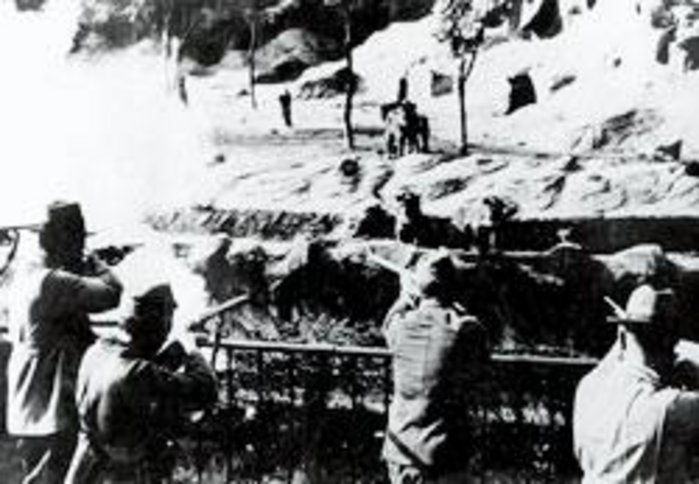
Private zoos have always been a strange beast, and some Animal Planet enthusiasts now oddly invite the elephant into the living room (scroll down to second item), but one menagerie faced a far crazier time during Japan’s Great Zoo Massacre of WWII. The opening of Bambi and Tong Tong,” Julia Adeney Thomas’ Times Literary Supplement review of a new book about understanding the psychology and politics of the horror: 

“Behind the curtain of empire, horrors lurk. At the Tokyo Imperial Zoo on September 4, 1943, two starving elephants remained silent, obedient to their trainers, while a religious service on the other side of a red-and-white awning prematurely memorialized their sacrifice for Japan’s imperial cause. Buddhist monks, government officials and schoolchildren made offerings of food to the elephants’ spirits and to the spirits of other captive animals killed by order of the government. This unprecedented ceremony known as the ‘Memorial Service for Martyred Animals’ was held on the zoo’s grounds where nearly a third of the cages stood empty. Lions from Abyssinia, tigers representative of Japan’s troops, bears from Manchuria, Malaya and Korea, an American bison, and many others had been clubbed, speared, poisoned and hacked to death in secret. Although the zoo’s director had found a way to save some of the condemned creatures by moving them to zoos outside Tokyo, Mayor Ōdaichi Shigeo insisted on their slaughter. Ōdaichi himself, along with Imperial Prince Takatsukasa Nobusuke and the chief abbot of Asakusa’s Sensōji Temple, presided over the carefully choreographed and highly publicized ‘Memorial Service,’ thanking the animals for sacrificing themselves for Japan’s war effort.

But the elephants were not dead.”

Tags:

Whether we’re talking about governments and corporations spying on individuals or citizens leaking classified documents, I think the main problem isn’t that legislation hasn’t yet caught up to technology, but that it can’t and won’t. When information is so easy to intercept, when you can download Deep Throat, when everyone can be proven guilty, what will the new morality be?

A few differences between Ellsberg’s Pentagon Papers leak and Assange, Manning and Snowden, from “The Three Leakers and What to Do About Them,” by David Cole at the New York Review of Books:

“First, unlike Nixon, Obama did not attempt to prohibit the publication of any of Snowden’s or Manning’s leaks. The Pentagon Papers case, thanks in part to Goodale’s own arguments before the courts, established an extraordinarily high legal bar for enjoining publication, and that bar holds today. For many of the justices in the Pentagon Papers case, however, that bar applied only to ‘prior restraints’—requests to prohibit publication altogether—and would not apply to after-the-fact criminal prosecutions of leakers. While the Times was not prosecuted, Ellsberg was, and his case was dismissed not on First Amendment grounds, but on the basis of prosecutorial misconduct.

Second, the digital age has profoundly altered the dynamics and stakes of leaks. Computers make stealing documents much more efficient. Ellsberg had to spend months manually photocopying the Pentagon Papers. Manning used his computer to download over 700,000 documents, and Snowden apparently stole even more. The Internet makes disclosures across national borders much easier. Manning uploaded his documents directly to WikiLeaks’ website, hosted in Sweden, far beyond US reach. Snowden gave access to his documents to journalists in Germany, Brazil, and the US, and they have in turn published them in newspapers throughout the world.

Third, computers and the Internet have at the same time made it easier to identify and prosecute leakers. When someone leaked the fact that the US had placed an agent inside an active al-Qaeda cell in May 2012, an entirely unjustifiable disclosure, the Justice Department spent eight months investigating the old-fashioned way, interviewing over 550 people without success. But when the prosecutors subpoenaed phone records of the Associated Press offices and reporters involved in publishing the story, they promptly identified the leaker, an FBI agent, and obtained a guilty plea.”

Tags: , , , ,

I think of the era in America between the one wallpapered with newsprint (pre-1960) and the one given to smartphone updates (today), that time when TV news was predominant, as an age of delusion. That was when Newt Gingrich’s word games could work, when a screenshot of Willie Horton could win. It was an age of bullshit and manipulation. Why, an actor playing a part could become President, aided by Hallmark Card-level writers.

You’re free to feel less than sanguine about the transition, about the financial metrics of newsgathering and the threat it poses to less-profitable but vital journalism (as I sometimes am), but I will choose the deluge of information we get now to centralized media when far fewer had far greater control of the flow. People seem to get bamboozled much less now. Let it rain, I say. Let it pour. Let us swim together in the flood.

Anyhow, we always romanticized the wrong part of the newspaper. It wasn’t great because of the print. I mean, what’s so important about a lousy, crummy newspaper?

From “The Golden Age of Journalism?” a wonderful TomDispatch essay by Tom Engelhardt about the downfall of one type of news and the thing that has supplanted it:

In so many ways, it’s been, and continues to be, a sad, even horrific, tale of loss. (A similar tale of woe involves the printed book. It’s only advantage: there were no ads to flee the premises, but it suffered nonetheless — already largely crowded out of the newspaper as a non-revenue producer and out of consciousness by a blitz of new ways of reading and being entertained. And I say that as someone who has spent most of his life as an editor of print books.) The keening and mourning about the fall of print journalism has gone on for years. It’s a development that represents — depending on who’s telling the story — the end of an age, the fall of all standards, or the loss of civic spirit and the sort of investigative coverage that might keep a few more politicians and corporate heads honest, and so forth and so on.

Let’s admit that the sins of the Internet are legion and well-known: the massive programs of government surveillance it enables; the corporate surveillance it ensures; the loss of privacy it encourages; the flamers and trolls it births; the conspiracy theorists, angry men, and strange characters to whom it gives a seemingly endless moment in the sun; and the way, among other things, it tends to sort like and like together in a self-reinforcing loop of opinion. Yes, yes, it’s all true, all unnerving, all terrible.

As the editor of TomDispatch.com, I’ve spent the last decade-plus plunged into just that world, often with people half my age or younger. I don’t tweet. I don’t have a Kindle or the equivalent. I don’t even have a smart phone or a tablet of any sort. When something — anything — goes wrong with my computer I feel like a doomed figure in an alien universe, wish for the last machine I understood (a typewriter), and then throw myself on the mercy of my daughter.

I’ve been overwhelmed, especially at the height of the Bush years, by cookie-cutter hate email — sometimes scores or hundreds of them at a time — of a sort that would make your skin crawl. I’ve been threatened. I’ve repeatedly received “critical” (and abusive) emails, blasts of red hot anger that would startle anyone, because the Internet, so my experience tells me, loosens inhibitions, wipes out taboos, and encourages a sense of anonymity that in the older world of print, letters, or face-to-face meetings would have been far less likely to take center stage. I’ve seen plenty that’s disturbed me. So you’d think, given my age, my background, and my present life, that I, too, might be in mourning for everything that’s going, going, gone, everything we’ve lost.

But I have to admit it: I have another feeling that, at a purely personal level, outweighs all of the above. In terms of journalism, of expression, of voice, of fine reporting and superb writing, of a range of news, thoughts, views, perspectives, and opinions about places, worlds, and phenomena that I wouldn’t otherwise have known about, there has never been an experimental moment like this. I’m in awe. Despite everything, despite every malign purpose to which the Internet is being put, I consider it a wonder of our age. Yes, perhaps it is the age from hell for traditional reporters (and editors) working double-time, online and off, for newspapers that are crumbling, but for readers, can there be any doubt that now, not the 1840s or the 1930s or the 1960s, is the golden age of journalism?

Think of it as the upbeat twin of NSA surveillance.

Tags:

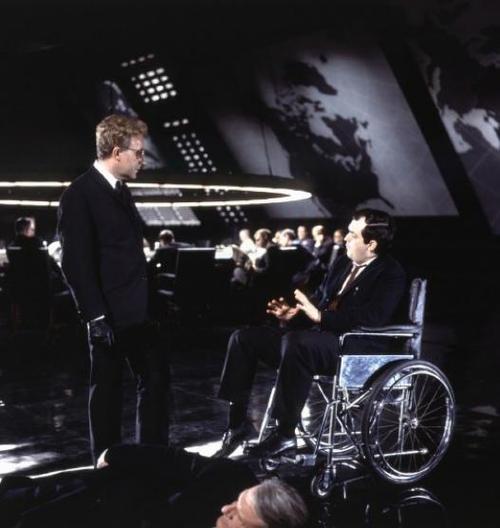
Excerpts from two articles about Dr. Strangelove or: How I Learned to Stop Worrying and Love the Bomb, which is one of the greatest films ever made, yet only my fourth or fifth favorite Stanley Kubrick movie, which shows you how highly I rank his work. It’s as perfect now as it was when released 50 years ago, as timeless as Patton or Duck Soup. In fact, it’s Patton *as* Duck Soup. It’s tremendously funny yet no laughing matter.

_________________________

From “Doctor’s Orders,” Bilge Elbiri’s 2009 Moving Image Source article explaining how a very serious novel became a Kubrick comedy:

After their initial drafts, Kubrick and his producing partner James B. Harris, with whom he had made The Killing, Paths of Glory, and Lolita, workshopped the script (then called The Delicate Balance of Terror) in New York. “They’d stay up late into the night cracking up over it, overcome by their impulse towards gallows humor,” says Mick Broderick, the author of Nuclear Movies and an extensive forthcoming study of Strangelove. Harris would soon leave to forge his own directorial career (his admirably tense 1965 directorial debut, The Bedford Incident, concerns a confrontation between an American destroyer and a Soviet submarine). But when Kubrick later called his former partner to tell him that he had decided to turn Delicate Balance into an actual comedy, Harris was skeptical, to say the least. “He thought, ‘The kid’s gonna destroy his career!’” says Broderick.

The absurd hilarity of the situation had never quite stopped haunting the director, as he and George continued to work on the film. It wasn’t so much the premise of the Red Alert story as everything Kubrick was learning about the thinking behind thermonuclear strategy. The director, even then notorious for thorough research, had become friendly with a number of scientists and thinkers on the subject, some with George’s help, including the notorious RAND strategist Herman Kahn, who would talk with a straight face about “megadeaths,” a word he had coined in the 1950s to describe one million deaths. As Kubrick told Joseph Heller:

Incongruity is certainly one of the sources of laughter—the incongruity of sitting in a room talking to somebody who has a big chart on the wall that says “tragic but distinguishable postwar environments’ and that says ‘one to ten million killed.” …There is something so absurd and unreal about what you’re talking about that it’s almost impossible to take it seriously.•

_________________________

From “Almost Everything in Dr. Strangelove Was True,” a New Yorker blog post about the scary reality that informed the nervous laughter, by Eric Schlosser, author of Command and Control:

This month marks the fiftieth anniversary of Stanley Kubrick’s black comedy about nuclear weapons, Dr. Strangelove or: How I Learned to Stop Worrying and Love the Bomb. Released on January 29, 1964, the film caused a good deal of controversy. Its plot suggested that a mentally deranged American general could order a nuclear attack on the Soviet Union, without consulting the President. One reviewer described the film as “dangerous … an evil thing about an evil thing.” Another compared it to Soviet propaganda. Although Strangelove was clearly a farce, with the comedian Peter Sellers playing three roles, it was criticized for being implausible. An expert at the Institute for Strategic Studies called the events in the film “impossible on a dozen counts.” A former Deputy Secretary of Defense dismissed the idea that someone could authorize the use of a nuclear weapon without the President’s approval: “Nothing, in fact, could be further from the truth.” (See a compendium of clips from the film.) When Fail-Safe—a Hollywood thriller with a similar plot, directed by Sidney Lumet—opened, later that year, it was criticized in much the same way. “The incidents in Fail-Safe are deliberate lies!” General Curtis LeMay, the Air Force chief of staff, said. “Nothing like that could happen.” The first casualty of every war is the truth—and the Cold War was no exception to that dictum. Half a century after Kubrick’s mad general, Jack D. Ripper, launched a nuclear strike on the Soviets to defend the purity of “our precious bodily fluids” from Communist subversion, we now know that American officers did indeed have the ability to start a Third World War on their own. And despite the introduction of rigorous safeguards in the years since then, the risk of an accidental or unauthorized nuclear detonation hasn’t been completely eliminated.•

Tags: , , ,

Vanity Fair journalist Nina Munk is this week’s guest on a very good EconTalk podcast with Russ Roberts. Munk wrote a 2007 article, “Jeffrey Sachs’ $200 Billion Dream,” which looked at the passion and plans of the End of Poverty author. She then decided to follow Sachs’ work in a long-term way, and things got complicated.

If Munk didn’t exactly come to praise the economist, she didn’t think she would end up burying him–but that’s pretty much what happened. Her resulting book on the topic, The Idealist, is a story of good intentions run aground as it pertains to the Sachsian method of sustainable development in impoverished African communities. Munk acknowledges the Millennium Villages Project isn’t an abject failure as a charity, but believes it isn’t a success in its stated aspiration to find a poverty-fighting formula. Munk doesn’t seem to be attempting to demonize anyone (although she does accuse Sachs of “emotional blackmail”) but is trying to make sense of the naivete and folly and mistakes.

I like Roberts, though I find self-serving his suggestion that idealists who try and fail are crueler than Libertarians who oppose activism. 

Listen here and read a Vanity Fair Q&A about the book here. See some excerpts from Sachs’ recent Ask Me Anything at Reddit.

Tags: , ,

News at it used to be produced is a niche item now. It may have always been to some degree, but more so today. But is that necessarily a bad thing? I think in our decentralized age, American citizens seem far less likely to be bullshitted than they were not too long ago. It may be best that news is delivered in all forms from all directions.

The opening “Doesn’t Anyone Read The News?” by Timothy Wu at the New Yorker blog:

“The State of the Union address is one of the few times each year when a large percentage of Americans reliably pay attention to politics. Once upon a time, as legend has it, things were different: most Americans tuned into Walter Cronkite in the evening or picked up the morning newspaper, which covered matters of national and international importance, like politics, foreign affairs, and business developments.

If analysts at Microsoft Research are correct, a startling number of American Web users are no longer paying attention to the news as it is traditionally defined. In a recent study of ‘filter bubbles,’ Sharad Goel, Seth Flaxman, and Justin Rao asked how many Web users actually read the news online. Out of a sample of 1.2 million American users, just over fifty thousand, or four per cent, were ‘active news customers’ of ‘front section’ news. The other ninety-six per cent found other things to read.”


Tags:

Pete Seeger, in 2012, trading bon mots with that “right-wing gun nut” Stephen Colbert. The host is brilliant, as he always is, in using just a few words to trace the history of lefty politics from the folk movement forward.

Tags: , ,

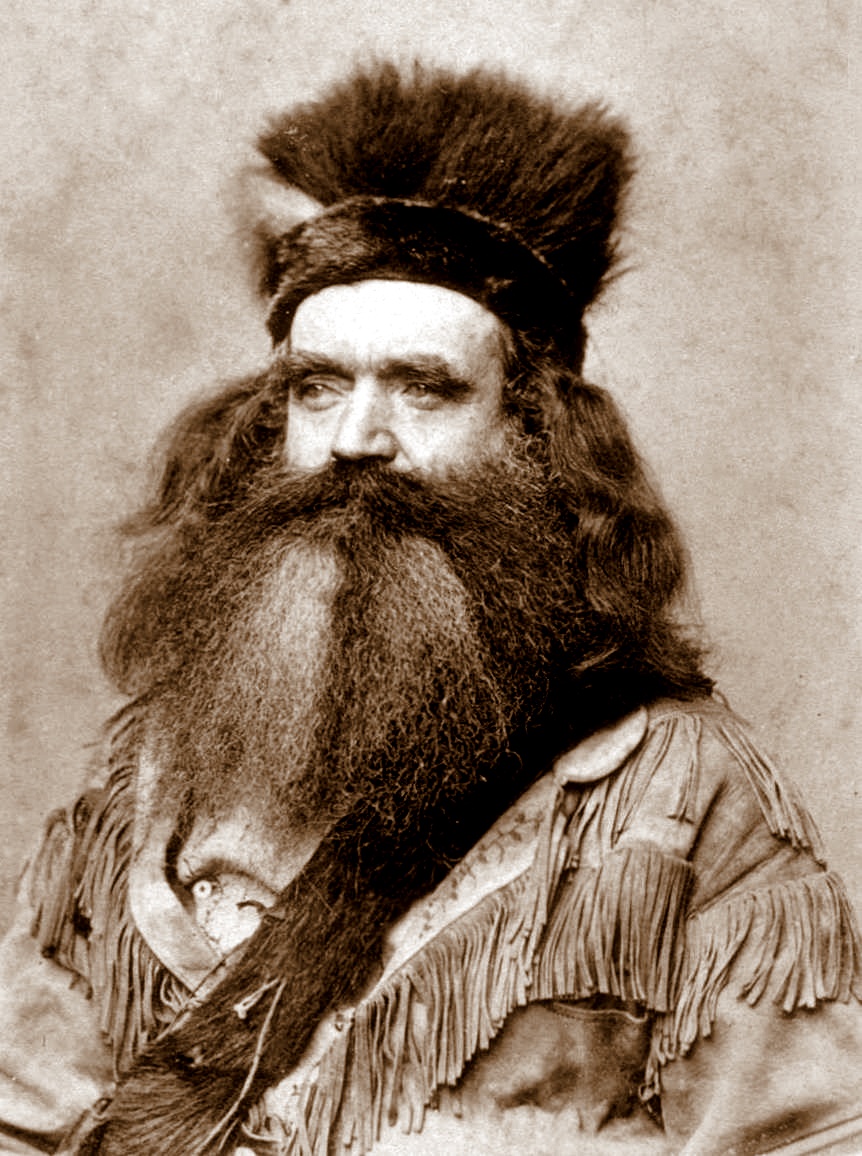
“A unique character is Seth Kinman, the grizzly bear hunter and presidential chair presenter.”

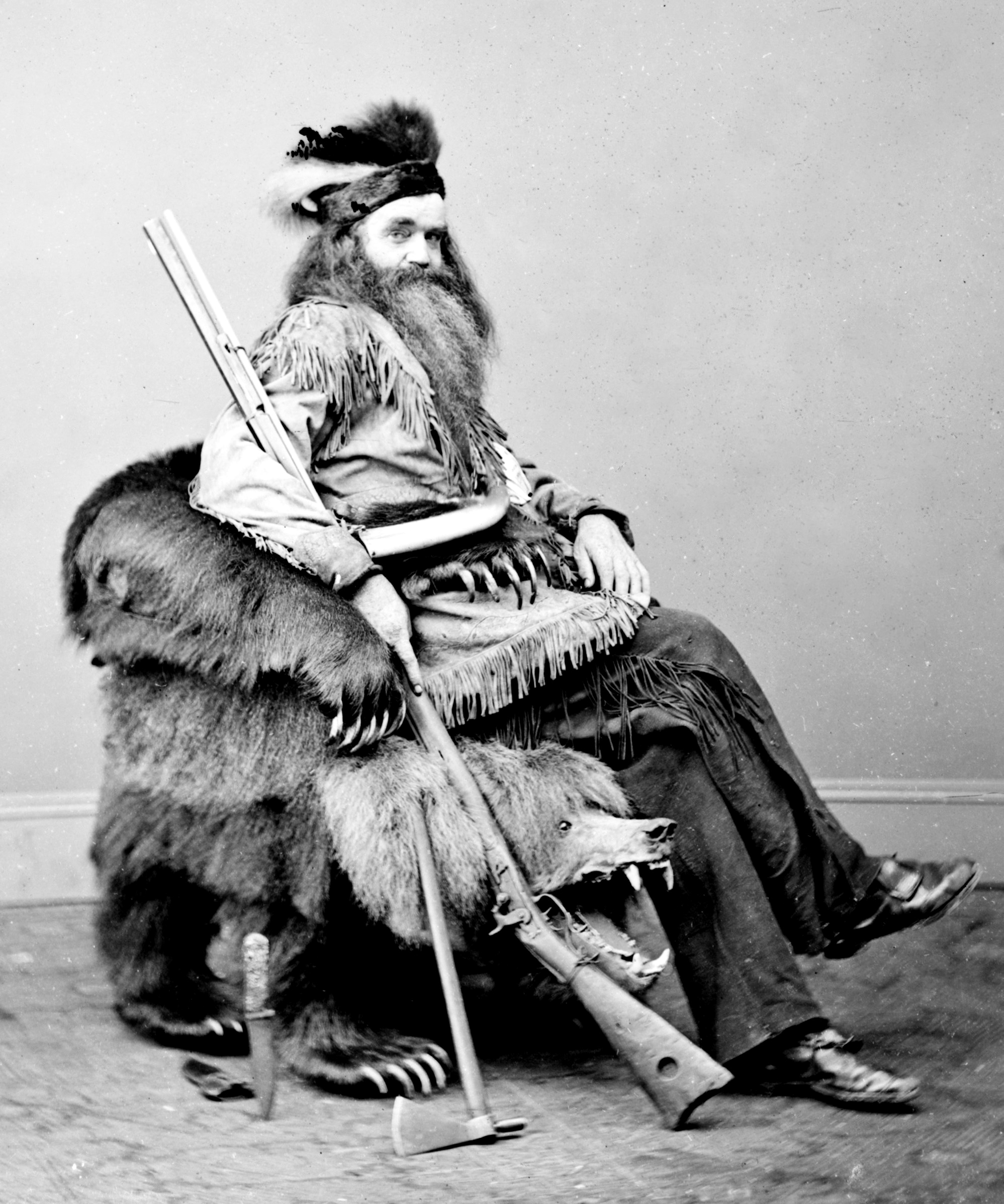
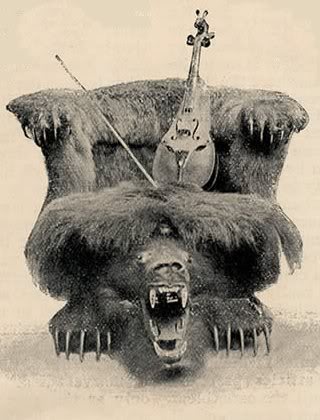
Seth Kinman was a self-made man and a self-promoter. A bushy-faced nineteenth-century California hunter who never met a bear or buck he cared for, Kinman used the skins and carcasses from his quarry to fashion unusual chairs that he presented to several American Presidents.

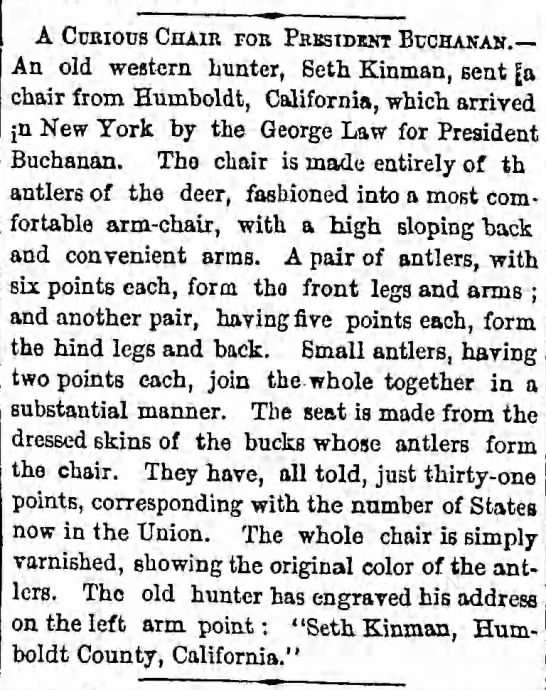
Kinman began bestowing these odd gifts to Presidents during the Buchanan Administration, which is the subject of the first excerpt, taken from an 1857 edition of the Brooklyn Daily Eagle. The second excerpt, an article from a 1885 New York Times that originally ran in the San Francisco Call, further examines Kinman’s life and by then what had become a longstanding chair-giving tradition that had allowed him to become friend to several Presidents.


From May 18, 1857 Brooklyn Daily Eagle:

buchanan


President Andrew Johnson’s chair.

FromSeth Kinman, The Pacific Coast Nimrod Who Gives Chairs to Presidents,New York Times, reprinted from the San Francisco Call (December 9, 1885):

A unique character is Seth Kinman, the grizzly bear hunter and presidential chair presenter, now stopping in this city. He is a tall man, 70 years old, straight as an arrow, dressed in buckskin from head to foot, with long silver hair, beard, and shaggy eyebrows, under which and his immense hat a pair of keen eyes peer sharply.

He is the Nimrod of this coast, the great elk shooter and grizzly bear hunter of California, who has presented elk horns and grizzly bear claws from animals that have fallen before his unerring rifle to four Presidents of the United States–Buchanan, Lincoln, Johnson, and Hayes–and has ‘the finest of all’ to present to President Cleveland next spring. He claims to have shot in all more than 800 grizzlies, as many as 50 elk in one month, and to have supplied the Government troops and sawmill hands in Humboldt with 240 elk in 11 months on contract at 25 cents per pound.

He was born in Union County, Penn., in 1815, went to Illinois in 1830, and crossed the plains to California in 1849. He tried mining on Trinity River, but followed hunting mainly for a living. In the Winter of 1856-57 he made his first elkhorn chair, and conceived the idea of presenting it to President Buchanan. Peter Donahue favored it. He went on in the Golden Age with letters to Col. Rynders in New-York, and in Washington he met Senator Gwin, Gen. Denver, and others. Dr. Wozencroft made the presentation speech, and Buchanan was highly pleased. He wrote Rynders to get Kinman the best gun he could find in New-York, which he did, together with two fine pistols. He also got an appointment to corral the Indians on the Government reservation, and when they strayed away he brought them back.

In November, 1804, he presented President Lincoln with an elkhorn chair, which greatly pleased him; Clinton Lloyd, Clerk of the House, made the presentation speech. The chair to Hayes was presented when he was Governor of Ohio, but nominee for President. The chair presented to President Johnson was made of the bones and hide of a grizzly.•

We’re all irreplaceable, each of us, but few more than the singer-songwriter Pete Seeger, whose death feels like the actual end of the twentieth century, so many of that era’s struggles and triumphs burned into his flesh. He was really American and completely foreign. Not a bad thing to be.

An episode of his lo-fi 1960s TV odyssey, Rainbow Quest.

From Jennie Rothenberg Gritz in the Atlantic, writing about Rainbow Quest:

“For a brief period in the mid-1960s, Seeger hosted his own program on the ‘magic screen.’ The show was called Rainbow Quest (named after a line in one of Seeger’s songs). Despite the colorful title, it was filmed in black and white, in a New Jersey studio with no audience, and broadcast over a Spanish-language UHF station. Seeger’s wife, Toshi, was listed in the credits as ‘Chief Cook and Bottle Washer.’

Even with this bare-bones production, Seeger clearly found the new medium disorienting. ‘You know, I’m like a blind man, looking out through this little magic screen,” he said at the start of the first episode, gazing awkwardly into the camera. ‘And I—I don’t know if you see me. I know I can’t see you.’ Over the next 10 minutes, he alternated between noodling gorgeously on his banjo and explaining his distrust of the ‘little box’ that sat in every American living room, killing ambition, romance, and human interaction.

But then he started talking about Huddie Ledbetter and giving his invisible audience an impromptu 12-string guitar lesson. And then the Clancy Brothers showed up in their big woolly sweaters and performed a rousing set of Irish tunes. At that point, Seeger seemed to settle into his comfort zone—a state of natural curiosity and delight.”

Tags: ,

In his just-published New York magazine column, “Stop Beating a Dead Fox,” Frank Rich states the obvious in saying that Fox News actually hurts the GOP and the great majority of its viewers are likely taking medication that may cause weakness, insomnia, dizziness, chest pain, peripheral edema, rash, abdominal pain, constipation, diarrhea, dyspepsia, flatulence, nausea, urinary tract infection, arthralgia, myalgia, back pain, arthritis, sinusitis, pharyngitis, bronchitis, rhinitis, infection, flu-like syndrome and allergic reaction. But, oh, how he states it. Just one paragraph:

“It was the right call. For all its ratings prowess and fat profits, Fox, like the GOP itself, is under existential threat in a fast-changing 21st-century America. Indeed, Megyn Kelly, the latest blonde star in an Ailes stable that seems to emulate Hitchcock’s leading-lady predilections in looks and inchoate malevolence, was promoted to her prime-time perch last year precisely to bring in a younger, less monochromatic audience. It’s a mission that neither she nor any other on-camera talent can accomplish. All three cable-news networks are hemorrhaging young viewers (as are their network-news counterparts) in an era when television is hardly the news medium of choice for Americans raised online and on smartphones. But Fox News is losing younger viewers at an even faster rate than its competitors. With a median viewer age now at 68 according to Nielsen data through mid-January (compared with 60 for MSNBC and CNN, and 62 to 64 for the broadcast networks), Fox is in essence a retirement community.”

Tags: , ,

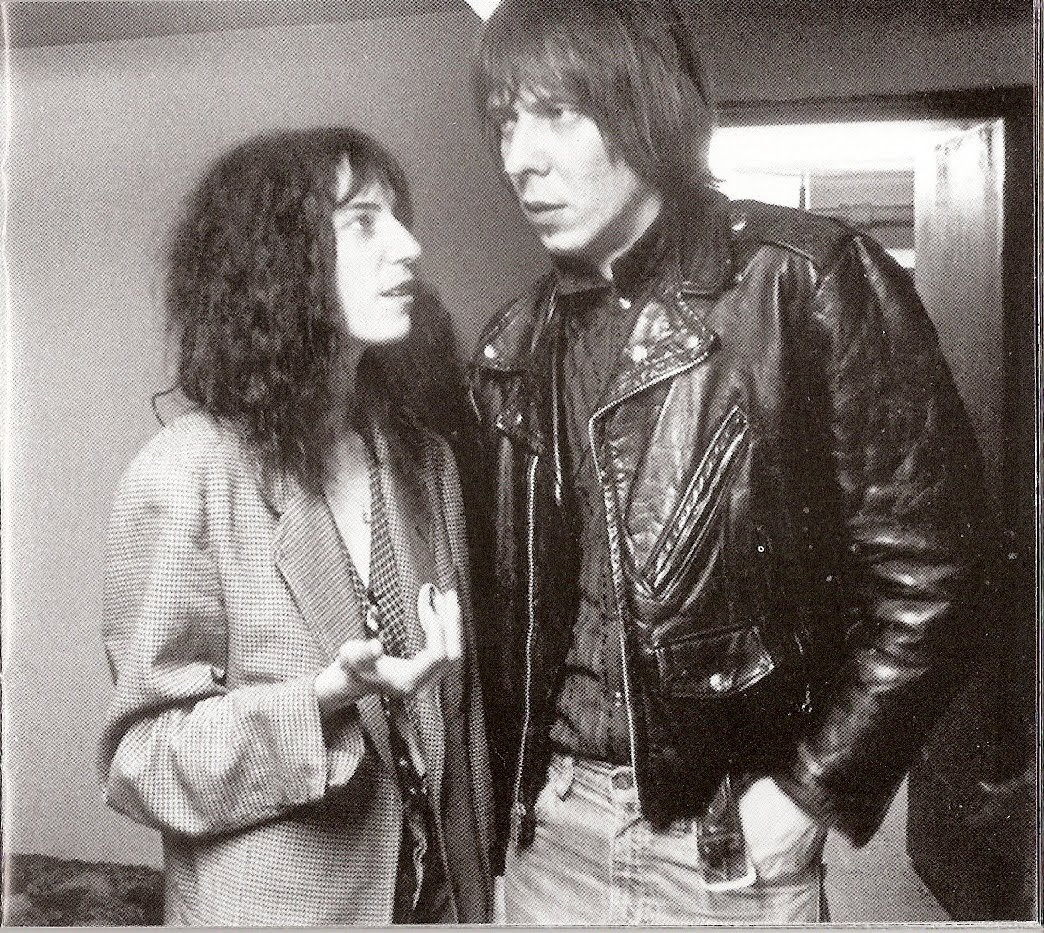
From Simon Schama’s new Financial Times profile of Patti Smith, a quick look at her as a political animal, and one who is greatly disappointed with the “good Republican” Barack Obama:

In 1980 she married Fred ‘Sonic’ Smith of MC5, took a more political turn and wrote with him, ‘People Have the Power.’ Politics didn’t come naturally to her, she says, but she had worked for Robert Kennedy’s senatorial campaign. When he was assassinated, she withdrew from the political world and it took the more activist Fred to quicken those combative political instincts. ‘In my usual way I consulted Blake and the Bible. ‘The meek shall inherit the earth.’ I certainly got that.’ Becoming interested in St Francis and making an informal pilgrimage to Assisi, she thought it something of a miracle when a pope came along who adopted the name and, apparently, the social evangelism that went with it. ‘They said there would never be a Jesuit pope nor a Franciscan one. Now they have both.’

Every so often the old fury of ‘Radio Baghdad‘ comes back. She remembers with quiet contempt a virtual conspiracy of media silence when a protest rally against the Iraq war, a hundred thousand strong, received barely any coverage. Though she rejoiced at the election of an African-American to the White House, like millions of others on the left she has not forgiven him for keeping Guantánamo open and prosecuting the war in Afghanistan. ‘To me he’s just like a good Republican.’ The ‘celebrity-driven, materialist’ culture saddens her, especially when she sees ‘three-year-olds being comforted by cellphones and video games instead of being told stories.’ The ongoing destruction of the environment fills her with yet more bleak sorrow. With a little sigh she returns to Blake. ‘More than ever as I get older I can feel what it takes to be him – a casualty of the industrial revolution while he sits at home hand-colouring prints of shepherds.’

But then, she says, resolutely, pushing back the gloom, ‘I am still a very optimistic person. I continue to do work with joy.’ The Beethoven strain comes through. The first opera she saw was Fidelio, a work so perfectly fitted to her temperament that she wanted to make a film of it. ‘I know the opening shots. I am Leonore/Fidelio, with waist-length hair. I pick up the scissors and cut it.'”•

__________________

Smith, in 1979, singing Debby Boone’s hit, “You Light Up My Life,” on children’s show Kids Are People Too. She’s accompanied on piano by the song’s composer, Joseph Brooks, who would commit suicide in 2011 after being charged with serial sex crimes. A little more than two years later, Brooks’ son Nicholas was convicted of murdering his girlfriend.

Tags: ,

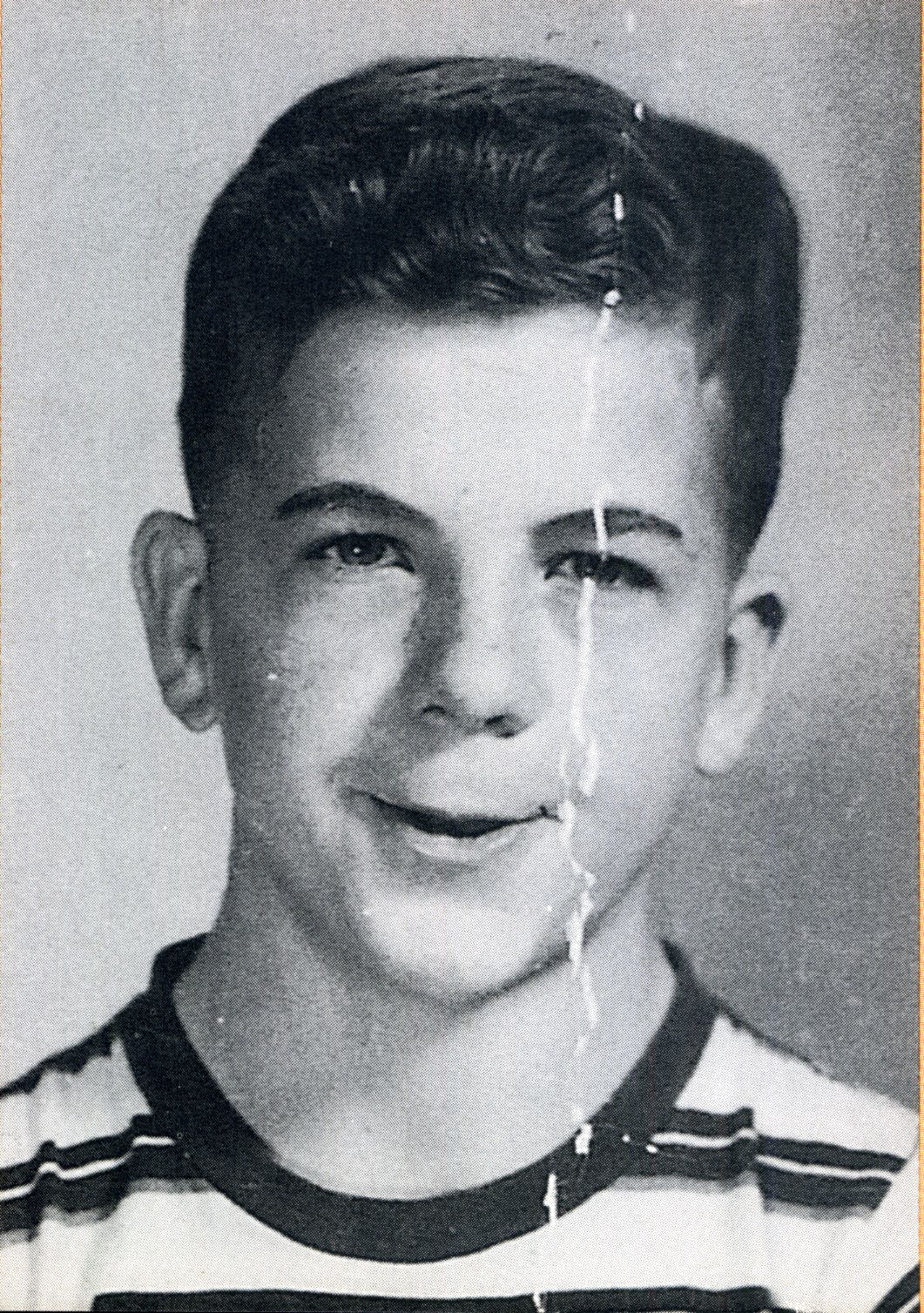
At the nine-minute mark of this 1967 episode of To Tell the Truth, a tale is told of Bronx children’s court probation officer John Carro, who tried desperately if unsuccessfully to aid a deeply troubled 12-year-old boy who would grow to be a Presidential assassin. It’s wasn’t in the best taste to have turned the JFK tragedy into game-show entertainment a mere four years on, but it is fascinating. Carro subsequently became the first Puerto Rican person to be named to the New York State Supreme Court and served there for 25 years. He’s now an accident lawyer.

From Carro’s 1964 testimony before the House Select Committee on Assassinations:

Wesley J. Liebeler:

What else can you remember of your contacts with Lee Oswald?

John Carro:

Let me tell you my recollection of the Oswald case. As you can imagine, from 13 years ago, this was an odd thing, because I did not realize that Oswald was the person that had killed Kennedy the first couple of days. It was only almost – I believe it was after the burial or just about that time, while I was watching the papers, on the day that he actually was killed by Ruby, that I saw some pictures of the mother, and I started reading about the New York situation, that it suddenly tied in, because, you know, something happening in Texas, 1,500 miles, is something you hardly associate with a youngster that you had 10 years prior or 12 years prior.

A friend of mine called me up, a social worker, to tell me, ‘Carro, you know who that case is?’

And he said, ‘That was the case you handled. Don’t you remember?’

And then we started discussing the case, and I remembered then, and what happened then is I felt, you know, it was a kind of a numb feeling, because you know about it and could not know what to do with it. I was a probation officer and despite the fact that I was no longer one, I still felt that this was a kind of a ticklish situation, about something that I knew that no one else knew, and 

I went upstairs and I told the press secretary to the mayor. I told him the information that had just been relayed to me that I had been Oswald’s P.O. and that I should tell the mayor about it, and the mayor had gone to Washington, so he told me, ‘Just sit tight and don’t say anything.’

The story didn’t break in the papers – this was on a Tuesday or Wednesday – until Saturday when someone found out, went to Judge Kelley, and then there were stories Friday, Saturday, and the Post reporter showed up to my house on a Sunday evening. I don’t know how he found out where I lived or anything else, but once he got there, I called city hail again, ‘Look, I got this reporter over here. What do I do with him?’

They said, ‘So apparently the story has broken. So talk to him.’ But the reporter it seemed, had more information than I had. He was actually clarifying my mind, because you can understand that you’re not going to quote, you know, paraphrase 13 years later what happened. I have worked with a great many children during that time, and I have done a great deal of work with youth. What did stand out, you know, that I really recall as a recollection of my own was this fact, that this was a small boy. Most of the boys that I had on probation were Puerto Rican or Negro, and they were New York type of youngsters who spoke in the same slang, who came from the Bronx whom I knew how to relate to because I knew the areas where they came from, and this boy was different only in two or three respects. One, that I was a Catholic probation officer and this boy was a Lutheran, which was strange to begin with, because you normally carry youth of your own background. And secondly that he did dress in a western style with the levis, and he spoke with this southwestern accent which made him different from the average boy that I had on probation.

And, as I said, my own reaction then was that he seemed like a likable boy who did not seem mentally retarded or anything. He seemed fairly bright, and once spoken to, asked anything, he replied. He was somewhat guarded, but he did reply, and my own reaction in speaking to him was one of concern, because he did not want to play with anybody, he did not care to go to school; he said he wasn’t really learning anything; he had brothers, but he didn’t miss them or anything. He seems to have liked his stay at Youth House, and this is not – how do you call it – not odd, because in Youth House they did show the movies and give candy bars and this and the other, and they were paid attention, and this is a boy who is virtually alone all day, and only in that respect did it mean anything to me.

As I told reporters at the time there was no indication that this boy had any Marxist leanings or that he had any tendencies at that age that I was able to view that would lead him into future difficulty.

Actually he came before the court with no prior record, with just the fact that he was not going to school, and the other thing that touched me was that the mother at that time seemed overprotective; she just seemed to think that there was nothing wrong with the boy, and that once we got him back to school, which I told him in no uncertain terms he would have to go back because he was just too young to decide he would not go to school any more, that all his problems were resolved. I think it may have been a threat to her to want to involve her in the treatment for the boy, because I did make a recommendation that he – It seemed to me that he needed help, that he needed to relate to some adult, that he needed to be brought out of this, kind of shell that he was retreating to, and not wanting friends, not wanting to go out, and not wanting to relate to anyone, and that I thought he had the capacity for doing this, and the psychiatric report sort of bore this out in perhaps much more medical terms, and they recommended that he either receive this kind of a support of therapeutic group work treatment at home, if it were possible, or if not, in an institution.

Now, the situation in this kind of case is that treatment has to involve the parent, you know, the whole family setup, not just the child, and I think this is where the mother sort of felt threatened herself. People do not always understand what group work and treatment and psychiatric treatment means. There are all kinds of connotations to it, and she resisted this.

We tried – or even before we came Into the case, before the case came to court, I think she had been referred to the Salvation Army, I believe it was and she had not responded. Actually, when the boy came back with all these reports to the court, he was not put on supervision per se to me. The matter was sort of up in the air where it would be brought back every month while we made referral to various agencies, to see if they would take him into Children’s Village or Harriman Farms, and whatever it was, and it was just looking around, shopping around for placement for him. And the mother, I think, felt threatened about that time, that the boy was back in school, we were looking to get him psychiatric treatment, and she came in and wanted to take the boy out of the State, and we told her she could not take him out without the court’s OK.

As a matter of fact, I recall the case was put on the calendar before Judge Sicher in November of that year, 1953, when she was told, yes, that it was necessary to have the boy remain here, and that that is when the judge ordered a referral to the psychiatric clinic of the court, and to the Big Brothers who subsequently accepted the boy for working with. With that the mother took off in January, without letting us know, and just never came back.”
Tags: , ,

AI can’t do everything humans can do, but any responsibilities that both are capable of handling will be assumed, almost completely, by robots. There’s pretty much no way around that. From a Popular Science report by Kelsey D. Atherton about the proposed robotization of the U.S. military:

“By the middle of this century, U.S. Army soldiers may well be fighting alongside robotic squadmates. General Robert Cone revealed the news at an Army Aviation symposium last week, noting that the Army is considering reducing the size of a Brigade Combat Team from 4,000 soldiers to 3,000, with robots and drones making up for the lost firepower. Cone is in charge of U.S. Army Training and Doctrine Command (TRADOC), the part of the Army responsible for future planning and organization. If the Army can still be as effective with fewer people to a unit, TRADOC will figure out what technology is needed to make that happen.

While not explicitly stated, a major motivation behind replacing humans with robots is that humans are expensive. Training, feeding, and supplying them while at war is pricey, and after the soldiers leave the service, there’s a lifetime of medical care to cover. In 2012, benefits for serving and retired members of the military comprised one-quarter of the Pentagon’s budget request.”

Tags: ,

Now that almost all the walls have ears, it doesn’t matter so much if you’re surrounded by actual prison walls or not. The jailers come to you. From a new Spiegel Q&A with Chinese artist and activist Ai Weiwei, a public figure in a time when that description has come to mean something else:

Spiegel:

Why are you put under such manic surveillance? There are more than a dozen cameras around your house.

Ai:

There’s a unit, I think it’s called ‘Office 608,’ which follows people with certain categories and degrees of surveillance. I am sure I am in the top one. They don’t just tap my telephone, check my computer and install their cameras everywhere — they’re even after me when I’m walking in the park with my son.

Spiegel:

What do the people who observe you want to find out, what don’t they know yet?

Ai:

A year ago, I got a bit aggressive and pulled the camera off one of them. I took out the memory card and asked him if he was a police officer. He said ‘No.’ Then why are you following me and constantly photographing me? He said, ‘No, I never did.’ I said, ‘OK, go back to your boss and tell him I want to talk to him. And if you keep on following me, then you should be a bit more careful and make sure that I don’t notice.’ I was really curious to see what he had on that memory card.

Spiegel:

And?

Ai:

I was shocked because he had photographed the restaurant I had eaten in the previous day from all angles: every room, the cash till, the corridor, the entrance from every angle, every table. I asked myself: Gosh, why do they have to go to so much trouble? Then there were photos of my driver, first of him sitting on a park bench, then a portrait from the front, a portrait from the back, his shoes, from the left, from the right, then me again, then my stroller.

Spiegel:

And he was only one out of several people who follow you?

Ai:

Yes. They must have a huge file on me. But when I gave him back the camera, he asked me not to post a photo of his face on the Internet.

Spiegel:

The person monitoring you asked not to be exposed?

Ai:

Yes. He said he had a wife and children, so I fulfilled his wish. Later I went through the photos we had taken years before at the Great Wall — and there he was again, the same guy. That often happens to me, because I always take so many photos: I keep recognizing my old guards.”

Tags:

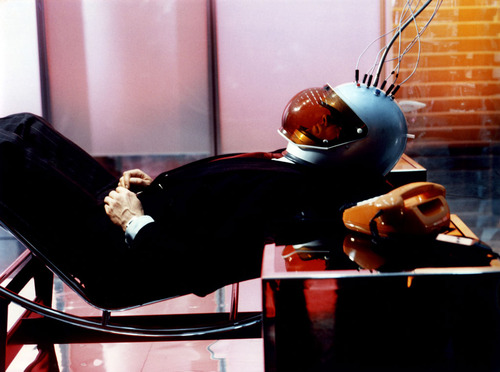
I’ve not read much sci-fi, so I’m not very familiar with The Forever War author Joe Haldeman. In a new new Wired podcast, the writer and Vietnam Vet shares his thoughts about warfare in this age of miracles and wonders, when science and science fiction are difficult to entangle. An excerpt:

‘I suspect that war will become obsolete only when something worse supercedes it,’ says Joe Haldeman in this week’s episode of the Geek’s Guide to the Galaxy podcast. ‘I’m thinking in terms of weapons that don’t look like weapons. I’m thinking of ways you could win a war without obviously declaring war in the first place.’

Increasingly sophisticated biological and nanotech weapons are one direction war might go, he says, along with advanced forms of propaganda and mind control that would persuade enemy soldiers to switch sides or compel foreign governments to accede to their rivals’ demands. It’s a prospect he finds chilling.

‘One hopes that they’ll never be able to use mind control weapons,’ says Haldeman, ‘because we’re all done for if that happens. I don’t want military people, or political people, to have that type of power over those of us who just get by from day to day.'”

Tags:

« Older entries § Newer entries »