Politics

You are currently browsing the archive for the Politics category.

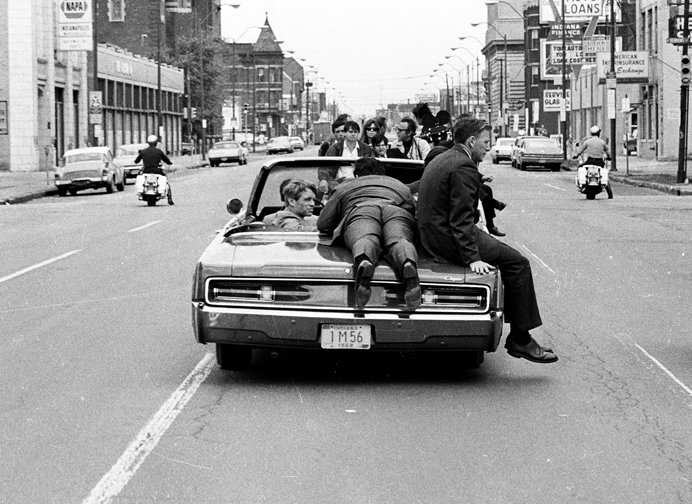
Jimmy Breslin, lying on trunk of car, interviewing, Robert F. Kennedy. (Image by Jim Hubbard.)

Fifty years to the day of John F. Kennedy’s assassination, here’s the opening of what’s arguably Jimmy Breslin’s most famous column, his 1963 profile of the quiet, sober work of the gravedigger at Arlington National Cemetery who attended to the President’s burial plot:

Washington — Clifton Pollard was pretty sure he was going to be working on Sunday, so when he woke up at 9 a.m., in his three-room apartment on Corcoran Street, he put on khaki overalls before going into the kitchen for breakfast. His wife, Hettie, made bacon and eggs for him. Pollard was in the middle of eating them when he received the phone call he had been expecting. It was from Mazo Kawalchik, who is the foreman of the gravediggers at Arlington National Cemetery, which is where Pollard works for a living. “Polly, could you please be here by eleven o’clock this morning?” Kawalchik asked. “I guess you know what it’s for.” Pollard did. He hung up the phone, finished breakfast, and left his apartment so he could spend Sunday digging a grave for John Fitzgerald Kennedy.

When Pollard got to the row of yellow wooden garages where the cemetery equipment is stored, Kawalchik and John Metzler, the cemetery superintendent, were waiting for him. “Sorry to pull you out like this on a Sunday,” Metzler said. “Oh, don’t say that,” Pollard said. “Why, it’s an honor for me to be here.” Pollard got behind the wheel of a machine called a reverse hoe. Gravedigging is not done with men and shovels at Arlington. The reverse hoe is a green machine with a yellow bucket that scoops the earth toward the operator, not away from it as a crane does. At the bottom of the hill in front of the Tomb of the Unknown Soldier, Pollard started the digging (Editor Note: At the bottom of the hill in front of the Custis-Lee Mansion).

Leaves covered the grass. When the yellow teeth of the reverse hoe first bit into the ground, the leaves made a threshing sound which could be heard above the motor of the machine. When the bucket came up with its first scoop of dirt, Metzler, the cemetery superintendent, walked over and looked at it. “That’s nice soil,” Metzler said. “I’d like to save a little of it,” Pollard said. “The machine made some tracks in the grass over here and I’d like to sort of fill them in and get some good grass growing there, I’d like to have everything, you know, nice.”•

Bruce Schneier, a security expert (online and offline), just did an Ask Me Anything at Reddit. The following is an exchange about post-9/11 airport security:

“Question:

I am of the opinion that our airport security is poorly designed and for the hassle passengers go through, we get minimal benefit. I feel like we react to specific circumstances to create an illusion of security and that perception is more important to the TSA than creating a constructive plan to deal with threats. I know you are a proponent of the fail well philosophy which accepts failure and tries to compartmentalize and minimize the damage. Based on this theory what should be the security steps that airports should be taking?

Bruce Schneier:

I think airport security should be rolled back to pre-9/11 levels, and all the money saved should be spent on things that work: intelligence, investigation, and emergency response.

Only two things have improved airplane security since 9/11: reinforcing the cockpit doors, and teaching passengers that they have to fight back. Everything else has been security theater.”


Tags:

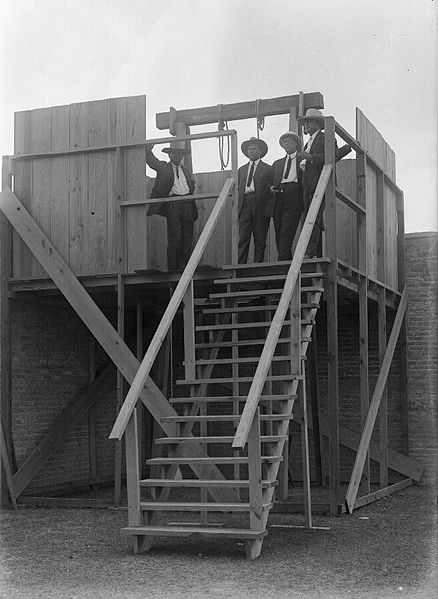
Jerry Givens, who served as Virginia’s executioner for nearly two decades, lives with regret. He now campaigns against capital punishment. Just one exchange from an Ask Me Anything he did at the Guardian:

Question:

Can you explain the difference between the types of executions you had to perform?

Answer:

When I first started, it was only death by electrocution. Electrocution consists of 2,400 to 3,000 volts. The condemned receives 45 seconds of a high volt shock and 45 seconds of the low cycle. It takes about 2.5 minutes. Then there is a five minute grace period to let the body cool down. Then a physician goes in the room with a stethoscope to see if there is a heartbeat. Back in the mid-1990s, Virginia decided to go with lethal injection instead. That consists of seven tubes that are injected into the left arm. Three tubes of chemicals and four that are flush. So you administer the first chemical (sodium pentothal), then a flush, then the second chemical (pancuronium), then a flush, then the third chemical (potassium chloride) and then a final flush at the end. You have to keep people who remove the body from being exposed to chemicals.

If I had a choice, I would choose death by electrocution. That’s more like cutting your lights off and on. It’s a button you push once and then the machine runs by itself. It relieves you from being attached to it in some ways. You can’t see the current go through the body. But with chemicals, it takes a while because you’re dealing with three separate chemicals. You are on the other end with a needle in your hand. You can see the reaction of the body. You can see it going down the clear tube. So you can actually see the chemical going down the line and into the arm and see the effects of it. You are more attached to it. I know because I have done it. Death by electrocution in some ways seems more humane.”

Tags:

One thing you can say assuredly about writer William T. Vollmann is that he’s enjoying a singular career. There’s no one else practicing his brand of gonzo ardor for the sad casualties of modern life, the geographically remote, the politically fraught and the historically arcane–no one else even trying, really. The opening of Alexander Nazaryan’s Newseek article about the writer, who’s just published The Book of Dolores, perhaps his most personal and idiosyncratic work to date:

“If William T. Vollmann ever wins the Nobel Prize in Literature – as many speculate he will – he knows exactly what he will do with the $1.1 million pot the Swedes attach to the award. ‘It will be fun to give some to prostitutes,’ he says, sitting on his futon, chuckling, a half-empty bottle of pretty good bourbon between us.

He is neither flippant nor drunk, though more booze awaits us out there in the temperate Sacramento twilight. Vollmann became famous for fiction that treated the sex worker as muse – especially the street stalker of those days in the Tenderloin of San Francisco when AIDS was just coming to haunt the national psyche and the yuppie invasion was a nightmare not yet hatched. His so-called prostitution trilogy – Whores for GloriaButterfly Stories, and The Royal Family – is overflowing with life and empathy, nothing like the backcountry machismo of Raymond Carver or fruitless experimentation of Donald Barthelme, both oh-so-popular with young writers when Vollmann first came on the scene after graduating from Cornell in 1981. He approached the prostitute like an anthropologist, yet did so without condescension, writing in Whores for Gloria, ‘The unpleasantnesses of her profession are largely caused by the criminal ambiance in which the prostitute must conduct it.’

He was a gonzo humanitarian, too: Vollmann once rescued a young Thai girl, Sukanja, from a rural brothel, installing her in a school in Bangkok; he later paid her father for ownership of the girl, essentially making himself the owner of another human being. (‘She loves the school,’ he told The Paris Review in 2000.) So if sex workers reap some of that Nobel money, it will be only be because they have long served as Vollmann’s subjects and companions, objects of his curiosity, his compassion, and, sometimes, his carnal impulses. He insists the last of these is not an occasion for shame. Of paying for sex, he once said, ‘We’re a culture of prostitutes.'”

Tags: ,

I mentioned Cliodynamics in a post yesterday, and the field’s founder, Peter Turchin, has a dark forecast about America’s future at Bloomberg. He sees economic inequality and other factors possibly renting us apart, even violently. As Jim McKay said when the horror of the 1972 Munich Olympics was complete, “Our greatest hopes and our worst fears are seldom realized.” But seldom doesn’t mean never. The opening:

“Complex human societies, including our own, are fragile. They are held together by an invisible web of mutual trust and social cooperation. This web can fray easily, resulting in a wave of political instability, internal conflict and, sometimes, outright social collapse.

Analysis of past societies shows that these destabilizing historical trends develop slowly, last many decades, and are slow to subside. The Roman Empire, Imperial China and medieval and early-modern England and France suffered such cycles, to cite a few examples. In the U.S., the last long period of instability began in the 1850s and lasted through the Gilded Age and the ‘violent 1910s.’

We now see the same forces in the contemporary U.S. Of about 30 detailed indicators I developed for tracing these historical cycles (reflecting popular well-being, inequality, social cooperation and its inverse, polarization and conflict), almost all have been moving in the wrong direction in the last three decades.

The roots of the current American predicament go back to the 1970s, when wages of workers stopped keeping pace with their productivity. The two curves diverged: Productivity continued to rise, as wages stagnated. The ‘great divergence‘ between the fortunes of the top 1 percent and the other 99 percent is much discussed, yet its implications for long-term political disorder are underappreciated. Battles such as the recent government shutdown are only one manifestation of what is likely to be a decade-long period.”

Tags:

In a new Economist essay, Adrian Wooldridge predicts that the tech sector will experience a backlash similar to what has been experienced by Wall Street and Big Oil, but I’m not convinced. A certain degree of blowback has already occurred, and it’s a deserved and healthy thing. Excesses of all kinds should be challenged, in Silicon Valley or anywhere else. Pre-philanthropy Bill Gates was a cutthroat jerk and Sean Parker is a narcissistic dunderhead. But the difference between bankers and techies is that the latter usually actually create something of value. And unlike fossil-fuel corporations, which damage the environment, the bigger tech companies (and many small start-ups) are aimed at making us greener. Those two factors will probably neutralize criticisms somewhat. From Wooldridge:

“Geeks have turned out to be some of the most ruthless capitalists around. A few years ago the new economy was a wide-open frontier. Today it is dominated by a handful of tightly held oligopolies. Google and Apple provide over 90% of the operating systems for smartphones. Facebook counts more than half of North Americans and Europeans as its customers. The lords of cyberspace have done everything possible to reduce their earthly costs. They employ remarkably few people: with a market cap of $290 billion Google is about six times bigger than GM but employs only around a fifth as many workers. At the same time the tech tycoons have displayed a banker-like enthusiasm for hoovering up public subsidies and then avoiding taxes. The American government laid the foundations of the tech revolution by investing heavily in the creation of everything from the internet to digital personal assistants. But tech giants have structured their businesses so that they give as little back as possible.”

Tags:

The above quote, not a fact obviously but an educated guess, was made by Princeton economist Angus Deaton during this week’s excellent EconTalk podcast. Host Russ Roberts and his guest talk about the topics covered in Deaton’s recent book, The Great Escape: Health, Wealth, and the Origins of Inequality: longevity, income disparity and the argument over whether investment in developing nations has made a real difference.

Great little facts about the hidden reasons for why we live longer. Example: In the early part of the 20th century, hotels didn’t change sheets between guests, which helped bacteria to thrive. There’s also discussion about how lifespans continue to grow with a Moore’s Law steadiness despite predictions to the contrary.

What’s left unsaid is that damage to environment or some calamity of disease or meteorite could halt progress in the quantity and quality of life. What are the odds of that? Are we prepared to prevent such doom?

Tags: ,

Vint Cerf, co-creator of the Internet, is saying what seems inarguable at this point–that technology has outpaced our capacity to control it, that privacy as we knew it isn’t coming back regardless of legislation, that we’re at the outset, for better or worse, of the new normal. From a BGR post by Brad Reed:

“While having a right to privacy sounds nice, the Internet’s co-creator thinks that it’s also unrealistic to expect your behavior to stay private if you engage in social networking and post through social media. Adweek’s Katy Bachman reports that during a panel at a Federal Trade Commission workshop on privacy in the age of wearable computers, tech industry legend Vint Cerf said that new technology means that ‘it will be increasingly difficult for us to achieve privacy’ and that ‘privacy may be an anomaly.'”

Tags: , ,

Nathaniel Rich has a post on the New Yorker blog about the field of disaster forecasting, which can be approached from many disciplines. (Even Cliodynamics, which focuses on mapping dynamics that are historical, can help us divine the future.). Of course, knowing doom is approaching isn’t the same thing as preventing it. From the post:

“The Philippines could have been better prepared, but the best preparation is no match for two-hundred-mile-per-hour winds.

Nevertheless, our knowledge of how disasters occur, and how they will occur in the future, has never been more sophisticated. We are now able to prophesy impending cataclysms with a specificity that would have been inconceivable just several years ago. Several factors have contributed to this progress: a growing public anxiety about disasters; advances in disciplines as disparate as computer science, fluid mechanics, and neuroscience; and an infusion of funding from governments, universities, and especially corporations, which have figured out that disaster planning saves money in the long run. But the field remains in its infancy. Disaster prediction—like disaster science, disaster economics, disaster-response technology, disaster art, disaster cinema, disaster lit—is a growth industry. All indications suggest a growth curve that will continue to steepen well into the next century. Disaster is big business, and its prophets will profit.

Milestones in the past year include the March publication, by a team of U.C.L.A. scientists, of a new computer model that predicts where the next global pandemic will originate.”

Tags:

At Practical Ethics, Luke J. Davies presents some ideas about science historian James Burke’s recent predictions for the year 2100 (which I posted here). An excerpt:

“The future Burke describes is a far cry from where we are now. It is at once highly technologized—his predictions are informed by a belief in, and enthusiasm for, the promise of nano-technology—and strangely bucolic. He imagines that nano-fabricators (machines that, with very little input, will be able to make anything we want) will lead to a self-sufficiency that will make governments unnecessary. Rather than crowding into big cities, people will spread out more evenly and in small communities. Burke’s future is one in which there is no poverty, or illness, or want. It is a place where people take up gardening because it would be ‘essential for the comfort of their soul. [He imagines the] planet as a giant untouched wilderness dotted with gardens.’

It is interesting that Burke seems to envision a world in which a technological solution has been given to a seemingly human problem—that of greed. His future is one in which we haven’t changed. Technology has changed so that our desire for material goods can be sated in a way that is both sustainable and egalitarian. (We might ask, in Hobbesian fashion, whether this abundance of material objects would just make us emphasize necessarily positional goods even more than we do now). Of course, Burke might be wrong about the promise of nano-technology. But, it would surprise me if he were wrong about the role of technology itself.”

Tags: ,

You like to believe that India sending rockets into space or South Africa building soccer stadiums for international competitions will bring something meaningful to poor people in those countries: infrastructure, information, medicine, money. That’s questionable, but even if that occurs, it’s painful to crane your neck past the horrors to get a good view of the action. But most of the Western reporting about such events focuses on the safety and comfort of the tourists, not the at-risk locals.

The opening of “A Yellow Card,” a Grantland essay by Brian Phillips, an uncommonly graceful writer, about the grandeur of the World Cup being visited upon the poverty of Brazil:

“Three points make a trend, but in a World Cup year, two points are good enough. So here’s one: Early on the morning of October 29, 31-year-old Geisa Silva, a social worker with the Brazilian military police, found her husband’s backpack on their front porch in Rio de Janeiro. Joao Rodrigo Silva Santos was a retired professional soccer player, a journeyman who’d spent most of his career knocking around the Brazilian lower leagues; post-retirement, he ran a food shop in the city’s Realengo neighborhood. He hadn’t come home the night before, and Silva had been worried, jumping up at the sound of every car. Before dawn, she got ready to leave for her job with a police unit responsible for conducting an anti-gang crackdown. When she opened the front door, she saw the backpack. It contained her husband’s severed head.

And here’s point two: Four months earlier, on the afternoon of June 30, during a pickup soccer game in the northeastern Brazilian municipality of Pio XII, a 19-year-old amateur referee named Otavio Jordao da Silva Cantanhede showed a yellow card to his friend, a player named Josemir Santos Abreu. Abreu protested. A fight broke out. Cantanhede pulled a knife and stabbed Abreu twice. Abreu died on the way to the hospital. In retaliation, a group of Abreu’s friends attacked Cantanhede. Cantanhede was — I’m quoting the New York Times — ‘tied up, smashed in the face with a bottle of cheap sugarcane liquor, pummeled with a wooden stake, run over by a motorcycle and stabbed in the throat.’ Then his legs were sawed off. Then his head was cut off and mounted on a wooden post near the field.

And here’s a quick question, just an aside. How do you feel, hearing these stories? I don’t mean how do you think you’re supposed to feel; I mean how do you feel, in fact? Are you intrigued? Disturbed? Sad? Curious? Titillated, in the way that horrifying real-life stories can sometimes leave you titillated? You don’t have to answer. Just think about it.”

Tags:

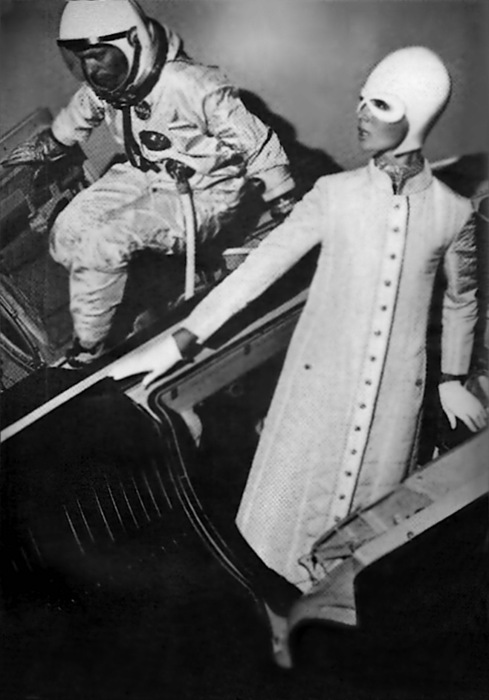
While Apollo 11 traveled to the moon and back in 1969, the astronauts were treated each day to a six-minute newscast from Mission Control about the happenings on Earth. Here’s one that was transcribed in Norman Mailer’s Of a Fire on the Moon, which made space travel seem quaint by comparison:

Washington UPI: Vice President Spiro T. Agnew has called for putting a man on Mars by the year 2000, but Democratic leaders replied that priority must go to needs on earth…Immigration officials in Nuevo Laredo announced Wednesday that hippies will be refused tourist cards to enter Mexico unless they take a bath and get haircuts…’The greatest adventure in the history of humanity has started,’ declared the French newspaper Le Figaro, which devoted four pages to reports from Cape Kennedy and diagrams of the mission…Hempstead, New York: Joe Namath officially reported to the New York Jets training camp at Hofstra University Wednesday following a closed-door meeting with his teammates over his differences with Pro Football Commissioner Pete Rozelle…London UPI: The House of Lords was assured Wednesday that a major American submarine would not ‘damage or assault’ the Loch Ness monster.”

Tags: ,

Google Glass, at least in its current form, is unlikely to gain traction–too geeky, too creepy–but small and powerful cameras on drones and autonomous machines will only grow more ubiquitous. That seems inevitable. The opening ofEvery Step You Take,from the Economist:

“‘THIS season there is something at the seaside worse than sharks,’ declared a newspaper in 1890. ‘It is the amateur photographer.’ The invention of the handheld camera appalled 19th-century society, as did the ‘Kodak fiends’ who patrolled beaches snapping sunbathers.

More than a century later, amateur photography is once more a troubling issue. Citizens of rich countries have got used to being watched by closed-circuit cameras that guard roads and cities. But as cameras shrink and the cost of storing data plummets, it is individuals who are taking the pictures.

Through a Glass, darkly

Some 10,000 people are already testing a prototype of Google Glass, a miniature computer worn like spectacles. It aims to replicate all the functions of a smartphone in a device perched on a person’s nose. Its flexible frame holds both a camera and a tiny screen, and makes it easy for users to take photos, send messages and search for things online.

Glass may fail, but a wider revolution is under way. In Russia, where insurance fraud is rife, at least 1m cars already have cameras on their dashboards that film the road ahead. Police forces in America are starting to issue officers with video cameras, pinned to their uniforms, which record their interactions with the public. Collar-cams help anxious cat-lovers keep tabs on their wandering pets. Paparazzi have started to use drones to photograph celebrities in their gardens or on yachts. Hobbyists are even devising clever ways to get cameras into space.”

The Robots Are Here” is an excellent, thought-provoking article by Tyler Cowen at Politico Magazine which considers what our progress with data and automation has wrought. If you’re not familiar with the George Mason economist’s work, this piece is a wonderful entry point. He begins by looking at the prescience of an Isaac Asimov story which predicted the intersection of deep data and the democratic process. An excerpt:

“Nearly 60 years after Asimov anticipated a decidedly dramatic intrusion of machines into our politics, we may not (yet) be offloading our democratic responsibilities to computers, but we are empowering them to reshape our economy and society in ways that could be just as profound. The rise of smart machines—technologies that encompass everything from artificial intelligence to industrial robots to the smartphones in our pockets—is changing how we live, work and play. Less acknowledged, perhaps, is what all this technological change portends: nothing short of a new political order. The productivity gains, the medical advances, the workplace reorganizations and the myriad other upheavals that will define the coming automation age will create new economic winners and losers; it will reorient our demographics; and undoubtedly, it will transform what we demand from our government.

The rise of the machines builds on deeper economic trends that are already roiling American society, including stagnant growth since 2001 and a greater openness to trade and foreign outsourcing. But it’s the rapid increase in machines’ ability to substitute for intelligent human labor that presages the greater disruption. We’re on the verge of having computer systems that understand the entirety of human ‘natural language,’ a problem that was considered a very tough one only a few years ago. We’re close to the point when we can fit the (articulable) knowledge of the entire world into the palm of our hands. Self-driving cars are making their way onto streets in California and Nevada. Whether you are a factory worker or an accountant, a waitress or a doctor, this is the wave that will lift you or dump you.”

Tags: ,

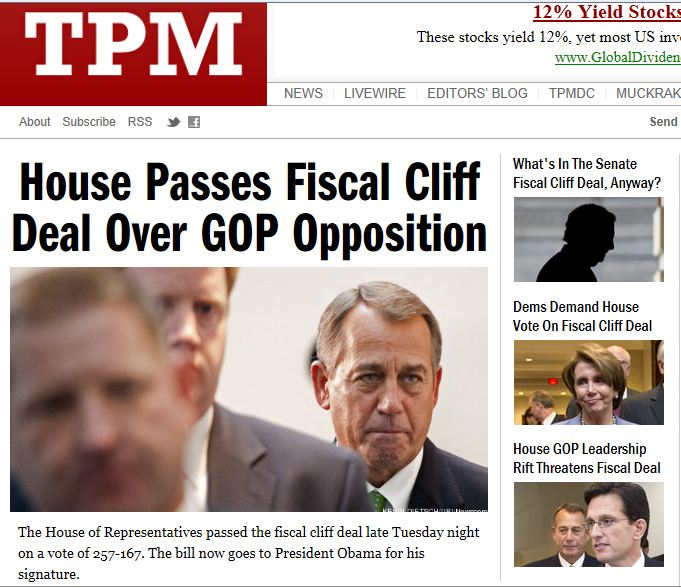
Language is a funny thing, and there’s no way that Walter H. Stern could have guessed that a phrase he came up with 56 years ago would be the lead of his obituary in 2013. From Margalit Fox in the New York Times:

“In fact, the first known print citation, the O.E.D. goes on to say, appeared more than half a century ago, on Oct. 20, 1957, on the front page of The Times.

‘To the prospective home owner wondering whether the purchase of a given house will push him over the fiscal cliff,’ the article begins, ‘probably the most difficult item to estimate is his future property tax.’

The man who wrote that article — and in so doing gave life to a phrase that has lately poured from the lips of pundits, politicians and the public worldwide — was Walter H. Stern, a former real estate writer for The Times who died last Saturday at 88.

Mr. Stern was associated with The Times from 1942 until 1961, when he left to pursue a career in public relations. What he could scarcely have known that day in 1957 was that in the course of writing an analytical article about taxation, he built a small but powerful lexicographic time bomb.

‘Fiscal cliff’ lay largely dormant for decades, cropping up in The Times on only seven more occasions through the end of 2011.

Then it exploded.”

Tags: ,

From an Ask Me Anything at Reddit that Sarah Kliff, Washington Post health reporter, just did about the Affordable Care Act:

Question:

Does the success/failure of healthcare.gov necessarily guarantee the success/failure of the ACA?

Sarah Kliff:

Great question. I would say that the success/failure of healthcare.gov is tied to the success/failure of the ACA in that it’s a doorway to purchasing coverage under the new law. If people can’t get into the store, then there’s not much of a shot at expanding health insurance coverage.

The assumption is that, at some point, the site will be fixed (what point is another excellent question). And then we’ll get a sense of whether the products being sold on healthcare.gov are ones that Americans want to purchase. But without a functioning store, it’s hard to get a good gauge of interest.”

Tags:

Hans Rosling, he of the famous TED Talk about washing machines, presents five reasons to be optimistic about the future of the world and its inhabitants, for the BBC Magazine. Here’s the opening entry, about population, a tricky subject that often makes fools of analysts:

“1. Fast population growth is coming to an end

It’s a largely untold story – gradually, steadily the demographic forces that drove the global population growth in the 20th Century have shifted. Fifty years ago the world average fertility rate – the number of babies born per woman – was five. Since then, this most important number in demography has dropped to 2.5 – something unprecedented in human history – and fertility is still trending downwards. It’s all thanks to a powerful combination of female education, access to contraceptives and abortion, and increased child survival.

The demographic consequences are amazing. In the last decade the global total number of children aged 0-14 has levelled off at around two billion, and UN population experts predict that it is going to stay that way throughout this century. That’s right: the amount of children in the world today is the most there will be! We have entered into the age of Peak Child! The population will continue to grow as the Peak Child generation grows up and grows old. So most probably three or four billion new adults will be added to the world population – but then in the second half of this century the fast growth of the world population will finally come to an end.”

Tags:

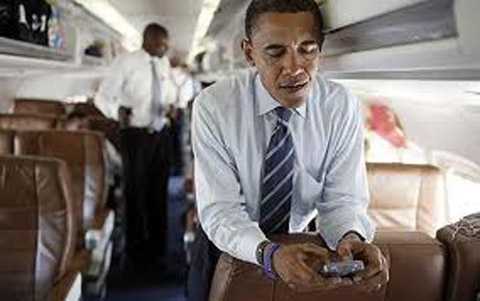
Abraham Lincoln, an early adopter of technology, didn’t have to worry about electronic surveillance intercepting his telegraphs, but President Obama has no such luxury. The U.S. has been pilloried recently for spying on our allies, but every nation is likely doing it. You know why? Because we can. From Michael S. Schmidt and Eric Schmitt in the New York Times:

WASHINGTON — When President Obama travels abroad, his staff packs briefing books, gifts for foreign leaders and something more closely associated with camping than diplomacy: a tent.

Even when Mr. Obama travels to allied nations, aides quickly set up the security tent — which has opaque sides and noise-making devices inside — in a room near his hotel suite. When the president needs to read a classified document or have a sensitive conversation, he ducks into the tent to shield himself from secret video cameras and listening devices.

American security officials demand that their bosses — not just the president, but members of Congress, diplomats, policy makers and military officers — take such precautions when traveling abroad because it is widely acknowledged that their hosts often have no qualms about snooping on their guests.”

Tags: , , ,

From a lively Financial Times essay by Izabella Kaminska about the next three decades before us and the disruption and challenges we’re likely to experience:

“I am in New York to participate in a ‘future of work’ inquiry. Fittingly, among the movies I digest on my United flight from Geneva is the The Internship, about a couple of forty-something salesmen who, realising they have no skills for the modern digital workplace, decide to fling themselves headfirst into a Google internship programme.

The future of work event gets me thinking, more than usual, about what we can expect of the world in 30 years. One thing most of us agree upon is that technological disruption is already having a meaningful impact on our modern definition of employment. Whether it’s The Jetsons’ two-hour working week that will soon be upon us, or a divided dystopia made up of a working underclass serving the leisure elite, depends increasingly on the choices we make today. Will my goddaughter even have a career to look forward to, let alone anything remotely resembling a job? A like-minded futurist who has some authority in employment matters convinces me it’s best to be optimistic. As the economist John Maynard Keynes predicted, technology has the potential to free mankind from the drudgery of uncreative work – providing, of course, that society finds a way to ensure that technological power doesn’t end up being overly concentrated in too few hands.”

Tags:

Privacy as we knew it is gone, and no amount of legislation will change that–not for nations, corporations or individuals. It’s sort of like outlawing hammers in a kingdom of nails.  And it was all done out in the open. We agreed to it, at least tacitly.

The opening of “Privacy Isn’t a Right,” Josh Klein’s Slate essay about the way it is now:

“Privacy isn’t your right anymore. We sold it for pictures of cats and the ability to tell anyone in the free world what we had for breakfast.

I’m not saying it was a bad trade, either. The Internet as we know it came about through the monetization of metadata—information about us—instead of by replicating traditional models of content sales. As a result the Internet exploded into a plethora of useful services and platforms of every shape, size, and description. What’s more, it was a great leveler—nobody had more valuable personal information than anybody else, so everyone was able to trade it in for the same kinds of services. 

The problem with all this is that ‘privacy’ as a notion was abdicated the instant you clicked ‘agree’ to the online services agreement you didn’t read. And yet most consumers haven’t yet realized that their date has left the restaurant and they’re stuck with the bill.”

Tags:

I’ve written before that I don’t think it’s clear how we reconcile an automated society and a capitalist one. We managed to reinvent work in America during the Industrial Revolution by throwing ourselves into new information businesses (marketing, public relations, advertising, etc.). Perhaps such alternatives will emerge again. If not, we need to reconfigure our economic model, maintaining free markets but sharing the wealth somehow. Otherwise inequality will reach traumatic levels. At the New Yorker blog, Joshua Rothman interviews Tyler Cowen about these issues and others. I have questions about Cowen’s vision of America’s future, but he always makes intelligent points. The interview’s opening:

Question:

In Average Is Over, you argue that inequality will grow in the U.S. for the next several decades. Why?

 Tyler Cowen:

There are three main reasons inequality is here to stay, and will likely grow. The first is just measurement of worker value. We’re doing a lot to measure what workers are contributing to businesses, and, when you do that, very often you end up paying some people less and other people more. The second is automation—especially in terms of smart software. Today’s workplaces are often more complicated than, say, a factory for General Motors was in 1962. They require higher skills. People who have those skills are very often doing extremely well, but a lot of people don’t have them, and that increases inequality. And the third point is globalization. There’s a lot more unskilled labor in the world, and that creates downward pressure on unskilled labor in the United States. On the global level, inequality is down dramatically—we shouldn’t forget that. But within each country, or almost every country, inequality is up.

 Question:

You think that intelligent software, especially, will make the labor market more unequal. Why is that the case?

 Tyler Cowen:

Because of the cognitive requirements of working with smart software. And it’s also about training. There’s a big digital divide in this country.”

Tags: ,

Relatively wealthy nations benefit from ambitious space programs, even if it does test the conscience to send Whitey to the moon while sister Nell is nursing rat bites. But what about a relatively poor country like India, with its ambitions for space missions? Can that be justified? A rationale from the Economist:

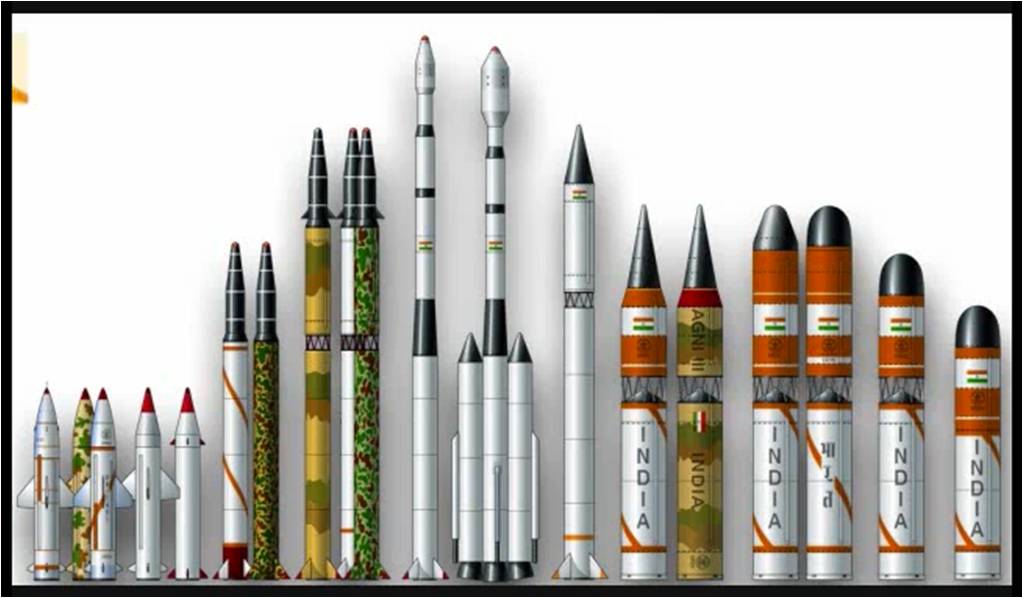
“From a distance, India’s extra-terrestrial ambitions might seem like a waste of money. The country still has immense numbers of poor people: two-fifths of its children remain stunted from malnutrition and half the population lack proper toilets. Its Mars mission may be cheap by American (or Chinese) standards, at just $74m, but India’s overall space programme costs roughly $1 billion a year. That is more than spare change, even for a near $2-trillion economy. Meanwhile, spending on public health, at about 1.2% of GDP, is dismally low. What if the 16,000 scientists and engineers now working on space development were deployed instead to fix rotten sanitation? And why should donors bother to help tackle poverty where governments have enough spare resources to think about space? For some countries, at least, decent answers exist to such questions. Trips to the Moon and Mars may well be mostly about showing off. But most space programmes are designed to get satellites into Earth’s orbit for the sake of better communications, mapping, weather observation or military capacity at home. These bring direct benefits to ordinary people. Take one recent example: a fierce cyclone that hit India’s east coast last month killed few, whereas a similar-strength one in the same spot, in 1999, killed over 10,000. One reason for the improvement was that Indian weather satellites helped to make possible far more accurate predictions of where and when the storm would hit. Otherwise, improved data on monsoon rains, or generally shifting weather patterns, can help even the poorest farmers have a better idea of when to plant crops.

A manufacturing job can disappear, an autonomous machine replacing a human worker, but will people invite the transition, will they hand over the wheel? The technology for driverless cars is close, but questions remain, both legal and practical. In the latter category: Driverless vehicles are so good environmentally because they crash so infrequently that they can be far lighter which means they’ll require less fuel. But how can cars be made so lightweight if we’re still split between autonomous vehicles and human-guided ones? From Kevin Robillard at Politico:

“Driverless cars are poised to begin transforming the nation’s roadways before the end of the decade, a major transportation group said Wednesday, but a top federal transportation official warned things might not be so easy.

The Eno Center for Transportation released a paper that predicted a nation full of driverless ‘autonomous’ vehicles could save $447 billion and 21,700 lives annually by preventing 4.2 million crashes and reducing fuel consumption by 724 million gallons. Still, switching from highways full of drivers to highways full of computers won’t be simple.

‘We’re looking at the introduction of AVs by the end of the decade,’ Daniel Fagnant, the paper’s author, said at an event Wednesday.

The switch to autonomous vehicles comes with enough potential benefits to make transportation policymakers giddy. Computers don’t get drunk, fall asleep or get distracted by text messages. They can stay a precise distance away from the car in front of them, reducing time and fuel wasted by congestion.

The headache comes in getting there.”

Tags:

Some more predictions from Norman Mailer’s 1970 Space Age reportage, Of a Fire on the Moon, which have come to fruition even without the aid of moon crystals:

“Thus the perspective of space factories returning the new imperialists of space a profit was now near to the reach of technology. Forget about diamonds! The value of crystals grown in space was incalculable: gravity would not be pulling on the crystal structure as it grew, so the molecule would line up in lattices free of  shift or sheer. Such a perfect latticework would serve to carry messages for a perfect computer. Computers the size of a package of cigarettes would then be able to do the work of present computers the size of a trunk. So the mind could race ahead to see computers programming go-to-school routes in the nose of every kiddie car–the paranoid mind could see crystal transmitters sewn into the rump of ever juvenile delinquent–doubtless, everybody would be easier to monitor. Big Brother could get superseded by Moon Brother–the major monitor of them all might yet be sunk in a shaft on the back face of the lunar sphere.”

Tags:

Because Bill Gates has only done three million interviews thus far in his life, the Financial Times’ headline writers thought they should label the paper’s new dialogue with him as “exclusive.” The crux of the discussion is an interesting one: Is it more important to give poor people access to the Internet or give them malaria medicine. If you have malaria, it’s a pretty easy choice. But I do think providing information where there is little empowers people. Sure, food, water and medicine first, but then let’s share the Internet. From Richard Waters “exclusive”:

“There is no getting round the fact, however, that Gates often sounds at odds with the new generation of billionaire technocrats. He was the first to imagine that computing could seep into everyday life, with the Microsoft mission to put a PC on every desk and in every home. But while others talk up the world-changing power of the internet, he is under no illusions that it will do much to improve the lives of the world’s poorest.

‘Innovation is a good thing. The human condition – put aside bioterrorism and a few footnotes – is improving because of innovation,’ he says. But while ­’technology’s amazing, it doesn’t get down to the people most in need in anything near the timeframe we should want it to.’

It was an argument he says he made to Thomas Friedman as The New York Times columnist was writing his 2005 book, The World is Flat, a work that came to define the almost end-of-history optimism that accompanied the entry of China and India into the global labour markets, a transition aided by the internet revolution. ‘Fine, go to those Bangalore Infosys centres, but just for the hell of it go three miles aside and go look at the guy living with no toilet, no running water,’ Gates says now. ‘The world is not flat and PCs are not, in the hierarchy of human needs, in the first five rungs.’ “

Tags: ,

« Older entries § Newer entries »