Politics

You are currently browsing the archive for the Politics category.

In time, we’ll all be enhanced–and not just our bodies. It won’t be cheating but improvement. Necessary even, for survival. From Anders Sandberg’s new Practical Ethics post about Transhumanism and performance enhancement:

“If we were to make a choice behind a veil of ignorance between a world where there was more talent to go around and a world with less talent, it seems that the reasonable choice is to choose the world of talent. We would probably also want to choose a world where talent was more equally distributed than one where it was less equal. But even the less talented people in a talented but unequal world could benefit from the greater prosperity and creativity.

In practice talent needs plenty of help to develop: without support and good teachers innate potential is unlikely to matter. So the ability to help kids develop their potential (and help them overcome their less able sides) is important for actualizing that talent. Without it none of the above worlds would be preferable. But figuring out how to cultivate and stimulate kids is hard. Hence, any information that could help do this better would be welcome.

So my basic stance is that if genetic information could personalize education well, go for it!

But… I am less convinced than the geneticists that we can actually do it, at least in the near future.”

Tags:

When he wrote about the coming computer revolution of the 1970s at the outset of the decade in Of a Fire on the Moon, Norman Mailer couldn’t have known that the dropouts and the rebels would be leading the charge. An excerpt of his somewhat nightmarish view of our technological future, some parts of which came true and some still in the offing:

“Now they asked him what he thought of the Seventies. He did not know. He thought of the Seventies and a blank like the windowless walls of the computer city came over his vision. When he conducted interviews with himself on the subject it was not a despair he felt, or fear–it was anesthesia. He had no intimations of what was to come, and that was conceivably worse than any sentiment of dread, for a sense of the future, no matter how melancholy, was preferable to none–it spoke of some sense of the continuation in the projects of one’s life. He was adrift. If he tried to conceive of a likely perspective in the decade before him, he saw not one structure to society but two: if the social world did not break down into revolutions and counterrevolutions, into police and military rules of order with sabotage, guerrilla war and enclaves of resistance, if none of this occurred, then there certainly would be a society of reason, but its reason would be the logic of the computer. In that society, legally accepted drugs would become necessary for accelerated cerebration, there would be inchings toward nuclear installation, a monotony of architectures, a pollution of nature which would arouse technologies of decontamination odious as deodorants, and transplanted hearts monitored like spaceships–the patients might be obliged to live in a compound reminiscent of a Mission Control Center where technicians could monitor on consoles the beatings of a thousand transplanted hearts. But in the society of computer-logic, the atmosphere would obviously be plastic, air-conditioned, sealed in bubble-domes below the smog, a prelude to living on space stations. People would die in such societies like fish expiring on a vinyl floor. So of course there would be another society, an irrational society of dropouts, the saintly, the mad, the militant and the young. There the art of the absurd would reign in defiance against the computer.”

Tags:

I thought Jon Stewart handled his recent interview with conservative pundit Charles Krauthammer better than most so-called real journalists would. He almost always outdoes them, of course. But there was one point he let slide that I wished he would have jumped on. Krauthammer’s disdain for what Obamacare will do to policy in the course of granting affordable insurance to tens of millions led him down a dead-end alley–and a familiar one at that.

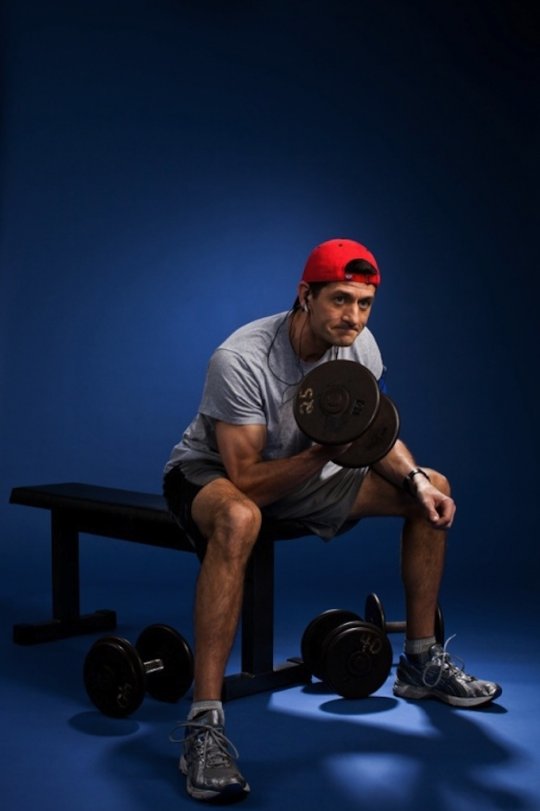
First, he claimed that Republicans really do want health care for all Americans. That may be true for Krauthammer personally, but it certainly isn’t of members of his party with voting power in Washington. But it’s not likely that the talking head wants health care for all, either, since he followed up with his contention by using the Ryan budgets of an example of how more Americans could be insured. That’s just an outright lie. First an excerpt from Jonathan Cohn at the New Republic and then the Stewart-Krauthammer meeting.

“Start with the federal budgets crafted by Paul Ryan. You remember those, right? Those proposals passed through the House with unanimous Republican support and were, in 2012, a basis of the Republican presidential platform. Those budgets called for dramatic funding cuts to Medicaid. If Republicans had swept into power and enacted such changes, according to projections prepared by Urban Institute scholars and published by the Kaiser Family Foundationbetween 14 and 20 million Medicaid recipients would lose their insurance. And that doesn’t even include the people who are starting to get Medicaid coverage through Obamacare’s expansions of the program. That’s another 10 to 17 million people.”

Tags: ,

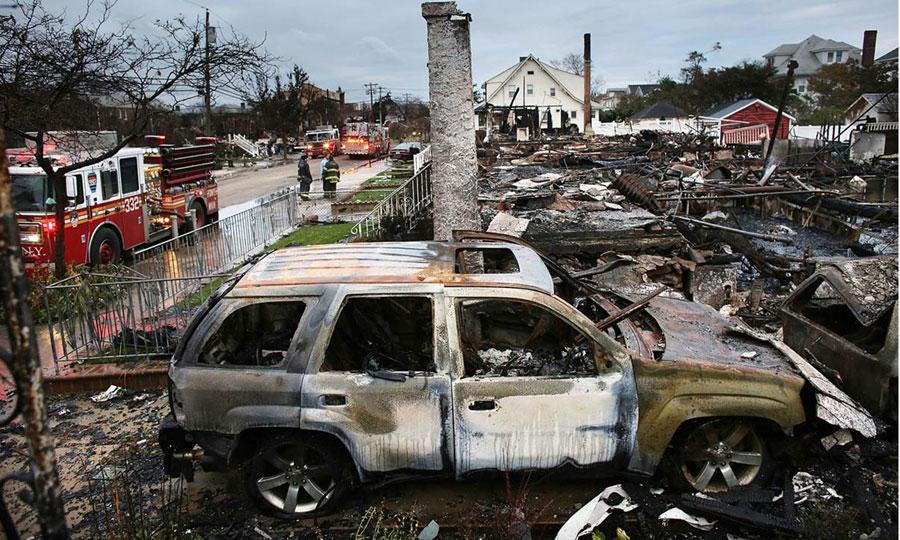
It was a year ago today that several of my relatives, in harm’s way of Hurricane Sandy, literally ran for their lives, fanning out from flood zones into the darkness of a city that quickly came to resemble a necropolis. Their homes and many others have not yet been fully repaired, and, worse yet, the toll on their health was even more severe. Two members of my immediate family who were in the storm’s path nearly died in emergency rooms in the ten months after the ferocious storm, suffering from unusual bacterial illnesses that may have been caused by the flood waters or clean-up efforts. No one’s sure. Having spent nearly two months visiting hospitals, I can’t quite count the number of patients and medical personnel who told me they still hadn’t rebuilt their houses, hadn’t yet recovered their health, their wits. The storm doesn’t end when the winds and rains die down–that’s just the beginning. And I will never forget how Paul Ryan and others voted against Sandy relief as people desperately searched for help. How many of these people self-identify as Christians when campaigning?

From Amy Davidson at the New Yorker blog:

“Well over a hundred people were killed by the storm, and the indirect toll, though harder to measure, was greater. The mortality rate in that Coney Island nursing home, according to a new report from NY1, was higher in the weeks and months after Sandy than it had any right to be. Since the storm, evacuation maps have been redrawn, subway tunnels are still being repaired (after a heroic effort to reopen them in those first days), and New York is inching toward a discussion of what a world of climate change, with rising sea levels and more extreme weather, means for a metropolis built on one of the planet’s best natural harbors. But perhaps the greatest mistake would be to reminisce only about the ways that the storm created unity and division, rather than looking critically at how it interacted with the city’s persistent inequalities. There is a reason that the tale of two cities has been one of the motifs of this year’s mayoral campaign—and it has nothing to do with just where the lights went out.”

Tags: ,

The opening ofConfessions of a Drone Warrior,” Matthew Power’s GQ article about Brandon Bryant, one of the first recruits into the new world of push-button war, a fighter pilot who never had to board the plane, and one who could barely see the carnage in the corner of a screen:

“From the darkness of a box in the Nevada desert, he watched as three men trudged down a dirt road in Afghanistan. The box was kept cold—precisely sixty-eight degrees—and the only light inside came from the glow of monitors. The air smelled spectrally of stale sweat and cigarette smoke. On his console, the image showed the midwinter landscape of eastern Afghanistan’s Kunar Province—a palette of browns and grays, fields cut to stubble, dark forests climbing the rocky foothills of the Hindu Kush. He zoomed the camera in on the suspected insurgents, each dressed in traditional shalwar kameez, long shirts and baggy pants. He knew nothing else about them: not their names, not their thoughts, not the thousand mundane and profound details of their lives.

He was told that they were carrying rifles on their shoulders, but for all he knew, they were shepherd’s staffs. Still, the directive from somewhere above, a mysterious chain of command that led straight to his headset, was clear: confirmed weapons. He switched from the visible spectrum—the muted grays and browns of ‘day-TV’—to the sharp contrast of infrared, and the insurgents’ heat signatures stood out ghostly white against the cool black earth. A safety observer loomed behind him to make sure the ‘weapon release’ was by the book. A long verbal checklist, his targeting laser locked on the two men walking in front. A countdown—three…two…one…—then the flat delivery of the phrase ‘missile off the rail.’ Seventy-five hundred miles away, a Hellfire flared to life, detached from its mount, and reached supersonic speed in seconds. 

It was quiet in the dark, cold box in the desert, except for the low hum of machines.

He kept the targeting laser trained on the two lead men and stared so intently that each individual pixel stood out, a glowing pointillist dot abstracted from the image it was meant to form. Time became almost ductile, the seconds stretched and slowed in a strange electronic limbo. As he watched the men walk, the one who had fallen behind seemed to hear something and broke into a run to catch up with the other two. Then, bright and silent as a camera flash, the screen lit up with white flame. 

Airman First Class Brandon Bryant stared at the scene, unblinking in the white-hot clarity of infrared. He recalls it even now, years later, burned into his memory like a photo negative: ‘The smoke clears, and there’s pieces of the two guys around the crater. And there’s this guy over here, and he’s missing his right leg above his knee. He’s holding it, and he’s rolling around, and the blood is squirting out of his leg, and it’s hitting the ground, and it’s hot. His blood is hot. But when it hits the ground, it starts to cool off; the pool cools fast. It took him a long time to die. I just watched him. I watched him become the same color as the ground he was lying on.’ “
Tags: ,

If you want to complain about having to help foot the bill for other people’s health insurance in a universal system, you probably should not be overweight or a smoker or sedentary or involved in any other risky behaviors. Otherwise other people who are healthier will be helping to subsidize the care you will need. Likewise, those who don’t drive help pay the way for those who do, pitching in for infrastructure they don’t use. A collective is never completely even in every way, but it’s how we get things done. It’s the greater good.

But technology is making it easier for us to assess individual cost. A company called True Mileage enables states to install a box in every automobile that measures mileage. Those who drive the most will be taxed the highest. The opening of a Los Angeles Times story by Evan Halper about Washington State enacting such a plan:

Washington — As America’s road planners struggle to find the cash to mend a crumbling highway system, many are beginning to see a solution in a little black box that fits neatly by the dashboard of your car.

The devices, which track every mile a motorist drives and transmit that information to bureaucrats, are at the center of a controversial attempt in Washington and state planning offices to overhaul the outdated system for funding America’s major roads.

The usually dull arena of highway planning has suddenly spawned intense debate and colorful alliances. Libertarians have joined environmental groups in lobbying to allow government to use the little boxes to keep track of the miles you drive, and possibly where you drive them — then use the information to draw up a tax bill.

The tea party is aghast. The American Civil Liberties Unionis deeply concerned, too, raising a variety of privacy issues.

And while Congress can’t agree on whether to proceed, several states are not waiting. They are exploring how, over the next decade, they can move to a system in which drivers pay per mile of road they roll over. Thousands of motorists have already taken the black boxes, some of which have GPS monitoring, for a test drive.”

Tags:

Google is chiefly interested in accurately answering your requests because your questions have monetary potential, with predictive powers labeling you someone who likely is (or likely to become) a vegan or a yoga enthusiast, or, perhaps, a criminal. And so much the better if Big Data can figure this out before your first salad or downward dog or burglary. You aren’t just what you do but what the algorithms say you are likely to do. So, now, questions are treated like answers. From Sue Halpern in the New York Review of Books:

“The social Web celebrated, rewarded, routinized, and normalized this kind of living out loud, all the while anesthetizing many of its participants. Although they likely knew that these disclosures were funding the new information economy, they didn’t especially care. As John Naughton points out in his sleek history From Gutenberg to Zuckerberg: What You Really Need to Know About the Internet:

Everything you do in cyberspace leaves a trail, including the ‘clickstream’ that represents the list of websites you have visited, and anyone who has access to that trail will get to know an awful lot about you. They’ll have a pretty good idea, for example, of who your friends are, what your interests are (including your political views if you express them through online activity), what you like doing online, what you download, read, buy and sell.

In other words, you are not only what you eat, you are what you are thinking about eating, and where you’ve eaten, and what you think about what you ate, and who you ate it with, and what you did after dinner and before dinner and if you’ll go back to that restaurant or use that recipe again and if you are dieting and considering buying a Wi-Fi bathroom scale or getting bariatric surgery—and you are all these things not only to yourself but to any number of other people, including neighbors, colleagues, friends, marketers, and National Security Agency contractors, to name just a few.”


Tags: ,

Like all places where pioneers land, someday the Internet will be relatively civilized. Not completely, but relatively. I’m not talking about mean comments and trolling but about the larger issues of control. That’s both a good and bad thing. You certainly don’t want cybercrimes and predatory behavior, but the unfettered, decentralized, anonymous rush of the new medium was exhilarating and led to all kinds of insurgent creativity. Bruce Schneier, the Internet security expert, just published an article for the Atlantic about the struggle for power over the Internet, which he sees as tilting in favor of corporations and governments over individuals. It’s hard to argue with his scorekeeping. The opening:

“We’re in the middle of an epic battle for power in cyberspace. On one side are the traditional, organized, institutional powers such as governments and large multinational corporations. On the other are the distributed and nimble: grassroots movements, dissident groups, hackers, and criminals. Initially, the Internet empowered the second side. It gave them a place to coordinate and communicate efficiently, and made them seem unbeatable. But now, the more traditional institutional powers are winning, and winning big. How these two side fare in the long term, and the fate of the rest of us who don’t fall into either group, is an open question—and one vitally important to the future of the Internet.

In the Internet’s early days, there was a lot of talk about its ‘natural laws’—how it would upend traditional power blocks, empower the masses, and spread freedom throughout the world. The international nature of the Internet bypassed circumvented national laws. Anonymity was easy. Censorship was impossible. Police were clueless about cybercrime. And bigger changes seemed inevitable. Digital cash would undermine national sovereignty. Citizen journalism would topple traditional media, corporate PR, and political parties. Easy digital copying would destroy the traditional movie and music industries. Web marketing would allow even the smallest companies to compete against corporate giants. It really would be a new world order.

This was a utopian vision, but some of it did come to pass. Internet marketing has transformed commerce. The entertainment industries have been transformed by things like MySpace and YouTube, and are now more open to outsiders. Mass media has changed dramatically, and some of the most influential people in the media have come from the blogging world. There are new ways to organize politically and run elections. Crowdfunding has made tens of thousands of projects possible to finance, and crowdsourcing made more types of projects possible. Facebook and Twitter really did help topple governments.

But that is just one side of the Internet’s disruptive character. The Internet has emboldened traditional power as well.”

Tags:

President Obama believes in Affirmative Action and improving health care and the environment, but so did President Nixon. Before big money, lobbyists and religion became entrenched in American politics, there was common ground. The opening of “Fighting to Save the Earth From Man,” a gated article from the February 20, 1970 issue of Time:

“The great question of the ’70s is:

Shall we surrender to our surroundings or shall we make our peace with nature and begin to make reparations for the damage we have done to our air, to our land and to our water?

—State of the Union Message

NIXON’S words come none too early. The U.S. environment is seriously threatened by the prodigal garbage of the world’s richest economy. In the President’s own boyhood town of Whittier, a part of metropolitan Los Angeles, the once sweet air is befouled with carbon monoxide, hydrocarbons, lead compounds, sulfur dioxide, nitrogen oxides, fly ash, asbestos particulates and countless other noxious substances. The Apollo 10 astronauts could see Los Angeles as a cancerous smudge from 25,000 miles in outer space. Airline pilots say that whisky-brown miasmas, visible from 70 miles, shroud almost every U.S. city, including remote towns like Missoula in Montana’s ‘big sky’ country. What most Americans now breathe is closer to ambient filth than to air.

The environment may well be the gut issue that can unify a polarized nation in the 1970s. It may also divide people who are appalled by the mess from those who have adapted to it. No one knows how many Americans have lost all feeling for nature and the quality of life. Even so, the issue now attracts young and old, farmers, city dwellers and suburban housewives, scientists, industrialists and blue-collar workers. They know pollution well. It is as close as the water tap, the car-clogged streets and junk-filled landscape—their country’s visible decay, America the Ugly.

Politicians have got the message.”

Tags: ,

At the New Yorker blog, Kirk Kardashian takes a dour view of electric vehicles, though I think he gives short shrift to the early sales numbers of the current EVs and doesn’t explore the longer-term possibilities of solar being used to create electricity, which would eliminate much of the pollution created by electric. And does it make any sense that the price of EVs won’t continue to drop as manufacturers learn more about the process and materials? It certainly would be an extreme outlier in tech if that didn’t happen. From his piece:

“Given the cost and ineffectiveness of E.V.s, and the failure of the highest-profile attempt to address that problem, automakers seem at a loss about how to get more people to drive electric cars. They’ve focussed on government incentives, like a seventy-five-hundred-dollar tax credit on the purchase of a new E.V. These are well-intentioned: one of government’s roles is to get people to behave in ways that make the world better, and electric cars—which are about three times as fuel efficient as non-hybrid gasoline cars—serve that purpose, because they produce no exhaust. The Nissan Leaf, for instance, has an efficiency rating of a hundred and twenty-nine miles per gallon.

But questions persist about whether electric cars are really better for the environment, particularly if you take into account the environmental cost of creating electricity in the first place. (Fuel-efficiency ratings don’t consider this.) Replacing an internal-combustion-engine vehicle with an electric car transfers the emissions from the tailpipe to the smokestacks of the power plants that feed the electric grid. In the U.S., a majority of power plants use fossil fuel to generate electricity, and their greenhouse-gas emissions are declining slower than emissions from automobiles. Therefore, as [John] DeCicco found in a recent study published in the journal Energy Policy, the U.S. electric grid produces twice as much carbon dioxide as burning gasoline for each unit of energy. ‘The benefits to shifting to another kind of fuel depend critically on the emissions in the sectors that produce those fuels,’ DeCicco told me.

Meanwhile, gasoline-powered cars are becoming more efficient all the time. That’s good for the environment and consumers, but probably frustrating for E.V. engineers, as their central competition—internal-combustion engines—is better funded, improving quickly, and supported by a hundred and sixty-eight thousand quick-charge spots known as gas stations.

Tags: ,

I really enjoyed “Why Texas Is Our Future,” economist Tyler Cowen’s Time cover story about the Lone Star State becoming the template for America, but I have to wonder if Texas is even the future of Texas, let alone the rest of the country. I’m not saying demographic shifts will completely change its nature–some things are deeply ingrained–but I wonder if the state will always be so red. It may have been better for Time to do a split-cover issue asking if Texas or California will be America’s future. (Though Massachusetts may actually have them both beat.) A few more quick questions and comments about the piece:

  • Growing Mexican-American voting power goes unmentioned. It likely won’t help Republicans in that state or nationally in the near future.
  • The politicians who favor the type of policies Cowen thinks are the future (low taxes, little or no social safety net) are also usually the same ones with extreme views on social policies. You can’t uncouple the two and far-right stances on reproductive rights and immigration and race and education and child health care may cost them at the ballot box.
  • You can’t assume that the influx of new citizens from disparate places to Texas won’t alter its political landscape. New arrivals may initially be attracted by no state income taxes, but they may grow weary of some of its less-appealing side effects.
  • It’s hard to see how Texas’ seemingly endless cheap land could apply to most smaller American states. The supply just isn’t there. Zoning-law changes can help somewhat, but you can do just so much with so little.
  • Citizens moving to Texas in large numbers is impressive, but many more people just voted against the Texas model in the last Presidential election. And, no, it was not just about the candidates’ personalities.
  • On this passage: “The individuals moving up the economic ladder are the ones who’ve responded to this competition by upgrading their skills and efforts. The ones moving down are largely those who have failed or been unable to respond at all.” I know people like Cowen who have been successful for a long time believe stuff like this, but it just isn’t true. There’s a lot more randomness and luck than a statement like this acknowledges.
  • It’s certainly not Cowen’s responsibility in predicting the future to skew his opinions to the more humanistic path, but I think he’s way too fatalistic about Americans accepting greater and greater income inequality. His view of the future is pretty chilling and only some of it has to be true. Sure, automation will become more prominent, but we do not have to politically allow our country to become an even more extreme version of haves and have-nots. I don’t think people will forever be satisfied by bread and Kardashians.

From Cowen on the Texas model:

How did Texas do it?

Texas Monthly senior editor Erica Grieder credits the ‘Texas model’ in her recent book, Big, Hot, Cheap, and Right: What America Can Learn From the Strange Genius of Texas. “The Texas model basically calls for low taxes and low services,’ she says. “In a sense, it’s just a limited-government approach.” Chief Executive magazine has named Texas the most growth-friendly state in the nation for nine years in a row. The ranking is based on survey results from its CEO readership, who grade the states on the basis of factors such as taxes and regulation, the quality of the workforce and the living environment. Cheap land, cheap labor and low taxes have all clearly contributed to this business-friendly climate. But that’s not the whole story.

“Certainly since 2008, the beginning of the Great Recession, it’s been the energy boom,” SMU’s [Bernard] Weinstein says, pointing to the resource boom’s ripple effect throughout the Texas economy. However, he says, the job growth predates the energy boom by a significant margin. “A decade ago, before the shale boom, economic growth in Texas was based on IT development,” Weinstein says. “Today most of the job creation, in total numbers, is in business and personal services, from people working in hospitals to lawyers.”

Of course, not everyone’s a fan of the Texas model. “We are not strong economically because we have low taxes and lax regulation. We are strong economically because of geography and geology,” says Scott McCown, a former executive director of the Center for Public Policy Priorities who is now a law professor at the University of Texas. “We’ve built an economy favoring the wealthy … If that’s the ultimate end result of the Texas model in a democratic society, it will be rejected.”

So will the rest of the country follow Texas’ lead? People are already voting with their feet. The places in the U.S. seeing significant in-migration are largely in relatively inexpensive parts of the Sun Belt. These are, by and large, affordable states with decent records of job creation–often with subpar public services and low taxes. Texas is just the most striking example. But Oklahoma, Colorado, the Carolinas and other parts of the South are benefiting from the same trends–namely that California, New York and the other high-tax, high-cost states are no longer such good deals for much of the U.S.’s middle and lower-middle classes.

The Americans heading to Texas and other cheap-living states are a bit like the mythical cowboys of our past–self-reliant, for better or worse.•

Tags: , , ,

Russ Roberts of EconTalk did an interesting interview with security expert Bruce Schneier in the days between the Boston Marathon bombings and the Snowden leaks. Schneier suggested back then that the NSA might be using its Utah data center to spy on all Americans, but he couldn’t say conclusively. I’m not nearly as informed as Schneier is, but I thought it was definitely going on. And I don’t know that new legislation will ever make it go away, not with the ever-improving tools we have at our disposal. Just a couple more of the interesting topics from the podcast:

  • Google could in theory use its search capacity to try to tip an election. If it willfully returned more negative articles about one candidate over many months, it might have some influence. And it wouldn’t be illegal, any more than it is for Fox News to slant the news in favor of conservatives. It’s not mentioned on the show, but there are market forces that might prevent this from happening. Whereas Fox has a niche (if very profitable) audience, Google’s “audience” is every person, and it can’t alienate a large section of them. Still, not impossible.
  • Corporate spying on American citizens is driven by many of the same forces that led to our economic collapse. Managers within corporations may be enticed by short-term bonuses to cross lines, not worrying about the big picture of the company because of their own personal goals for themselves. Despite Mitt Romney’s claim, corporations are not people but are run by many of them who have conflicting goals.


Tags: ,

UPDATE: This story seems to be based on a questionable reading of the data. See here.

Japan has a big fucking problem. No, I mean it has a big problem with fucking. A nation with an already graying population has many young people who’ve stopped having sex. No one knows exactly why. From Abigail Haworth in the Guardian:

Ai Aoyama is a sex and relationship counsellor who works out of her narrow three-storey home on a Tokyo back street. Her first name means ‘love’ in Japanese, and is a keepsake from her earlier days as a professional dominatrix. Back then, about 15 years ago, she was Queen Ai, or Queen Love, and she did ‘all the usual things’ like tying people up and dripping hot wax on their nipples. Her work today, she says, is far more challenging. Aoyama, 52, is trying to cure what Japan‘s media calls sekkusu shinai shokogun, or ‘celibacy syndrome.’

Japan’s under-40s appear to be losing interest in conventional relationships. Millions aren’t even dating, and increasing numbers can’t be bothered with sex. For their government, ‘celibacy syndrome’ is part of a looming national catastrophe. Japan already has one of the world’s lowest birth rates. Its population of 126 million, which has been shrinking for the past decade, is projected to plunge a further one-third by 2060. Aoyama believes the country is experiencing ‘a flight from human intimacy’– and it’s partly the government’s fault.”

______________________

Reggie Watts decides if you’re fucking (very NSFW, unless your job involves a glory hole):

Tags: , ,

The first two questions from a Vice interview Emily Wasik conducted with Kira Radinsky, designer of powerful predictive data-mining software that crunches past news reports to provide probabilities of disease outbreaks, political uprisings and the like:

Vice:

Is it possible to predict the future with today’s technology?

Kira Radinsky:

We have reached a critical amount of data and computation power to start finding repeating patterns in history systematically. We built a predictive model based on more than 150 years of historical news data that examines past events with similar outcomes. Our system also incorporates related contextual information pulled from LinkedData, a project that finds connections between hundreds of resources. The combination allows the software to extrapolate from news of a cholera outbreak in Angola, for example, to predict a similar outbreak in Rwanda.

Vice:

So do you believe that history has a tendency to repeat itself?

Kira Radinsky:

The probabilities are always changing, but some patterns, if we abstract them correctly, always remain. And if we incorporate the most recent information we can learn about new patterns emerging all the time. Think about how children learn—they receive reinforcement from the environment and learn patterns. This is also how we learn. I would say the work I have done is not about predicting the future, it is more about making deep analysis on probabilities of future outcomes based on what we have seen, just as an expert in the field would do if he had the time to look at all the available data in the world.”

Tags: ,

I saw Jack Dorsey on TV once and he could barely speak or make eye contact. He seemed like the last person who would enter politics, but he has those ambitions, hoping to someday win the NYC mayoralty. Dorsey essentially wants to do the opposite of a Silicon Valley secession–he wants its numbers-crunching technocracy to fan out over urban centers. There’s something to be said for technocrats, but as we have seen with Mayor Bloomberg’s blind spot for homeless people, they too can have agendas colored if not by politics then by their personal experiences and prejudices. From D.T. Max’s recent New Yorker profile of Dorsey, a passage in which the tech titan sees the city as an interface, a Sim City come to life:

“His plans do not lack ambition. For some time now, Dorsey has been saying that he would like one day to be the mayor of New York. It’s a curious goal for someone who has lived in California for eight years, who has no experience in public life, and for whom human contact is a challenge—it’s one thing to look after a friend’s child, another to kiss a stranger’s baby. He does a creditable job on television, but never seems fully comfortable. Two years ago, Dorsey interviewed President Obama, in the White House, for an event called the Twitter Town Hall; the Los Angeles Times described Dorsey as a ‘stiff, sweaty, and serious emcee.’

Last month, at a Square recruiting session at Columbia University, the first question the engineering students asked Dorsey was about the mayoralty. He assured them that no such move was imminent; he could make more of a difference for now in the software world. He praised Bloomberg’s ability to master and improve the various systems of the city. There was no mention of his effect on individual lives. To Dorsey, the city was an engineering problem: Bloomberg had improved the interface and, thus, the experience of being a New Yorker. The audience nodded, though. Dorsey spoke their language. He told me that being mayor would come with ‘a lot of constraints, but I do well with constraints.'”

Tags: ,

In his speculative 1974 novel, Ecotopia, Ernest Callenbach imagined an America disrupted by a West Coast secession led by environmentalists. Stanford’s Balaji Srinivasan has a different dream: a techno-utopia built in the aftermath of a Silicon Valley exit. Sounds terrifying. Google’s Larry Page has actually offered a soft-core version previously, suggesting we create physical space for conducting experimentation that is beyond laws or regulation. Equally scary. From Nick Statt at Cnet:

Cupertino, Calif. — Balaji Srinivasan opened his Y Combinator startup school talk with a joke: Is the US the Microsoft of nations? The question was received warmly by the crowd of more than 1,700 and did in fact have a logical conclusion: Larry Page and Sergey Brin, co-founders of Google, were exactly what Bill Gates feared when he said in 1998 that two people in a garage working on something new was Microsoft’s biggest threat.

What ties those two seams together? The idea of techno-utopian spaces — new countries even — that could operate beyond the bureaucracy and inefficiency of government. It’s a decision that hinges on exiting the current system, as Srinivasan terms it from the realm of political science, instead of using one’s voice to reform from within, the very way Page and Brin decided to found their search giant instead of seek out ways in which the then-current tech titans could solve new problems.

Calling his radical-sounding proposal ‘Silicon Valley’s Ultimate Exit,’ Srinivasan thinks that these limitless spaces, popularly postulated by Page at this year’s Google I/O, are already being created, thanks to technology and a desire to exit. Ultimately, the Stanford lecturer and co-founder of Counsyl, a genetics startup, thinks Silicon Valley could lead the charge in exiting en masse because, eventually, ‘they are going to try and blame the economy on Silicon Valley.'”

Tags: , ,

From a very detailed 1901 New York Times report about President McKinley’s failed medical treatments following the attempt on his life:

  1. A saline enema.
  2. One pint of saline enema.
  3. A saline enema.
  4. A saline enema with somatose.
  5. Enema of salt and somatose.
  6. A saline enema with somatose.
  7. Enema of sweet oil, soap and water.
  8. Enema of egg, whiskey and water.
  9. Enema with soap, water and ox-gall.

Tags:

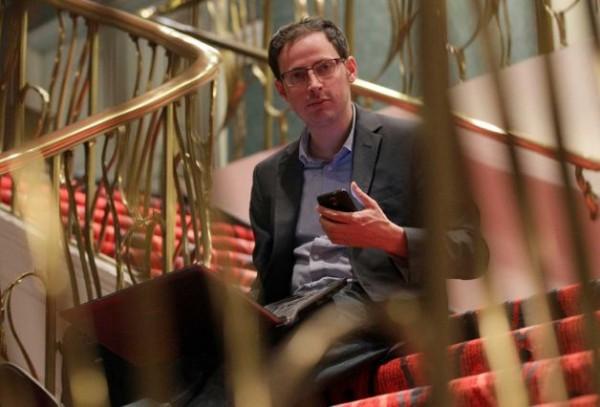
It’s  little worrisome that Nate Silver is joining the ESPN family, since that company just severed ties to Frontline over its excellent program (here and here) about NFL-related concussions. But he tells Hollywood Reporter scribe Erik Hayden that he doesn’t fear editorial interference. He also out lines what the new FiveThirtyEight blog will be. An excerpt:

“Silver’s blog, formerly hosted by The New York Times, was acquired in July by ESPN with the goal of developing it into a standalone site similar to Bill Simmons’ Grantland. He outlined the three primary coverage areas for the new FiveThirtyEight — politics, sports and economics — which will debut ;very early’ next year.

‘It’ll be no subscription fee, we hope you guys click on the banner ads or the sponsorships,’ the statistician explained. ‘The content plan is to cover three buckets that are about equal in size — one being kind of politics and political news, of course emphasizing elections still very heavily, one third being sports and one third being everything else put together. So with a special emphasis on economics, for example, maybe topics like education.'”


Tags: ,

Because our thumbs may get tired from droning everyone to death, robots with guns and grenades might soon be fighting alongside U.S. ground troops. Maybe within five years. From Allen McDuffee at Wired:

“Robots armed with automatic weapons, anti-tank missiles and even grenade launchers are marching, er, rolling ever closer to the battlefield now that they’ve shown they can actually hit what they’re supposed to.

Four robotics companies — HDT Robotics, iRobot, Northrop Grumman and QinetiQ — recently ran their M240 machine gun-armed robots through a live-fire demo at Fort Benning in what has been dubbed the ‘Robotic Rodeo.’ The point was to give the brass a chance to see just how viable such systems are.

The Army, which issued a favorable assessment of the technology last week, doesn’t see our armed robotic overlords as weapons taking the place of boots on the ground, but rather as combatants working alongside troops in the field.

‘They’re not just tools, but members of the squad. That’s the goal,’ Lt. Col. Willie Smith, chief of Unmanned Ground Vehicles at Fort Benning told Computerworld.

Tags: ,

Oakland authorities are repurposing federal anti-terrorism money to create crime-fighting initiatives based on Big Data. The changes will be so subtle, you’ll hardly notice a thing. From Somini Sengupta at the New York Times:

“Libby Schaaf, an Oakland City Council member, said that because of the city’s high crime rate, ‘it’s our responsibility to take advantage of new tools that become available.’ She added, though, that the center would be able to ‘paint a pretty detailed picture of someone’s personal life, someone who may be innocent.’

For example, if two men were caught on camera at the port stealing goods and driving off in a black Honda sedan, Oakland authorities could look up where in the city the car had been in the last several weeks. That could include stoplights it drove past each morning and whether it regularly went to see Oakland A’s baseball games.

For law enforcement, data mining is a big step toward more complete intelligence gathering. The police have traditionally made arrests based on small bits of data — witness testimony, logs of license plate readers, footage from a surveillance camera perched above a bank machine. The new capacity to collect and sift through all that information gives the authorities a much broader view of the people they are investigating.

For the companies that make big data tools, projects like Oakland’s are a big business opportunity. Microsoft built the technology for the New York City program. I.B.M. has sold data-mining tools for Las Vegas and Memphis.”

Tags: ,

Clinton was impeached and Kerry swiftboated and Obama deported (to Kenya, if figuratively), as the radical right came to disqualify as Other anyone who wasn’t one of them. The mainstream GOP (Gingrich, Rove, etc.) found the yahoos useful and embraced them until they couldn’t get their arms back. In “Radical Republicans” at Slate, Jacob Weisberg traces the descent into madness. The opening:

“For the past 20 years, American politics has been defined by Republican revolt. The right-wing radicalism that now worries the whole world first emerged in response to Bill Clinton’s election in 1992. It’s not that Republicans were never extreme before that time. Challenges to the legitimacy of federal authority from the people who now identify as Republicans trace back to pro-slavery attempts at nullification and segregationist assertions of states’ rights. But it was 20 years ago that the Congressional wing of the GOP, led by House Speaker Newt Gingrich, adopted belligerent noncooperation as its defining stance.

It was Gingrich who turned bipartisanship from Washington’s greatest virtue to its most reviled vice. Under his leadership, congressional Republicans refused any quarter on Clinton health care reform and supplied no votes for the economic plan that spurred the long boom of the 1990s. In their new mode, Republicans refused to vote on presidential nominations and buried the White House in investigations and subpoenas. It was Gingrich who in 1995 invented the tactic of refusing to raise the debt ceiling as a cudgel to get Clinton to agree to outsize spending cuts. It was Gingrich who invented the tactic of shutting down the government for the same end.”

Tags:

Some old-school clips of Germaine Greer, a ferociously brilliant person who has said some truly dumb things. Included in the first video of 1971 media appearances is some of her eviscerating righteousness from the Hegedus-Pennebaker film Town Bloody Hall. The second video contains a cut of her hanging out in 1972 with that group of feminists, Led Zeppelin.

Tags: , ,

Future Vice President Spiro Agnew, who smiled once and chipped a tooth, being interviewed by John Chancellor in 1968 about the Chicago riots and his running mate’s refusal to address the protests. Considering our current political climate, these were the good old days.

Fun thing: Natasha Lyonne, the very talented actress, guested this week on Marc Maron’s WTF podcast. She said her Jewish ancestors left Europe to escape Nazism, arrived without much money or prospects in America, and eventually bettered themselves through selling Spiro Agnew watches, which were apparently a popular novelty a little more than four decades ago.

Tags: , , ,

In 1997, the cloning in Scotland of a sheep named Dolly was received with hyperbole and denunciation, as some envisioned a near-term future in which human doppelgangers would walk among us. In the short film “The Clone Named Dolly,” Nicholas Wade of the New York Times takes a sober look at the sensation and its aftermath. Watch here.

Tags:

From the Economist obituary of General Vo Nguyen Giap, who drove well-funded foreign powers from Vietnam and lived to 102:

“Not that he was a populist, exactly. His father had been a lettré, a local scholar, as well as a farmer; he himself had a law degree. He was dapper, reviewing his troops in a white suit, trilby and club tie; even in a mountain cave, diminutive and smiling, he looked fresh as a flower. He wrote poetry, and his French was impeccable. The French, though, could see through that to the hatred that burned beneath, ever since the deaths of both his father and his first wife, after brutal torture, in French prisons. They called him ‘a volcano under snow.’

Nonetheless, he made an improbable soldier. He had no training, and would never have become a military commander, he said, if Ho Chi Minh, the leader of the Vietminh forces and later of North Vietnam, had not decided it for him. He first met Ho (above, top right) in China, realised they had been to the same school, and idolised him, from his tufty beard to his white rubber sandals. He called him ‘Uncle’; Ho called him ‘beautiful as a girl.’ “

Tags:

« Older entries § Newer entries »