Politics

You are currently browsing the archive for the Politics category.

In the end matter of a New York Times profile of Johnny Knoxville’s bruised, aging balls, I read this:

“Dave Itzkoff is a reporter at The Times. His book, Mad as Hell, about the making of the movie Network, will be published in February.”

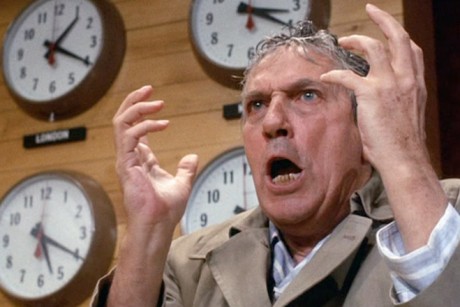
This news is exciting because of my feelings for that film, arguably America’s best film satire, and because Itzkoff is such a good reporter and graceful writer, one of the few journalists who can interest me in reading about popular culture. The following video is one I’ve previously posted in which Paddy Chayefsky appears on a talk show in the 1970s to discuss Network and the coming global, technocratic, interconnected culture.

____________________________

Paddy Chayefsky, that brilliant satirist, holding forth spectacularly on the Mike Douglas Show in 1969. It starts with polite chatter about the success of his script for Marty but quickly transitions into a much more serious and futuristic discussion. The writer is full of doom and gloom, of course, during the tumult of the Vietnam Era; his best-case scenario for humankind to live more peacefully is a computer-friendly “new society” that yields to globalization and technocracy, one in which citizens are merely producers and consumers, free of nationalism and disparate identity. Well, some of that came true. All the while, he wears a fun, red lei because one of his fellow guests is Hawaii Five-0 star Jack Lord. Gwen Verdon, Lionel Hampton and Cy Coleman share the panel.

Chayefsky joins the show at the 7:45 mark.

Tags: ,

If population concentrates as media and tools become increasingly decentralized, will regional authority outrank the national kind? Would a city-state set-up with public and private sectors vying to solve problems lead to improvements or greater inequalities–or doses of both? These are some of the hot topics in politics and development right now. The opening of “The End of the Nation State?” Parag Khanna’s New York Times Opinion piece:

“SINGAPORE — EVERY five years, the United States National Intelligence Council, which advises the director of the Central Intelligence Agency, publishes a report forecasting the long-term implications of global trends. Earlier this year it released its latest report, ‘Alternative Worlds,’ which included scenarios for how the world would look a generation from now.

One scenario, ‘Nonstate World,’ imagined a planet in which urbanization, technology and capital accumulation had brought about a landscape where governments had given up on real reforms and had subcontracted many responsibilities to outside parties, which then set up enclaves operating under their own laws.

The imagined date for the report’s scenarios is 2030, but at least for ‘Nonstate World,’ it might as well be 2010: though most of us might not realize it, ‘nonstate world’ describes much of how global society already operates. This isn’t to say that states have disappeared, or will. But they are becoming just one form of governance among many.

A quick scan across the world reveals that where growth and innovation have been most successful, a hybrid public-private, domestic-foreign nexus lies beneath the miracle. These aren’t states; they’re ‘para-states’ — or, in one common parlance, ‘special economic zones.'”

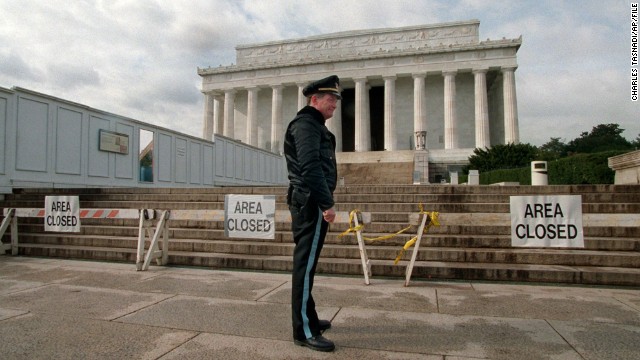
One of the more awful things about the current (and manufactured) American economic crisis is that it has nothing to do with economics. Republicans will say that they’re shutting down the government to force spending cuts to correct long-tern budget deficits. Except that there likely are no long-term budget deficits, and a little more government investment would probably make that certain. This conflict is driven rather by ideology; it’s about wanting to enact punitive measures against our most vulnerable people to teach them a lesson of some sort. The opening of “The Battle Over the US Budget Is the Wrong Fight,” a new Lawrence Summers piece in the Financial Times:

“This month Washington is consumed by the impasse over reopening the government and raising the debt limit. It seems likely that this episode, like the 1995-96 government shutdowns and the 2011 debt limit scare, will be remembered mainly by the people directly involved. But there is a chance future historians will see today’s crisis as the turning point when American democracy was to shown to be dysfunctional – an example to be avoided rather than emulated.

The tragedy is compounded by the fact that most of the substance being debated in the current crisis is only tangentially relevant to the main challenges and opportunities facing the country. This is the case with respect to the endless discussions about the precise timing of continuing resolutions and debt limit extensions, and to the proposals to change congressional staff healthcare packages and cut a medical device tax that represents only about 0.015 per cent of gross domestic product.

More fundamental is this: budget deficits are now a second-order problem relative to more pressing issues facing the US economy. Projections that there is a major deficit problem are highly uncertain. And policies that indirectly address deficit issues by focusing on growth are sounder economically and more plausible politically than the long-term budget deals with which much of the policy community is obsessed.”

Tags:

It’s hard to argue with math, but John B. Judis of the New Republic pushes back at Nate Silver’s idea that the GOP House is safe for the foreseeable future despite the government shutdown. An excerpt:

“One could argue, of course, that the Republican Party will readapt to its rightwing base and eventually create a new majority of’ ‘true fiscal conservatives’ who will disdain compromise. But there is reason to believe that Chocola and the Club for Growth will never achieve their objective. Rightwing populism, like its predecessor, Christian conservatism, is intense in its commitment, but ultimately limited in its appeal. Tea Party Republicans and the outsider groups probably had their greatest impact when they were still emerging phenomena in the 2010 elections. But when the Republican Party becomes identified with the radical right, it will begin to lose ground even in districts that Republicans and polling experts now regard as safe. That happened earlier with the Christian Coalition, which enjoyed immense influence within the Republican Party until the Republican Party began to be identified with it.”

Tags: ,

In a new Guardian piece, Slavoj Žižek, that player, links the current U.S. government shutdown to the 2008 economic collapse, noting the similarly unholy alliance between working-class protesters and the wealthy interests who find them useful:

“In April 2009 I was resting in a hotel room in Syracuse, hopping between two channels: a PBS documentary on Pete Seeger, the great American country singer of the left; and a Fox News report on the anti-tax Tea Party, with a country singer performing a populist song about how Washington is taxing hard-working ordinary people to finance the Wall Street financiers. There was a weird similarity between the two singers: both were articulating an anti-establishment, populist complaint against the exploitative rich and their state; both were calling for radical measures, including civil disobedience.

It was another painful reminder that today’s radical-populist right reminds us of the old radical-populist left (are today’s Christian survivalist-fundamentalist groups with their half-illegal status not organised like Black Panthers back in the 1960s?). It is a masterful ideological manipulation: the Tea Party agenda is fundamentally irrational in that it wants to protect the interests of hardworking ordinary people by privileging the ‘exploitative rich,’ thus literally countering their own interests.

This twisted ideology is also behind the current federal government shutdown in the US. An opinion poll at the end of June 2012 showed that a majority of Americans, while opposing Obamacare, strongly support most of its provisions. Here we encounter Tea Party ideology at its purest: the majority wants to have its ideological cake and eat the real baking. They want the real benefits of healthcare reform, while rejecting its ideological form, which they perceive as a threat to the ‘freedom of choice.’ They reject the concept of fruit, but they want apples, plums and strawberries.”

Tags:

From Nate Silver’s new Grantland piece, “The Six Big Takeaways From the Government Shutdown,” an explanation of why it’s unlikely that this failing Republican gambit will cost the GOP control of Congress in 2014:

Democrats face extremely unfavorable conditions in trying to regain the House.

Even if the shutdown were to have a moderate political impact — and one that favored the Democrats in races for Congress — it might not be enough for them to regain control of the U.S. House. Instead, Democrats face two major headwinds as they seek to win back Congress.

First, there are extremely few swing districts — only one-half to one-third as many as when the last government shutdown occurred in 1996. Some of this is because of partisan gerrymandering, but more of it is because of increasingly sharp ideological divides along geographic lines: between urban and rural areas, between the North and the South, and between the coasts and the interior of the United States.

So even if Democrats make significant gains in the number of votes they receive for the House, they would flip relatively few seats because of the way those votes are distributed. Most of the additional votes would come in districts that Democrats were already assured of winning, or where they were too far behind to catch up.

Consider that, between 2010 and 2012, Democrats went from losing the average congressional district by seven percentage points to winning it by one percentage point — an eight-point swing. And yet they added only eight seats in the House, out of 435 congressional districts.

In 2014, likewise, it will require not just a pretty good year for Democrats, but a wave election for them to regain the House. But wave elections in favor of the party that controls the White House are essentially unprecedented in midterm years.”

Tags:

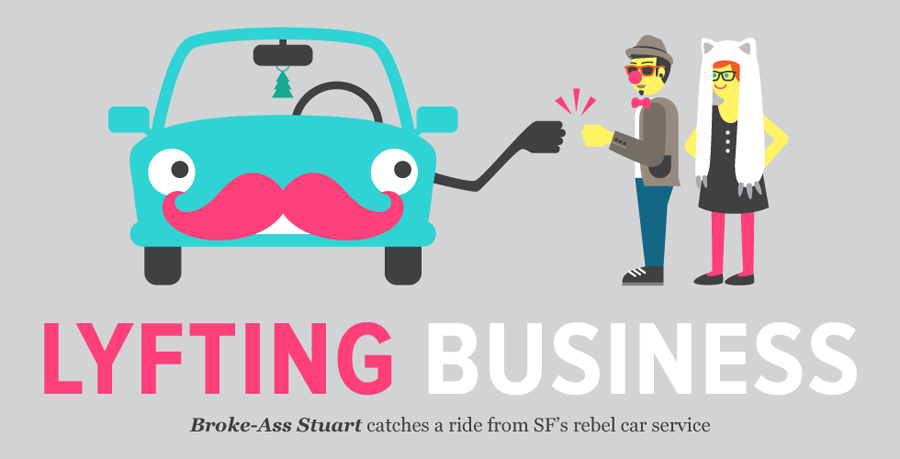
If you haven’t yet read the unfortunately titled “Bay Watched,” Nathan Heller’s excellent New Yorker article about the modern face of the Bay Area’s tech world, it’s definitely worth your time. The reporter looks at how entrepreneurs are keeping things on a micro level, upsetting the established venture-capital culture and competing with the public sector to provide basic services. In the latter category are start-ups like Lyft, which allows anyone to summon a taxi with a smartphone or to become a driver, and Leap, a private shuttle service which offers comfortable, wi-fi-enabled rides for three times the price of the city’s bus service. Of course, as we’ve seen with schools, privatization enacts a price on those who can’t afford to upgrade. An excerpt:

Leap, like Lyft, is an example of the helpful, Mr. Fix-It style of local techie culture. If a system isn’t working well, your neighborhood entrepreneur will build a better one. The approach has clear benefits for transportation, but it has risks, too. Say you’re a lawyer who rides the Muni bus. You hate it. It is overcrowded. It is always late. Fed up, you use your legal expertise to lobby an agency to get the route fixed. And the service gets better for all riders: the schoolkid, the homeless alcoholic, the elderly Chinese woman who speaks no English. None of them could have lobbied for a better bus on their own; your self-interested efforts have redounded to the collective benefit. Now the peeved lawyer can just take Leap. That is great for him. But it is less good for the elderly Chinese woman, who loses her civic advocate. Providing an escape valve for a system’s strongest users lessens the pressure for change.

[Leap co-founder Kyle] Kirchhoff saw things differently. Part of the reason the Muni bus was bad, he said, was that there was no market competition to make it better. ‘I think choice is a wonderful thing, and I think that competition is a good thing, too,’ he told me.”

Tags: ,

I’ve written many times that privacy as we used to define it is never coming back, not with the tools we now have at our disposal. However, I’m the silliest man in cyberspace. But the person labeled (much to his dismay) as the “most dangerous man in cyberspace,” the cybersecurity expert Jacob Appelbaum, feels similarly. Perhaps you’ll listen to him. The opening of a Vice interview with Appelbaum by John Lubbock:

Vice:

What would you say is the best way to understand the internet, rather than thinking of it as just ‘cyberspace’?

Jacob Appelbaum: 

There’s no real separation between the real world and the internet. What we’ve started to see is the militarization of that space. That isn’t to say that it just started to happen, just that we’ve started to see it in an incontrovertible, ‘Oh, the crazy paranoid people weren’t crazy and paranoid enough,’ sort of way. In the West, we see extreme control of the internet—the NSA/GCHQ stuff like the quantum insertion that Der Spiegel just covered… theTempora program. Really, these aren’t about controlling the internet, it’s about using the internet to control physical space and people in physical space. That is to say they’re using the internet as a gigantic surveillance machine. And because you can’t opt out of the machine anymore, it’s a problem.”

Tags: , ,

From “Glamour, Guns and Acts of God,” the Economist‘s look at the upcoming Texas gubernatorial battle likely to pit Republican favorite Greg Abbott, a gun-gripping, EPA-suing, wheelchair-bound Attorney General against State Senator and reproductive rights hero Wendy Davis:

“No Democrat has won statewide office in Texas since 1994—longer than in any other state. Texas has not backed a Democrat for the White House since Jimmy Carter in 1976. Democrats are desperate to change this. As the Texan population becomes less Anglo and more Hispanic, they think they have a chance. And in Ms Davis, they think they have a champion: one, moreover, whose struggle to keep abortion more widely available in Texas fits the Democratic narrative that Republicans are waging a ‘war on women”

The party ‘need[s] a face,’ says Harold Cook, a Democratic strategist, and Ms Davis is ‘incredibly charismatic.’ With her ‘national celebrity’ she can raise the $40m or so she will need to compete, Mr Cook predicts. He thinks she will appeal to suburban women who have long voted Republican for lack of a credible alternative; and some polls agree. Looking further ahead, some Democrats argue that if they can make Texas competitive, it will have national repercussions. ‘If we win Texas, it’ll be no contest for the White House,’ says Andy Brown, a Democrat running for local office in Travis County, which includes the city of Austin. Yet the smart money still says Ms Davis will lose, unless an independent Tea Party candidate enters the race, in which case all bets are off.”

Tags: , ,

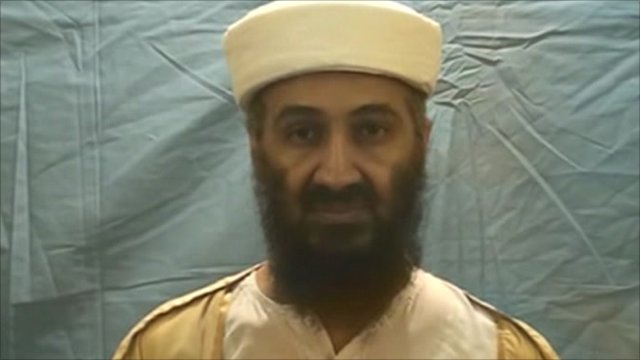
One update to the Seymour Hersh comments which suggested that the bin Laden raid story wasn’t legit, which made it sound like the journalist believed the terrorist’s murder was a moon landing on a sound stage. Hersh has made it clear that he was not referring to the actual killing: The Guardian correction:

“Hersh has pointed out that he was in no way suggesting that Osama bin Laden was not killed in Pakistan, as reported, upon the president’s authority: he was saying that it was in the aftermath that the lying began.”

Tags: , ,

Just as good as Russ Roberts’ EconTalk episode with David Epstein is his recent show with economist Tyler Cowen, whose new book, Average Is Overlooks at life in a more-autonomous future. The guest sees the coming years being increasingly meritocratic, though with merit having shifted from those who are great to those who great at interfacing with machines. On that point is an exchange about freestyle chess, in which a human and computer team up to challenge another computer. Cowen points out that the best human players usually don’t fare too well in these competitions, and are often outdone by lesser players who are superior at knowing when to trust their non-human partner. Cowen guesses at future population distribution in the U.S. and how cities will change, and explains why he thinks income inequality is rising at the same time that crime rates are falling. He’s optimistic about life in 50-70 years, but believes the next few decades will be a painful mix of positives and negatives. 

I doubt we’ll ever really be a meritocracy. Even if we were, the idea that a small number of us, 15% or so, will flourish and have tremendous advantages and the rest will be second-class citizens with very nice toys and tools, just makes me sad. Even if it means that we’re wealthier in the aggregate, I still feel depressed about it. Beautiful cities where no poor people can afford to live doesn’t sound Utopian to me. Listen here.

Tags: ,

Justice Antonin Scalia, who will be played by Paul Sorvino in the movie, is a little batshit and would likely have been wrong at key points in our nation’s history. He’s the oversharing subject of a fascinating interview by New York‘s Jennifer Senior. There is lots of Scalia’s brand of antique bigotry and even a discussion about the devil. An excerpt:

Jennifer Senior:

Can we talk about your drafting process—

Antonin Scalia:

[Leans in, stage-whispers.] I even believe in the Devil.

 Jennifer Senior:

You do?

Antonin Scalia:

Of course! Yeah, he’s a real person. Hey, c’mon, that’s standard Catholic doctrine! Every Catholic believes that.

 Jennifer Senior:

Every Catholic believes this? There’s a wide variety of Catholics out there …

Antonin Scalia:

If you are faithful to Catholic dogma, that is certainly a large part of it.

 Jennifer Senior:

Have you seen evidence of the Devil lately?

Antonin Scalia:

You know, it is curious. In the Gospels, the Devil is doing all sorts of things. He’s making pigs run off cliffs, he’s possessing people and whatnot. And that doesn’t happen very much anymore.

 Jennifer Senior:

No.

Antonin Scalia:

It’s because he’s smart.

 Jennifer Senior:

So what’s he doing now?

Antonin Scalia:

What he’s doing now is getting people not to believe in him or in God. He’s much more successful that way.

 Jennifer Senior:

That has really painful implications for atheists. Are you sure that’s the ­Devil’s work?

Antonin Scalia:

I didn’t say atheists are the Devil’s work.

 Jennifer Senior:

Well, you’re saying the Devil is ­persuading people to not believe in God. Couldn’t there be other reasons to not believe?

Antonin Scalia:

Well, there certainly can be other reasons. But it certainly favors the Devil’s desires. I mean, c’mon, that’s the explanation for why there’s not demonic possession all over the place. That always puzzled me. What happened to the Devil, you know? He used to be all over the place. He used to be all over the New Testament.

 Jennifer Senior:

Right.

Antonin Scalia:

What happened to him?

 Jennifer Senior:

He just got wilier.

Antonin Scalia:

He got wilier.

Jennifer Senior:

Isn’t it terribly frightening to believe in the Devil?

Antonin Scalia:

You’re looking at me as though I’m weird. My God! Are you so out of touch with most of America, most of which believes in the Devil? I mean, Jesus Christ believed in the Devil! It’s in the Gospels! You travel in circles that are so, so removed from mainstream America that you are appalled that anybody would believe in the Devil! Most of mankind has believed in the Devil, for all of history. Many more intelligent people than you or me have believed in the Devil.

Jennifer Senior:

I hope you weren’t sensing contempt from me. It wasn’t your belief that surprised me so much as how boldly you expressed it.

Antonin Scalia:

I was offended by that. I really was.•

Tags: ,

More than a decade ago, before everyone could disappear into their own channel, their own tube, I argued that I thought personalization was dangerous. Perhaps inevitable with cable TV and the Internet providing endless channels, but a bad thing for a democracy. The beauty of the heterogeneous is that you’re exposed to other arguments than your own, and even if you’re not moved by them, you at least understand how the other half lives. For too many people in this country, that appears to no longer be true.

I mentioned last week that I thought GOP insularity was at least partly behind the government shutdown. More on the topic from New York‘s ever-excellent Jonathan Chait:

“One of the causes of the economic and Constitutional crisis unleashed by House Republicans is their utter failure to grasp how Democrats would perceive their behavior. Conservative reporter Byron York perceptively, and alarmingly, describes a discussion with an influential Republican, who explains that the GOP stumbled into the shutdown war without a plan and repeatedly expected Democrats to bail them out by capitulating, only to be shocked when they refused. The GOP’s strategic failure has grown out of its intellectual insularity (or, to reprise a once-hot term, epistemic closure) leaving them so unaware of the principles motivating the other side that they couldn’t anticipate the Democrats’ obvious response.

‘I would liken this a little bit to Gettysburg,’ York’s source explained, ‘where a Confederate unit went looking for shoes and stumbled into Union cavalry, and all of a sudden found itself embroiled in battle on a battlefield it didn’t intend to be on, and everybody just kept feeding troops into it.’ An even more apt, and more recent, analogy might be Iraq, when Republican war planners expected a suspicious Muslim culture to greet their troops with sweets and flowers.

If you reside within the conservative news bubble, you probably had no idea before this crisis what the Democratic position on the debt ceiling and the shutdown is. You still probably have no idea now.”

Tags: ,

Not only do the branches of government in America serve as checks and balances, but different parties empowered in different wings keep us from moving too fast in any direction. But what if that keeps us from moving at all? The American system only works if there isn’t pure partisanship, if politics makes strange bedfellows. The opening of “The Shutdown Prophet,” Jonathan Chait’s customarily excellent analysis in New York:

“In a merciful twist of fate, Juan Linz did not quite live to see his prophecy of the demise of American democracy borne out. Linz, the Spanish political scientist who died last week, argued that the presidential system, with its separate elections for legislature and chief executive, was inherently unstable. In a famous 1990 essay, Linz observed, ‘All such systems are based on dual democratic legitimacy: No democratic principle exists to resolve disputes between the executive and the legislature about which of the two actually represents the will of the people.’ Presidential systems veered ultimately toward collapse everywhere they were tried, as legislators and executives vied for supremacy. There was only one notable exception: the United States of America. 

Linz attributed our puzzling, anomalous stability to “the uniquely diffuse character of American political parties.” The Republicans had loads of moderates, and conservative whites in the South still clung to the Democratic Party. At the time he wrote that, the two parties were already sorting themselves into more ideologically pure versions, leaving us where we stand today: with one racially and economically polyglot party of center-left technocracy and one ethnically homogenous reactionary party. The latter is currently attempting to impose its program by threat upon the former. The events in Washington have given us a peek into the Linzian nightmare.

Tags: ,

An update on Alpha Dog (LS3), the canine-ish robot from Boston Dynamics and DARPA which is being field-tested on the cracked earth of Twentynine Palms, California, and snowy grounds of Boston. They are your servants, for now. From Endgadget: “The humanoid machine can now negotiate a rocky walkway with relative ease, adding another party trick to its already impressive repertoire.”

To two great article’s this year about paranoid mental illness inside the surveillance state–Mike Jay’s and Andrew Marantz’s— comes this sad punctuation mark: Miram Carey, who was killed in Capitol Hill yesterday, believed she was being monitored by her own government. And she was, and well all are. And the government in turn is being watched. The prevailing culture feeds delusions, which often aren’t completely delusional–just a scary riff on the truth. It’s not that sick people are “visionaries” or “misunderstood.” No, they’re sick, but so are aspects of the society they’re responding to. It’s not that spying has just begun, but the technology has progressed. We’re new, we’re improved. From Susan Donaldson James at ABC News:

“ABC News’ sources revealed that Carey had started to show signs of mental illness around September 2012, and had a history of delusions and irrational behavior.

She reportedly told the father of her child and 54-year-old boyfriend at the time that she was the ‘prophet of Stamford’ and that President Obama had placed the city on lockdown and had placed her residence under electronic surveillance, which was being fed live to all national news outlets.

Carey told a social worker she had postpartum depression, but Galynker said that postpartum psychosis looks nothing like postpartum depression. Postpartum psychosis is associated with paranoia and delusions, said Galynker.

‘[Her] main symptoms were not depression but were paranoia and delusions,’ he said. ‘But it is all unclear because no one has looked at her medical records. What we have seen is close to a year of psychotic episodes and hospitalizations and [encounters] with police.'”

Tags: ,

From “Avoiding Our Dystopian Robot Future” at the Philosopher’s Beard, a passage that speculates on how an autonomous society that’s also a capitalist one might reconcile itself:

“The first dystopian threat has been well analysed by lots of people (egegeg). At present our political economy provides individuals with purchasing power claims on goods and services mainly through the labour market. That is, most people provide for themselves (and their dependents) by finding a job that pays enough to afford to buy what they need for a basic standard of living, and at least some of what they want as well. Government welfare policy is mainly oriented to supporting this central labour market mechanism, for example by providing public education for people to improve their employability, and social insurance nets for the disabled and temporarily unemployed.  

The problem that robots pose is that they may make this labour market obsolete by causing ‘technological unemployment’ for humans. If robots can not only perform mechanical tasks more quickly, accurately, and tirelessly than humans (the problem the Luddites confronted), but also cognitive tasks (like exam grading, driving, legal discovery, etc) then what will humans have left to sell on the labour market? Our birthright – the ability to use our bodies and minds to create things that others find valuable – will be worthless. Yet people will still need food, shelter, and the rest. How will they get it? 

Robots will revolutionise the supply side of the economy, resulting in much cheaper goods and services. Yet the economic gains of this efficiency will not be split between labour (wages) and capital (profits), since robots don’t need to be paid. Thus the owners of capital – the owners of the machines – will end up with an increasingly large share of whatever income the economy generates. (The ratio under capitalism 1.0 has historically been about 2/3 labour, 1/3 capital.) The pessimistic conclusion is that the society of the future would be characterised by an unimaginable abundance that only a very few can afford to buy.

Yet perhaps that scenario is not so likely. Not only can one expect the political mobilisation of the 99% objecting to their economic disenfranchisement. There is also a contradiction in the capitalists’ own position. For robots, unlike humans, are not consumers. That is part of what makes them so cheap to use in producing goods and services. Yet at the aggregate level that is a big problem. If no one (except the handful of capitalists, software designers, and hangers on) can afford to buy what you’re selling, then it hardly matters how cheaply you can produce it. Such an economy will be relatively small (‘depressed’) despite its enormous potential, and thus the capitalists as a class will be poorer than they might be. 

Given the convergence of the interests of both capitalists and ordinary citizens, it seems reasonable to expect that some kind of accommodation can be reached to transform the political economy to cope with the end of human labour. Specifically, governments will have to reorient themselves from supporting citizens’ opportunity for waged labour to providing them with a direct rights claim on economic purchasing power (like pensions). Income is now redistributed from capitalists to ordinary citizens through the labour market. In future it will have to be redistributed through another mechanism, whether that be direct corporate taxation or perhaps some system of universal share ownership. That would be a radically different political economy than we have had for the last couple of hundred years. Call it Capitalism 2.0.”•

______________________________

Rod Serling, 1964:

Robert Costa, the National Review editor who was interviewed by Ezra Klein about the government shutdown, just did an Ask Me Anything at Reddit on the same topic. A few exchanges follow.

______________________________

Question: 

How long should we expect this to last and how will it affect my average day?

Robert Costa:

Anywhere from 1-2 weeks, but always remember, the situation is very fluid and a few key variables (Boehner buckling, Senate Democrats becoming divided) could quickly move the debate in a certain direction and break the logjam. If it does last 2 weeks, the talks will likely be folded into negotiations on the debt limit, which is set for Oct. 17. The standoff affects your day if you work or interact with the federal government in any way. Some parts of the government have been shuttered, while others are open, but with limited operations.

______________________________

Question:

If Boehner were to crack under the pressure, will there be a call for him to resign as speaker by the 30-40 hardliners you’ve written about?

RobertCosta:

I don’t think it’d be so much about whether he’d resign, but whether he could convince his conference to go along with him as he attempts to craft a larger bargain with Democrats on the debt limit. As I wrote about last night, unity within the conference is Boehner’s first and most important objective. Since the House GOP has such fragile internal politics, he spends a lot of time shoring that up. And because he knows he has a limited hand, I doubt he “cracks,” but he’s certainly trying to navigate through this while 1) keeping GOP members together, and 2) making sure the GOP isn’t totally blamed.

______________________________

Question:

If the shutdown lasts for 2 weeks and the debt ceiling gets tied into negotiations what percentage of the Republican House caucus understands how catastrophic a default would be?

Robert Costa:

Most of the conference is well aware of the consequences of default. In fact, over the past few years, the House GOP leadership has actually hosted private meetings for members about what default means and why it shouldn’t happen. But, at the same time, Republicans are very eager to get some kind of 2011-esque concession from the White House and Senate Democrats on the budget, when they were able to pass legislation that led to sequestration. Of course, the political climate then was different, due to the GOP having recently won the House, but the GOP is hoping for a similar outcome this time, and you have leaders like Paul Ryan publicly talking about a larger agreement being possible. I’m still skeptical though, since most Republicans are unwilling, at all, to bend on taxes, and Democrats aren’t exactly scrambling to cut a big deal with Boehner, who they think is in a weakened position.

______________________________

Question: 

Republicans won’t be affected by this though since most of them are in secure districts after recent gerrymandering. Nothing will really change until after 2020 when the next Census occurs IMHO. From listening to the news, only one Republican representative is in a district currently deemed a toss-up in the 2014 elections, everyone else is secure.

If you watch Fox News they’re actually spinning the shut down as a good thing and pro-Republican viewers tend to watch that channel for their news. Fox was just saying this morning “Wow, only 6% of the EPA workers are deemed essential and at work today, that really shows we could cut the other 94% and save the government money.” I wanted to punch my TV.

Robert Costa:

Republicans will be affected in a big picture sense: they may feel the burn next November during the midterms. But you’re right-for many House Rs and Senate Rs who come from deep-red areas, the pressure isn’t to come to the center, but to hold firm on the right and battle for concessions that during most divided gov’t eras would never seem plausible. But because the conservative movement has become such a strong force within the GOP, the expectations are stoked daily about what is achievable, and this creates major problems for the leadership in both chambers. They’re constantly pushing back against the idea that they’re “not doing enough” for the cause or conceding too much ground.•


Tags:

In Felix Salmon’s critique of Dave Eggers’ new novel, he writes glowingly of “It Knows,” Daniel Soar’s 2011 London Review of Books piece about three volumes regarding Google and the place of the Plex in our world. (Or is it our place in the Plex’s world?) A passage about the late GOOG-411 service:

“Levy tells the story of a new recruit with a long managerial background who asked Google’s senior vice-president of engineering, Alan Eustace, what systems Google had in place to improve its products. ‘He expected to hear about quality assurance teams and focus groups’ – the sort of set-up he was used to. ‘Instead Eustace explained that Google’s brain was like a baby’s, an omnivorous sponge that was always getting smarter from the information it soaked up.’ Like a baby, Google uses what it hears to learn about the workings of human language. The large number of people who search for ‘pictures of dogs’ and also ‘pictures of puppies’ tells Google that ‘puppy’ and ‘dog’ mean similar things, yet it also knows that people searching for ‘hot dogs’ get cross if they’re given instructions for ‘boiling puppies’. If Google misunderstands you, and delivers the wrong results, the fact that you’ll go back and rephrase your query, explaining what you mean, will help it get it right next time. Every search for information is itself a piece of information Google can learn from.

By 2007, Google knew enough about the structure of queries to be able to release a US-only directory inquiry service called GOOG-411. You dialled 1-800-4664-411 and spoke your question to the robot operator, which parsed it and spoke you back the top eight results, while offering to connect your call. It was free, nifty and widely used, especially because – unprecedentedly for a company that had never spent much on marketing – Google chose to promote it on billboards across California and New York State. People thought it was weird that Google was paying to advertise a product it couldn’t possibly make money from, but by then Google had become known for doing weird and pleasing things. In 2004, it launched Gmail with what was for the time an insanely large quota of free storage – 1GB, five hundred times more than its competitors. But in that case it was making money from the ads that appeared alongside your emails. What was it getting with GOOG-411? It soon became clear that what it was getting were demands for pizza spoken in every accent in the continental United States, along with questions about plumbers in Detroit and countless variations on the pronunciations of ‘Schenectady’, ‘Okefenokee’ and ‘Boca Raton’. GOOG-411, a Google researcher later wrote, was a phoneme-gathering operation, a way of improving voice recognition technology through massive data collection.

Three years later, the service was dropped, but by then Google had launched its Android operating system and had released into the wild an improved search-by-voice service that didn’t require a phone call. You tapped the little microphone icon on your phone’s screen – it was later extended to Blackberries and iPhones – and your speech was transmitted via the mobile internet to Google servers, where it was interpreted using the advanced techniques the GOOG-411 exercise had enabled. The baby had learned to talk. Now that Android phones are being activated at a rate of more than half a million a day,​4 Google suddenly has a vast and growing repository of spoken words, in every language on earth, and a much more powerful learning machine.”

Tags: , ,

If members of Congress weren’t paid for days the government is closed and they had no way to recoup the money, there would be no shutdown. And if you’re not making a sacrifice, you’re not making a stand. Of course, the GOP is sacrificing something huge–its last claim to being more than a fringe party–but that sacrifice isn’t intentional. There are three possible reasons for the shutdown:

  • They Think They’ll Win. While this clearly makes no sense to you or I or anyone with any level of sanity, it’s possible that a party, cloistered from the majority or just good sense, thinks somehow Obamacare is going away because of this gambit. Not likely that too many of them believe it, but possible at least for some of the more flat-earth Republican reps. 
  • They’re Putting Personal Gain Ahead Of the Party. Oval office in 2016 be damned, the Republicans in Congress are more concerned with fundraising in their own districts so that they can remain in power. For a party that says it hates the government, these are people who will sell out any potential national ticket in the next national election to out-wingnut future contenders who might challenge them in primaries. This is almost certainly true to some extent.
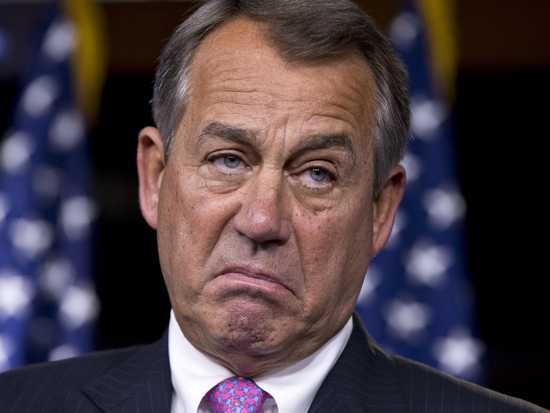
  • They’re a Poorly Organized and Suicidal Party. I wrote several times during the 2012 Presidential campaign that I disagreed with the prevailing wisdom that Republicans would have no alternative but to return to normalcy if President Obama was reelected. (Obama himself used this reasoning during a debate.) That never was going to happen because it’s no longer a party based on strategy or reason. John Boehner has no authority because there is no authority in anarchy. The GOP is a protest party now and nothing more. And when tens of millions of Americans newly have health insurance with no death panels, no sky falling, this shutdown will be ever more damning. Until all power is lost, the GOP will not remake itself, will not be viable again. It’s not just common sense that works against them–it’s demographics as well.

The opening of Ezra Klein’s new Wonkblog interview with National Review journalist Robert Costa:

“Ezra Klein:

Walk me through the math of the House GOP a bit. Most people seem to think Boehner has around 100 members who largely back him and don’t want a shutdown, and it’s a much smaller group, a few dozen or so, who want to take this to the brink. So why doesn’t Boehner, after trying to do it the conservative’s way as he has been in recent weeks, just say, we’re voting on a clean CR now, as that’s what the majority of the House Republican majority wants?

Robert Costa:

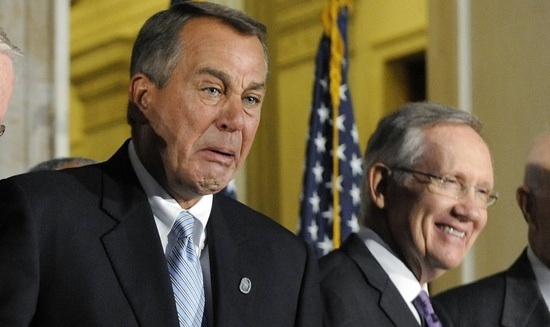
Ever since Plan B failed on the fiscal cliff in January and you saw Boehner in near tears in front of his conference, he’s been crippled. He’s been facing the consequences of that throughout the year. Everything from [the Violence Against Women Act] to the farm bill to the shutdown. The Boehner coup was unsuccessful but there were two dozen members talking about getting rid of him. That’s enough to cause problems. Boehner’s got the veterans and the committee chairs behind him, but the class of 2010 and 2012 doesn’t have much allegiance to him.

The thing that makes Boehner interesting is he’s very aware of his limited hand. Boehner doesn’t live in an imaginary world where he thinks he’s Tip O’Neill and he can bring people into his office and corral them into a certain vote. So he treads carefully, maybe too carefully. But he knows a clean CR has never been an option for him.

Ezra Klein:

But why isn’t it an option? A few dozen unhappy members is an annoyance, but how is it a threat? Wouldn’t Boehner be better off just facing them down and then moving on with his speakership?

Robert Costa:

So there are 30 to 40 true hardliners. But there’s another group of maybe 50 to 60 members who are very much pressured by the hardliners. So he may have the votes on paper. But he’d create chaos. It’d be like fiscal cliff level chaos. You could make the argument that if he brought a clean CR to the floor he might have 100-plus with him on the idea. But could they stand firm when pressured by the 30 or 40 hardliners and the outside groups?”•

Tags: , , ,

People with health insurance don’t face death panels–people without it do. Cutting through the nonsense surrounding the arrival of Obamacare is Carter Price, an analyst at the think-tank RAND Corporation, who’s spent much recent time studying the Affordable Care Act. He did an Ask Me Anything at Reddit on the day Obamacare goes into effect.

___________________________ 

Question:

Which talking point against the Affordable Care Act is the least truthful/meritorious? And which has the most merit?


Carter Price: 

There are no death panels in the law.

You won’t necessarily be able to keep your exact insurance. 

___________________________

Question:

So, can I keep my health insurance? 

Carter Price:

It depends on how you get your insurance. If you get it from your employer, the law won’t change that (though your employer might). If you get it on the individual market, you will have access to new types of plans and your existing plan might not be allowed (for example, if you have a very high deductible plan)

Question:

Is it fair to say, then, that Obama’s initial promise when selling the bill (“If you like your insurance, you can keep it”) was, although spoken with honest intentions, a bit misleading? 

Carter Price: 

Those statements certainly did not capture all of the nuances of the law, but for most people with insurance, there won’t be an impact.

______________________________

Question:

So in your professional opinion will the ACA have a net positive or net negative effect on employment?

Carter Price:

It will vary substantially state to state.

Researchers at the Urban Institute found that it would reduce “job-lock” where people are locked into jobs because of the insurance only.

_____________________________

Question:

How much savings if any would the US receive if an NHS model or even a Canadian-single payer model was implemented? Would drug price negotiation, non-employment-based insurance or something else help?

Why is the US so embattled over domestic issues while so apparently lax on military spending? A single aircraft carrier is $9B-$14B (why so expensive?) and in comparison, medicaid cuts in many populous states amount less than that.

Carter Price:

The US is on a path to spending 20% of our GDP on health care. Most other developed countries spend less than 10%. So in is certainly possible that a different model could result in much lower costs. I haven’t done the same level of analysis on applying these alternate systems to the U.S. and can’t really answer that in detail.•

Tags:

Edward Snowden didn’t tell me anything I didn’t know already and I doubt he surprised you, either. With our cameras and clouds, everyone is watching everyone and I don’t think legislation will change that no matter how much idealistic people wish it would. But that doesn’t mean Snowden did a horrible thing, either, that he’s a villain just because he’s not a hero. Someone who hates surveillance winding up in Russia has played a bad joke on himself, but his intentions seem to have been noble. Rather than trying to make him Public Enemy # 1, I wish we’d take a moment to have an honest discussion about how much privacy is truly possible in the world we’ve created for ourselves.

Glenn Greenwald and Janine Gibson of the Guardian US, which broke the Snowden story,  just did an Ask Me Anything at Reddit. Largely like-minded people showed up for it, so there’s sadly mostly congratulation and little debate. But a few exchanges follow.

____________________________

Question:

What would you say is the single most shocking revelation that Snowden has leaked and why?

Glenn Greenwald:

The general revelation that the objective of the NSA is literally the elimination of global privacy: ensuring that every form of human electronic communication – not just those of The Terrorists™ – is collected, stored, analyzed and monitored.

The NSA has so radically misled everyone for so long about its true purpose that revealing its actual institutional function was shocking to many, many people, and is the key context for understanding these other specific revelations.

____________________________

Question:

Will there be any more groundbreaking leaks? Also, how do you feel about the response from the American people?

Glenn Greenwald:

There are definitely huge new stories to come: many more. I’ve said that from the start every time I was asked and I think people see by now that it’s true. In fact, as Janine said the other day, the documents and newsworthy revelations are so massive that no one news organization can possibly process them all.

As for public opinion, I’m incredibly gratified that Americans, and people around the world, have been so engaged by these issues and that public opinion polls show radical shifts in how people perceive that threats to their privacy/civil liberties from their own government are greater than threats to their safety from The Terrorists.

____________________________

Question:

I just realized you’ve done a good job keeping your source out of the limelight, it feels like he’s slowly fading from public consciousness and the real story is gaining traction.

Glenn Greenwald:

This is an astute point, and the credit for this is due to Snowden.

One of the most darkly hilarious things to watch is how government apologists and media servants are driven by total herd behavior: they all mindlessly adopt the same script and then just keep repeating it because they see others doing so and, like parrots, just mimic what they hear.

All whistleblowers are immediately demonized – they have to be “crazy” lest people think that there is something valid to their view that they saw injustices so fundamental that it was worth risking their liberty to expose. That’s why Nixon wanted Daniel Ellsberg’s psychoanalysis files: degrading the psyche of whistleblowers is vital to defending the status quo.

The script used to do this to Snowden was that he was a “fame-seeking narcissist.” Hordes of people who had no idea what “narcissism” even means – and who did not know the first thing about Snowden – kept repeating this word over and over because that became the cliche used to demonize him.

The reason this was darkly hilarious is because there is almost no attack on him more patently invalid than this one. When he came to us, he said: “after I identify myself as the source and explain why I did this, I intend to disappear from media sight, because I know they will want to personalize the story about me, and I want the focus to remain on the substance of NSA disclosures.”

He has been 100% true to his word. Almost every day for four months, I’ve had the biggest TV shows and most influential media stars calling and emailing me, begging to interview Snowden for TV. He has refused every request because he does not want the attention to be on him, but rather on the disclosures that he risked his liberty and even his life to bring to the world.

He could easily have been the most famous person in the world, on TV every day and night. But he chose not to, selflessly, so that he would not distract from the substance of the story.

How the people who spent months screaming “fame whore” and “narcissist” at him don’t fall on the ground in shame is mystifying to me. Few smear campaigns have ever proven more baseless than this one.

____________________________

Question:

Why do you think the leak about forwarding data to Israel received relatively little attention compared to other leaks?

Glenn Greenwald:

1) Because it involved “Israel”, which sends some people into fear-based silence; 2) Because it happened in the middle of Syria, which took up most oxygen; 3) Because the New York Times published nothing about it, for ignominious and self-serving reasons highlighted by its own public editor; and 4) Because there is some NSA fatigue: a sense that nothing that is revealed can surprise any longer.

The Times’ excuse for those interested.

____________________________

Question:
Is Seymour Hersh right? Is the Osama death story “one big lie”?

Glenn Greenwald:

I don’t know, but I know that Seymour Hersh is responsible for some of the bravest and most important journalism of the last 40 years; has incredibly good sources; and gave one of the best interviews I’ve ever heard on the nature of the US media last week. That doesn’t mean he’s infallible, but I trust him far more than most US journalists deemed Serious and Important (i.e., D.C. courtiers of the royal court).•

Tags: , ,

The opening of “Life in the Fishbowl,” Stuart Armstong’s Aeon essay which takes an optimistic view of the surveillance state, seeing the Google Glass as half full:

Suppose you’re walking home one night, alone, and you decide to take a shortcut through a dark alley. You make it halfway through, when suddenly you hear some drunks stumbling behind you. Some of them are shouting curses. They look large and powerful, and there are several of them. Nonetheless, you feel safe, because you know someone is watching.

You know this because you live in the future where surveillance is universal, ubiquitous and unavoidable. Governments and large corporations have spread cameras, microphones and other tracking devices all across the globe, and they also have the capacity to store and process oceans of surveillance data in real time. Big Brother not only watches your sex life, he analyses it. It sounds nightmarish — but it might be inevitable. So far, attempts to control surveillance have generally failed. We could be headed straight for the panopticon, and if recent news developments are any indication, it might not take that long to get there.

Maybe we should start preparing. And not just by wringing our hands or mounting attempts to defeat surveillance. For if there’s a chance that the panopticon is inevitable, we ought to do some hard thinking about its positive aspects. Cataloguing the downsides of mass surveillance is important, essential even. But we have a whole literature devoted to that. Instead, let’s explore its potential benefits.”

Tags:

The jobless recovery is a complicated thing, and not just a political one. So many jobs have become ghosts in the machine. Luddism doesn’t work, but the new normal can scare you to death. Are an automated society and a capitalist one compatible? From Katharine Rowland’s Guernica interview with George Packer about his recent book, The Unwinding:

Guernica:

There’s also a story that reads almost like a parable of the fall occurring between the twentieth and twenty-first centuries. What’s happened in that period with regard to the middle class? 

George Packer:

That’s part of the story. I had seen this in more political terms as sort of the end of the conservative era. The Reagan era began in 1980 and ended in 2008, that was my historical hypothesis. Now I’m remembering other false starts, like I spent months reading the literature of the neoconservatives of the 1970s to get into the mindset of the early Reagan years. But all of that fell by the wayside when I figured out I could do it through characters. It was these people who took me to the big theme of the social contract. It was in all their lives. It used to be that jobs were going to be there when you left high school in Winston Salem, North Carolina. Screw-up students went to textile factories, and better students went to the RJ Reynolds Warehouse, believe it or not, and the really good students went to community college. And that doesn’t happen anymore, those jobs aren’t there. The screw-up students are doing meth and hanging out at the pool hall and the bowling alley.

I didn’t look for it, it was there everywhere—the sense that not necessarily a wonderful life, but a decent life had been available to the majority, and it was gone. You could see its absence on these main streets. It was traumatic. It’s become normal to people who live there, but you get people talking about it and there are ghosts everywhere. As one man said to me, if it had been a plague it would have been a historic event, but it was economic dislocation, so it’s considered a natural process.

Guernica:

It was your sense that it had become normal for the people going through it?

George Packer:

I didn’t sense that they thought it was normal, but that they had stopped thinking about it all the time because they had to live in it.•

Tags: ,

From Oliver Burkeman’s Guardian interview with Malcolm Gladwell, in anticipation of David and Goliath: Underdogs, Misfits and the Art of Battling Giantshis latest book of unconventional wisdom:

“The outcome of the original David-and-Goliath clash wasn’t a miracle, he argues: it’s just what happens when the weak refuse to play by rules laid down by the strong. (Sample sentence: ‘Eitan Hirsch, a ballistics expert with the Israeli Defence Force, recently did a series of calculations showing that a typical-sized stone hurled by an expert slinger at a distance of 35m would have hit Goliath’s head with a velocity of 34m per second – more than enough to penetrate his skull and render him dead or unconscious.’)

‘With each book that passes, I think my personal ideology becomes more explicit … and this one is a very Canadian sort of book,’ says Gladwell, who was born in Fareham, in Hampshire, but grew up in Ontario. ‘It’s Canadian in its suspicion of bigness and wealth and power. Someone told me – did you know that there’s never been a luxury brand to come from Canada? That’s never happened. That’s such a great fact to have about your home country.’

Difficulties and afflictions, the book shows, frequently foster creativity and resilience. Studies on ‘cognitive disfluency’ have shown that people do better at problem-solving tasks when they’re printed in a hard-to-read font: the extra challenge triggers more effortful engagement. We meet dyslexics whose reading problems forced them to find more efficient ways to master law and finance (one is now a celebrated trial lawyer, another the president of Goldman Sachs); we learn why losing a parent in childhood forges a resilience that frequently spurs achievement in later life, and why you shouldn’t necessarily attend the best university that will have you. (The answer is ‘relative deprivation’: the further you are from being the best at your institution, the more demotivating it is; middling talents perform better at middling establishments.) Conversely, having power can backfire, not least because it tricks the powerful into thinking they don’t need the consent of those over whom they wield it. In a compelling account of the Troubles, Gladwell argues that the British were plagued by a simple error: the belief that their superior resources meant ‘it did not matter what the people of Northern Ireland thought of them.’ More isn’t always more.”

Tags: ,

« Older entries § Newer entries »