Politics

You are currently browsing the archive for the Politics category.

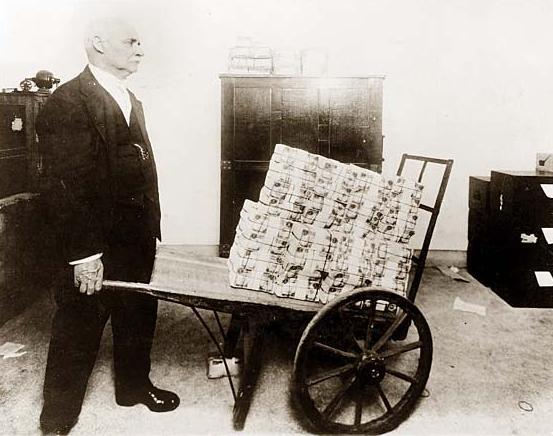
I’m not an economist so I don’t know if a currency scheme cooked up by Douglas Coupland (also not an economist) would work or have unintended consequences, but here’s the gist of it from his Financial Times column:

“What if the government were to have, say, a ‘currency flush’? Basically, word could be broadcast that as of January 1 2016, the government will no longer honour any hundred-dollar bill printed before December 31 2013. People around the world with socks, suitcases and safety deposit boxes full of hundreds would have two years to redeem or spend their cash, and quick. What would happen?

Well, such a currency flush wouldn’t necessarily affect everyday people too much. People who work in bakeries, teach high school or drive taxis tend not to have suitcases full of hundreds in their universe – nor have much sympathy for those who do. But for those who do have stashes, there would be a two-year window to convert this cash into services and goods. The problem is that it looks very suspicious to walk into a Mercedes-Benz dealership and buy an S-Class with $87,000 in cash. Or to buy a Montauk summer house for millions. Or a boat. Or jewels. Or anything, really. Divesting oneself of soon-to-be valueless hundreds would require great skill in not drawing attention to oneself. At the very least, suitcase owners would be eating at expensive restaurants, buying expensive plane tickets and living it up for two brief years. What a boon to the economy for zero effort! And near the end of the flush, there might be a huge bump in the number of thousand-dollar lap dances and bar tips – but then that revenue would have to be recorded and taxed. More money in the coffers!

The Great Currency Flush would give the US economy a defibrillation of unparalleled voltage but, of course, there would have to be a few rules. For example, you couldn’t just take a hundred-dollar bill to the bank and say, ‘Give me five twenties.’ Once set in motion, the Flush would demand that hundreds could only be used in one go. You could buy a pack of gum with a hundred but you wouldn’t get back any change – so why not instead buy a hundred bucks of gum? The people selling the gum, in the meantime, would have to document where the hundreds all came from – not that hard to do. It’s also not hard to imagine many, many books in many, many places being very, very cooked.”
Tags:

There are modern problems: precious time wasted tweeting, people unduly worried about the casting of Batman, disgusting fast-food meals for children, a lack of privacy, etc. But, as hard as it might be to believe, we’ve never been safer or smarter. From Jesse Washington at AP:

“Global terrorism deaths as defined by the consortium reached almost 11,000 in 1984, then dipped before approaching 11,000 again in 1997. Deaths fell once more before rising in the aftermath of Sept. 11, 2001. There were 3,144 killings in 2003, then 12,761 in 2007. In 2012, after the consortium made its data collection more comprehensive, it counted 15,514 deaths from terrorism — mostly in about 10 countries.

The Nairobi attack, by the fanatic Somali Islamic group al-Shabab, stood out. It touched points across the globe, killing at least 60 civilians from countries including Britain, France, Canada, the Netherlands, Australia, Peru, India, Ghana, South Africa and China. Five Americans were among the nearly 200 wounded.

Al-Shabab is ‘a threat to the continent of Africa and the world at large,’ Somali President Hassan Sheikh Mohamud said.

That attack came five days after a man who heard voices brought a shotgun through Navy Yard security and killed 12 people. It was the latest in a series of mass shootings, which are defined as killing four or more people: the December massacre of 26 in Newtown; 12 slain in a Colorado movie theater; other 2012 killings at a café, temple, sauna, colleges.

‘What troubles us so deeply as we gather here today is how this senseless violence that took place here in the Navy Yard echoes other recent tragedies,’ President Barack Obama said at a memorial service.

That’s not to mention the narrowly averted disasters: a man arrested this week on a charge he planned to shoot up a Salt Lake City mall; a gunman last month who was talked into laying down his weapon after invading a Georgia school.

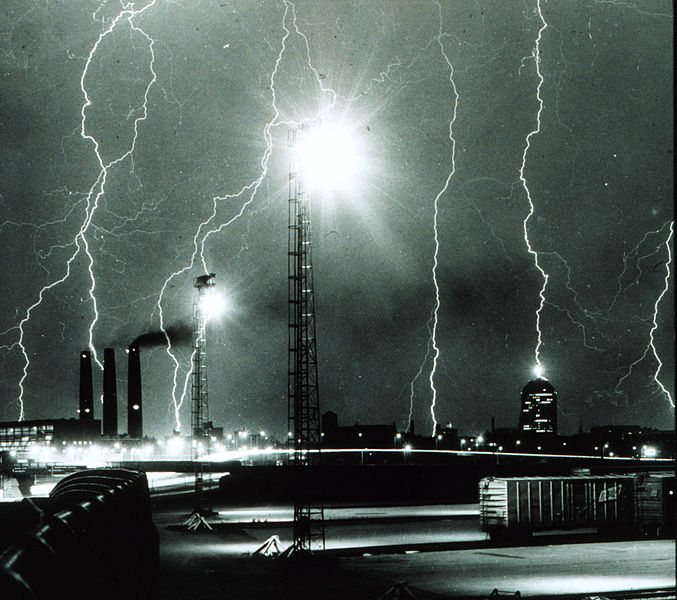
Yet chances of being killed in a mass killing are probably no greater than being struck by lightning, according to Grant Duwe, a criminologist with the Minnesota Department of Corrections who has written a history of mass killings in America.” 

Tags:

Seymour Hersh doesn’t buy the official line about the raid that erased Osama bin Laden–or much else the media says these days. He tears into his industry in discussion with Lisa O’Carroll of the Guardian. The opening:

Seymour Hersh has got some extreme ideas on how to fix journalism – close down the news bureaus of NBC and ABC, sack 90% of editors in publishing and get back to the fundamental job of journalists which, he says, is to be an outsider. 

It doesn’t take much to fire up Hersh, the investigative journalist who has been the nemesis of US presidents since the 1960s and who was once described by the Republican party as ‘the closest thing American journalism has to a terrorist.’

He is angry about the timidity of journalists in America, their failure to challenge the White House and be an unpopular messenger of truth. 

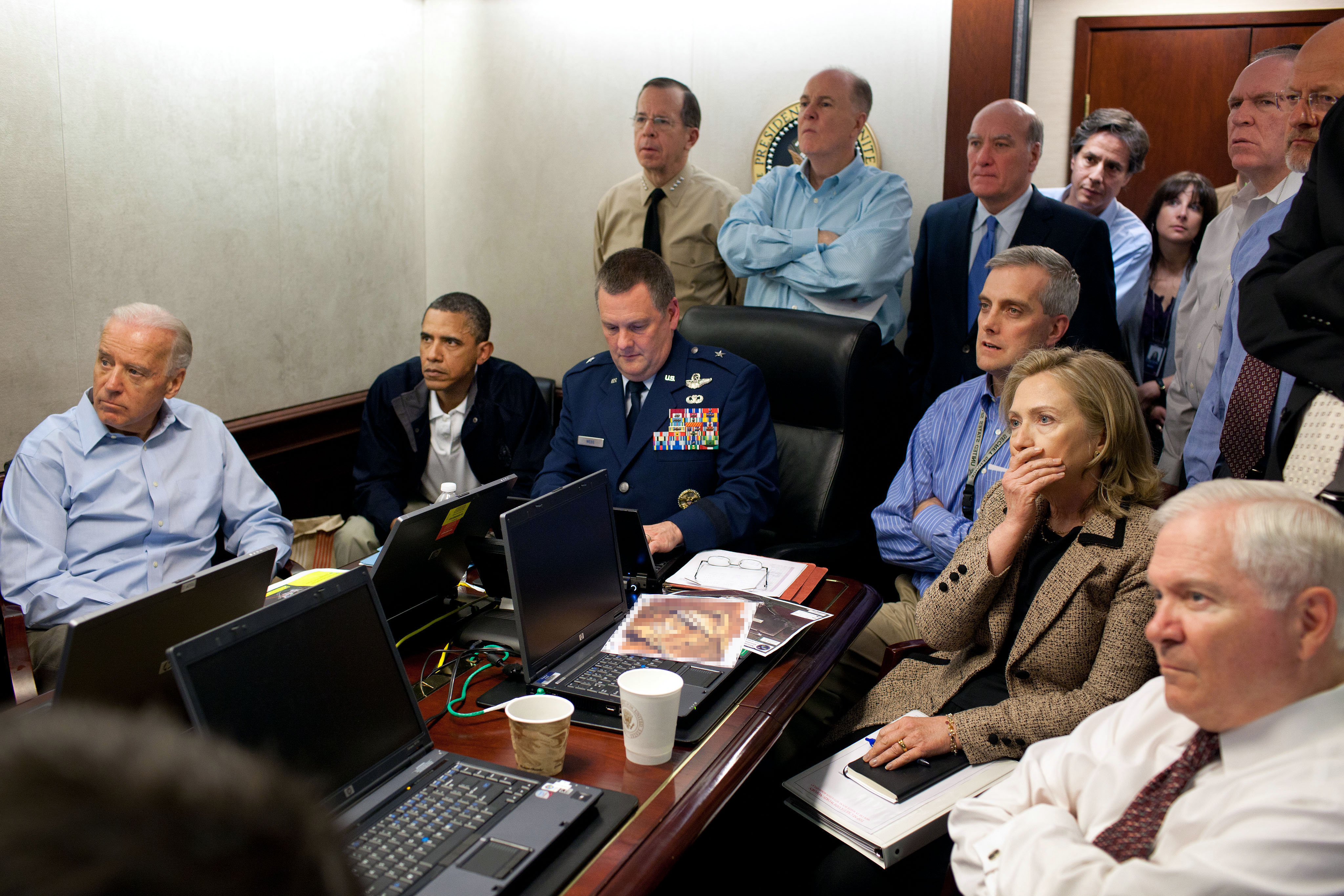
Don’t even get him started on the New York Times which, he says, spends ‘so much more time carrying water for Obama than I ever thought they would’ – or the death of Osama bin Laden. ‘Nothing’s been done about that story, it’s one big lie, not one word of it is true,’ he says of the dramatic US Navy Seals raid in 2011. 

Hersh is writing a book about national security and has devoted a chapter to the bin Laden killing. He says a recent report put out by an ‘independent’ Pakistani commission about life in the Abottabad compound in which Bin Laden was holed up would not stand up to scrutiny. ‘The Pakistanis put out a report, don’t get me going on it. Let’s put it this way, it was done with considerable American input. It’s a bullshit report,’ he says hinting of revelations to come in his book.

The Obama administration lies systematically, he claims, yet none of the leviathans of American media, the TV networks or big print titles, challenge him.

 ‘It’s pathetic, they are more than obsequious, they are afraid to pick on this guy [Obama],’ he declares in an interview with the Guardian.”

Tags: , , ,

Economist Robert Reich, small but perky like a Tina Fey tit, just did an Ask Me Anything at Reddit to promote his new documentary, Inequality for All. He makes the comment that “the rich have done the best when everyone else is doing well.” That’s historically true, but have the rich ever done better than they’re doing now? (I’m talking about the super-rich, of course.) What’s really bad for most has been great for them. A few exchanges follow.

_________________________

Question:

Professor Reich, you are a noted supporter of free trade and outsourcing. From a neoliberal economics perspective, these policies are justifiable, but don’t they dramatically undermine the bargaining power of the American working class?

Robert Reich:

Not if they’re done correctly. For example, our trade treaties should require that our trading partners have a minimum wage that’s half their nations’ median wage (and we should do the same) — thereby helping ensure that the benefits of trade are spread widely.

_________________________

Question:

You appear to be a strong advocate for growing the economy as a way to pay off America’s debt obligations. What are your thoughts on the idea that economic growth is ultimately unsustainable, given the accelerated depletion of key natural resources that would be required to fuel such growth?

Robert Reich:

Growth isn’t the problem. It’s what the growth is used for. Rich economies have healthier environments than poor economies in large part because they can afford to protect their environments. Productivity gains — through invention and innovation — will enable us to save more energy in the future. But we need a carbon tax to get incentives right.

_________________________

Question:

Realistically, what are some policies that could pass this Congress that would be good for the country. We hear so much about what wouldn’t pass, but where is there bipartisanship. I’d love your input, Professor.

Robert Reich: 

I think the Democrats should introduce a bill to raise the minimum wage to at least $10.50/hour — which is what it would be if the 1968 minimum wage had just kept up with inflation. The vast majority of Americans agree. Many Republicans would come along. It would be a worthy fight.

_________________________

Question:

Professor Reich, I am a big fan and looking forward to seeing the film. However, I believe the rich & powerful in this country actively DO NOT want a successful middle class in the U.S., because that means the laborers have too much power. (Also a reason why they’re against Obamacare – health insurance binds people to jobs they hate.) As it is now, employees are scared to ask for raises and demand better working conditions. Multinationals can do better selling to China, India, Brazil etc. What can we do about this situation?

Robert Reich:

Look at American history and you’ll see that the rich have done the best when everyone else is doing well. Today’s rich would do far better with a smaller share of a rapidly-growing economy (growing because the middle class and poor had a larger share) than their currently large share of an economy that’s barely growing at all. It’s not a zero-sum game.•

Tags:

A brief anecdote from Adrianne Jeffries at the Verge about how Social Security numbers, which were not actually intended to be national ID numbers, were misused and confused from the start:

“Social Security numbers were poorly understood from the beginning. In 1938, a leather factory in Lockport, New York attempted to capitalize on the excitement around the country’s newly-formed social insurance program by tucking duplicate Social Security cards into its wallets. Company vice president and treasurer Douglas Patterson thought it would be cute to use the actual Social Security number of his secretary, Hilda Schrader Whitcher.

Real Social Security cards had just begun circulating the year before, so many Americans were confused. Even though the display card was marked ‘specimen’ and sold at Woolworth’s, more than 40,000 people adopted Hilda’s number as their own. According to the Social Security Administration, no fewer than 12 people were still using their Woolworth’s-issued SSN in 1977.”

Tags: ,

It would be a good idea for us to not be close-minded about genetically modified and lab-grown foods, because we’re going to need them eventually. The climate that supports our agrarian culture won’t last forever. Sure, be vigilant with all food corporations regardless of what they’re producing, but don’t set your default mode to artificial = evil. There’s apparently a new fear-mongering documentary about the perils of GMOs that has the blessing of Oprah chucklehead, Dr. Oz. At the New Yorker blog, Michael Specter cuts through the bullshit. The opening of his post:

“I recently watched OMG GMO, Jeremy Seifert’s aggressively uninformed ‘documentary’ about the corporate duplicity and governmental callousness that he says drives the production of genetically engineered crops—which are, in his view, such barely concealed poisons that he actually dressed his children in full hazmat gear before letting them enter a field of genetically modified corn. Seifert explained his research process in an interview with Nathanael Johnson of Grist: ‘I didn’t really dig too deep into the scientific aspect.’

Fair enough. Normally, I would ignore anyone who would say that while publicizing his movie. But Seifert has been abetted by Dr. Mehmet Oz, the patron saint of internally inconsistent scientific assertions, and Seifert’s message of fear and illiteracy has now been placed before millions of television viewers.

Seifert asserts that the scientific verdict is still out on the safety of G.M. foods—which I guess it is, unless you consult actual scientists. He fails to do that. Instead, he claims that the World Health Organization is one of many groups that question the safety of genetically engineered products. However, the W.H.O. has been consistent in its position on G.M.O.s: ‘No effects on human health have been shown as a result of the consumption of G.M. foods by the general population in the countries where they have been approved.’ Britain’s Royal Society of Medicine was even more declarative: ‘Foods derived from G.M. crops have been consumed by hundreds of millions of people across the world for more than fifteen years with no reported ill effects (or legal cases related to human health) despite many of the consumers coming from that most litigious of countries the U.S.A.’ In addition to the W.H.O. and Royal Society, scientific organizations from around the world, including the European Commission and, in the United States, the National Academy of Sciences, have strongly endorsed the safety of G.M. foods. I could cite quotes from a dozen other countries. But let’s leave the overkill to Mr. Seifert.

What else can you call it when a man sends his children into a field of genetically modified corn wearing gas masks?”•

___________________________


Tags: , ,

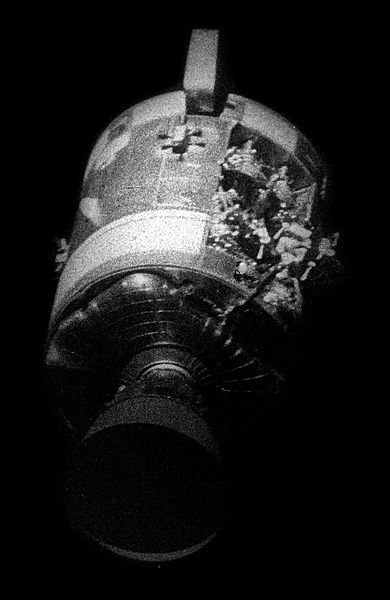
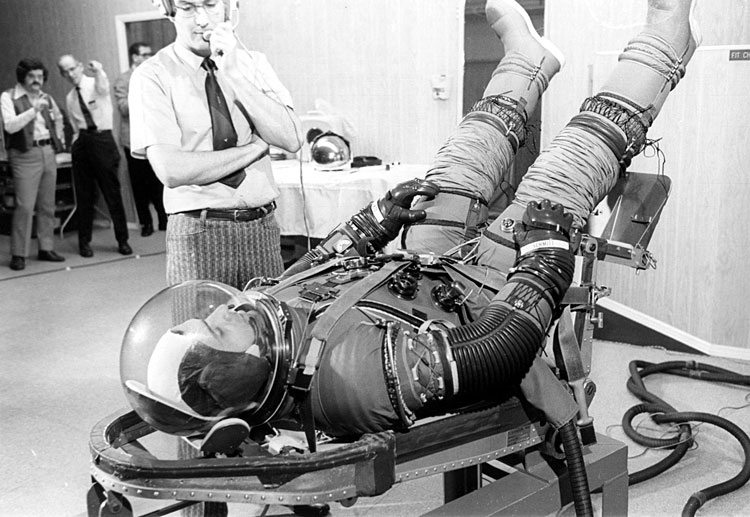
Huntley, sans Brinkley, reporting in 1970 on the troubled Apollo 13 mission, which was salvaged in part because of an MIT hippie lost to history.

Tags:

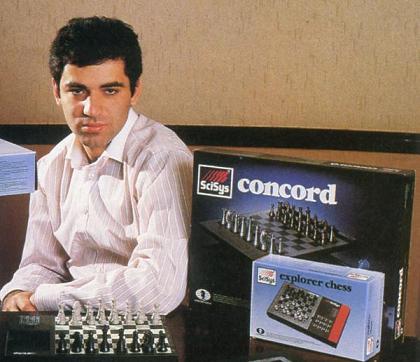
Garry Kasparov is a real-life John Henry, having been felled by the steam-powered hammer of IBM’s Deep Blue. He was the chess king as we were being dethroned by automation, as computers came to rule games–and other things. Kasparov now dabbles in Putin-punching and writing. I’m glad he does the former and wish he would do more of the latter. He’s a very gifted writer.

Below is a recent interview about chess and politics the just-departed David Frost did with the chess champ.

Tags: ,

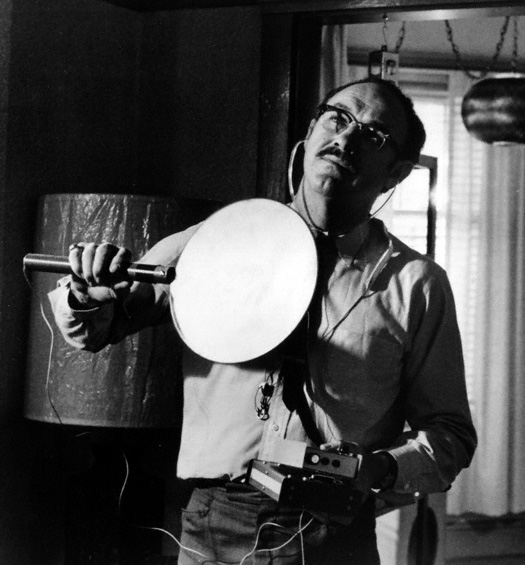
I know I said I would stop, but there is one more interview from David Frost’s 1970 book, The Americans, that I want to excerpt. It’s an exchange about privacy the host had with Ramsey Clark, the noted Department of Justice lawyer. At the outset of this segment, Clark is commenting about wiretapping, though he broadens his remarks to regard privacy in general:

Ramsey Clark:

[It’s] an immense waste, an immoral sort of thing.

David Frost:

Immoral in what sense?

Ramsey Clark:

Well, immoral in the sense that government has to be fair. Government has to concede the dignity of its citizens. If the government can’t protect its citizens with fairness, we’re in real trouble, aren’t we? And it’s always ironic to me that those who urge wiretapping strongest won’t give more money for police salaries to bring real professionalism and real excellence to law enforcement, which is so essential to our safety.

They want an easy way, they want a cheap way. They want a way that demeans the integrity of the individual, of all of our citizens. We can’t overlook the capabilities of our technology. We can destroy privacy, we really can. We have techniques now–and we’re only on the threshold of discovery–that can permeate brick walls three feet thick. 

David Frost:

How? What sorts of things?

Ramsey Clark:

You can take a laser beam and you put it on a resonant surface within the room, and you can pick up any vibration in that room, any sound within that room, from half a mile away.

David Frost:

I think that’s terrifying.

Ramsey Clark:

You know, we can do it with sound and lights, in other words, visual-audio invasion of privacy is possible, and if we really worked at it with the technology that we have, in a few years we could destroy privacy as we know it.

Privacy is pretty hard to retain anyway in a mass society, a highly urbanized society, and if we don’t discipline ourselves now to traditions of privacy and to traditions of the integrity of the individual, we can have a generation of youngsters quite soon that won’t know what it meant because it wasn’t here when they came.•

Tags: ,

Did agriculture lead to complex societies or was it something less nurturing? Cliodynamics provides an alternative cause: war. From Klint Finley at Wired:

“The standard theory, which [Peter] Turchin calls the ‘bottom up’ theory, is that humans invented agriculture around 10,000 years ago, providing resource surpluses that freed people up for other ventures. But what Turchin and his team have found is that the bottom-up theory is wrong, or at least incomplete. ‘Competitions between societies, which historically took the form of warfare, drive the evolution of complex societies,’ he says.

To test the two competing theories, Turchin and company designed two mathematical models for predicting the spread of complex societies. One based only on agriculture, ecology and geography. The other included those three factors, plus warfare. Then, they used data from historical atlases to determine whether these models matched up with the way the different states and empires actually evolved.

The model that included warfare predicted about 65 percent of the historical variance, while the agricultural model explained only about 16 percent, suggesting that warfare was more important in the spread of social norms that lead to complex societies.”

Tags: ,

I hate when some incorrigible wiseass makes a good point in a snide way and I’m not that incorrigible wiseass. It should have been me. Henry Porter of the Guardian suggests that gun violence in America has become a humanitarian crisis requiring international intervention, just like Syria with its chemical weapons. The opening of his article:

“Last week, Starbucks asked its American customers to please not bring their guns into the coffee shop. This is part of the company’s concern about customer safety and follows a ban in the summer on smoking within 25 feet of a coffee shop entrance and an earlier ruling about scalding hot coffee. After the celebrated Liebeck v McDonald’s case in 1994, involving a woman who suffered third-degree burns to her thighs, Starbucks complies with the Specialty Coffee Association of America‘s recommendation that drinks should be served at a maximum temperature of 82C.

Although it was brave of Howard Schultz, the company’s chief executive, to go even this far in a country where people are better armed and only slightly less nervy than rebel fighters in Syria, we should note that dealing with the risks of scalding and secondary smoke came well before addressing the problem of people who go armed to buy a latte. There can be no weirder order of priorities on this planet.

That’s America, we say, as news of the latest massacre breaks – last week it was the slaughter of 12 people by Aaron Alexis at Washington DC’s navy yard – and move on. But what if we no longer thought of this as just a problem for America and, instead, viewed it as an international humanitarian crisis – a quasi civil war, if you like, that calls for outside intervention? As citizens of the world, perhaps we should demand an end to the unimaginable suffering of victims and their families – the maiming and killing of children – just as America does in every new civil conflict around the globe.”

Tags:

From an interview posted at the Los Angeles Review of Books which Jon Wiener conducted with Joan Didion one week after September 11, 2001:

Jon Wiener:

The news today is that President George W. Bush has just launched —

Joan Didion:

‘Operation Infinite Justice.’ Yes.

Jon Wiener:

You’ve always paid close attention to our political rhetoric. What do you make of ‘Operation Infinite Justice’?

Joan Didion:

At first it sounded like we were immediately going to be bombing someone. Then it sounded like it was going to be something like another war on drugs, a very amorphous thing with a heightened state of rhetoric and some threat to civil liberties.”•

For a real challenge, build King Kong on top of the Twin Towers”:

Tags: ,

I root every day for alternatives (online or otherwise) to what America’s higher-education system has become: a fast-food meal with five-star prices, preparation for a fictional world that doesn’t exist, a lottery without a prize, a trick, a hoax, a Ponzi sheme. Nobody lays out the woes better than Thomas Frank did in his recent Baffler essay, “Academy Fight Song.” The opening:

“This essay starts with utopia—the utopia known as the American university. It is the finest educational institution in the world, everyone tells us. Indeed, to judge by the praise that is heaped upon it, the American university may be our best institution, period. With its peaceful quadrangles and prosperity-bringing innovation, the university is more spiritually satisfying than the church, more nurturing than the family, more productive than any industry.

The university deals in dreams. Like other utopias—like Walt Disney World, like the ambrosial lands shown in perfume advertisements, like the competitive Valhalla of the Olympics—the university is a place of wish fulfillment and infinite possibility. It is the four-year luxury cruise that will transport us gently across the gulf of class. It is the wrought-iron gateway to the land of lifelong affluence.

It is not the university itself that tells us these things; everyone does. It is the president of the United States. It is our most respected political commentators and economists. It is our business heroes and our sports heroes. It is our favorite teacher and our guidance counselor and maybe even our own Tiger Mom. They’ve been to the university, after all. They know.

When we reach the end of high school, we approach the next life, the university life, in the manner of children writing letters to Santa. Oh, we promise to be so very good. We open our hearts to the beloved institution. We get good grades. We do our best on standardized tests. We earnestly list our first, second, third choices. We tell them what we want to be when we grow up. We confide our wishes. We stare at the stock photos of smiling students, we visit the campus, and we find, always, that it is so very beautiful.

And when that fat acceptance letter comes—oh, it is the greatest moment of personal vindication most of us have experienced. Our hard work has paid off. We have been chosen.

Then several years pass, and one day we wake up to discover there is no Santa Claus. Somehow, we have been had. We are a hundred thousand dollars in debt, and there is no clear way to escape it. We have no prospects to speak of. And if those damned dreams of ours happened to have taken a particularly fantastic turn and urged us to get a PhD, then the learning really begins.”

Occupy Wall Street gave us a number–99%–that framed the last American Presidential election. The movement is pretty much an afterthought now to most observers, but its founding father, David Graeber, thinks it’s just getting started, mostly because the economic system is still broken, still on the brink. Drake Bennett of Businessweek just did a brief interview with Graeber. An excerpt:

Question:

Were you disappointed that the Occupy Wall Street movement didn’t accomplish more? 

David Graeber:

I’m personally convinced that if it were not for us, we might well have President Romney. When Romney was planning his campaign, being a Wall Street financier, a 1 Percenter, he thought that was a good thing. That whole 47 percent thing that hurt him so much was something the right wing came up with in response to our 99 percent.

But in terms of changing the whole legislative political direction, I think that’s a lot to ask. We weren’t trying to push specific pieces of legislation. We were trying to create an environment where people could be heard. And I think we did that. We also tried to do something else, which was to create this culture of democracy in America, which really doesn’t have one. And that’s such a major task. The more fundamental the aims of a movement, the longer it’s going to take. We’re organizing in much more constrained and difficult circumstances these days, but it’s still going on. It’s just that people don’t report on it that much.”•

See also:


Tags: ,

Alan Weisman’s 2007 thought-experiment, The World Without Us, isn’t just one of my favorite books of the past decade but one of my favorite books, period. His soon-to-be published follow-up, Countdown, concerns world population, which still is booming. We’ve heard before of population bombs that never detonated, but Weisman has run the numbers and is not pleased. From Kenneth R. Weiss’ Los Angles Times interview with the journalist:

“‘Our numbers have reached a point where we’ve essentially redefined the concept of original sin,’ Weisman writes. ‘From the instant we’re born, even the humblest among us compounds the world’s mounting problems by needing food, firewood, and a roof, for starters. Literally and figuratively, we’re all exhaling CO2 and pushing other species over the edge.’

The theme of the book focuses mostly on the ecological question, how many people can Earth support without capsizing? It’s not a new pursuit, of course. Scholars dating to Tertullian, in 2nd century Carthage, have written about a teeming population being ‘burdensome’ to the world.

Weisman sets out to define an ‘optimum population’ for a sustainable Earth, one that balances the overall human numbers with how much each person consumes. As far as per capita consumption is concerned, he proposes a European lifestyle as something that would be widely acceptable but not something as energy-intensive as living in the United States or as difficult as living in much of Africa and Asia.

He doesn’t specify an optimum target population, although he sketches some 20-year-old calculations by Stanford biologist Paul Ehrlich and colleagues that set the number at 2 billion or so. Instead, Weisman argues that we should get on a path of reducing our numbers or suffer the fate of the profusion of deer on Arizona’s Kaibab Plateau north of the Grand Canyon that starved to death in the 1920s.

‘Like Kaibab deer, every species in the history of biology that outgrows its resource base suffers a population crash — a crash sometimes fatal to the entire species,’ Weisman writes. ‘…Inevitably –- and, we must hope, humanely and nonviolently — that means gradually bringing our numbers down. The alternative is letting nature –- the new nature we’ve inadvertently created in our own image –- do that for us.'”

Not everyone believes in the Tao of Steve, but Walter Isaacson, Steve Jobs’ authorized biographer, feels, as many of us do, that Apple has limped along since its co-founder’s death, offering new iterations instead of innovations. In a Financial Times article about the state of Apple and other topics, the former Time Managing Editor also analyzes the tense situation in Syria, seeing an intersection of Russian and American interests. An excerpt:

“I was at a dinner in Manhattan a few weeks ago, just as the Syria issue was heating up, with one of my previous biography subjects, Henry Kissinger. He gave a dazzling analysis (I would call it ‘incredible’ except that it was, in fact, exceedingly credible) of how Russia would see its strategic interests, and predicted that Russia’s president would soon insert himself into the situation by calling for an international approach to the problem. So I was impressed but not surprised when Vladimir Putin did precisely that a week later.

On some of the TV shows I went on to talk about Steve Jobs, I was asked instead about Syria – and the question was usually about whether we could possibly trust the Russians. Most of the guests got worked into a lather, saying that Barack Obama was being horribly naive to trust them. But I think it is perfectly sensible to trust the Russians: we can trust them to do what they perceive to be in their own strategic interest.

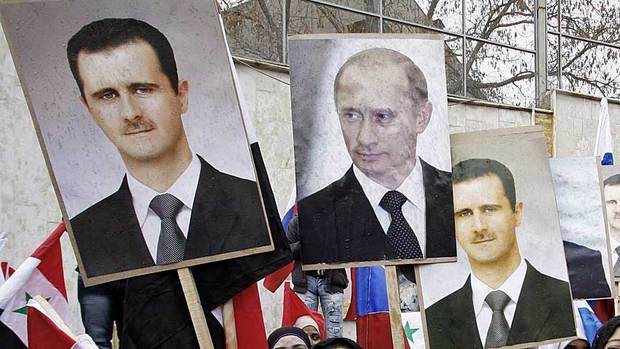
Some of Russia’s strategic interests clash with ours: they want to protect their client state Syria and minimise US influence in the region (and yank America’s chain when possible). But to a great extent, Russia’s interests in this situation actually coincide with ours – at least for the moment. Russia fears as much as the US does the rise of radical Islam just south of its borders. It doesn’t want chemical weapons to fall into the hands of terrorists. And it would like to keep President Bashar al-Assad in power.

That last interest seems to conflict with ours, since the US has called for regime change. But the Russians believe that toppling Assad is not the best idea when that might lead to al-Qaeda and other jihadist forces taking over much of Syria and getting control of some of the chemical weapons. Thus it is in Russia’s interest to get Assad to surrender his chemical weapons, rather than summarily topple him. That might actually be in the west’s interests as well.”

Tags: , , , , ,

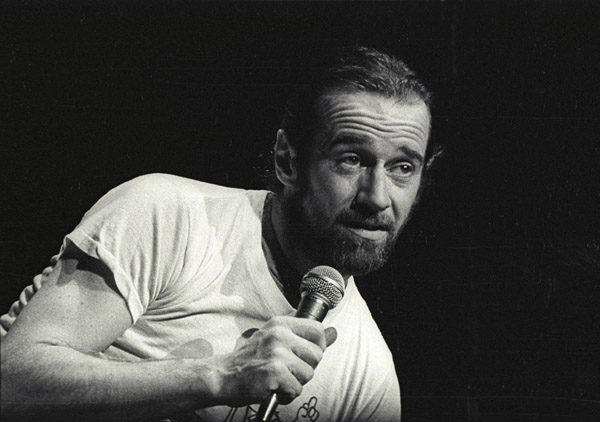
George Carlin on the Ed Sullivan Show in 1971, perfectly explicating the illogical reasoning behind Muhammad Ali’s forced Vietnam Era exile, as the fighter prepared for his first bout with Joe Frazier. Carlin’s performance was broadcast during the final few months of Sullivan’s 23-year run on CBS.

Tags: , ,

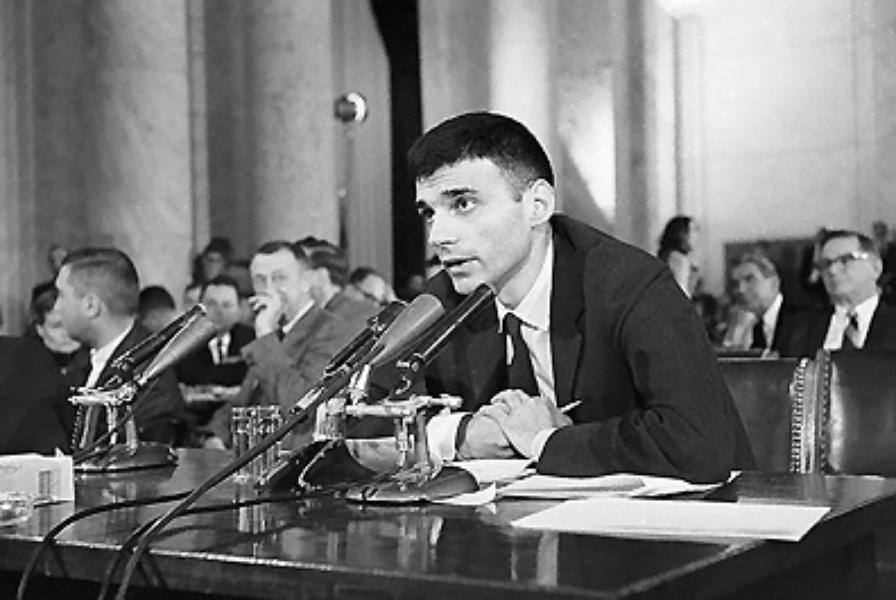
Ralph Nader was a bothersome man, and that was useful when Americans began being called “consumers” rather than “citizens.” He did a great deal of good, alerting his neighbors to all manner of corporate abuses, which were planned and executed according to a playbook. Nader pointed out that corporations, which were definitely not people, were hellbent on gypping us and endangering us in the name of profits, and it made him one of the most important Americans of his generation, a town crier for the advertising age.

Some worried that Nader would be corrupted by the power, but that never happened. His fall occurred for a strange yet simple reason: He told himself a lie, and he believed it. Perhaps he’d been working too long with black and white and not enough gray, but during his 2000 Presidential campaign, he began marketing the lie: That the two major American political parties were exactly alike and nothing would be different regardless of who was elected. Some “consumers” bought in. And when you look back on it, you know that Al Gore wouldn’t have been precisely the same President as George W. Bush, that he likely wouldn’t have invaded Iraq, which cost us 5,000 Americans and maybe 100,000 Iraqis. It was Nader who helped remove those people’s safety belts. It’s a shame for them and their families, and for all of us as well, because we really could use a Ralph Nader right about now.

• • • • •

I’ve made it clear before that I don’t believe children should be admitted to fast-food restaurants any more than they’re allowed to patronize bars or purchase cigarettes. Ronald McDonald and the Wendy’s Girl are really no different than Joe Camel. They’re all there to lure a young demographic to addictive behaviors, disease and death.

From the 1970 David Frost book, The Americans, a passage in which the host and Nader engage in a discussion on children’s food:

David Frost:

One of your main worries at the moment is baby food, isn’t it?

Ralph Nader:

Yes. Here’s an illustration. The leading companies in the industry are putting monosodium glutamate in baby food. That’s to enhance the flavor, so to speak. They’re putting in salt and sugar. But for whose taste? For the benefit of the mother, because the infant does not have taste discrimination. But if the mother likes the taste she will purchase the product and feed it to the infant.

It just so happens that not only do these ingredients cost more, but they have no nutritional value. And they may be potentially harmful, particularly to infants who have hypertension tendencies, as they develop later in life. And they don’t need them at all.

Do you know how easy it would be to have these baby-food manufacturers delete these ingredients from baby food? All it would take would be about three or four thousand letters from mothers around the country saying in no uncertain terms that they do want to purchase baby food on the basis of how nutritious it is for the infant. And it could change.

The consumers have a voice, they really have a part, if they will only speak up. You’ve got to develop a consumer power organized around things like the food industry, automobiles, insurance, telephone services, all these other industries, in order to develop the voice of the consumer.

David Frost:

You’ve said consumer power. As the years have gone by, you’ve been proved right, again and again. But you’ve also got more and more power yourself. Power to influence, at least. Doe sit ever worry you that power will corrupt you in any way?

Ralph Nader:

No. Because it doesn’t amount to a whit. It just amount to talking. You tell people that frankfurters are filled with fat up to thirty-five or forty percent; you tell them that their appliances are wearing out; tell them that their cars are coming out with more average defects–thirty-two per car in tested cars by Consumer Reports last year. You tell them that–

David Frost:

Thirty-two defects per car?

Ralph Nader:

Thirty-two defects per car. You tell them that there are illegal interest charges all over the country, being charged, and they’re concerned. But they don’t do much about it. They’re pretty complacent. They just sit an watch television.” 

Tags: ,

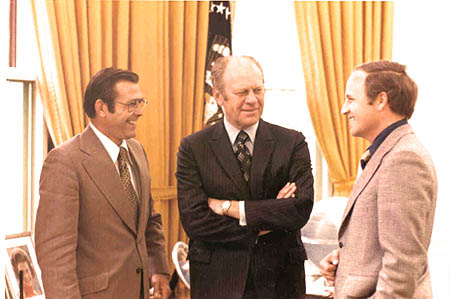
From a new interview about Syria that Spiegel conducted with Donald Rumsfeld, who sees the perils of American intervention but maintains a capacious blind spot for himself:

Spiegel: 

Why did Obama have such big problems gaining the support of other countries for a military strike?

Donald Rumsfeld: 

I believe the reason he has had difficulty gaining support both in the US and from other countries is because he has not explained what he hopes to do, what the mission would be and what he hopes to accomplish. To gain support in our Congress and from other nations requires clarity, an acceptable mission and an explicit outcome.

Spiegel: 

You cannot be serious. George W. Bush, who you served as Secretary of Defense, may have been clear about what he wanted, but most Americans now see the wars he started as being misguided. That would seem to be the real reason that the willingness in the US and the rest of the world to go to war is so low.

Donald Rumsfeld: 

Such sentiments among Americans are hardly a new phenomenon. After World War I, for example, there was widespread war weariness and opposition to the US getting involved in World War II. Americans were reluctant and didn’t want to go to war again in Europe. Similarly, there was no appetite for the Korean War in the United States, or the Vietnam War.

Spiegel: 

From the American perspective, World War II was a noble engagement that paid off in the long run. The same can hardly be said of Iraq and Afghanistan.

Donald Rumsfeld:  

To be sure, the outcomes in Afghanistan and Iraq are uncertain. But, if you look closely, schools are open, they have a free press, have drafted a constitution and have had free elections. Afghanistan was torn after years of occupation by the Soviets, a long civil war and the vicious reign of the Taliban. Today, the people there at least have a chance for a better life. So too in Iraq, with the Butcher of Baghdad gone, a man who used chemical weapons against his own people, as well as his neighbors.

Spiegel: 

That sounds almost cynical given the thousands of people who lost their lives and billions of dollars those wars cost. And we still cannot be sure that these countries have a better future. But the US is now leaving them to their own devices.

Donald Rumsfeld: 

Call it what you will, but my view is that we aren’t a country that can go into another nation and do nation building. That’s up to the people in those countries. There are people in the United States who think we do have the ability to nation build. I personally do not. We can help, to be sure, but they will need to do it in their own way.”

Tags:

A 1961 interview with Ayn Rand, a visionary and awful writer who lived inside her philosophies instead of the real world. She was an Objectivist to the end, even when collecting Social Security and Medicare.

Tags:

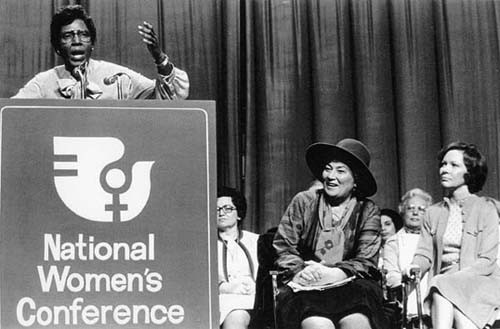
A recap of the landmark 1977 National Women’s Conference held in Houston, Texas, a raucous meeting at a time of great momentum for the Equal Rights Amendment. Kind of a national political convention where an entire gender got nominated. Pretty thrilling stuff.

Just because information is rich, it doesn’t mean that the truth can’t get lost. Sometimes it gets buried–or perhaps just ignored. From A.L. Kennedy’s BBC News Magazine essay:

“Among other forms of resistance, torture produces whistle-blowers, people who can walk into buildings infected with inhumanity and remain human. They make the truth of torture known, sometimes at great personal risk. It seems, in fact, an epidemic of various concealments and deceptions is giving rise to a wider and wider whistle-blowing response. While the powerful seem increasingly able to simply redefine what truth is – what is, is – the whistle-blowers are treated with increasing severity. In government, in business, in healthcare, education and the security services, the useful truths whistle-blowers bring are ignored, or punished with dismissal, smears, gagging orders, even imprisonment. While journalism can sometimes seem irrevocably corrupted by rented opinions and gossip, serious investigative journalists – professional truth tellers – are in every sense an endangered species, specifically targeted in war zones, curbed and intimidated by both oppressive regimes and democracies.

So we exist, it would appear, in a world where truth is punished and liars may lie at will – about levels of surveillance, expense claims, about statistics and financial transactions, about abuses, failures in care, about the crushing to death of human beings at Hillsborough – and only slowly, slowly will truths emerge and then be denied, before the even slower push for acknowledgement, then justice, then perhaps reconciliation, progress.

Our situation seems bleak. But, equally, we may be at a tipping point when the showbiz dazzle of the narrative is no longer enough to make us pay up, express our gratitude for the skill of the fraud.”

Tags:

In the Guardian, Jonathan Franzen, who came thisclose to being the male Gayle King, compares the Vienna of Karl Kraus to America in the age of Facebook and Apple, to an era that may have confused cool connectivity with a warm embrace. An excerpt:

“Vienna in 1910 was, thus, a special case. And yet you could argue that America in 2013 is a similarly special case: another weakened empire telling itself stories of its exceptionalism while it drifts towards apocalypse of some sort, fiscal or epidemiological, climatic-environmental or thermonuclear. Our far left may hate religion and think we coddle Israel, our far right may hate illegal immigrants and think we coddle black people, and nobody may know how the economy is supposed to work now that markets have gone global, but the actual substance of our daily lives is total distraction. We can’t face the real problems; we spent a trillion dollars not really solving a problem in Iraq that wasn’t really a problem; we can’t even agree on how to keep healthcare costs from devouring the GNP. What we can all agree to do instead is to deliver ourselves to the cool new media and technologies, to Steve Jobs and Mark Zuckerberg and Jeff Bezos, and to let them profit at our expense. Our situation looks quite a bit like Vienna’s in 1910, except that newspaper technology has been replaced by digital technology and Viennese charm by American coolness.”

Tags: ,

From MIT’s Technology Review, a report about a more autonomous society becoming the new normal, which should be a positive thing though it hasn’t worked out that way thus far:

“A recent report (which is not online, but summarized here) from the Oxford Martin School’s Programme on the Impacts of Future Technology attempts to quantify the extent of that threat. It concludes that 45 percent of American jobs are at high risk of being taken by computers within the next two decades.

The authors believe this takeover will happen in two stages. First, computers will start replacing people in especially vulnerable fields like transportation/logistics, production labor, and administrative support. Jobs in services, sales, and construction may also be lost in this first stage. Then, the rate of replacement will slow down due to bottlenecks in harder-to-automate fields such engineering. This ‘technological plateau’ will be followed by a second wave of computerization, dependent upon the development of good artificial intelligence. This could next put jobs in management, science and engineering, and the arts at risk.”

Larry Flynt seems like an awful man, so it’s a shame he was right about so many things. This video, made in 1996 at the time of the release of The People vs. Larry Flynt, touches on his period as a born-again Christian, among other topics.

Tags:

« Older entries § Newer entries »