Politics

You are currently browsing the archive for the Politics category.

From a Five Books interview with journalist Caspar Henderson about our so-called Anthropocene Age, an excerpt about an intriguing title by Braden Allenby and Daniel Sarewitz to be published this month:

Question:

Tell me about your final choice, The Techno-Human Condition.

Caspar Henderson:

Climate change is likely to be a huge challenge in this century and beyond, but it’s unlikely to be the only one. Some challenges may come as a surprise but among those we think we can see coming are how we will feed nine to twelve billion humans, how we will keep a lid on deadly conflict and how we will increase the likelihood that what is most valuable and marvelous in the rest of the living world thrives.

Responses  and debate often focus on how science and technology can ‘save’ us.  Sure, there will be no solutions without advances in science and technology. Equally surely, science and technology alone almost never provide a solution. Technical advances usually bring unforeseen consequences. More importantly, poor political and social choices can lead to terrible outcomes.

There is a large and serious literature emerging on how to ‘manage’ the planet in the Anthropocene. Books for non-specialists include Mark Lynas’s The God Species and Al Gore’s The Future.  There is also a growing array of writers and thinkers who are sceptical of the very idea of planetary management, often accusing the ‘managers’ of overly simplistic analysis and recommendations. I recommend Allenby and Sarewitz’s book not because it is especially critical of, say, geo-engineering – in fact their first target is transhumanism – but because it can help the reader to think more clearly about the actual complexity and inherent unpredictably of the situation in which we find ourselves. They are not suggesting that we should cease to act rationally or ethically, just that we understand more fully our ignorance about most complex systems, not least the human context for science and technology and our frequent inability to control them. We need, they say, to ‘add a degree of psychological and institutional flexibility that acknowledges and dignifies our ignorance and limits. Rehabilitate humility.’ This is, if you like, about thinking slow as well as thinking fast about the planet, and there is nothing here that a good and wise scientist would disagree with. Ken Caldeira, a climate scientist who has looked carefully into geo-engineering, stresses the uncertainties – and, by the way, emphasizes that other options such as reducing emissions are likely to be cheaper and more effective. The late Carl Woese, one of the most eminent biologists of recent times, argued that our first priority should be ‘not to engineer nature but to listen to its harmonies.’

Science and technology are key to our future but even more important are the ethical and political challenges we have to overcome if we are truly to grow up in the Anthropocene. If Jared Diamond was right in Collapse, societies disintegrate when those in charge cease to think about the interests of the people as a whole. This looks like one of the clear and present dangers facing us today. To find the resources to fight the necessary battles we need to find strength inside ourselves. This means allowing plenty of room for the inner child to play. Music, the arts and the sciences, which are making discoveries of surpassing beauty almost daily, can help us find plenty of space, amidst all the uncertainty, for wonder and celebration.”

Tags: , ,

  • You see some terrible things living in New York. Like Bay Ridge, for instance. How awful. But there was nothing awful about Election Day here this week. Bill de Blasio and Bill Thompson seemed like the best candidates in an uninspiring field, and they finished one-two. (It may or may not take a run-off to decide things.) Much is being made about de Blasio using his multiracial family to woo voters–Mayor Bloomberg stupidly called it a “racist campaign”–but the candidate did so well because he’s the only one who identified and addressed the overwhelming worry of most New Yorkers: the fear of falling. Larger and larger swaths of this city are for the wealthy and tourists, with middle-class and poor residents wondering whether there is still room for them. If de Blasio emerges as Mayor, we’ll see if he has any answers. But at least he knows the question.
  • In order to beat Eliot Spitzer in the Democratic primary of the NYC Comptroller’s race, Scott Stringer had to show himself to be as credible (or nearly as credible) as his opponent. If Stringer fumbled, he would have lost. This wasn’t a victory won out of moral outrage. This was New Yorkers seeing a pair of strong candidates for the post and giving the victory to the one who hasn’t previously disappointed them. Spitzer ran a strong campaign and didn’t lose this election; Stringer won it.
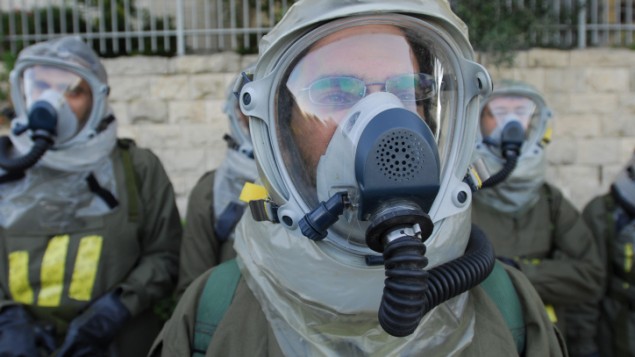
  • On the inernational front, I was pleased with President Obama’s brief address on Syria Tuesday night. If we can stop the atrocity of chemical weapons and send a message to the whole world that such a tactic is a tipping point, that would be great. Though I certainly hope that result comes from diplomacy rather than explosions. Blowing up stockpiles of chemical weapons will release those chemicals into the environment, and that can’t be good for anyone.
  • Two issues Obama wanted to avoid at all costs–gun control and new military intervention abroad–chipped away at his conscience until he couldn’t avoid them any longer. But while Sandy Hook deeply saddened him, Syria is the first time in his Presidency that he hasn’t been able to contain his fury publicly.
  • We all need to stop using the phrase “line in the sand,” or at least use it more honestly. As horrifying as it would be if, say, the Chinese government used chemical weapons on its people, we would not bomb that country. Sure, there’d be international pressure and sanctions, but there would not be bombing. The line always depends on whose sand we’re talking about.

Tags: , , , ,

At the New Yorker‘s “Currency” blog, Vauhini Vara and Vijith Assar have published “What the Dow Tells Us About Ourselves,” a fun, interactive timeline that explains how companies were viewed in America in the year they were added or subtracted from the Dow. From “1991 through 2004”:

“It’s easy to forget that the late eighties and early nineties saw as strong a backlash against consumer culture as we’ve seen in the post-Vietnam era: it was in those years, remember, that Nirvana and Clerks happened. It also happened to be the period in which the Dow added both McDonalds and Walt Disney, two of the era’s most memorable symbols of capitalism’s effect on our culture. By the time Walt Disney joined, in 1991—the year it released Beauty and the Beast—the company had long been seen in some quarters as an evil empire. In a 2006 article for the magazine, Anthony Lane, quoting a 1971 broadside by the writer and activist Ariel Dorfman, wrote, ‘Disney has somehow become shorthand for the cushioning with which, knowingly or otherwise, we protect and console ourselves against experience: ‘All the conflicts of the real world, the nerve centers of bourgeois society, are purified in the imagination in order to be absorbed and co-opted into the world of entertainment.’’ (The broadside’s title: How to Read Donald Duck: Imperialist Ideology in the Disney Comic.) By the end of the nineties, of course, people were distracted by a new trend in consumer culture: the rise of the technology industry, which brought Hewlett-Packard to the average in 1997, followed by Microsoft and Intel in 1999.”

Tags: , , ,

Cyberwar hasn’t replaced traditional war–not yet, at least–it’s just added to it. The opening of “The Geeks on the Front Lines,” David Kushner’s Rolling Stone state-of-the-state about hackerdom in 2013:

“Inside a darkened conference room in the Miami Beach Holiday Inn, America’s most badass hackers are going to war – working their laptops between swigs of Bawls energy drink as Bassnectar booms in the background. A black guy with a soul patch crashes a power grid in North Korea. A stocky jock beside him storms a database of stolen credit cards in Russia. And a gangly geek in a black T-shirt busts into the Chinese Ministry of Information, represented by a glowing red star on his laptop screen. ‘Is the data secured?’ his buddy asks him. ‘No,’ he replies with a grin. They’re in.

Fortunately for the enemies, however, the attacks aren’t real. They’re part of a war game at HackMiami, a weekend gathering of underground hackers in South Beach. While meatheads and models jog obliviously outside, 150 code warriors hunker inside the hotel for a three-day bender of booze, break-ins and brainstorming. Some are felons. Some are con artists. But they’re all here for the same mission: to show off their skills and perhaps attract the attention of government and corporate recruiters. Scouts are here looking for a new breed of soldier to win the war raging in the online shadows. This explains the balding guy prowling the room with an ‘I’m Hiring Security Engineers. Interested?’ button pinned to his polo shirt.

Hackers like these aren’t the outlaws of the Internet anymore. A 29-year-old who goes by the name th3_e5c@p15t says he’s ready to fight the good fight against the real-life bad guys. ‘If they topple our government, it could have disastrous results,’ he says. ‘We’d be the front line, and the future of warfare would be us.’

After decades of seeming like a sci-fi fantasy, the cyberwar is on.”

Tags:

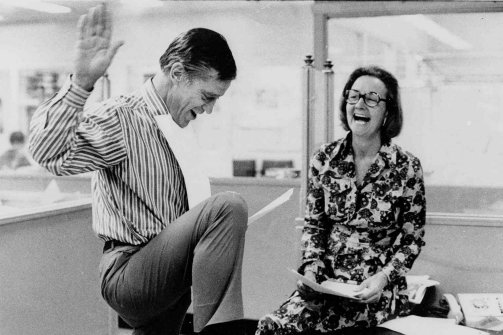
Almost 40 years before Jeff Bezos rescued the Washington Post from stegosaurus status, the paper was ascendant in the aftermath of its Watergate reportage, and the focus of a 60 Minutes report by Mike Wallace. Watching Ben Bradlee in this story reminds how perfectly Jason Robards captured him, physically and spiritually, in All the President’s Men. “If we hadn’t been right, we would’ve been dead,” Katherine Graham notes in regards to Watergate, but years later integrity was no match for technology.

Quick question: Without pause, can you name the person ultimately revealed as the Woodward-Bernstein Deep Throat source? For decades, this was one of the mysteries most obsessed about in America, and it seemed to have become an afterthought nearly the moment it was solved. I think the name W. Mark Felt means almost nothing to the vast majority of people in the country today. Even before he passed away, Felt had returned to the shadows.

Tags: , , , , , ,

In “The Man Who Came To Dinner,” Sarah Ellison’s new Vanity Fair piece about Julian Assange, we get a look at the Wikileaks mastermind as he’s confined to the Ecuadorian embassy in London, dodging a likely indictment from the U.S. for espionage and certain interrogation from Sweden about alleged sex crimes. Yet behind closed doors, he telecommutes at will, running his document dump seamlessly, striking a pose that’s equal parts Ellsberg and Polanski. An excerpt:

“Even before the Snowden affair brought him back into the limelight, Assange had been busy. During his year of confinement at the embassy, he has released a vast cache of documents, written a book, addressed the U.N., founded a political party in Australia and launched a bid for a Senate seat there, entertained socialites and celebrities, maintained contact with leakers and whistle-blowers all over the world, and worked behind the scenes to influence depictions of him that are now hitting movie screens (the most high-profile being a DreamWorks production starring Benedict Cumberbatch). As for the Snowden case, Assange and WikiLeaks have served, in effect, as Snowden’s travel agents, publicists, and envoys; it is still not clear how far back the Snowden connection goes, or precisely how it originated, though the filmmaker Laura Poitras likely played the key role.

Assange cannot move from his quarters, but he is either at his computer or in conference, working in an impressive number of spheres. ‘He is like any other C.E.O.—plagued by constant meetings,’ WikiLeaks told me. He employs sophisticated encryption software, which anyone wishing to make contact with him or his circle is encouraged to use. To gain a sense of his life and work, during the past months I have spoken to Assange’s lawyers and to many longtime or former friends, supporters, and professional associates. (Some have requested anonymity.) Daniel Ellsberg, the former U.S. military analyst who brought the Pentagon Papers to light, has met with Assange and speaks with personal knowledge about the lonely life of a leaker and whistle-blower. ‘We are exiles and émigrés,’ he told me.

But the fact that Assange has had to take himself physically out of circulation has had the effect, oddly, of keeping him more purely at the center of things than he was before. His legal perils have not receded, but his state of diplomatic limbo means that he is no longer being hauled out of black vans and in front of screaming reporters and whirring cameras. The U.S. government has tried to decapitate his organization, which has only made him a martyr. No one is talking, as they were when he was free to mingle with the outside world, about his thin skin, his argumentative nature, his paranoia, his self-absorption, his poor personal hygiene, his habit of using his laptop when dining in company, or his failure to flush the toilet.

‘If anything, I think he’s stronger and more sophisticated than he used to be, and so is the organization,’ Jennifer Robinson, an Australian human-rights lawyer best known for her work defending Assange in London, told me. ‘They’ve weathered three years of intense pressure and all forms of legal and political attacks, and they are still here and still publishing and still making headlines.’ Today, Assange is alone and unbothered, but not isolated—the unquiet center of a web whose vibrations he can both detect and influence.”

Tags: ,

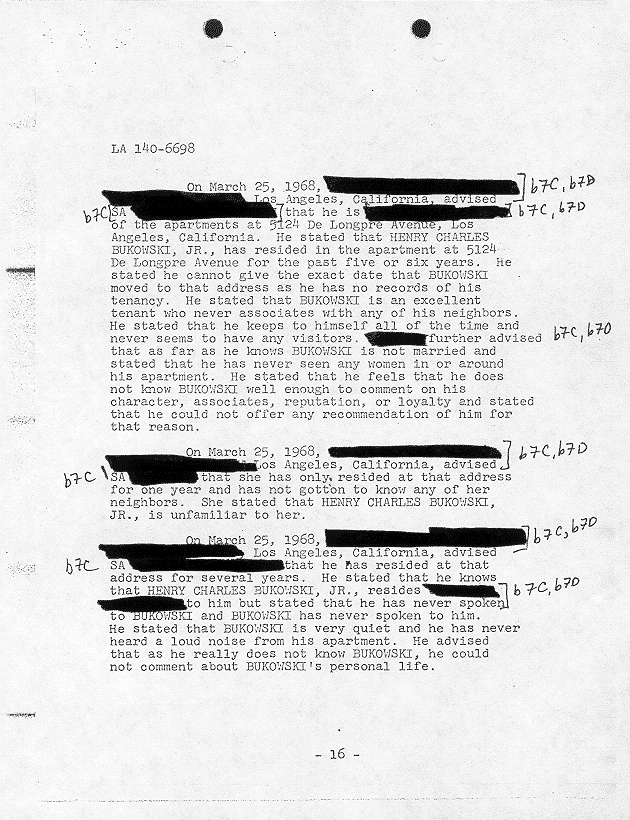
Charles Bukowski, a poet of despair who questioned the wisdom of crowds, was a person of interest for the FBI. Open Culture points out that Bukowski.net has published 113 pages of FBI documents from 1968. It’s mostly pointless investigation into a man who was most dangerous to himself and his spouses, but it’s there if you’re a completist.

Tags:

This month is the one-year anniversary of the launching if Aeon, the digital magazine that has quickly become the best producer of essays I can find in print or online. Congratulations to Paul and Brigid Hains, who founded the publication, and to all their contributors.

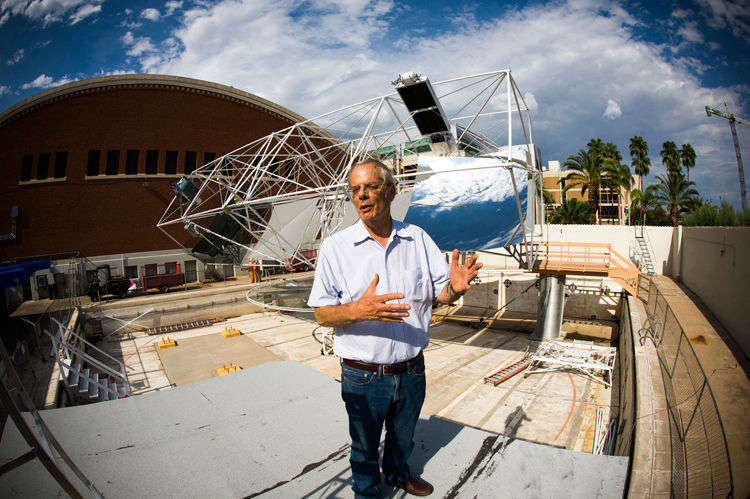
From “Catching the Star,” Lee Billings’ new Aeon essay about astrophysicist Roger Angel, who wants to transform the American Southwest, which is getting closer to dying of thirst, into one of Earth’s chief solar-power stations:

In the first decade of this new century, Angel began to shift his focus from planets around other stars to the planet that we live on, the planet that was growing parched and crowded before his eyes. He has spent years devising a three-decade plan to build and launch 16 trillion tiny, autonomous spacecraft to form a sunshade to cool the Earth to pre-industrial average temperatures, thus counteracting anthropogenic greenhouse heating. The associated expenses would amount to some $5 trillion, although Angel hastens to point out that this would constitute less than one per cent of the world’s gross domestic product for the project’s duration — a bargain compared with the much higher projected costs of allowing global warming to proceed unabated.

No one could find technical flaws with Angel’s audacious plan: the physics was eminently feasible. It was also meticulous. Angel had considered practically every relevant physical variable and technological scenario. Even so, he considered it little more than ‘a Band-Aid’, something that could buy perhaps a century of cooler temperatures. More sustainable long-term adaptations would be needed to deal with the recent spike in greenhouse gases, which promise to linger in the atmosphere for tens or hundreds of thousands of years.

“The sunshade may seem like mad science,” he quips from time to time, “but the fact is, we live upon a mad world.” Not mad enough, however. Not yet. Few would seriously contemplate building anything like Angel’s sunshade until catastrophic warming and sea-level rises are already well under way, and by then, it may be too late. Angel himself prefers that it never be built at all. He believes that cutting carbon emissions would be considerably cheaper in the long run.

To that end, Angel has been working on a new project since 2008, an effort less ambitious than blotting out the light of the sun but audacious enough. He wants to make grid-scale solar power that costs about a dollar per watt — as cheap as or cheaper than electricity from burning coal or other fossil fuels. Moreover, he thinks he has found how to do it, and has even formed a company, REhnu, to gather capital investment and develop the necessary technology.

In years to come, if Angel has his way, his proprietary system of gleaming mirrors and flashing lenses will transform the American southwest and other sun-drenched regions into the 21st-century powerhouses of the globe, driving markets to leave all the world’s remaining coal in the ground. He has attracted several research grants from government agencies, as well as a considerable number of backers from the upper echelons of US astronomy and energy research who, having seen Angel build the Mirror Lab from nothing, prefer to bet with rather than against him.•

Tags: , , ,

Fat-necked babyhead Karl Rove spent a good part of Sunday excoriating the President for inching backwards from his line in the sand on Syria, but I’m glad Obama retreated if only a little. I know he doesn’t want a Rwanda to happen on his watch, but it’s difficult to bomb a country into a safer place. Not impossible, but difficult. Obama did what responsible adults do when they feel emotions getting the best of them: They doubt. And then perhaps they proceed or maybe they realize that strength isn’t only in being inflexible, the way JFK did after the Cuban Missile Crisis. Khrushchev sure seemed forceful when banging his shoe on a table, but even if he won a day or two with bluster, he didn’t win the history books. Certitude alone doesn’t do that.

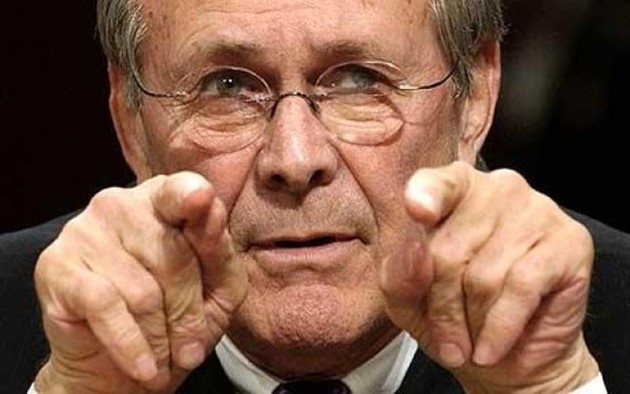
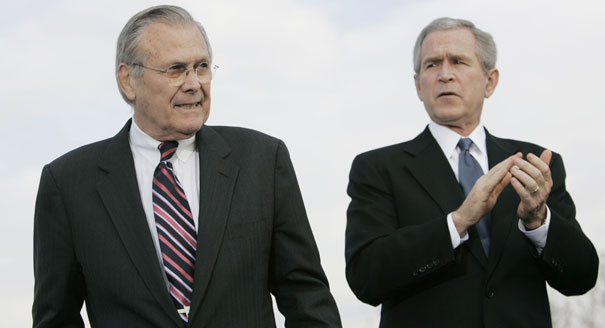
Doubt was in short supply when Rove’s candidate, President George W. Bush, was in office. He and his inner circle knew that Iraq had WMDs, and there was no bending their spines of steel. So many people died because they had no doubt. In Errol Morris’ new Donald Rumsfeld documentary, the former Secretary of Defense still doesn’t question his decisions. From Gregg Kilday’s Hollywood Reporter interview with Morris about Rumsfeld’s desire to own the narrative even though the facts say he got owned:

Hollywood Reporter:

You eventually interviewed him for 33 hours.

Errol Morris:

Over 11 separate days, four separate trips to Boston. We filmed in a studio in Allston over the course of a little bit more than a year.

Hollywood Reporter:

And you had him read his memos as part of the interview?

Errol Morris:

Yes, the memos are memos that he shared with us. I don’t believe they were ever available before we started talking with him. I sometimes describe it as a kind of history from the inside out rather than the other way around. What was so fascinating and still is fascinating about the memos is that they came from [various] periods, whether it was the Ford Administration or his role as an ambassador-at-large in the Middle East during the Reagan Administration and during his tenure as secretary of defense for George W. Bush. They also reflect how he wants other people to see him. They are complex. It gives some kind of insight into what he was thinking, how he wanted to present himself to others, how he wanted to present himself to history. I think there are a lot of complicated things going on that fascinated me and still fascinate me. For a lot of people when you make a movie, you’re supposed to come away with definite answers about things. I’m not sure that is my M.O. In fact, I’m pretty sure it is not.

Hollywood Reporter:

He seems strangely obsessed with the definition of words.

Errol Morris:

I’ll tell you how I interpret it. When we think of words and the definition of words, I immediately think of George Orwell because he wrote so extensively about it. Orwell was obsessed with language and how language could be used to manipulate people. But I don’t think that’s what’s going on here. It’s something stranger. Words become for Rumsfeld his own way to regain control over reality and history as he feels it slipping away. I’m not sure I’m even characterizing it correctly either, but there’s something strange and powerful about it. If somehow he gets the right word or the right definition of words, everything will be OK. America will win the war in Iraq, the insurgents will vanish. It’s all a problem of vocabulary.”

Tags: , ,

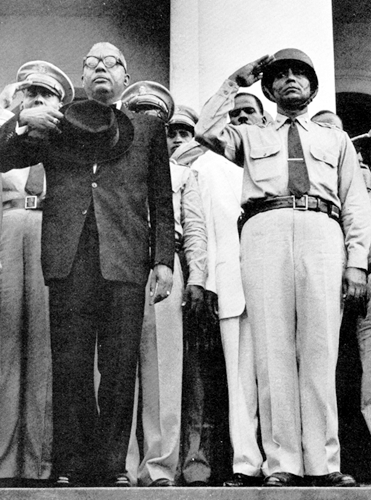
Alan Whicker’s mesmerizing 1969 film about Haiti’s witch doctor of a dictator, François “Papa Doc” Duvalier.

Tags: ,

As I’ve mentioned numerous times, including yesterday, drones will get increasingly smaller à la microchips, until the information-gatherers, much like the information, can fit on the head of a pinThe opening of John W. Whitehead’s Rutherford Institute essay, “Roaches, Mosquitoes, and Birds: The Coming Micro-Drone Revolution“:

“America will never be a ‘no drone zone.’

That must be acknowledged from the outset. There is too much money to be made on drones, for one, and too many special interest groups—from the defense sector to law enforcement to the so-called ‘research’ groups that are in it for purely ‘academic’ reasons—who have a vested interest in ensuring that drones are here to stay.

At one time, there was a small glimmer of hope that these aerial threats to privacy would not come home to roost, but that all ended when Barack Obama took office and made drones the cornerstone of his war efforts. By the time President Obama signed the FAA Reauthorization Act into law in 2012, there was no turning back. The FAA opened the door for drones, once confined to the battlefields over Iraq and Afghanistan, to be used domestically for a wide range of functions, both public and private, governmental and corporate. It is expected that at least 30,000 drones will occupy U.S. airspace by 2020, ushering in a $30 billion per year industry.

Those looking to the skies in search of Predator drones will be in for a surprise, however, because when the drones finally descend en masse on America, they will not be the massive aerial assault vehicles favored by the Obama administration in their overseas war efforts. Rather, the drones coming to a neighborhood near you will be small, some nano in size, capable of flying through city streets and buildings almost undetected, while hovering over cityscapes and public events for long periods of time, providing a means of 24/7 surveillance.”

Tags:

In this strange time, everyone is spying on everyone and privacy as we knew it is not returning. Yet people believe–or pretend to believe–that something can be done about it. While many think legislation is the answer, some in Colorado have a different idea: license citizens who wish to shoot down government drones. (Those involved haven’t yet said what they will do when drones shrink from the size of planes to that of fleas.) From Jason Bittel at Slate:

“Is it just me, or are things really coming off the rails in Colorado? Earlier this summer, a handful of northern counties got all hyped up on freedom juice and started talking about secession. (The rural counties were reportedly upset over ‘restrictive gun laws and clean energy mandates.’) Now, a town to the south has been inundated with requests for drone-hunting licenses—and we’re not talking about using flying robots to shoot deer on the ground. Naturally, it doesn’t matter that there’s no such thing as a drone-hunting license.

Here’s how the whole brouhaha began. In June, some dude in Deer Trail, Co., proposed that there should be a town-wide ordinance to shoot down government drones, complete with a $100 bounty should one successfully ground one. (FYI: You’d have to provide a piece of the drone to prove your ‘kill.’) Despite the fact that the town won’t even vote on the ordinance until October, the story snagged national media attention, which in turn spurred red-blooded Americans everywhere to send Deer Trail a check for $25 (the proposed cost of the license that doesn’t exist). When the town clerk stopped counting, they’d received $19,006.”

Tags:

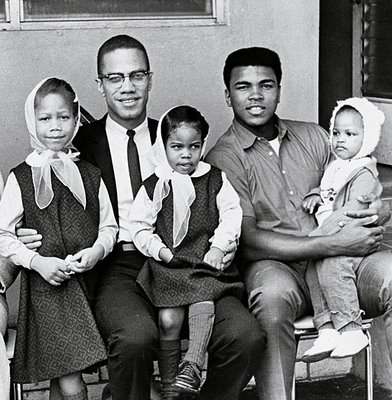
In this 1965 TV meeting with female members of the press, Muhammad Ali discusses Malcolm X’s estrangement from Elijah Muhammad’s brand of Islam. That means it had to have been recorded somewhere from January 1 to February 20 because the minister and activist was murdered on February 21 of that year.

Tags: , ,

The opening of a 1968 Life magazine portrait of David Frost at 28, an enfant terrible and empire builder:

“There is more for England to fret about than the pound, the loss of empire and the damnable decision of her fashion arbiters to lengthen skirts almost to the ankle. There  is also the young man sunk in the ultramodern chair on the preceding page, surrounded by barbed quotes from his new book, The English (Stein and Day), which he wrote with Antony Jay.

There are many influential Britons who feel that the most charitable solution to the question What to Do about David Frost? would be simply the stuff him and put him on display at Madame Tussaud’s where all the other really famous people are. As Britain’s most obtrusive TV personality. David would not mind being there, actually, but not quite yet.

London newspaper columnists these days are demanding his scalp with headlines like THE PERIL DAVID FROST REPRESENTS and stories underneath that say, ‘Is he conducting an entertainment or a public pillory?’ The London Evening News said, ‘Mr. Frost seems to have taken upon himself the role of public inquisitor, and his program reminds one of the Court of the Star Chamber.’ Still another paper complained that the Frost show was becoming a supplementary house of Parliament. 

In seven short years since he left Cambridge, David Frost has become the sometime conscience of his country, a provocateur extraordinaire, a cunning and ferociously ambitious preacher’s boy who at 28 has built out of discomfort a show-business empire that has taken over Great Britain and is reaching across the Atlantic to the U.S.”

Tags: ,

David Frost was mocked as a lightweight outsider by mainstream media when in 1977 he purchased an interview with Richard Nixon, especially excoriated by Mike Wallace the week before it was to air. But he ultimately checkmated the disgraced former President in a contest that was even higher stakes than Fischer-Spassky.

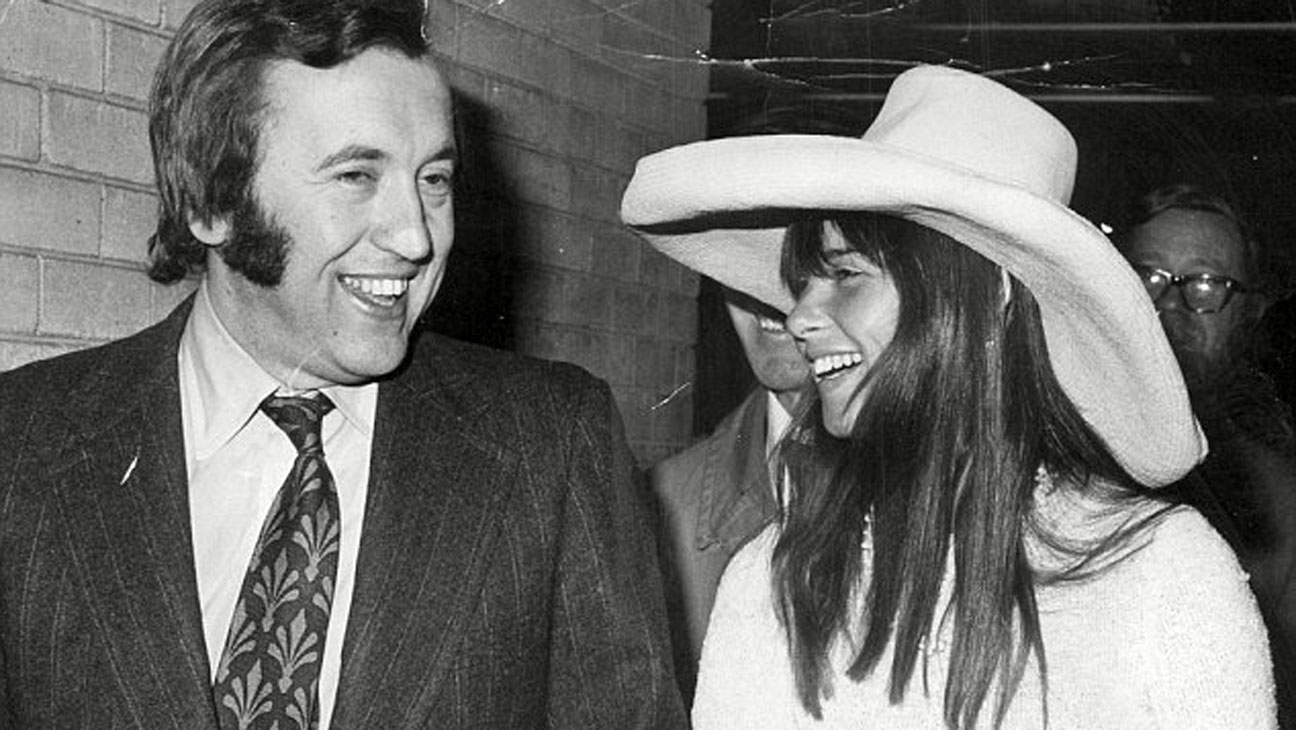
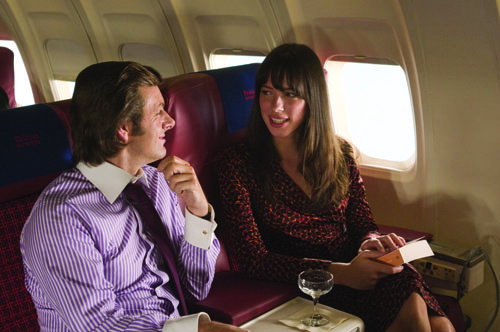
From a colorful Hollywood Reporter essay about the colorful Frost by former girlfriend Caroline Cushing Graham, who was with him during the momentous interviews and was played by Rebecca Hall in the Ron Howard adaptation of Peter Morgan’s play:

In 1975 David and I traveled to Florida for a series of The Guinness Book of World Record shows he hosted. One was about the fattest man, the sword swallower, and another about a post office built for small people. The human bomb blew himself up for the camera, he had added an extra stick of dynamite to impress David. We were impressed and horrified by the effort – that was a typical Frost program.

In February 1977 David asked me to come to Beverly Hills, where he was preparing for the historic interviews with Richard Nixon. At the time there was anxiety and money needed, and ads to be sold to pay for the cable TV channel airing the interviews. In the Beverly Hilton, a group of famous journalists were researching questions with David, along with our good friend and advisor Clay Felker, founder of New York and New West magazines. 

David worked himself to the bone in Beverly Hills, with a painful root canal emergency done a few days before the Laguna Beach interviews. I accompanied David with the team down south to Laguna, he did not drive, contrary to the Frost/Nixon movie. As David prepared to interview Richard Nixon, I made the sandwiches for their lunch. When the last days’ interview was over, there were 28 hours of interviews, Nixon invited us for drinks at the Western White House. Diane Sawyer accompanied us to a private room for cocktails. Nixon asked me if I liked good wine, as he was proud of his cellar. Driving away that evening I felt sorry for Nixon, he was so lonely and we were going to a party at Ma Maison, where Sammy Kahn was performing.

Nixon had said to David, as we posed for a photograph with him: “Marry that girl, she lives in Monte Carlo.” David laughed at Nixon’s remark and it became a standing joke between us – he used it in his book I Gave Them a Sword.  As we returned to Beverly Hills David was anxious to meet with his team and get their reaction to the interviews before we went out to dinner.”•


From a later Frost special for the Guinness Book of World Records:

Tags: , , , , ,

Three exchanges follow from an Ask Me Anything at Reddit with Josh Keating, a global-news reporter for Slate.

__________________________

Question:

In your opinion, is Obama’s stance on Syria politically motivated due to his arbitrary chemical weapons line-in-the-sand or are there legitimate national security interests at stake?

Josh Keating:

I agree with my colleague John Dickerson that Obama boxed himself in with the “red line” comment,” but I do think the administration’s view of chemical weapons as beyond the pale compared to mass casualty conventional weapons attack is genuine. This isn’t to say the strike being considered will actually be an effective deterrent for Assad or other states considering chemical weapons use.

__________________________

Question:

Those who supported the Iraq war usually felt “duped” by the false evidence of WMDs. Shouldn’t the evidence that Assad conducted the CW attacks be the primary object of scrutiny? Evidence to date suggests that the primary source of intelligence is Mossad intercepts. Can we really rely on that? For that matter, can we really rely on our own intelligence community to have America’s best interests in mind? And now there is a mad scramble to find a “defector” to bolster the case. Can you blame an informed American for being skeptical?

Josh Keating:

Don’t blame you at all for being skeptical, but there are some critical differences between the two situations. In this case, we have an attack that took places just weeks ago rather than years earlier. It also certainly doesn’t seem like this administration has been desperately looking for pretexts for a war. All claims certainly warrant scrutiny but I wouldn’t dismiss compelling evidence just because of superficial similarities between the two situations.

__________________________

Question:

What do you think the most “unknown” world issue is? So, not something like Syria or Egypt that gets a lot of attention, but something important nonetheless.

Josh Keating:

As far as regions go, I’m always a little shocked by how little attention is paid in the U.S. conversation to Latin American politics. Given the geographical and cultural proximity, the stark ideological divides, the economic transformations we’ve seen in some countries, and how great an impact U.S. policy have there — the drug war in Central America for instance — it’s always a little baffling to me that the region gets short shrift compared to the Middle East and Asia. At least in the post-Cold War period.

Tags:

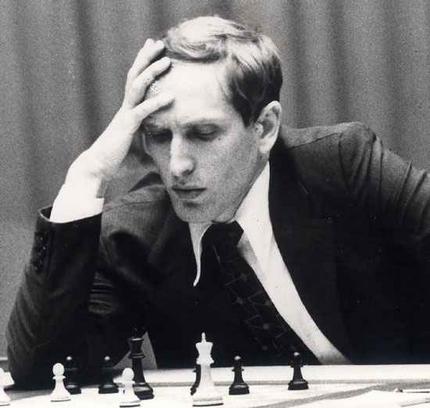
Five years before the world-gripping Frost-Nixon interviews, the recently deceased David Frost contacted Henry Kissinger to ask him if he could help convince the ever-enigmatic Bobby Fischer to compete in the World Chess Championship in Iceland. The resulting Fischer-Spassky matches became legend. An excerpt from the declassified transcript of the Frost-Kissinger call (which is still censored to a degree):

David Frost:

I was calling you, A, to greet you and, B, I’ve had three calls this morning about a hilarious diplomatic matter that I just wanted to ask you whether you thought it was worth anyone at the White House, from yourself down, as it were, doing anything about. It’s an extraordinary story. Can I tell you about it?

Henry Kissinger:

Certainly.

David Frost:

It’s about America’s gist to the world of chess — Bobby Fishcer. I got to know him when he appeared on my show. He came to the party in Bermuda and so on.

Henry Kissinger:

That’s right.

[SANITIZED]

David Frost:

Now the question is, is it worth someone doing that?

Henry Kissinger:

Yeah, I’ll do it. I do all the nutty things around here. Where is he?

David Frost:

Well, now, I’ve got two phone numbers. Now unfortunately,…he is staying at the moment with a Mr. Fred Saidy who is a Broadway writer of things like Brigadoon. And his son is a grand master in chess. S-A-I-D-Y in Douglaston Long Island. And the man who knows…

Henry Kissinger:

I think if I call him I should just call him and tell him a foreign policy point of view I hope the hell he gets over there.”

Tags: , , , ,

Original shock jock Joe Pyne, who interviewed satanists and pimps and, yes, even lawyers, had a testy exchange with Merry Prankster and founding Yippie Paul Krassner in 1967. The guest’s running buddy Jerry Rubin once stormed off the same show.

Tags: ,

Following up on this week’s post about Google perhaps getting into the driverless-taxi business, here’s the opening of a Matthew Yglesias Slate piece warning that regulation might stymie the emergence of this autonomous sector:

“Google’s eye-popping $258 million investment in the car-hailing app company Uber made headlines last week. It’s the search giant’s biggest-ever venture capital investment, and it gives a much-discussed but rather small-scale company a delirious $3.5 billion valuation. But so far, the commentary on the deal—which has been mostly focused on bubble speculation and startup mania—has missed the real story.

Google’s interest in Uber is likely connected to their ongoing investments in driverless or autonomous cars, and it shows that the potential of this technology is much greater than is commonly realized. By the same token, however, the stakes in ongoing regulatory battles between tech startups and taxi regulators are higher than most people know. This is not just the future of yuppies getting a ride home from the bar. It’s a set of issues that has the potential to radically remake the American landscape.

But to get there, regulators would have to want cheaper and better taxi service. Current trends make it unclear that they do.”

Tags:

Here’s the first trailer from the new Errol Morris doc about Donald Rumsfeld.

Tags: ,

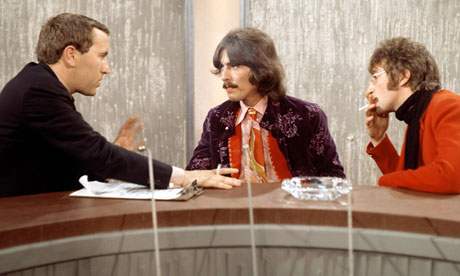
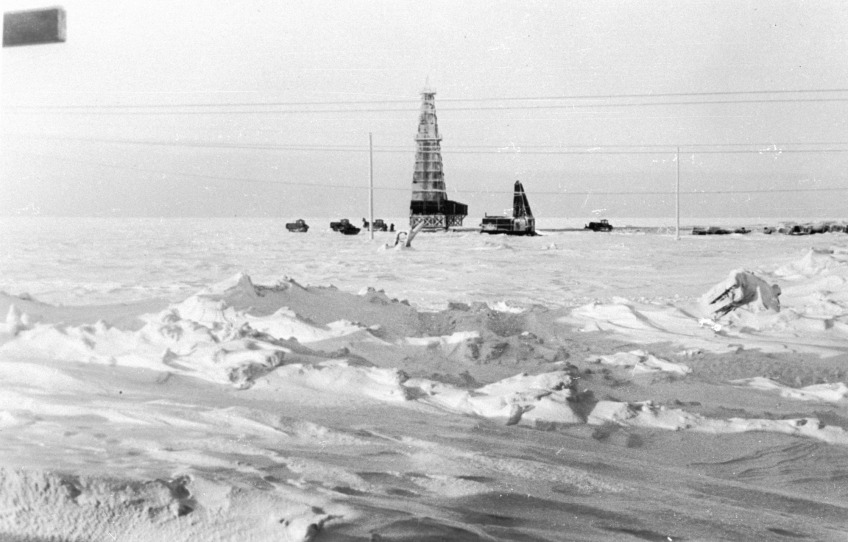
For much of the 1960s, Lewis Lapham was a Saturday Evening Post correspondent who had the entire world as his beat, covering of-the-moment stories like the Beatles’ ill-fated 1968 visit to the Maharishi Mahesh Yogi. Two years after that fascinating debacle, Lapham was in Alaska, now for Harper’s, to file a report about the black-gold rush, as oil money was remaking the frontier state, for better or worse. The opening ofAlaska: Politicians and Natives, Money and Oil“:

Sunday evening, January 18, 1970. I arrived in Juneau yesterday afternoon, and already I’ve met twenty-seven people with twenty-seven contradictory visions of paradise regained. The confusion begins with the money.

Last September, at an auction in Anchorage, the state of Alaska raffled off oil concessions on the Arctic Ocean for $900 million. Which, in Alaska, is more money than princes find in fairy tales. Although two and one-half times the size of Texas, the state has a population of 280,000 (equivalent to the population of Des Moines, Iowa). For years the state has been poorer than Appalachia, dependent on federal grants to rescue it from annual bankruptcy; now that it is rich nobody knows how to distribute the largess.

I envy none of the politicians convened in this shambling, wooden town for the present meeting of the State Legislature. Almost all of them must stand for election later in the year (not only the Governor but also the entire Senate and half the House), and the more ambitious among them no doubt look upon the money with the gratitude of a crowd of Eskimos gathered around the body of a beached whale. I suspect, however, that the majority, more timid and mindful of the extravagant public expectations, will prefer to do nothing.

That is too bad only because they have a chance to do so much. In many ways Alaska resembles the American frontier one hundred years ago; like California before the freeways or Lake Erie before the fish died. Conceivably, the Alaskans could learn from the mistakes so evident elsewhere in the landscape; conceivably, they could come up with an alternative to the habit of mind (much admired by local chambers of commerce) that plunders the available resources and divides the spoils among the surviving interests. In the beginning there is the frontier; one hundred years later, given the genius of technology and the arithmetic of population, you end up with the crowds, and the bad air, and the fish floating in the rivers. The transformation is commonly called progress, and some of the people here fear it.

I remember that in Anchorage last autumn the women’s voices were the most wistful. The Legislature, in hopes of providing a rationale for its subsequent laws and distributions, summoned a preliminary conference to which it invited people from everywhere in the state. For three days I listened to teachers, Eskimos, bankers, Tlingit Indians, fishermen, petroleum engineers, guides, housewives, newspaper editors, and bush pilots. It was as if they were afraid of the consequences of the money. They kept talking about ‘Alaska the way it is now’ and ‘all those things we came up here to get away from.’ The politicians assured them that their fears were irrational, that Alaska must take its place in the twentieth century.

At the end of the conference I remember a woman standing uncertainly in the lobby of the Captain Cook Hotel; she was holding a sheaf of government papers of which she seemed suspicious, as if the pretentious language (‘parameters,’ ‘time-frames,’ ‘infrastructure,’ etc.) somehow announced impending ruin.

‘I listen to them talk,’ she said, ‘and I hear the trees falling in the forest.’

Tonight it is snowing, and perhaps I’m giving way to the pessimism of the weather; tomorrow I begin with debate in the State Senate.”

Tags:

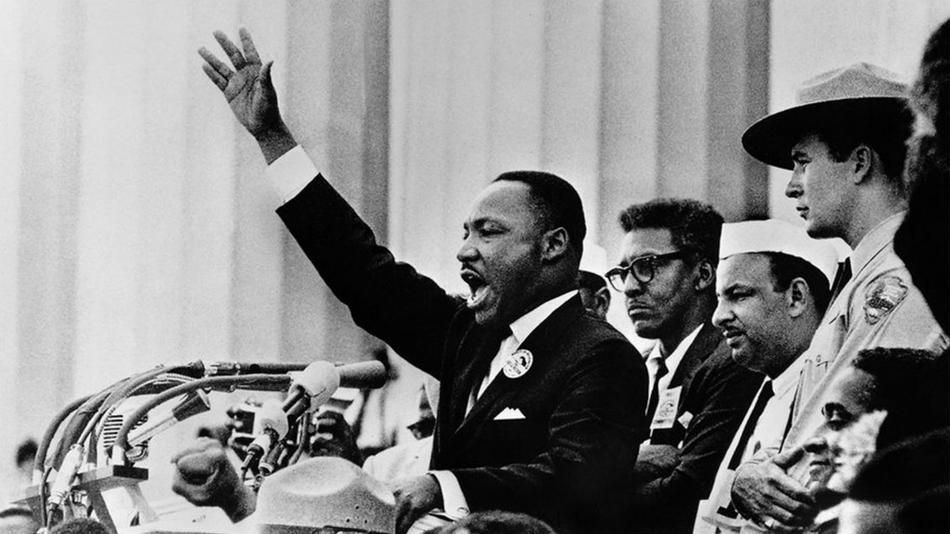
Copyright law isn’t normally the first consideration when we think back on Martin Luther King’s soaring “I Have a Dream” speech fifty years on. Those inspiring words still ring from the hilltops and mountains of every state, as famous any uttered by Abraham Lincoln in his first inaugural oration or the Gettysburg Address. King’s words belong to us all–well, with some restrictions. From Alex Pasternack at Vice:

“Martin Luther King Jr.‘s ‘I Have a Dream’ speech is considered one of the most recognizable collection of words in American history. It’s the rhetorical equivalent of a national treasure or a national park. The National Park Service inscribed it on the Lincoln Memorial and the Library of Congress put it into its National Recording Registry. So we might hold it to be self evident that it can be spread freely.

Not exactly. Any unauthorized usage of the speech and a number of other speeches by King – including in PBS documentaries – is a violation of American law. You’d be hard pressed to find a good complete video version on the web, and it’s not even to be found in the new digital archive of the King Center’s website. If you want to watch the whole thing, legally, you’ll need to get the $20 DVD.

That’s because the King estate, and, as of 2009, the British music publishing conglomerateEMI Publishing, owns the copyright of the speech and its recorded performance. While the copyright restriction isn’t news, EMI’s unusual role in policing the use of King’s words – the first instance of the company taking on a non-music based intellectual property catalog – hasn’t been widely reported.”

Tags: ,

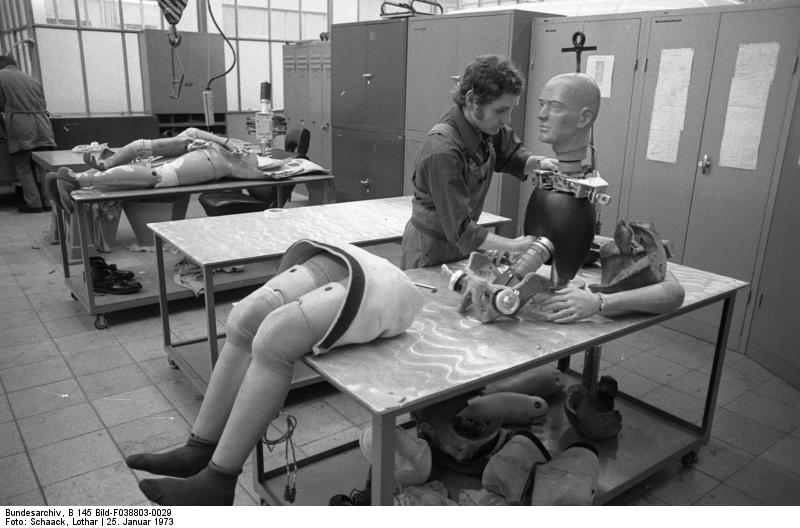
There is occasionally the shock of the new within a culture, but usually the future arrives wearing the clothes of the past. On that topic: In the epic 1965 Life magazine science special I blogged about yesterday, there is a section titled, “Will Man Direct His Own Evolution?” which is a fun but seriously overwrought essay by Albert Rosenfeld about the nature of identity in a time when humans are made by design, made of temporary parts. Like a lot of things written in the ’60s about science and society, it’s informed by an undercurrent of anxiety about changes beginning to affect the nuclear family. An excerpt:

“Even you and I–in 1965, already here and beyond the reach of potential modification–could live to face curious and unfamiliar problems in identity as a result of man’s increasing ability to control his own mortality after birth. As organ transplants and artificial body parts become even more available it is not totally absurd to envision any one of us walking around one day with, say, a plastic cornea, a few metal bones and Dacron arteries, with donated glands, kidney and liver from some other person, from an animal, from an organ bank, or even an assembly line, with an artificial heart, and computerized electronic devices to substitute for muscular, neural or metabolic functions that may have gone wrong. It has been suggested–though it will almost certainly not happen in our lifetime–that brains, too, might be replaceable, either by a brain transplanted from someone else, by a new one grown in tissue culture, or an electronic or mechanical one of some sort. ‘What,’ asks Dr. Lederberg, ‘is the moral, legal or psychiatric identity of an artificial chimera?’

Dr. Seymour Kety, an outstanding psychiatric authority now with the National Institute of Health, points out that fairly radical personality changes already have been wrought by existing techniques like brainwashing, electroshock therapy and prefrontal lobotomy, without raising serious questions of identity. But would it be the same if alien parts and substances were substituted for the person’s own, resulting in a new biochemistry and a new personality with new tastes, new talents, new political views–perhaps even a different memory of different experiences? Might such a man’s wife decide she no longer recognized him as her husband and that he was, in fact, not? Or might he decide that his old home, job and family situation were not to his liking and feel free to chuck the whole setup that have been quite congenial to the old person?

Not that acute problems of identity need await the day when wholesale replacement of vital organs is a reality. Very small changes in the brain could result in astounding metamorphoses. Scientists who specialize in the electrical probing of the human brain have, in the past few years, been exploring a small segment of the brain’s limbic system called the amygdala–and discovering that it is the seat of many of our basic passions and drives, including the drives that lead to uncontrollable sexual extremes such as satyriasis and nymphomania. 

Suppose, at a time that may be surprisingly near at hand, the police were to trap Mr. X, a vicious rapist whose crimes had terrorized the women of a neighborhood for months. Instead of packing him off to jail, they send him in for brain surgery. The surgeon delicately readjusts the distorted amygdala, and the patient turns into a gentle soul with a sweet, loving disposition. He is clearly a stranger to the man who was wheeled into the operating room. Is he the same man, really? Is he responsible for the crimes that he–or that other person–committed? Can he be punished? Should he go free?

As time goes on, it may be necessary to declare, without the occurrence of death, that Mr. X has ceased to exist and that Mr. Y has begun to be. This would be a metaphorical kind of death and rebirth, but quite real psychologically–and thus, perhaps, legally.”

Tags: ,

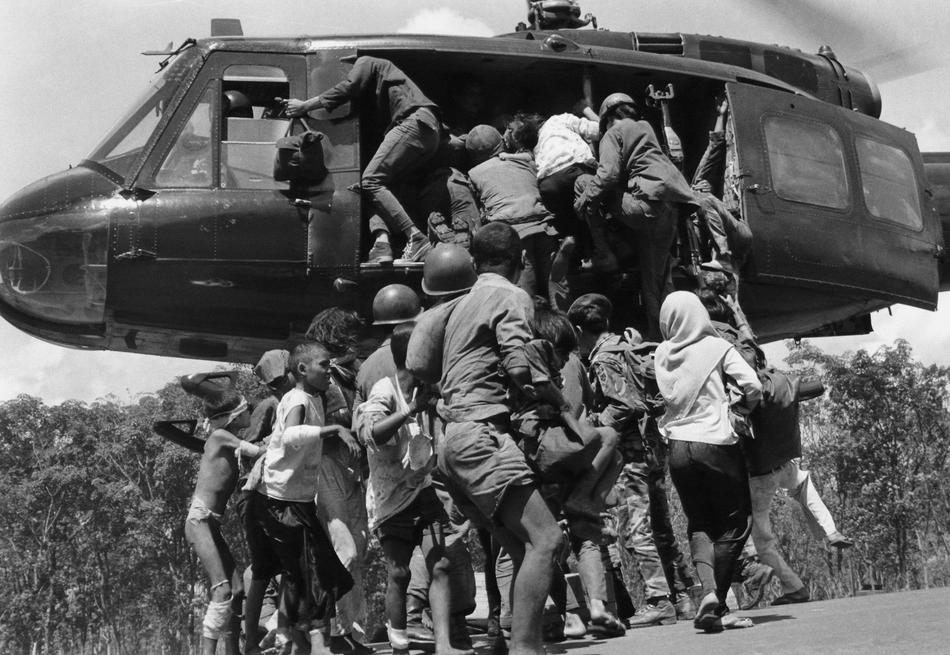
As the Vietnam War ended, CBS News correspondent Bruce Dunning filed a stunning report about the South Vietnamese desperate to flee the country as North Vietnam regained control. Watch his classic report here. Dunning just passed away. From his obituary at the CBS News site:

“He is best remembered for his award-winning and dramatic report on March 29, 1975 aboard a 727 World Airways jet attempting to rescue refugees from the airport in Da Nang, South Vietnam. The five-and-a-half-minute report — long even then for a television evening news segment — was broadcast on the CBS Evening News Saturday edition anchored by Dan Rather, who introduced Dunning’s segment with the words ‘Da Nang has become a Dunkirk.’

As Dunning narrated on the scene, the camera showed the throngs running for the plane as it landed and then he described how it filled up almost instantly with young Vietnamese military deserters, some armed and ‘menacing.’ ‘The men President Thieu said would defend Da Nang,’ said Dunning. The camera then captured the stunning images of the airline’s president, Ed Daly, punching young men to the tarmac who were trying to get aboard the overloaded airliner’s rear stairs and then, at 6,000-feet up, pulling in one last straggler, still holding on through take-off and ascent after seven others had fallen. The aircraft’s mission was to gather as many women and children as it could hold, but as Dunning reported, the crew counted 268 persons, among them just five women and ‘two or three young children.

His report, dubbed ‘Back from Da Nang,’ won the Overseas Press Club’s ‘Best TV News Spot from Abroad’ award and was recently named to the Columbia University Journalism School’s 100 Great Stories list. Dunning also shared in a collective OPC award for CBS News radio coverage of the last days of the war.”

Tags:

David Harris is a police reporter in his hometown of Flint, Michigan, which is American’s most dangerous city according to FBI statistics. He just did an Ask Me Anything on Reddit. A few exchanges follow.

____________________________

Question:

All of my family is from Flint and lives all over the city and the township. With current unemployment rates being reported at just above 10% in Flint and about 7.1% in Flint township, unemployment seems to be effecting Flint like other cities in the US. What do you think is the main cause for the violence other than unemployment and the economy.

David Harris:

Not necessarily in order: Lack of education, loss of hope, declining police force, lost city services, breakdown of the family structure, lack of respect for life.

____________________________

Question:

I lived in Flint and went to Kettering. I used to live on Sunset over by Mott Park and the golf course.

David Harris:

One thing that always intrigued me about Flint was that it was this crime-ridden town with all kinds of violence and theft, yet you could go weeks at a time without realizing you were in that sort of a town. It just seemed like an interesting dichotomy to me. We would go to school and walk past normal middle class neighborhoods and then, one day, we’d randomly see a guy hanging by his neck from the bridge over the Flint River.

____________________________

Question:

Knowing what you know and seeing what you see, do you ever fall into that illusion that Flint is a “normal” town from time to time? Or is that now impossible for you?

David Harris: 

I’ve always felt that Flint was far from normal. I think covering it up close has made me realize that even more. 

____________________________

Question:

What do you think about the stark contrast between the cities in Michigan? Ann Arbor, where I live, is constantly in the top five cities to live in (lists based on various criteria.), yet you have the most dangerous city in the country not too far away.

David Harris:

This is just my opinion, but cities like Ann Arbor, and Grand Rapids for that matter, were not as tied to the auto industry as Flint and Detroit. They have much more diverse economies with different businesses, including universities. Flint has never been able to put back in what GM left.

____________________________

Question:

Is there anything nice about the city? Parks, attractions, etc.?

David Harris:

There are many good things about the city. The downtown has seen a revival the last 10 years or so with new bars, restaurants and residential apartments. The local colleges, the University of Michigan-Flint, Kettering (formerly General Motors Institute), Baker and Mott Community College, have grown. 

Plus we have two really awesome events, The Crim Road Race and Back to the Bricks car show, that bring hundreds of thousands of people in the city.

____________________________

Question:

What are your thoughts on Michael Moore? Do you think anything he has produced has impacted Flint in any way? 

David Harris: 

Michael is certainly a controversial figure in the city. Flint would certainly be less known nationally if it wasn’t for his movies.

____________________________

Question:

What steps, if any do you think the city could take to reduce crime to a more manageable level?

David Harris:

I’ve said this before: If I had millions, I would start a program similar to the Kalamzaoo Promise that pays for college education for kids in that city and if I had superpowers, I would entrust respect of others into everyone.•

••••••••••

The “Pets or Meat” segment from Roger and Me:

Tags: ,

« Older entries § Newer entries »