
James Day interviewing Ayn Rand in 1974. In addition to explaining her Objectivist claptrap, Rand names Victor Hugo as her greatest literary influence.

Ideas and technology and politics and journalism and history and humor and some other stuff.
You are currently browsing the archive for the Politics category.
James Day interviewing Ayn Rand in 1974. In addition to explaining her Objectivist claptrap, Rand names Victor Hugo as her greatest literary influence.
Tags: Ayn Rand, James Day, Victor Hugo

From “The Gray Tsunami,” Jeff Wheelwright’s new Discover article about the challenges attending the increasing longevity of world population, a section about Sun City retirement community in Arizona, an example of how some white Americans used to retire:
“Del Webb was no demographer, but in the late 1950s he saw an opportunity in America’s budding crop of elderly. Promoting the then-novel idea of ‘active retirement,’ Webb was a very active 60-year-old himself. Tall and lean, a vigorous golfer and baseball fan, he was a millionaire contractor with a common touch. The people who flocked to see his Sun City demonstration homes—100,000 showed up over New Year’s weekend in 1960—had had their fill of hard times. These were people who had lived through an economic depression and a world war. The advertisements for Sun City depicted a golden way of life in a place where they could retire and relax, where they would not be frail or sick.
Some of those ads now hang in the Sun City Historical Museum, which occupies one of the first homes to be built here, next to the first golf course. Two vintage golf carts, labeled Him and Her, stand side by side in the carport. Inside, the modest fixtures and furniture of a typical 1960s retired couple are on display. The original cinder-block structure consisted of five rooms totaling just 858 square feet; an addition was put on the back later. The small eat-in kitchen features a boxy electric range and fridge. The sink in the pink-tiled bathroom is very low and the toilet is minuscule, hardly suitable for today’s amplified Americans. The three academics smile as they look into the bathroom. ‘There are no handrails, nothing to grab onto,’ Glick says.
Sun City’s radical idea—to restrict home ownership to people 55 and older—effectively excluded families and children from the development. But recently the policy was updated. Now only one owner has to be over 55, this to accommodate residents with younger spouses. Getting back in the van and touring the quiet, curving streets, with their neat plantings and pink-tinted gravel, the ASU group sees no pregnant women or kids, no young people whatsoever. Sun City has a fertility rate of zero.
The fertility rate is the number of children an average female will produce in her lifetime. The panelists note that the rate is currently plunging in almost all countries around the world. True, it has not occurred in sub-Saharan Africa, not yet. But for those who specialize in the long view, fertility collapse and accelerated aging have supplanted overpopulation as the most salient demographic trend.” (Thanks Browser.)
•••••••••••
Sun City promotional film from the 1960s:
Tags: Del Webb, Jeff Wheelwright

Stephen Hawking’s 2008 NASA address encouraging space colonization.
Tags: Stephen Hawking

A 1978 film about the early efforts to popularize solar energy in America, which encountered problems of economics and lack of political will. Hosted by Eddie Albert, who apparently was not Buddy Ebsen.
Tags: Eddie Albert

A proposed workaround solution for global warming from the Philosopher’s Beard, which stresses pragmatism over moralizing:
“The science of climate change does set the parameters of the problem, even though it doesn’t dictate the correct solution. The greenhouse gas build-up cannot be wished away by the kind of pragmatic, social choice guided exercise I have been recommending. It must be dealt with in the medium term, but through the structural transformation of our carbon economy rather than global austerity. That will include both developing scalable technologies for removing CO2 from the atmosphere (such as genetically modified algae and trees) and reducing the carbon intensity of our high energy life-styles (for which we already have some existing technologies, such as nuclear power). But note that such innovations require no prior global agreement to set in train, but can be developed and pioneered by a handful of big industrial economies acting on the moral concerns of their own citizens.
A high price on carbon in a few large rich countries (preferably via a non-regressive carbon tax) supplemented with regulations where market forces have less bite (e.g. to force the construction industry to develop more energy efficient methods and materials) and research subsidies would provide the necessary incentives. Nor would these innovations require global agreement for take-up since they will be attractive on their own merits (clean, efficient, cheap). Developing countries burn dirty coal because it is cheap and their people need electricity. They don’t need a UN treaty to tell them to use cleaner technology if it is cheaper; but neither would they sign up to such a treaty if it were more expensive.
The pragmatic approach does not depend on reaching an impossible global agreement on a perfect solution requiring moral or political coercion. Instead it offers feasible paths through the moral storm while respecting the existing interests and values of the human beings concerned.” (Thanks Browser.)

From historian Roger Launius (via Alexis Madrigal at the Atlantic), a reminder of the unpopularity of the U.S. space program of the 1960s:
“For example, many people believe that Project Apollo was popular, probably because it garnered significant media attention, but the polls do not support a contention that Americans embraced the lunar landing mission. Consistently throughout the 1960s a majority of Americans did not believe Apollo was worth the cost, with the one exception to this a poll taken at the time of the Apollo 11 lunar landing in July 1969. And consistently throughout the decade 45-60 percent of Americans believed that the government was spending too much onspace, indicative of a lack of commitment to the spaceflight agenda. These data do not support a contention that most people approved of Apollo and thought it important to explore space.”
Tags: Alexis Madrigal, Roger Launius

I would guess somewhere in this world there will always be a sweatshop with people toiling in dangerous conditions for little gain because sadly it’s actually better than the life they know. But sweat equity will decline markedly in the next few decades, as robotics replace human capital at the most basic level. The assembly line will assemble itself and then assemble the products. Those countries that excel at 3D printers and bot builders will win the race. That probably bodes well for the U.S. and not so much for China. Some thoughts from economist Antoine van Agtmael provided by Izabella Kaminska at the Financial Times:
“The US technological lead in advanced, top-end manufacturing, smartphones and smartpads, and its capacity to create smart companies, is already starting to pay off. Whether these particular products – lifestyle changing as they are – will accelerate US growth is a moot point.
But they may be the cutting edge of the coming global manufacturing revolution provided by additive manufacturing technology, or so-called 3D printing. This revolution is expected to tilt economic advantage back towards the US, and to other Western companies.
Localised and customised manufacturing won’t employ much labour, though in ageing societies, labour supply will fall, or stagnate anyway. It will, however, increase the importance of being close to one’s market, resources, and centres of technological excellence, and diminish the significance of long global manufacturing supply chains, and large-scale process manufacturing, both of which characterise Asia’s and China’s functions in the global economy.” (Thanks Browser.)
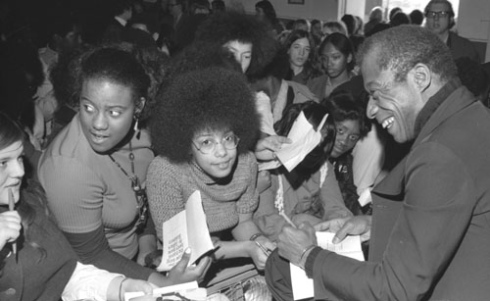
Just a minute (sadly) of James Baldwin discussing race on Dick Cavett’s show.
Tags: Dick Cavett, james Baldwin

The third and final Jane Fonda post this week: A 1972 cine-essay about a photo of the actress visiting Vietnam, as analyzed by Jean-Luc Godard and Jean-Pierre Gorin, who had co-directed her in Tout va bien. This post-script is more successful than the film that it sprang from.
See also:

Speaking of Jane Fonda, she called for an overthrow of the American capitalist system in 1970. But Jane, a well-regulated free market is the best way to spread wealth and information!
Tags: Jane Fonda

“Both his reforms and his failures have set the pattern for successive generations of Afghan modernizers.” (Image by Magnustraveller.)
The opening of a concise essay by Mariam and Ashraf Ghani in the New York Review of Books about the last 100 years or so of Afghanistan’s tortured history and thwarted attempts at political and social reform:
“Amanullah ruled Afghanistan from 1919 to 1929, first as amir and then, after he changed his own title, as king. During his brief reign, Amanullah launched an ambitious program of modernization from above, which was cut off prematurely by a revolt from below. His many reforms included promulgating rule of law through Afghanistan’s first constitution; investing in education through literacy programs and the building of schools; promoting unveiling and the end of purdah; transforming the traditional institution of the Loya Jirga, or Grand Council, into a mechanism for public consultation; winning Afghanistan’s independence from Britain; and large-scale urban planning, with the partial completion of the ‘new city’ of Dar ul-Aman, just to the west of Kabul. Both his reforms and his failures have set the pattern for successive generations of Afghan modernizers, who have returned again and again to his unfinished project, only to succumb to their own blind spots and collapse in their own ways.”
Tags: Amanullah, Ashraf Ghani, Mariam Ghani
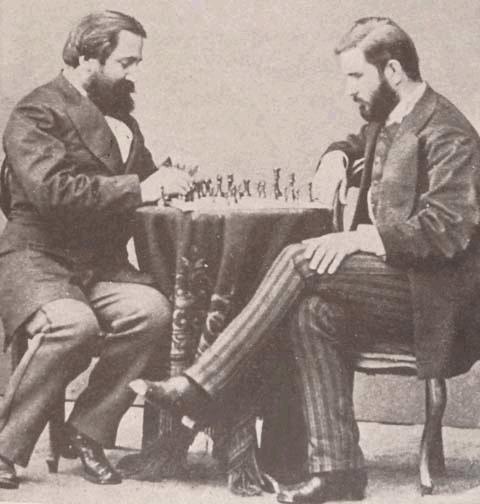
By virtue of the money they make, most pundits are detached from reality and fairly useless. They misread the tea leaves and their talk disappears into the void. No one really keeps score, they live to talk another day and little is learned. From Aaron Swartz at Raw Thought, an excerpt from his essay about our reluctance to face reality and our failings:
“If you want to understand experts, you need to start by finding them. So the psychologists who wanted to understand ‘expert performance’ began by testing alleged experts, to see how good they really were.
In some fields it was easy: in chess, for example, great players can reliably beat amateurs. But in other fields, it was much, much harder.
Take punditry. In his giant 20-year study of expert forecasting, Philip Tetlock found that someone who merely predicted ‘everything will stay the same’ would be right more often than most professional pundits. Or take therapy. Numerous studies have found an hour with a random stranger is just as good as an hour with a professional therapist. In one study, for example, sessions with untrained university professors helped neurotic college students just as much as sessions with professional therapists. (This isn’t to say that therapy isn’t helpful — the same studies suggest it is — it’s just that what’s helpful is talking over your problems for an hour, not anything about the therapist.)
As you might expect, pundits and therapists aren’t fans of these studies. The pundits try to weasel out of them. As Tetlock writes; ‘The trick is to attach so many qualifiers to your vague predictions that you will be well positioned to explain pretty much whatever happens. China will fissure into regional fiefdoms, but only if the Chinese leadership fails to manage certain trade-offs deftly, and only if global economic growth stalls for a protracted period, and only if…’The therapists like to point to all the troubled people they’ve helped with their sophisticated techniques (avoiding the question of whether someone unsophisticated could have helped even more). What neither group can do is point to clear evidence that what they do works.
Compare them to the chess grandmaster. If you try to tell the chess grandmaster that he’s no better than a random college professor, he can easily play a professor and prove you wrong. Every time he plays, he’s confronted with inarguable evidence of success or failure. But therapists can often feel like they’re helping — they just led their client to a breakthrough about their childhood — when they’re actually not making any difference.”
Tags: Aaron Swartz

A segment from a Reddit Ask Me Anything with a female doomsday prepper:
“Question:
Female Doomsday Prepper:

President Obama: Please tell us again about Ronnie and his horse, Peggy. (Image by Steve Jurvetson.)
Tags: Barack Obama, Dick Cheney, Peggy Noonan

Alvin Toffler of Future Shock fame, called for the dismantling of the U.S. public-education system in a 2007 interview at Edutopia. A couple of excerpts follow.
——————————————
Edutopia:
You’ve been writing about our educational system for decades. What’s the most pressing need in public education right now?
Alvin Toffler:
Shut down the public education system.
Edutopia:
That’s pretty radical.
Alvin Toffler:
I’m roughly quoting Microsoft chairman Bill Gates, who said, “We don’t need to reform the system; we need to replace the system.”
Edutopia:
Why not just readjust what we have in place now? Do we really need to start from the ground up?
Alvin Toffler:
We should be thinking from the ground up. That’s different from changing everything. However, we first have to understand how we got the education system that we now have. Teachers are wonderful, and there are hundreds of thousands of them who are creative and terrific, but they are operating in a system that is completely out of time. It is a system designed to produce industrial workers.
——————————————
Alvin Toffler:
The public school system is designed to produce a workforce for an economy that will not be there. And therefore, with all the best intentions in the world, we’re stealing the kids’ future.
Do I have all the answers for how to replace it? No. But it seems to me that before we can get serious about creating an appropriate education system for the world that’s coming and that these kids will have to operate within, we have to ask some really fundamental questions.
And some of these questions are scary. For example: Should education be compulsory? And, if so, for who? Why does everybody have to start at age five? Maybe some kids should start at age eight and work fast. Or vice versa. Why is everything massified in the system, rather than individualized in the system? New technologies make possible customization in a way that the old system — everybody reading the same textbook at the same time — did not offer.
Tags: Alvin Toffler

Bill Clinton: Wait, I’ve got more.
Bill Clinton gave a pretty masterful if overlong speech. It’s funny how every great Bill Clinton speech is on the verge of being a terrible Bill Clinton speech because he goes on and on. But he showed you can actually work policy into a convention address, put aside his ego (somewhat) in acknowledging that he couldn’t have done any better with the collapsed economy than Obama, and refuted every GOP charge against the President (save criticism of the stimulus).
It’s amazing someone as bright as Clinton wasn’t a better President. He was above average in a few ways, but far below in others. Certainly not a disaster like his successor but sort of underwhelming considering his gifts. He was undisciplined and unfocused in foreign policy, and made plenty of bad cabinet appointments. To his credit, he was able to work with some of the very same creeps who tried to railroad him out of office, but he truly was the recent Democratic President who led from behind, at least domestically. And you can triangulate your way into a second term but not greatness.
The Obama charge that rankled Clinton so much–that he was a transitional President instead of a transformative one–still rings true. But no one has ever questioned Clinton’s party loyalty and last night he put aside his chilly relationship with the President the way a senior statesman will. The GOP has no analogue to him and its poorer for that.•
Tags: Barack Obama, Bill Clinton
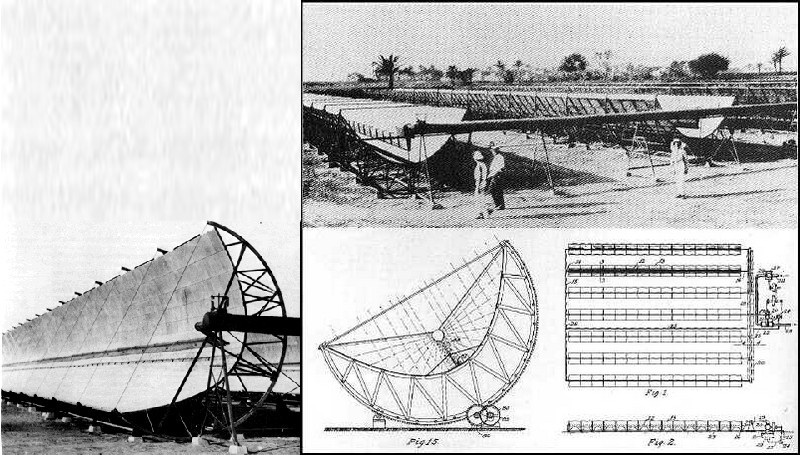
“We have proved the commercial profit of sun power in the tropics and have more particularly proved that after our stores of oil and coal are exhausted the human race can receive unlimited power from the rays of the sun.”–Frank Shuman, New York Times, 1916
Desertec, a European consortium, is trying to realize Shuman’s dream of a “sun engine,” attempting to turn the Sahara into a gigantic solar farm. From Leo Hickman’s recent article in the Guardian:
 “Gerhard Knies, a German particle physicist, was the first person to estimate how much solar energy was required to meet humanity’s demand for electricity. In 1986, in direct response to the Chernobyl nuclear accident, he scribbled down some figures and arrived at the following remarkable conclusion: in just six hours, the world’s deserts receive more energy from the sun than humans consume in a year. If even a tiny fraction of this energy could be harnessed – an area of Saharan desert the size of Wales could, in theory, power the whole of Europe – Knies believed we could move beyond dirty and dangerous fuels for ever. Echoing Schuman’s own frustrations, Knies later asked whether ‘we are really, as a species, so stupid’ not to make better use of this resource. Over the next two decades, he worked – often alone – to drive this idea into public consciousness.
The culmination of his efforts is ‘Desertec,’ a largely German-led initiative that aims to provide 15% of Europe’s electricity by 2050 through a vast network of solar and wind farms stretching right across the Mena region and connecting to continental Europe via special high voltage, direct current transmission cables.”
Tags: Frank Shuman, Gerhard Knies, Leo Hickman

Gov. Christie: Shut up, idiots, I’m talking. (Image by Bob Jagendorf.)
Tags: Ari Fleischer, Chris Christie, Deval Patrick, Julian Castro
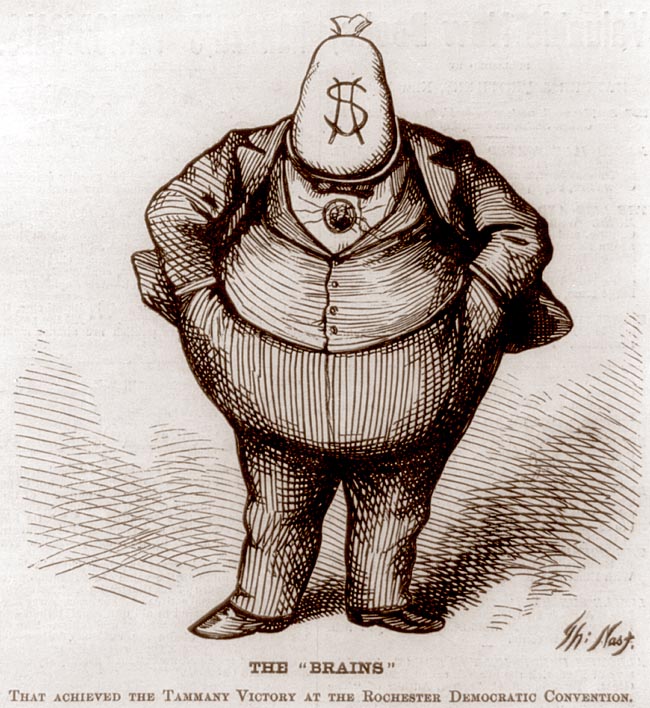
Here’s a (mostly) tongue-in-cheek thought experiment from the Philosopher’s Beard aimed at solving the problem of wealth inequality in America. It’s ridiculous but is written with that blog’s customary dark wit and works like a piece of speculative fiction:
“Hence my modest proposal. We should first identify with some precision the category of what it seems reasonable to call rich i.e. those people whose capabilities for independence from and command over the rest of us crosses the threshold between enviable affluence and aristocratic privilege. That definition should be ‘absolutely relative’ rather than merely relative (e.g. we can’t just use the richest 1%, because there will always be a richest 1%). A good way to go might be to use some multiple of the median citizen’s wealth as a proxy for the distance from and power over ordinary citizens that defines problematic wealth. What that multiple should be is a matter for social scientists to investigate and democracies to debate, but, for the purposes of this discussion, let me suggest 30.
Exact numbers are tricky here because measuring wealth is highly subject to accounting definitions and methods. Another issue is that wealth defined in terms of net financial value of one’s assets depends on market conditions. For example, the assets of the middle-class are primarily their house and pensions, which have both been hit hard by the economic crisis; while the assets of the rich are primarily financial products, and thus prone to continuous fluctuations. In light of this, it might be best to set bands based on average data, and then revise them every few years to take account of long term trends. But for reference, the median American household’s wealth is presently around $120,000 (having declined 35% over the crisis), suggesting a cut-off of $3.5 million. (For context, $5.5 million is the present entry point to America’s richest 0.1%.) On the other side of the Atlantic, the slightly less unequal UK apparently has a median wealth of £200,000, suggesting a rather more generous wealth allowance of £6 million.
Then, when anyone in our society lands in the category of the problematic rich we should say, as at the end of a cheesy TV gameshow, ‘Congratulations, you won the economy game! Well done.’ And then we should offer them a choice: give it up (hold a potlatch, give it to Oxfam, their favourite art musuem foundation, or whatever) or cash out their winnings and depart our society forever, leaving their citizenship at the door on their way out. Since the rich are, um, rich, they have all the means they need to make a new life for themselves elsewhere, and perhaps even inveigle their way into citizenship in a country that is less picky than we are. So I’m sure they’ll do just fine. Still, we can let them back in to visit family and friends a few days a year – there’s no need to be vindictive.”

A segment from an interview in Foreign Policy with tech-friendly Chinese artist and political dissisdent Ai Weiwei:
“Foreign Policy: In 1949, American writer E.B. White said in Here Is New York that New York was three cities: the city of the native, who gives it solidity and continuity; the city of the commuter, who comes to the city temporarily for business, and they give the city its restlessness. The third city is that of the immigrant, who came for the dream and stayed; this group gave New York its passion, its culture, and its art. You lived in New York for more than a decade, but it’s been almost 20 years since you left. Do you see any similarities between 1949 New York and Beijing today?
Ai Weiwei: Maybe it looks similar, but it’s completely different, because we are not in a democratic society and the resources and decision-making aren’t fairly distributed. So many officials are escaping China with huge amounts of money — shocking numbers, billions. Then you start to ask: Why can’t they stay? China’s like heaven for corruption. So why do they have to escape? Because the system will not protect them, because there are always political struggles here. They just take the money and leave.”
Tags: Ai Weiwei

I’m wary of demographic predictions but the premise of Nate Berg’s new piece at the Atlantic, that the world’s least livable cities are growing the fastest, is really solid. What can these emerging but impoverished places learn from tidy, healthy metropolises like Vancouver and Melbourne? Not much, perhaps. An excerpt:
that roughly 90 percent of the urbanization underway globally is taking place in developing cities like Dhaka and Lagos and in developing countries like Zimbabwe and Papua New Guinea. And between 2009 and 2050, the number of urban dwellers in these developing countries is expected to more than double, to 5.2 billion, according to the World Health Organization. That puts nearly 75 percent of the world’s expected 7 billion urbanites in cities in the developing world.
While Melbourne and Vienna and Vancouver will most certainly continue to grow and evolve, they won’t be undergoing the same speed and intensity of urbanization as cities in the developing world. And as these dramatically changing cities deal with these urban shifts in a very short time span, it is with an equally swift pace that they’ll be rewriting what it means to be a city in the world. The urbanity of London, gradually spreading over centuries, is being overshadowed by the instant skyscraper forests of burgeoning megacities in China and the massively dense urban cores of Dhaka and Lagos. The London model isn’t going anywhere, but the majority of the next major cities will develop more like Shenzhen or Kabul.”
Tags: Nate Berg

Mitt Romney: Face smooth like baby’s ass.
Tags: Barack Obama, Mitt Romney, Paul Ryan
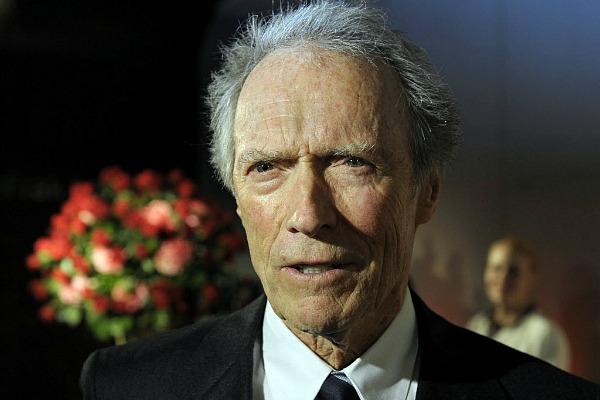
Clint Eastwood: Help me find my shoes, sonny.
I’ll say nothing else except that, yes, Clint, Jon Voight is a great man.
Tags: Clint Eastwood, Jon Voight

Paul Ryan: 6% body fat, 3% integrity. (Image by Gobonobo.)
Tags: Barack Obama, Paul Ryan
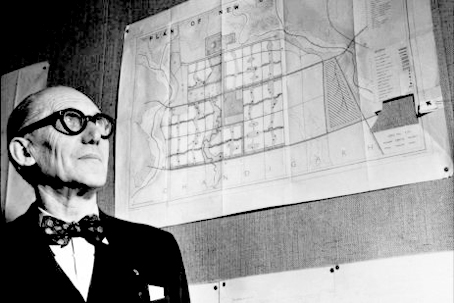
China is building cities and skyscrapers faster than the West can, but it’s still thus far relying on the same-old intellectual templates: an auto-centric culture and Le Corbusier-style design. From Peter Calthorpe in Foreign Policy:
“The choices China makes in the years ahead will have an immense impact not only on the long-term viability, livability, and energy efficiency of its cities, but also on the health of the entire planet. Unfortunately, much of what China is building is based on outdated Western planning ideas that put its cars at the center of urban life, rather than its people. And the bill will be paid in the form of larger waistlines, reduced quality of life, and choking pollution and congestion. The Chinese may get fat and unhappy before they get rich.
Like the U.S. cities of the 1950s and ’60s, Chinese cities are working to accommodate the explosive growth of automobile travel by building highways, ring roads, and parking lots. But more than any other factor, the rise of the car and the growth of the national highway system hollowed out American cities after World War II. Urban professionals fled to their newly accessible palaces in the suburbs, leaving behind ghettos of poverty and dysfunction. As Jane Jacobs, the great American urbanist, lamented, ‘Not TV or illegal drugs but the automobile has been the chief destroyer of American communities.’
Only in the last few decades, as urban crime rates have plummeted and the suburbs have become just as congested as the downtowns of old, have Americans returned to revitalize their cities in large numbers, embracing mass transit, walkable communities, and street-level retail. But while America’s yuppies may now take ‘urban’ to mean a delightful new world of cool bars, Whole Foods stores, and bike paths, urbanization in China means something else entirely: gray skies, row after row of drab apartment blocks, and snarling traffic.
If anything, due to China’s high population density, the Chinese urban reckoning will be even more severe than America’s. “
Tags: Le Corbusier, Peter Calthorpe