Chris Christie: 2% doesn’t taste the same. (Image by Luigi Novi.)
The most ridiculous moment from Chris Christie’s tone-deaf, masturbatory Keynote Address last night was his assertion that Mitt Romney will tell America “hard truths.” Romney has done absolutely the opposite during this campaign, pledging tax cuts for the wealthiest, a return to a Cold War military budget and yet a reduction in the budget.
What Christie really is saying is the usual right-wing, supply-side nonsense: Unions, working-class people, seniors and poor people have to sacrifice more while the wealthiest will get larger tax breaks. The pain will not be evenly distributed. I would put aside the unfairness of such an arrangement if it actually worked, but it doesn’t. Nothing trickles down.
If you truly want to help impoverished people, there’s a blueprint. Don’t take away their Medicaid and food stamps. Don’t treat them like they’re evil. Start to replicate in other locations what Geoffrey Canada has done with the Harlem Children’s Zone and make a real investment in those born to poverty. The program works, but it requires work and money across generations. That’s the hard truth.
But it’s easier to be a fake tough guy spouting lies, asking the vulnerable to tighten their belts. And this coming from a guy who won’t even give up whole milk.•
During a sparring match with Google’s Eric Schmidt, libertarian Peter Thiel restates his belief that technological progress has largely stalled during the last four decades:
“But I think that when you look at this question of how much technological progress has been happening, we get into all these complicated measurement issues. The one that I cite as the big data point is that if you look at the U.S. say in the last 40 years, 1973 to today, median wages have been stagnant. Maybe the mean wages have gone up maybe a small amount, not very much. The 40 years before that, 1932 to 1972, they went up by a factor of 6.
So, if you looked at how people did from ’32 to ’72, you had a six-fold improvement, and it was matched by incredible technological progress. Cars got better. You had the aeronautics industry got started. You went from no planes to supersonic jets. You had the computers invented. You had all sorts of incredibly important dimensions in which progress took place.
And so I agree we’ve had certain narrow areas where there’s been significant progress, but it’s very odd that it hasn’t translated into economic well being. And this is not just a problem with capitalist countries, like the U.S.”
A 1965 NBC special hosted by John Chancellor about the science of Cold War spying. You could argue all the gamesmanship, all the information gathered during U.S.-Soviet stalemate had very little effect on anything.
Grover Norquist, whose name I have never espied while within a voting booth, wants the U.S. government to return to the GDP levels of 1900, when the average lifespan of our citizens was 47. (There truly were no second acts in America then.) While that fact doesn’t suggest only causation–medical progress played a large part in the elongation of life–it can’t be reduced to mere correlation, either. Social Security, Medicare, Medicaid and other government programs have helped us live longer and better than humans ever have in our nation’s history.
GOP VP nominee Paul Ryan is also more in love with ideology and fudged math than human life, more beholden to ingrown, adolescent fantasies of rugged individualism. If his policies were ever enacted, really good people would die sooner than they have to. Talk about your death panels. In his latest column in the New Republic,Leon Wieseltier spits his considerable bile at a worthy target in Ryan, that Objectivist altar boy, dismantling his subject with reason and rage. An excerpt:
“‘I swear—by my life and my love of it—that I will never live for the sake of another man, nor ask another man to live for mine.’ That is how John Galt concludes his testament, which Paul Ryan demands that his staffers in Congress read. What a frail sense of self it is that feels so imperiled by the existence of others! This monadic ideal is not heroic, it is cowardly. It is also dangerous, because it honors only itself. In his Roadmap, the intellectual on the Republican ticket lectures that “the Founders saw [Adam] Smith not only as an economic thinker, but as a moral philosopher whose other great work was The Theory of Moral Sentiments.’ Never mind that everybody else also saw Smith that way, because he really was a moral philosopher and he really did write The Theory of Moral Sentiments. Has Ryan ever opened The Theory of Moral Sentiments? Has he ever read its very first sentence on its very first page? ‘How selfish soever man may be supposed,’ Smith begins, ‘there are evidently some principles in his nature, which interest him in the fortune of others, and render their happiness necessary to him, though he derives nothing from it except the pleasure of seeing it.’ That is the least Galt-like, least Rand-like, least Ryan-like sentence ever written. And from there the conservatives’ deity launches into a profound analysis of ‘mutual sympathy.’ So much for Ryan’s fiction of the isolato with a platinum card! If there is anything that Adam Smith stands for, it is the reconcilability of capitalism with fellow feeling, of market economics with social decency. But Ryan is a dismal student of Smith, because he likes his capitalism cruel.”
Airplanes have been inflatable for decades, but what about robots? DARPA, which loves you to death, has the answer. From Ars Technica: “A DARPA-funded research project at Massachusetts-based iRobot has developed a series of prototype robots with inflatable parts. The robots, developed with researchers from Carnegie-Mellon University and inflatable engineering company ILC Dover, are part of the Defense Advanced Research Projects Agency’s program to create more mobile, more capable, and less expensive robots for the battlefield.”
Who really knows what the economic future holds for China? But that country is currently pouring huge amounts of money into infrastructure, trying to create an advantage for its next several generations. From “Cities of the Future: Made In China,” Dustin Roasa’s new Foreign Policy article, which collects many of that country’s boldest ideas for tomorrow and beyond:
“For much of the 20th century, the world looked to American cities for a glimpse of the future. Places like New York and Chicago had the tallest skyscrapers, the newest airports, the fastest highways, and the best electricity grids.
But now, just 12 years into the Asian Century, the city of the future has picked up and moved to China. No less than U.S. Vice President Joe Biden recognized this when he saidnot long ago, ‘If I blindfolded Americans and took them into some of the airports or ports in China and then took them to one in any one of your cities, in the middle of the night … and then said, ‘Which one is an American? Which one is in your city in America? And which one’s in China?’ most Americans would say, ‘Well, that great one is in America.’ It’s not.’ The speech raised eyebrows among conservative commentators, but it points out the obvious to anyone who has spent time in Beijing, Hong Kong, or Shanghai (or even lesser-known cities like Shenzhen and Dalian, for that matter).
In these cities, visitors arrive at glittering, architecturally arresting airports before being whisked by electric taxis into city centers populated by modular green skyscrapers. In the not-so-distant future, they’ll hop on traffic-straddling buses powered by safe, clean solar panels. With China now spending some $500 billion annually on infrastructure — 9 percent of its GDP, well above the rates in the United States and Europe — and with the country’s population undergoing the largest rural-to-urban migration in human history, the decisions it makes about its cities will affect the future of urban areas everywhere.Want to know where urban technology is going? Take the vice president’s advice and head east.”
We tell ourselves stories in order to live, yes, but what if we are telling the wrong stories? The ones that flatter our egos, drive us into the false security of a mythical past instead of an uncertain future, expand our delusions? From Firmin DeBrabander in the New York Times:
“In Chisago County, Minn., The Times’s reporters spoke with residents who supported the Tea Party and its proposed cuts to federal spending, even while they admitted they could not get by without government support. Tea Party aficionados, and many on the extreme right of the Republican party for that matter, are typically characterized as self-sufficient middle class folk, angry about sustaining the idle poor with their tax dollars. Chisago County revealed a different aspect of this anger: economically struggling Americans professing a robust individualism and self-determination, frustrated with their failures to achieve that ideal.
Why the stubborn insistence on self-determination, in spite of the facts? One might say there is something profoundly American in this. It’s our fierce individualism shining through. Residents of Chisago County are clinging to notions of past self-reliance before the recession, before the welfare state. It’s admirable in a way. Alternately, it evokes the delusional autonomy of Freud’s poor ego.
These people, like many across the nation, rely on government assistance, but pretend they don’t. They even resent the government for their reliance. If they looked closely though, they’d see that we are all thoroughly saturated with government assistance in this country: farm subsidies that lower food prices for us all, mortgage interest deductions that disproportionately favor the rich, federal mortgage guarantees that keep interest rates low, a bloated Department of Defense that sustains entire sectors of the economy and puts hundreds of thousands of people to work. We can hardly fathom the depth of our dependence on government, and pretend we are bold individualists instead.”
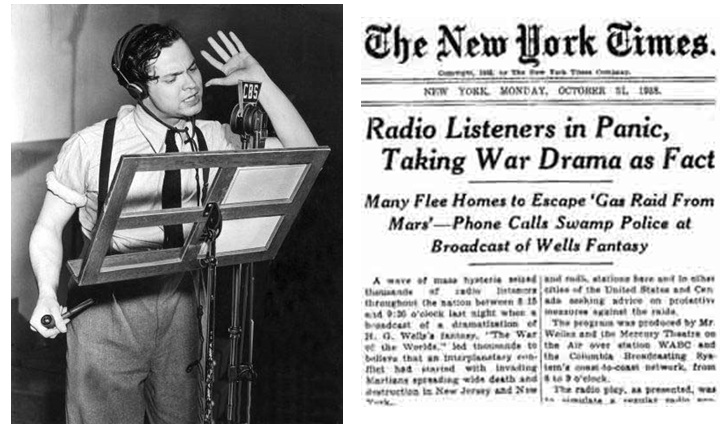
The day after his brilliant October 30, 1938 War of the Worlds radio production caused widespread panic, Orson Welles sheepishly met with the press to explain his intentions. How could anyone ever fully trust the voice of authority again? Audio is mediocre.
When I mentioned bio-hacking in the Stewart Brand post, it made me think of a very early article on the topic, Michael Schrage’s 1988 Washington Post piece “Playing God in Your Basement.” At the time, many experts thought that the genome might move rapidly into the mainstream in the way of the personal computer, which took about three decades to go from Homebrew Club to free wi-fi at Starbucks. But biopunk has remained a subculture rather than morphing into culture. So far, at least. An excerpt from Schrage’s writing:
“Personal computing began as a ‘homebrew’ hobby phenomenon with aspiring computerniks wiring up chips, toggle-switches and teletypes to produce desktop machines. Skeptics sneered that personal computers were a solution in search of a problem.
Now, several million unit sales later, the typewriter has become the do-do bird of word-processing, pimply-faced hackers can break into corporate data networks and yesterday’s cutting-edge computer is today’s paperweight.
‘The parallels to the microprocessor industry are there,’ says Lynn Klotz, formerly on the faculty of Biochemistry and Molecular Biology at Harvard and a director of BioTechnica International, a Cambridge, Mass., recombinant DNA firm. ‘Both are characterized by general ease and use of declining costs.’
‘As a body, the biotechnology industry is not unlike where the computer industry was in 1975,’ says sociologist Everett Rogers, a University of Southern California professor who has conducted extensive research into the diffusion of innovation. ‘There’s a lot of uncertainty, a lot of rapid innovation and no single main consumer product.’
Rogers points out that hackers–a technology subculture he studied while at Stanford–were attracted to computers as a medium ‘where they could express themselves in an artistic way.’ A number of computer hackers did indeed win science fairs either with hardware or software they created. With the insistent diffusion of biotechnology, Rogers believes, a technology subculture could grow around DNA just as one did for silicon and software.
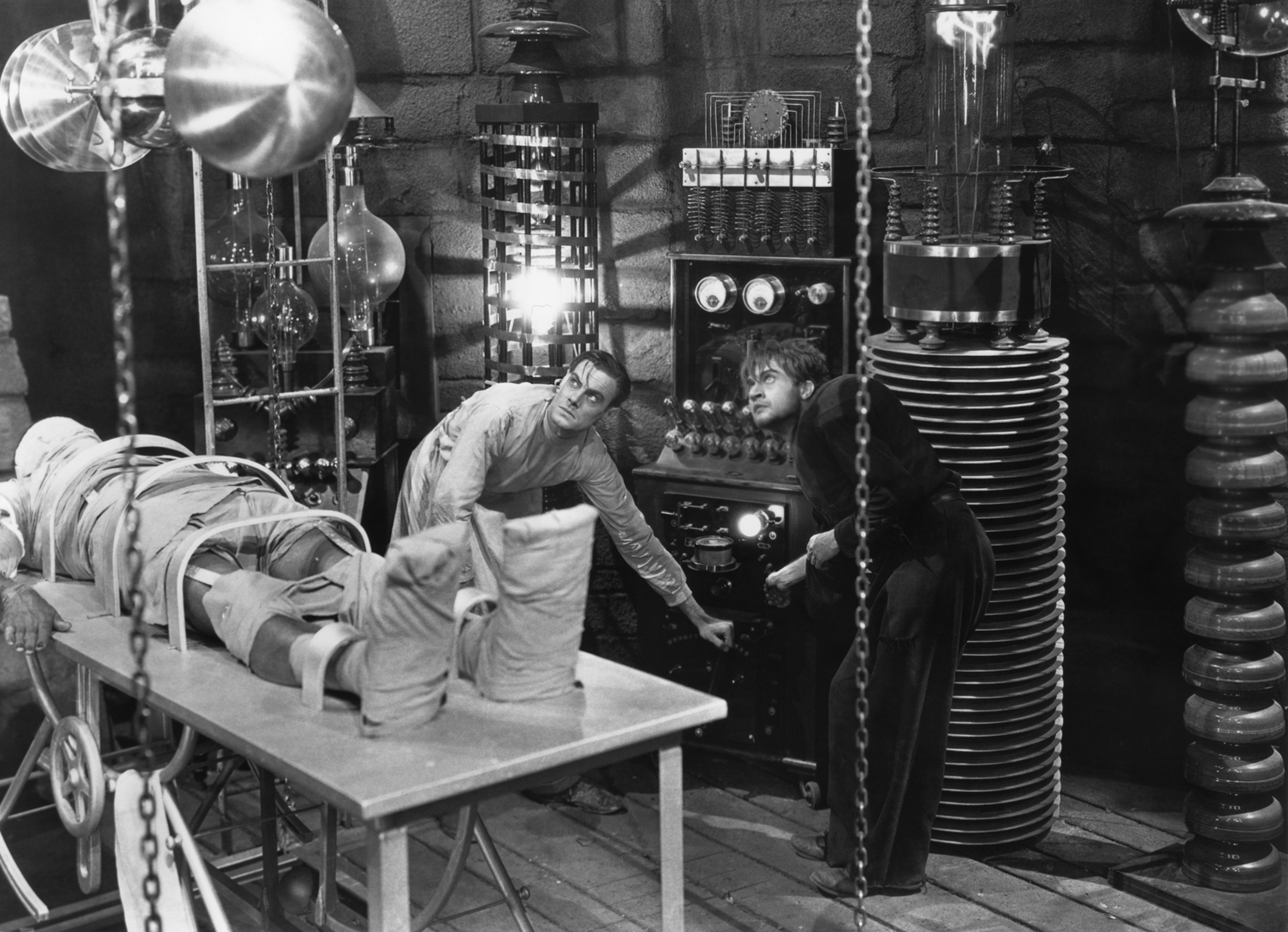
He wryly notes that when the news media discovered computer hackers, ‘people went into a state of alarm. There were movies about hackers. Perhaps in a few years there will be movies about (bio-hackers) creating Frankensteinian monsters.'”
Wow, I had never watched this before. Paul Ryan’s favorite pro-choice atheist, Ayn Rand, interviewed by Johnny Carson in 1967. Her theories would turn the free market’s greatness into something deranged, but she did oppose the Vietnam War. The segment ran long and Buster Crabbe got bumped.
Horrible deaths bother us more than the mundane kind. It doesn’t make sense since dead is dead, but the narratives around a demise have meaning for us. We try to separate deaths into those that are “needless” and those that “understandable.” Some just upset us or excite us more in a lurid way than others.
When a helicopter crashes and two or three people die in NYC, the tragedy gets nonstop news coverage. A car accident the same day that results in four deaths gets a couple of minutes at most. It’s the greater lack of control that bothers us, the plunging from the sky. A truck accident in Texas that happened soon after the Aurora shooting tragedy killed nearly as many people but received only scant national attention. The families of those lost in the highway accident are just as devastated, but an automobile accident is something we can process, while a movie theater being shot up intentionally for no reason is not. It’s just more terrible.
These feelings of dread and horror don’t only affect us in a visceral way but can shape policy. In a WSJ piece, Richard Muller, who recently quit his stance as a climate-change denier, argues that our fear of nuclear-power accidents, even in wake of Fukushima, is overstated. That may be true, though it doesn’t seem like nukes should be the focus of our sustainable-energy quest going forward. From his article:
“The tsunami that hit Japan in March 2011 was horrendous. Over 15,000 people were killed by the giant wave itself. The economic consequences of the reactor destruction were massive. The human consequences, in terms of death and evacuation, were also large. But the radiation deaths will likely be a number so small, compared with the tsunami deaths, that they should not be a central consideration in policy decisions.
The reactor at Fukushima wasn’t designed to withstand a 9.0 earthquake or a 50-foot tsunami. Surrounding land was contaminated, and it will take years to recover. But it is remarkable how small the nuclear damage is compared with that of the earthquake and tsunami. The backup systems of the nuclear reactors in Japan (and in the U.S.) should be bolstered to make sure this never happens again. We should always learn from tragedy. But should the Fukushima accident be used as a reason for putting an end to nuclear power?
Nothing can be made absolutely safe. Must we design nuclear reactors to withstand everything imaginable? What about an asteroid or comet impact? Or a nuclear war? No, of course not; the damage from the asteroid or the war would far exceed the tiny added damage from the radioactivity released by a damaged nuclear power plant.”
Having met some venture capitalists over the years, I can tell you their success rate isn’t that high. That’s not because they’re not talented or intelligent. On the contrary. It’s just that most things in life don’t pan out. When they occasionally do, venturers make their mark and live to invest another day. Some get fabulously wealthy–but even they have a pretty high fail rate.
Since being named Mitt Romney’s VP pick, Paul Ryan has attacked President Obama’s stimulus plan in particular and government investments in general. But from lithium-ion battery factories in Michigan to the auto industry to the many alternative energy initiatives througout the country, this administration has largely invested shockingly well, made bold attempts to transform our future and created well-paying jobs that are many grades above Staples cashier.
David Plotz, who quietly does an excellent job at Slate, examines that other silent success, Obama’s stimulus, in an interview with Michael Grunwald, author of The New New Deal. The opening:
“Slate:
What possessed you to write this book?
Michael Grunwald:
I fled Washington for the public policy paradise of South Beach while writing my last book, about the Everglades and Florida, so in 2010 I was only vaguely aware of the Beltway consensus that President Obama’s stimulus was an $800 billion joke. But because I write a lot about the environment, I was very aware that the stimulus included about $90 billion for clean energy, which was astonishing, because the feds were only spending a few billion dollars a year before. The stimulus was pouring unprecedented funding into wind, solar, and other renewables; energy efficiency in every form; advanced biofuels; electric vehicles; a smarter grid; cleaner coal; and factories to make all that green stuff in the U.S.
It was clearly a huge deal. And it got me curious about what else was in the stimulus. I remember doing some dogged investigative reporting—OK, a Google search—and learning that the stimulus also launched Race to the Top, which was a real a-ha moment. I knew Race to the Top was a huge deal in the education reform world, but I had no idea it was a stimulus program. It quickly became obvious that the American Recovery and Reinvestment Act (the formal name of the stimulus) was also a huge deal for health care, transportation, scientific research, and the safety net as well as the flailing economy. It was about Reinvestment as well as Recovery, and it was hidden in plain view.”
It would be a disaster if America’s Northern and Southern states separated into seas of blue and red, forming discrete nations–and it won’t happen. But it’s an interesting thought-experiment to work out in your head. What would the future hold for each if the national divide led to a mutually agreed upon division?
Chuck Thompson, author of Better Off Without ‘Em: A Northern Manifesto for Southern Secession, has considered the separation–with the North being proactive about it–not as mere mental exercise but in earnest. Salon has an interview between Joshua Holland and the author. An excerpt follows.
______________________________________
Joshua Holland:
So we know we have an overtly religious political culture down South, and a culture today that is pretty hostile toward organized labor. What is it in your travels or in your research that prompted you to call for Southern secession?
Chuck Thompson:
I get tired of everybody bitching about the problem. It’s like what Mark Twain said about the weather. Everybody complains about it, but nobody does anything about it. People have been having this problem with the South for my entire lifetime, and as my research pointed out to me, since even before there was a United States of America. Even in the Continental Congress, before the Declaration of Independence was signed, there were a lot of Southerners from South Carolina – particularly a family called the Rutledge family – sort of running the show back then and didn’t want any part of the United States. So a lot of the problems that have arisen between North and South have been around for a long time.
So, as I’ve said, I’ve spent a lot of my life hearing from everybody from Seattle to Savannah. Almost every American, at one time or another, has said that it’s too bad the country didn’t just split when we had the chance. We didn’t let the South go when we had the chance. We would have avoided a lot of problems. We – meaning this group in the north as we might identify ourselves – could take the country we want into a direction that we think is befitting of America without this push and pull that comes from the Southern states. At the same time the South could do the same thing.
What really led to this call for secession was understanding that a lot of people from the South are just as sick and tired of people like Barack Obama and Nancy Pelosi and Harry Reid having an impact on their country as I am sick of people like Newt Gingrich and Jeff Sessions, Eric Cantor, and Haley Barbour having an impact on my country.
So why shouldn’t each of these societies that are really very different from each other in the way they approach the fundamental building blocks of society – education, religion, commerce, politics … both sides of the country really approach their problems in the way they want to put their societies together in very diametrically opposed ways. Why shouldn’t people be allowed to live in a pseudo-theocracy if they want to? If the majority of the people in a very large part of the country wants to have the Ten Commandments emblazoned in front of their legislative houses, why shouldn’t they be allowed to do so?
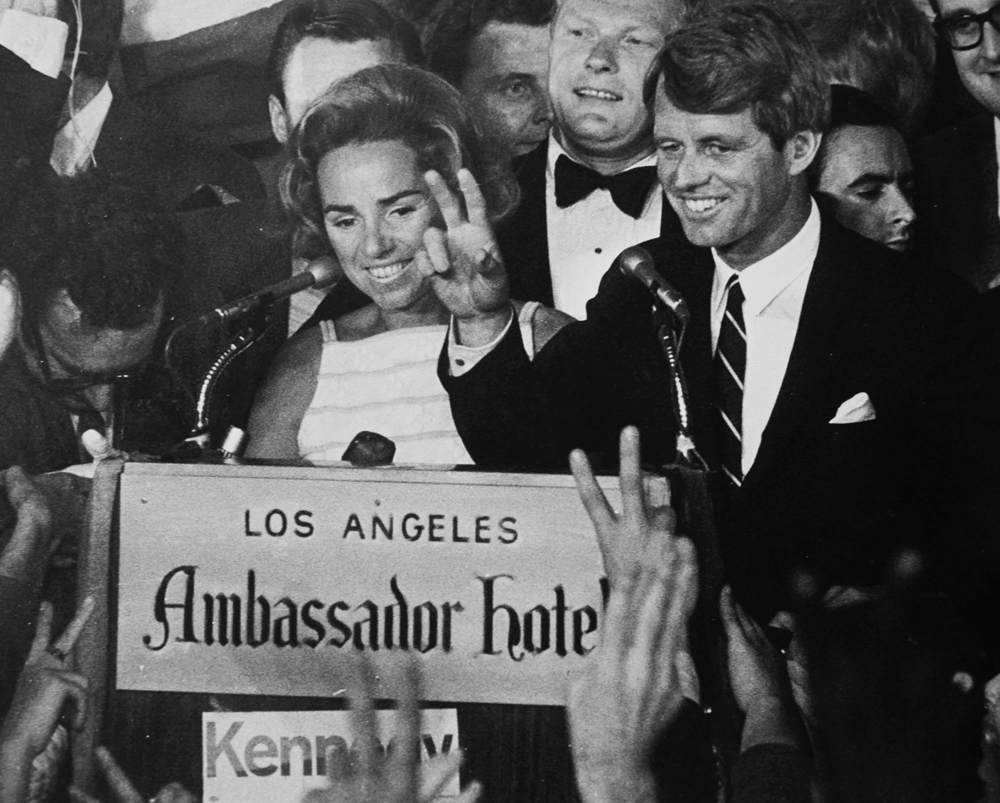
Maybe you’ve all seen this before, but I hadn’t. It’s an interview with RFK assassin Sirhan Sirhan that David Frost conducted before the murderer’s sixth parole hearing. (He’s now been denied 14 times.) Alistair Cooke, who was in the main ballroom of the Ambassador Hotel in Los Angeles when the assassination was committed, provides the introduction. I normally have a problem with murderers being interviewed on-screen–were televised Charles Manson Q&A’s beneficial to humanity in any way?–but I can understand if it’s a political assassin. I would certainly take a look if there was video of John Wilkes Booth trying to explain himself.
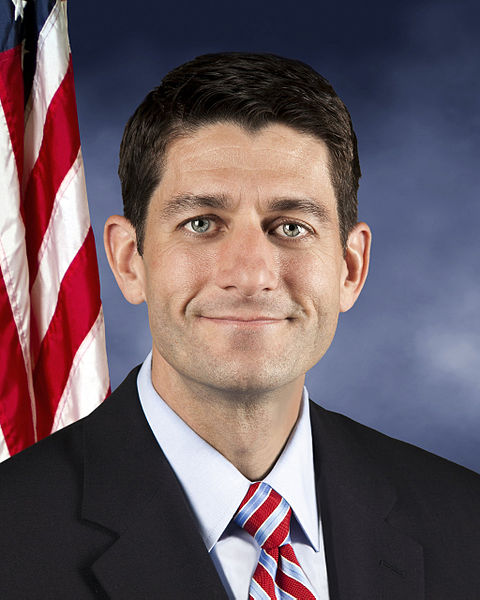
Paul Ryan: P90X + social engineering. (Image by Gage Skidmore.)
A very poor choice by Mitt Romney. It was clear he was trailing and the gulf was widening, so I can understand the need for a bold stroke (though Americans have yet to vote for the bottom of any Presidential ticket.) But nearly every fear about Romney’s callousness (real or imagined) has been heightened with Ryan by his side, lugging along his magic numbers which soak the poor. Romney gets his stated wish now and becomes a “severe conservative.”
No matter what happens on planet Earth between now and the election, there’s a clear path to victory for President Obama. (Vote for me and avoid another supply-side juggernaut.) The final jobs reports become almost an afterthought. The onus is no longer on the President, but on Romney-Ryan to explain how their draconian economics wouldn’t devastate our most vulnerable.
Even though this is largely an election about our economy, it’s pretty much a slam dunk for Team Obama on international issues. The American people largely approve of the way the President has handled things abroad. On the other side, you have essentially no experience or vision. Read every word that has been uttered by Romney and Ryan since the announcement, and see how many times they’ve mentioned the world beyond our borders. Romney no longer has to run for President by running away from himself, but he and Ryan will both have to scramble from their lack of foreign-policy credentials.
Romney immediately tried to paint Ryan as someone who can work across the aisle and get results. Big mistake. In 13 years, Ryan has accomplished almost nothing of practical value–just two meaningless bills. It would be better for Romney to depict his running mate as a Moynihan-ish big-picture wonk who is light on real-world results because he’s been busy crafting something visionary.
When I posted a few days ago about people exhibiting self-delusion, I could have easily added Ryan to the mix. He has to be intelligent enough to know that his policies would cause real damage to our most vulnerable. How does he disassociate himself from that and think himself a decent person? If he really believes that his numbers add up, he is a lousy mathematician.
The GOP can point out that Obama has already taken money from Medicare as Ryan plans to, but taking money from Medicare to provide universal health care is not the same thing as taking money from Medicare to provide Romney with 10,000 more square feet on his new house. That’s the Ryan plan.
The media has rightly said that the election has now shifted from one of referendum to one of mandate, but just because it’s an ideological contest doesn’t mean post-election America will be any less marked by obstructionism. I don’t see that going away in the near future.
The biggest non-story of the weekend was how Romney was able to fool everyone and keep his veep pick a secret. Everybody knew about the choice before he made the announcement, so I wouldn’t say that’s accurate. But even if he had kept it completely quiet, who the fuck cares? It changes not one vote, one opinion, moves nothing. Brian Williams, a consummate entertainer, might be interested in this kind of nonsense, but the air time could have been better used.•
Philosopher Herbert Marcuse imagined technology untangled from capitalism, but it’s difficult to see how that’s possible in the foreseeable future. Not if we want cheap tools delivered to masses of people. Though perhaps we’ll all end up doing genetic engineering. From “The End of Utopia“:
“In the form of a social productive force, these new vital needs would make possible a total technical reorganization of the concrete world of human life, and I believe that new human relations, new relations between men, would be possible only in such a reorganized world. When I say technical reorganization I again speak with reference to the capitalist countries that are most highly developed, where such a restructuring would mean the abolition of the terrors of capitalist industrialization and commercialization, the total reconstruction of the cities and the restoration of nature after the horror of capitalist industrialization have been done away with. I hope that when I speak of doing away with the horrors of capitalist industrialization it is clear I am not advocating a romantic regression behind technology. On the contrary, I believe that the potential liberating blessings of technology and industrialization will not even begin to be real and visible until capitalist industrialization and capitalist technology have been done away with.”
Jackie Robinson, a trailblazer and Hall of Famer who was politically complex, brought his legendary self to What’s My LIne? in 1969, three years before his death. At the 14:40 mark.
“The world has never been richer, healthier, freer or more equal than it is today.” (Image by Steven Zwerink.)
There is still a lot of suffering the world, a lot of inequality. It’s no time to spike the football. But I largely agree withFraser Nelson’s Telegraph article which argues that we’re living in a sort of golden age. An excerpt:
“It feels almost indecent to enjoy the Olympics so much. To spend a day at the Games is to move into a parallel universe, where things are actually going right for Britain and some mild rejoicing is justified. The Olympic motto, ‘Faster, Higher, Stronger,’ strikes a depressing contrast with a British economy showing none of these characteristics. Behind the jubilation lies a horrible feeling that when the Games end, we’ll be back to the grim reality: the Leveson Inquiry, the still-unravelling Budget and the slow-motion implosion of global capitalism.
There ought to be a name for this feeling: political myopia. It can afflict anyone who confuses what politicians do with what’s happening in the country, or what they say with what is going on in the world. Governments may be having a hard time of it, struggling with debt they ought not to have taken on. Noisy pressure groups who seek government funding may also believe that the sky is falling in. But a clear-headed analysis of the facts reveals something rather extraordinary. The crash has not even retarded, let alone halted, human progress. The world has never been richer, healthier, freer or more equal than it is today.” (ThanksBrowser.)
Philip Zimbardo is a fascinating, perplexing person, still most famous for the controversial 1971 Stanford Prison Experiment. He recently presented a lecture for TED in which he argued that the American male is headed downhill fast. It’s true that women in the U.S. have surpassed men in higher education and will assume greater business and political leadership positions in the coming decades, but the idea that guys are dangerously addicted to Internet porn and video games and will fall by the wayside seems like an alarmist generalization. Men like women are, on average, more informed today than ever before even if it can’t be measured by traditional methods.
Japan is in an odd spot in the globalized world: It’s no longer turning out the technology the world wants, possesses a declining and graying population and has a particularly homogenous culture. One businessperson decided to take drastic measures, ordering 6,000 employees to learn English within two years, hoping to be more in touch with the larger market. From Chico Harlan in the Washington Post:
“Japanese billionaire Hiroshi Mikitani decided two years ago that the employees at his company, Rakuten Inc., should work almost entirely in English.
The idea, he said, was a daring and drastic attempt to counter Japan’s shrinking place in the world. ‘Japanese people think it’s so difficult to speak English,’ Mikitani said. ‘But we need to break the shell.’
With the move, which took effect at the beginning of last month, Mikitani turned his e-commerce company — an Amazon competitor — into a test case for corporate Japan’s survival strategy.
As Japan’s population declines, all but guaranteeing ever-decreasing domestic business, companies here are grappling with how they should interact with the world and whether they can do it successfully.
The country has both a dread of English and an understandable attachment to its own ornate business customs. Those idiosyncrasies made Japan a bewildering but envied powerhouse during its economic boom. They now make Japan a poor match, experts say, for global business.
Mikitani took a step few other companies here have dared because, he said, he thought it would help his company expand and thrive. He also wanted to prove a point — that the Japanese, counter to the stereotype, could embrace the risks and embarrassment that come with learning a foreign language.” (Thanks Browser.)
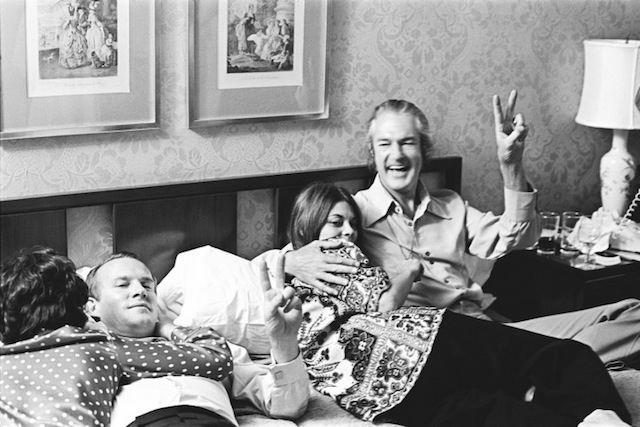
Timothy Leary, who often gave drug addicts a bad name, at the beginning of his long run as a controversial public figure, visiting with Merv Griffin in 1966.
Our lack of will to fully exploit the sun’s power for our energy uses has always stunned me. I understand that wind patterns vary, but that sun is always hot (and will only get hotter). It seems like in addition to harnessing the potential on Earth, we could situate structures in space that could relay power to us.
In India, those who weren’t affected by the recent mass power outage because they’re not even hooked to the grid, are harnessing solar for their basic needs. FromVikas Bajaj at the India Ink blogat the New York Times:
“The Energy and Resources Institute, or T.E.R.I., along with others, has been working on a model to increase the use of solar lanterns in rural India. Though these devices are incredibly simple to understand – a solar panel charges them during the day so they can be used at night – they are still too expensive for many. (Basic lanterns cost as little $5, but hardy and more useful models can cost as much as $80.)
T.E.R.I., which is based in New Delhi, is trying to make these lanterns more affordable by making them available for rent for durations as short as one night. The institute’s ‘Lighting a Billion Lives‘ campaign does this on a franchise model.
‘You train one woman in the village,’ said Rajendra K. Pachauri, the institute’s director general. ‘She charges all the lanterns during the day, and she rents them out at night.’
So far, the campaign has reached 1,488 villages in 22 Indian states, according to its Web site. But Mr. Pachauri, who is also the chairman of the Intergovernmental Panel on Climate Change, told me this week that this and other similar ideas have significant potential to bring electricity to many millions of people.”
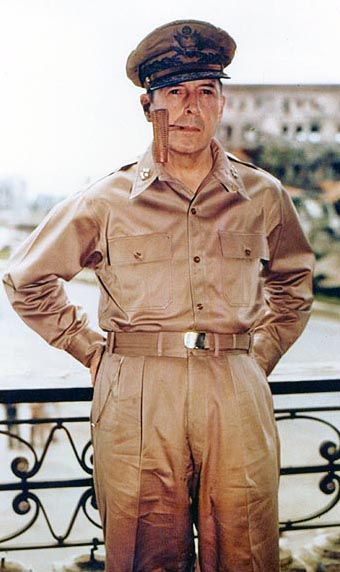
In 1986, when a different Asian country looked like it would permanently unseat America as the premier world power, Gore Vidal wrote a Nation essay asserting that our victory in the Cold War was a Pyrrhic one, weakening our foundation. And while I wouldn’t count us out yet now that the challenger is China rather than Japan, Vidal was right about the wastrel Cold War spending, which continued with the War on Terror, further siphoning our attention and resources. An excerpt:
“As early as 1950, Albert Einstein understood the nature of the rip-off. He said, ‘The men who possess real power in this country have no intention of ending the cold war.’ Thirty-five years later, they are still at it, making money while the nation itself declines to eleventh place in world per capita income, to forty-sixth in literacy and so on, until last summer (not suddenly, I fear) we found ourselves close to $2 trillion in debt. Then, in the fall, the money power shifted from New York to Tokyo, and that was the end of our empire. Now the long-feared Asiatic colossus takes its turn as world leader, and we—the white race—have become the yellow man’s burden. Let us hope that he will treat us more kindly than we treated him. In any case, if the foreseeable future is not nuclear, it will be Asiatic, some combination of Japan’s advanced technology with China’s resourceful landmass. Europe and the United States will then be, simply, irrelevant to the world that matters, and so we come full circle. Europe began as the relatively empty uncivilized Wild West of Asia; then the Western Hemisphere became the Wild West of Europe. Now the sun has set in our West and risen once more in the East.”