
Politics

You are currently browsing the archive for the Politics category.

The sharp-edged critic Robert Hughes, who just passed away, was no fan of network news, though he lived to see it pass into obsolescence. Here’s his 1995 New York Review of Books critique of its role in the capitalist continuum:

“Television is not, to put it mildly, an art of conceptual memory. Its images are always displacing themselves. It must therefore pump up each one’s vividness to keep the millions watching. Cut out more connective tissue, make each bright pop-up image brighter still. The audience’s revenge is selective inattention. The viewer is amazingly adroit at channel surfing, zapping past a channel whose product is judged in two seconds to be boring. Knowing this, the network must make the next product more vivid still… and so it goes, in a descending curve of simplification. As Lewis Lapham points out in his introduction to a new edition of Marshall McLuhan’s Understanding Media, McLuhan recognized thirty years ago that the relation between abbreviated news and the consoling icon of advertisement is as fixed and, so to speak, as theologically necessary as the ancient relationship of hell and heaven. We are given our glimpses of scandal and disaster: corpses in Bosnia, the burned-out crack house in New York, the assassination in Mexico City. The bad news sells the good news: the smiling anchor, more real than the world outside, and the ads, which are Eden. The core message, in the end, is that the world may be a strange, violent, and horrible place, but products keep it away, as garlic repels vampires. Hence the sense of reality-shortage that accompanies image-glut.”

Tags:

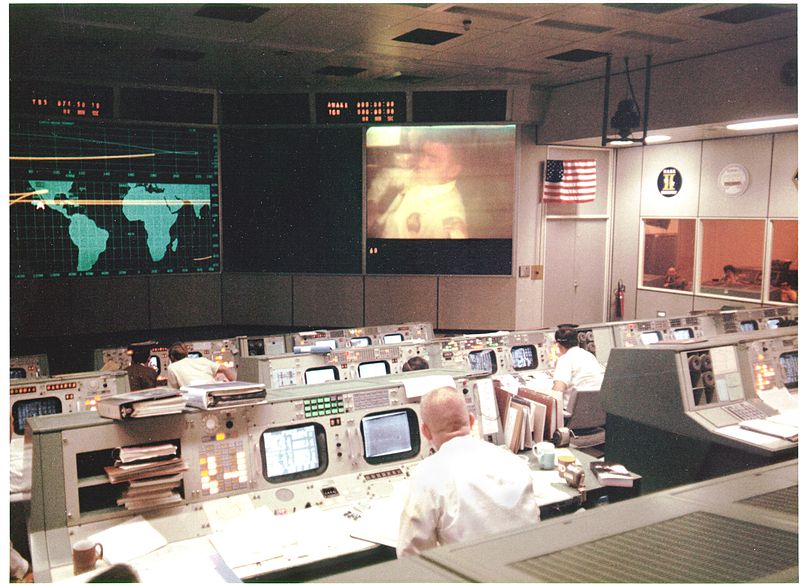
An interesting footnote to history regarding the Apollo 13 mission, via an Ask Me Anything on Reddit with a 97-year-old veteran of our space program.

________________________

Question:

What do you remember about Apollo 13? Did you think they would make it back? 

Answer:

No. But they did. Jim Lovell and Tom Hanks visited here in Washington after the movie was made, and I met up with Jim Lovell again. As it happens, Jim Lovell was President of the National Eagle Scout Association, and we met at the National Press Club because they were promoting the movie. Jim recognized me from NASA. I told him that I hadn’t slept for about seven days while he was coming back.

All the engineers and everybody else at NASA in Houston were working hard at recovering the moonshot, and they were in real trouble, weren’t sure they could get it back. They got a phone call from a grad student at MIT who said he knew how to get them back. They put engineers on it, tested it out, by God it worked. Slingshotting them around the moon. They successfully did. They wanted to present the grad student to the President and the public, but they found him and he was a real hippy type – long hair and facial hair. NASA was straight-laced, and this was different than they expected, so they withdrew the invitation to the student. I think that is a disgrace.

Question:

That makes me really sad that they treated him that way. What was the student’s name?

Answer:

He was actually hesitant to share this story because it made NASA look bad to have the kid be so unknown.•

President Kennedy kept his pants zipped long enough to give this press conference 50 years ago, the first one ever beamed by a satellite.

Tags:

Economists Tyler Cowen (who has read more more books than all of us combined) and Kevin Grier have a smart article at Grantland that reveals how countries can improve their odds of earning medals at the Olympics. An excerpt about the divergent performances of China and India, two countries with similarly huge talent pools:

“Will China and India, the two countries with populations over 1 billion, dominate the Olympics of the future, especially as they become wealthier?

To date, their Olympic performances are almost polar opposites. China has become an Olympic powerhouse while India has underperformed. From 1960 to 2000, China won 80 gold medals, while India won only two. Over those 11 Olympiads, India only won eight total medals while China won over 200. While China has grown faster and is richer than India, the difference in wealth can’t begin to account for the chasm between their Olympic results.

In their book Poor Economics, MIT economists Abhijit V. Banerjee and Esther Duflo attribute India’s dismal Olympic performance at least partly to very poor child nutrition. They document that rates of severe child malnutrition are much higher in India than in sub-Saharan Africa, even though most of sub-Saharan Africa is significantly poorer than India.

Even the significant segment of the Indian population that grows up healthy is at a disadvantage relative to China. The Chinese economic development model has focused on investment in infrastructure; things like massive airports, high-speed rail, hundreds of dams, and, yes, stadiums, world-class swimming pools, and high-tech athletic equipment. And while India is a boisterous democracy, China continues to be ruled by a Communist party, which still remembers the old Cold War days when athletic performance was a strong symbol of a country’s geopolitical clout.”

Tags: ,

I recently posted something about the South Korean insta-city, Songdo, billed as the world’s first “smart city,” which will be embedded with technology that will constantly collect and respond to streams of data. In “The Machine and the Ghost” in the New Republic. Christine Rosen begins her excellent consideration of the rise of the machines with a description of Songdo:

“JUST WEST OF SEOUL, on a man-made island in the Yellow Sea, a city is rising. Slated for completion by 2015, Songdo has been meticulously planned by engineers and architects and lavishly financed by money from the American real estate company Gale International and the investment bank Morgan Stanley. According to the head of Cisco Systems, which has partnered with Gale International to supply the telecommunications infrastructure, Songdo will ‘run on information.’ It will be the world’s first ‘smart city.’

The city of Songdo claims intelligence not from its inhabitants, but from the millions of wireless sensors and microcomputers embedded in surfaces and objects throughout the metropolis. ‘Smart’ appliances installed in every home send a constant stream of data to the city’s ‘smart grid’ that monitors energy use. Radio frequency ID tags on every car send signals to sensors in the road that measure traffic flow; cameras on every street scrutinize people’s movements so the city’s street lights can be adjusted to suit pedestrian traffic flow. Information flows to the city’s ‘control hub’ that assesses everything from the weather (to prepare for peak energy use) to the precise number of people congregating on a particular corner.

Songdo will also feature ‘TelePresence,’ the Cisco-designed system that will place video screens in every home, office, and on city streets so residents can make video calls to anyone at any time. ‘If you want to talk to your neighbors or book a table at a restaurant you can do it via TelePresence,’ Cisco chief globalization officer Wim Elfrink told Fast Company magazine. Gale International plans to replicate Songdo across the world; another consortium of technology companies is already at work on a similar metropolis, PlanIT Valley, in Portugal.

The unstated but evident goal of these new urban planners is to run the complicated infrastructure of a city with as little human intervention as possible. In the twenty-first century, in cities such as Songdo, machine politics will have a literal meaning—our interactions with the people and objects around us will be turned into data that computers in a control hub, not flesh-and-blood politicians, will analyze.

But buried in Songdo’s millions of sensors is more than the promise of monitoring energy use or traffic flow. The city’s ‘Ambient Intelligence,’ as it is called, is the latest iteration of a ubiquitous computing revolution many years in the making, one that hopes to include the human body among its regulated machines.”

Tags:

Look magazine was sort of the weirder sibling of Life. It was known, yes, for its Stanley Kubrick photos and Emmett Till reportage, but also for shock journalism about head transplantations and underground saucer-shaped airplanes. One such piece of sensationalism was Walter White’s heartbreaking 1949 article,Has Science Conquered the Color Line?

A modest proposal along the lines of Jonathan Swift but not intended as satire, the piece suggested that a new skin-lightening technique which was close to being perfected would allow people of color to “become” white and avoid prejudice. The author wasn’t any sort of racist; a former head of the NAACP and of mixed race, he was very light-skinned and able to pass in either world. He was just tired of racism and wanted to see it all end by any means necessary, even in this remarkably ill-conceived and self-loathing way. The piece, unsurprisingly, caused a furor, despite being published a couple of decades before anyone in America was saying the obvious aloud–that Black is beautiful. But it did speak to the the level of race relations during the “good old days.” An excerpt:

“Consider what would happen if a means of racial transformation is made available at a reasonable cost. The racial, social, economic and political consequences would be tremendous.

Some three years ago I wrote an article, quite innocent that my words might prove prophetic. I said:

‘Suppose the skin of every Negro in America were suddenly to turn white. What would happen to all the notions about Negroes, the idols on which are built race prejudice and race hatred? Would not Negroes then be judged individually on their ability, energy, honesty, cleanliness as are whites? How else could they be judged?’

Now that science is near making such a dream a reality, it’s time to consider the questions raised more seriously than ever.”

Tags:

The 1980s was a particularly jingoistic and muscle-flexing time in America, and for awhile we were encouraged to care about our place among the world’s yacht-racing a-holes. Footage of original Tan Mom Dennis Conner leading us to a classy victory in 1988.

Tags:

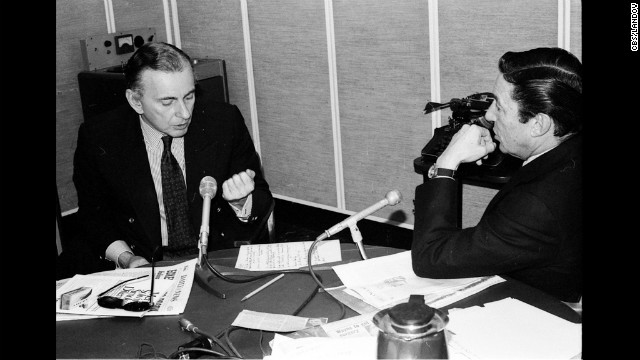
Like a lot of super-intelligent, self-satisfied people, Gore Vidal could never shut the fuck up and was often wrong. He was a fascinating character and a master showman, but he seemed to exist mostly to hear his own voice and flatter himself. There was some greatness along the way, but I doubt one word he wrote or uttered will ever effect the world in any meaningful way. I know that’s a high threshold by which to rate a writer, but I think such self-importance demands an important contribution. Yes, I mourn the absence of public intellectuals in America, but that realm had its limitations.

Because CBS is still living in the distant technological past, I’m unable to embed the video of Mike Wallace conducting a 1975 60 Minutes interview with Vidal, whom he astutely described as an “intellectual vaudevillian.” But go here to watch it.

••••••••••

See also:

Tags: ,

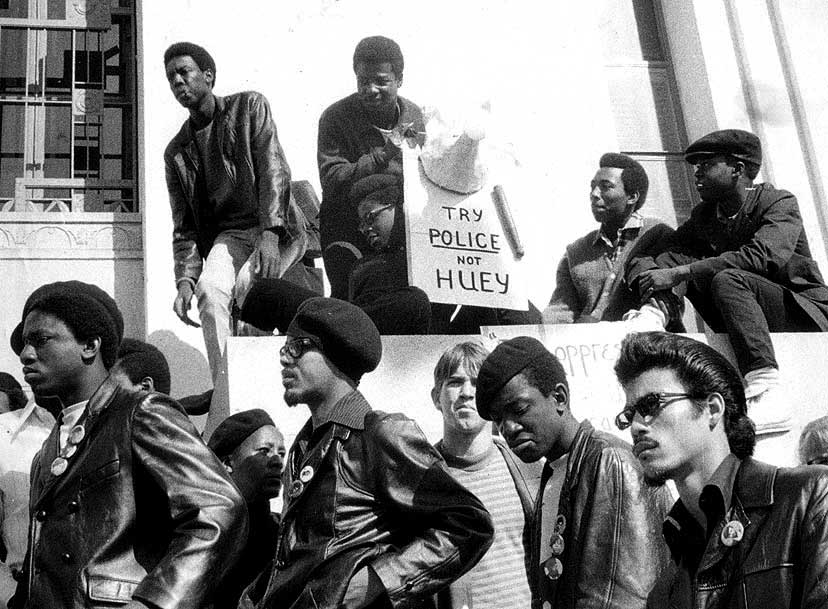
In New York Times Magazine, Jonathan Mahler, who wrote the amazing 2005 book Ladies and Gentlemen, The Bronx Is Burning, explores the radical political hotbed that is Oakland, home for decades to Panthers, Angels and Occupiers, all drawn by the cheap rents and the outlaw spirit. An excerpt:

“Why are radicals so inexorably drawn to Oakland? The cheap rents don’t hurt (free, if you’re willing to squat in an abandoned house or industrial space, and hundreds apparently are). Oakland is urban, dangerous and poor — fertile social conditions for inciting revolution. What’s more, it has a long, easily romanticized history of militancy. America’s last citywide strike, in 1946, took place there; the Black Panthers were born in Oakland; and David Hilliard, a former Black Panthers chief of staff, still gives three-hour tours of the movement’s local landmarks and sells his own line of Black Panthers hot sauce: ‘Burn Baby Burn.’

Running parallel to this history of political militancy is a history of lawlessness. In the early 1970s, when the Hell’s Angels were scandalizing America, their most infamous clubhouse was located in East Oakland. The Oakland native Felix Mitchell was one of the first to scale up corner drug-dealing into a multimillion-dollar, gang-controlled business. On his death — he was stabbed in Leavenworth in 1986 — the city gave him a hero’s send-off: thousands came out to see his coffin borne through his old East Oakland neighborhood by a horse-drawn carriage trailed by more than a dozen Rolls Royces and limousines.

In Oakland, the revolutionary pilot light is always on. At the dawn of the 20th century, the Oakland writer and social activist Jack London said this to a group of wealthy New Yorkers: “A million years ago, the cave man, without tools, with small brain, and with nothing but the strength of his body, managed to feed his wife and children, so that through him the race survived. You on the other hand, armed with all the modern means of production, multiplying the productive capacity of the cave man a million times — you are incompetents and muddlers, you are unable to secure to millions even the paltry amount of bread that would sustain their physical life. You have mismanaged the world, and it shall be taken from you.

It’s a dream that still exists in Oakland — that the world can be taken from the haves and delivered to the have-nots. Like all dreams that are on the brink of being extinguished, its keepers cling to it with a fierceness that is both moving and an extreme exercise in the denial of the reality that is at their door.”

••••••••••

The Symbionese Liberation Army commits acts of terrorism in Oakland in 1974:

Tags:

How is it possible that I only recently read A Handbook on Hanging by smart-ass British historian Charles Duff? Acerbic beyond belief, Duff’s book, originally published in 1928 and updated decades later, is a droll yet furious account of the way we officially murder one another. From the introduction:

As a form of capital punishment, hanging was introduced to Britain by the Germanic Anglo-Saxon tribes as early as the fifth century. The gallows were an important element in Germanic culture. The worthy Hengist and Horsa and their colleagues used a very rough and out-of-hand method of hanging, one that resembled our clean and tidy modern method in only this respect: it worked quite well.

William the Conqueror subsequently decreed that it should be replaced by castration and blinding for all but the crime of poaching royal deer, but hanging was reintroduced by Henry I as the means of execution for a large number of offenses. Although other methods of execution, such as boiling, burning and beheading were frequently used in the mediaeval period, by the eighteenth century hanging had become the principle punishment for capital crimes.

The eighteenth century also saw the start of the movement for the abolition of the death penalty. In 1770 [the British Politician] William Meredith, suggested ‘more proportionate punishments’ for crimes. He was followed in the early nineteenth century by [the legal reformer and Solicitor General] Samuel Romilly and [the Scottish jurist, politician and historian] James Mackintosh, both of whom introduced bills into Parliament in an attempt to de-capitalise minor crimes.

Perhaps unsurprising, considering the fact that in Britain at the time there were no less than 222 crimes which were defined as capital offenses, including the impersonation of a Chelsea pensioner and damaging Westminster Bridge. Moreover, the law did not distinguish between adults and children, and ‘strong evidence of malice in a child of 7 to 14 years of age’ was also a hanging matter.”

••••••••••

“They were hanging in the trees, dead and dying / And I said, ‘What does it mean?'”:

“Into our town the hangman came / Smelling of blood and gold and flame”:

Tags:

Gore Vidal, who just passed away, encourages the impeachment of Richard Nixon in 1970 on Merv Griffin’s talk show.

Tags: ,

In a 1995 New York Review of Books analysis of then-Speaker of the House Newt Gingrich, Joan Didion reveals, unsurprisngly, a petty man with grandiose notions. It’s not that he never argues for interesting ideas but that he instantly cheapens them with a crassness and a lack of intelligence. An excerpt:

Even Mr. Gingrich’s most unexceptionable arguments can take these unpredictable detours. The “Third Wave Information Age” offers “potential for enormous improvement in the lifestyle choices of most Americans,” opportunities for “continuous, lifelong learning” that can enable the displaced or downsized to operate “outside corporate structures and hierarchies in the nooks and crannies that the Information Revolution creates” (so far so good), but here is the particular cranny of the Information Revolution into which Mr. Gingrich skids:

Say you want to learn batik because a new craft shop has opened at the mall and the owner has told you she will sell some of your work. First, you check in at the ‘batik station’ on the Internet, which gives you a list of recommendations. … You may get a list of recommended video or audio tapes that can be delivered to your door the next day by Federal Express. You may prefer a more personal learning system and seek an apprenticeship with the nearest batik master. … In less than twenty-four hours, you have launched yourself on a new profession.

Similarly, what begins in To Renew America as a rational if predictable discussion of “New Frontiers in Science, Space, and the Oceans” takes this sudden turn: ‘Why not aspire to build a real Jurassic Park? … Wouldn’t that be one of the most spectacular accomplishments of human history? What if we could bring back extinct species?’ A few pages further into “New Frontiers in Science, Space, and the Oceans,” we are careering into ‘honeymoons in space’ (“imagine weightlessness and its effects and you will understand some of the attractions”), a notion first floated in Window of Opportunity, in that instance as an illustration of how entrepreneurial enterprise could lead to job creation in one’s own district: “One reason I am convinced space travel will be a growth industry is because I represent the Atlanta airport, which provides 35,000 aviation-related jobs in the Atlanta area.”

The packaging of space honeymoons and recycled two-liter Coca-Cola bottles is the kind of specific that actually engages Mr. Gingrich: absent an idea that can be sold at Disney World, he has tended to lose interest.•

Tags: ,

Can there be any shame in a world without secrets? We’re finding out.

Who would have thought that total surveillance wouldn’t just be accepted but welcomed, and that in this one way government and the free market could wholeheartedly agree. William F. Buckley and Senator Edward V. Long discuss our brave new world in 1968, years before Watergate or The Conversation.

Tags: ,

David Frost, outnumbered, doing battle with those Yippie barbarians in 1970.

Tags:

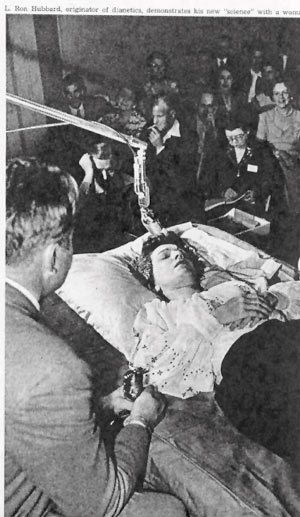
L. Ron Hubbard interviewed in 1968 about his embattled tax shelter, during the period when he spent much of his time at sea.

Tags:

Bob Costas protested the foolish decision by the IOC to not offer a moment of silence for the Israeli athletes who were murdered by terrorists during the 1972 Games in Munich. In 1991, Costas interviewed broadcasting legend Jim McKay, who held up (if barely) during those horrifying, exhausting hours.

“They’re all gone”:

Tags: ,

At the Philosopher’s Beard, an essay about the penal system thinks very far outside the box, suggesting less incarceration and more flogging and execution. A hard sell, to be sure. But the piece has a good passage about criminal nature, which follows:

“Even if someone has committed a serious crime and deserves to be punished severely, that does not necessarily mean that they present a danger we need to be protected from. Corporate fraudsters for example can be made safe relatively easily by removing their rights to manage companies. Likewise even those who commit very serious violent crimes may not be particularly dangerous; for example women who kill abusive husbands do not go around killing other people. Quite often, people are sentenced to prison for the worst thing they have ever done, and not for being dangerous. Thus, little to no security benefits are achieved from their stay in prison. Of course there are people whose character can be said to be criminal, and who do present a risk to society for as long as they are free, but these are a small minority of those who are now sent to prison. The way we use prison now assumes that all convicts are criminal characters, which is not only false, but a very inefficient way of trying to achieve security.” (Thanks Browser.)

With 3D printers in the offing, guns aren’t likely going anywhere and far more dangerous things are probably upon us. From Mark Gibbs at Forbes:

“Given the recent appalling events in Aurora, Colorado, there’s been a renewed call for greater gun control and a ban on assault weapons.

I’m in favor of tighter gun control and a ban on weapons that are unnecessarily powerful but I’m afraid that technology will soon make any legislation that limits the availability of any kinds of guns ineffective.

To understand why this might happen, you need to understand a technology called 3D printing.

3D printing allows you to build things that are, as the name implies, three dimensional. A few years ago 3D printers were very rare, hugely expensive, and hard to use. But as with anything that can be driven by computers, 3D printers has become cheaper and cheaper to the point where, today, you can buy a 3D printer, off the shelf, for as little $500.

Using either free or low cost computer aided drafting software you can create digital 3D models of pretty much anything you can think of and, with hardly any fuss, your 3D printer will render them as physical objects.” 

Tags:

Muhammad Ali just made an appearance in London for the opening ceremony of the Olympic Games. Here’s footage from another Ali jaunt to that great city, when he recorded a special 1974 interview program. The boxer and activist was diminished physically at this point, mostly due to two titanic bouts with Joe Frazier. Neither fighter was ever the same again.

Tags: ,

The opening of an argument by Julian Savulescu and Ingmar Persson at Philosophy Now in favor of using bioenhancement to develop human morality:

“For the vast majority of our 150,000 years or so on the planet, we lived in small, close-knit groups, working hard with primitive tools to scratch sufficient food and shelter from the land. Sometimes we competed with other small groups for limited resources. Thanks to evolution, we are supremely well adapted to that world, not only physically, but psychologically, socially and through our moral dispositions.

But this is no longer the world in which we live. The rapid advances of science and technology have radically altered our circumstances over just a few centuries. The population has increased a thousand times since the agricultural revolution eight thousand years ago. Human societies consist of millions of people. Where our ancestors’ tools shaped the few acres on which they lived, the technologies we use today have effects across the world, and across time, with the hangovers of climate change and nuclear disaster stretching far into the future. The pace of scientific change is exponential. But has our moral psychology kept up?

With great power comes great responsibility. However, evolutionary pressures have not developed for us a psychology that enables us to cope with the moral problems our new power creates. Our political and economic systems only exacerbate this. Industrialisation and mechanisation have enabled us to exploit natural resources so efficiently that we have over-stressed two-thirds of the most important eco-systems.

A basic fact about the human condition is that it is easier for us to harm each other than to benefit each other.” (Thanks Browser.)

Tags: ,

Something like this (which I definitely don’t agree with): “Even though we don’t live under anything resembling a tyranny right now, it is possible in the future, for unforeseen reasons, that our government could become one. If we, unlike, say, the people of Syria, are heavily armed with very powerful weapons, we can prevent this oppression. Further, if assault weapons are criminalized and unavailable through the current avenues of attainment, a black market will develop and the money from such purchases can be funneled into other illegal activities. Yes, we fully understand our beliefs mean that sometimes these incredibly destructive weapons will fall into the hands of people who are mentally ill or criminal or domestic terrorists, and they will be used to harm and kill innocent people, causing great pain for their families and communities. As regrettable as this is, in the big picture we believe that a greater loss of life and liberty can occur if these weapons are kept from citizens.”

I would guess bio-printers will eventually make organ scarcity a problem of the past, but until that occurs should people be allowed to sell their organs? Moral philosopher Janet Radcliffe Richards has long argued that the trade, while unsettling, should be permitted. An excerpt from her reasoning:

I find trade in organs as intuitively repugnant as does everyone else but strong feelings of a moral kind, by themselves, cannot form reliable guides for action. Remember the traditional reactions to inter-racial marriage, unfeminine women and homosexuality – themselves now widely regarded as repugnant? If we find the trade repugnant because of the harm it does to vendors, we must find the idea of making their situation worse by stopping the trade more repugnant. The worse we think it is to sell a kidney, the more repugnant should we find any objectively worse alternative. We should find it much more repugnant that the Turkish father should be forced to keep his kidney and watch his daughter die than that he should sell it and save her. We should also find our repugnance proportionately lessened if we could assure high standards of care that would make the harm minimal.

This does not prove conclusively that organ sales should be allowed; good arguments for prohibition may still be found. The fact that so many bad arguments are used, however, shows that good ones must be hard to come by, and it also suggests that our strong feelings of repugnance are systematically distorting our arguments. We are in effect treating the removal of our own feelings of disgust as more important than the real interests of the people on whose behalf we claim to be concerned. It is therefore morally essential to understand the power of these feelings so that we can think impartially about the problem.

In the meantime, until someone produces a far better argument than has yet appeared, there seems to be no escaping the provisional conclusion that the prohibition of the sale of organs does substantial harm of various sorts, that these have not been shown to be justified and therefore that we should not be trying to prevent the selling of organs but rather to lessen whatever harms are now involved and to increase the benefits to both vendors and purchasers by getting the trade properly regulated.•

Tags:

history_speeches_1068_nixon_calls_apollo_11_astronauts_sf_still_624x352

President Richard Nixon phoned the Apollo 11 astronauts while they were on the moon. Unsurprisingly, the call was taped.

McCandless: …We’d like to get both of you in the field-of-view of the camera for a minute. (Pause) Neil and Buzz, the President of the United States is in his office now and would like to say a few words to you. Over.

Armstrong: That would be an honor.

McCandless: Go ahead Mr. President. This is Houston out.

Nixon: Hello, Neil and Buzz. I’m talking to you by telephone from the Oval Room at the White House. And this certainly has to be the most historic telephone call ever made. I just can’t tell you how proud we all are of what you’ve done. For every American, this has to be the proudest day of our lives. And for people all over the world, I am sure they too join with Americans in recognizing what an immense feat this is. Because of what you have done, the heavens have become a part of man’s world. And as you talk to us from the Sea of Tranquility, it inspires us to redouble our efforts to bring peace and tranquility to Earth. For one priceless moment in the whole history of man, all the people on this Earth are truly one: one in their pride in what you have done, and one in our prayers that you will return safely to Earth.

Armstrong: Thank you Mr. President. It’s a great honor and privilege for us to be here, representing not only the United States, but men of peace of all nations, and with interest and curiosity, and men with a vision for the future. It’s an honor for us to be able to participate here today.

Nixon: And thank you very much and I look forward – all of us look forward – to seeing you on the Hornet on Thursday.

Armstrong: Thank you.

Aldrin: I look forward to that very much, sir.•

Tags:

The opening of Esther Dyson’s new Project Syndicate essay, which suggests we should apply the self-quant movement to communities:

“I have written previously about the Quantified Self movement – individuals equipped with the tools (monitoring devices and software) needed to measure their own health and behavior (and, by doing so, to improve them). This movement is not quite sweeping the world, but it is making a difference. So-called Quantified Selfers are monitoring their blood pressure, sleep cycles, and body mass. At least some of them are using that information to improve their health and live more productively.

In the same way, I predict (and am trying to foster) the emergence of a Quantified Community movement, with communities measuring the state, health, and activities of their people and institutions, thereby improving them. Just consider: each town has its own schools, library, police, roads and bridges, businesses, and, of course, people. All of them potentially generate a lot of data, most of it uncollected and unanalyzed. That is about to change.” (Thanks Browser.)

••••••••••

Early quantified community, 1977:

Tags:

People currently living under tyrants in the Middle East want political freedom and empowerment. But in free countries in the West, we want designer stuff. What we wouldn’t trade for it. We’re citizens acting as if we’re merely consumers. From David Wallace-Wells’ smart interview with Martin Amis in New York, a section about the London riots of 2011:

Were you in London for the riots?
I wasn’t. As I recall, it was, as these things usually are, set off by a bit of heavy-handed policing. It’s interesting that there’s such a contrast between the police in America and there, in how they’re viewed by the working class, or whatever you want to call them—the proletariat, the many. In America, the policeman is a working-class hero. In England, the policeman is a working-class traitor. Lionel propounds this view himself—the police undertake to protect the rich man’s shilling. As if everyone’s raring to have a redistribution of wealth. That’s why there’s such violent names for the police in criminal England—they call them not only the filth, the filth, but also the puss. They’re the lowest of the low. When policemen go to prison in England, they have as bad a time as a pedophile.

The police in America are, to my senses, quite fascistic—you know, immediate end to all humor, end of all human contact; it’s a real assertion of authority in a way that’s very rare in England. In England, police are, softly softly, “Now, sir, come on, sir.” It’s a humoring voice, not an authoritarian one. I don’t understand the sparking incident. But, then, as the phrase is, it’s all off, then. When a riot starts, it’s all off—meaning, the law suspended. It’s also interesting they used social networking to get people around to certain malls where the police presence was small.

Also that they were gravitating towards malls at all.
Yeah. It was very sort of un-left-wing, in the sense that they all flooded into these sports-equipment shops and tried on all these trainers. A rioter doesn’t usually try things on. Or a looter—it was looting, really, rather than rioting.

But, I mean, what conclusions are people trying to draw from that? It’s just the sort of thing that happens every now and then. Very hard to see any kind of social protest in it. It was opportunistic, and cynical, I think. And I was horrified to learn some of the sentences that were being handed down, for people with no record, first-time offenders, deterrent sentences, exemplary sentences. So, you know, incoherent social spasm rather than anything one could draw conclusions from.

But I guess an expression of class frustration, too.
It’s not class anymore. It’s money. And for very good reason. Money is a much more fluid medium than class, and much more measurable, too, than class. It was a protest, if it was that, to any extent, against privation. It is the sort of society where—it’s not very rational—people look at fame and feel deprived if they haven’t got it, feeling that this is a basic, almost a human right, a civil right.”

••••••••••

Amis interviews Norman Mailer, 1991:

Tags: , ,

« Older entries § Newer entries »