
Paddy Chayefsky discussing Network, arguably America’s best film satire, with Dinah Shore in 1976.
See also:

Ideas and technology and politics and journalism and history and humor and some other stuff.
You are currently browsing the archive for the Politics category.
Paddy Chayefsky discussing Network, arguably America’s best film satire, with Dinah Shore in 1976.
See also:

I wholly disagree with L. Gordon Crovitz’s Wall Street Journal editorial “Who Really Invented the Internet?” The piece attempts to discredit the important role that government played in the nurturing of our dominant medium, trying to shift all the credit to the free market. That’s ideology masquerading as history. An excerpt:
“A telling moment in the presidential race came recently when Barack Obama said: ‘If you’ve got a business, you didn’t build that. Somebody else made that happen.’ He justified elevating bureaucrats over entrepreneurs by referring to bridges and roads, adding: ‘The Internet didn’t get invented on its own. Government research created the Internet so that all companies could make money off the Internet.’
It’s an urban legend that the government launched the Internet. The myth is that the Pentagon created the Internet to keep its communications lines up even in a nuclear strike. The truth is a more interesting story about how innovation happens—and about how hard it is to build successful technology companies even once the government gets out of the way.”
Tags: L. Gordon Crovitz'

I’m completely in favor of its removal, but there are statues of slave owners in Washington D.C. Large ones. And one of Christopher Columbus in Central Park. We have a tendency to be selective about our morality.
Tags: Joe Paterno
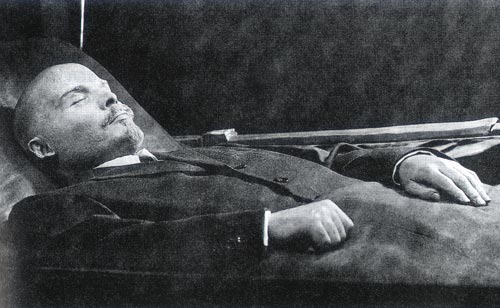
Like Albert Einstein’s brain, Vladimir Lenin’s corpse has done its fair share of traveling. Embalmed in 1924 at the behest of Joseph Stalin, Lenin’s leftovers have been considered differently during the many shifts in his homeland’s tortuous politics. Christopher Buckley, more than most, has had a close relationship with the remains. From his New York Times Op-Ed piece, “What’s a Body to Do?“:
“The saga of Lenin’s remains is a uniquely Russian story. His caretakers got drunk on the alcohol used in embalming Lenin’s corpse, and in one instance, one was caught groping the other’s daughter. There are group photos of them striking jaunty poses, as if they’ve gathered for a picnic.
And here was Khrushchev in 1956, growling, ‘The mausoleum stinks of Stalin’s corpse.’ Stalin was embalmed and laid out beside Lenin between 1953 to 1961, until Khrushchev said enough and ordered him buried beneath the Kremlin wall.
Lenin remains — Sleeping Beauty From Hell. Perhaps when his heir, President Vladimir V. Putin, is finished shipping combat helicopters to shore up his friend Bashar al-Assad of Syria he will have time to consider his minister of culture’s modest proposal.
Footnote: In 1991, when I was editing a publication for Forbes, I engaged in a hoax and briefly persuaded the world that the Russian government was preparing to auction off the body.
The story garnered quite a lot of play. A none-too-happy Russian interior minister denounced me for my ‘impudent lie’ and called it ‘an unpardonable provocation.’ (Which sort of made my day.)
But a number of readers of the magazine apparently didn’t get the memo that it was all a hoax. The Kremlin was deluged with offers.”

Speaking of journalist C.P. Scott, here’s a passage from his famous 1921 essay, “A Hundred Years“:
“Character is a subtle affair, and has many shades and sides to it. It is not a thing to be much talked about, but rather to be felt. It is the slow deposit of past actions and ideals. It is for each man his most precious possession, and so it is for that latest growth of time, the newspaper. Fundamentally it implies honesty, cleanness, courage, fairness, a sense of duty to the reader and the community. A newspaper is of necessity something of a monopoly, and its first duty is to shun the temptations of monopoly. Its primary office is the gathering of news. At the peril of its soul it must see that the supply is not tainted. Neither in what it gives, nor in what it does not give, nor in the mode of presentation must the unclouded face of truth suffer wrong. Comment is free, but facts are sacred. ‘Propaganda,’ so called, by this means is hateful. The voice of opponents no less than that of friends has a right to be heard. Comment also is justly subject to a self-imposed restraint. It is well to be frank; it is even better to be fair. This is an ideal.”
Tags: C.P. Scott

From “The Future Will Seem Normal“ at the Next Big Future,” Brian Wang’s new post about Earth forty years from now, which is interesting if very accelerated and sci-fi-ish:
“I do not see world government as inevitable (over the next 40 years for sure). But we are seeing this extra layer getting more powers. Trade organizations and treaties. But the UK and China leadership are smart enough to not give up currency sovereignty. They know the game that Germany and France are running.
Long term as we expand out into the solar system then sure Earth could have its own government, but there will still be the layers below. Not sure how it would all split out – like US federal versus states versus local. Or Canada – federal v provinces.
I see a lot more power vesting in the cities. I see mega cities forming. Especially with Sky city – factory mass produced skyscrapers at about ten times less cost and high speed transportation (high speed rail in China and perhaps low pressure or vacuum trains at higher speeds and high energy efficiency, the US could go pocket airports, robot electric cars, and small planes, beamed power could make that work.)
You could have 50 major cities in the 50-300 million pop range. Say 7 in China, 3 in the 200-400 million range and 4 in the 50 million range. Similar number in the US but smaller populations.”
Tags: Brian Wang

Paddy Chayefsky, that brilliant satirist, holding forth spectacularly on the Mike Douglas Show in 1969. It starts with polite chatter about the success of his script for Marty but quickly transitions into a much more serious and futuristic discussion. The writer is full of doom and gloom, of course, during the tumult of the Vietnam Era; his best-case scenario for humankind to live more peacefully is a computer-friendly “new society” that yields to globalization and technocracy, one in which citizens are merely producers and consumers, free of nationalism and disparate identity. Well, some of that came true. All the while, he wears a fun, red lei because one of his fellow guests is Hawaii Five-0 star Jack Lord. Gwen Verdon, Lionel Hampton and Cy Coleman share the panel.
Chayefsky joins the show at the 7:45 mark.
Tags: Jack Lord, Mike Douglas, Paddy Chayefsky

We’re really going to eventually do this, aren’t we? We’re going to take the genetic materials of a Neanderthal and clone a member of the species. Some scientist somewhere won’t be able to resist the temptation. From a brief piece at Discover with paleoanthropologist Chris Stringer:
“Could we ever clone these extinct people?
Stringer: Science is moving on so fast. The first bit of Neanderthal mitochondrial DNA was recovered in 1997. No one then could have believed that 10 years later we might have most of the genome. And a few years after that, we’d have whole Denisovan and Neanderthal genomes available. So no one would have thought cloning was a possibility. Now, at least theoretically, if someone had enough money, and I’d say stupidity, to do it, you could cut and paste those Denisovan mutations into a modern human genome, and then implant that into an egg and then grow a Denisovan.
I think it would be completely unethical to do anything like that, but unfortunately someone with enough money, and vanity and arrogance, might attempt it one day.These creatures lived in the past in their own environments, in their own social groups. Bringing isolated individuals back, for our own curiosity or arrogant purposes, would be completely wrong.”
Tags: Chris Stringer

Dr. Fredric Neuman’s harrowing Psychology Today article, “The Cyclops Child,” is one of the more bruising things I’ve read in a long time. It’s the psychiatrist’s recollection of being witness to horribly, hopelessly deformed newborns when he was an intern 50 years ago. The doctors would tell the parents that the child was born dead, and the infant would surreptitiously be given minimal care until it passed away. It was done to spare the feelings of the parents, but it’s obvious they should have been told and involved in the decision. Regardless, it’s a heartrending story. The opening paragraph:
“Probably every physician can think of one patient who affected him more than any other. The patient who has haunted me through the years was a child that I saw for only a little time at the very beginning of my career. I was an intern at a Catholic institution. I mention that because it seems to me relevant to the ethical considerations that swirled about the care of this infant. When this child was born, the obstetrician, looking at it was horrified. It was a ‘monster.’ That was the medical term used to describe a grossly misshapen baby. The doctor was concerned, then, first of all, about the effect on its mother of seeing the child. Therefore, he told the parents that it was born dead; and that the body had been disposed of. But the child was alive. This particular ‘monster’ had deformities that were not consistent with it living for any length of time. The obstetrician must have recognized that immediately and chose to spare the parents the special anguish of looking at and knowing about this abnormal birth. But did he have the right to tell them a lie about such a critical matter? I’m not sure that there is a law to deal with such a strange situation, but I am sure the obstetrician violated medical canons. He short-circuited the parents’ wishes and concerns. Plainly, they had the right to know the truth. If a medical malpractice action had been instituted, the doctor would have been liable. By telling this lie, he was risking his career. The other people in the delivery suite were also complicit and also liable. As far as I was concerned, however, he had done the right thing.” (Thanks Browser.)
Tags: Fredric Neuman

How cool is this? The New York Review of Books has pulled from its archives a 1981 essay by Murray Kempton about Woody Guthrie, who had a machine that attempted to kill fascists, though they’re still there. Kempton’s article is a review of several Guthrie books that were published just as a nostalgia salesman was moving into the White House, having promised a return to a past that never existed. People believed the narrative and began voting their unlikely dreams instead of their realities. The result was this land became less and less yours and mine. The opening of the great piece:
“The genius of our politics is the art of distracting the resentments of a cheated middle class and letting them fall upon a worse-cheated lower class. And so we have the revolution of Woody Guthrie’s dream: the Okies and their sons and daughters have elected a one-time California labor agitator president of the United States. This triumphant populist tribune is, of course, Mr. Reagan.
Joe Klein reminds us that Guthrie’s ‘This Land Is Your Land’ has been recorded by such repositories of the national self-satisfaction as the Mormon Tabernacle Choir, the New Christy Minstrels, and Tex Ritter. It is as secure in the pantheon of celebratory anthems as ‘America the Beautiful’ and probably sits higher in the affections of school children than ‘The Star Spangled Banner.’ Marching bands saluted the new president with its strains when they passed before him on Inauguration Day.
Woody Guthrie had composed ‘This Land Is Your Land’ as a bitter parody of ‘God Bless America.’ It had originally closed with the stanza:
One bright sunny morning in the shadow of the steeple
By the Relief office I saw my people
As they stood hungry, I stood there wondering if
God blessed America for me.
These words and like notes of alienation were excised from ‘This Land Is Your Land’ when it was smoothed into the affirmative expression that soothes us today. Guthrie accepted the amendment, but the pain of the sacrifice lingered so long that, in the early 1960s, when he was near dying, he took his son, Arlo, into the backyard and taught him the old verses, because, Klein tells us, ‘he was afraid that if Arlo didn’t learn them, they’d be forgotten.’
The genius of our politics also extends to the transformation of the song of protest into the hymn of acceptance.”
•••••••••
“Yes, as through this world I’ve wandered / I’ve seen lots of funny men / Some will rob you with a six-gun / And some with a fountain pen”:
Tags: Arlo Guthrie, Joe Klein, Murray Kempton, Woody Guthrie
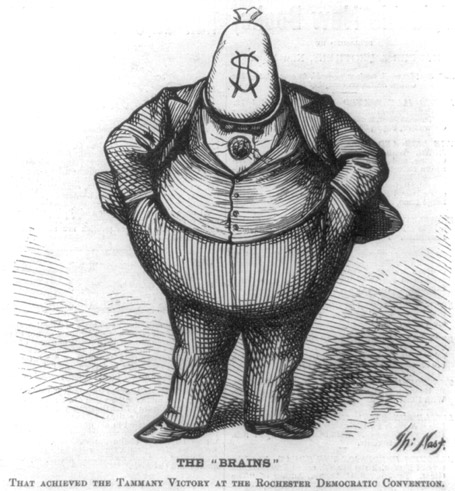
At Business Insider, Henry Blodget guesses why Mitt Romney won’t reveal his tax information. The Governor will have to keep playing defense until he releases the documents. Blodget’s supposition:
Tags: Henry Blodget, Mitt Romey

China is on pace to become by far the world’s largest auto consumer in the near term. Sure, an economic collapse could slow that growth, but it will certainly be a world leader in the category. A nation with that much consumption, that much control over its citizenry and a huge sense of its own destiny, could decide the future of transportation and alternative energy. What if China announced it was allowing only electric cars by a certain date and then built the infrastructure to support that shift with the same zeal that it shows in routinely scraping the sky? From the Next Big Future:
“Auto sales in China may rise to 19.2 million this year, about 1 million lower than AlixPartners estimated last year. Sales in the world’s most populous country may increase to 21.4 million in 2013 and 23.5 million in 2014, the report said.
It is estimated that China’s automobile market will keep a stable growth from 2012 to 2015, with a compound annual growth rate of 8.1%. The sales volume is expected to reach 25.287 million by 2015.
China could double US car sales in 2017 / 2018 and be equal the combined car sales in Western Europe and the United States.”
••••••••••
Jack Nicholson goes gasless in 1978:

Excellent work by Jason DeParle in the New York Times analyzing a lesser-discussed cause of American income disparity, children in working-poor homes being raised by single parents. An excerpt:
“The economic storms of recent years have raised concerns about growing inequality and questions about a core national faith, that even Americans of humble backgrounds have a good chance of getting ahead. Most of the discussion has focused on labor market forces like falling blue-collar wages and lavish Wall Street pay.
But striking changes in family structure have also broadened income gaps and posed new barriers to upward mobility. College-educated Americans like the Faulkners are increasingly likely to marry one another, compounding their growing advantages in pay. Less-educated women like Ms. Schairer, who left college without finishing her degree, are growing less likely to marry at all, raising children on pinched paychecks that come in ones, not twos.
Estimates vary widely, but scholars have said that changes in marriage patterns — as opposed to changes in individual earnings — may account for as much as 40 percent of the growth in certain measures of inequality. Long a nation of economic extremes, the United States is also becoming a society of family haves and family have-nots, with marriage and its rewards evermore confined to the fortunate classes.
‘It is the privileged Americans who are marrying, and marrying helps them stay privileged,’ said Andrew Cherlin, a sociologist at Johns Hopkins University.”
Tags: Jason DeParle

Does everyone else know that Rosa Parks was on To Tell the Truth in 1980? I didn’t.
Tags: Rosa Parks

From “The Machine and the Garden,” a smart New York Times Op-Ed piece by Eric Liu and Nick Hanauer which suggests that the language we use to explain the economy is all wrong:
“Call it the ‘Machinebrain’ picture of the world: markets are perfectly efficient, humans perfectly rational, incentives perfectly clear and outcomes perfectly appropriate. From this a series of other truths necessarily follows: regulation and taxes are inherently regrettable because they impede the machine’s optimal workings. Government fiscal stimulus is wasteful. The rich by definition deserve to be so and the poor as well.
This self-enclosed metaphor is the gospel of market fundamentalists. But there is simply no evidence for it. Empirically, trickle-down economics has failed. Tax cuts for the rich have never once yielded more net revenue for the country. The 2008 crash and the Great Recession prove irrefutably how inefficient and irrational markets truly are.
What we require now is a new framework for thinking and talking about the economy, grounded in modern understandings of how things actually work. Economies, as social scientists now understand, aren’t simple, linear and predictable, but complex, nonlinear and ecosystemic. An economy isn’t a machine; it’s a garden. It can be fruitful if well tended, but will be overrun by noxious weeds if not.
In this new framework, which we call Gardenbrain, markets are not perfectly efficient but can be effective if well managed. Where Machinebrain posits that it’s every man for himself, Gardenbrain recognizes that we’re all better off when we’re all better off. Where Machinebrain treats radical inequality as purely the predictable result of unequally distributed talent and work ethic, Gardenbrain reveals it as equally the self-reinforcing and compounding result of unequally distributed opportunity.
Gardenbrain challenges many of today’s most conventional policy ideas.”
Tags: Eric Liu, Nick Hanauer

Gallows, 1916, Brownsville, Texas.
The death penalty is incredibly unevenly distributed based on race, financial standing and gender. Some innocent people are put to death because the system (and the people who make up that system) are fallible. And the punitive measure hasn’t proven to reduce crime. But yet it remains a part of justice in many parts of the United States. From an article by Caspar Melville in the New Humanist, a passage with defense attorney Clive Stafford Smith about the use of DNA in convictions:
“But doesn’t DNA therefore provide a more reliable scientific tool? Sorry, but no. ‘It’s true that DNA testing is a real science, unlike hair analysis, and in laboratory settings it is very reliable,’ explains Stafford Smith. ‘But there are two big problems: first, instead of doing it in a pristine lab you are doing it in a grubby crime scene. The second, and much bigger, problem is that the people who are doing it are basically morons. Obviously I’m overstating, but not by much. People who become forensic technicians in a crime lab are just not the sharpest knives in the drawer. So if the odds of getting a false match scientifically are one in 10 million, but the odds of the nitwit in the lab mixing up the samples are one in ten, then the scientific odds are irrelevant. I can only say this – I’ve had three cases with DNA evidence presented at trial, and I know for a fact that each one had it wrong.'” (Thanks Browser.)
Tags: Caspar Melville
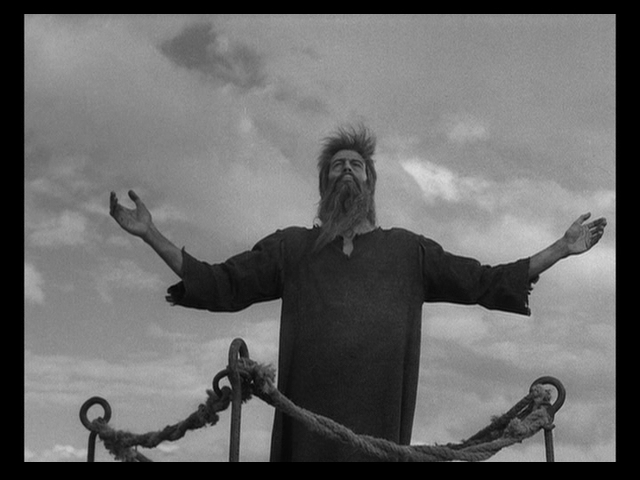
Slavoj Žižek, that holy fool, on stage reacting to an assortment of stimuli.
Tags: Slavoj Žižek

From a well-written Financial Times piece by Simon Kuper about the rise (perhaps) of the technocrat and the privatazing of progress, although I think there is a middle ground between the Pol Pot’s perverted utopianism and Bill Clinton’s tireless triangulation:
“Politicians now try to present themselves not as saviours but as managers: Romney, Mario Monti and even Hollande. That’s no wonder, as since 1945 the managerialism of Dwight Eisenhower or Bill Clinton has fared rather better than the utopianism of, say, Pol Pot. As George Orwell wrote in 1943: ‘Plans for human betterment do normally come unstuck, and the pessimist has many more opportunities of saying ‘I told you so’ than the optimist.’ In Ukraine last month, a liberal dissident mused to me about who might be the country’s ideal leader, everyone else having failed. He came up with Lee Kuan Yew or General Franco. Progress has vanished not just from politics but from public life generally: the British municipal libraries that once stood for progress are now being closed.
However, progress has merely gone private. The western middle-classes increasingly believe in progress in their own lives. They read self-help books, take cooking classes, go on diets, stop smoking, do ‘home improvement,’ and have invented a new mode of parenting, ‘concerted cultivation,’ which largely means the sort of nonstop education for your own children that those moustachioed socialists had envisioned for the workers.”
Tags: Simon Kuper

From Sarah Korones Smart Planet piece about the cultural conditions that lead to creation:
“So which cultures lend themselves to innovation?
According to research from the Georgia Institute of Technology, both individualistic and patriotic cultures tend to breed innovation. After examining 20 years worth of data on 62 different countries, researchers found that individualism consistently had a strong, positive effect on innovation. But individual-centered cultures weren’t the only ones to breed success: certain types of collectivist cultures, like those with strong attitudes of patriotism and nationalism, also fared well on the advancement scale.
In cultures that place a premium on individuality, such as the U.S., the drive to innovate is closely linked to the personal rewards that might be reaped following the success of a new product or invention. One look towards Silicon Valley with its seemingly constant stream of millionaires and it’s not hard to see why so many people strive to create something new in America.
But some types of collectivist cultures enjoy equally high rates of innovation for completely different reasons.”
Tags: Sarah Korones

Every now and then, the perfect writer meets the perfect subject. Such is the case with Franklin Foer’s article of a doomed May-December D.C. relationship in this week’s New York Times Magazine. An excerpt from “The Worst Marriage in Georgetown,” a love story, among other things:
“From their first date, Viola and Albrecht enjoyed provoking one another. At night, they would lie in their separate beds, arguing in German. But every so often, their disagreements would escalate. In 1992, Muth was convicted of beating Drath, the beginning of a rap sheet that hardly reflects the many lesser occasions of abuse. Once when they were staying at the Plaza Hotel, he threw her clothes into the hall and locked her out of the room. ‘He has all my credit cards,’ she told Gary Ulmen on the phone, who rushed to the hotel and lent her cash to buy a train ticket back to Washington.
Where Drath nursed deep feelings and wrote passionately about her love for him, Muth was in the relationship for something else. He described their marriage as transactional, an example of a Washington coupling where husband and wife merge in order to aggregate their talents and social capital. When a local television reporter named Kris Van Cleave asked Muth how his marriage overcame so many obstacles, Muth replied, ‘Why does Secretary Clinton remain with President Clinton?’
Perhaps Drath should have suspected that he was gay earlier — he was actively having affairs with men. But once she came to terms with Muth’s sexual orientation, he did little to disguise it. He even briefly moved in with a boyfriend in 2002. ‘He was the boy, she was the wife,’ Muth explained in an e-mail he sent to friends. ‘You have the one for one set of reasons, the other another, the lives were fully integrated.’ They were so integrated that the boyfriend suffered the same abuse as the wife. When Muth threatened to kill him, he obtained a restraining order.
In May 2006, Drath was eating dinner on her couch while Muth sat on the other side of the room, drunk. Your daughter isn’t a lawyer, he blared to his wife, she’s a saleswoman. (In fact, she is a judge in Los Angeles.) It might have been best to let Muth rant, but Drath defended her daughter, telling Muth that he wasn’t smart enough to get into law school. According to the detectives’ report, he responded by swinging a chair at her, knocking her from the sofa and then repeatedly pounding her head against the floor. The next morning, Drath escaped to her daughter’s home and phoned 911. When the police finally arrested Muth, he left Drath behind — an exit everyone close to her hoped would be final.”
Tags: Albrecht Muth, Franklin Foer, Viola Drath
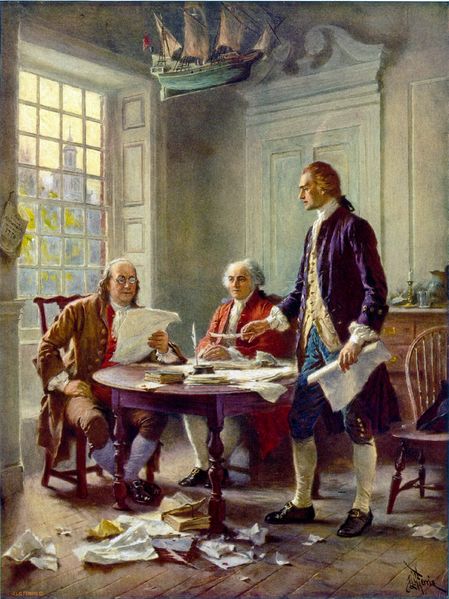
This week I’m going to read Thomas Fleming’s essay-length Kindle book, What America Was Really Like in 1776. The excerpt in the Wall Street Journal is well-written and informative, though it’s odd to comment on the U.S. economy of 236 years ago without mentioning slave labor. I’m sure the book goes into that topic, but the WSJ passage doesn’t. An excerpt:
“Those Americans, it turns out, had the highest per capita income in the civilized world of their time. They also paid the lowest taxes—and they were determined to keep it that way.
In the northern colonies, according to historical research, the top 10% of the population owned about 45% of the wealth. In some parts of the South, 10% owned 75% of the wealth. But unlike most other countries, America in 1776 had a thriving middle class. Well-to-do farmers shipped tons of corn and wheat and rice to the West Indies and Europe, using the profits to send their children to private schools and buy their wives expensive gowns and carriages. Artisans—tailors, carpenters and other skilled workmen—also prospered, as did shop owners who dealt in a variety of goods. Benjamin Franklin credited his shrewd wife, Deborah, with laying the foundation of their wealth with her tradeswoman’s skills.”
Tags: Thomas Fleming
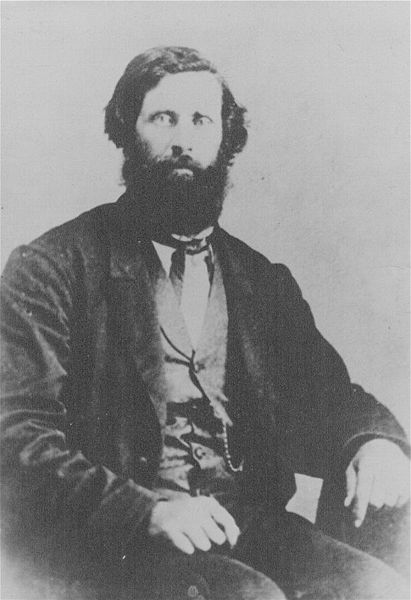
Dr. Brewster M. Higley.
“Home on the Range,” one of the prettiest songs ever about genocide, features lyrics written originally in 1873 by Dr. Brewster M. Higley, though the line about the “Red Man” was added later. Still the state song of Kansas, here are versions by Western icons Roy Rogers and Gene Autry.
Tags: Brewster M. Higley, Gene Autry, Roy Rogers
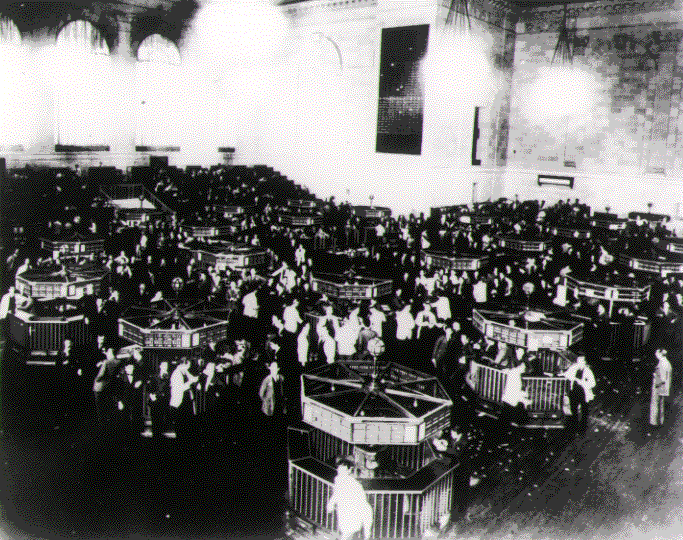
Wall Street Journal reporter Scott Patterson, who covers the intersection of technology and finance, just conducted an Ask Me Anything on Reddit about his new book, Dark Pools: High-Speed Traders, A.I. Bandits, and the Threat to the Global Financial System. A few excerpts follow.
Question (nyseed): When you interviewed Mark Cuban about the problems with high-frequency trading you asked him “What’s the solution?” How would you respond to the same question?
Answer (scott_patterson): The regulators need to get on top of what’s going on and fast. The public is losing trust in the markets and right now our regulators can’t give them any assurances that they’re wrong. Right now we just don’t know and our regulators don’t either — that’s why the market is dark.
Question (davidmanheim): Is there a possibility of knowing what is going on if the markets remain fully automated, and computerized trading can go on at speeds that make the data processing to understand them so difficult? How can regulators understand a market with arbitrarily complex, constantly changing automatic program running on them? Do changes need to be made first?
Answer (scott_patterson): They simply need to get the computer fire power to monitor the market, and it exists. They just haven’t done it yet. There’s a proposal to build a so-called Conoslidated Audit Trail that could help solve some of these problems. I wrote about it for WSJ last year.
Question (hatetosayit): I’m suspicious about this concept have having a government computer monitor an automated market. As long as it’s a bunch of computers operating based on set rules, won’t there be room to invent new exploits that take advantage of those rules without being detected?
Answer (scott_patterson): Are you suspicious of cops using radar to catch speeders on the highway? Because right now the SEC doesn’t have that radar.
Question (nyseed): Honestly, how confident are you that this could actually happen? Can the public help? Or is reform just a faint hope?
Answer (scott_patterson): I’m not confident, but I’m hopeful. I’m hopeful that my book might help trigger enough outrage that they’re forced to do it. But it’s a hard fight because the industry has all the money and the lobbyists. Regulation is a dirty word on Wall Street.
Tags: Scott Patterson

From BLDG BLOG, a post about Yodaville, an insta-ghost town in the Arizona desert that the U.S. military built to blow up:
“Yodaville is a fake city in the Arizona desert used for bombing runs by the U.S. Air Force. Writing for Air & Space Magazine back in 2009, Ed Darack wrote that, while tagging along on a training mission, he noticed ‘a small town in the distance—which, as we got closer, proved to have some pretty big buildings, some of them four stories high.’
As towns go, this one is relatively new, having sprung up in 1999. But nobody lives there. And the buildings are all made of stacked shipping containers. Formally known as Urban Target Complex (R-2301-West), the Marines know it as ‘Yodaville’ (named after the call sign of Major Floyd Usry, who first envisioned the complex).
As one instructor tells Darack, ‘The urban layout is actually very similar to the terrain in many villages in Iraq and Afghanistan.’
The Urban Target Complex, or UTC, was soon ‘lit up with red tracer rounds and bright yellow and white rocket streaks,’ till it “looked like it was barely able to keep standing.'”

I’ve asked this question before, but how different would the United States be if 22 of our 44 Presidents had been women? How changed would the nation be and how different the relations between men and women?
Ms. magazine turns 40 years old this month, having left the pages of New York to become its own brand in 1972. A look at Gloria Steinem, one of the founders, a year before the publication was launched.
Tags: Gloria Steinem