As thrilled as I am to see the Higgs Boson particle–the so-called “God Particle”–was almost definitely discovered by the Large Hadron Collider, it brings to mind that America, with all its amazing academic science departments, should have been doing work on this scale. Not every federal project, even ones that fail, are bridges to nowhere, but in this political climate anything the government wants to invest in is treated as suspect. The free market is great, but you notice it didn’t lead to a collider here that is on par with the European one. How do we find thousands of lives and a trillion dollars to spend on a war that we don’t need to fight but not 1/100th of that for something that could put us at the vanguard of science?
As I recall, the LHC was mocked initially because of difficulties that slowed it down. Similarly, the Hubble Telescope in the U.S. was treated as a punchline when it encountered problems at the outset of its use. But both have turned out to contribute greatly to scientific knowledge.
And what if they hadn’t? What if they had been failures? Science and engineering are about searching and there is always an element of risk, sometimes a high one, in building something new with just a blueprint. But there’s a difference between folly and failure and we should be willing to risk the latter in the name of progress.•
••••••••••
“Without engineers, none of this would ever have happened. There would be no disasters–but also no achievement”:
From Robert Reich’s new appraisal of America’s first Gilded Age in the late 19th century, which was defeated, and the current one, which has not yet been:
“We’ve entered a new Gilded Age, of which Mitt Romney is the perfect reflection. The original Gilded Age was a time of buoyant rich men with flashy white teeth, raging wealth and a measured disdain for anyone lacking those attributes, which was just about everyone else. Romney looks and acts the part perfectly, offhandedly challenging a GOP primary opponent to a $10,000 bet and referring to his wife’s several Cadillacs. Four years ago he paid $12 million for his fourth home, a 3,000-square-foot villa in La Jolla, California, with vaulted ceilings, five bathrooms, a pool, a Jacuzzi and unobstructed views of the Pacific. Romney has filed plans to tear it down and replace it with a home four times bigger.
We’ve had wealthy presidents before, but they have been traitors to their class—Teddy Roosevelt storming against the ‘malefactors of great wealth’ and busting up the trusts, Franklin Roosevelt railing against the ‘economic royalists’ and raising their taxes, John F. Kennedy appealing to the conscience of the nation to conquer poverty. Romney is the opposite: he wants to do everything he can to make the superwealthy even wealthier and the poor even poorer, and he justifies it all with a thinly veiled social Darwinism.
Not incidentally, social Darwinism was also the reigning philosophy of the original Gilded Age, propounded in America more than a century ago by William Graham Sumner, a professor of political and social science at Yale, who twisted Charles Darwin’s insights into a theory to justify the brazen inequality of that era: survival of the fittest. Romney uses the same logic when he accuses President Obama of creating an ‘entitlement society’ simply because millions of desperate Americans have been forced to accept food stamps and unemployment insurance, or when he opines that government should not help distressed homeowners but instead let the market ‘hit the bottom,’ or enthuses over a House Republican budget that would cut $3.3 trillion from low-income programs over the next decade. It’s survival of the fittest all over again. Sumner, too, warned against handouts to people he termed ‘negligent, shiftless, inefficient, silly, and imprudent.’
When Romney simultaneously proposes to cut the taxes of households earning over $1 million by an average of $295,874 a year (according to an analysis of his proposals by the nonpartisan Tax Policy Center) because the rich are, allegedly, ‘job creators,’ he mimics Sumner’s view that ‘millionaires are a product of natural selection, acting on the whole body of men to pick out those who can meet the requirement of certain work to be done.’ In truth, the whole of Republican trickle-down economics is nothing but repotted social Darwinism.” (Thanks Browser.)
Very happy to find an online version of the 1970 Look magazine interview with Walter Cronkite that Oriana Fallaci conducted, though it was scanned haphazardly so if you want to read it you have to rotate it several times or print it out. But it’s worth it, as the Q&A was the meeting of two very different journalists while they both were in their prime. An excerpt:
“WalterCronkite:
Anyhow, let’s begin our conversation. What’s the subject?
Oriana Fallaci:
The one we are already talking about: Walter Cronkite, of course—who he is, what he thinks. Yes, overall, what he thinks. I share this curiosity with God knows how many million people. Each time I listen to you, I wonder: What are his opinions? He doesn’t express them, and he must have them!
WalterCronkite:
You bet I do. Very strong opinions. Yet I would never give them with the news because this would hurt my objectivity. From time to time, CBS has suggested that I do commentaries or analyses, but I have always refused. Should I take a position with analysis or commentary, then the public would decide that I am prejudiced in editing the news. The public does not understand journalism. They do not know how we work, they do not believe that we can hold strong private thoughts and still be objective journalists. So I choose to do only unbiased reporting. I give you the news, and I don’t help you make the judgment. You make it all alone. Don’t you agree?
Oriana Fallaci:
Not completely. I say rather: Look, I do not possess the whole truth, so I can only give you the truth that I saw and heard and touched and even felt. Which is very uncomfortable because it is the perfect way to make everybody unhappy. Like when the reactionaries call me a Communist, or the Communists call me reactionary. . . .
WalterCronkite:
But this means that you are objective! The point is that the public doesn’t understand objectivity, they judge us on the facts that we give them. Besides, your journalism is different from mine, you explain facts more than give news, and you are not as cautious as I am. You can afford the luxury of being emotional.
Oriana Fallaci:
Yes. No solid German stock, all furious Florentine stock. Yet I admire your detachment so passionately. Only a couple of times, if I am not wrong, you have shown emotion on TV. When John Kennedy died and when the first man landed on the moon.
WalterCronkite:
Uhm . . . ‘Go, baby, go!’ I yelled so. The moon excited me a lot. But there are other examples. At the Democratic Convention in Chicago. for instance, I got very angry. We had such a bunch there on the Convention floor. And certainly when I found out that Kennedy was dead, that I had to say it, I choked up quite a bit. God, it was hard! You know, Oriana, I never go on the air in shirt-sleeves or with my hair uncombed. That day, Charles Collingwood relieved me, and when I got up after four hours and a half, I saw my jacket hanging over the back of my chair. So I realized that I was in shirt-sleeves and that I had not even combed my hair. But something else happened. When I went to my office to call my wife, both my lines were busy because the switchboard was jammed with calls. Then my phone rang, I grabbed it and the voice of a woman came on: “May I have the News Department of CBS?’ So I said, ‘This is the News Department of CBS.’ And she said, ‘Well, I want to say that it is absolutely criminal for CBS to have that man Cronkite on the air at a time like this, when everybody knows that he hates the Kennedys. But there he is, in shirt-sleeves, crying his crocodile tears.’ I said: ‘Madam, what’s your name?’ She gave me her name . . . let’s say it was Mrs. Smith. And I said: ‘Mrs. Smith, you are speaking to Walter Cronkite and you are a goddamn idiot.'”
_________________________
Walter Cronkite’s first evening news broadcast on CBS, 1963:
Prevailing wisdom holds that state capitalism is faulty because it doesn’t promote long-term innovation. In the U.S., government investments in technology, from the Internet to lithium cell batteries have shown good returns. But such intervention is fraught with political and ideological problems. The Internet, I think, is a particularly good example of how the public sector can incubate an industry until its ready for venture capital to help it innovate. But some nations are relying solely on the state aspect and turning out strong results. From “The Rise of Innovative State Capitalism,” Joshua Kurlantzick’s interesting new Businessweek article:
“It is a mistake, however, to underestimate the innovative potential of state capitalism. Rising powers such as Brazil and India have used the levers of state power to promote innovation in critical, targeted sectors of their economies, producing world-class companies in the process. Despite its overspending on some state sectors, the Chinese government has nevertheless intervened effectively to promote skilled research and development in advanced industries. In so doing, the state capitalists have shattered the idea that they can’t foster innovation to match developed economies. State capitalists’ combination of government resources and innovation could put U.S. and European multinationals at a serious disadvantage competing around the globe.
State intervention in economic affairs runs against the established wisdom that the market is best for promoting ideas. At the same time, throughout history, the governments of many developed nations have actively fostered groundbreaking companies, from Bell Labs in the U.S. to Airbus in Europe.
Brazil is perhaps the best current example of how a state-capitalist system can build innovative industries. Successive Brazilian governments have intervened—with incentives, loans, and subsidies—to promote industries that otherwise would have needed long-term private investment to make them competitive with U.S. and European rivals. At the same time, Brazil preserved strong, independent management of state-backed firms, ensuring they did not become political boondoggles.” (Thanks Browser.)
As happy as I am that the Affordable Care Act was not struck down by the Supreme Court, the most stomach-turning moment of the day came from Nancy Pelosi, one of the chief supporters of the reform. She said, in victory, about Ted Kennedy: “I knew that when he left us he would go to heaven and help pass the bill. And now he can rest in peace. His dream for America’s families has become a reality.”
If there was such a thing as heaven, Ted Kennedy would certainly not be there. If you display, at the very least, grave indifference for the life of another person (Mary Jo Kopechne, in this case), you don’t deserve to be celebrated and sanctified. People who believe in my party right or wrong are sickening. Wrong is wrong.•
From a new NYRB interview that Ian Johnson conducted with Chinese dissident Chen Guangcheng, a passage about the effects of the country’s rapid, enforced urbanization, in which insta-cities pop up in a few months:
“Do you think urbanization is beneficial to people? They can move to the city and earn more money.
No, I don’t think it’s beneficial. Right now it’s a blind urbanization. Cities grow up naturally over time. Now they’re trying to do it all at once. The main thing about urbanization now is to make the economic statistics look good—to build and pump up economic activity.
There’s nothing positive about urbanization?
I think for those who go to the city and work there’s a benefit. But the current way of villages being turned into towns—I don’t think there’s an advantage to that. People in the village often rely on ordinary kinds of labor to earn a living, like working in the fields, or raising geese or fish and things like that. So now what happens? They turn a village into one high-rise apartment building and that’s all that’s left of the village. Then the land is used for real estate projects controlled by the officials. Where are the people supposed to work? How is that supposed to function?
People abroad look at China’s human rights situation and they mainly see the situation of better-known people. But they don’t know about all the violations of ordinary people. You know my situation but you don’t know the situation of the huge number of the disabled in China, or the women who are bullied and abused, or the orphans in China. You probably don’t know much about them or just about a few of them. But this is why the officials are so afraid—because they know the true extent of the problem. They are terribly afraid of people organizing. It’s very delicate in the countryside now. This is why they constantly resort to detentions and so on. They don’t even try to find an excuse, they just do it—they are that scared.
So officials are aware it’s tense in the countryside?
There is nothing the leaders can do. There is a saying in China that if you are not correct, how can you correct others? Their sons and daughters have moved overseas and they are working in China all by themselves. How can they convince others? They gain money illegally together, and they get corrupted all together. They can’t blame each other. But they are very clear that if it continues like this they are going to be devastated.”
I never noticed until today just how handsome that robe makes you look, Chief Justice Roberts.
I’ve been tough on Chief Justice Roberts, but I have to admit it took a lot of guts for a conservative jurist to uphold the Affordable Care Act. Of course, if I was opposed to health-care reform, I might not think “guts” is what he’s full of.
Pretty much instantly, a non-politician in Roberts becomes the most interesting political figure in America. At least for awhile.
I know health-care reform will be an election-year issue and could possibly be overturned should Mitt Romney become President, but I think going forward the bigger argument will be how do we become more efficient and reduce the costs for all of us.
As commendable as saving the auto industry, dismantling Al-Qaeda and other achievements have been, nothing else President Obama has done will have as profoundly a good effect on the lives of Americans as health-care reform. “Obamacare,” which has been used as a derisive term, will ultimately be his proudest legacy. The ballooning number of people without health insurance will be reduced to zero by 2014 if the law isn’t overturned.
And remember: People with health insurance don’t face death panels, but people without it potentially do every day.
In America, our Mark Cubans buy sports franchises for fun and ego and access to all sorts of things. In China, a wealthy video-game magnate like Zhu Jun buys a football team andexpensive players and coaches for all those reasons, but for a sense of nationalism as well. The following are a couple of brief passages froman interviewthe owner of the Shanghai Shenhua did with Patti Waldmeir of the Financial Times, which reveals a larger picture of a China that hopes to import what it needs for now while nurturing generations who will be able tocreate these things for themselves in the future.
••••••••••
“‘Football is a game every man loves,’ he says. ‘Through playing football, we hope to become stronger. China is becoming richer nowadays but, from my point of view, China is rich rather than strong. The country is lacking resistance. But football is a game full of resistance.’
What kind of resistance, I wonder? ‘Conflict,’ he replies. ‘China is not strong because people never say ‘No’. Tradition makes them restrain themselves rather than being open. What I am doing is to prove we can actually do everything, no matter whether the general public understands us or not.'”
••••••••••
“If the hope is that world-class players such as [Didier] Drogba and [Nicolas] Anelka can help create a world-class football nation to rival China’s status in the global economy – or for that matter, in ping-pong – it will not be easy. A mere 2,000 years after a game suspiciously like football was invented in China, the world’s most populous country has yet to make its presence felt in the world’s most popular sport.
The Chinese love to watch football; when the country qualified for its first and only World Cup tournament to date, in 2002, a reported 170m new television sets were bought to follow the team’s progress. But Chinese state media has quoted football officials as saying that only 100,000 children, in this land of 1.3bn, are playing any form of organised football, partly the result of high levels of corruption in the past.
The country’s presumed next ruler, Xi Jinping, recently outlined his plan for the Chinese game: first qualify for another World Cup; then host a World Cup; then win one. Part of Zhu’s vision, it seems, is that ‘Chinese football needs idols. Good young players will only be attracted when we make achievements.’”
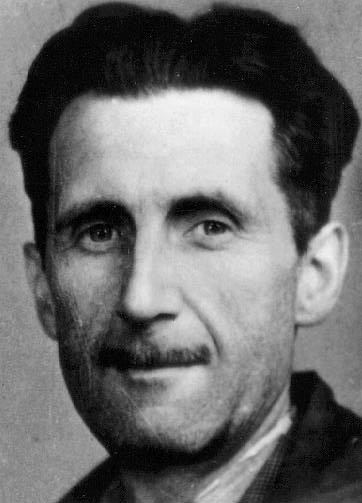
Michael Crichton arguing that Orwell’s 1984 actually did come to pass, not by totalitarian regime but by our own hands. You know–we like to watch and be watched.
Baseball stats guru Bill James believes that steroids (or some derivative) will be eventually be safe and legal, but that doesn’t mean he thinks that Congress wasted money on the steroids hearings. He says as much in a recent Q&A session with readers on his site, providing four reasons why he feels that way, though I think reasons 3 and 4 aren’t particularly sturdy. The exchange:
“Q: In your recent piece on [Roger] Clemens, you write, ‘My view is that…it was an entirely appropriate use of the power of congress to step in and tell them to fix the problem.’ What was ‘the problem’? I assume you’re referring to steroids and HGH, but why do you consider them a problem?
A: I would say there were four reasons that it was a problem:
1) It was disrespectful of the law,
2) It promoted the widespread use of potentially dangerous and harmful substances by young people aspiring to be athletes,
3) The public largely despised the use of steroids by athletes, and
4) If sports are a significant cultural activity, which I believe they are, then it damages the culture for sports to be allowed to become something foreign and unnatural.”
What does it mean that Al Goldstein and Larry Flynt were once, not too long ago, considered the filthiest, most disgraceful people in the nation and now even the most obscene thing they were selling can easily be viewed on a computer screen in any home (and on most phones) at every single moment? Were they ahead of their time? Were they the McLuhans of filth? I’m not even talking about a battle over civil rights but one about human nature. It seems now like they were merely announcing the future, and one that has been overwhelmingly accepted and approved by the country that was so outraged by them.
A relatively modest moment for Goldstein was this interview he did with mental minstrel Tiny Tim roughly 30 years ago. The language is very NSFW unless your work involves a gloryhole.
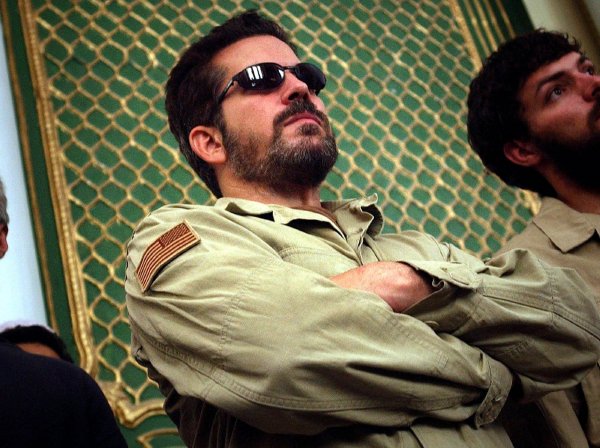
At the BBC site, Adam Curtis has an epic post about the history of counterinsurgency, which includes a sketch of Jack Idema, a North Carolina pet-hotel operator who became a self-styled terrorist hunter in Afghanistan. An excerpt:
“But then Jack Idema started to believe his own stories. He set up his own militia group that he called Task Force Sabre Seven – and he and his men went and arrested Afghans they were convinced were terrorists. And then he locked them up in his own private prison.
Things got out of hand in June 2004 when Idema arrested the Afghan Supreme Court judge, Maulawi Siddiqullah, because he believed he might be involved with terrorists. The judge later described what it was like in Idema’s prison:
‘The first night, around midnight, I heard the screams of four people. They then poured very cold water on me. I tried to keep myself from screaming, but coudn’t. Then they played loud, strange music. Then they prevented me from going to the bathroom; a terrible situation. I was hooded for twelve days.’
In July Afghan police raided Idema’s house in Kabul and found what was described as a private torture chamber. Eight hooded men, including the judge, were incarcerated there, and three of them were hanging by their feet from the ceiling, with their heads hooded.
Idema and two others were put on trial – and sentenced to ten years in an Afghan jail. And all the journalists puffed a lot about how persuasive he had been.
Here is Idema during the trial – still trying to persuade the journalists that he is what he said he was. And how he is being set up by dark sinister forces.
But what is also interesting about Jack Idema is that in a strange way he may have been ahead of his time.
Because at the moment that Idema was entering his Afghan prison, a group of very senior US military men, led by a General called David Petraeus, were sitting down in a military staff college in Kansas and beginning to write a study that would completely transform the tactics of the US army in Iraq and in Afghanistan.
What General Petraeus and his team did was to go back into the past and exhume a theory of warfare that had been discredited by the US military who thought it was long buried and forgotten. It was called Counterinsurgency.
And out of that would allegedly come the same kind of arms-length, privatised interrogation and torture methods that Idema was indulging in.”
“Between 1903 and 1933 the world was revolutionized: Cities were electrified; telephones and broadcast radio became common; talking motion pictures appeared; automobiles became practical; and aviation progressed from the Wright Flyer to the DC-3 and Hawker Hurricane. Between 1933 and 1963 the world changed again, with the introduction of color television, communication satellites and interplanetary spacecraft, computers, antibiotics, scuba gear, nuclear power, Atlas, Titan, and Saturn rockets, Boeing 727’s and SR-71’s. Compared to these changes, the technological innovations from 1963 to the present are insignificant. Immense changes should have occurred during this period, but did not. Had we been following the previous 60 years’ technological trajectory, we today would have videotelephones, solar powered cars, maglev trains, fusion reactors, hypersonic intercontinental travel, regular passenger transportation to orbit, undersea cities, open-sea mariculture and human settlements on the Moon and Mars. Instead, today we see important technological developments, such as nuclear power and biotechnology, being blocked or enmeshed in political controversy — we are slowing down.”
From Alexis Madrigal’s new Atlantic article about Facebook’s attempt to govern its “nation” of users, a succinct description of the origins of technocracy:
“The original technocrats were a group of thinkers and engineers in the 1930s who revived Plato’s dream of the philosopher-king, but with a machine-age spin. Led by Thorstein Veblen, Howard Scott and M. King Hubbert, they advocated not rule by the people or the monarchy or the dictator, but by the engineers. The engineers and scientists would rule rationally and impartially. They would create a Technocracy that functioned like clockwork and ensured the productivity of all was efficiently distributed. They worked out a whole system by which the North American continent would be ruled with functional sequences that would allow the Continental Director to get things done.
Technocracy, as originally conceived, was explicitly not democratic. Its proponents did not want popular rule; they wanted rule by a knowledgeable elite who would make good decisions. And maybe they would have, but there was one big problem. Few people found the general vision of surrendering their political power to engineers all that appealing.”
John Cook and Hamilton Nolan are consistently good reads at Gawker. The former can sometimes be extreme–his takedown of Mike Wallace went too far, I think–but even in his excess a lot can be learned. Here’s the opening of Cook’s reconsideration of those Watergate wonders Woodward and Bernstein:
“Bob Woodward and Carl Bernstein’s investigation into the origins of the Watergate break-in—which took place 40 years ago yesterday—is one of the most highly mythologized episodes in the history of journalism. It represents the Platonic ideal of what journalism-with-a-capital-J ought to be, at least according to its high priesthood—sober, careful young men doggedly following the story wherever it leads and holding power to account, without fear or favor. It was also a sloppy, ethically dubious project the details of which would mortify any of the smug high priests of journalism that flourished in its wake. The actual Watergate investigation could never have survived the legacy it helped create.”
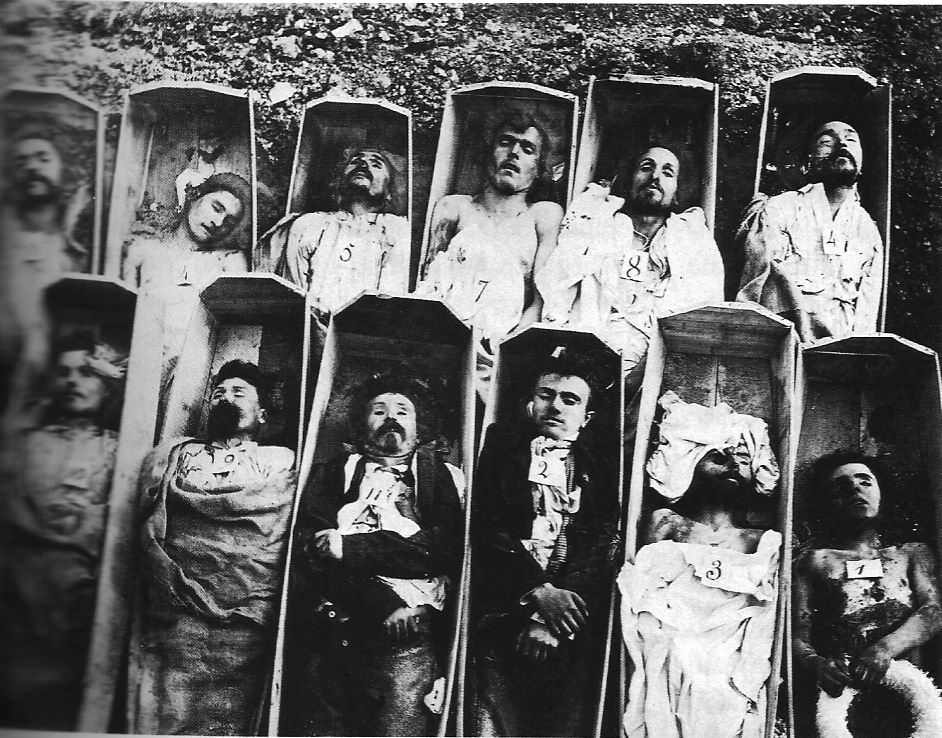
This horrifying classic photograph was taken sometime during May 1871, when members of the failed Paris Commune uprising were executed en masse. An estimated 20,000 Communards faced the firing squad and thousands more were jailed or deported. The heady two months of Socialist rebellion ended with scores of lifeless citizens who resembled broken dolls returned to their boxes. From an eyewitness account of a triple execution of revolutionaries who had been convicted of murder, which first appeared in the London Daily Telegraph and wasreprinted in the New York Timeson June 10, 1872:
“The priest, going up to each in turn, kissed him on both cheeks, in what seemed to me a hurried and perfunctory manner. Then, while the sentence was being read to the prisoners in a quick, low, quite inaudible tone, BOIN made a long harangue, much of which was lost in the perpetual rolling of those ghastly drums. But one could distinguish snatches of sentences such as ‘Soldiers, you are children of the people as we are, and we will show you how children of the people can die. Nous mourons innocents,’ and then opening wide his light coat–he wore no waistcoat–he offered white shirt-front for a mark, and striking his heart with his open palm, he exclaimed: ‘Portez armes en joue! feu! tirez au coeur!’ This he repeated several times, and while he was yet speaking, standing out clear away from the poteaux, and looking death at ten paces literally in the face, a sword flashed in the sun, and the three men leaped from the ground only to fall to it in horrible contortions. The smoke and the report were unheeded, for all the senses of the horrified spectator were arrested by the awful spectacle of writhing limbs and twisting hands. BOIN seemed to be rewarded for his bravery by suffering less than the others, but SERIZIER literally rolled over, and BOUDIN also moved. The surgeon then went up, examined BOUDIN first, and then directed one of the sergeants in reserve to give the coup de grace in the ear. Then SERIZIER was examined and treated in the same way; and lastly, after a considerable interval, BOIN was dragged into position and dispatched. I cannot give you any idea of the sickening impression produced by this seemingly deliberate butchery. I can say seemingly, for the men may have been dead, but, in any case, surely if the coup de grace must be given, it should be done at once. I did not time the proceedings, but, long as my description is, I believe not more than two minutes elapsed from the time that the ambulance wagons came on to the ground to the time that the volley was fired. Several more minutes, however, elapsed before the dull thud of the last coup de grace delivered a bout pontant right into the poor wretch’s ear stuck upon the ground. I have seen something of the horrors of war at Sedan and Strasbourg; I have witnessed the degradation of a public hanging in England, but have never seen anything so horrible as this supplemental butchery of the coup de grace.“
I exercise all over the city and the demographic most actively involved in athletics seems to be women in their 20s. That wasn’t always the case. Title IX, the Nike “If You Let Me Play” campaign and the women’s World Cup soccer victory in 2009 really changed hearts and minds, and sports bras became omnipresent. But Title IX was easily the most important factor of all. From Allen Barra’s “Female Athletes, Thank Nixon,” a smart New York Times opinion piece about arguably the most Liberal American President of the last 40 years, who did some very progressive things when not busy being a paranoid nutjob:
“Nixon did leave some legacies that may outlast the memory of Watergate. Historians have argued that he did a great deal to desegregate Southern schools; that he defied the conservatives in his party to open relations with China; and that he had a good record on the environment. Significantly, he brought women into the world of sports, through the portion of the 1972 Education Amendments better known as Title IX, whose 40th anniversary is celebrated on June 23.
But maybe because Nixon is, well, Nixon, there seems to be a concerted effort to separate the memory of the man from Title IX, which prohibits sex discrimination in federally financed education programs.
For instance, the ESPN Web site is running a tribute to the amendment called The Power of IX, which it praises as ‘a law whose ripple effects extend far beyond the U.S., creating a women’s sports culture awash in opportunity.’ But there is no word of praise to be found for the man who created the opportunity for the opportunities.
It’s hard to exaggerate the far-reaching effect of Title IX on American society.”
••••••••••
Criticized initially for its pleading tone, the 1995 Wieden & Kennedy “If You Let Me Play” campaign was ultimately an empowering statement that allowed Nike to turn a secondary market into a primary one.
From “Dorothy, It’s Really Oz,” the late paleontologist Stephen Jay Gould’s 1999 essay about that stubborn foolishness Creationism, which has since morphed into the idiocy known as Intelligent Design:
“In the early 1920s, several states simply forbade the teaching of evolution outright, opening an epoch that inspired the infamous 1925 Scopes trial (leading to the conviction of a Tennessee high school teacher) and that ended only in 1968, when the Supreme Court declared such laws unconstitutional on First Amendment grounds. In a second round in the late 1970s, Arkansas and Louisiana required that if evolution be taught, equal time must be given to Genesis literalism, masquerading as oxymoronic ‘creation science.’ The Supreme Court likewise rejected those laws in 1987.
The Kansas decision represents creationism’s first—and surely temporary—success with a third strategy for subverting a constitutional imperative: that by simply deleting, but not formally banning, evolution, and by not demanding instruction in a biblically literalist ‘alternative,’ their narrowly partisan religious motivations might not derail their goals.
Given this protracted struggle, Americans of goodwill might be excused for supposing that some genuine scientific or philosophical dispute motivates this issue: Is evolution speculative and ill founded? Does evolution threaten our ethical values or our sense of life’s meaning? As a paleontologist by training, and with abiding respect for religious traditions, I would raise three points to alleviate these worries:
First, no other Western nation has endured any similar movement, with any political clout, against evolution—a subject taught as fundamental, and without dispute, in all other countries that share our major sociocultural traditions.
Second, evolution is as well documented as any phenomenon in science, as strongly as the earth’s revolution around the sun rather than vice versa. In this sense, we can call evolution a ‘fact.’ (Science does not deal in certainty, so ‘fact’ can only mean a proposition affirmed to such a high degree that it would be perverse to withhold one’s provisional assent.)
The major argument advanced by the school board—that large-scale evolution must be dubious because the process has not been directly observed—smacks of absurdity and only reveals ignorance about the nature of science. Good science integrates observation with inference. No process that unfolds over such long stretches of time (mostly, in this case, before humans appeared), or at an infinitude beneath our powers of direct visualization (subatomic particles, for example), can be seen directly. If justification required eyewitness testimony, we would have no sciences of deep time—no geology, no ancient human history either. (Should I believe Julius Caesar ever existed? The hard bony evidence for human evolution, as described in the preceding pages, surely exceeds our reliable documentation of Caesar’s life.)
Third, no factual discovery of science (statements about how nature ‘is’) can, in principle, lead us to ethical conclusions (how we ‘ought’ to behave) or to convictions about intrinsic meaning (the ‘purpose’ of our lives). These last two questions—and what more important inquiries could we make?—lie firmly in the domains of religion, philosophy and humanistic study. Science and religion should be equal, mutually respecting partners, each the master of its own domain, and with each domain vital to human life in a different way.”
••••••••••
Gould disccuses evolution in 2000 with that affable dinosaur Charlie Rose:
Before it was synonymous with genocide, Srebrenica was a spa-centric tourist haven. People there assumed things would remain the same because they had become trained to expect it. Then dreams were replaced by nightmares. A 1970s promotional video for the town.
E.O. Wilson thinks war is our genes, though I’ve never felt like going to war with anyone. Perhaps it’s a genetic defect I possess. From the biologist’s new Discover article, “Is War Inevitable?“:
“Once a group has been split off from other groups and sufficiently dehumanized, any brutality can be justified, at any level, and at any size of the victimized group up to and including race and nation. And so it has ever been. A familiar fable is told to symbolize this pitiless dark angel of human nature. A scorpion asks a frog to ferry it across a stream. The frog at first refuses, saying that it fears the scorpion will sting it. The scorpion assures the frog it will do no such thing. After all, it says, we will both perish if I sting you. The frog consents, and halfway across the stream the scorpion stings it. Why did you do that, the frog asks as they both sink beneath the surface. It is my nature, the scorpion explains.
War, often accompanied by genocide, is not a cultural artifact of just a few societies. Nor has it been an aberration of history, a result of the growing pains of our species’ maturation. Wars and genocide have been universal and eternal, respecting no particular time or culture. Archaeological sites are strewn with the evidence of mass conflicts and burials of massacred people. Tools from the earliest Neolithic period, about 10,000 years ago, include instruments clearly designed for fighting. One might think that the influence of pacific Eastern religions, especially Buddhism, has been consistent in opposing violence. Such is not the case. Whenever Buddhism dominated and became the official ideology, war was tolerated and even pressed as part of faith-based state policy. The rationale is simple, and has its mirror image in Christianity: Peace, nonviolence, and brotherly love are core values, but a threat to Buddhist law and civilization is an evil that must be defeated.
Since the end of World War II, violent conflict between states has declined drastically, owing in part to the nuclear standoff of the major powers (two scorpions in a bottle writ large). But civil wars, insurgencies, and state-sponsored terrorism continue unabated. Overall, big wars have been replaced around the world by small wars of the kind and magnitude more typical of hunter-gatherer and primitively agricultural societies. Civilized societies have tried to eliminate torture, execution, and the murder of civilians, but those fighting little wars do not comply.”
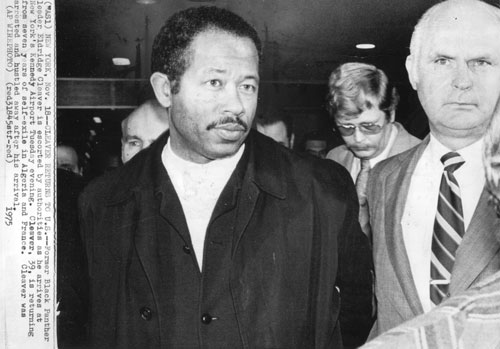
We all go through different stages in life, but some people change at a shocking, even puzzling pace, though it seems perfectly natural to them. It’s not that they’re only responding to different information or stimuli but that there’s something always in flux inside of them. And no matter that they take wildly divergent views at different times, each one feels like the truth to them.
Here Eric Sevareid comments in 1975 on Black Panther leader Eldridge Cleaver returning to the U.S. after seven uncomfortable years living as a fugitive in communist countries. Cleaver renounced his militant ways but never stopped experiencing revolutions within, later becoming a Mormon, a conservative Republican and a crack addict, among other things.
The central thought experiment from moral philosopher Judith Jarvis Thomson’s famous and much-debated 1971 paper, “A Defense of Abortion“:
“But now let me ask you to imagine this. You wake up in the morning and find yourself back to back in bed with an unconscious violinist. A famous unconscious violinist. He has been found to have a fatal kidney ailment, and the Society of Music Lovers has canvassed all the available medical records and found that you alone have the right blood type to help. They have therefore kidnapped you, and last night the violinist’s circulatory system was plugged into yours, so that your kidneys can be used to extract poisons from his blood as well as your own. The director of the hospital now tells you, ‘Look, we’re sorry the Society of Music Lovers did this to you–we would never have permitted it if we had known. But still, they did it, and the violinist is now plugged into you. To unplug you would be to kill him. But never mind, it’s only for nine months. By then he will have recovered from his ailment, and can safely be unplugged from you.’ Is it morally incumbent on you to accede to this situation? No doubt it would be very nice of you if you did, a great kindness. But do you have to accede to it? What if it were not nine months, but nine years? Or longer still? What if the director of the hospital says. ‘Tough luck. I agree. but now you’ve got to stay in bed, with the violinist plugged into you, for the rest of your life. Because remember this. All persons have a right to life, and violinists are persons. Granted you have a right to decide what happens in and to your body, but a person’s right to life outweighs your right to decide what happens in and to your body. So you cannot ever be unplugged from him.’ I imagine you would regard this as outrageous, which suggests that something really is wrong with that plausible-sounding argument I mentioned a moment ago.”
* We must create a new renewable-energy system to end our costly need to control the world’s oil militarily. Wind and solar-thermal have become the cheapest new-power-generating technologies, and are also labor-intensive; photovoltaic and battery storage technologies are improving rapidly; geothermal is an enormous resource—and oil companies happen to know how to drill wells. The U.S. is rich in renewable energy resources, and should aim at total energy independence, which will save us vast sums in the long run.
* We must rebuild our cities in the proven, compact forms of the world’s great cities, to reduce our dependence on petroleum-fueled cars. Our sprawling suburbs need to be transformed from cultural wastelands into communities with healthy centers and the creative cultural richness that cities have traditionally offered. A lot of tracks need to be laid and urban and suburban concrete poured. If we walk to transit stops, like New Yorkers, we will even lose weight and live longer. If Bechtel can build mega-airports, civil and military, it can certainly build eco-cities.
* We must develop a universal recycling system, so that all major materials (steel, paper, glass, aluminum, wood, plastic, even water) will be in steady and predictable supply without sabotaging our support system, the natural order. A giant job-intensive industry must be created here.
* We must restore our forests, fisheries, and agriculture to stable, net positive productivity. At present, we are cutting more timber than we grow and catching more fish than can reproduce. We are even putting far more petroleum-based calories into agriculture than we get out in food calories—in essence, we are eating oil, a non-renewable resource. And if we eat lower on the food chain and cut down on livestock, we will reduce our climate impacts even more than by getting rid of private cars.
* We must put people to work restoring our rivers, waterfronts, and wetlands—trashed by generations of engineers, dumpers, and developers. Carry on with what the New Deal started!