
As Argo is released, documentarian Judd Ehrlich has taken to Kickstarter to raise money to finish a stranger and truer film on the topic. It was begun long before the Hollywood version.
Ideas and technology and politics and journalism and history and humor and some other stuff.
You are currently browsing the archive for the Politics category.
As Argo is released, documentarian Judd Ehrlich has taken to Kickstarter to raise money to finish a stranger and truer film on the topic. It was begun long before the Hollywood version.
Tags: Judd Ehrlich

Donald Trump: Comcast’s resident racist.
Donald Trump, a walking dunce cap with a distended belly, thinks he’s fooling someone. In addition to his usual Birther garbage, Trump enjoys insinuating that our first African-American President only could have risen to such heights with the aid of Affirmative Action, that he was incapable of success without handouts from white people. He derides President Obama’s distinguished education as being likely the largesse of white benefactors, not an achievement borne of talent and effort. He insists that President Obama release his college application and transcripts. Curious that he never asked for the college paperwork from any previous President, including George W. Bush, who, even by his own admission, was an unserious student who got into Yale, the school his father attended. I suppose if you’re rich, it’s not considered a handout.
A person who was given advantages he didn’t deserve was Trump himself, who inherited family wealth and connections. And even then the dum-dum nearly blew it. Trump likes to think of himself as a “job creator” and a “leader,” but without the material advantages handed him by his daddy, he would have been another mediocre middle manager with a massive ego being sent to Human Resources due to his lousy deportment.
Because Trump doesn’t realize that he’s a gigantic buffoon and that his bullshit is transparent, he thinks that if he sends out a few complimentary tweets about other African-Americans, his bigoted assaults on the President won’t reveal him to be the huge racist he is.
Glad to hear that @RobinRoberts is doing well. She is a terrific person.
If Obama mentions Mitt’s tax returns in tomorrow’s debate then Mitt should immediately ask for Obama’s college records & applications
Congrats to @Yankees on finishing 1st in the AL East. Derek Jeter is great–good luck in the playoffs!

Marla Maples: Divorce-related cartwheels.
Tags: Barack Obama, Derek Jeter, Donald Trump, Donald Trump Is A Moron, Marla Maples, Robin Roberts
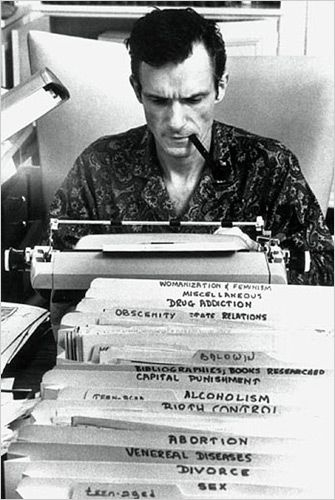
Decades before he was a reality show caricature who swam in the shallow end of American pop culture, Hugh Hefner was a trailblazer politically and socially, even if his taste in art was meh. At the tail end of his cultural prominence, in 1974, he was interviewed by James Day.
Tags: Hugh Hefner, James Day
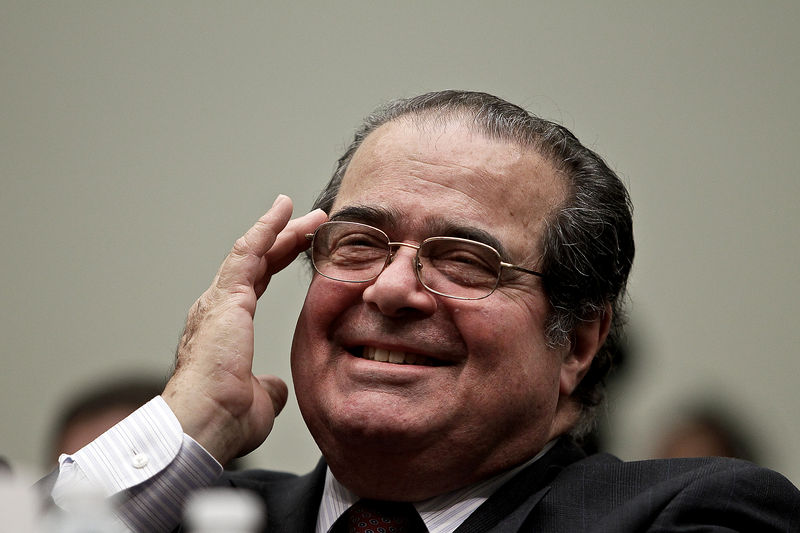
The problem with Supreme Court Justice Scalia goes even beyond his sad, pigheaded bigotry. His reasoning is also an embarrassment. He takes Constitutional Originalism to asinine extremes merely to attempt to justify his deep prejudice. His comments on gay marriage, via Salon:
“Homosexual sodomy? Come on. For 200 years, it was criminal in every state.”
Of course, in much of America slavery was allowed for more than 200 years. It’s sustained legality never made it less than disgraceful.
Advocating America adhere to a moral code borne of an earlier, more benighted era is ugly, especially when it comes from someone in one of the nation’s most vital legislative positions.

Tags: Antonin Scalia
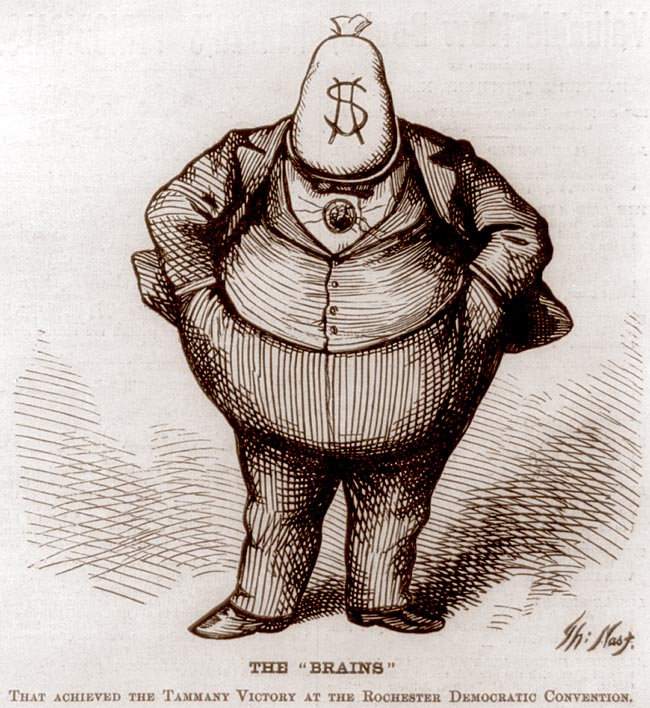
The best and brightest people I’ve met in my life haven’t been the most successful ones. America doesn’t work that way now. It probably never did, but it seems to be getting worse. What people believe to be a promise has become, at best, a lottery ticket.
I watched Carly Fiorina on TV the other day extolling Mitt Romney’s great command of facts and figures at the first Presidential debate. Like, say, his assertion that half of the clean tech companies that the President invested stimulus money in had gone belly up. Except that isn’t close to the truth. From what I can gather, more than 90% of those companies have thus far been successful. That’s an amazing rate. Far better than Romney’s record at Bain and far, far better than Fiorina’s lousy tenure at Hewlett-Packard. I’m all for inventors and creators and builders making good, but you have to question a system that so richly rewards an executive like Fiorina, who contributes little, or Romney, who doesn’t acknowledge he had a huge advantage in a very uneven playing field because of family money and connections. The disconnect between such people and most Americans is enormous.
Economist Joseph Stiglitz has been calling bullshit on the situation for some time now. From a recent Q&A with him at Spiegel:
“Spiegel:
The US has always thought of itself as a land of opportunity where people can go from rags to riches. What has become of the American dream?
Stiglitz:
This belief is still powerful, but the American dream has become a myth. The life chances of a young US citizen are more dependent on the income and education of his parents than in any other advanced industrial country for which there is data. The belief in the American dream is reinforced by anecdotes, by dramatic examples of individuals who have made it from the bottom to the top — but what matters most are an individual’s life chances. The belief in the American dream is not supported by the data.
Spiegel:
What do the numbers suggest?
Stiglitz:
There has been no improvement in well-being for the typical American family for 20 years. On the other side, the top one percent of the population gets 40 percent more in one week than the bottom fifth receive in a full year. In short, we have become a divided society. America has created a marvelous economic machine, but most of the benefits have gone to the top.”
Tags: Carly Fiorina, Joseph Stiglitz, Mitt Romney

Donald Trump: Every now and then I like to shit out some class.
Donald Trump is an unintelligent buffoon who inherited riches, land and connections from his father, but likes to pretend he’s a self-made man who possesses wisdom about wealth creation. Amid tweets in which he accuses President Obama of racism, incompetence, secretly being a Kenyan and receiving poor grades in college, he thought he’d throw a bouquet to the First Couple on the occasion of their wedding anniversary, as if that would make someone believe he’s anything but a contemptible sack of trash.

Save me a piece of anniversary cake or I’ll poison Bo.
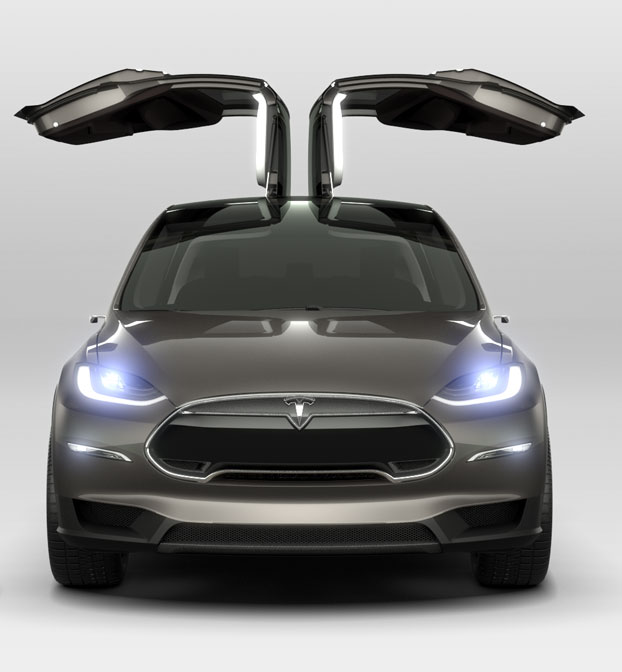
For a guy who grew up in Michigan, Mitt Romney sure hates auto manufacturers. He would have killed off Detroit, and now he uses Elon’s Musk’s Tesla Motors as a curse word. Anyone who is rooting against Tesla for political or other reasons–an American company that provides really good jobs and a cleaner future–is dead wrong. I assumed Musk would push back after last night’s debate and recent negative news stories about his electric car company. From his new release:
“Most importantly, what did not come across well was that we raised the funds simply for risk reduction. Barring any disasters internally or with suppliers, Tesla is actually on the verge of becoming cash flow positive and will not have to spend any of the money raised, at least until we embark upon a major new vehicle program. In the public call with investors, I tried to make this point, but perhaps should have emphasized it more: we expect Tesla to become cash flow positive at the end of next month.
However, given that we do have a global supply chain and that floods, fires, hurricanes or earthquakes can cause supply chain interruptions and halt production, we thought it would make sense to raise capital to protect against such an event. In fact, an important consideration in doing this financing round was that we went through just such a crisis recently with a supplier that had a flood in their factory. This caused a shortfall in shipments and delayed production until we could find another solution.
As for the reduced vehicle delivery guidance in Q3 and Q4 of this year, it is unfortunate that we are at the steepest portion of our production ramp. This gives the appearance of being much further behind than we actually are. Our production rate in the last week of September was roughly 100 vehicles, four times greater than our production in the first week of September as we overcame supply constraints. If the calendar were simply shifted a few weeks to the right, Tesla would have exceeded the 500 vehicle delivery target for the third quarter. In fact, I am pleased to report that we completed production of 359 vehicles last quarter (delivering over 250 of those to customers) and have already made our 500th vehicle body. While we are indeed a few weeks later than we would like, this is perhaps not a terrible outcome for a product as advanced and complex as the Model S, particularly given that Tesla is doing manufacturing of full vehicles for the first time with a new team and new suppliers.”
Tags: Elon Musk, Mitt Romney

Comments from the 1970s by Randolph Hearst about his daughter Patty, who was kidnapped by the Symbionese Liberation Army and then, perhaps brainwashed, joined in the group’s acts of domestic terrorism.
Tags: Patty Hearst, Randolph Hearst
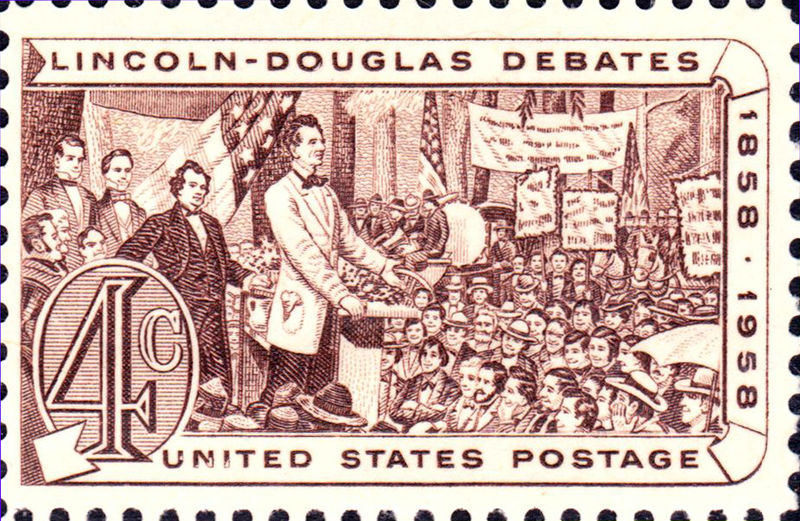
Am I the only one who doesn’t give a shit about Presidential debates?
Mitt Romney lied aggressively last night and tried to disappear all of his draconian promises to the far right in regards to minorities, seniors, women and the impoverished. The President looked listless early on and didn’t mention “47%.” So now I’m supposed to change my vote? Other people are supposed to change their votes? The decision should be based on Obama’s four years in the White House and Romney’s record as governor and his performance during the last two election cycles. Some of the same TV jugheads who handed the election to Obama after the DNC were inaugurating Romney last night. Pundits are largely reactionary stooges who crave drama more than anything else. It gets them to their next paycheck.
Some other stuff:
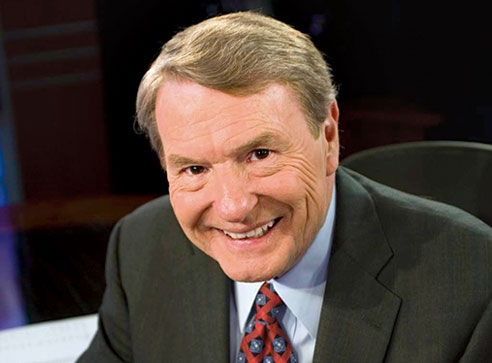
“Hoot hoot.”
Tags: Barack Obama, Mitt Romney
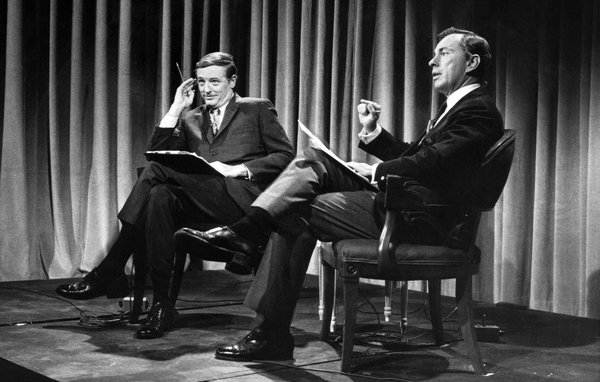
In 1981, Tom Snyder questions Gore Vidal about his numerous famous feuds.
Tags: Gore Vidal, Tom Snyder, William F. Buckley
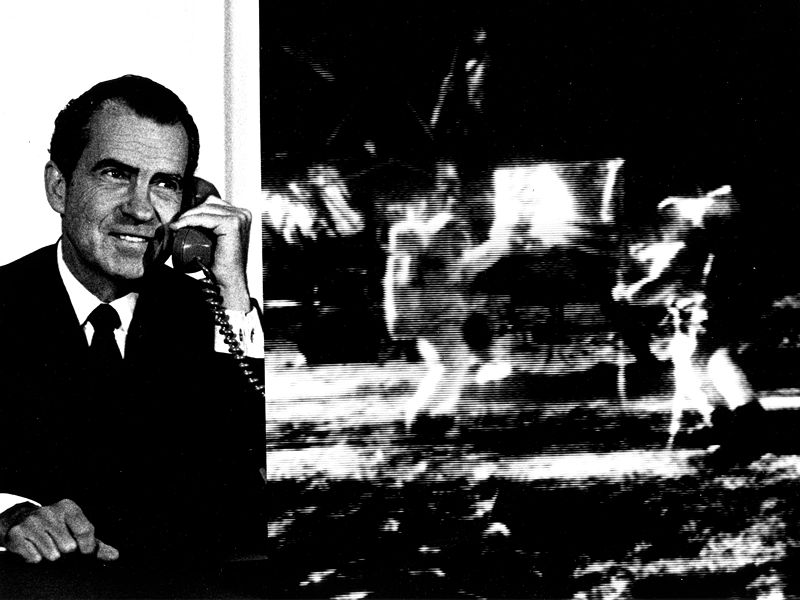
I’ve of course read Ron Rosenbaum’s seminal 1971 Phone Phreak story in Esquire, but I hadn’t come across the coverage of that subculture from Ramparts until now. In 1972, that publication ran step-by-step instructions of how someone could receive phone calls for free, sans blue box. In 1993, it published a piece by Bruce Sterling about the history of hacking which explained the pre-Phreak politicized past of phone rip-offs, which was a signature of the Yippie movement. An excerpt:
“Abbie Hoffman is said to have caused the Federal Bureau of Investigation to amass the single largest investigation file ever opened on an individual American citizen. (If this is true, it is still questionable whether the FBI regarded Abbie Hoffman a serious public threat -quite possibly, his file was enormous simply because Hoffman left colorful legendry wherever he went). He was a gifted publicist, who regarded electronic media as both playground and weapon. He actively enjoyed manipulating network TV and other gullible, imagehungry media, with various weird lies, mindboggling rumors, impersonation scams, and other sinister distortions, all absolutely guaranteed to upset cops, Presidential candidates, and federal judges. Hoffman’s most famous work was a book self-reflexively known as Steal This Book, which publicized a number of methods by which young, penniless hippie agitators might live off the fat of a system supported by humorless drones. Steal This Book, whose title urged readers to damage the very means of distribution which had put it into their hands, might be described as a spiritual ancestor of a computer virus.
Hoffman, like many a later conspirator, made extensive use of pay- phones for his agitation work — in his case, generally through the use of cheap brass washers as coin-slugs.
During the Vietnam War, there was a federal surtax imposed on telephone service; Hoffman and his cohorts could, and did, argue that in systematically stealing phone service they were engaging in civil disobedience: virtuously denying tax funds to an illegal and immoral war. But this thin veil of decency was soon dropped entirely. Ripping-off the System found its own justification in deep alienation and a basic outlaw contempt for conventional bourgeois values. Ingenious, vaguely politicized varieties of rip-off, which might be described as ‘anarchy by convenience,’ became very popular in Yippie circles, and because rip-off was so useful, it was to survive the Yippie movement itself. In the early 1970s, it required fairly limited expertise and ingenuity to cheat payphones, to divert ‘free’ electricity and gas service, or to rob vending machines and parking meters for handy pocket change. It also required a conspiracy to spread this knowledge, and the gall and nerve actually to commit petty theft, but the Yippies had these qualifications in plenty. In June 1971, Abbie Hoffman and a telephone enthusiast sarcastically known as ‘Al Bell’ began publishing a newsletter called Youth International Party Line. This newsletter was dedicated to collating and spreading Yippie rip-off techniques, especially of phones, to the joy of the freewheeling underground and the insensate rage of all straight people.
As a political tactic, phone-service theft ensured that Yippie advocates would always have ready access to the long-distance telephone as a medium, despite the Yippies’ chronic lack of organization, discipline, money, or even a steady home address.
Party Line was run out of Greenwich Village for a couple of years, then ‘Al Bell’ more or less defected from the faltering ranks of Yippiedom, changing the newsletter’s name to TAP or Technical Assistance Program. After the Vietnam War ended, the steam began leaking rapidly out of American radical dissent. But by this time, ‘Bell’ and his dozen or so core contributors had the bit between their teeth, and had begun to derive tremendous gut-level satisfaction from the sensation of pure technical power.
TAP articles, once highly politicized, became pitilessly jargonized and technical, in homage or parody to the Bell System’s own technical documents, which TAP studied closely, gutted, and reproduced without permission. The TAP elite revelled in gloating possession of the specialized knowledge necessary to beat the system.
‘Al Bell’ dropped out of the game by the late 70s, and ‘Tom Edison’ took over; TAP readers (some 1400 of them, all told) now began to show more interest in telex switches and the growing phenomenon of computer systems. In 1983, ‘Tom Edison’ had his computer stolen and his house set on fire by an arsonist. This was an eventually mortal blow to TAP (though the legendary name was to be resurrected in 1990 by a young Kentuckian computeroutlaw named ‘Predat0r.’)
Ever since telephones began to make money, there have been people willing to rob and defraud phone companies. The legions of petty phone thieves vastly outnumber those ‘phone phreaks’ who ‘explore the system’ for the sake of the intellectual challenge. The New York metropolitan area (long in the vanguard of American crime) claims over 150,000 physical attacks on pay telephones every year! Studied carefully, a modern payphone reveals itself as a little fortress, carefully designed and redesigned over generations, to resist coinslugs, zaps of electricity, chunks of coin-shaped ice, prybars, magnets, lockpicks, blasting caps. Public pay- phones must survive in a world of unfriendly, greedy people, and a modern payphone is as exquisitely evolved as a cactus.”
Tags: Abbie Hoffman, Bruce Sterling, Ron Rosenbaum

Are fears of cyber attacks that paralyze electric grids overstated? In a new Foreign Policy piece, Douglas Birch argues in the affirmative. An excerpt about the dual mass power outages from last summer in America and India:
“The most important thing about both events is what didn’t happen. Planes didn’t fall out of the sky. Governments didn’t collapse. Thousands of people weren’t killed. Despite disruption and delay, harried public officials, emergency workers, and beleaguered publics mostly muddled through.
The summer’s blackouts strongly suggest that a cyber weapon that took down an electric grid even for several days could turn out to be little more than a weapon of mass inconvenience.
‘Reasonable people would have expected a lot of bad things to happen’ in the storm’s aftermath, said Neal A. Pollard, a terrorism expert who teaches at Georgetown University and has served on the United Nation’s Expert Working Group on the use of the Internet for terrorist purposes. However, he said, emergency services, hospitals, and air traffic control towers have backup systems to handle short-term disruptions in power supplies. After the derecho, Pollard noted, a generator truck even showed up in the parking lot of his supermarket.
The response wasn’t perfect, judging by the heat-related deaths and lengthy delays in the United States in restoring power. But nor were the people without power as helpless or clueless as is sometimes assumed.”
Tags: Douglas Birch, Neal A. Pollard
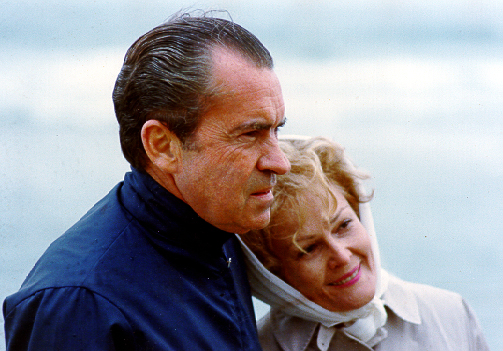
A lot of people died unnecessarily because of Richard Nixon’s policies, but you have to say one thing for him: At least he never stabbed his wife. From “The Genius,” Norman Mailer’s 1972 New York Review of Books account of the 37th American President, who was always trying to shed the discomfort he felt with his own skin:
“He walks like a puppet more curious than most human beings, for all the strings are pulled by a hand within his own head, an inquiring hand which never pulls the same string in quite the same way as the previous time—it is always trying something out—and so the movements of his arms and legs while superficially conventional, even highly restrained, are all impregnated with attempts, still timid—after all these years!—to express attitudes and emotions with his body. But he handles his body like an adolescent suffering excruciations of self-consciousness with every move. After all these years! It is as if his incredible facility of brain which manages to capture every contradiction in every question put to him, and never fails to reply with the maximum of advantage for himself in a language which is resolutely without experiment, is, facile and incredible brain, off on a journey of inquiry into the stubborn refusal of the body to obey it.
He must be obsessed with the powers he could employ if his body could also function intimately as an instrument of his will, as intimate perhaps as his intelligence (which has become so free of the distortions of serious moral motivation), but his body refuses. Like a recalcitrant hound, it refuses. So he is still trying out a half dozen separate gestures with each step, a turn of his neck to say one thing, a folding of his wrist to show another, a sprightly step up with one leg, a hint of a drag with the other, and all the movements are immediately restrained, pulled back to zero revelation as quickly as possible by a brain which is more afraid of what the body will reveal than of what it can discover by just once making an authentic move which gets authentic audience response. Yet he remains divided on the utility of this project. Stubborn as an animal, the body does not give up and keeps making its disjunctive moves while the will almost as quickly snaps them back.”
Tags: Norman Mailer, Richard M. Nixon
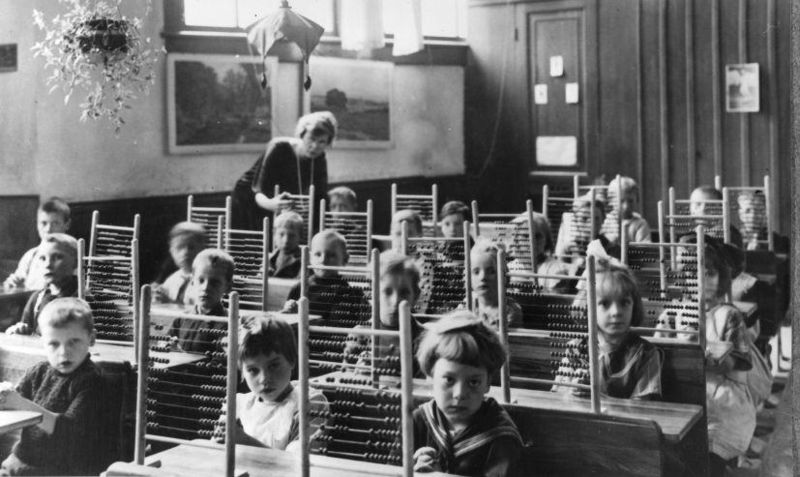
From an Ask Me Anything at Slashdot with Steve Wozniak, an exchange about improving American education:
“Question:
Woz, what changes would you recommend to fix the K-12 education system in the U.S.?
Steve Wozniak:
Computers offered a real change in the tools of the classroom, but they don’t seem to have changed much. The learning is the same, only done via computers, for the most part. I had hoped for more.
I do want to feel a part of the big improvement someday, so I hope that there is some further step with computers. That would be when a computer becomes conscious and caring and becomes the best friend that each student wants to be with. It will look at their faces and speak the way that particular student likes and be a good friend more than a teacher.
One thing that has not changed over time in education is that we all, in a class, get the same material presentation together. The same pages as everyone else on Monday, the same pages on Tuesday, etc. Individuals as we are, we have different lapses along the way. A teacher could back up and explain something to fill in a gap, but each of the 30 students has different ‘gaps.’ The solution will be the equivalent of one teacher per student.
This opens the door to a student choosing to get only straight A’s, and only studying subjects they want to. And there will be more room to teach thinking and creativity and not all the same answer, which is not even their own answer, but out of a book. It’s a brave step, but right.
I learned the capital cities of all 50 states. How could anyone in life ever need to know such a worthless thing. The only worth is to show you can memorize it. But today it gets turned into a grade and a determination of what intelligence is. We have to break from that paradigm but can’t with today’s 30-student classes. Or should I say ‘day care?’
Schools are short of money because students don’t get a vote and votes turn into money. It’s a bad consequence of finding education to be a right and that means it has to be supplied by government. Government money follows votes. A family of 5 gets no more votes than a family of 2. Which wants the better school? But the votes by families of 2 are against more money for schools.”
Tags: Steve Wozniak

Imagine fleets of driverless cars bringing groceries to your door or automatic taxicabs shuttling you to and fro. Human ownership and operation of vehicles won’t die quickly, but more and more services will be handled by people-less vehicles. John Naughton’s new Guardian piece addresses the job-killing advent of the driverless cars, though in the long run the invention will create a healthier, wealthier lifestyle:
“At the ceremony in Mountain View, Google’s co-founder, Sergey Brin,announced the company’s intention to bring autonomous vehicles to the market in five years. In a pre-emptive attack on critics, he pointed out that autonomous vehicles would be significantly safer than human-controlled ones. That seems plausible to me: 40,000 people are killed every year in road accidents in the US and many, if not most, of those are caused by human error. ‘This has the power to change lives,’ Brin said. ‘Too many people are underserved by the current transport system. They are blind, or too young to drive, or too old, or intoxicated.’ He also argued that manual operation of cars was inefficient: autonomous vehicles could make better use of the road and reduce the size of car parks by fitting into smaller areas than humans could get them into.
Ignore the evangelism for a moment and think about what Google has achieved. Its engineers have demonstrated that with smart software and an array of sensors, a machine can perform a task of sophistication and complexity most of us assumed would always require the capabilities of humans. And that means our assumptions about what machines can and cannot do are urgently in need of updating.”
Tags: John Naughton, Sergey Brin
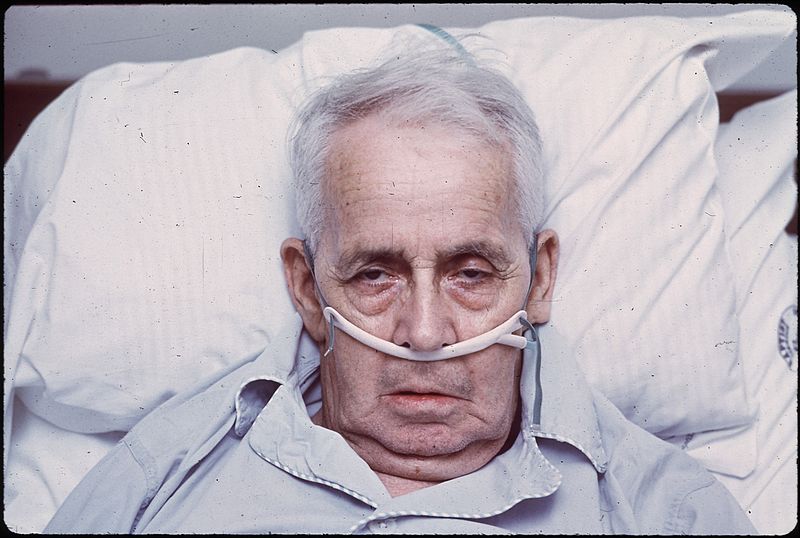
The argument over health care reform should never have been about if the U.S. should have universal coverage but how best to limit waste and provide excellent service. That might have happened if conservative opportunists hadn’t sought political advantage in roiling Birther bigotry as a way to take down a President who was using policies suggested by the Heritage Foundation (e.g., individual mandate). These conservative do not want smaller government; they just want power. From “The Conservative Case for Obamacare,” by J.D. Kleinke in the New York Times:
“The core drivers of the health care act are market principles formulated by conservative economists, designed to correct structural flaws in our health insurance system — principles originally embraced by Republicans as a market alternative to the Clinton plan in the early 1990s. The president’s program extends the current health care system — mostly employer-based coverage, administered by commercial health insurers, with care delivered by fee-for-service doctors and hospitals — by removing the biggest obstacles to that system’s functioning like a competitive marketplace.
Chief among these obstacles are market limitations imposed by the problematic nature of health insurance, which requires that younger, healthier people subsidize older, sicker ones. Because such participation is often expensive and always voluntary, millions have simply opted out, a risky bet emboldened by the 24/7 presence of the heavily subsidized emergency room down the street. The health care law forcibly repatriates these gamblers, along with those who cannot afford to participate in a market that ultimately cross-subsidizes their medical misfortunes anyway, when they get sick and show up in that E.R. And it outlaws discrimination against those who want to participate but cannot because of their medical histories. Put aside the considerable legislative detritus of the act, and its aim is clear: to rationalize a dysfunctional health insurance marketplace.
This explains why the health insurance industry has been quietly supporting the plan all along. It levels the playing field and expands the potential market by tens of millions of new customers.”
Tags: J.D. Kleinke

The opening of a really smart Aeon essay by economist John Quiggin, who wonders whether we will embrace a world free of toil:
“I first became an economist in the early 1970s, at a time when revolutionary change still seemed like an imminent possibility and when utopian ideas were everywhere, exemplified by the Situationist slogan of 1968: ‘Be realistic. Demand the impossible.’ Preferring to think in terms of the possible I was much influenced by an essay called ‘Economic Possibilities for our Grandchildren,’ written in 1930 by John Maynard Keynes, the great economist whose ideas still dominated economic policy making at the time.
Like the rest of Keynes’s work, the essay ceased to be discussed very much during the decades of free-market liberalism that led up to the global financial crisis of 2007 and the ensuing depression, through which most of the developed world is still struggling. And, also like the rest of Keynes’s work, this essay has enjoyed a revival of interest in recent years, promoted most notably by the Keynes biographer Robert Skidelsky and his son Edward.
The Skidelskys have revived Keynes’s case for leisure, in the sense of time free to use as we please, as opposed to idleness. As they point out, their argument draws on a tradition that goes back to the ancients. But Keynes offered something quite new: the idea that leisure could be an option for all, not merely for an aristocratic minority.” (Thanks Browser.)
Tags: Edward Skidelsky, John Maynard Keynes, John Quiggin, Robert Skidelsky

As technology is increasingly used to do war’s dirty work, will military continue to be made up mostly of young males? From Rosa Brooks’ Foreign Policy argument for rethinking recruitment in the Information Age:
“For most of human history, having an army full of young men made lots of sense. As soldiers, young males have had two things going for them, historically speaking. First, they’re usually stronger, on average, than any other demographic group: they can run fast and carry heavy loads. Second, they’re (relatively) biologically expendable from a species-survival perspective: women of child-bearing age are the limiting factor in population growth. A society can lose a lot of young men without a devastating impact on overall population growth.
Today, though, these characteristics don’t matter as much as they once did. Overall birthrates are much lower in modern societies than they were during earlier periods, but life expectancy is much longer. Early societies worried about sustaining their populations; today we worry less about ensuring population growth than about overburdening the planet’s load-bearing capacity.
Simple brawn also offers far less advantage in our high-tech age. In modern warfare, brutal hand-to-hand combat is no longer the norm, and warfare is no longer a matter of sending out wave after wave of troops to overwhelm the enemy through sheer mass. Increasingly, modern warfare involves a mixture of high-tech skills and low-tech cultural knowledge rather than ‘fighting’ in the traditional sense.
In fact, if the next few decades are anything like the last, most military personnel will never see combat.”
Tags: Rosa Brooks
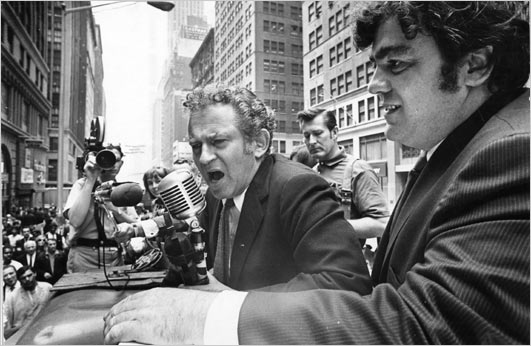
The opening of what’s arguably Jimmy Breslin’s most famous column, his 1963 profile of the quiet, sober work of the gravedigger at Arlington National Cemetery who attended to John F. Kennedy’s plot after the President was assassinated:
“Washington — Clifton Pollard was pretty sure he was going to be working on Sunday, so when he woke up at 9 a.m., in his three-room apartment on Corcoran Street, he put on khaki overalls before going into the kitchen for breakfast. His wife, Hettie, made bacon and eggs for him. Pollard was in the middle of eating them when he received the phone call he had been expecting. It was from Mazo Kawalchik, who is the foreman of the gravediggers at Arlington National Cemetery, which is where Pollard works for a living. ‘Polly, could you please be here by eleven o’clock this morning?’ Kawalchik asked. ‘I guess you know what it’s for.’ Pollard did. He hung up the phone, finished breakfast, and left his apartment so he could spend Sunday digging a grave for John Fitzgerald Kennedy.
When Pollard got to the row of yellow wooden garages where the cemetery equipment is stored, Kawalchik and John Metzler, the cemetery superintendent, were waiting for him. ‘Sorry to pull you out like this on a Sunday,’ Metzler said. ‘Oh, don’t say that,’ Pollard said. ‘Why, it’s an honor for me to be here.’ Pollard got behind the wheel of a machine called a reverse hoe. Gravedigging is not done with men and shovels at Arlington. The reverse hoe is a green machine with a yellow bucket that scoops the earth toward the operator, not away from it as a crane does. At the bottom of the hill in front of the Tomb of the Unknown Soldier, Pollard started the digging (Editor Note: At the bottom of the hill in front of the Custis-Lee Mansion).
Leaves covered the grass. When the yellow teeth of the reverse hoe first bit into the ground, the leaves made a threshing sound which could be heard above the motor of the machine. When the bucket came up with its first scoop of dirt, Metzler, the cemetery superintendent, walked over and looked at it. ‘That’s nice soil,’ Metzler said. ‘I’d like to save a little of it,’ Pollard said. ‘The machine made some tracks in the grass over here and I’d like to sort of fill them in and get some good grass growing there, I’d like to have everything, you know, nice.'”
••••••••••
“It’s a good drinkin’ beer”:
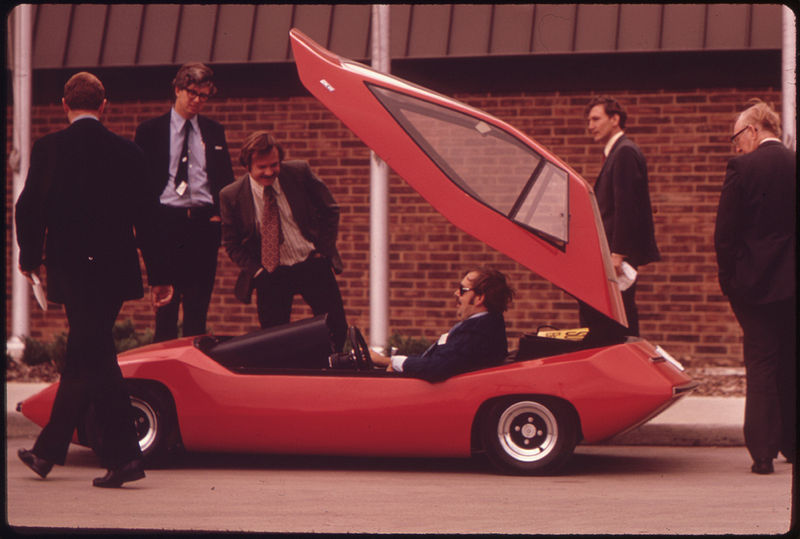
I put up a post yesterday about the spiffy new Supercharger stations built by Tesla Motors, but most of the news regarding alterna-cars in America in the last 24 hours has been mixed at best. Tesla itself is falling far short of its near-term manufacturing goals and Toyota, king of the hybrid with the Prius, announced it was largely abandoning the electric category. The one bright spot was that California legalized driverless cars, many of which will be electric. And that’s a state where such vehicles could thrive.
The obstacles to electric vehicles are gigantic because of the lack of infrastructure. Imagine if Steve Jobs had dreamed up the iPod but there were no outlets in your home to charge them, so Apple also had to build power sources. One thing that makers of electric autos should do is pool resources to create universal filling stations or outfit existing fossil fuel stations with a universal electrical outlet. The early electric cars are ideal for urban areas because of their relatively limited travel capacity, and most city dwellers don’t have garages in which to power their cars. Stations have to be ubiquitous, uniform and simple.
The challenges for automatic autos are psychological as well as foundational. Americans who feel like they don’t have great control over the rest of their lives have long enjoyed a sense of empowerment and freedom from being behind the wheel of their cars. (Picture America Graffiti with driverless cars.) So the obstacles are technological as well as those of hearts and minds.
From a Forbes article about California’s new driverless cars law: “California Gov. Jerry Brown on Tuesday signed a law making it legal for driverless cars to travel on public roadways, demonstrating once again that the Left Coast has a way of prodding automakers to innovate faster.
It’s not that smart minds in Detroit, Japan and Germany aren’t already working on autonomous cars. They’ve been doing so for years. But as with most new technologies, automotive engineers want to make absolutely certain that they’re safe and perform as expected before launching into mass production. The National Highway Traffic Safety Administration agrees, of course, which is why it recently launched the first real-world test of vehicle-to-vehicle communication near Ann Arbor, Mich.
But Google, which has already developed a fleet of driverless cars that some of its employees use to commute to work, was eager to press ahead. It lobbied heavily for the California law, which would allow testing of autonomous vehicles on the state’s roadways as long as there’s a fully licensed human in the driver’s seat to take over if needed.”
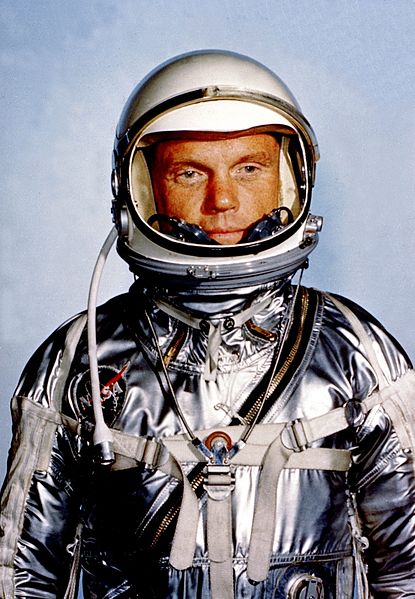
I don’t agree with the premise of Ian Bogost’s new Atlantic article which argues that private industrialists and technologists exploring and colonizing space alongside government efforts will somehow debase our ambitions. It will mean something different and pose new questions, sure, but we need to be confronting such challenges from every angle. Regardless, it’s a well-considered piece. An excerpt:
“[Elon] Musk is a hero of the entrepreneurs and venture capitalists who have themselves taken over the role of hero from Yuri Gagarin and John Glenn and Neil Armstrong and Sally Ride. He’s also perhaps the closest real-world counterpart to Tony Stark, the fictional playboy and industrialist who becomes Iron Man in Stan Lee’s comic books. Musk started SpaceX shortly before selling PayPal in 2002. Like Stark he’s a modest man, taking only the titles of CEO and CTO at SpaceX, in addition to his role as Chairman and CEO at Tesla Motors, the electric car manufacturer he founded a year later. SpaceX’s contract under the NASA COTS program is worth up to $3.1 billion, more than twice what Ebay shelled out for PayPal.
Musk is in the space freight business, hauling materials and equipment from earth to sky, a kind of twenty-first century Cornelius Vanderbilt in the making. Elsewhere, rich men lust jealously for space now that Earth’s challenges have proven tiresome. John Carmack, the co-founder of iD software and co-creator of Doom started Armadillo Aerospace in 2000, eyeing space tourism via a sub-orbital commercial craft. Amazon Founder Jeff Bezos helped found another private spaceflight company, Blue Origin, in the same year. And of course, Virgin Group founder Richard Branson established Virgin Galactic in 2004, to provide sub-orbital space tourism as well as orbital satellite launch. In 2008, Richard Garriott, the role-playing game creator and son of American Skylab astronaut Owen K. Garriott, paid Space Adventures a reported $30 million to be flown via Russian Soyuz spacecraft to the ISS. Just four years later, Branson’s Virgin Galactic was selling tickets for sub-orbital rides on SpaceshipTwo for a mere $200,000. Ashton Kutcher and Katy Perry have already signed up. TMZ Galactic can’t be far behind.”
Tags: Elon Musk, Ian Bogost

The opening of economic analyst Michael Hudson’s thoughts on a system in which debt creation floats the boat, until he believes, it capsizes:
“Mainstream economics has become a body of assumptions selected to rationalize a ‘trickle-down’ tax policy favoring the financial sector driving the rest of the economy into debt, turning the economic surplus into interest charges – to be recycled into yet more debt creation. Claiming that wealth at the top pulls up the rest (‘the rich are job creators’), the policy inference is to shift taxes off financial wealth and property onto labor and industry.
What this view leaves out of account is that some ways of ‘getting rich’ are corrosive, not productive. The wealthiest 10% have gotten rich mainly by getting the bottom 90% into debt. And labor (‘consumers’) try to escape from their financial squeeze by going even deeper into debt, to buy homes and status before their access price rises even further out of reach. But what is pushing up real estate and other prices is easy bank credit – that is, debt. So the debt expansion calls for yet more debt to keep the financial system solvent.
This is not industrial capitalism as analyzed by the classical economists. It is something quite different. It is a regression to the ancient usury problem that destroyed Rome.” (Thanks Browser.)
Tags: Michael Hudson
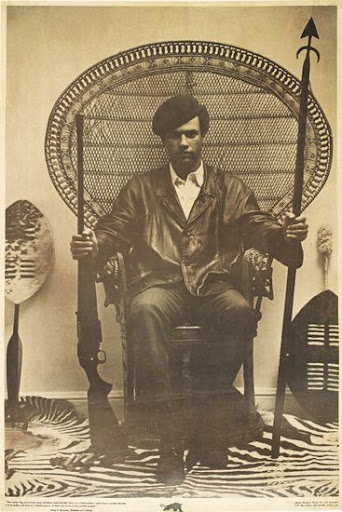
A while back, I posted a short video from William F. Buckley’s 1973 Firing Line interview with Black Panther Huey P. Newton. Here’s the full one-hour conversation, though audio only.
Tags: Huey P. Newton, William F. Buckley
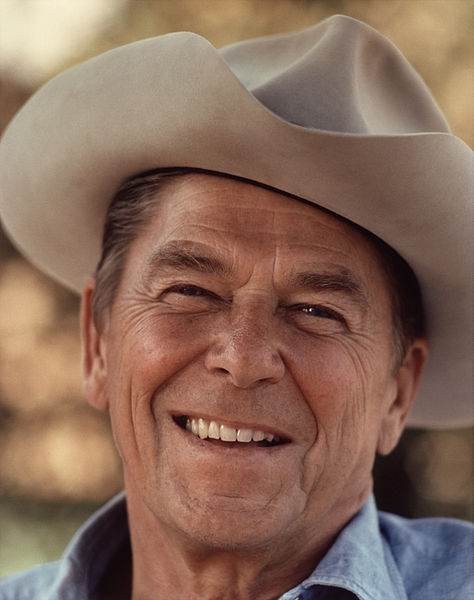
I’m still unconvinced that an Obama victory in November, even a deep one, will move the GOP back toward the center. I don’t believe that the Republican stalwarts (William Kristol, Peggy Noonan, Charles Krauthammer, etc.) realize that it’s not only the messenger who’s flawed but the message. Tax cuts for the wealthy, causing racial division, supply-side economics and voter suppression may seem like good ideas in conservative think-tanks, but the people aren’t buying it anymore. The Gingrich-Rove playbook, the one that says you can sell Americans anything provided you use the exact right phrasing, is dead. In a time of unfettered media, there are too many fact-checkers. And nostalgia for an America that never existed isn’t appealing to a changing population. It really is morning in America now, not because of the past but because of the future. And a lot of GOP bigwigs are trying to turn back a broken clock. From Andrew Sullivan in Newsweek:
“If Obama wins, to put it bluntly, he will become the Democrats’ Reagan. The narrative writes itself. He will emerge as an iconic figure who struggled through a recession and a terrorized world, reshaping the economy within it, passing universal health care, strafing the ranks of al -Qaeda, presiding over a civil-rights revolution, and then enjoying the fruits of the recovery. To be sure, the Obama recovery isn’t likely to have the same oomph as the one associated with Reagan—who benefited from a once-in-a-century cut of top income tax rates (from 70 percent to, at first, 50 percent, and then to 28 percent) as well as a huge jump in defense spending at a time when the national debt was much, much less of a burden. But Obama’s potential for Reagan status (maybe minus the airport-naming) is real. Yes, Bill Clinton won two terms and is a brilliant pol bar none, as he showed in Charlotte in the best speech of both conventions. But the crisis Obama faced on his first day—like the one Reagan faced—was far deeper than anything Clinton confronted, and the future upside therefore is much greater. And unlike Clinton’s constant triangulating improvisation, Obama has been playing a long, strategic game from the very start—a long game that will only truly pay off if he gets eight full years to see it through. That game is not only changing America. It may also bring his opposition, the GOP, back to the center, just as Reagan indelibly moved the Democrats away from the far left.”
Tags: Charles Krauthammer, Karl Rove, Mitt Romney, Newt Gingrich, Peggy Noonan, William Kristol
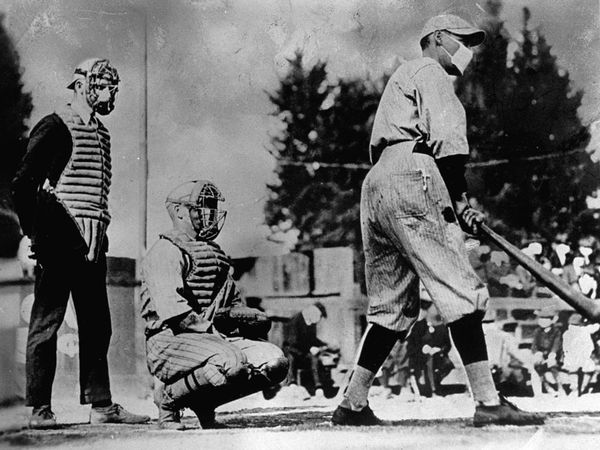
Curious that in the Information Age there’s still so much misinformation about potential pandemics. Epidemiology is vastly improved, but the public is often off-base in understanding medicine in our more quantified world, fearing life-saving vaccines while indulging in unhealthy behaviors. Schlocky journalism, a failure to develop critical thinking and our deep fear of horrible deaths conspire to make it so. From David Quammen in the New York Times:
“Humans die in large numbers every day, every hour, from heart failure and automobile crashes and the dreary effects of poverty; but strange new infectious diseases, even when the death tolls are low, call up a more urgent sort of attention. Why?
There’s a tangle of reasons, no doubt, but one is obvious: whenever an outbreak occurs, we all ask ourselves whether it might herald the Next Big One.
What I mean by the Next Big One is a pandemic of some newly emerging or re-emerging infectious disease, a global health catastrophe in which millions die. The influenza epidemic of 1918-19 was a big one, killing about 50 million people worldwide. The Hong Kong flu of 1968-69 was biggish, causing at least a million deaths. AIDS has killed some 30 million and counting. Scientists who study this subject — virologists, molecular geneticists, epidemiologists, disease ecologists — stress its complexity but tend to agree on a few points.
Yes, there probably will be a Next Big One, they say. It will most likely be caused by a virus, not by a bacterium or some other kind of bug. “
Tags: David Quammen'