Excerpts

You are currently browsing the archive for the Excerpts category.

The soon-to-open Fortune Hotel in Lavasa. (Image by Ankur P.)

In a smart Atlantic article, “India Invents a City,” Jeremy Kahn looks at Lavasa, a planned, high-tech hilltop urban development which may or may not be a model for Indian cities of tomorrow. The opening:

“At first glance, this could be Italy—the promenade, the sidewalk cafés and ice-cream parlors, the streetscape of conjoined little apartment houses in mustard, terra-cotta, ocher, olive, or beige. Even the name of the place, Lavasa, sounds vaguely Italian.

But look again, and this clearly isn’t Italy. It’s too clean, too new. There are too few tourists. There are hardly any people at all, actually. Which only makes it all the more improbable that Lavasa is, in fact, in India—land of auto rickshaws and slum dogs, of sweat and dust and litter. With only a handful of residents, Lavasa is a city-in-waiting. But its corporate backers believe it will soon represent nothing less than a new model of urban development and governance in India—a country where the phrase city planning has long been a contradiction in terms.

Lavasa sits in the Western Ghats, some 130 miles southeast of Mumbai, India’s financial and entertainment capital, and 40 miles west of Pune, a growing hub for software programming and computer animation. If all goes according to its master plan, Lavasa will eventually house more than 300,000 people in five distinct ‘towns.’ It will also have a world-class medical campus, luxury hotels, boarding schools, sports academies, a Nick Faldo–designed golf course, a space camp, and, its developers hope, animation and film studios, software-development companies, biotech labs, and law and architectural firms—in short, all of the knowledge industries at the heart of the ‘new India.’ Those industries have yet to buy in, but residential sales have been brisk: in Dasve, the first of Lavasa’s five towns, scheduled to be completed this year, the houses are almost sold out.”

••••••••••

The good people at the Lavasa Corporation are building you a lovely home:

Tags:

"That photo is then compared with a database of images of people with criminal records." (Image by Matthew Goldthwaite.)

A new iPhone app will allow law-enforcement officers to photograph a person and instantly scan a database of criminals to see if there is a match. It’s inevitable that all of the information we’ve put online will end up in databases that can be monetized or scrutinized. A report from Cnet:

“Some law-enforcement agencies are preparing to deploy a mobile facial-recognition tool, The Wall Street Journal reported today.

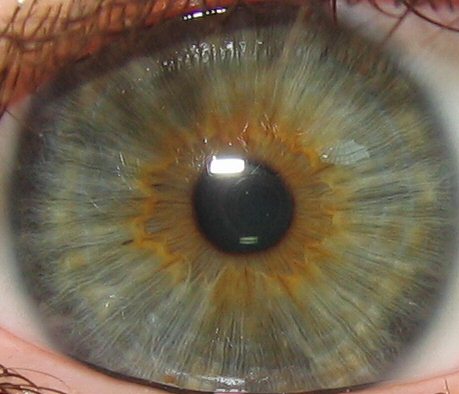
According to the Journal, about 40 law-enforcement agencies across the U.S. will be making the handheld product available to their officers in the field as early as September. The device, which has been developed by Massachusetts-based BI2 Technologies, allows officers to take a photo of a person from a distance of five feet or less. That photo is then compared with a database of images of people with criminal records to see if there is a match. The device is also capable of scanning a person’s iris.”

••••••••••

Iris-recognition scanner:

"The Cardboard Valise," by Ben Katchor.

In the Los Angeles Review of Books, Jeet Heer explores a new book by the excellent graphic-comics artist Ben Katchor. The first paragraph of the review sums up the lineage of Katchor’s work perfectly:

“Ben Katchor is the Joseph Mitchell of contemporary comics. Mitchell, along with his close friend A.J. Liebling, was a pivotal early New Yorker reporter who famously made a speciality of describing the peripheral rascals, layabouts, and oddballs of the Big Apple, ranging from the denizens of McSorley’s saloon to Joe Gould, the often homeless bohemian who claimed to be working on an ‘Oral History of the Contemporary World.’ With their cockeyed street-level view of New York and propensity for profiling loopy souls, Mitchell’s works were important precursors to the early Katchor who, throughout the 1980s and 1990s, meticulously chronicled the wanderings of ‘Julius Knipl, Real Estate Photographer’ in the pages of the New York Press (and, later, syndicated in alternative weeklies across the country). The Knipl strips were mournfully muted surveys of a New York where you could still feel the ghostly presence of the older city described by Mitchell in the 1930s and 1940s. “

••••••••••

Ben Katchor’s 2002 TED Talk:

Tags: ,

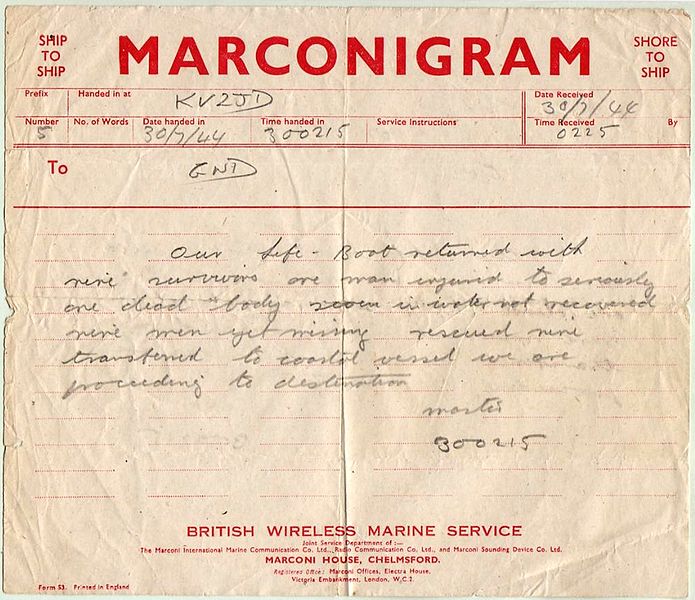
Many types of ghost media (telegrams, telex, etc.) that have been seemingly made obsolete by the advent of broadband still actually soldier on. An excerpt from a piece about so-called dead media at Ars Technica:

“Few people send out messages via Morse code any more. But the basic telegram concept—a missive spoken to an operator, then transmitted across wires or wireless, then hand-delivered to a recipient—is alive and well.

In fact, as in the nineteenth century, Telegrams Canada will write your telegram for you—or at least suggest gram language for appropriate occasions. The ‘Get Well’ suggestions include ‘The office/this place is just not the same without you,’ and ‘Your many friends here are hoping for your quick recovery.’

The service isn’t cheap. A same business day telegram costs CAN$19.95 plus 99¢ per word. ‘Quebec usually next business day,’ the company advises. ‘Rural routes and post office boxes may take longer.'” (Thanks Browser.)

•••••••••••

Balki receives a vital telegram:

Stephen Colbert euolgizes the Western Union telegram:

Tags: ,

Barry Bremen, who just passed away from cancer, was a suburban Detroit toy salesman who spiced up his life by being a “professional impostor,” sneaking past security at sporting events and Hollywood ceremonies to become part of the show. From his New York Times obituary:

“By most accounts, Mr. Bremen’s exploits began in 1979, when he managed to sneak onto the floor during warm-ups before the N.B.A. All-Star Game in Detroit, wearing a pilfered team uniform.

Mr. Bremen, an athletic 6-foot-4, took several shots before being recognized as an intruder and ejected.

The same year, he slipped onto the sidelines during a football game between the Dallas Cowboys and the Washington Redskins dressed in a custom-made Cowboys cheerleader outfit and a blond wig. (He had dieted and shaved his legs for this one.) The Cowboys kicked him out and sued him but later let the matter go.

In his more conventional life, he represented toy and novelty manufacturers in their dealings with retail stores while living in the Detroit suburbs with his wife and three children.

‘He was just this guy who sold novelties out of a cluttered office in suburban Detroit, and this was his way to be something different,’ said Neal Rubin, a Detroit News columnist who wrote several columns about Mr. Bremen and kept in touch. ‘He never hurt anybody. For Barry, it was all about the moment.’

The only stunt Mr. Bremen expressed some regrets about was his 1985 visit to the Emmy Awards, when he almost walked off with the best supporting actress statue awarded to Betty Thomas, who played Officer Lucille Bates on the police drama Hill Street Blues.

••••••••••

Barry Bremen accepts an Emmy:

Another impostor post:

Tags: , ,

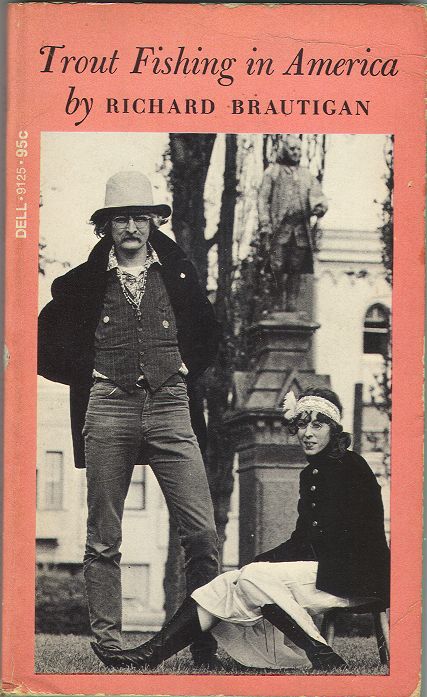
From Lawrence Wright’s 1985 Rolling Stone article about the death of writer Richard Brautigan:

“The old Beats looked at Richard with envy and surprise. The Beats were out of fashion, and Bunthorne was all the rage and he was rich, too, thunderously rich by their standards. Ferlinghetti had been the first to publish parts of Trout Fishing in his City Lights Journal, but like most Beats, he had never taken Richard’s writing seriously. ‘As an editor, I always kept waiting for Richard to grow up as a writer,’ he says now. ‘I never could stand cute writing. He could never be an important writer like Hemingway — with that childish voice of his. Essentially he had a naïf style, a style based on a childlike perception of the world. The hippie cult was itself a childlike movement. I guess Richard was all the novelist the hippies needed. It was a nonliterate age.’

But it was an extraordinary time in every other respect. Cultural forms were exploding in the face of furious experimentation with drugs, art, sex, music, religion, social roles. Richard’s attitude toward all this, however, was ambivalent. He was widely credited with being the voice of the Summer of Love, but in fact he was contemptuous of most hippies, whom he saw as freeloaders and dizzy peaceniks. He had a horror of narcotics that seemed fanciful to his friends everybody used dope in those days except Richard.

His passions were basketball, the Civil War, Frank Lloyd Wright, Southern women writers, soap operas, the National Enquirer, chicken-fried steak and talking on the telephone. Wherever he was in the world, he would phone up his friends and talk for hours, sometimes reading them an entire book manuscript on a transpacific call. Time meant nothing to him, for he was a hopeless insomniac. Most of his friends dreaded it when Richard started reading his latest work to them, because he could not abide criticism of any sort. He had a dead ear for music. Ianthe remembered that he used to buy record albums because of the girls on the covers. He loved to take walks, but he loathed exercise in any other form.”

Another Richard Brautigan post:

Tags: ,

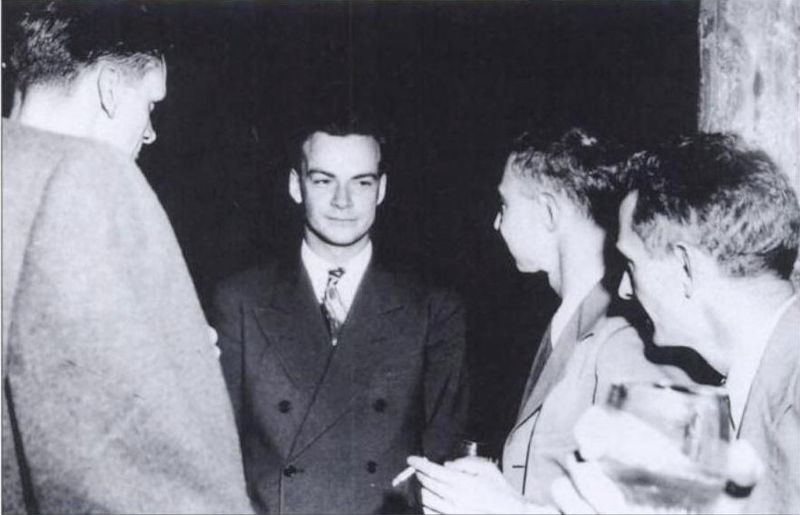
In the New York Review of Books, Freeman Dyson, who worked on nuclear-propelled spaceships among other great and scary things, reviews two new books about  Richard Feynman (one, a gekiga). In the piece, he ranks science icons of the last century. The article’s opening:

“In the last hundred years, since radio and television created the modern worldwide mass-market entertainment industry, there have been two scientific superstars, Albert Einstein and Stephen Hawking. Lesser lights such as Carl Sagan and Neil Tyson and Richard Dawkins have a big public following, but they are not in the same class as Einstein and Hawking. Sagan, Tyson, and Dawkins have fans who understand their message and are excited by their science. Einstein and Hawking have fans who understand almost nothing about science and are excited by their personalities.

On the whole, the public shows good taste in its choice of idols. Einstein and Hawking earned their status as superstars, not only by their scientific discoveries but by their outstanding human qualities. Both of them fit easily into the role of icon, responding to public adoration with modesty and good humor and with provocative statements calculated to command attention. Both of them devoted their lives to an uncompromising struggle to penetrate the deepest mysteries of nature, and both still had time left over to care about the practical worries of ordinary people. The public rightly judged them to be genuine heroes, friends of humanity as well as scientific wizards.

Two new books now raise the question of whether Richard Feynman is rising to the status of superstar.”

••••••••••

Dyson talks science at the Big Think:

Tags: ,

A passage about the nature of prisons from Bill James’ new book, Popular Crime, which I previously posted about:

“Build smaller prisons. 

… Large prisons become ‘violentocracies’ — places ruled by violence and by the threat of violence. In a violentocracy, the most violent people rise to the top.  

In any prison of any size, the prisoners are going to be pushed toward the level of the most violent persons in the facility. … In a prison 3,000 people, the entire prison is pushed toward the level of violence created by the five most violent people in the joint. The most violent person finds the second-most violent person and the third-most violent person, and they form an alliance to exploit the weak. Everyone else is compelled to avoid looking weak. … 

Large prisons promote paranoia in the prisoners. You never know who in here is waiting for you with a homemade knife.  

… A prison of 20 people is, by its very nature, extremely different. You know who is in there with you; you know who you have to stay away from. … Plus, if you have many small prisons, you can contain the violent people in a limited number of those prisons, the preventing their violent tendencies from infecting the rest of the prison population.  

… What you would do, with a network of small prisons, would be to place each prisoner in a facility that is appropriate to the threat that he represents. You grade the prisoners on the threat of violence that they represent, one through ten. You put the tens with the tens and the ones with the ones.  

Plus, when you move to a system in which some prisoners have more rights and live in more humane conditions, you create a powerful incentive to get into one of the less restrictive prisons..  

In a large and horrible prison, the new prisoner thinks ‘I’ve got to show everybody here how tough and vicious I really am, so that nobody will mess with me.’ But when you put a new prisoner in a 24-man prison with 23 other tough guys, and he knows that there are other prisons that are not like this, his natural thought is ‘I’ve got to get out of here. I’ve got to show these people that I am not a crazy, vicious sociopath, so they will move me to some other facility that is not populated by crazy, vicious sociopaths.'” (Thanks iSteve and Marginal Revolution.)

Tags:


In this classic 1910 photograph, New York City Mayor William J. Gaynor, a Tammany reformer, had just been wounded in an assassination attempt by a disgruntled former city employee who’d lost his job. Gaynor was headed on a vacation cruise when the bullet entered his throat. He survived the attempt on his life, but oddly enough, in 1913, when Gaynor was finally able to take that cruise, he died quietly in a deck chair. An excerpt from the September 13, 1913 New York Times article announcing the Mayor’s death:

“Mayor William J. Gaynor of New York died in his steamer chair on board the steamship Baltic early Wednesday afternoon when the liner was 400 miles off the Irish Coast. His death was due to a sudden heart attack. 

The news reached London a little before 4 P.M. to-day, coming by way of New York, and half an hour later a message was received from Liverpool saying that the White Star Line offices had been advised by wireless of his death.

In the evening a wireless dispatch from the Baltic was received from the Mayor’s son, Rufus Gaynor, describing his father’s death in these words:

‘My father, William J. Gaynor, died on board the White Star liner Baltic at seven minutes past 1 o’clock on Wednesday afternoon. His death was due to heart failure, and he was seated in his chair when the end came.

‘The deck steward had been with the Mayor a few moments before his death and had taken his order for luncheon, the Mayor marking the menu to indicate the dishes he desired.

‘I was on the boat deck and went below at the lunch call to tell my father that his lunch was ready. He had been taking his meals in one of the staterooms, and he was seated in the chair apparently asleep. I shook him gently but he did not respond.

‘His trained nurse, who had been with him ten minutes previously, was summoned and the ship’s surgeon, Dr. Hopper, was called. The Mayor was given a hypodermic injection, and artificial respiration was resorted to, but it was quickly apparent that he was beyond any aid. An examination with a stethoscope showed that the heart was no longer beating. The body was taken in charge by the ship’s officers, embalmed and placed in a sealed casket.'”

Tags:

Making any economic system work is trouble enough, but creating a socialist collective that produces great wealth is particularly elusive. The Chinese village of Huaxi is an exception, however, with its shared wealth and opulent new skyscrapers. Every villager owns a house worth at least $150,000 and at least one car. An excerpt from Michael Wines’ New York Times piece about a tower soon to open in Huaxi:

“Huaxi’s so-called New Village in the Sky — at 1,076 feet, a bit taller than the Chrysler Building in Manhattan — is getting finishing touches this summer in preparation for an October opening. Among other attractions, it will have a five-star hotel, a gold-leaf-embellished concert hall, an upscale shopping mall and what is billed as Asia’s largest revolving restaurant. Also, it will have five life-size statues of a water buffalo, Huaxi’s symbol, on every 12th floor or so.

That this half-billion-dollar edifice is a good 40-minute drive from a city of any size is part of the plan. For though not many foreigners have heard of Huaxi, Chinese far and wide know it as the socialist collective that works — the village where public ownership of the means of production has not just made everyone equal, but rich, too.

Two million tourists come annually to view the Huaxi marvel, no small number of them officials from other villages who yearn to know how Huaxi did it. The enormous skyscraper, topped with a gigantic gold sphere, will never win architectural awards. But it will add to Huaxi’s allure, the village fathers confidently predict — and soak up tourist money as well.

‘We call it the three-increase building,’ said Wu Renbao, 84, the town’s revered patriarch, meaning that it will increase Huaxi’s acreage (by half), increase its work force (by 3,000) and, hardly least of all, increase its wealth.

If he is right, all 2,000 villagers will get a little richer. They all own a piece of the building — just as they own the town’s steel mill, textile factory, greenhouse complex, ocean shipping company and other ventures. That is Huaxi’s carefully curated narrative: by rigidly adhering to socialism with Chinese characteristics, the citizens of this little village have created an oasis of prosperity and comfort that is the envy of the world.”

••••••••••

China’s richest village:

Tags: ,

From a 1996 Tom Wolfe essay, a pithy explanation about how Freudianism and Marxism cratered and neuroscience became ascendant:

“The demise of Freudianism can be summed up in a single word: lithium. In 1949 an Australian psychiatrist, John Cade, gave five days of lithium therapy—for entirely the wrong reasons—to a fifty–one–year–old mental patient who was so manic–depressive, so hyperactive, unintelligible, and uncontrollable, he had been kept locked up in asylums for twenty years. By the sixth day, thanks to the lithium buildup in his blood, he was a normal human being. Three months later he was released and lived happily ever after in his own home. This was a man who had been locked up and subjected to two decades of Freudian logorrhea to no avail whatsoever. Over the next twenty years antidepressant and tranquilizing drugs completely replaced Freudian talk–talk as treatment for serious mental disturbances. By the mid–1980s, neuroscientists looked upon Freudian psychiatry as a quaint relic based largely upon superstition (such as dream analysis — dream analysis!), like phrenology or mesmerism. In fact, among neuroscientists, phrenology now has a higher reputation than Freudian psychiatry, since phrenology was in a certain crude way a precursor of electroencephalography. Freudian psychiatrists are now regarded as old crocks with sham medical degrees, as ears with wire hairs sprouting out of them that people with more money than sense can hire to talk into.

Marxism was finished off even more suddenly—in a single year, 1973—with the smuggling out of the Soviet Union and the publication in France of the first of the three volumes of Aleksandr Solzhenitsyn’s The Gulag Archipelago. Other writers, notably the British historian Robert Conquest, had already exposed the Soviet Union’s vast network of concentration camps, but their work was based largely on the testimony of refugees, and refugees were routinely discounted as biased and bitter observers. Solzhenitsyn, on the other hand, was a Soviet citizen, still living on Soviet soil, a zek himself for eleven years, zek being Russian slang for concentration camp prisoner. His credibility had been vouched for by none other than Nikita Khrushchev, who in 1962 had permitted the publication of Solzhenitsyn’s novella of the gulag, One Day in the Life of Ivan Denisovich, as a means of cutting down to size the daunting shadow of his predecessor Stalin. “Yes,” Khrushchev had said in effect, “what this man Solzhenitsyn has to say is true. Such were Stalin’s crimes.” Solzhenitsyn’s brief fictional description of the Soviet slave labor system was damaging enough. But The Gulag Archipelago, a two–thousand–page, densely detailed, nonfiction account of the Soviet Communist Party’s systematic extermination of its enemies, real and imagined, of its own countrymen, by the tens of millions through an enormous, methodical, bureaucratically controlled “human sewage disposal system,” as Solzhenitsyn called it— The Gulag Archipelago was devastating. After all, this was a century in which there was no longer any possible ideological detour around the concentration camp. Among European intellectuals, even French intellectuals, Marxism collapsed as a spiritual force immediately. Ironically, it survived longer in the United States before suffering a final, merciful coup de grace on November 9, 1989, with the breaching of the Berlin Wall, which signaled in an unmistakable fashion what a debacle the Soviets’ seventy–two–year field experiment in socialism had been. (Marxism still hangs on, barely, acrobatically, in American universities in a Mannerist form known as Deconstruction, a literary doctrine that depicts language itself as an insidious tool used by The Powers That Be to deceive the proles and peasants.)

Freudianism and Marxism—and with them, the entire belief in social conditioning—were demolished so swiftly, so suddenly, that neuroscience has surged in, as if into an intellectual vacuum. Nor do you have to be a scientist to detect the rush.” (Thanks to The Electric Typewriter.)

More Tom Wolfe posts:
Tags: , ,

Most Americans probably never stop to think of it, but those handsome, chemically enhanced front-yard lawns are a fairly worthless waste of space, a paean to the color green that produces nothing but toil. That space could be an aesthetically pleasing and productive vegetable garden. From Corinne AsturiasSan Francisco Chronicle essay:

“The truth is, we’ve never loved our lawn or the concept of lawns. They permeate the American dream and dominate our midcentury, suburban development in San Jose. Space hogs, water suckers and giant leaf collectors that have to be blown, mown and doused in chemicals with a great ruckus to look good, what is the point of a lawn other than to say: we have land, time and money to waste? When our kids were young the home turf had its benefits: a landing pad for soccer balls and dogs and skateboards, and a display carpet for the annual holiday tree.

But lately, its uselessness had started to gnaw at us. And staring at the newly dead zone out front, I realized that in all the years living in this home, I’d never even thought about what I wanted for the sunny space occupied by my lawn. My imagination started to roam and a rebellious vision took shape: the organic vegetable garden I’d always wanted but couldn’t plant out back because of three dogs, two tortoises and not enough sun.” (Thanks Time.)

Tags:

From Barbara Ehrenreich’s new Guernica piece on whether the human face of warfare has reached a point of obsolescence:

“An alternative approach is to eliminate or drastically reduce the military’s dependence on human beings of any kind. This would have been an almost unthinkable proposition a few decades ago, but technologies employed in Iraq and Afghanistan have steadily stripped away the human role in war. Drones, directed from sites up to 7,500 miles away in the western United States, are replacing manned aircraft.

Video cameras, borne by drones, substitute for human scouts or information gathered by pilots. Robots disarm roadside bombs. When American forces invaded Iraq in 2003, no robots accompanied them; by 2008, there were 12,000 participating in the war. Only a handful of drones were used in the initial invasion; today, the U.S. military has an inventory of more than 7,000, ranging from the familiar Predator to tiny Ravens and Wasps used to transmit video images of events on the ground. Far stranger fighting machines are in the works, like swarms of lethal ‘cyborg insects’ that could potentially replace human infantry.

These developments are by no means limited to the U.S. The global market for military robotics and unmanned military vehicles is growing fast, and includes Israel, a major pioneer in the field, Russia, the United Kingdom, Iran, South Korea, and China. Turkey is reportedly readying a robot force for strikes against Kurdish insurgents; Israel hopes to eventually patrol the Gaza border with ‘see-shoot’ robots that will destroy people perceived as transgressors as soon as they are detected.”

••••••••••

Cyborg insect demonstration:

Tags:

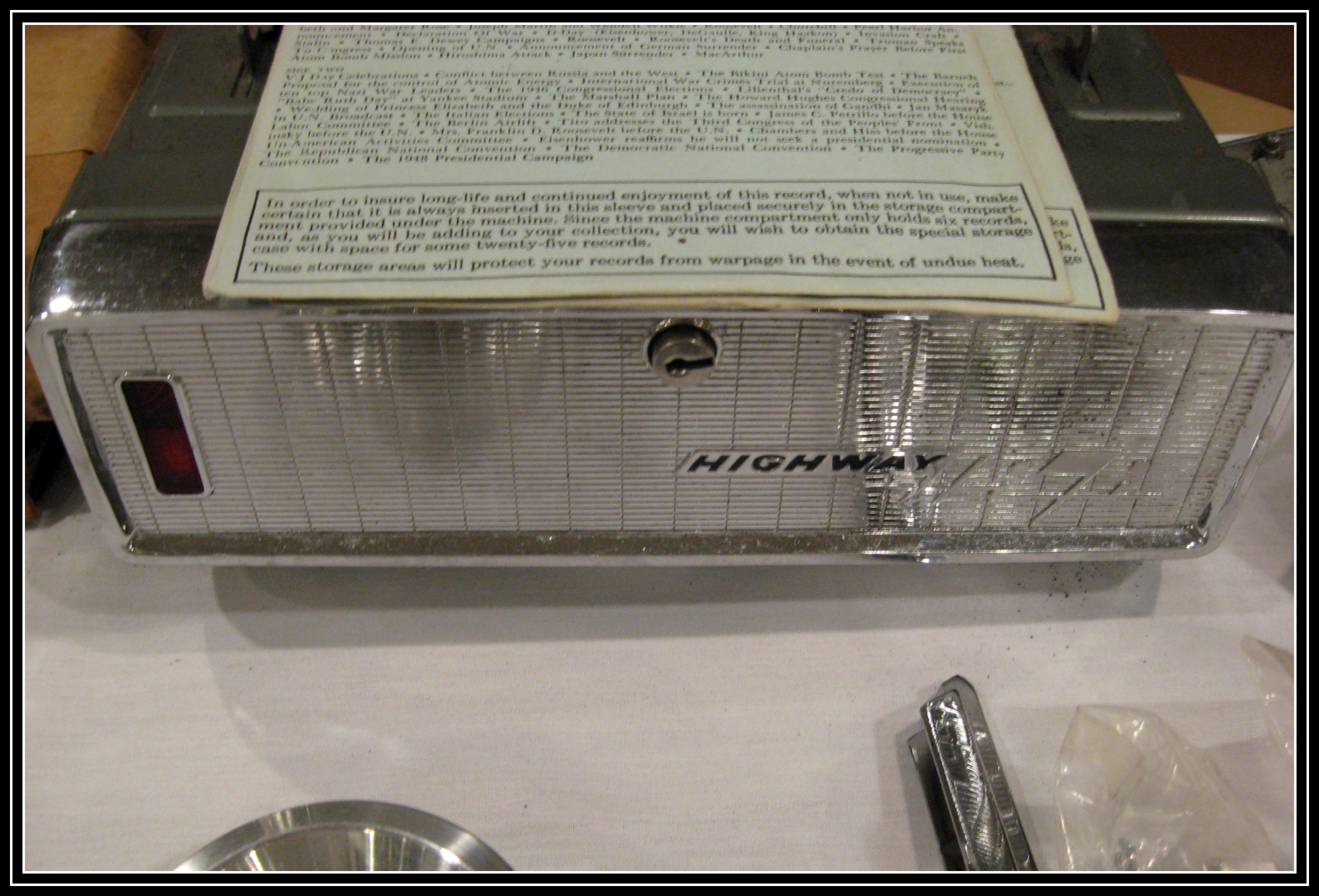
"There is quite possibly only one man left in the world still pressing records for the Highway Hi-Fi." (Image by Bill McChesney.)

Starting in the mid-50s, some Chryslers had record players on the dashboard, called the Highway Hi-Fi, as chronicled in a new piece in the Believer. Of course the discs skipped no matter how good the car’s shock absorbers, and the automaker ceased manufacturing them in the 1960s. But some car collectors have maintained the systems, even though only one person still creates the special records they require. An excerpt:

“In the end, the RCA Victor Auto Victrola had an even shorter run than the Highway Hi-Fi, vanishing by 1961. The following year would bring the next serious attempt at car audio, a precursor to the 8-track deck by inventor Earl Muntz—’Madman’ Muntz, as he was known. But what could ever be half so mad as a dash-mounted turntable?

 There is quite possibly only one man left in the world still pressing records for the Highway Hi-Fi, and he lives in Minneapolis.


‘I first had a guy come to me years ago who had an old Highway Hi-Fi, asking about making a record,’ says Kim Gutzke of Custom Records. Vintage car owners email Gutzke a music file, and he custom presses whatever they want onto a 16 2⁄3 rpm acetate disc. And what they want, he says, is simple: ‘’50s rock and roll. Not the crappy music Hi-Fi put out.'”

••••••••••

1960 Plymouth Fury with a Highway Hi-Fi:

Tags:

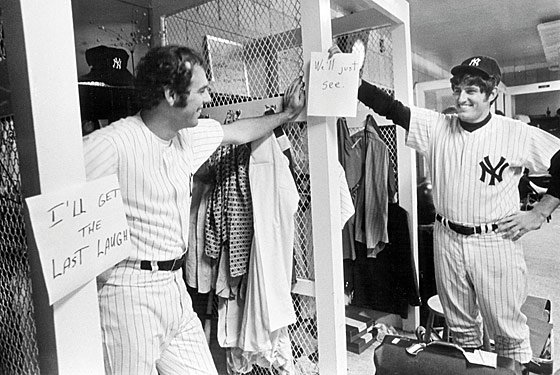
One of the strangest chapters in baseball history took place during the early ’70s when Yankee pitchers Fritz Peterson and Mike Kekich swapped families–wives, children and dogs. The episode has been revisited recently because Ben Affleck and Matt Damon are trying to make a movie about the tabloid-ready trade. An excerpt from the March 5, 1973 Toledo Blade:

Teammates Fritz Peterson and Mike Kekich of the New York Yankees have “traded lives” through a mutual agreement that calls for the pitchers to exchange wives and families.

“It was not a wife swap,” said Peterson, “but a life swap.”

The situation developed last summer when the Petersons, Fritz and wife, Marilyn, and the Kekiches, Mike and his wife, Susanne, were drawn together and began discussing the possibility of an exchange.

‘There have been laughs, screams and tears throughout this whole thing,’ said Kekich.

Marilyn “Chip” Peterson and her two sons, Greg 5 1/2, and Eric, 2 1/2, changed places with Susan Kekich and her two daughters, Kristen, 6, and Reagan Leigh, 2 1/2. The arrangement apparently has worked for Peterson and Mrs. Kekich who are still together, but not for Kekich and Mrs. Peterson, who have separated.

In Rockford, Ill., Mrs. Arthur Monks, Marilyn Peterson’s mother, said: “Marilyn is not happy about this at all. She has started proceedings for a divorce, but only because he (Fritz) wanted her to. Mike Kekich has made no plans for a divorce.”

“Susanne was a perfect person for me,” said Peterson. “We will file for divorce in New Jersey under the no fault clause.”

“Pete and Susanne are great for each other,” said Kekich.

“I thought Chip and I were perfectly suited but things developed and we began to butt heads. She would have been the first of her family to get a divorce. It became too much for her and she began to worry.”

The two families switched places at the end of last season and then briefly returned to their original situations. After about 10 days they exchanged places again, this time permanently.

“The point of no return was reached December 14,” said Peterson. “Marilyn and our boys flew West to join Mike in California and Susan and the girls flew East to me. They must have passed mid-air.

“This was the biggest decision of my life,” he continued. “I’m not going back. I can’t go back.”

Peterson and Kekich have been Yankee teammates for four years and the two families have always been close.

When the exchange developed the two players advised the Yankees of the situation and General Manager Lee McPhail asked if they felt they could still function as teammates. They said they did and that satisfied the club.

“The players personal lives are their own,” said Manager Ralph Houk.•


Willie McCovey hits a frozen rope against Peterson at the 1970 All-Star Game.

Tags: ,

"The incantations, multiplied worldwide, may help usher in the long-awaited final days."(Image by Jonathan Baldwin.)

Strip mall turned faith center, the International House of Prayer in Kansas City is an evangelical and charismatic haven that was founded in 1999 by a self-styled reverend named Mike Bickle. At the heart of the growing perpetual prayer movement in America, IHOP has been criticized for its cultish end-of-days prognostications. An excerpt from an Erik Eckholm article in the New York Times:

“The International House of Prayer is ‘an important example’ of the proliferating nondenominational charismatic churches, said Catherine C. Bowler, a religious historian at the Duke University Divinity School. From megachurches with tens of thousands of members to more intense and unusual ministries like Mr. Bickle’s, these churches, which practice faith healing and speaking in tongues, make up one of the fastest-growing segments of American Christianity, attracting millions.

The staff and students here are required to spend at least 25 hours a week in the prayer room, and they also engage in weekly fasts of a day or more. The focused worship, Mr. Bickle says, affects real-world events by weakening the demons and strengthening the angels that swirl among us. Most important, he says, the incantations, multiplied worldwide, may help usher in the long-awaited final days: seven years of bloody battles and disasters that will end with the Second Coming, with true Christians spirited to eternal bliss and everyone else doomed to hellfire.

‘The Second Coming will probably happen within the lifetime of people living today,’ Mr. Bickle said in an interview — the sort of prediction that leads some pastors to say he is overstepping and using apocalyptic predictions to seduce eager young believers. Mr. Bickle adamantly rejects such charges, as do followers like Mai Fink, a woman in her early 20s who was helping to run the church summer camp. She and her husband moved to Kansas City, she said, because ‘the prayer makes our hearts come alive.'”

••••••••••

IHOP, where the prayer never ends:

Tags: , ,

The perfect opening of “Banksy Was Here,” Lauren Collins’ excellent 2007 New Yorker article about the inscrutable artist:

“The British graffiti artist Banksy likes pizza, though his preference in toppings cannot be definitively ascertained. He has a gold tooth. He has a silver tooth. He has a silver earring. He’s an anarchist environmentalist who travels by chauffeured S.U.V. He was born in 1978, or 1974, in Bristol, England—no, Yate. The son of a butcher and a housewife, or a delivery driver and a hospital worker, he’s fat, he’s skinny, he’s an introverted workhorse, he’s a breeze-shooting exhibitionist given to drinking pint after pint of stout. For a while now, Banksy has lived in London: if not in Shoreditch, then in Hoxton. Joel Unangst, who had the nearly unprecedented experience of meeting Banksy last year, in Los Angeles, when the artist rented a warehouse from him for an exhibition, can confirm that Banksy often dresses in a T-shirt, shorts, and sneakers. When Unangst is asked what adorns the T-shirts, he will allow, before fretting that he has revealed too much already, that they are covered with smudges of white paint.

The creative fields have long had their shadowy practitioners, figures whose identities, whether because of scandalous content (the author of Story of O), fear of ostracism (Joe Klein), aversion to nepotism (Stephen King’s son Joe Hill), or conceptual necessity (Sacha Baron Cohen), remain, at least for a time, unknown. Anonymity enables its adopter to seek fame while shielding him from the meaner consequences of fame-seeking. In exchange for ceding credit, he is freed from the obligations of authorship. Banksy, for instance, does not attend his own openings. He may miss out on the accolades, but he’ll never spend a Thursday evening, from six to eight, picking at cubes of cheese.

Banksy is a household name in England—the Evening Standard has mentioned him thirty-eight times in the past six months—but his identity is a subject of febrile speculation. This much is certain: around 1993, his graffiti began appearing on trains and walls around Bristol; by 2001, his blocky spray-painted signature had cropped up all over the United Kingdom, eliciting both civic hand-wringing and comparisons to Jean-Michel Basquiat and Keith Haring. Vienna, San Francisco, Barcelona, and Paris followed, along with forays into pranksterism and more traditional painting, but Banksy has never shed the graffitist’s habit of operating under a handle. His anonymity is said to be born of a desire—understandable enough for a ‘quality vandal,’ as he likes to be called—to elude the police. For years now, he has refused to do face-to-face interviews.”

••••••••••

Banksy’s very dark Simpsons couch gag:

Another Banksy post:

Tags: ,

A discussion about wearable computing from Andrew Goldman’s smart interview with Silicon Valley bigwig Marc Andreessen, in this Sunday’s New York Times Magazine:

People view you as an oracle in the valley. I was hoping you’d blow my mind with something you see in the future. 

Gordon Bell at Microsoft is working on wearable computing, where it literally records everything around you all the time — video, your conversations. He wants to get to where it’s like a pendant around your neck. We also have a company called Jawbone that makes peripherals for smart phones and tablets. Today, they sell Bluetooth headsets and speakers, but soon they will sell all kinds of wearable computing devices.

Will we soon be dealing with antigaming laws so that drivers can’t play wearable video games while driving down the highway?

That assumes they’re driving. Google is working on self-driving cars, and they seem to work. People are so bad at driving cars that computers don’t have to be that good to be much better. Any time you stand in line at the D.M.V. and look around, you’re like, Oh, my God, I wish all these people were replaced by computer drivers. Ten to 20 years out, driving your car will be viewed as equivalently immoral as smoking cigarettes around other people is today.”

••••••••••

Gordon Bell records his whole life:

Tags: , ,

Margarita Island: Trouble in paradise. (Image by Spazzaven.)

Venezuelan prisons are often run by well-armed inmates, but the San Antonio penitentiary on Margarita Island is essentially Spring Break with Uzis and cockfights. The opening of Simon Romero’s stunning New York Times report:

“On the outside, the San Antonio prison on Margarita Island looks like any other Venezuelan penitentiary. Soldiers in green fatigues stand at its gates. Sharpshooters squint from watchtowers. Guards cast menacing glances at visitors before searching them at the entrance.

But once inside, the prison for more than 2,000 Venezuelans and foreigners held largely for drug trafficking looks more like a Hugh Hefner-inspired fleshpot than a stockade for toughened smugglers.

Bikini-clad female visitors frolic under the Caribbean sun in an outdoor pool. Marijuana smoke flavors the air. Reggaetón booms from a club filled with grinding couples. Paintings of the Playboy logo adorn the pool hall. Inmates and their guests jostle to place bets at the prison’s raucous cockfighting arena.”

Tags:

In his 1998 book, Machine Beauty: Elegance And The Heart Of Technology, David Gelernter implored technologists to study art history and create more pleasing products. It would seem his hopes have been realized, but not because of some academic intervention. It’s simply because of the iPod and subsequent Apple products which offered great external aesthetics and software to match. Competitors were forced to try to keep pace. An excerpt from Gelernter’s book:

“Great technology is beautiful technology. If we care about technology excellence, we are foolish not to train our young scientists and engineers in aesthetics, elegance, and beauty. The idea of such a thing happening is so far-fetched it’s funny — but, yes, good technology is terribly important to our modern economy and living standards and comfort levels, the ‘software crisis’ is real, we do get from our fancy computers a tiny fraction of the value they are capable of delivering…. We ought to start teaching Velázquez, Degas, and Matisse to young technologists right now on an emergency basis. Every technologist ought to study drawing, design, and art history…. Art education is no magic wand. But I can guarantee that such a course of action would make things better: our technology would improve, our technologists would improve, and we would never regret it.”

Tags:

"The presence of such an enclave of graceless pleasures in such an environment is so improbable that only science fiction can manage it." (Image by Matthew Field.)

I was looking at The Browser and came across a book about American deserts by the late architectural critic Reyner Banham, a British expat who adored the buildings of Los Angeles. A quote from this seemingly eccentric book that I’ve yet to get my hands on:

“Las Vegas is a symbol, above all else, of the impermanence of man in the desert, and not least because one is never not aware of the desert’s all pervading presence; wherever man has not built nor paved over, the desert grimly endures – even on some of the pedestrian islands down the center of the Strip! The presence of such an enclave of graceless pleasures in such an environment is so improbable that only science fiction can manage it; the place is like the compound of an alien race, or a human base camp on a hostile planet. To catch this image you need to see Las Vegas from the air by night, or better still, late in the afternoon, as I first saw it, when there is just purple sunset light enough in the bottom of the basin to pick out the crests of the surrounding mountains, but dark enough for every little lamp to register. Then – and only then – the vision is not tawdry, but is of a magic garden of blossoming lights, welling up at its center into fantastic fountains of everchanging color. And you turned to the captain of your spaceship and said, ‘Look Sir, there must be intelligent life down there,’ because it was marvelous beyond words. And doomed – it is already beginning to fade, as energy becomes more expensive and the architecture less inventive. It won’t blow away in the night, but you begin to wish it might, because it will never make noble ruins . . . .”

••••••••••

Previously posted, this playful 1972 BBC doc captured Banham in his favorite element: Los Angeles. There’s a fun passage in which Edward Ruscha opines on L.A. gas stations:

Tags: ,

"Then Picard handed me a pair of special glasses."

New Scientist has a great article by Sally Adee about eyeglasses that help wearers accurately read the emotions of those they are looking at. It could be a boon for people with social development disorders and kind of frightening for all of us, since we have to fake our way through unpleasant situations in life in order to not offend people. What if our true feelings were laid bare at all times? How would that change who we are and how we interact?

Eventually you would think these glasses will be “worn” on the inside, as the progression for medical advancement is often external to internal. When pacemakers were first invented, they were external units that were the size of luxury sedans before becoming internal and tiny. It sounds like chips in our brains to go along with ones in our hearts. The opening of the New Scientist article:

“ROSALIND PICARD’S eyes were wide open. I couldn’t blame her. We were sitting in her office at the Massachusetts Institute of Technology’s Media Lab, and my questions were stunningly incisive. In fact, I began to suspect that I must be one of the savviest journalists she had ever met.

Then Picard handed me a pair of special glasses. The instant I put them on I discovered that I had got it all terribly wrong. That look of admiration, I realised, was actually confusion and disagreement. Worse, she was bored out of her mind. I became privy to this knowledge because a little voice was whispering in my ear through a headphone attached to the glasses. It told me that Picard was ‘confused’ or ‘disagreeing.’ All the while, a red light built into the specs was blinking above my right eye to warn me to stop talking. It was as though I had developed an extra sense.

The glasses can send me this information thanks to a built-in camera linked to software that analyses Picard’s facial expressions. They’re just one example of a number of ‘social X-ray specs’ that are set to transform how we interact with each other. By sensing emotions that we would otherwise miss, these technologies can thwart disastrous social gaffes and help us understand each other better. Some companies are already wiring up their employees with the technology, to help them improve how they communicate with customers. Our emotional intelligence is about to be boosted, but are we ready to broadcast feelings we might rather keep private?”


Tags: ,

c_mundaneum Before the World Wide Web and Wikipedia, there was the Mundaneum, an attempt in the early twentieth-century by two Belgian lawyers and documentalists, Paul Otler and Henri La Fointaine, to collect all the important knowledge of the world in one place and create a sort of international utopia of the mind that was accessible and hyperlinked. Although it was not technologically possible at the time, Otlet ambitiously outlined plans that would allow everyone in the world to see the info through “electronic telescopes,” which would also enable users to send each other messages. The facility to house the information was to be built in Switzerland by Le Corbusier, but it never came to fruition. The collection, though, would up with 12 million documents. It lives on as a museum.

In his 1994 article, “Visions of Xanadu,” W. Boyd Rayward republished a 1914 pamphlet about the fledgling knowledge-sharing organization:

The International Centre organises collections of world-wide importance. These collections are the International Museum, the International Library, the International Bibliographic Catalogue and the Universal Documentary Archives. These collections are conceived as parts of one universal body of documentation, as an encyclopedic survey of human knowledge, as an enormous intellectual warehouse of books, documents, catalogues and scientific objects. Established according to standardized methods, they are formed by assembling cooperative everything that the participating associations may gather or classify. Closely consolidated and coordinated in all of their parts and enriched by duplicates of all private works wherever undertaken, these collections will tend progressively to constitute a permanent and complete representation of the entire world.•

Tags: , , ,

For all the attention that illegal immigrants from Mexico receive, one important factor has been missed: The flow of illegals from our Southern neighbor has markedly decreased–and probably not mostly because of tougher border enforcement. According census figures, more than half a million Mexicans were coming into the U.S. illegally as recently as 2004; the number has shrunk to around 100,000 today. Shifts in Mexico’s demographics, economy and education system seem the likely reasons. So the good news is that there will be a lot more jobs in American rendering plants for natural-born citizens. The opening of Damien Cave’s New York Times article on the topic:

“The extraordinary Mexican migration that delivered millions of illegal immigrants to the United States over the past 30 years has sputtered to a trickle, and research points to a surprising cause: unheralded changes in Mexico that have made staying home more attractive.

A growing body of evidence suggests that a mix of developments — expanding economic and educational opportunities, rising border crime and shrinking families — are suppressing illegal traffic as much as economic slowdowns or immigrant crackdowns in the United States.

Here in the red-earth highlands of Jalisco, one of Mexico’s top three states for emigration over the past century, a new dynamic has emerged. For a typical rural family like the Orozcos, heading to El Norte without papers is no longer an inevitable rite of passage. Instead, their homes are filling up with returning relatives; older brothers who once crossed illegally are awaiting visas; and the youngest Orozcos are staying put.

‘I’m not going to go to the States because I’m more concerned with my studies,’ said Angel Orozco, 18. Indeed, at the new technological institute where he is earning a degree in industrial engineering, all the students in a recent class said they were better educated than their parents — and that they planned to stay in Mexico rather than go to the United States.” (Thanks Marginal Revolution.)

Tags: ,

In 1970, Life magazine published an article about the environmental movement that had shocking predictions that proved wildly inaccurate–at least so far. An excerpt:

“Unless something is done to reverse environmental deterioration, say many experts, horrors lie in wait. Others disagree, but scientists have solid experimental and theoretical evidence to support each of the following predictions–

  • In a decade, urban dwellers will have to wear gas masks to survive air pollution
  • In the early 1980s air pollution combined with a temperature inversion will kill thousands in some U.S. city
  • By 1985 air pollution will have reduced the amount of sunlight reaching earth by one half
  • In the 1980s a major ecological system–soil or water–will break down somewhere in the U.S.
  • New diseases that humans cannot resist will reach plague proportions
  • Increased carbon dioxide in the atmosphere will affect the earth’s temperatures, leading to mass flooding or a new ice age
  • Rising noise levels will cause more heart disease and hearing loss. Sonic booms from SSTs will damage children before birth
  • Residual DDT collecting in the human liver will make use of certain common drugs dangerous and increase liver cancer

« Older entries § Newer entries »