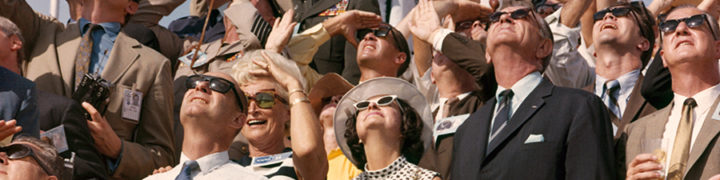
A 1979 CBS report about the potential of rollerskating as an Olympic sport.
You are currently browsing the archive for the Videos category.
Jimmy Carter tries to reform Washington ethics in 1977. It didn’t take.
Tags: Jimmy Carter
A 60 Minutes report from 1978 about the burgeoning business of movie piracy.
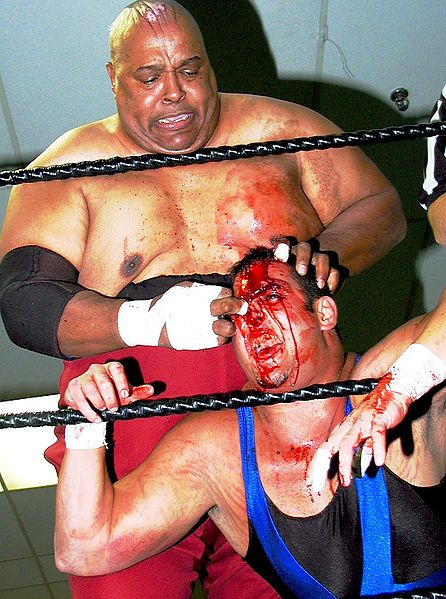
Steven Pinker, author of The Stuff of Thought among other provocative books, provides a history of violence–and its gradual decline–at Edge. An excerpt about the mitigating effect the printing press had on violence:
“By the 18th century a majority of men in England were literate.
Why should literacy matter? A number of the causes are summed up by the term ‘Enlightenment.’ For one thing, knowledge replaced superstition and ignorance: beliefs such as that Jews poisoned wells, heretics go to hell, witches cause crop failures, children are possessed, and Africans are brutish. As Voltaire said, ‘Those who can make you believe absurdities can make you commit atrocities.’
Also, literacy gives rise to cosmopolitanism. It is plausible that the reading of history, journalism, and fiction puts people into the habit of inhabiting other peoples’ minds, which could increase empathy and therefore make cruelty less appealing. This is a point I’ll return to later in the talk.”
••••••••••
Pinker talks the same topic at TED:
Tags: Stephen Colbert, Steven Pinker
Marcel Duchamp, that famed finder of urinals, explains the concept of the ready-made. (Thanks Documentarian.)
Tags: Marcel Duchamp

Rats are now becoming cyborgs, getting brain implants, as reported by Linda Geddes in New Scientist:
“AN ARTIFICIAL cerebellum has restored lost brain function in rats, bringing the prospect of cyborg-style brain implants a step closer to reality. Such implants could eventually be used to replace areas of brain tissue damaged by stroke and other conditions, or even to enhance healthy brain function and restore learning processes that decline with age.
Cochlear implants and prosthetic limbs have already proved that it is possible to wire electrical devices into the brain and make sense of them, but such devices involve only one-way communication, either from the device to the brain or vice versa.
Now Matti Mintz of Tel Aviv University in Israel and his colleagues have created a synthetic cerebellum which can receive sensory inputs from the brainstem – a region that acts as a conduit for neuronal information from the rest of the body. Their device can interpret these inputs, and send a signal to a different region of the brainstem that prompts motor neurons to execute the appropriate movement.”
Tags: Linda Geddes, Matti Mintz
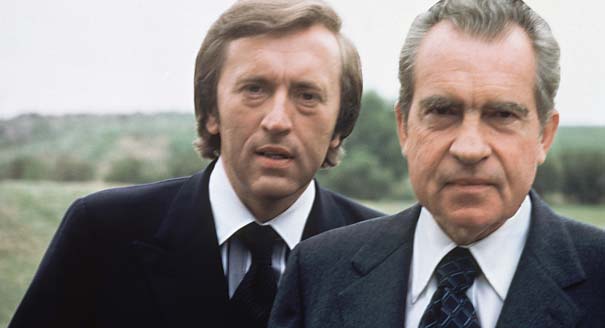
A week before the epic Frost-Nixon interviews were broadcast, David Frost speaks to Mike Wallace on 60 Minutes. Wallace didn’t think Frost had a prayer.
Tags: David Frost, Mike Wallace, Richard M. Nixon

This classic 1963 photo profiles Hangar One at Moffett Federal Airfield in Northern California. The towering hangar looks like something that arrived mysteriously from both the future and the past, a man-made colossus that seems to be the result of some higher creature. One of the world’s largest free-standing structures, Hangar One is 200-feet tall and spans eight acres. It was built during the Depression to house the U.S.S. Macon dirigible, an aircraft carrier that was the biggest airship in the world when it launched in 1933. But damage caused by a storm in 1935 buried the Macon deep in the Pacific Ocean. Today, a restored Hangar One is used by NASA. From a 2006 Spiegel article about the wreck of the Macon:
“The tragedy unfolded unusually slowly for an aviation catastrophe: The crew fought to control the USS Macon for more than an hour. US naval officers threw fuel canisters overboard in an attempt to reduce the weight of their vessel. The canisters imploded on their way to the ocean floor. Meanwhile, the Macon — the largest rigid airship ever constructed in the United States — sank inexorably downward, the safety of the Moffett Field hangar just within reach.
The Macon hit the water surface only five kilometers (three miles) off the Californian coast, along the latitude of the Point Sur lighthouse near Monterey, on Feb. 12, 1935. The zeppelin broke apart and sank into the deep water. Two of the 83 crew members died — the low number of deaths is likely due to the fact that the Macon sank in slow motion.
Neither enemy fire nor sabotage was to blame for the giant airship’s doom (and a giant it was: longer than three 747 jets parked nose to tail). A heavy storm above the picturesque stretch of Californian coast known as Big Sur tore off the Macon’s vertical tail fin. The airship’s structural framework was so badly damaged that the Macon broke apart when it hit the water.”
••••••••••
Trial flight of the Macon, 1933:
Explaining the phsyics of the riderless bicycle. (Thanks Marginal Revolution.)
In 1970, Dick Cavett and Marshall McLuhan discussed the importance of TV image to politicians, using the Nixon-Kennedy debates as a starting point. Television image means little now, since media culture is 24/7, ubiquitous and HD, and everyone comes off poorly. FYI: The other guests on this Cavett episode were Truman Capote and football player Gale Sayers.
Tags: Dick Cavett, Marshall McLuhan
Architects use ‘bots to build. (Thanks IEEE Spectrum.)
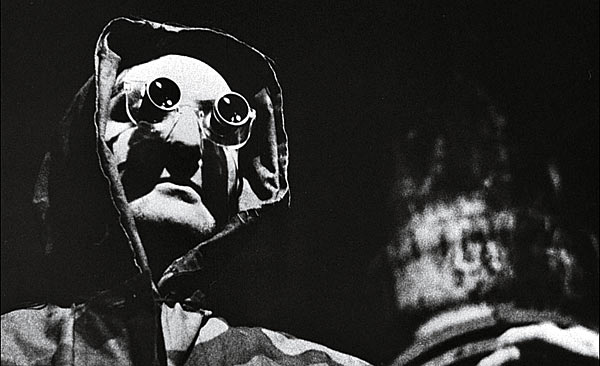
From a smart New York Times Op-Ed piece by Matthew Avery Sutton, about the bizarre and scary intersection of the end of days and the beginning of the political season:
“For some evangelicals, President Obama is troubling. The specious theories about his place of birth, his internationalist tendencies, his measured support for Israel and his Nobel Peace Prize fit their long-held expectations about the Antichrist. So does his commitment to expanding the reach of government in areas like health care.
In 2008, the campaign of Senator John McCain, the Republican nominee, presciently tapped into evangelicals’ apocalyptic fears by producing an ad, ‘The One,’ that sarcastically heralded Mr. Obama as a messiah. Mr. McCain was onto something. Not since Roosevelt have we had a president of charisma and global popularity, who so perfectly fits the evangelicals’ Antichrist mold.”
••••••••••
“The One,” 2008:
Tags: Barack Obama, Matthew Avery Sutton
Leonard Cohen turned 77 this week. Prince Charles is a fan:
“Now my friends are gone and my hair is gray”:
Tags: Leonard Cohen, Prince Charles
Walt Disney discusses robotics, 1963.
Tags: Walt Disney
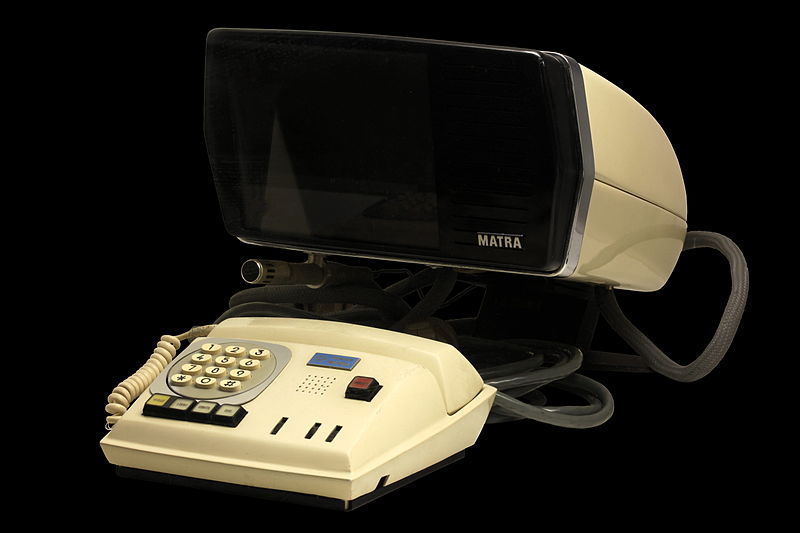
From Jan Hoffman’s new New York Times article about Skype-powered psychiatric sessions:
‘THE event reminder on Melissa Weinblatt’s iPhone buzzed: 15 minutes till her shrink appointment.
She mixed herself a mojito, added a sprig of mint, put on her sunglasses and headed outside to her friend’s pool. Settling into a lounge chair, she tapped the Skype app on her phone. Hundreds of miles away, her face popped up on her therapist’s computer monitor; he smiled back on her phone’s screen.
She took a sip of her cocktail. The session began.
Ms. Weinblatt, a 30-year-old high school teacher in Oregon, used to be in treatment the conventional way — with face-to-face office appointments. Now, with her new doctor, she said: ‘I can have a Skype therapy session with my morning coffee or before a night on the town with the girls. I can take a break from shopping for a session. I took my doctor with me through three states this summer!'”
••••••••••
“The unique service of the future, like the picture phone” (1960s):
Roger and Gene review the Mitsubishi VisiTel Visual Phone, 1988 (at 8:45):
Tags: Gene Siskel, Jan Hoffman, Melissa Weinblatt, Roger Ebert
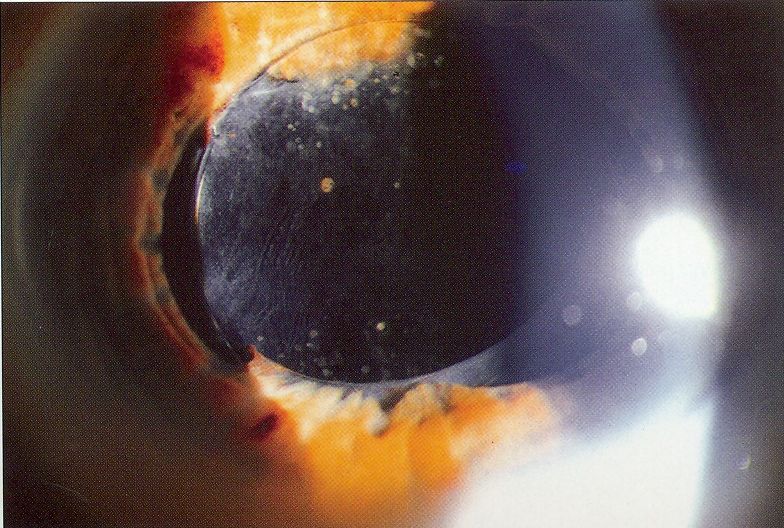
From Kate Moisse and ABC News comes this story about a breakthrough in our ability to visually reconstruct people’s memories:
“California scientists have found a way to see through another person’s eyes.
Researchers from UC Berkeley were able to reconstruct YouTube videos from viewers’ brain activity — a feat that might one day offer a glimpse into our dreams, memories and even fantasies.
‘This is a major leap toward reconstructing internal imagery,’ said Jack Gallant, professor of psychology and coauthor of a study published today in Current Biology. ‘We are opening a window into the movies in our minds.””
••••••••
“Reconstructing visual experiences from brain activities evoked by natural movies”:
Tags: Jack Gallant, Kate Moisse
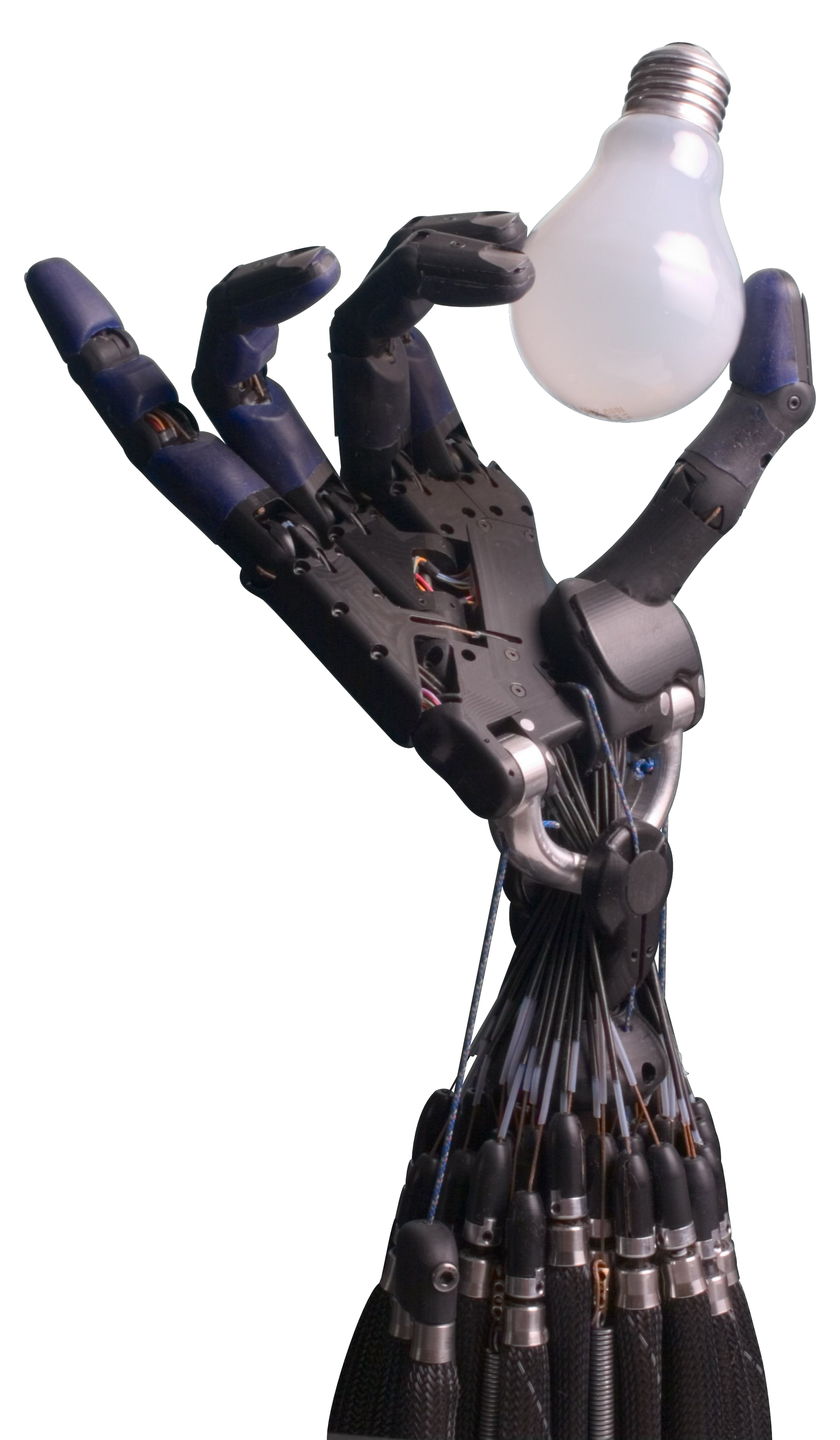
Robots in Singapore are getting fingerprints. From popsci:
“Researchers at the National University of Singapore are enhancing robots’ sense of touch by mimicking the ridged and contoured surfaces of human fingertips. Fingerprints, it turns out, don’t just give humans better grip but also carry out a sensitive type of signal processing. By imparting that same kind of signal processing to robots, we could reduce the processing loads to robots’ CPUs and help them better identify objects through their shapes.
Fingerprints provide a unique identifier and a better means to hold on to objects, but they also shape the ways we sense and perceive the world around us. When we touch something, the ridges alter the vibrations moving through our skin such that nerve endings can better receive them. This serves as a kind of signal processing that allows the skin in our fingertips to provide richer information to our central nervous system than skin on other parts of the body.”
••••••••••
Hymie the Robot, Get Smart:
“Living with Robots,” Honda:
From a 1999 Playboy interview with writer/director Michael Crichton, who fretted, to great financial success, over science outpacing ethics:
Playboy:
In Jurassic Park, you looked at the potential hazards of DNA research. What’s your view of cloning?
Michael Crichton:
I think we’re a long way from cloning people. But I am worried about scientific advances without consideration of their consequences. The history of medicine in my lifetime is one of technological advances that outstrip our ethical systems. We’ve never caught up. When I was in medical school—30-odd years ago—people were struggling to deal with mechanical-respiration systems. They were keeping alive people who a few years earlier would have died of natural causes. Suddenly people weren’t going to die of natural causes. They were either going to get on these machines and never get off or—or what? Were we going to turn the machines off? We had the machines well before we started the debate. Doctors were speaking quietly among themselves with a kind of resentment toward these machines. On the one hand, if somebody had a temporary disability, the machines could help get them over the hump. For accident victims—some of whom were very young—who could be saved if they pulled through the initial crisis, the technology saved lives. You could get them over the hump and then they would recover, and that was terrific.
But on the other hand, there was a category of people who were on their way out but could be kept alive. Before the machine, ‘pulling the plug’ actually meant opening the window too wide one night, and the patient would get pneumonia and die. That wasn’t going to happen now. We were being forced by technology to make decisions about the right to die—whether it’s a legal or religious issue—and many related matters. Some of them contradict longstanding ideas in an ethically protected world; we weren’t being forced to make hard decisions, because those decisions were being made for us—in this case, by the pneumococcus.
This is just one example of an ethical issue raised by technology. Cloning is another. If you’re knowledgeable about biotechnology, it’s possible to think of some terrifying scenarios. I don’t even like to discuss them. I know people doing biotechnology research who have decided not to pursue avenues of research because they think they’re too dangerous. But we go forward without sorting out the issues. I don’t believe that everything new is necessarily better. We go forward with the technology while the ethical issues are still up in the air, whether it’s the genetic variability of crop streams, which is a resource in times of plant plagues, to the assumption that we all have to be connected all the time. The technology is here so you must use it. Do you? Do you have to have your cell phone and your e-mail address and your Internet hookup? I was just on holiday in Scotland without e-mail. I had to notify people that I wouldn’t be checking my e-mail, because there’s an assumption that if I send you an e-mail, you’ll get it. Well, I won’t get it. I’m not plugged in, guys. Some people are horrified: “You’ve gone offline?” People feel so enslaved by technology that they will stop having sex to answer the telephone. What could be so important? Who’s calling, and who cares?•
Tags: Michael Crichton
The Statler Brothers performing their 1965 ode to alienation, “Flowers on the Wall,” a favorite of Kurt Vonnegut (see: Palm Sunday) and Quentin Tarantino (see: Pulp Fiction).
I keep hearin’ you’re concerned about my happiness
But all that thought you’re givin’ me is conscience I guess
If I were walkin’ in your shoes I wouldn’t worry none
While you and your friends’re worryin’ bout me I’m havin’ lots of fun
Countin’ flowers on the wall that don’t bother me at all
Playin’ solitare till dawn with a deck of fifty one
Smokin’ cigarettes and watchin’ Captain Kangaroo
Now don’t tell me I’ve nothing to do
Last night I dressed in tails pretended I was on the town
As long as I can dream it’s hard to slow this swinger down
So please don’t give a thought to me I’m really doin’ fine
You can always find me here I’m havin’ quite a time
Countin’ flowers on the wall that don’t bother me at all
Playin’ solitare till dawn with a deck of fifty one
Smokin’ cigarettes and watchin’ Captain Kangaroo
Now don’t tell me I’ve nothing to do
It’s good to see you I must go I know I look a fright
Anyway my eyes are not accustomed to this light
And my shoes are not accustomed to this hard concrete
So I must go back to my room and make my day complete
Countin’ flowers on the wall that don’t bother me at all
Playin’ solitare till dawn with a deck of fifty one
Smokin’ cigarettes and watchin’ Captain Kangaroo
Now don’t tell me I’ve nothing to do
Don’t tell me I’ve nothing to do
Tags: Kurt Vonnegut, Quentin Tarantino, The Statler Brothers

Jack Paar and Liberace welcome Cassius Clay, who was known to sometimes be gassy. The future heavyweight champion (and future Muhammad Ali) was three months from his first bout with Sonny Liston. From a PBS Paar doc.
Tags: Cassius Clay, Jack Paar, Liberace, Sonny Liston
Taking a spin on the omnidirectional treadmill.

It’s amusing (in a sad way) that the biggest story from the NFL last week was that a couple of New York Giants faked injuries to disrupt The Rams’ hurry-up offense. It was a minor footnote blown up into a huge sensation and the sport’s biggest story, a parallel one, was all but ignored. And that’s because sports reporters are part of the same machinery as the NFL, more concerned with keeping the cash register humming than offering any rational analysis.
Last Sunday, quarterback Michael Vick received a concussion and bit his tongue so badly that he was spitting up blood on the field. QB Tony Romo was also seriously injured and this (approximate) sentence was uttered on the NFL Network on Tuesday: “It’s been learned that Romo suffered a collapsed lung as well as cracked ribs. It’s not sure if he will play on Monday.”
The question sports reporters are asking: Will Romo play this Monday? The question they should be asking: Why the hell would Romo be playing this Monday? Why would he be playing a brutal car-crash sport just eight days after his lung–a vital organ–stopped working because it was so severely damaged in an on-the-field injury? I’m assuming a couple of talking heads asked these latter questions, but I guarantee they were in the vast minority. That’s because few people care about the players’ health and everyone cares about the violent diversion and, especially, the money. And, yes, Romo was just cleared to play this Monday.
I know there are other people in our society who risk their lives all the time, most notably members of the military, but the military is important and football is certainly not important. My assumption is this insane attitude will continue until a player dies on the field. Does anyone think that’s impossible?•
••••••••••
From Rollerball, 1975: “You know how the game serves us. It has a definite social purpose.”
Tags: Michael Vick, Roger Goodell, Tony Romo
If it wasn’t just so deeply stupid and funny, this 1975 NBC News “special” report about a revival in the popularity of the Three Stooges in the wake of Watergate would be one of the most perplexing wastes of time ever. An emaciated Moe drops by for one of his final interviews. Also on hand: Joe Besser, who was the fifth best Stooge (out of five), and had earlier excelled on the Abbott and Costello Show in the complex role of “Stinky,” a man-child unable to fully adapt to the advances of the Industrial Revolution. Okay, I’ll stop now.
Tags: Joe Besser, John Chancellor, Moe Howard
A 1978 video that shows how the Chinese language, with it s many symbols, works on a typewriter. (Thanks Reddit.)
Samantha Smith, a Cold War child from Maine, became an international celebrity at age 10 when she wrote a letter in 1982 to Soviet General Secretary Yuri Andropov voicing her concerns about a nuclear war. Andropov replied, invited her on a goodwill trip to the Soviet Union, and her trek there and back became a media sensation. An articulate child who suddenly possessed an off-the-charts Q rating, Smith was cast in the TV drama, Lime Street. When returning to Maine from filming the a segment of the series, Smith, who was 13, and her father, were killed in a plane crash.
Smith on Nightline:
Tags: Samantha Smith, Ted Koppel