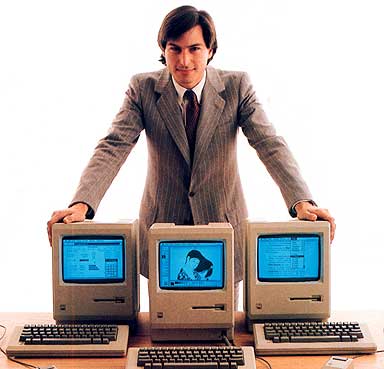
- Jobs introduces the Macintosh. (1984)
Ideas and technology and politics and journalism and history and humor and some other stuff.
You are currently browsing the archive for the Videos category.
Tags: Steve Jobs
From 1978.
Tags: Steve Jobs
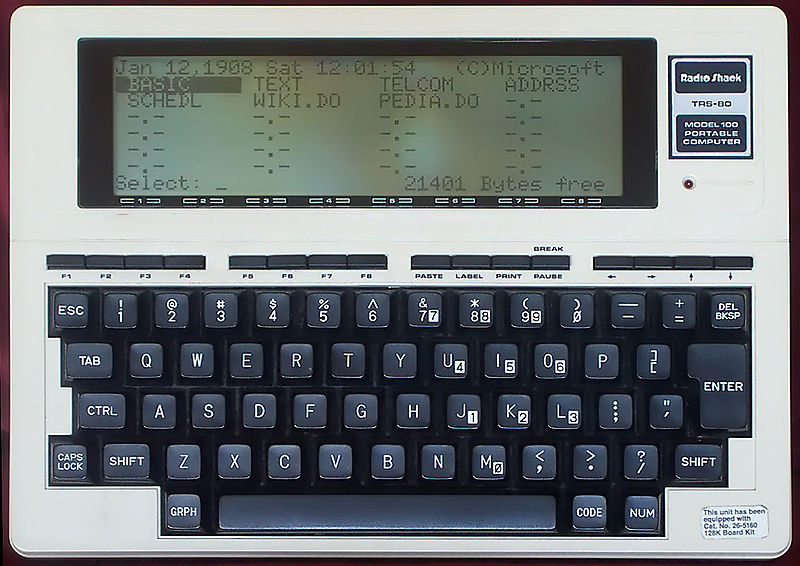
The opening of “Slow Scan To Moscow,” Adam Hochschild’s 1986 Mother Jones article about the growing electronic connectivity between people of the U.S. and the Soviet Union, two countries that were still locked in the Cold War:
“Joel Schatz has wire-rimmed glasses and an Old Testament-sized beard. A big head of curly black hair flecked with gray adds a few extra inches to his sixfoot-two frame. ‘This trip we’re about to take,’ he says enthusiastically, ‘is so important that I’ve even gotten a haircut.’ Its effects are not noticeable.
Joel is sitting in the study of his San Francisco apartment, where most of the furniture consists of pillows on the floor. The largest thing in sight is an enormous reflector telescope, which can be pivoted around on its pedestal and aimed out a high window, Joel explains, ‘to remind me of my place in the cosmos. We’re all voyagers out there.
‘If I had millions of dollars I’d build neighborhood observatories all over the world. And at each one I’d have good conga drums, so people could drum together as well as observe.’
The object of Joel’s attention at this moment, however, as it is much of the time, is his four-pound, briefcase-size Radio Shack Tandy Model 100 portable computer. ‘I bought this machine for $399. For $1.82 a minute – $1.82! – I can send a telex message to Moscow. This technology is going to revolutionize human communications! Think what it will mean when you can get thousands of Americans and Soviets on the same computer network. Once scientists in both countries begin talking to each other on these machines they won’t be able to stop. And we’ll be taking a running leap over the governments on both sides.
‘I’m not a scientist,’ Joel adds. ‘I’ve only owned a computer for four months. I don’t understand how they work. I’ll leave that to other people. I’m just interested in how they can improve communication on this planet.'” (Thanks Longform.)
••••••••••
Radio Shack Tandy 102 portable computer, the final refresh of the 100 series:
Tags: Adam Hochschild, Joel Schatz
A message from the good people at Hanson Robokind.
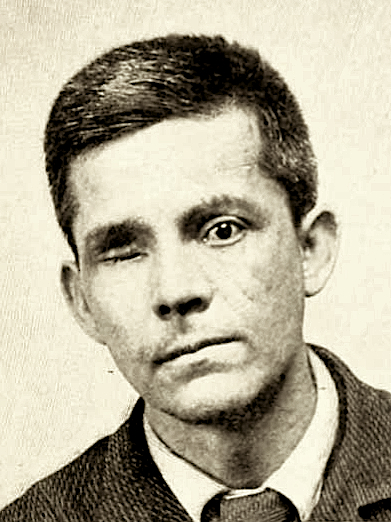
Interesting idea from William J. Stuntz’s The Collapse of American Criminal Justice (via Tyler Cowen at Marginal Revolution), which argues that NYC is far more violent than it was a century ago, but we don’t notice because emergency medical care and surgical procedures have improved so markedly that there are fewer fatalities. The only caveat is that I’d be curious as to how exhaustive statistics were 100 years ago. The passage:
“New York is America’s safest large city, the city that saw crime fall the most and the fastest during the 1990s and the early part of this decade. Yet New York’s murder rate is 80 percent higher now than it was at the beginning of the twentieth century — notwithstanding an imprisonment rate four times higher now than then. That crime gap is misleadingly small; thanks to advances in emergency medicine, a large fraction of those early twentieth-century homicide victims would survive their wounds today. Taking account of medical advances, New York is probably not twice as violent as a century ago, but several times more violent. At best, the crime drop must be counted a pyrrhic victory.”
••••••••••
Bill the Butcher, old-school:
Tags: Tyler Cowen, William J. Stuntz
Richard Feynman on nanotechnology in 1959.
“Let’s Get Small,” Steve Martin, 1976:
“I mentioned that, earlier in the show, a drug joke – and I hate to do that, because it creates a mess, and I’m not into drugs any more. I quit completely, and I hate people who are still into it. Well.. I do take one drug now – for fun – and, maybe you’ve heard of it, it’s a new thing, I don’t know if you have or not. It’s a new thing, it makes you small. [indicates size with fingers] About this big. And, you know, I’ll be home, sitting with my friends, and, uh.. we’ll be sitting around, and somebody will say, ‘Heeeyyy.. let’s get small!’ So, you know, we get small, and uh.. the only bad thing is if some tall people come over. You’re walking around going, ‘Ah hahaha..!’ Now, I know I shouldn’t get small when I’m driving.. but I was driving around the other day, and I said, ‘What the heck?’ You know? So I’m driving like.. [ extends arms high in the air like he’s reaching up to a giant steering wheel ] And, uh.. a cop pulls me over. And he makes me get out, he looks at me and he says, ‘Heyyy.. are you small’? I said, ”No-o-o! I’m not!’ He said, “Well, I’m gonna have to measure you.’ They have this little test they give you – they give you a balloon.. and if you can get inside of it, they know you’re small. Now, I’ve already talked it over with the cast – they’ve been working all week, it’s a tough thing to do, come out here live. Immediately after the show, we’re all gonna go out.. and get really small!”
Tags: Richard Feynman, Steve Martin
Mike Wallace interviews the Shah of Iran, 1976. Three years later, the Shah would flee into exile.
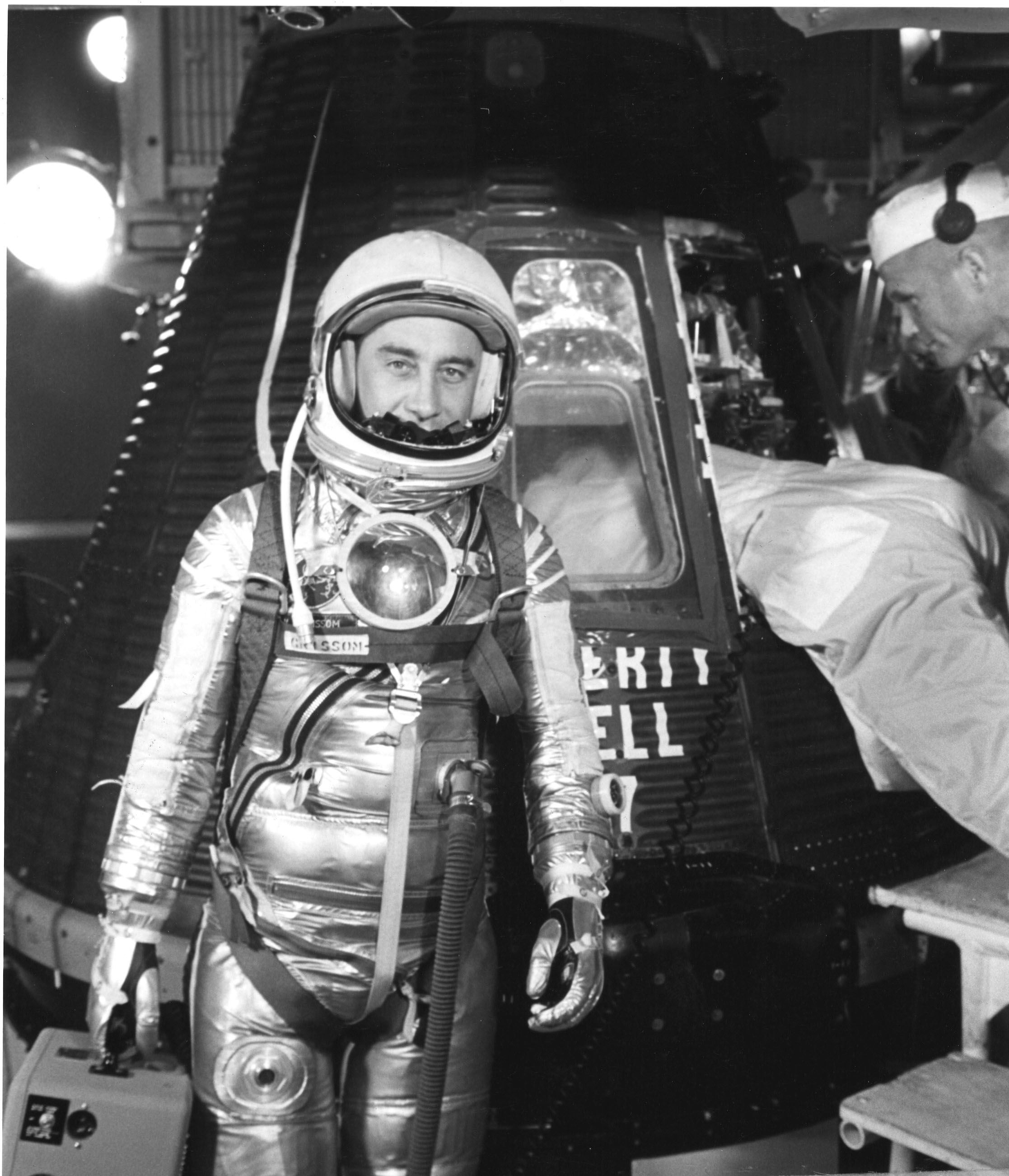
In World Policy, sci-fi writer Neal Stephenson vents about the diminishing of the American space program, and what it says about our nation’s capacity for executing large-scale, top-down, risk-heavy endeavors. The opening:
“My lifespan encompasses the era when the United States of America was capable of launching human beings into space. Some of my earliest memories are of sitting on a braided rug before a hulking black-and-white television, watching the early Gemini missions. This summer, at the age of 51—not even old—I watched on a flatscreen as the last Space Shuttle lifted off the pad. I have followed the dwindling of the space program with sadness, even bitterness. Where’s my donut-shaped space station? Where’s my ticket to Mars? Until recently, though, I have kept my feelings to myself. Space exploration has always had its detractors. To complain about its demise is to expose oneself to attack from those who have no sympathy that an affluent, middle-aged white American has not lived to see his boyhood fantasies fulfilled.
Still, I worry that our inability to match the achievements of the 1960s space program might be symptomatic of a general failure of our society to get big things done. My parents and grandparents witnessed the creation of the airplane, the automobile, nuclear energy, and the computer to name only a few. Scientists and engineers who came of age during the first half of the 20th century could look forward to building things that would solve age-old problems, transform the landscape, build the economy, and provide jobs for the burgeoning middle class that was the basis for our stable democracy.” (Thanks Browser.)
••••••••••
“You became a learning machine”:
Tags: Neal Stephenson
I don’t agree with everything Ted Koppel says in this video about information overload, but it’s an interesting take.
Tags: Ted Koppel
ABC News from September 6, 1972, in the wake of the kidnapping and murder of numerous Israeli Olympic athletes by Black September terrorists at the Munich Games. Howard K. Smith at the anchor desk, with reports by young correspondents Peter Jennings and Ted Koppel.
Tags: Howard K. Smith, Peter Jennings, Ted Koppel
AlphaDog, from the good people at Boston Dynamics. (Thanks Physorg.)
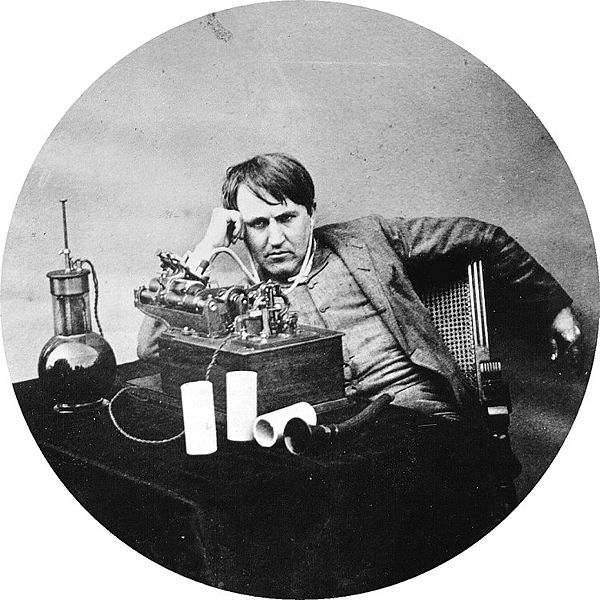
At the American, Vaclav Smil argues that Steve Jobs shouldn’t be compared to Thomas Edison. An excerpt:
“I have no desire to disparage or dismiss anything Jobs has done for his company, for its stockholders, or for millions of people who are incurably addicted to incessantly checking their tiny Apple phones or washing their brains with endless streams of music—I just want to explain why Jobs is no Edison.
Any student of the history of technical progress must be struck by the difference between the epochal, first-order innovations that take place only infrequently and at unpredictable times and the myriad of subsequent second-order inventions, improvements, and perfections that could not have taken place without such a breakthrough and that both accompany and follow (sometimes with great rapidity, often rather tardily) the commercial maturation of that fundamental enabling advance. The oldest example of such a technical saltation was when our hominin ancestors began using stones to fashion other stones into sharp tools (axes, knives, and arrows). And there has been no more fundamental, epoch-making modern innovation than the large-scale commercial generation, transmission, distribution, and conversion of electricity.”
________________________
Edison talks:
Tags: Steve Jobs, Thomas Edison, Vaclav Smil
America has always had its conspiracists, not just now. But as the media has become less centralized and more diffuse–largely a good thing–the fringe element has been able to enter the mainstream with greater ease. Maybe it’s better they’re out in the open. Phil Donahue interviews militia members, 1994.
Tags: Phil Donahue
Rare interview with the incredible Peter Sellers, who hated appearing out of character and seldom did chat shows. From 1974, a decade after an experimental pacemaker saved his life, and five years before he starred in Being There.
Tags: Michael Parkinson, Peter Sellers
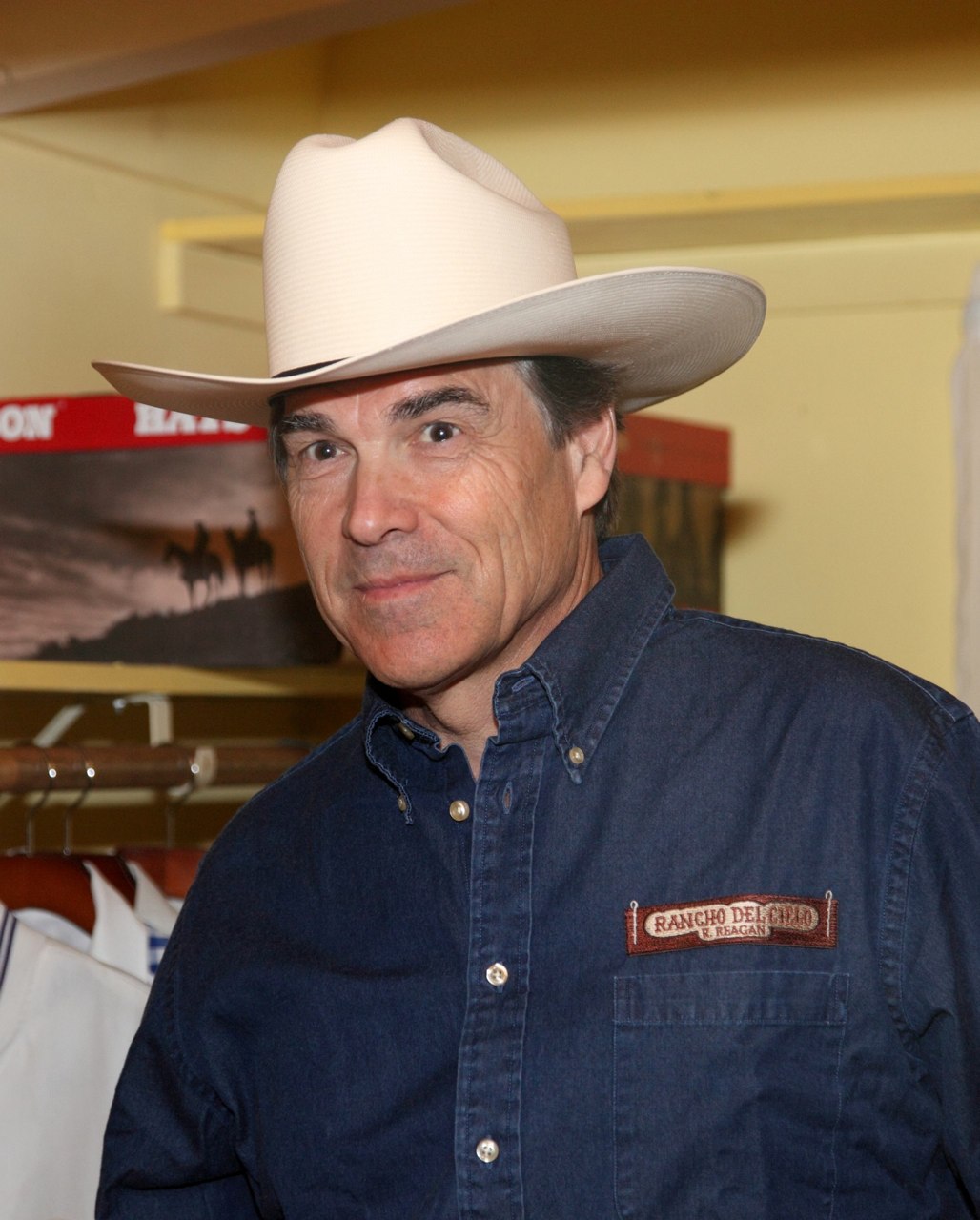
Interesting take by Mimi Swartz in the Sunday Times Magazine on Rick Perry and his Presidential aspirations facing an Old South-New South divide. Swartz, executive editor at Texas Monthly, has a bird’s-eye view of the backstabbing and jockeying. An excerpt:
“What is surprising is the situation among Republicans. ‘There’s no doubt that there’s been a split in the Republican Party in Texas between the country-club wing and the much more conservative base segment of the party,’ says Matt Mackowiak, an Austin-based political consultant and a Perry supporter. That divide is only going to expand. When Karl Rove takes digs at the governor on The Wall Street Journal’s op-ed page, and when George H. W. and Barbara Bush endorse Perry’s gubernatorial primary competitor Kay Bailey Hutchison, that’s the sound of early salvos in an intrastate, intraparty class war.
This isn’t just about snobbery but about something far more important here: money. Texans who have spent zillions to brag about the state’s opera and ballet companies, and who have paid the likes of Santiago Calatrava for architectural gewgaws, also know that multinational corporations aren’t willing to locate in a place that has awful schools and toxic air and that wears its provincialism proudly.”
••••••••••
Santiago Calatrava’s Margaret Hunt Hill Bridge, Dallas, Texas:
Tags: Matt Mackowiak, Mimi Swartz, Rick Perry
Can your surgeon do this? (Thanks Wired.)
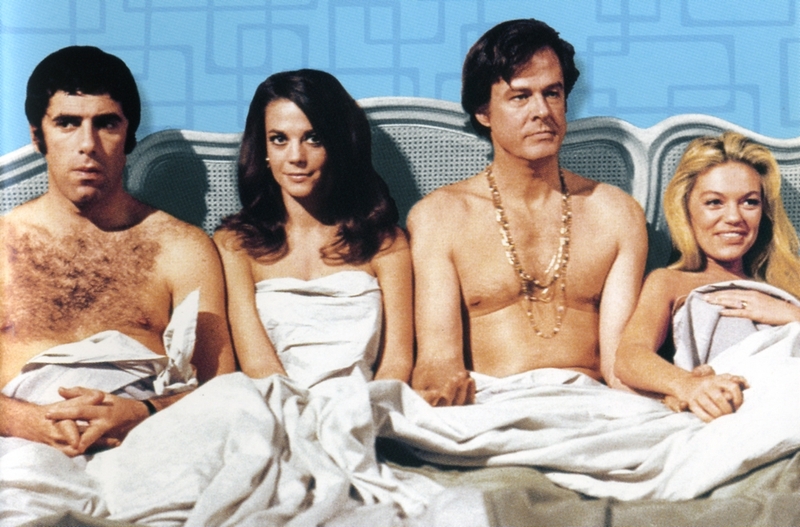
In the aftermath of the 1960s tumult, social networks arose, but of a non-virtual sort. People gathered in circles, discussed their feelings and tried to come to a point where true intimacy could exist with their spouses and with others. Paul Mazursky’s comedy of manners, Bob & Carol & Ted & Alice, is interested in both spouses and the others, studying a pair of married couples racing to the front lines of the sexual revolution before the hand-to-hand ends.
Middle-aged journalist Bob (Robert Culp) and his beautiful wife, Carol (Natalie Wood), leave their kid behind to attend just such a weekend retreat. They’re ostensibly there at this groovy 24-hour crash course in intimacy so that Bob can write an article, but his long hair and mod clothes make it clear that Bob isn’t interested in growing old before he’s had a chance to be young.
Bob and Carol both emerge greatly changed, ready to open their minds and blouses and pants. Bob soon has an affair, and is taken aback when his suddenly non-judgemental wife doesn’t mind. Bob has a much tougher time dealing with his emotions when Carol beds her tennis pro, Horst. But soon he and Horst are drinking and laughing together, and Bob feels liberated from feelings of jealousy. But the acolyte swingers have a difficult time explaining their moral shift to their best friends, the uptight marrieds Ted (Elliot Gould) and Alice (Dyan Cannon). Ted and Alice are revolted—and perhaps just a wee bit curious.
When the four friends head to Atlantic City together for a weekend of gambling, they’re soon weighing whether or not to get their group on. Or as one member of the quartet puts it: “First we’ll have an orgy, and then we’ll go see Tony Bennett.”
Mazursky tries to find a balance in the concluding scenes, acknowledging the need to break down walls, but perhaps not every last one. An utter lack of boundaries can’t work, but are we any closer now, with all our connectedness, to finding a middle ground? What are we connected to? An icon? An identity? A “friend”? It brings to mind something uttered in the film’s consciousness-raising circle: “You chat…but you don’t really look at each other.”•
Tags: Dyan Cannon, Elliot Gould, Natalie Wood, Paul Mazursky, Robert Culp
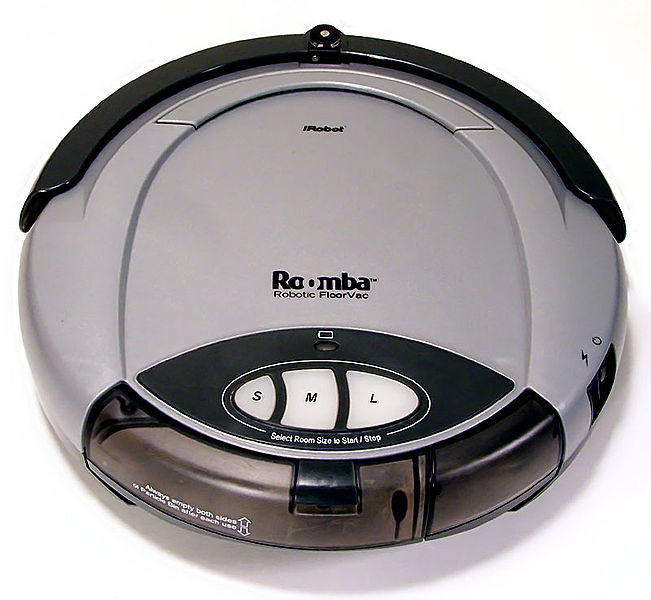
From the introduction of “Will Robots Steal Your Job?” a series of articles about the increasing IQ of artificial intelligence, by the resolutely excellent Farhad Manjoo at Slate:
“Artificial intelligence machines are getting so good, so quickly, that they’re poised to replace humans across a wide range of industries. In the next decade, we’ll see machines barge into areas of the economy that we’d never suspected possible—they’ll be diagnosing your diseases, dispensing your medicine, handling your lawsuits, making fundamental scientific discoveries, and even writing stories just like this one. Economic theory holds that as these industries are revolutionized by technology, prices for their services will decline, and society as a whole will benefit. As I conducted my research, I found this argument convincing—robotic lawyers, for instance, will bring cheap legal services to the masses who can’t afford lawyers today. But there’s a dark side, too: Imagine you’ve spent three years in law school, two more years clerking, and the last decade trying to make partner—and now here comes a machine that can do much of your $400-per-hour job faster, and for a fraction of the cost. What do you do now?”
••••••••••
“Bring it on”:
A 1986 CBS News report about a hole in the ozone layer. These “In the News” segments from the ’70s and ’80s were aimed at children and ran during breaks in cartoons on Saturday mornings. There is way more information available to kids (and everyone) today, but the delivery of it is seldom this impressive. Media functionality has grown exponentially more impressive while journalistic content has not followed.

The world was stunned when NASA announced last December that arsenic-based life existed on Earth, a finding that ran counter to everything we believed, suggesting a parallel life form was possible on our planet. Then the microbes hit the fan, and Felisa Wolfe-Simon, the young astrobiologist at the center of the discovery, was caught up in a firestorm. The opening of a Tom Clynes article on the controversy at Popsci:
“It is this mud, and the peculiar microbes in it, that have stuck Wolfe-Simon in the middle of one of the most extraordinary scientific disputes in recent memory. Last December, at a highly publicized NASA press briefing, Wolfe-Simon announced that her research team had isolated bacteria from Mono Lake, on the edge of California’s Eastern Sierra mountain range, that could subsist on arsenic in place of phosphorus, one of the elements considered essential for all life.
The research, financed mostly by NASA and published initially in the online edition of Science, jolted the scientific community. If confirmed, scientists said, the discovery would mean that this high mountain lake hosts a form of life distinct from all others known on Earth. It would open up the possibility of a shadow biosphere, composed of organisms that can survive using means that long-accepted rules of biochemistry cannot explain. And it would give Mono Lake, rather than Mars or one of Jupiter’s moons, the distinction of being the first place in our solar system where ‘alien’ life was discovered.
But within days, researchers began to question Wolfe-Simon’s methodology and conclusions. Many of them cast aside traditions of measured commentary in peer reviewed periodicals and voiced their criticism directly on blogs and Twitter. Then, as the conflict spilled into the mainstream, the scientific community witnessed something few would have predicted: meaningful public engagement over a serious scientific issue. For several days, at least, a good many water cooler conversations revolved around the metabolic capabilities of a Gammaproteobacterium.
Among academics, the debate devolved into something more vitriolic and personal. One researcher questioned whether Wolfe-Simon and her team were ‘bad scientists.’ Another called her work ‘science fiction.’ One blog post bore the title ‘Is Felisa Wolfe-Simon an Alien?'”
••••••••••
“A tiny microbe that can survive concentrations of arsenic that would kill all normal life dead”:
Tags: Felisa Wolfe-Simon, Tom Clynes
Frank Zappa profiled on the Today Show, 1993, the year he died.
Tags: Frank Zappa
A 1985 CBS News report about the 40th anniversary of two Japanese cities being destroyed by atom bombs during WWII.
Cool vintage 1971 NASA film links the history of knowledge gathering in America, from Benjamin Franklin to space travel.
Related post:

Gizmodo has a good post by Mat Honan which fleshes out what became obvious yesterday after Amazon’s dazzling Kindle Fire presentation: For the time being, Jeff Bezos will fill the void created by Steve Jobs stepping aside at Apple. Amazon has always been formidable, but a little blah. No more. An excerpt:
“And so when it was all over, the press, the great opinionator that drives purchasing decisions, was utterly flabbergasted. It was totally Jobsed, so to speak. Hypnotized and drawn in by the mind-blowing Bezos.
Much of that that is because of his passion. You can see it in his eyes, full of zeal and bordering on crazy. He isn’t just conning you, he believes in it. He feels strongly that he’s got the right product, at the right time. And so watch him and you will too.
And yet, it’s not just about his salesmanship. ‘Jeff Bezos is the new Ron Popeil‘ is a whole other story. He mirrors Apple’s former CEO in a host of other ways as well.
Most obviously, he’s a founder/CEO. Amazon is his. Yes, it’s a public company, but it goes where his vision takes it. It follows his mind into markets. Amazon is Jeff Bezos. Without him it would be adrift.”
••••••••••
“The instruction we find in books is like fire”:
Tags: Jeff Bezos, Mat Honan, Steve Jobs