Lots of cool crap for the home that people in the ’50s thought that we would have today. The table-top dishwasher is excellent and very unnecessary.
You are currently browsing the archive for the Urban Studies category.
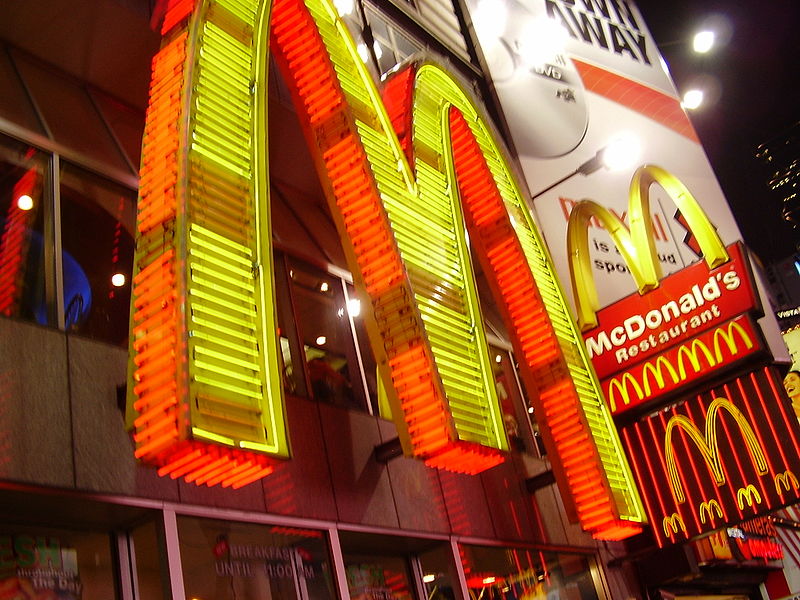
"This is for a Christmas gift."
WANTED: Big Mac Sauce (Brooklyn)
Hello there. I’m looking for a box or jar of Authentic Big Mac sauce. Im willing to pay…whatever is fair. I know this sounds somewhat odd but this is for a Christmas gift and is highly neccesary. If anyone could procure and supply this to me it would be greatly appreciated. name your price!
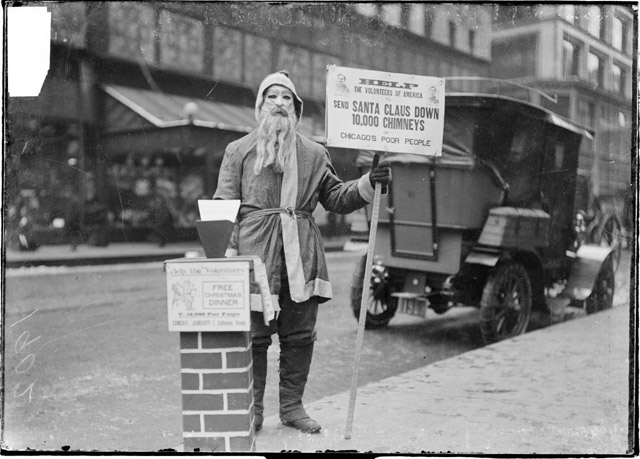
New York gave America Christmas, and Chicago gave us this creepy sidewalk Santa in 1902. He would murder you and your children while you slept. (Image by "Chicago Daily News.")
We know that New York City gave America the Thanksgiving holiday, but it was responsible for Christmas as well. An excerpt from the “1783-1843” section of Edwin G. Burrows and Mike Wallace’s amazing Gotham:
“Wealthy New Yorkers didn’t invent the new cult of domesticity, which was a characteristic of emerging bourgeois culture throughout the Atlantic world. They did, however, give it Christmas–a holiday that became synonymous with genteel family life and a quintessential expression of its central values.
For 150-odd years, probably since the English conquest, the favorite winter holiday of the city’s propertied classes was New Year’s Day (as distinct from the night before, which was the occasion for revelry and mischief among common folk). Families exchanged small gifts, and gentlemen went around the town to call on friends and relations, nibbling cookies and drinking raspberry brandy served by the women of the house. Sadly, according to John Pintard, the city’s physical expansion after 1800 rendered this ‘joyous older fashion’ so impractical that it was rapidly dying out.
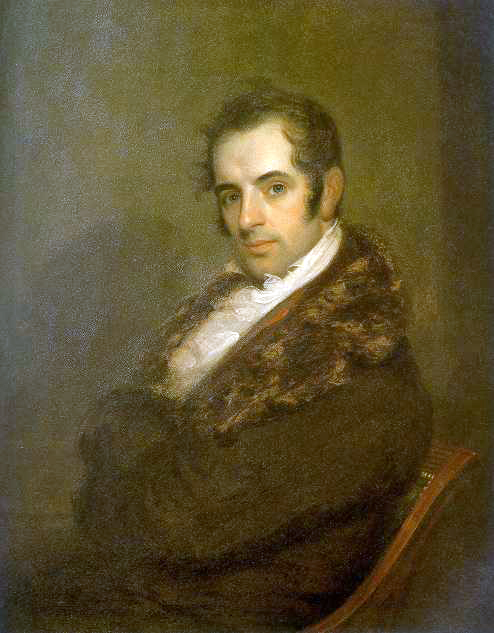
"Washington Irving had identified Nicholas as the patron saint of New Amsterdam, describing him as a jolly old Dutchman, nicknamed Sancte Claus." (Image by John Wesley Jarvis.)
As an alternative, Pintard proposed St. Nicholas Day, December 6, as a family-oriented winter holiday for polite society. In Knickerbocker’s History, Pintard’s good friend Washington Irving had identified Nicholas as the patron saint of New Amsterdam, describing him as a jolly old Dutchman, nicknamed Sancte Claus, who parked his wagon on rooftops and slid down chimneys with gifts for sleeping children on his feast day. It was Salmagundi-style fun, of course; although seventeenth-century Netherlanders had celebrated St. Nicholas Day, the earliest evidence of anyone doing so on Manhattan dates from 1773, when a group of ‘descendants of the ancient Dutch families’ celebrated the sixth of December ‘with great joy and festivity.’ Certainly nothing remotely like the Sancte Claus portrayed by Irving had ever been known on either side of the Atlantic.
Mere details were no obstacle to Pintard. On December 6, 1810–one year to the day after the publication of Irving’s History–he launched his revival of St. Nicholas Day with a grand banquet at City Hall for members of the New-York Historical Society. The first toast was to ‘Sancte Claus, good heylig man!’ and Pintard distributed a specially engraved picture that showed Nicholas with two children (one good, one bad) and two stockings hung by the hearth (one full, one empty)–the point being that December 6 was a kind of Judgement Day for the young, with the saint distributing rewards and punishments as required. St. Nicholas day never quite won the support Pintard wanted, and he eventually ran out of enthusiasm for the project. Sancte Claus, on the other hand, took off like a rocket.”
Tags: Edwin G. Burrows, John Pintard, Mike Wallace, Washington Irving
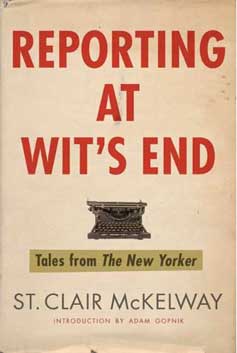
"Reporting at Wit's End," a thick paperback collection of great McKelway reportage is currently on sale at Amazon for $7.20.
A New Yorker writer for decades, St. Clair McKelway (1905-1980) had an insatiable appetite for criminals of all kinds–impostors, embezzlers, counterfeiters, etc.–and the law-enforcement personnel who tried to bring them to justice. In recent decades, McKelway has been more of a cult favorite than a legend like Liebling or Mitchell, but hopefully the 2010 paperback collection of his work, Reporting at Wit’s End, will remedy that situation.
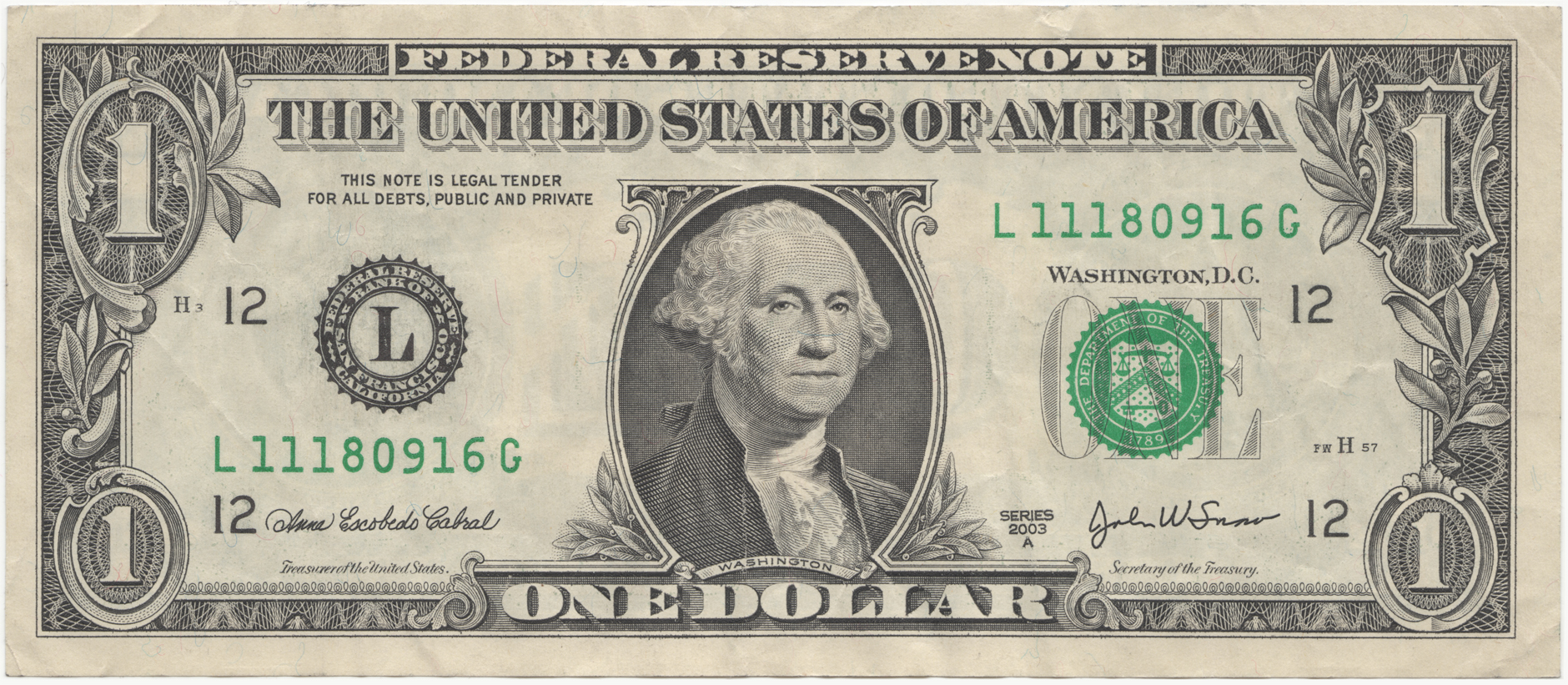
It was the counterfeiter category that gave McKelway the raw material for his most famous article, a 1949 piece entitled, “Mister 880,” about an elderly paperhanger who used a hand cranked printing press to manufacture barely passable duplicates of one dollar bills. Despite being a crappy counterfeiter, Mister 880 frustrated the Feds for a decade and was the unlikely target of a massive manhunt, before a series of flukish events brought him down. An excerpt from the opening of that piece (which was also adapted for film):
“In the late summer of 1938, an elderly widower named Edward Mueller found that he was in need of money for the support of his dog and himself. He was a man of simple tastes, and the dog was an undemanding mongrel terrier. Mr. Mueller had for many years been a superintendent in apartment buildings on the Upper East Side. Living in the basements of these buildings, he and his wife had raised two children, a boy and a girl. By the time Mrs. Mueller died, in 1937, the children had grown up and gone off to homes of their own. The son had a job and was doing well; the daughter had married. After the death of his wife, Mueller moved out of the basement that had been their home together and rented a small, sunny flat on the top floor of the brownstone tenement near Broadway and Ninety-sixth Street. He and the dog took possession of it in the spring of 1938. Feeling that he was too old to be a superintendent any longer, Mueller tried for a while to make a living as a junkman. He was sixty-three at the time and was gentle, sweet-tempered, and strongly independent. Only five feet three inches tall, he had a lean, hard-muscled frame, a healthy pink face. bright blue eyes, a shiny bald dome, a fringe of snowy hair over his ears, a wispy white mustache and hardly any teeth. He bought a pushcart secondhand and, accompanied by his dog, roamed the neighborhood when the weather was good, picking up junk in vacant lots and along the river front under the West Side Highway. He went about his work in a leisurely manner and always looked happy. Sometimes he stopped to talk to strangers who wanted to talk, and at other times he carried on fragmentary, one-sided conversations with the dog that trotted at his heels. He was able to sell some of the odds and ends he picked up to the wholesale junk dealers, but before many months had gone by, he began to realize that he wasn’t making enough to live on, and that if he didn’t do better his savings would soon be gone and he would be destitute.
 When his son and daughter visited him, and when he went to see them, Mueller said that he was getting along all right and didn’t need a thing. For a full half century, he had depended only on himself, and he had the flinty pride on an elderly man who had worked hard since he was a boy of thirteen and had never asked helped from anybody. The life he had lived had been a respectable and law-abiding one. Everybody who had ever known Mueller would have said that he was probably the last man in the world to try to make money dishonestly. That was exactly what Mueller did, however. In November, 1938, he became a counterfeiter of one dollar bills.”
Tags: Edward Mueller, St. Clair McKelway
I posted the video of the touch-tone phone being demonstrated at the World’s Fair in Seattle in 1963. It took eight years, but that techonology was finally being sold to the masses in 1971 in this hyperbolic television spot.
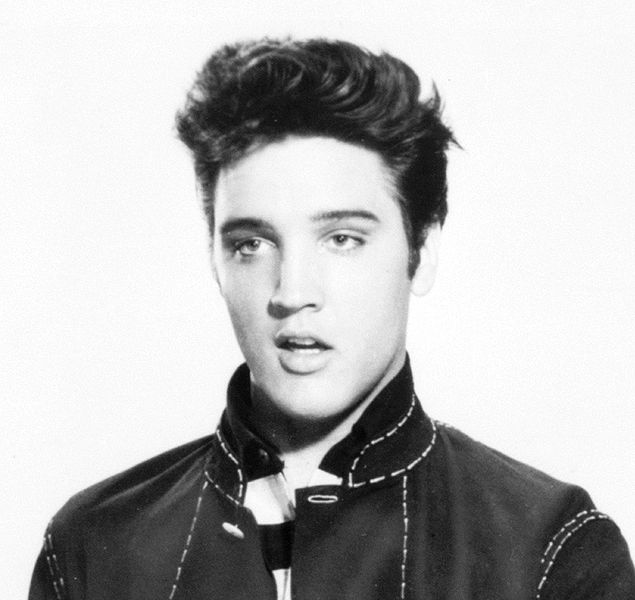
"...or crying."
Black Velvet Crying Elvis- $40 (Williamsburg)
Vintage/antique/collectible black velvet crying Elvis “painting” for sale. Wood frame, amazing condition. Great gift for fans of Elvis or crying.
Bedbug-free home.
Tags: Elvis Presley
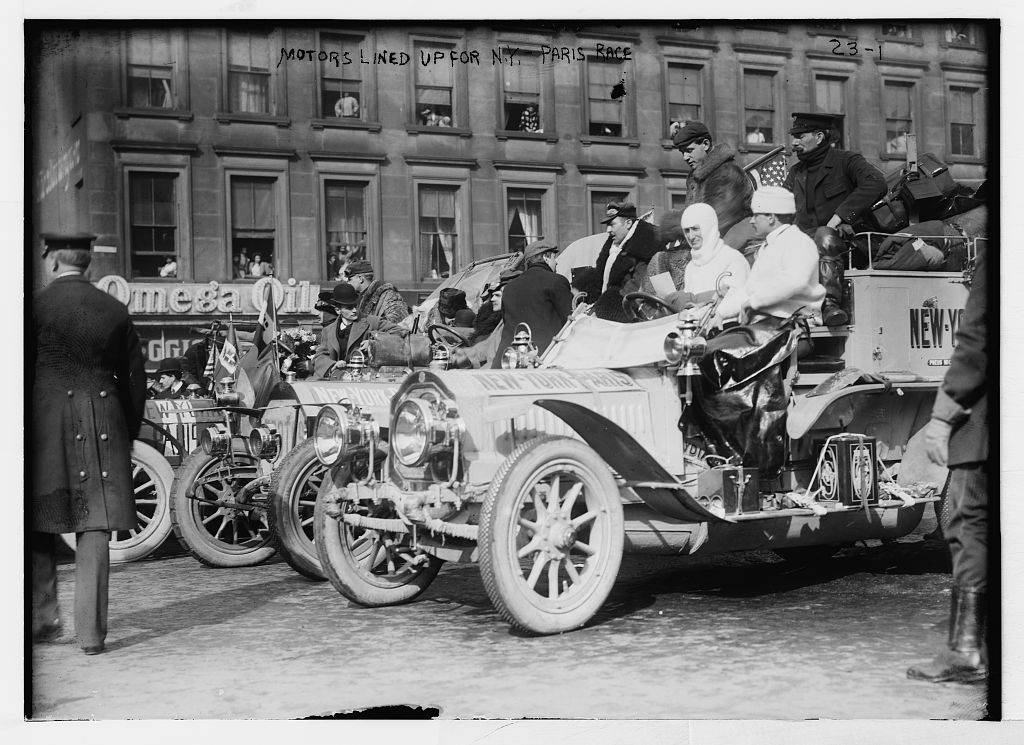
Times Square was the starting point for the Great Auto Race in 1908.
The steam locomotive and internal-combustion engine laid to rest what was left of the pioneer spirit of the Old West, but new transportations demanded new pioneers. Automobiles may have been a novel thing in 1908, but their drivers weren’t a timid breed. On February 12th of that year, six cars representing four nations (America, Germany, Italy and France) lined up in Times Square for the start of a treacherous competition that famously became known as the Great Auto Race.
Before this race, no car had ever crossed the U.S. during winter. And when the autos reached the end of the course in one continent, they were transported by ship for the next leg overseas. (Only three teams actually completed the transcontinental competition.) The winner was (spoiler alert) the Thomas Flyer crew from the United States. But the real victor was the automobile itself. The event, which was co-sponsored by the New York Times and Le Matin, received international press and cars began to be viewed favorably on a world stage.
I posted recently about Atari co-founder Nolan Bushnell’s passion for driver-less auto-cars. While the technology may be upon us, the dream has apparently been around since at least the 1950s.
Tags: Nolan Bushnell
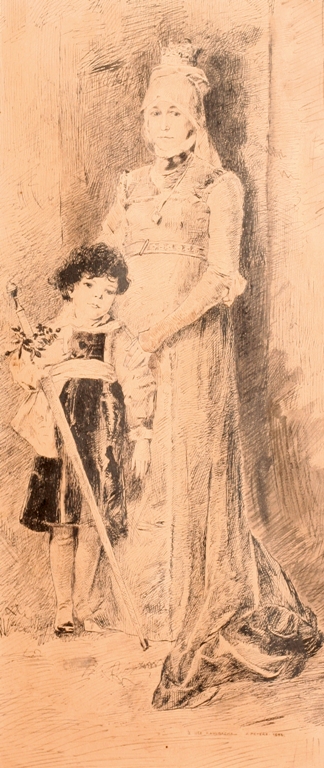
"The button affixed to the bosom of her dress attracted his attention and she made no opposition when he plucked it away." (Image by Josef Peters.)
Three-year-old Brooklyn lad Thomas Madden told his impoverished parents that he swallowed a button and was in terrible pain. X-rays were inconclusive and doctors began to doubt his story, but the anguish persisted and the Maddens were worried sick. The next few weeks probably seemed like a year to them. Two excerpts from the Brooklyn Daily Eagle below tell the story. (The New York Times was also on the case.)
••••••••••
“Search For A Button Which Young Madden Is Said to Have Swallowed,” Brooklyn Daily Eagle (January 18, 1897): “Little Thomas Josef Madden, 3 1/2 years old, whose parents live at 54 State street, will go under the X-ray, at the Hudson street hospital in New York again to-day. He was there yesterday and the father says the ray revealed the motto button, from a package of cigarettes, which the boy claims to have swallowed, lodged in the larger intestine, on the left side of the body, with the pin attached to the button sticking upward. Mr. Madden saw this himself, he says, and the doctors assured that it was so. The ray was not powerful enough, however, and it was decided to make a second examination this afternoon, using more effective apparatus. Meanwhile the child will continue abstinence from solid food and will continue the milk diet which he has had for two weeks since he has swallowed the button.
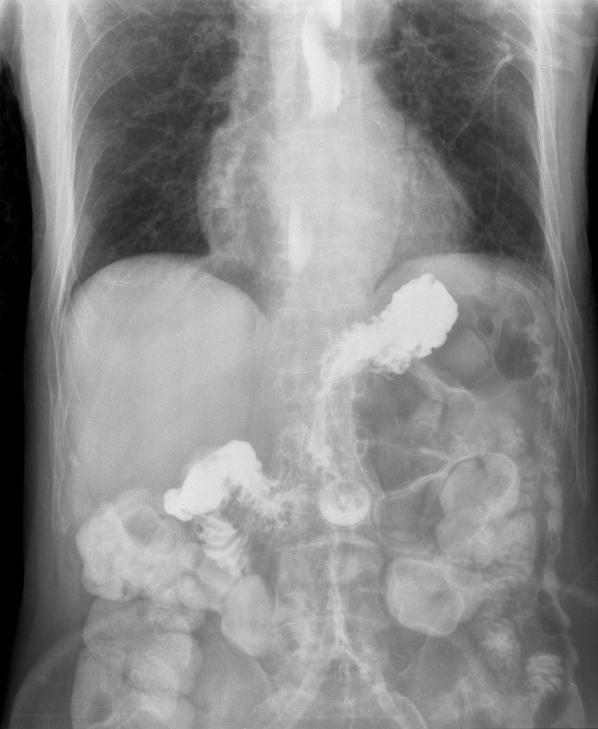
"The X-ray photograph taken yesterday revealed no indication of the presence of the button in the pyloric region." (Image by Steven Fruitsmaak.)
When the accident occurred he was a chubby little fellow with an exuberance of spirits, which made him the life of the humble household in which he lives. His father, who works along shore, and is a man of slender means, has viewed with increasing anxiety his little son’s rapid loss of flesh and the spasms of pain with which he is seized at home.
Mr. Madden said to-day that he had gone so far as to pawn some of his clothes to secure money with which to have the boy treated, and, he added, that as long as his resources were exhausted he did not know what to do now.
Superintendent Knoll of the Hudson street hospital is represented as having said that the X-ray photograph taken yesterday revealed no indication of the presence of the button in the pyloric region which was examined, but the boy’s father is very positive in the statement that the button was found.
Nobody saw the button swallowed, but all the members of the boy’s family are well satisfied that it is this which has caused all his suffering. Thomas Josef was sitting on the lap of Mrs. McGrath, a neighbor who was visiting the Maddens, and with whom the boy is a great favorite. The button affixed to the bosom of her dress attracted his attention and she made no opposition when he plucked it away. A few minutes later, when he was seated at the dinner table, Thomas was seized with a fit of choking. His father slapped him vigorously on the back and presently the child seemed relieved.
‘He just bolted on a piece of meat, papa,’ suggested Mrs. Madden.
‘Oh, no, mamma,’ spoke up the child, ‘it was that button.’
‘If I had known it was the button,’ said Mr. Madden, ‘I’d have had my finger down his throat in a minute. Now, I don’t know what to do.’
All the neighbors are very much excited over the case. The Maddens live in a tenement section.
••••••••••

"The emblem on it was an Irish flag. "
“Cut Out the Button: Tommy Madden Undergoes Successful Surgery,” Brooklyn Daily Eagle (January 24, 1897): “An interesting operation was performed in Post Graduate hospital in New York yesterday afternoon, when the physicians cut a cigarette button from the throat of little Thomas Madden. The boy swallowed the button a week ago, and it stuck in his throat and all efforts to dislodge it and extract it were until yesterday without effect. The operation yesterday was performed by House Surgeon Bullard and the regular house staff. When the button was cut from the throat it was found to be of the sort now placed in boxes of cigarettes. The emblem on it was an Irish flag. It was thought last night that the boy would recover.
The operation was long and tedious and occupied about three quarters of an hour. Before making the incision the surgeon made a careful attempt to remove the button through the mouth by forcing long, curved forceps down the throat. This proved impracticable.
Dr. Lee, who has charge of the ward at the Post Graduate hospital in which the little patient is confined, is very hopeful of Tommy’s ultimate recovery.”
Tags: Dr. Lee, Mr. Madden, Mrs. Madden, Mrs. McGrath, Superintendent Knol, Surgeon Bullard, Thomas Josef Madden
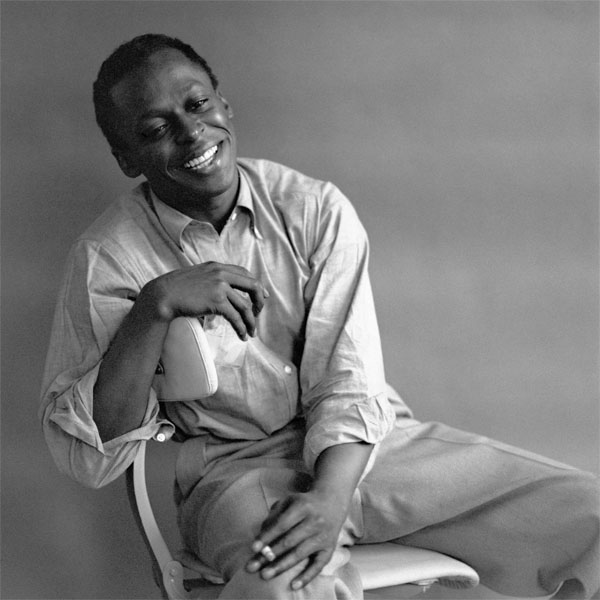
Miles Davis in a 1955 photo by Tom Palumbo.
Trumpet player Miles Davis was already a legend in 1962, when he was interviewed by Alex Haley for Playboy. He was raised in a relatively well-to-do household in Illinois, the son of a dentist. His prodigious musical talent saw that through his ups and down with a vicious heroin addiction, he managed to always maintain financial security. But creature comforts could only go so far in calming the nerves of a person of color who grew up in the Jim Crow era and still lived in a racially divided America. An excerpt from the Q&A:
“Playboy: You’re said to be one of the financially best-off popular musicians. Is this correct?
Miles Davis: Well, I don’t have any access to other musicians’ bankbooks. But I never have been what you would call poor. I grew up with an allowance, and I had a big newspaper route. I saved most of what I made except for buying records. But when I first left home as a musician, I used to spend all I made, and when I went on dope, I got in debt. But after I got enough sense to kick the habit, I started to make more than I needed to spend unless I was crazy or something.
Now I got a pretty good portfolio of stock investments, and I got this house–it’s worth into six figures, including everything in it. My four kids are coming up fine. When the boys get in from school, I want you to see them working out on the bags in our gym downstairs. I keep myself in shape and teach the kids how to box. They can handle themselves. Ain’t nothing better that a father can pass along.
Then I got my music, I got Frances, and my Ferrari–and our friends. I got everything a man could want–if it just wasn’t for this prejudice crap. It ain’t that I’m mad at white people, I just see what I see and I know what’s happening. I am going to speak my mind about anything that drags me about this Jim Crow scene. This whole prejudice mess is something you would feel so good if it could just be got rid of, like a big sore eating inside of your belly.”
Tags: Alex Haley, Miles Davis

"Everywhere."
ROACH EXTERMINATOR NEEDED ASAP – $50 (Harlem / Morningside)
We just moved into a new location&the disgusting roaches are everywhere. We need someone who can guarantee results!!
Kottke has an interesting post about a “liquids sculptor” named Shinchi Maruyama, who tosses fluids into the air and then photographs what are stunning and momentary shapes. An excerpt from a Dallas Morning News interview with the artist by Nicole Pasulka:
“Dallas Morning News: These images, or sculptures are so exciting, fleeting and unique. How do you determine or control the shape of the water or ink?
Shinchi Maruyama: Just keep throwing the liquids for the sake of it.
Dallas Morning News: It seems there’s a definitive moment of performance in your work, though this be said of all painting and sculpture. Are you more aware of the event or moment of your sculpture because the final result is a photograph?
Shinchi Maruyama: I think I am more aware of the moment recently after many years of experimenting with liquids. But no matter how many times I repeat the same process of throwing it in the air, I never achieve the same result. And I am so fascinated by this unexpected interaction of liquids colliding, which happens fairly infrequently, that I am overwhelmed by its beauty.”
Tags: Nicole Pasul, Shinchi Maruyama
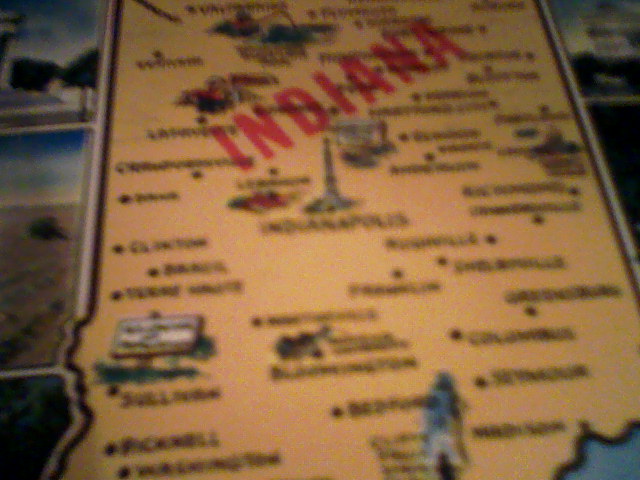
Seymour Brandwein was apparently a Maryland economist who traveled around the country in the '50s and '60's and sent postcards with state maps home to his son, Billy. This card is from Indiana.
Feb. 26, 1959
Hi–
I’m speaking at Notre Dame tomorrow here in South Bend. They have snow along the streets here which fell back in mid-January, so much that it still hasn’t melted! By the way I saw the Cuban bearded revolutionaries who are on a good-will tour to N.Y. and Washington, at National Airport,
Daddy
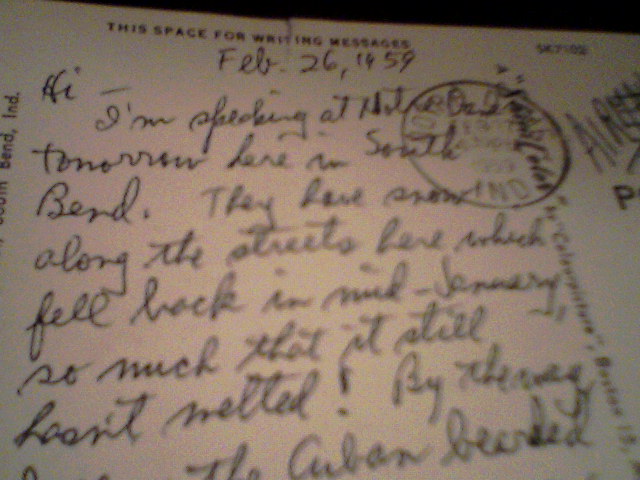
I buy these postcards at a Brooklyn flea market.
From what I gather, Lucan was a jaw-dropping ABC drama about a young man, raised by wolves in the Minnesota wild until he was 10, trying to assimilate into society. Will he revert to his lupine ways? Let’s hope. All kinds of special.
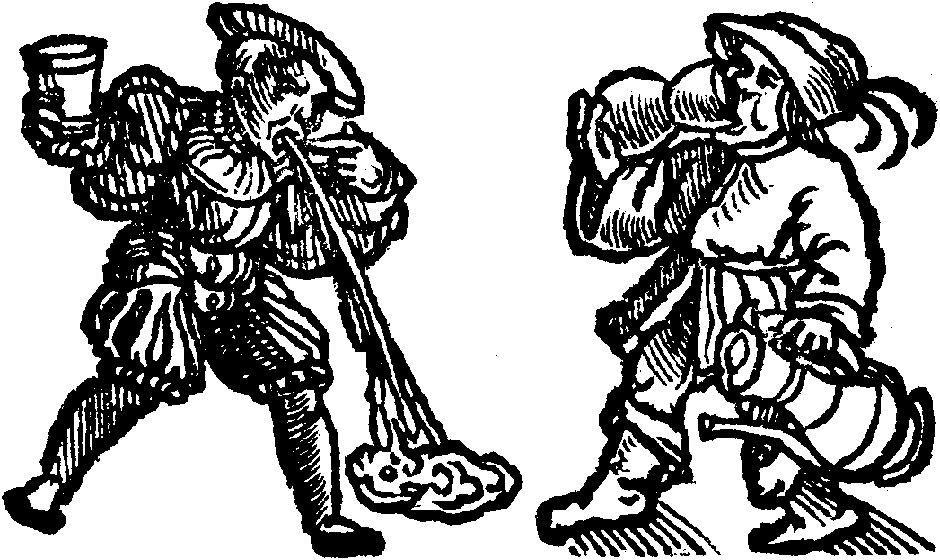
"Yep, their the real thing, actual bags to throw up in."
Box of about 700 barf bags – $35 (UWS, Manhattan)
Selling a box of about 700 white, plain barf bags. Yep, their the real thing, actual bags to throw up in. Their left over from a publicity gig I did for a client.
It’s just one box and can be carried by hand, unless you’re wicked weak. Worth about $100, so selling at $35 for a quick sale.
You can print labels and stick them on the bags to use for a publicity stunt in Times Square, sell them at the new James Franco movie, use them for your kids’ lunches (especially if your sanwhiches normally make them ill) or just keep them in your living room and use them whenever the govt. does something stupid that makes you wanna throw up – now you can. Should get you through 2012 elections.
Seriously, though, let me know if you’re interested. Thanks and all the best for the holidays!
Tags: James Franco
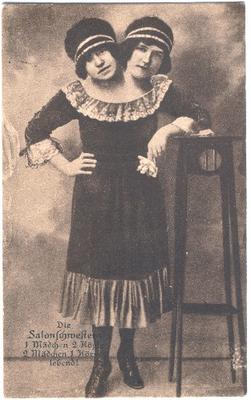
Salon sisters. The one on the left is mine.
In its pre-WWII heyday, Coney Island wasn’t just an amusement park but also a grand social experiment that was an assault on propriety and a raffish and often outrageous laboratory for urbanism and science (babies were incubated and elephants electrocuted). An excerpt from John E. Kasson’s 1978 book, Amusing the Million:
“Beginning with the various sideshows and exhibits along Coney Island’s main promenade, the Bowery, the tourists entered into this carnival world. As in traditional carnivals and fairs, the grotesque was prominently represented symbolizing the exaggerated and excessive character of Coney Island as a whole. Midgets, giants, fat ladies and ape-men were both stigmatized and honored as freaks. They fascinated spectators in the way they displayed themselves openly as exceptions of the rules of the conventional world. Their grotesque presence heightened the visitors’ sense that they had penetrated a marvelous realm of transformation, subject to laws all its own. The popular, distorting mirrors furnished the illusion that the spectators themselves had become freaks. Thus Coney Island seemed charged with a magical power to transmute customary appearances into fluid new possibilities.”
Tags: John E. Kasson

"New York, just like I pictured it, skyscrapers and everything." (Image by Dennis Afraz.)
Neuroscientist Jonah Lehrer had an excellent article in the New York Times Magazine this weekend, about Geoffrey West and Luis Bettencourt, theoretical physicists who are applying their science training to urban problems. (By the way, if you’ve never read Lehrer’s book, Proust Was a Neuroscientist, I highly recommend it). An excerpt:
“Along with Luis Bettencourt, another theoretical physicist who had abandoned conventional physics, and a team of disparate researchers, West began scouring libraries and government Web sites for relevant statistics. The scientists downloaded huge files from the Census Bureau, learned about the intricacies of German infrastructure and bought a thick and expensive almanac featuring the provincial cities of China. (Unfortunately, the book was in Mandarin.) They looked at a dizzying array of variables, from the total amount of electrical wire in Frankfurt to the number of college graduates in Boise. They amassed stats on gas stations and personal income, flu outbreaks and homicides, coffee shops and the walking speed of pedestrians.

"These are the laws, they say, that automatically emerge whenever people ‘agglomerate,’ cramming themselves into apartment buildings and subway cars." (Image by Rebecca Kennison.)
After two years of analysis, West and Bettencourt discovered that all of these urban variables could be described by a few exquisitely simple equations. For example, if they know the population of a metropolitan area in a given country, they can estimate, with approximately 85 percent accuracy, its average income and the dimensions of its sewer system. These are the laws, they say, that automatically emerge whenever people ‘agglomerate,’ cramming themselves into apartment buildings and subway cars. It doesn’t matter if the place is Manhattan or Manhattan, Kan.: the urban patterns remain the same. West isn’t shy about describing the magnitude of this accomplishment. ‘What we found are the constants that describe every city,’ he says. ‘I can take these laws and make precise predictions about the number of violent crimes and the surface area of roads in a city in Japan with 200,000 people. I don’t know anything about this city or even where it is or its history, but I can tell you all about it. And the reason I can do that is because every city is really the same.’ After a pause, as if reflecting on his hyperbole, West adds: ‘Look, we all know that every city is unique. That’s all we talk about when we talk about cities, those things that make New York different from L.A., or Tokyo different from Albuquerque. But focusing on those differences misses the point. Sure, there are differences, but different from what? We’ve found the what.'”
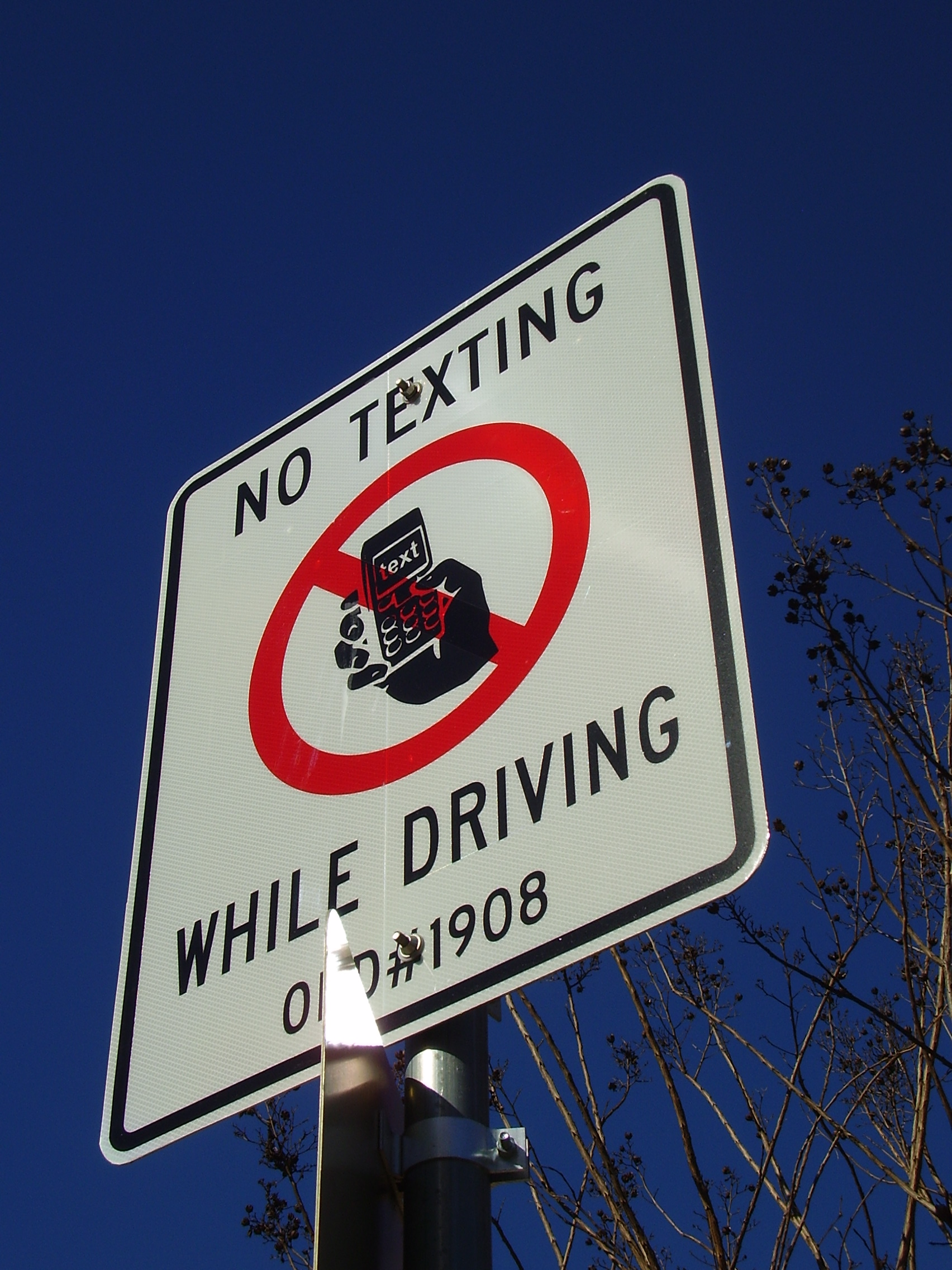
Sign in West University Place, Texas. (Image by WhisperToMe.)
Texting while driving is all the rage in scary headlines, but auto deaths in America have been reduced dramatically over the last five years, just as the handheld computing craze has exploded. What gives? Joseph B. White tries to uncover the answer in an article in the Wall Street Journal. It may be that technology (and other factors) are responsible for the decrease. An excerpt:
“So what’s helping to reduce deaths? Technology deserves some credit, according to the data. Deaths in side-impact crashes declined between 2005 and 2008 at a faster rate than the decline for deaths overall. That suggests that side airbags are helping more people survive crashes, the researchers found.
The Michigan study found a nearly 20% decline in deaths among young drivers, age 16 to 25. Among the possible reasons: the increasing number of states that use graduated licensing programs that delay granting full driving privileges until teens have more experience, and rising teen joblessness.
The exact role of the economy in declining highway deaths is a big unknown. Messrs. Sivak and Schoettle highlight pieces of data that suggest that as the economy slowed down, so did motorists.”
Tags: Joseph B. White
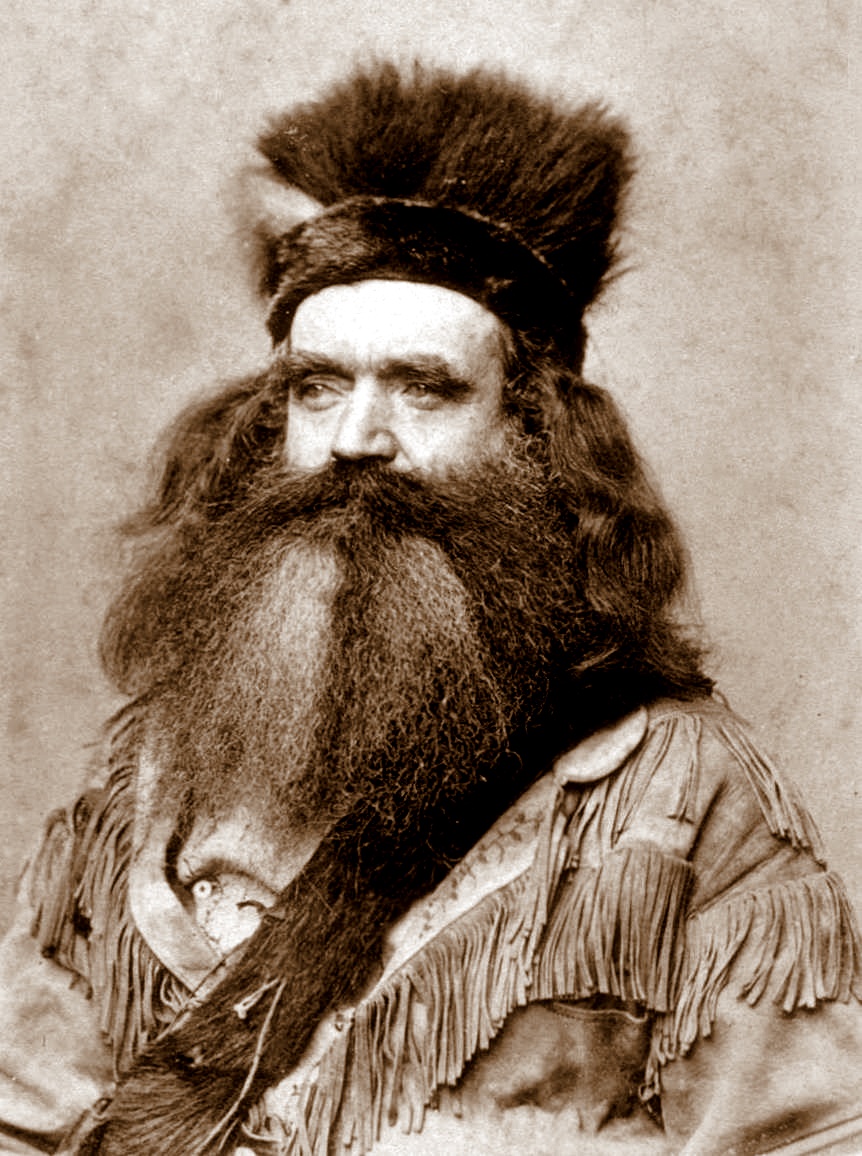
““A unique character is Seth Kinman, the grizzly bear hunter and presidential chair presenter.”
Seth Kinman was a self-made man and a self-promoter. A bushy-faced nineteenth-century California hunter who never met a bear or buck he cared for, Kinman used the skins and carcasses from his quarry to fashion unusual chairs that he presented to several American Presidents.
Kinman began bestowing these odd gifts to Presidents during the Buchanan Administration, which is the subject of the first excerpt, taken from an 1857 Brooklyn Daily Eagle. The second excerpt, a reprinted article in an 1885 New York Times that originally ran in the San Francisco Call, further examines Kinman’s life and by then what had become a longstanding chair-giving tradition that had allowed him to become friend to several Presidents.
••••••••••
“A Curious Chair for President Buchanan,” Brooklyn Daily Eagle (May 18, 1857): “An old Western hunter, Seth Kinman, sent a chair from Humboldt, California, which arrived in New York by the George Law for President Buchanan. The chair is made entirely of the antlers of the deer, fashioned into a most comfortable arm-chair, with a high sloping back and convenient arms. A pair of antlers, with six points each, form the front legs and arms; and another pair, having five points each, form the hind legs and back. Small antlers, having two points each, join the whole together in a substantial manner. The seat is made from the dressed skins of the bucks whose antlers form the chair. They have, all told, just thirty-one points, corresponding with the number of states now in the Union. The whole chair is simply varnished, showing the original color of the antlers. The old hunter has engraved his address on the left arm point: Seth Kinman, Humboldt County, California.”

••••••••••
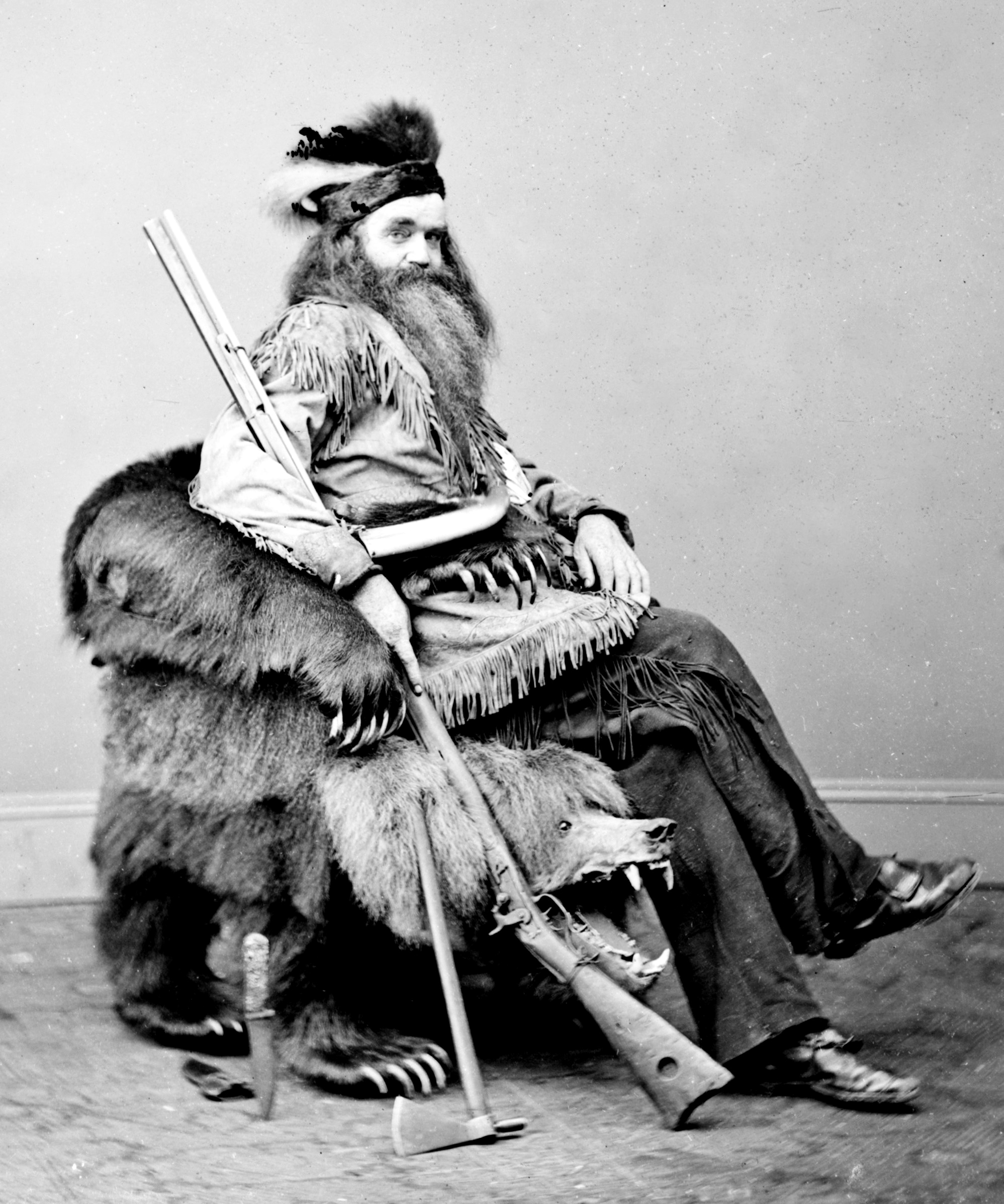
The nimrod sits his ass down on President Andrew Johnson’s chair.
“Seth Kinman, The Pacific Coast Nimrod Who Gives Chairs to Presidents,” New York Times, reprinted from the San Francisco Call (December 9, 1885): “A unique character is Seth Kinman, the grizzly bear hunter and presidential chair presenter, now stopping in this city. He is a tall man, 70 years old, straight as an arrow, dressed in buckskin from head to foot, with long silver hair, beard, and shaggy eyebrows, under which and his immense hat a pair of keen eyes peer sharply.
He is the Nimrod of this coast, the great elk shooter and grizzly bear hunter of California, who has presented elk horns and grizzly bear claws from animals that have fallen before his unerring rifle to four Presidents of the United States–Buchanan, Lincoln , Johnson, and Hayes–and has ‘the finest of all’ to present to President Cleveland next spring. He claims to have shot in all more than 800 grizzlies, as many as 50 elk in one month, and to have supplied the Government troops and sawmill hands in Humboldt with 240 elk in 11 months on contract at 25 cents per pound.
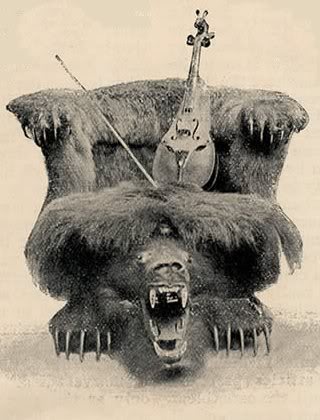
Resting atop the chair is Kinman’s fiddle, the neck of which is made with a skull bone from his favorite mule.
He was born in Union County, Penn., in 1815, went to Illinois in 1830, and crossed the plains to California in 1849. He tried mining on Trinity River, but followed hunting mainly for a living. In the Winter of 1856-57 he made his first elkhorn chair, and conceived the idea of presenting it to President Buchanan. Peter Donahue favored it. He went on in the Golden Age with letters to Col. Rynders in New-York, and in Washington he met Senator Gwin, Gen. Denver, and others. Dr. Wozencroft made the presentation speech, and Buchanan was highly pleased. He wrote Rynders to get Kinman the best gun he could find in New-York, which he did, together with two fine pistols. He also got an appointment to corral the Indians on the Government reservation, and when they strayed away he brought them back.
In November, 1804, he presented President Lincoln with an elkhorn chair, which greatly pleased him; Clinton Lloyd, Clerk of the House, made the presentation speech. The chair to Hayes was presented when he was Governor of Ohio, but nominee for President. The chair presented to President Johnson was made of the bones and hide of a grizzly.”

Tags: Abraham Lincoln, President James Buchanan, Seth Kinman
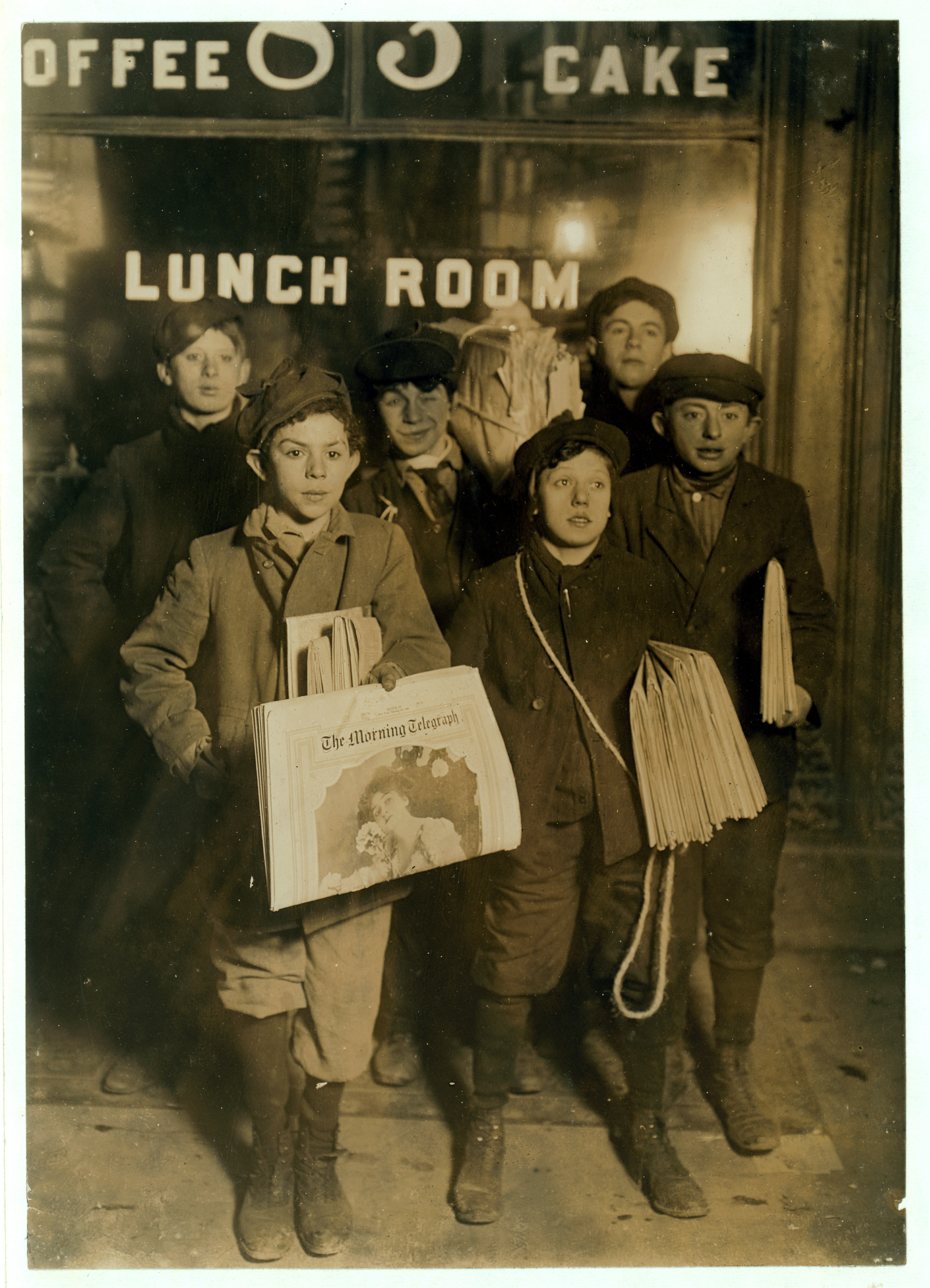
Newsies on the Brooklyn Bridge clutch copies of the "Morning Telegraph."
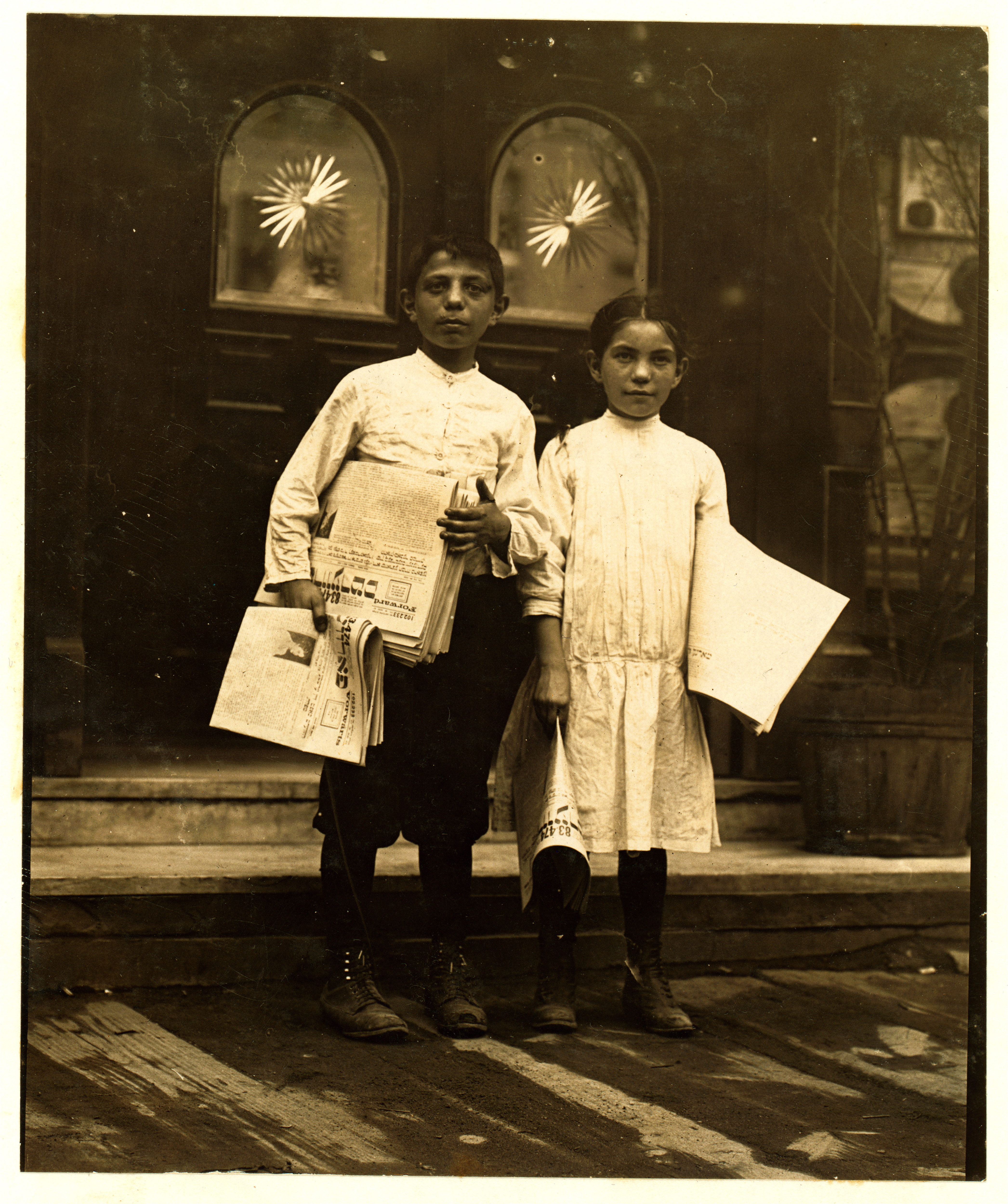
These ragamuffins selling newspapers look cute in their caps and coats, sure, but they were largely homeless children who eked out a meager existence by screaming “Extra, Extra!” and hoping to acquire some change. The newsboys were independent contractors who purchased papers from the publishers, and then worked long hours to make a small profit. Their treatment, especially by Hearst and Pulitzer, was Dickensian, and they went on strike many times. But it was their strike in 1899 that finally showed that child labor had clout and got them a small measure of justice. The great photo above, taken by Lewis Hine, shows the boys poised to peddle their papers. Another Hine photo below, which features a female newsie, was taken outside a Bowery saloon in 1910.
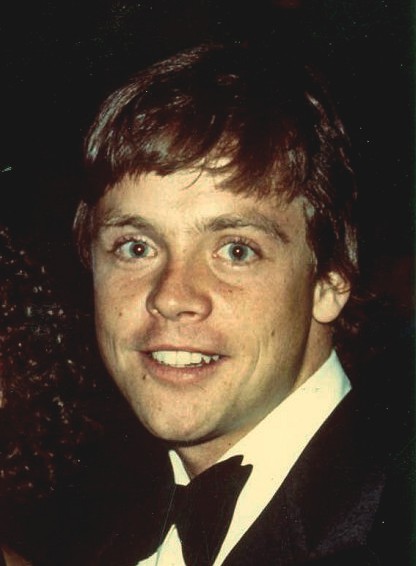
"Would have kept Luke warm while he spent a freezing night on Hoth." (Image by Alan Light.)
MENS XL LIMITED EDITION NORTH FACE – $150 (NORTH JERSEY)
- Seam sealed
- Detachable faux fur trim
- Two patch-on chest pockets
- Bicep pocket
About this product:
This down-insulated, waterproof jacket stays true to The North Face® tradition with innovative attributes, and encompasses a detachable faux fur trim on the hood for added protection and style. With multiple pockets, this durable jacket is ideal wear on cold weather outings; and would have kept Luke warm while he spent a freezing night on Hoth without having to sleep inside that putrid Tauntaun carcass.
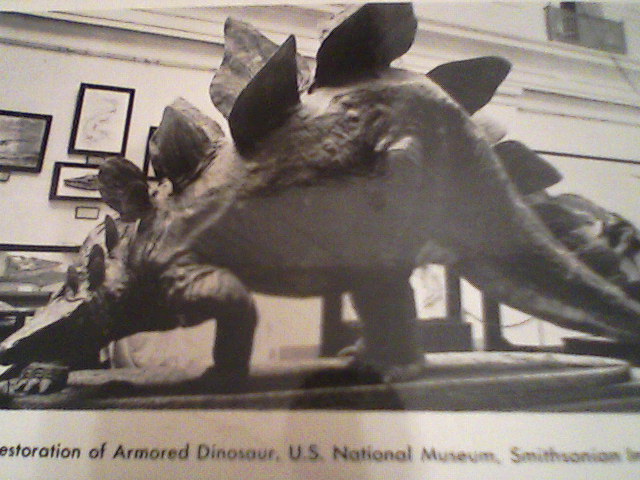
On front of card: "Restoration of Armored Dinosaur, U.S. National Museum, Smithsonian Institution."
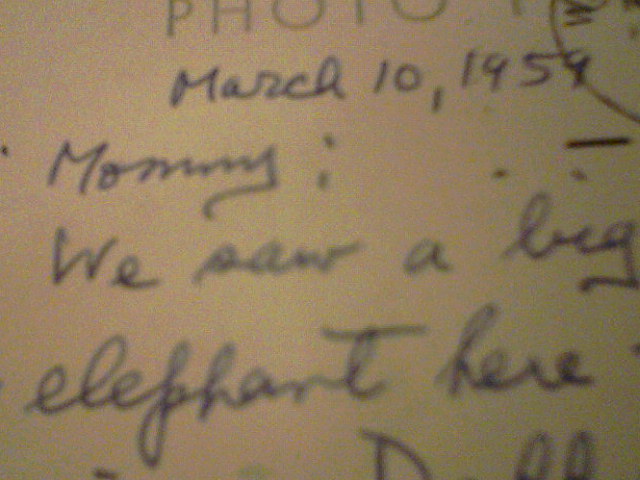
March 10, 1959
Hi Mommy:
We saw a big, big elephant here this morning. Daddy also took me to see birds and animals after he opened his locked car.
Billy
Tags: Billy Brandwein, Mrs. Ethel Brandwein, Seymour Brandwein
Software designer Ivan Sutherland developed Sketchpad as part of his 1963 thesis at MIT. It is among the most influential programs ever written, opening the door for the development of the Graphical User Interface, which helped make computers amenable to the masses. This 20-minute program demonstrates how remarkably advanced the system was, transforming what had been an elaborate adding machine into an “intelligent” machine.
Tags: Ivan Sutherland
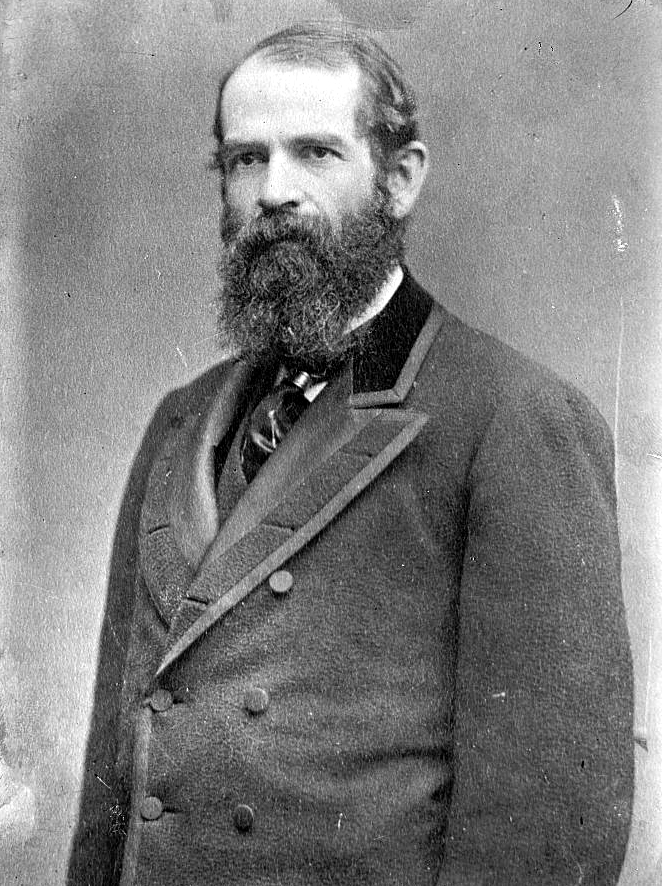
Financier Jay Gould, the groom's dad, was widely reviled. Some historians believe he was unjustly tarnished.
Having a father who’s a despised robber baron probably isn’t a lot of fun, even if he leaves you a bucketful of cash. Howard Gould, son of the late and hated financier and railroad tycoon Jay Gould, learned this the hard way when he married in 1898. The wedding ceremony, a lavish affair, was roundly mocked for its excess. The Brooklyn Daily Eagle, a paper that had been appropriately tough on the old man, came to the aid of the newlyweds, even predicting a long and happy union for the pair. Alas, it was not to be. The second article that’s excerpted, from New York’s Covington Sun a decade later, details the marriage’s bitter end, which involved Gould allegedly being cuckolded by the prominent soldier and nostalgia salesman Buffalo Bill Cody.
••••••••••
“Mr. Gould’s Marriage,” Brooklyn Daily Eagle (October 13, 1898): “Howard Gould, son of Jay Gould, a famous millionaire, has married a woman who was at one time an actor. That fact does not justify the hubbaboo of print that has been made over it. Mr. Gould is a free man, being of age and a little over, therefore he may do as he pleases, if he does not break the law. His wedding was quiet and devoid of spectacle, so there was no occasion for the yellow journals to go into verbal convulsions over the waste of a fortune upon the unworthy cooks, waiters, florists, dressmakers, tailors, hosiers, wine merchants, carriage renters, musicians, jewelers, lapidaries and other people who commonly earn something when society gets married.
One interest in the case, however consists in the rumored sacrifice in half of his fortune that Mr. Gould has made in wedding Miss Clemmons. His father left a will which specified that if one of his children married without consent of the others, or his executors, he would lose half his patrimony and the lost half should be distributed among the other relatives. It is guessed that the young man has about $6,000,000, and if he were to lose half of this he would still be able to go to the circus once in a while and even buy pink lemonade. At all events, he married for love, and his life for that reason ought to be happy. So many of our children of millionaires marry pitiful creatures from Europe, for the sake of a title, that it is rather an agreeable surprise to find one of them who knows his own mind well enough to follow it and who has sufficient courage of his convictions to defy the efforts of the dead to rule the living.”
••••••••••
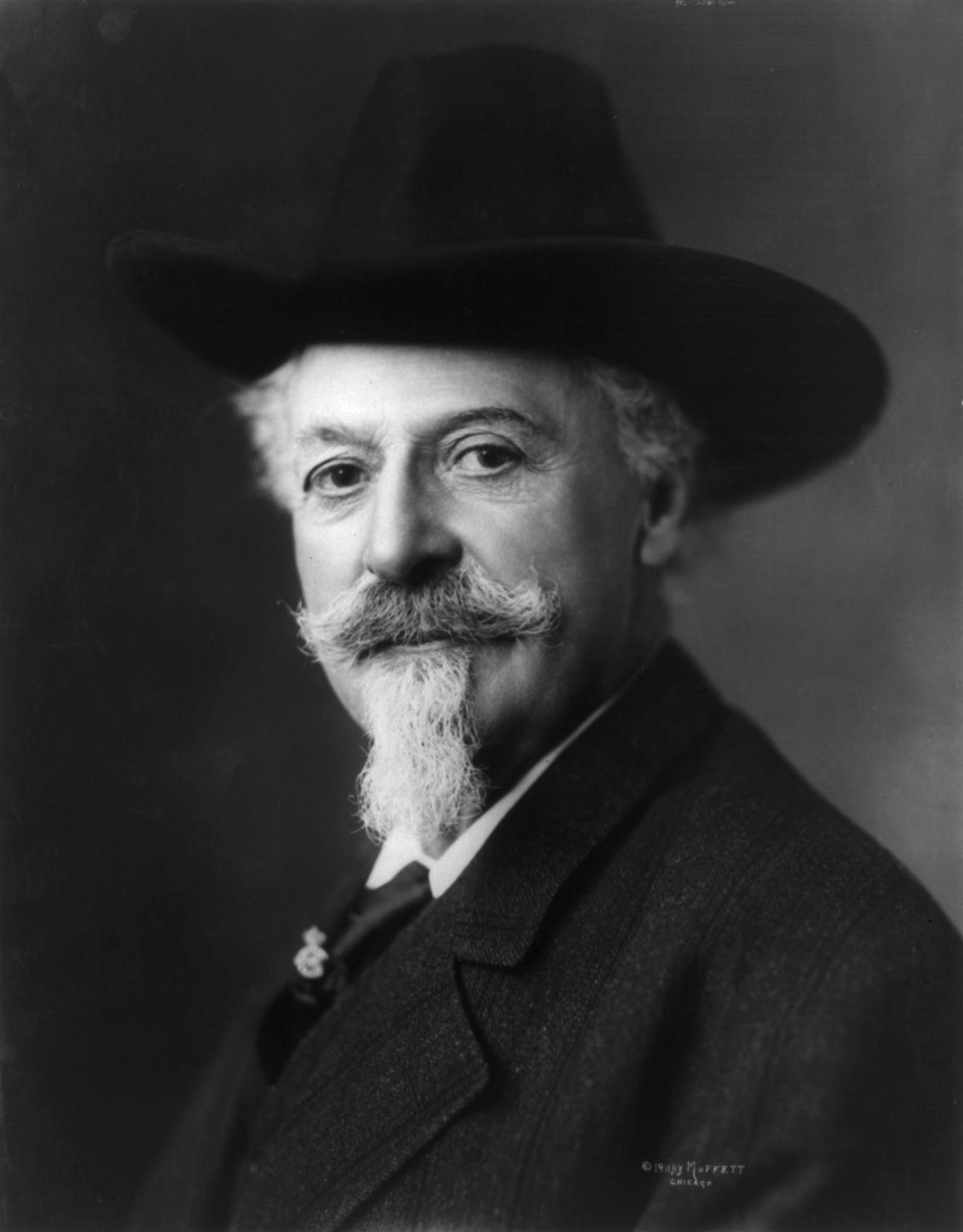
"Mrs. Gould, prior to the marriage, asserted that her relations with Colonel Cody were exclusively of a business nature, whereas they were meretricious."
“Sordid Troubles of the Married Rich,” Covington Sun (April 16, 1908): “That portion of the public which has been waiting so patiently for the oft-delayed washing of the family linen of the Howard Goulds is about to have its reward. Before Justice Dowling, Mrs. Gould’s attorney, Clarence J. Shearn, made a motion to have the issues framed for trial by jury on the ground that they were such a nature that no judge would care to pass on them first.

Sounding a note of self-pity as he surveyed the miserably unhappy life that he had led since he had married Katherine Clemmons, Howard Gould told of the many humiliations to which he had been subjected.
There are allegations of the deepest import to the wife of the millionaire, however, in the answer. Gould charged that not only before but after he married Katherine Clemmons she was guilty of improper conduct with Colonel William F. Cody (‘Buffalo Bill’). It was charged also that she became infatuated with Dustin Farnum, the actor; that she frequently had him in her apartment at the Hotel St. Regis; that she followed him on a tour through the New England States and visited him in his hotel after the performances.
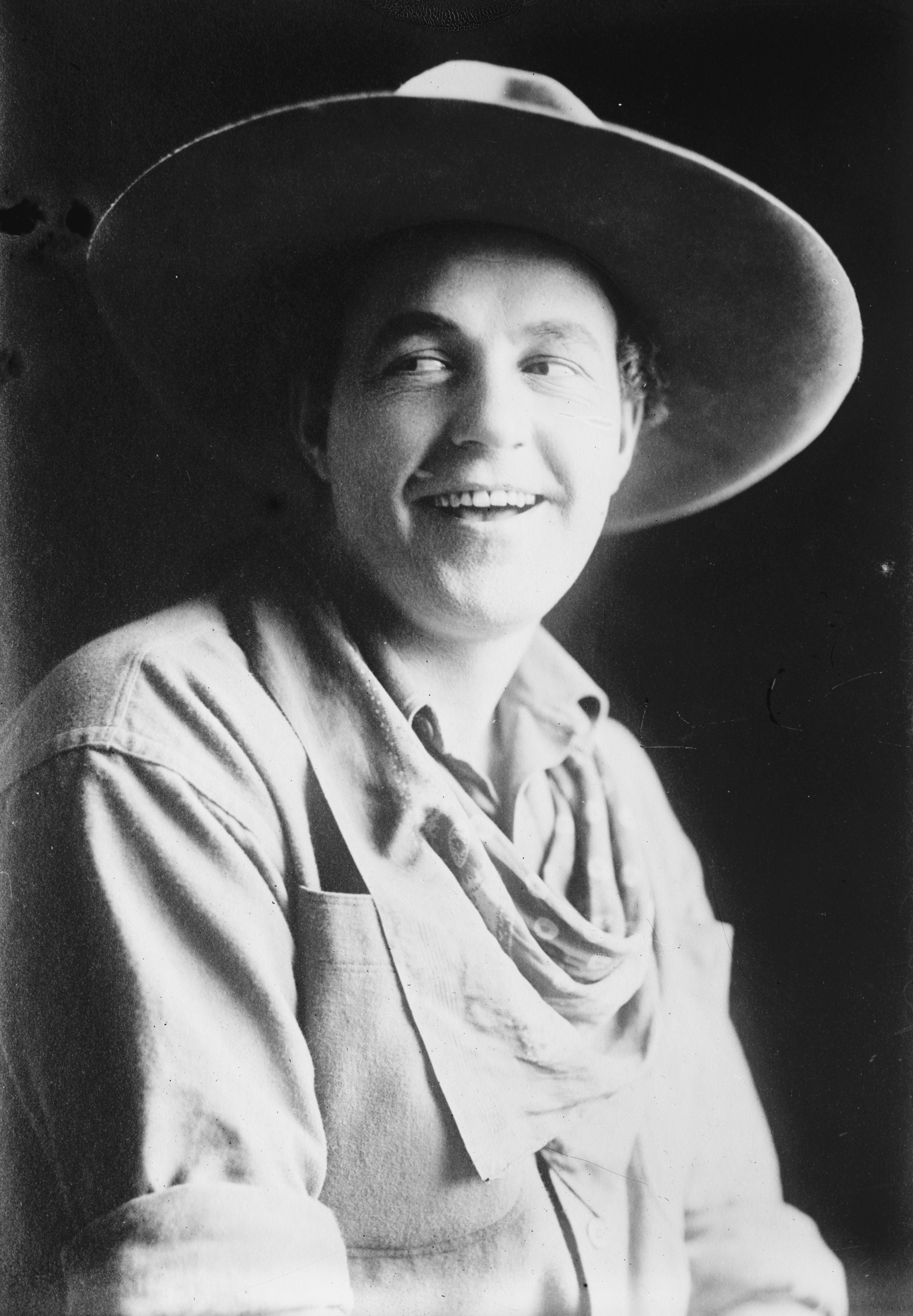
There are charges of Mrs. Gould’s fondness for intoxicants, beginning, as alleged, with two or three cocktails before breakfast, a pint of Hock at luncheon, brandy highballs and unlimited champagne at dinner, whereby on one occasion, it is alleged, she fell from her chair to the floor.
Mr. Gould alleges that his marriage was the result of fraud and misrepresentation on the part of his wife. He says that Mrs. Gould, prior to the marriage, asserted that her relations with Colonel Cody were exclusively of a business nature, whereas they were meretricious. He swears that during 1887, 1889 and 1892 his present wife lived with Cody in London, Paris, Chicago, Nebraska, Virginia and New York.”
Tags: Buffalo Bill Cody, Clarence J. Shearn, Dustin Farnum, Howard Gould, Jay Gould, Justice Dowling, Katherine Clemmons
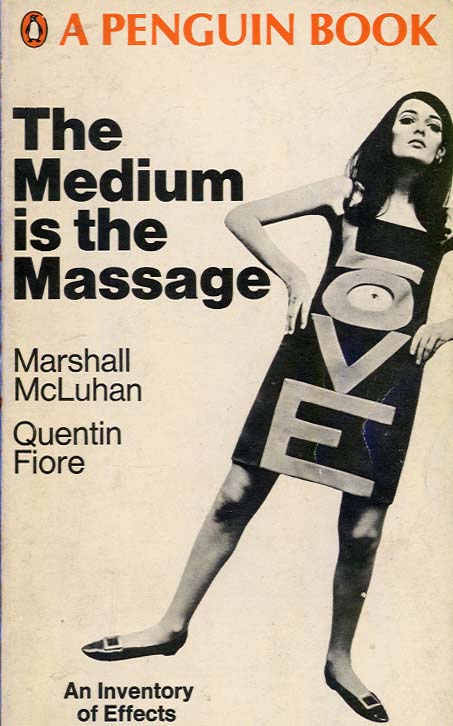
Quentin Fiore, the graphic designer who created the book's amazing look, is now 90.
Facebook wunderkind Mark Zuckerberg being named Time magazine’s Person of the Year made me recall an ominous passage from early in The Medium Is The Massage: An Inventory of Effects, from 1967. Not that I think that things are quite this dire, but Marshall McLuhan was pretty prophetic here. An excerpt:
“How much do you make? Have you ever contemplated suicide? Are you now or have you ever been…? I have here before me…Electrical information devices for universal, tyrannical womb-to-tomb surveillance are causing a very serious dilemma between our claim to privacy and the community’s need to know. The older, traditional ideas of private, isolated thoughts and actions–the patterns of mechanistic technologies–are very seriously threatened by new methods of instantaneous electric information retrieval by the electrically computerized dossier bank–that one big gossip column that is unforgiving, unforgetful and from which there is no redemption, no erasure of early ‘mistakes.’ We have already reached a point where remedial control, born out of knowledge of media and their total effects on all of us, must be exerted. How shall the new environment be programmed now that we have become so involved with each other, now that all of us have become the unwitting work force for social change? What’s that buzzzzzzzzzzzzzzzzzzzzzzzzzzzzzzzzing?”